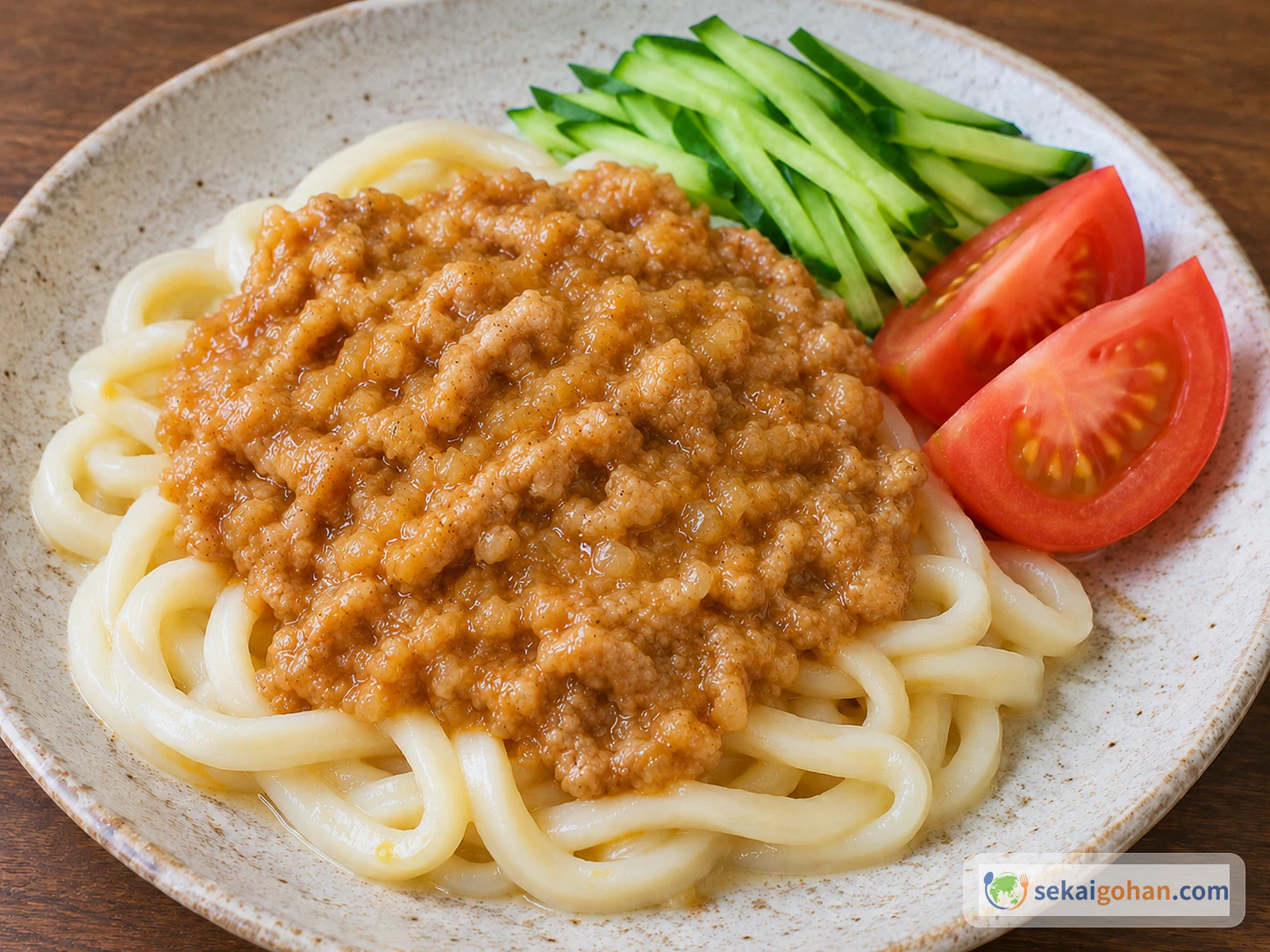
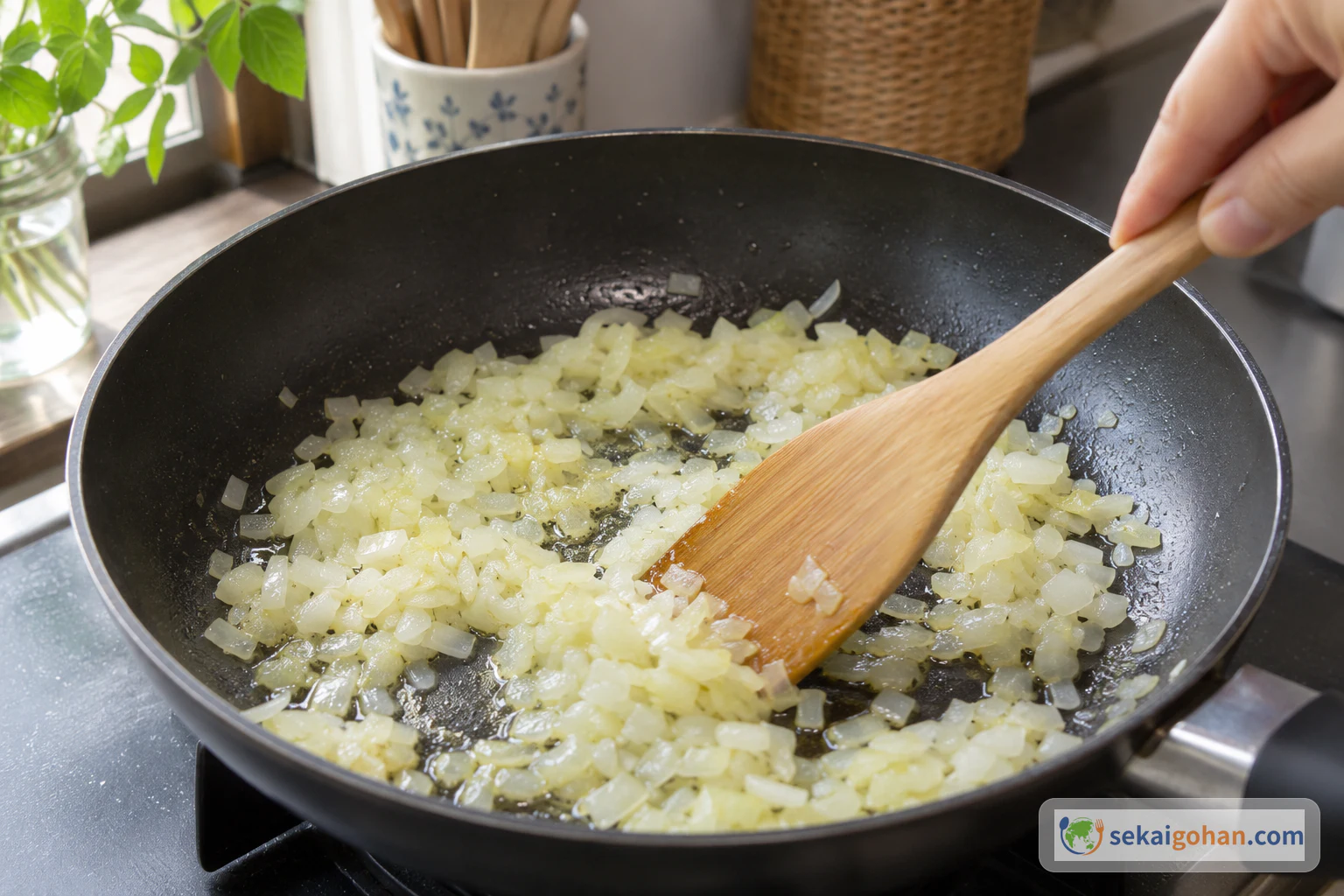
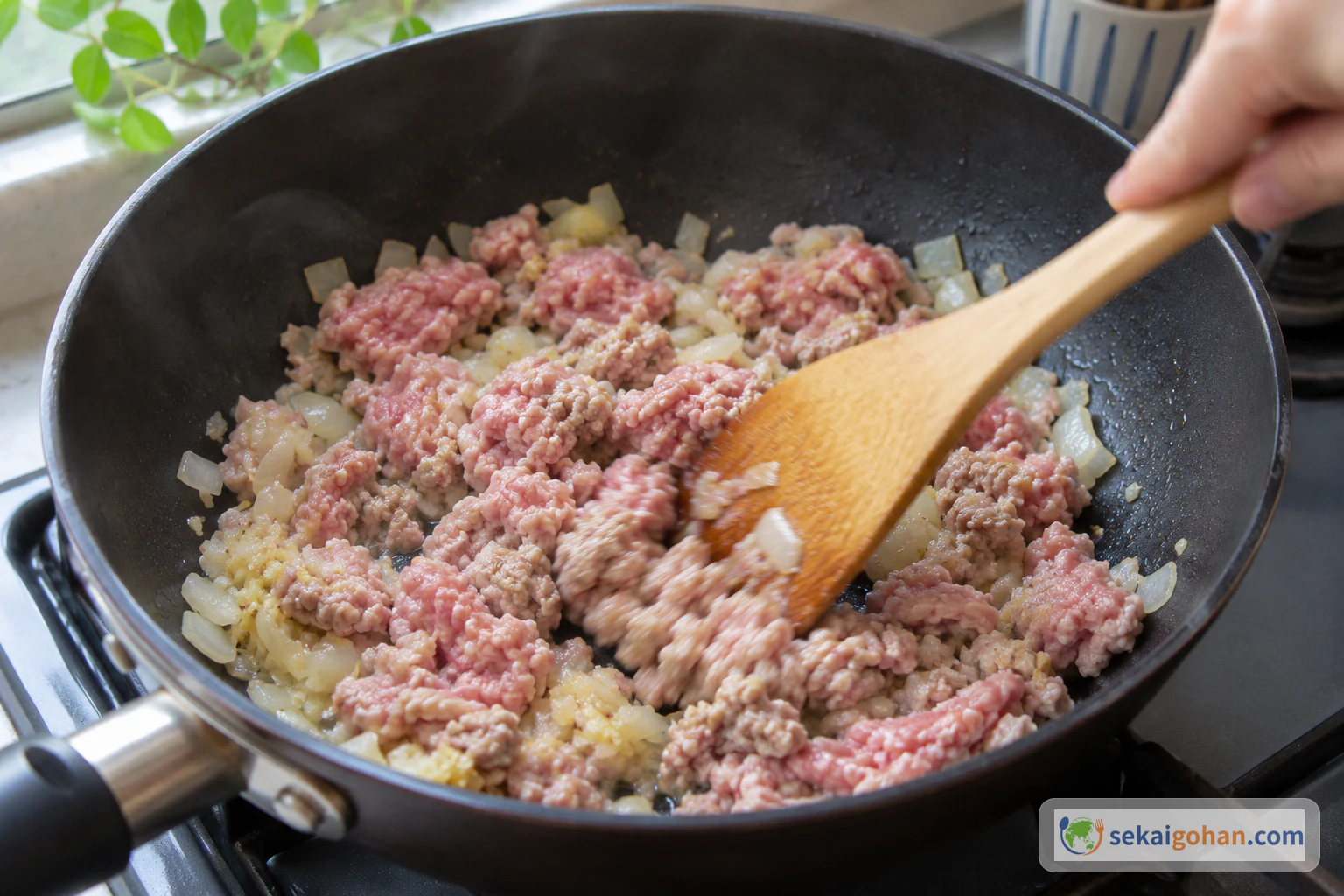
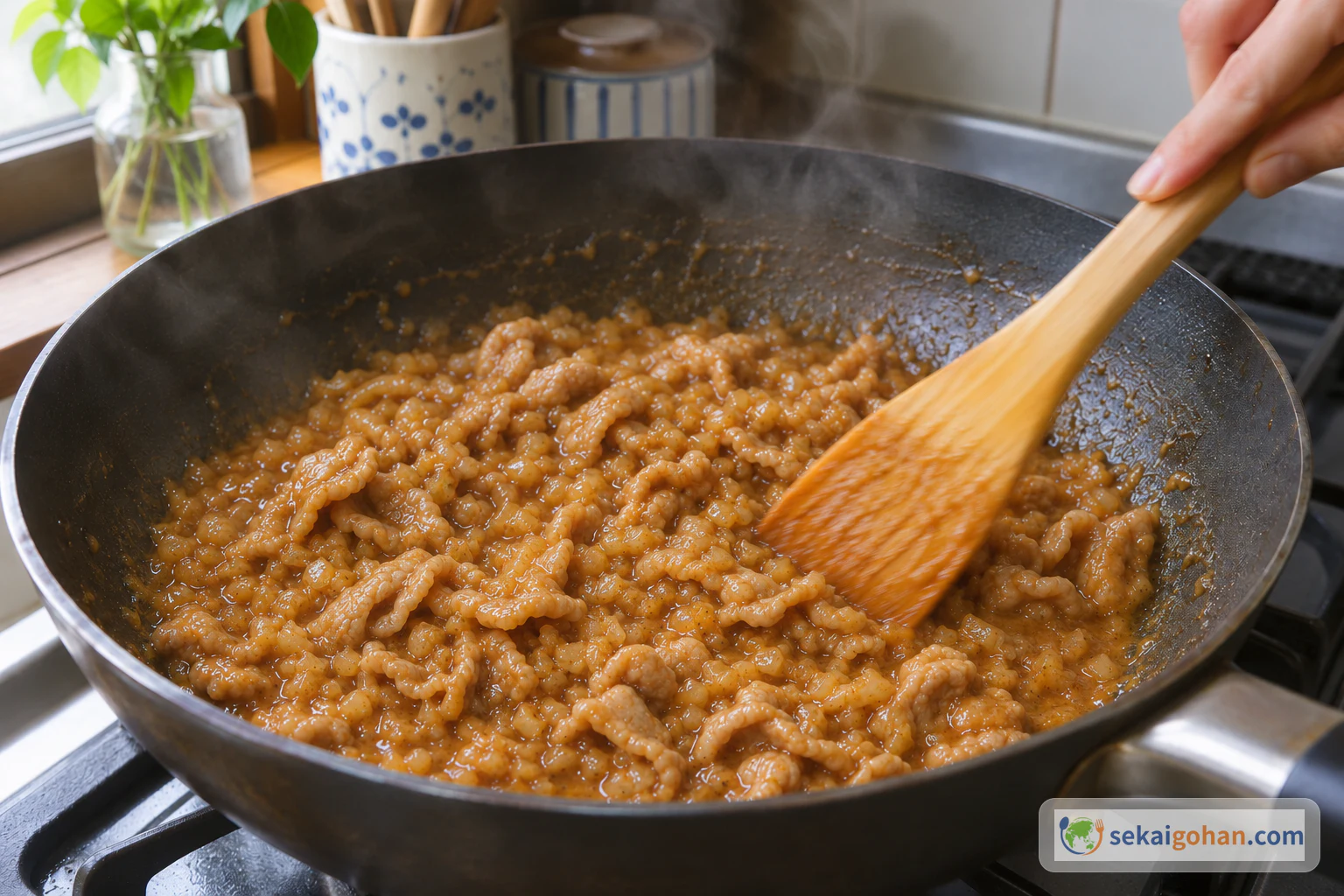
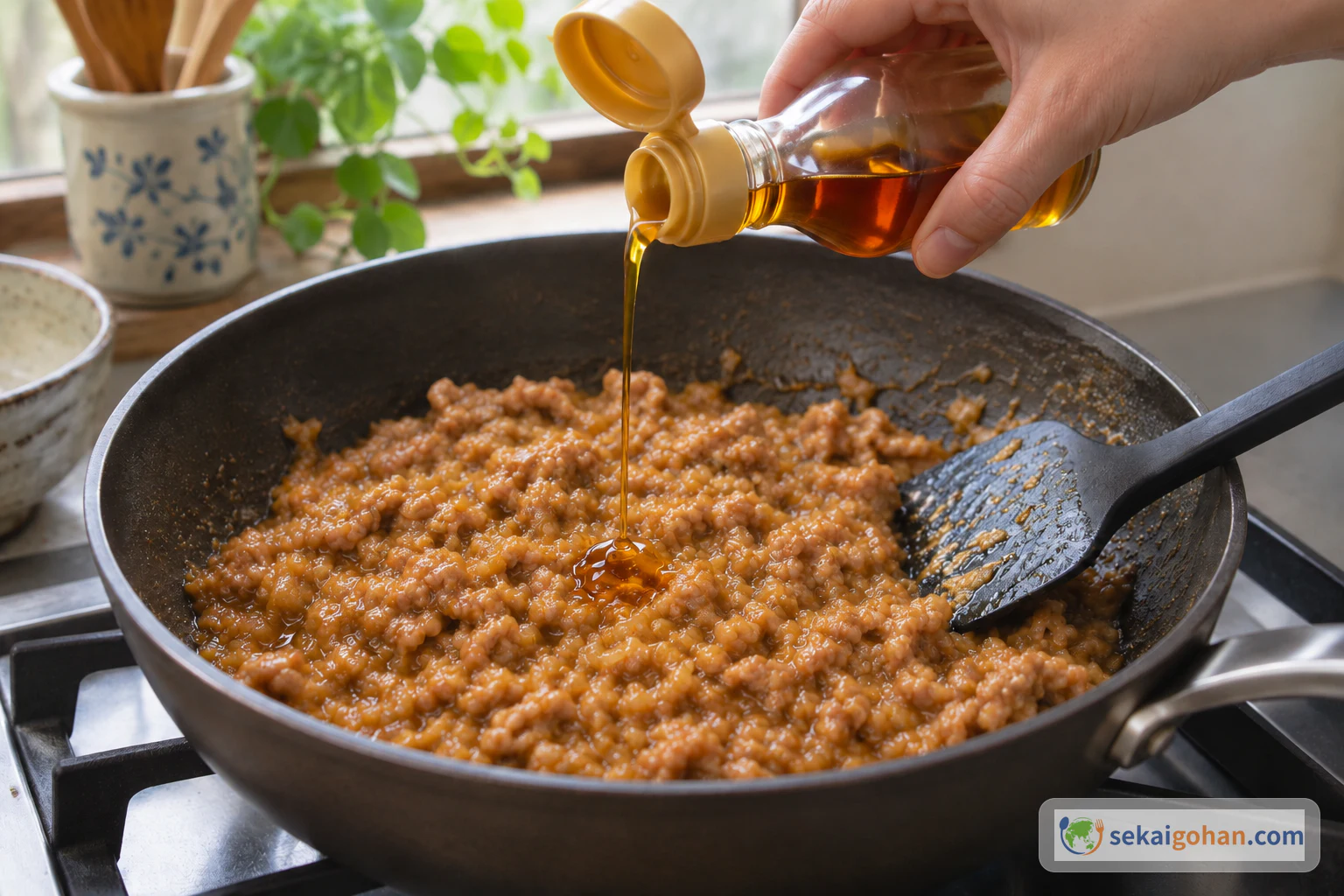
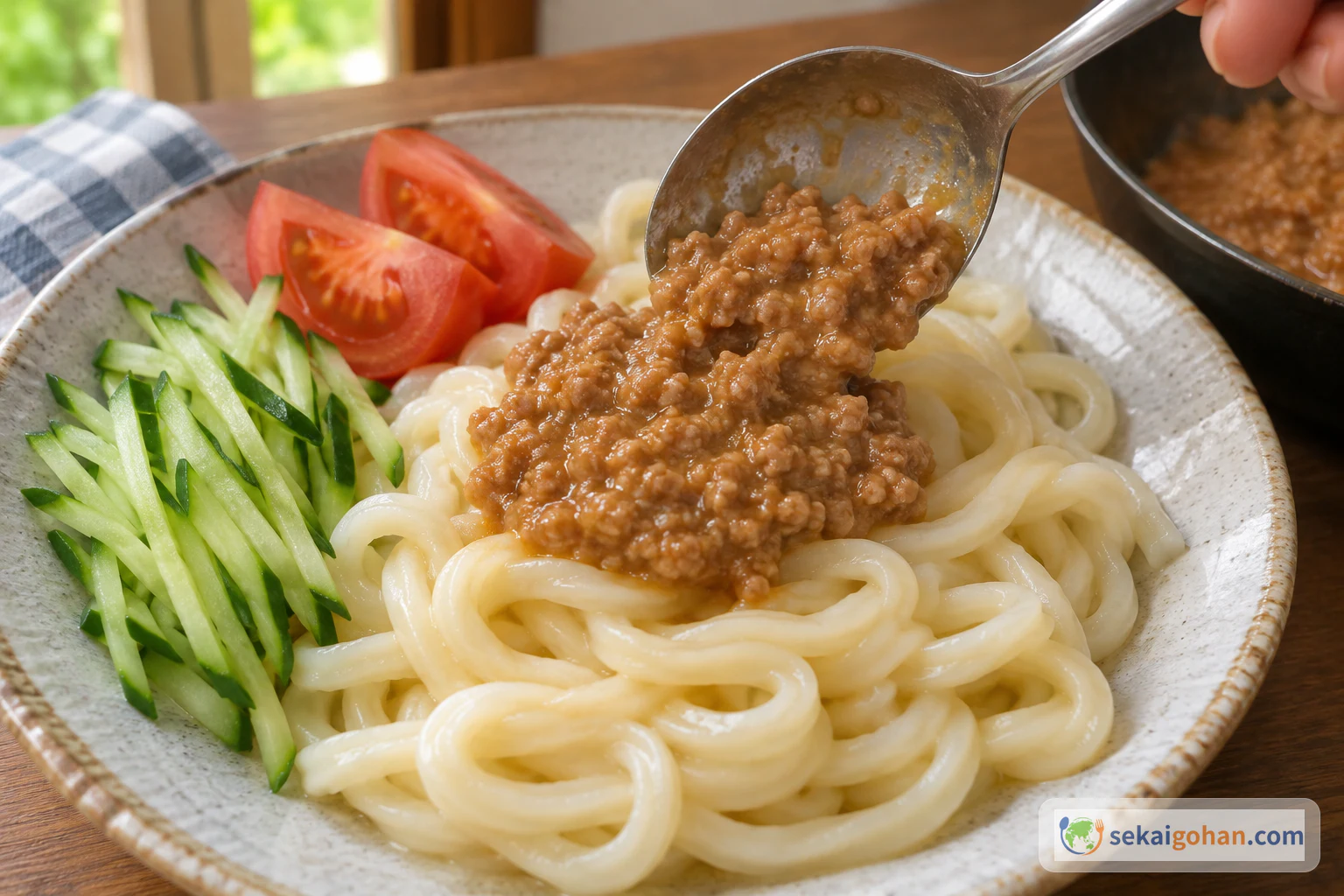
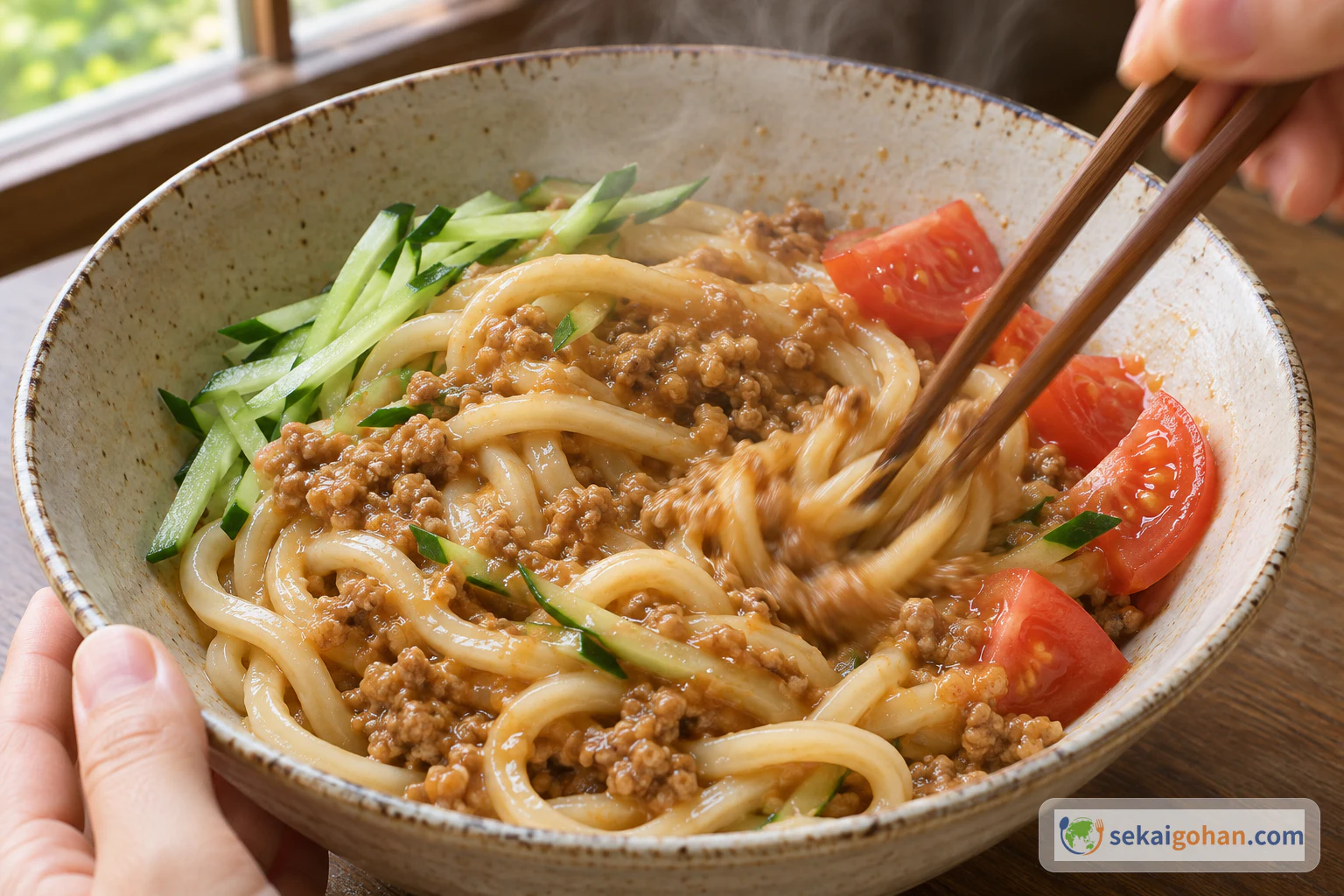
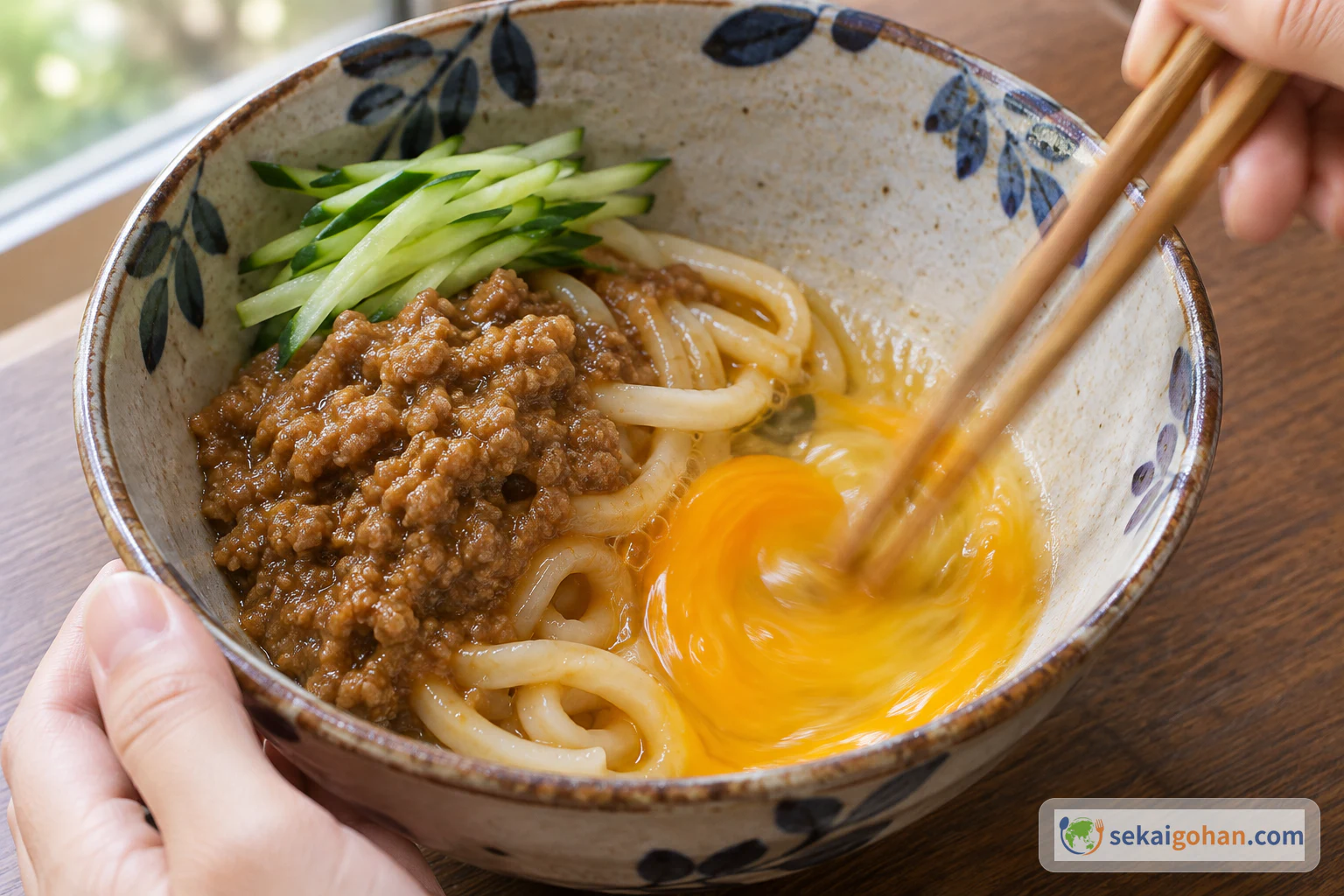
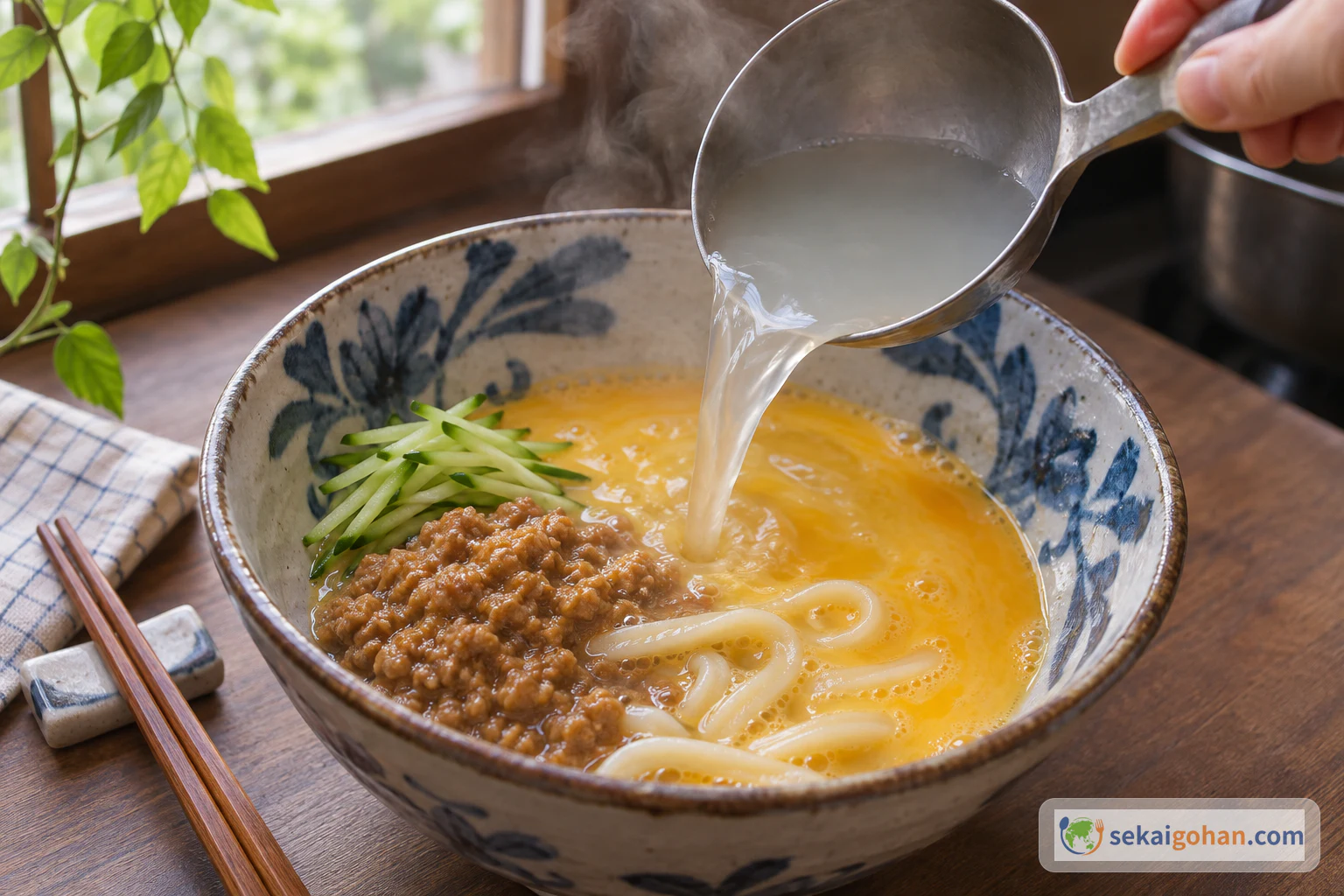
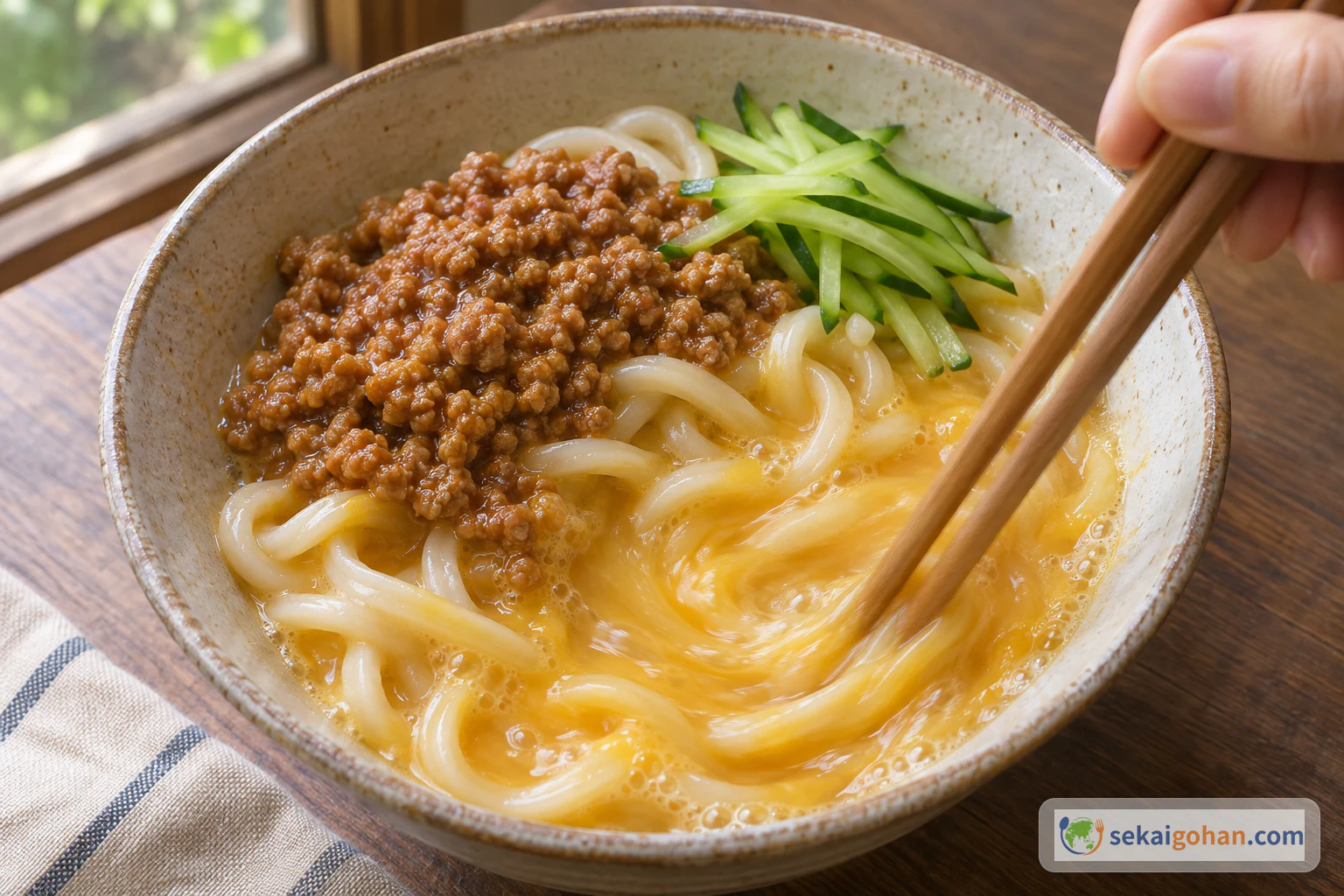
A bowl of hot noodles arrives with cucumber and a spoonful of meat miso, and from there it's up to you. You mix the noodles and sauce, then reach for vinegar, garlic, chili oil or grated ginger until the bowl tastes the way you want. That's how jajamen is eaten in Morioka, in Iwate Prefecture. The meal doesn't stop when the noodles run low: you leave a little noodle and meat miso in the bowl, then egg and hot noodle cooking water turn what's left into chitantan (チータンタン), an egg soup.
About Morioka Jajamen
The dish began at a street stall run by Takashina (高階貫勝) of Pairon (白龍), who took a stir-fried miso noodle dish from northeastern China as a reference. That connection doesn't make it the same as Chinese zhajiang noodles in general. In Morioka, jajamen means hot flat noodles, meat miso and garnishes such as cucumber and scallion. Diners mix everything at once or a little at a time, season it themselves, and finish with egg soup.
Each restaurant has its own meat miso, and home versions vary as well. One uses frozen udon, meat miso simmered until little liquid remains, and cucumber with shredded scallion. This recipe uses dried udon and adds tomato alongside the cucumber. The tomato is an addition, not a requirement.
Jajamen is also separate from two other dishes linked with the region: Morioka reimen, built around cold noodles and soup, and wanko soba, which is defined partly by how it is served. For more from the country's table, browse Japanese recipes.
Ingredients for 2 Servings
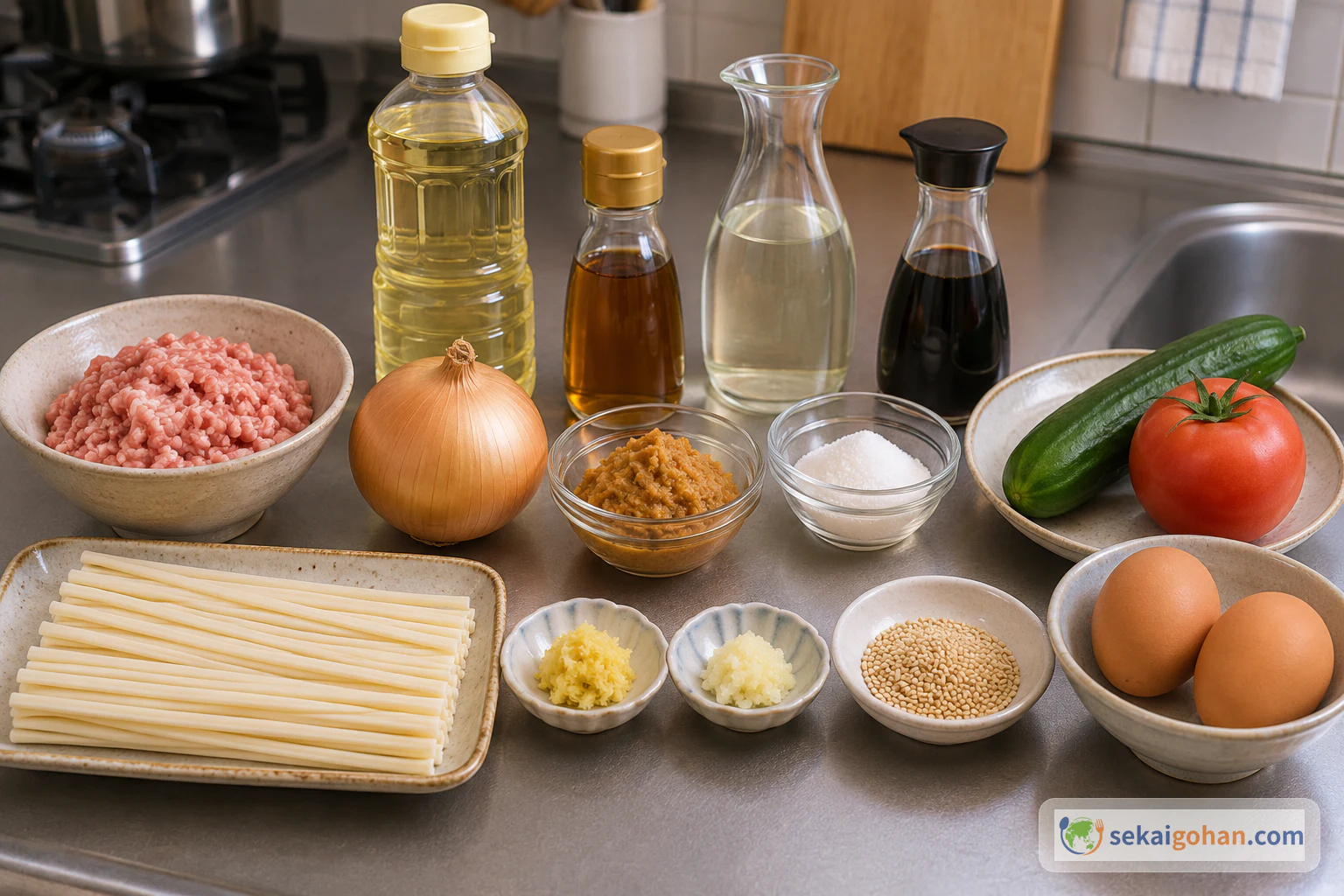
This dish contains wheat (udon), soy (miso and soy sauce), sesame and egg, along with pork. Check the labels on the products you buy.
Equipment
- Frying pan
- Wooden spatula
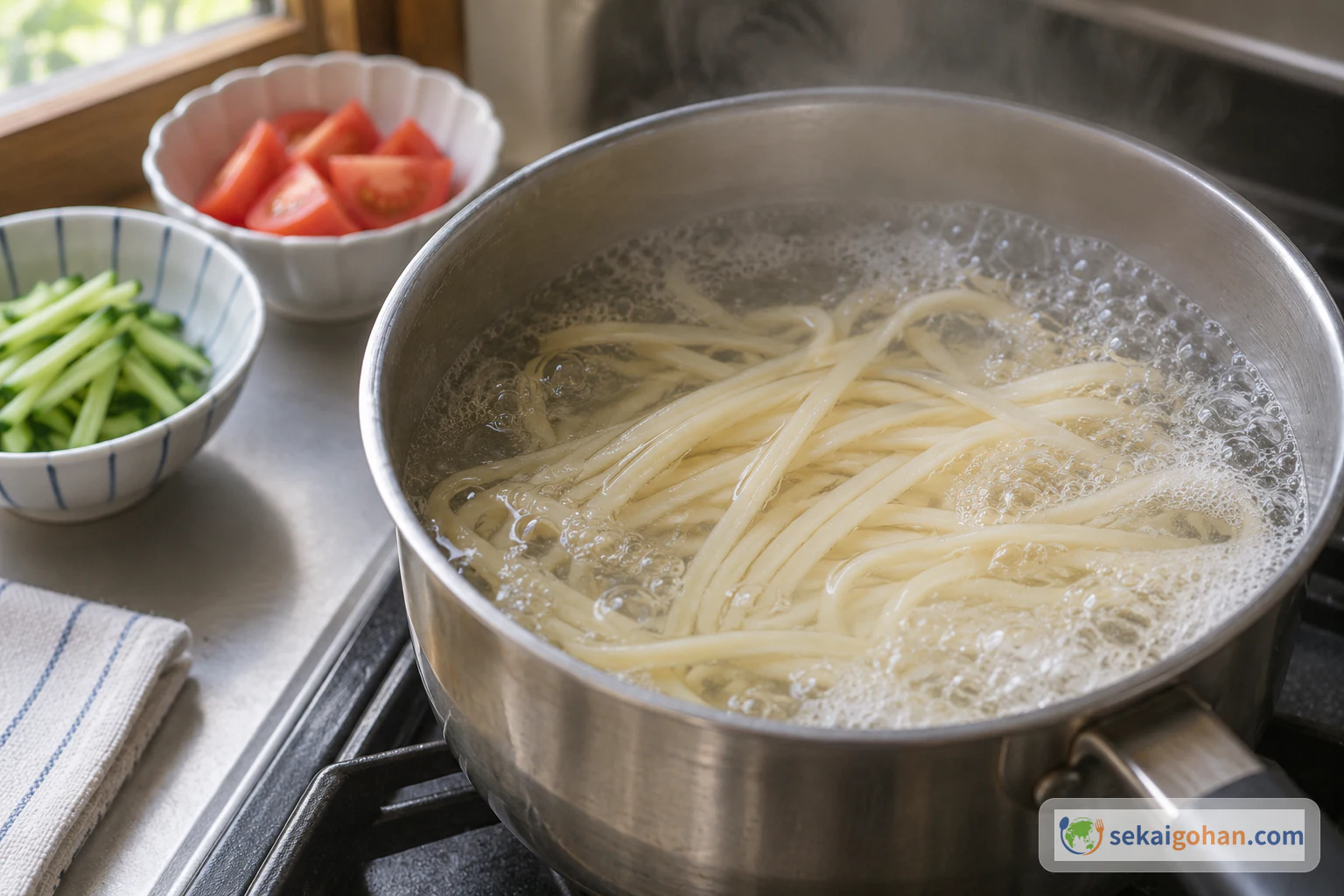
- Pot for the noodles
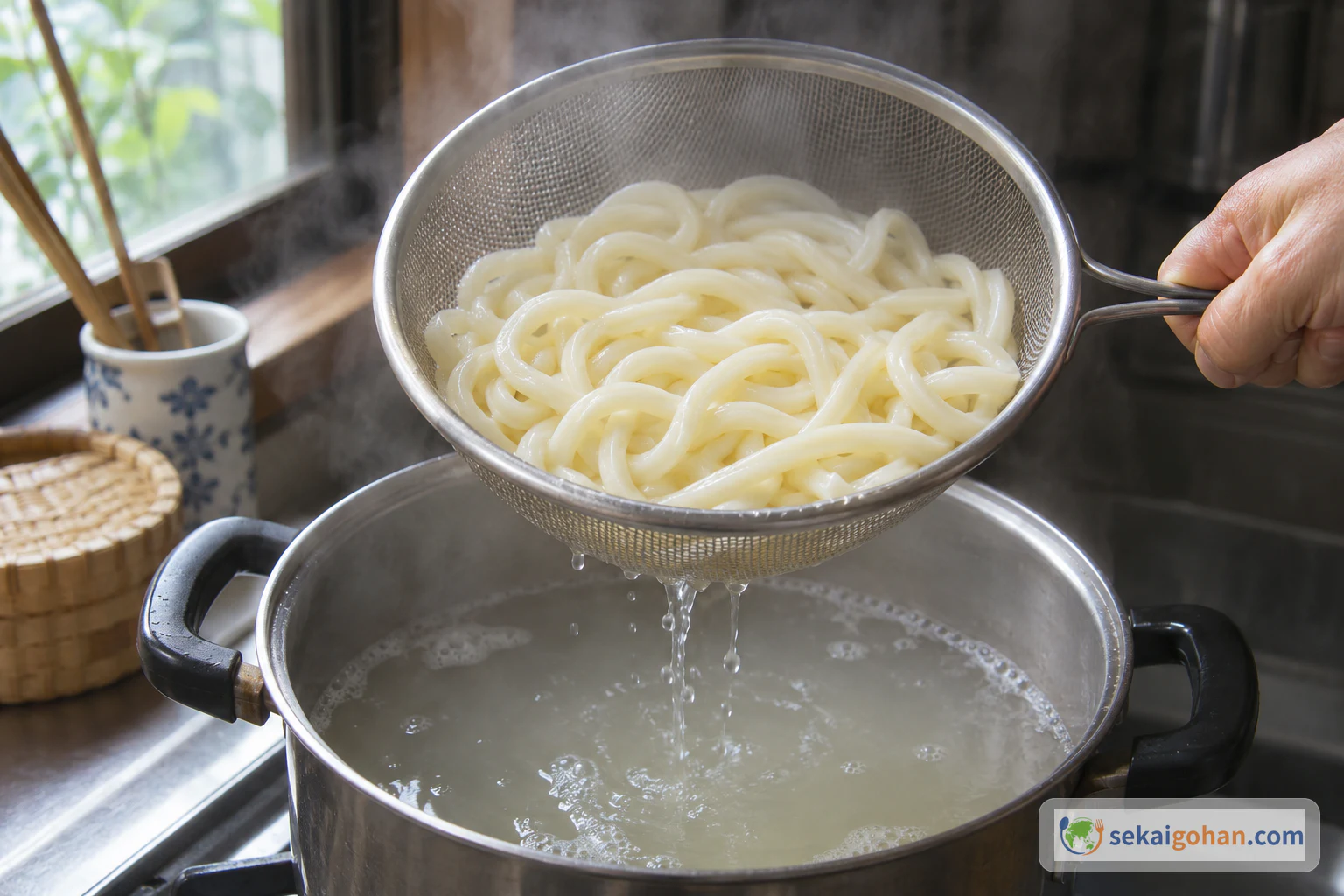
- Colander
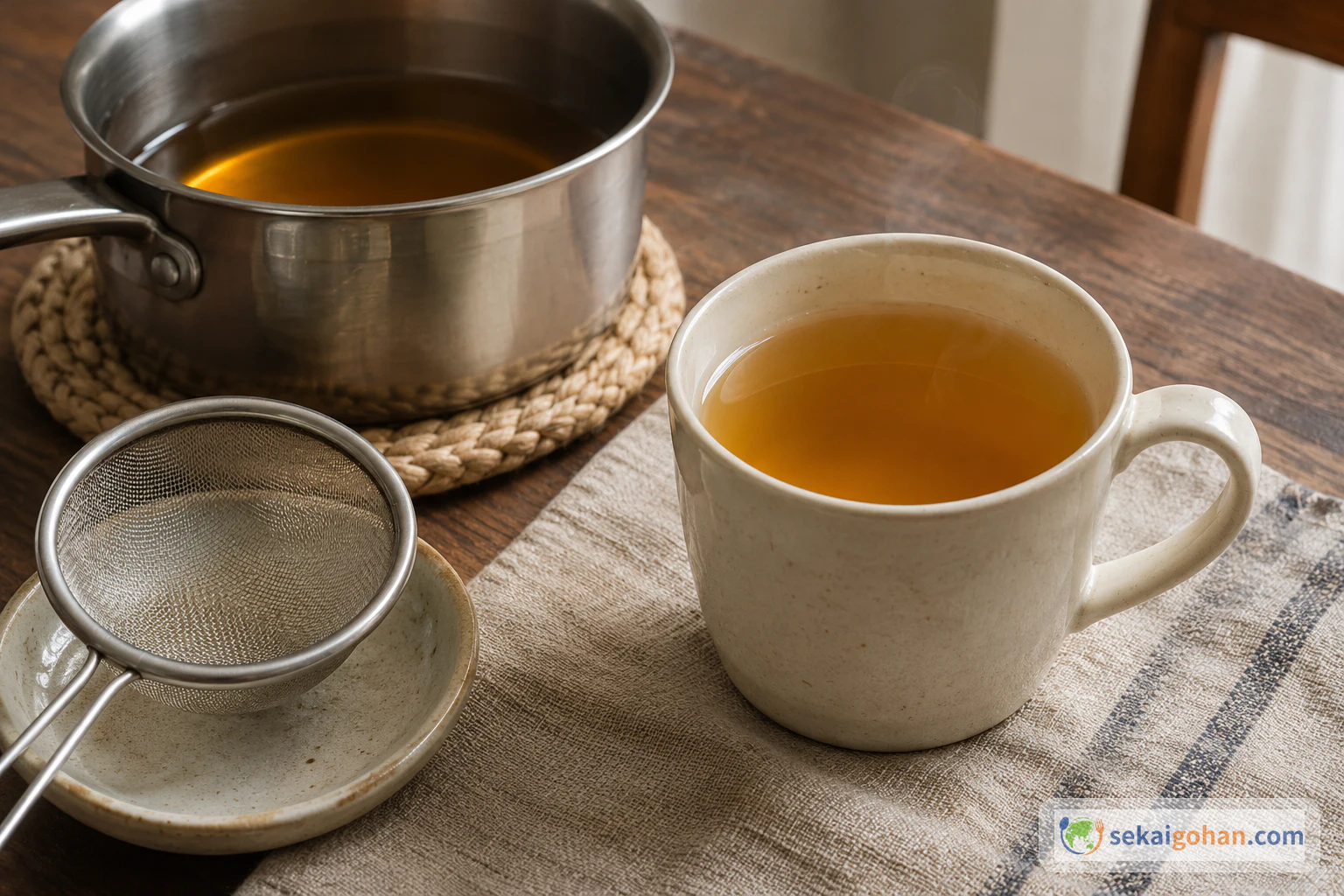
- Small pan for the chitantan
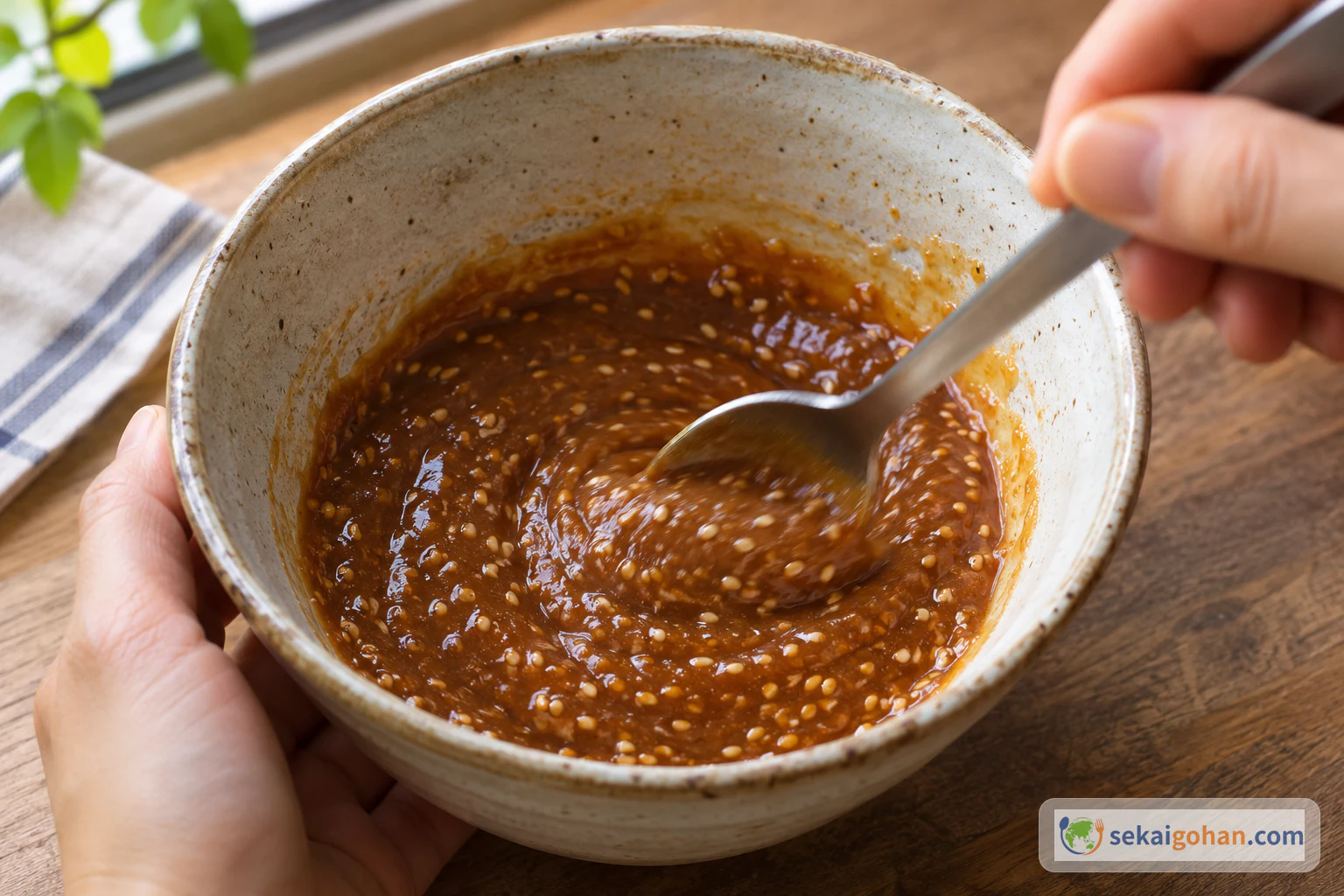
- Mixing bowl and spoon for the sauce
- Knife and cutting board
- Two serving bowls and chopsticks
- Food thermometer, if you have one
Choosing Ingredients for Jajamen
Udon. Morioka jajamen is served with hot flat noodles, so choose flat ones if you can. Dried udon works well at home; cook it according to the package.
Meat. Ground pork is used here, but a mixed grind works too. It will change the flavor of the meat.
Sake. If you have none, use 2 tbsp of water instead. Expect a little less aroma and richness.
Miso. Brands differ in flavor and saltiness, so start with the recipe amount and adjust at the table.
Method: Meat Miso First, Then Noodles, Then Soup
Finishing the meat miso before boiling the noodles lets you plate the udon while it is still hot.
Pork: Heat the meat to 167°F (75°C) at the center for at least 1 minute. Meat color alone doesn't confirm this. Keep utensils used for raw meat away from other foods, or wash them each time.
Chitantan: Steps 10 to 12 pour hot noodle water over raw egg. Don't rely on hot water alone to cook it. Heat the soup to 158°F (70°C) and hold it there for at least 1 minute, as in step 13. Salmonella dies at about 158°F (70°C) in about 1 minute. Keep eggs refrigerated and don't crack them ahead of time. Steam or the look of the egg doesn't show its temperature.
Higher-risk diners: Don't serve unheated dishes to people with lower resistance. Anyone pregnant, young children, older adults and people with weakened immune systems should avoid raw or soft egg. Make sure step 13 is completed, or leave out the egg.
Jajamen Troubleshooting
| Problem | What to do |
|---|---|
| The meat miso is watery | Keep stirring over medium heat for the full time, until the sauce coats the meat and no liquid pools. Thicken it by cooking, not with extra seasoning. |
| The flavor is too strong or too mild | Miso varies in saltiness. Leave the pan seasoning as it is and let each person adjust with a little vinegar or chili oil at the table. |
| The noodles have gone cold | Finish the meat miso first, then boil the noodles just before serving, drain, and plate while hot. |
| There is no noodle water left | Chitantan can't be made this way without it. Next time, set some aside before draining. |
| The egg isn't firmly set | Keep heating in the small pan until the soup reaches 158°F (70°C) or the egg is firmly set, then hold for at least 1 minute. |
Variations and Leftovers
The bowl is meant to be adjusted, at the stove or at the table:
| Change | Effect |
|---|---|
| Add 1 tsp doubanjiang to the sauce | Adds heat; left out of the standard version |
| Add vinegar at the table | Adds acidity |
| Add chili oil at the table | Adds heat and aroma |
| Leave out the tomato | Matches the basic Morioka style |
| Leave out the egg | Ends the meal with the noodles and skips chitantan |
Jajamen is best eaten soon after cooking, and food shouldn't sit at room temperature for long during or after cooking. Divide any leftovers into clean, shallow containers so they cool quickly, then refrigerate right away. Reheat thoroughly before eating.
Frequently Asked Questions
Is pouring hot noodle water over the egg enough?
It can't be relied on to cook the egg through. That's why the last step warms the egg soup in a small pan until it reaches a safe temperature.
What if I can't make chitantan?
Without reserved noodle water, you can't make it this way. If you can't heat the egg thoroughly, leave it out and end with the noodles.