Kung Pao Chicken: A Sichuan Gong Bao Recipe (宮保雞丁)

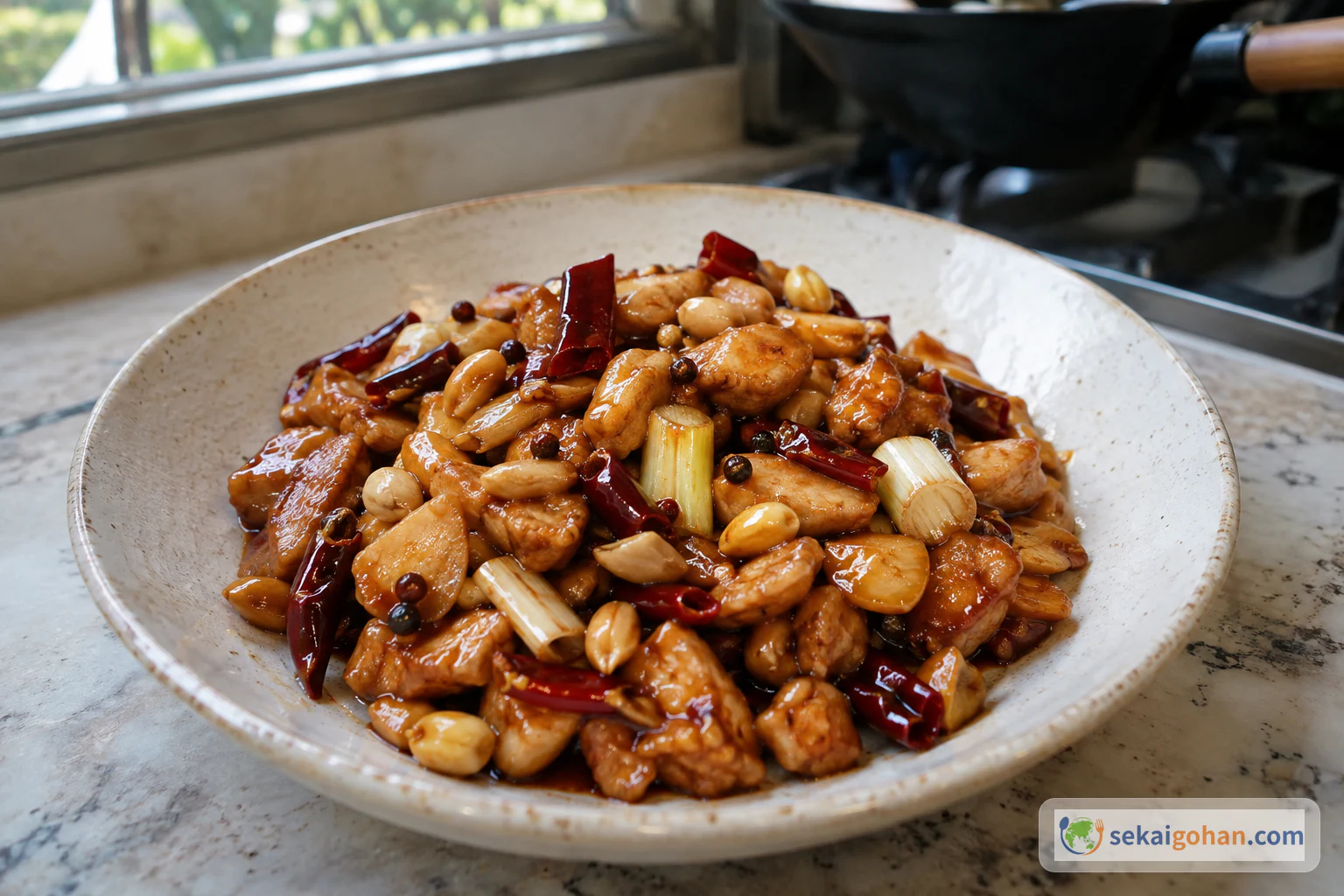
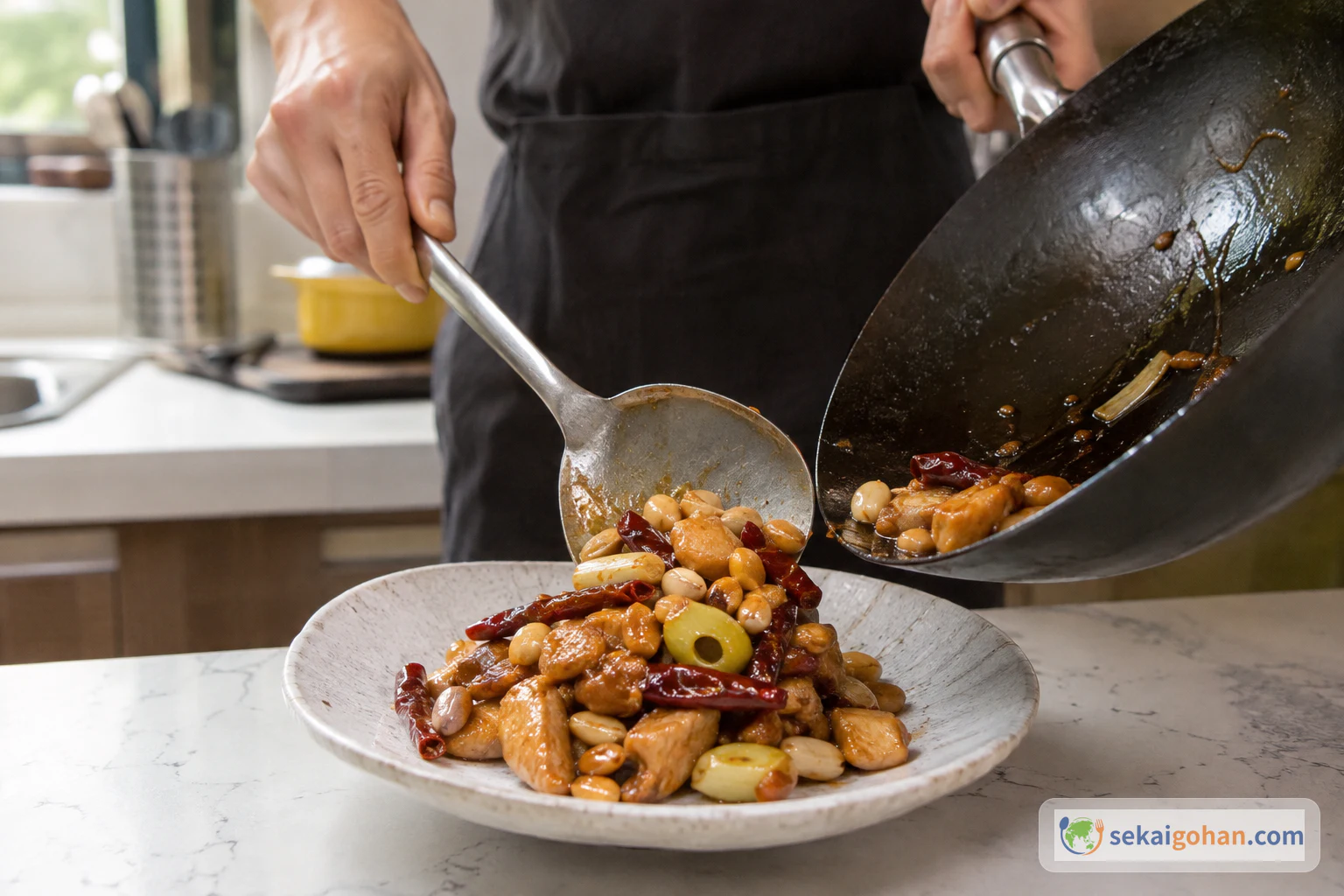
Plated Kung Pao chicken with diced chicken, dried red chiles, whole Sichuan peppercorns, scallion whites and roasted peanuts in a glossy sauce
Cuisine
Chinese (Sichuan)

How to make Sichuan-style Kung Pao (Gong Bao) chicken with diced chicken breast, dried chiles, whole Sichuan peppercorns, a glossy sauce with Chinkiang vinegar, and roasted peanuts, with step-by-step images, ingredient notes, and raw chicken safety guidance.

Cooking flow

Cooking steps

STEP11 / 12

Cut and marinate the chicken

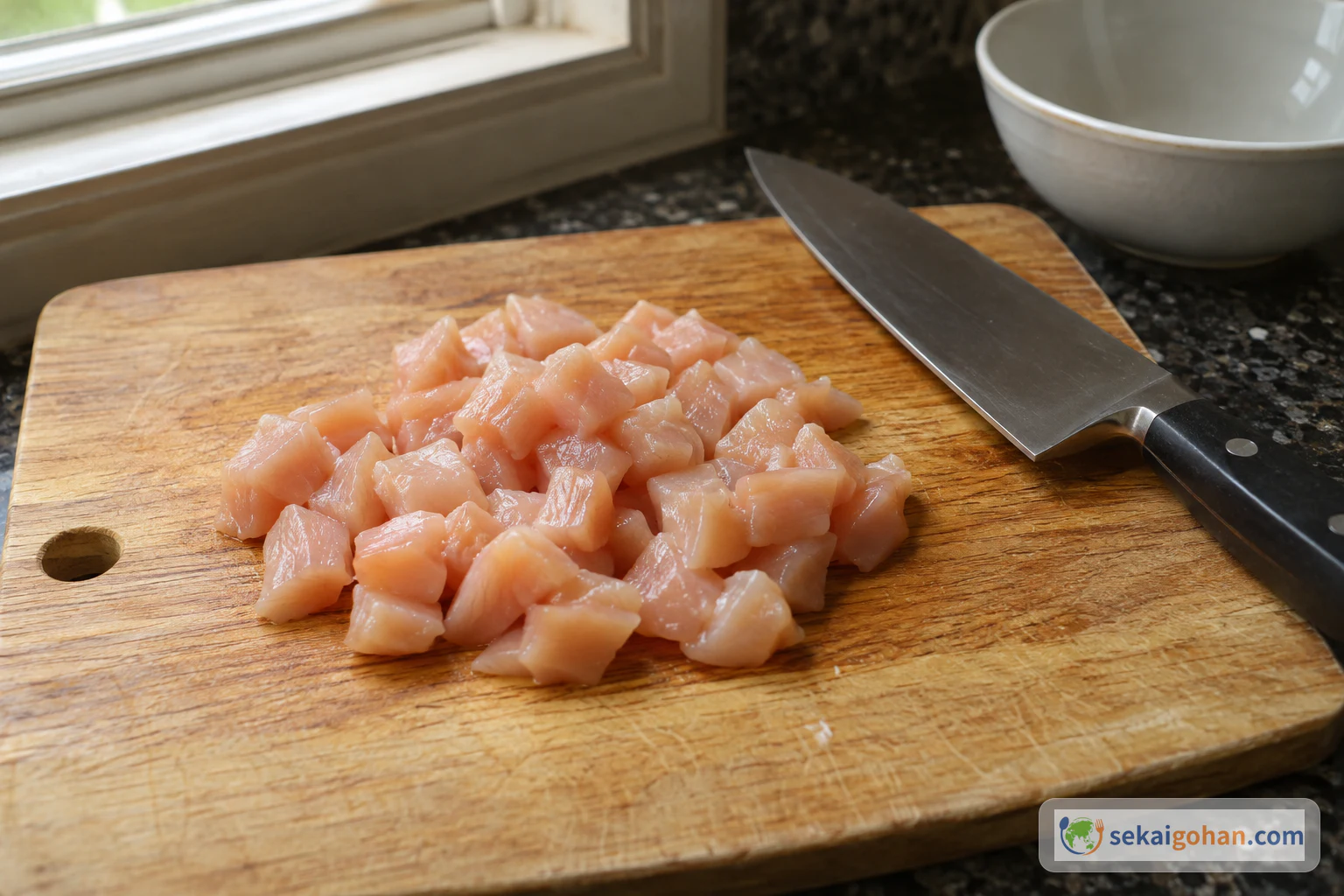
Raw chicken strips cut into small cubes on the same board
Small cubes, as even as you can make them

Do not wash the chicken. Using a board and knife reserved for raw meat, cut the skinless breasts into strips about 0.5 inches (1.5 cm) wide, as evenly as you can, then cut across the strips to make small cubes. If you have no separate board and knife, prepare the other ingredients first and cut the chicken last. Transfer the cubes to a small bowl. Wash the surfaces, tools and your hands after handling raw chicken.

STEP22 / 12

Mix the marinade and coat the chicken

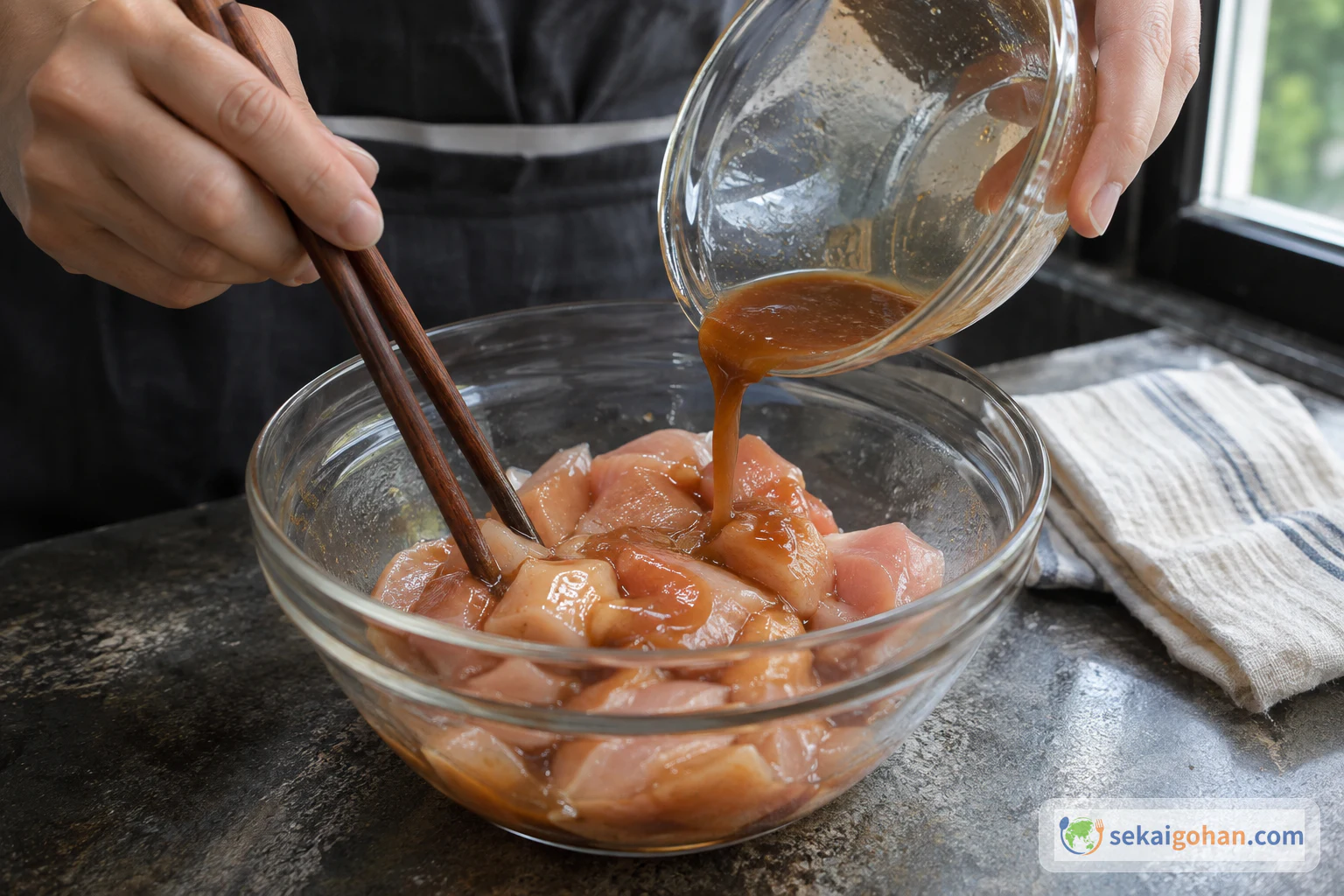
Mixed marinade being worked through raw chicken cubes in a bowl
Coat the chicken all over

In a second small bowl, combine 1/2 tsp salt, 2 tsp light soy sauce, 1 tsp Shaoxing wine and 1½ tsp potato flour. Add 1 tbsp water, which is the marinade water, separate from the water in the sauce, and stir until evenly combined. Add the marinade to the chicken and mix until every piece is coated.

STEP33 / 12

Refrigerate the chicken

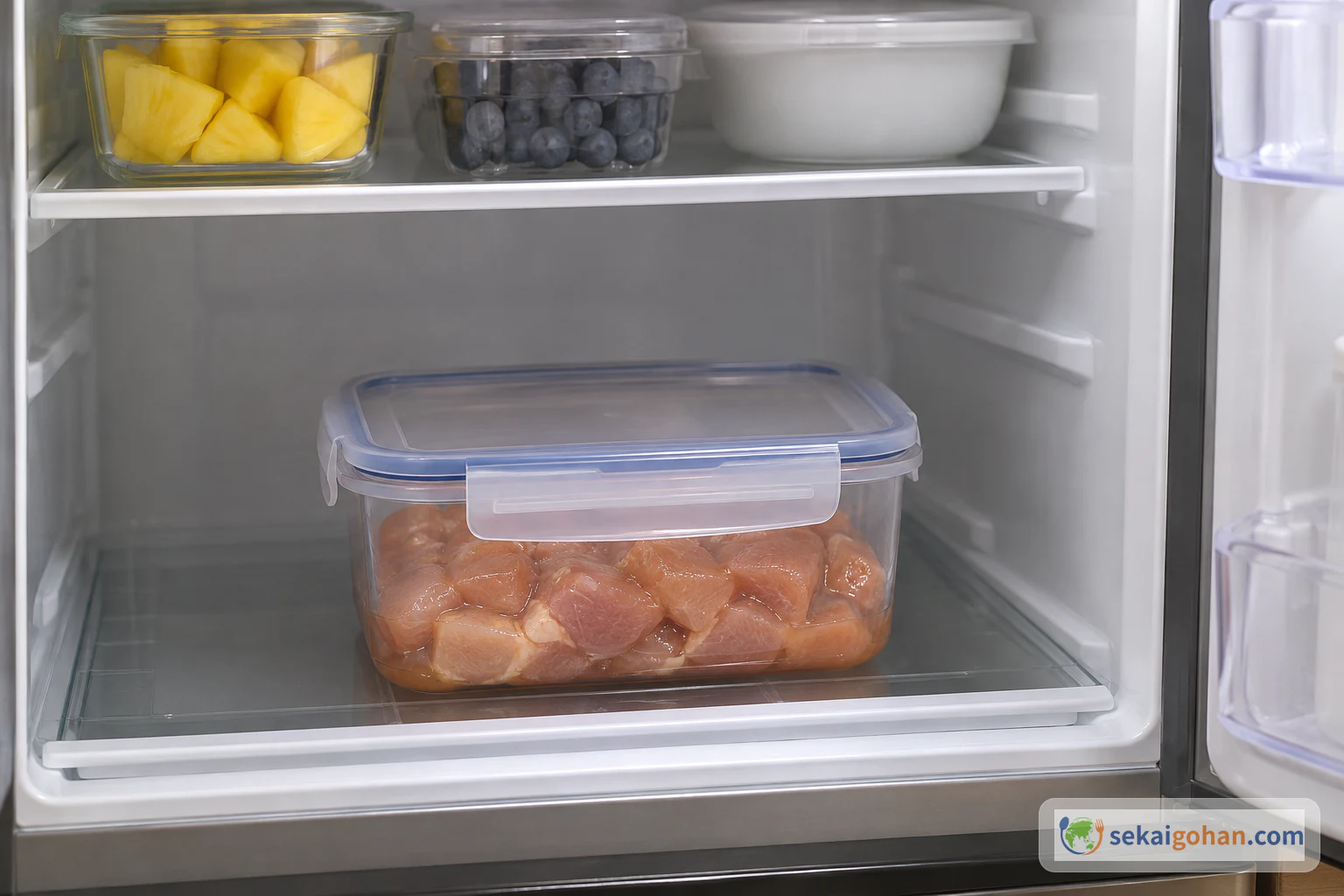
Covered container of marinated raw chicken on the lowest refrigerator shelf, below separate ready-to-eat foods
Covered, on the lowest shelf, and away from ready-to-eat foods

Put the marinated chicken in a covered, leakproof container on the lowest shelf of the refrigerator, away from ready-to-eat foods. Leave it there while you prepare the remaining ingredients.

STEP44 / 12

Prepare the garlic and ginger

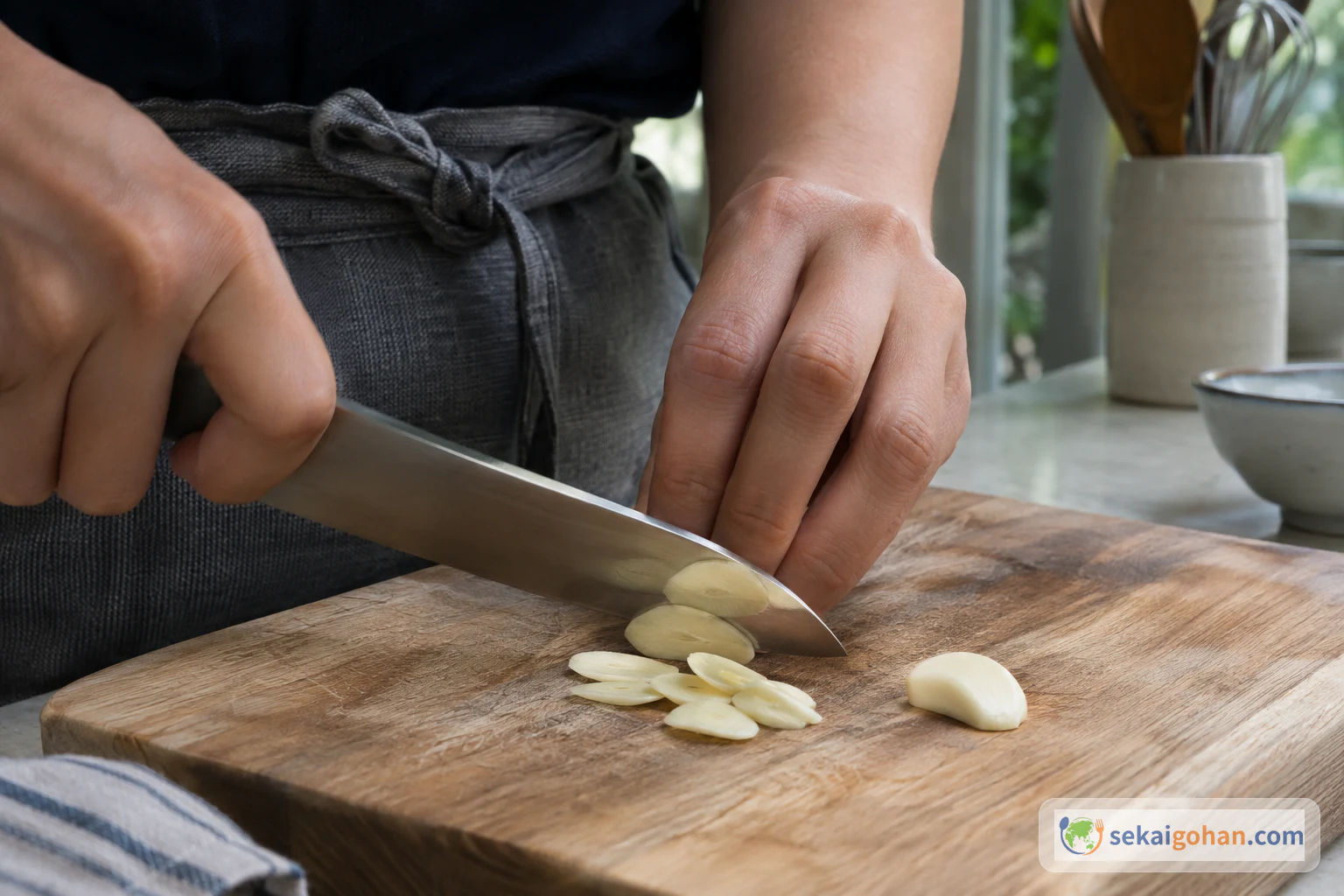
Peeled garlic being thinly sliced on a cutting board
Thin garlic slices

Peel the 3 garlic cloves and slice them thinly. Peel an amount of ginger equal to the garlic and slice it thinly as well. Keep the garlic and ginger together on a plate, ready to go into the wok.

STEP55 / 12

Prepare the scallions and chiles

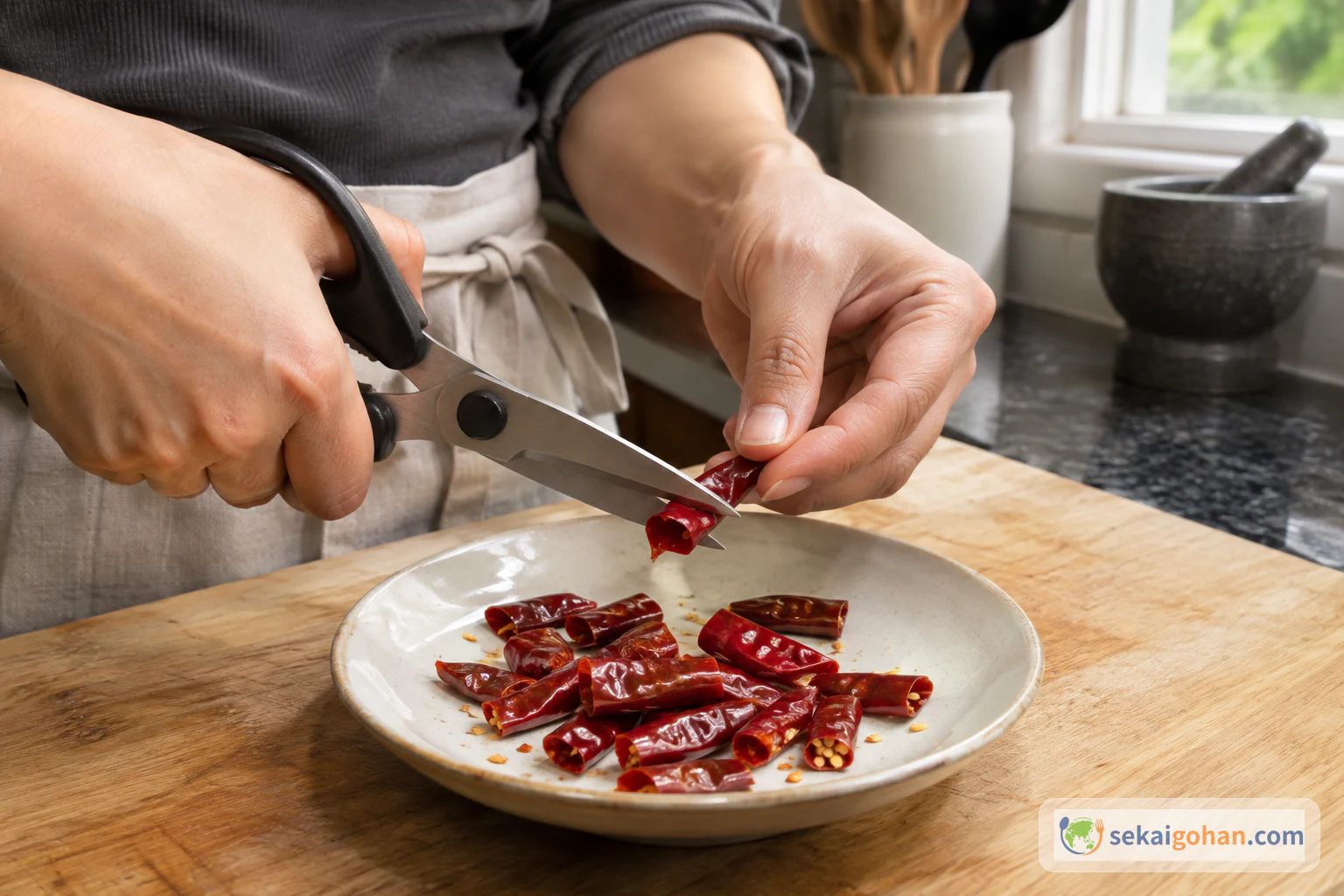
Dried red chiles being snipped into short sections with scissors over a plate
Halves or small pieces

Separate the white parts of the 5 scallions; the green tops are not used in this dish. Cut the whites into short lengths that suit the size of the chicken cubes. Cut the dried chiles in half or into small pieces, then remove the seeds as far as you can. It's fine if a few remain.

STEP66 / 12

Mix the sauce

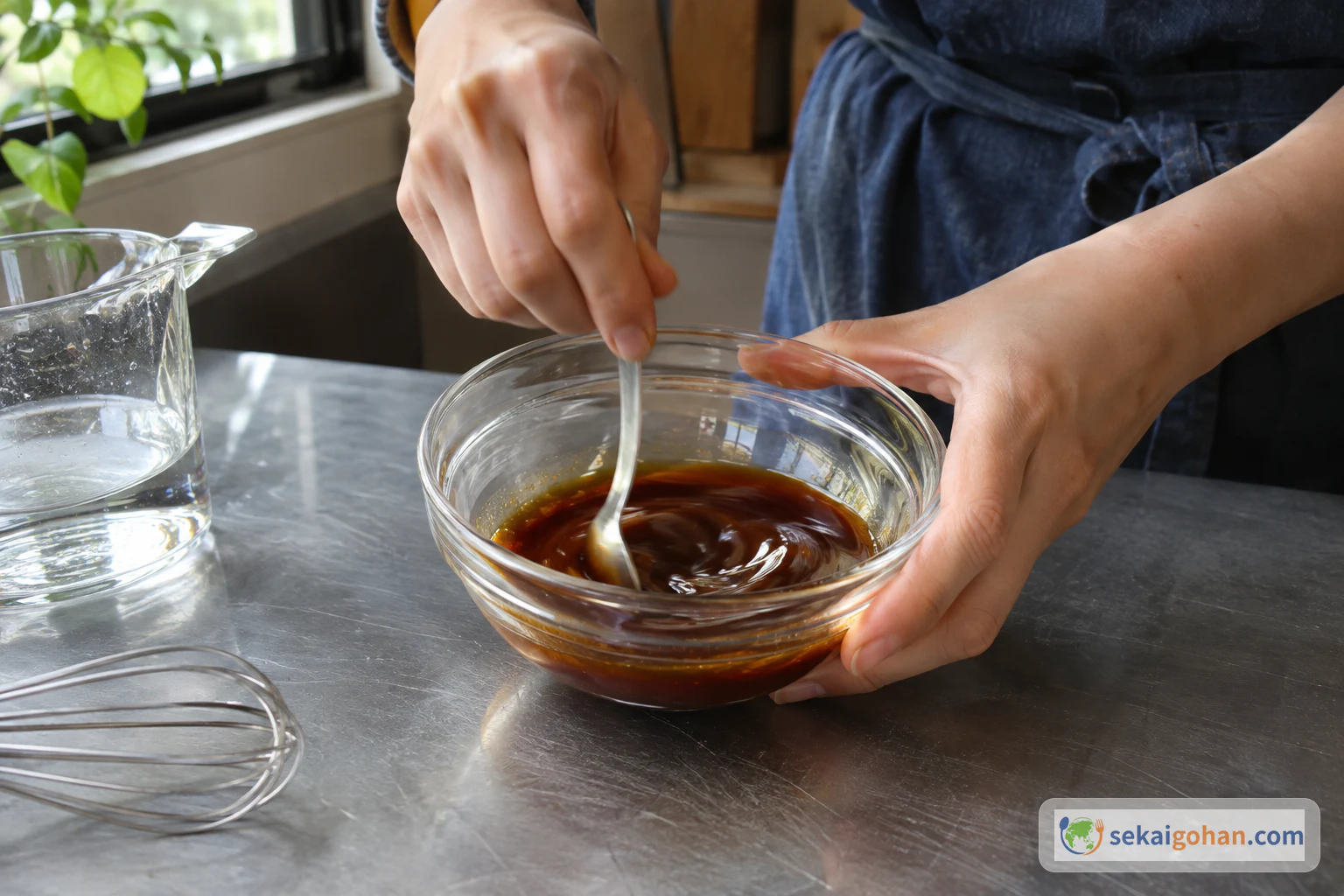
Dark sauce being stirred in a small glass bowl
The sauce is mixed before any cooking starts

In another small bowl, combine 1 tbsp caster sugar, 3/4 tsp potato flour, 1 tsp dark soy sauce, 1 tsp light soy sauce, 1 tbsp Chinkiang vinegar, 1 tsp sesame oil and 1 tbsp water. Stir well and keep it near the stove with the other prepared ingredients. The sauce is now fully mixed before any cooking starts.

STEP77 / 12

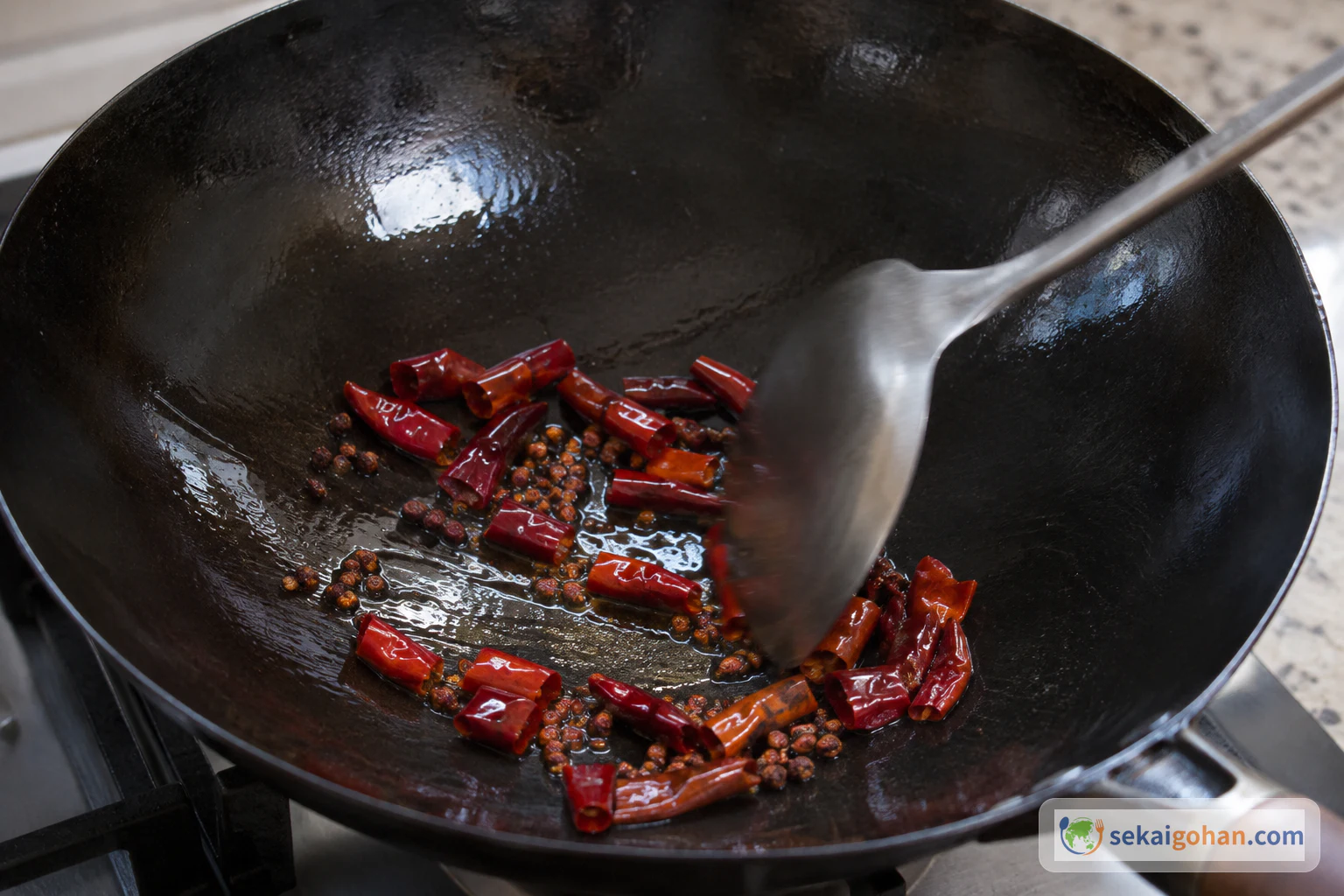
Fry the chiles and peppercorns

Dried chiles and whole Sichuan peppercorns being stirred in hot oil, the chiles still red
Brief frying, without burning the chiles

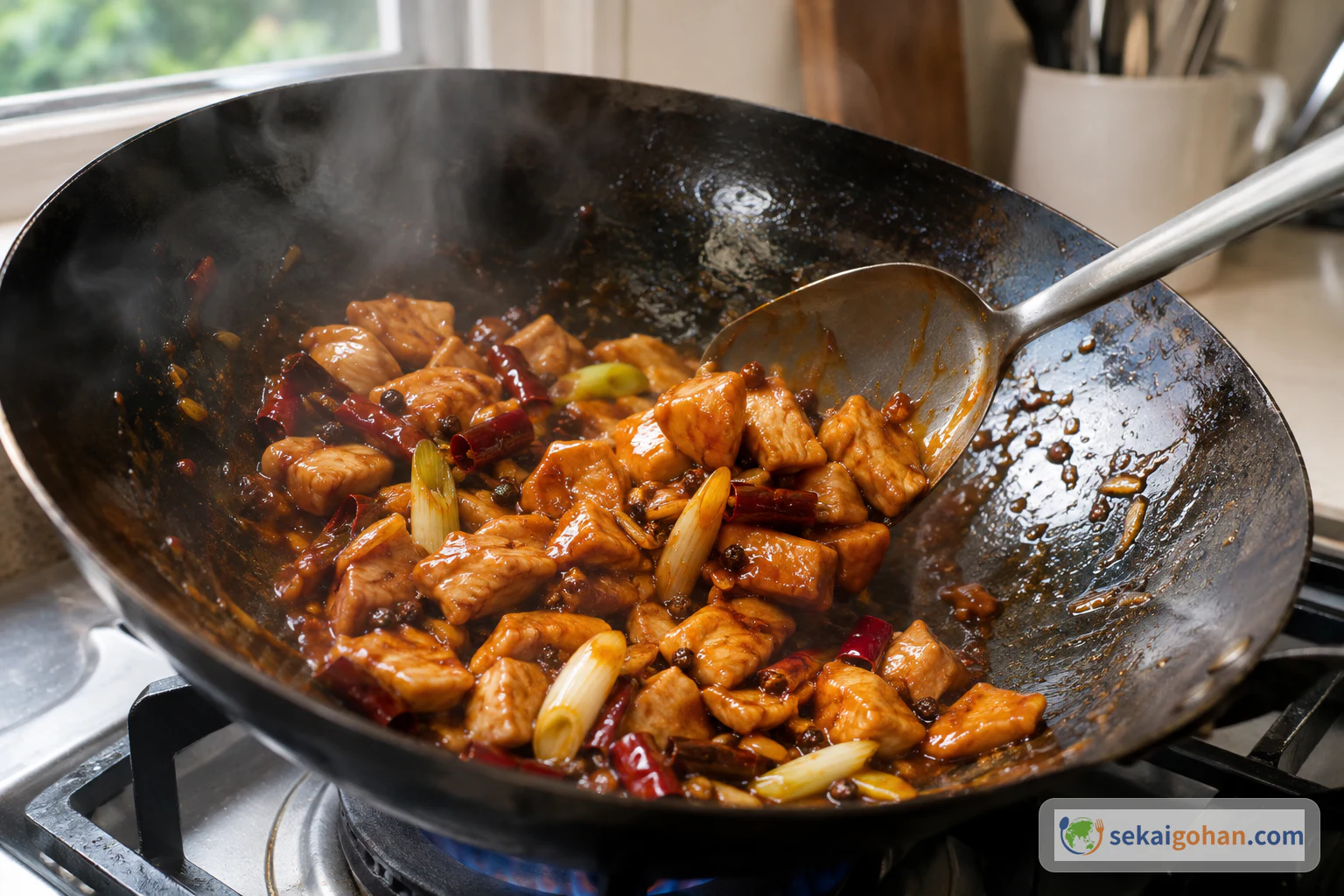
Set the empty wok over high heat, then pour in 2 tbsp cooking oil once the wok is hot. Add the prepared chiles, followed by 1 tsp whole Sichuan peppercorns. Stir-fry briefly, until the chiles just begin to color but have not burned. If the wok is overheating, lift it off the heat for a moment, but only if you need to.

STEP88 / 12

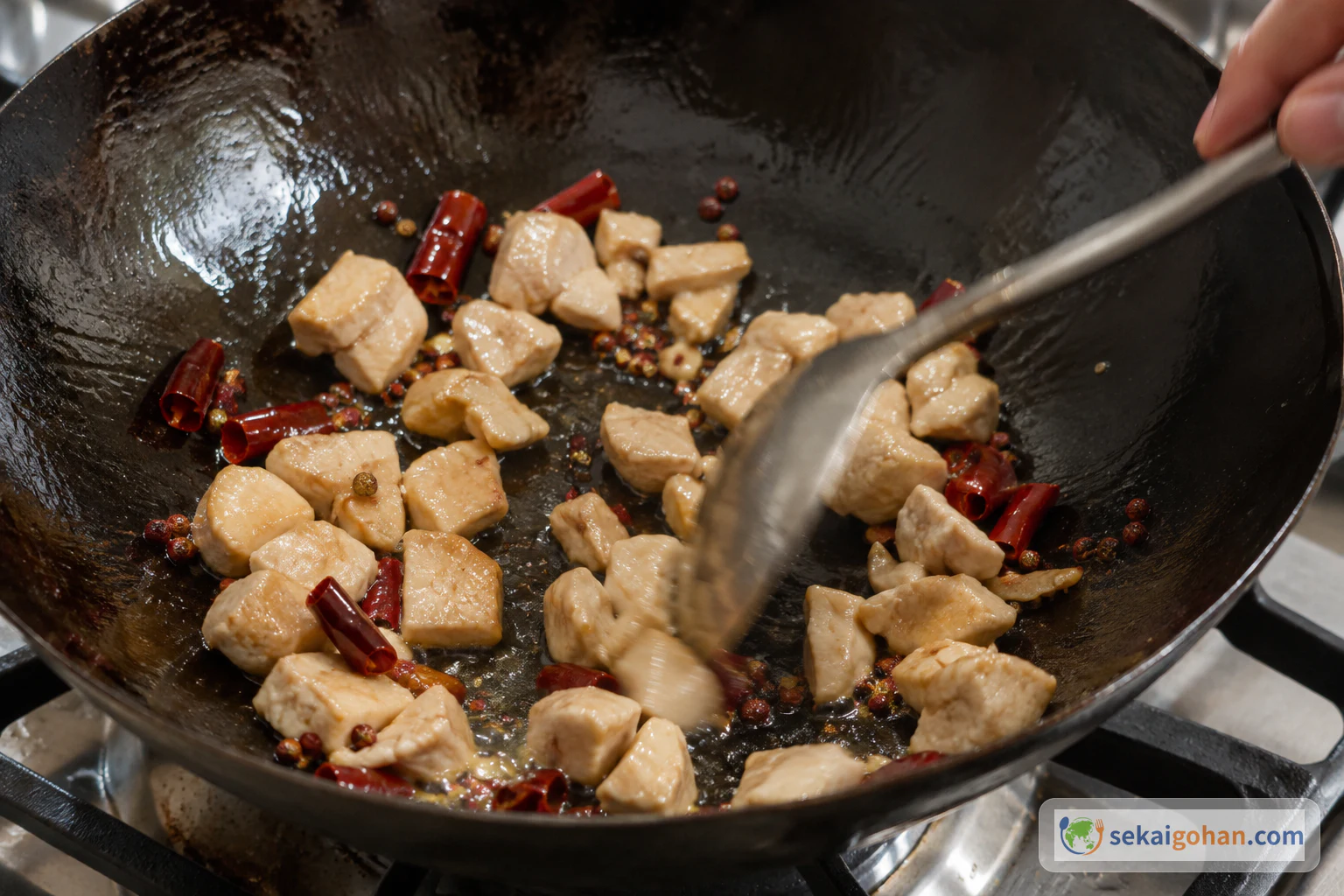
Stir-fry the chicken until separated

Chicken cubes being stirred apart among the chiles and peppercorns
Keep stirring until the pieces come apart

Take the chicken from the refrigerator and add it to the wok, then wash your hands after handling it. Over high heat, stir constantly until the cubes have separated from one another.

STEP99 / 12

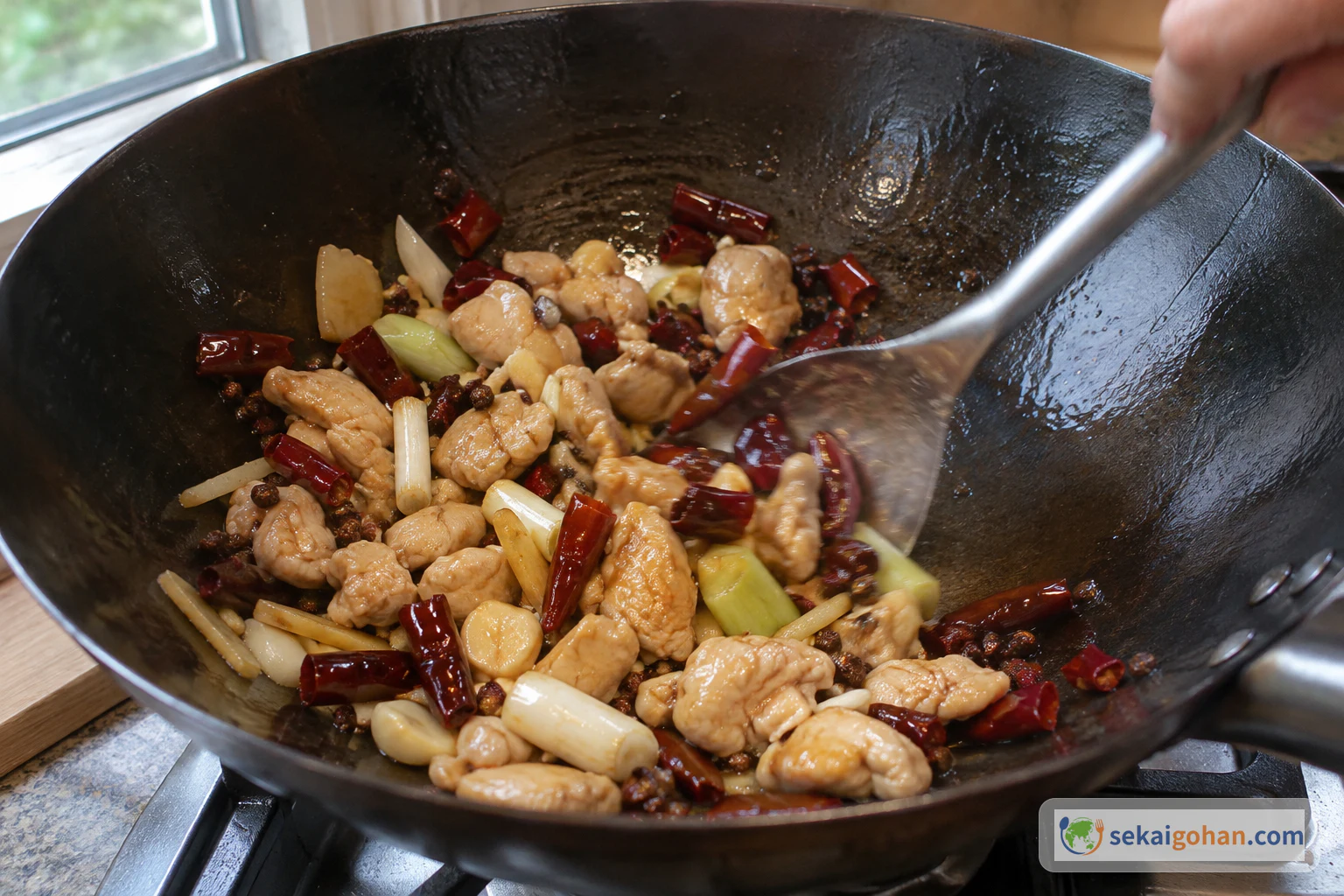
Add the aromatics and cook through

Chicken, chiles, peppercorns, ginger, garlic and scallion whites being stir-fried together
Cook until fragrant and just cooked through

Add the sliced ginger, then the sliced garlic, then the cut scallion whites. Keep stir-frying until the aromatics are fragrant and the chicken is just cooked through. Test one of the larger pieces to judge doneness.

STEP1010 / 12

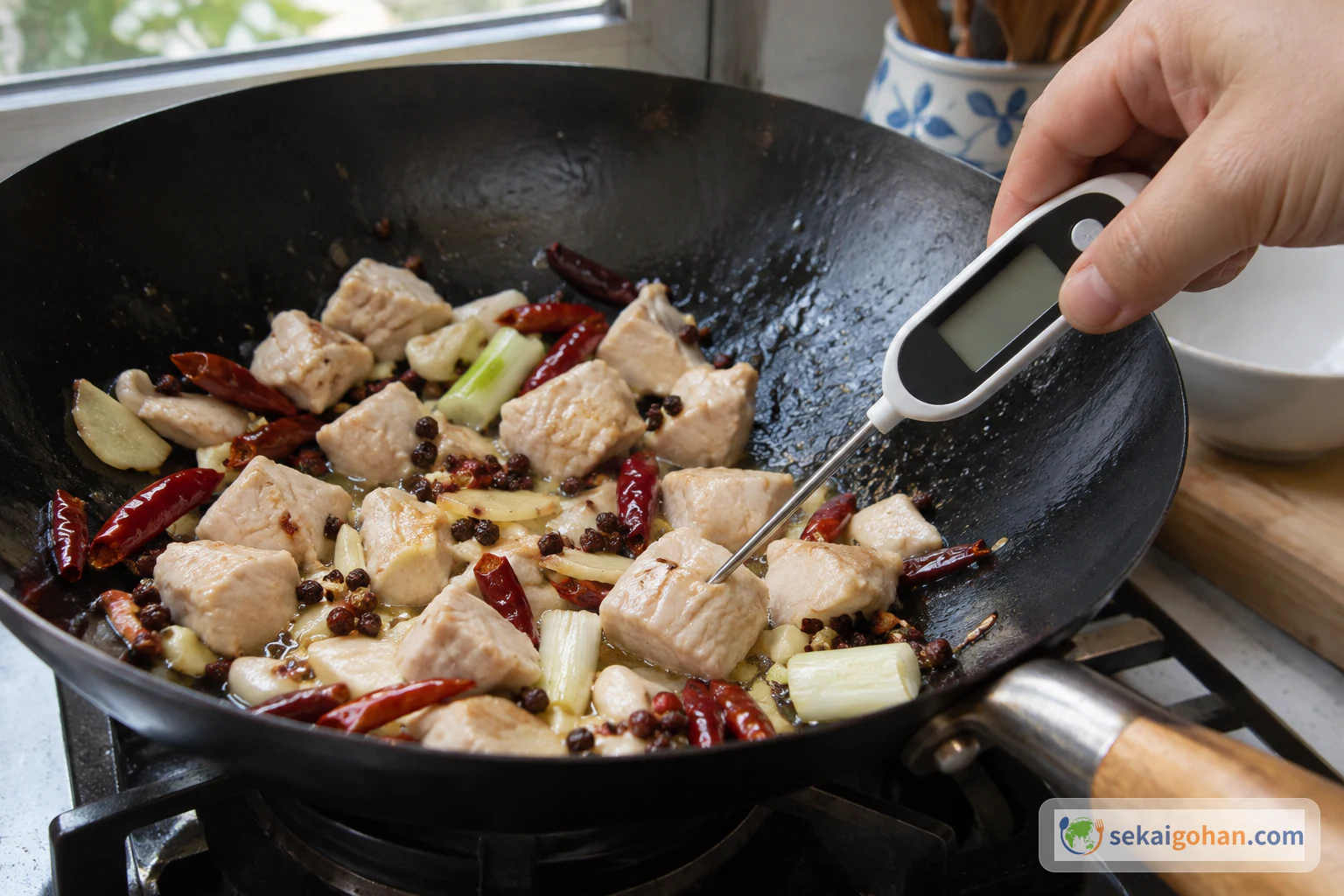
Check the center with a thermometer

Food thermometer probe inserted into a piece of chicken in the wok, with no reading visible
Use your own thermometer reading, because the image shows no temperature

Following your thermometer's instructions, insert the probe into the center of a larger piece of chicken. Cook until the center reaches at least 167°F (75°C) for at least 1 minute. If it hasn't, keep stir-frying and check again.

STEP1111 / 12

Add the sauce and thicken

Chicken and aromatics being tossed in a glossy, thickened sauce
Wait for a glossy, thick sauce before adding the peanuts

Give the sauce another good stir in its bowl. Pour it into the wok while you keep stirring and tossing, and do not stop moving the food as the sauce goes in. Keep tossing until the sauce turns glossy and has thickened.

STEP1212 / 12

Add the peanuts and serve

Finished chicken with peanuts, chiles and sauce being plated
Serve as soon as it is plated

Add 2.75 oz (75 g) roasted peanuts and stir to mix them through. Transfer to a plate and serve immediately.

0 / 0
Ingredients

Ingredients

1 / 1

Ingredients

Ingredient Amount Role
Boneless, skinless chicken breast 2 breasts, 300–350 g total The main ingredient, cut into small cubes
Garlic 3 cloves Thinly sliced aromatic
Ginger Same amount as the garlic Thinly sliced aromatic
Scallions (spring onions), white parts only 5 Cut into short lengths
Dried chiles A handful (about 10) Halved or cut into pieces, seeds removed as far as possible
Cooking oil 2 tbsp For stir-frying
Whole Sichuan peppercorns (花椒) 1 tsp Fried in the oil with the chiles
Roasted peanuts 2.75 oz (75 g) Stirred in last
Salt, for the marinade 1/2 tsp Seasons the chicken
Light soy sauce (生抽), for the marinade 2 tsp Seasons the chicken
Shaoxing wine, for the marinade 1 tsp Seasons the chicken
Potato flour, for the marinade 1½ tsp Coats the chicken
Water, for the marinade 1 tbsp Loosens the marinade
Caster sugar, for the sauce 1 tbsp Sweetness
Potato flour, for the sauce 3/4 tsp Thickens the sauce
Dark soy sauce (老抽), for the sauce 1 tsp Sauce seasoning
Light soy sauce (生抽), for the sauce 1 tsp Sauce seasoning
Chinkiang vinegar (鎮江香醋), for the sauce 1 tbsp Sourness
Sesame oil, for the sauce 1 tsp Sauce seasoning
Water, for the sauce 1 tbsp Sauce liquid
0 / 0

An empty wok heats over a high flame. Oil goes in, then dried chiles and whole Sichuan peppercorns, and small cubes of marinated chicken follow close behind. Ginger, garlic and scallion whites come next, then a dark sauce that turns glossy and thick as you toss, and the roasted peanuts go in at the very end. It's a fast, loud stir-fry from Sichuan, hot with chiles, numbing with peppercorns and rounded out by a sweet-sour sauce.

About Kung Pao Chicken

The dish travels under two English names, Kung Pao and Gong Bao, and in Chinese it is written 宮保雞丁 (宮保鶏丁 in Japanese-style characters). There are several accounts of where it came from. Regional versions differ in their Sichuan peppercorns, their dried chiles and the balance of their sweet-sour sauce. For more dishes from the same country, see our China page.

Ingredients
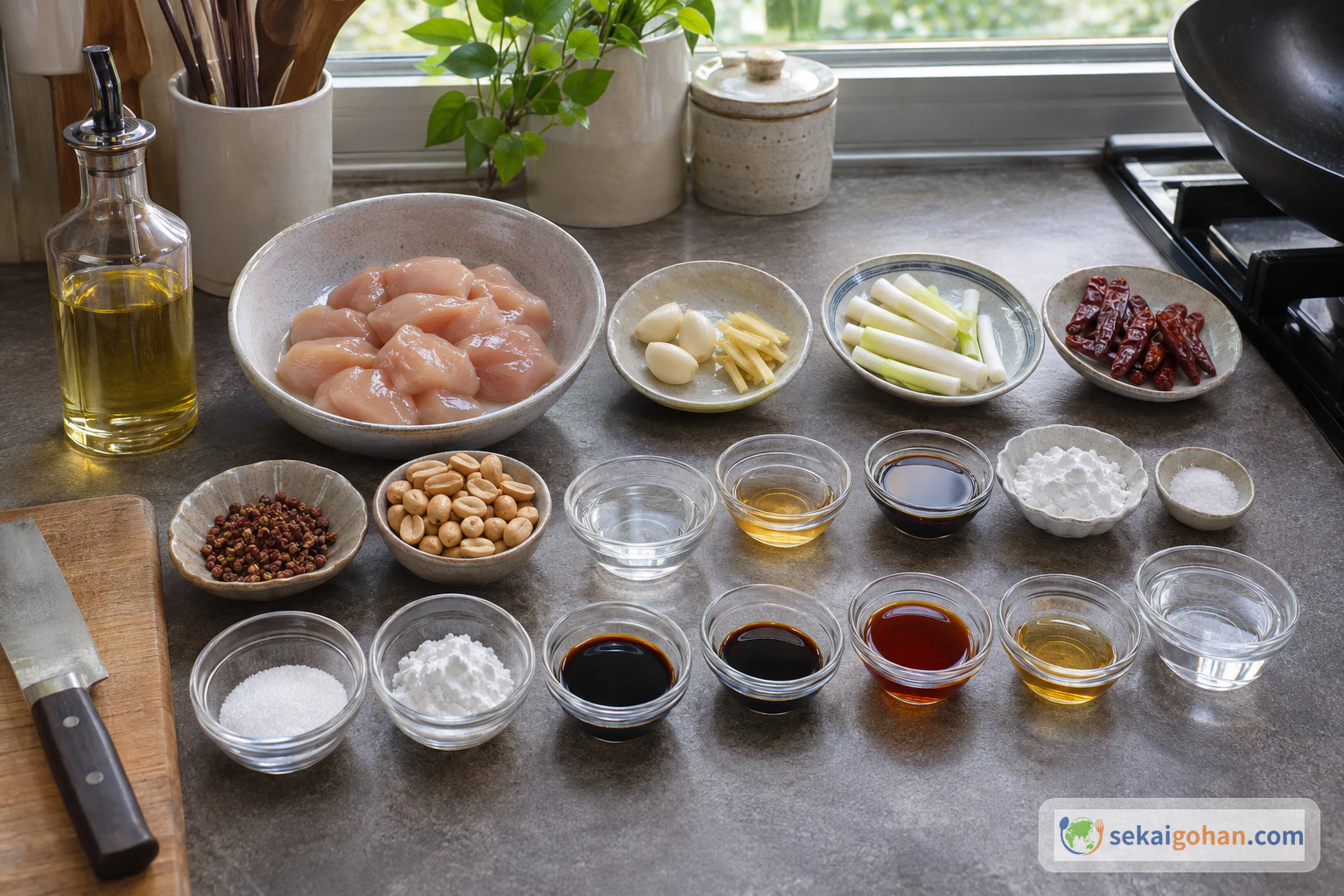
Raw chicken breast, garlic, ginger, scallion whites, dried chiles, Sichuan peppercorns, peanuts and bowls of seasonings arranged separately by use
Everything laid out by use before the wok goes on

Measure the marinade and sauce portions of potato flour, light soy sauce and water separately.

Choosing Ingredients for Kung Pao Chicken

Some of the amounts are loose. Use the same amount of ginger as garlic, a handful of chiles (about 10), and whatever cooking oil you like. The chicken breasts can go in with the skin on or off, and the sauce liquid can be chicken stock instead of water.

Several ingredients have close-looking relatives that taste different, so it's worth shopping by name.

Ingredient Keep in mind If you change it
Caster sugar Not the same as Japanese jōhakutō (上白糖) Use granulated sugar if caster sugar is hard to find
Light soy (生抽) and dark soy (老抽) Not identical to Japanese usukuchi and koikuchi soy sauces Japanese soy sauces taste different, so they aren't a direct match
Chinkiang vinegar Different from generic black vinegar or rice vinegar Look for Chinkiang by name
Sichuan peppercorns Different from Japanese sansho Choose whole red Sichuan peppercorns where you can
Shaoxing wine Has its own flavor Use a dry rice wine such as dry sake; the flavor will differ

If you'd like to try another Kung Pao recipe, follow it as a whole rather than mixing in amounts from this one.

Allergens

This dish contains peanuts and sesame oil, and soy sauce may contain wheat. Check the allergen declaration on each product you buy.

Equipment

  • Wok
  • Wok spatula
  • Cutting board and knife for raw chicken, kept separate from those for other foods
  • Cutting board and knife for the other ingredients
  • Scissors or a knife for the dried chiles
  • Small bowls
  • Covered, leakproof container for the marinated chicken
  • Measuring spoons
  • Kitchen scale
  • Food thermometer

Method: Prepare Everything, Then Cook in Order

Everything is measured and cut before the wok goes on the heat. Once cooking starts, the additions follow one another closely.

Troubleshooting Kung Pao Chicken

While you prepare everything else, keep the marinated chicken in the refrigerator. Once it hits the wok, things move quickly: keep the chicken moving, and plate the dish as soon as the peanuts are stirred through.

Keep these checks separate from the recipe

The recipe says to cook the chicken until it is just cooked through, with no temperature given. Follow these checks:

  • Do not wash raw chicken.
  • Prevent cross-contamination by using separate tools for raw meat, or by cutting the meat last. Wash surfaces, tools and hands afterward.
  • Cook the center of the chicken to at least 167°F (75°C) for at least 1 minute.

Color doesn't tell you the chicken is safe. Use a thermometer to check.

What's happening What to do
The chiles are coloring quickly and may burn Lift the wok off the heat for a moment, then return it and carry on
The chicken cubes are stuck together Keep stirring over high heat until they separate before adding the ginger
The thermometer hasn't reached 167°F (75°C) in the center Keep stir-frying and recheck, whatever the chicken looks like
The sauce has been sitting in its bowl Stir it again right before pouring
The sauce isn't glossy and thick yet Keep tossing, and hold back the peanuts until it gets there
The flavor seems off Check for swaps such as sansho, rice vinegar or Japanese soy sauce, which are different ingredients

Frequently Asked Questions

Why does the recipe use water twice?

The marinade and the sauce each take their own 1 tbsp of water. The marinade water is easy to miss, so measure the two separately.

How many people does this feed?

Roughly two.

Can I tell the chicken is safe by looking at it?

No. Use a food thermometer on one of the larger pieces, and cook the center to at least 167°F (75°C) for at least 1 minute.

Should I add scallion greens or a raw garnish?

This recipe uses only the scallion whites, cooked in the wok, with no raw garnish.

Sources