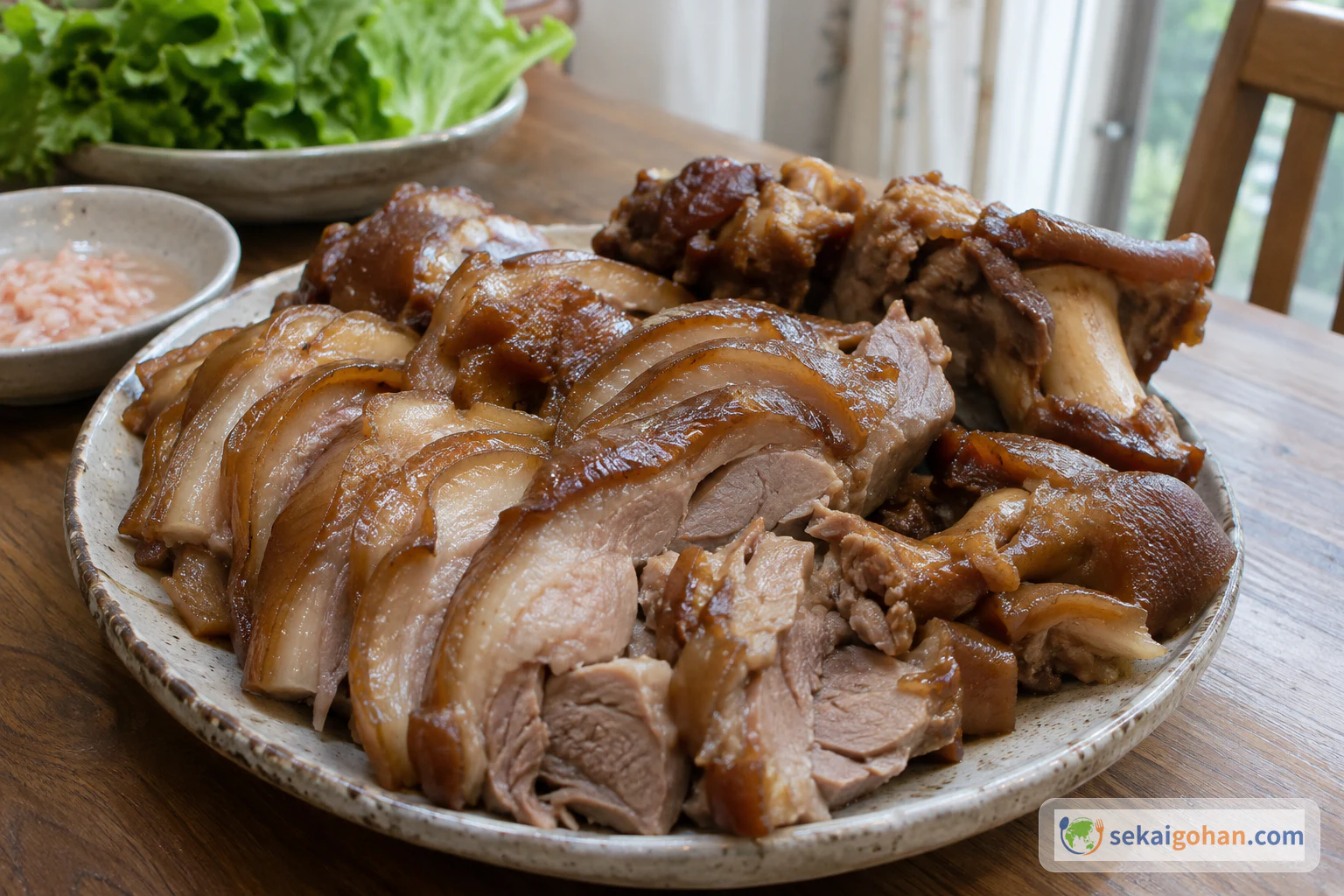
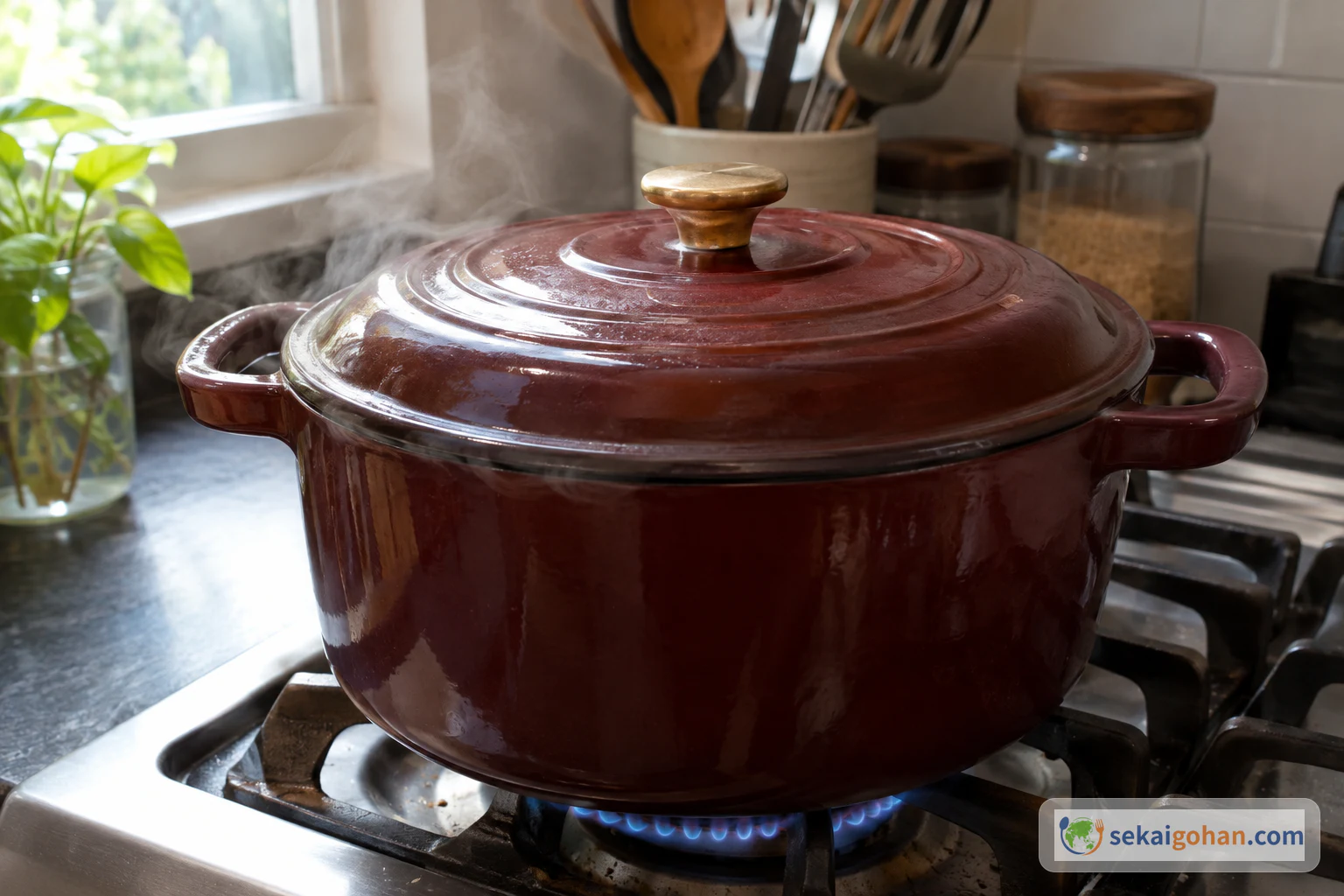
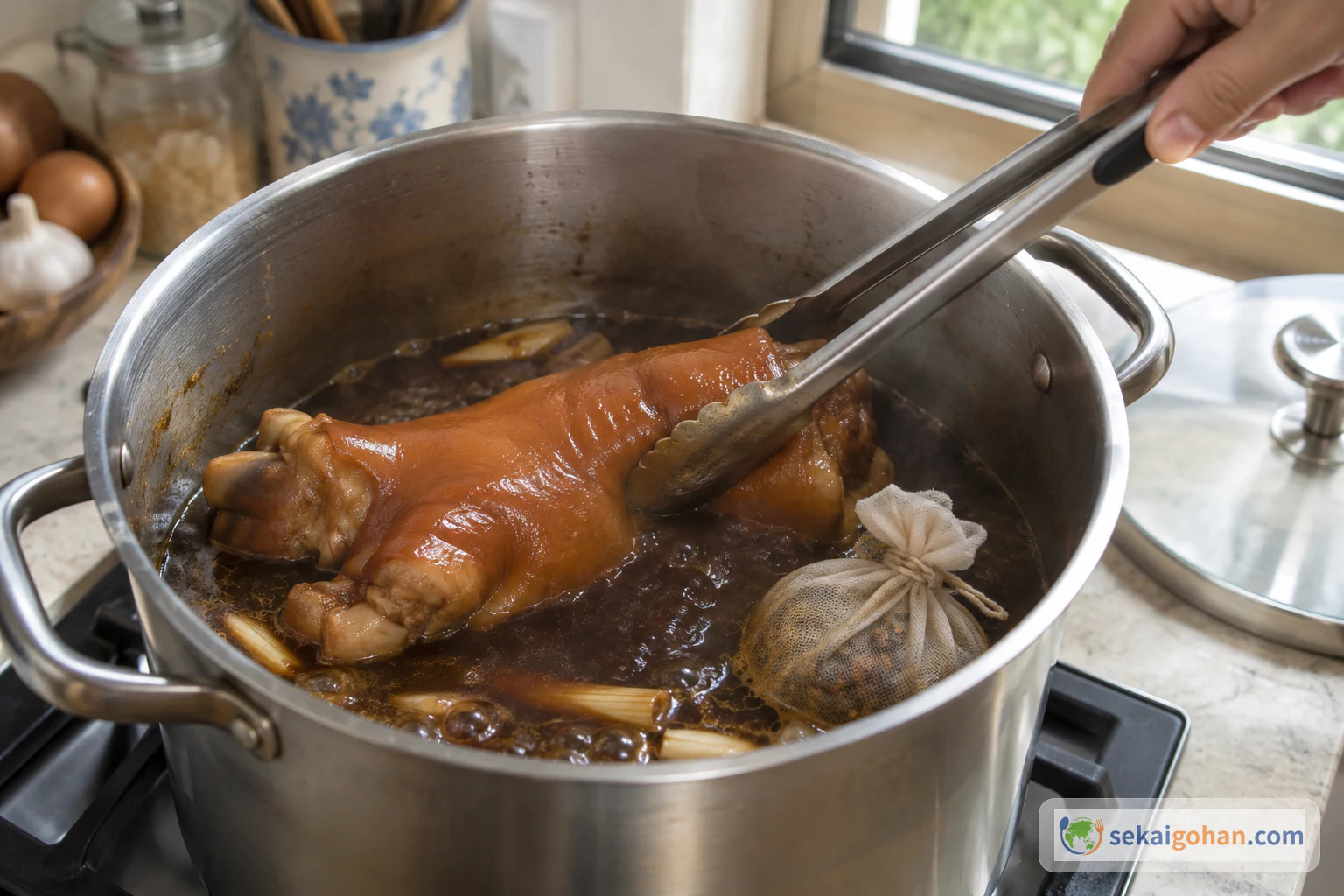
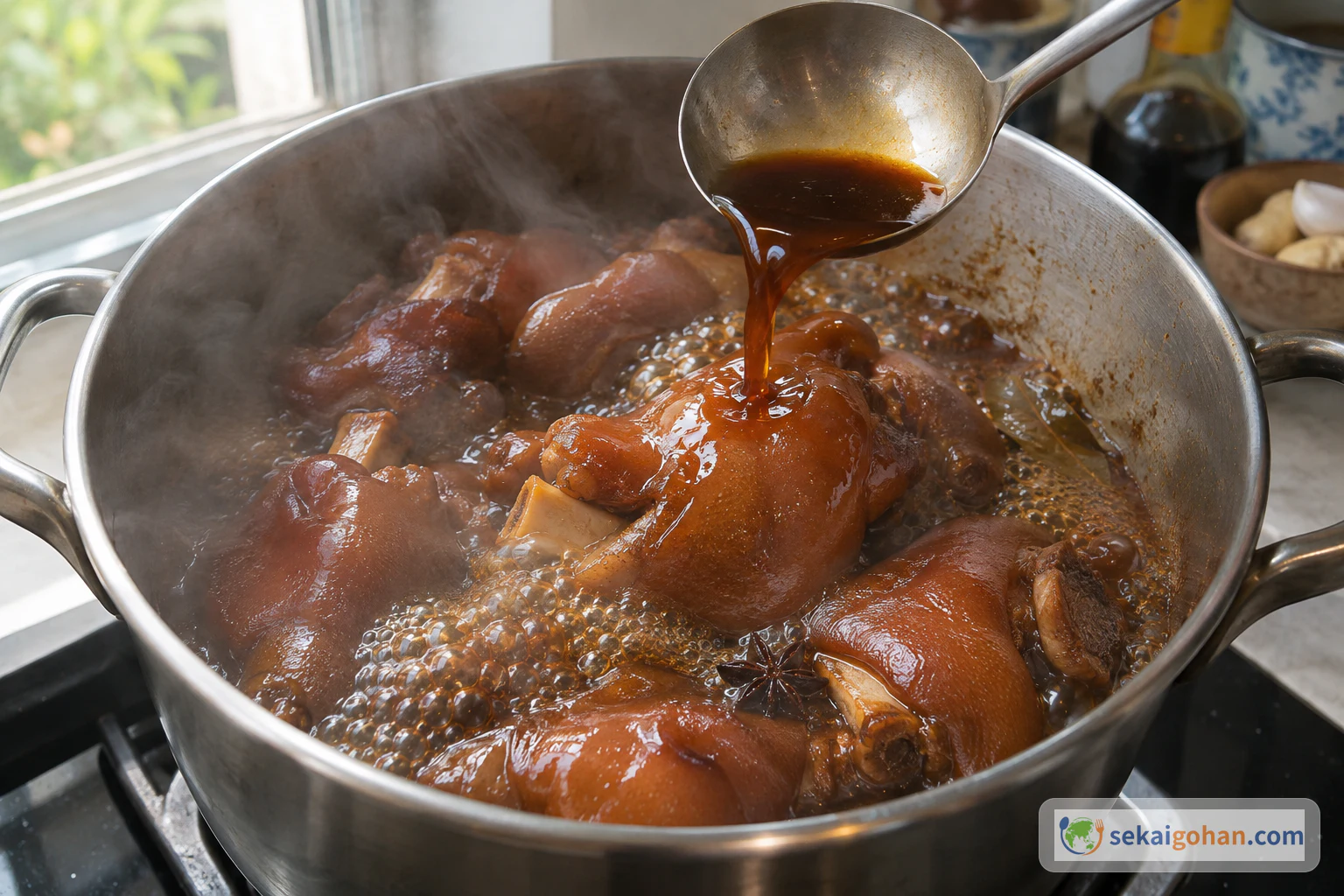
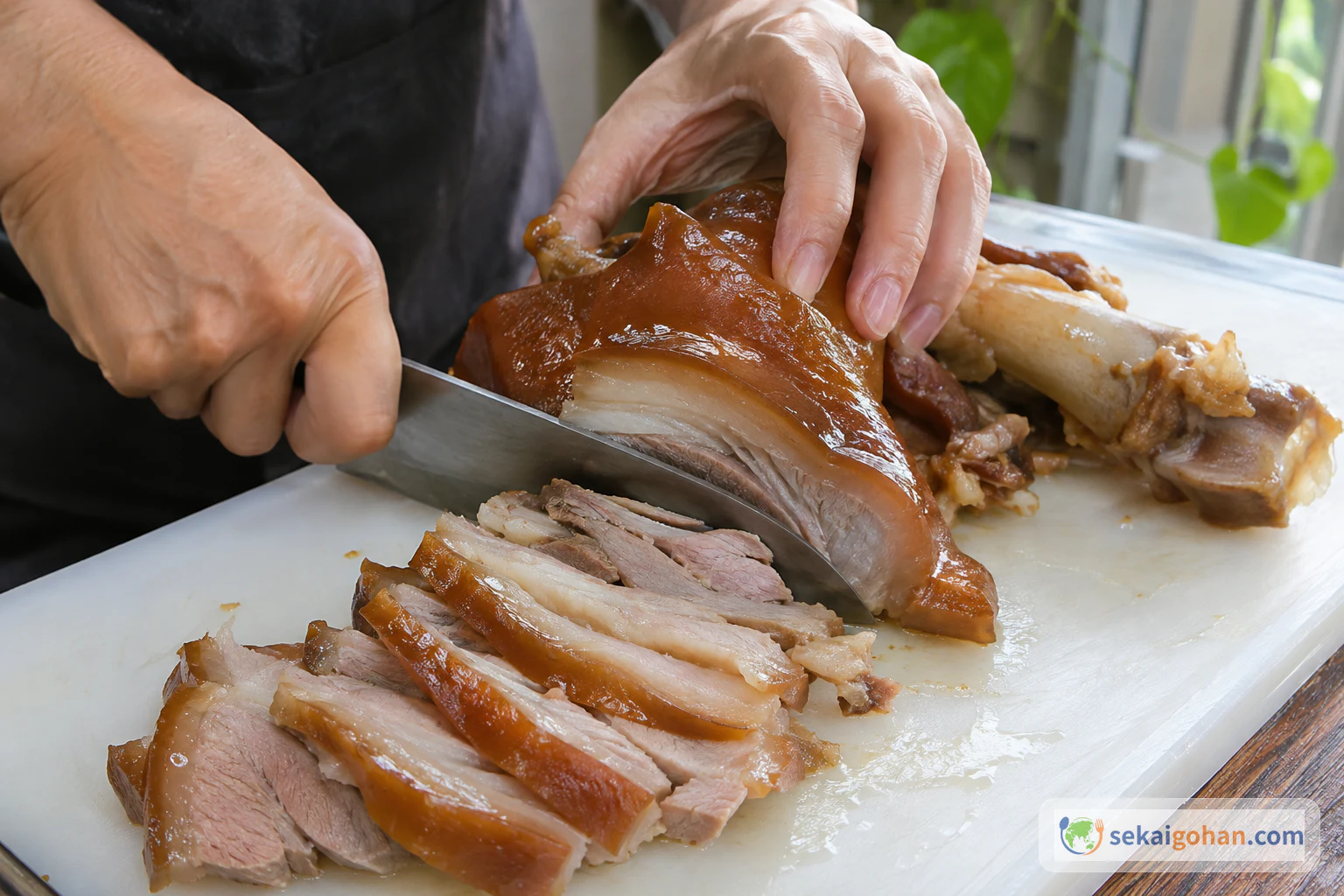
In the last minutes of cooking, the lid comes off and the heat goes up. The soy-dark liquid at the bottom of the pot is spooned over the trotter again and again until the skin turns deep brown and shiny. After a short rest, the meat comes off the bone and is sliced thin, showing its layers of gelatinous skin, a thin seam of fat, and meat soft enough to fall from the bone. That is jokbal (족발), Korean pig's trotters braised in a soy-based liquid, and in Korea it is almost always shared.
About Jokbal and Jangchung-dong
How Jokbal Is Eaten
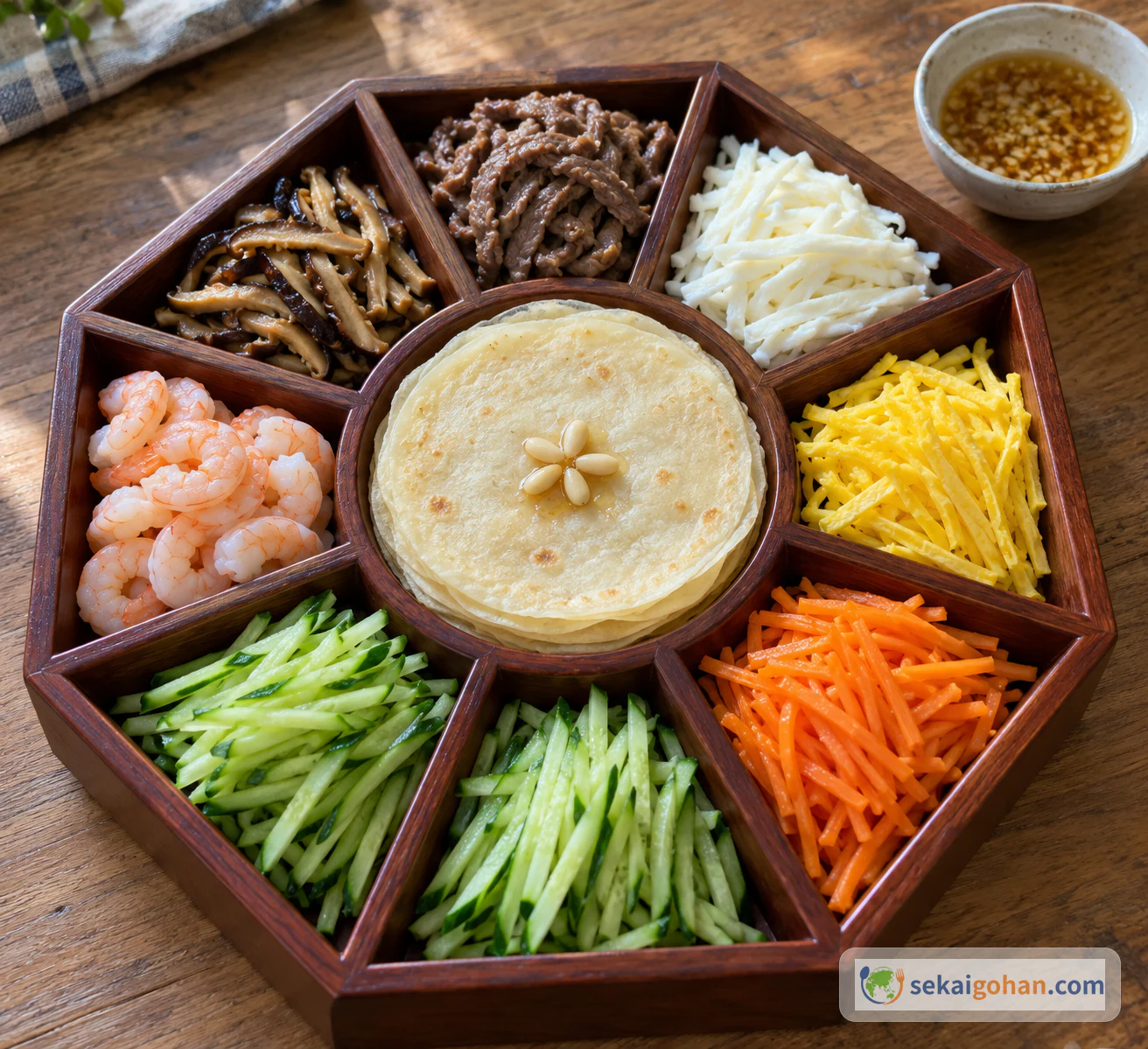
At the table, the slices sit in the center and everyone assembles their own wrap around them. Jokbal is eaten in lettuce leaves (ssam) with raw garlic, green chili, doenjang, and a salted fermented shrimp dip. It can be served warm or cold. To see where it sits among other Korean dishes, start from the Korea country page.
Jangchung-dong Origins
Jokbal as it is known today is usually traced to Jangchung-dong in Seoul, in the 1960s, among people displaced after the Korean War. Visitors to events at Jangchung Arena flowed into nearby restaurants, and that crowd helped form what is now Jangchung-dong Jokbal Alley.
Jokbal in Shops and at Home
There is no single fixed formula. Some shops soak and blanch the trotters first, and the aromatics range from complex to simple. At facility scale, with 17.75 lb (8 kg) of pig's feet, one method soaks them for 3–4 hours, boils them first in that soaking water with vegetables and seasonings, then washes them and braises them for 1½ hours in a fresh soy-based liquid. That is a different process from the home recipe here, so keep the two apart.
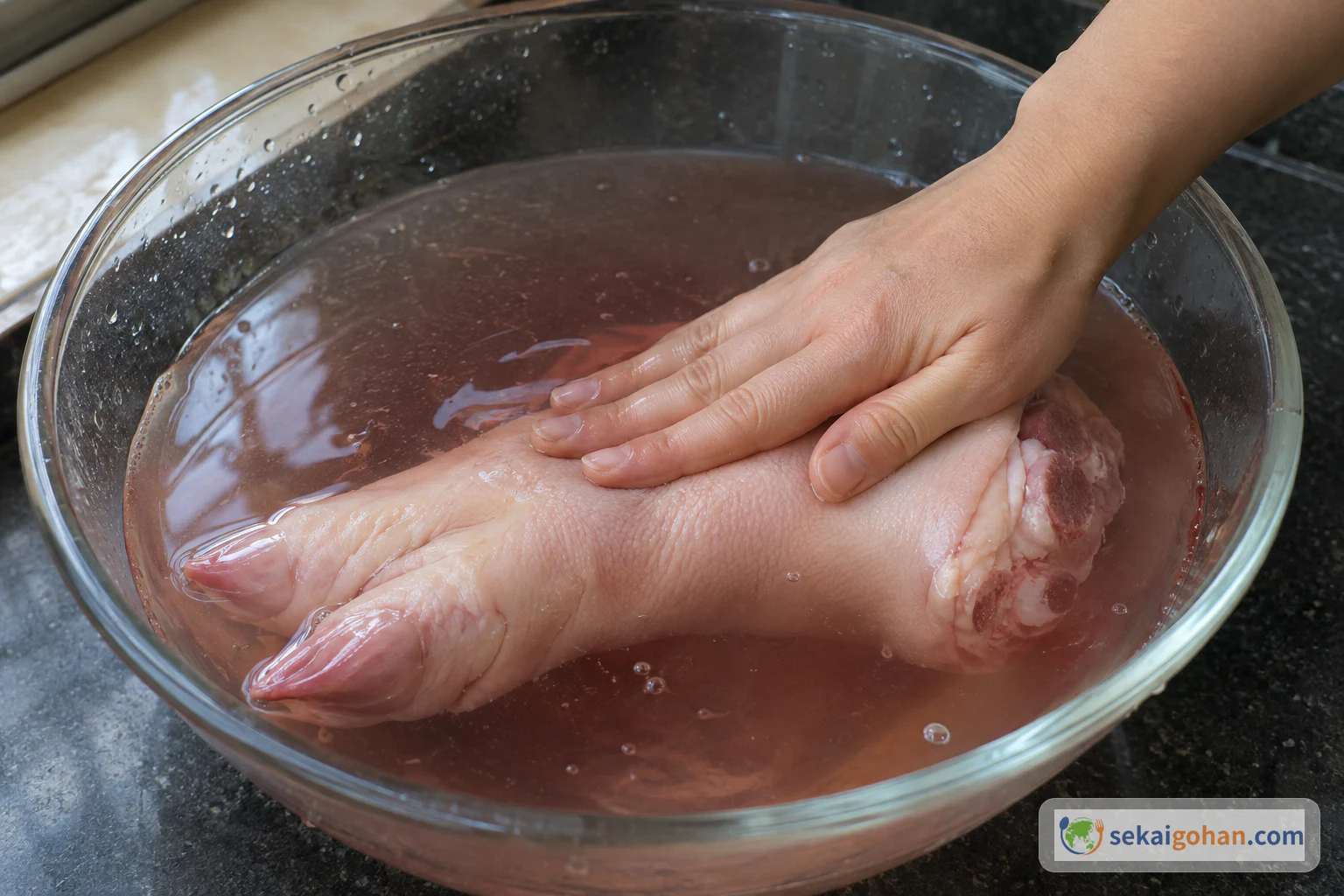
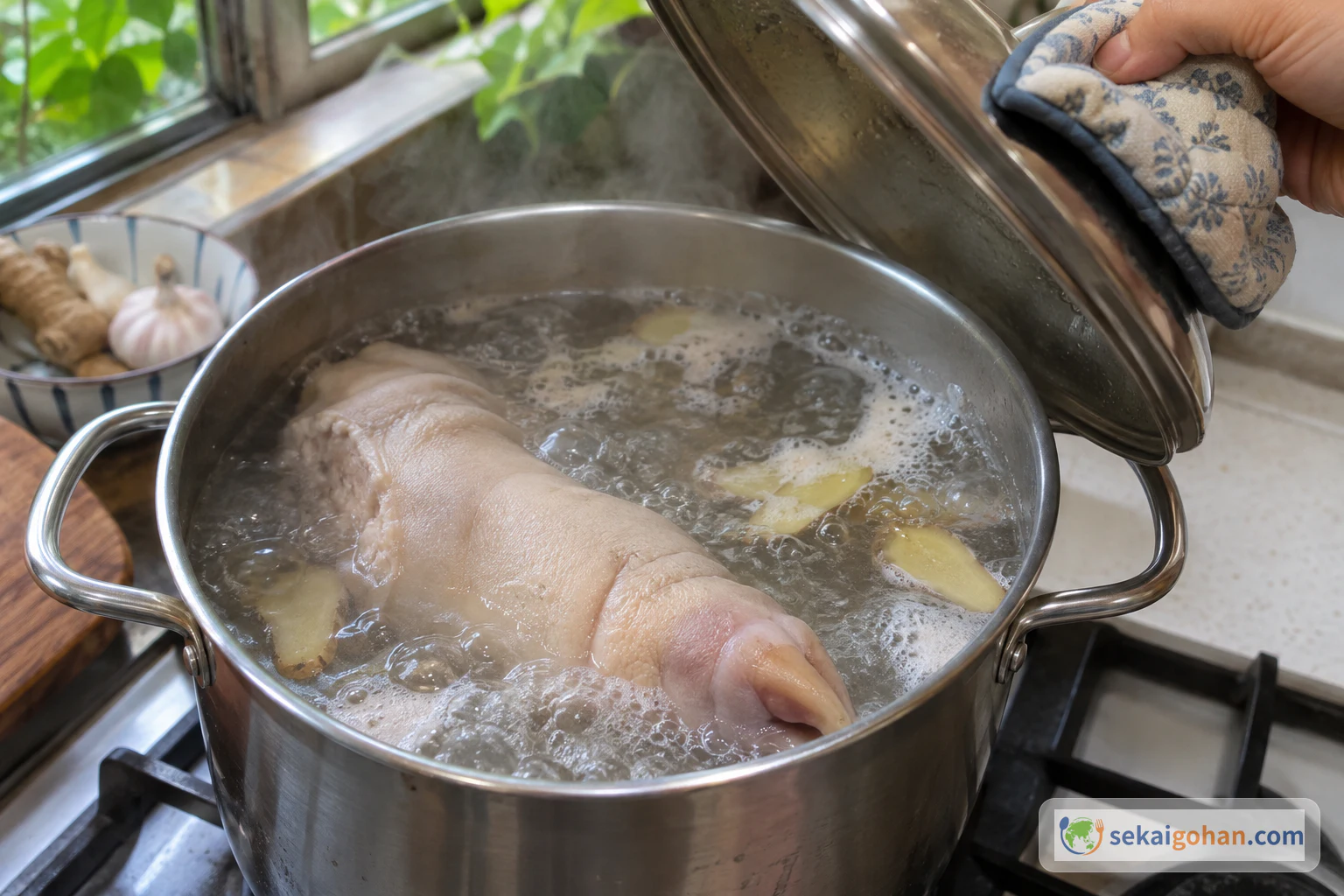
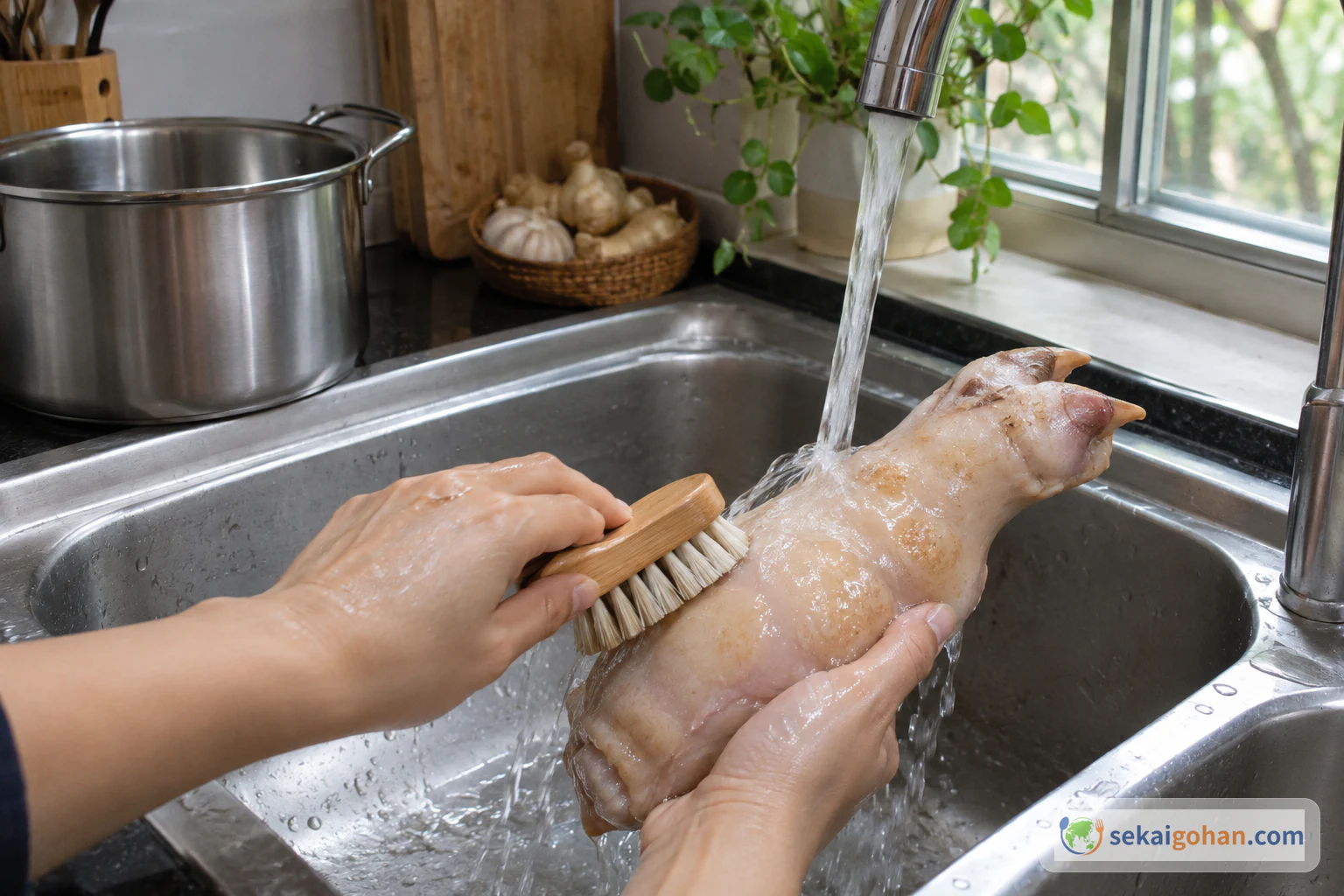
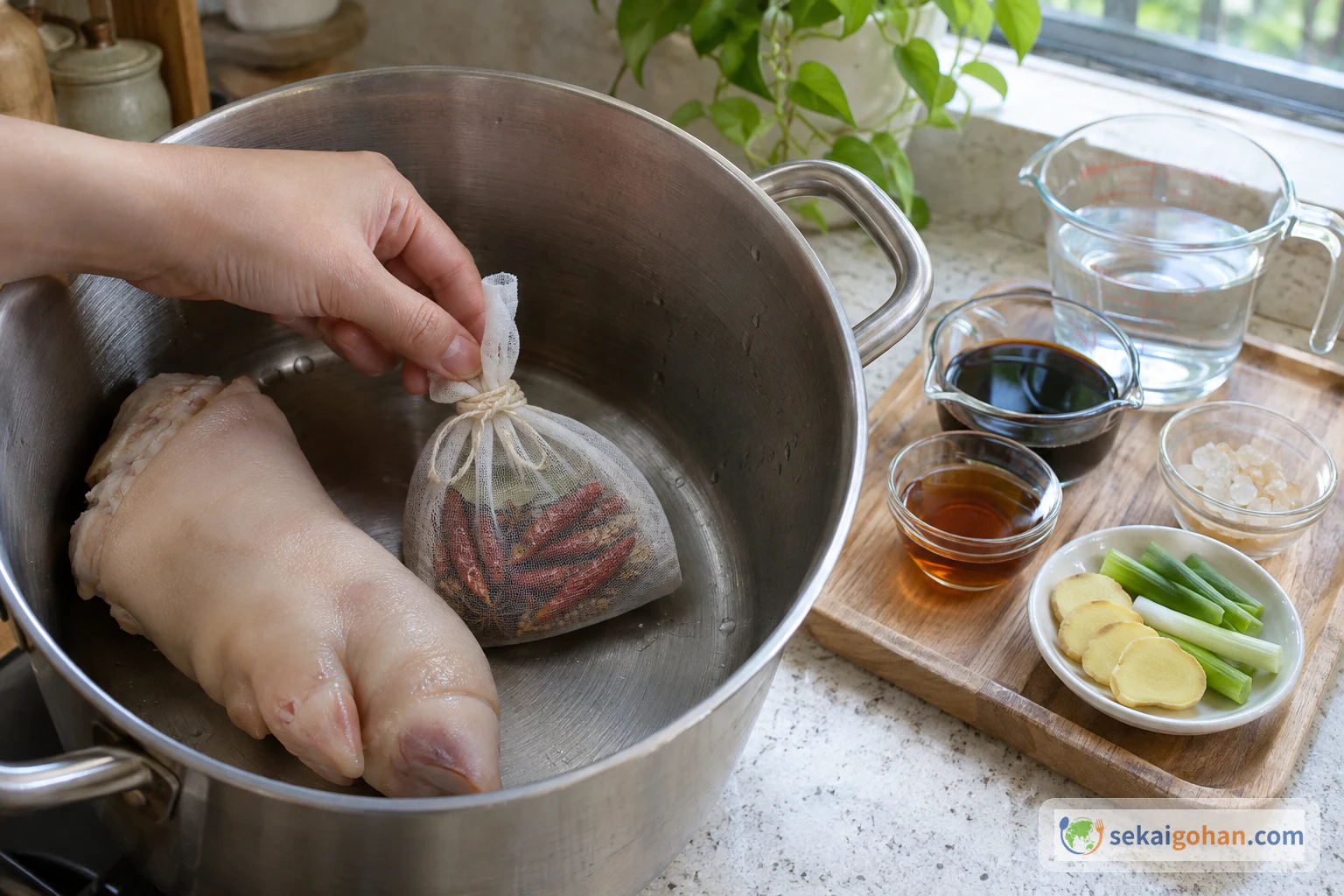
At home, the work lies in the preparation and the long, steady heat: a cold-water soak, blanching, scrubbing, and then a covered braise with a pouch of aromatics, all for one whole bone-in trotter.
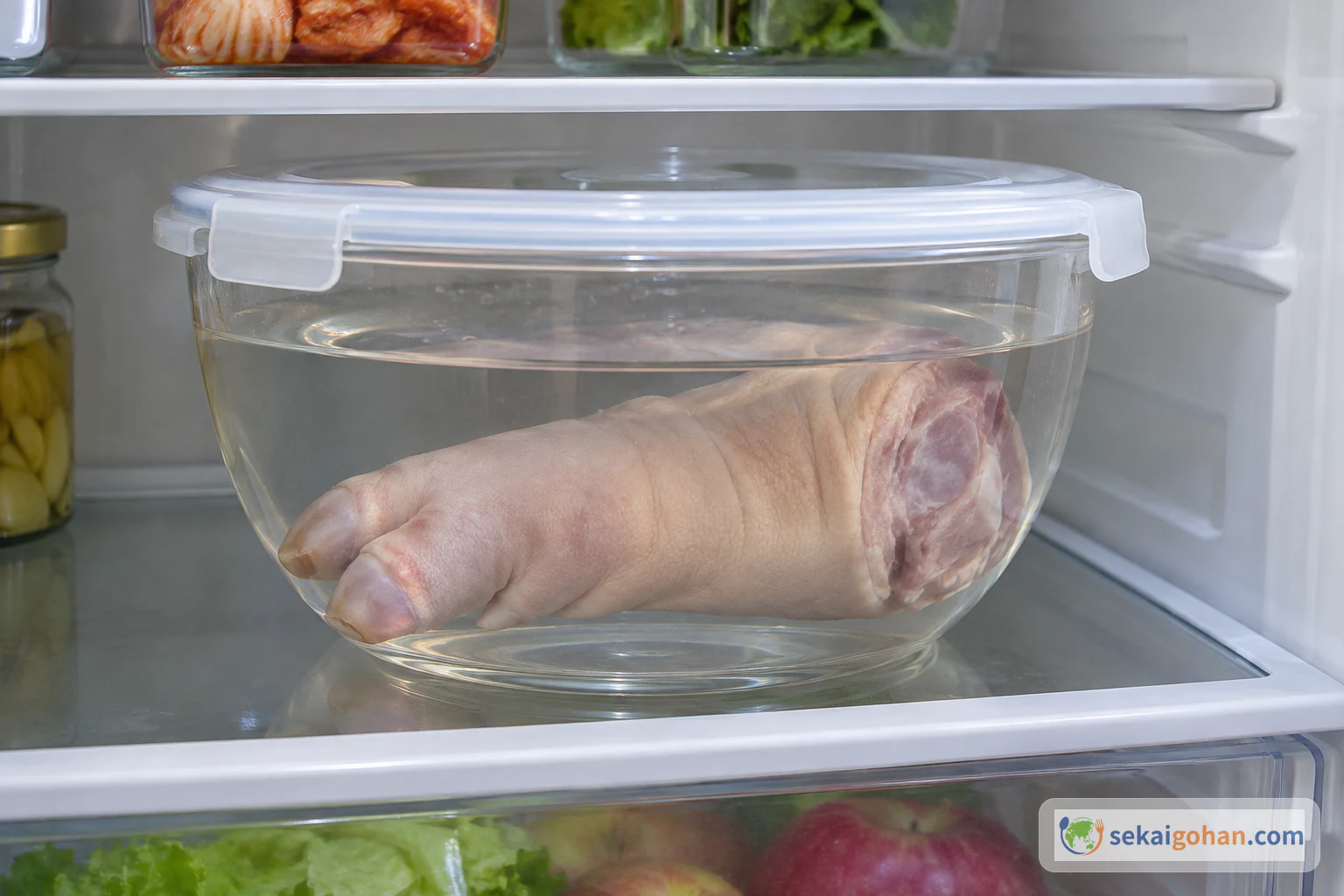
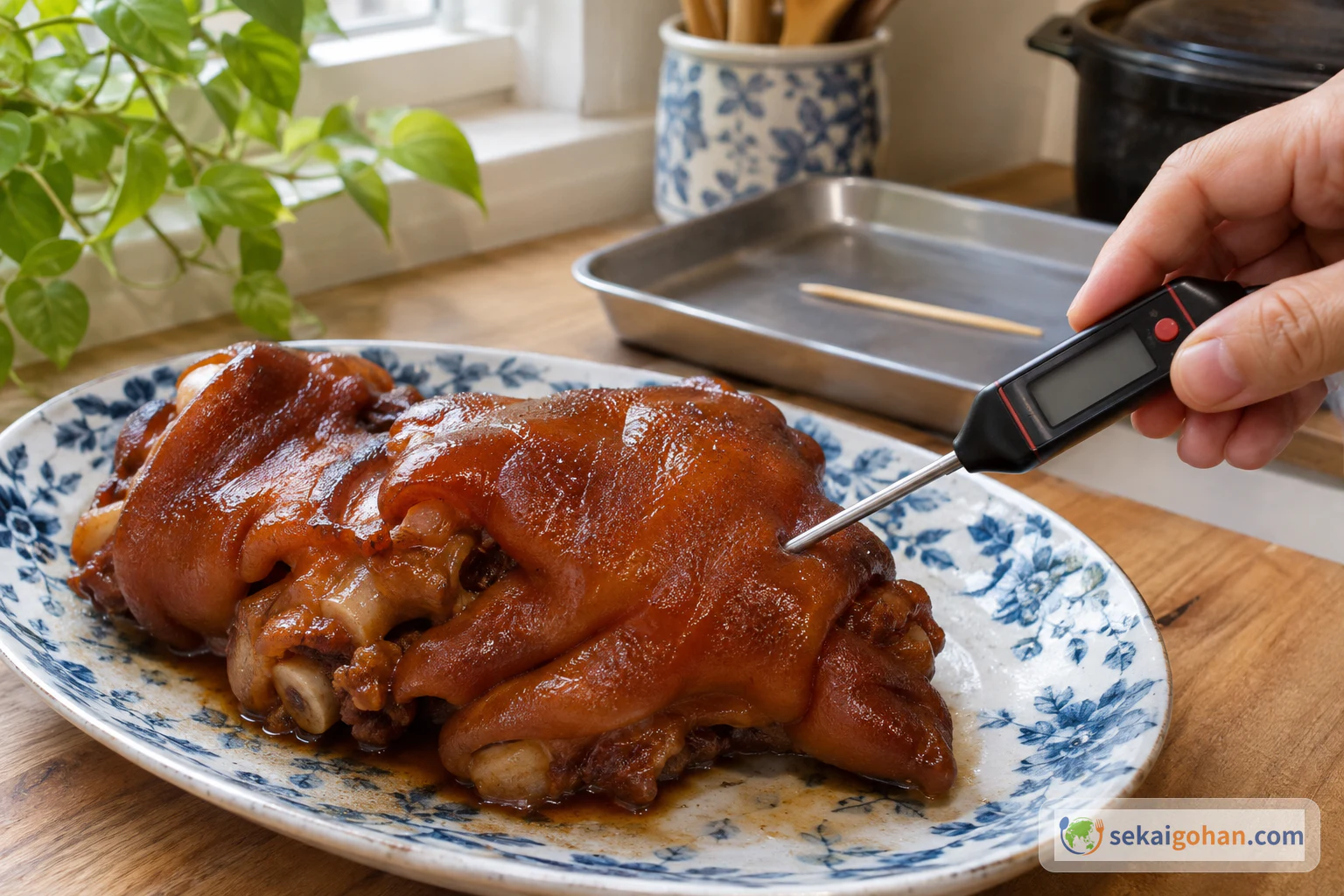
Soak the trotter in cold water in the refrigerator for the full 12 hours. Then check the center with a food thermometer: it should reach 167°F (75°C) and hold for at least 1 minute.
Ingredients: One Whole Bone-In Trotter, Kept Separate by Use
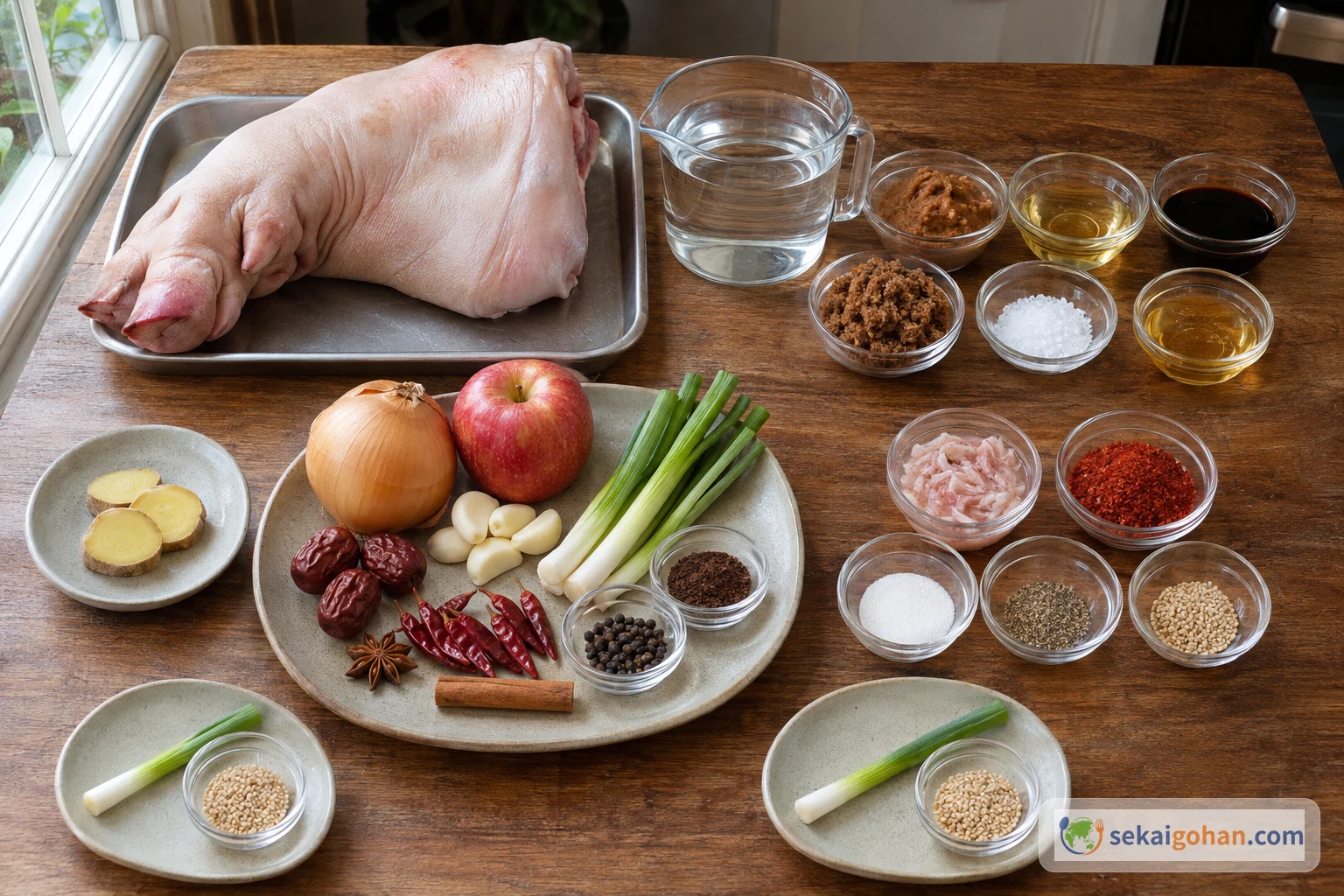
The ginger, green onions and sesame seeds each appear more than once, in different amounts for different uses. Keep each group apart while you prepare.
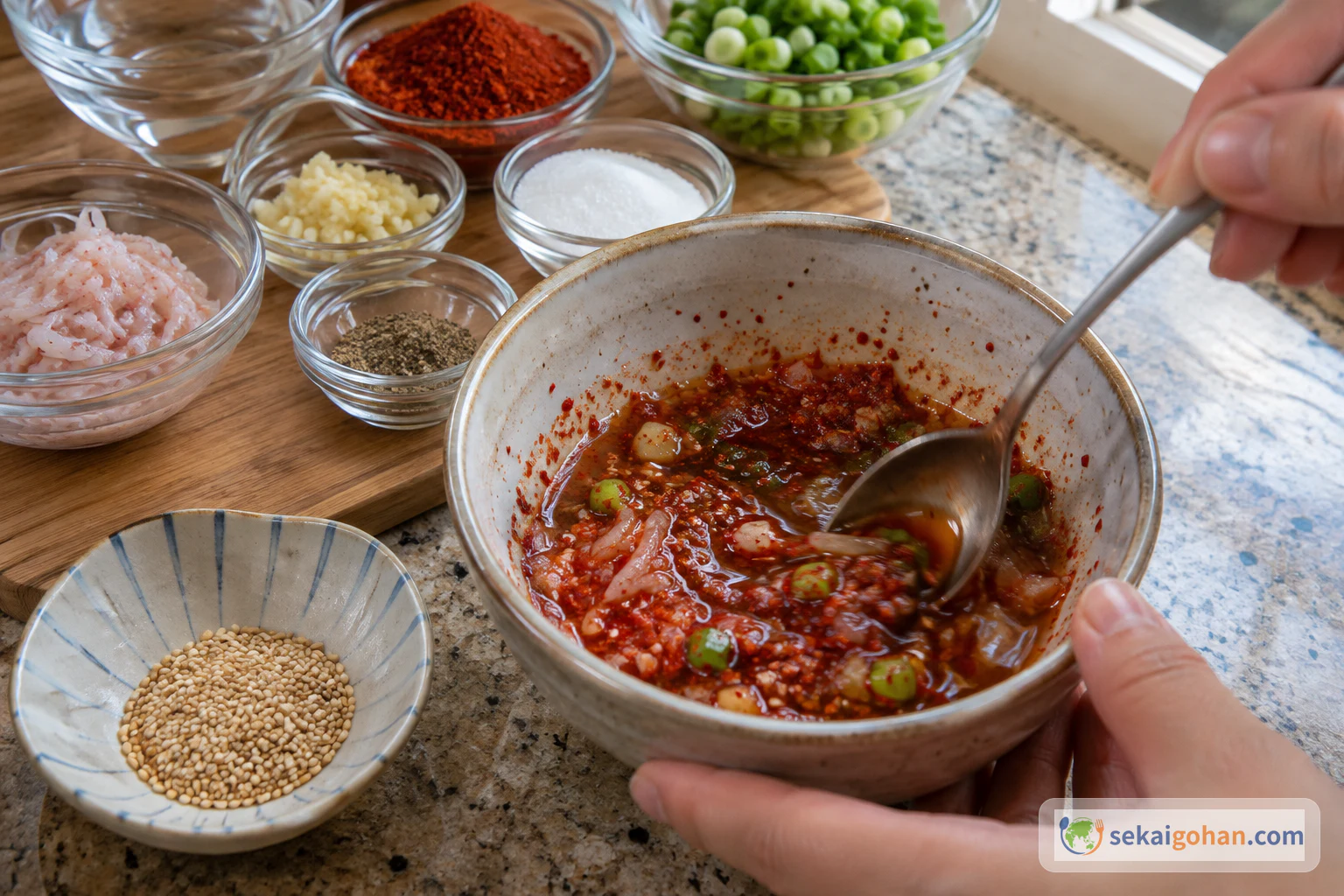
Use commercial, ready-to-eat saeujeot and follow its label. The wrapping leaves, raw garlic, green chili and ssamjang are table accompaniments, not part of the braise.
Choosing Ingredients for Jokbal
The trotter. Look for one whole, raw, bone-in pig's trotter sold for braising, around 3–4 pounds. Split pieces or a hock on its own cook differently, and processed or precooked products change both the cooking and the saltiness. Ask at the counter whether the trotter has been cleaned or prepared.
Doenjang. Korean doenjang is the first choice. Japanese miso is also made from fermented soybeans, but its salt, aroma and sweetness differ, so expect a different result.
Mirim. This is a cooking wine. Japanese mirin is a sweetened seasoning, so substituting it changes the flavor.
Ssalyeot (rice syrup). Korean rice syrup gives sweetness and gloss. Other syrups differ in thickness and sweetness, and the glaze will turn out differently.
Saeujeot. Use a commercial, ready-to-eat product according to its label, never raw shrimp or shrimp fermented at home. Other salted seafood products differ in salt and fermented aroma.
Jujubes and the pouch spices. Leaving the jujubes out simply makes the aroma and sweetness quieter; another fruit is not a like-for-like swap. Star anise, cinnamon, dried chilies and coffee each do their own job, so keep them separate rather than replacing them all with a spice blend such as five-spice powder or with cola.
Gochugaru. It differs from other chili powders, such as Japanese ichimi.
Equipment
- A large bowl with a cover that fits in your refrigerator, for soaking
- A razor, for shaving off any remaining hair
- A large, deep pot with a lid that holds the whole trotter
- A spice pouch, cheesecloth, or a tea-and-spice bag that can be tied closed
- A kitchen brush
- Long tongs and a wooden spoon
- A skewer or stainless steel chopstick
- A food thermometer that can read the center of the thickest meat
- A cutting board and sharp knife (kept separate from those used for raw meat when slicing the cooked jokbal and preparing leaves)
- A small bowl for the dip
Method: Soak, Blanch, Braise, Then Glaze
The skewer test tells you whether the meat is tender. It does not tell you whether the pork is safely cooked. Check the thickest part with a food thermometer and confirm an internal temperature of 167°F (75°C) for at least 1 minute. Pot size, trotter size and stove output all change how long that takes; neither the timer nor the look of the pot proves the pork is safe. Wash hands, boards and tools that touched raw pork before they touch cooked meat or the leaves you will eat raw.
The short rest after cooking in step 10 is only so the trotter can be handled and sliced. It is not a cooling method for storage.
Jokbal Troubleshooting
| Problem | Likely cause | What to do |
|---|---|---|
| A strong porky smell | Blood not fully drawn out, or blanching water reused | Change the soaking water 3 to 4 times, press until no blood comes out, blanch until foam rises, and always discard the blanching water and wash the pot |
| The skewer meets resistance | Not yet tender; trotter size and stove vary | Keep cooking and test again. Judge by the skewer and the thermometer, not by the clock |
| The liquid has dropped low | Evaporation during the long braise | Add water as needed while you keep cooking; the 10 cups is a starting amount, not a level to maintain |
| The glaze starts to catch | High heat with reduced, sugary liquid | Keep spooning the liquid over and watch the bottom of the pot; adjust the heat so it doesn't scorch |
| The meat is hard to slice cleanly | Sliced too hot | Rest it until it is comfortable to handle before slicing |
| The bites taste too salty | Too much dip on each slice | Use less dip per wrap, add more leaf, and change only one thing at a time next time |
Serving Jokbal and Variations
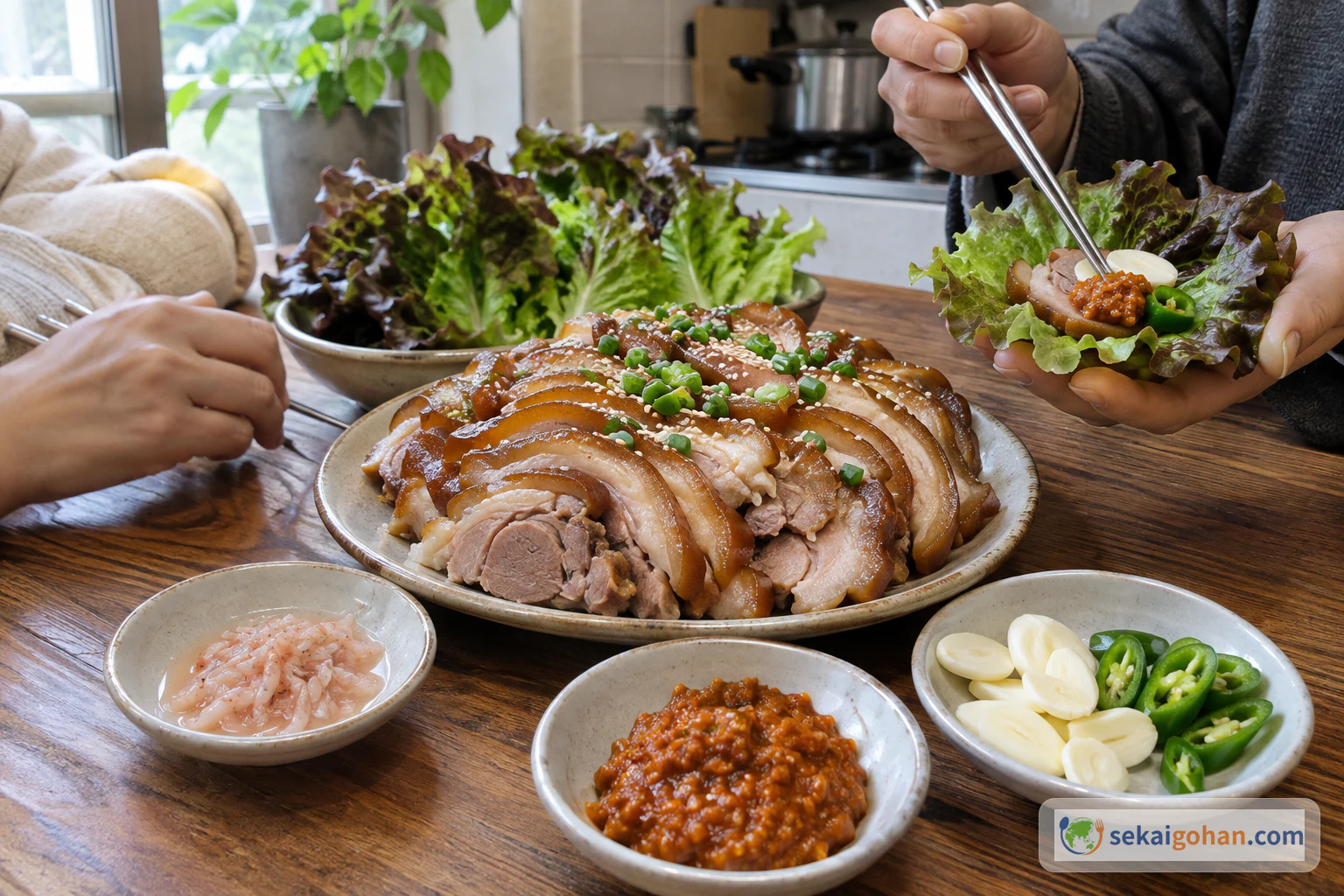
Lay a leaf in your palm, add a slice of jokbal, and dab on a little salted shrimp dip. From there, it's up to each person: a slice of raw garlic, a piece of green chili, or a little ssamjang.
Once you've made it as written, a few small departures turn it into your own version:
- Without dried chilies: leave the dried chilies out of the pouch and keep everything else the same.
- A gentler aroma: leave out the star anise.
- Without the dip: serve the shrimp dip on the side for those who want it, or skip it. The jokbal still works, but the table loses its salty, fermented accent.
- Different leaves: use lettuce for wrapping.
Frequently Asked Questions
Does the 12-hour soak have to be in the refrigerator?
Yes. The raw pork needs to stay cold for the whole soak.
If the skewer slides in, is the pork done?
The skewer shows tenderness only. For doneness, check the thickest part of the meat with a food thermometer: 167°F (75°C) at the center for at least 1 minute. Neither the cooking time nor how the pot looks proves the pork is safe.
Can I use instant coffee, or fresh chilies?
Yes. Either ground or instant coffee can go in the pouch, and large fresh Korean chili peppers can replace the small dried ones.