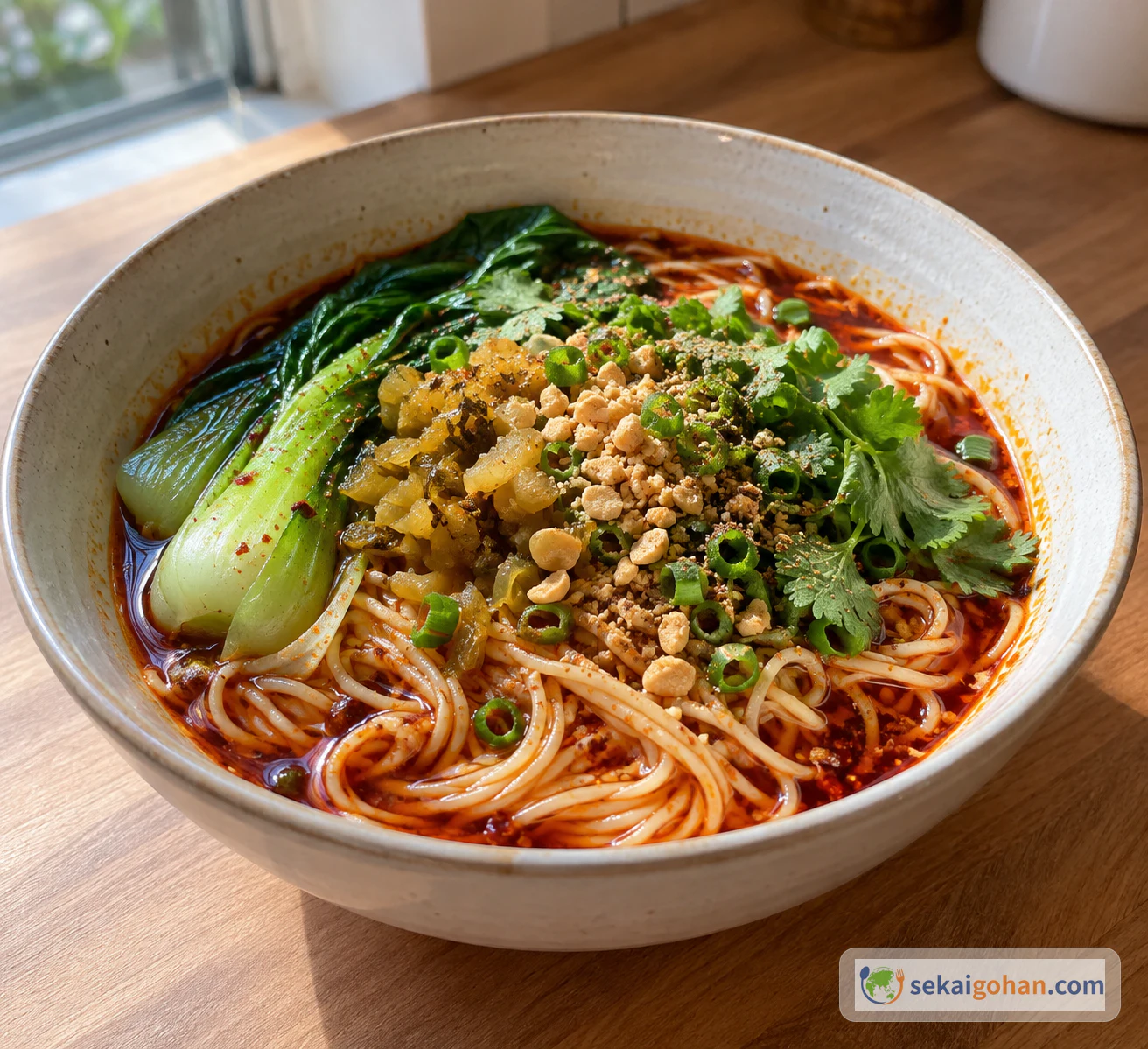
Hong Kong Cart Noodles (車仔麵): Oil Noodles with Chu Hou Brisket and Radish, Satay Fish Balls, Shrimp Wontons and Choy Sum

Hong Kong cart noodles: oil noodles topped with chu hou brisket and radish, satay fish balls, shrimp wontons and choy sum
Serves
4 servings
Cuisine
Hong Kong

How to make Hong Kong cart noodles (車仔麵) at home: Cantonese oil noodles warmed in leftover steamed-chicken broth and choy sum water, topped with chu hou braised beef brisket and radish, satay fish balls, shrimp wontons and choy sum. Covers the two topping pots, the assembly order, safe thawing and cooking temperatures, and what the recipe leaves unspecified.

Cooking flow

Cooking steps

STEP11 / 14

Thaw and blanch the brisket

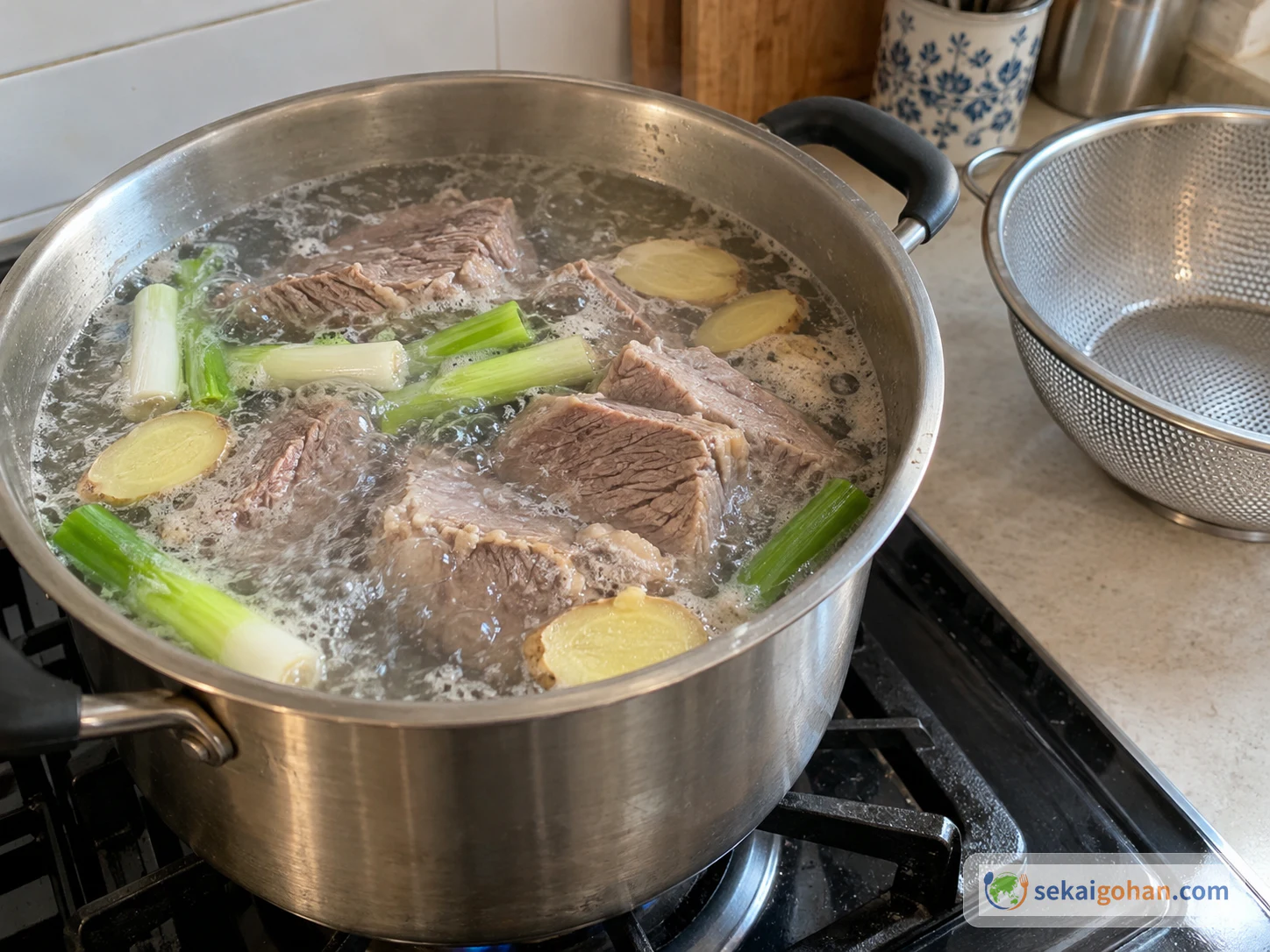
Beef brisket blanching in a pot of water with scallions and ginger
Start the brisket in cold water with scallions and ginger, then drain and discard the water

Thaw the 2 lb frozen brisket completely in the refrigerator at 0–4°C. Don't leave it at room temperature, and don't wash the raw meat with water. Put the brisket in a pot of cold water with the 3 scallions and the 4 blanching slices of ginger. Bring to a boil and boil for 5 minutes, then turn off the heat, cover, and leave for 5 minutes. Drain and discard the water. Keep raw beef and the tools that touched it away from cooked food.

STEP22 / 14

Parboil the radish and keep its water

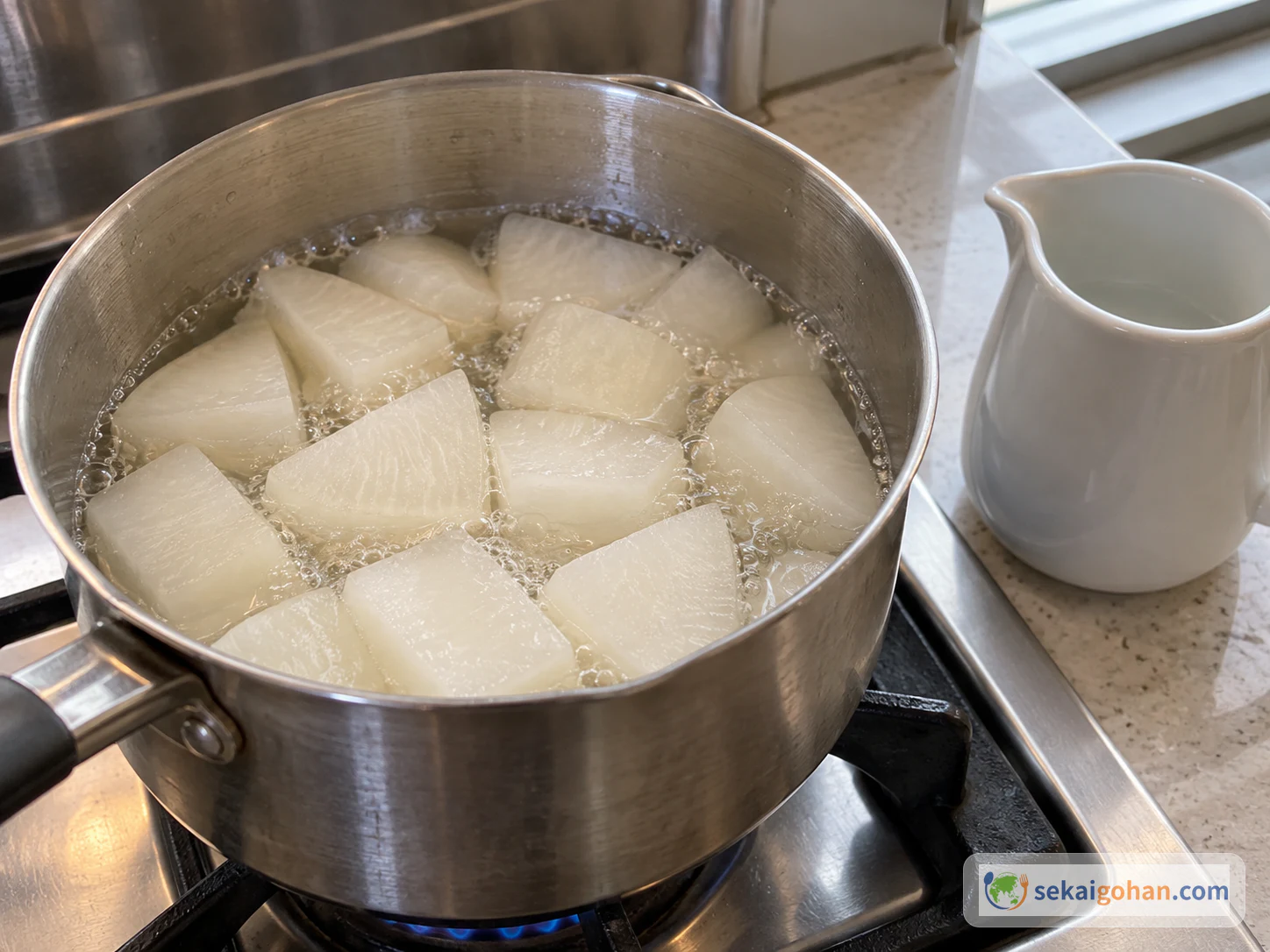
White radish parboiling in 300ml water with a little rock sugar
Parboil the radish on its own and save the water for the braising liquid

Peel the radish and cut it into evenly sized chunks. Cook it in 1¼ cups (300 ml) water with a little rock sugar over medium heat for 5 minutes. Turn off the heat, cover, and leave for 10 minutes. Lift out the radish and set it aside, and keep the radish water for the braise.

STEP33 / 14

Build the chu hou braise

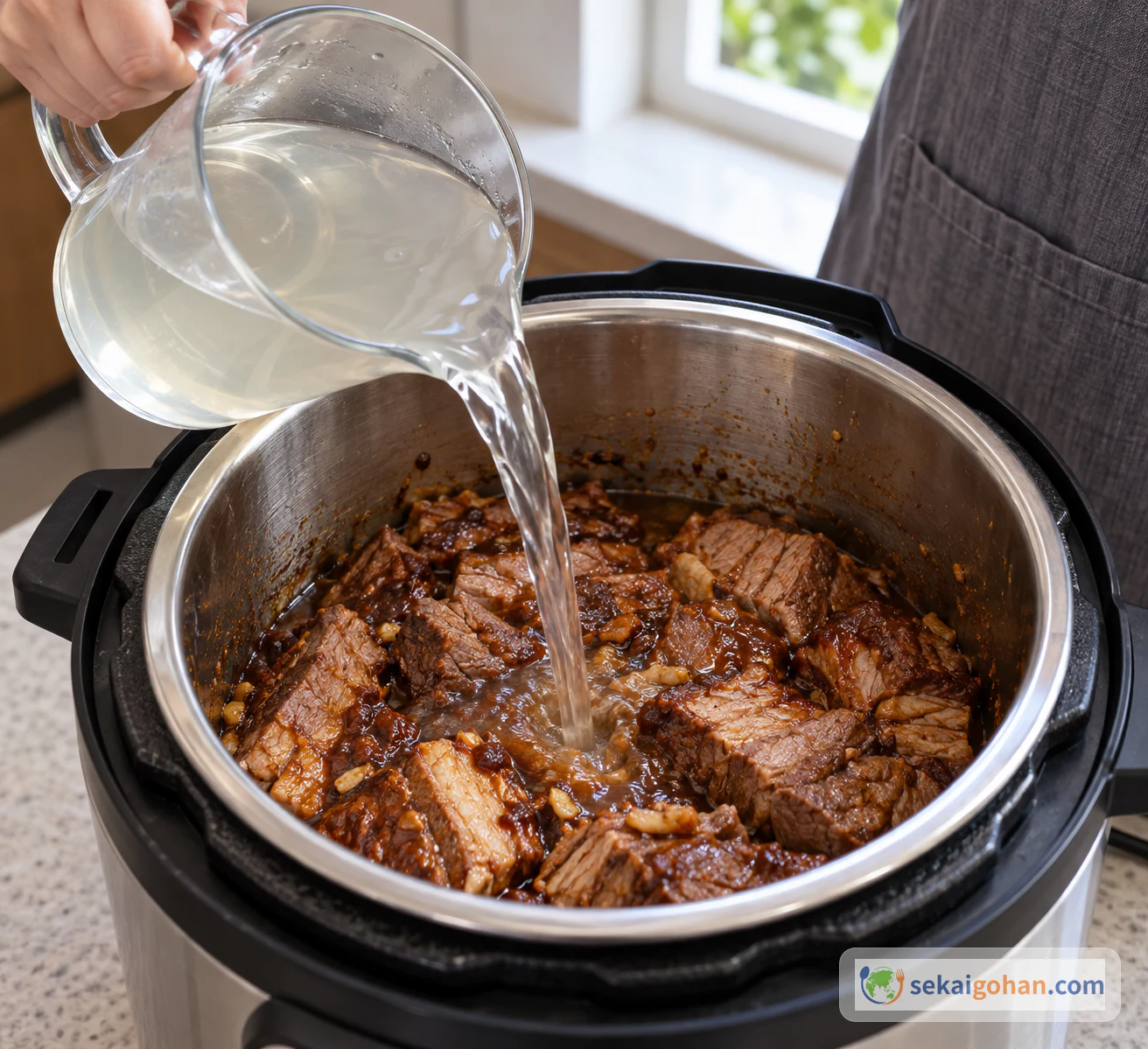
Pouring liquid into blanched brisket coated with ginger and chu hou paste in the cooker pot
The water goes into the chu hou-coated brisket; the oyster sauce and rock sugar follow

Use the Saute function of an Instant Pot IP-DUO60V2. Fry the 4 frying slices of ginger in a little oil, then add the 3 tbsp chu hou paste and stir-fry. Add the blanched brisket and mix well. Pour in the reserved radish water topped up with clear water to 3 cups (700 ml) in total. Only then add the 2 tbsp oyster sauce and the 10g rock sugar.

Don't confuse the 1¼ cups (300 ml) radish parboil water with this 3 cups (700 ml) total. The 10g of rock sugar here is separate from the little used for the radish, so don't add both amounts at once.

STEP44 / 14

Pressure-cook in two stages

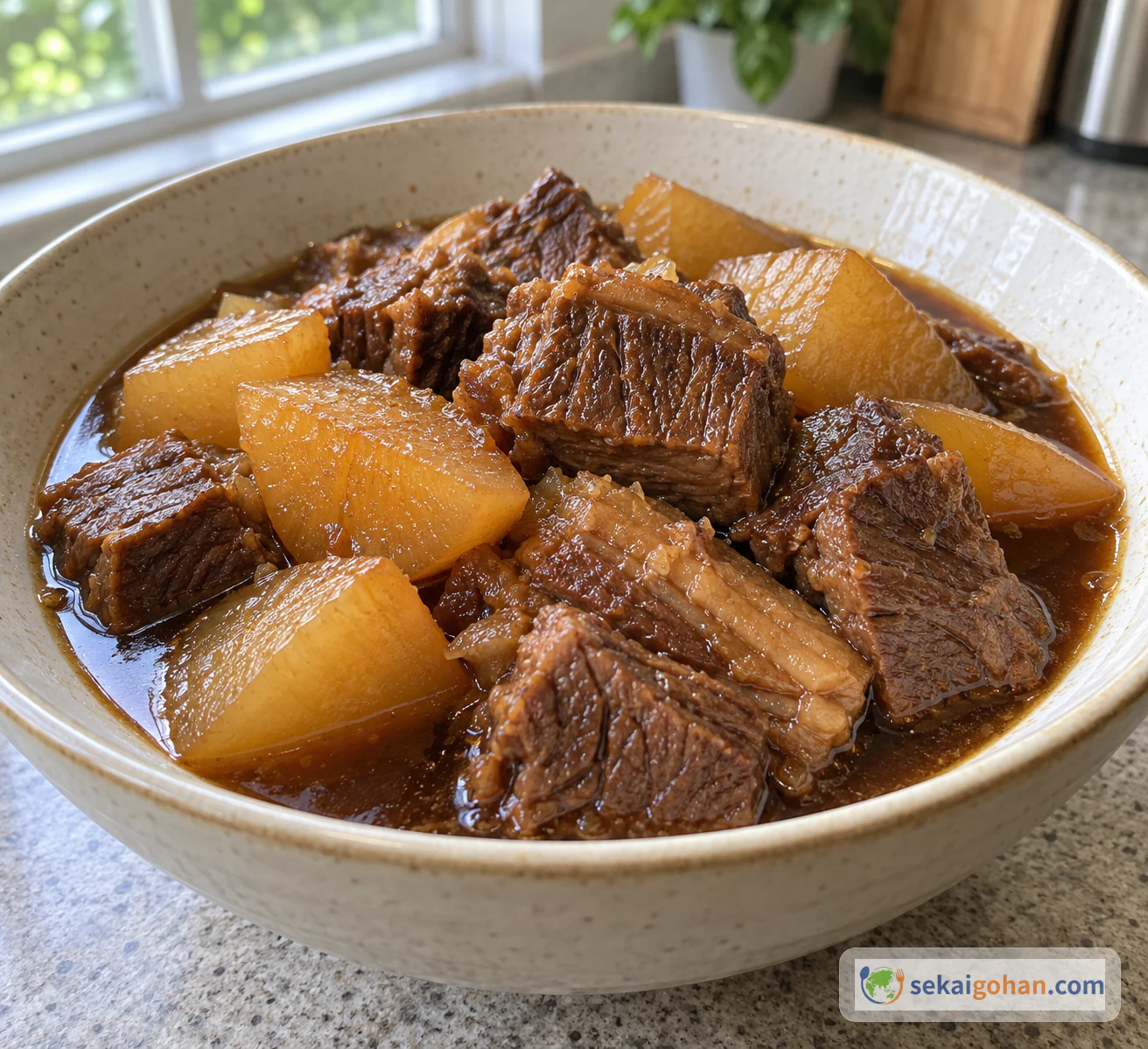
Tender brisket and radish sitting in chu hou braising liquid
After both pressure stages, the brisket and radish rest in their chu hou braising liquid

Cook at high pressure for 30 minutes. For this model, the pressure is then released by venting. Never open the lid while pressure remains inside.

Add the parboiled radish and cook at high pressure for 5 more minutes. Then press cancel and let the pressure release naturally for 20–25 minutes. These are two different release methods, so keep them separate.

Don't apply the minimum liquid or valve steps of other models to the V2. If you use a different cooker, follow its own manual. No conversion is given for stovetop pressure cookers.

STEP55 / 14

Make the satay fish balls

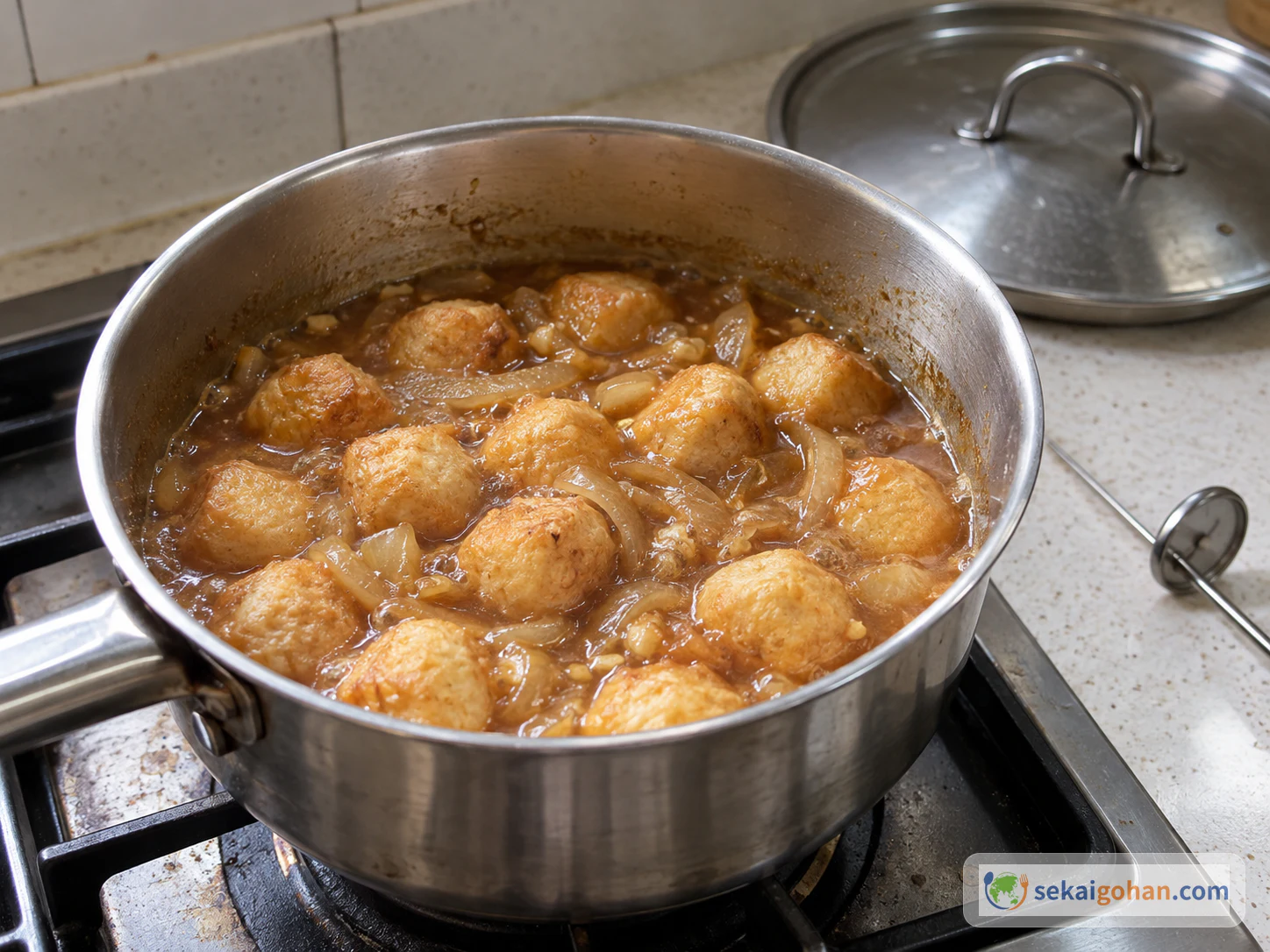
Fried fish balls simmering with onion in satay sauce
Onion first, then garlic and satay sauce, then the water, sugar and fish balls

Wash the 1 lb fried fish balls, blanch them in boiling water, and rinse off the surface oil. If they are frozen, follow the package instructions. Small items like fish balls can be cooked straight from frozen when the package allows it.

Heat half of the 2 tbsp oil and cook the onion with the 1/2 tsp salt until soft, then push it to one side. Add the remaining oil, the 1 tsp minced garlic and the 1.5 oz (40 g) satay sauce, and fry over low heat. Add the ¾ cup (200 ml) water and 2 tsp sugar and bring to a gentle simmer over medium heat. Add the fish balls and bring the sauce to a boil. When the fish balls swell, turn off the heat, cover, and leave for 1 hour to absorb the flavor.

The 1-hour rest is for flavor, not for keeping the fish balls hot. Swelling doesn't show they're done, so check the core with a thermometer.

STEP66 / 14

Steep the choy sum and measure its water

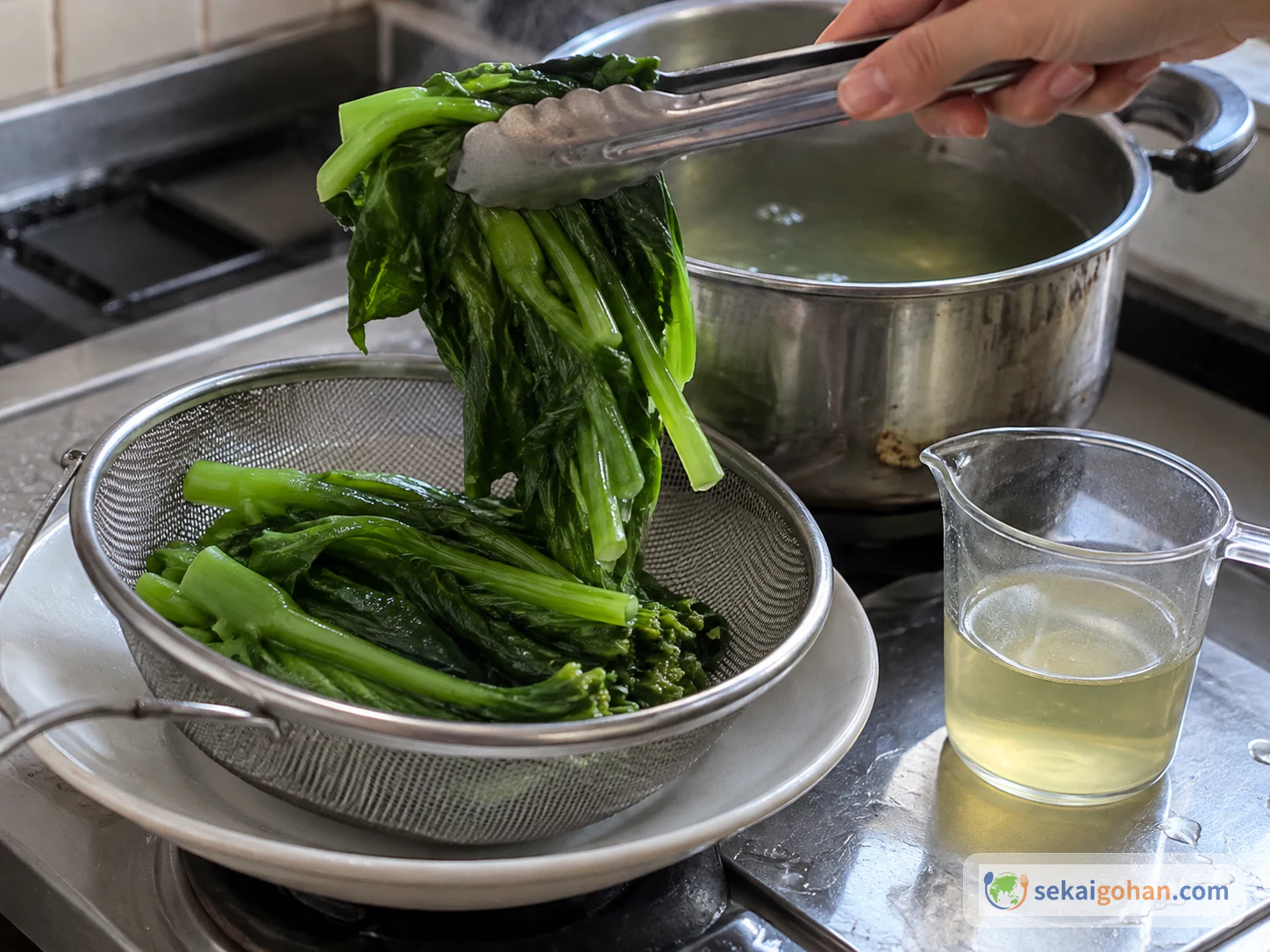
Lifting steeped choy sum out of the pot while setting its cooking water aside
Lift out the choy sum after its 5-minute off-heat steep, then measure 200ml of the water

Pick off the choy sum flowers and wash the stems. Bring a fresh pot of water to a boil and add some oil and salt; the recipe gives no amounts for either. Add the choy sum, turn off the heat, and leave it for 5 minutes. Only after that steep is finished, lift out the choy sum, then measure ¾ cup (200 ml) of the cooking water and set it aside. Don't add extra water to make up the amount.

STEP77 / 14

Cook the shrimp wontons

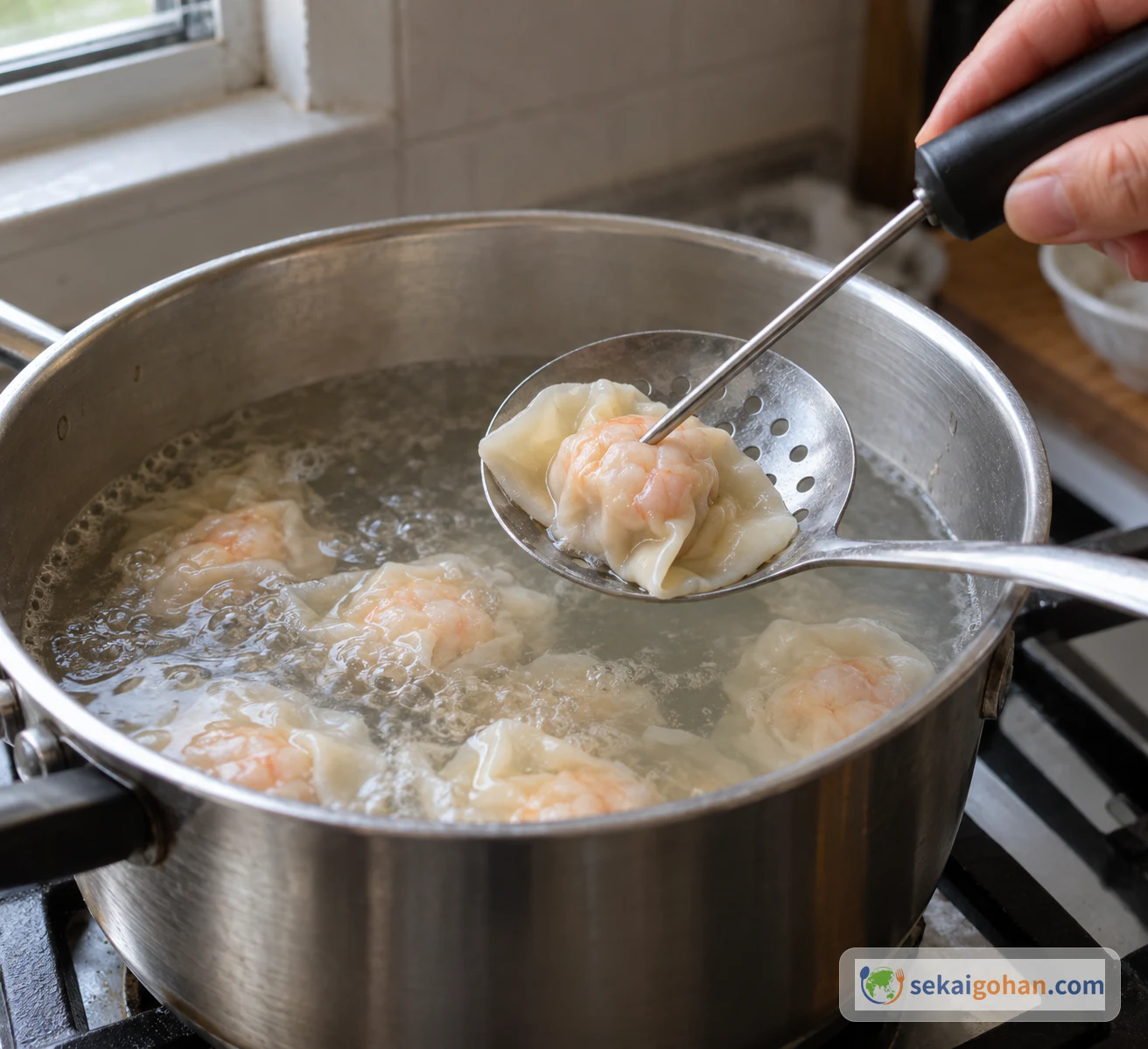
Boiling store-bought fresh shrimp wontons and checking one at its center
Check the thickest part of a wonton with a thermometer rather than relying on floating

Cook the 10 ready-made fresh shrimp wontons according to the package. Boil them for 2 minutes, then lift them out once they float. Floating alone doesn't show they're done, so check that the center reaches at least 167°F (75°C) for 30 seconds. Discard the wonton water; it is not used for the broth.

STEP88 / 14

Rinse the oil noodles

Oil noodles rinsed under cold water and draining in a sieve after the hot-water rinse
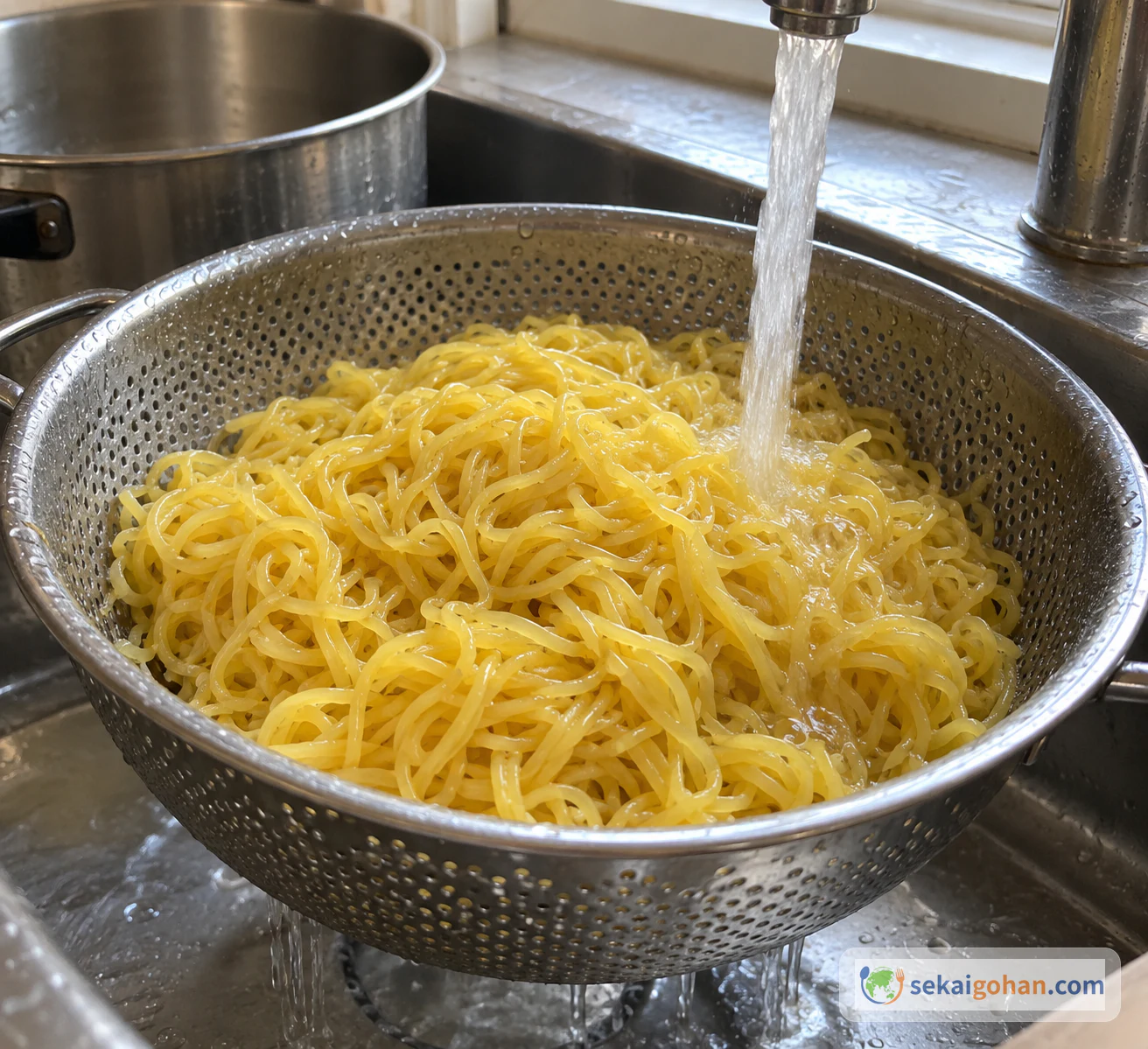
A hot rinse to remove surface oil, then cold water and a thorough drain

Pour hot water over the 2.75 lb (1200 g) oil noodles to wash off the surface oil. Then pass them through cold water and drain well. If the package gives cooking instructions, check them too.

STEP99 / 14

Heat the noodles in the chicken broth and choy sum water

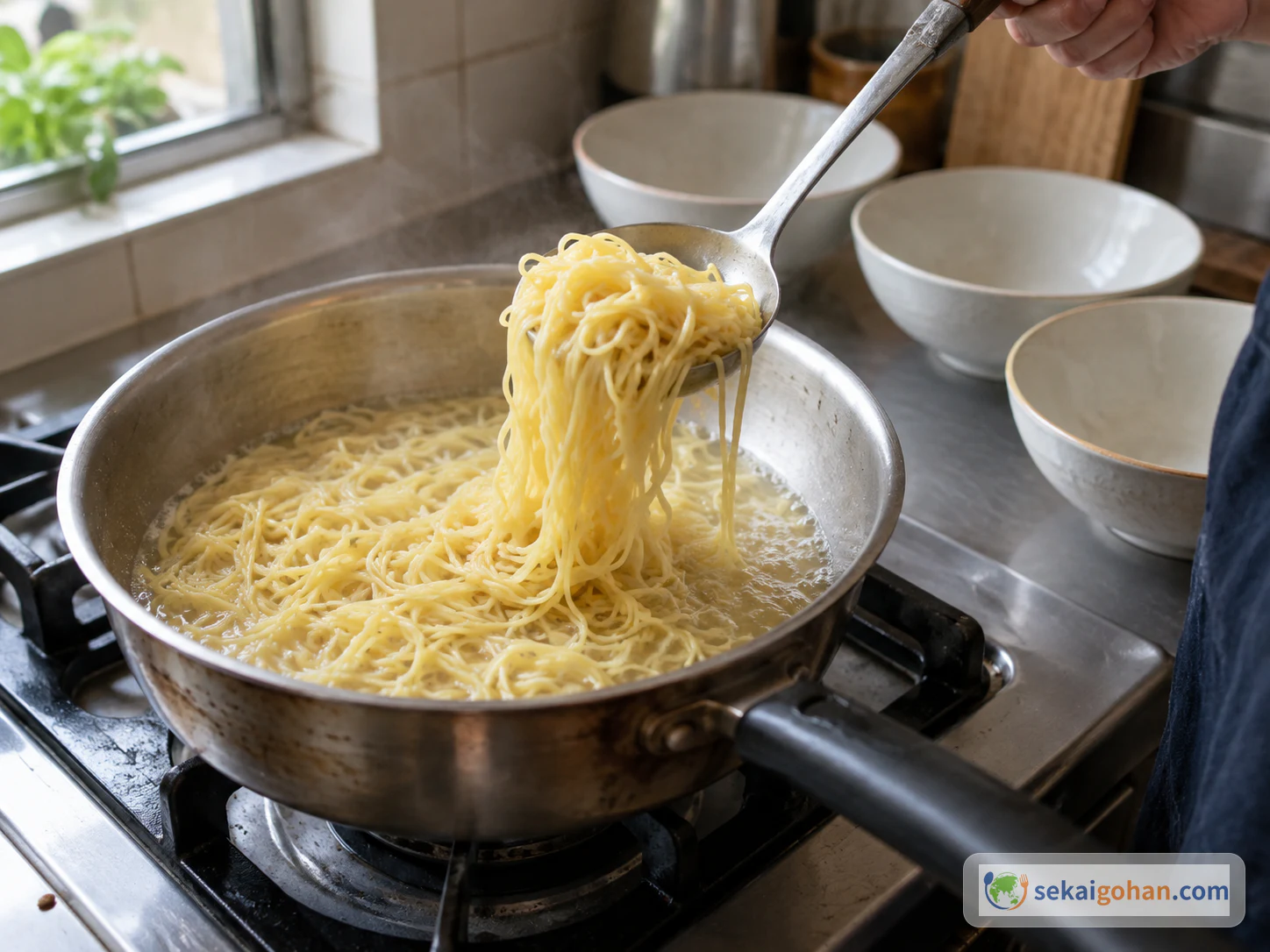
Heating oil noodles in a pot of chicken broth and choy sum water
Only the chicken broth and choy sum water go into this pot, in a modest amount

Put the ¾ cup (200 ml) choy sum water and the ¾ cup (200 ml) already-cooked leftover chicken broth in a pot. Add the noodles and bring to a boil over high heat, then turn off the heat. Add no other liquid at this point, not even the brisket or fish-ball sauce. Divide the noodles among 4 bowls and share the remaining broth between them.

This is a small amount of liquid, not a deep soup.

STEP1010 / 14

Layer the toppings and finish with chu hou sauce

STEP 10

On top of the noodles and broth in each bowl, add the following in order:

STEP1111 / 14

Brisket and radish

STEP 11
STEP1212 / 14

Satay fish balls

STEP 12
STEP1313 / 14

Cooked shrimp wontons

STEP 13
STEP1414 / 14

Choy sum

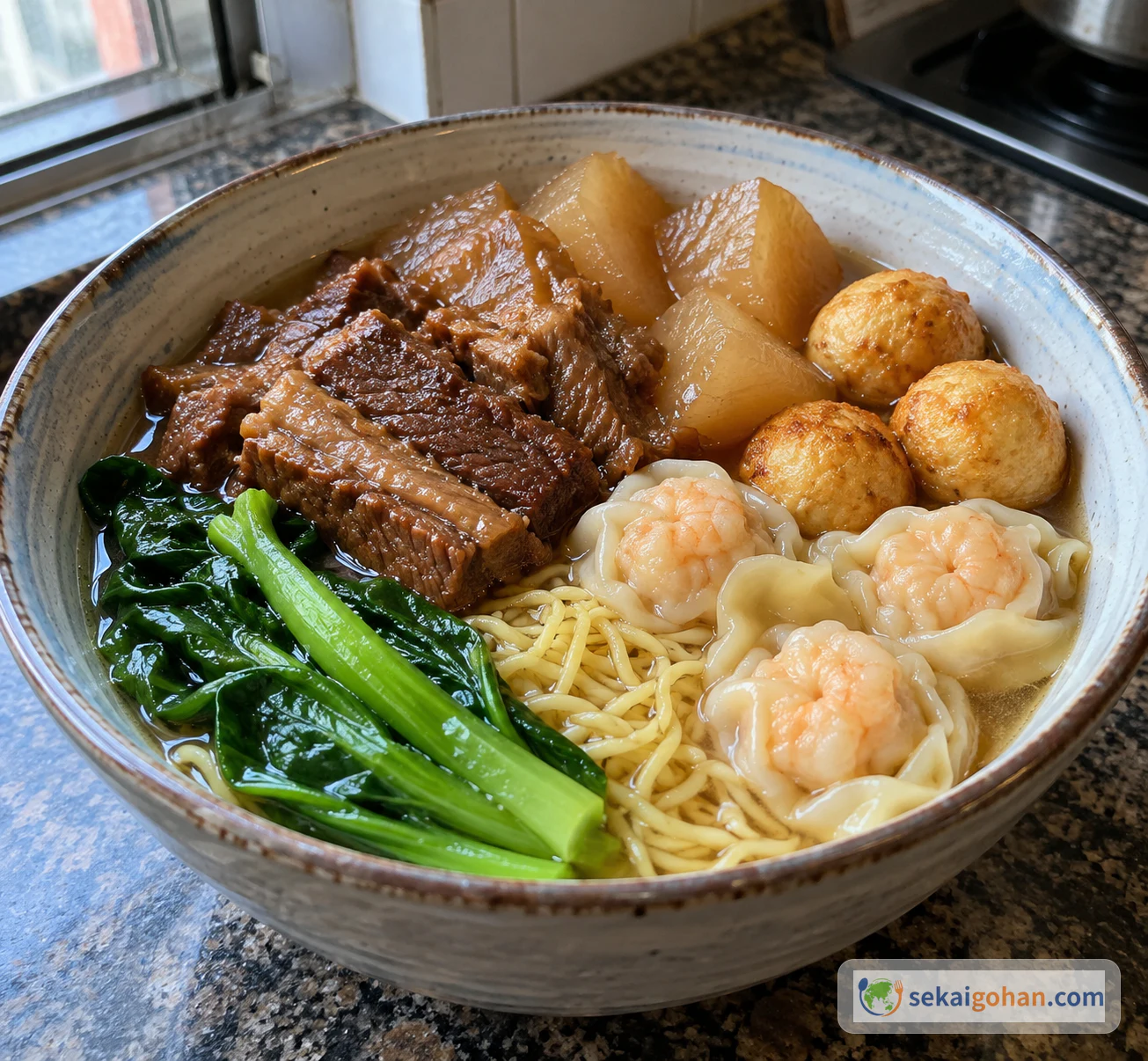
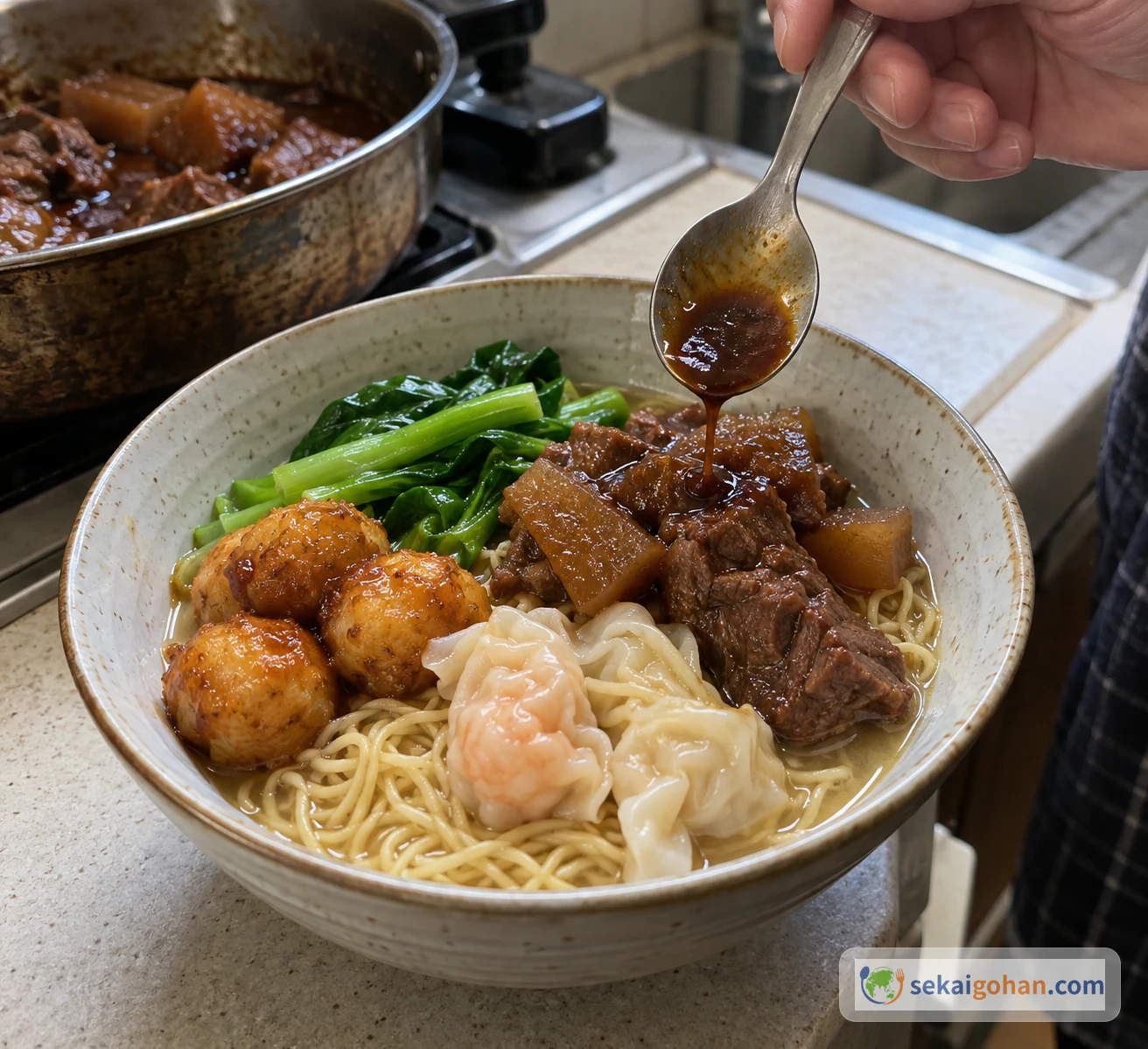
Topping oil noodles and broth with brisket and radish, satay fish balls, shrimp wontons and choy sum
Toppings first, then a small spoon of chu hou braising liquid; no extra satay sauce

Add as much of each as you like.

Once all the toppings are on, add a little of the brisket's chu hou braising liquid to taste as the finishing sauce. Leave the satay sauce on the fish balls, and don't pour extra over the whole bowl.

0 / 0
Ingredients

Ingredients

1 / 1

Ingredients

Ingredient Amount Role
Cantonese oil noodles (油麵) 1200g Main bowl: the noodles, rinsed and then heated in the broth
Ready-made fresh shrimp wontons (現成鮮蝦雲吞) 10 Main bowl: topping, cooked in their own water
Choy sum (菜芯) 1 lb Main bowl: green topping; its cooking water becomes part of the broth
Cooking oil and salt for the choy sum water as needed Main bowl: added to the choy sum pot
Leftover broth from home-steamed chicken (自家製蒸雞剩下雞湯) 200ml Main bowl: already-cooked clear broth for heating the noodles
Choy sum cooking water (烚菜芯水) 200ml Main bowl: measured from the choy sum pot; the other half of the broth
Frozen beef brisket strips (急凍牛腩條) 2 lb Brisket batch: the main meat topping
White radish (白蘿蔔) 1 (600g) Brisket batch: parboiled, then finished with the brisket
Scallions (青蔥) 3 Brisket batch: for blanching the beef
Ginger (薑), for blanching 4 slices Brisket batch: for blanching the beef
Water, for parboiling the radish 300ml Brisket batch: radish parboil; keep this water
Rock sugar (冰糖), for the radish A little Brisket batch: radish parboil
Ginger (薑), for frying 4 slices Brisket batch: fried at the start of the braise
Cooking oil, for frying the ginger as needed Brisket batch
Chu hou paste (柱侯醬) 3 tbsp Brisket batch: the main braising sauce
Reserved radish water plus clear water 700ml in total Brisket batch: braising liquid
Oyster sauce (蠔油) 2 tbsp Brisket batch: seasoning, added after the liquid
Rock sugar (冰糖), for the braise 10g Brisket batch: seasoning, added after the liquid
Fried fish balls (炸魚蛋) 1 lb Fish-ball batch: second topping
Onion (洋蔥) 1 Fish-ball batch: softened first
Salt (鹽) 1/2 tsp Fish-ball batch: cooked with the onion
Cooking oil (煮食油) 2 tbsp, divided in half Fish-ball batch: half for the onion, half for the garlic and satay sauce
Minced garlic (蒜蓉) 1 tsp Fish-ball batch: fried with the satay sauce
Satay sauce (沙嗲醬) 40g Fish-ball batch: the sauce for the fish balls
Water (清水) 200ml Fish-ball batch: satay sauce liquid, not for the noodle broth
Sugar (砂糖) 2 tsp Fish-ball batch: satay sauce
0 / 0

Steam rises off a pot of chicken broth and choy sum water while yellow oil noodles, rinsed of their surface oil in hot water and then cold, go in for a final boil. Beside the stove, two separate pots wait: beef brisket and radish braising in chu hou sauce, and fish balls in satay sauce. The noodles go into the bowls first, and the toppings are stacked on one by one. In Hong Kong this is 車仔麵, cart noodles in English, a bowl you build to your own taste.

About Hong Kong Cart Noodles

The name points back to the mobile wooden carts where cart noodles took their form. Customers picked their toppings to order, and the vendor placed them on the noodles. That pick-your-own style carries on in today's sit-down noodle shops. At Man Kee Cart Noodle, diners still choose their noodles, toppings and vegetables.

A home kitchen can't hold a cart's worth of choices, so home versions narrow the selection to what fits on the stove. This one keeps to a single set for four: Cantonese oil noodles, beef brisket and white radish braised in chu hou sauce, satay fish balls, shrimp wontons, and choy sum. Each topping still gets its own pot, so every eater can build their own bowl.

Ingredients: Main Bowl for 4, Plus Two Topping Batches
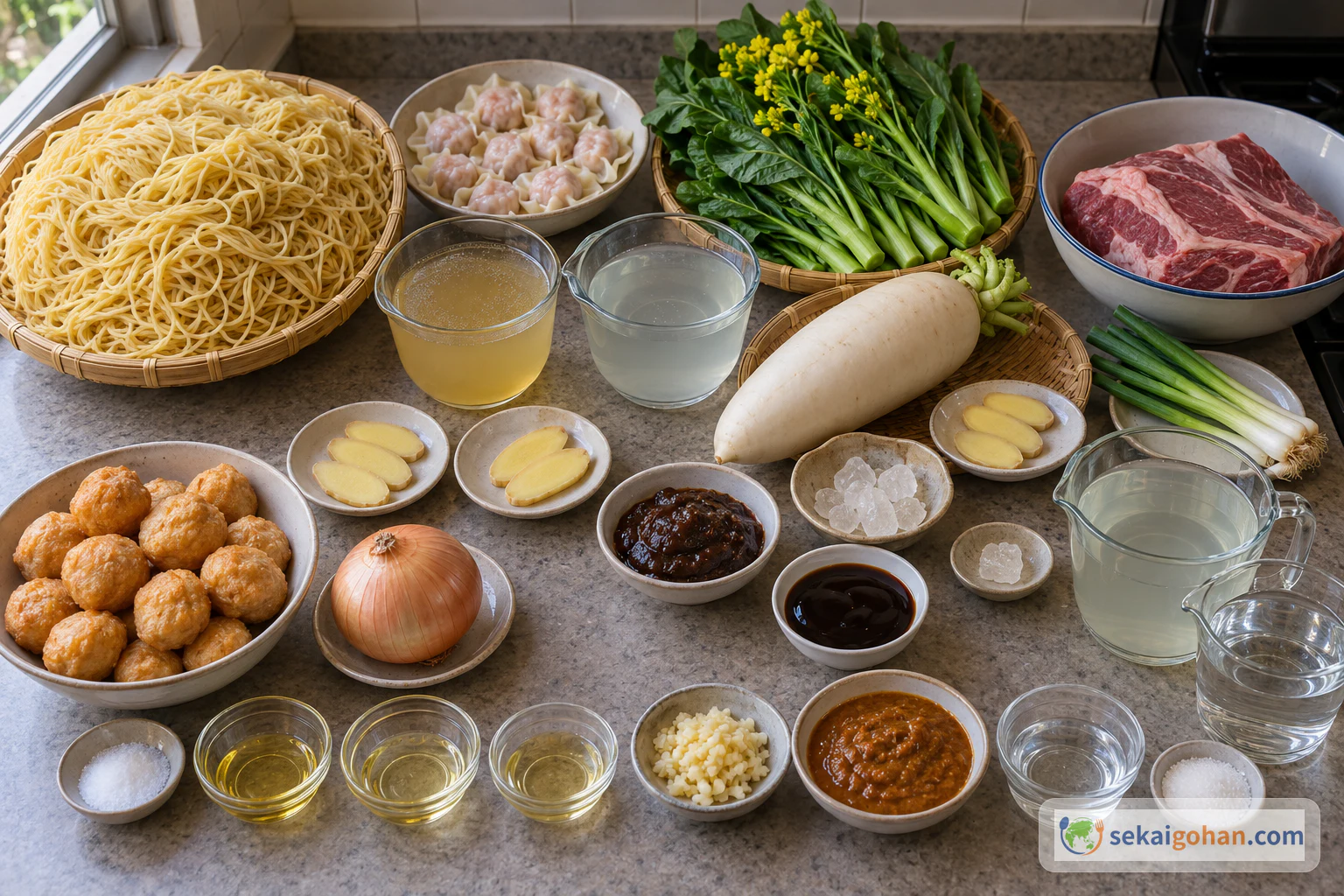
Oil noodles, beef brisket, white radish, fried fish balls, choy sum, shrimp wontons and seasonings for cart noodles
The noodle, wonton and choy sum components, plus the brisket and fish-ball batches, with raw beef kept apart

The main recipe serves 4. Make the brisket and fish balls as full batches: 2 lb brisket with 600g radish, and 1 lb fried fish balls. Put in as much brisket and fish ball per bowl as you like. The full batches are more than four bowls will take.

Equipment

  • Instant Pot IP-DUO60V2 electric pressure cooker, or your own cooker used according to its own manual
  • A pot for blanching the beef, plus a sieve for draining
  • A small saucepan for parboiling the radish, and a jug for the reserved radish water
  • A saucepan for the satay fish balls, with a lid
  • A pot for the choy sum, and a measuring jug for its cooking water
  • A pot and a slotted spoon for the wontons
  • A large sieve or colander for the noodles
  • A pot for heating the noodles in the broth
  • A food thermometer
  • Four serving bowls
  • Separate boards and utensils for raw beef

Choosing Ingredients for Cart Noodles

Chinese grocers carry everything here: 油麵 (oil noodles), 菜芯 (choy sum), 炸魚蛋 (fried fish balls), 現成鮮蝦雲吞 (ready-made fresh shrimp wontons), 柱侯醬 (chu hou paste) and 沙嗲醬 (satay sauce). Check product names and package labels as you shop. For the noodles, wontons and fish balls, follow the storage and cooking instructions on each package.

The sauces each have their own job. Chu hou paste and oyster sauce season the brisket pot, and satay sauce seasons the fish balls only. There's no light or dark soy sauce anywhere in the recipe, and chu hou paste is a different product from soy sauce or oyster sauce, so keep them separate rather than swapping one for another.

Allergens

Allergens differ from product to product. Check the labels on the wontons, fish balls, noodles, satay sauce and chu hou paste, including any shared-facility statements, before cooking for someone with allergies.

Method: Two Topping Pots, Then a Quick Finish for the Noodles

Recipe amounts, safety edits, and what is left open

Two common steps are replaced here with Hong Kong Centre for Food Safety guidance: thawing at room temperature, and rinsing raw beef. Thaw in the refrigerator instead, and don't rinse raw meat. Some amounts are not given: oil and salt for the choy sum water, oil for frying the ginger, the split of the 3 cups (700 ml) braising liquid, and per-bowl toppings, broth and finishing sauce. Add those to taste.

Cooking temperature

Cook food until the core reaches at least 167°F (75°C) and holds there for 30 seconds. Check with a thermometer. Cook large pieces of meat through to the center. Swelling fish balls, floating wontons or a change in color do not prove they are cooked through. Follow the cooking instructions on each package too.

Cart Noodle Troubleshooting

Situation What it means What to do
The broth looks shallow Four bowls share only ¾ cup (200 ml) chicken broth and ¾ cup (200 ml) choy sum water That is the intended amount. Don't add water or stock for a deeper soup
The fish balls have swollen, but you're unsure they're done Swelling is not a safety test Check the core with a thermometer: at least 167°F (75°C) for 30 seconds, and follow the package
The wontons are floating Floating is not a safety test Check the center with a thermometer before serving
You don't have leftover steamed-chicken broth No method or substitute is given Don't use another broth in its place
The flavor seems doubled up or heavy Both sauces may have gone into the bowl Finish with chu hou braising liquid only, and keep the satay sauce on the fish balls

Serving Cart Noodles

The noodles go into a small amount of broth at the very end, and the toppings are layered on in a set order. For the finishing sauce, this method uses the chu hou brisket liquid. If you'd rather have the satay liquid, use it instead of the chu hou liquid, never on top of it.

At the table, the cart spirit takes over: each person can take more or less of each topping from the pots.

Frequently Asked Questions

How much brisket and fish balls go in each bowl?

As much as you like. The brisket and fish balls are made as full batches, and you don't have to use them all up in four bowls.

Can I make the brisket on the stovetop or in another pressure cooker?

The times and release steps are written for the Instant Pot IP-DUO60V2, and no conversion to a stovetop pot or another model is given. If you use another cooker, follow its own manual, and never open it while pressure remains inside.

Can I thaw the brisket on the counter, as some recipes say?

No. Thaw meat in the refrigerator at up to 39°F (0–4°C), and don't rinse raw beef. Keep raw meat apart from cooked foods.

Why rinse the noodles in hot water and then cold?

The hot water washes off the surface oil, and the cold water follows before the noodles are drained. They're heated again in the broth just before serving.
Sources