Kuzuyu: Japanese Hot Kudzu Drink (葛湯)

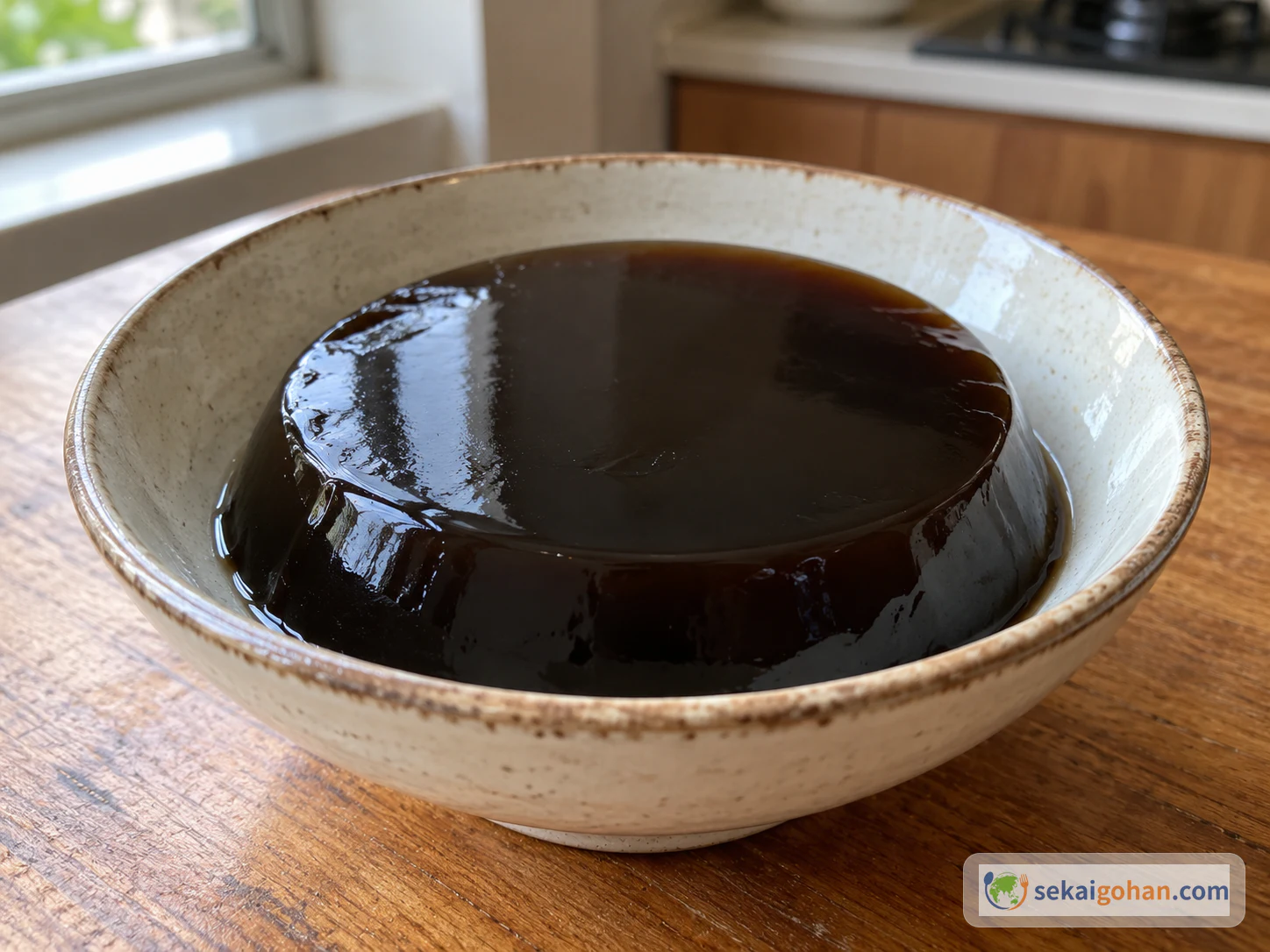
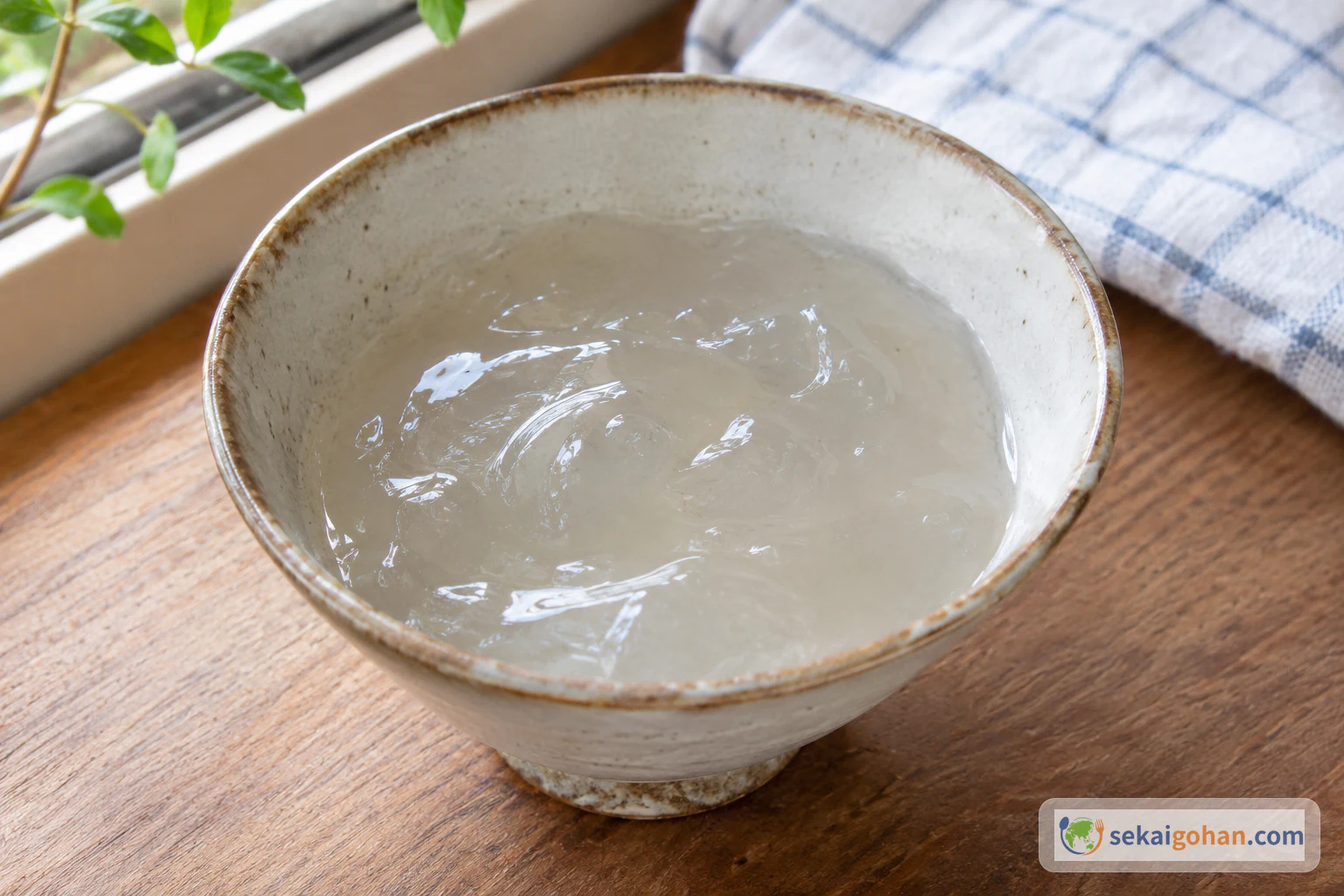
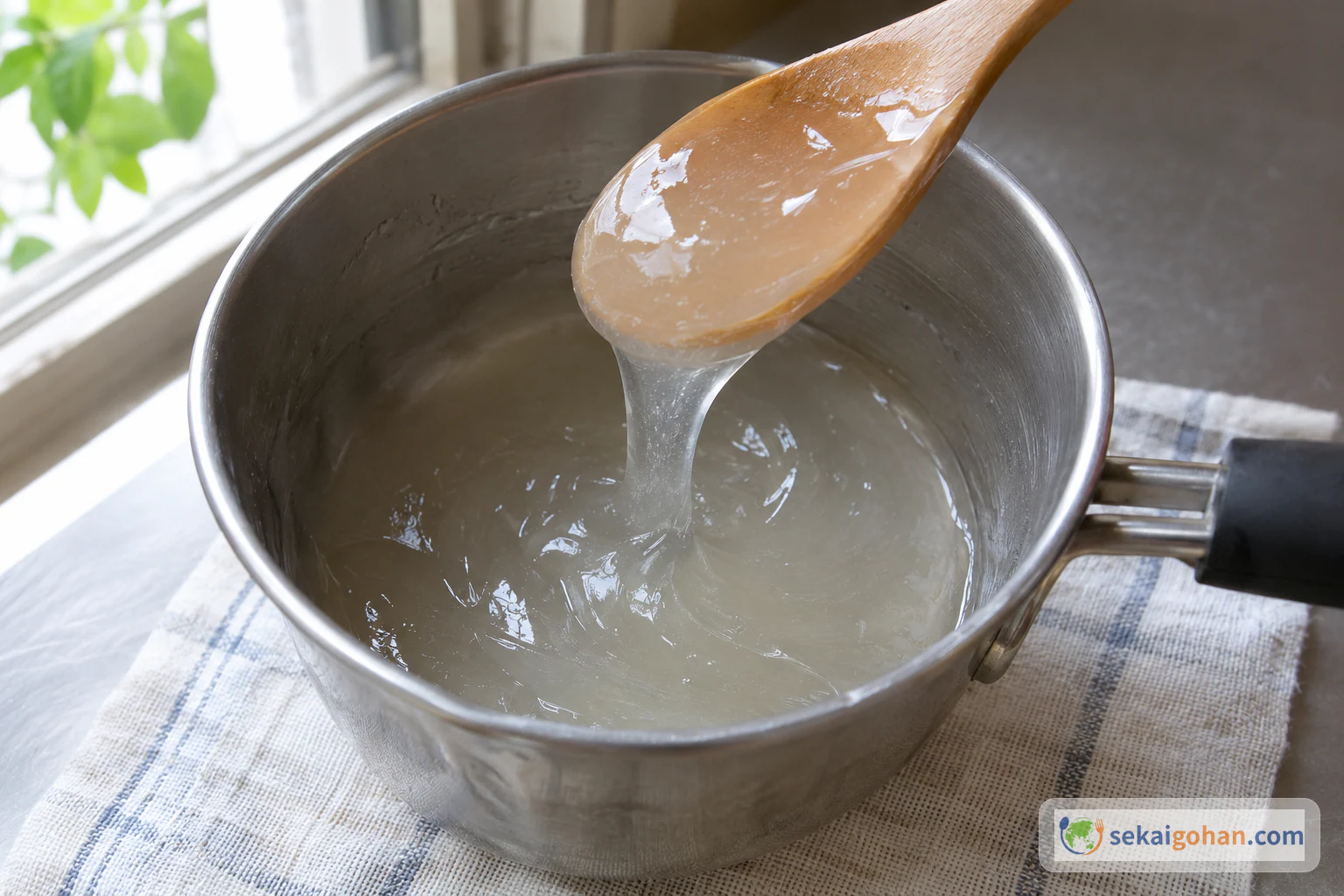
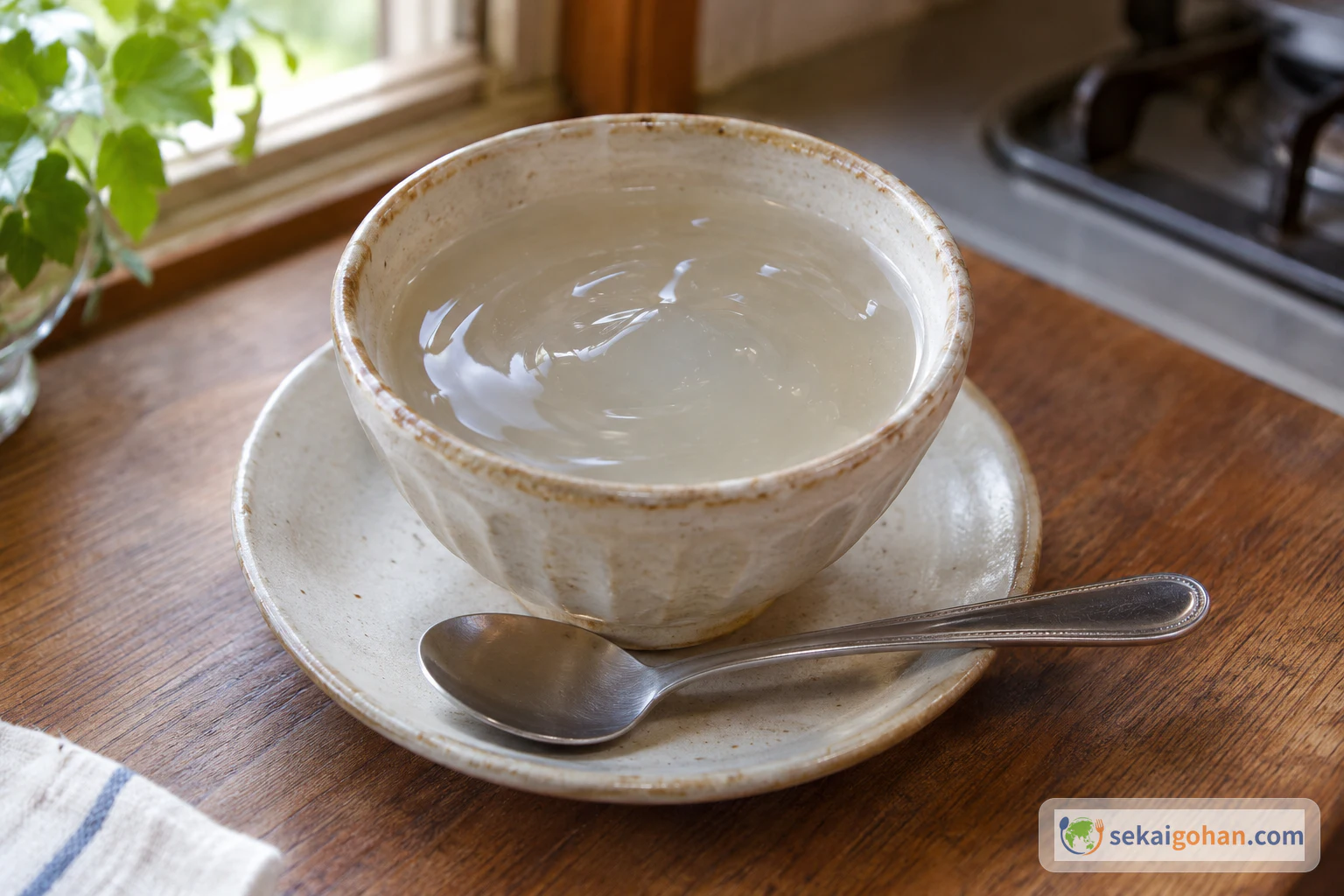
Finished kuzuyu, translucent and thick, in a small bowl
Serves
1 serving
Cuisine
Japanese

How to make one serving of kuzuyu (葛湯), a hot, thickened Japanese drink of hon-kuzu powder, sugar and water, cooked in a small saucepan until translucent and thick. Includes doneness cues, fixes, background on Yoshino kuzu from Nara, and how it differs from a microwave method.

Cooking flow

Cooking steps

STEP11 / 9

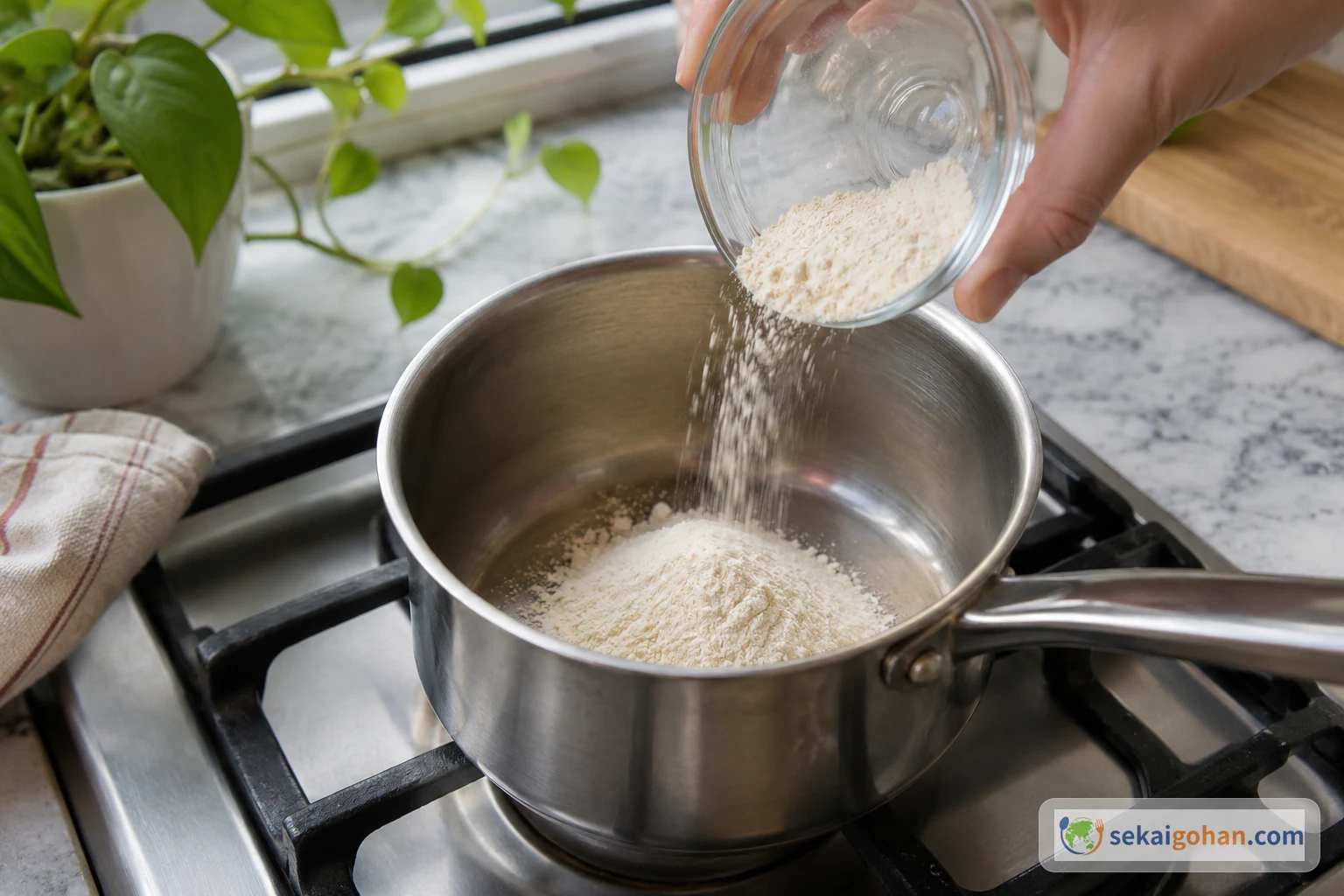
Add the kuzu powder

Adding hon-kuzu powder to an empty small saucepan
The saucepan stays off the heat

Put 10 g of hon-kuzu powder into the empty small saucepan. Leave the heat off.

STEP22 / 9

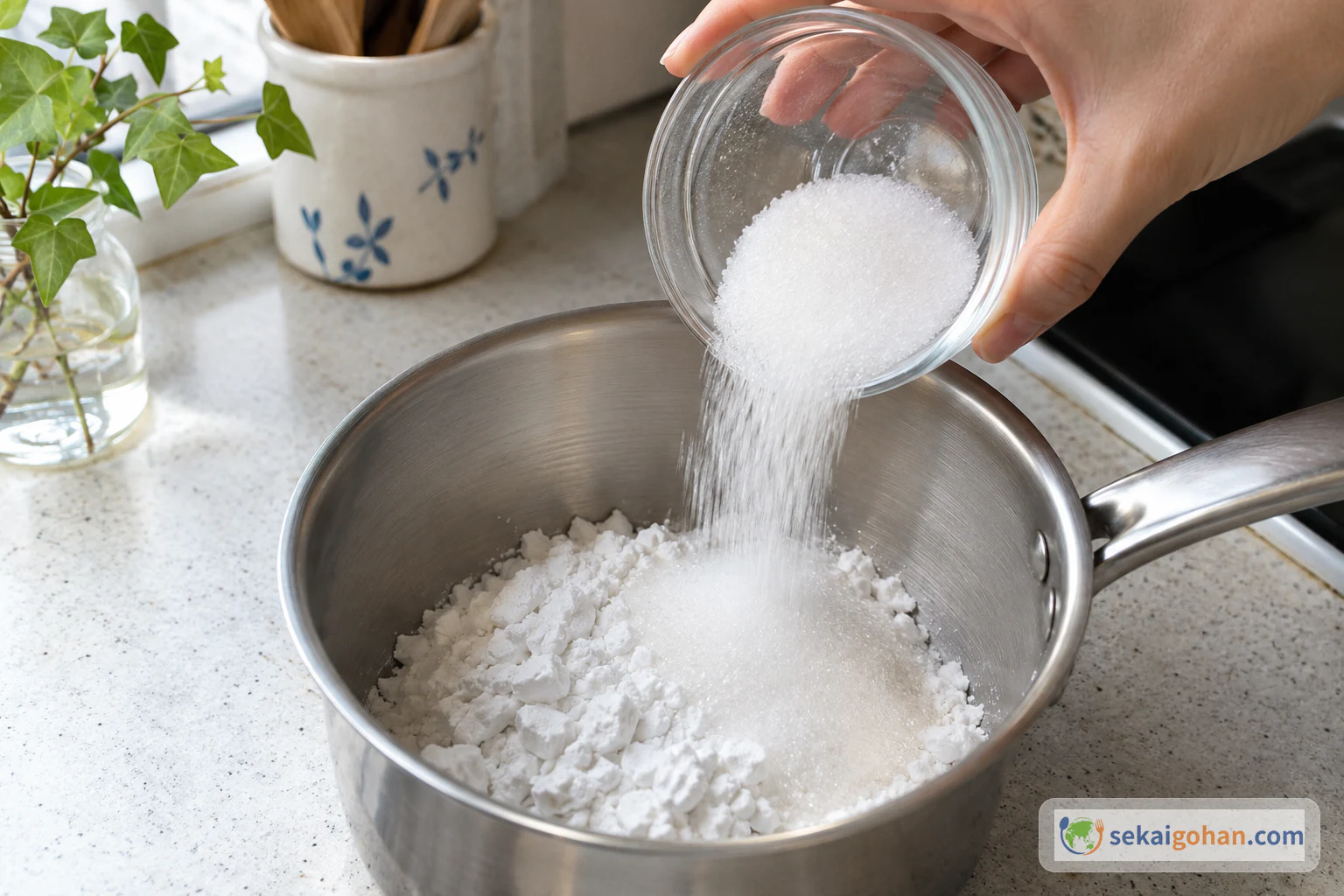
Add the sugar

Adding sugar to the kuzu powder in the saucepan
Both dry ingredients go in before the water

Add 5 g of sugar to the dry powder.

STEP33 / 9

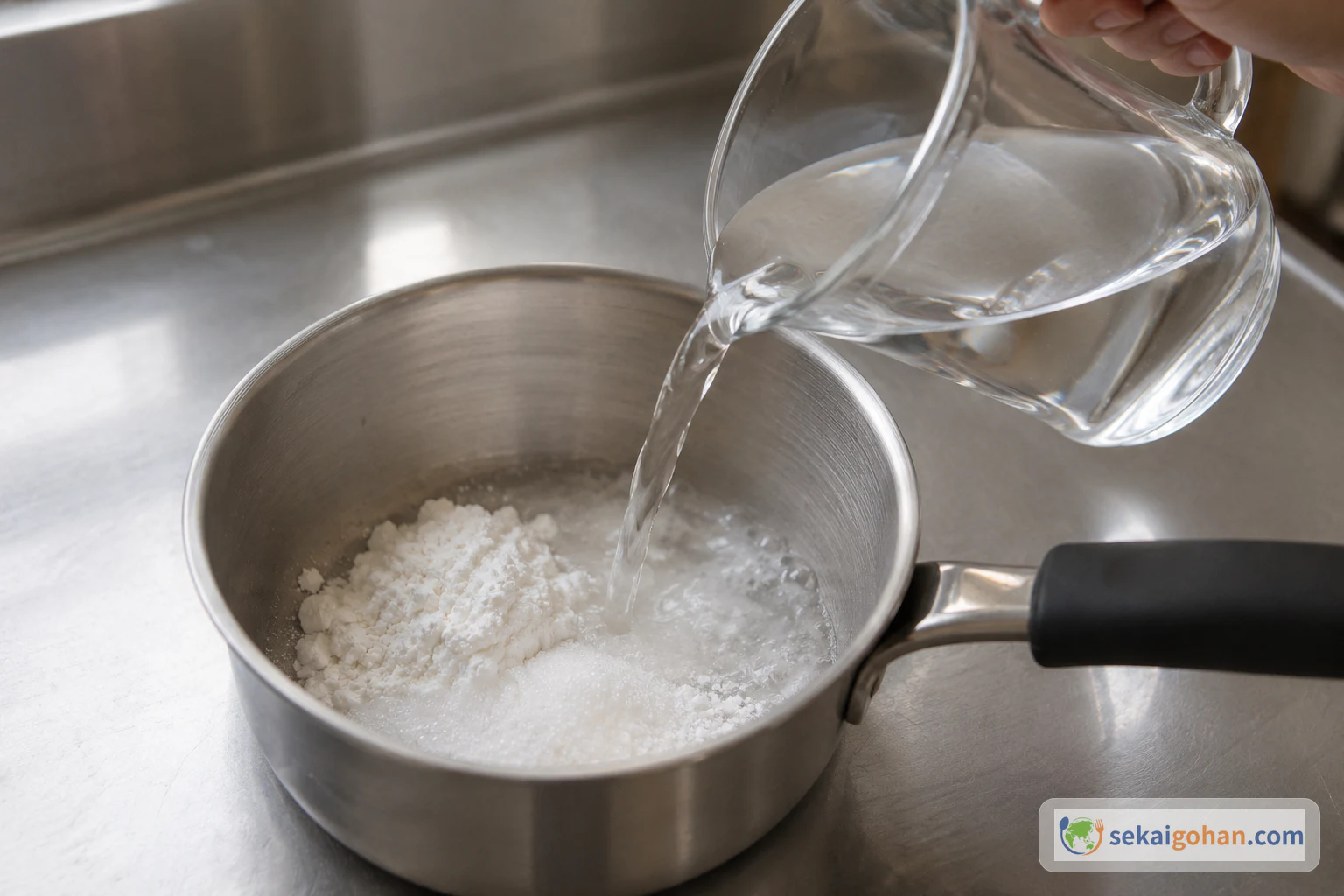
Add the water

Pouring water into the unheated saucepan
One addition of water, before any heat

Pour in 3.5 oz (100 g) of unheated drinking water. This is the only water the recipe uses.

STEP44 / 9

Mix before heating

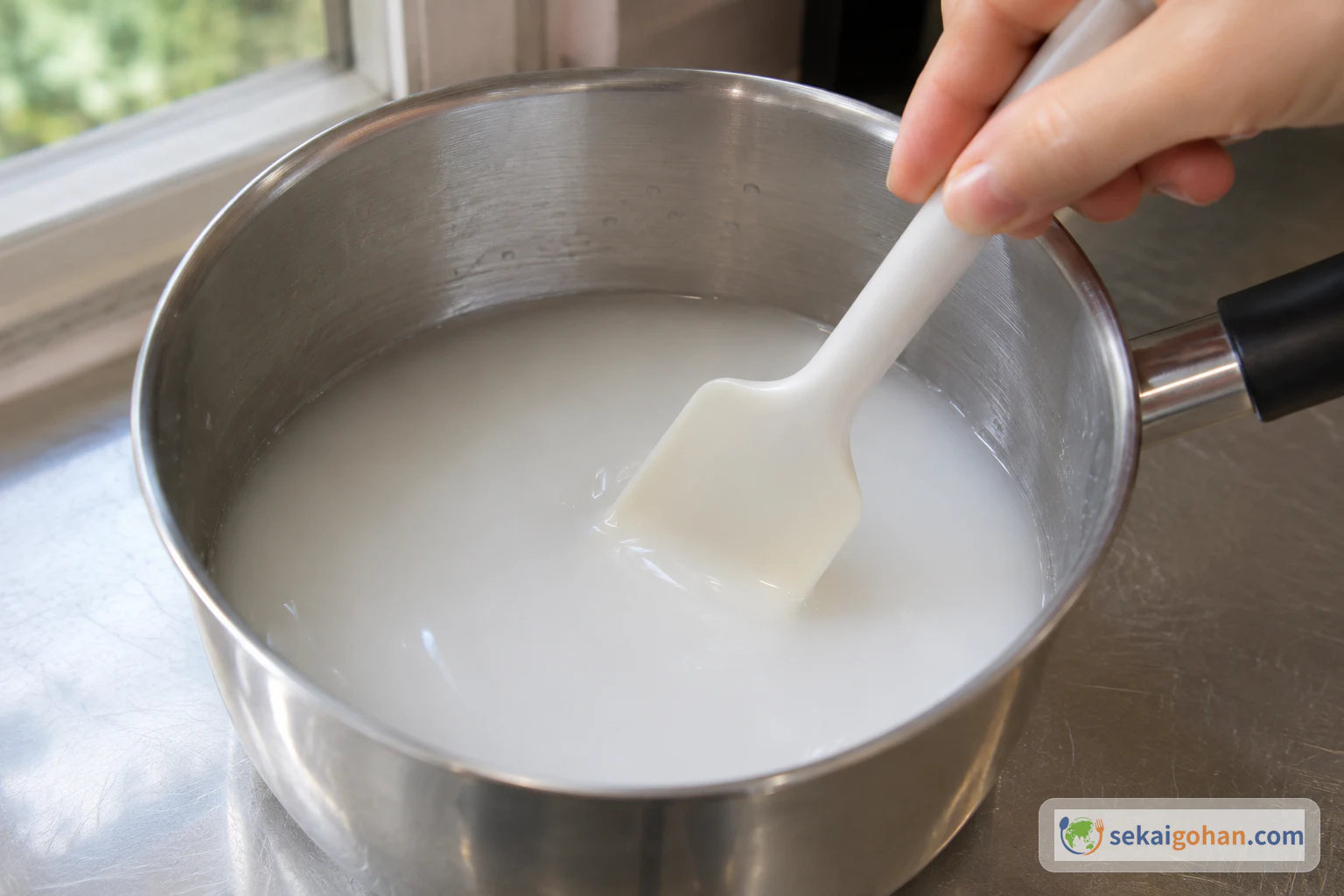
Mixing the pale liquid with a spatula before heating
Evenly mixed and free of lumps

Mix with a spatula until the liquid is even and has no lumps. The powder is now evenly suspended in the water. It will not look clear yet.

STEP55 / 9

Heat over high heat, stirring constantly

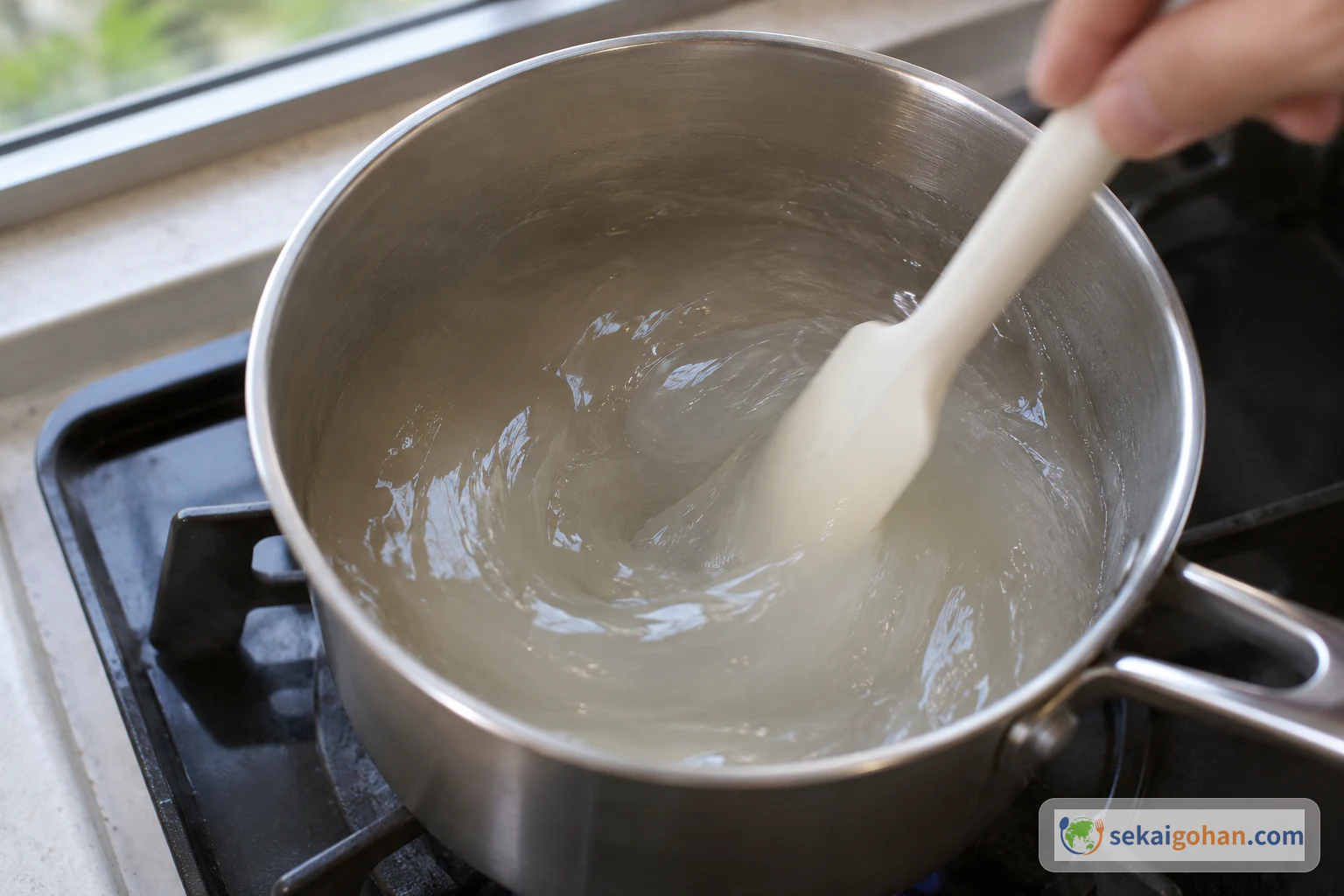
Stirring the saucepan constantly with a spatula over high heat
Keep the spatula moving throughout

Set the saucepan over high heat and stir with the spatula without stopping.

STEP66 / 9

Check that it is translucent and thick

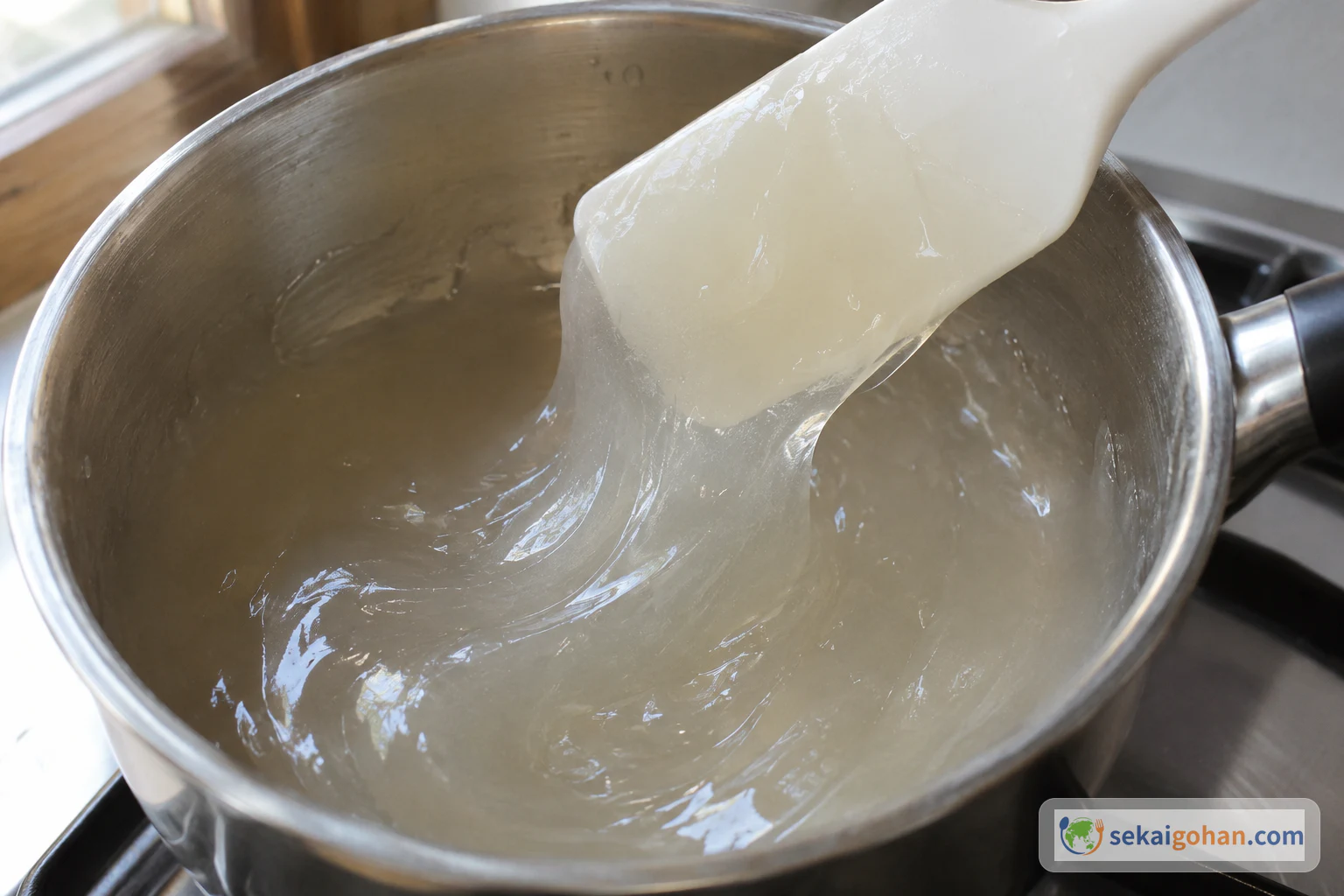
Translucent, thick kuzuyu clinging to a spatula in the saucepan
Both cues together: translucent and thick

Keep stirring until the kuzuyu is both translucent and thick. Go by how it looks, not by the clock. It should not be thin like water, and it should not be a firm mass you could cut.

STEP77 / 9

Take it off the heat

Saucepan of finished kuzuyu set away from the heat
Off the heat, on a dry surface

Move the saucepan off the heat and onto a dry, stable surface. There is no extra simmering stage.

STEP88 / 9

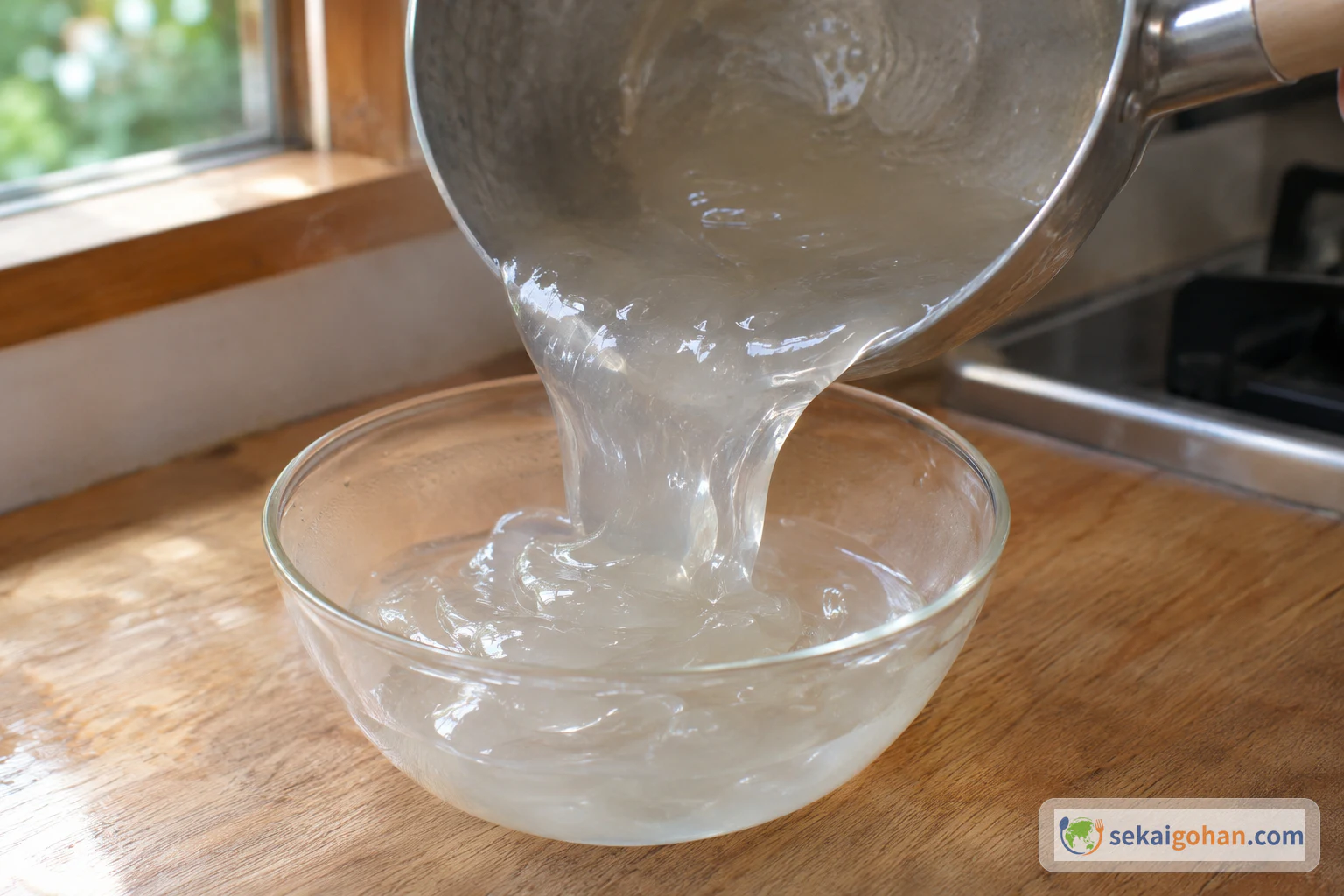
Pour into a bowl

Pouring thick kuzuyu from the saucepan into a heatproof bowl
Use a heatproof bowl

Carefully pour the kuzuyu into a heatproof bowl. Add nothing to it.

STEP99 / 9

Serve with care

Bowl of kuzuyu on a saucer with a spoon nearby, ready to serve
Serve on a stable saucer and mind the heat

Set the bowl on a stable saucer with a spoon alongside. Don't grip the hot bowl with bare hands, and take care before you drink.

0 / 0
Ingredients

Ingredients

1 / 1

Ingredients

Ingredient Amount Role
Yoshino hon-kuzu powder (吉野本葛), commercial food-grade 10 g Thickens the drink and gives it its translucent body
White sugar (砂糖) 5 g Sweetness
Drinking water, unheated 3.5 oz (100 g) The only liquid, added once before heating
0 / 0

At first, the liquid in the small saucepan is pale and cloudy. As you stir it over the heat, it loses that cloudiness and gains body, until it is both translucent and thick. That change is the whole point of kuzuyu (葛湯), a hot Japanese drink thickened with kudzu powder. This version is as plain as it gets: Yoshino hon-kuzu powder, sugar and water, made one cup at a time in a saucepan. For more dishes from Japan, see our Japan page.

Kudzu and Yoshino Kuzu in Nara

Kudzu has a long history in Nara, where its root was used as both medicine and food. One theory links the name "kuzu" with the place name Kuzu (国栖). Kudzu powder is made in Nara, too, refined by processes such as Yoshino-sarashi (吉野晒し) and kan-zarashi (寒晒し), which depend on cold water and climate.

Yoshino hon-kuzu is a regional trademark, and its raw material is kudzu-root starch.

Ingredients: Serves 1
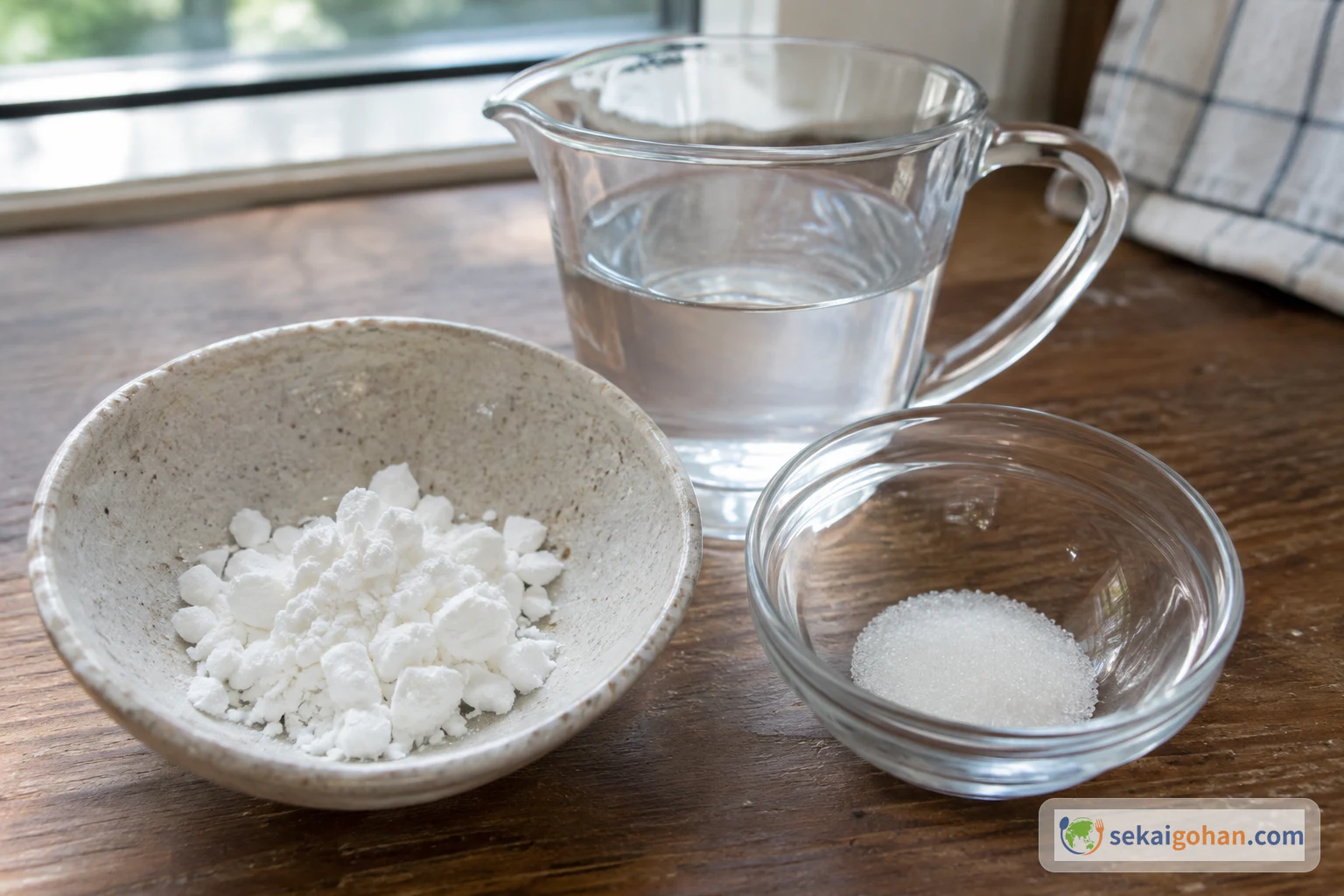
Hon-kuzu powder, sugar and water in three separate vessels
Three ingredients, nothing more

Equipment

  • Kitchen scale
  • Small saucepan
  • Spatula
  • Heatproof bowl
  • Stable saucer
  • Spoon

Choosing Kuzu Powder, Sugar and Water

Kuzu powder: Look for food-grade powder labeled as hon-kuzu, and check the package label when you buy it. Stick with hon-kuzu rather than katakuriko, cornstarch or other starches.

Sugar: White sugar is the one used here.

Water: Use unheated drinking water, weighed in grams. It goes into the saucepan before any heat goes on.

Method: Mix First, Then Heat

Steps 1 to 4 all happen before the heat goes on. Steps 5 and 6 are the only cooking stage. Steps 7 to 9 are ordinary handling and add no further heating.

When Kuzuyu Doesn't Look Right

Watch for two things at once: the liquid has to turn translucent and it has to thicken. One without the other means it isn't done yet.

What you see When What to do
Lumps in the liquid Before heating Keep mixing with the spatula until they are gone, and only then turn on the heat
Still cloudy During heating Keep stirring over the heat. Thickness alone does not mean it is done
Clear-looking but thin During heating Keep stirring until it thickens as well
A firm mass you could cut At the end This is past the intended texture. Check your weights next time

Serving and Variations

Handle it as a hot drink

Finished kuzuyu is hot and thick, so take care when pouring and before you drink it. Its look doesn't tell you when it has cooled enough to drink.

Once you know the plain cup, it's easy to play with. Milk, coffee, black tea or soy milk can replace the water, and ginger or brown sugar such as kokuto (黒糖) can be added.

Frequently Asked Questions

How long does it take?

There's no set cooking time. Go by the two visual cues in step 6 instead.

Can I make it in the microwave?

That's a separate recipe. The powder and sugar are dissolved in a little water in a mug, more water or hot water is added, and it is microwaved and stirred until transparent. The amounts and order differ from the saucepan method, so follow one method from start to finish rather than mixing the two.

Can I pour hot water straight onto the powder?

Not in this recipe. Here the unheated water goes in and is mixed before the heat goes on. Don't pour hot water directly onto lumps of kudzu powder.

Is kuzuyu good for you?

Kudzu's historical medicinal use in Nara does not show that drinking kuzuyu today has any particular effect.
Sources

  • Inoue Tengyokudo Co., Ltd. (Yoshino Hon-kuzu Tengyokudo), "自分で葛粉から葛湯を作る方法" (How to make kuzuyu yourself from kudzu powder). Source of the single-serving amounts, the saucepan method and the optional variations, which were not adopted here. A specialist's published recipe, not an independent home test. https://www.kudzu.jp/hpgen/HPB/entries/204.html
  • Maehara Seifun Co., Ltd. (Gishi), "葛湯の作り方を教えて下さい。" (Please tell me how to make kuzuyu). Used only for comparison: a separate mug and microwave method, its caution about hot water and lumps, and its burn warning. https://www.gishi.co.jp/home/faq_view.asp?id=96
  • Nara Prefecture, "令和6年度「食文化ストーリー」創出・発信モデル事業 奈良の食文化(大和の保存食)情報調査・発信事業 調査報告書" (survey report on Nara's food culture and preserved foods), March 2025, hosted on the Agency for Cultural Affairs website. Used for the background on kudzu and Yoshino hon-kuzu. Our summary draws on an earlier reading of the Yoshino hon-kuzu chapter (printed pages 20–24), not the whole report, and is not a recipe source. https://www.bunka.go.jp/seisaku/bunkazai/joseishien/syokubunka_story/pdf/94217001_10.pdf