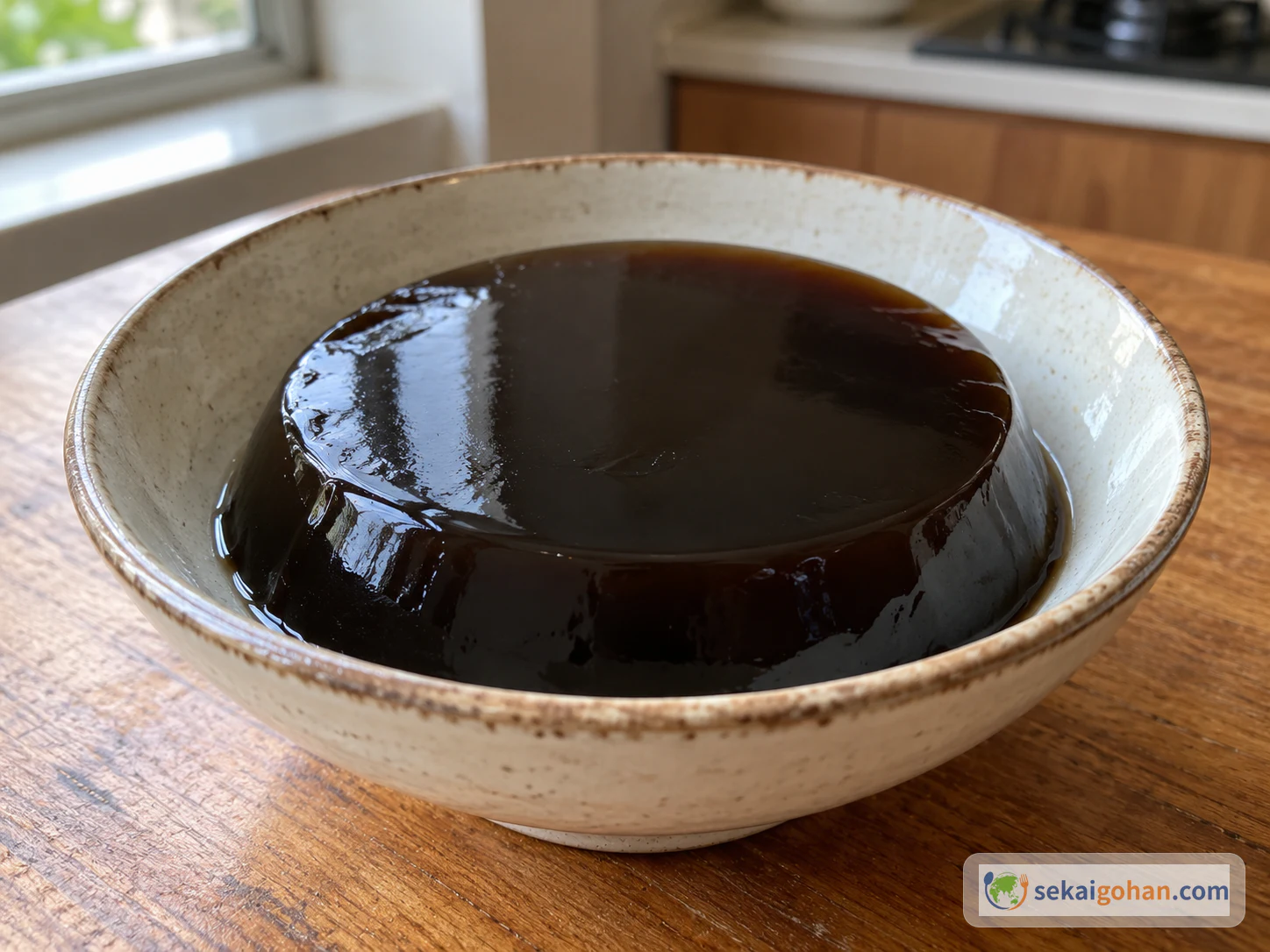
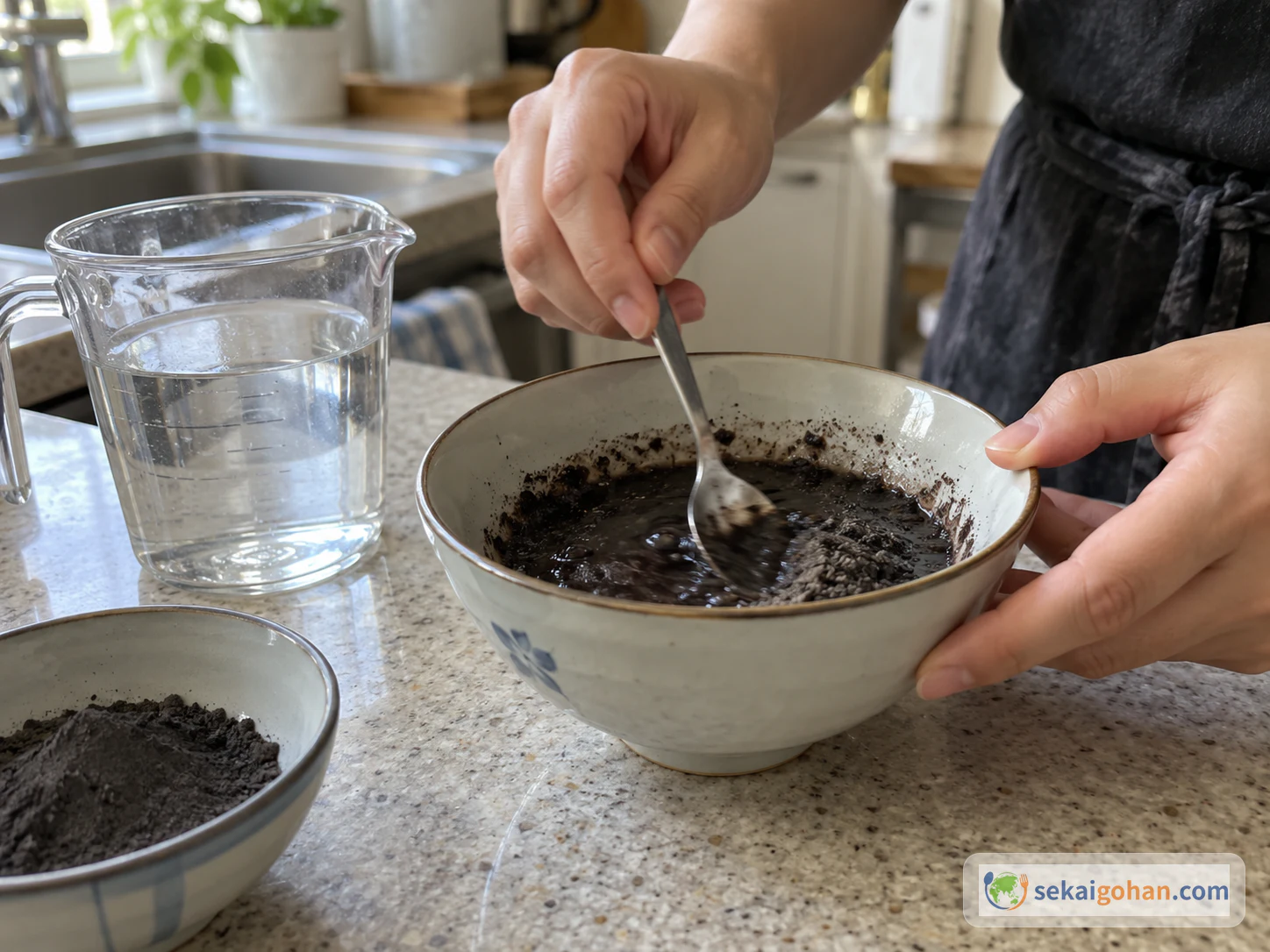
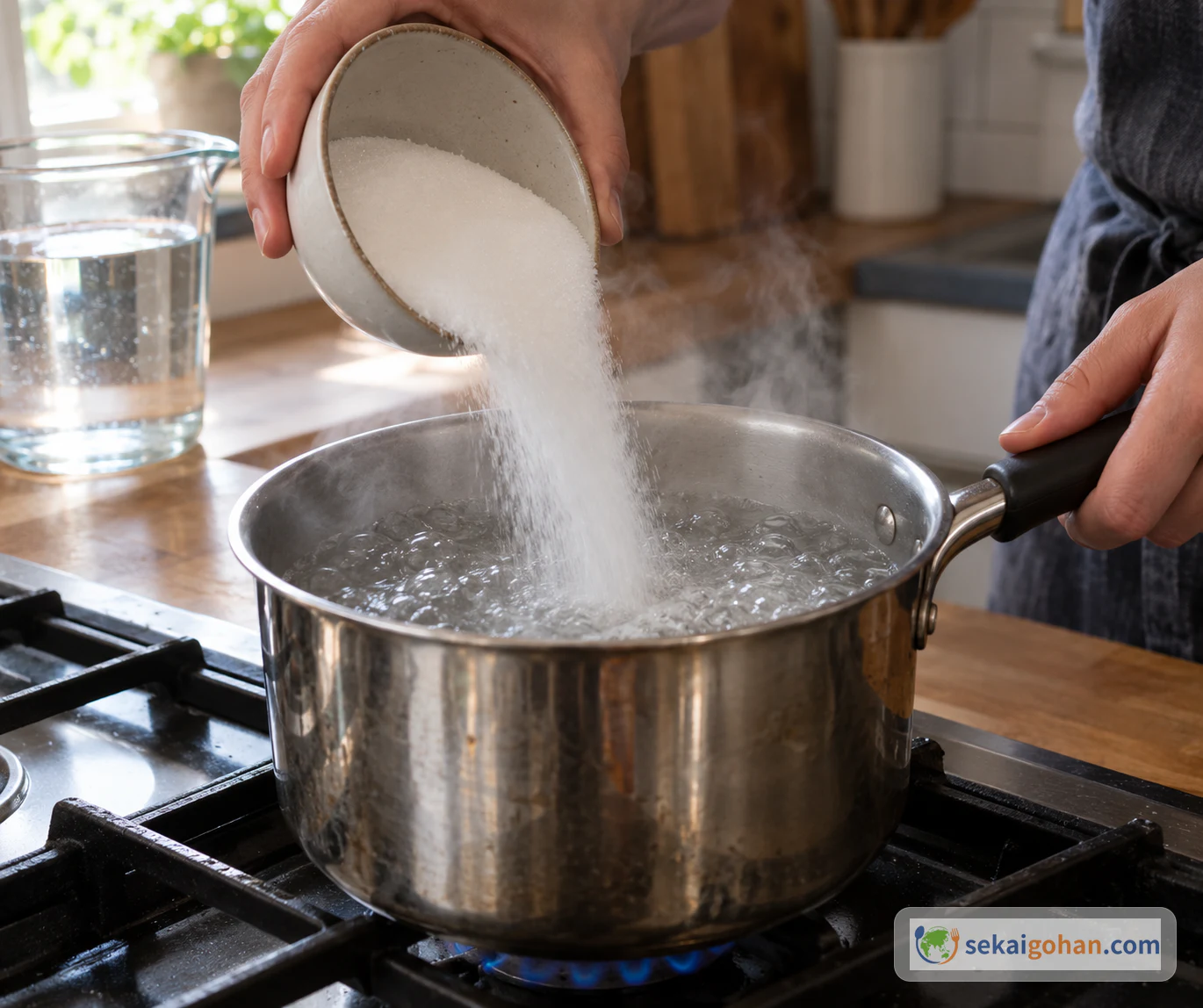
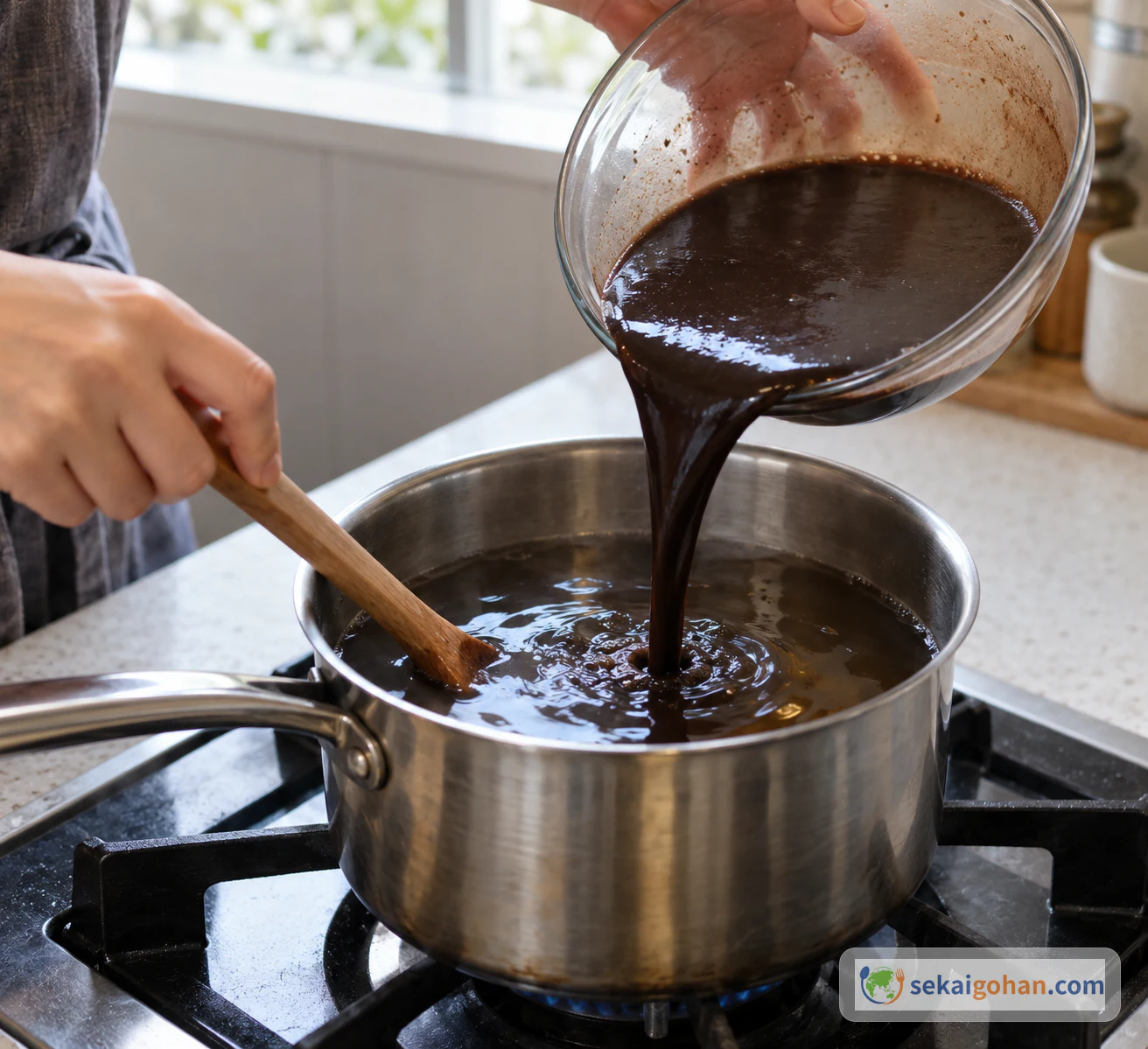
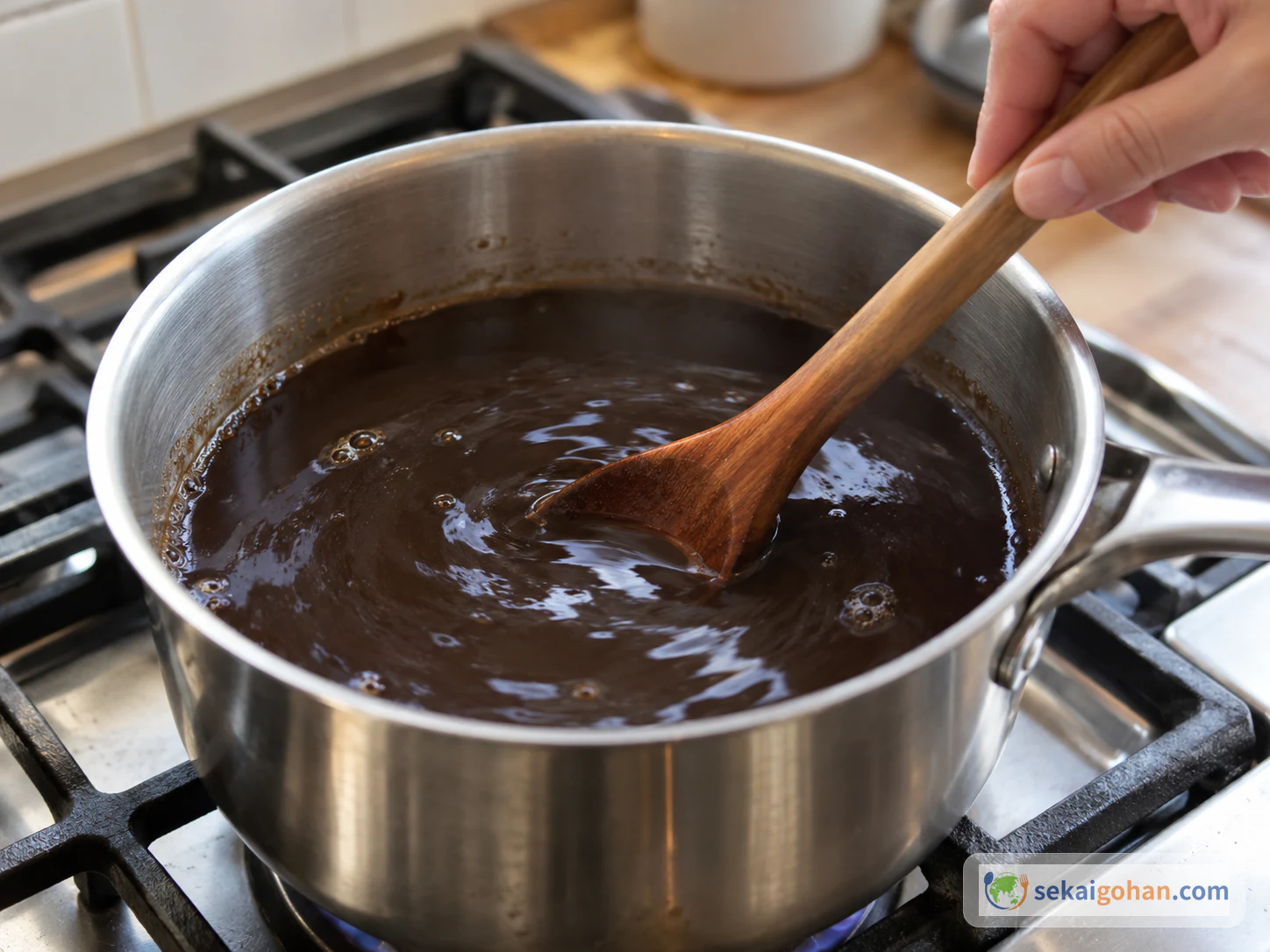
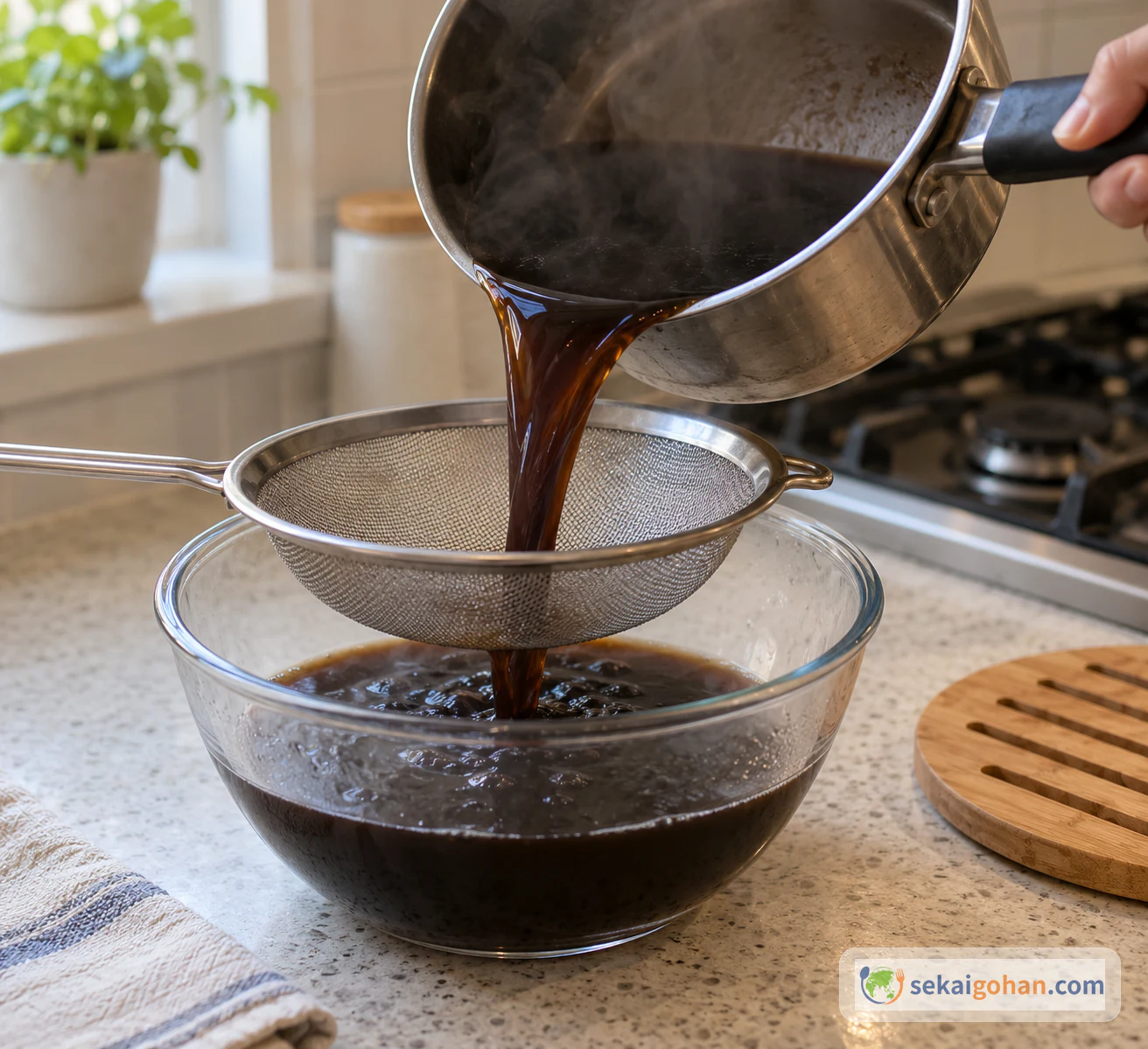
The last step happens at the stove: you pour the hot, dark liquid through a strainer into a bowl and leave it alone to cool. As it cools, it sets into a dark herbal jelly. Guilinggao (龟苓膏 in simplified Chinese, 龜苓膏 in traditional characters) comes from China, and this home version starts with a single sachet of packaged powder. The amounts below are for one 1.75 oz (50g) sachet of Original guilinggao powder, (原味)龟苓膏粉. For more of the country's cooking, browse our China recipe collection.
Guilinggao From Wuzhou Craft to Packaged Powder
The Wuzhou craft
The craft of preparing guilinggao, 龟苓膏配制技艺, went onto China's national intangible cultural heritage list in 2021. It was in the fifth batch, under traditional craftsmanship, as item number 1524 / Ⅷ-278. Wuzhou, in the Guangxi Zhuang Autonomous Region, nominated the craft and is still the core area where it is passed on. The full process has more than 20 steps.
Guilinggao has a long history in the city. Shops selling it already stood in Wuzhou's markets in the late Ming and early Qing period.
From craft to powder
Packaged guilinggao powder came much later. One example is Shuangqian-brand guilinggao powder (双钱牌龟苓膏粉), made by plant extraction and launched in the 1980s. The recipe here is a short home method for one packaged powder. It does not reproduce the Wuzhou craft.
Guilinggao and grass jelly
In the bowl, guilinggao and grass jelly can both look like a dark jelly, so they are easy to mix up. They are different foods. Grass jelly, 仙草凍, is made from a different plant: 仙草 (xiancao), Mesona palustre, also called 凉粉草. You can't judge by color, so if a recipe calls for guilinggao powder, use guilinggao powder. If you want grass jelly, use a recipe made for grass jelly.
Ingredients for One Sachet
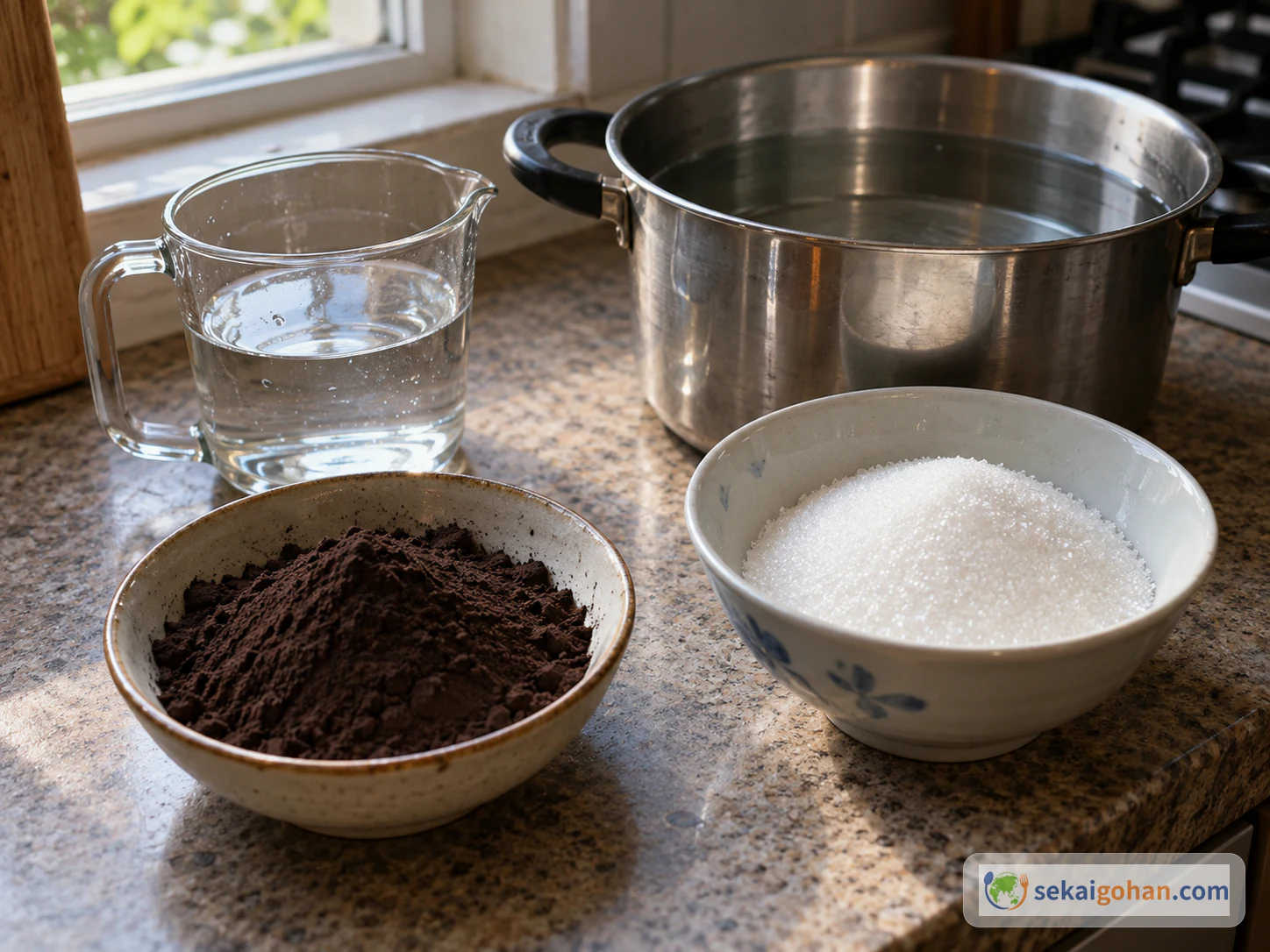
This is one batch made with one 1.75 oz (50g) sachet. Keep the two water measures separate: the 1 cup (250ml) goes with the powder, and the 1 quart (1L) goes into the saucepan with the sugar.
Equipment
- A small bowl for mixing the powder
- A saucepan
- A spoon or other utensil for stirring
- A strainer
- A heatproof bowl or dish for setting and serving
Choosing Guilinggao Powder and Sugar
Buy guilinggao powder, not grass jelly powder. Look for packs labeled 龟苓膏粉, 龜苓膏粉 or "guilinggao powder." Grass jelly powder, black jelly powder (黑凉粉), agar and gelatin are all different products, and none of them will work in this recipe.
Match the ratio to the pack in your hand. These amounts belong to one product. If your powder is from another brand or comes in a different sachet size, follow the directions printed on that package instead.
Sugar. The directions call for plain sugar (糖) without naming a type. They give no lower amount and no other sweetener, so use the full amount and skip the honey.
Check the label. The main ingredients include 甘草, 土茯苓, 金银花, 蒲公英, 干地黄, 槐花, 苦草 and 苦参. That is not a complete ingredient list or an allergen statement, so read the whole label on your pack before cooking, especially if anyone eating has allergies.
Method: Mix, Boil, Stir Over Low Heat, Strain, Cool
The powder is mixed with cold water first, and only goes into the pan after the sugar water has boiled and the heat has been turned down. Keep the steps in this order.
Keeping Your Guilinggao on Track
The method is short, and it works best when you follow the order exactly.
| Point to watch | What to do |
|---|---|
| The powder and water | Mix the powder into the cooled boiled water until even before it goes near the pan |
| The two water measures | Keep the 1 cup (250ml) and the 1 quart (1L) separate; each belongs to its own step |
| The order in the pan | Boil the water, add the sugar, lower to low heat, and only then add the powder mixture |
| The 10 minutes | Low heat, stirring the whole time |
| The finish | Strain the hot liquid into the bowl, then let it cool before eating |
The directions don't say how to rescue a batch that doesn't set. Extra powder, starch and reheating aren't part of the method. If a batch disappoints, reread the directions on your own pack before you try again, and check that your powder, ratio and order of steps all match that package.
Serving and Storing Guilinggao
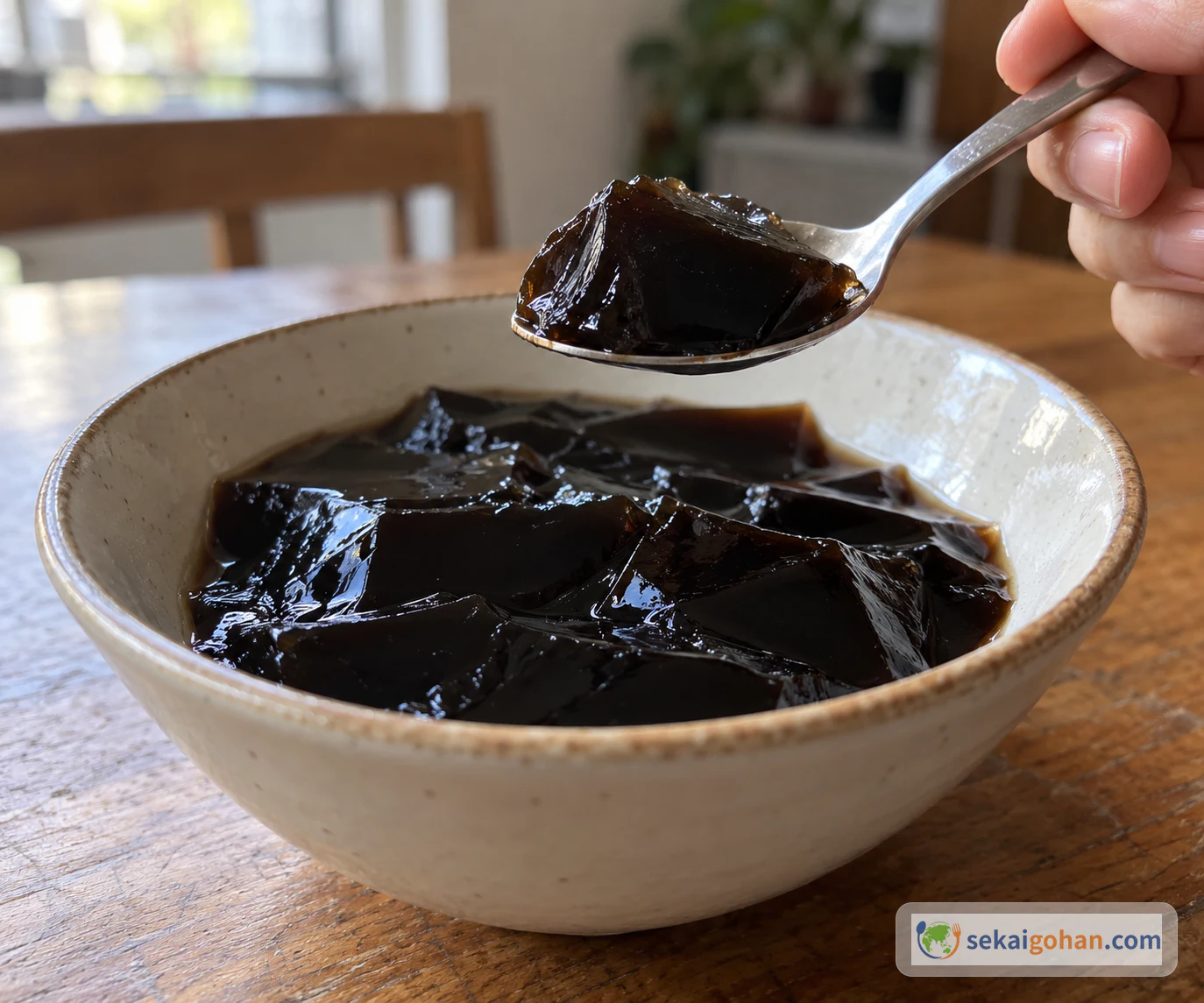
Once it has cooled, the jelly is ready. Serve it plain, with a spoon, straight from the bowl it set in. This is a cool dish with no toppings, and the method has no warm or reheated version.
The storage information on the powder package covers the dry powder, not the cooked jelly. If you won't eat the jelly soon after it has cooled, follow basic home food-safety steps:
- Refrigerate it promptly, and keep the refrigerator at 50°F (10°C) or below.
- Don't leave cooked food at room temperature for long.
- Use clean utensils, and divide leftovers into shallow containers so they cool quickly.
Frequently Asked Questions
How many servings does one sachet make?
The directions don't give a serving count. One sachet makes one batch.
How long does it take to set, and how long does it keep?
The directions give no cooling time and no shelf life for the finished jelly. Let it cool before eating. If you keep any, follow the food-safety steps above, along with anything printed on your package.