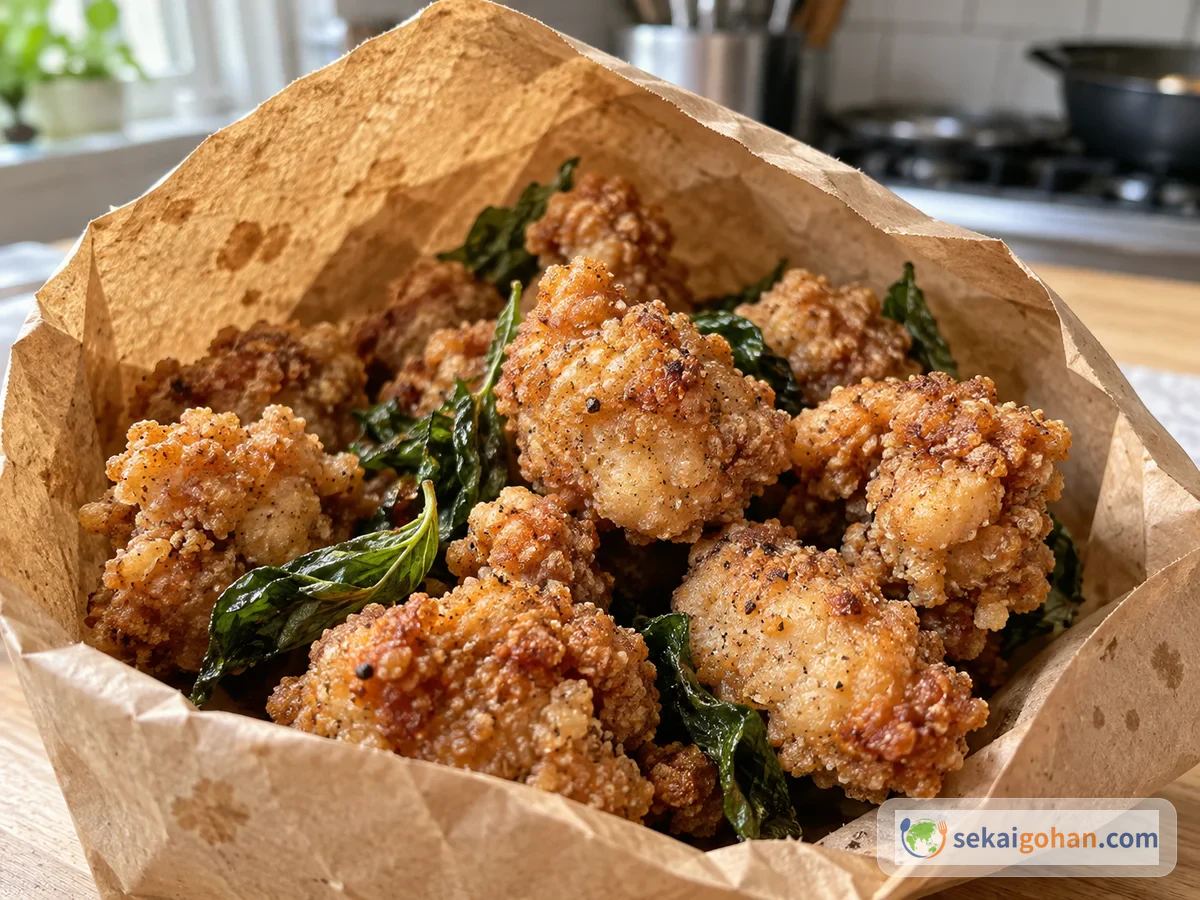
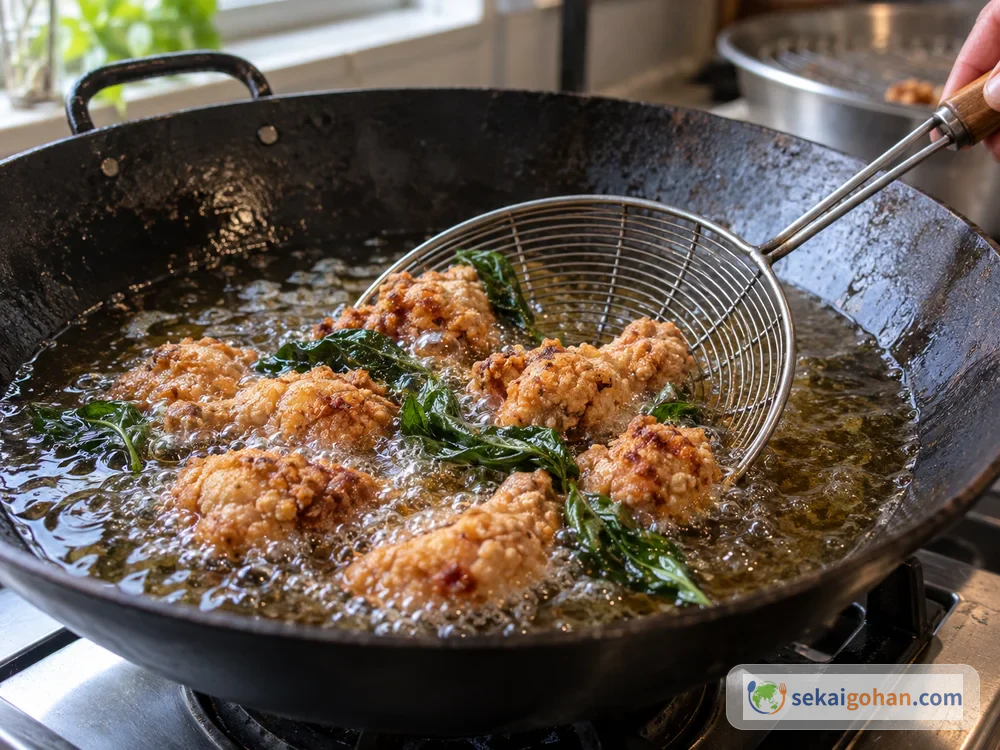
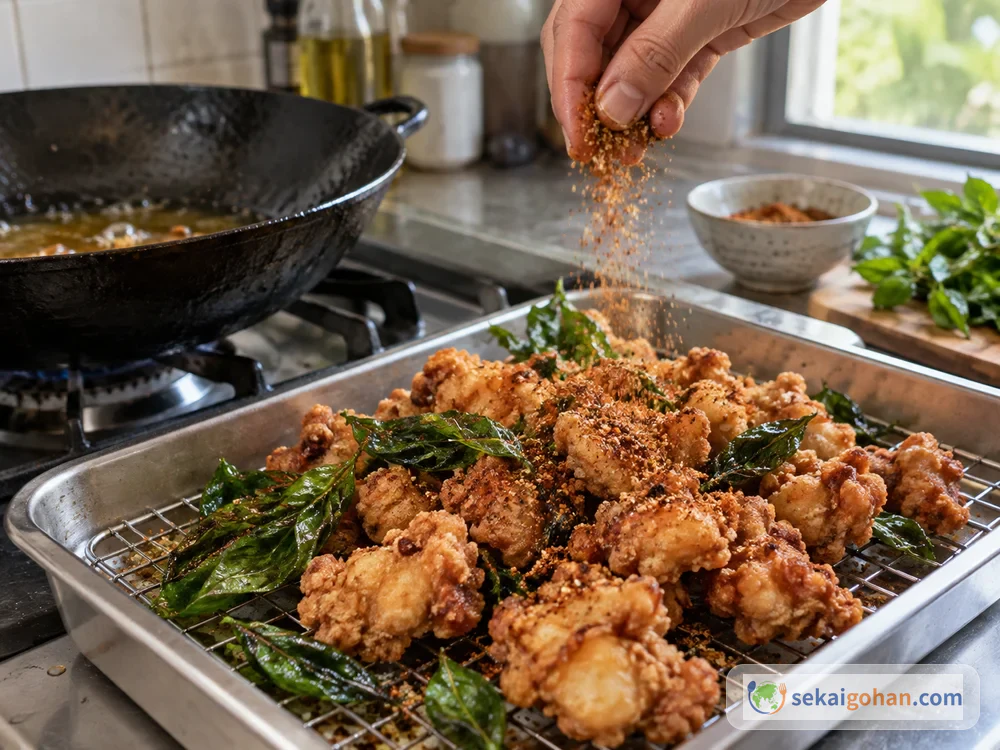
When the sun goes down, the stall lights come on along the street and pots of oil go over the flame one after another. You point at the chicken and vegetables in the glass case, the vendor drops them into the oil together, and as they come out a handful of green leaves goes in; the basil crackles the moment it leaves the pot. The hot bite-sized pieces, dusted with fragrant seasoned salt, are packed into a paper bag and eaten as you stroll. This is xian su ji (鹹酥雞), the most familiar street snack of Taiwan's night markets: salty, crisp, and perfumed with five-spice and Sichuan pepper.
Xian su ji and the night market "fourth meal"
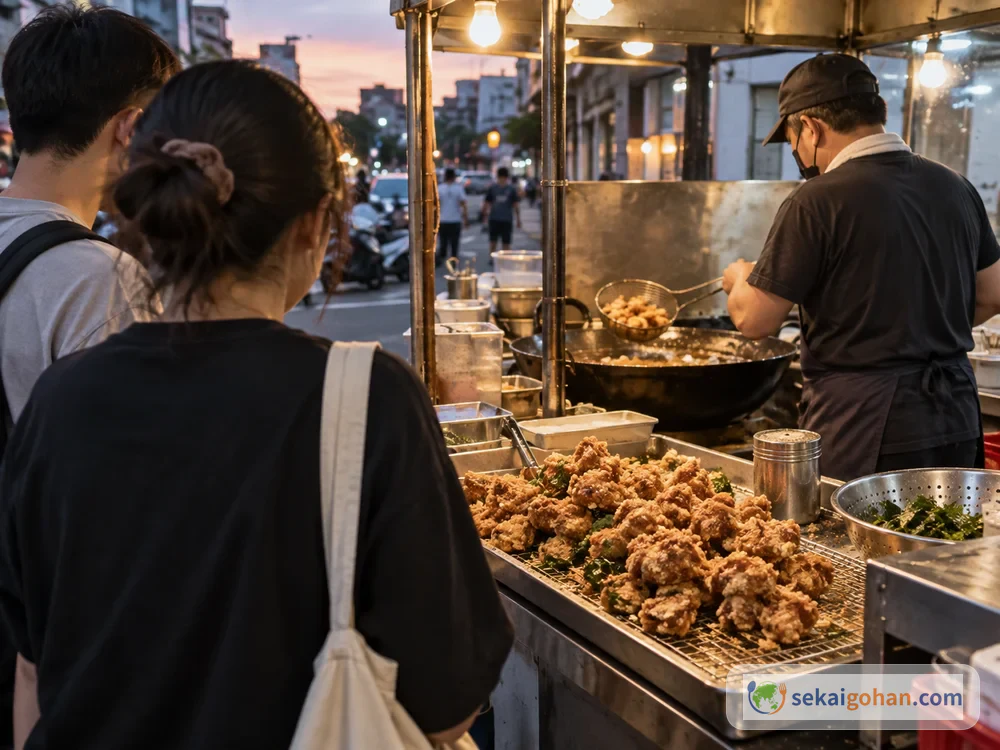
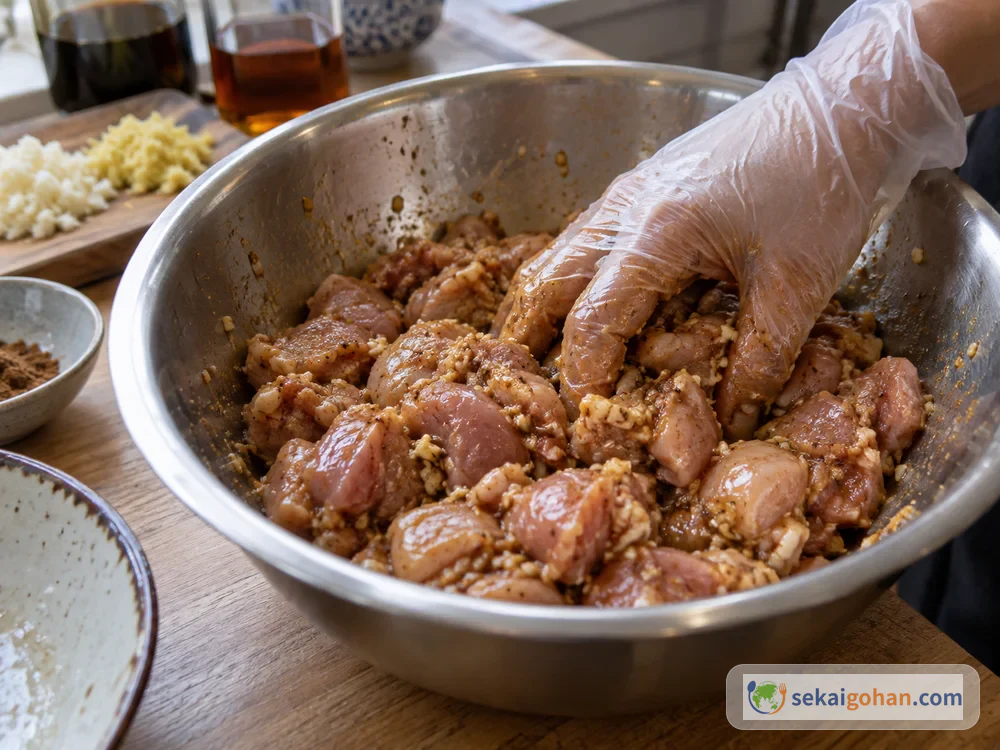
The name means "salty, crispy chicken." It is also written 鹽酥雞 (yan su ji), and in English it often goes by "Taiwanese popcorn chicken." Bite-sized chicken thigh is seasoned with soy sauce, rice wine, sugar, garlic, and five-spice, coated in beaten egg, dredged in flour or sweet potato starch, and fried, then finished with salt and pepper. Chili powder, quickly fried basil, and fried garlic go on to taste.
The dish has a surprisingly short history. Fierce competition among street stalls pushed the seasoning and frying method to change quickly. It grew up alongside Taiwan's habit of eating late, long after sunset, called "xiaoye" (宵夜): a night snack also known as the fourth meal of the day. Night markets are lined with stalls that cook in front of the customer, and xian su ji is among the best-known flavors of them all.
Adding fried basil leaves at the end is a distinctly Taiwanese finish. The leaves, fried for just a moment, pick up a little of the seasoned salt meant for the chicken, and they make a crisp nibble in their own right.
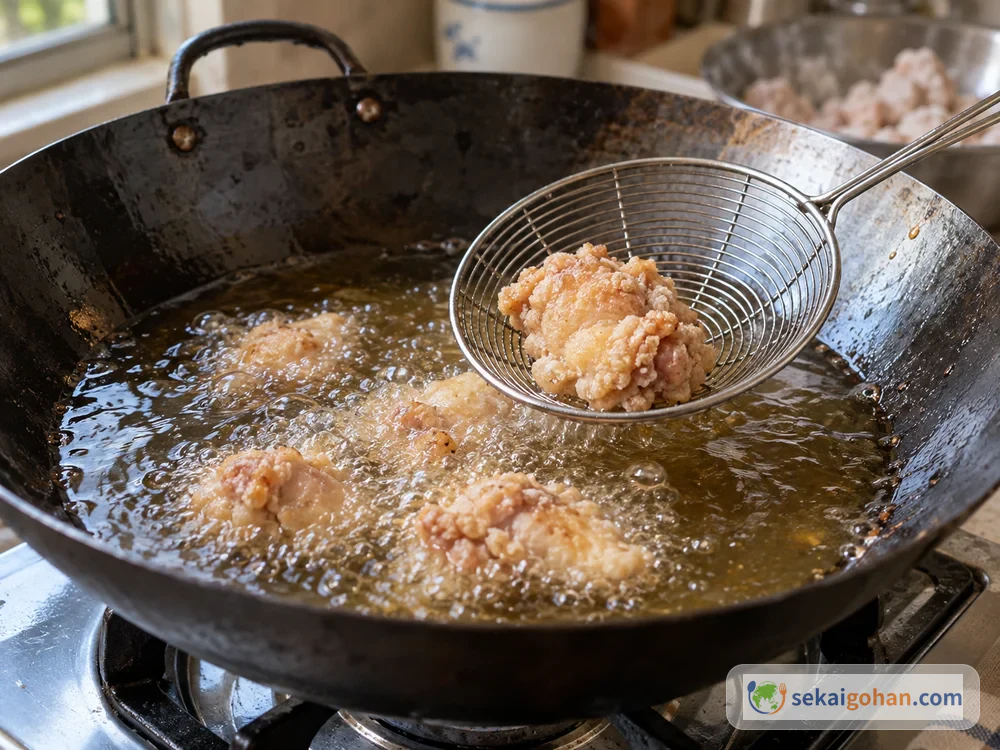
Compared with Japanese karaage, the big differences are the coating and the aroma. Coarse grains of sweet potato starch fry into a pale, craggy, light crust that stays crisp as it sits. On top of that come the sweet fragrance of five-spice, the numbing aroma of Sichuan pepper, and the heat of white pepper.
Ingredients (serves 2)
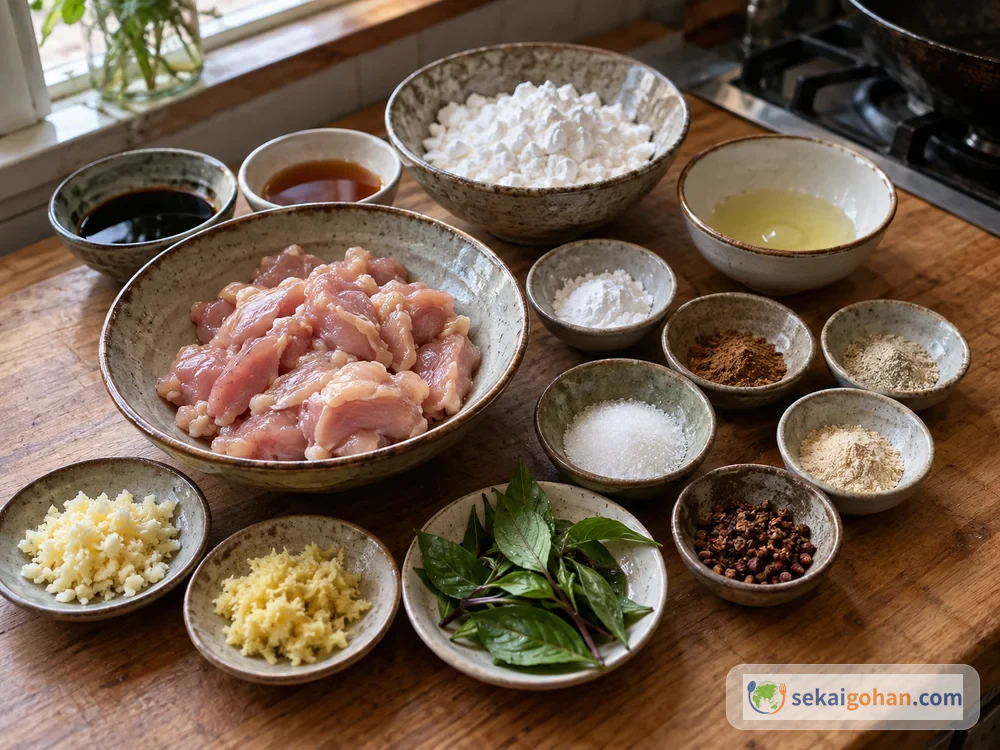
This dish contains egg (egg white), wheat, and soy (soy sauce). Sichuan pepper has a strong, tongue-numbing aroma, so if small children will eat it, make the seasoned salt with just white pepper and salt.
Choosing ingredients for xian su ji
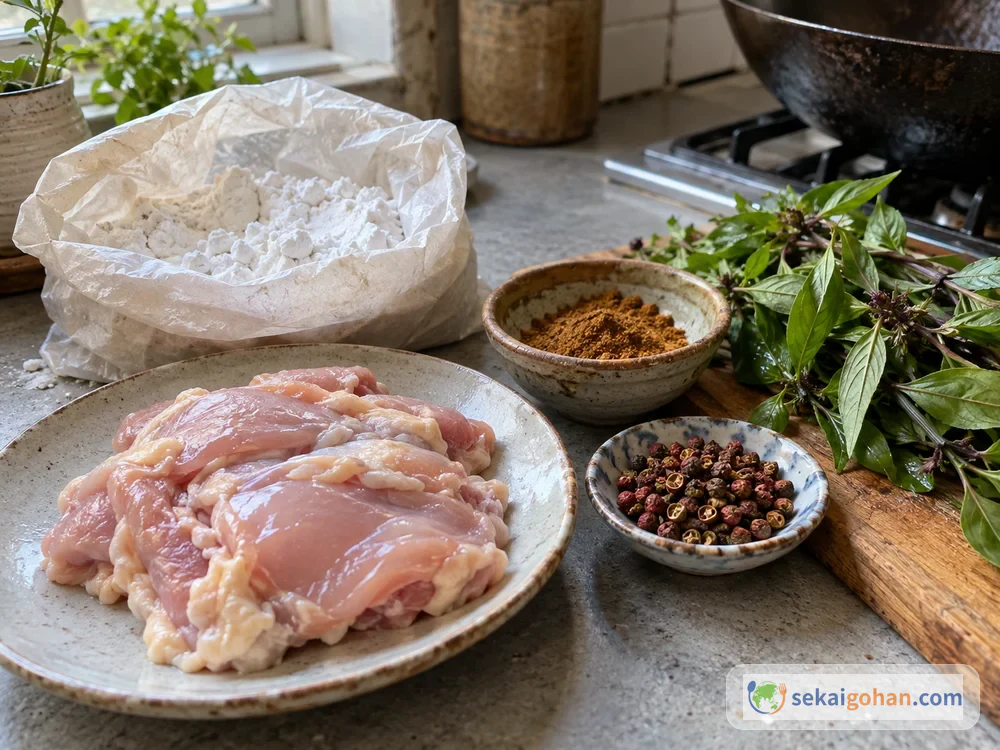
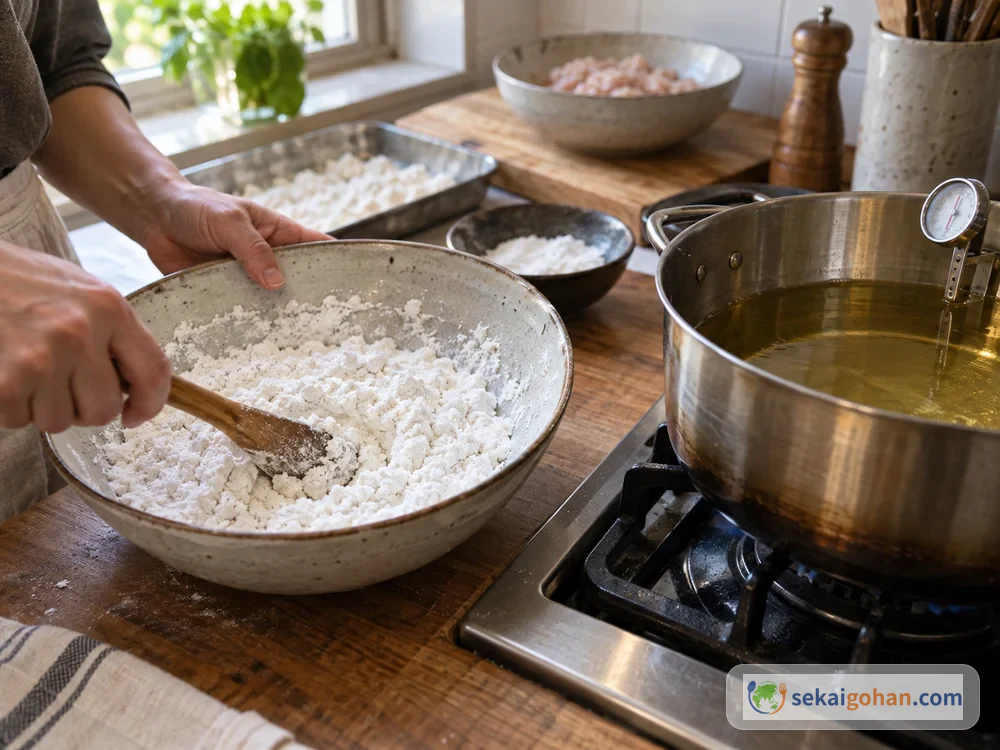
Sweet potato starch, called "digua fen" (地瓜粉) in Taiwan, is what makes the coating. Its coarse grains give the characteristic craggy crust, and you'll find it at Chinese or Taiwanese grocery stores or online. Potato starch or cornstarch (or the two mixed half and half) will stand in; the crust comes out smooth and thinner, close to Japanese tatsuta-age.
Five-spice powder, a Chinese blend of star anise, cinnamon, Sichuan pepper, and other spices, is now easy to find in many supermarket spice aisles. For the basil, Taiwan uses a Thai-basil type called "jiu ceng ta" (九層塔), and Thai basil is sold at Asian grocery stores. Sweet basil still gives you a good aroma, though it leans sweeter and fresher.
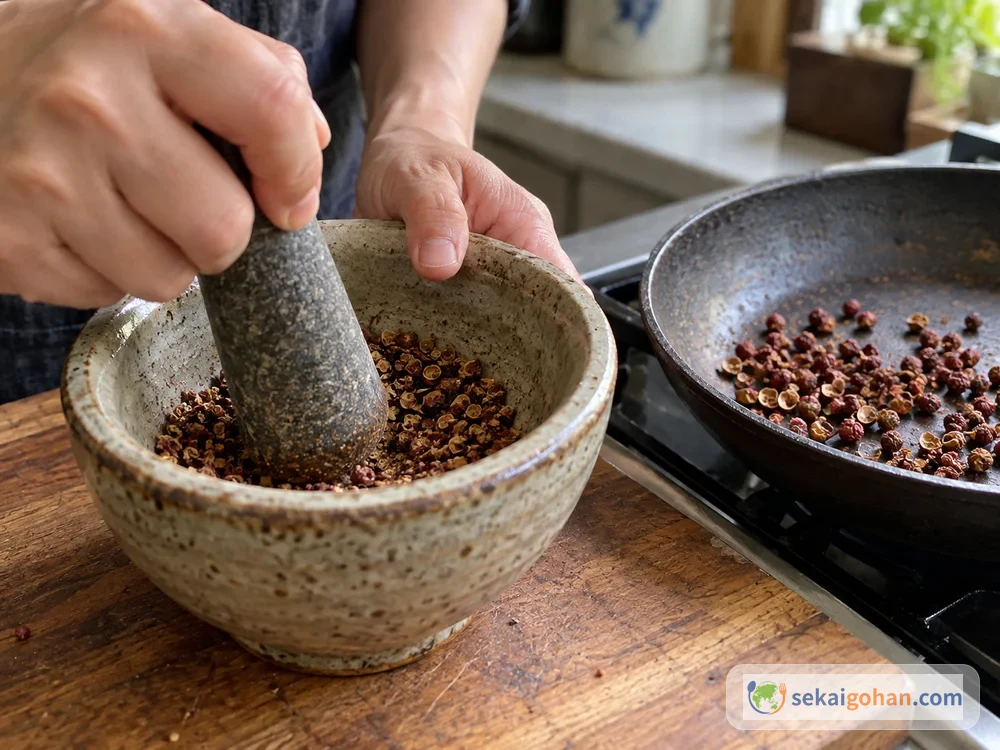
If you buy Sichuan peppercorns whole, then toast and grind them, the aroma is completely different. A mortar gets them fine enough, but a spice grinder turns them to powder in an instant. Leftover seasoned salt keeps in an airtight container and is good on yakitori and other fried foods too.
A deep-fry thermometer makes the double fry much easier to control. Without one, drop a pinch of the coating starch into the oil: if it fizzes right away and floats up, the oil is ready.
How to make xian su ji
Allow about 10 minutes of prep and about 25 minutes of cooking, roughly 35 minutes in all. Make the seasoned salt and prepare the coating while the chicken marinates, and the work goes without waste.
Frying oil gets very hot. Fill the pot no more than halfway with oil, and do not leave the pot while you are frying. Basil with water left on it makes the oil spatter violently, so wipe it thoroughly with paper towels and slide it in gently from the edge of the pot. If the oil starts to smoke, turn off the heat immediately.
Cook the chicken all the way through. FoodSafety.gov in the United States gives an internal temperature of 74°C (165°F) as the guide for safely cooked chicken. If you have a cooking thermometer, check the center of the largest piece to be sure.
Serving, pairing, and variations
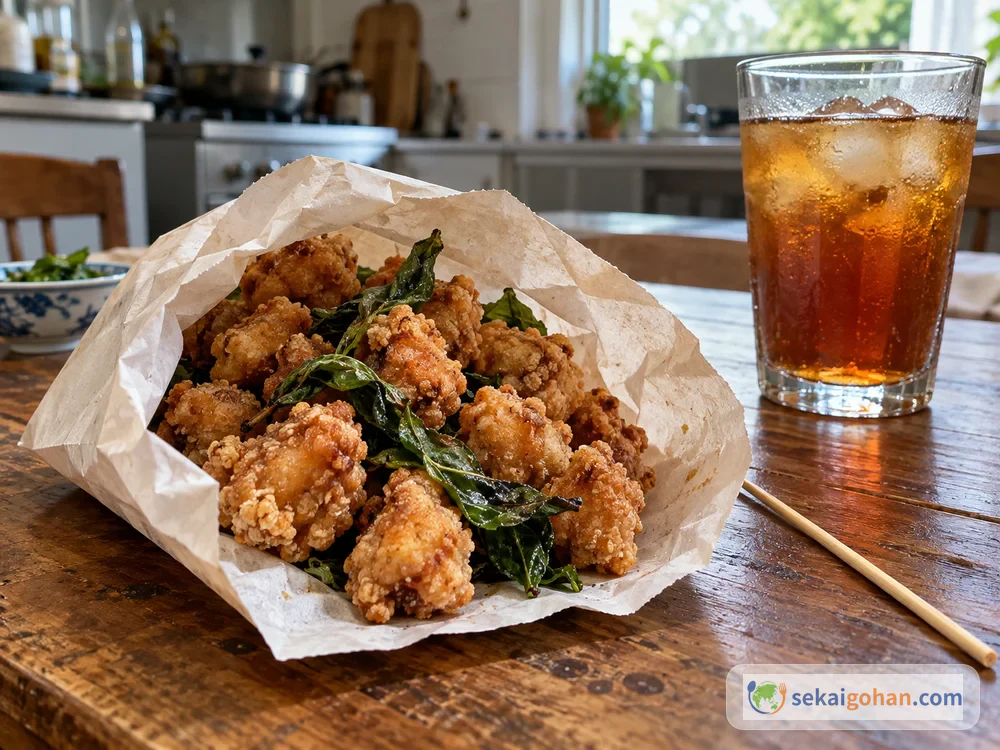
At the night market, fresh-fried xian su ji goes into a paper bag or cup and is eaten on the move, speared piece by piece with a bamboo skewer. At home, a bowl lined with a paper bag or parchment and a few toothpicks or skewers bring back that mood. Add a beer or cold Taiwanese tea, and you're most of the way to a Taiwanese stall at night.
For a spread of Taiwanese food, set it next to lu rou fan, braised sweet-savory pork over rice, or dan bing, the Taiwanese breakfast of an egg layered and rolled in a thin crepe. A bowl of Taiwanese beef noodle soup covers the eatery side as well as the night market.
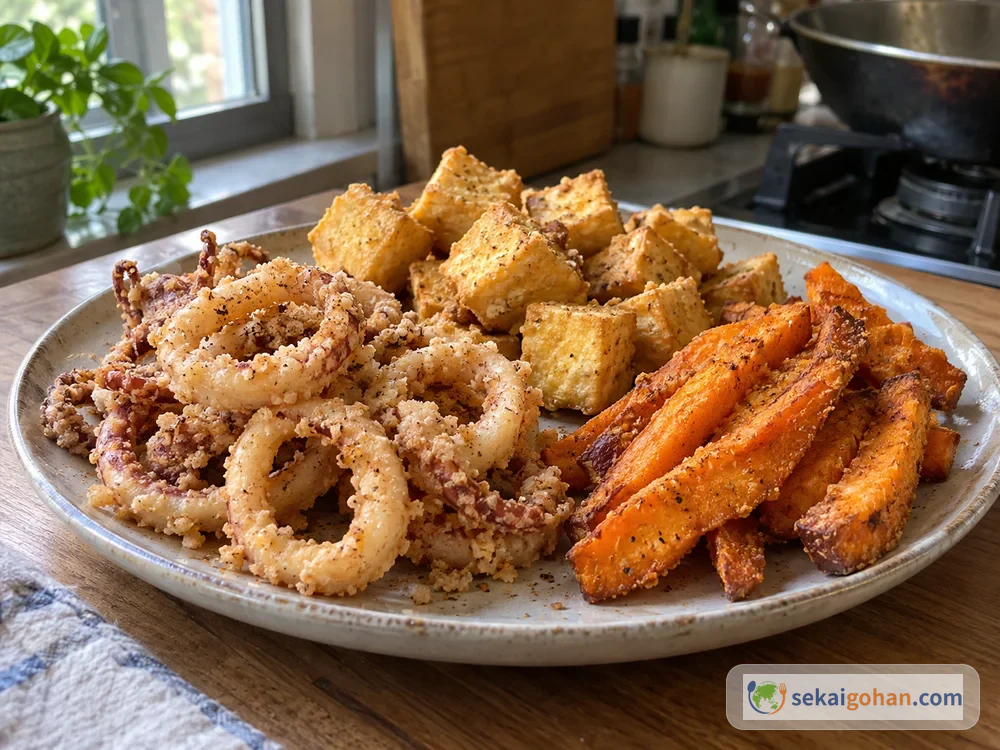
The same coating and seasoned salt work on other ingredients. Squid sliced into rings, patted dry, and marinated briefly fries up tender. Thick fried tofu cut into 1 inches (2 cm) cubes just needs dredging and frying until the surface is crisp. Sweet potato cut into sticks about 0.25 inch (7 mm) thick should fry slowly at a lower 325°F (160°C); sprinkled with seasoned salt, its sweetness plays nicely against the aromatic salt.
An air fryer works too: mist the coated chicken lightly with oil for a lighter result. A sweet potato starch coating gets its distinctly crisp texture in oil, though, so try the double fry first.
Frequently asked questions
Is the double fry necessary?
You can fry once, for longer, but the double fry keeps the inside juicy while making the crust firmly crisp. Plan on the second fry to cook the chicken through, and keep to the times.
The coating goes soft as it sits.
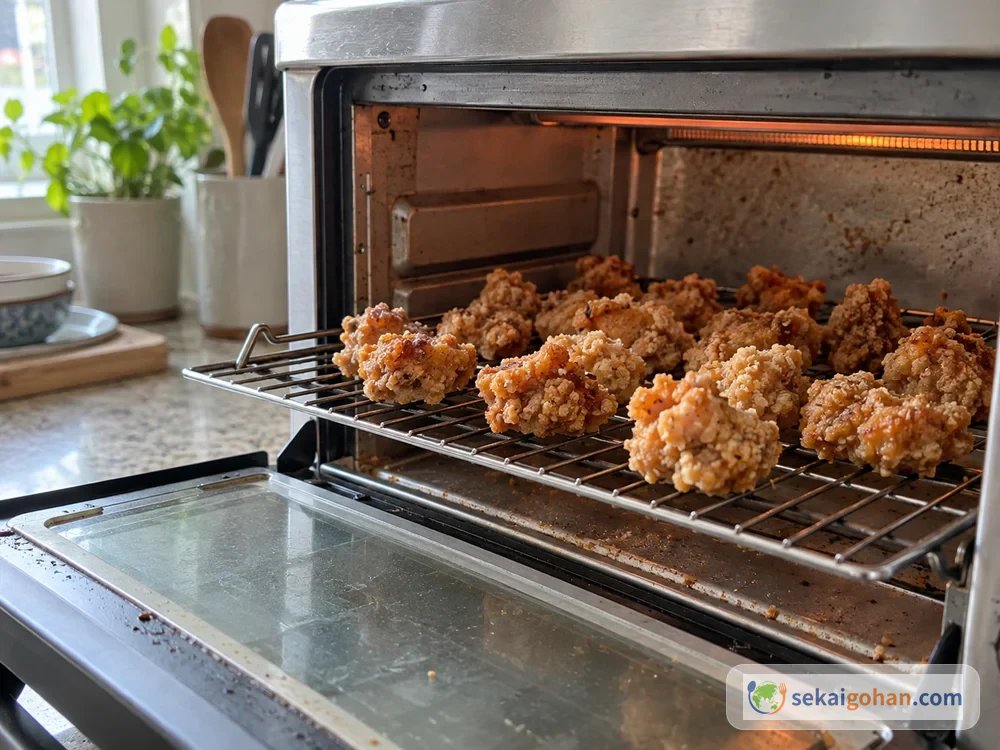
Reheat it for a few minutes in a toaster oven or under the broiler rather than in the microwave, and the crisp texture comes back. It scorches easily, so check partway through.
Can I make it ahead?
Fried food is best fresh from the oil. If you have leftovers, let them cool slightly, refrigerate, and finish them soon. When reheating, check that they are hot all the way through.