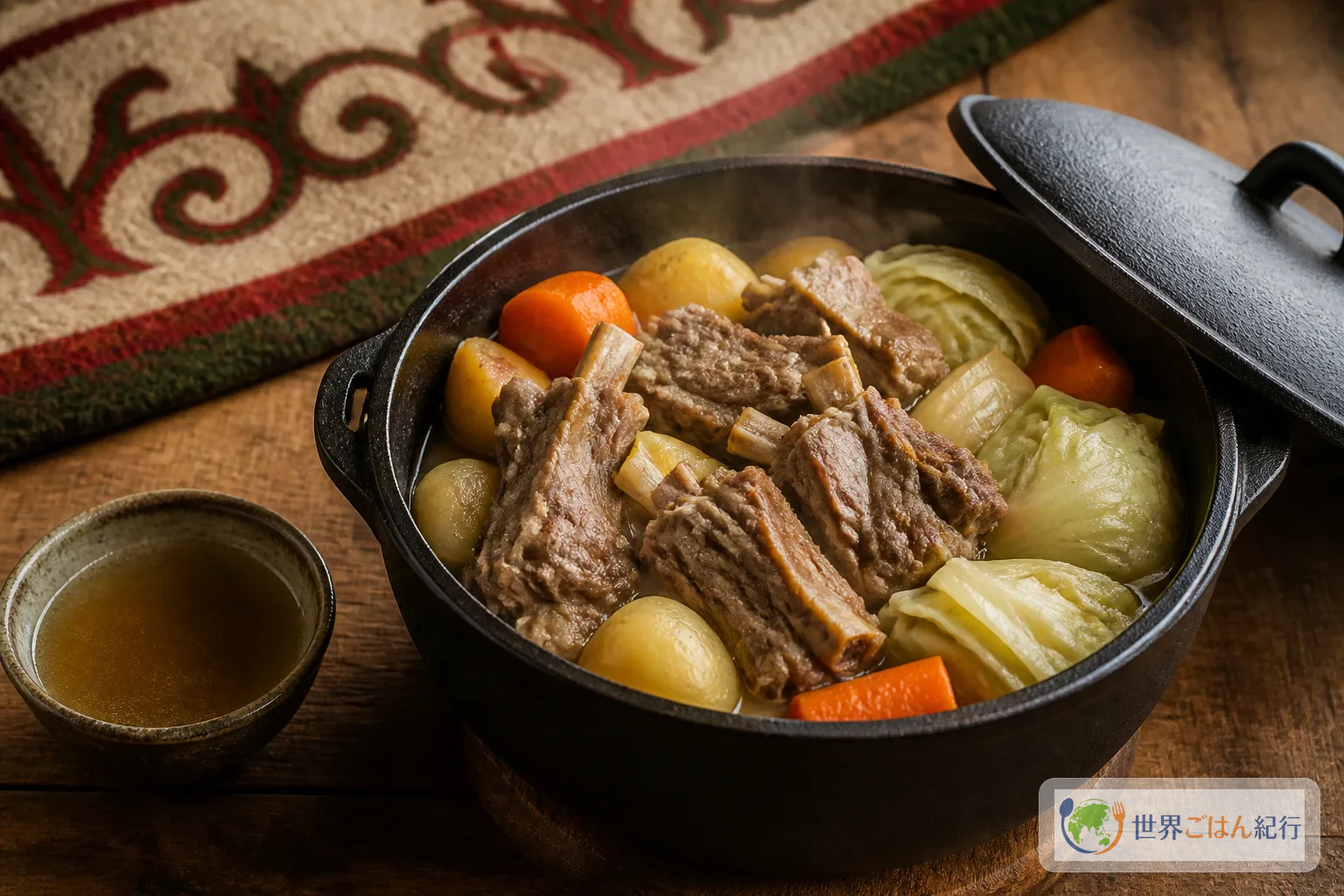
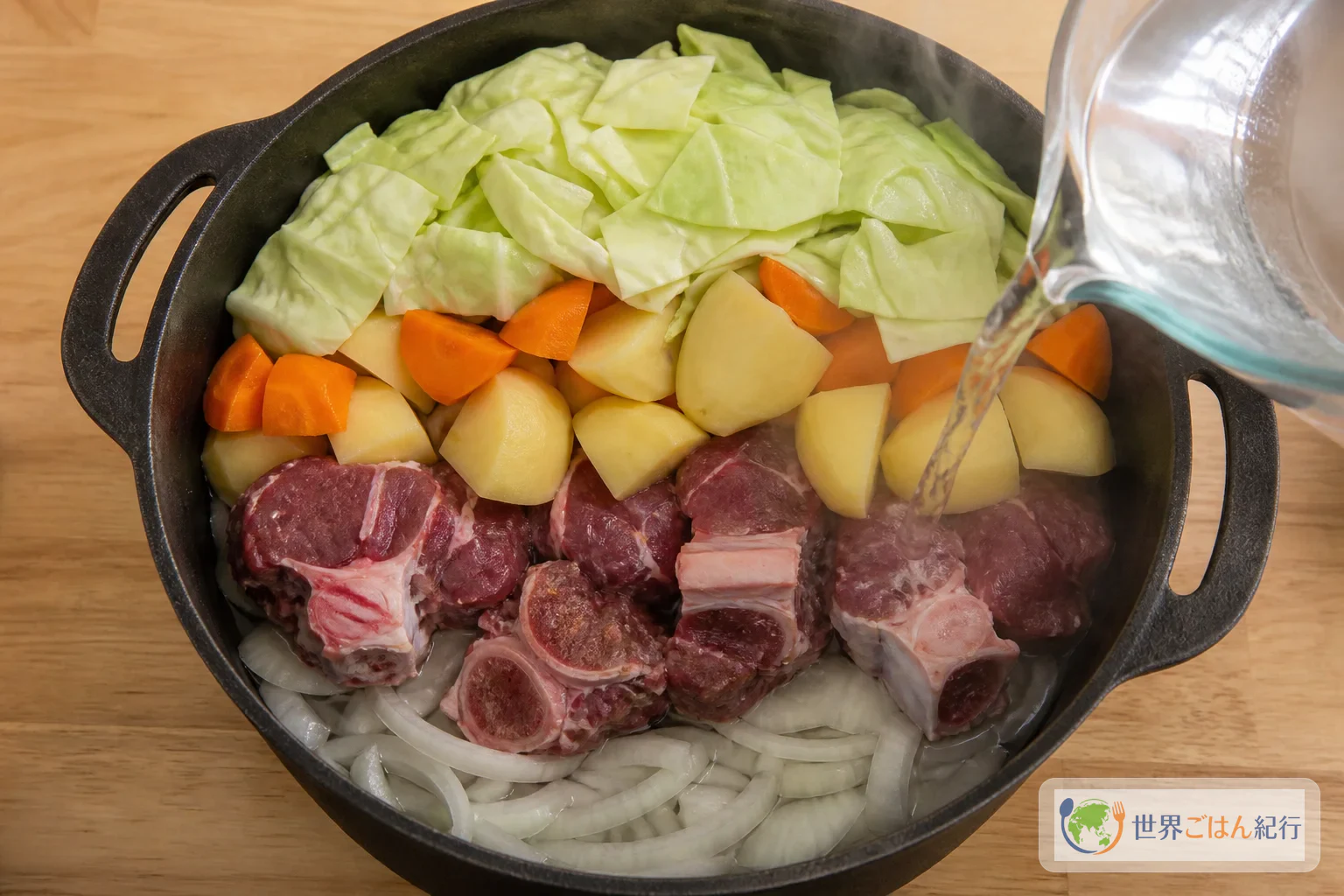
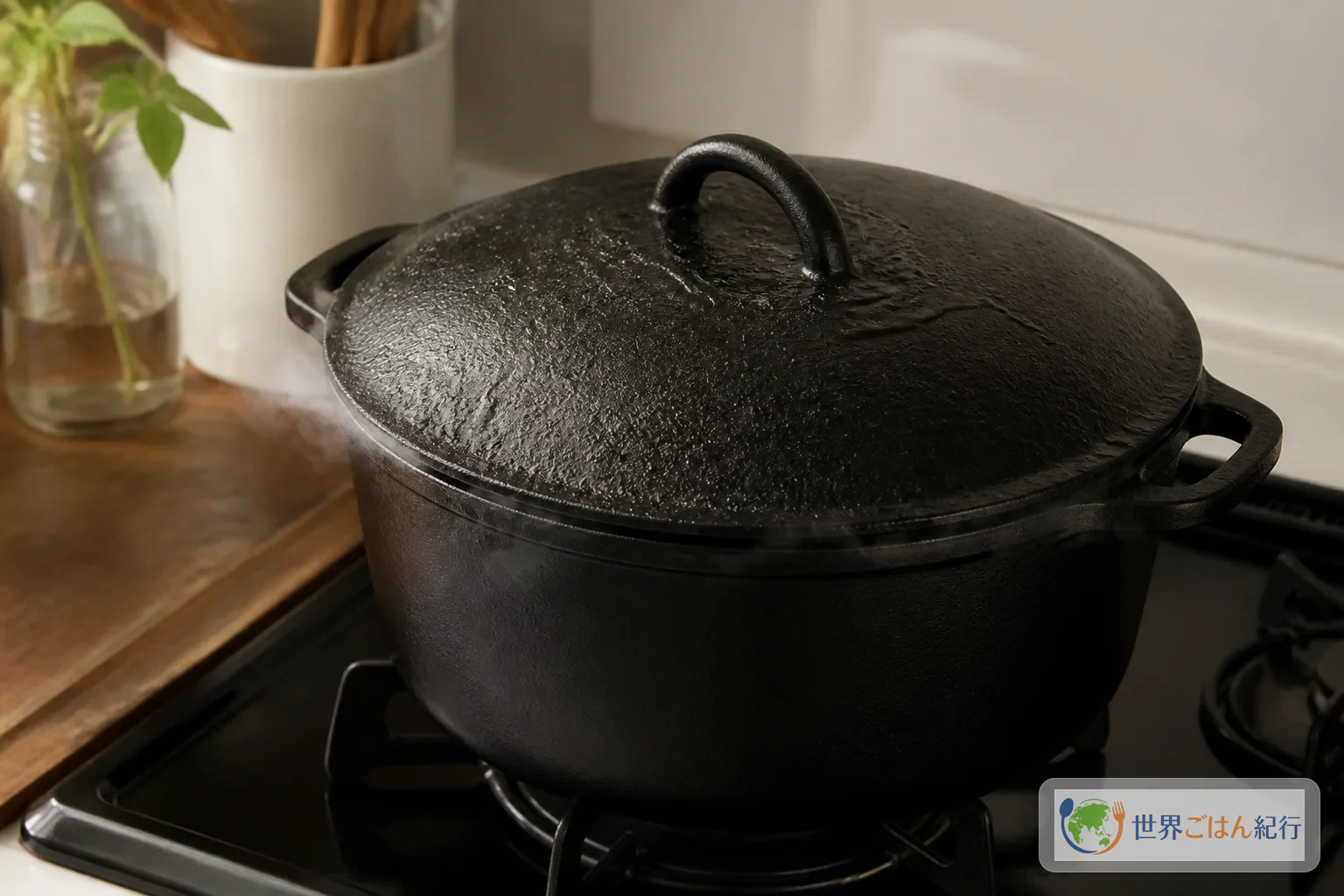
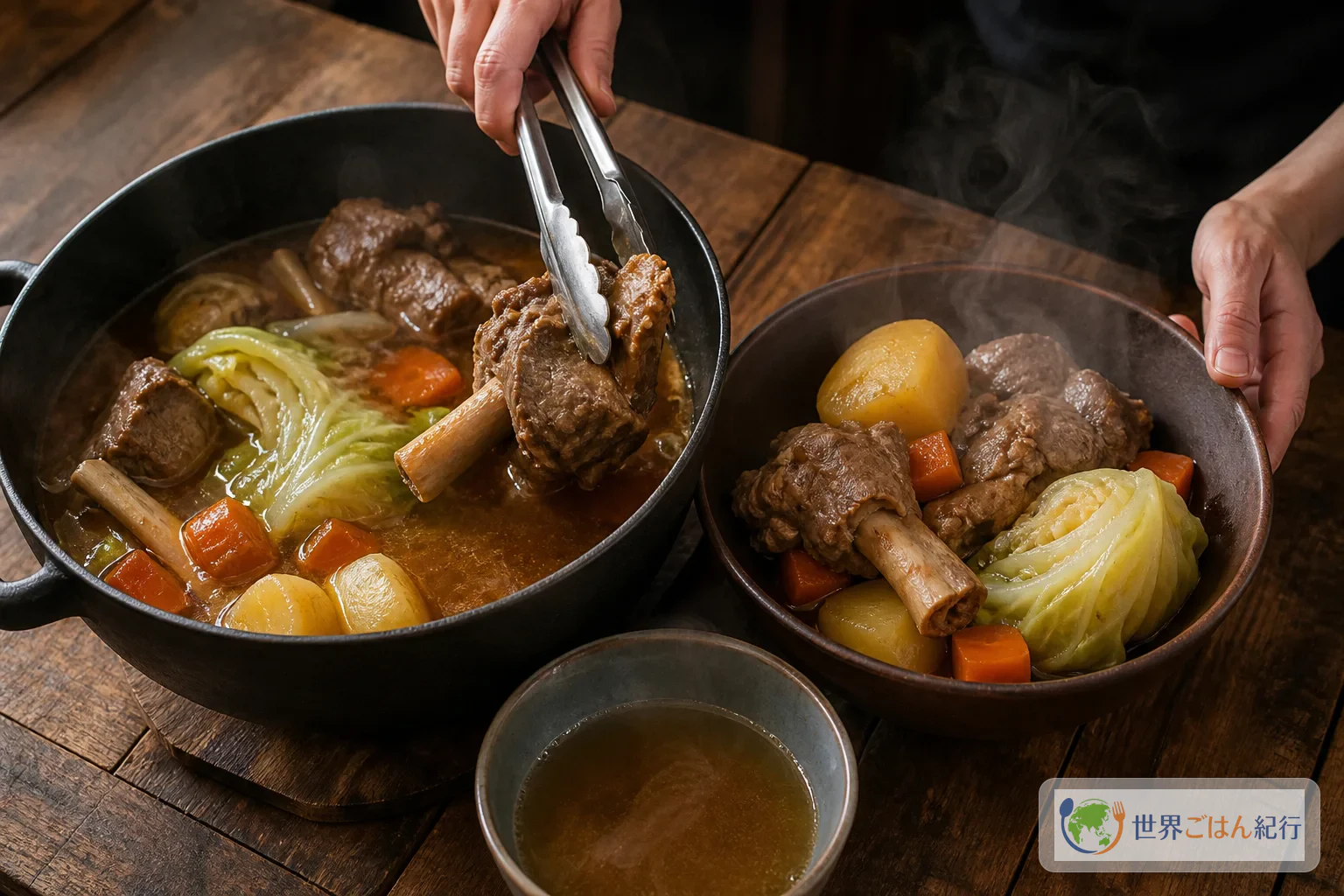
The moment the lid comes off, you smell lamb gone tender around the bone and onion that has turned sweet. At the bottom of the pot sits a clear, salty broth, a mix of meat juices and the water the vegetables gave up.
Khorkhog (хорхог in Mongolian) is lamb or goat packed into a vessel with hot stones, sealed, and left to steam. It isn't built on layers of spice, so the first thing you taste is lamb fat, then the sweetness of potato and carrot. Heating river stones is hard to do safely in a home kitchen, so this version uses a heavy lidded pot instead. You lose the toasty notes where the stones touch the meat, but you keep the core of the dish: lamb that isn't overcooked, steamed in very little liquid.
Khorkhog in Mongolia
Mongolian food culture is tied to livestock (sheep, goats, cattle, horses and camels) and to life in a harsh climate. Summer brings more dairy to the table; in the cold season, people rely on stored meat. Khorkhog, with its big pieces of lamb set over a fire, grew out of the ingredients and equipment of a herding life.
It looks like meat and vegetables simmered in a pot, but the hot stones tucked between the layers of meat set it apart. Stone heat, trapped steam and fat rendering from the lamb all work together inside one container. In Mongolia, pressure cookers and large metal containers are sometimes used as the vessel.
This is a dish for birthdays, weddings, big family gatherings and days when guests come, and for countryside outings, summer get-togethers and the Naadam festival season. People gather around the pot, and sharing out the meat, the vegetables and the salty juices left in the pot is part of the occasion.
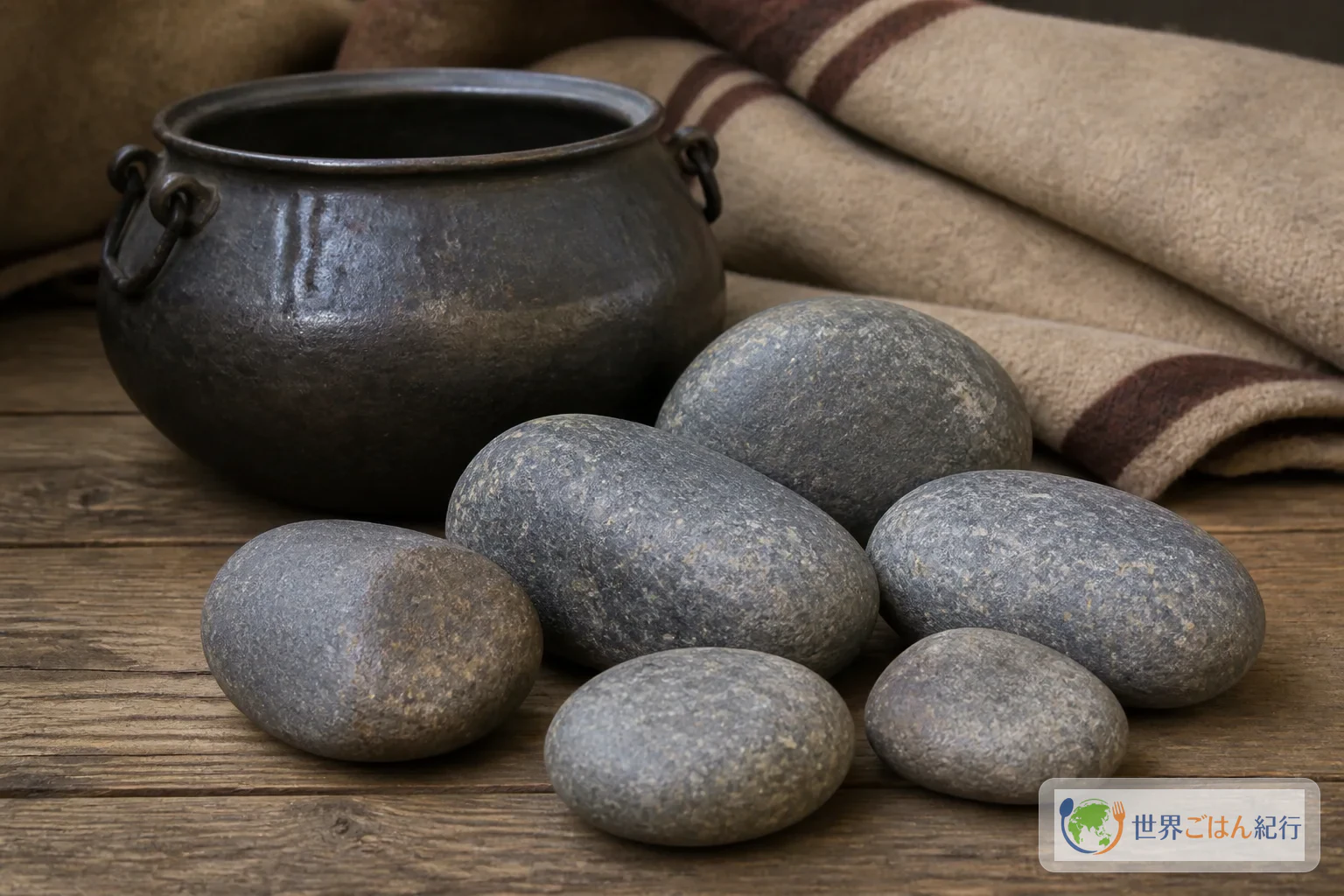
The stones carry memories of the meal as well as heat. There's a well-known custom that holding the stones warms the body, but a stone passed around hot will burn you. In this home recipe the stones stay out of it, and the pot juices are poured into small bowls instead.
What changes by region and household
Khorkhog doesn't fit into one fixed recipe. Goat sometimes replaces lamb, and potato, carrot and onion form the base, with cabbage, turnip-like root vegetables or garlic added depending on the season and what's on hand. Some modern versions heat the stones over charcoal; an outdoor charcoal cook, a household metal vessel and a restaurant reinterpretation all heat the food in very different ways, even when the results look alike.
| What to look at | Hot-stone method | Heavy-pot home version |
|---|---|---|
| Meat | Bone-in lamb; goat is sometimes used | Bone-in shoulder first choice; boneless shoulder if not |
| Vessel | Large metal containers, pressure cookers, metal water cans, etc. | A heavy pot about 9.5 inches (24 cm) across. Not used to trap pressure |
| Heat | Round stones heated in a fire are placed between layers of meat | Cooked through by a gentle simmer from the bottom and steam |
| Vegetables | Potato, carrot, onion and more; varies a lot by household | Potato, carrot, onion and cabbage layered in the same pot |
| Seasoning | Built on salt and black pepper, with bay leaf or caraway in some versions | Salt, black pepper, bay leaf. Cumin only in a small amount, if you want to compare aromas |
| Liquid | A little water added to the juices from the meat and vegetables | 1¼ cups (300 ml) water from the start; taste the pot juices at the end |
Ingredients: bone-in lamb and three vegetables cut three ways
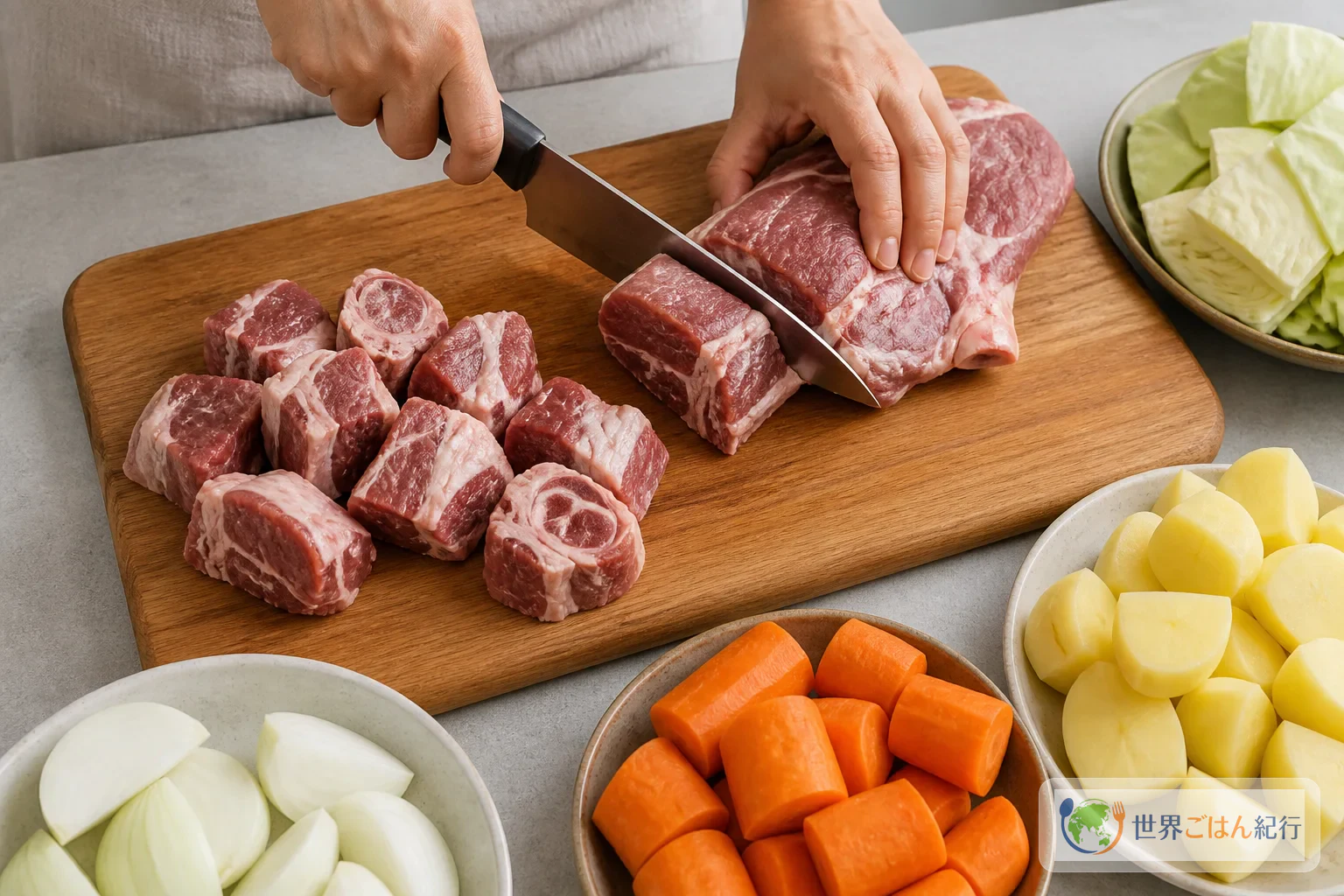
This serves 4. Lamb shoulder, neck or shank, cuts that keep their fat and bone, work best. If you can find bone-in shoulder from a butcher or online, you'll get the savory depth that comes from around the bone and a richer broth. Boneless shoulder works too, but cut the water to 1 cup (250 ml) and trim the meat to even 3–4 cm cubes so it holds together better.
Cabbage is the vegetable that absorbs regional differences. The dish works with just potato and carrot, but cabbage gives you leaves soaked in meat juices and keeps the plate from feeling one-note. Rather than chasing hard-to-find vegetables, keeping everything cut to a size that cooks evenly in the pot does more for an authentic result.
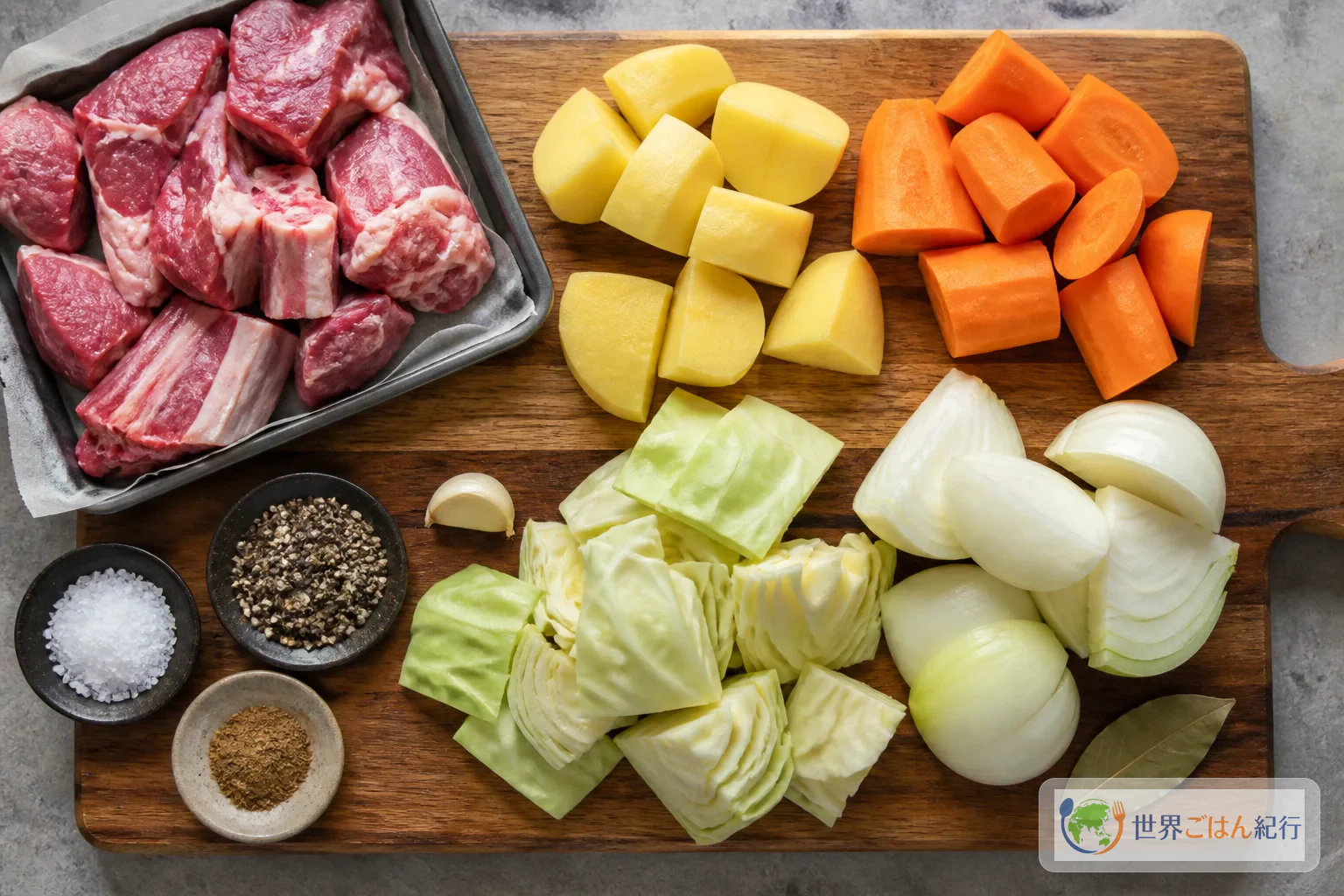
Cumin is not an essential spice in every khorkhog. Some recipes bring the lamb forward with only salt and black pepper; others add a small amount of caraway. If you just want to learn the shape of the dish, salt and black pepper are all you need. If you often cook lamb or Central Asian dishes, cumin widens the range of aromas. If you do use it, the amount is 1/4 tsp. If you'd rather not have cumin's earthy note, or you plan to make khorkhog only once, go ahead with just salt and black pepper.
Choosing a pot for khorkhog
Borrowing only the look of the hot-stone method is dangerous. When porous stones that hold moisture are heated in a fire, the water inside can suddenly turn to steam and crack the stone or make it burst, and a smooth river stone is no exception. Do not use garden stones, stones from a riverbed, drainage pebbles, or any stone not labeled for stone cooking.
Think of the heavy pot as a vessel that holds in the steam from the meat and keeps low heat steady. One about 9.5 inches (24 cm) across that fits the lamb and vegetables in two layers with the lid on is plenty; a pressure cooker's locking lid isn't needed. In a regular skillet or shallow pan, the liquid evaporates first and the meat loses khorkhog's moist texture, so if you already own a heavy pot, use that.
Method: imitate the stones' heat with steam and low heat
Open the pot as few times as possible, and even out the cooking with the thickness of the meat and the size of the vegetables. Turning the heat up to save time renders the lamb fat out too early and tightens the meat.
This recipe uses lamb. If you add store-bought spice blends or bouillon, check the labels for wheat, soy, dairy and other allergens. On bone-in meat, the area near the bone lags behind even when the outside looks cooked, so cook it through to the center of the thickest part. Wash tongs and cutting boards that touched raw meat separately from the ones you use for serving.
Don't put stones not made for stone cooking into the pot in an attempt to recreate their heat. A heavy pot, 1¼ cups (300 ml) water, a lid and low heat are all you need to finish the meat without drying it out. If you want a toasty edge, searing just the cooked meat in a skillet for 30 seconds per side afterward is easier to check and easier to correct.
Fixing khorkhog when something goes wrong
Khorkhog is a dish of layering and waiting, so resist the urge to crank up the heat. Look at what's happening and decide whether it needs more heat or more liquid.
| What happened | How to fix it | What to change next time |
|---|---|---|
| Meat is tough and liquid is low | Add ½ cup (100 ml) boiling water, cover, and cook 15–20 minutes more over low heat | Keep the meat in 1.5–2 inches (4–5 cm) chunks, and turn to low after the first boil |
| Meat is cooked but there's too much liquid | Lift out the meat and vegetables and reduce just the juices over medium heat for 5–8 minutes | Don't add extra water, and open the lid less often |
| Potatoes fell apart | Stir the broken bits into the juices and serve it as a thicker soup | Stick to 1.5-inch (4 cm) cubes and put the cabbage on the top layer |
| The bottom scorched | Don't stir; move only the unburned upper layers to another pot and add a little boiling water | Line the bottom with onion and pour the water in around the edge before heating |
| The lamb smell is strong | Skim a little fat off the surface and add black pepper. Don't mask it with lots of cumin | Trim only the thickest fat, and don't overdo the spices |
If the meat is still tough and the water has disappeared, check the fit of the lid. If steam keeps escaping after you add water, move everything to a pot that seals better rather than weighing the lid down. Turn off the heat before transferring a hot pot, and use both hands so the juices and the steam from the lid don't burn you.
Serve the pot juices too, and the dish makes sense
Put the meat, vegetables and juices together in a deep dish rather than plating them separately; served as just a lamb stew, khorkhog loses its sense of a dish cooked in one vessel. Sip a little of the broth with lamb fat floating on it, eat a potato, then bite into the meat last, and you'll taste what each ingredient brings. Sharing one heat source and one pot is what makes it interesting, more than any complexity of spice.
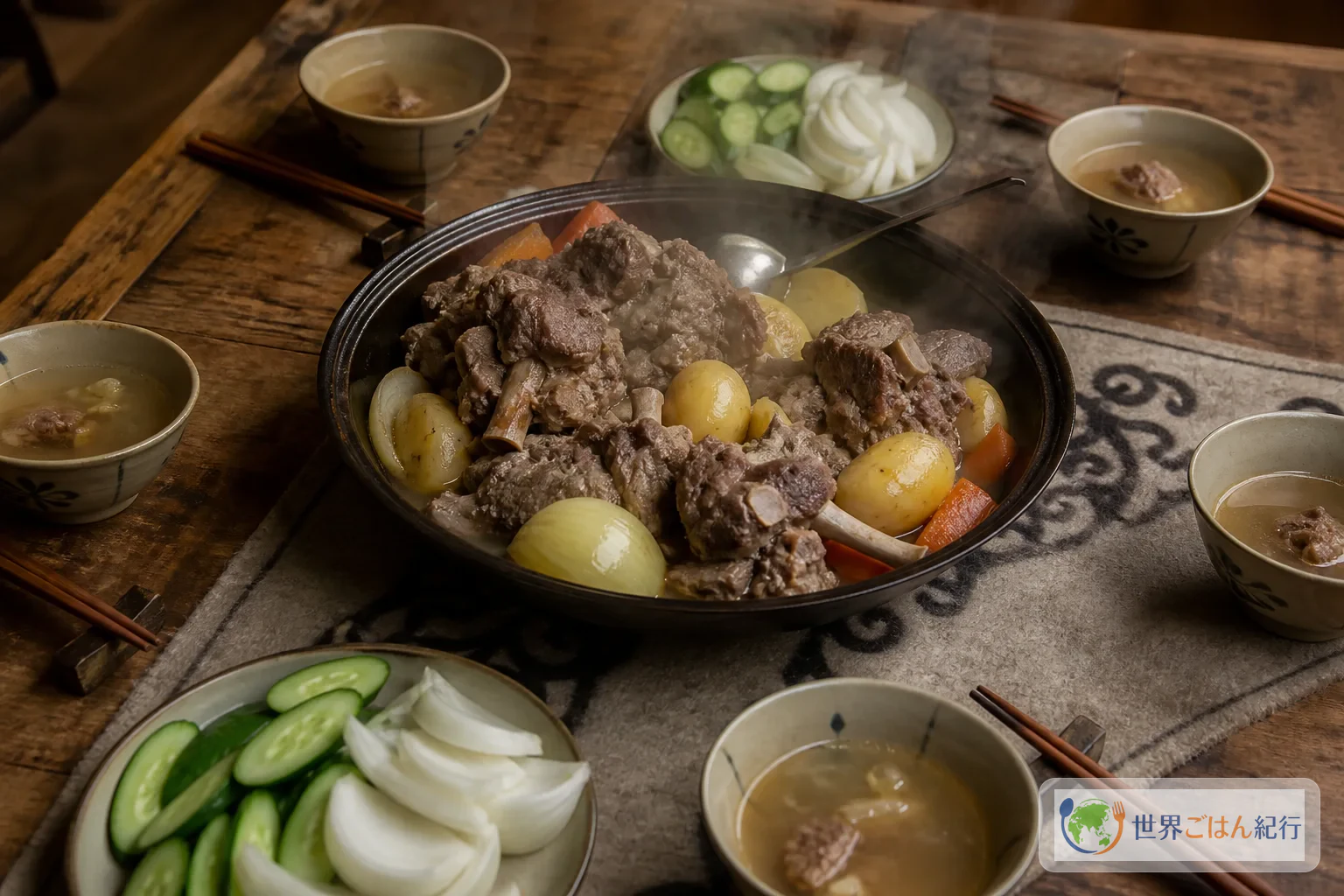
For sides, three are plenty: lightly salted cucumber, thinly sliced onion and plain unsweetened yogurt. Sharp vinegary sauces or sweet condiments blur the balance between the lamb fat and the pot juices. Serve it next to buuz, Mongolia's steamed dumplings, and you can compare two lamb dishes: one that wraps the juices in dough, and one that shares them from the pot.
Making ahead and reheating
Once it has cooled a bit, divide the meat, vegetables and juices into shallow containers and refrigerate. If you'll eat it by the next day, reheat the meat in its juices over low heat and stop once it's hot all the way through, so it doesn't dry out. Repeated reheating breaks down the potatoes, so take out only what you'll eat.
To freeze, leave out the potatoes and cabbage and pack the lamb and juices in single portions; the texture holds up better. Add fresh potatoes and cabbage after thawing.
How much does the flavor change without stones?
In stone-cooked khorkhog, the meat cooks in steam while a light scorched aroma transfers to the parts near the stones and the vessel. The heavy-pot version has less of that aroma and more broth. It keeps the savory depth from the bones, the sweetness of the onion and the hearty bite of large-cut vegetables.
What if someone in the family doesn't like lamb?
Beef shank or chuck keeps the structure of the dish, though you lose the lamb fat and aroma. Chicken cooks faster, so 65–75 minutes would tighten the meat. To stay closer to khorkhog, try lamb first with the fat trimmed thin and the meat cut in large pieces.
Is it bland without cumin?
No. The dish is built on 8 g salt and black pepper, so you taste the juices of the lamb and vegetables. If you use cumin, add just 1/4 tsp to the whole pot, so its earthy note doesn't cover the lamb fat; caraway is sometimes used instead. Treat it as a way to compare aromas, not as "the Mongolian way."