Gaetteok: Korean Steamed Mugwort Rice Cakes (쑥개떡)

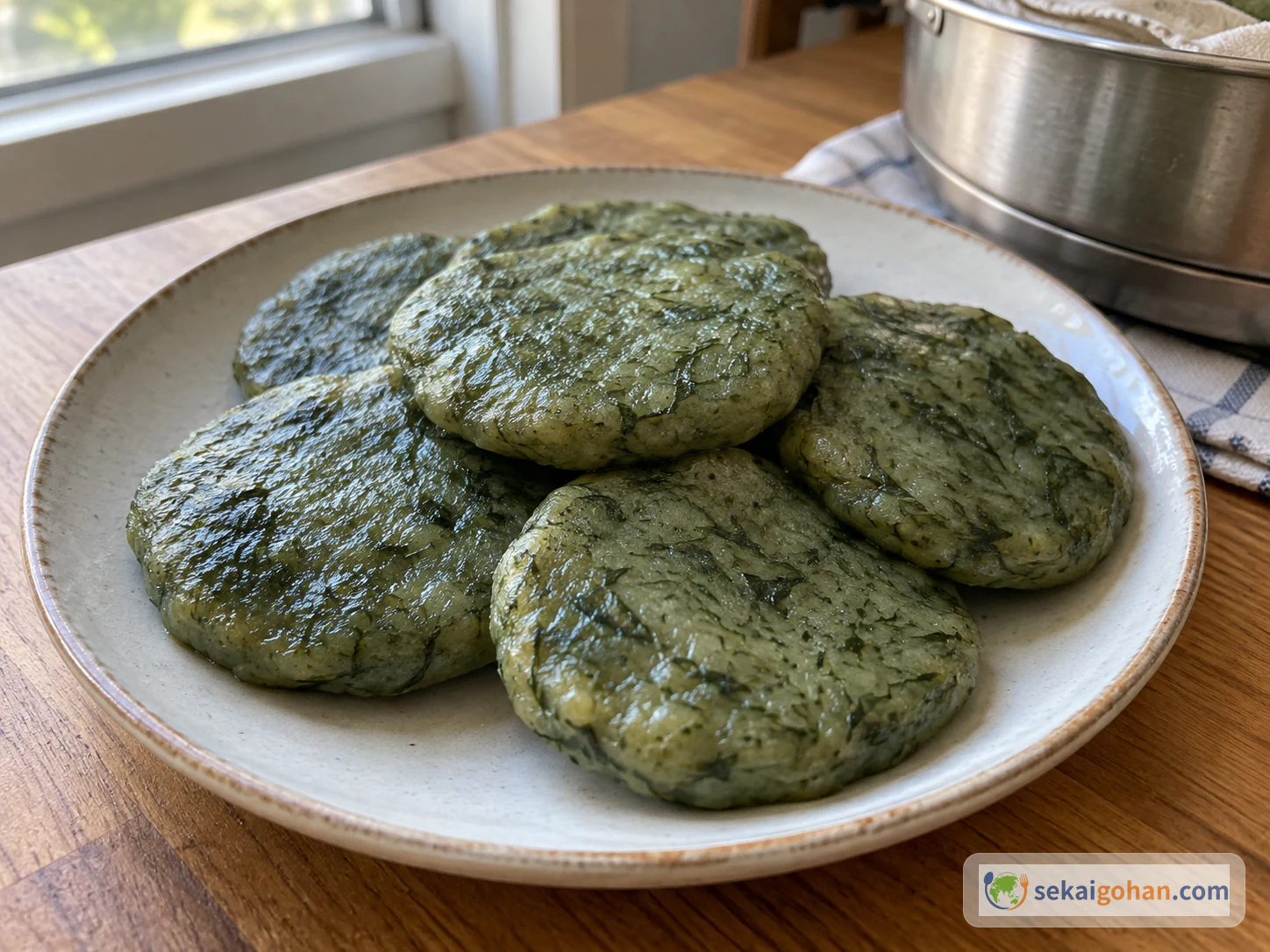
Rustic, flat round ssuk gaetteok with mugwort kneaded into the dough
Cuisine
Korean

How to make ssuk gaetteok (쑥개떡), flat Korean rice cakes of blanched mugwort and dry non-glutinous rice flour, steamed and finished with cold water and sesame oil. Covers how to judge the dough, choose edible mugwort, check the cakes are hot through, and store and reheat them.

Cooking flow

Cooking steps

STEP11 / 13

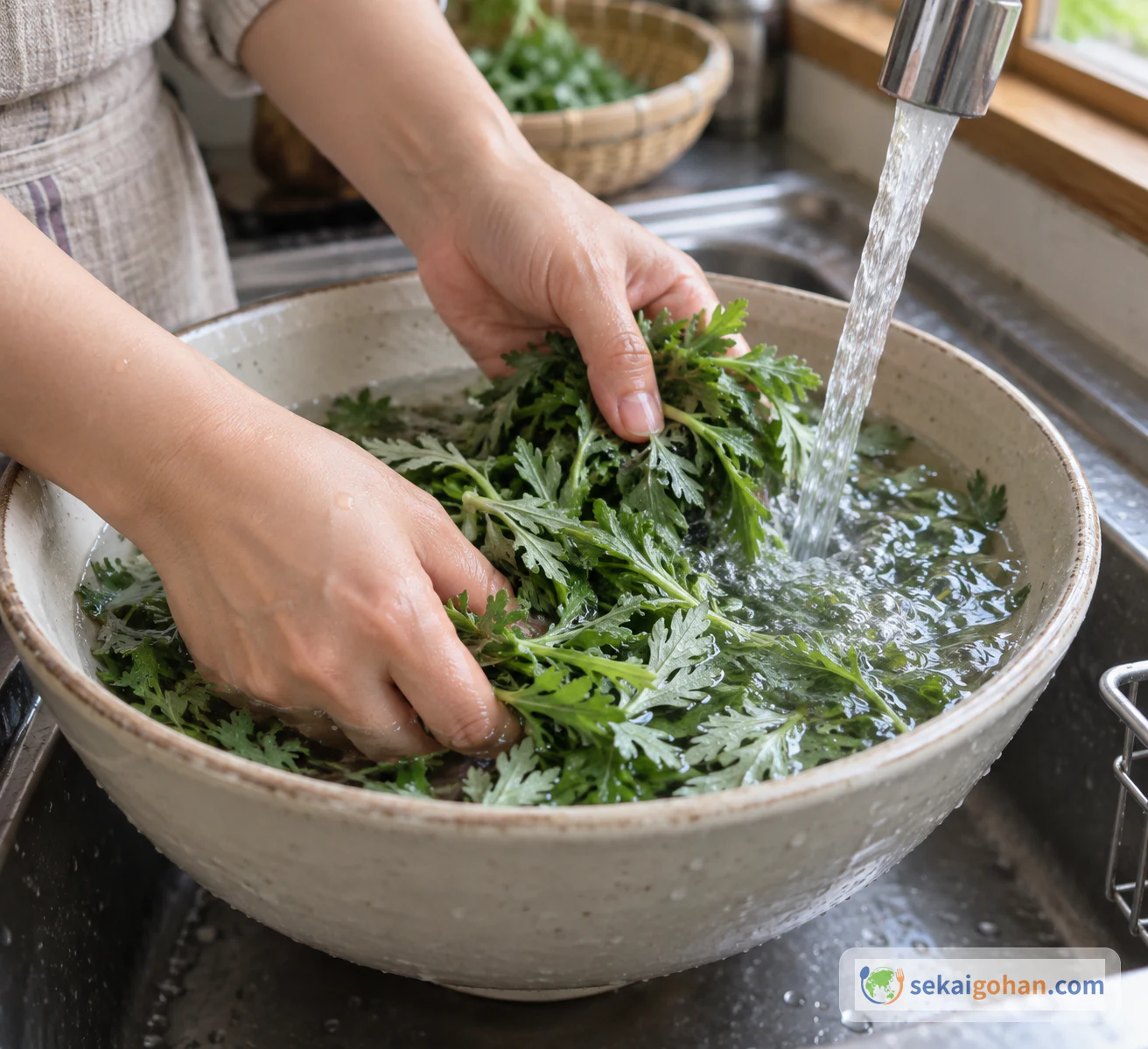
Wash the mugwort

Hands washing mugwort leaves in a bowl of water
Wash until no soil or foreign matter remains

Remove any damaged parts, roots and similar debris. Soak the mugwort briefly in water, then wash it 3–4 times, until no soil or foreign matter remains. Do not skip this, even with store-bought mugwort.

STEP22 / 13

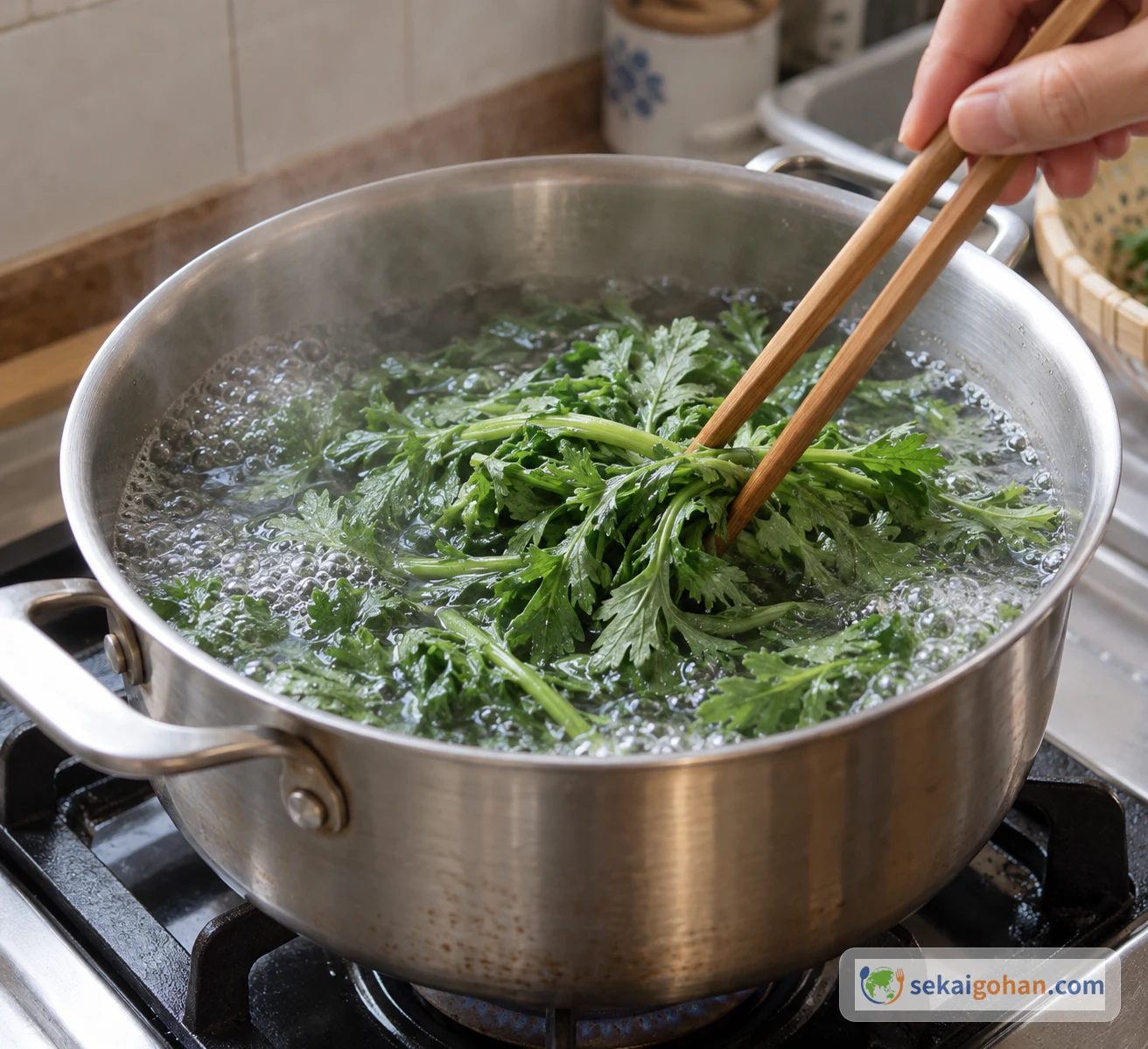
Blanch in salted water

Chopsticks pressing mugwort into a pot of boiling salted water
Blanch for 2–3 minutes in plenty of boiling water

Bring plenty of water to a boil, enough to cover the mugwort. Add about 1 tbsp of the blanching salt and blanch the mugwort for 2–3 minutes. Keep the dough salt separate.

STEP33 / 13

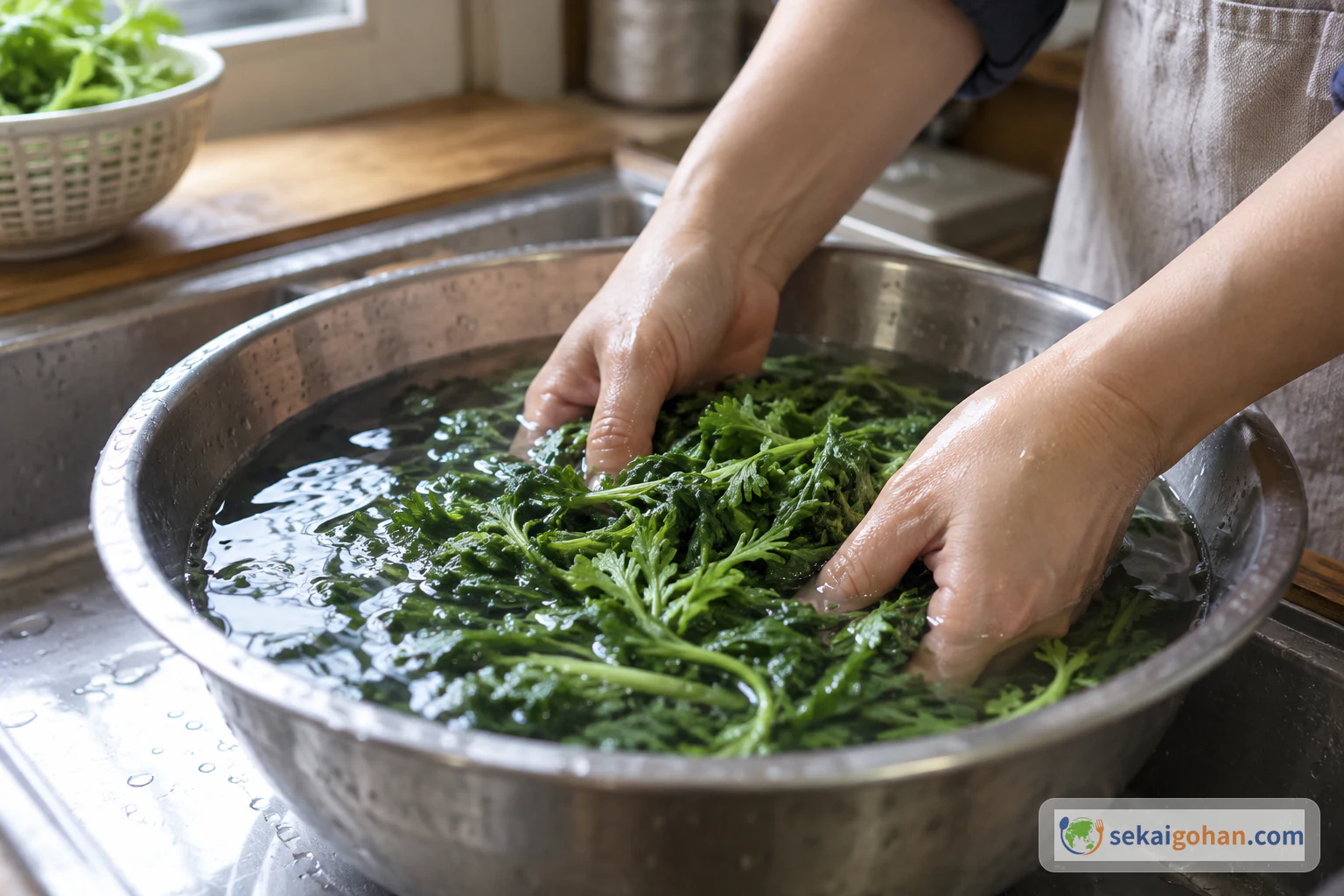
Cool in cold water

Hands cooling blanched mugwort in a bowl of cold water
Move the mugwort straight into cold water

Lift out the mugwort and cool it in cold water right away.

STEP44 / 13

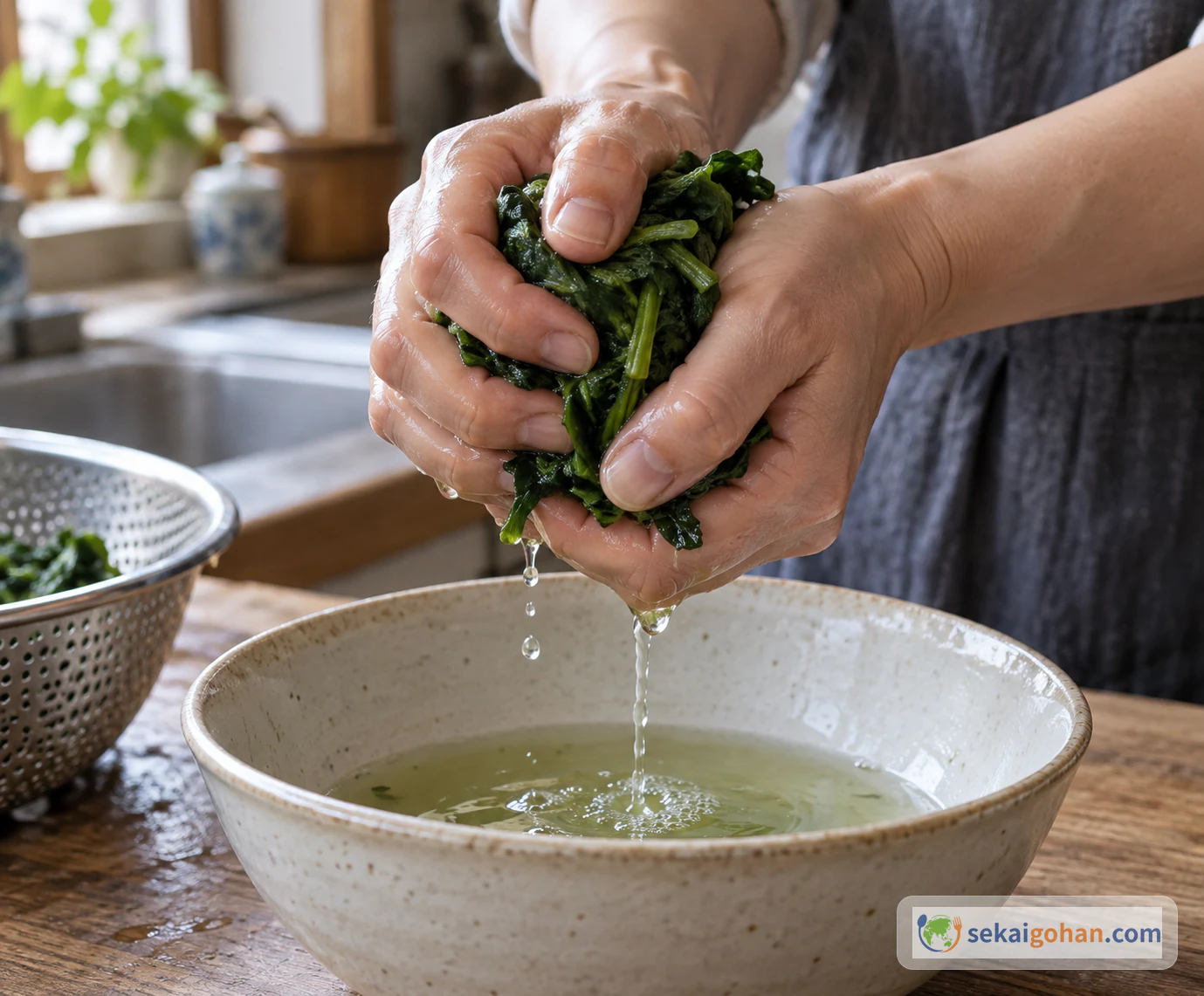
Squeeze out the water

Hands squeezing a handful of cooled mugwort over a bowl
Squeeze firmly before chopping

Squeeze the cooled mugwort firmly, so that extra water stays out of the dough.

STEP55 / 13

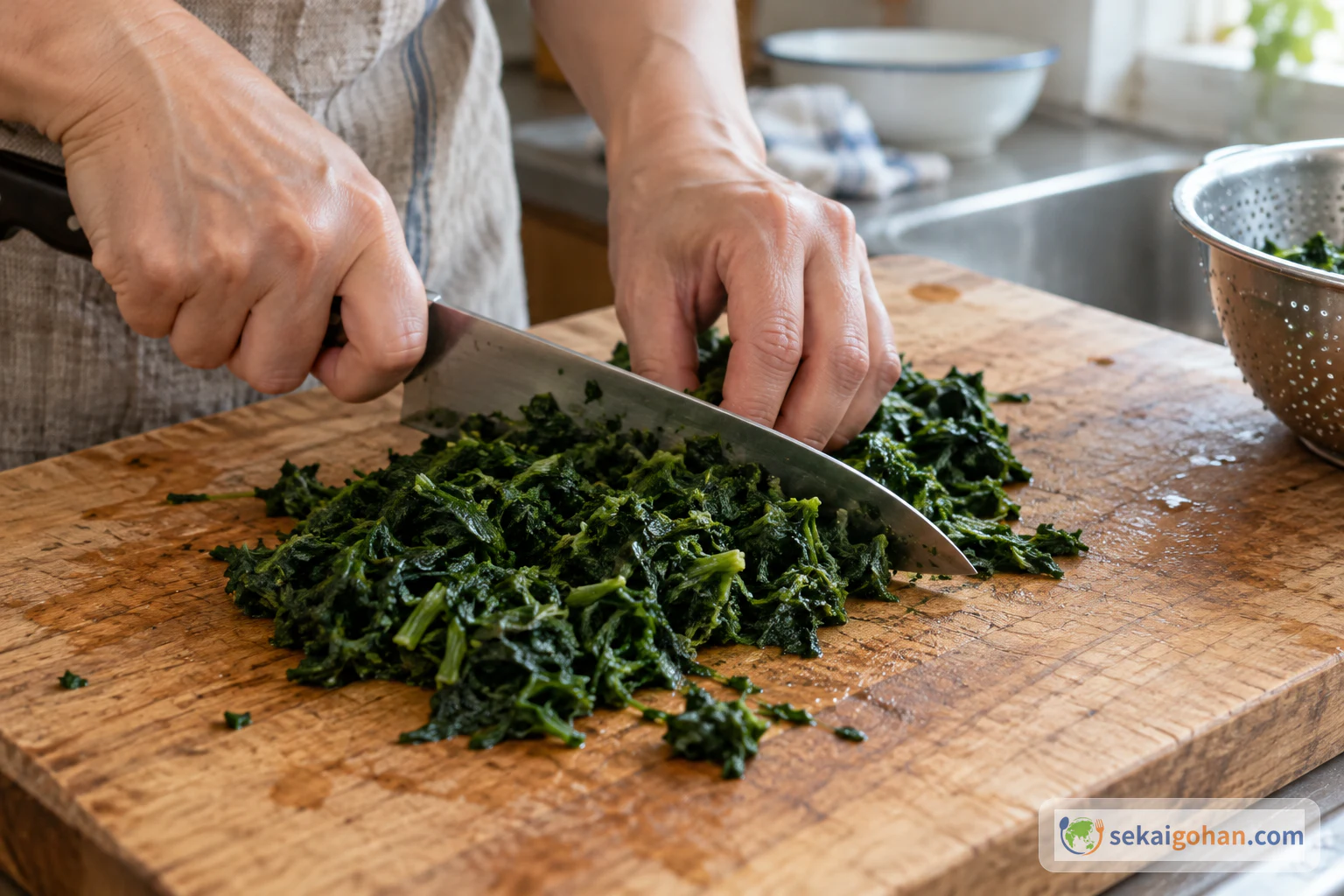
Chop finely

Finely chopping squeezed mugwort on a cutting board
Short fibers make the blender's job easier

Chop the squeezed mugwort finely. This shortens the fibers before they go into the blender.

STEP66 / 13

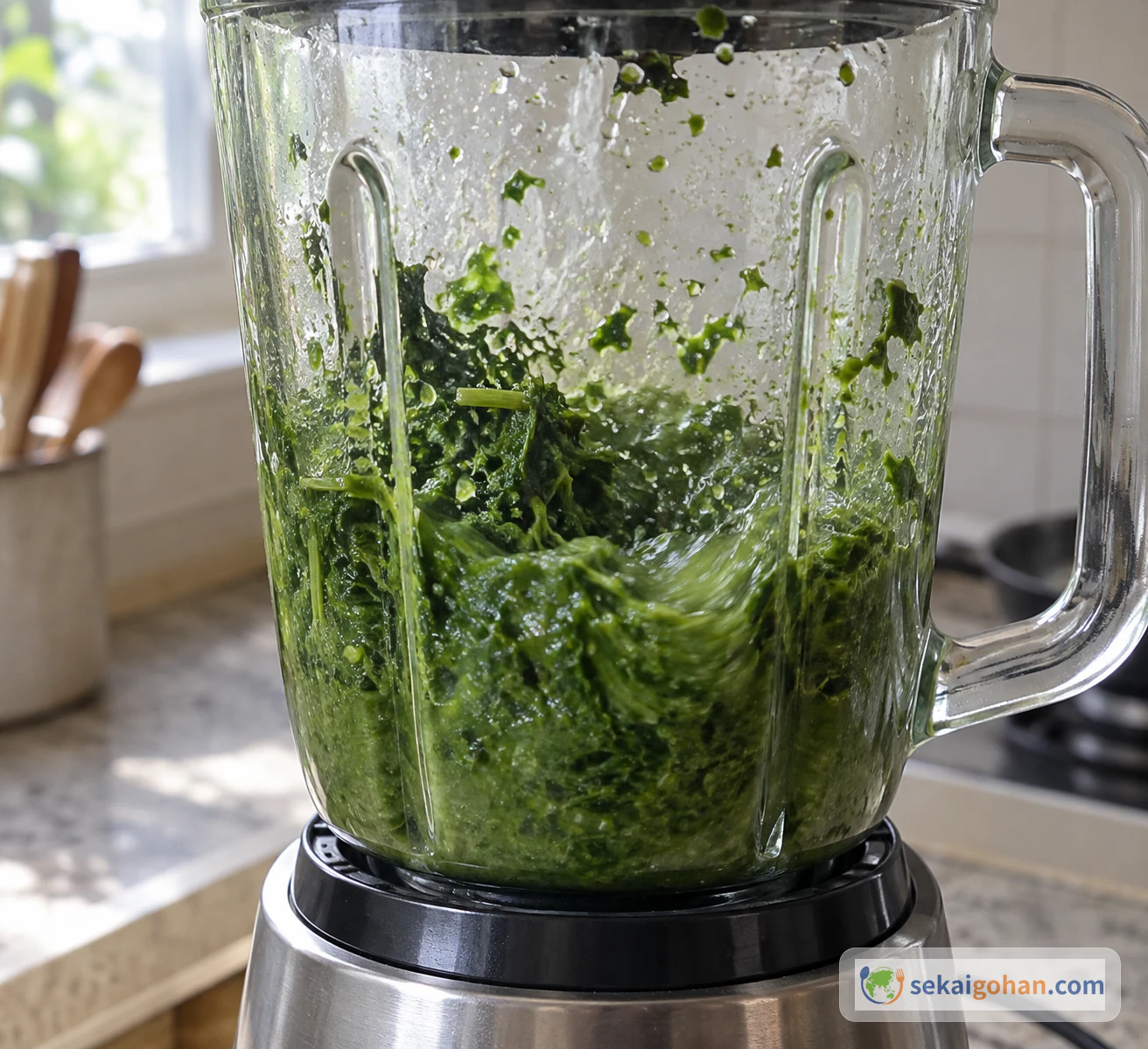
Blend with a minimum of water

Chopped mugwort blending into a thick green mash with a little water
Use only enough water to keep the blades turning

Put the chopped mugwort in the blender with only as much water as it needs to turn, then blend. Either a fine or a slightly coarse texture works.

STEP77 / 13

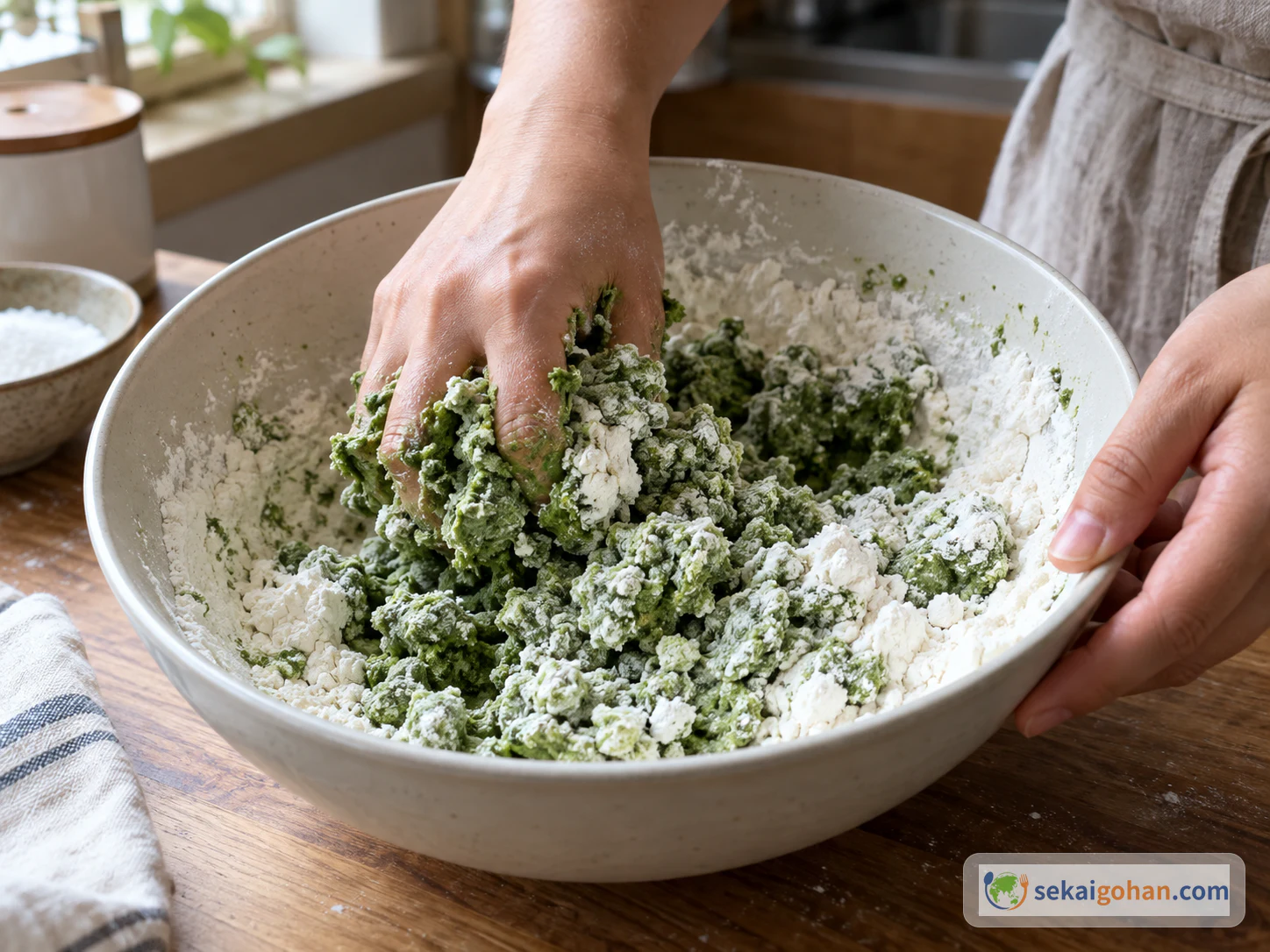
Mix the dough

Hands mixing blended mugwort into dry rice flour with sugar and salt
The mixture starts out crumbly and uneven

In a bowl, combine the 14 oz (400g) dry non-glutinous rice flour, 3 tbsp sugar, 1/2 tsp dough salt and the blended mugwort.

STEP88 / 13

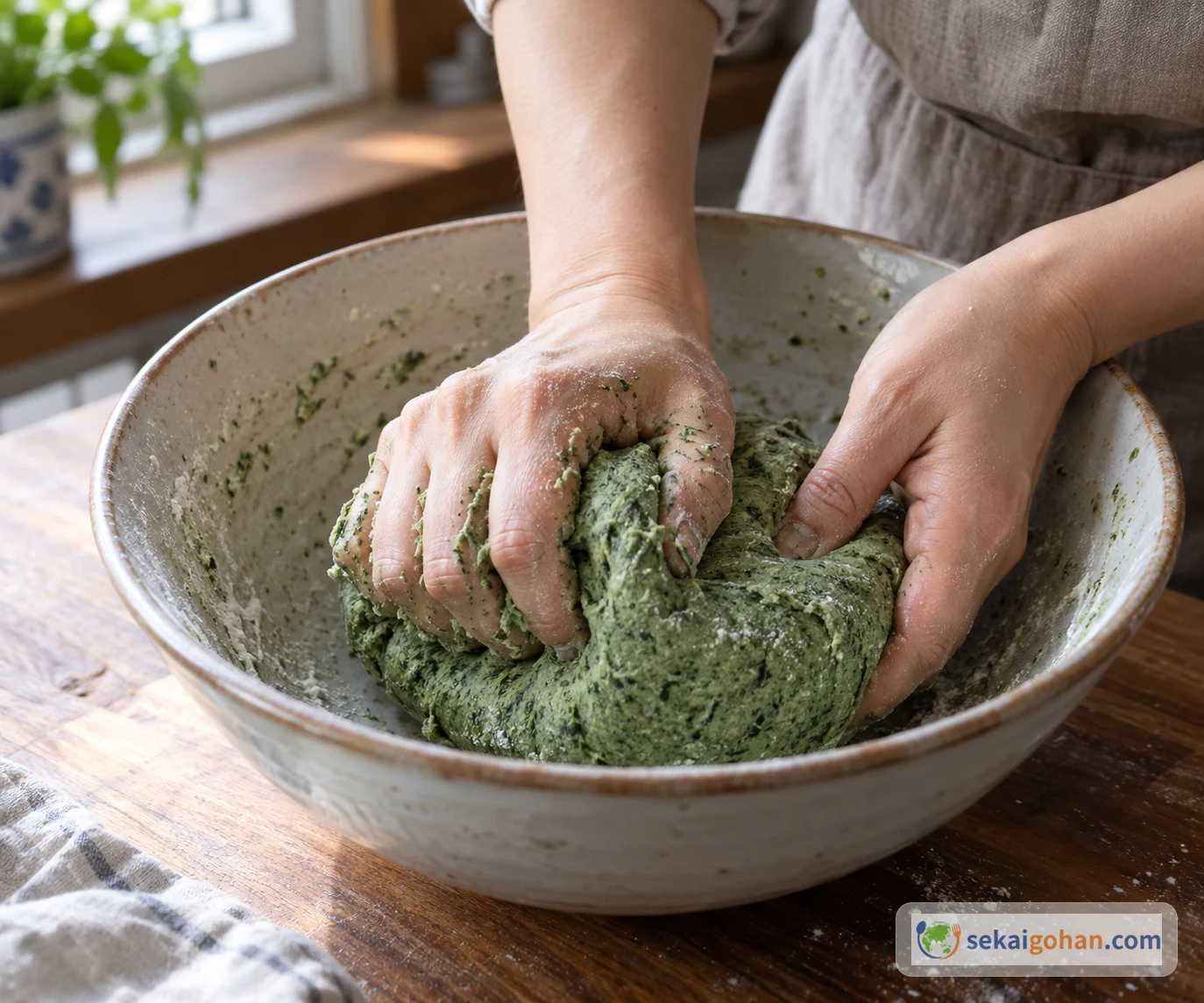
Knead until slightly firm

Hands kneading a firm green dough that comes away from the fingers
Slightly firm and not sticking to your hands

Knead into a slightly firm dough that does not stick to your hands. Only if it needs more moisture, add warm water a little at a time. Never add a lot of water at once. The feel of the dough is your final guide.

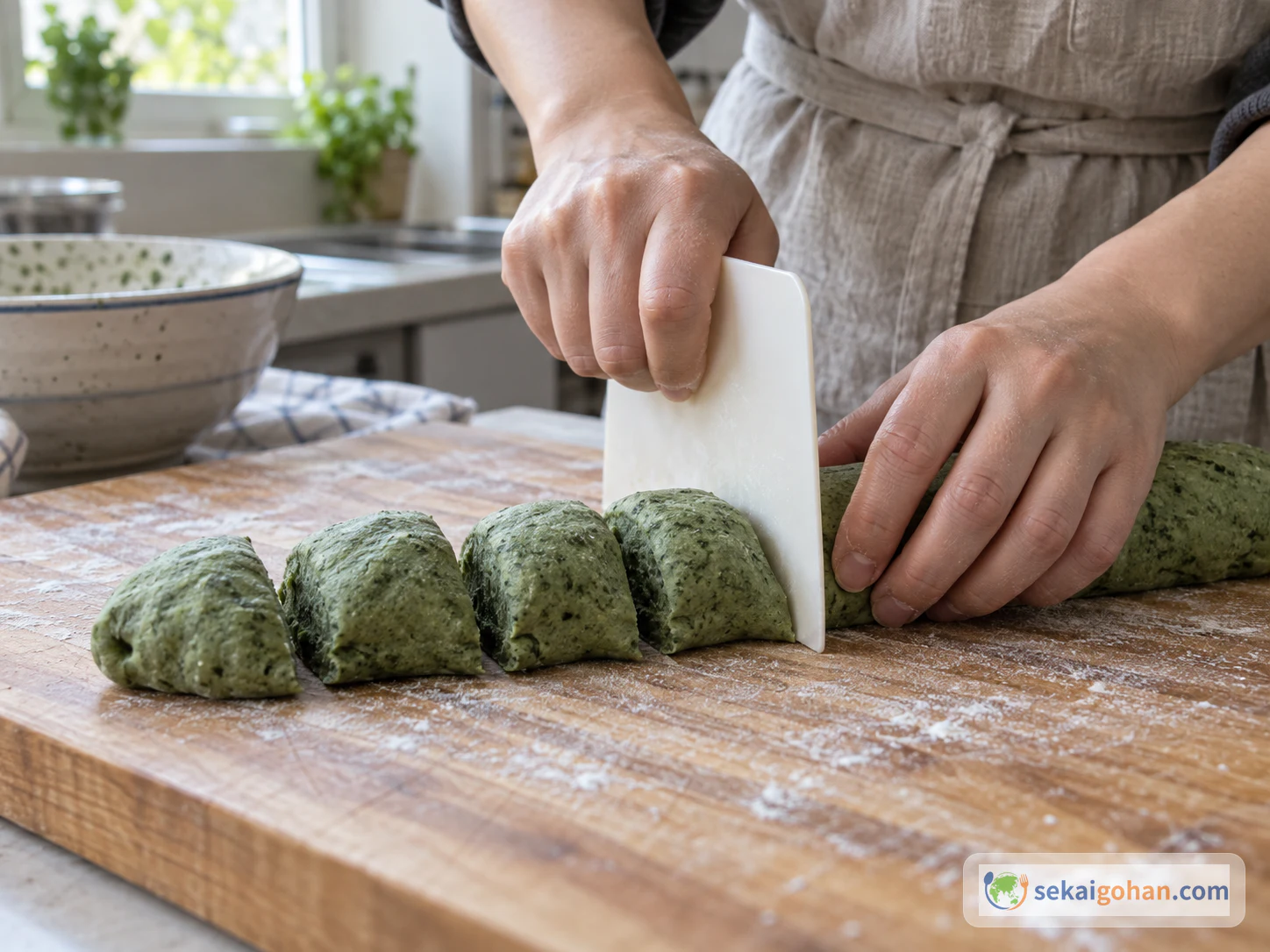
STEP99 / 13

Divide evenly

Cutting a rope of green dough into even portions
Keep the pieces the same size

Gather the dough into a long rope and cut it into pieces of the same size. Choose whatever size suits you.

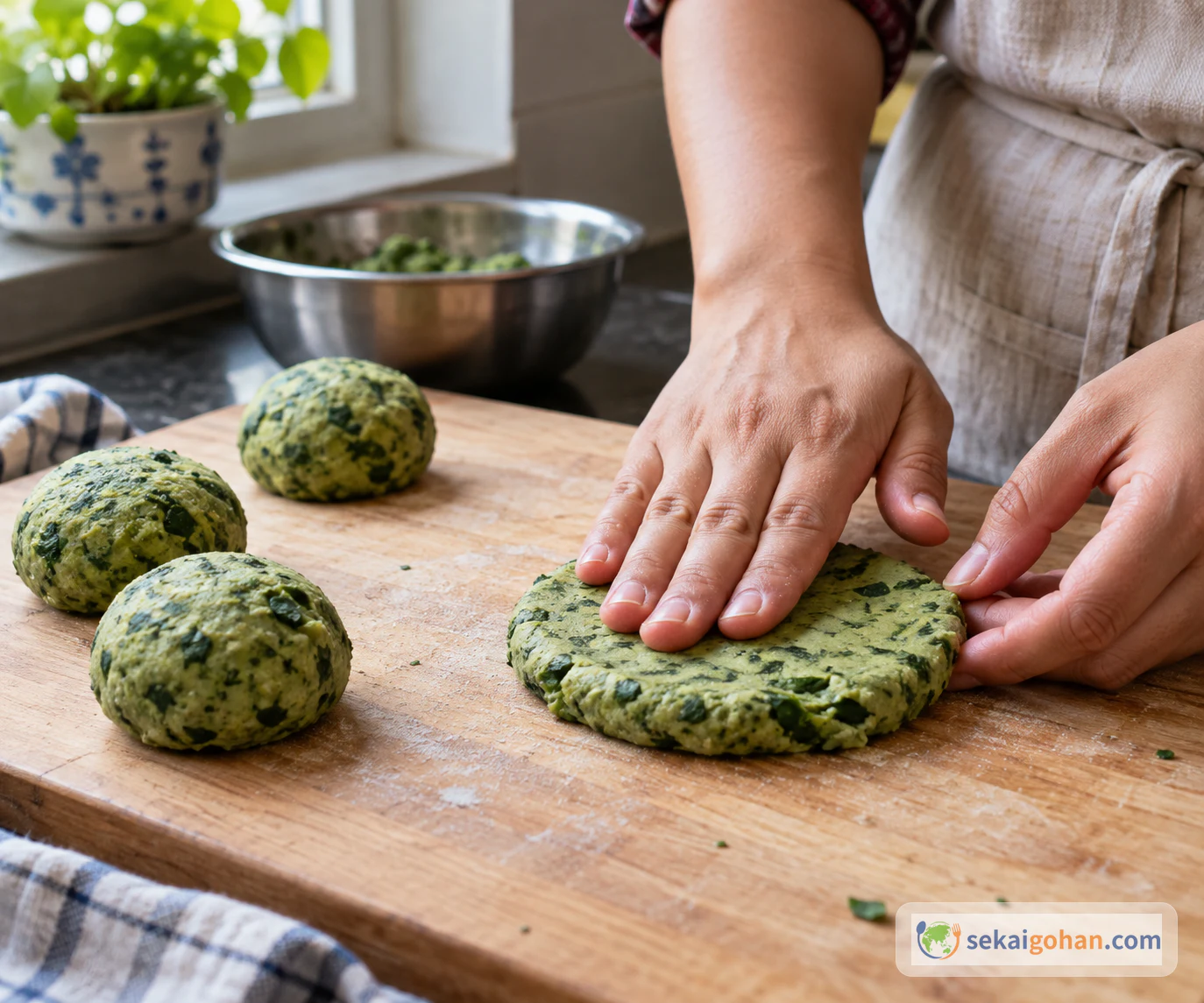
STEP1010 / 13

Shape into discs

Hands pressing a ball of green dough into a flat round disc
Flat, but not too thin

Roll each piece into a ball, then press it into a disc that is not too thin.

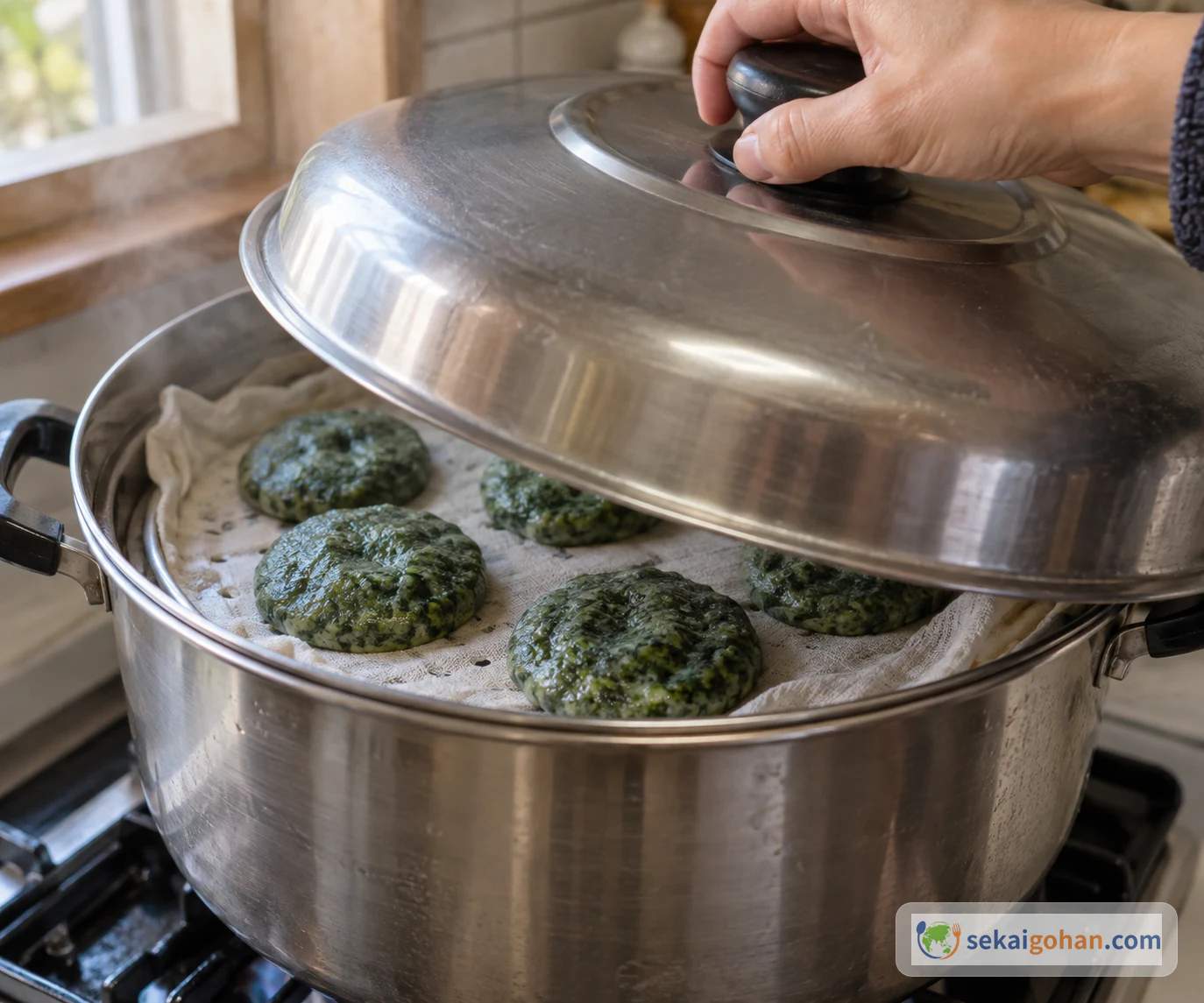
STEP1111 / 13

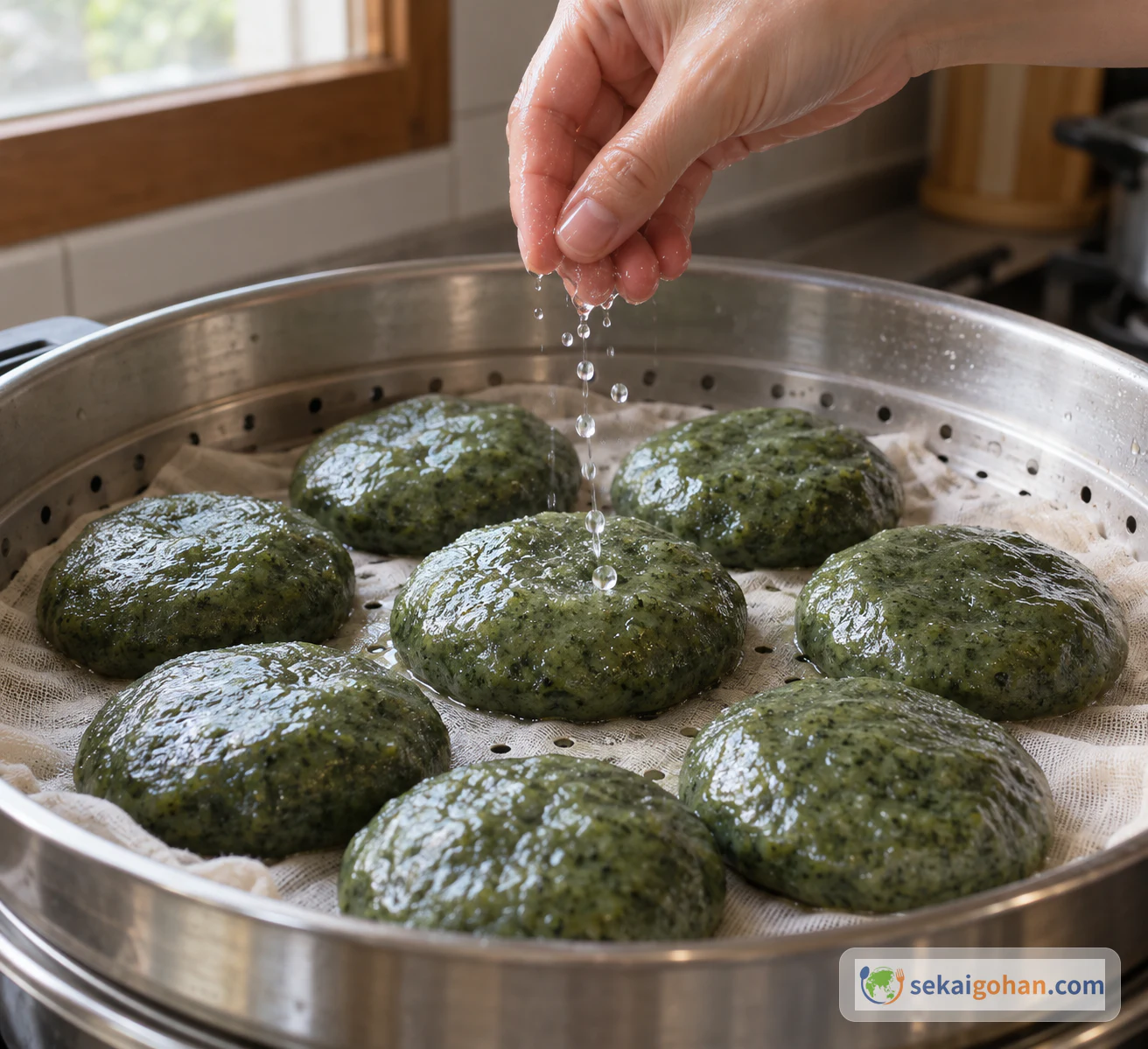
Steam

Closing the steamer lid over flat green discs of dough
The water should already be boiling when the discs go on

Bring the water in the steamer to a boil. Arrange the discs in the steamer, set it over the boiling water, close the lid and steam for 8–10 minutes.

Thickness and equipment change how fast the cakes heat, so check the center of the thickest piece. It should be hot all the way through, at 167°F (75°C) or higher. If it is not, steam longer.

STEP1212 / 13

Add cold water while hot

A hand putting cold water over hot steamed green cakes
Cold water goes on while the cakes are hot

As soon as the cakes are steamed and still hot, put cold water over them. Do not leave them soaking in water or use the freezer instead.

STEP1313 / 13

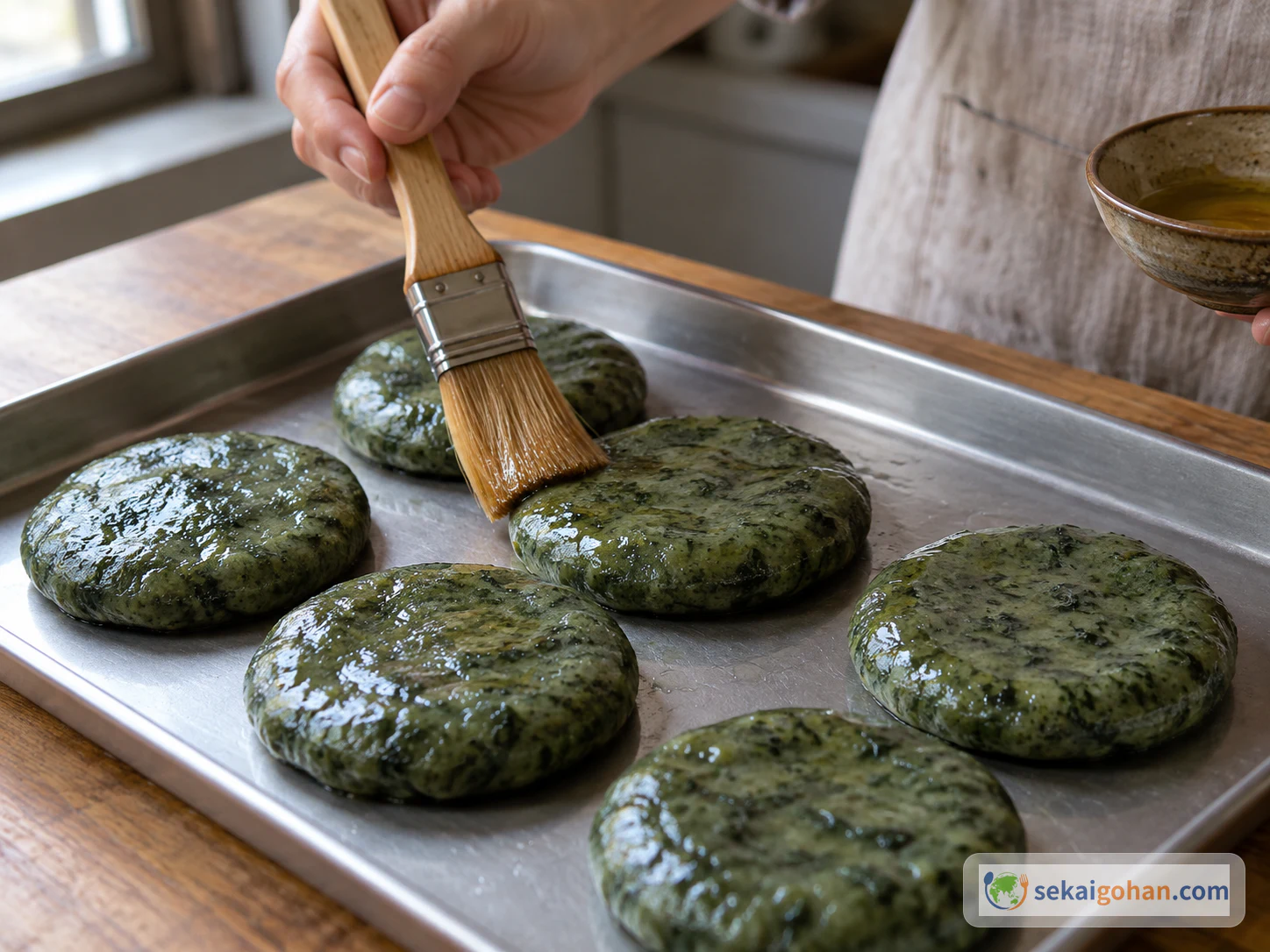
Finish with sesame oil

Brushing a little sesame oil over cooled green rice cakes
A light coat of sesame oil finishes the cakes

When the cakes have cooled moderately, coat them with a little sesame oil.

0 / 0
Ingredients

Ingredients

1 / 1

Ingredients

Ingredient Amount Role
Mugwort (쑥), sold as food 7 oz (200g) Color, aroma and flecks of green through the dough
Dry non-glutinous rice flour (건식 맵쌀가루) 14 oz (400g) The body of the dough. Not glutinous rice flour and not wet rice flour
Sugar 3 tbsp Goes into the dough
Salt for the dough 1/2 tsp Goes into the dough
Salt for blanching about 1 tbsp Goes into the blanching water only
Water as needed For washing, blanching, cooling, blending, steaming and the cold-water finish
Warm water a little, if needed Added in small amounts only if the dough needs it
Sesame oil (참기름) a little Brushed on at the end
0 / 0

Green rounds of dough go into the steamer once the water is already at a rolling boil. They are flecked with mugwort and pressed flat by hand, with no filling. When they come out, they get a splash of cold water while still hot, then a light brush of sesame oil once they've cooled a little. This is ssuk gaetteok (쑥개떡), the mugwort version of a plain Korean rice cake, and it is simple, green, and gently sweet.

Ssuk Gaetteok, the Mugwort Rice Cake

Gaetteok (개떡) is a general name for rice cakes, and ssuk gaetteok is the one made with mugwort. It belongs to the tradition of simple rice cakes made with young spring mugwort, and it appears in a 2008 book on the traditional local foods of Jeollabuk-do. This version starts from ready-made dry non-glutinous rice flour, which makes it practical for a home kitchen. It makes 6 or more servings in about 30 minutes.

For more dishes from the same country, see Korean recipes.

Ingredients: Mugwort, Dry Rice Flour and Two Separate Portions of Salt
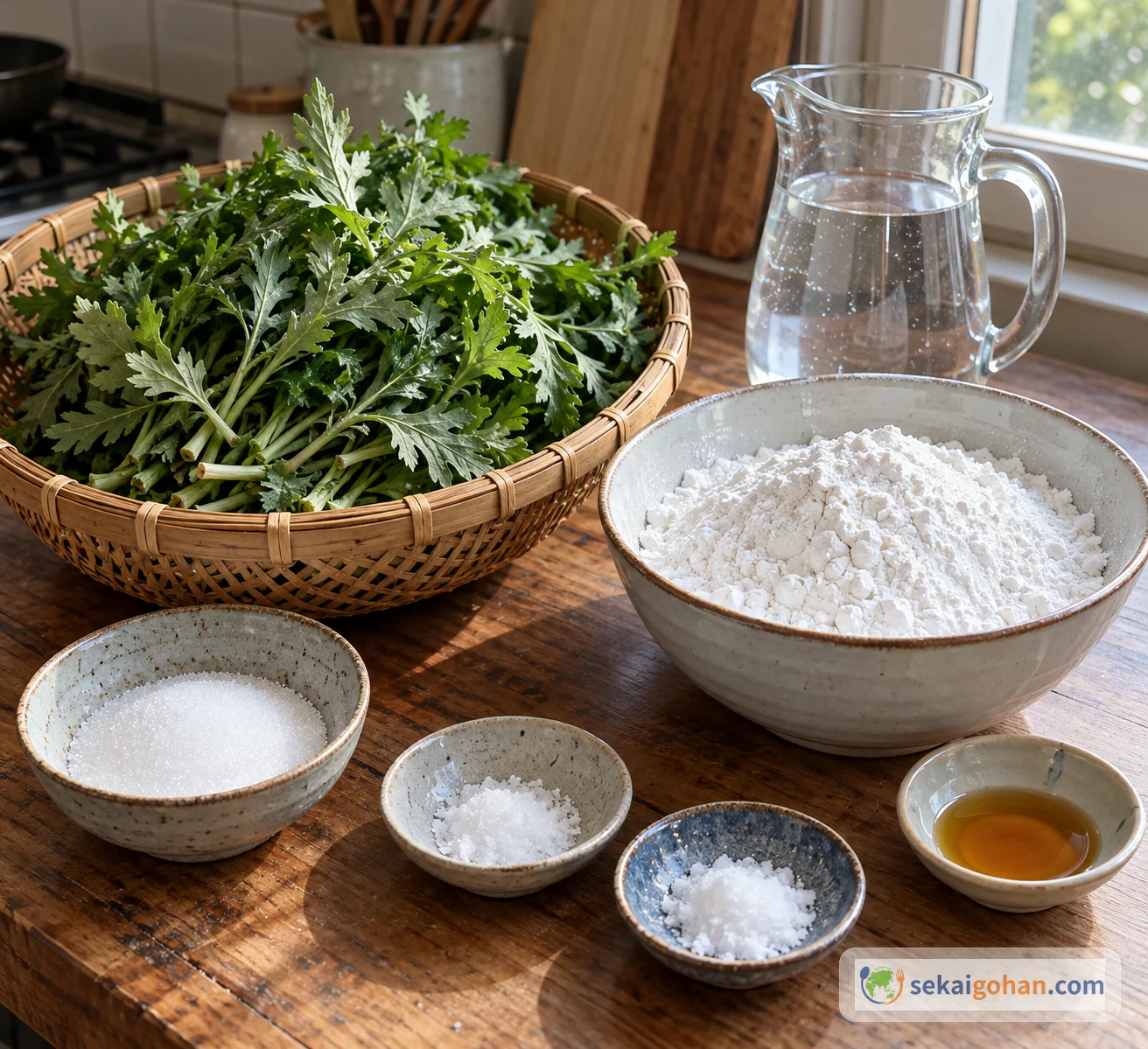
Mugwort, dry non-glutinous rice flour, sugar, separate portions of dough salt and blanching salt, water and sesame oil
Keep the blanching salt apart from the salt for the dough

All of the mugwort, flour, sugar and dough salt go into the dough.

Choosing Mugwort and Rice Flour for Gaetteok

Mugwort: Buy mugwort sold for eating, whether fresh leaves, frozen, or a product labeled as food, and leave wild plants in the fields and on the hillsides. Toxic plants have occasionally been sold as vegetables or seedlings, so buy from a seller you trust and read the label. Never eat, or give to anyone, a plant you can't be certain is edible.

Rice flour: Look for a label that says both dry and non-glutinous, and check the grain size and any additives. Wet rice flour and glutinous rice flour absorb water differently and change the balance of the dough. Even among dry flours, absorption varies, so judge the dough by its feel. Whether you blend the mugwort finer or coarser is up to you; either works.

Allergy and label check

This recipe uses sesame oil, so avoid it if you need to avoid sesame. Check the labels of everything you buy, including any shared-facility or cross-contact statements.

Equipment

  • Pot for blanching
  • Blender
  • Steamer with a lid
  • Measuring spoons
  • Colander
  • Bowls
  • Knife
  • Cutting board

Gaetteok Dough and Steaming Problems

The dough you want is slightly firm and doesn't stick to your hands. Press the cakes flat, but not too thin, and steam until the thickest part is hot at the center.

Problem What to check What to do
The dough is loose or sticks to your hands Whether water went in all at once, or the mugwort was not squeezed well Stop adding water. Next time, squeeze firmly and add warm water only a little at a time
The dough is dry and won't come together Flour and mugwort vary in how much water they bring or absorb Add warm water a little at a time, kneading between additions
The blender won't turn Whether the mugwort was chopped finely enough Chop it finer first, then add only the smallest amount of water that lets the blades turn
The center isn't hot after 8–10 minutes Thicker cakes and different steamers heat differently Close the lid and steam longer, then check the thick part again

Storing and Reheating Gaetteok

Keep the steamed cakes out of room temperature for long stretches. Once any you won't eat right away have cooled, refrigerate them (50°F (10°C) or below) or freeze them (−15°C or below) without delay. Before eating, reheat them until the center reaches 167°F (75°C) or higher.

Frequently Asked Questions

Which plant species is the mugwort?

The recipe says only 쑥 (mugwort) and names no botanical species. That's one more reason to buy mugwort sold as food, rather than trying to identify a plant from a description or photo.

Is the 7 oz (200g) of mugwort weighed before or after washing and blanching?

The recipe doesn't say. The ratio is 1:2 mugwort to dry rice flour, so use 7 oz (200g) and let the dough guide you from there: slightly firm and not sticking to your hands.

How much water goes into the dough?

There's no fixed total. Add warm water a little at a time, only when the dough needs it; the amount depends on the flour and on the moisture left in the mugwort.

How big should the cakes be?

Cut even pieces and press them into discs that aren't too thin. The size is up to you; 3 inches (8 cm) works well.

Is 8–10 minutes of steaming enough?

It's a guide, with the cakes going in once the water is boiling. Check that the thick part is hot at the center, using 167°F (75°C) or higher as a target, and steam longer if needed.

How many days will the cakes keep?

There's no set number of days. Refrigerate or freeze them promptly once cooled, and reheat them thoroughly before eating.

Sources

  • 곰배밥상 / 10000recipe (만개의레시피), "쑥개떡 [쑥떡] 만들기!" The home cook's recipe used for the amounts, method and listed servings and time. Posted March 30, 2021 and updated the next day. https://www.10000recipe.com/recipe/6956007
  • Korean Traditional Knowledge Portal (provided by the Rural Development Administration), "쑥개떡," from 한국의 전통향토음식 6: 전라북도. Used for the Jeollabuk-do food record and the background of young spring mugwort and simple rice cakes. Cultural comparison only. https://koreantk.com/ktkp2014/food/food-view.view?foodCd=TF10000952&tempLang=ko
  • Korean Traditional Knowledge Portal, food database features and reference list. Used for how the database was compiled and for the listing of the 2008 book. https://koreantk.com/m_about/about_07.jsp?about=7
  • 심플민 / 10000recipe (만개의레시피), "쑥개떡." A second home cook's version, used only for comparison: the same mugwort-to-flour ratio, warm water added in small amounts, and an unstated weighing point for the mugwort. https://www.10000recipe.com/recipe/7050196
  • Ministry of Health, Labour and Welfare (Japan), "家庭での食中毒予防ポイント" (Key points for preventing food poisoning at home). General guidance on room-temperature holding, refrigerator and freezer temperatures, and reheating temperature. https://www.mhlw.go.jp/www1/houdou/0903/h0331-1.html
  • Food Safety Monitoring Division, Ministry of Health, Labour and Welfare (Japan), "有毒植物の誤食による食中毒防止の徹底について" (Notice on preventing food poisoning from accidentally eating toxic plants), March 27, 2025. General guidance on plants that cannot be confirmed as edible, and cases of toxic plants being sold as vegetables or seedlings. https://www.mhlw.go.jp/content/001476148.pdf