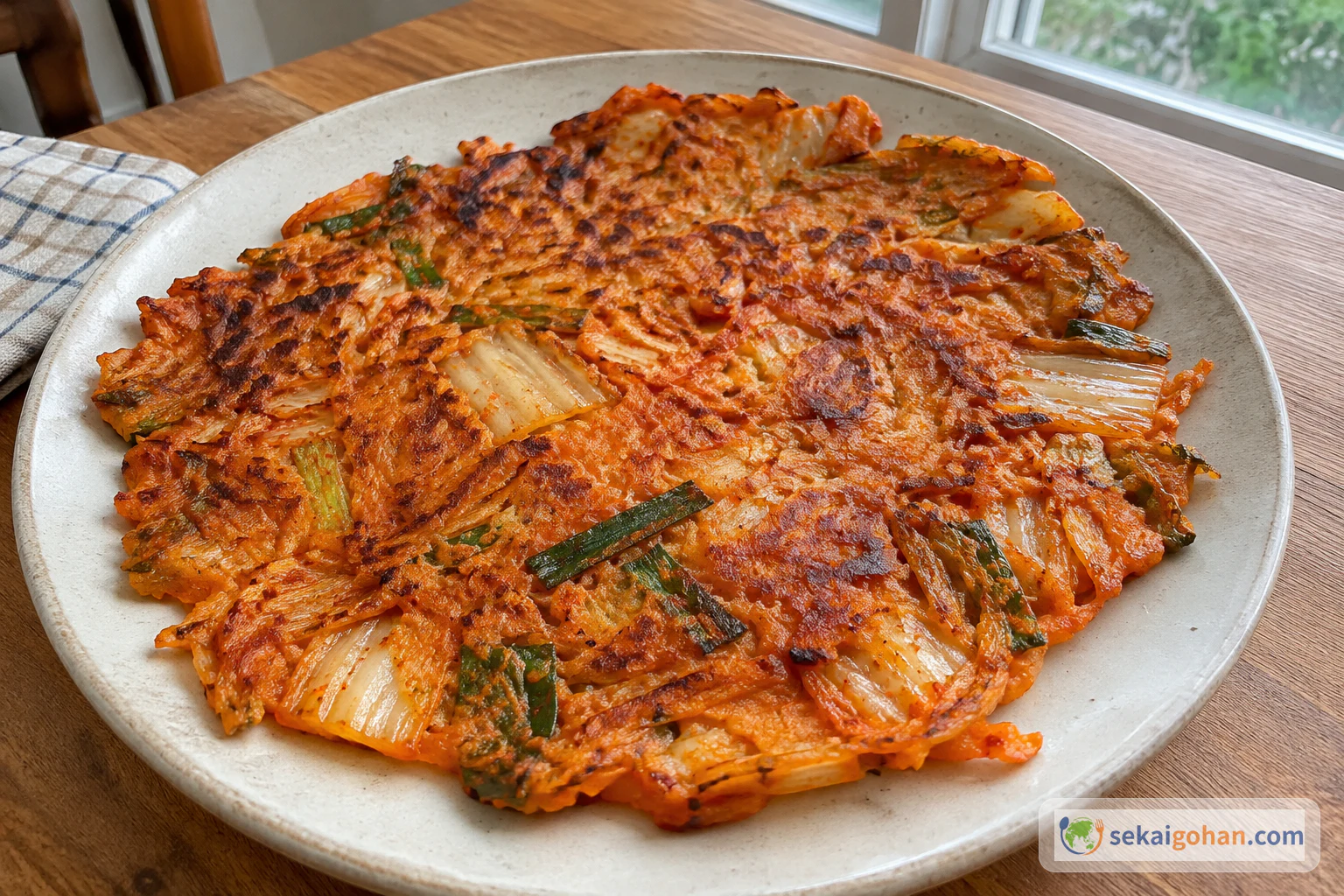
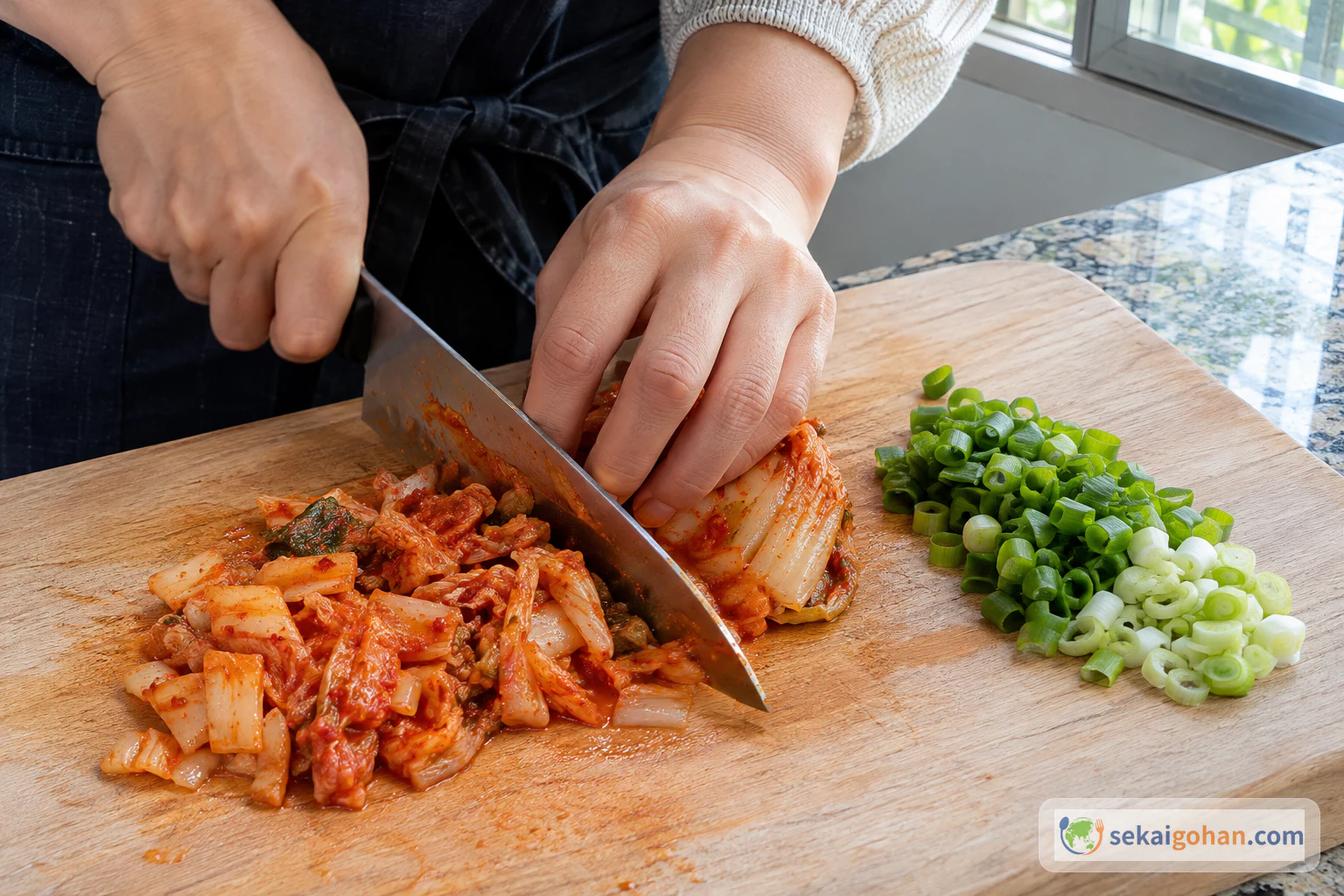
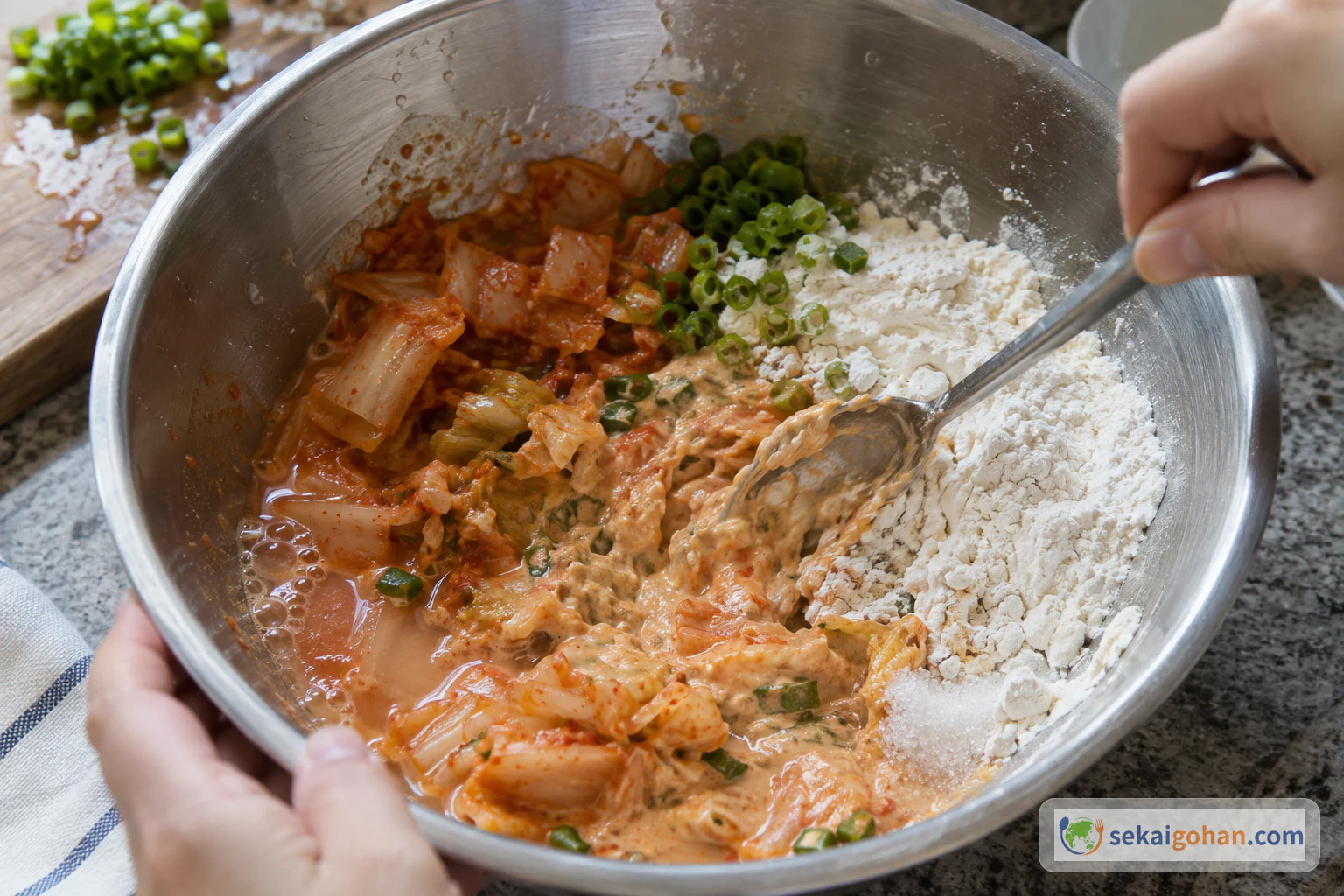
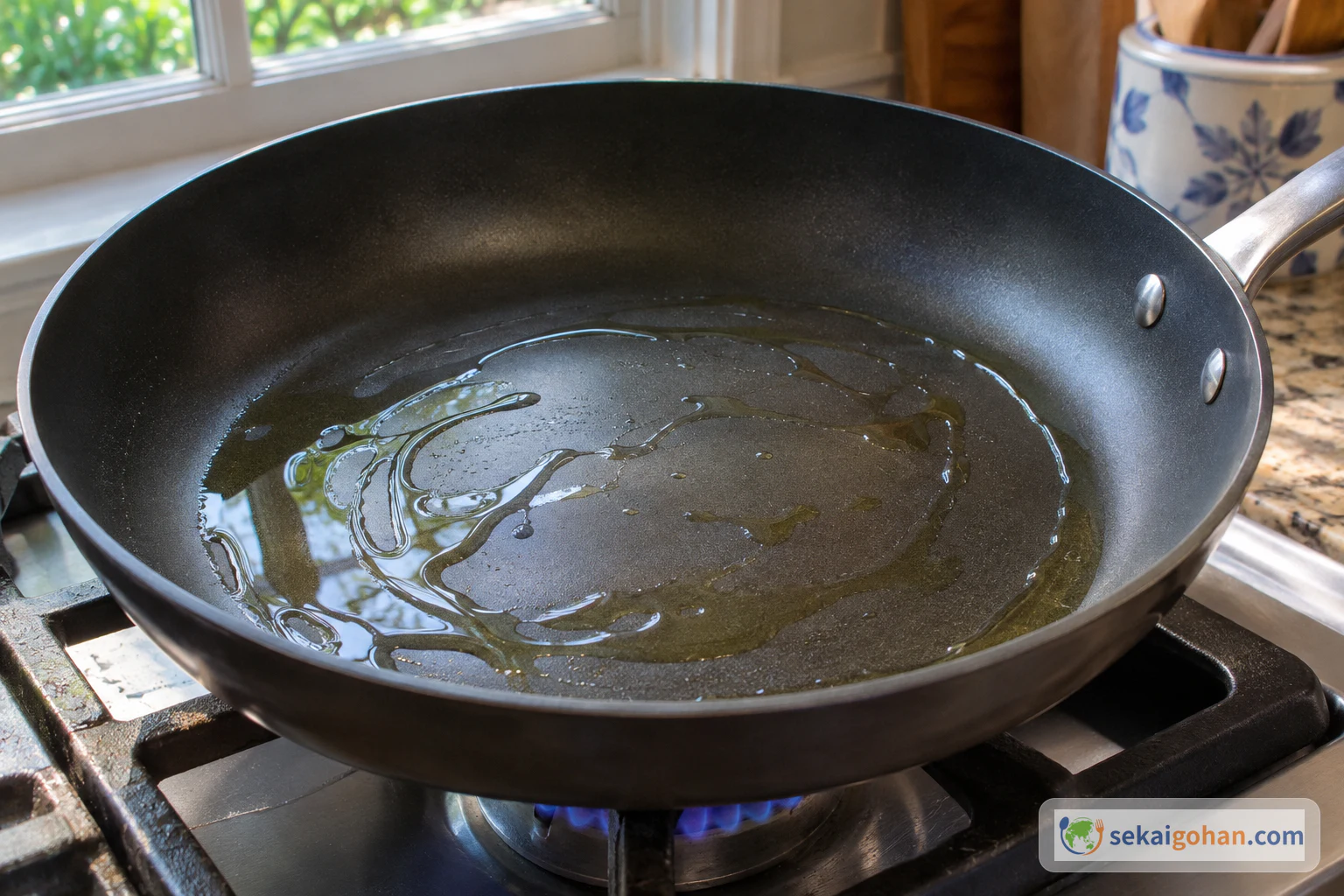
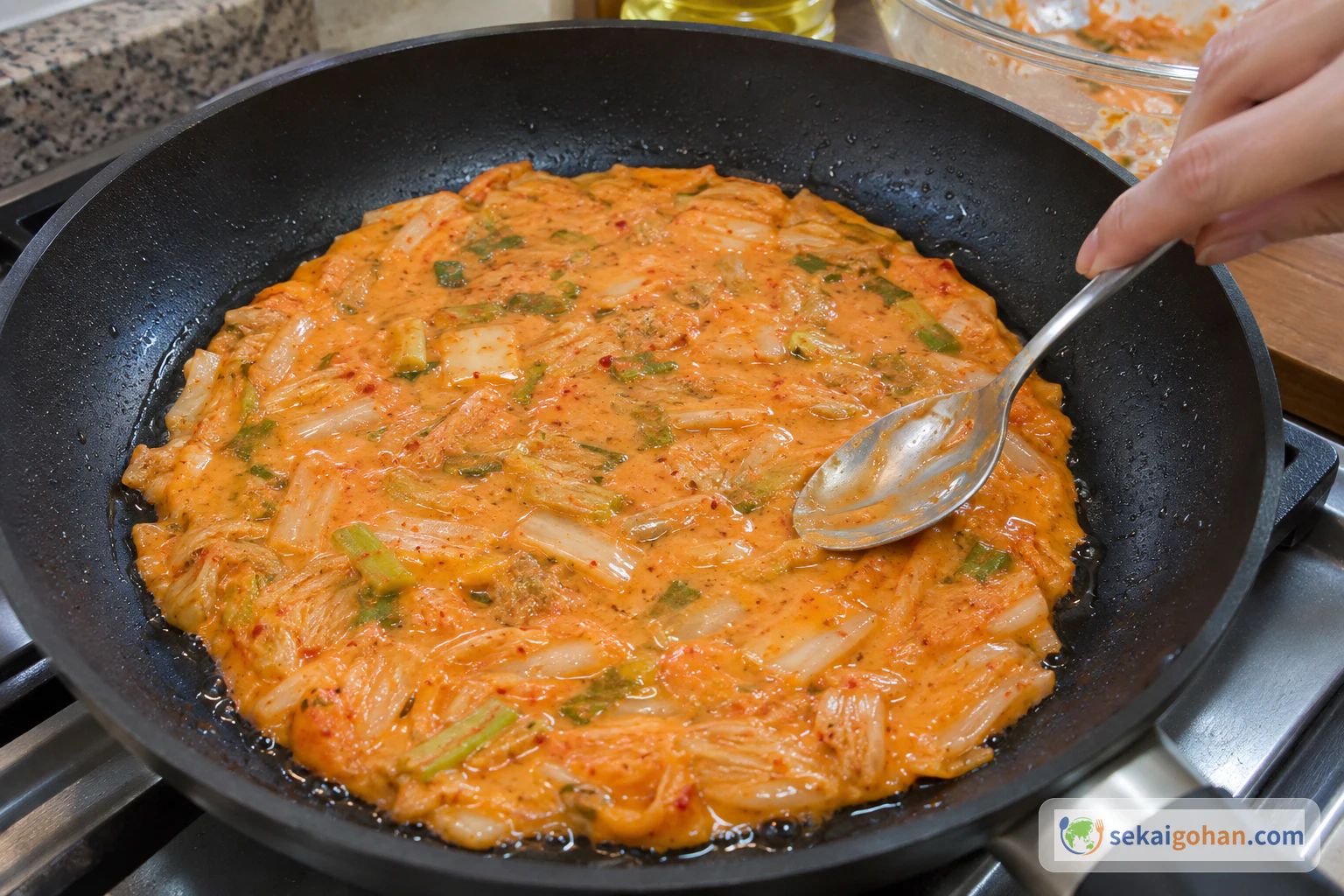
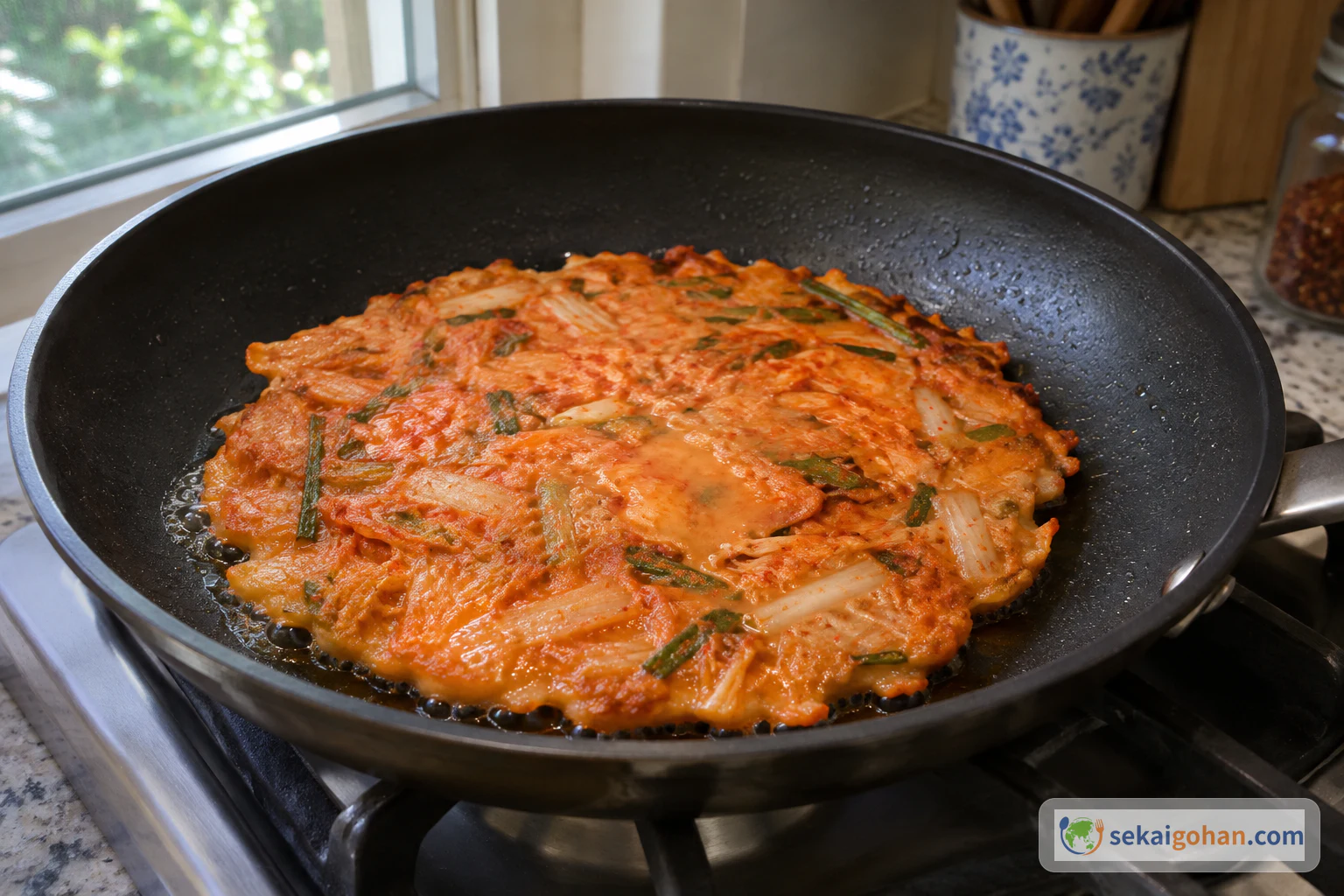
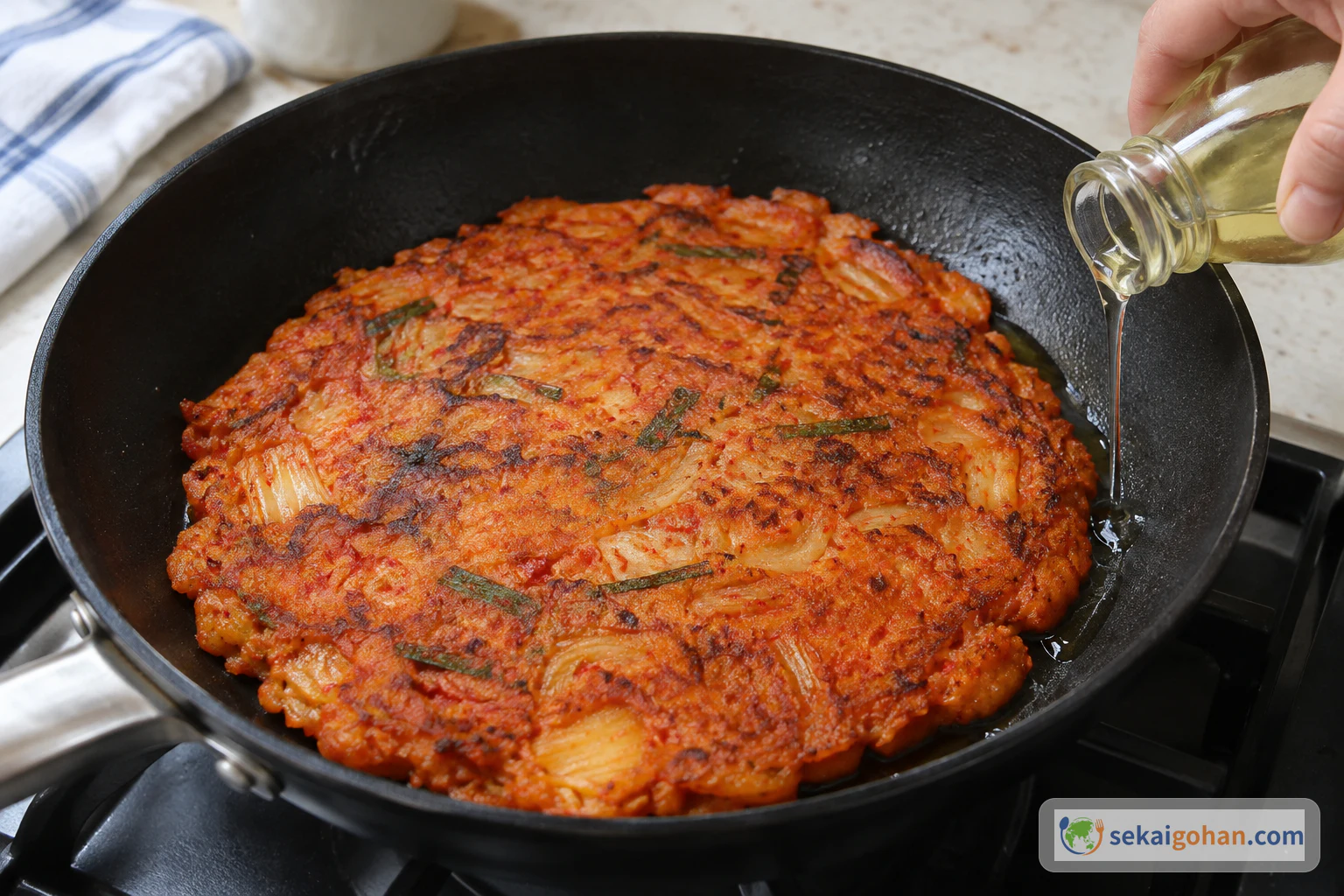
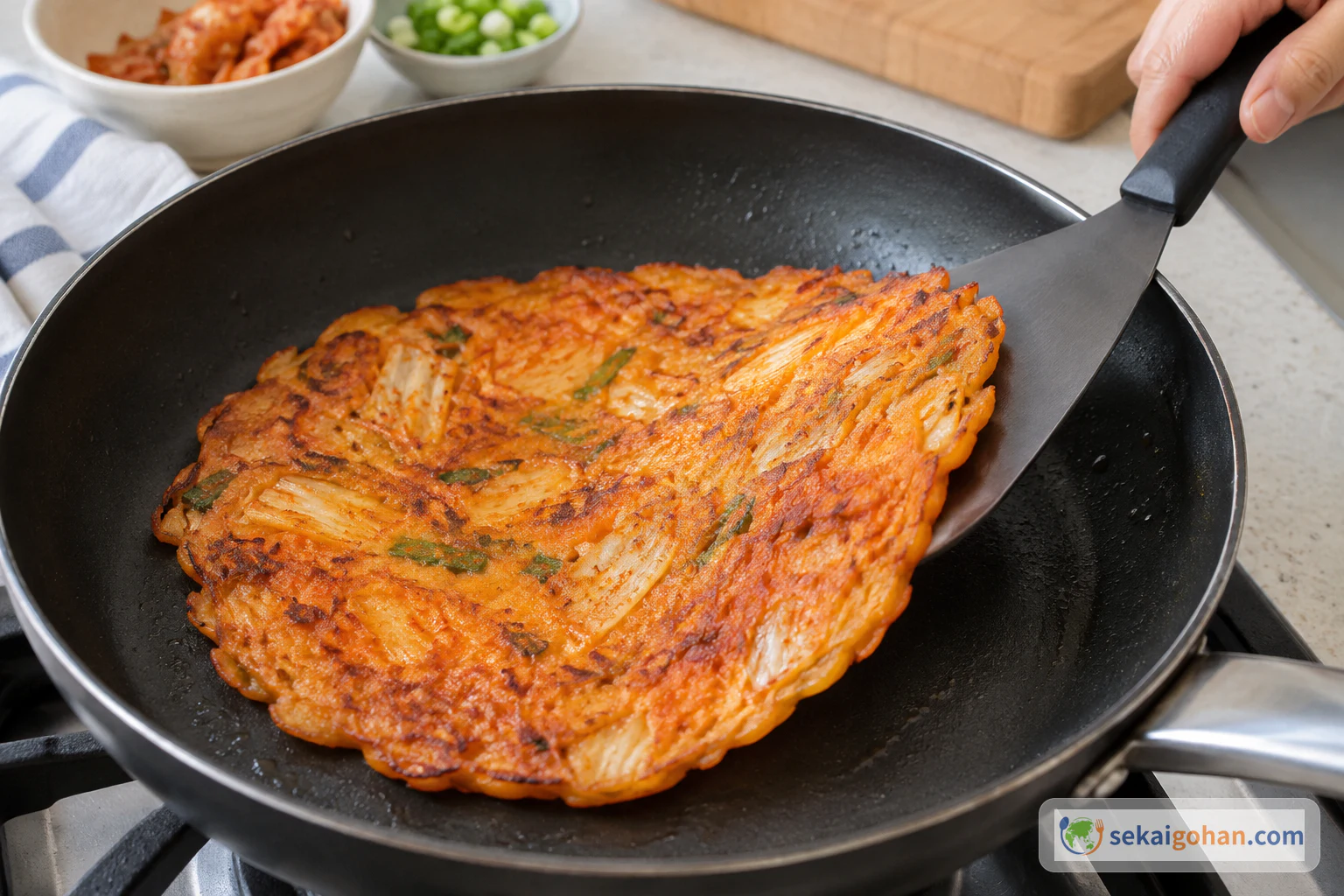
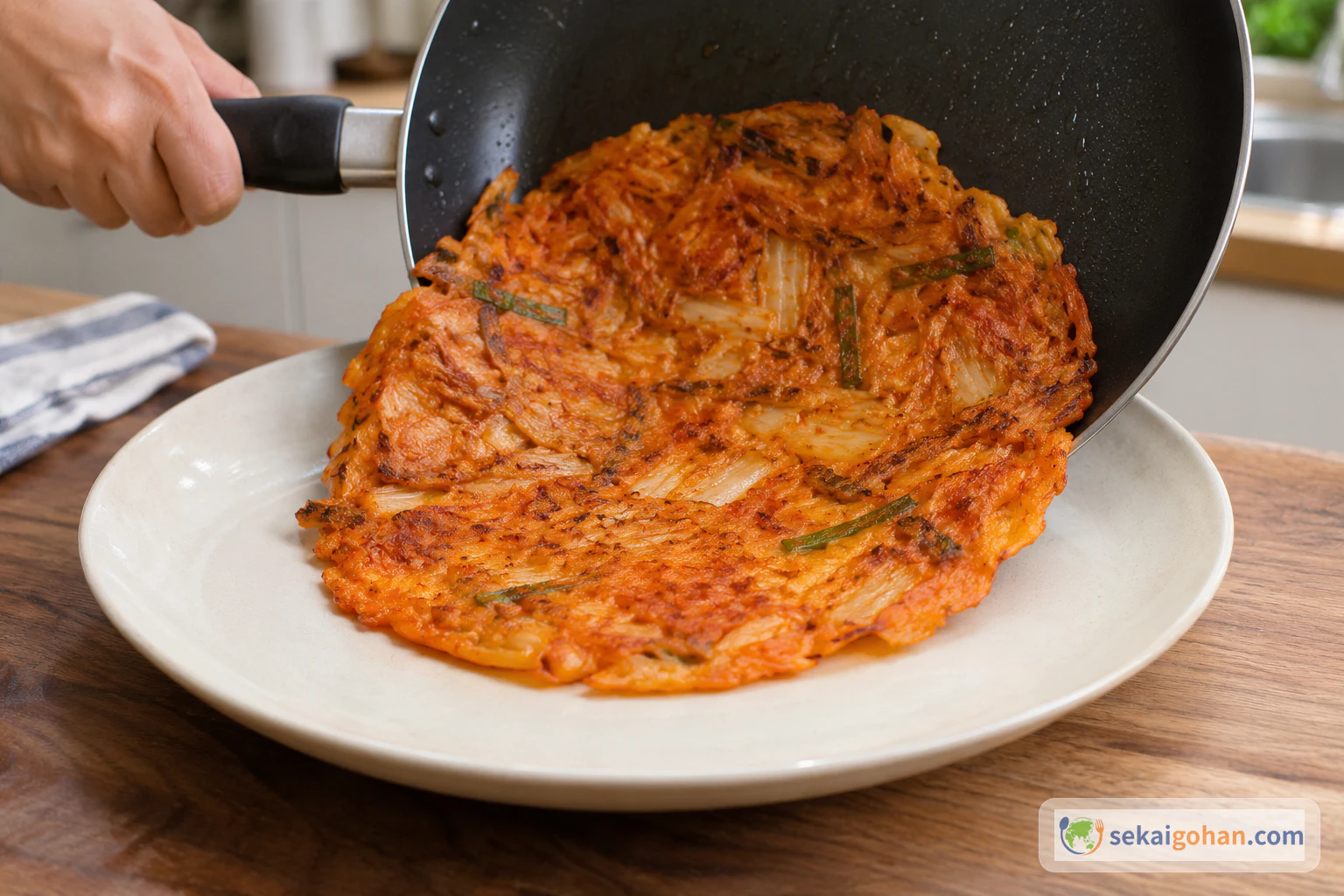
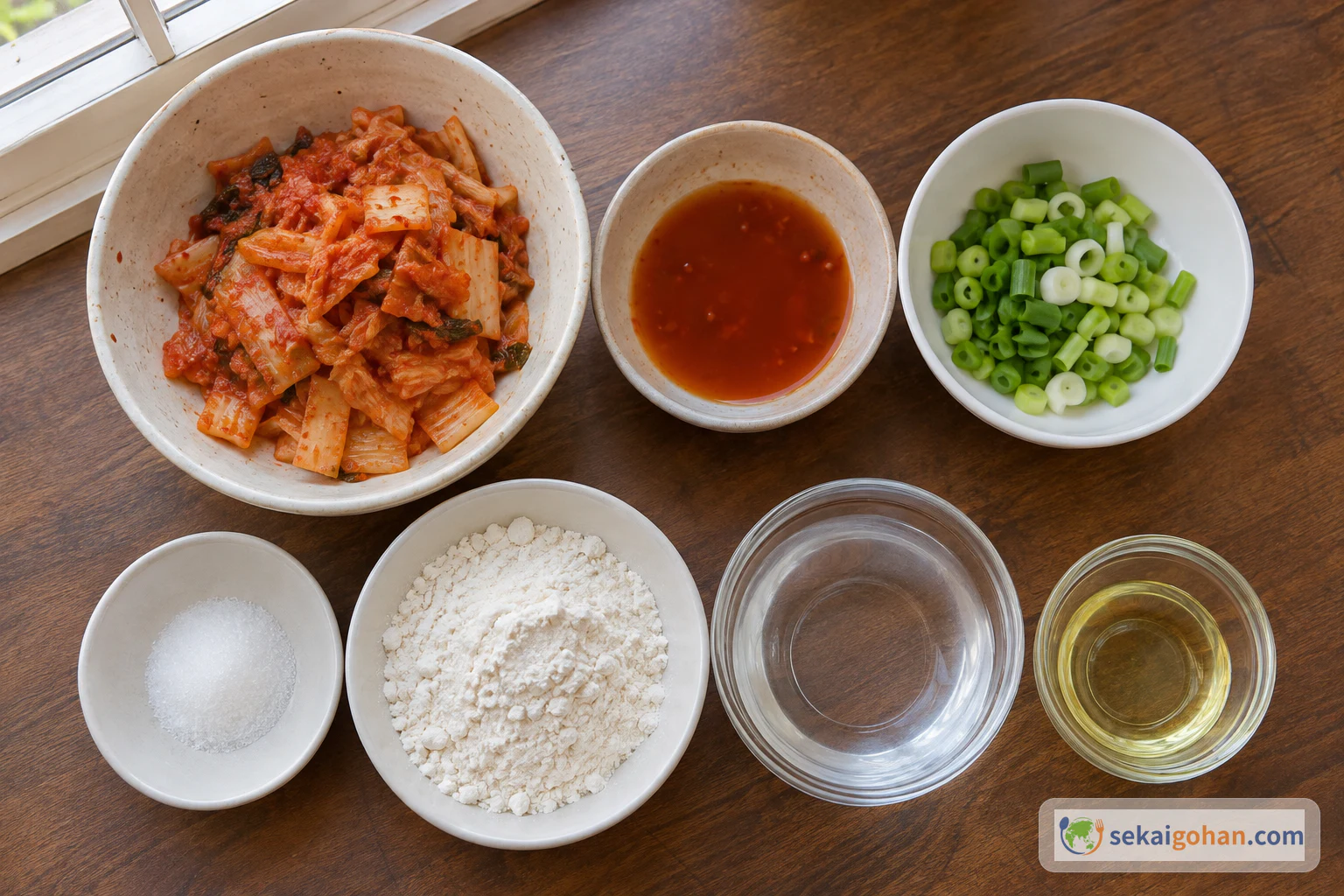
Chopped kimchi, a spoonful of its red brine, scallions, a little sugar, flour and water make the whole batter. Pour it into a hot, oiled skillet and push it out into a wide, thin circle, and it cooks into a pancake with crackling edges and a middle that carries the deep sourness of mature kimchi. Kimchibuchimgae (김치부침개), also called kimchijeon (김치전), is one of the simplest ways Korean home cooks turn a jar of well-fermented kimchi into something to eat straight from the pan. Keep the batter thin, let enough oil reach the underside so both faces turn golden and crisp, then slide it onto a plate and eat it hot.
Kimchibuchimgae and the Jeon Family
Buchimgae and jeon are broad names, not single recipes. They cover a family of pancake-like dishes cooked in oil and named after what goes into them. Scallions make pajeon, kimchi makes kimchi jeon, and ground beans make bindaetteok. Kimchi pancakes also come in pork, seafood, egg, rice cake and cheese versions. This is the plainest one, with the kimchi at the center.
At home, kimchijeon is a snack for a rainy day, a side dish to eat with rice, and something to tuck into a lunchbox. It is built around kimchi that has fermented long enough to taste deep and sour.
That kimchi decides the character of the pancake. Kimchi is vegetables fermented with seasonings, and it varies by region, climate, geography, ingredients and method. So which jar you reach for matters more than any other choice you make here.
Ingredients for One Large 12-inch Pancake
Equipment
- 12-inch (about 30 cm) nonstick skillet
- Knife and cutting board
- Medium mixing bowl
- Spoon
- Broad, thin spatula
- Large serving plate
Choosing Kimchi and Flour for Kimchibuchimgae
Kimchi: Choose napa cabbage kimchi that tastes clearly sour and fermented. Fresher, lightly fermented kimchi still cooks into a pancake, but the flavor is milder, less sour and less deep, so think of it as a different result rather than an equal swap. Kimchi products differ in saltiness and in whether they contain fish sauce, salted shrimp or other seafood-based seasonings, so read the label before you buy. Store the kimchi as its label directs.
Brine: The brine from the kimchi jar carries more of the kimchi's flavor and color into the flour and water. Without it, the pancake is less salty, less sour and paler. Don't swap in another liquid.
Flour: Use all-purpose flour. Cake flour and other softer flours change the texture. Korean pancake mix (buchimgaru) is a separate product with its own formula, and its instructions vary by brand. If you use it, follow the package on its own rather than mixing it with the flour here.
Method: Two Oilings, Two Flips
Pan, heat and thickness change the timings, so judge each side by its color and crispness.
Common Kimchibuchimgae Problems
| Problem | Likely cause | What to do |
|---|---|---|
| The middle stays soft | Not enough oil reaching the underside | Use the full amount of oil, and after the first flip lift the pancake and tilt the pan so the second 2 tablespoons run underneath |
| The pancake is thick and pale in a small pan | Too much batter for the pan's size | Divide the batter and make two thinner pancakes, adjusting the cooking by color rather than the clock |
| It tears when you turn it | The first side was not set, or the spatula is too small | Wait until the underside is golden and crisp; support as much of the pancake as you can with a broad, thin spatula |
| The oil smokes | The heat is too high | Lower the heat; the pancake cooks over medium heat |
| The flavor is flat and not sour | The kimchi is not fermented enough | Next time choose well-fermented, clearly sour kimchi, and keep the 2 tablespoons of brine in the batter |
Serving Kimchibuchimgae
Buchimgae and jeon go well with makgeolli, the Korean rice drink. If you don't drink alcohol, the pancake is just as good with a bowl of rice, or simply eaten hot from the pan.
This pancake contains wheat. Many kimchi products contain fish sauce, salted shrimp or other seafood-based seasonings, so check the allergen and handling information on your kimchi and other products. Do not taste raw batter. Keep raw flour away from ready-to-eat foods, and wash hands and utensils after handling it. Cook the whole pancake through and serve it right away. Do not leave cooked pancake at room temperature for long; refrigerate leftovers without delay, using clean utensils.
If you have kimchi left over, kimchi jjigae is another good way to cook with it, and gimbap belongs to the same world of portable Korean home food. For more, see the Korea country page.
Frequently Asked Questions
What if my pan is smaller than 12 inches?
This recipe makes one large pancake in a 12-inch (about 30 cm) pan. In a smaller pan, make two pancakes instead. Keep each one thin and cook each side until golden and crisp, going by color rather than the clock.
Can I pack it in a lunchbox or keep leftovers?
Kimchijeon can go into a lunchbox as a side, but it is at its best right after cooking. Don't leave leftovers out for long; refrigerate them without delay.
Why should I not taste the batter?
Raw flour and raw batter aren't safe to taste, and this batter is meant to be fully cooked. Keep raw flour away from ready-to-eat foods, and wash your hands and utensils after handling it.