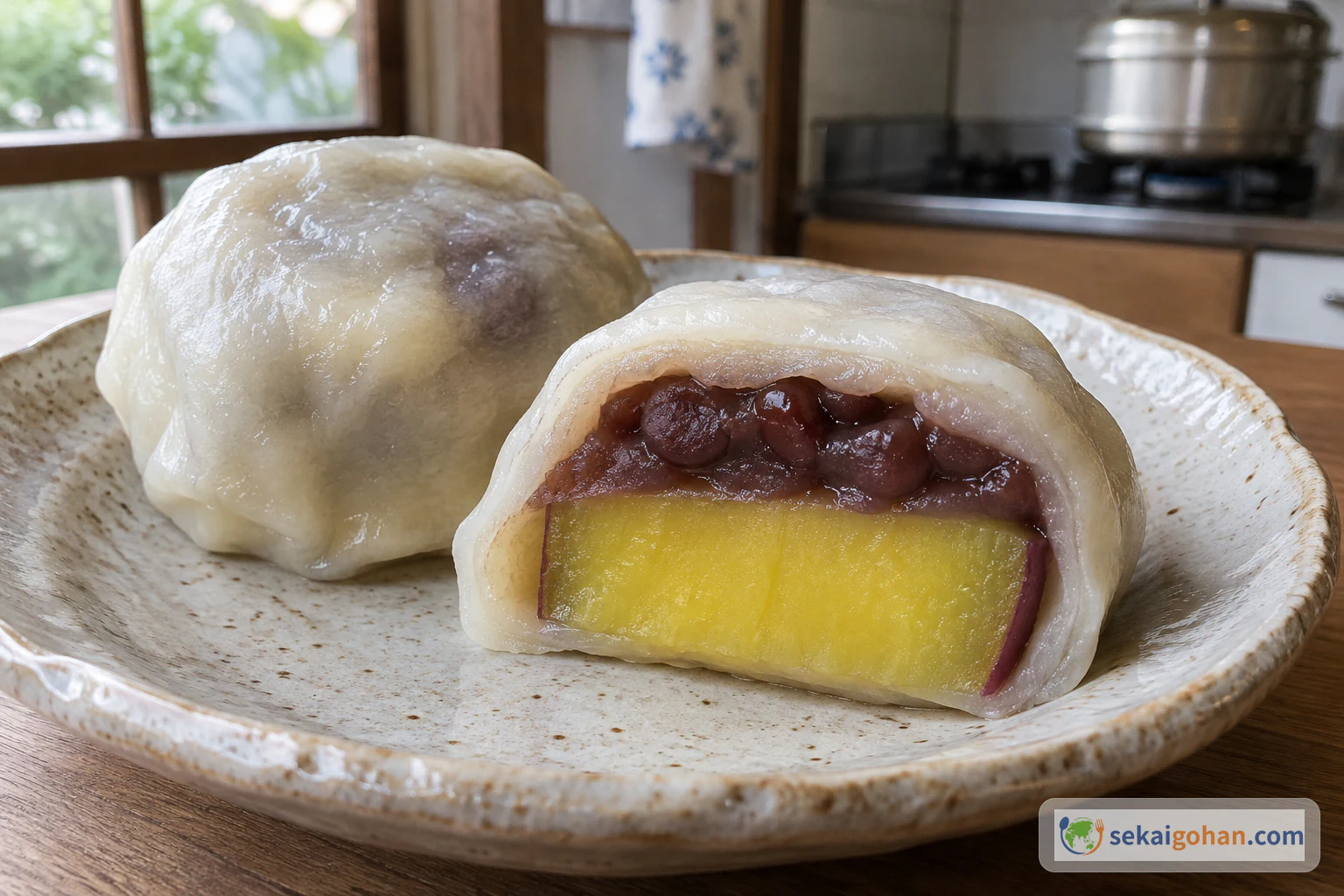
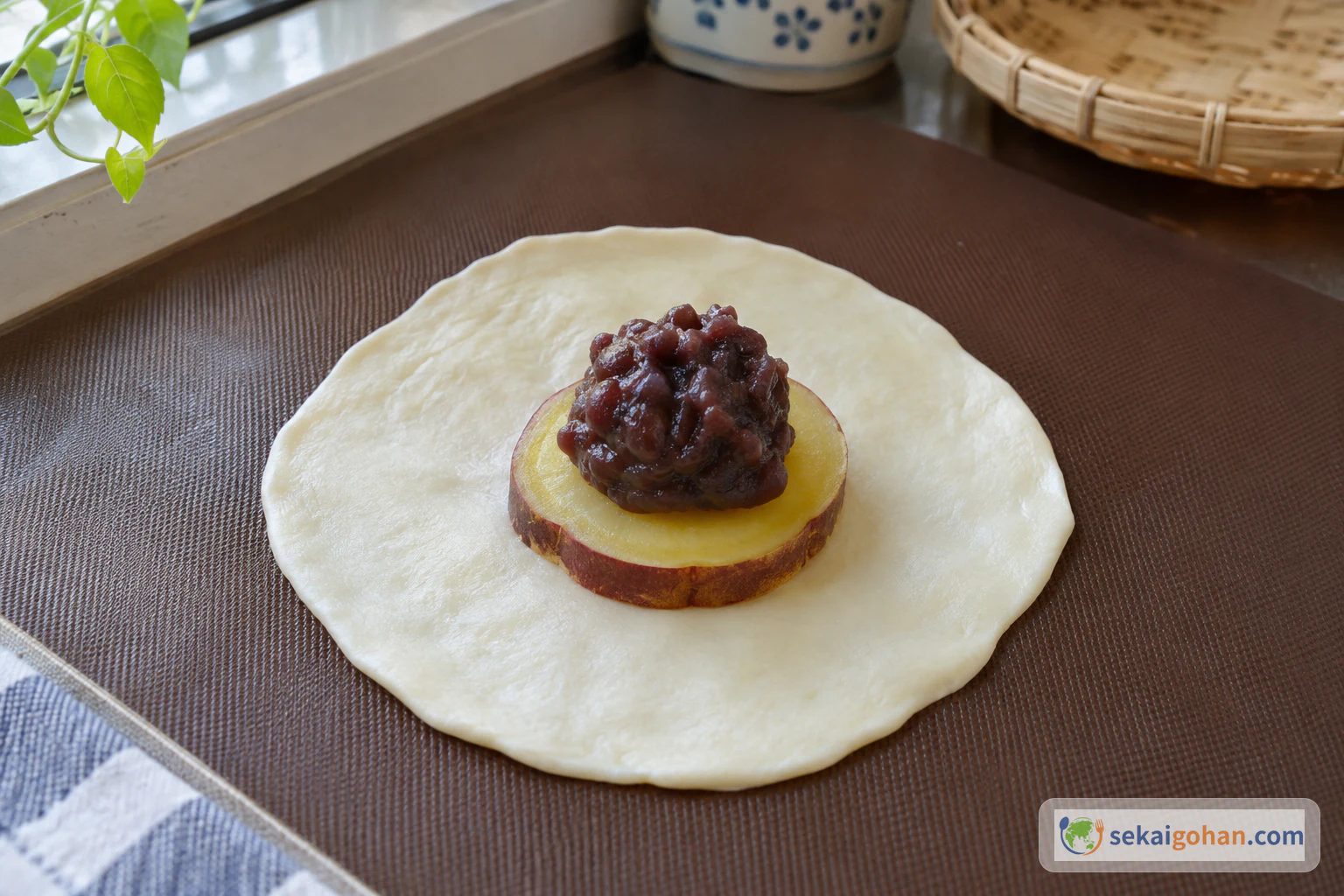
Cut an ikinari dango in half and you see the whole thing at once: a round of sweet potato with the skin still on, a layer of sweet red bean paste (anko), and a thin, pale wrapper of dough around both. This traditional sweet comes from Kumamoto Prefecture, where it is made all over from sweet potato, wheat flour, glutinous rice flour and red bean paste, wrapped up and steamed. It is plain and filling, with the potato and bean paste doing all the work.
Ikinari Dango in Kumamoto
In Kumamoto, sweet potatoes are also called karaimo or kansho, and ikinari dango (also ikinari dago) has been handed down across the whole prefecture. Families made it at home as a snack, and people ate it between farm tasks during the autumn sweet potato harvest. For more from the same country, see our Japan page.
The dumpling has changed over time. The simpler, older form wrapped sweet potato on its own, before bean paste became the usual filling. Today the most common version uses a dough made with rice flour and has red bean paste inside, and that is the one made here.
Ikinari means roughly "suddenly" or "all at once." There are a few explanations for the name. Some point to how quick and easy the dumplings are to make; others say they could be served right away when guests arrived without warning.
Ingredients: 12 Pieces of Potato, Bean Paste and Dough
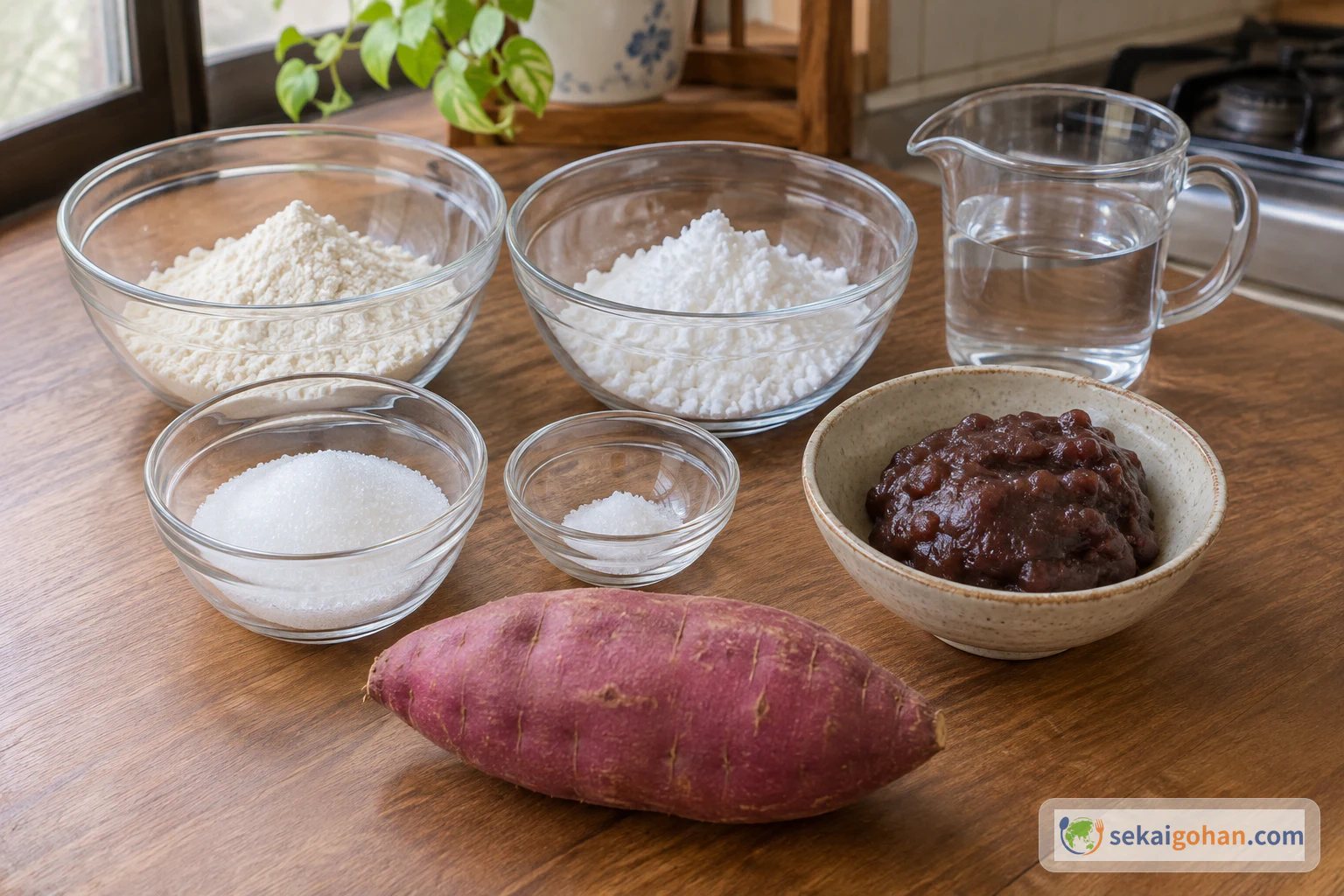
The dough uses the flours, sugar, salt and water. The sweet potato and bean paste are the filling, and every ingredient goes into the dumplings.
Choosing the Flour, Potato and Bean Paste for Ikinari Dango
Dango flour (団子粉) is a commercial flour sold in Japan specifically for making dango, a product of its own rather than a single type of rice flour like mochiko, shiratamako or joshinko. Check the package and use dango flour, since swapping in shiratamako or joshinko would change the texture of the wrapper.
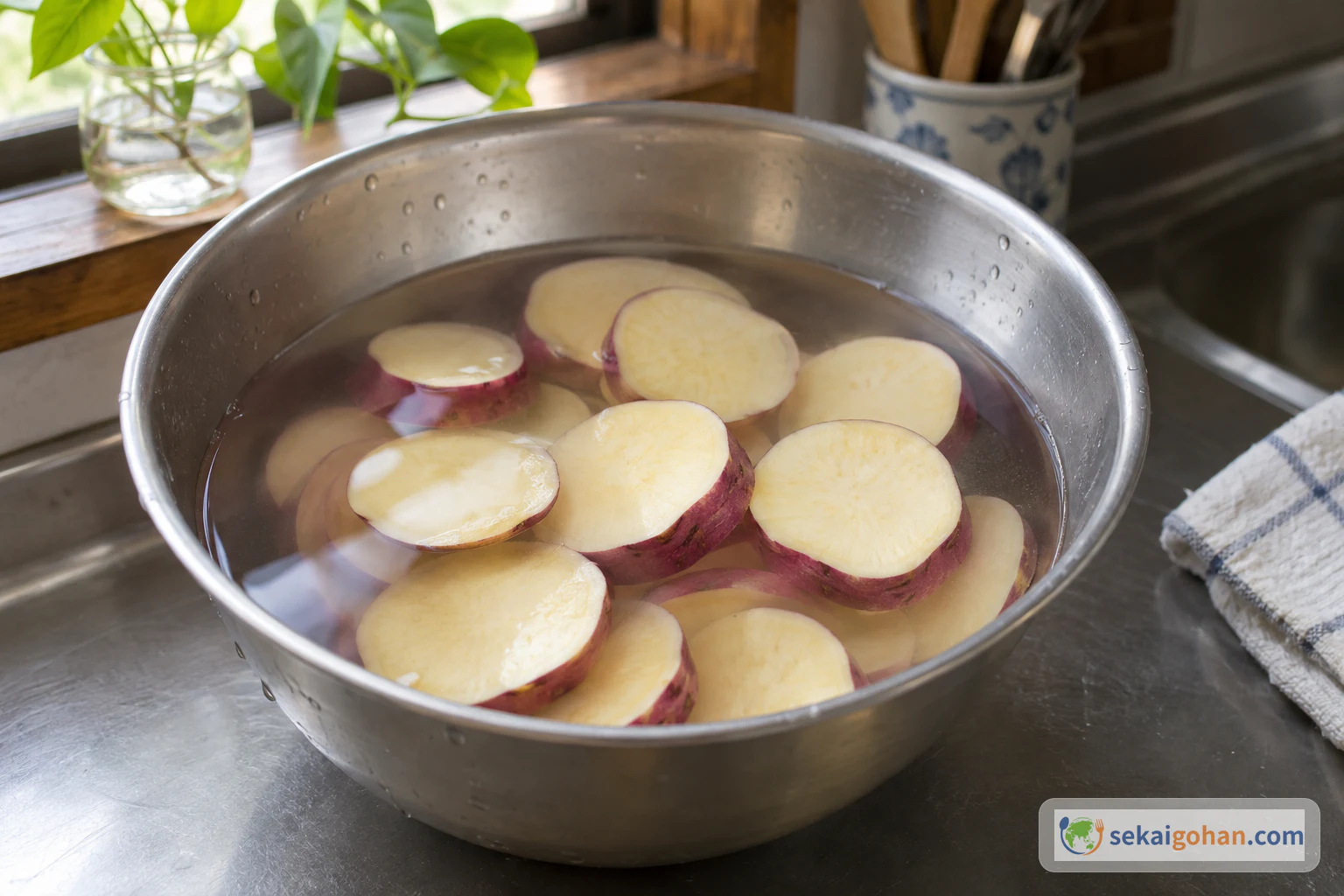
You want one medium sweet potato that can be cut into 12 rounds about 0.375 inch (8mm) thick. A Japanese sweet potato with purple-red skin and yellow flesh matches the dumplings shown here. In Japan, cake flour, dango flour, red bean paste and sweet potato are all easy to find.
Equipment
- Mixing bowl
- Knife and cutting board
- Bowl of water for the potato rounds
- Clean kitchen cloth
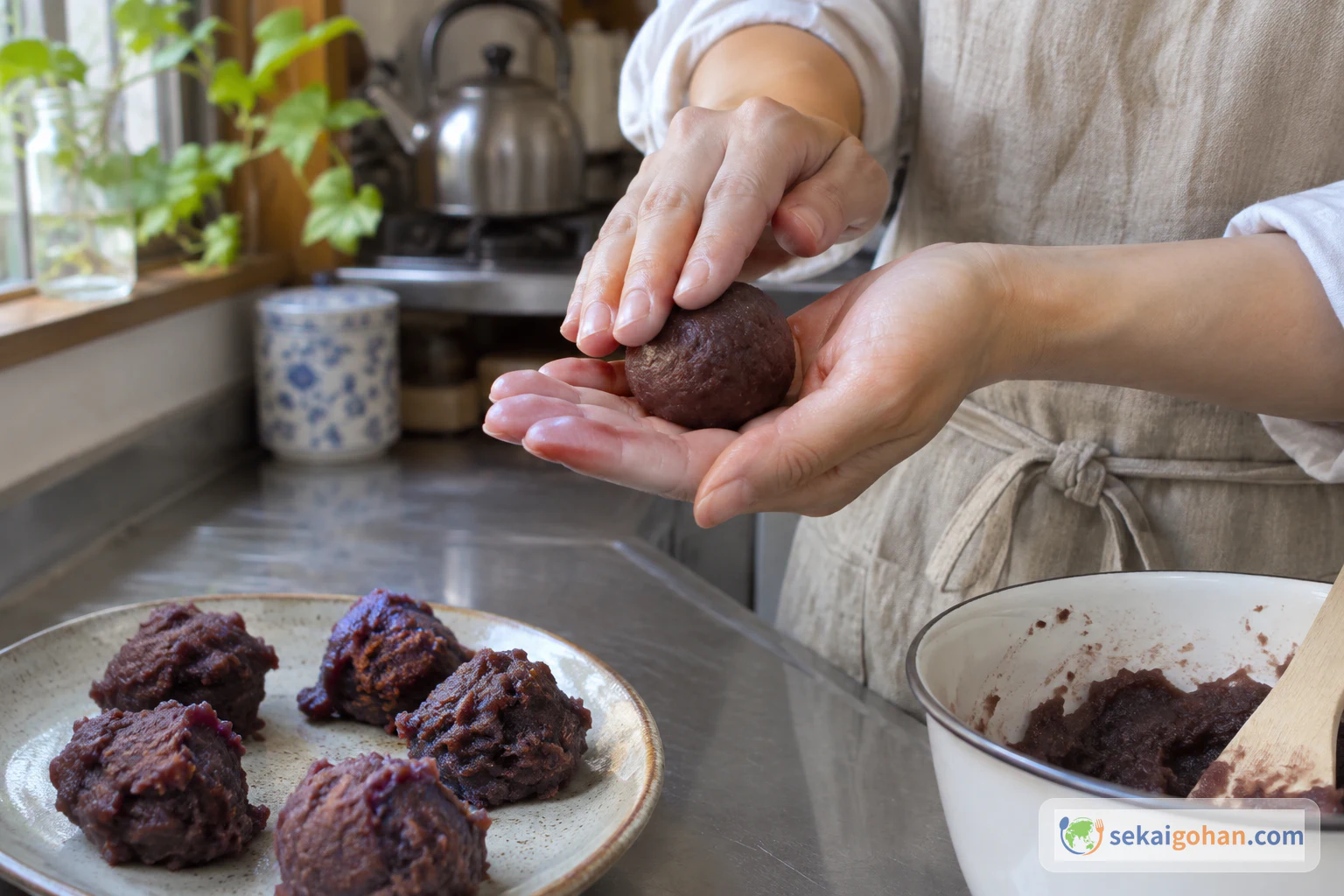
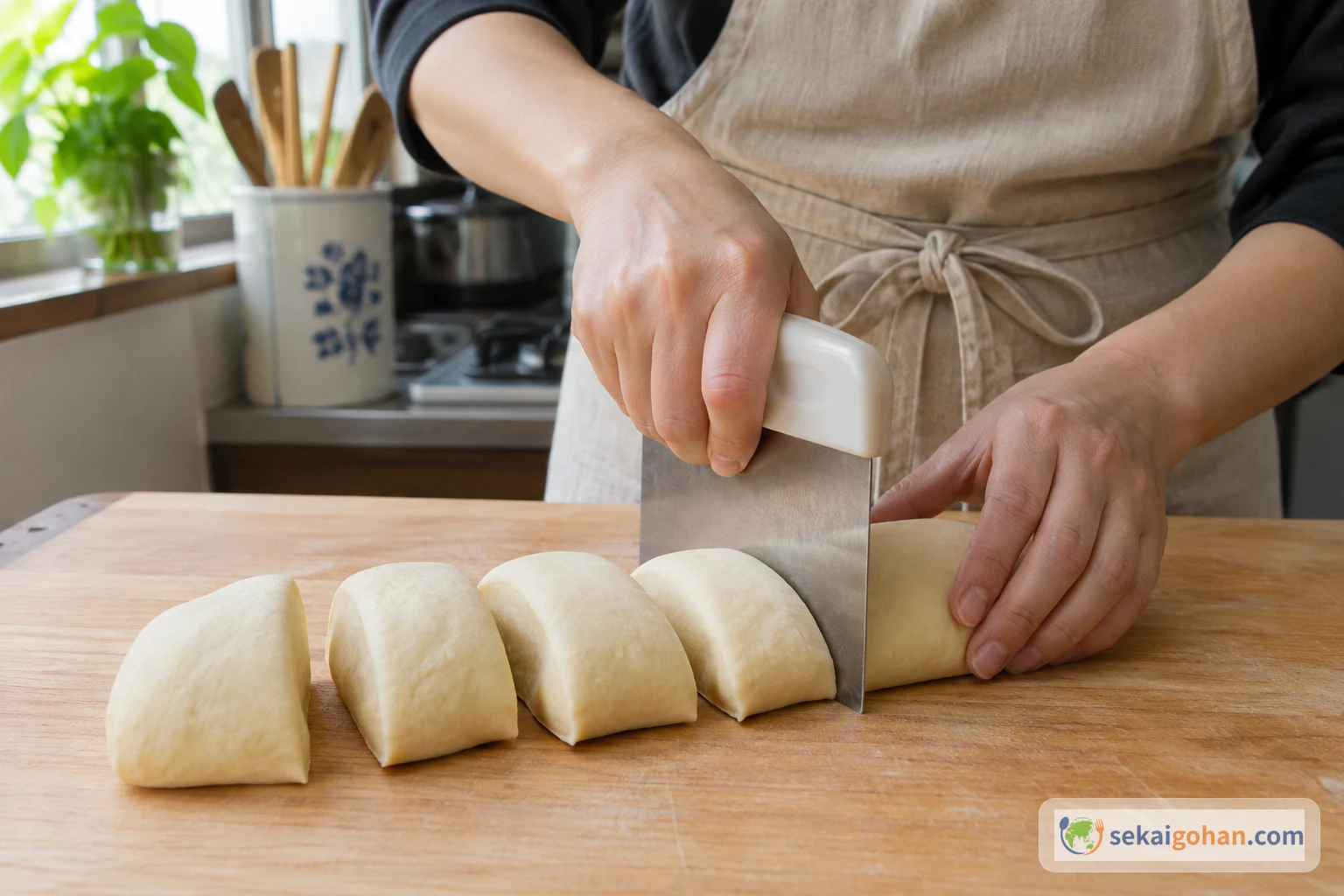
- Bench scraper or knife for dividing the dough and bean paste
- Clean work surface
- Steamer with a lid
- Toothpicks
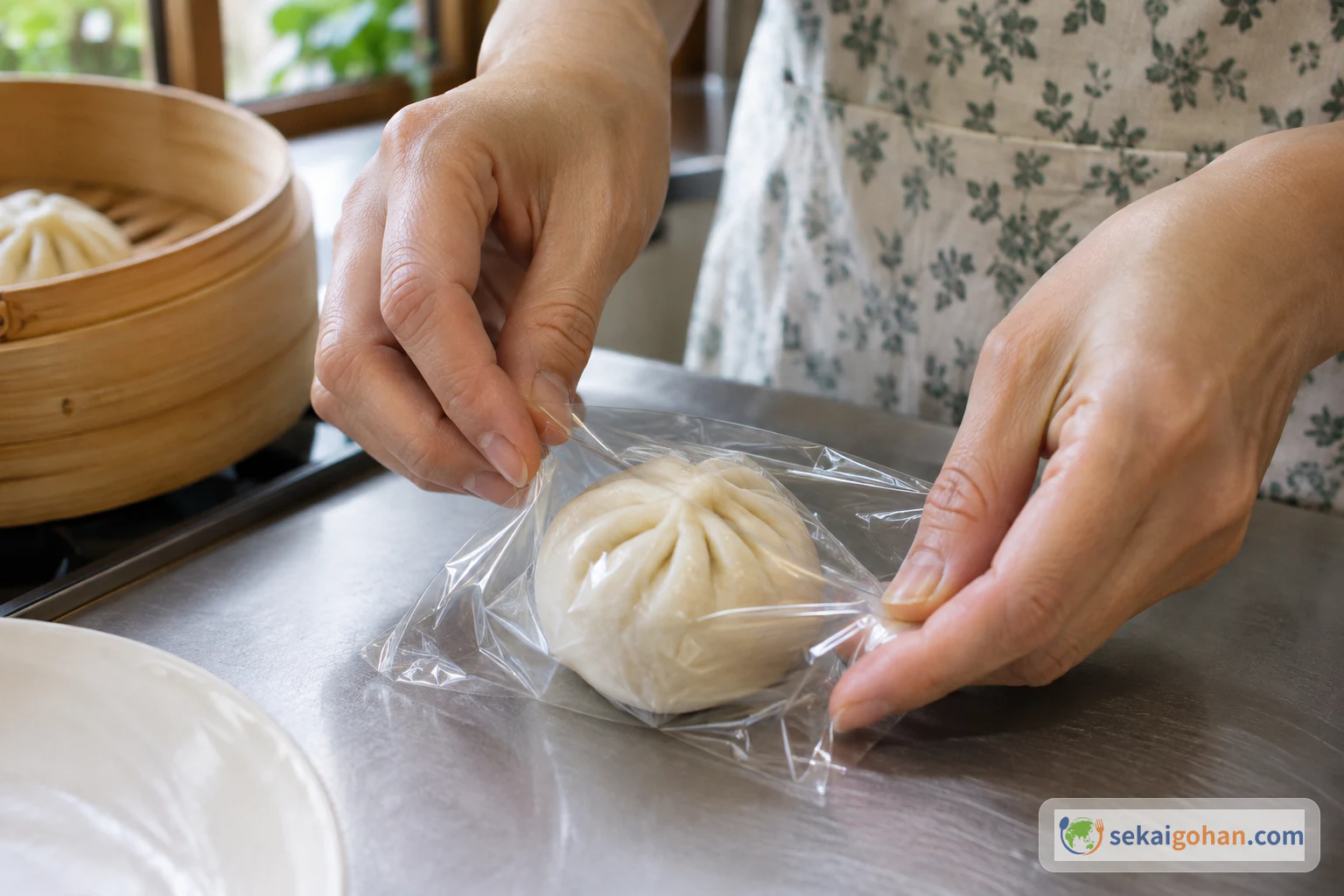
- Heat-compatible food film for wrapping the cooked dumplings
Method: Dough, Filling, Wrapping and Steaming
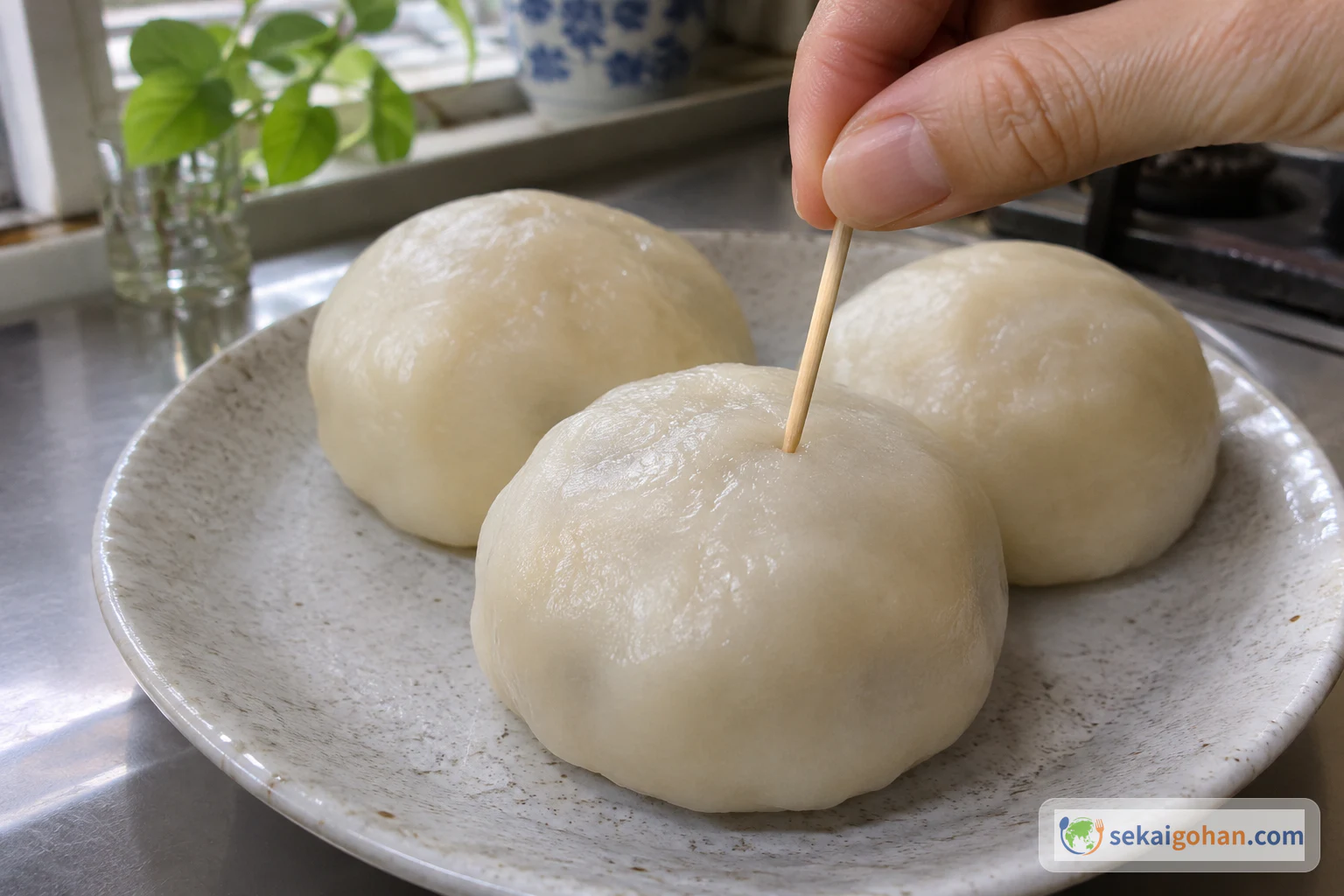
Steam until a toothpick passes through the centre of the sweet potato.
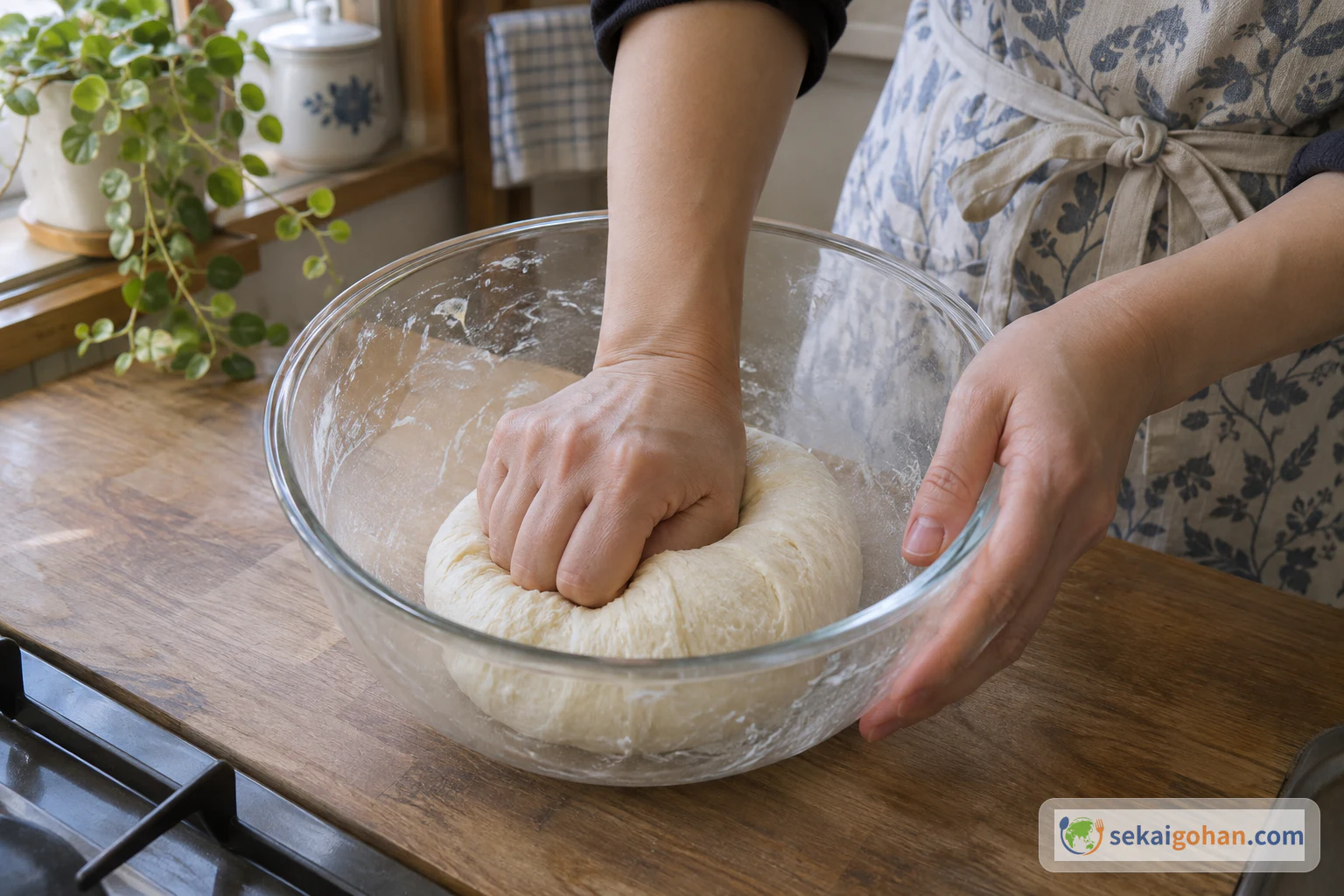
The work falls into four parts: make the dough, prepare the potato and bean paste, wrap, then steam and wrap each dumpling in film. Do not add dusting flour, oil or a water wash to the dough. Work on a clean, dry surface with clean hands.
Ikinari Dango Troubleshooting
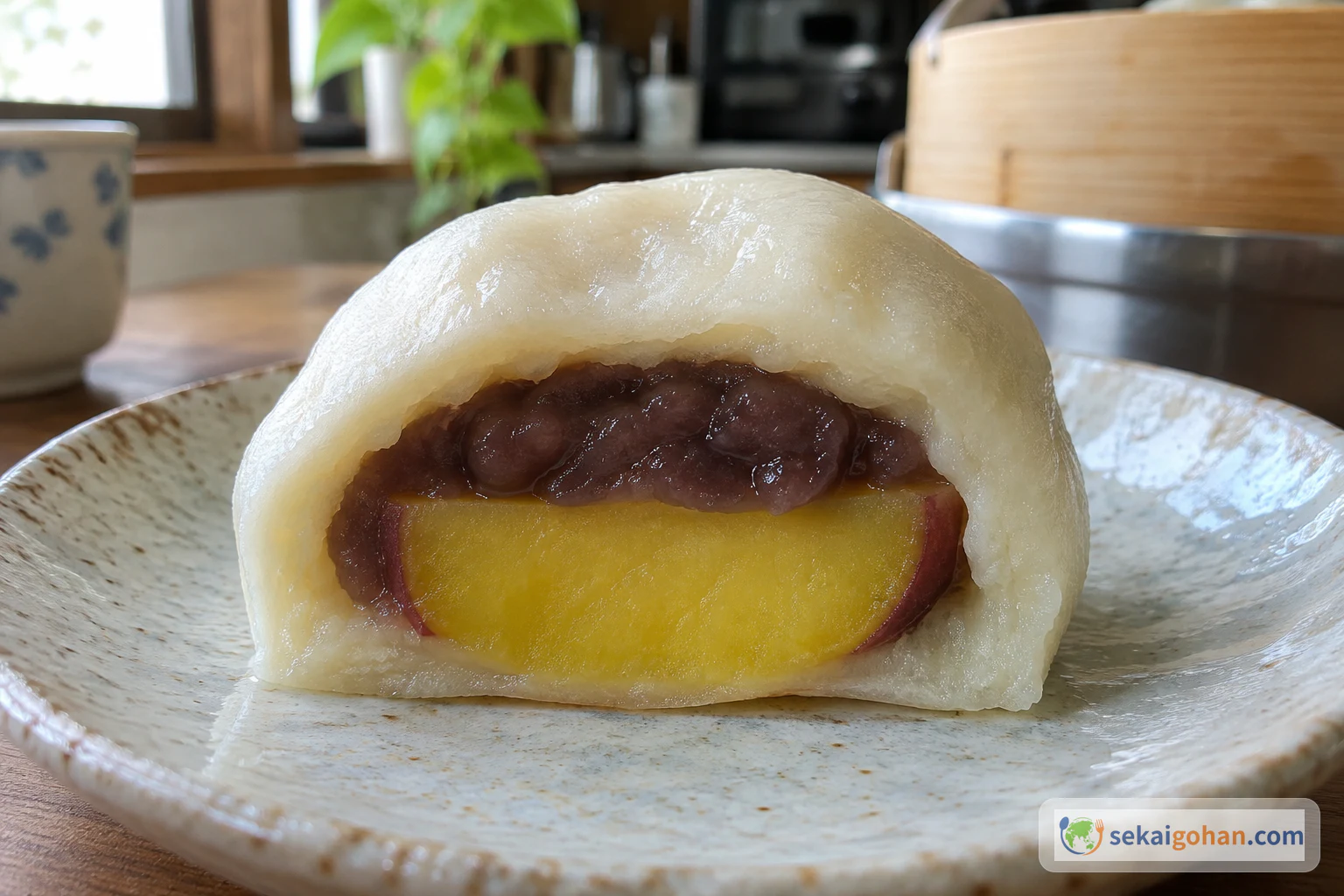
A good dumpling, cut open, shows one whole potato round, a separate layer of bean paste, and a thin, pale wrapper around both. Setting the bean paste on top of the potato round works well, though the filling has no fixed orientation. To judge doneness, test the potato itself with a toothpick.
| Condition | Likely cause | What to do |
|---|---|---|
| The dough stays crumbly | Not enough water yet | Add more water a little at a time, staying within ¾ cup (140–200ml), and keep kneading until it holds together. Do not add dusting flour |
| Filling shows through before steaming | The wrapper was not drawn all the way up, or the seam opened | Stretch the dough over the gap and pinch it closed again. Only steam fully enclosed dumplings |
| The toothpick meets resistance in the potato | Not steamed long enough for your steamer | Cover and keep steaming, then check again. Steamers differ, so go by the toothpick, not the clock |
| The wrapper gets firm after cooling | Left uncovered | Wrap each one in food film once it comes out of the steamer |
Serving, Storing and Other Versions of Ikinari Dango
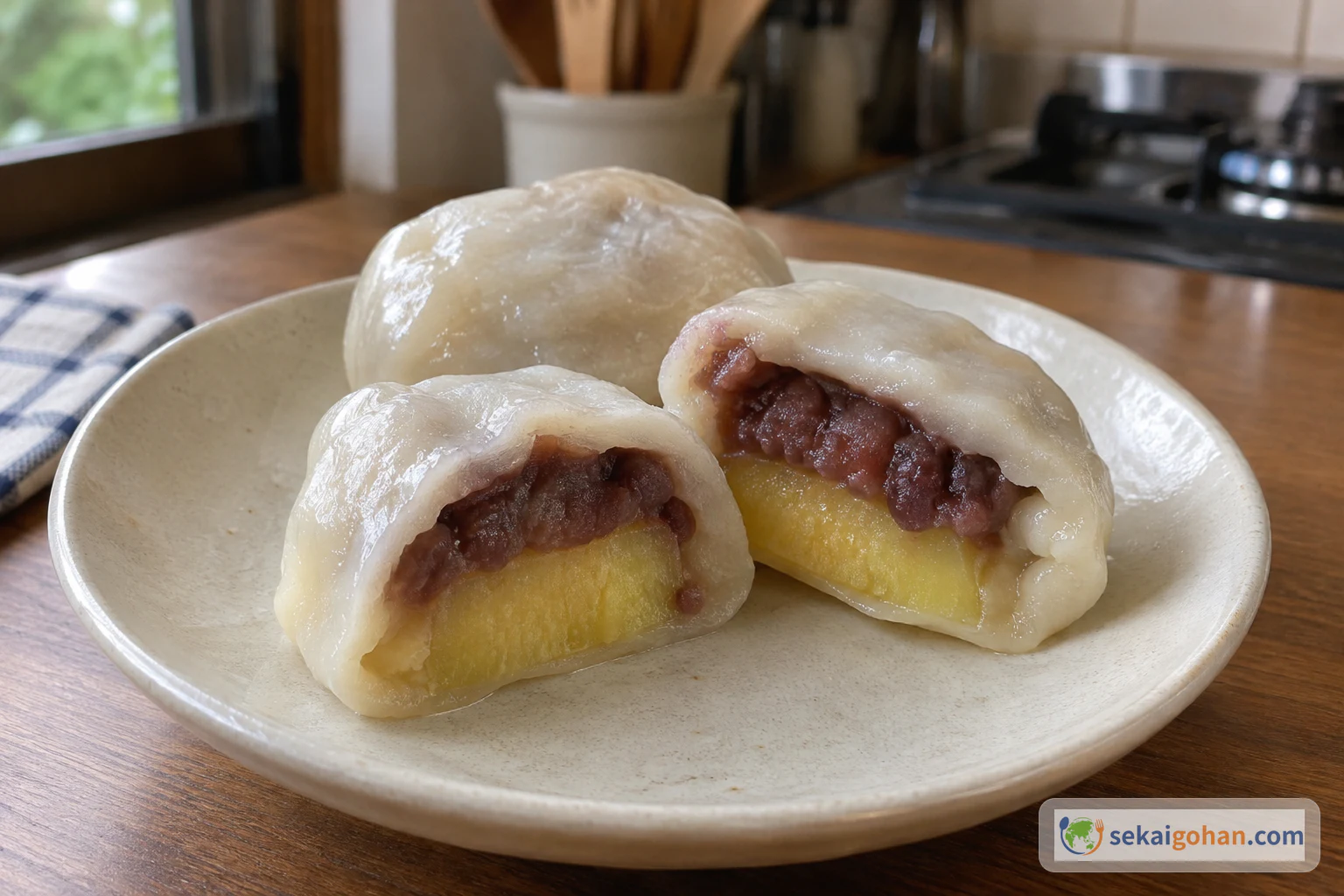
Ikinari dango is best eaten plain, straight from the steamer. It needs no sauce, dusting or garnish; the wrapper, potato and bean paste are the whole sweet, and in Kumamoto it is simply a home snack. Wrap each dumpling in food film to keep the dough from hardening, but keep in mind that film does not make them safe to leave out.
The dumplings vary around Kumamoto. Potato rounds and bean paste can be wrapped in either mochi-style or wheat dough. Some versions make a much larger batch, cut the potato thicker, mix the dough with boiling water and rest it, soak the potato for a set time and steam longer, so their proportions and steps differ from the ones here.
Frequently Asked Questions
Do I peel the sweet potato?
No, keep the skin on. Chamfering only means lightly trimming the sharp corners of each cut face.
How long should the potato soak, and how long should the dough rest?
Neither step has a set time. Soak the rounds in water, then pat them dry before wrapping. Divide the dough straight after kneading.
How heavy is a "medium" sweet potato?
What matters is having enough potato to cut 12 rounds about 0.375 inch (8mm) thick.
How long do they keep?
Wrapping each dumpling in food film keeps the dough from hardening. It does not extend how long they stay safe to eat.