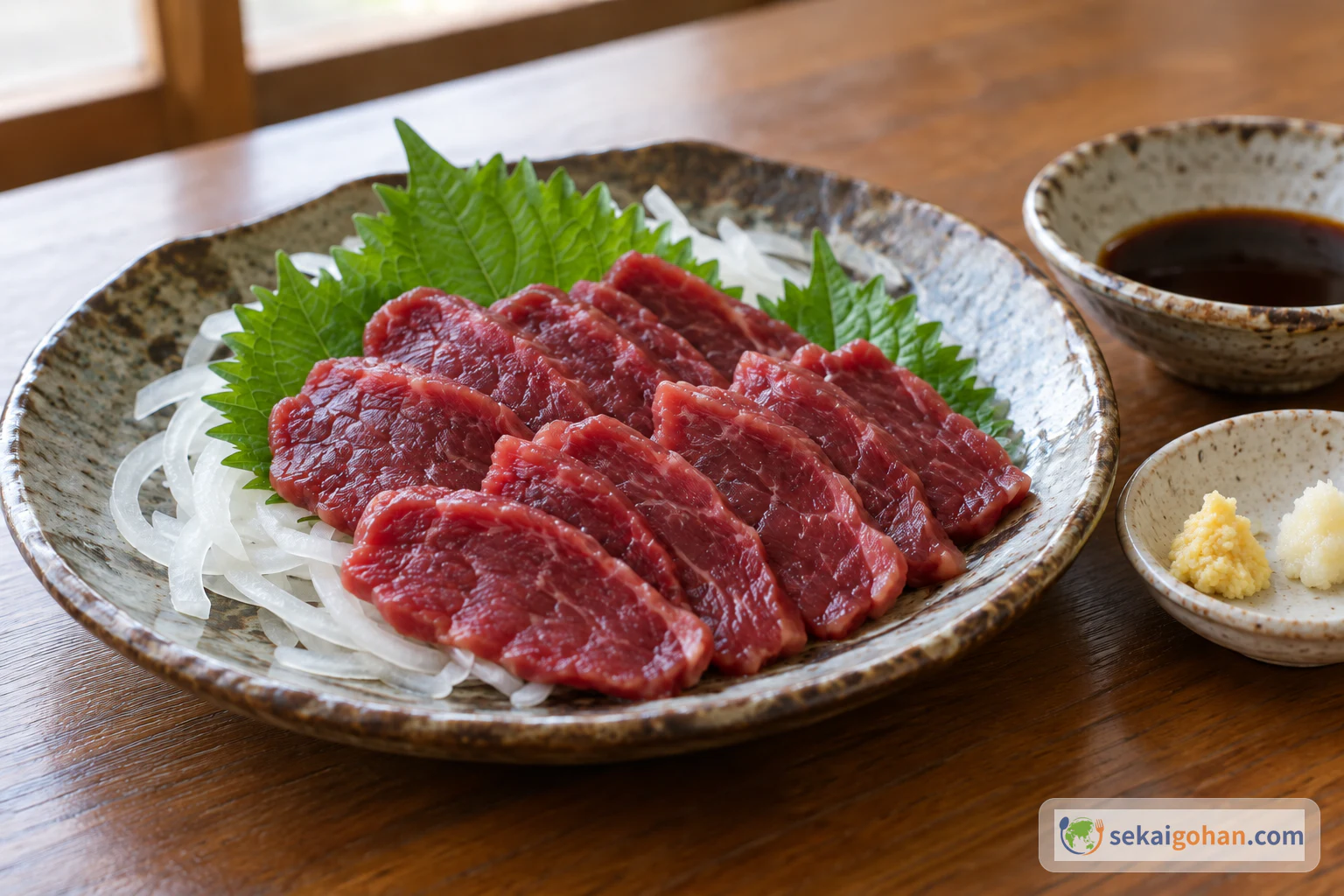
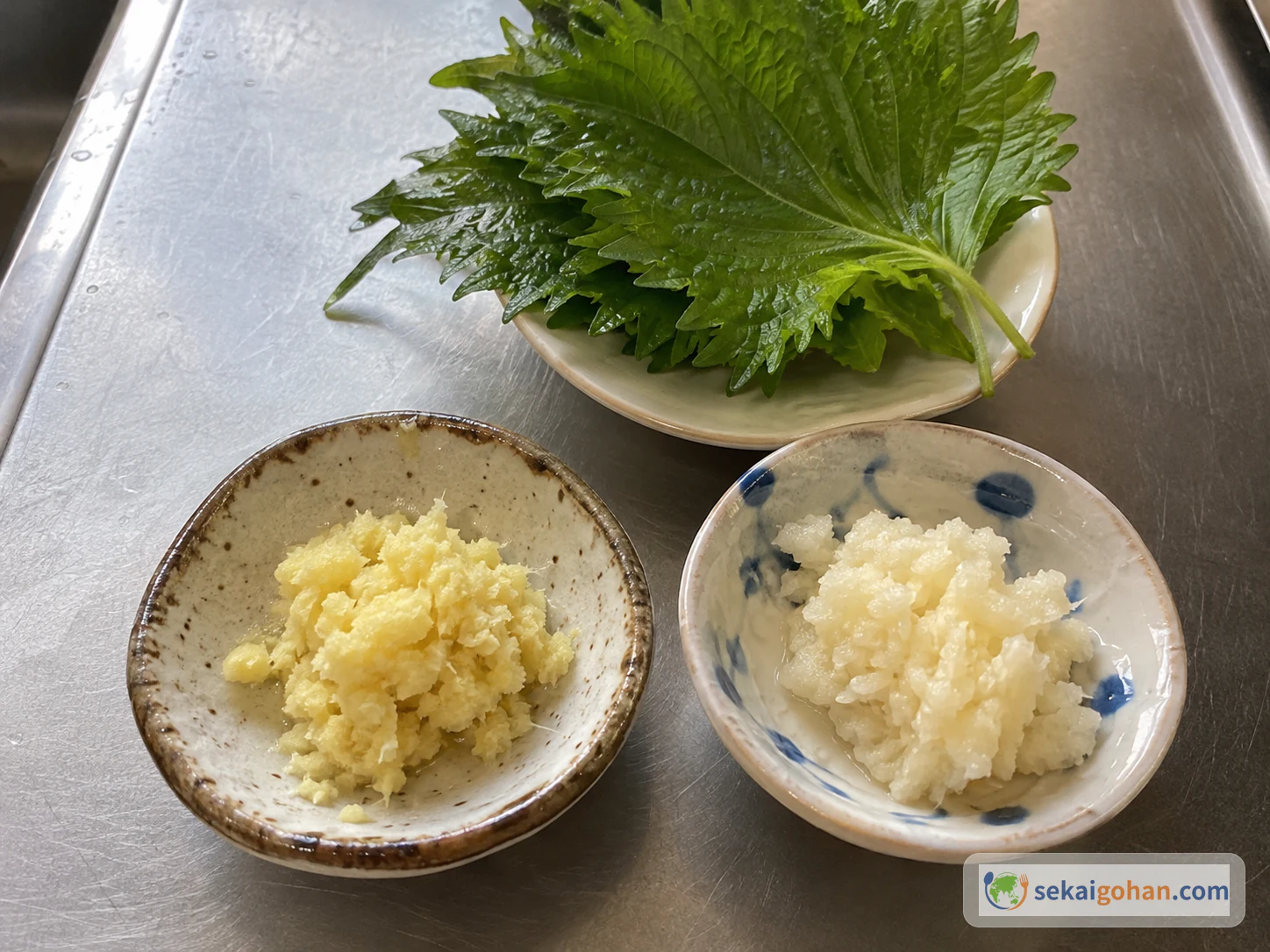
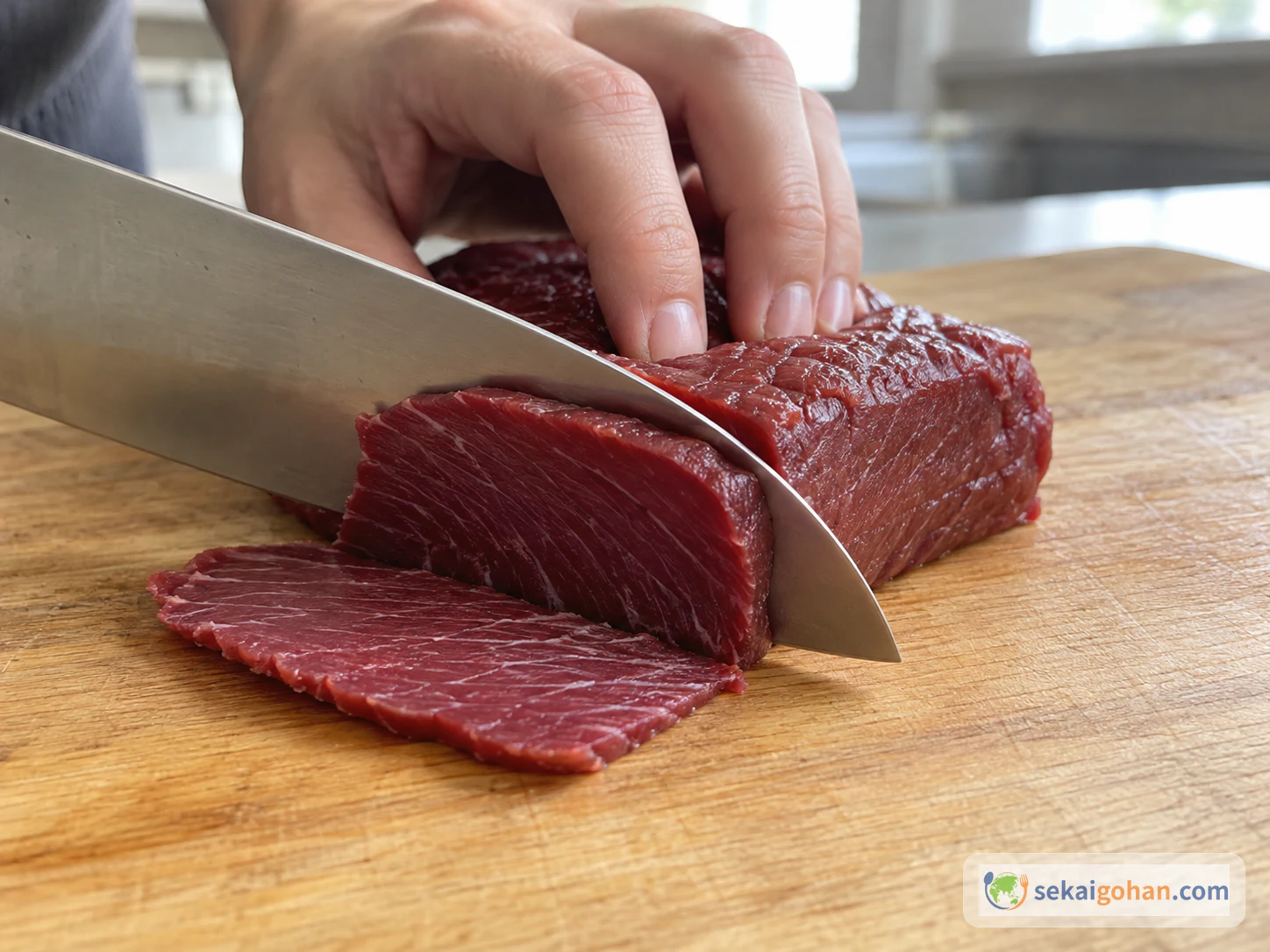
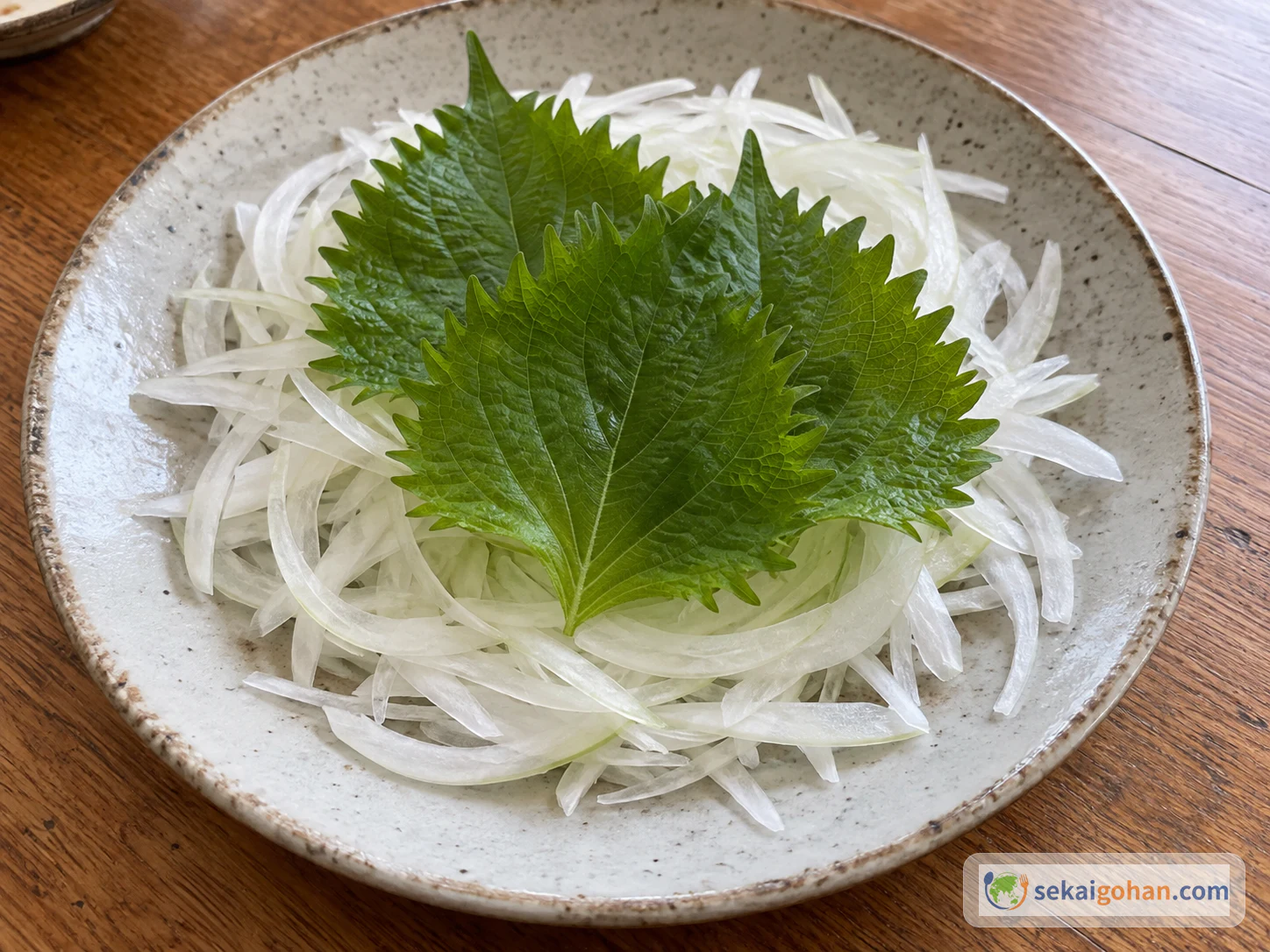
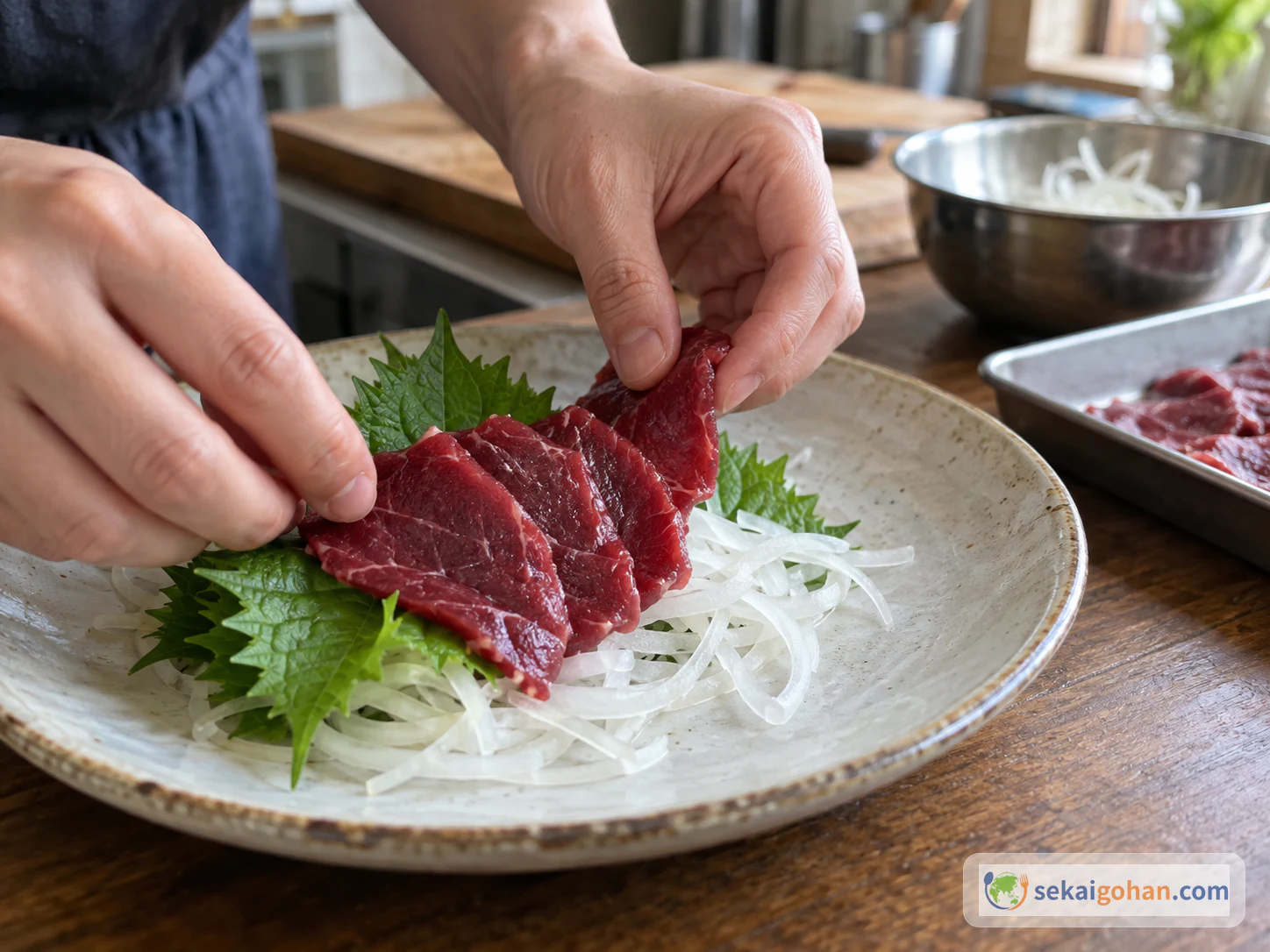
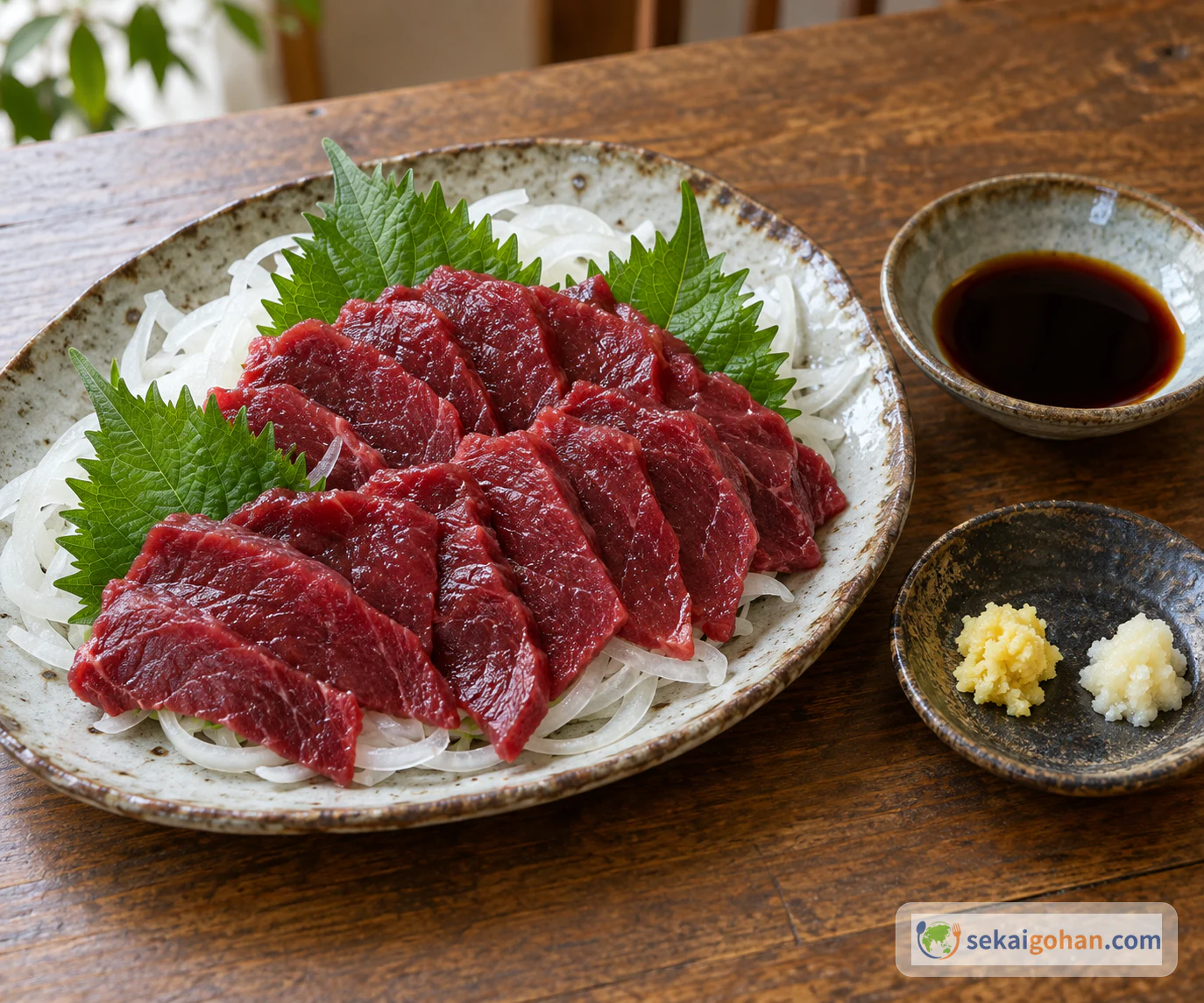
Thin slices of horse meat rest on sliced onion and shiso, with small mounds of grated ginger and garlic and a dish of sweet soy sauce on the side. This is basashi, the raw horse meat dish of Kumamoto City and the Aso region in Kumamoto Prefecture. There's very little cooking involved: the work is mostly knife work and arranging. Most of the care goes into the meat you buy and how you handle it. For more dishes from the same country, see our Japan page.
Use only horse meat sold for eating raw, and follow its label and the seller's instructions. Raw horse meat can cause food poisoning. Freshness and freezing do not make it completely safe. Children, older adults, people with weakened immunity and anyone who is pregnant should not eat it raw.
Basashi in Kumamoto
In Kumamoto, basashi is eaten with onion, ginger, garlic and sweet soy sauce, and some versions add small scallions to the condiments. It turns up at New Year and at celebrations, but it's an everyday dish too. Horse meat itself goes by sakura-niku ("cherry blossom meat"), a name that comes from the color of its cut surface.
How the dish began is less settled, and there are several theories. One links it to the feudal lord Kato Kiyomasa and his military campaign in Korea, but this is a story passed down rather than established history.
Ingredients (Serves 4)
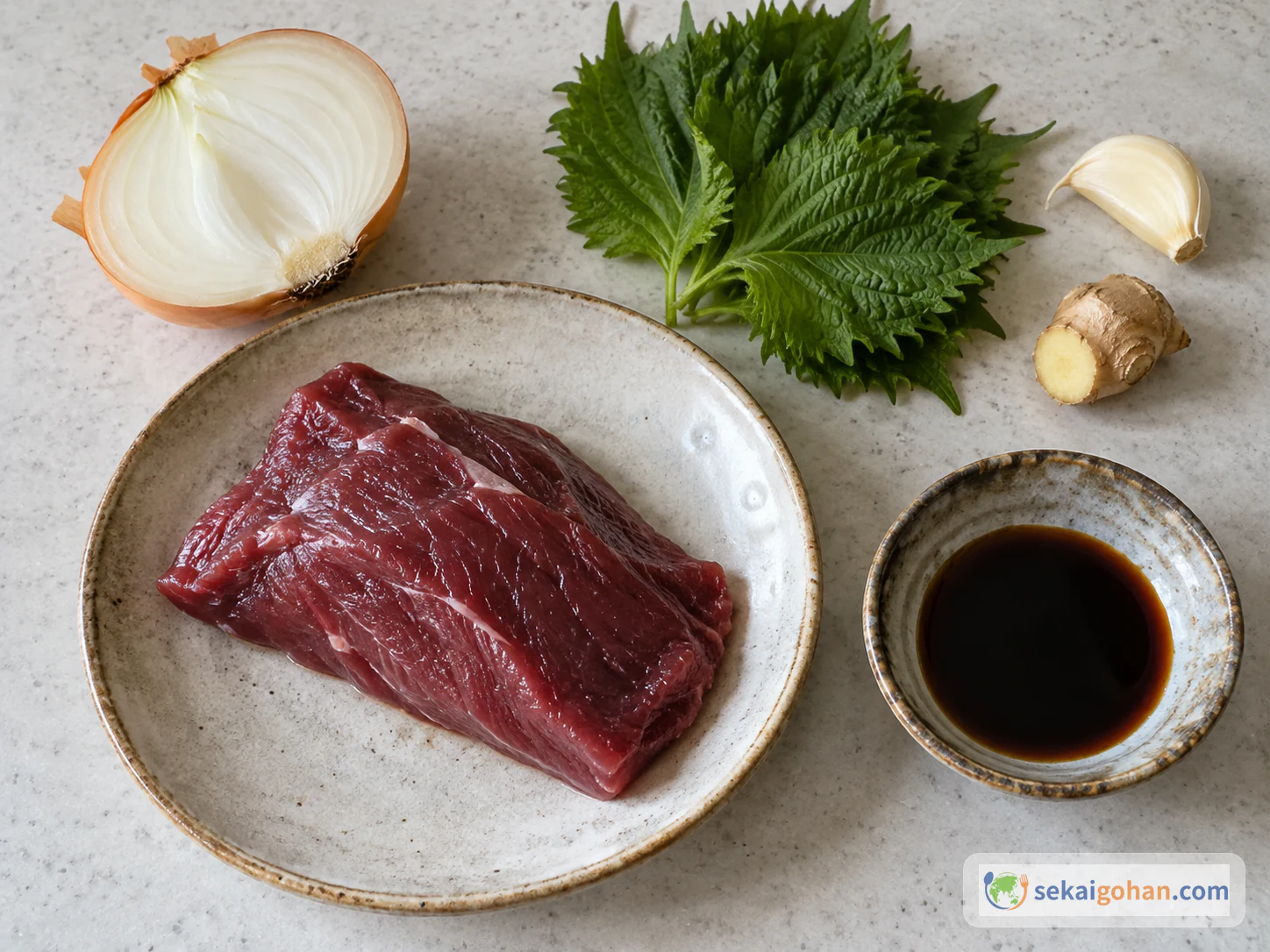
Keep the horse meat cold until you are ready to slice it, and keep it in a bag or container so its juices cannot reach other food.
Equipment
- Cutting board and knife used only for the horse meat
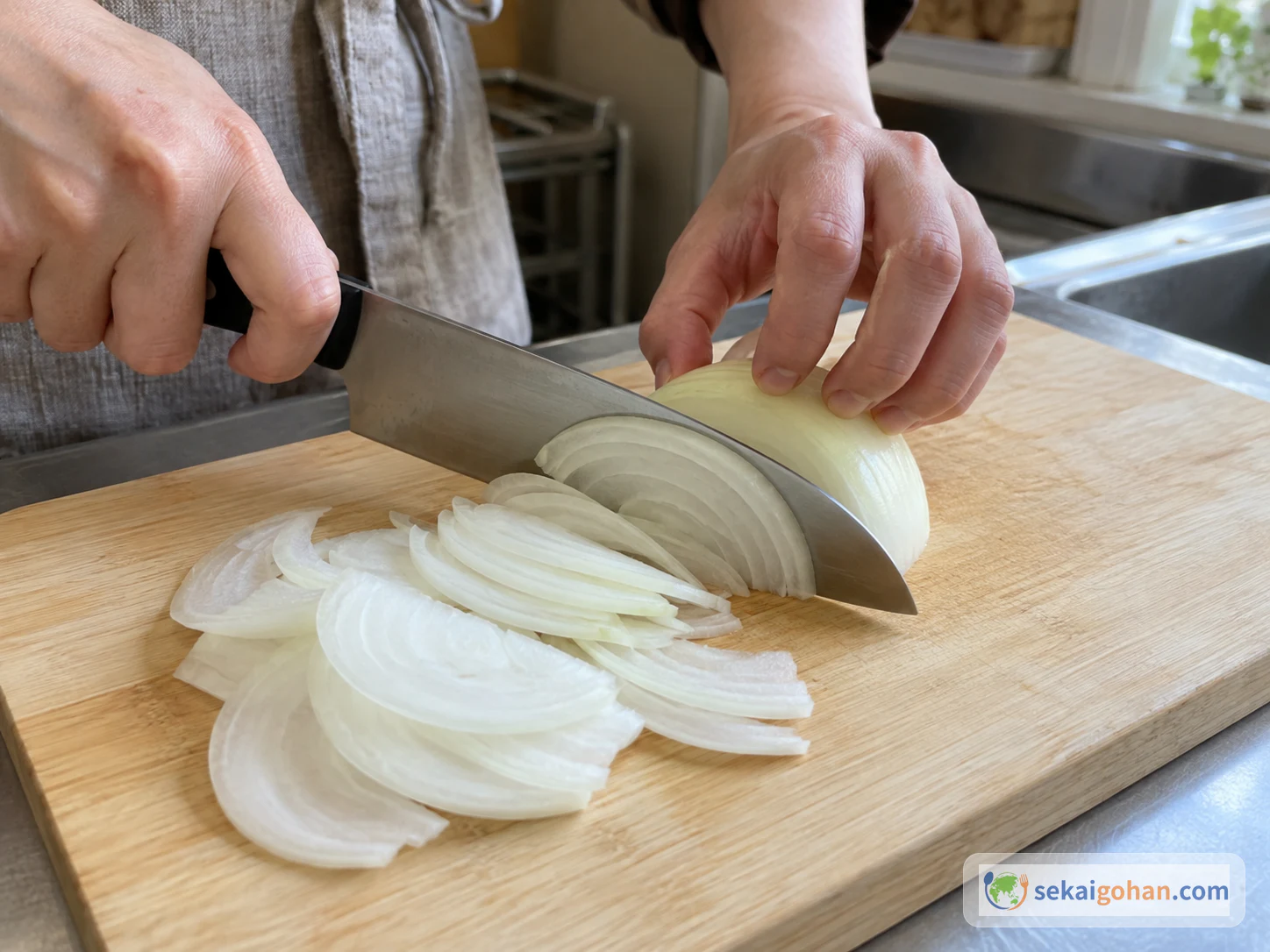
- Separate clean cutting board and knife for the onion
- Grater
- Serving plate
- Small dishes for the condiments and soy sauce
- Kettle or pot of boiling water for cleaning the board and knife
Choosing Horse Meat and Condiments for Basashi
Horse meat. Buy meat clearly sold for eating raw, and read its label for storage, thawing and handling after opening. If the label doesn't make this clear, ask the seller. Ordinary horse meat can't stand in for it, and neither can any other meat.
Cut. Any cut sold for eating raw will work, so pick whichever you can get. Marbled (shimofuri), lean (akami) and mane (tategami) are common choices, and each has its own flavor.
Sweet soy sauce. For dipping, use a sweet, rich sashimi soy sauce, to taste.
Basashi Food Safety
Eating raw horse meat, like other raw meat and organ meats, carries a risk of food poisoning. Even hygienic processing cannot completely prevent microbial contamination, and parasites are also a known hazard. No step in the method can guarantee safety at home.
Parasites
As of June 17, 2011, the parasite Sarcocystis fayeri was strongly suspected in illness cases linked to basashi. Such cases count as food poisoning. Freezing is required at the distribution stage. These conditions inactivate the parasite: a core temperature of -20°C for at least 48 hours, -30°C for at least 36 hours, or -40°C for at least 18 hours.
These conditions apply to businesses. Horse meat sold for eating raw should have had this kind of freezing before sale. They are not instructions for a home freezer. Do not use them as a guide for your own freezer.
S. fayeri does not parasitize humans, and not everyone who eats it becomes ill. When symptoms do appear, diarrhea, vomiting or stomach discomfort start about 4–8 hours after eating. They are mild, and recovery is quick. See a doctor if you develop symptoms.
Handling Raw Horse Meat
Keep it cold. Keep your refrigerator at 50°F (10°C) or below and your freezer at -15°C or below. Freezing doesn't kill bacteria, so use frozen food early. Follow the label on the meat you buy, eat it as soon as it is sliced, and keep it out of room temperature.
Keep it separate. Wash your hands after handling raw meat, and keep the meat in a bag or container so its juices stay away from other food. Use a dedicated board and knife for the horse meat, and wash the garnishes under running water. After cutting raw meat, wash the knife and board and pour boiling water over them before they touch anything else that's eaten raw.
Who Should Not Eat It Raw
Children and older adults have weaker resistance and should take particular care. During pregnancy, unheated foods can cause listeria food poisoning, so heat foods where possible. Pregnant people, infants and young children, older adults and anyone with weakened immunity should not eat this dish raw.
Common Basashi Problems
| Problem | What to do |
|---|---|
| The label doesn't say the meat is for eating raw | Do not eat it raw. Ask the seller first |
| The meat is hard to slice cleanly | Check the label's thawing instructions. Half-thawed meat is easier to cut |
| The slices are coming out thick | Check the knife is at a right angle to the grain, and aim for 0.125 inch (2–3 mm) |
| The meat board or knife touched the onion or shiso | Wash the board and knife and pour boiling water over them. Set the affected garnish aside and prepare a fresh portion |
| The plate has been sitting out | Do not eat it. Next time, slice just before eating |
Frequently Asked Questions
If the meat is fresh or has been frozen, is it safe?
Neither one guarantees safety. Freezing under the conditions above addresses S. fayeri, but it doesn't kill bacteria.
Can I freeze the meat at home to deal with parasites?
Don't rely on a home freezer for that. The freezing conditions above apply to businesses and the distribution stage. Choose meat sold for eating raw and follow its label.
How do I thaw it?
Follow the label on your product. Thaw the unopened pack in ice water in the refrigerator, or under running water if you're in a hurry. Do not thaw it at room temperature or in a microwave.