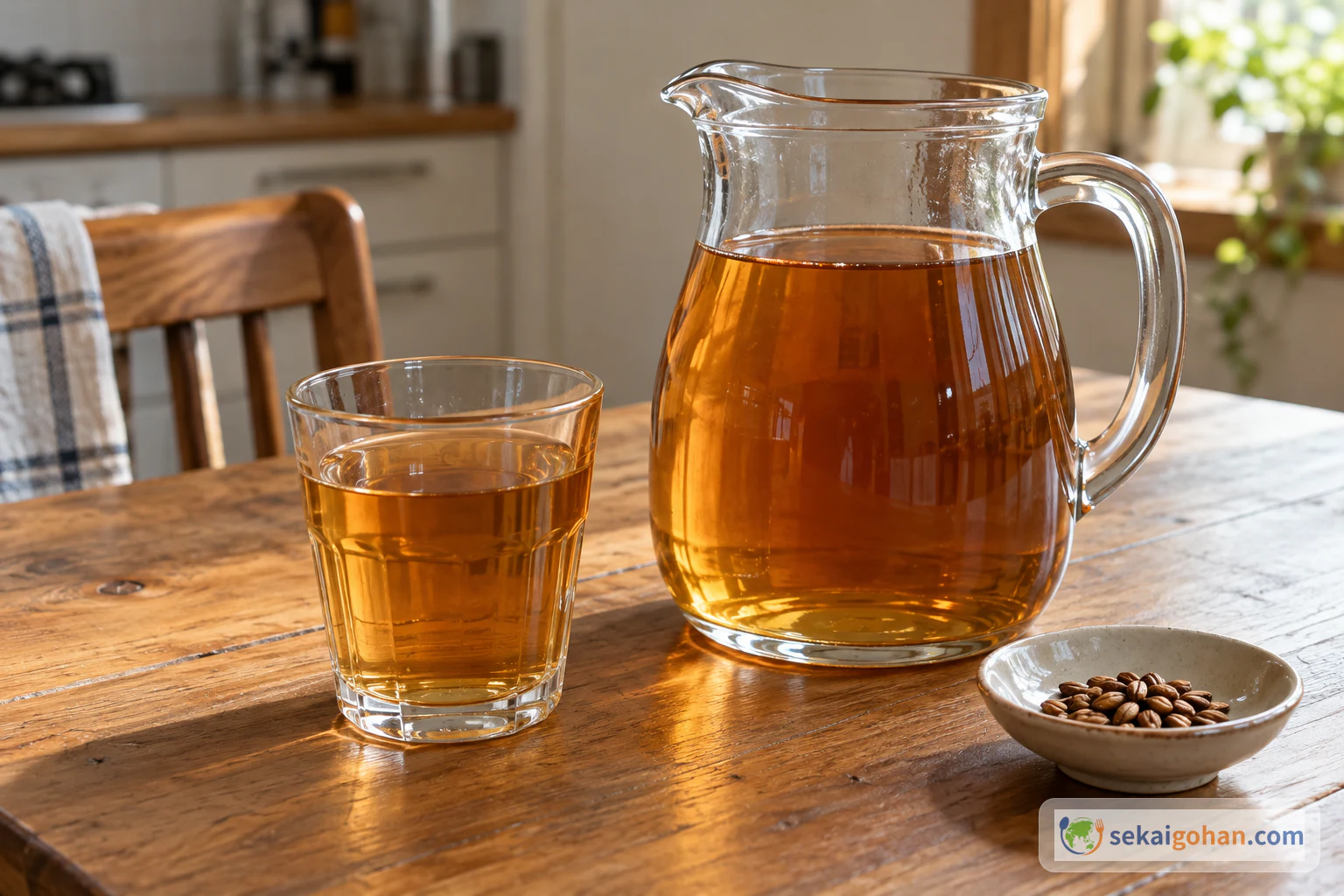
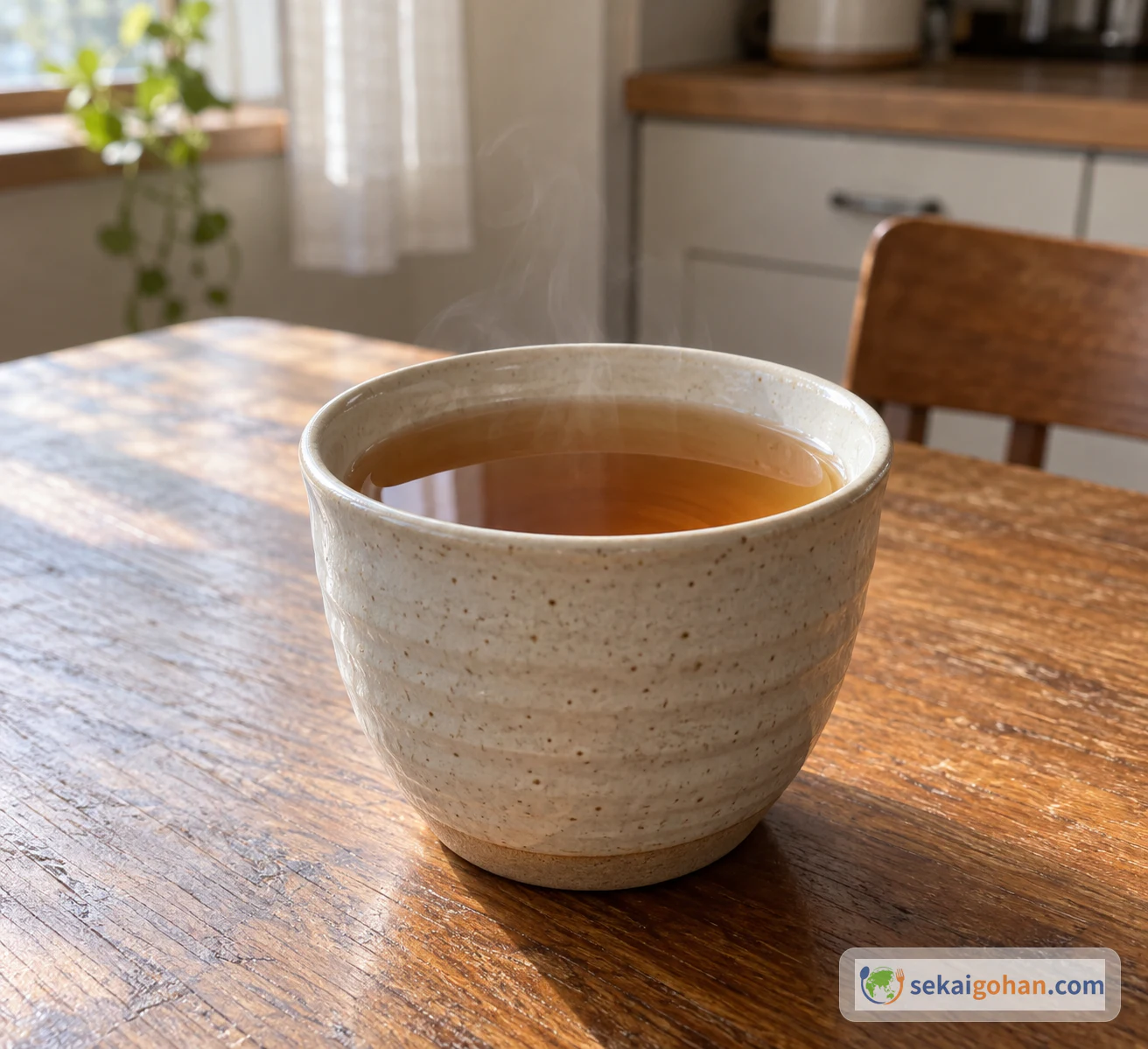

Pour a glass of bori-cha (보리차) and you get a clear, amber-brown drink with a toasty, roasted-grain aroma. It is one of the simplest things you can make in a Korean kitchen: just water and roasted barley grains, brewed and strained. Serve it warm in a cup, or chill a pitcher in the refrigerator for cold glasses all day. Because the grains come already roasted, there's no roasting step. You boil, brew, strain, and pour.
What Bori-cha Is
In Korean, 보리 means barley and 차 means tea. Bori-cha has no tea leaves, though. Its color and flavor come entirely from roasted barley (볶은 보리). In Korea, "tea" covers drinks made from fruits, flowers, leaves, grains and roots, so a grain brew fits naturally under the name.
Japanese mugicha is also made from roasted barley, and the ingredients and method are close. Korean roasted corn tea (옥수수차) and corn-and-barley blends are different drinks.
Ingredients: Water and Roasted Barley Only
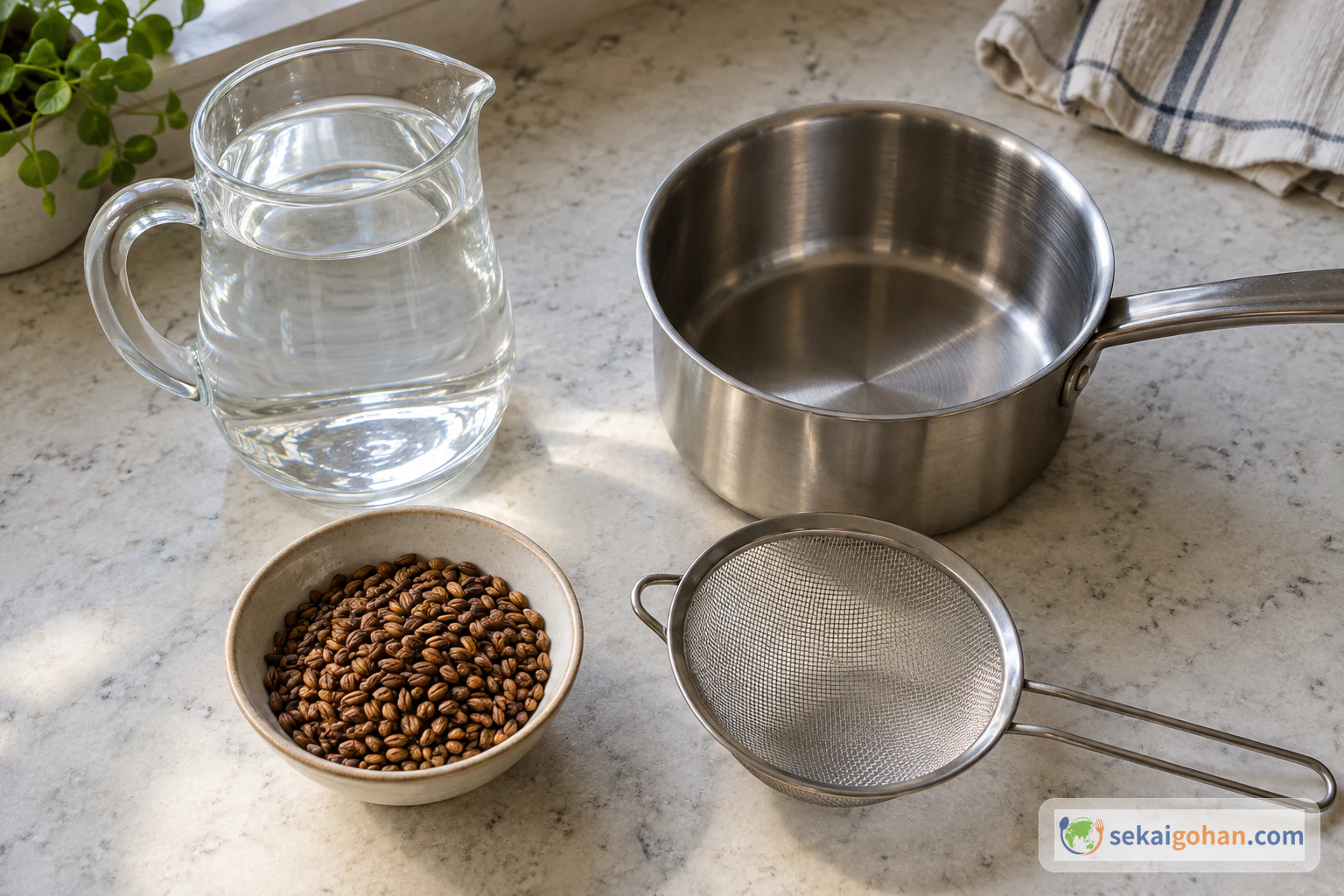
1 Tbsp (15 ml). The recipe makes 10 servings.
Equipment
- A pot or kettle that holds 2 liters of water
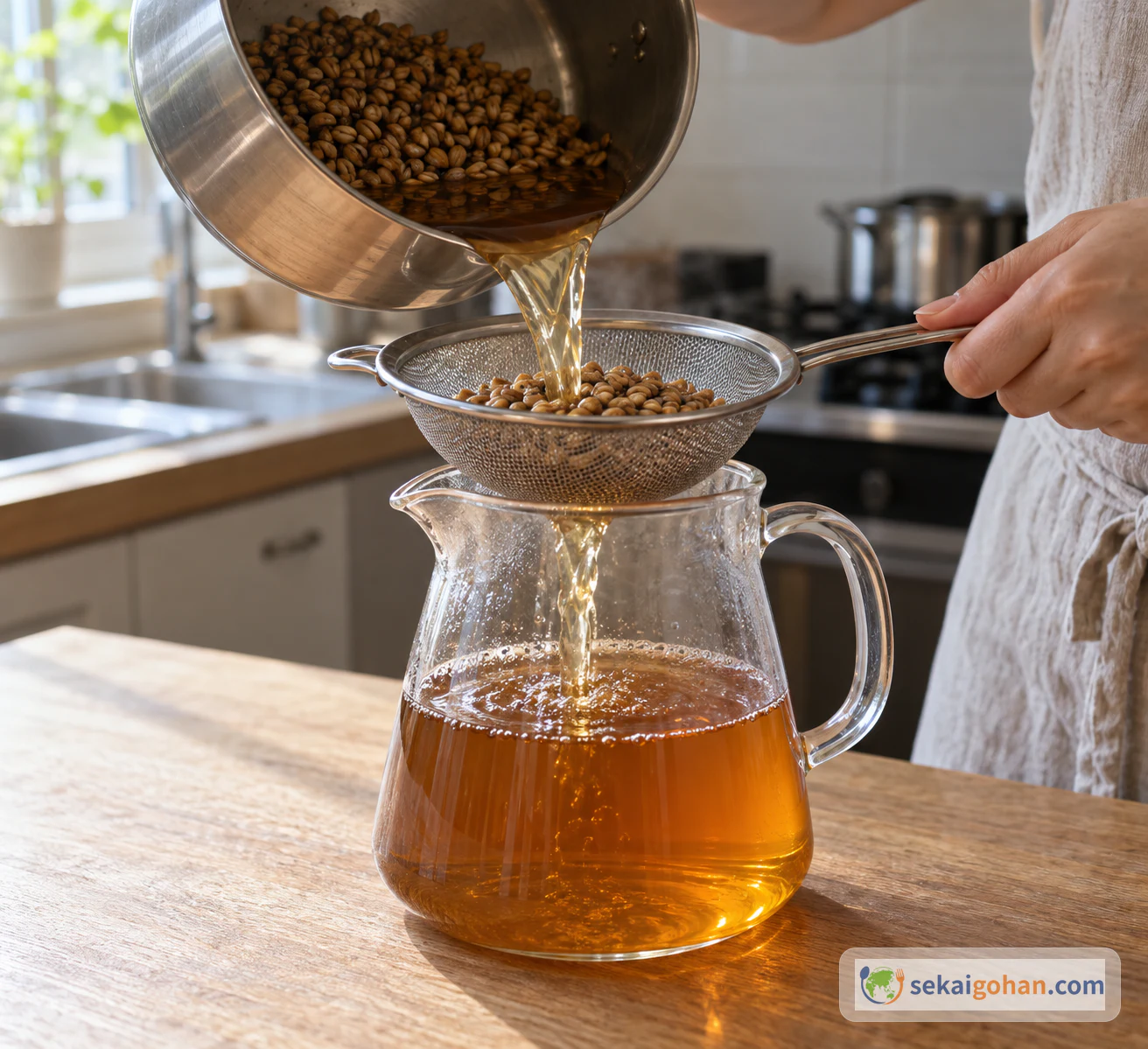
- A fine strainer (or a strainer-style infuser to hold the grains, if you prefer)
- A heat-safe pitcher
- Cups or glasses for serving
Choosing Roasted Barley for Bori-cha
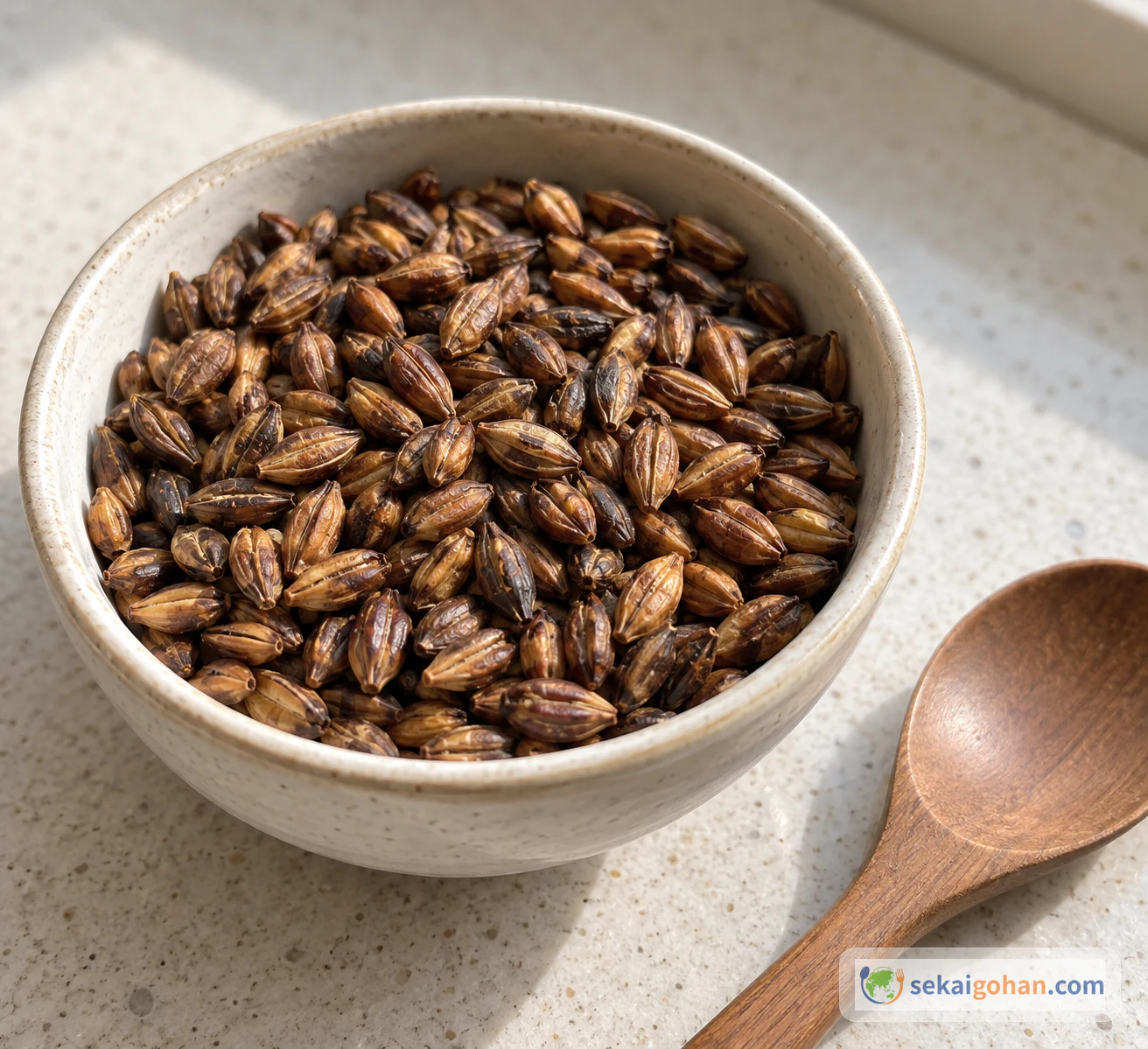
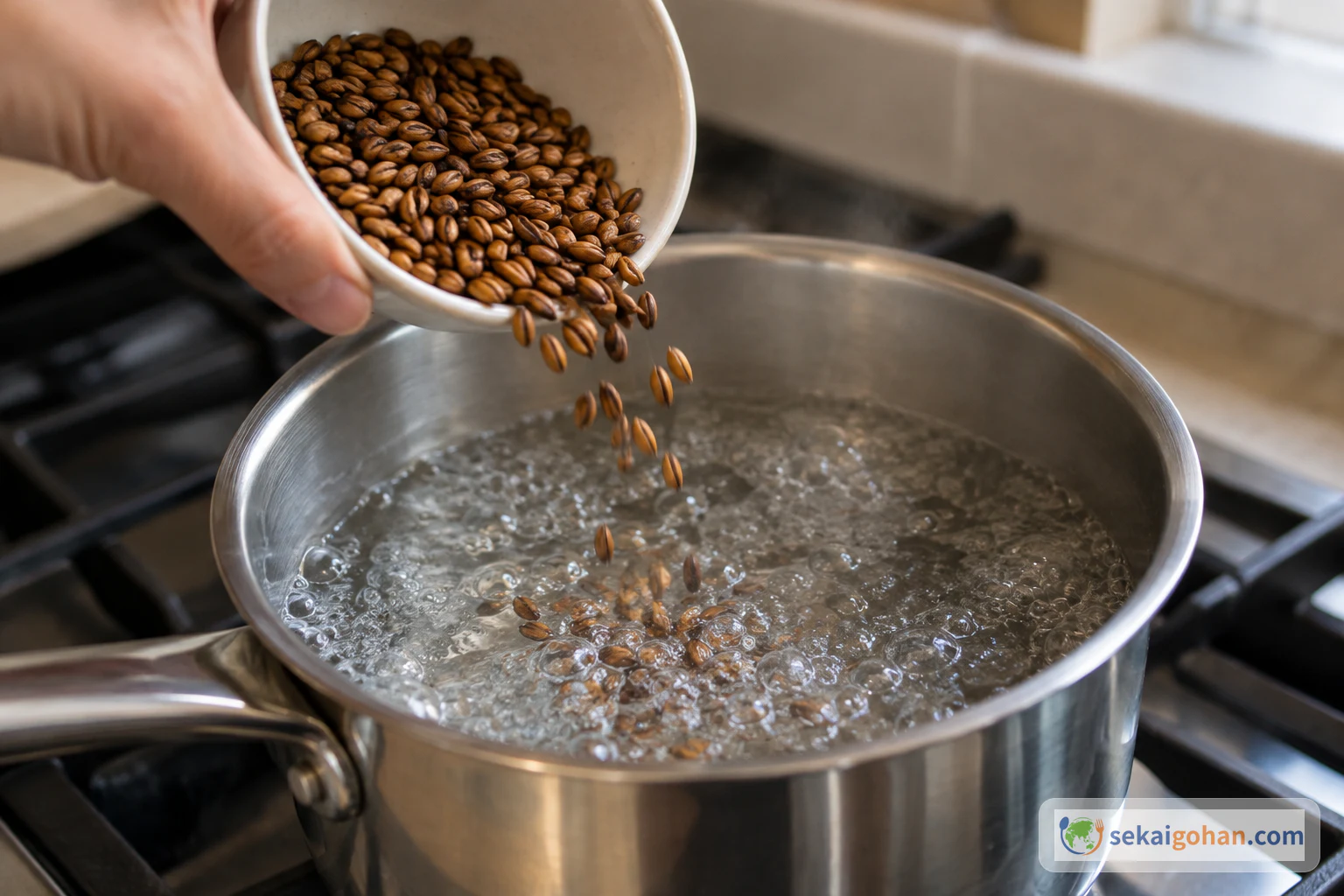
Look for packages labeled 볶은 보리 or "roasted barley" at Korean grocers or import food shops. The grains are small and toasted brown, longer than they are wide, with a natural crease down each kernel.
Pressed or polished cooking barley won't work here. Start with whole grains that are already roasted, whether hulled or unhulled. Both make good tea, as long as the package says roasted.
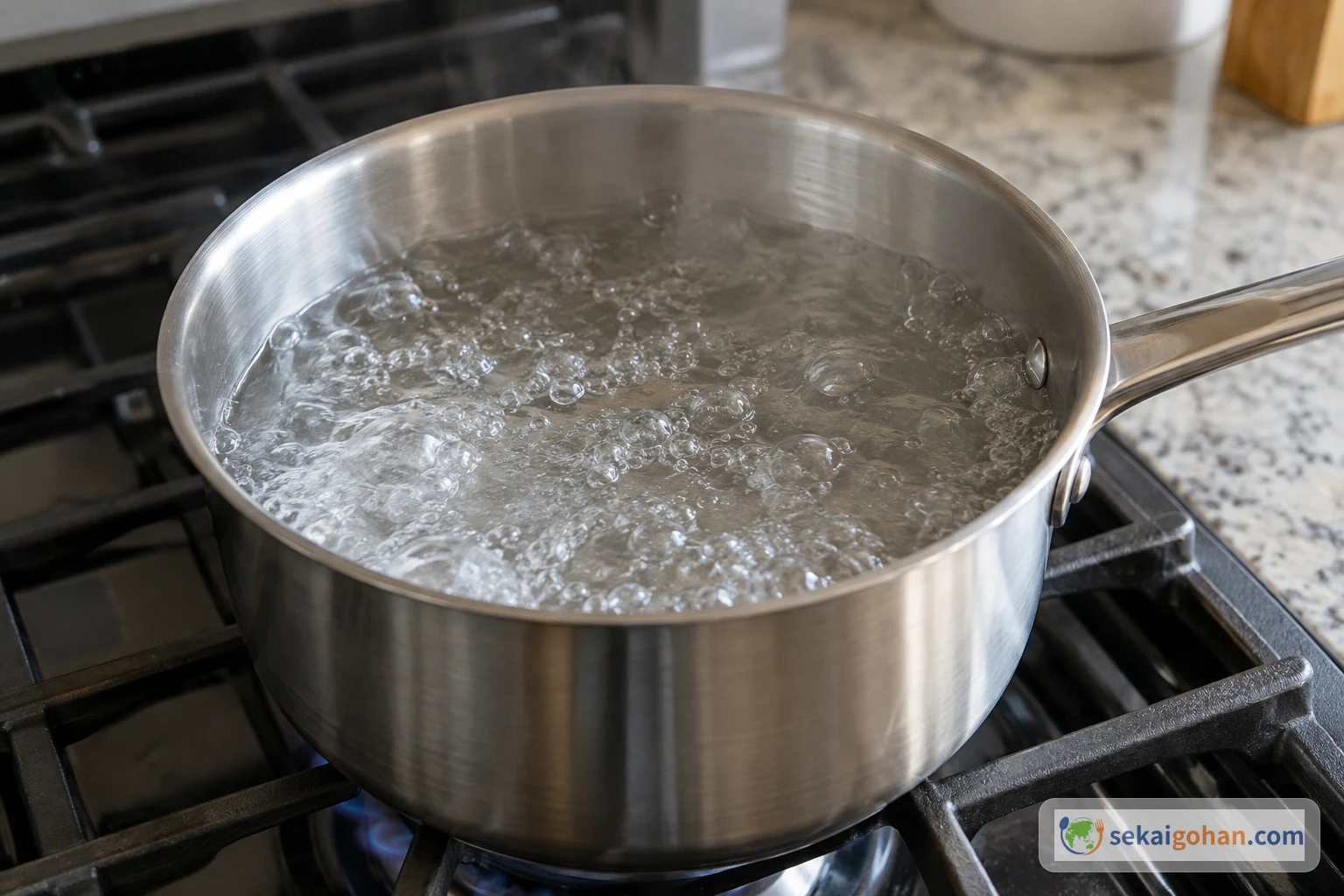
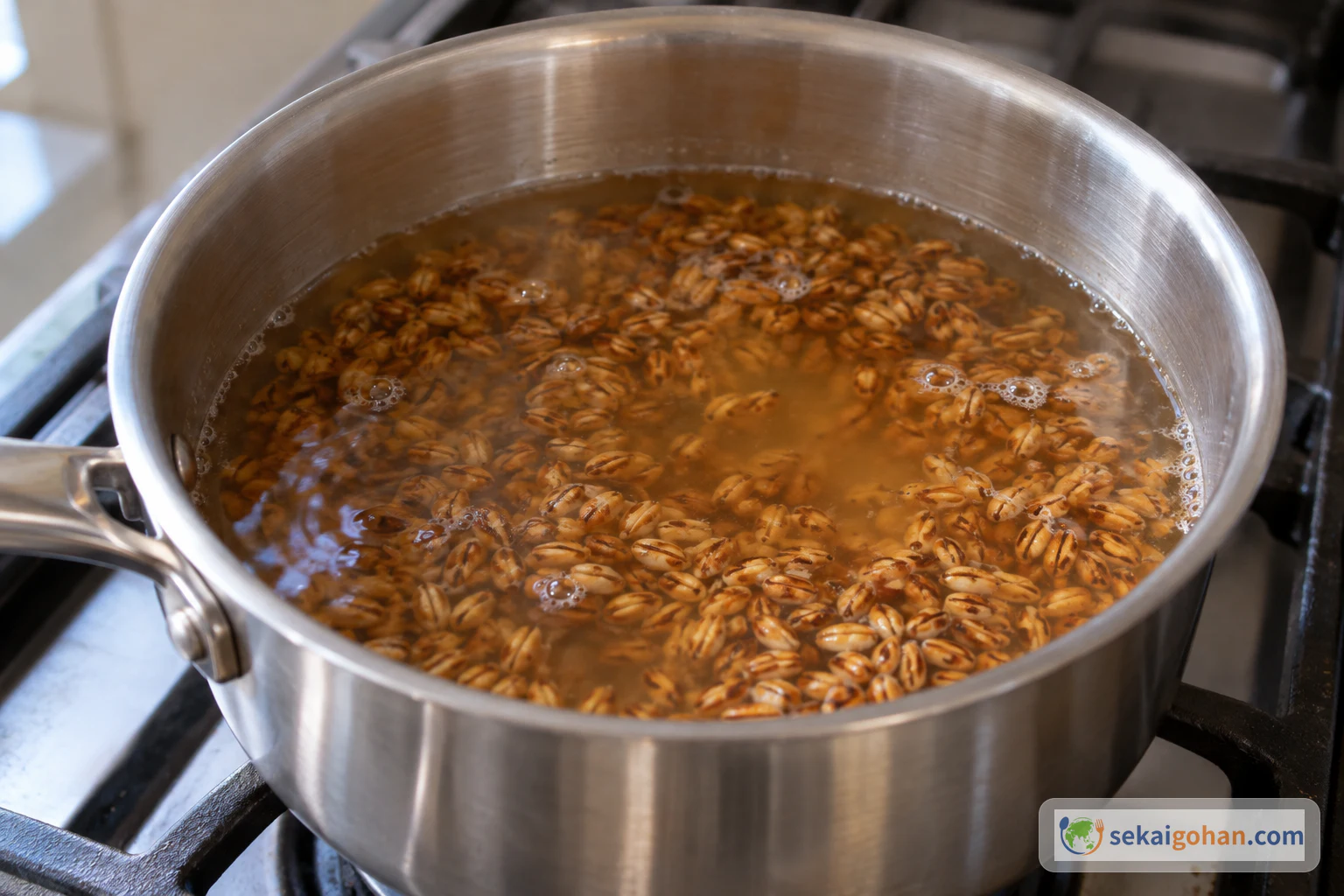
Method: Boil, Brew Gently, Strain
The 5 minutes in step 3 count from when the grains go into the boiling water. The time it takes to bring the water to a boil is not included.
Let the bori-cha cool, transfer it to a pitcher, and refrigerate it.
Fixing Common Bori-cha Problems
| Condition | What to check | What to do |
|---|---|---|
| Grains or bits in the cup | The liquid was not fully strained | Strain again through a fine strainer, or use an infuser in step 2 next time |
| The flavor is lighter than you want | Base amount of barley | Add more barley next time |
| The grains look flat or flaky | The package is pressed barley or oats | Look for whole grains labeled 볶은 보리 or "roasted barley" |
| The liquid stays pale | The grains are not roasted | Use grains that are already roasted. Unroasted barley is a different starting point |
Other Ways to Brew Bori-cha
Ratios and methods vary from kitchen to kitchen. Here are a few common approaches:
| Approach | Details |
|---|---|
| Tea bags | Barley tea bags steeped in boiling water for about 10 minutes |
| Hot or chilled | 2 tbsp roasted barley to 4 cups water, served hot or chilled |
| Covered simmer | Loose grains at 2 tbsp to 5 cups water, simmered covered for 15 minutes |
If you switch methods, use that method's amounts and times together rather than mixing them with the steps above. And if you're looking for something Korean to cook next, try Dakgalbi.
Frequently Asked Questions
Is bori-cha meant to be drunk hot or cold?
Either. For warm bori-cha, pour it right after straining. For cold, let it cool, move it to a pitcher, and refrigerate.
Can I make it stronger?
Yes. Add more barley to taste, starting from the base of 3 Tbsp to 2 liters of water.