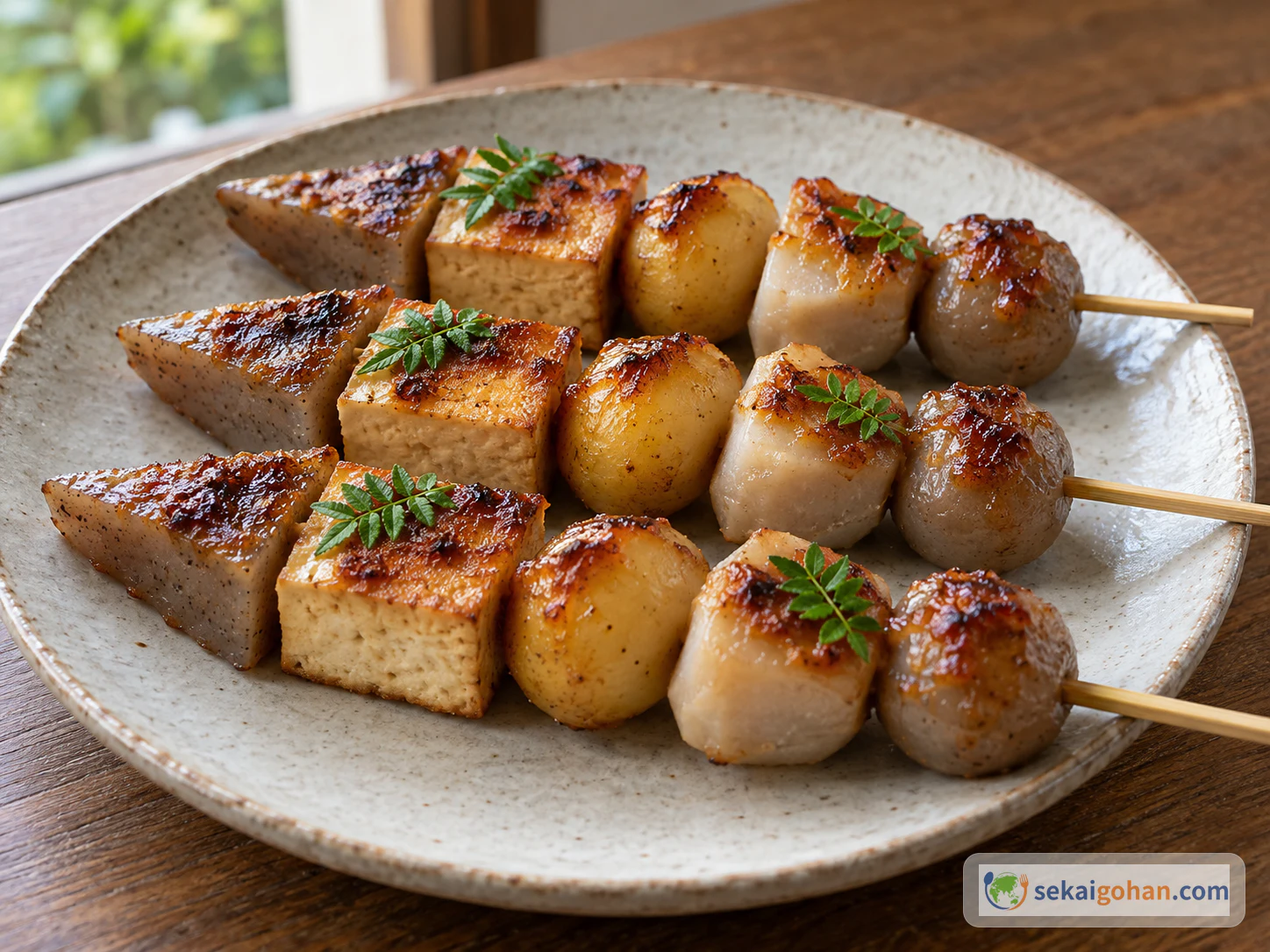
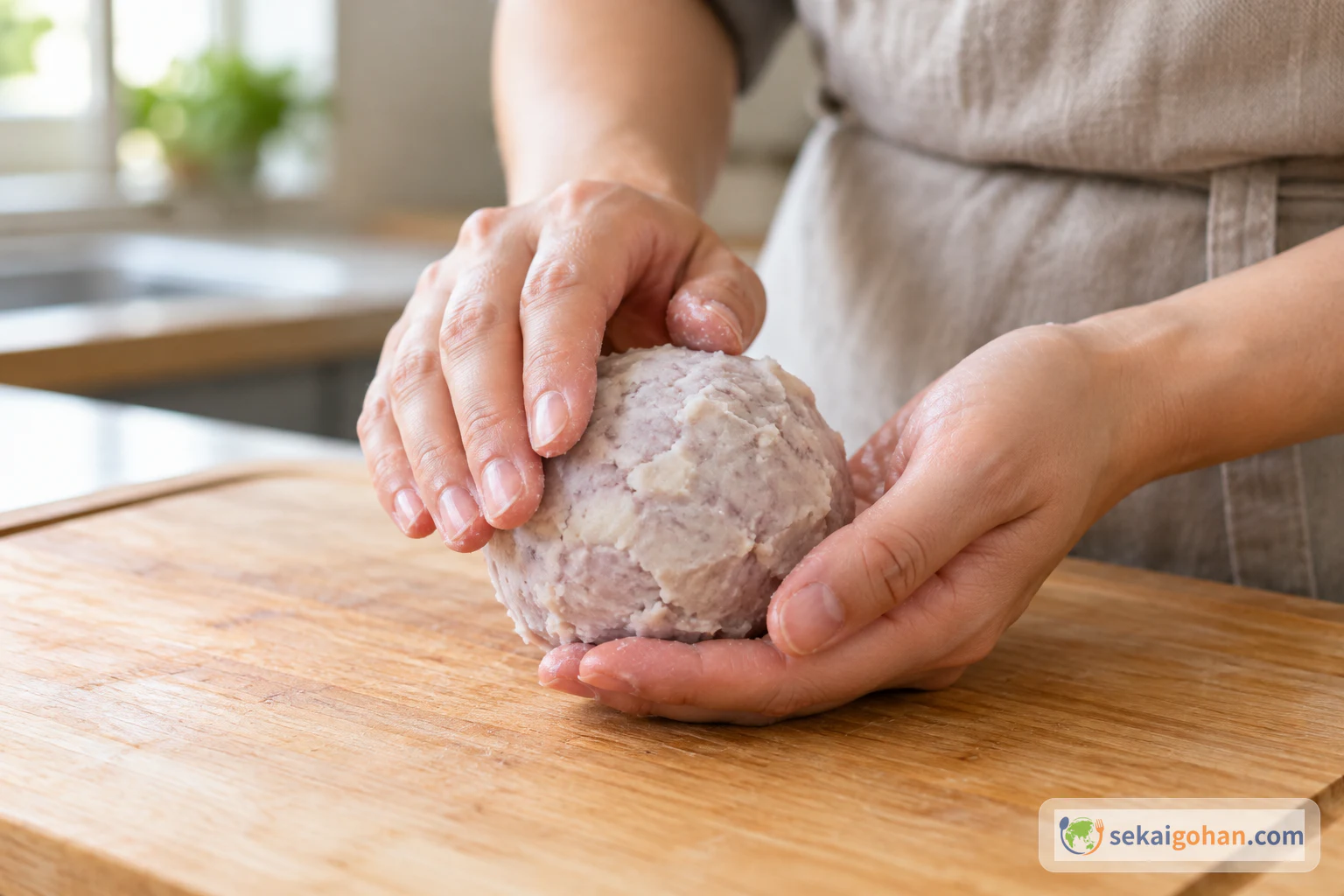
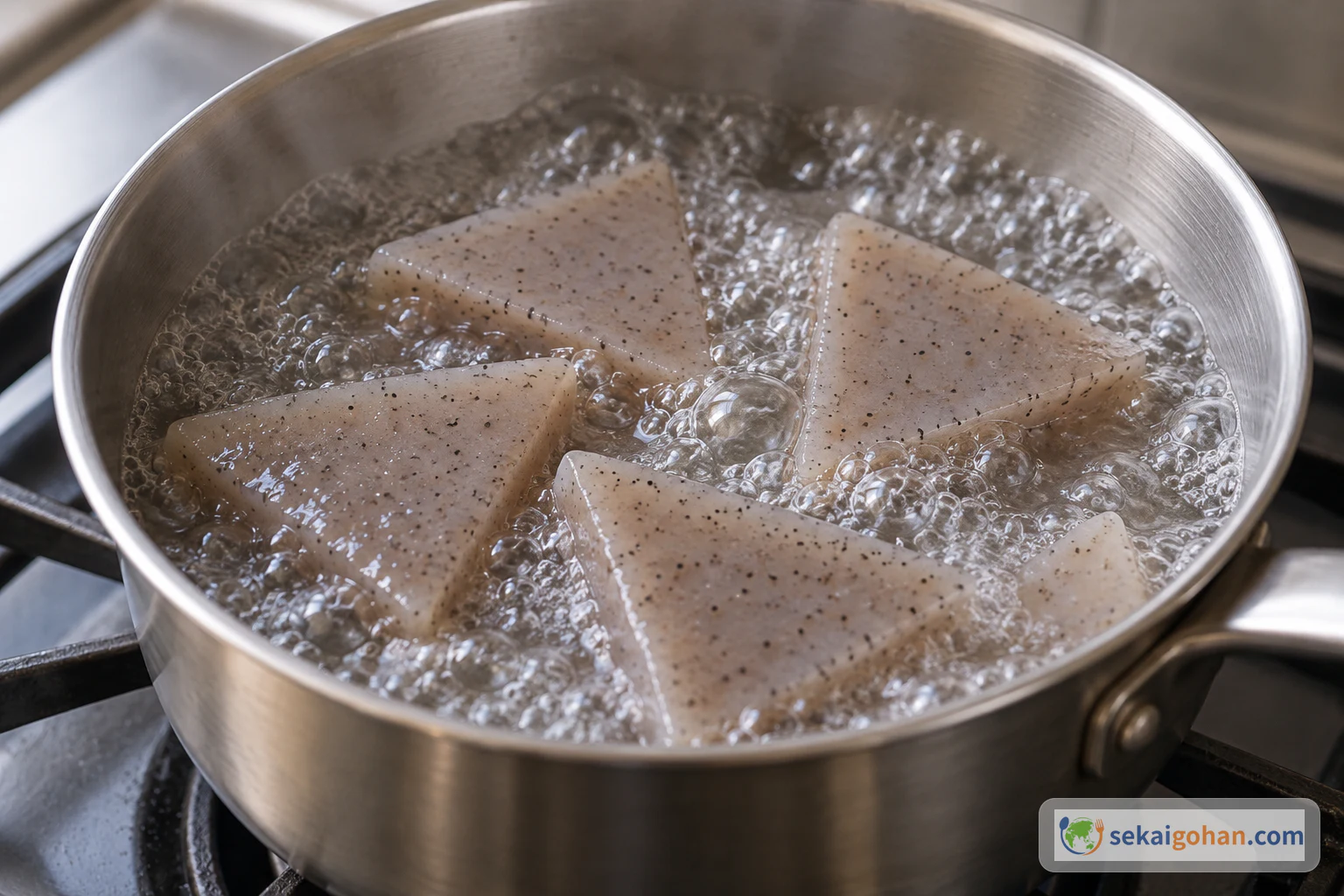
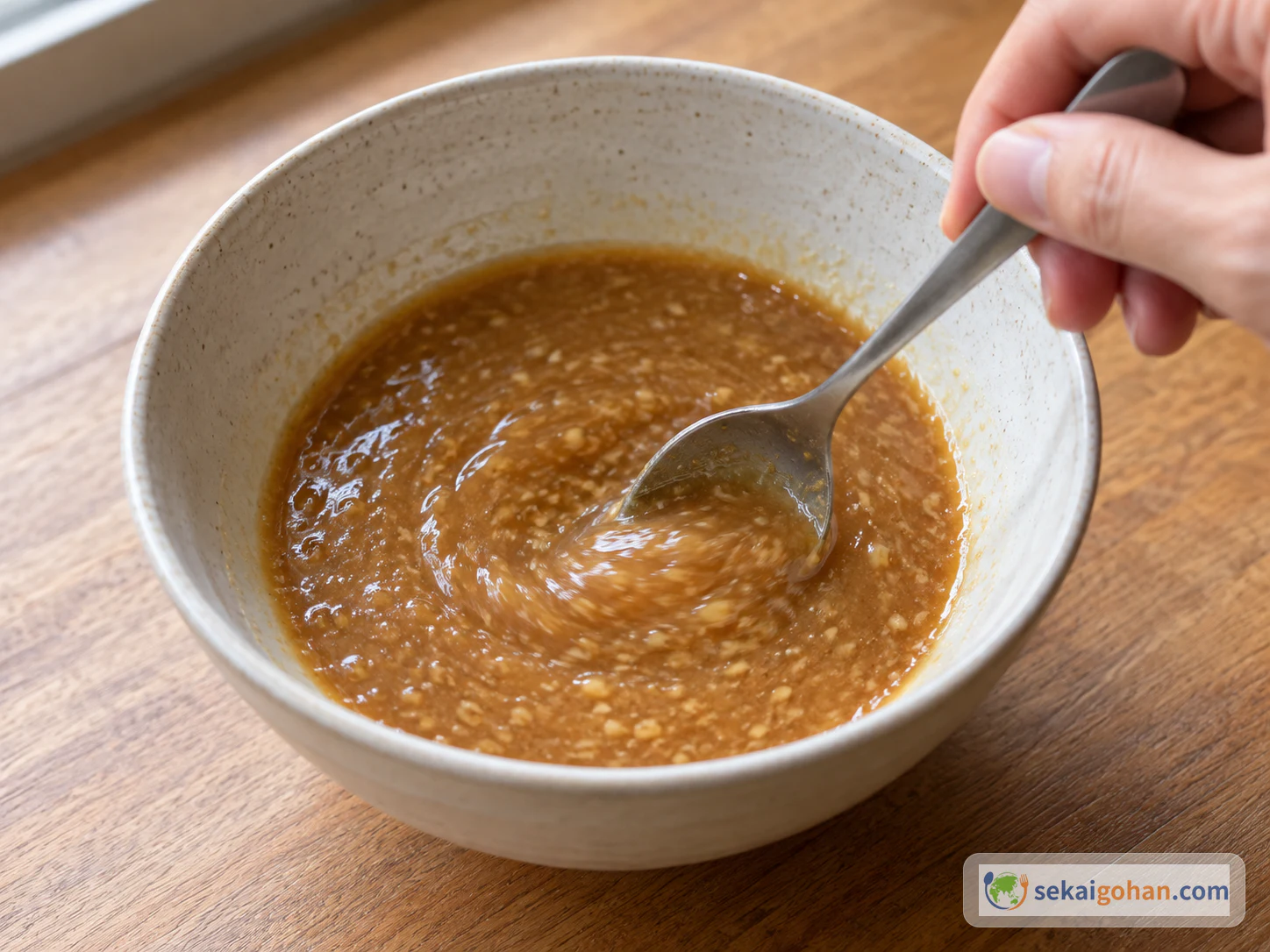
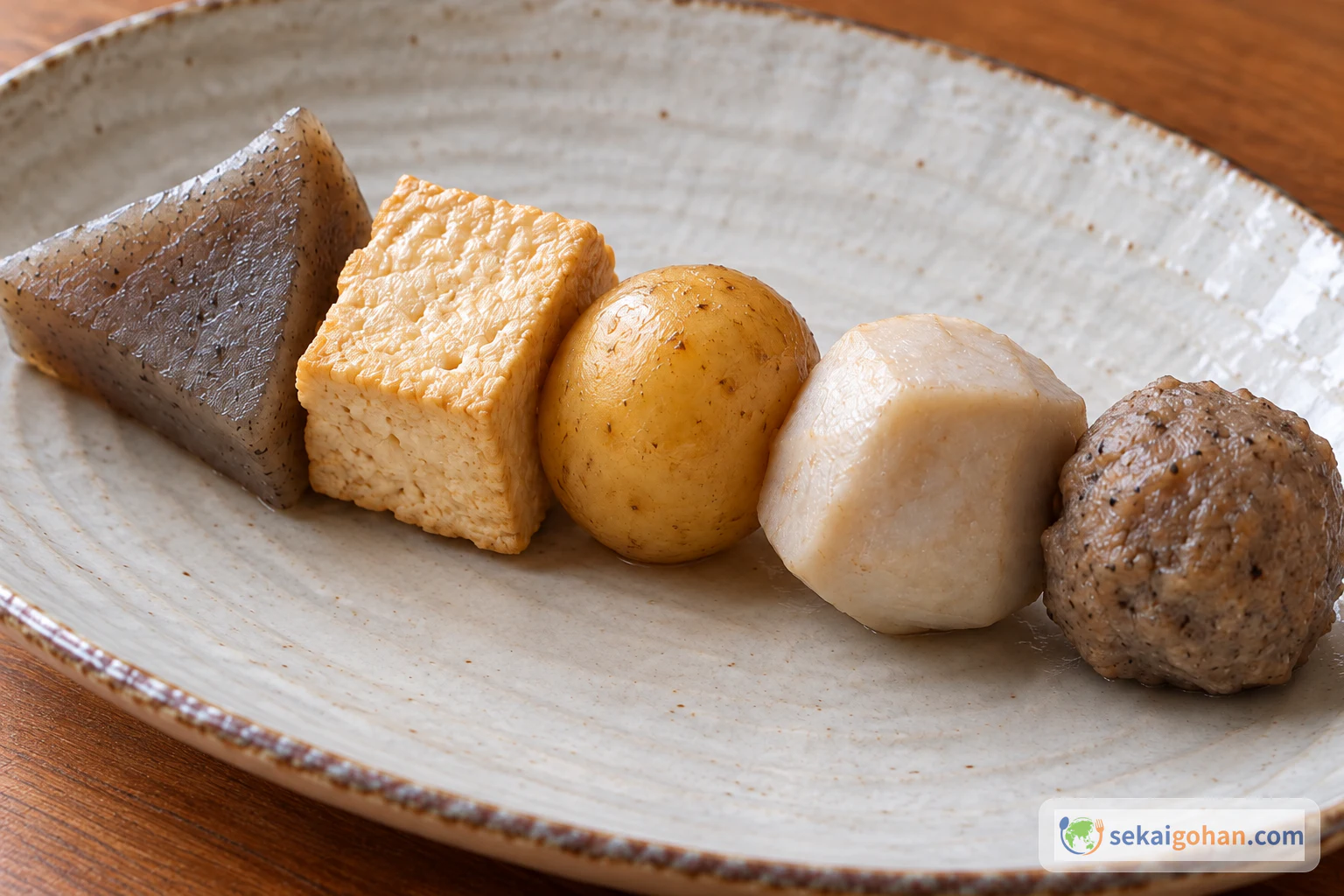
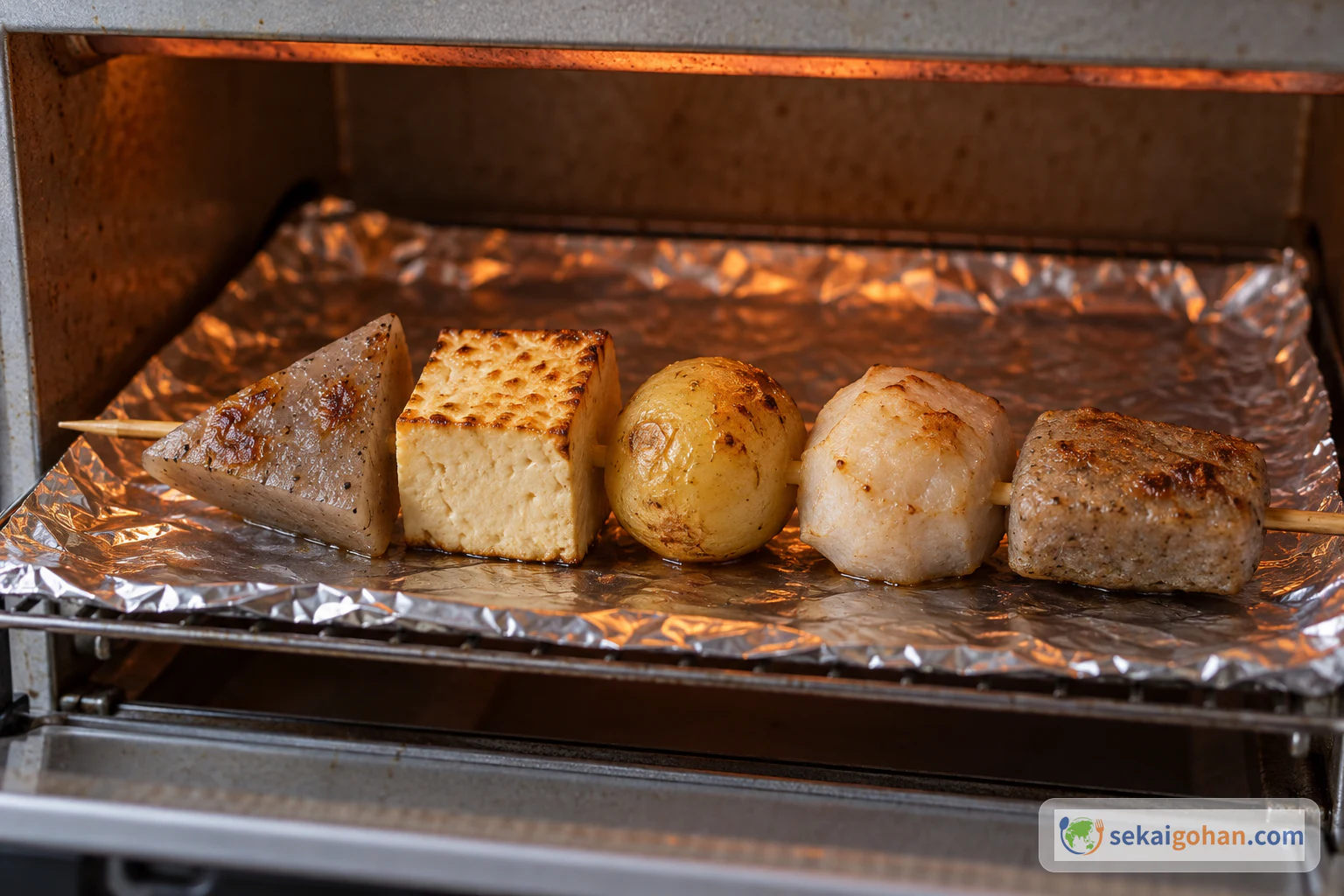
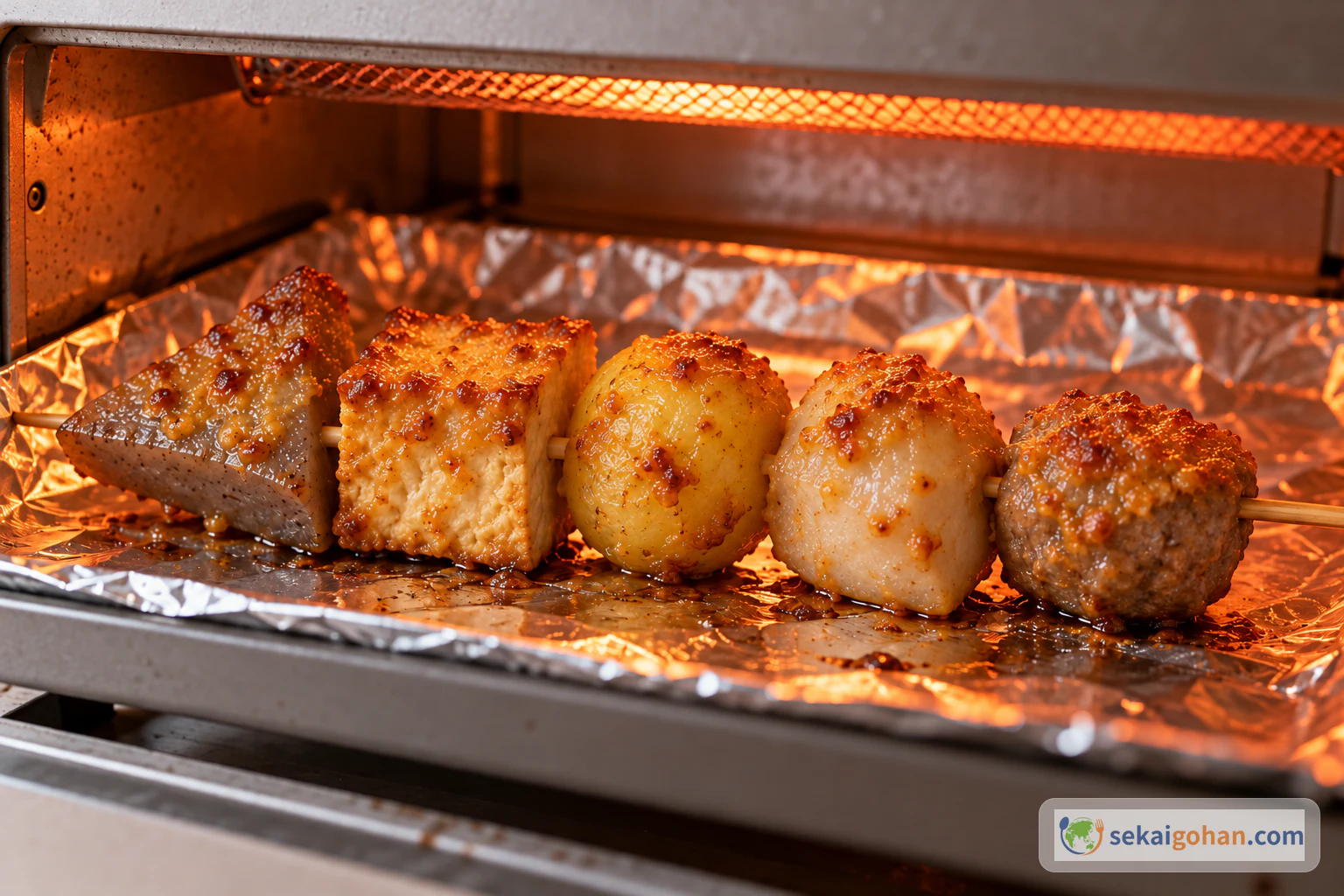
A triangle of konnyaku, a square of firm tofu, a small round potato, a round of taro and a little buckwheat dumpling sit one after another on a single bamboo skewer. A ginger-scented miso glaze goes over them, the skewer goes back under the heat until the miso takes on color, and a kinome leaf (the young leaf of the sansho plant) finishes it. This is dekomawashi, a local dish from the Iya area of Tokushima prefecture. Each of the five pieces is cooked on its own first, so every bite has a different texture, all held together by the browned, gingery miso.
Dekomawashi in the Mountain Villages of Iya
Dekomawashi comes from the Iya area of Miyoshi in western Tokushima, on the island of Shikoku. There it is made with local potatoes, buckwheat dumplings, rock tofu (iwa-dofu, a firm local tofu) and round konnyaku, glazed with miso and roasted. The small potatoes are called goshuimo (ごうしゅいも), a local small potato.
The name has a charming explanation. One theory links "deko" to a puppet's head: the skewers turn over the fire the way a puppet's head turns. That etymology is unproven, and no date of origin or inventor is on record. For more Japanese dishes, see our dishes from Japan.
Ingredients (Serves 4)
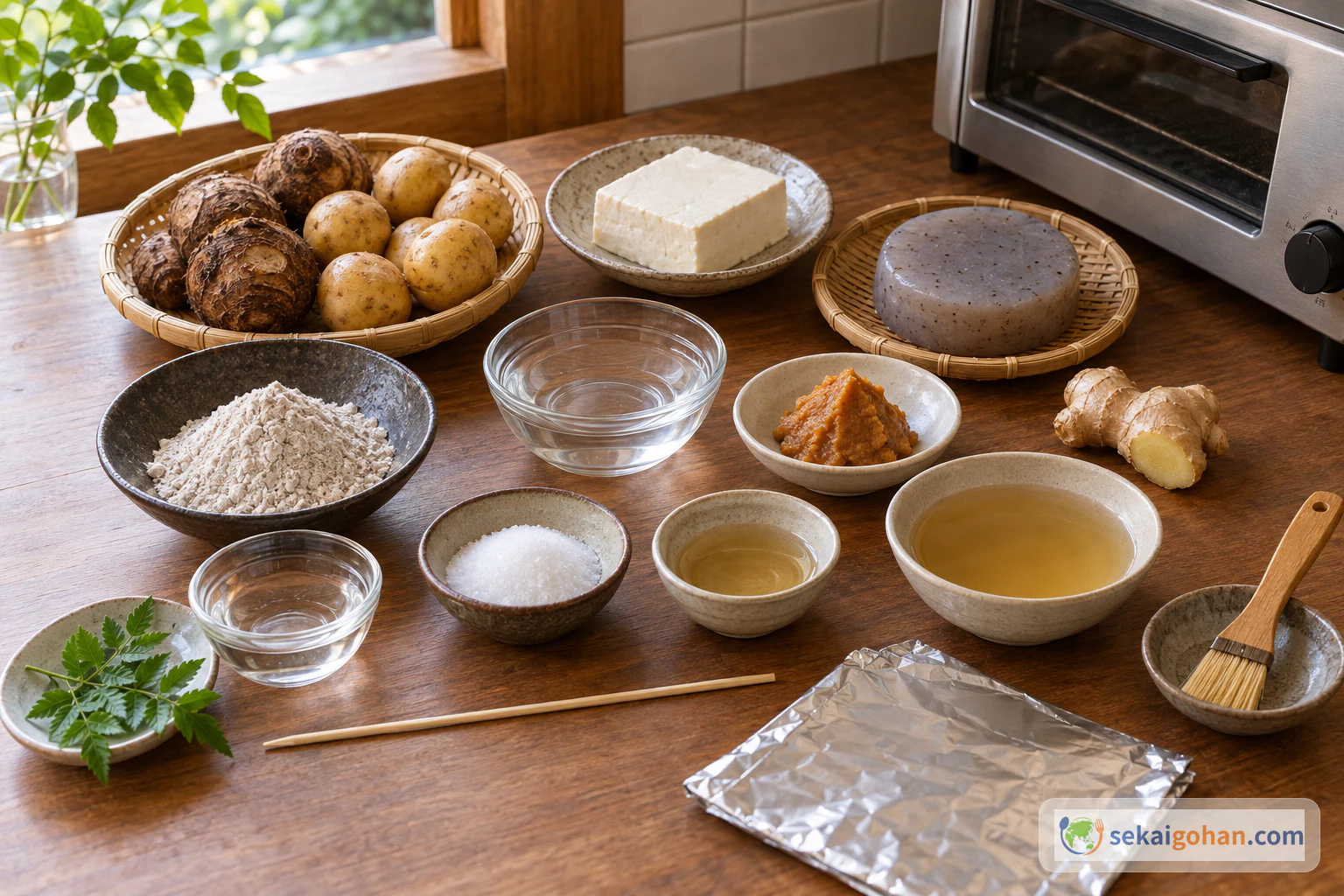
The skewer components and the sauce are listed together but used separately. There are two separate measures of water: one for the buckwheat dough and one for the sauce.
Equipment
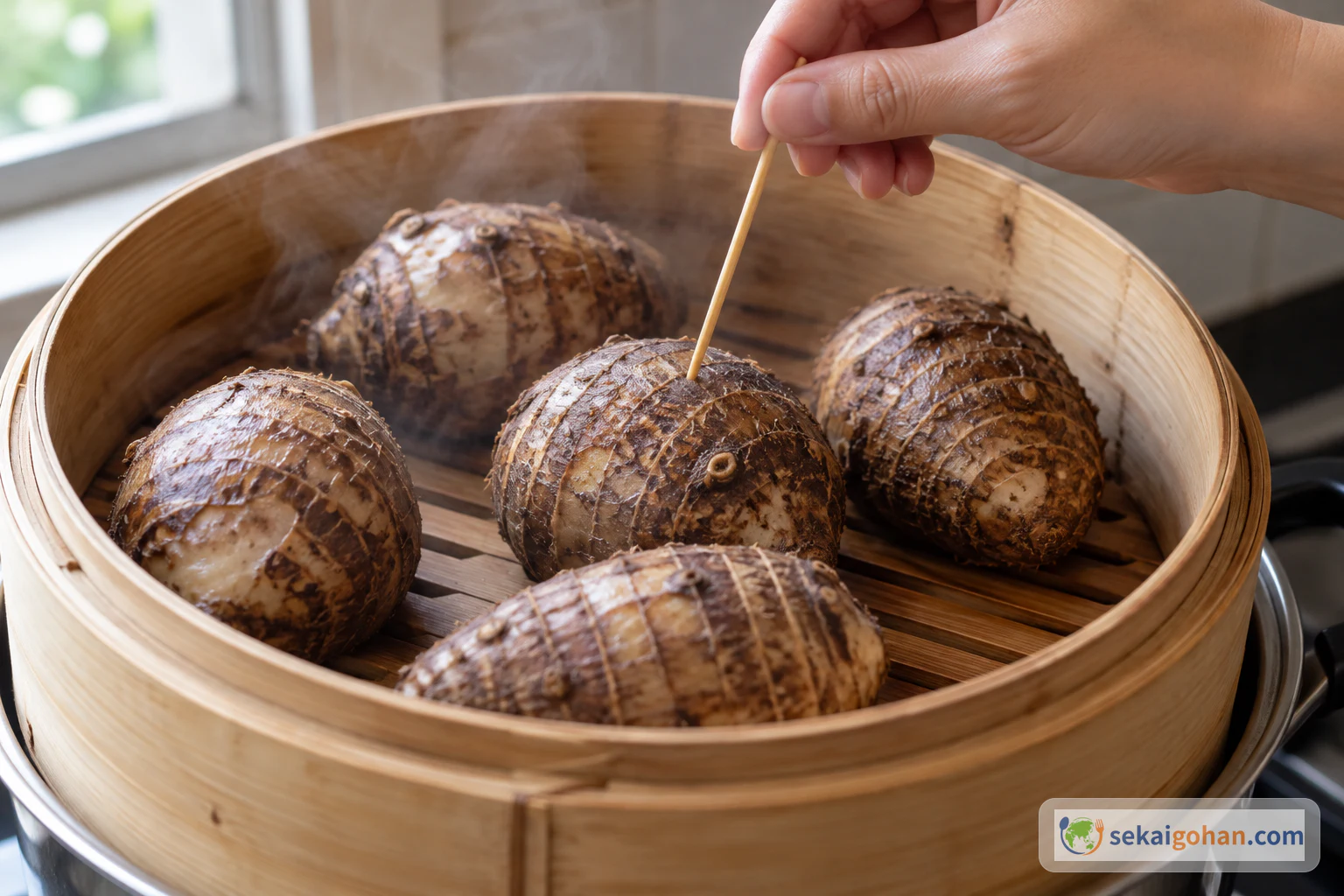
- Steamer (for the taro)
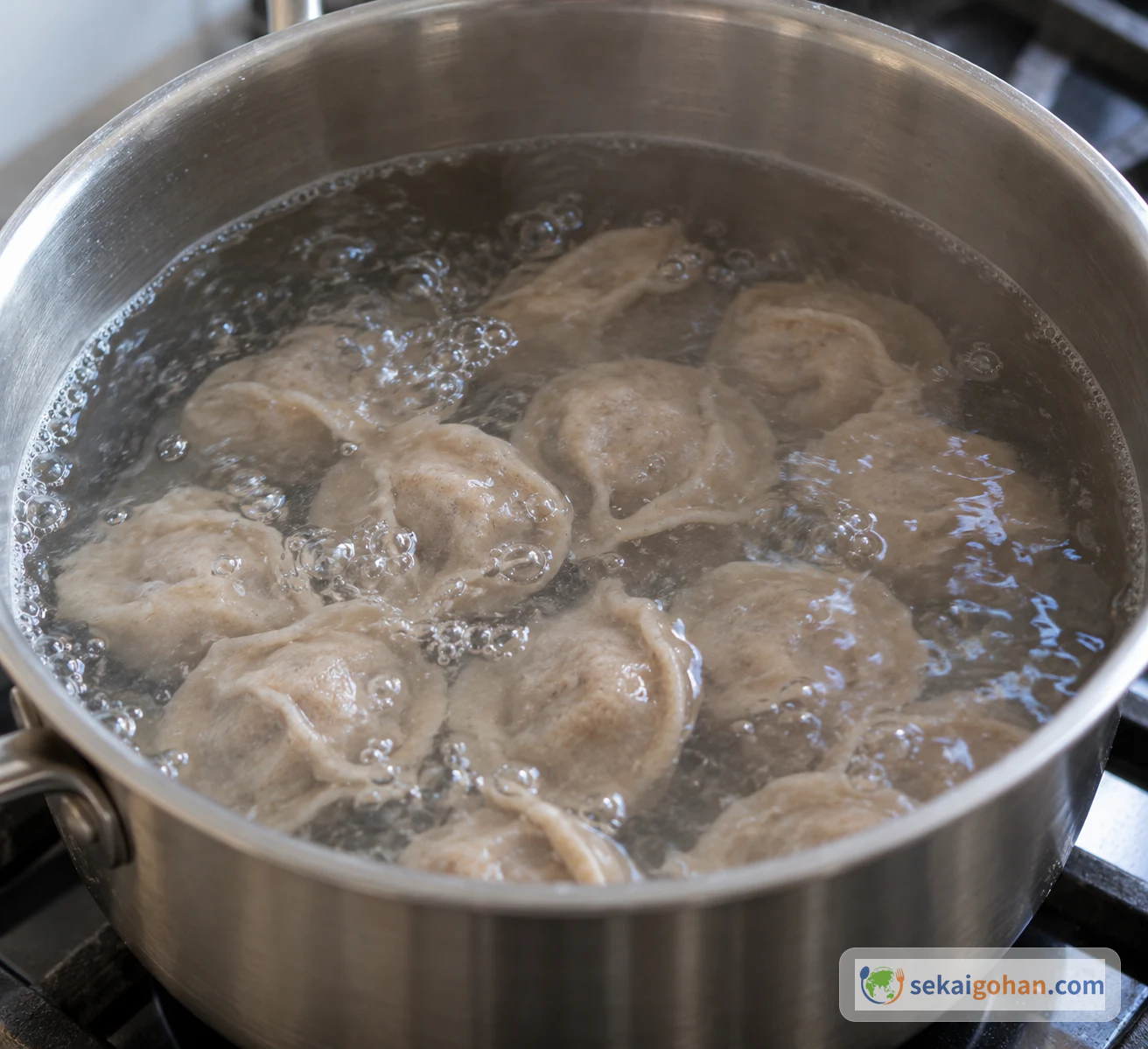
- Pot for boiling (potatoes, konnyaku and buckwheat dumplings)
- Cutting board and knife
- Grater (for the ginger)
- Mixing bowl
- Microwave-safe bowl and spoon
- Microwave oven
- Bamboo skewers, about 7 inches (18cm) long
- Aluminum foil
- Toaster oven
- Brush
Choosing Ingredients for Dekomawashi
Outside Iya, ordinary small potatoes and firm tofu stand in for the local ingredients. They differ from goshuimo and rock tofu in size, density and texture, but they make a good skewer.
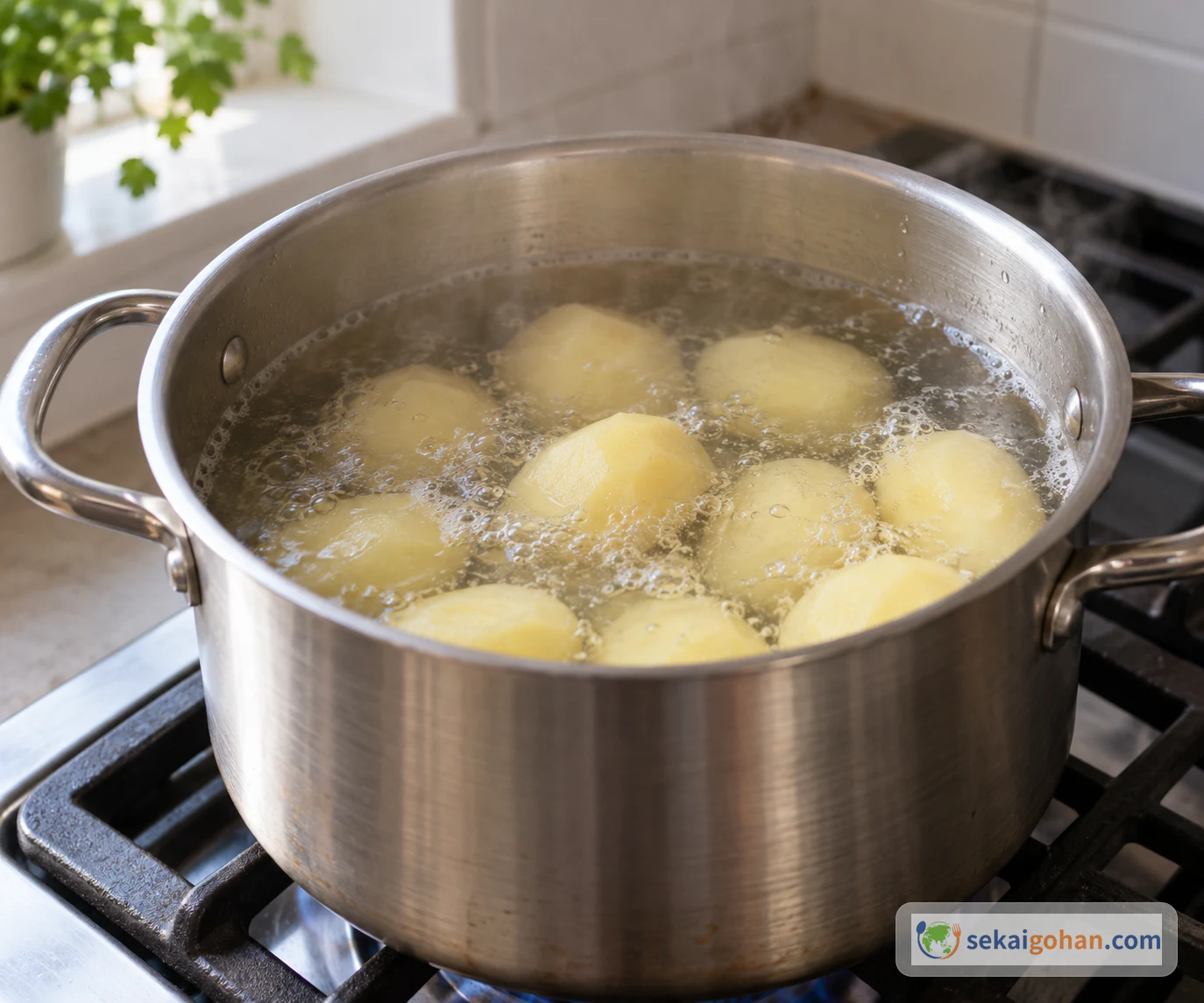
Potatoes. Choose small whole potatoes if you can. If you only have larger potatoes, cut them into pieces of about 1 inches (3cm); peel them first either way.
Tofu. Use firm (momen) tofu in place of the local rock tofu. It holds more moisture and is less dense.
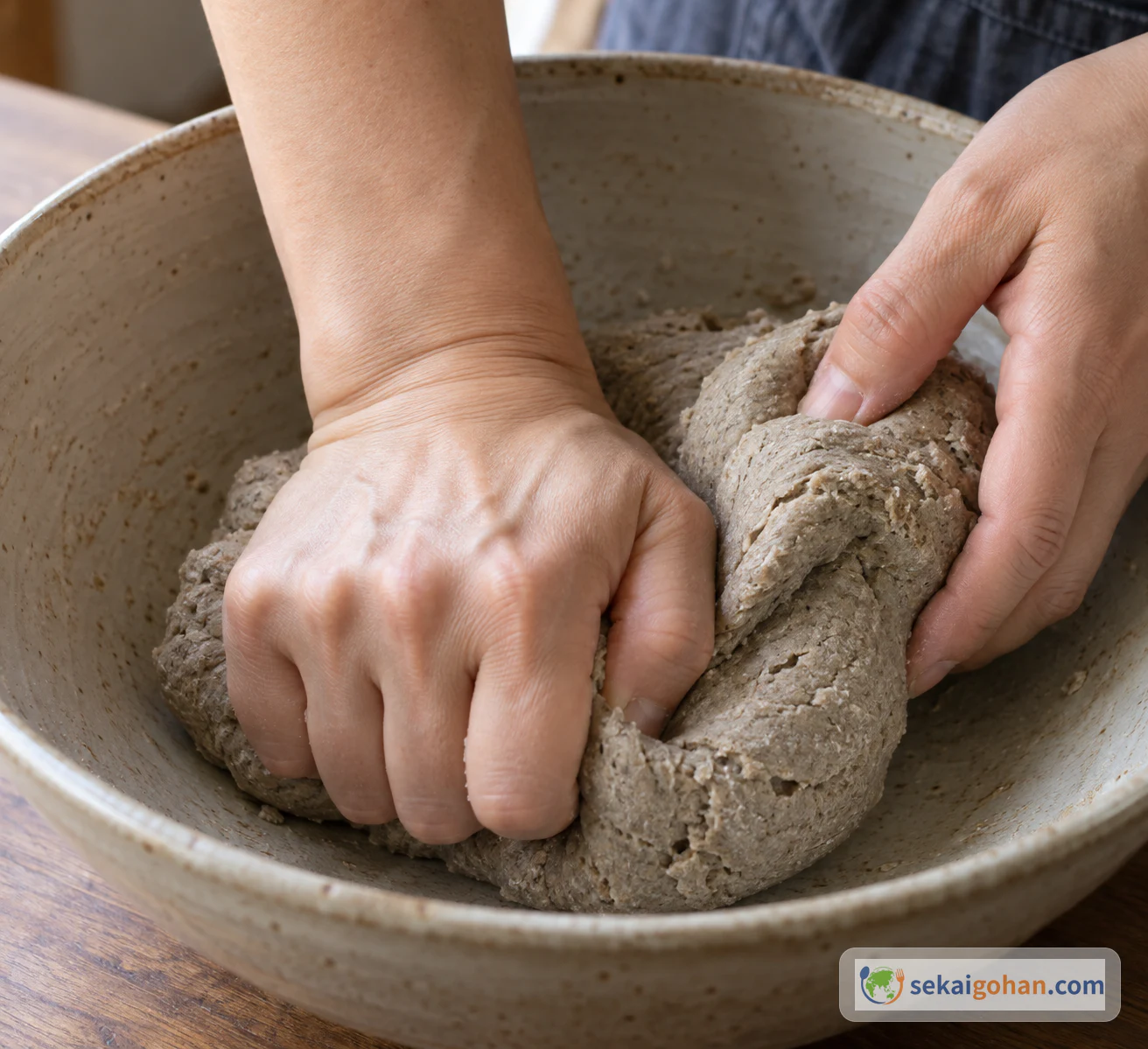
Buckwheat flour. Only 2 oz (60g) is needed, so a small bag labeled buckwheat flour (soba flour) is enough. The dough is just buckwheat flour and water.
Kinome. Each skewer gets one kinome leaf, eight in all. Stick with kinome; its fresh, peppery lift is the finishing touch.
Roast in a toaster oven lined with aluminum foil, for both roasts. Lay the four servings out as eight skewers: the recipe lists eight taro, eight small potatoes, eight tofu pieces and eight kinome leaves. For eight skewers, cut eight konnyaku pieces and roll eight buckwheat dumplings.
This dish uses buckwheat flour and soy foods (tofu and miso). Buckwheat can cause serious allergic reactions, so take care when serving guests. Check the ingredient labels of your miso, dashi and other packaged products, including any shared-facility statements.
Method: Prepare Five Components, Then Roast Twice
Several stages have no fixed time: steaming the taro and both roasts. Judge them by state: a skewer that passes through the taro, light browning on the first roast, and browned miso on the second.
Common Dekomawashi Mistakes and Fixes
Most problems come from a step done out of order or a swapped ingredient. Here's how to get back on track.
| What happened | Why it matters | Back on track |
|---|---|---|
| The taro were peeled before steaming | The taro are steamed in their skins | Next time, steam whole and unpeeled, then peel once a skewer passes through |
| The potatoes were boiled and then peeled | The potatoes are peeled raw | Peel first, then boil over medium heat for 10–15 minutes |
| The dough was made with 2.5 tbsp (40ml) water, egg or wheat flour | The dough is buckwheat flour and weighed water only | Use 2 oz (60g) buckwheat flour and 1.5 oz (40g) water, nothing else |
| The sauce was cooked another way | The sauce is made in the microwave | Heat at 500W for 1 minute, three times |
| The skewer order got mixed up | The five components go on in a set order | Thread konnyaku, tofu, potato, taro, then buckwheat dumpling |
| The miso went on before the first roast, or the second roast was skipped | The two roasts do different jobs | Plain roast, brush on the miso, roast again, then add kinome |
Dekomawashi Variations
Tokushima also has a school-lunch dekomawashi built around potatoes. They are braised with water, mirin and light soy sauce, topped with a yuzu miso made with mirin and sake, and finished over charcoal. It's a separate dish with its own seasonings, so keep it apart from the five-component skewer here.
Frequently Asked Questions
Can I measure the dough water as 2.5 tbsp (40ml)?
Weigh it instead: 1.5 oz (40g) on a scale.
How long and how hot should the toaster oven be?
Toaster ovens vary, so go by color rather than time. Roast plain until lightly browned, then brush on the sauce and roast again until the miso surface browns.
Which miso and which dashi should I use?
Use the miso and Japanese-style dashi you normally cook with, and keep the listed amounts.