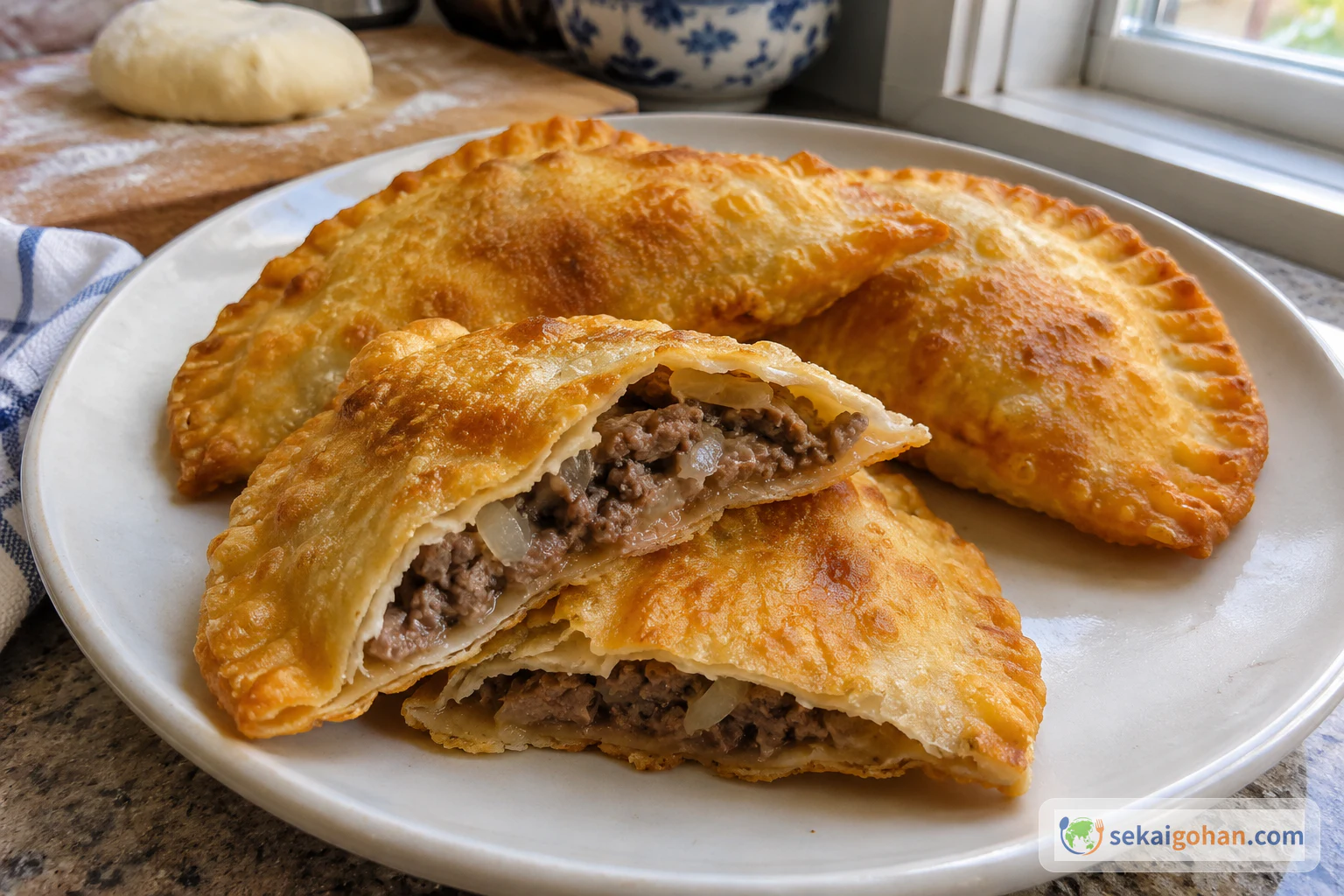
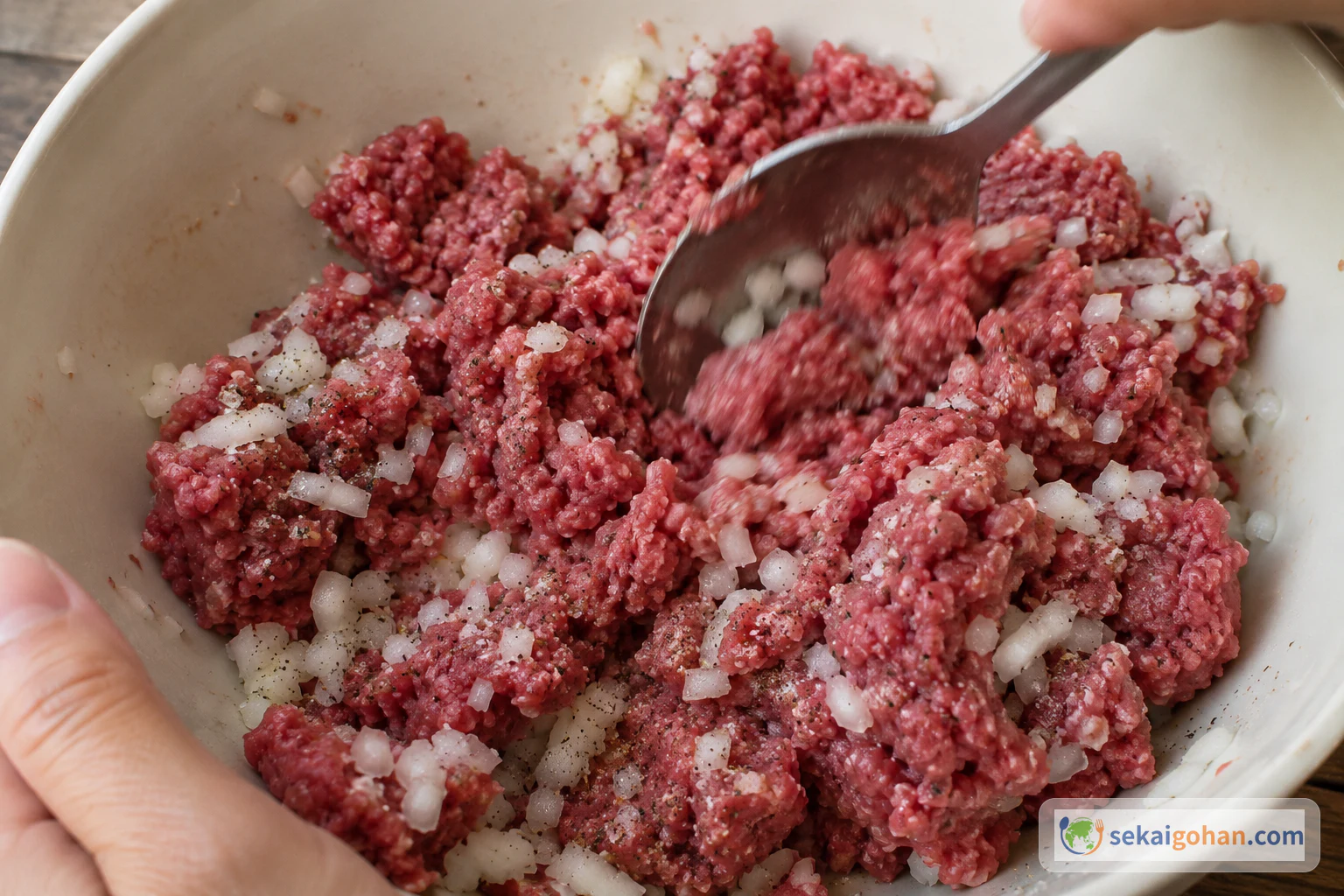
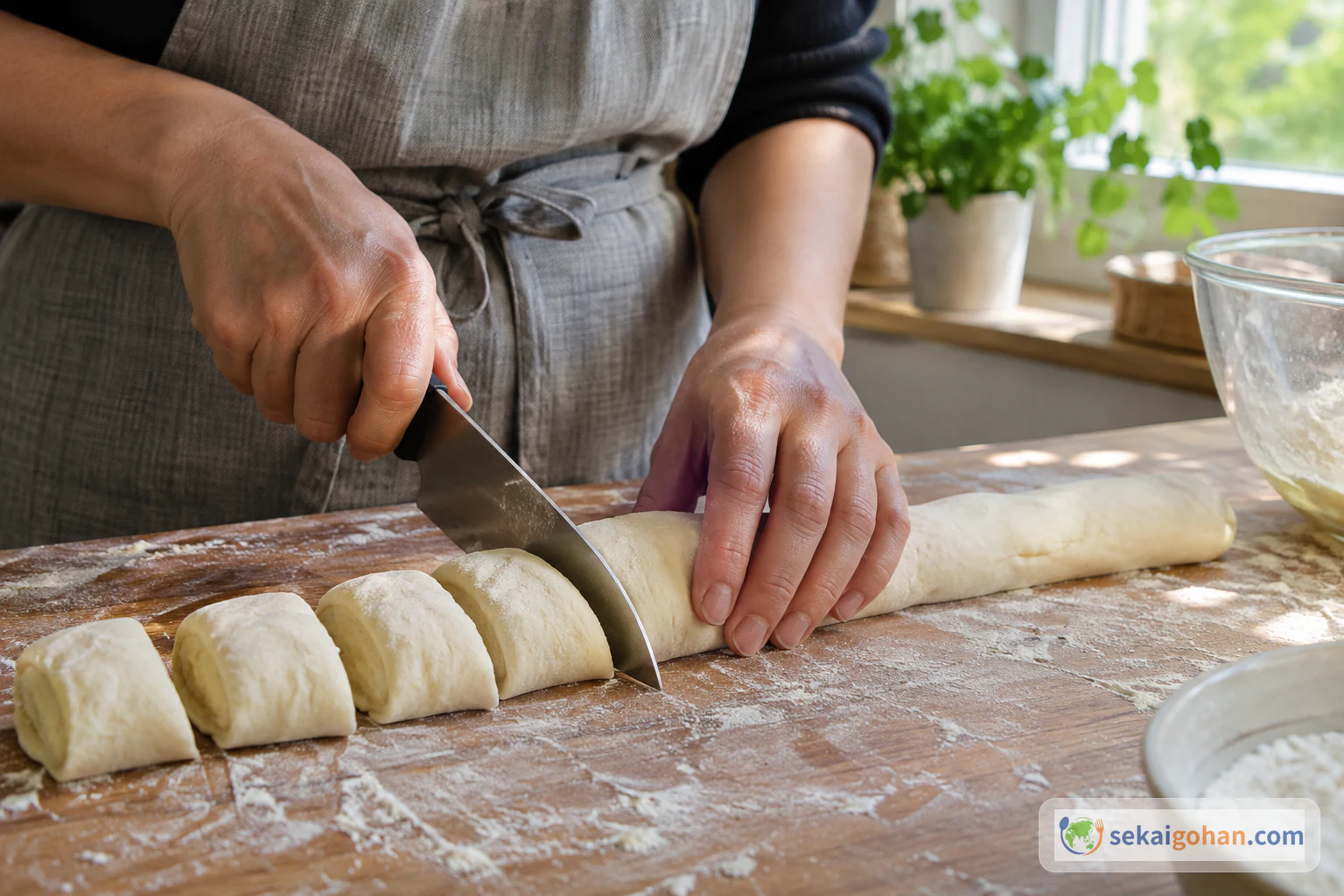
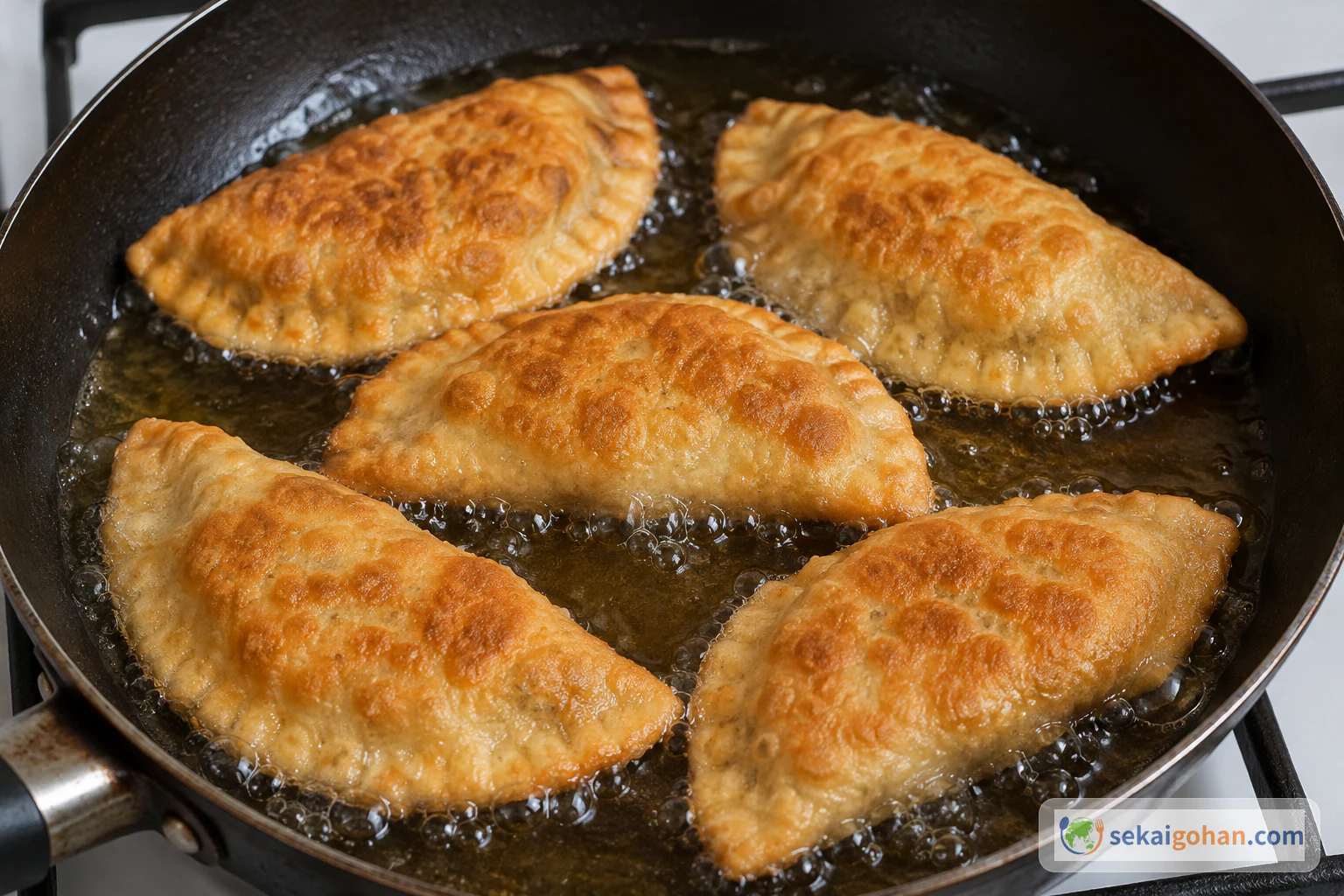
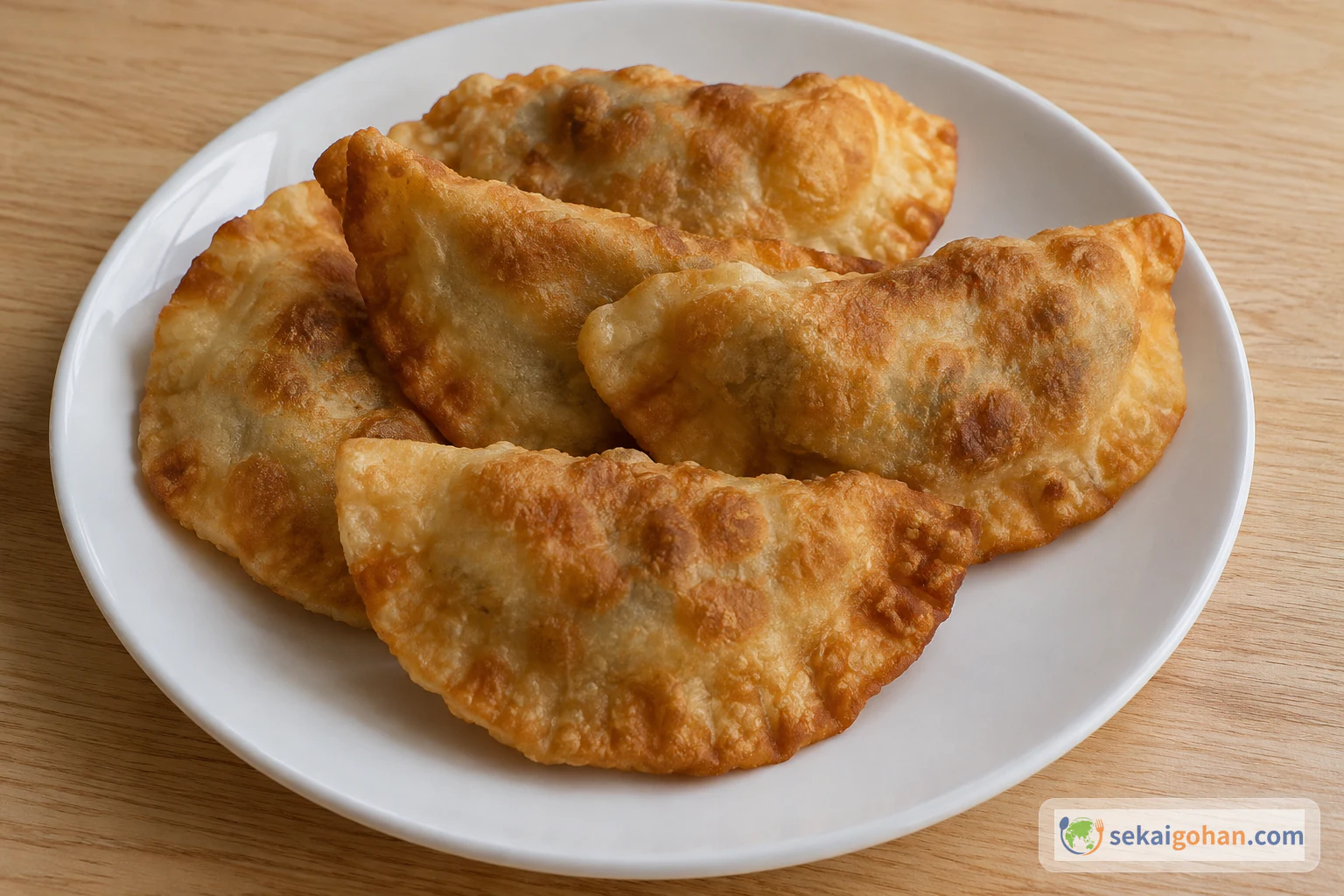
Khuushuur comes out of the oil as a flat golden half-moon, crisp outside, with seasoned beef sealed inside. It's a traditional dish from Mongolia: wheat dough folded around raw ground beef and fried on both sides. The dough is just flour and water, and the filling is beef, onion, black pepper and salt. This version serves 4 and uses only seven ingredients.
Khuushuur in Mongolian Cooking
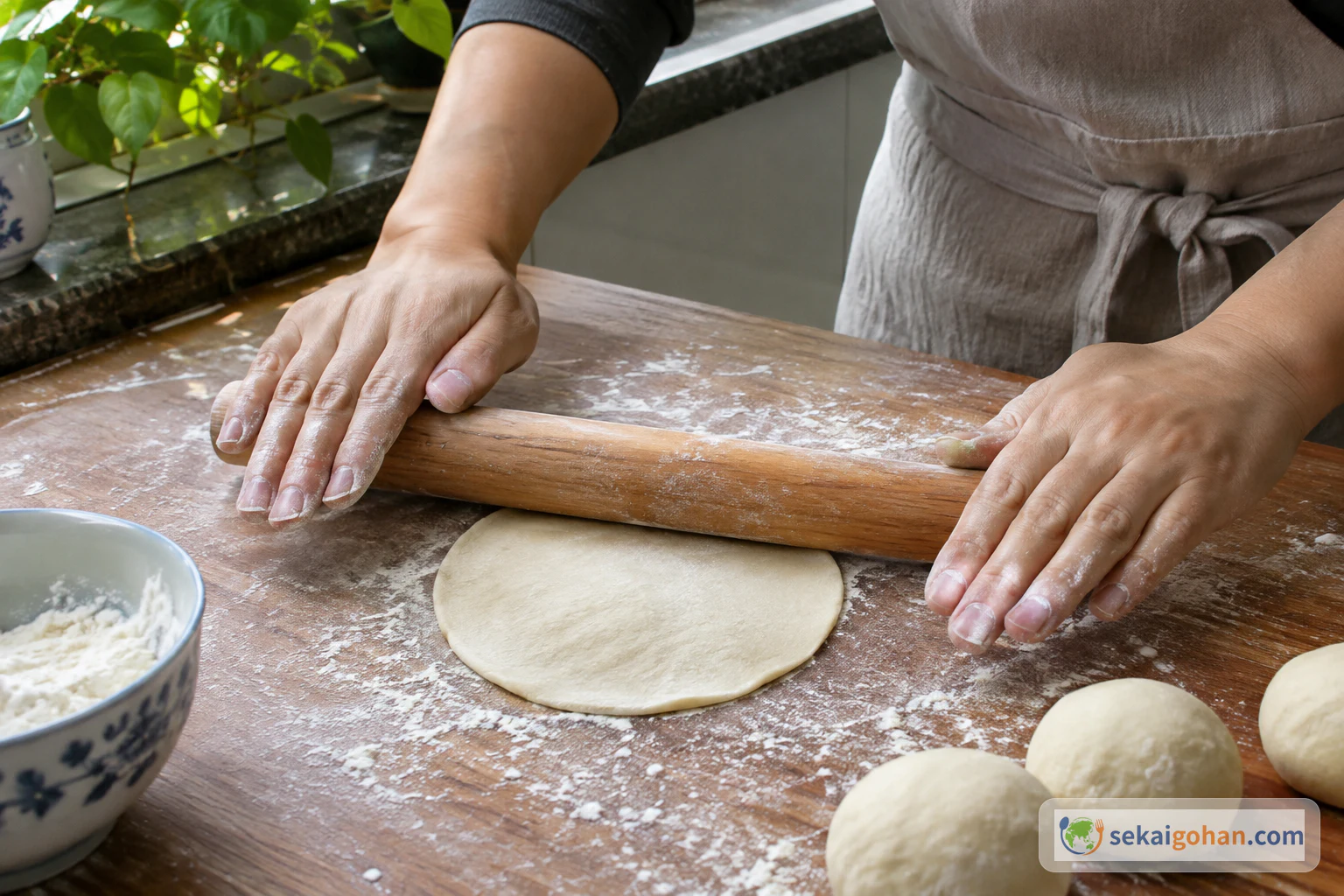
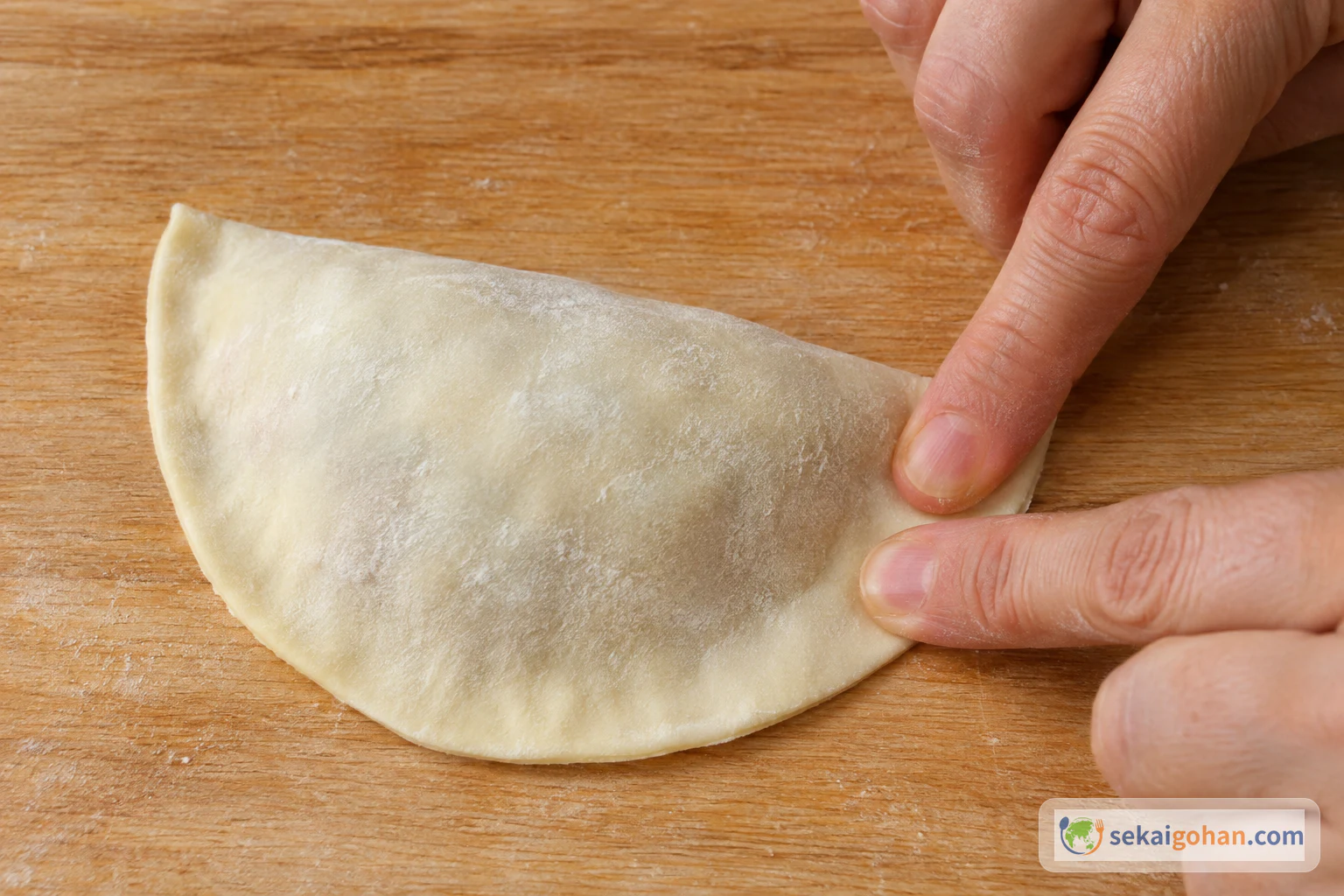
Khuushuur is commonly made with lamb or beef, and here it's beef. The dough is rolled into small rounds, a little thicker in the center than at the edge. A small spoonful of filling goes on one side, and the round is folded over and pressed closed. It's eaten plain and freshly fried.
Mongolian cooking has another filled dumpling, buuz, and the two are easy to mix up. Buuz are steamed. Khuushuur are shaped into flat half-moons and fried in oil, which gives them their crisp crust.
Ingredients (Serves 4)
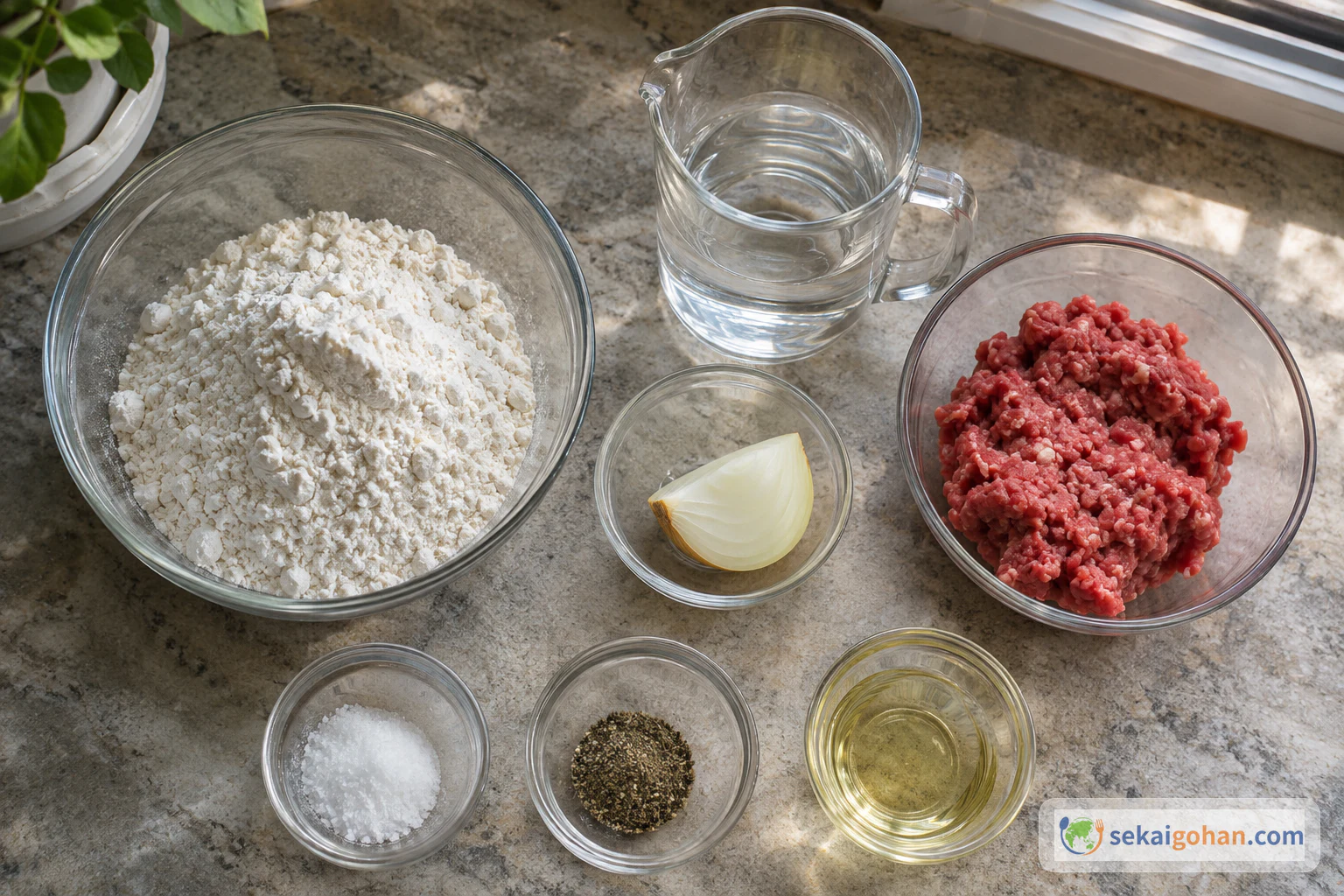
The dough uses flour and water only. The beef, onion, black pepper and salt all go into the filling. The canola oil is for frying.
Equipment
- Knife and cutting board
- Mixing bowl for the filling
- Mixing bowl for the dough
- Measuring cup and measuring spoons
- Rolling pin
- Spoon for the filling
- Frying pan
- Splatter screen
- Turner or tongs
- Food thermometer
- Wire rack set over a tray, and a skimmer
- Serving plate
Choosing and Handling the Khuushuur Ingredients
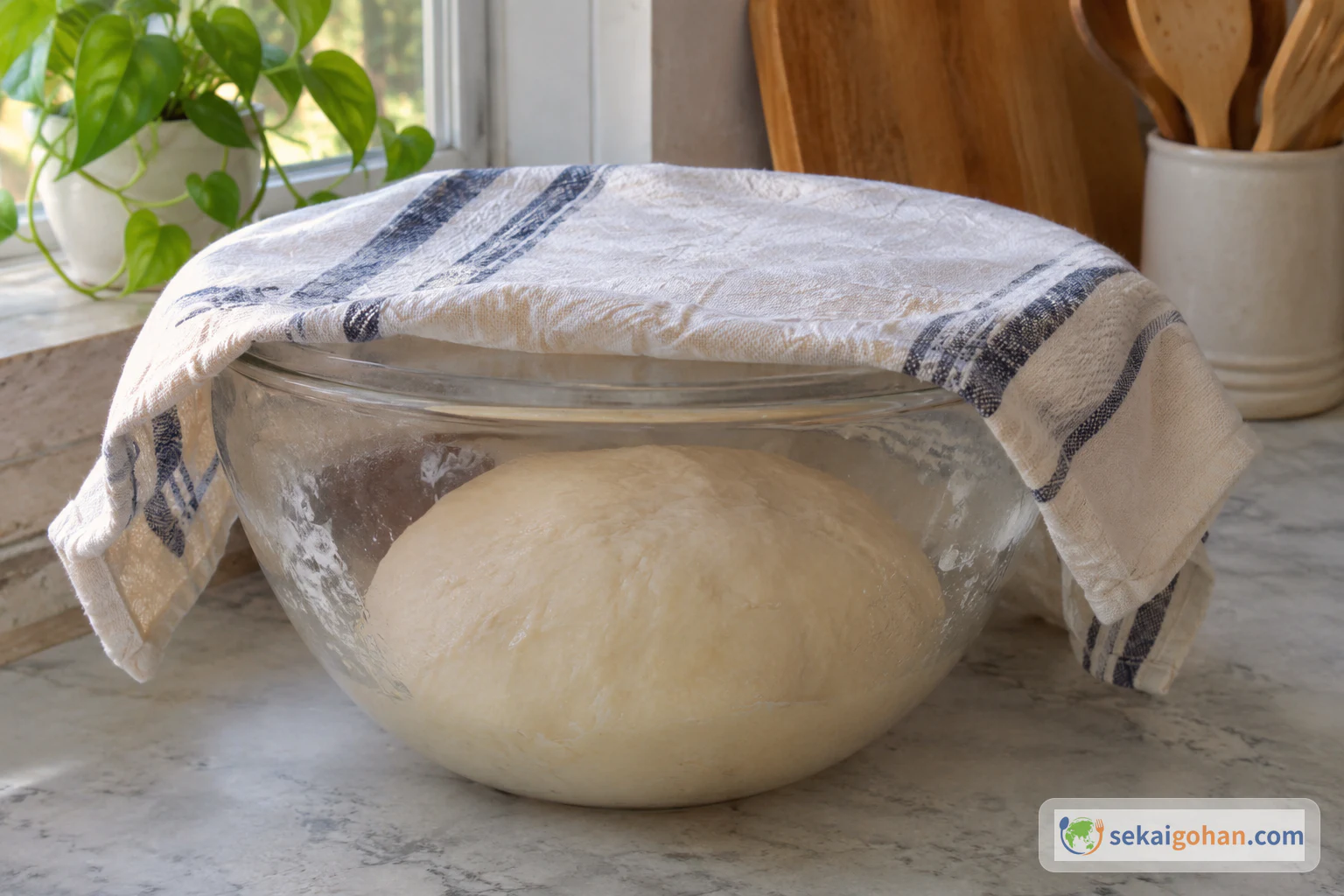
Keep the dough plain. It's flour and water only, with no salt or oil, because all the seasoning goes into the filling. The cups aren't tied to a particular standard, so measure the flour and the water with the same cup to keep the proportions right.
Keep the filling to beef, onion, black pepper and salt. Those four make the whole filling. Leave out water, garlic, herbs and other vegetables.
Keep raw meat separate. Keep the bowl, spoon and board you use for the raw filling away from cooked food. Don't taste the raw filling to check the seasoning.
Method: Filling, Dough, Shaping and Frying
Make the filling first, then the dough. While the dough rests for 15 minutes, keep the raw filling in its own bowl. Shape only a few pieces at a time, so each round can be filled and closed soon after rolling.
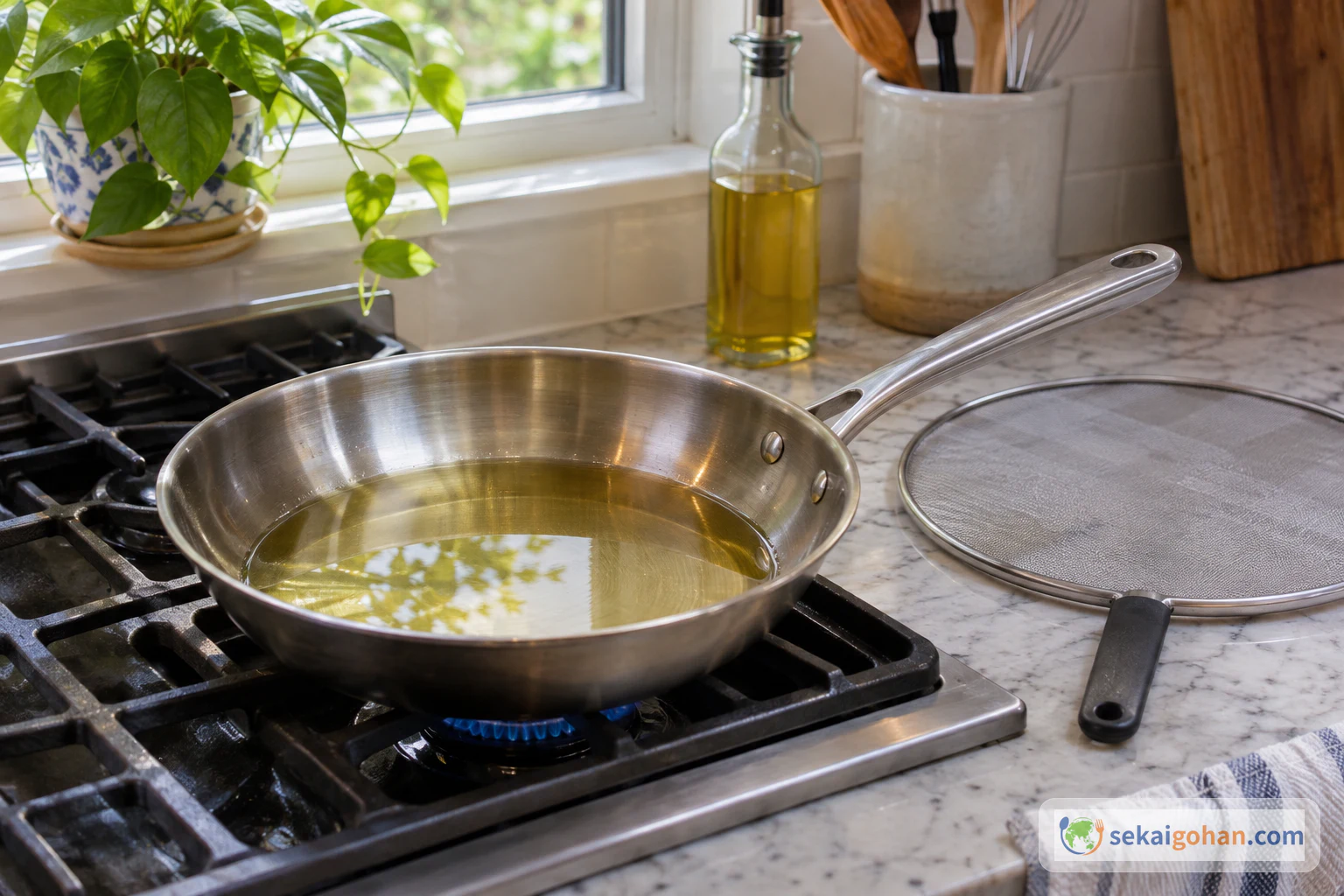
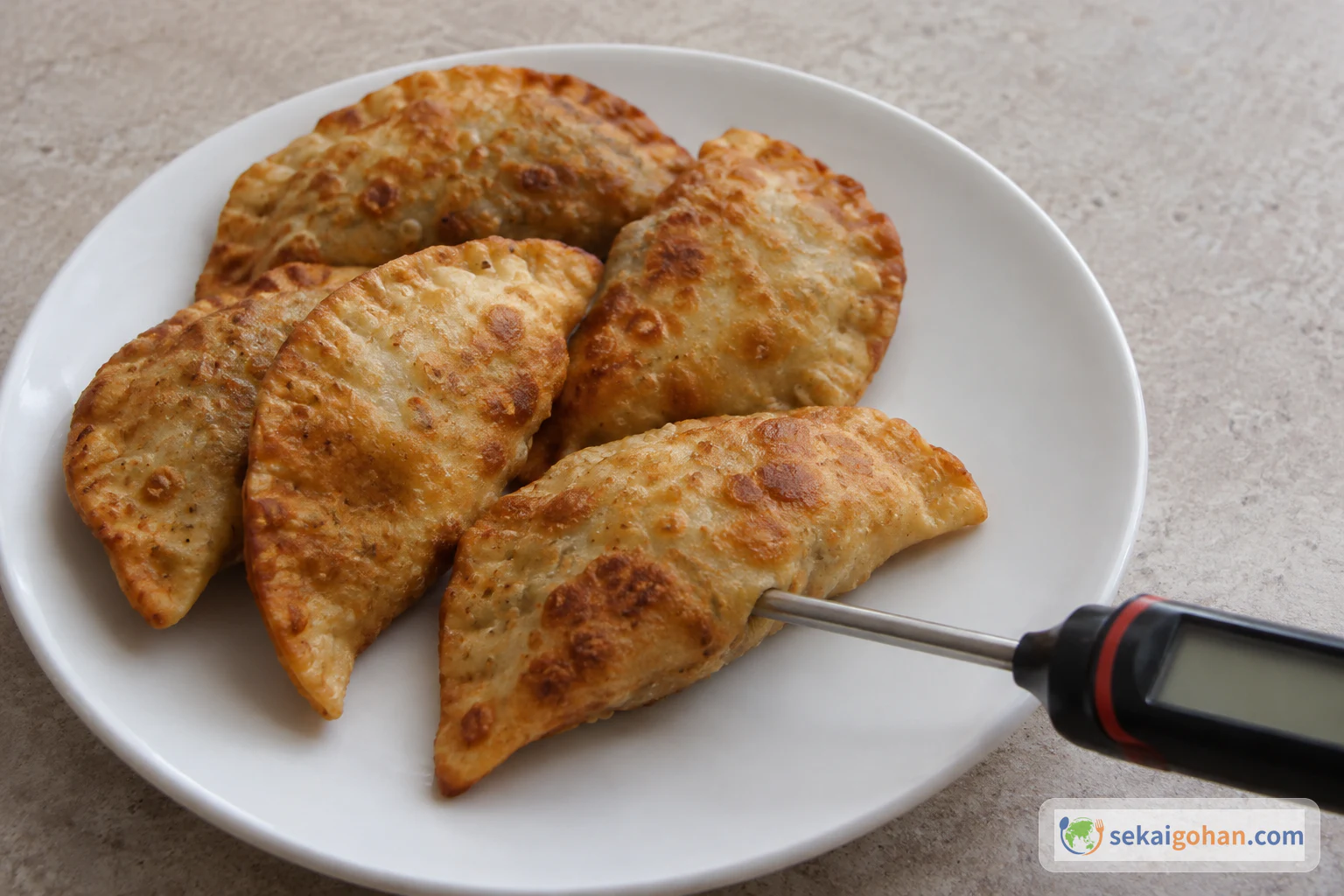
Fry the pastries over medium heat for about 2 minutes per side until golden. In step 8, check that the thickest beef filling reaches at least 160°F (71°C) with a food thermometer. Golden color, steam, frying time or a photo cannot stand in for a thermometer reading.
Common Khuushuur Problems and Fixes
| What you see | What to do |
|---|---|
| The outside is golden, but the thermometer reads below 160°F (71°C) | Return the pastry to the oil, keep frying, and measure the thickest part of the filling again. Golden color alone does not show the beef is cooked through |
| The edge will not stay closed | Leave a clean margin when you add the filling, keep to about 1.5 teaspoons, and press the aligned edges firmly along the whole curve |
| The rolled rounds dry out or get hard to close | Roll out only a few circles at a time so each one is filled and closed soon after rolling |
| Oil spits from the pan | Keep the splatter screen over the pan while frying. A tight lid would steam the pastry instead of frying it |
| You are not sure about the seasoning | Season as written: black pepper mixed in first, salt added after. Never taste the raw filling |
Frequently Asked Questions
If the recipe says about 2 minutes per side, why use a thermometer?
Frying time and golden color only tell you how the outside looks, and pan heat varies from stove to stove. Ground beef must reach at least 160°F (71°C) inside to be safe, so check the thickest part of the filling with a food thermometer.
Can I keep leftovers?
Khuushuur is meant to be eaten right away, fresh from the oil.