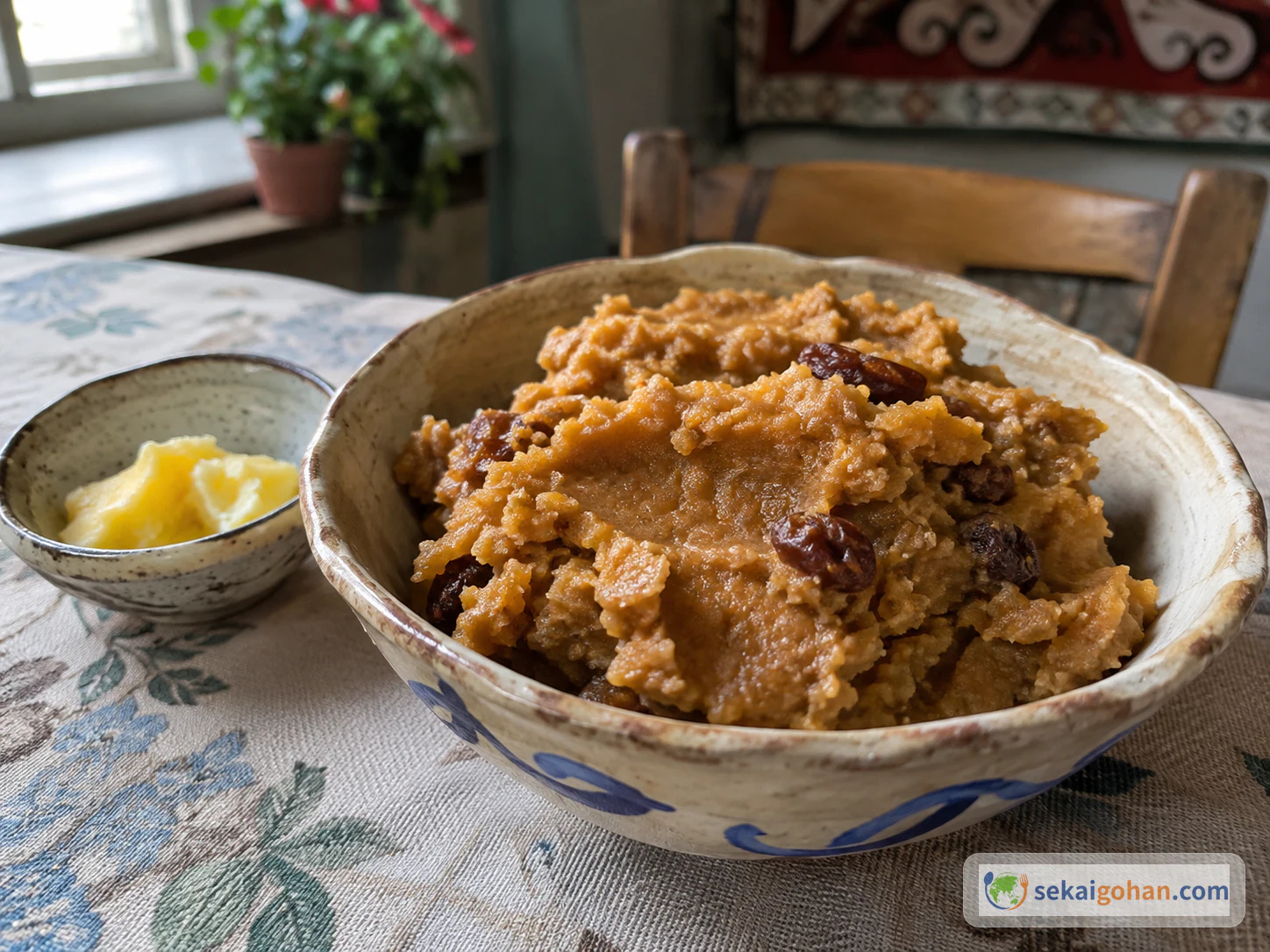
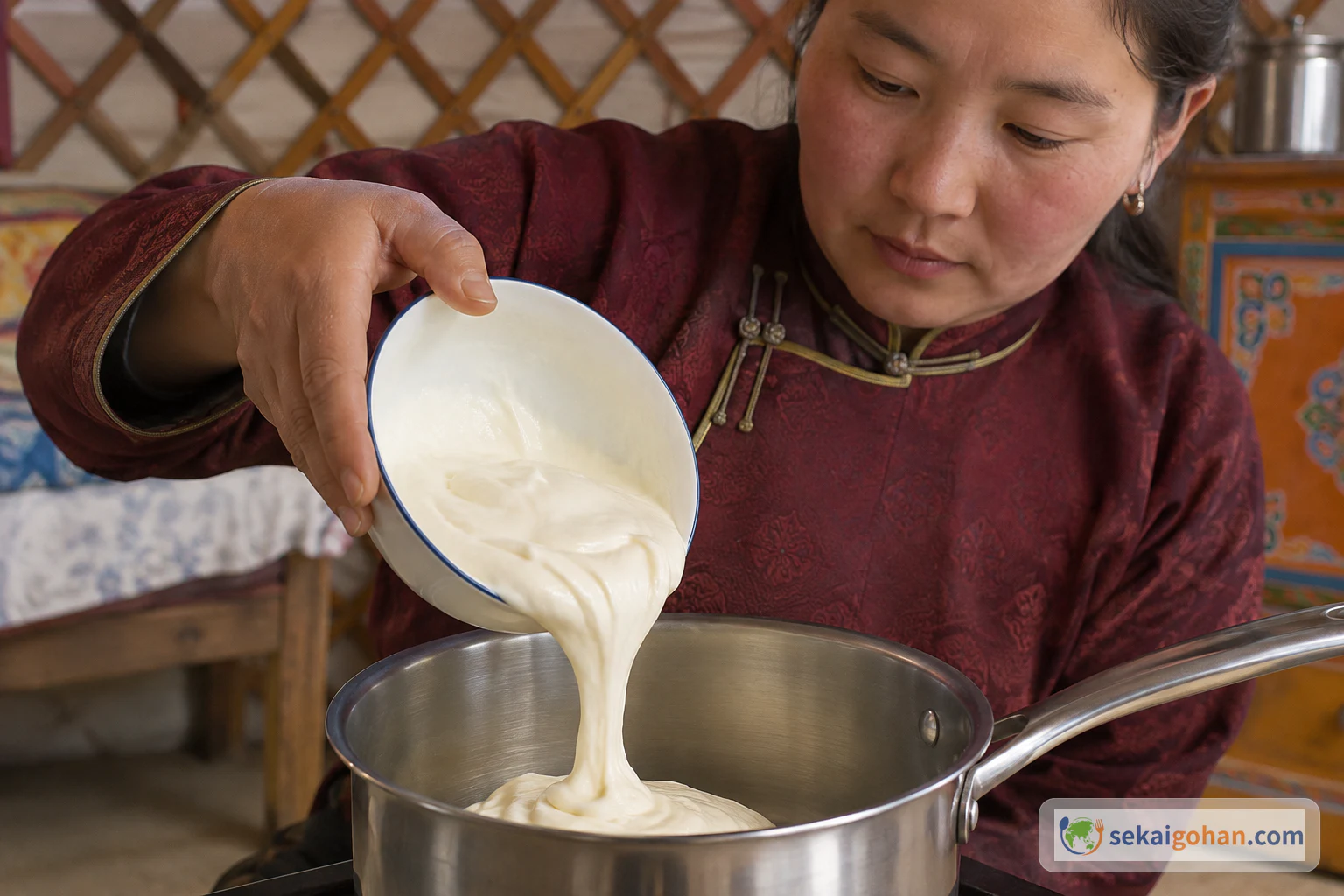
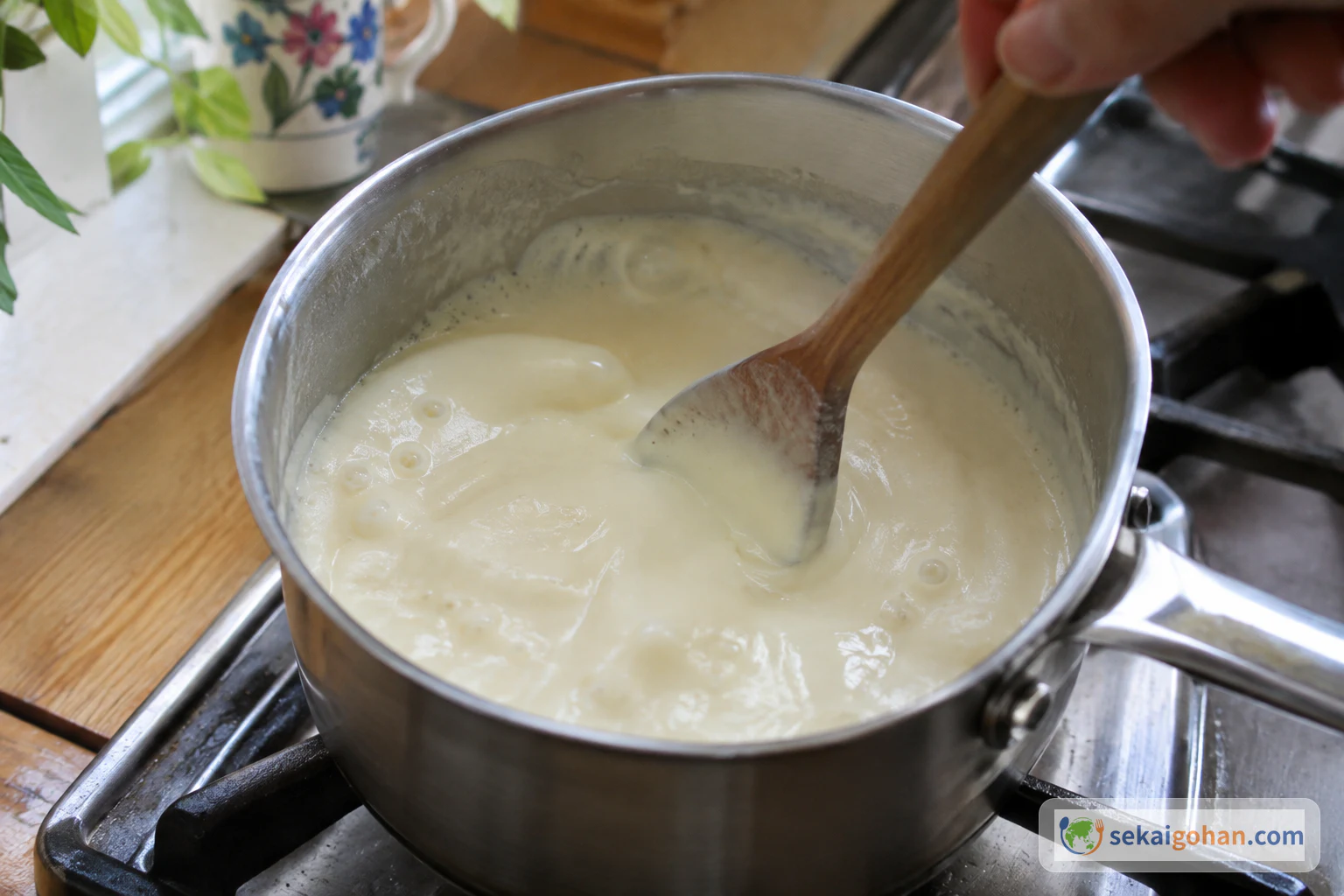
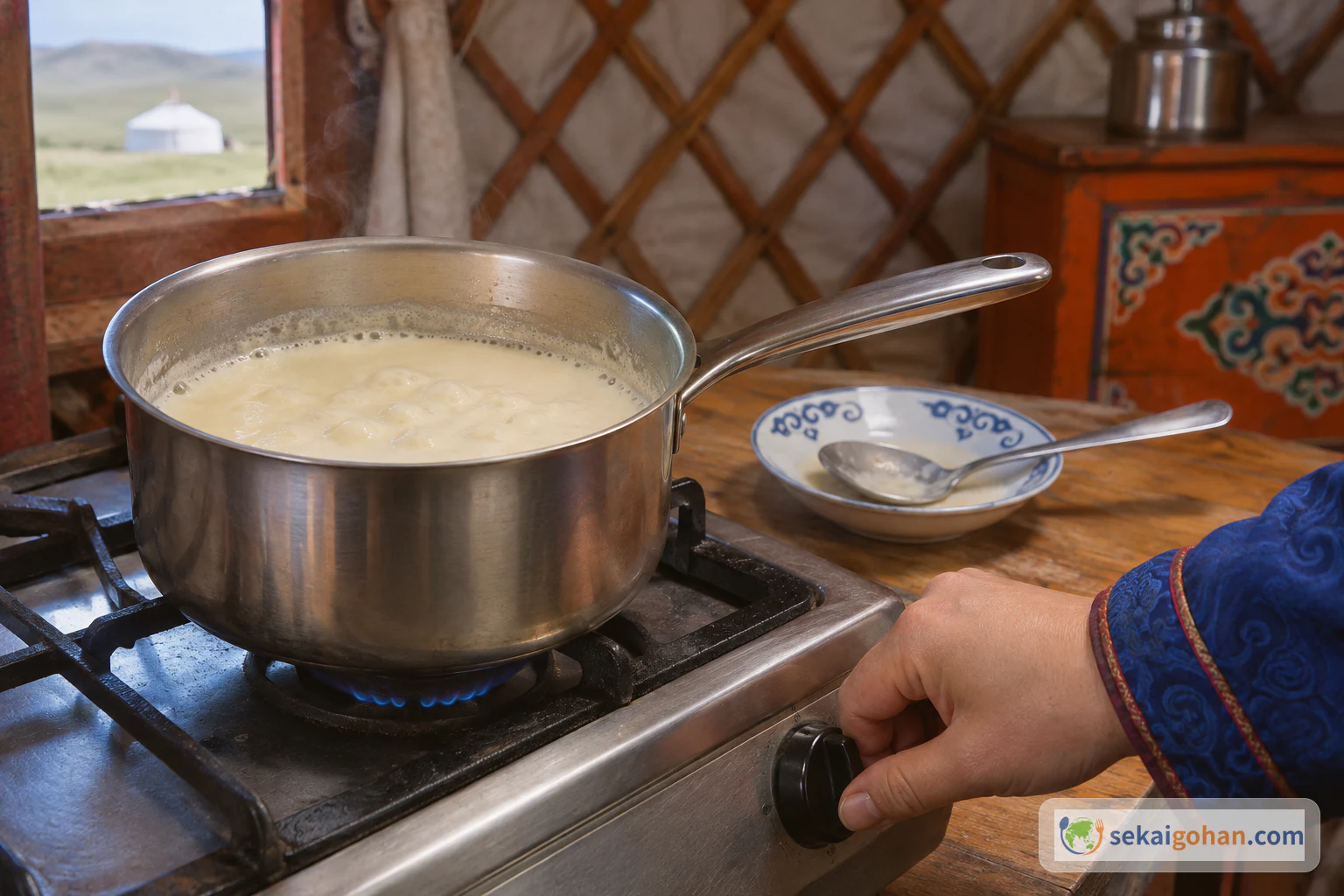
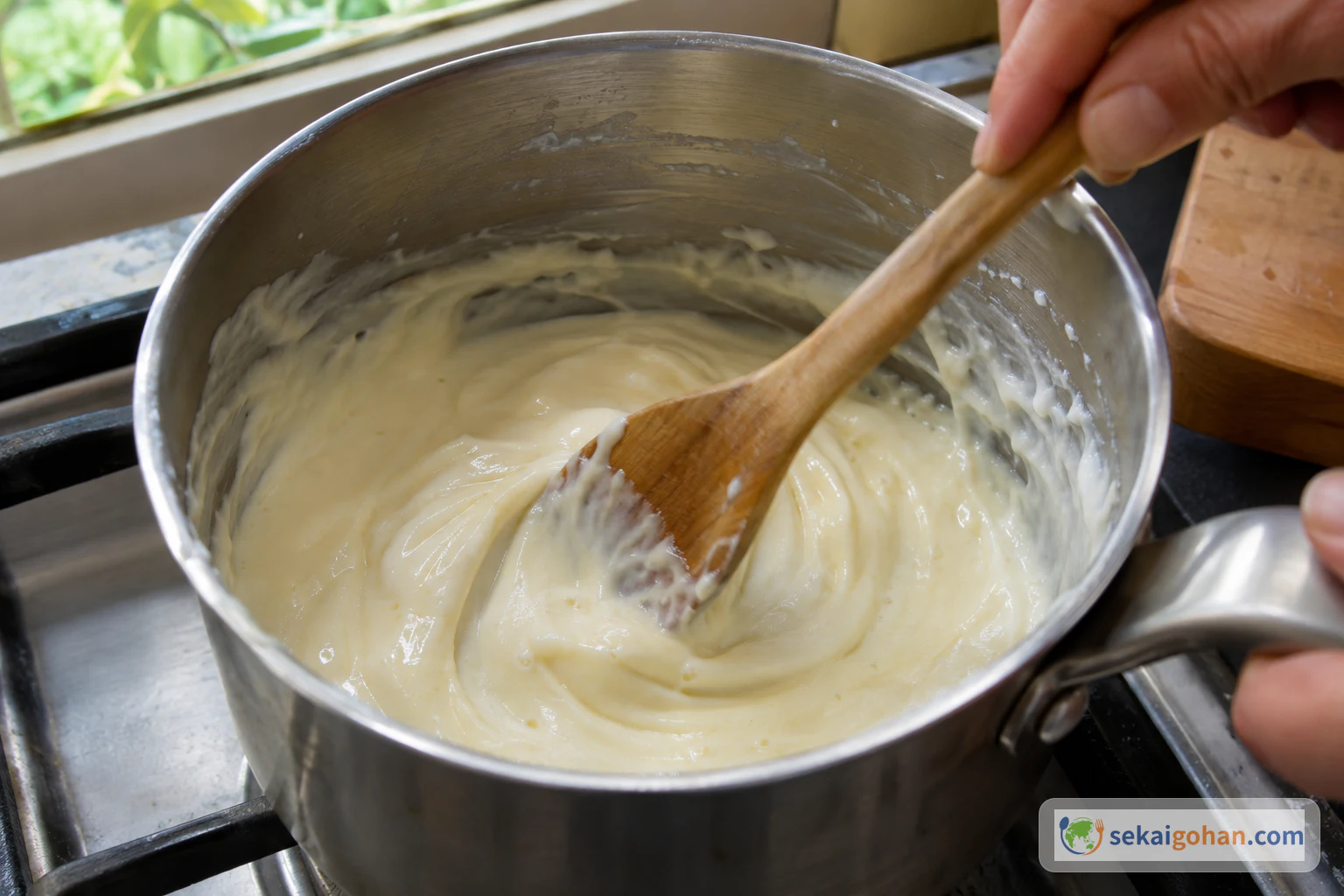
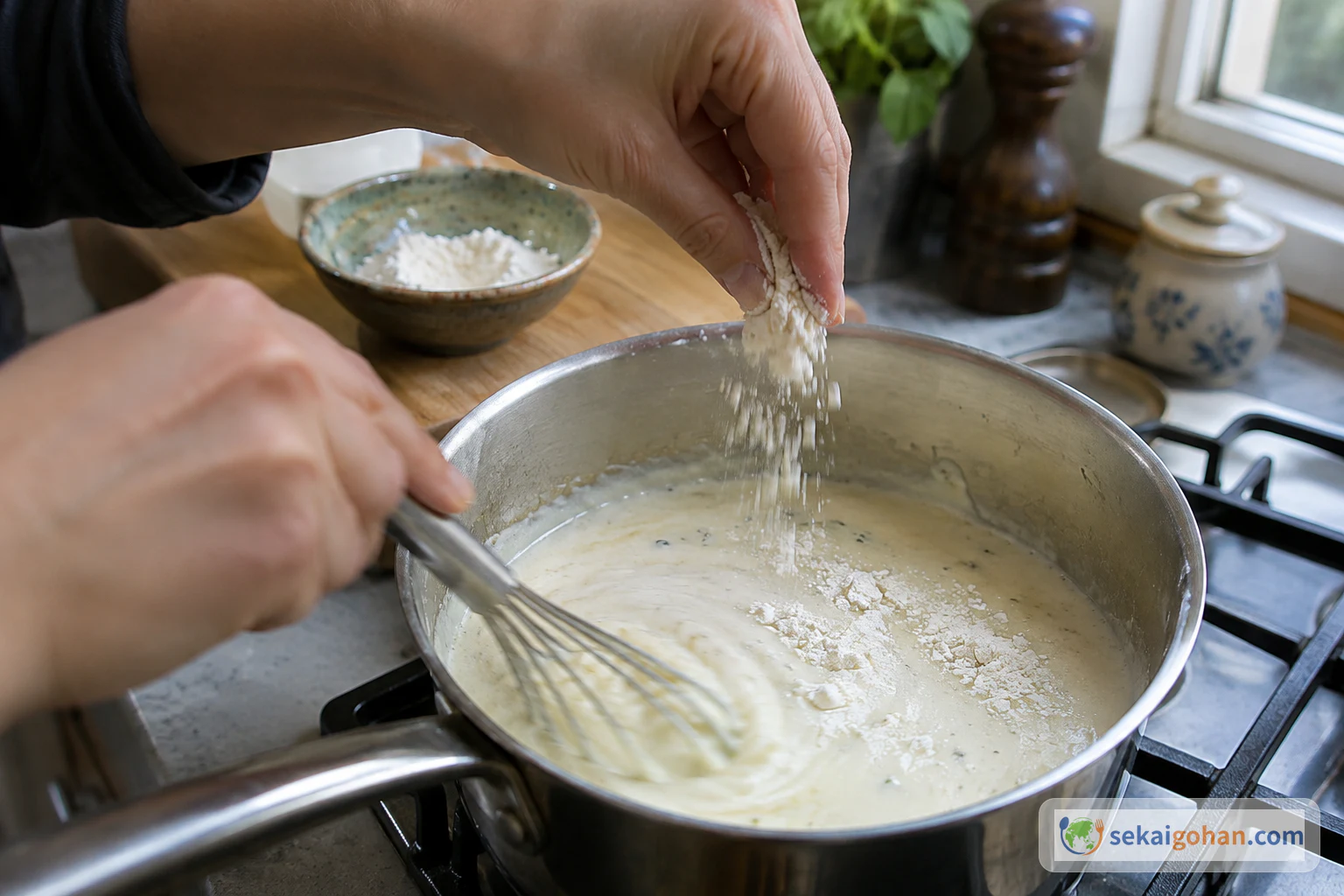
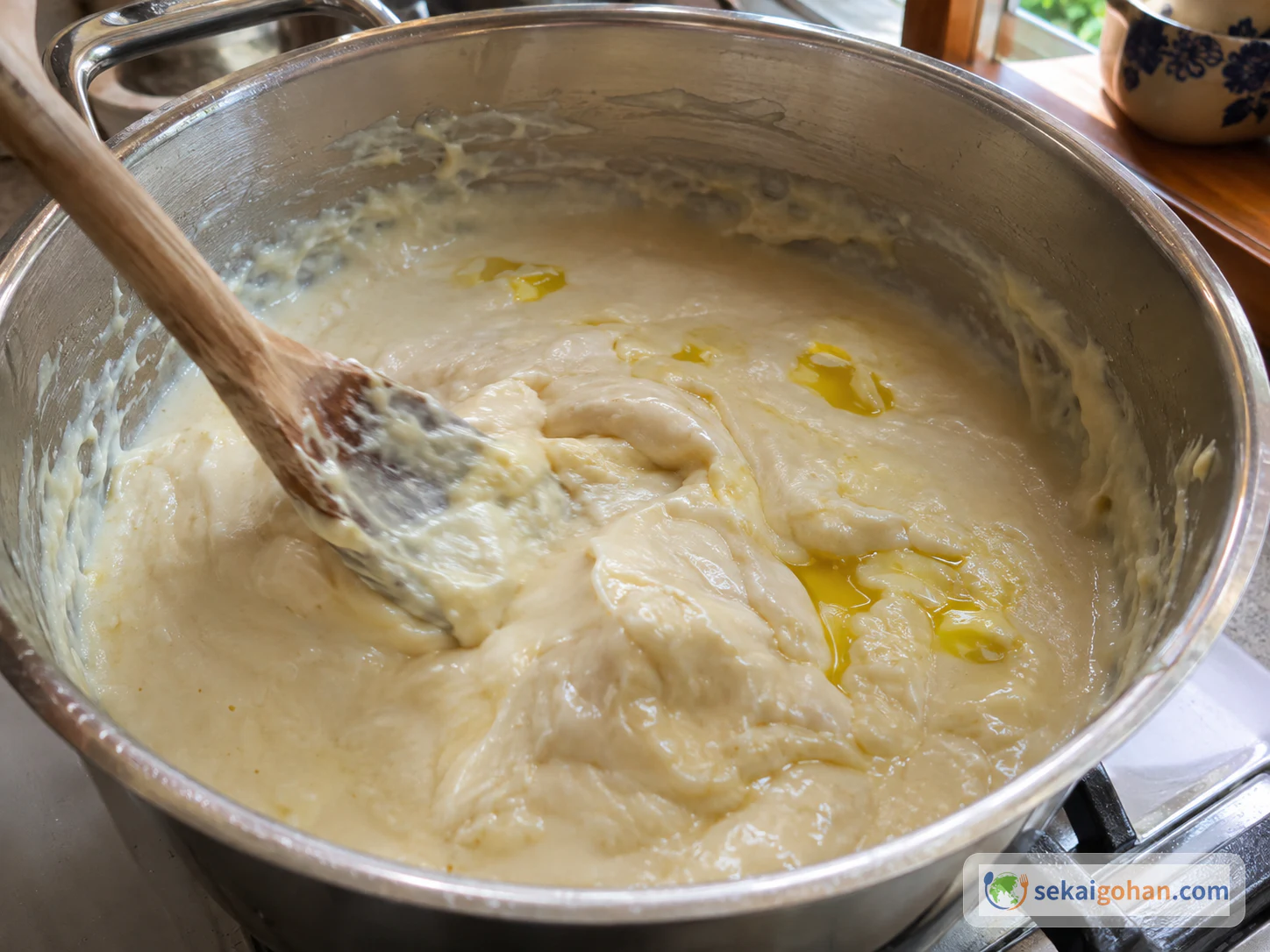
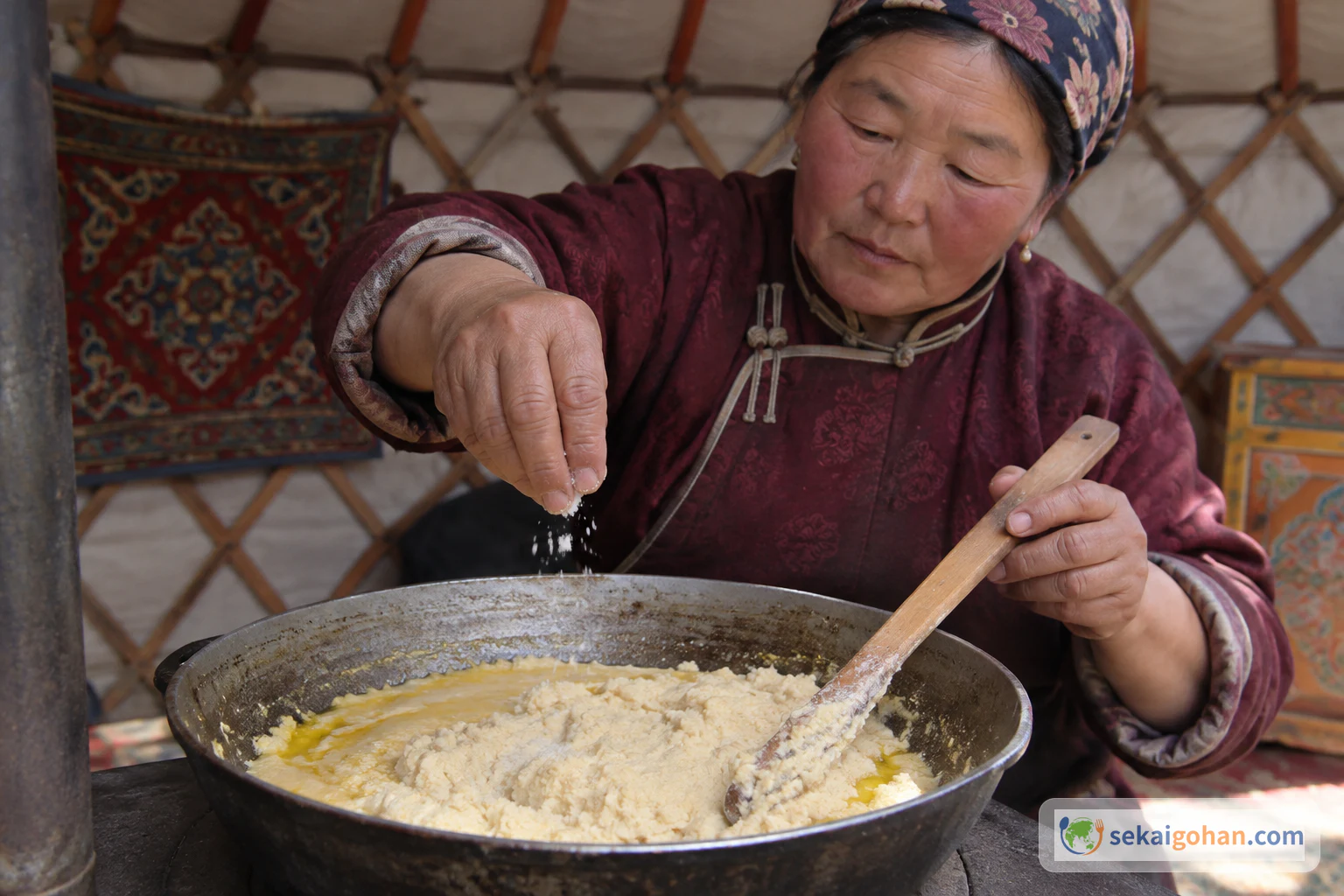
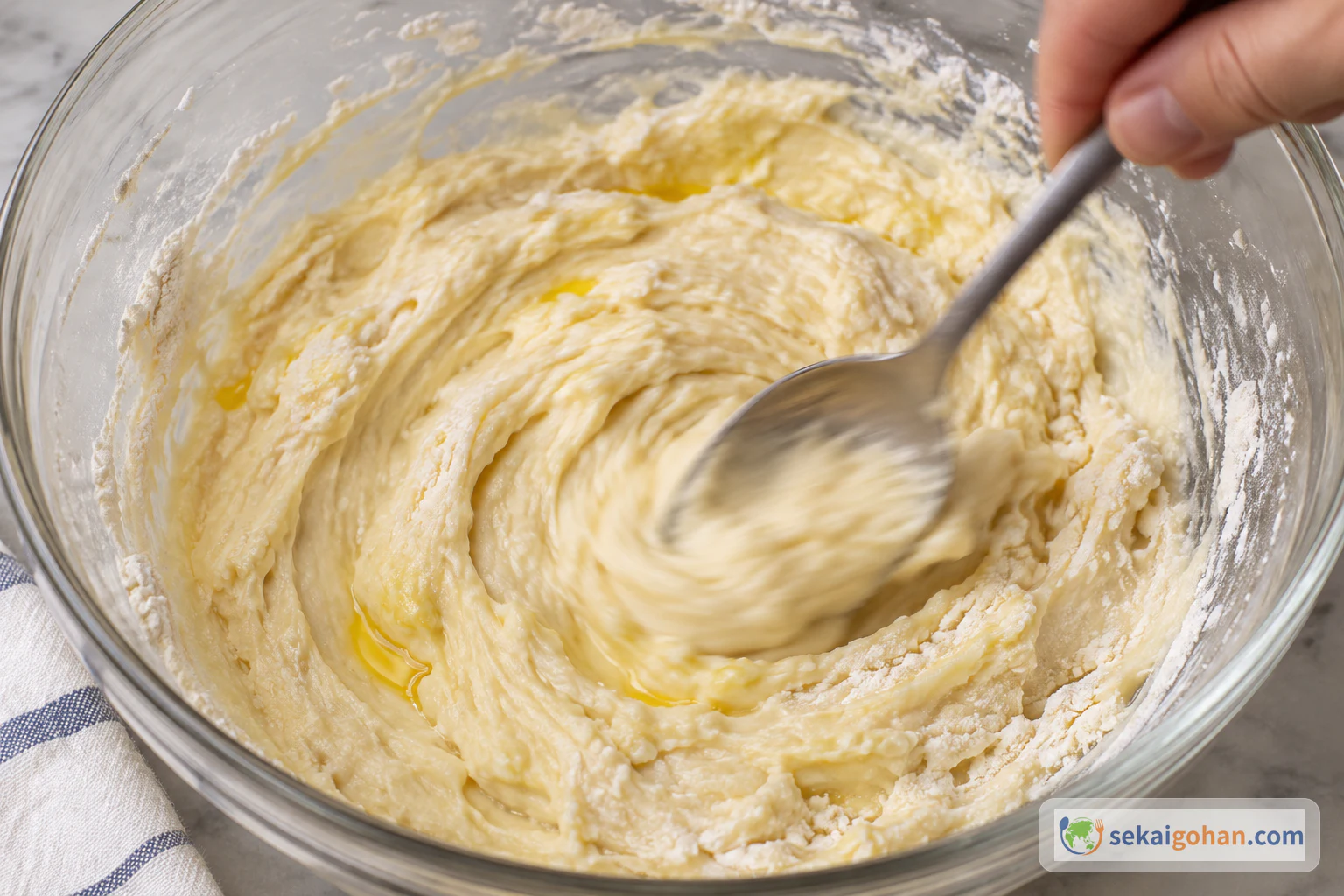
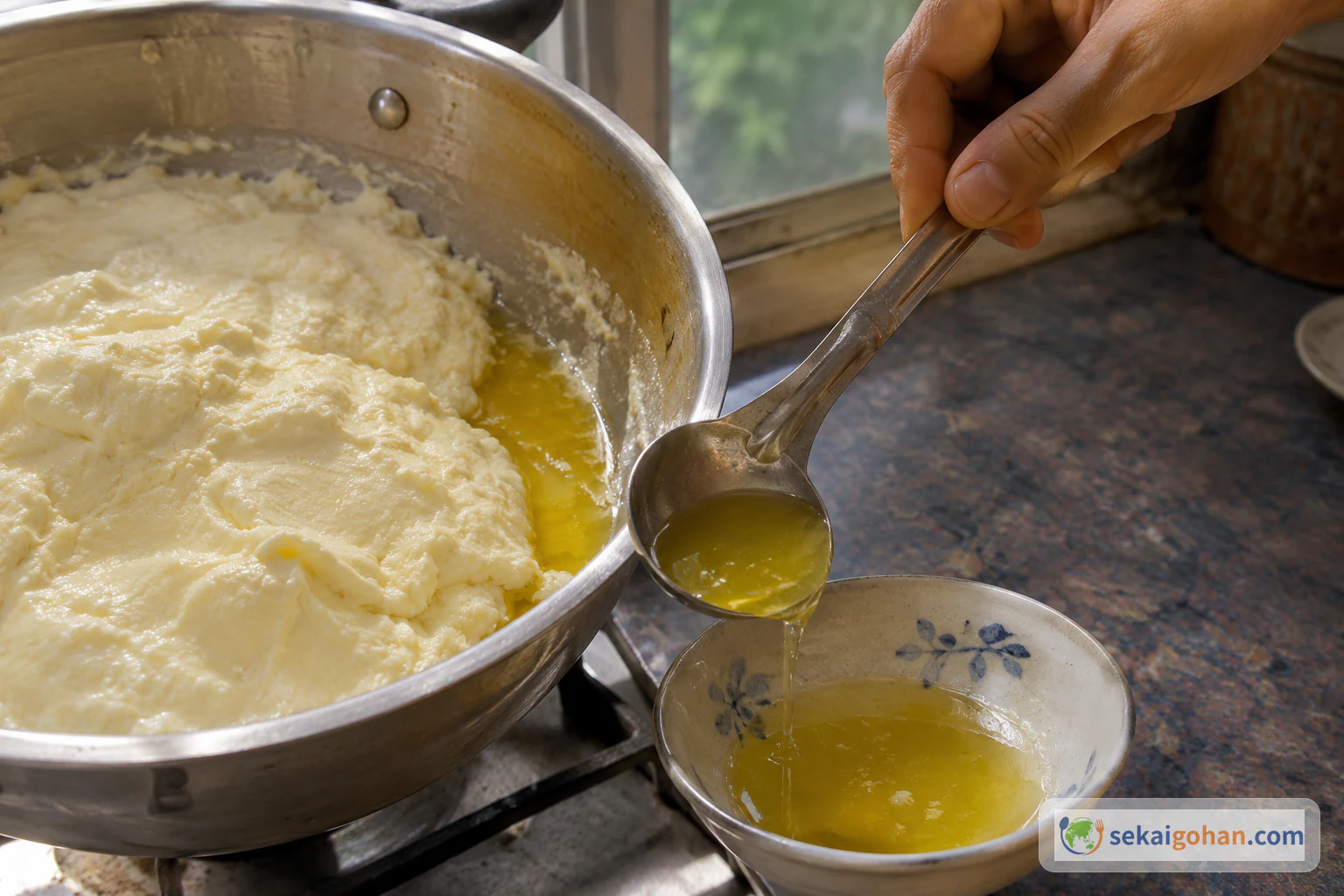
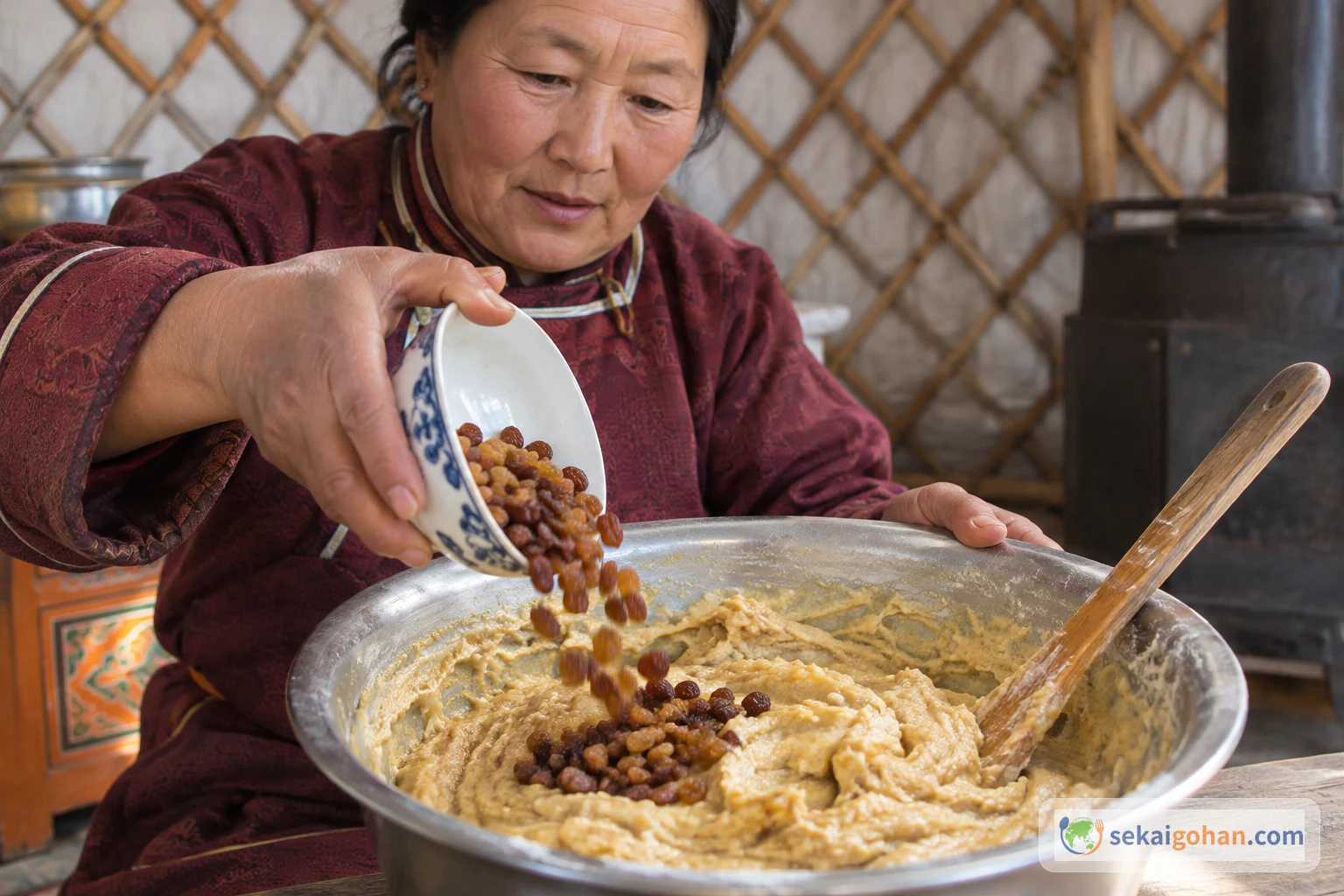
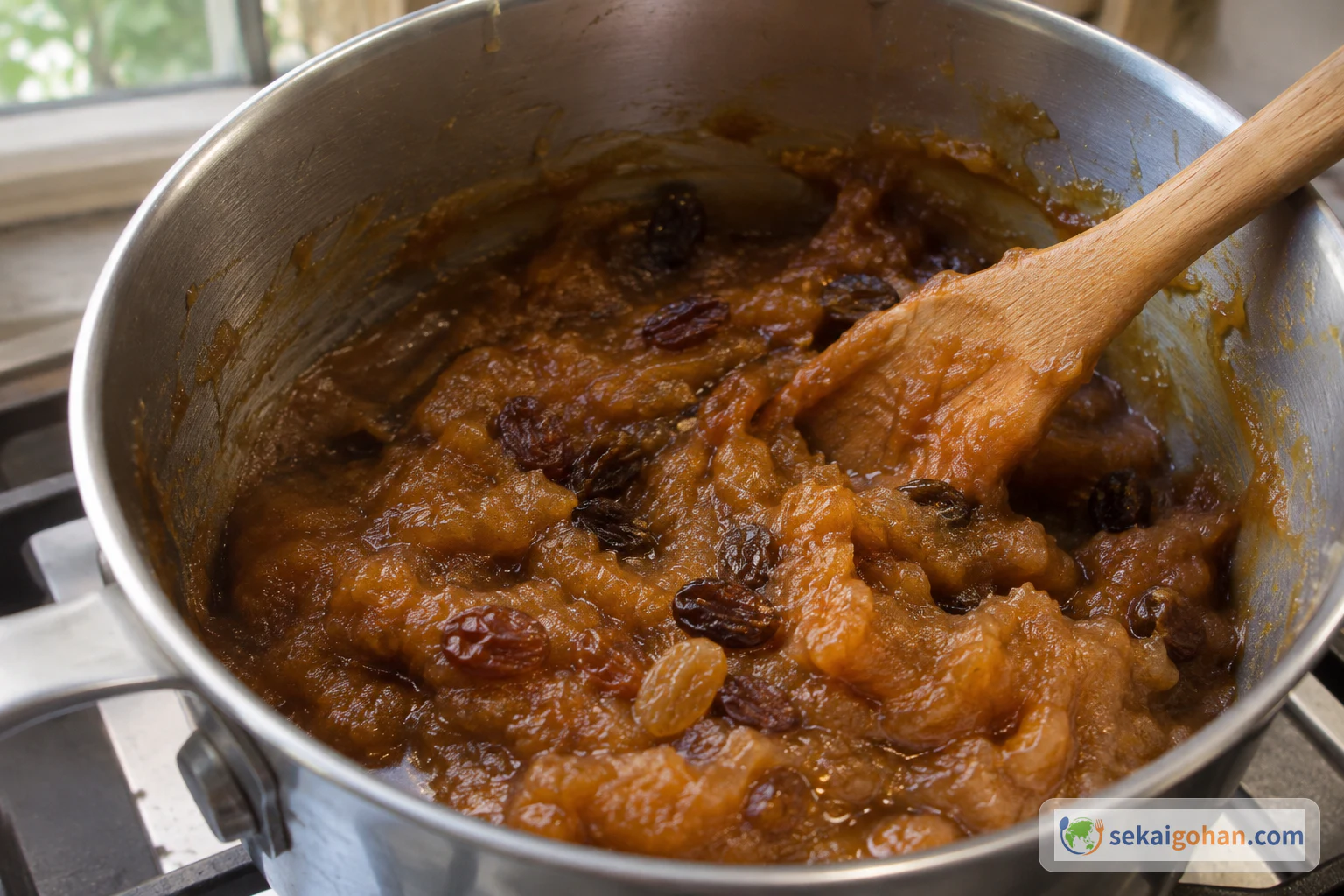
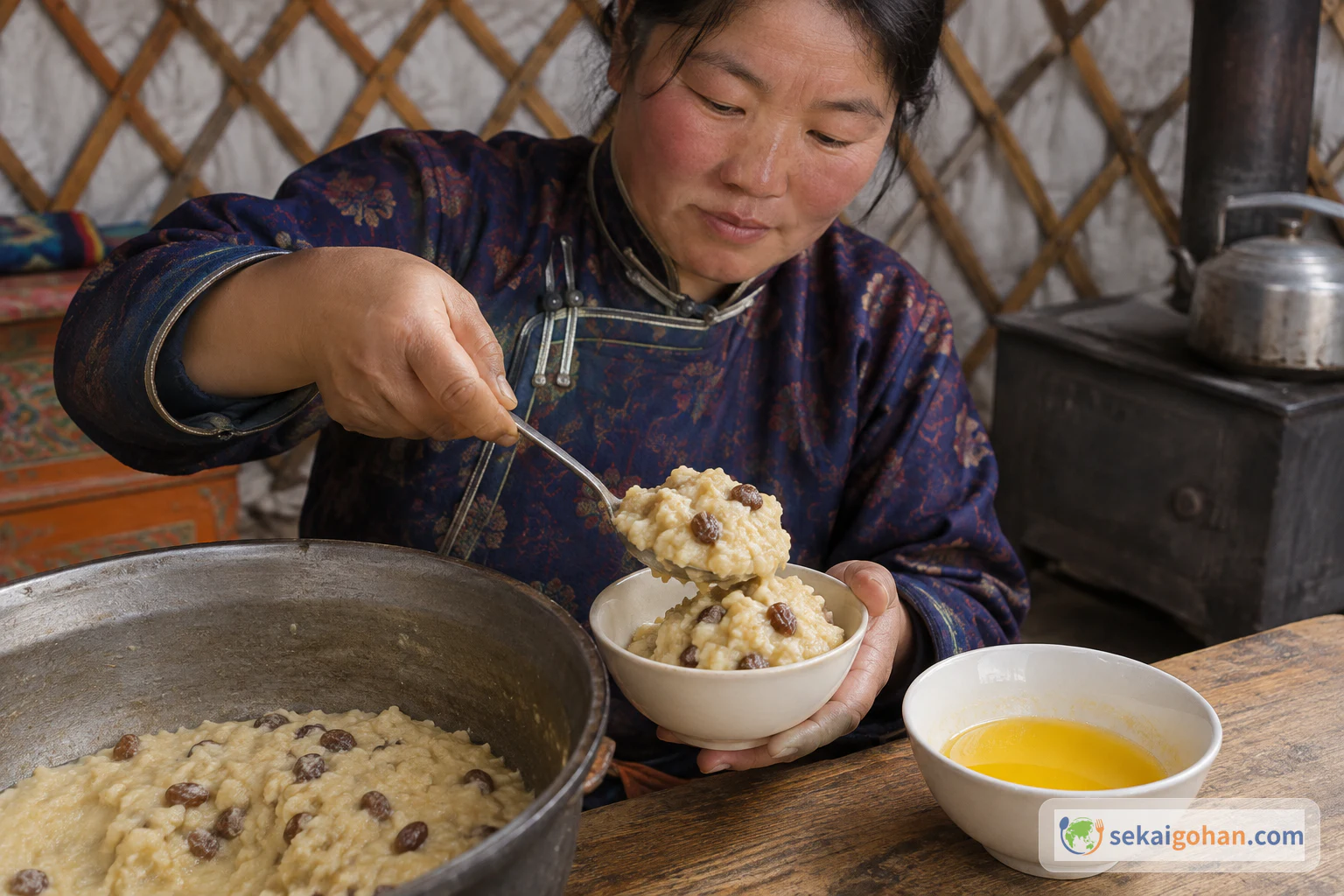
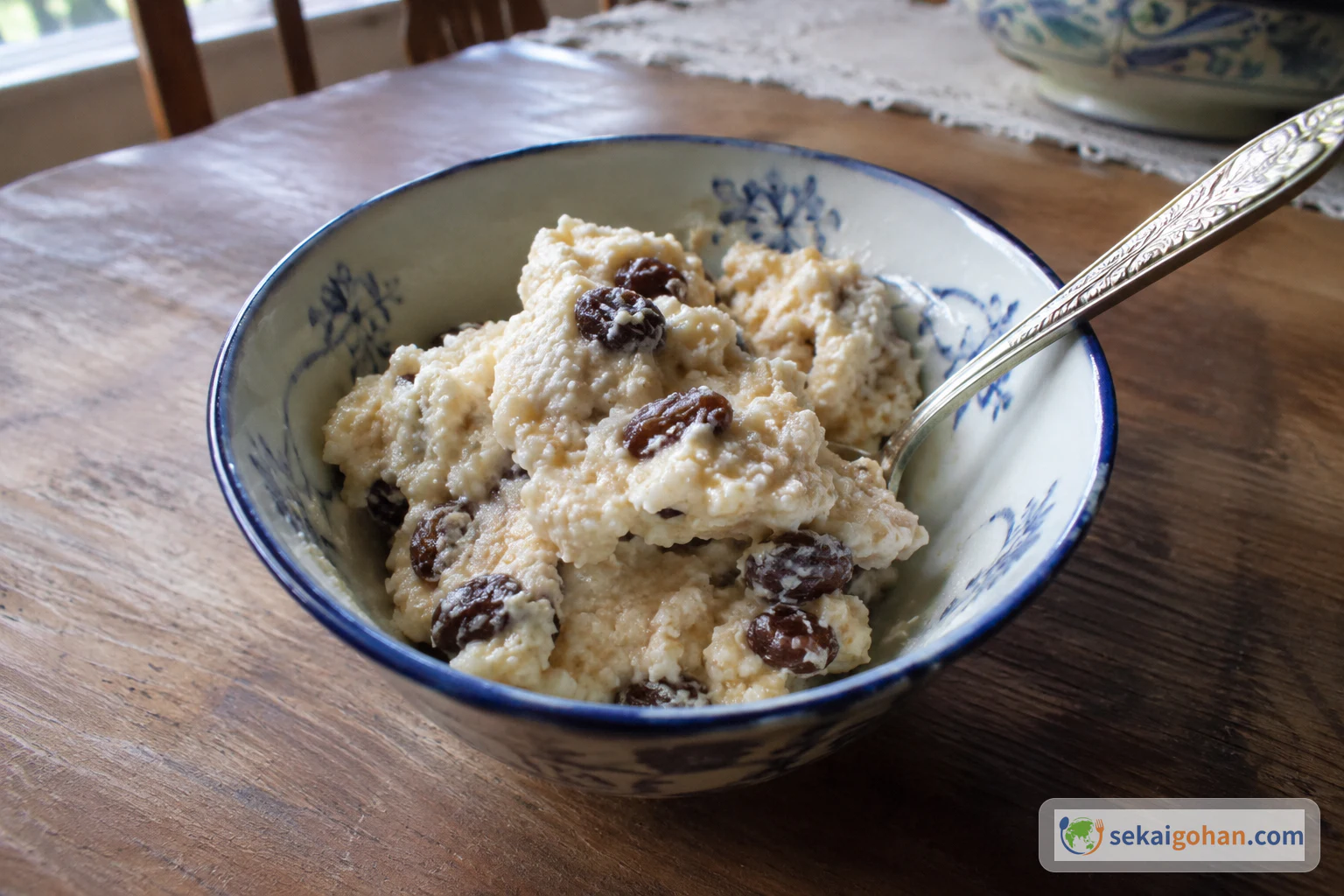
Crème fraîche comes to a boil, then settles into a low simmer under a spoon that never stops moving. Flour thickens it, yellow fat rises and gets lifted away, and once the pan looks like thick fruit jam, in go the raisins. That's khailmag (хайлмаг), a rich Mongolian dairy sweet that tastes of childhood at home and turns up on celebration tables, from lunar new year to weddings.
About Khailmag
Khailmag belongs to Mongolia's wider world of dairy foods. Mongolian dairy processing is adapted to local conditions. Livestock milk becomes many products, by-products are put to use, and sheep and yak milk suit high-fat dairy.
Traditionally, khailmag is made with urum (хөрсөн өрөм), a Mongolian clotted cream made by boiling cow, sheep or goat milk and collecting the foamy cream from the surface. This simple home version uses crème fraîche instead, which makes it practical in an ordinary kitchen outside Mongolia. Urum-based khailmag is a separate dish.
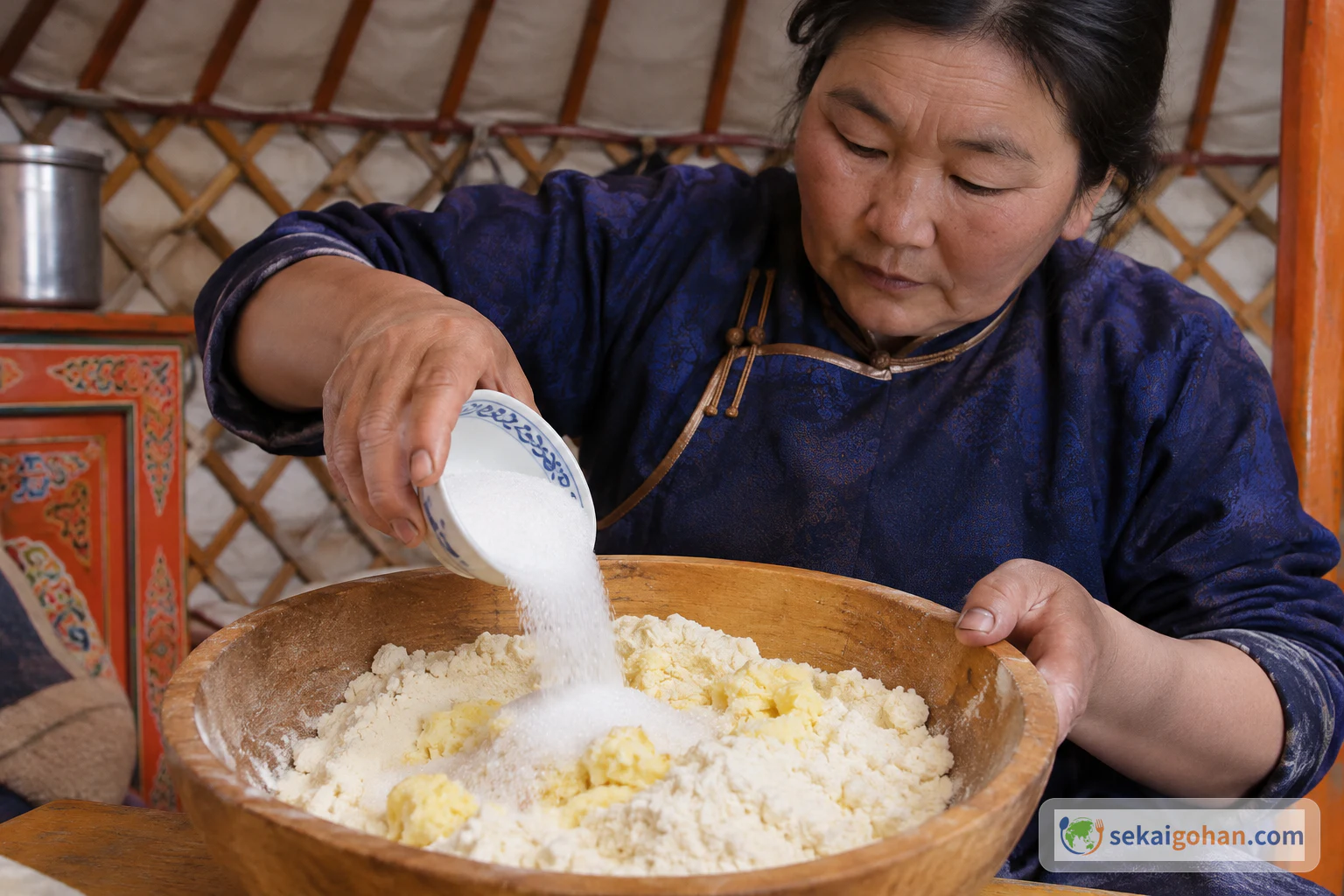
Khailmag also changes from area to area. One method uses white butter, flour, separated yellow butter (shar tos) and sugar. It's a different preparation, so keep its steps and ingredients apart from this recipe. You can explore more of the country's table from the Mongolia page.
Ingredients
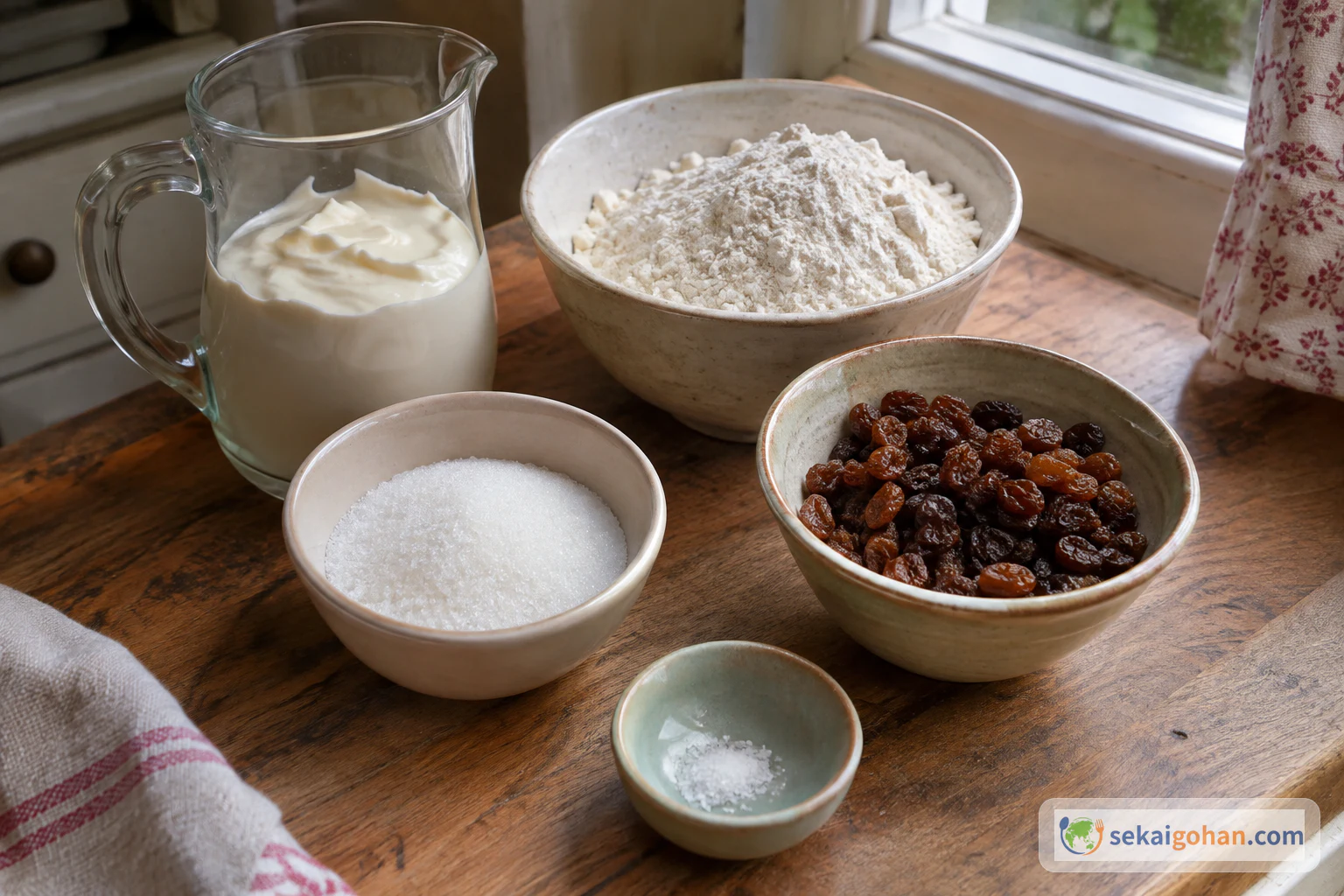
Equipment
- Saucepan
- Wooden spoon
- Measuring cup
- Spoon or small ladle for lifting off the fat
- Small bowl for the separated fat
- Small serving bowl and spoon
Choosing Ingredients for Khailmag
Crème fraîche: Buy a commercial product made from pasteurized milk, with around 40% fat, and store it as its label directs. Ordinary whipping cream is a different formula and won't behave the same way.
Flour: Use all-purpose flour. Japanese cake flour and other flours can behave differently.
Allergens: This recipe contains dairy and wheat.
Method: Watch the Pan, Not the Clock
Hot, high-fat dairy can spit and scorch. Once the cream has boiled, keep the heat low and keep stirring across the bottom of the pan. Don't add water, milk or oil at any stage.
The first seven steps are the cooking, and the last is plating. There are no set cooking times. Judge each change by what you see in the pan.
Khailmag Troubleshooting
| What you see | What to check | What to do |
|---|---|---|
| No yellow fat yet | Whether the cream is high-fat, around 40% | Keep stirring over low heat. Don't add oil |
| Flour is clumping | How quickly the flour went in | Keep stirring, and add the remaining flour in smaller amounts |
| The bottom is starting to catch | The heat level and whether the spoon has reached the base | Keep the heat low and stir across the bottom without stopping |
| The mixture is spitting | The heat level | Keep the heat low and take care around the hot fat |
| Yellow fat is pooling on top | Whether enough has separated | Lift it into the separate bowl, and don't stir it back in |
| Not yet as thick as jam | The texture in the pan | Keep stirring over low heat and hold the raisins back until it reaches that thickness |
| Thicker than you expected | Whether you passed the jam-like stage | Don't loosen it with water, milk or oil. Next time, add the raisins as soon as it looks like thick fruit jam |
Frequently Asked Questions
Which cup should I use, and can I convert to grams?
The amounts are given in cups, with no gram conversion. If you're using a Japanese 200 ml cup, check that it matches the cup size the recipe calls for.
How long does it take, and how many does it serve?
There's no set cooking time or yield. Rely on the pan instead: the boil, then the yellow fat, then the jam-like thickness.
What do I do with the yellow fat?
Move it to a separate bowl as it rises, and don't pour it back over the finished khailmag.