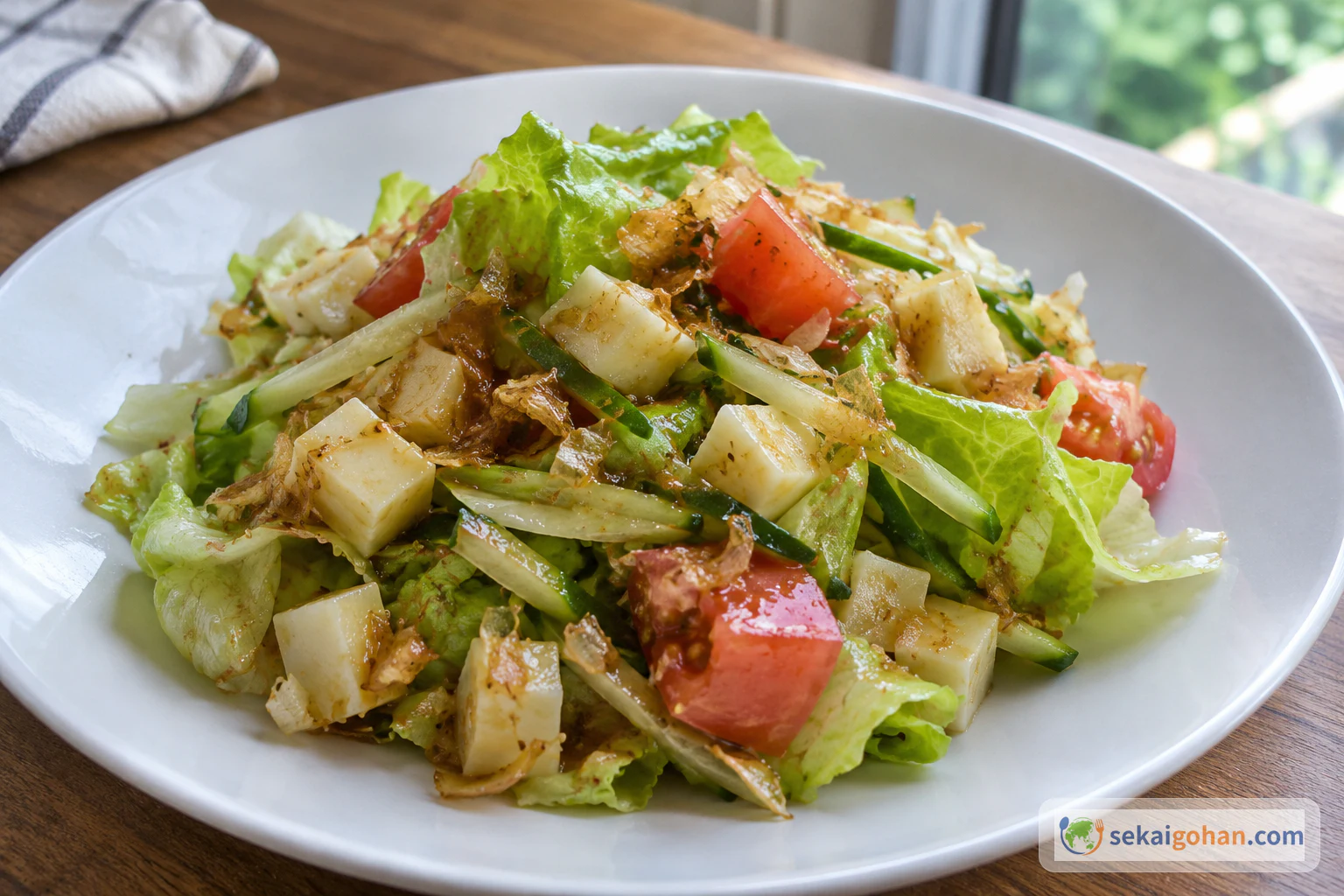
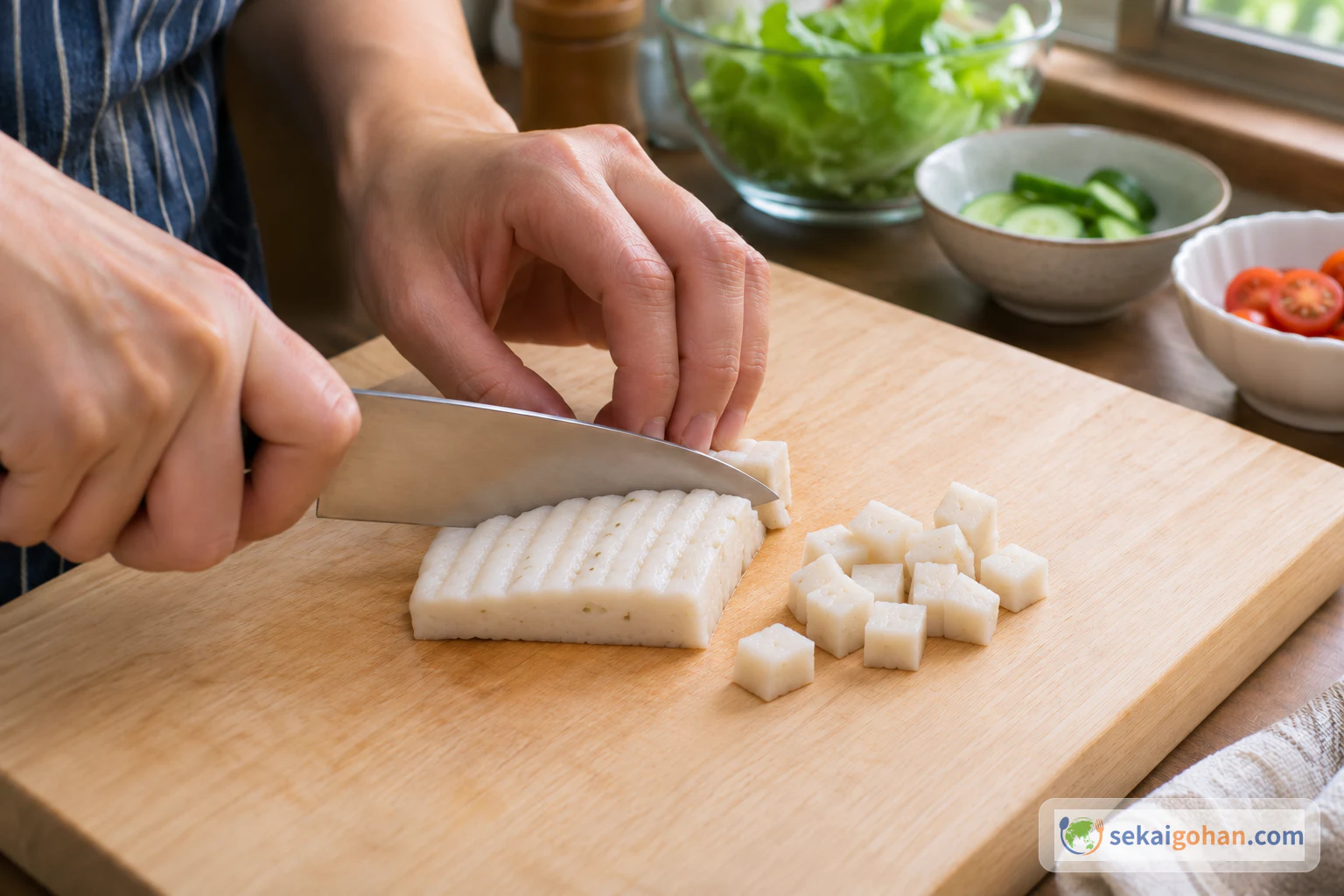
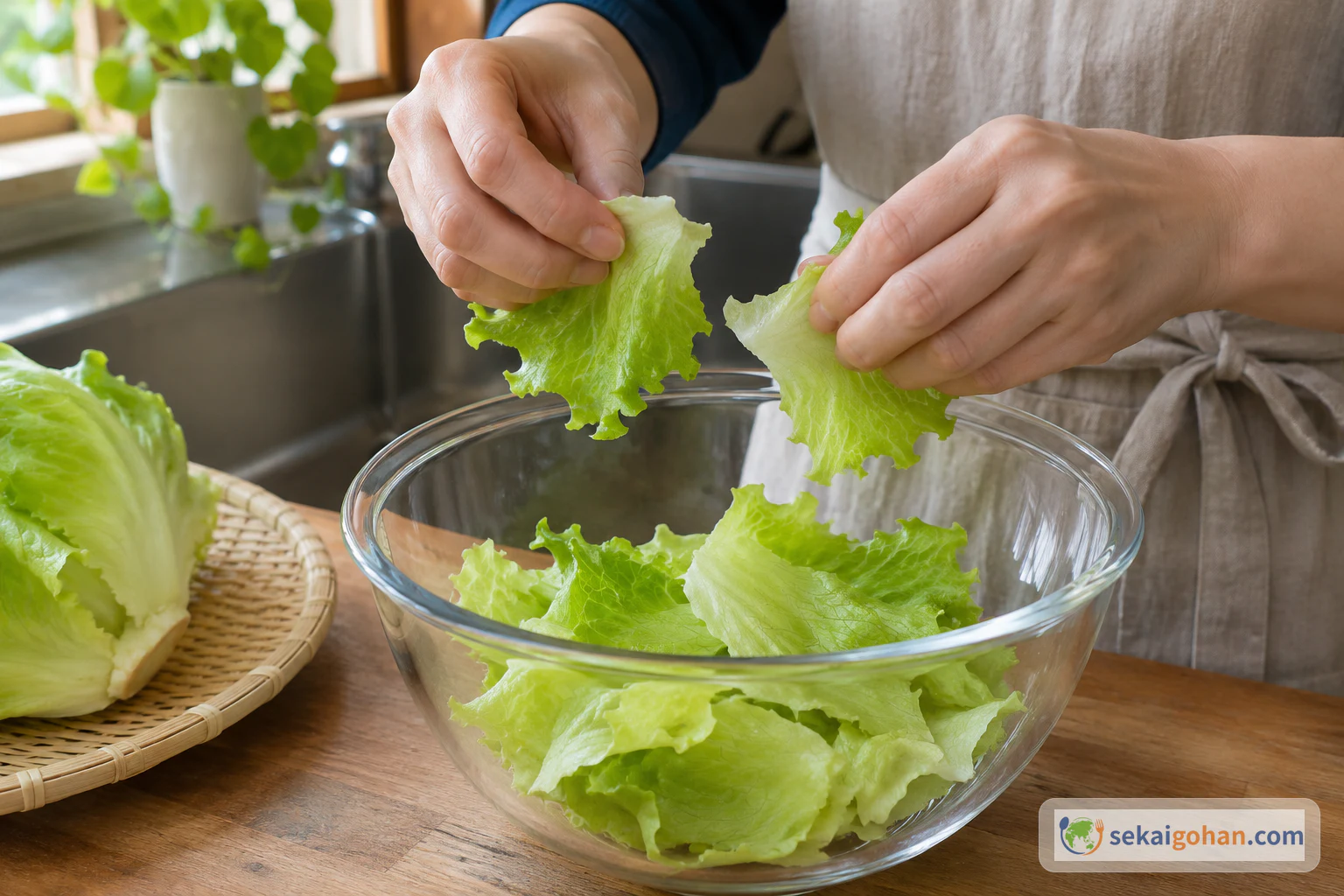
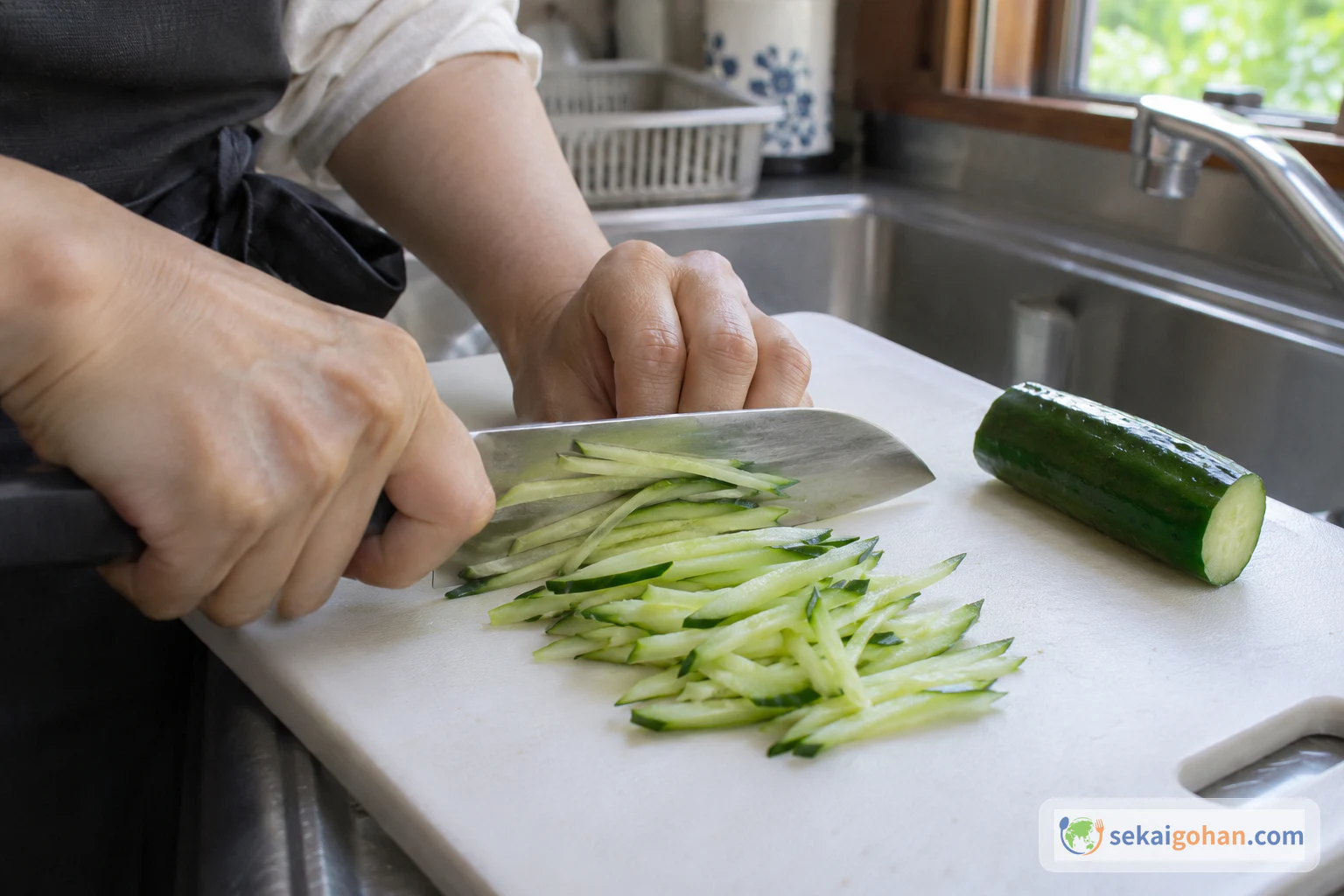
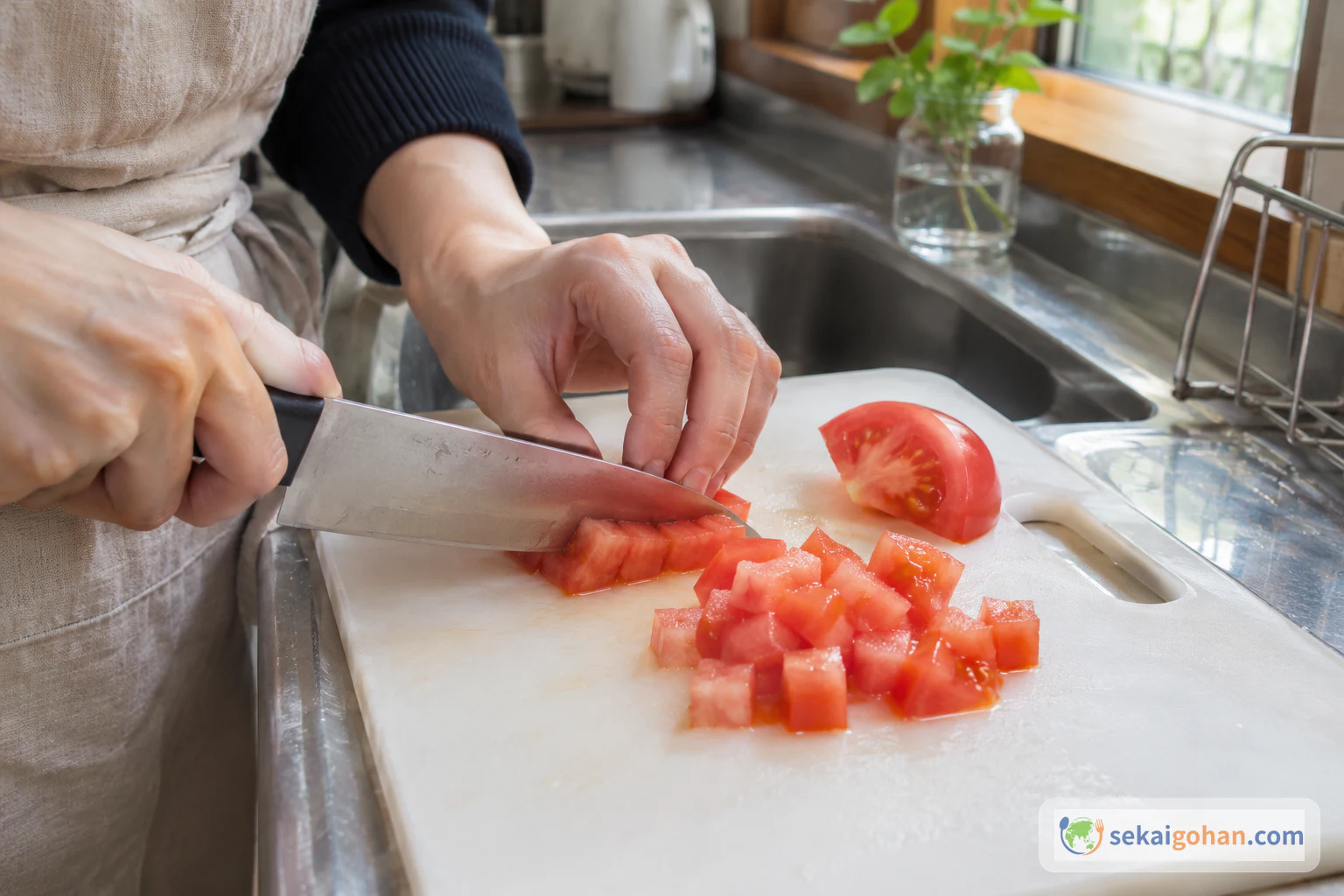
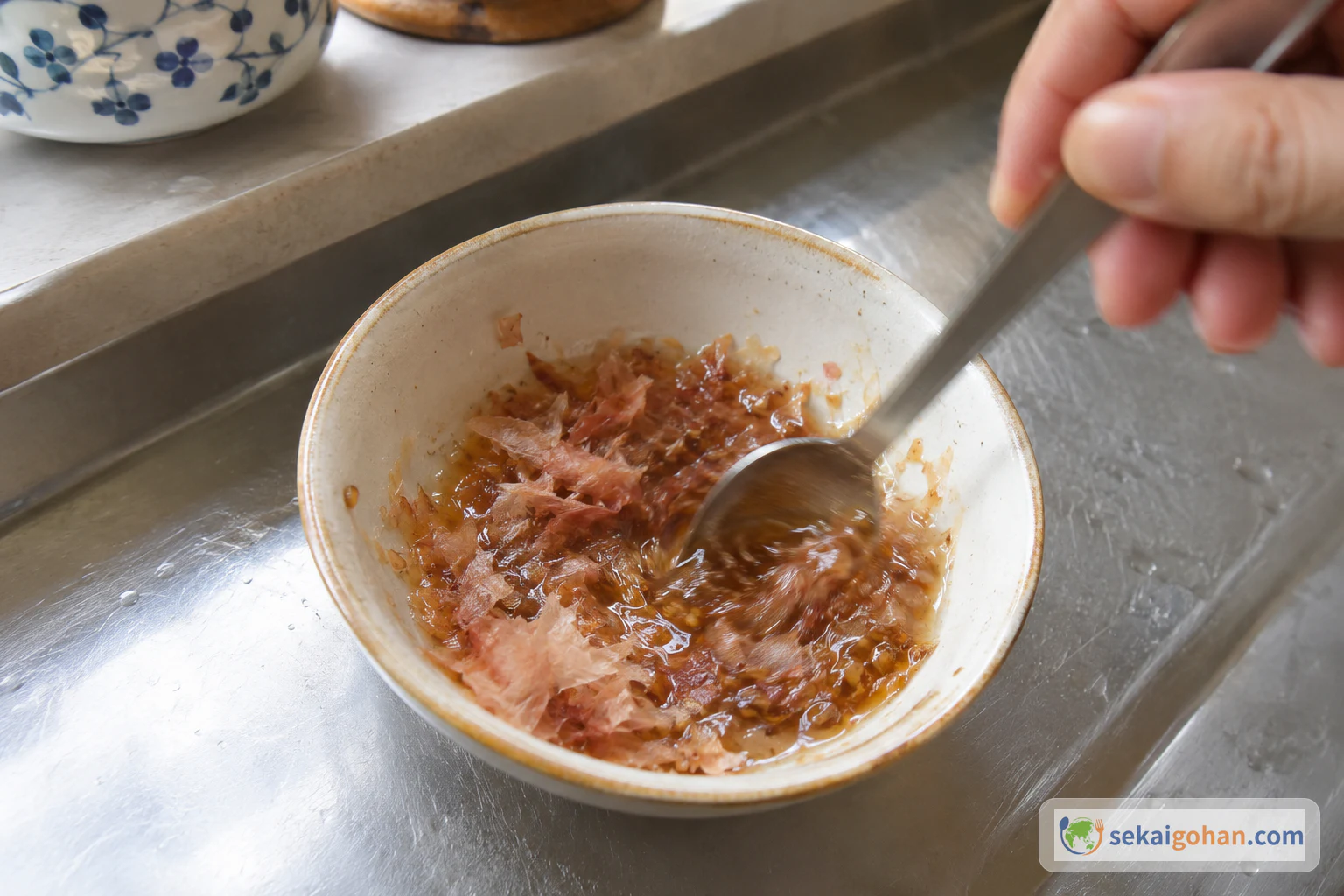
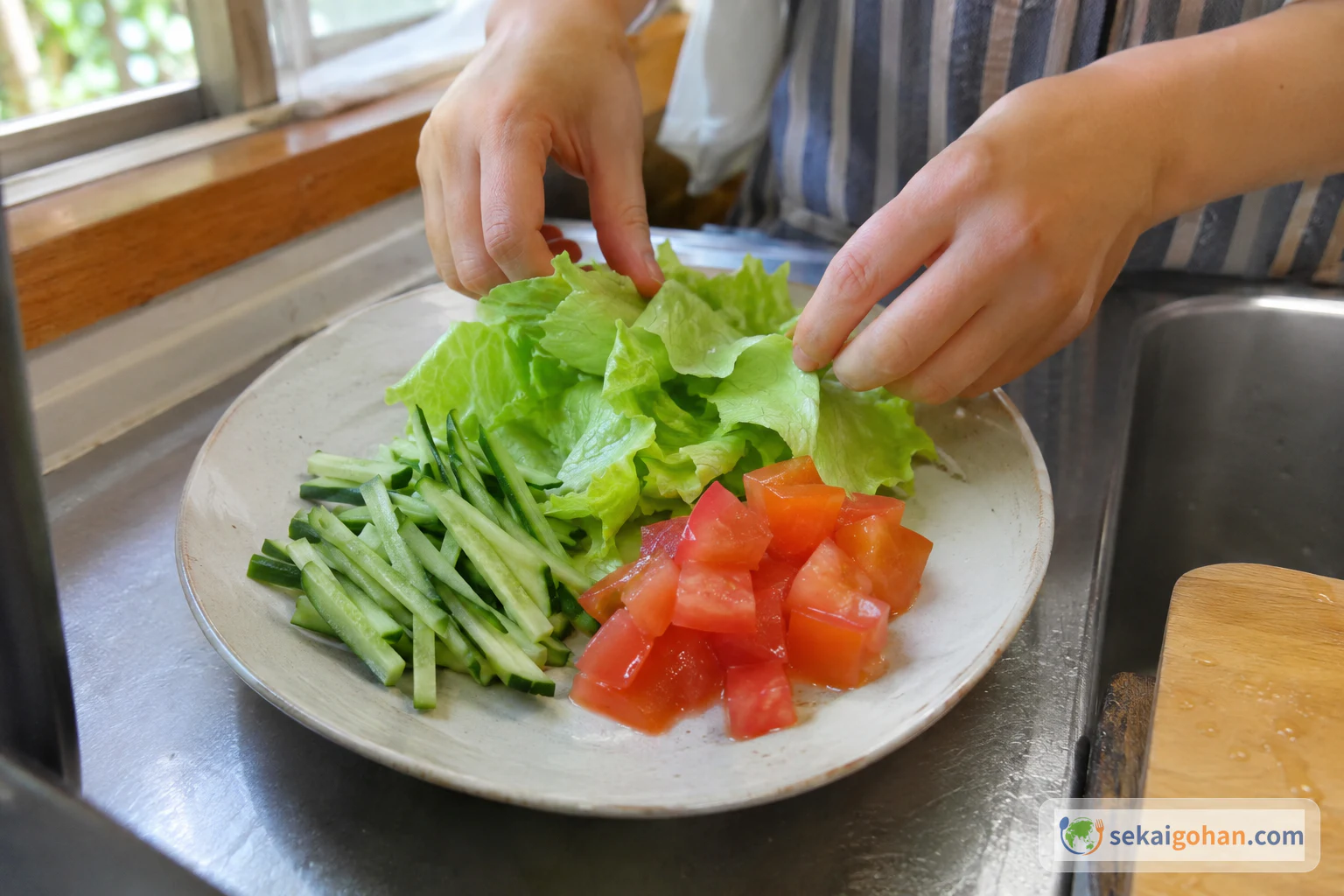
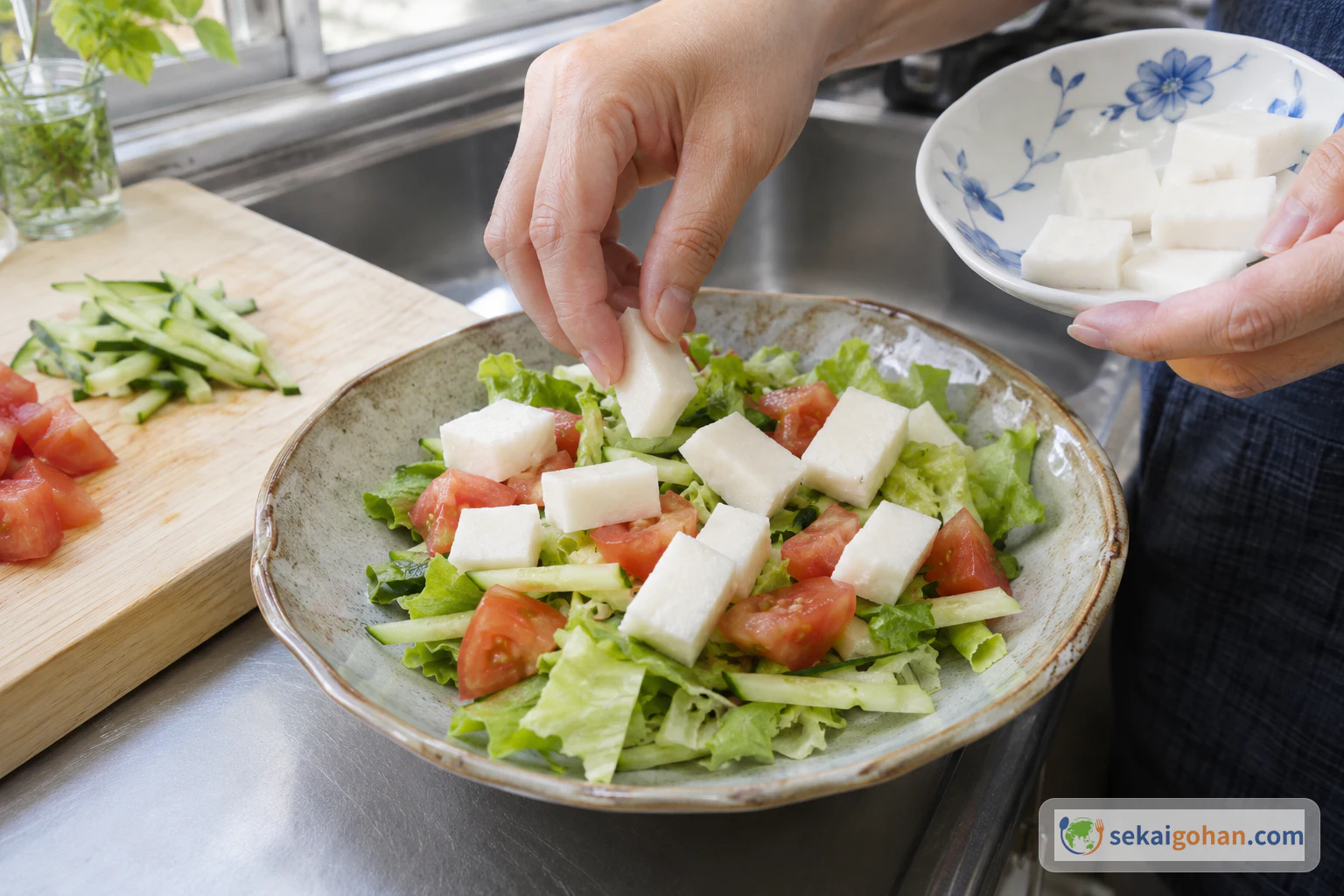
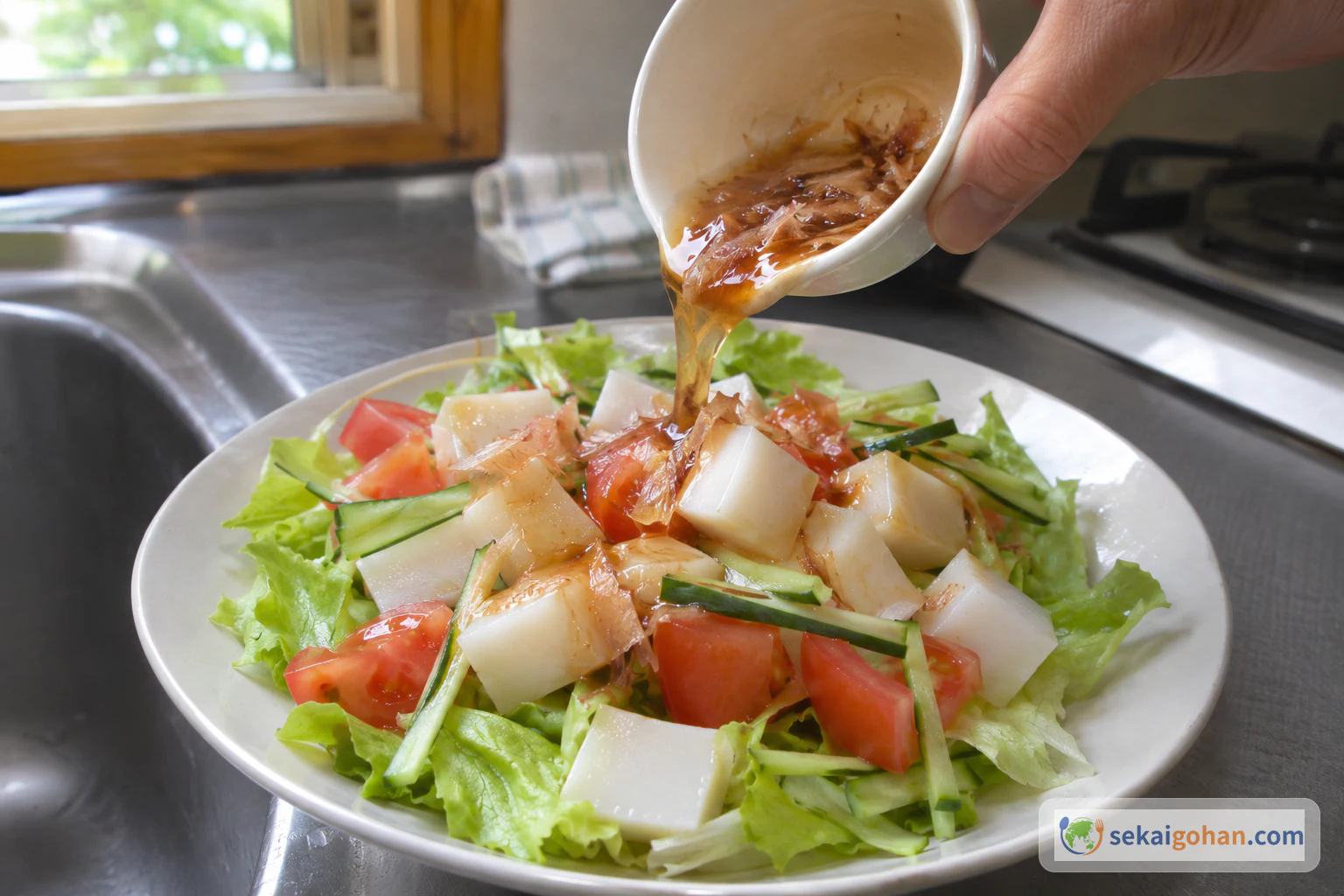
A cube of white fish cake, a few hand-torn lettuce leaves, thin sticks of cucumber and diced tomato. The bonito flakes are stirred into the dressing instead of scattered on top, so they reach the plate already soft and soaked. This simple salad comes from Ise and Tsu, two cities in Mie Prefecture, and it uses a ready-to-eat fish cake from the shop, so there is nothing to cook. It tastes mild and clean, with the smoky savor of bonito running through it. For more dishes from the country, see our Japan recipes.
Hanpei, Mie's Half-Moon Fish Cake
Ise and Tsu are the main places where this fish cake has been handed down. Locals call it hanpei, not hanpen. People eat it many ways: with wasabi and soy sauce, in oden, in chawanmushi (savory steamed egg custard), fried in butter and in salads like this one.
The name "hanpen" covers fish cakes that are made and shaped quite differently. Ise and Tsu hanpei is made mainly from white-fleshed fish paste and mountain yam. It uses no foaming agent: the yam stretches the paste, and the result is a white half-moon. Specialty shops still make it by hand.
The Kanto-style "floating" hanpen is a different product. Fish paste and other ingredients are beaten until they hold air bubbles, then shaped and boiled. It is made with shark meat and yam, it is white, and it floats in the hot water as it cooks. The kuro-hanpen ("black hanpen") of Shizuoka and the Chubu region is another style again. It is made from sardine or mackerel and is grey-white, also in a half-moon shape.
| Style | Description | Role in this salad |
|---|---|---|
| Ise / Tsu hanpei (Mie) | White-fleshed fish paste and yam, no foaming agent; white half-moon | The fish cake this salad is built on |
| Kanto floating hanpen | Paste beaten with air, shaped and boiled; shark meat and yam | Stand-in only |
| Kuro-hanpen (Shizuoka / Chubu) | Sardine or mackerel, grey-white, half-moon | Not a substitute |
Ingredients
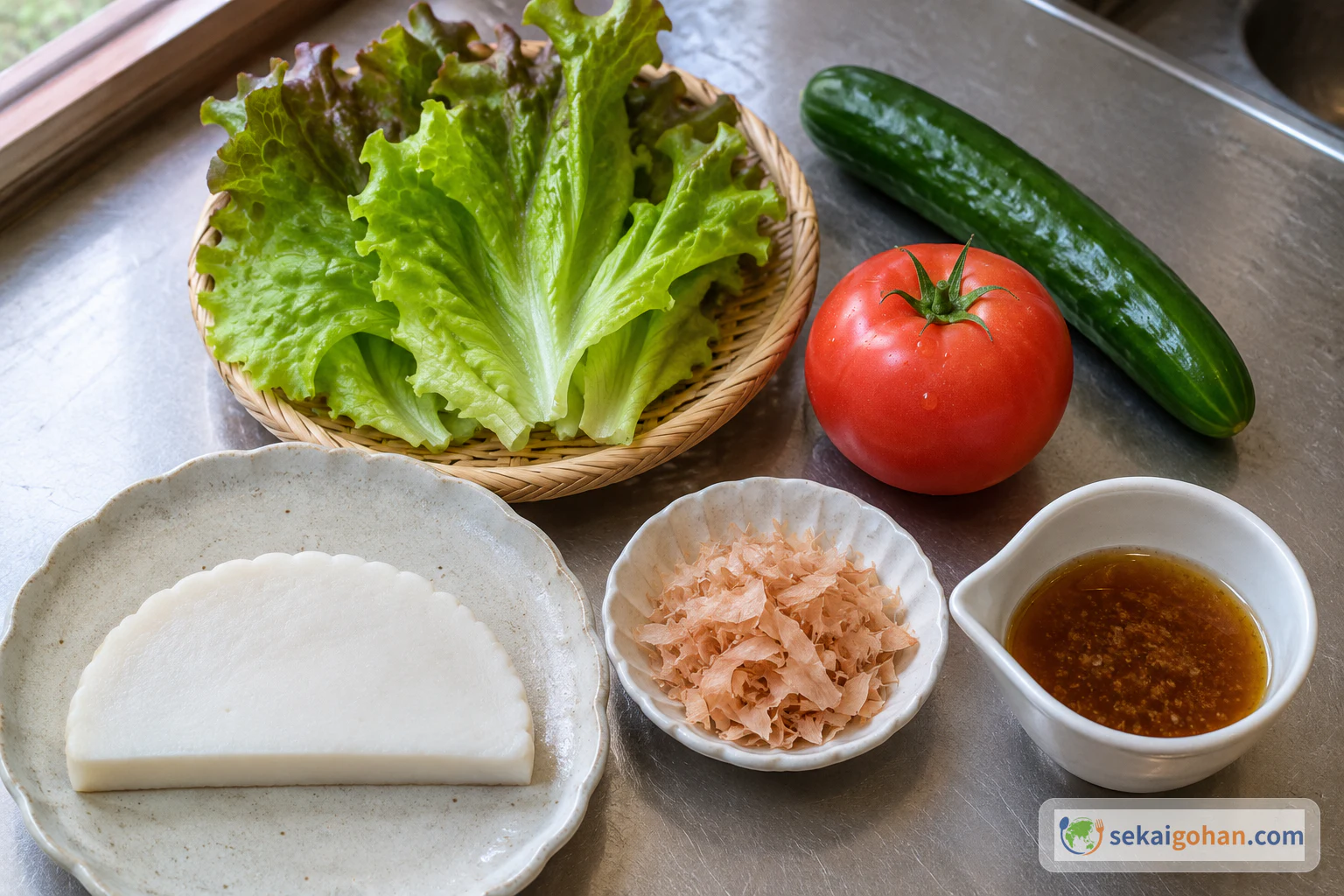
The fish cake is bought ready to eat. Check its label before you start, and follow any handling instructions printed on it.
Equipment
- Knife
- Cutting board
- Bowl
- Serving plate
Choosing the Hanpei and Dressing
At Asian grocery stores or online, look for packages labeled "Ise hanpei" or "Tsu hanpei." Any brand will do. If you can't find either, ordinary white hanpen works as a stand-in. Because Kanto-style hanpen is aerated, its shape and texture will differ from the yam-stretched Mie cake. Skip kuro-hanpen, which is a separate style.
For the dressing, a store-bought Japanese-style (wafu) dressing is all you need. Add it a little at a time and taste as you go.
Fish cakes and bottled dressings differ by maker. For both the hanpei and the dressing, read the label for storage conditions, how to handle the product after opening, whether the fish cake is ready to eat as sold, and allergen information. Check the label for allergens such as fish, egg, yam, soy and wheat, because products differ in ingredients. If the label does not let you rule out an allergy concern, choose a different product or ask the manufacturer. For storage of the finished salad, follow the labels of the products you use.
Method: Cut, Mix, Plate
Everything is cut separately first. The bonito flakes go into the dressing, not onto the salad, and the dressing goes on last.
Quick Checks Before You Serve
Nothing gets cooked here, so the things to check are what you bought and the order you put it together.
| What you notice | What it means | What to do |
|---|---|---|
| Your fish cake is Kanto-style and aerated | It is not the Ise/Tsu half-moon type | Use it only if you can't find Ise or Tsu hanpei |
| Your fish cake is grey | It is likely kuro-hanpen, a different style | Choose a white hanpei or hanpen |
| Bonito flakes are sitting on top of the salad | They weren't mixed into the dressing | Stir them into the dressing before plating |
| You're unsure whether the cake can be eaten as is | Products differ | Check the label and follow it |
Frequently Asked Questions
Can I use ordinary white hanpen?
Yes, as a substitute. Kanto-style hanpen gets its texture from beaten-in air and is boiled floating in hot water. Ise and Tsu hanpei is stretched with yam and made without a foaming agent, so expect a different shape and texture.
Can I use kuro-hanpen instead?
Kuro-hanpen is a different fish cake, made from sardine or mackerel and grey-white in color. If you try it, treat the result as your own variation.
How long does the salad keep?
Follow the storage and after-opening instructions on the labels of both the fish cake and the dressing.