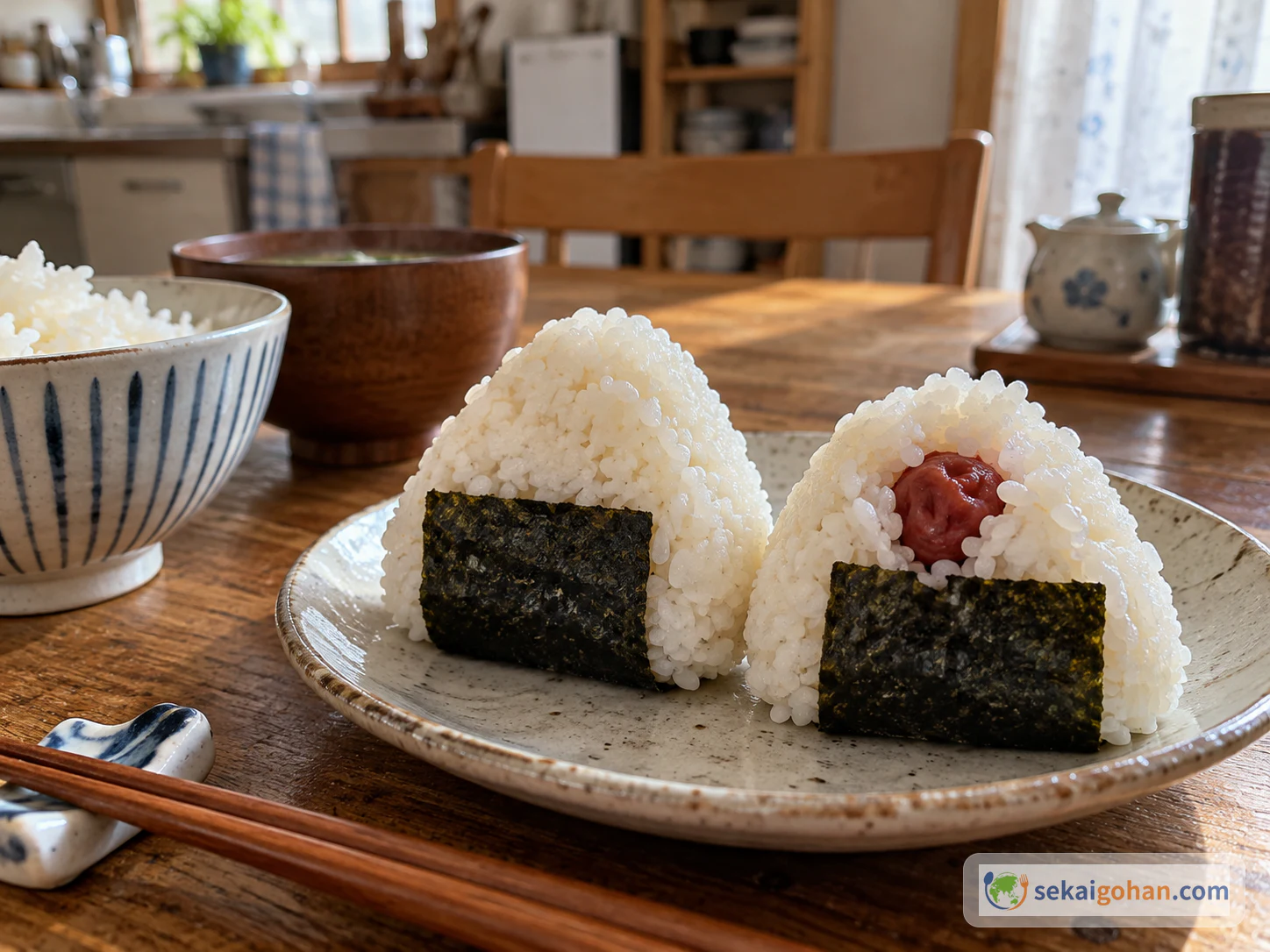
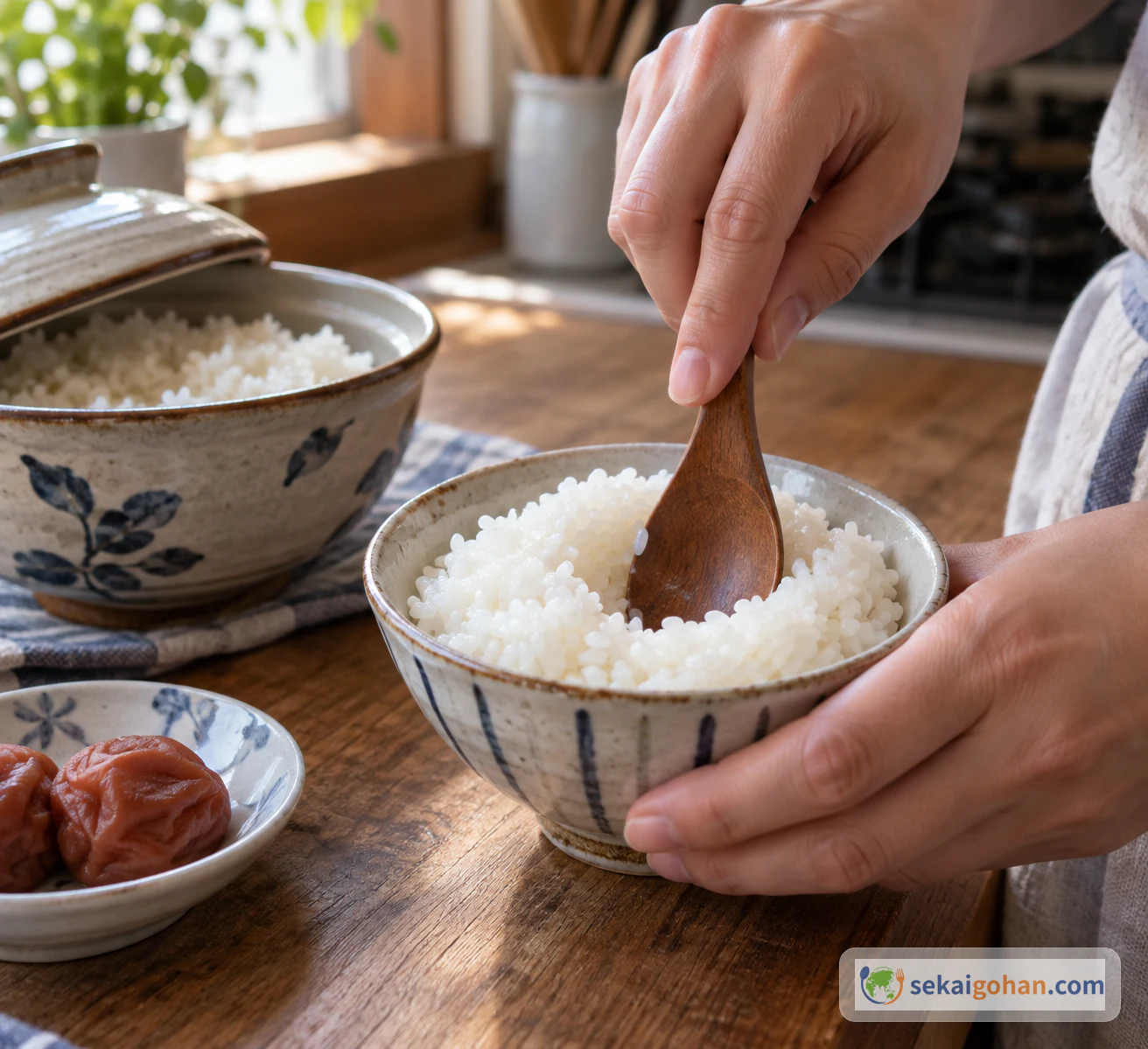
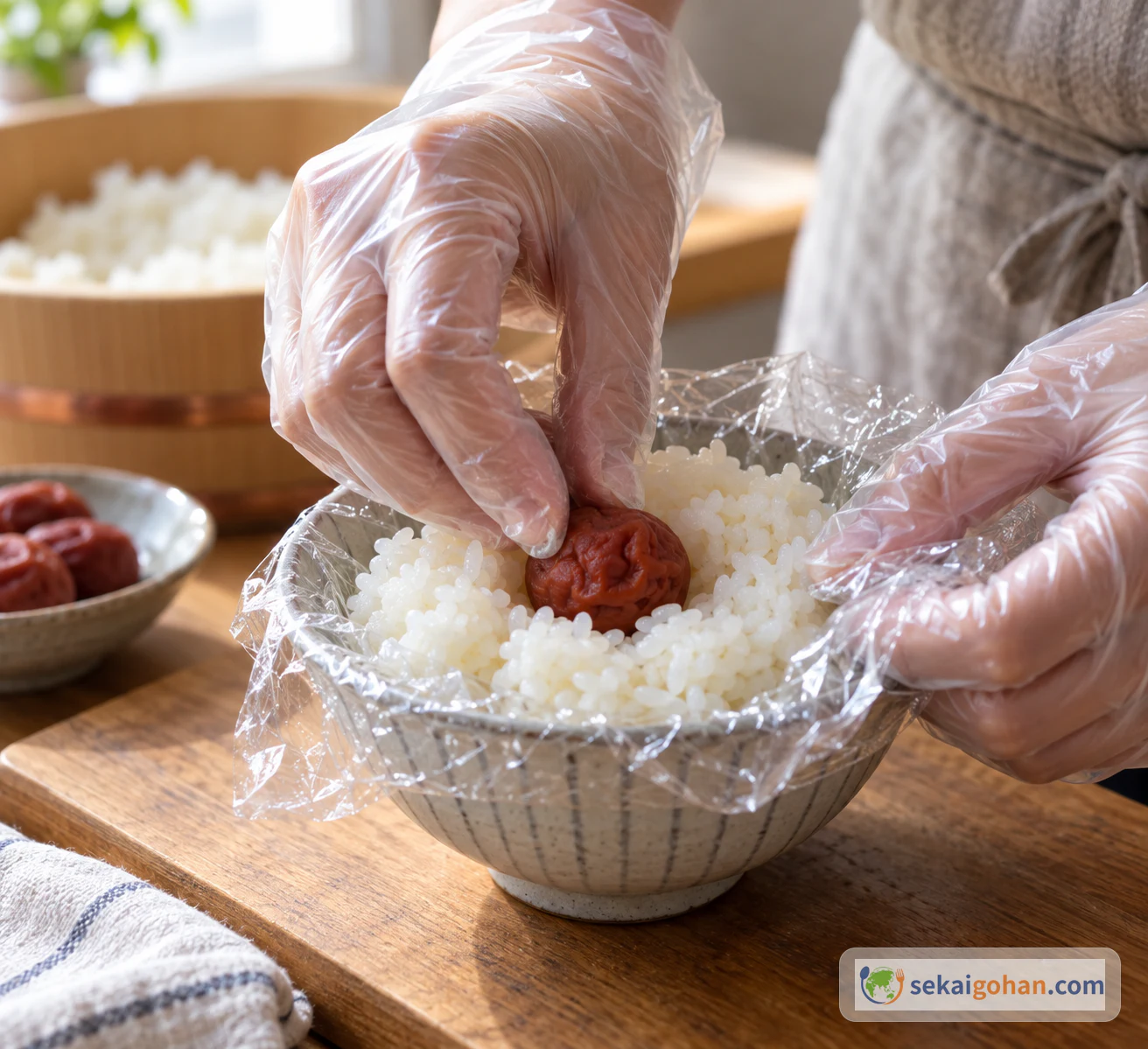
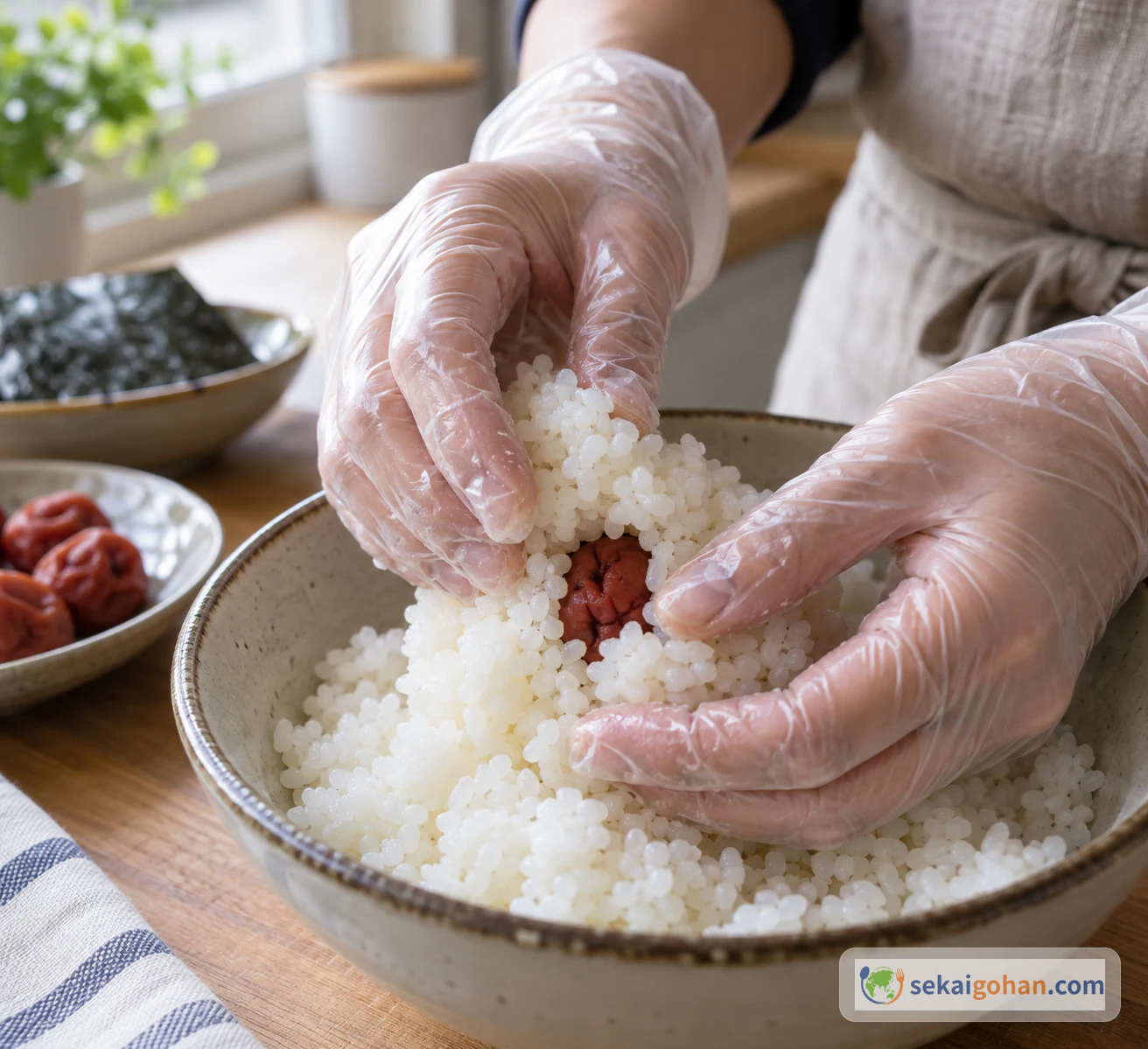
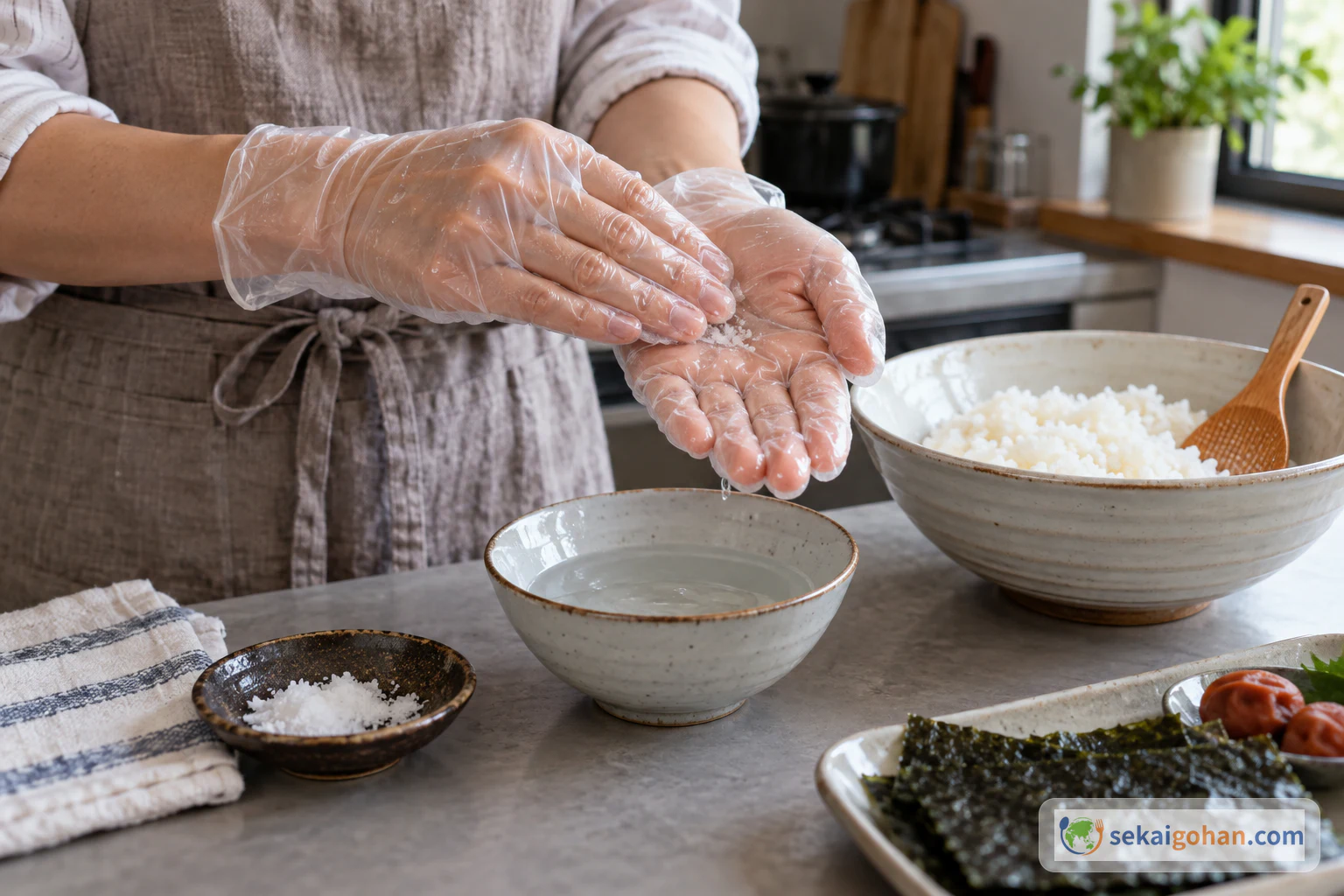
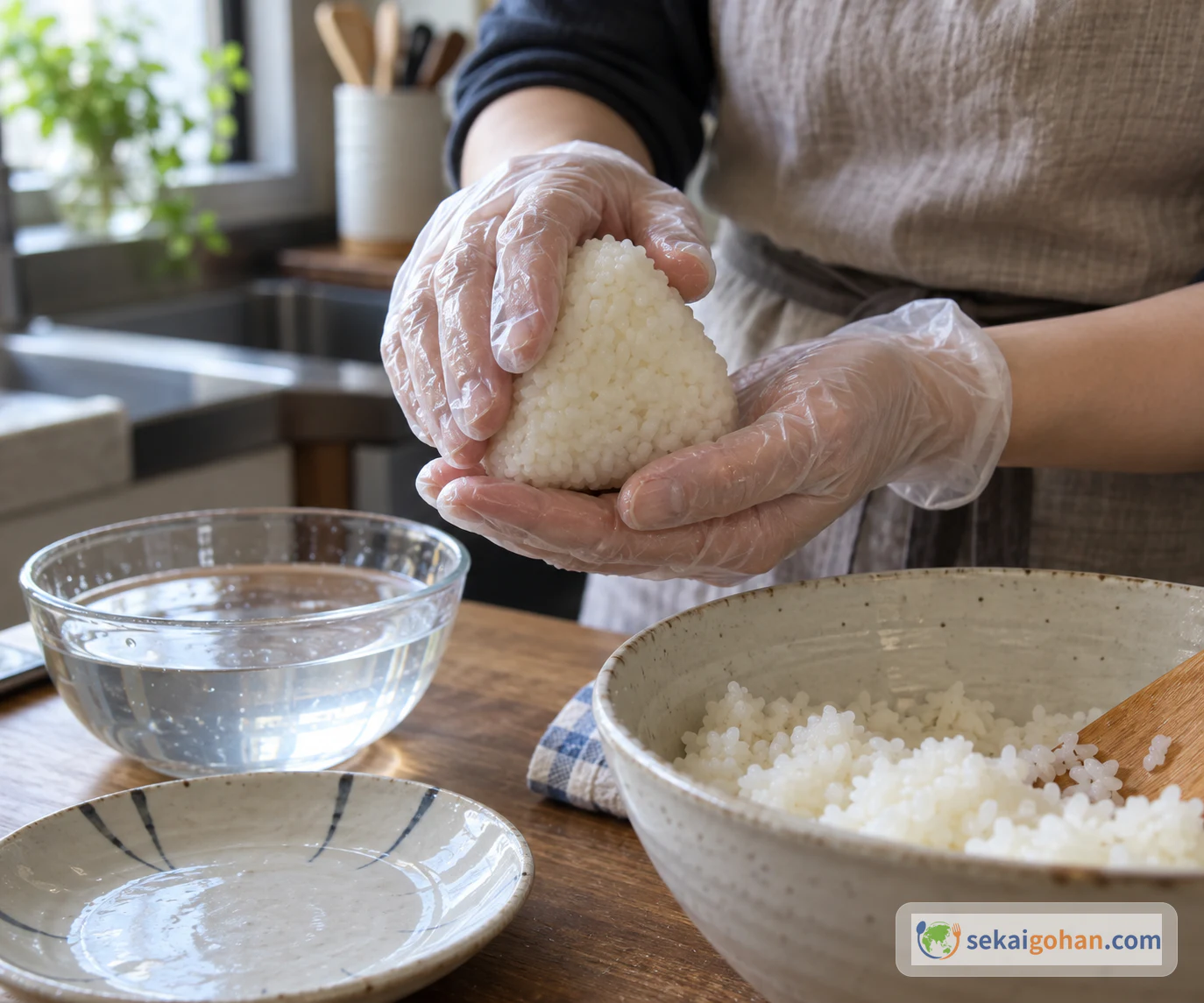
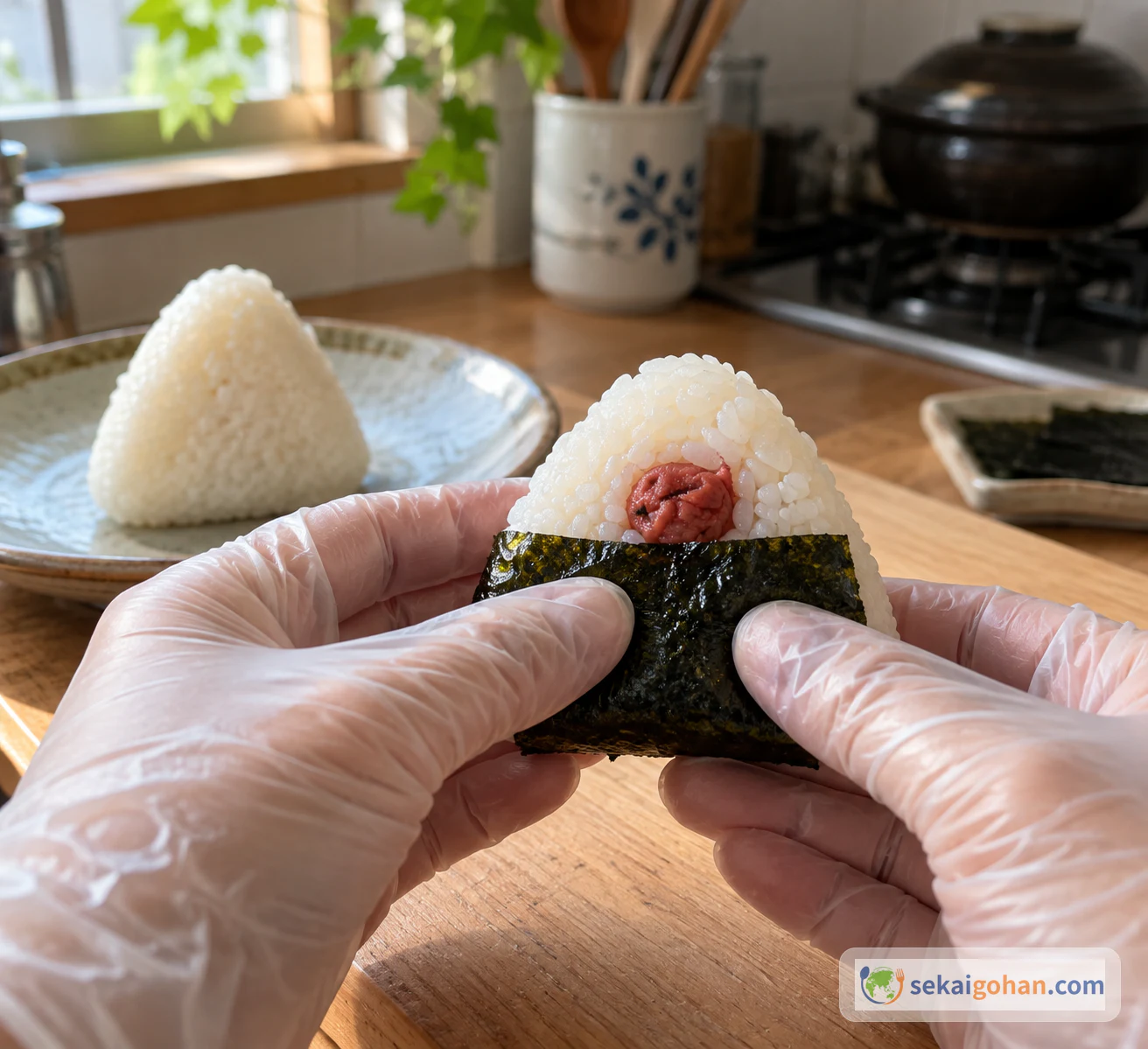
Freshly cooked rice goes into a small bowl, a hollow is pressed into the middle, and a single red umeboshi (Japanese pickled plum) is tucked inside before the rice is drawn over it. A little salt and a strip of nori finish the job. What you get is a soft triangular rice ball with three flavors working together: the gentle sweetness of plain rice, the sharp, salty sourness of the plum at the center, and the toasty aroma of nori on the outside. Each bite that reaches the middle brings the plum and rice together. The secret to a good one is to close the filling in completely, then press only as hard as it takes for the rice to hold.
About Umeboshi Onigiri
Onigiri has long been eaten in Japan. It is cooked rice gathered into a shape you can hold in one hand, which is why it travels so well, whether into a lunch box or out to a school excursion or another outdoor event. It belongs to everyday home cooking and packed meals rather than to any single occasion, and fillings vary from home to home and region to region.
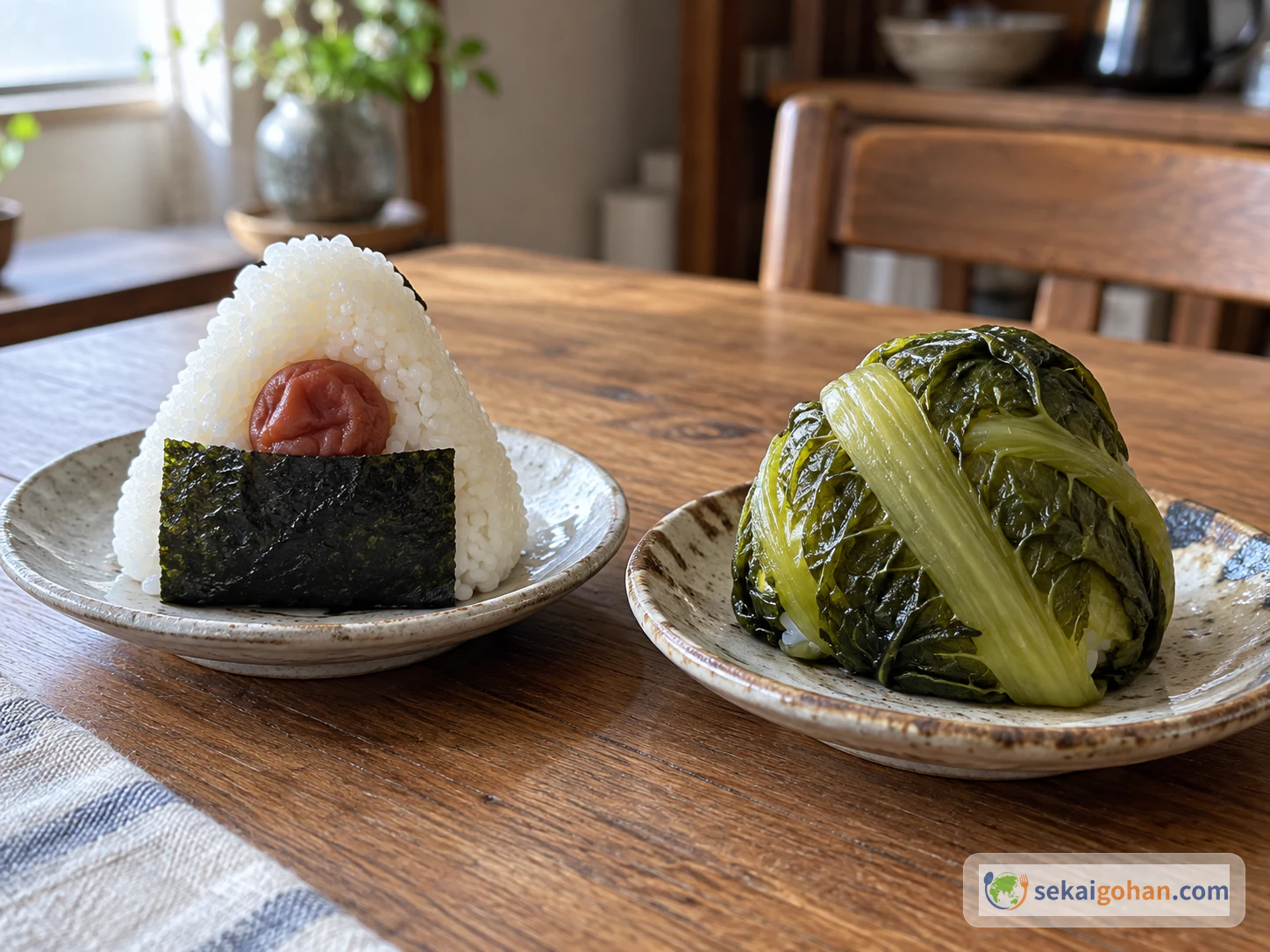
One regional take comes from Hiroshima Prefecture. There, Hiroshima-nazuke-no onigiri is made by wrapping the rice in Hiroshima-na pickles, a leafy pickled green, and it's eaten at home and in lunch boxes. Here the umeboshi sits in the center instead, with nori on the outside.
Ingredients for 2 Onigiri
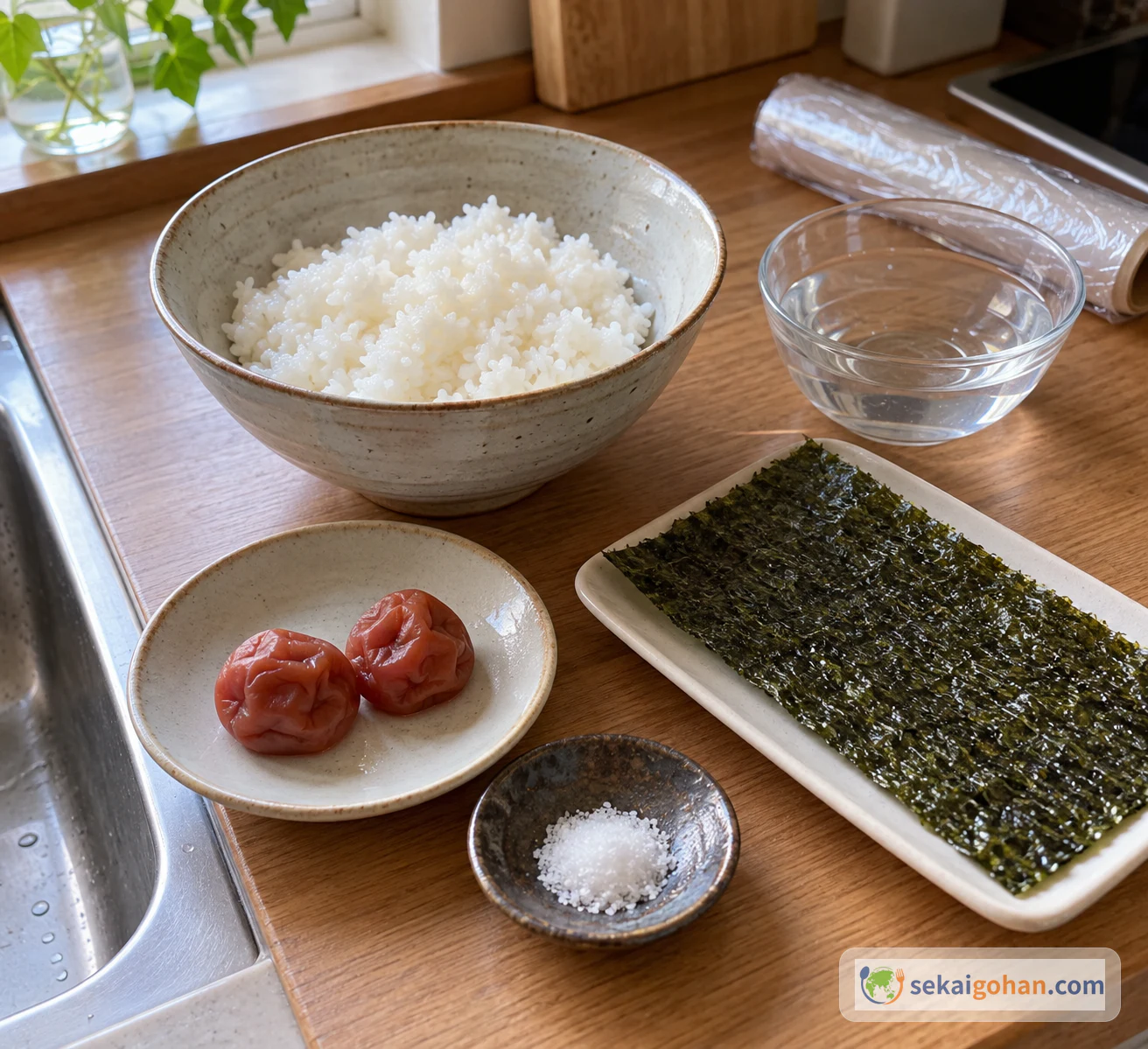
The rice amount is for rice that is already cooked, not for raw rice. Use salt and nori as needed.
Equipment
- Food-safe cling film or food-safe disposable gloves
- A rice bowl (chawan) for portioning and filling
- A rice paddle (shamoji) or a spoon
- A small bowl of water for wetting your hands
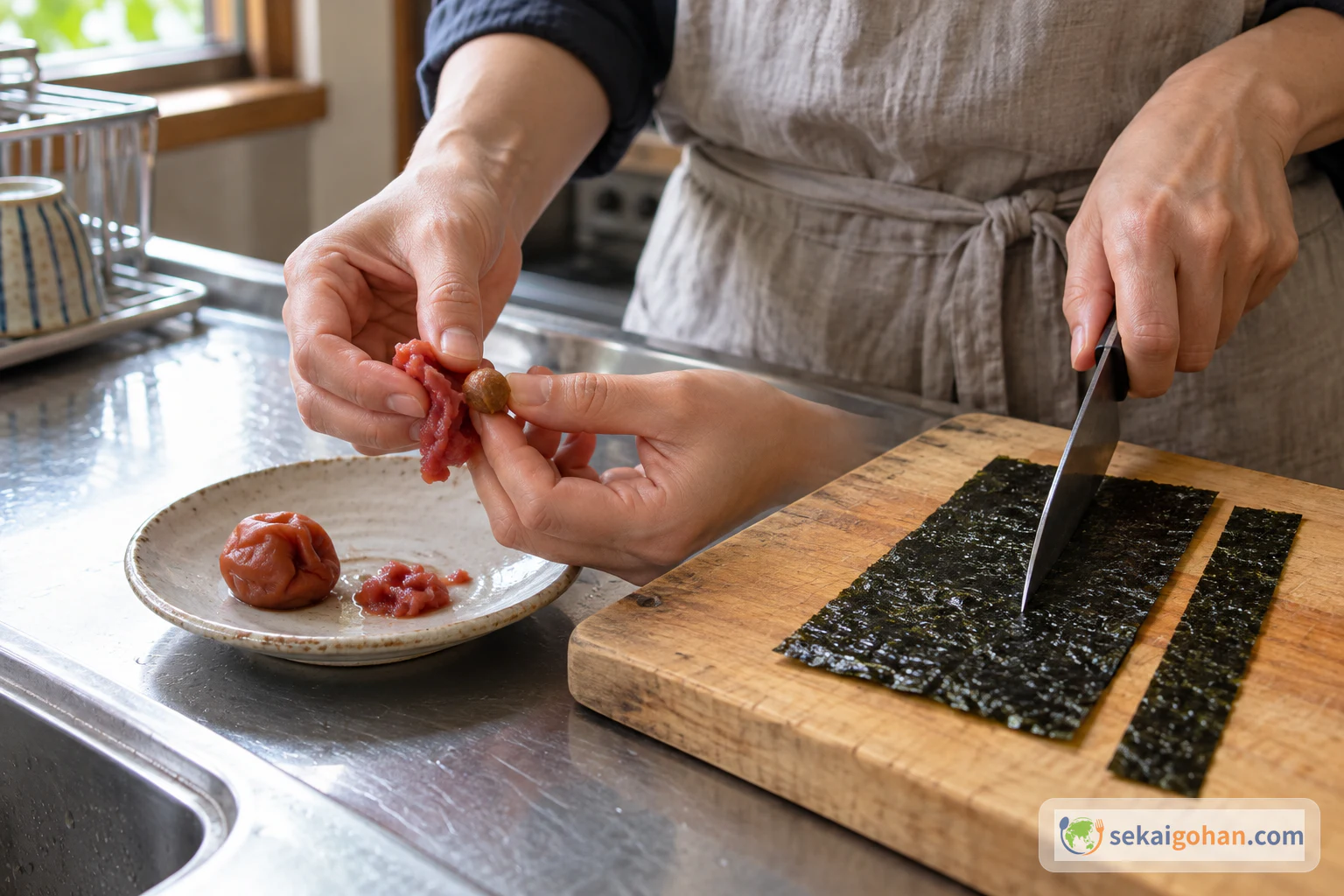
- A cutting board and knife for the nori
- A plate for the finished onigiri
Choosing Rice, Umeboshi and Nori
Rice: Japanese short-grain (japonica) rice turns sticky when cooked, which makes it well suited to onigiri and easier to keep in shape.
Umeboshi: Saltiness and size differ from product to product. Use only a little salt on your hands at first, taste a bite of the plum together with the rice, and adjust next time.
Nori: Large sheets of toasted nori can be cut into strips of whatever width is easy to eat. Nori absorbs moisture from the rice, so if you like it crisp, keep it separate until just before eating.
How to Make Umeboshi Onigiri
Wash your hands well with soap, and work through food-safe cling film or food-safe disposable gloves. If you are making onigiri for a lunch box, this is the method to use.
Fixing Onigiri That Falls Apart or Turns Hard
| Problem | Likely cause | What to do |
|---|---|---|
| The rice ball falls apart | The filling wasn't closed in before shaping | Make the hollow deeper and close the rice over the plum first. Shape by turning it in your palms and firming each side little by little, rather than pushing with your fingertips |
| The rice is hard and dense | Pressed too hard or too many times | Press gently, just until the grains hold together, and stop there |
| Rice sticks to your hands | Hands or gloves are dry | Wet them lightly. Shake off excess water, since dripping-wet hands make the surface watery |
| It tastes too salty | The umeboshi is salty and the hand salt adds more | Start with a very small amount of hand salt and adjust to the umeboshi you are using |
| The nori is limp | It has absorbed moisture from the rice | If you prefer crisp nori, wrap it just before eating |
Packing and Variations
Packing for a Lunch Box
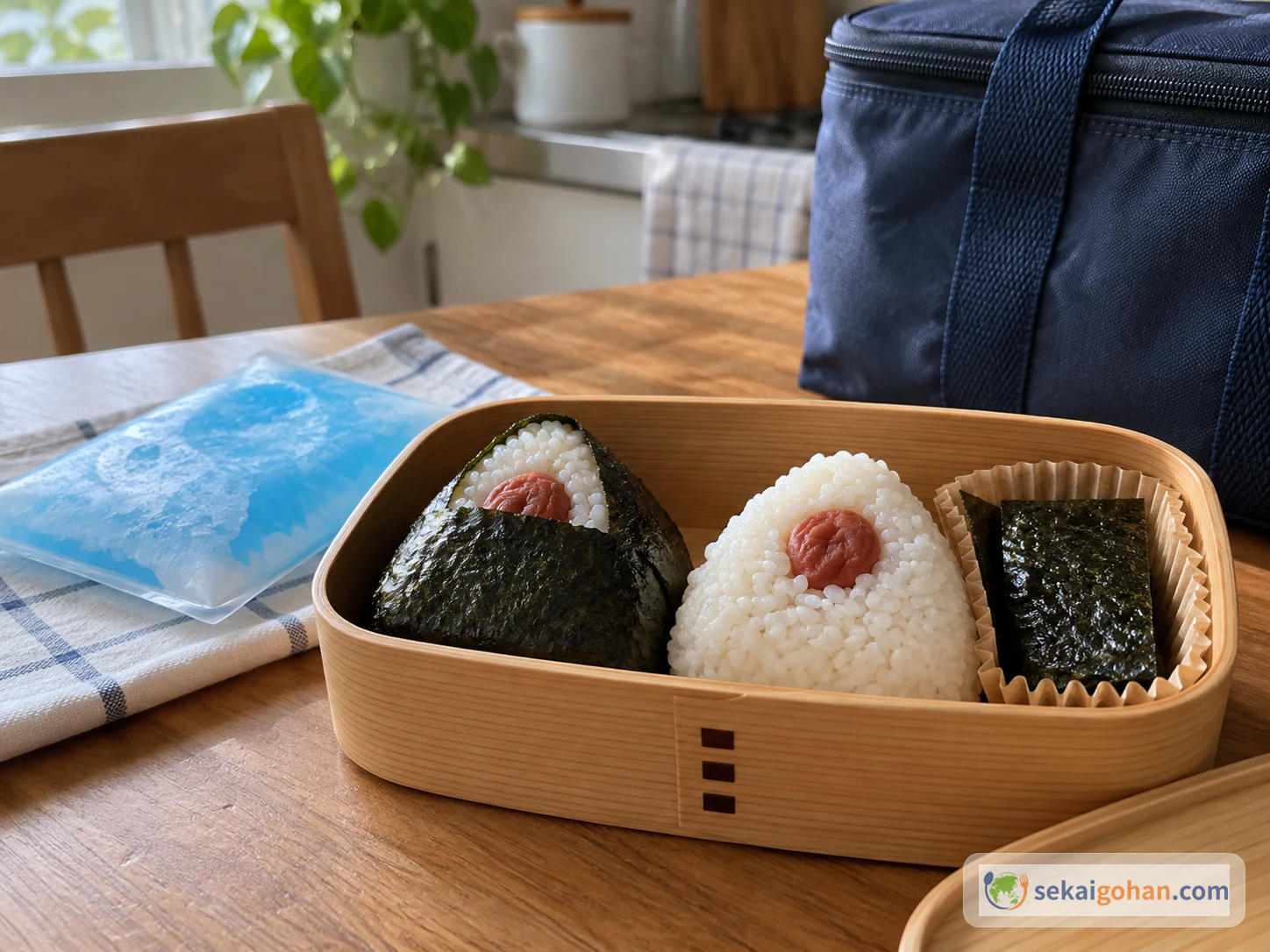
When you pack onigiri ahead, the nori softens as it sits against the rice, so tuck it in alongside and wrap just before eating. Salt and umeboshi won't keep the rice safe on their own. Make onigiri close to when you'll eat it.
Wash your hands, and shape the rice through food-safe cling film or food-safe disposable gloves. For a lunch box, let the rice cool before packing, and pack it with clean chopsticks or utensils. Keep the lunch box in a cool place and eat it soon. If you will carry it for a long time, use an ice pack and an insulated bag. Don't leave the rice out at room temperature for long.
Variations
- Shio musubi (salt rice ball): No filling at all, just rice and salt. Season it to suit the amount of rice.
- How the nori is wrapped: Cover the whole rice ball, or wrap only the lower part. This changes how easy it is to hold and how the nori feels.
- Shape: Triangle, round or cylindrical (tawara). Choose by how you like to shape it, or by regional and family habit.
- Other fillings: Bonito flakes with soy sauce and tuna with mayonnaise are also popular.
Frequently Asked Questions
Does onigiri have to be triangular?
No. Round, cylindrical, flat and rectangular onigiri are all common. This recipe uses a triangle.
When should I wrap the nori?
If you want it crisp, wrap it just before eating. Wrapped earlier, it absorbs moisture from the rice and softens.