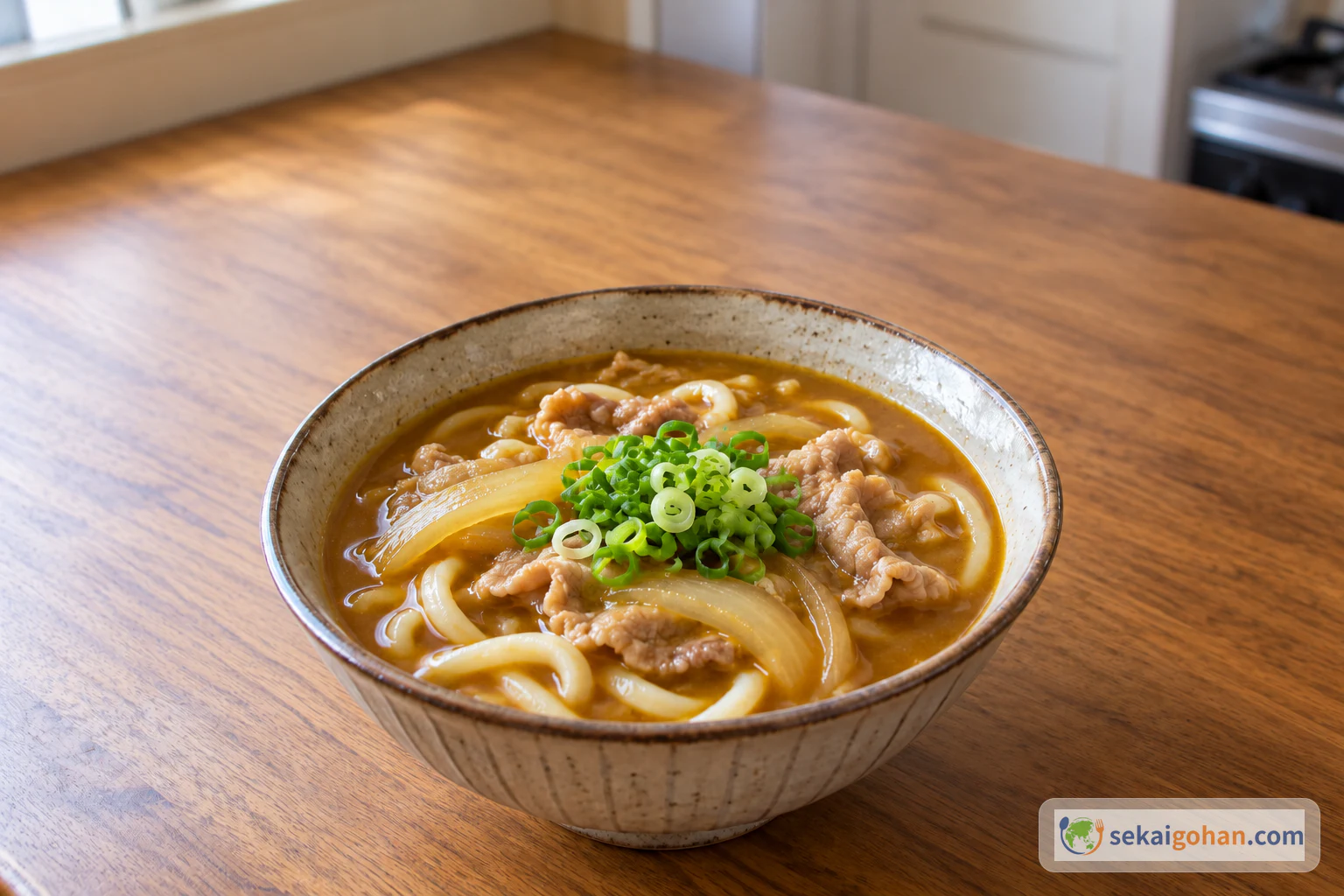
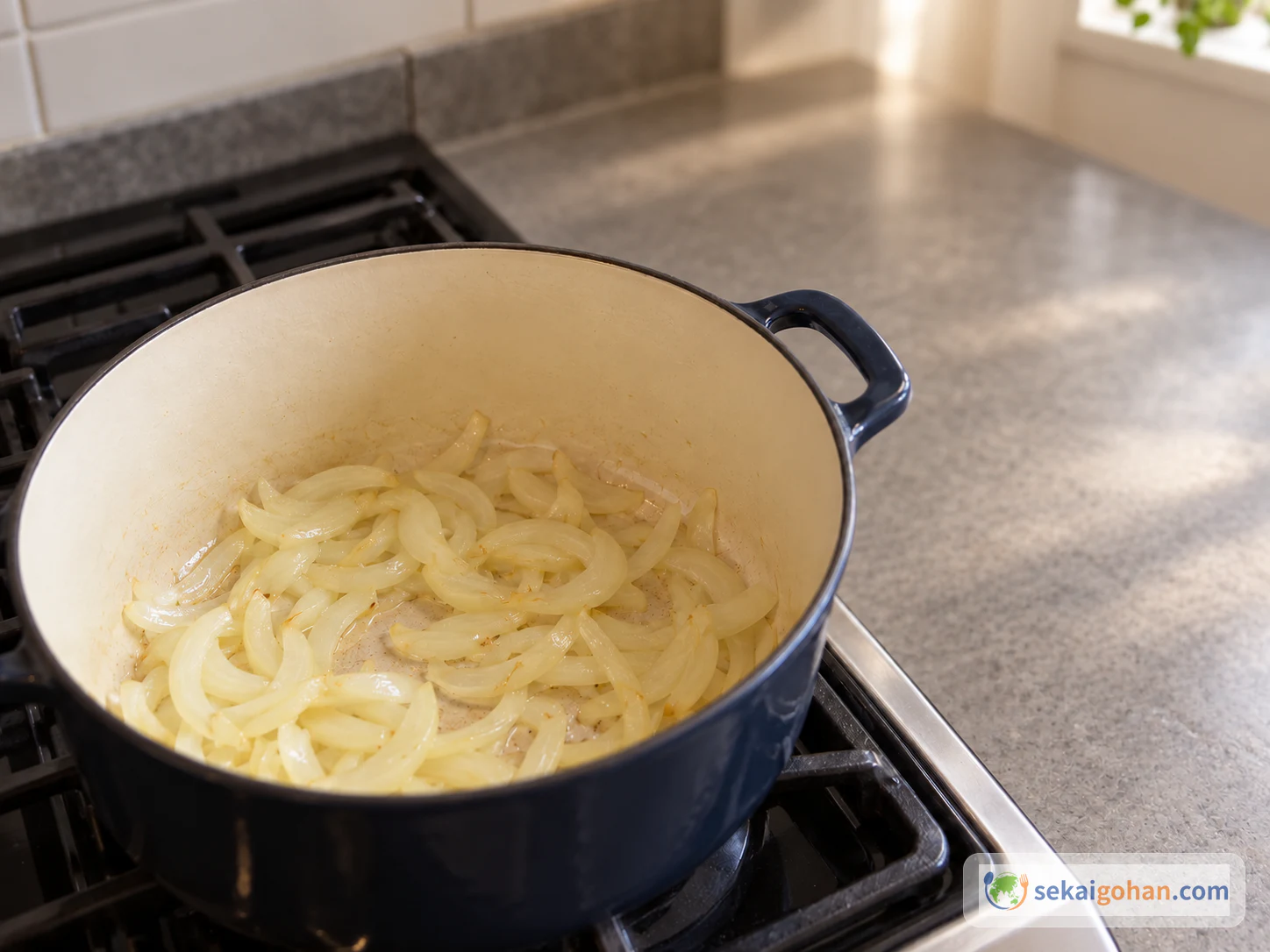
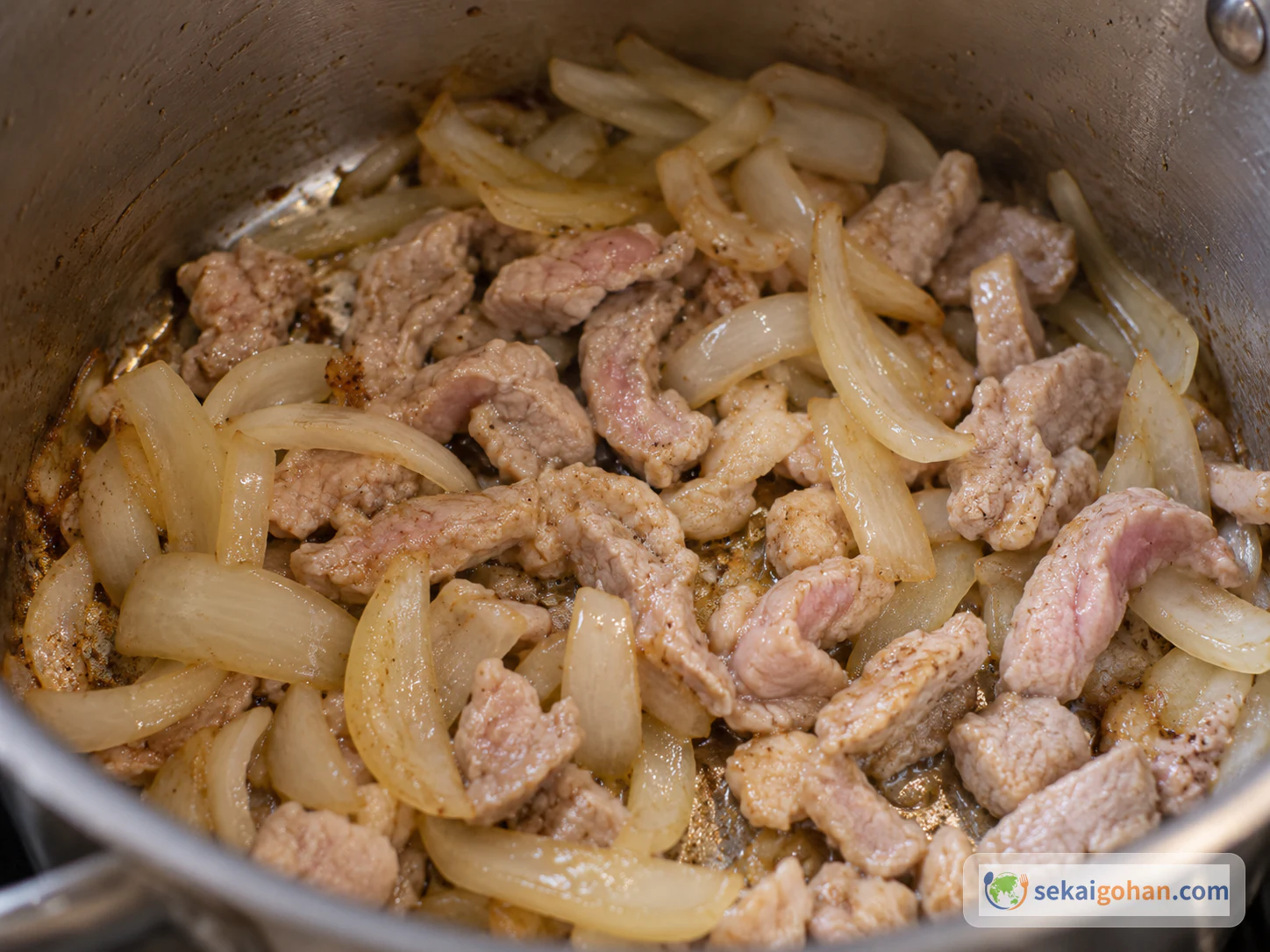
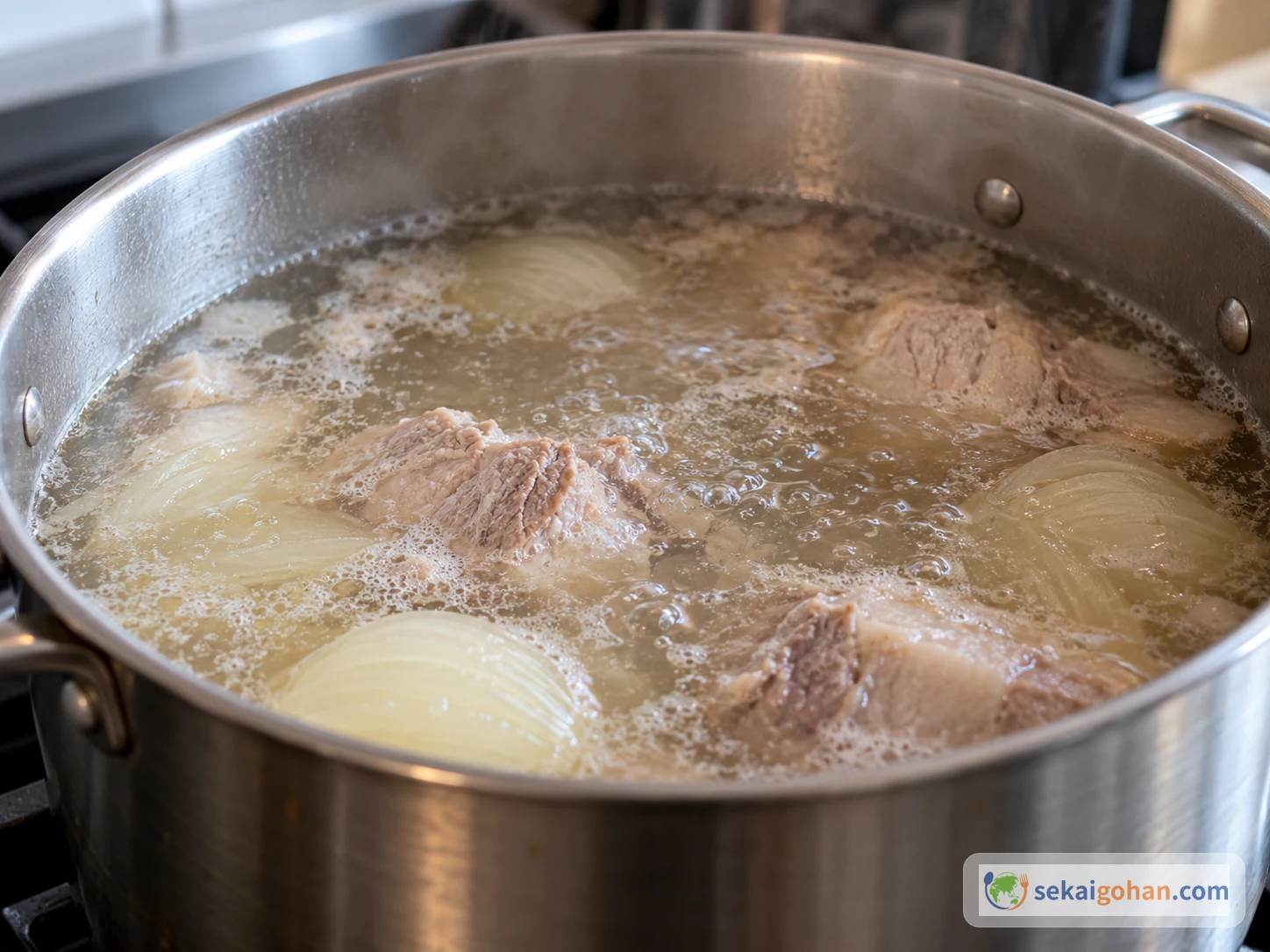
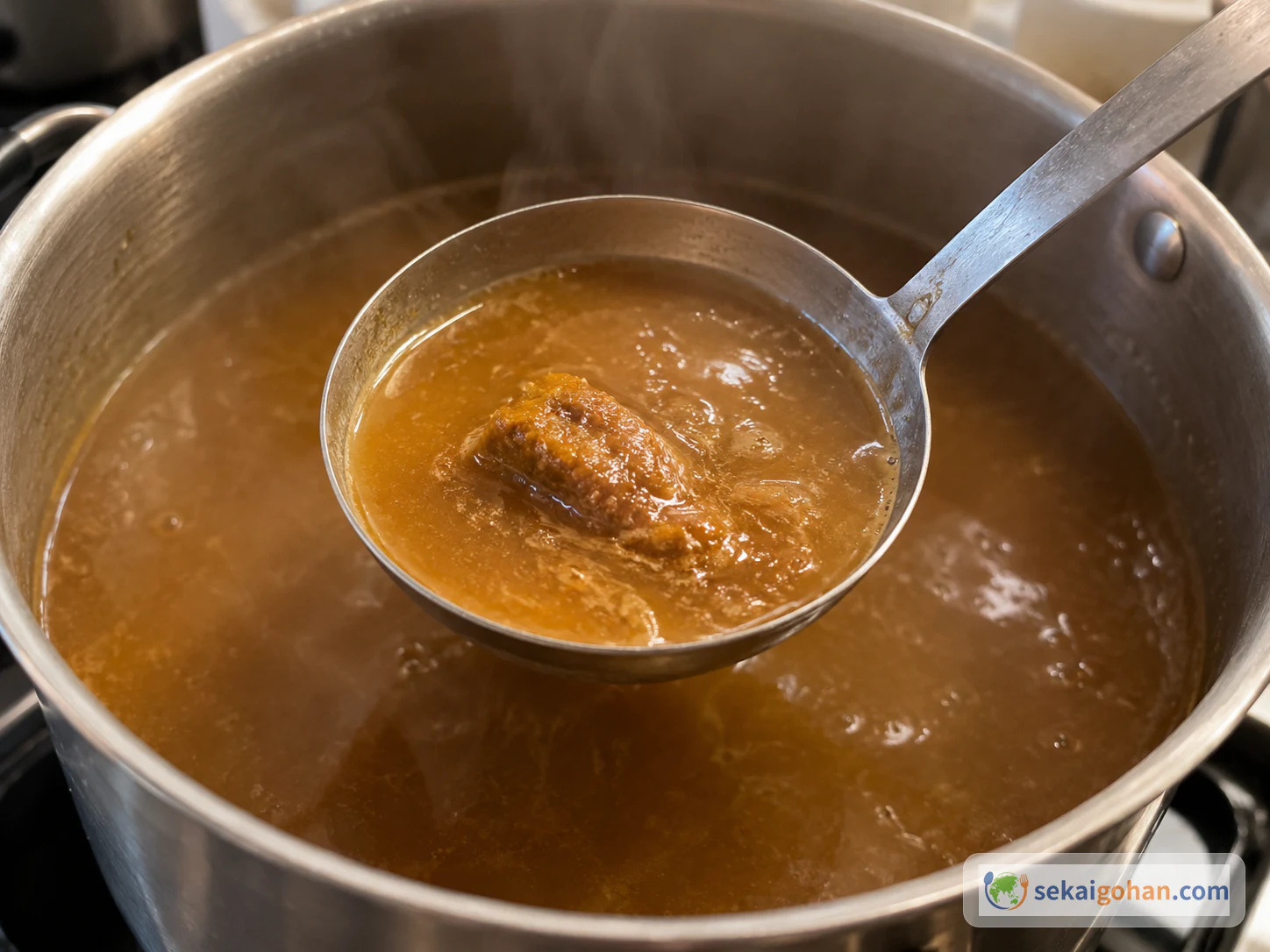
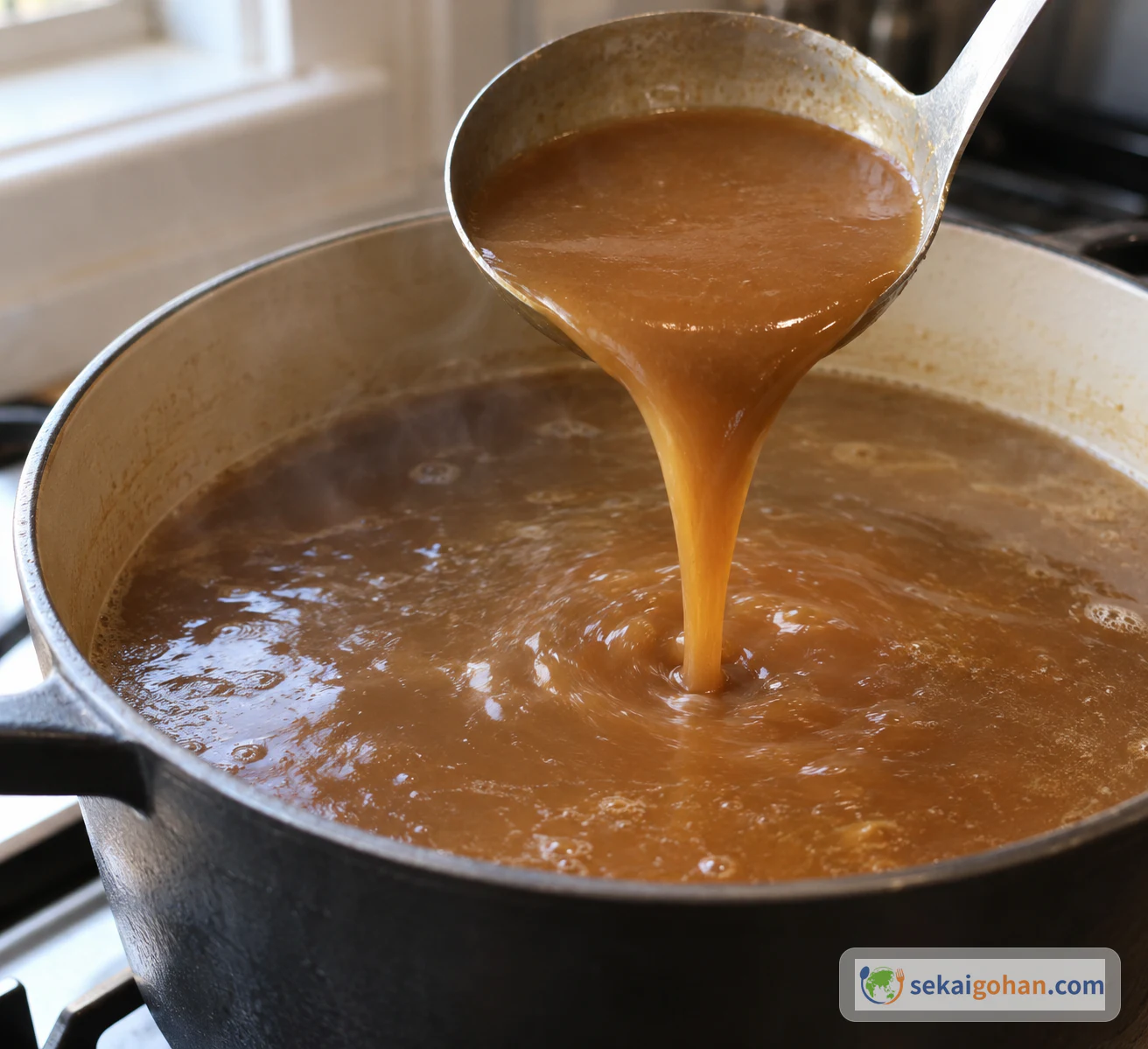
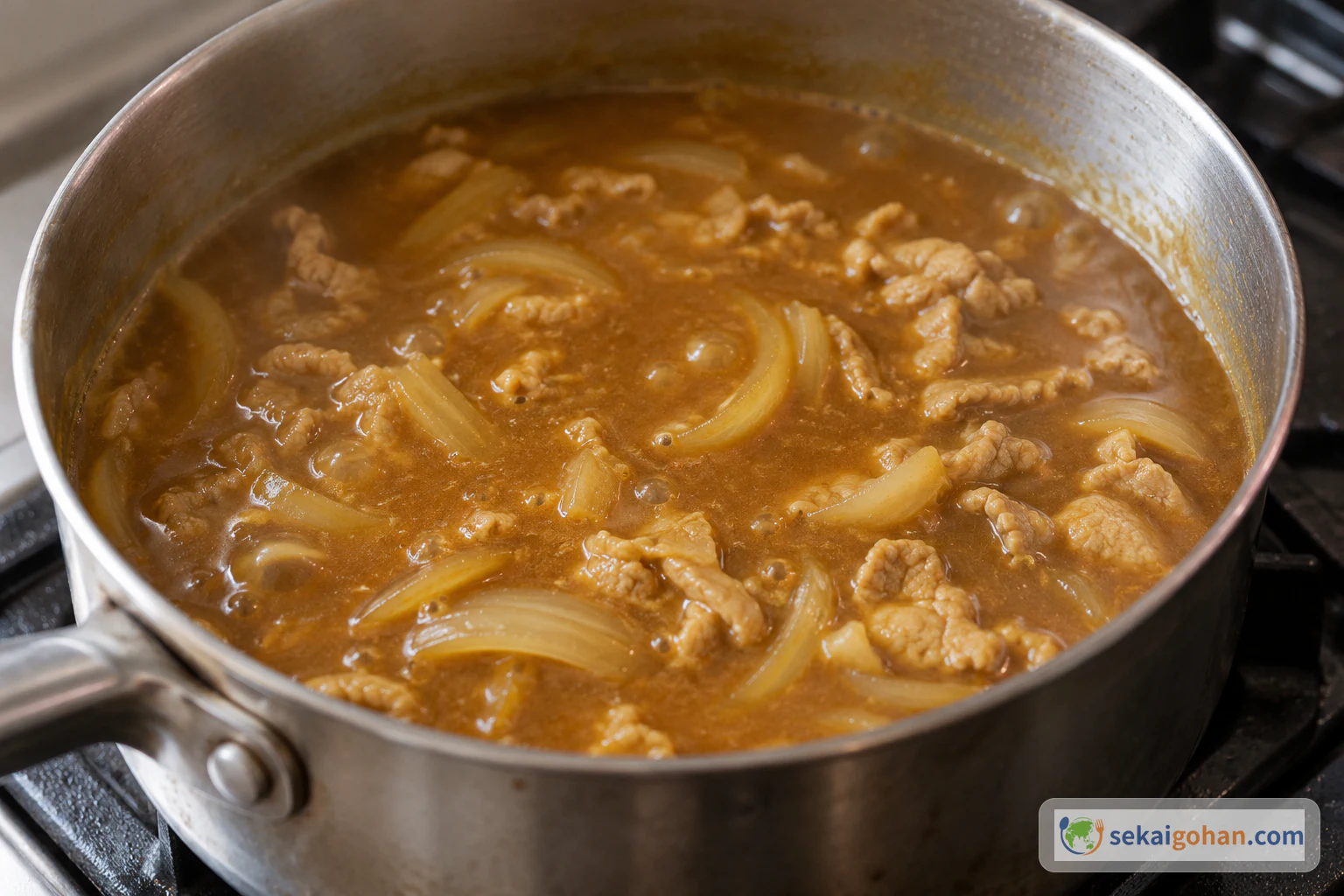
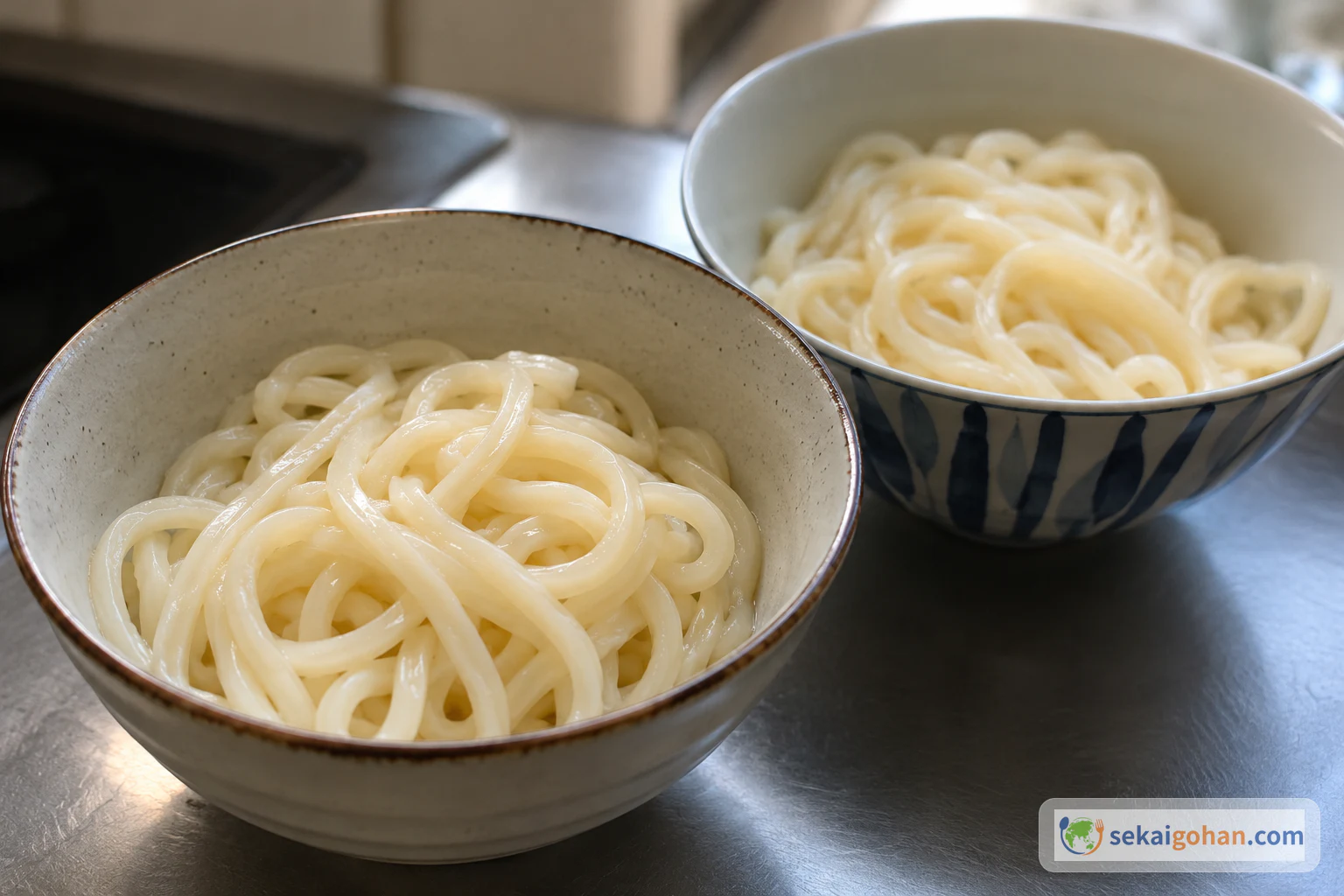
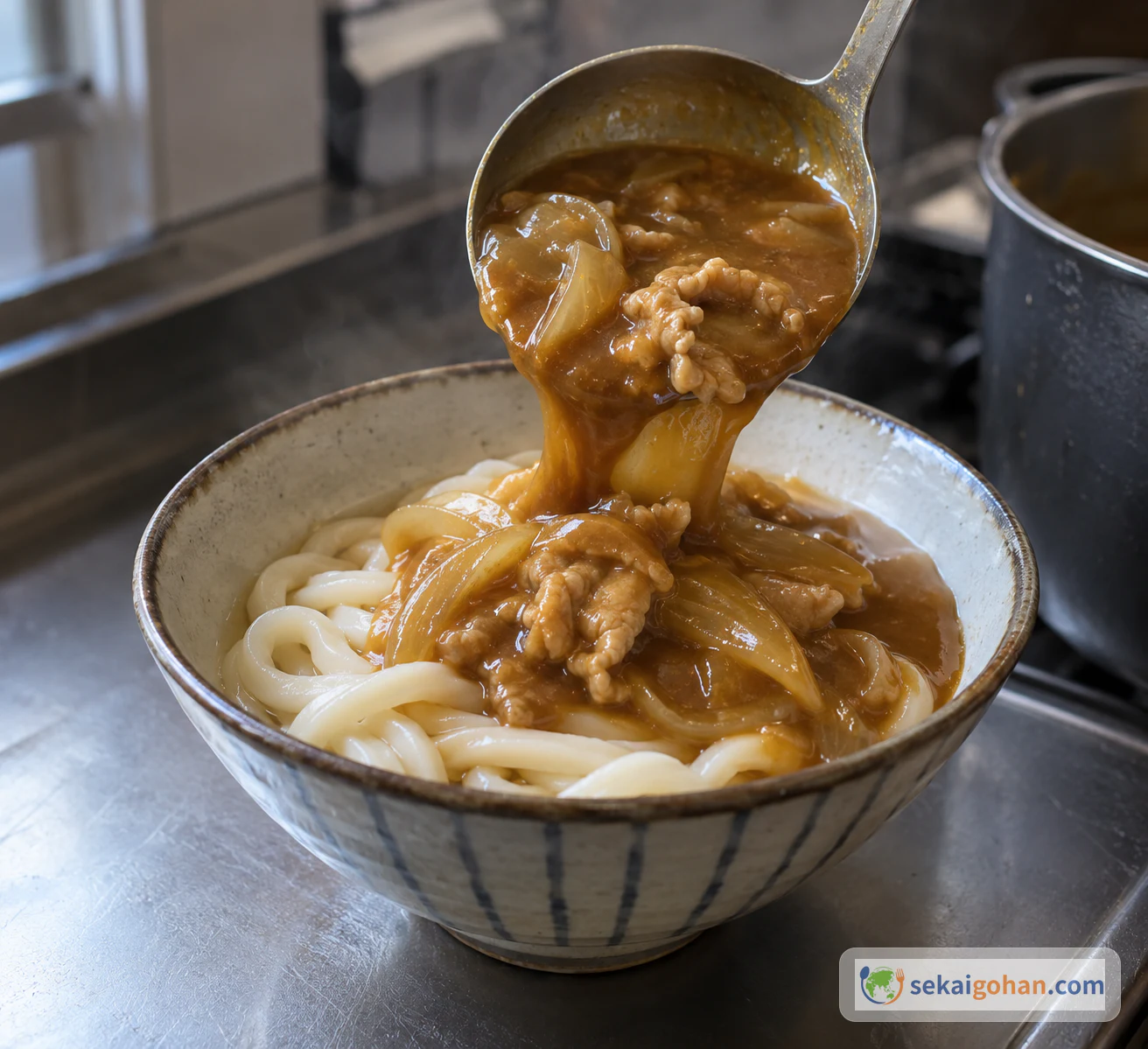
A pot of pork and onion simmers in dashi until the heat goes off. Then a ladleful of hot stock comes up, and a portion of curry roux melts into it until it's completely smooth. At the table, drained udon goes into bowls, the curry soup is ladled over the top, and a scattering of sliced scallions finishes it. You get chewy noodles in a rich, fragrant curry soup, and it's just right for a busy weeknight.
About Curry Udon
Curry udon has been popular in Japan for a long time, though it's less known abroad than curry rice. This version builds the soup from pork loin, onion and prepared Awase Dashi, finished with Japanese boxed curry roux, and serves it over frozen Sanuki udon for two bowls. For more dishes from the same country, see Japan.
The work happens in two pots: the curry soup in one, the noodles heating through in the other. Plan on 50 minutes in all, with 10 minutes of prep and 40 minutes of cooking.
Ingredients (2 Servings)
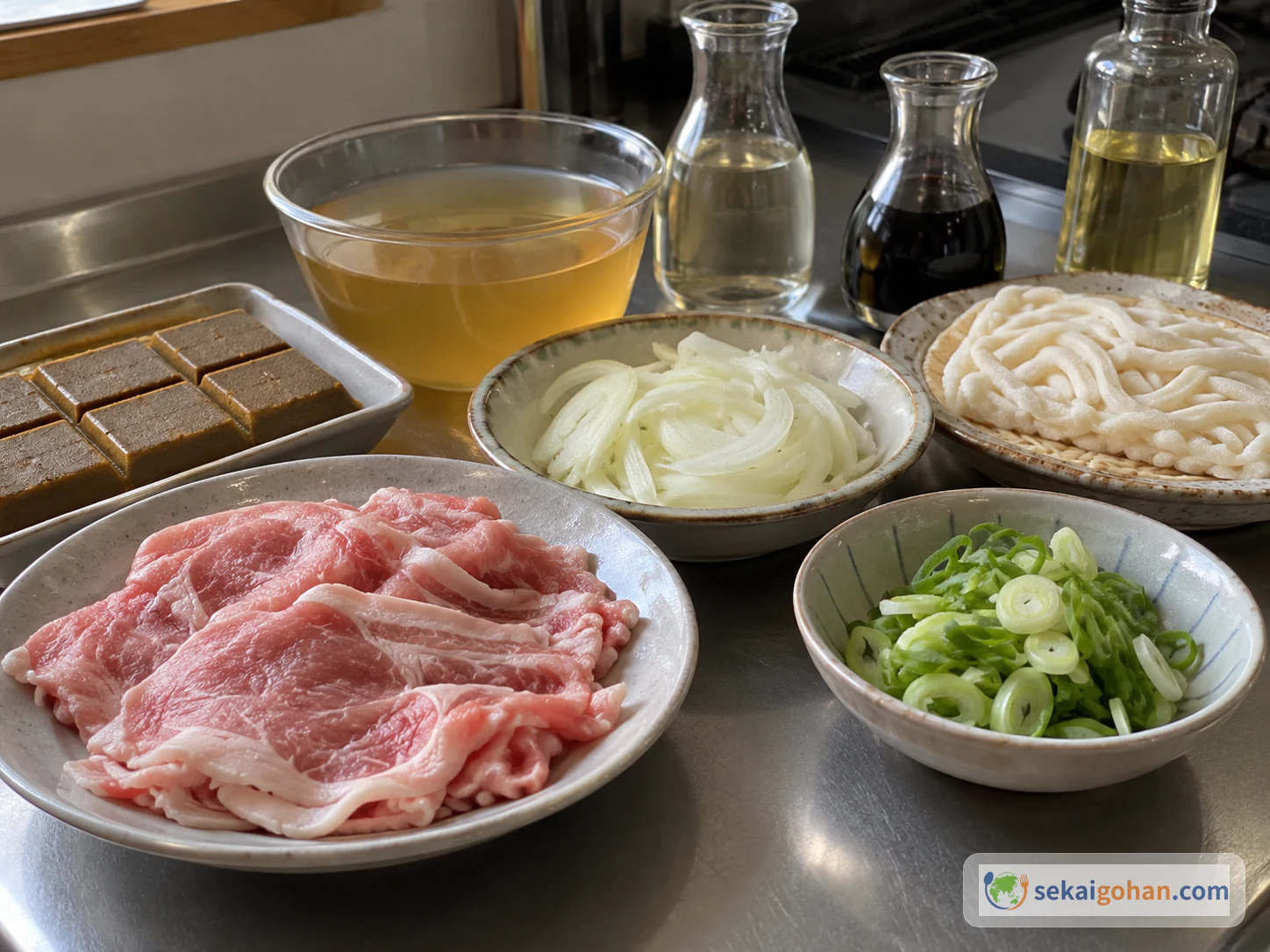
Choosing the Dashi, Roux and Noodles for Curry Udon
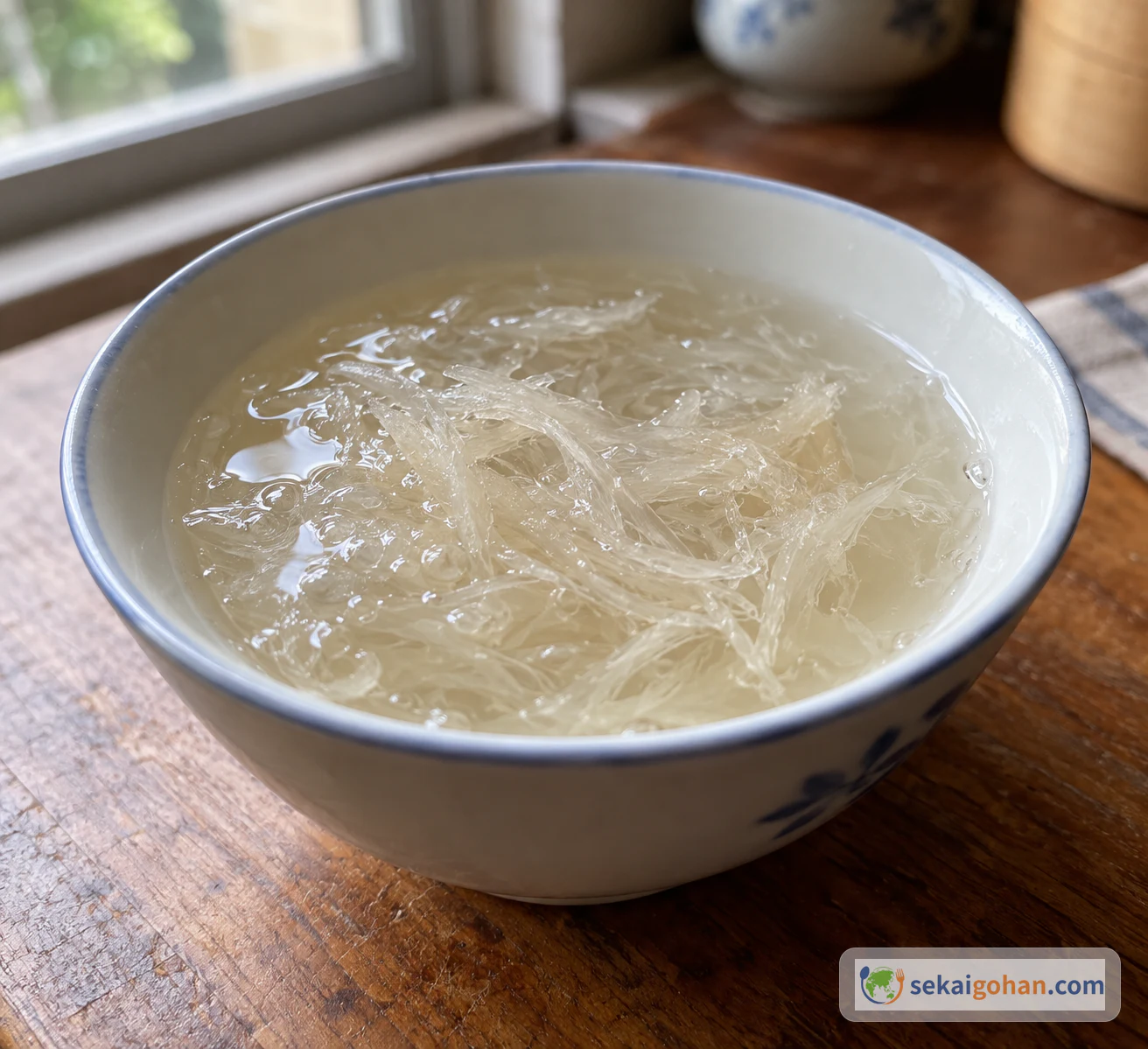
- Dashi: Use dashi you've already made or prepared. The cup here is a 240 ml US cup, so 3 cups come to 720 ml. A 200 ml Japanese measuring cup holds less.
- Curry roux: The roux is listed as 2 cubes (2 oz, 50 g), but cube sizes differ between brands, so weigh out 50 g instead of counting cubes. You'll divide it into two portions for dissolving. Boxed roux ingredients vary by product, so if allergies matter at your table, read the label on the box you buy.
- Udon: Choose frozen Sanuki-style udon, enough for two servings, 1 lb (500 g), and cook it according to the package directions.
- Garnish: Scallions are the only topping.
Equipment
- Medium pot with a lid
- Ladle
- Skimmer
- Second pot for cooking the udon
- Strainer or colander
- Kitchen scale
- 2 bowls
Method: Simmer the Soup, Dissolve the Roux, Cook the Noodles Apart
The curry soup and the noodles cook in separate pots and only meet in the bowl. Every portion of roux is fully dissolved in a ladle of hot stock, with the heat off, before it goes into the pot.
Fixing Common Curry Udon Problems
| Condition | What to check | What to do |
|---|---|---|
| A piece of roux is still solid in the ladle | The portion hasn't finished dissolving | Keep stirring in the ladle until smooth, then pour it back |
| You're about to add roux with the burner still on | Step 4 was skipped | Turn off the heat first, then dissolve each portion in a ladle |
| The roux cubes in your box are a different size | Cube weight varies by brand | Weigh 50 g in total and split it into two portions |
| You measured the dashi with a Japanese measuring cup | That cup holds 200 ml | Measure 720 ml of dashi |
| The soup is boiling hard after the roux goes in | The heat is too high | Lower it to a gentle simmer, and turn it off once bubbling after the soy sauce |
| You're unsure how long to cook the noodles | Times vary by product | Follow the directions on the udon package |
Frequently Asked Questions
Should the pot be covered after skimming?
Cover the pot for the first 5 minutes of simmering the dashi, and again at the end to keep the finished soup warm off the heat.
Why turn off the heat before adding the roux?
So the roux dissolves smoothly in a ladle of hot stock instead of landing as a solid block on the hot bottom of the pot, where it could scorch before it melts.