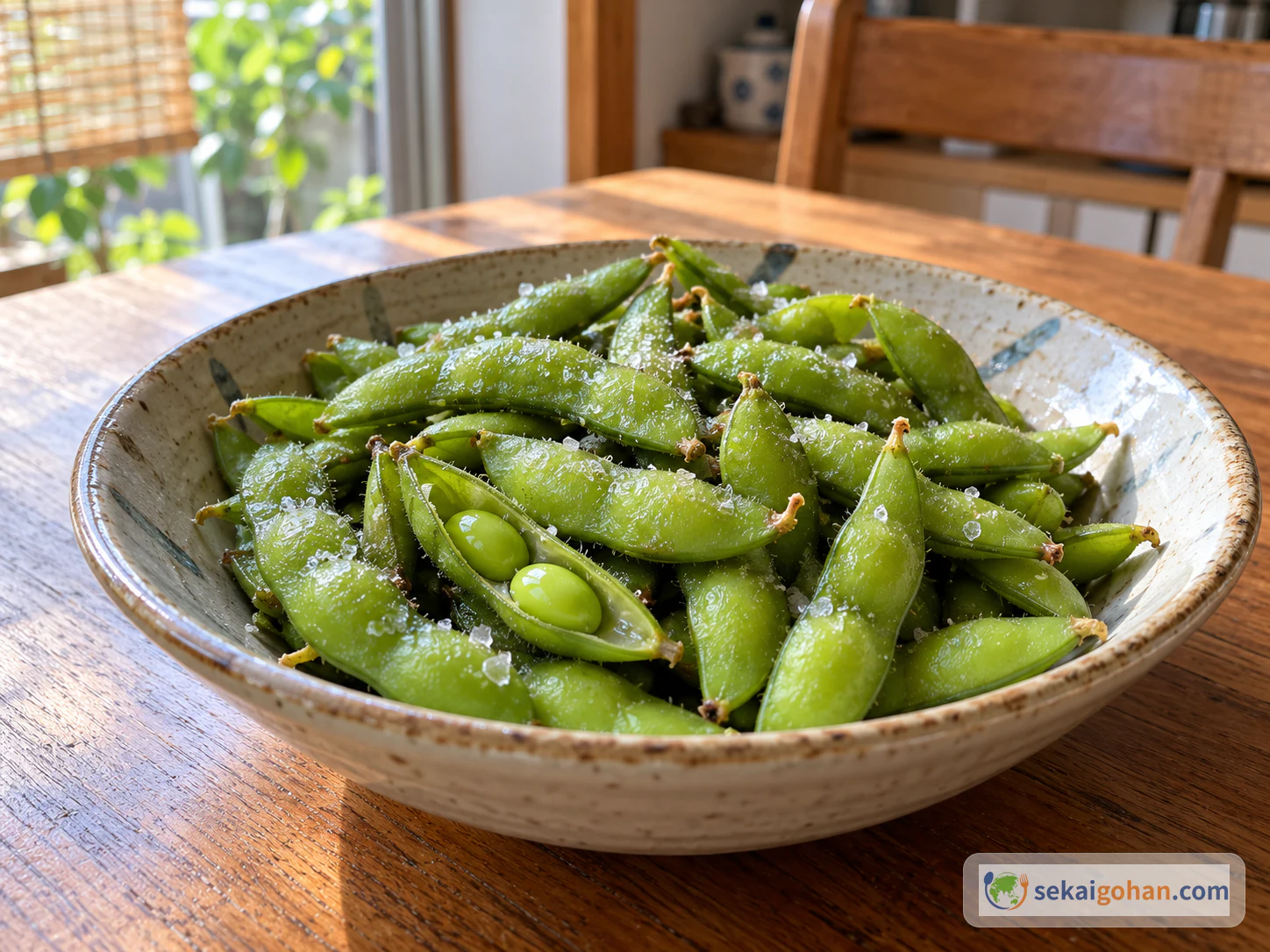
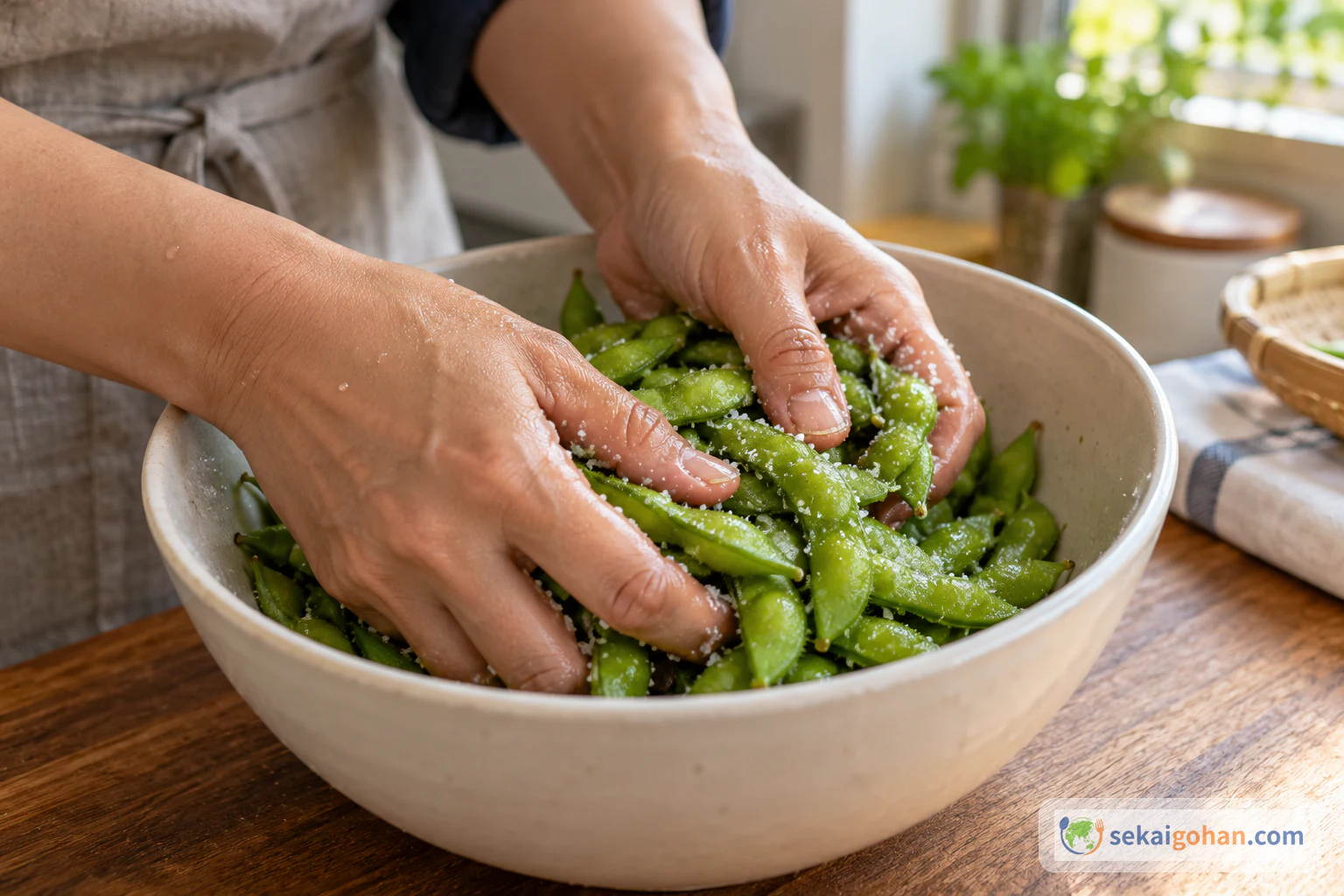
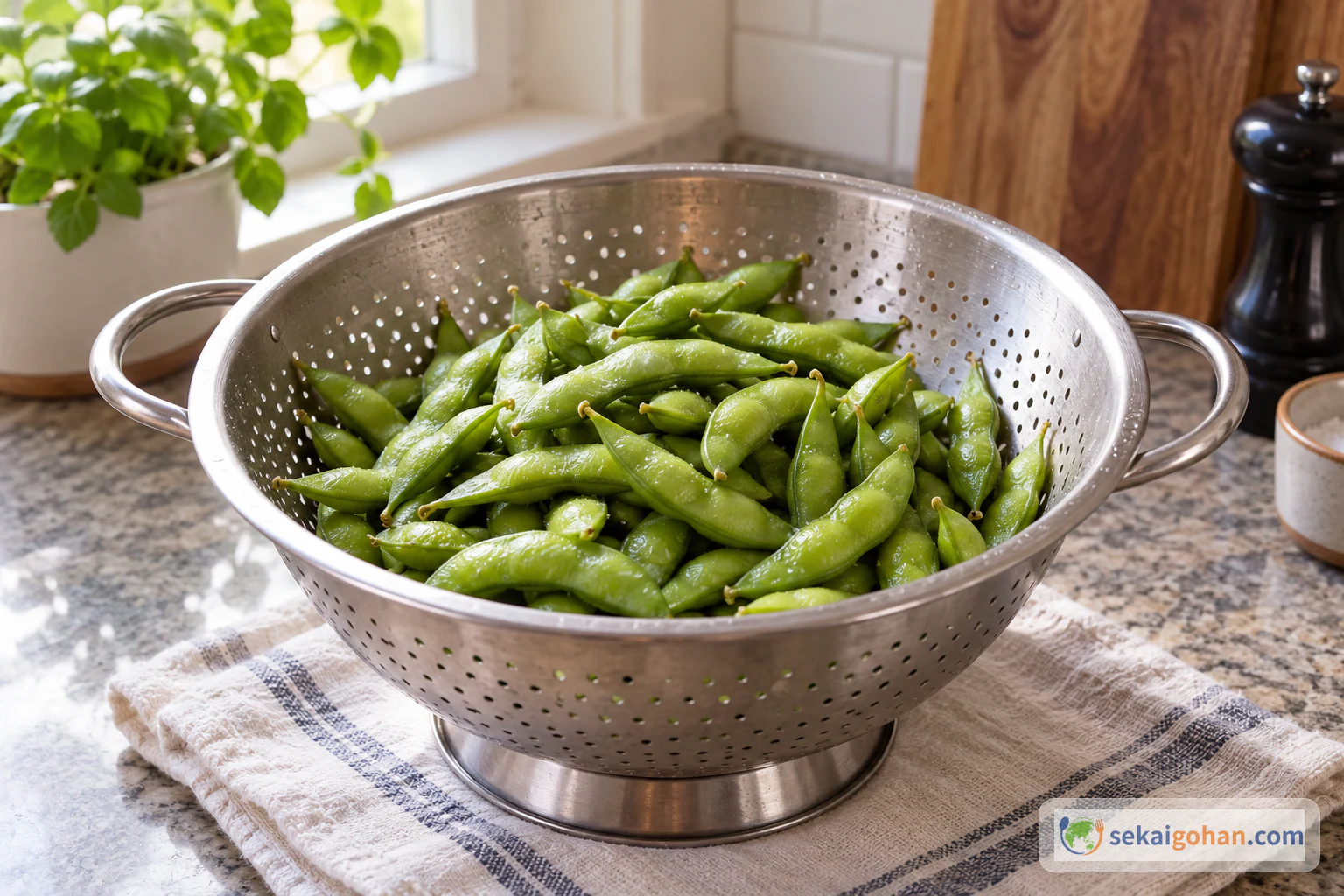
Summer edamame begin as fresh green pods, rubbed hard with salt and dropped into a pot of salted boiling water for a few minutes. They come to the table still warm. These are edamame (枝豆, えだまめ), soybeans harvested while still green, and salt-boiling them in the pod is one of the most familiar ways to eat them in Japan. The whole pods go into the pot and onto the plate, but only the green beans inside are eaten.
Edamame in Japan
Salt-boiled edamame are a familiar light snack in Japan, usually served with drinks. The beans also go into cooked rice, stir-fries and zunda. The habit is old: in the Edo period, street vendors sold salt-boiled edamame still on the branch. For more Japanese dishes, see our Japan page.
Edamame are a summer food, but there is no single nationwide season. Peak season runs from July to August, or into September, and the timing shifts by region and variety. The young pods of Akebono soybeans, a local variety from Minobu in Yamanashi, are enjoyed around October.
Ingredients: One Bag of Pods, Water, and Salt by Weight
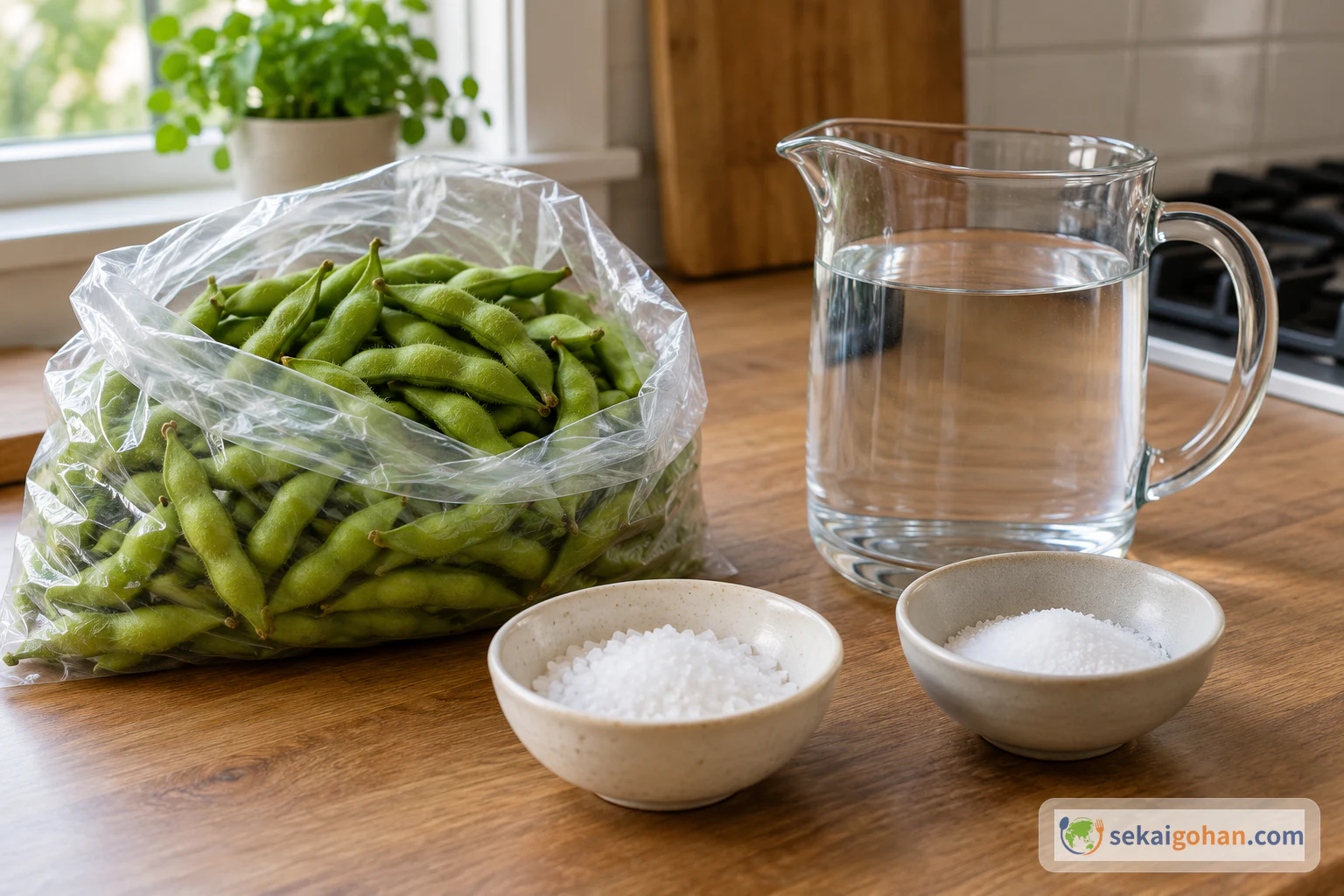
One bag is an easy amount to boil. The weight below is for pods in their shells, not shelled beans.
The salt is based on the amount of water, not the weight of the pods. Use the weight, 1.5 oz (40g) for 1 quarts (1L), rather than a spoon measure.
There is no finishing salt. Edamame are soybeans; see the allergy note below.
Equipment
- Pot
- Mixing bowl for salt-rubbing
- Colander
- Kitchen scale, for weighing the salt
- Kitchen scissors (optional, for trimming the pod tips)
- Drop lid (a lid that sits directly on the food inside the pot) or chopsticks
Choosing Fresh Edamame Pods
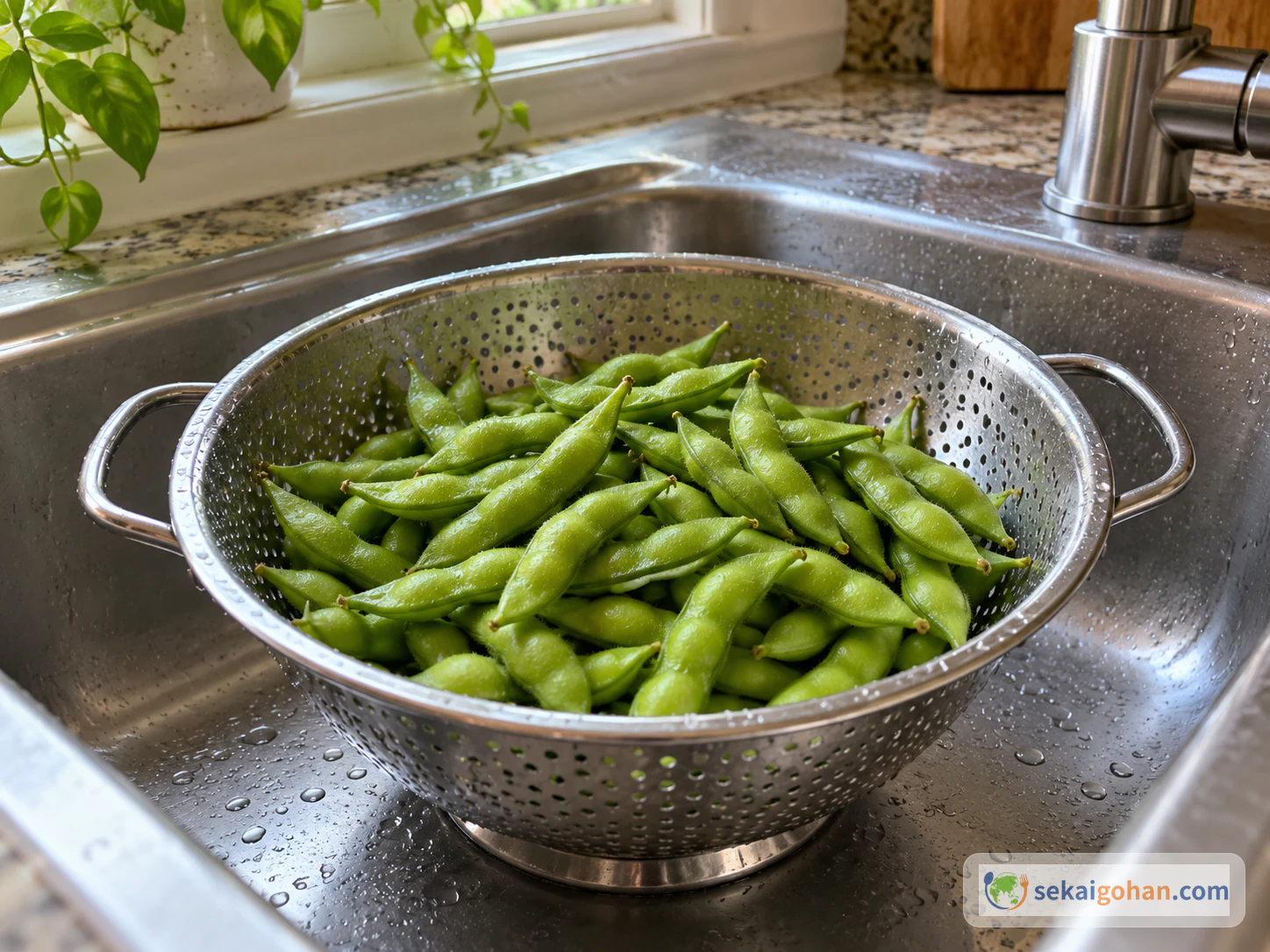
Freshness matters more than anything else here. Look for pods that are well packed with beans and still have a just-picked look, and judge them by how full they are, their color and their fuzz. Edamame sold still on the branch stay fresher, so buy those when you can. Either way, cook them the day you buy them.
Method: Salt-Rubbing and Boiling in the Pod
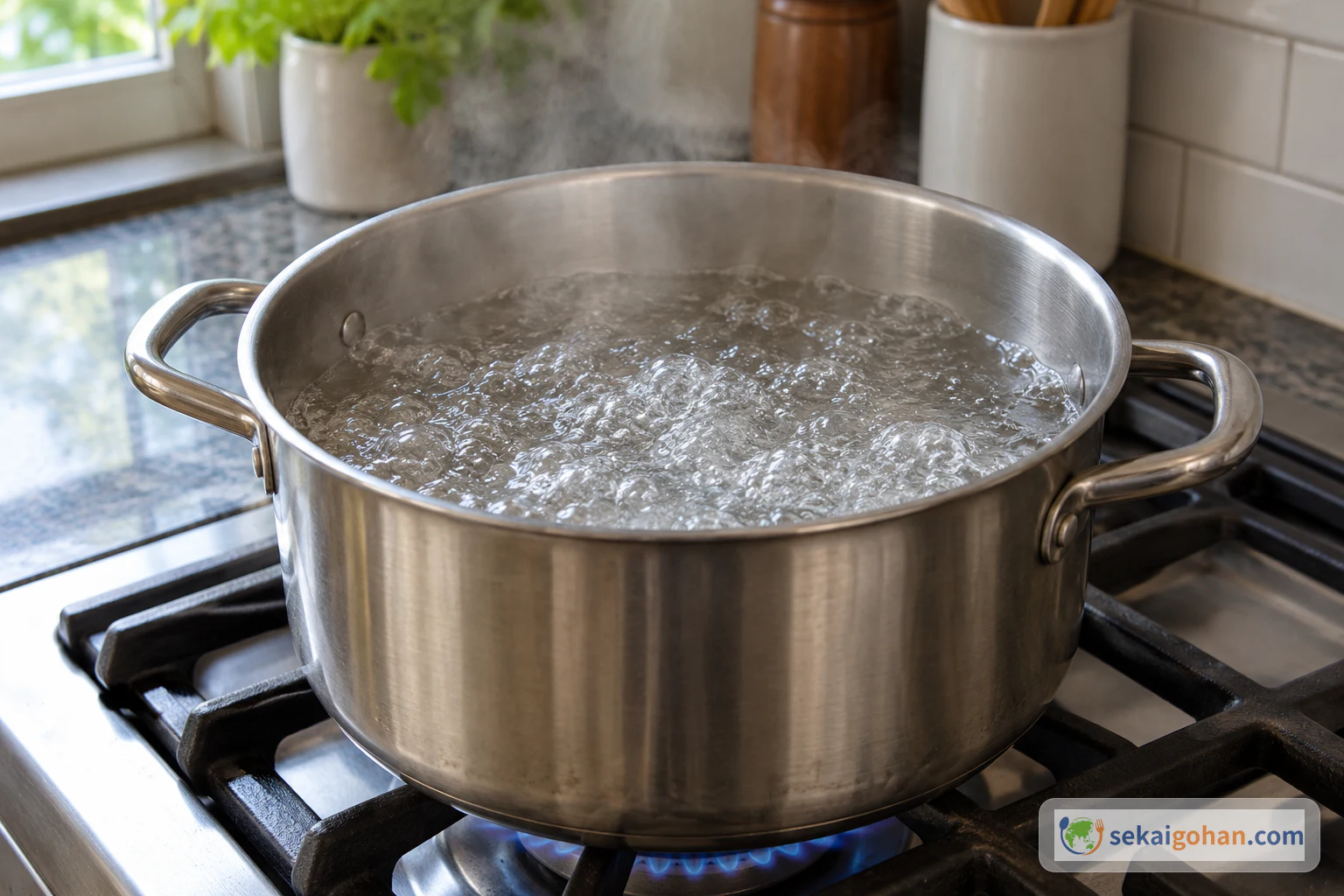
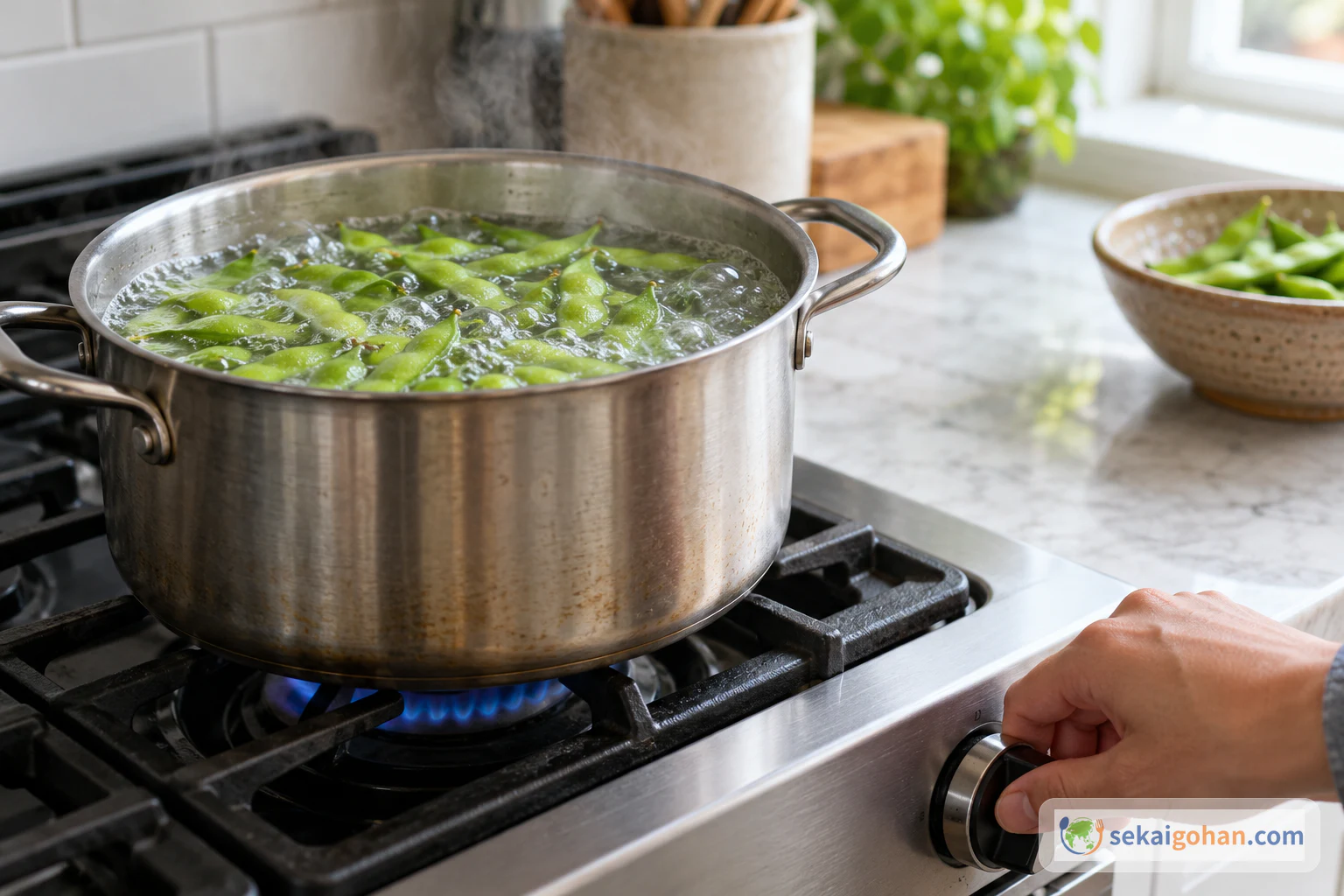
Boil the water first, then add the remaining salt and bring it back to a boil, and only then add the salt-coated pods. Start timing after the pods' water has returned to a boil.
Edamame Troubleshooting
Weigh the salt, split it in half, and add the pods only once the salted water is already boiling. The clock gets you close, but the real test is tasting a bean or two.
| Situation | What to check | What to do |
|---|---|---|
| Unsure how much salt to use | Whether you are using a spoon conversion | Weigh it. Use about 1.5 oz (40g) for about 1 quarts (1L) water, half for rubbing and half for the water |
| Beans seem underdone or overdone | Whether you started timing after the pods' water returned to a boil | Start with 4–6 minutes and confirm by tasting one or two beans |
| Pods are very fuzzy | Whether the fuzz remains after rubbing | Rinse once after rubbing, then add salt corresponding to the rubbing portion to the cooking water |
| Salt is stuck in the bowl | Whether it made it into the pot | Rinse the bowl with some cooking water and pour it back into the pot |
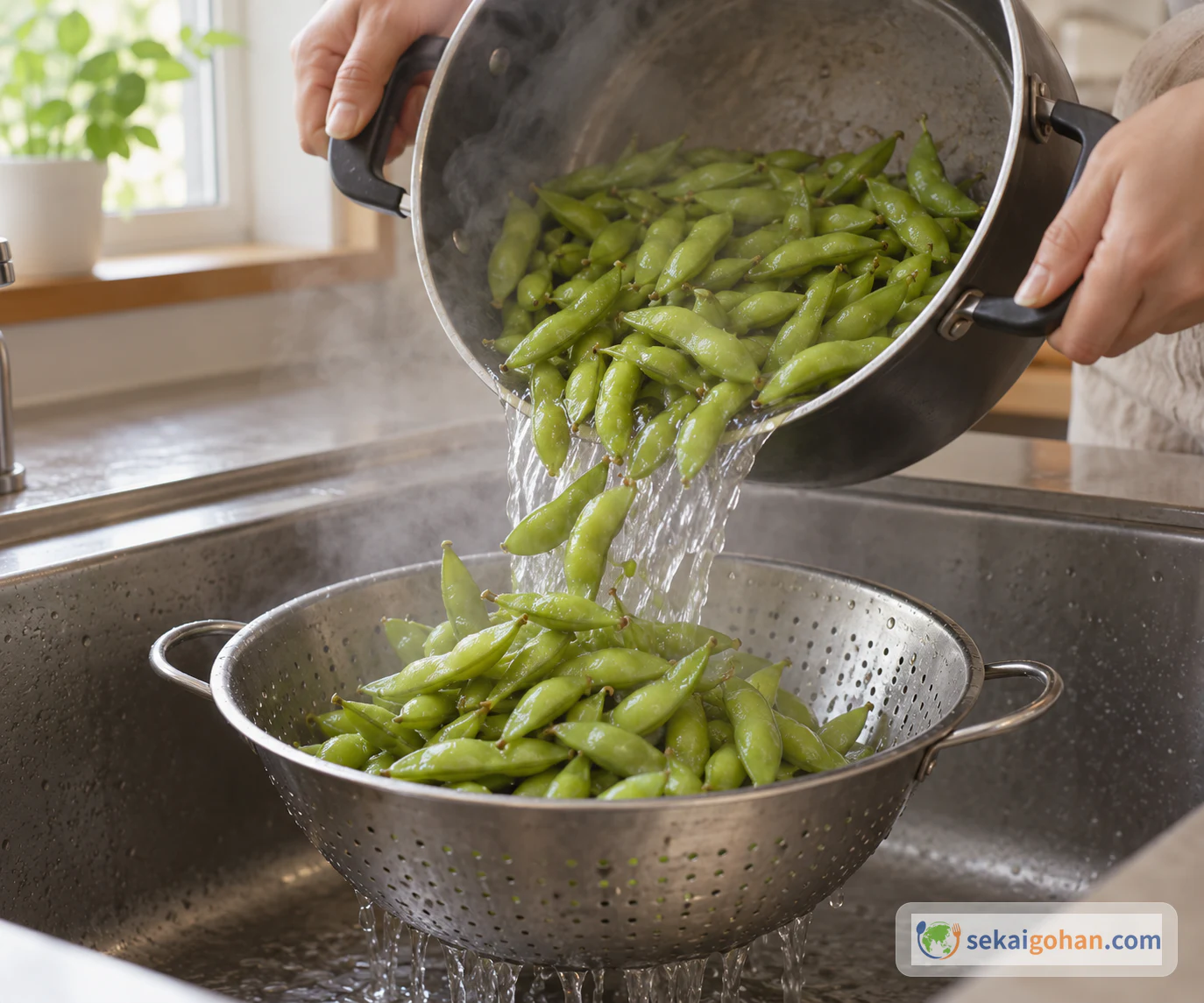
| You want them cool quickly | Whether you were about to use cold water | Don't immerse them; let them cool in the colander |
Other Ways to Salt and Boil Edamame
Every kitchen and region in Japan salt-boils edamame a little differently. Some cooks skip measuring entirely: they boil the pods in ample water to the firmness they like, sprinkle on salt while the pods are hot, and fan them cool on a colander. Others use salt at 4% of the water, rub a third of it gently into the pods, let them rest 5–10 minutes, then boil them with the rest of the salt for 4 minutes and fan them cool without rinsing.
In Minobu, 9 oz (250g) of Akebono soybeans are rubbed with salt, then boiled 5–8 minutes in 1.5 quarts (1.5L) water with 1.5 oz (45g) salt, drained and fanned cool. These methods are fun to compare, but each works as a whole, so don't mix their salt splits, times or cooling steps into this recipe.
Edamame are soybeans. Anyone who must avoid soy should not eat this dish. Under Japan's labeling rules as of April 2026, "edamame" alone is not enough on a package. For example, the label reads 枝豆(大豆を含む), "edamame (contains soybean)".
Frequently Asked Questions
How much salt do I need?
Use about 1.5 oz (40g) salt for about 1 quarts (1L) water, roughly 4% of the water. Rub about 20g into the pods and add about 20g to the boiling water. Tablespoon conversions disagree, so weigh the salt.
Do I have to trim both ends of the pods?
The step is optional. Snipping off a little of the tip is enough, and you can trim both ends if you have time.
How long do I boil them?
Turn the heat down slightly once the water returns to a boil after adding the pods, and boil for 4–6 minutes. Start checking at 5–6 minutes and taste one or two beans to decide.