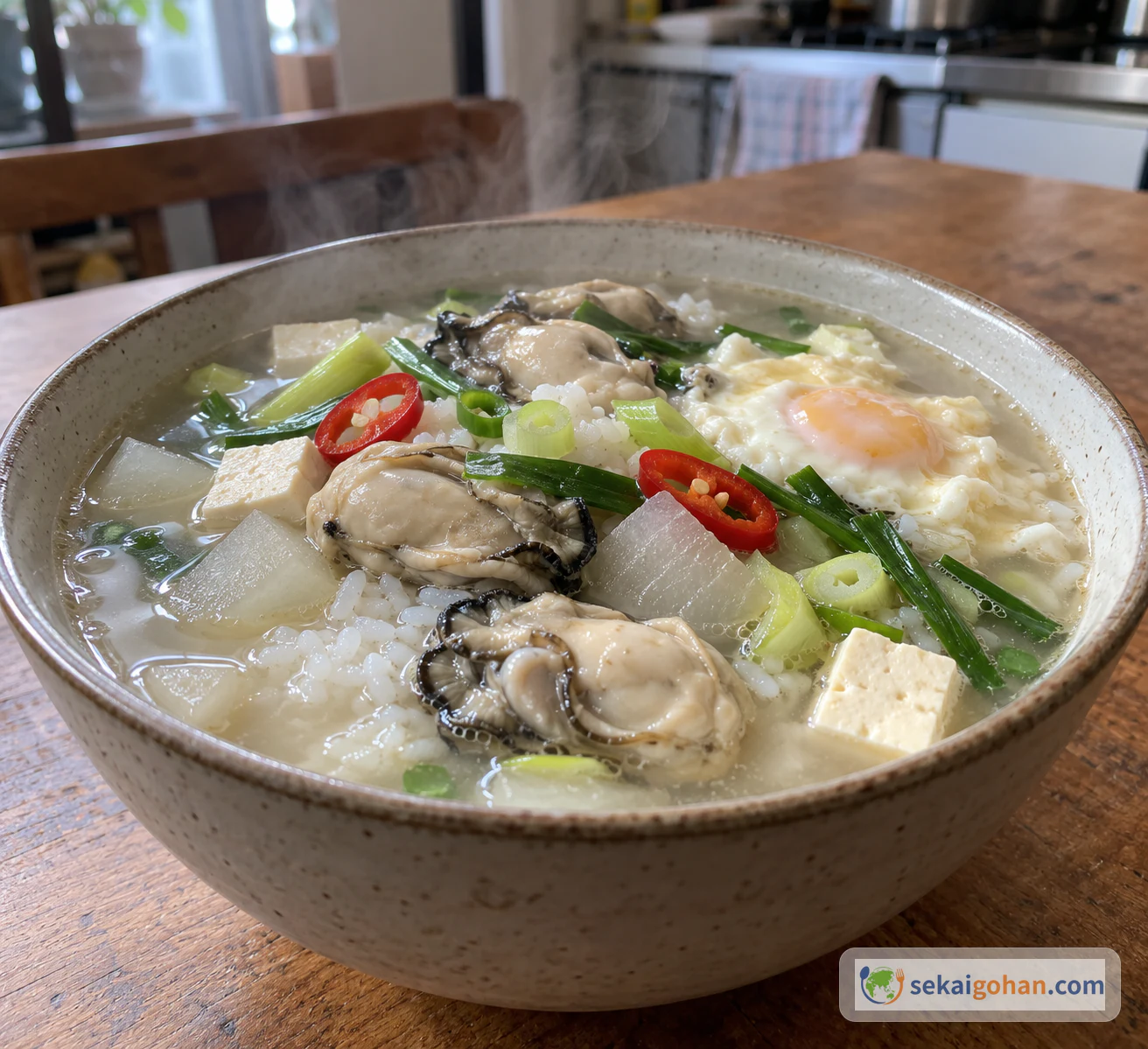
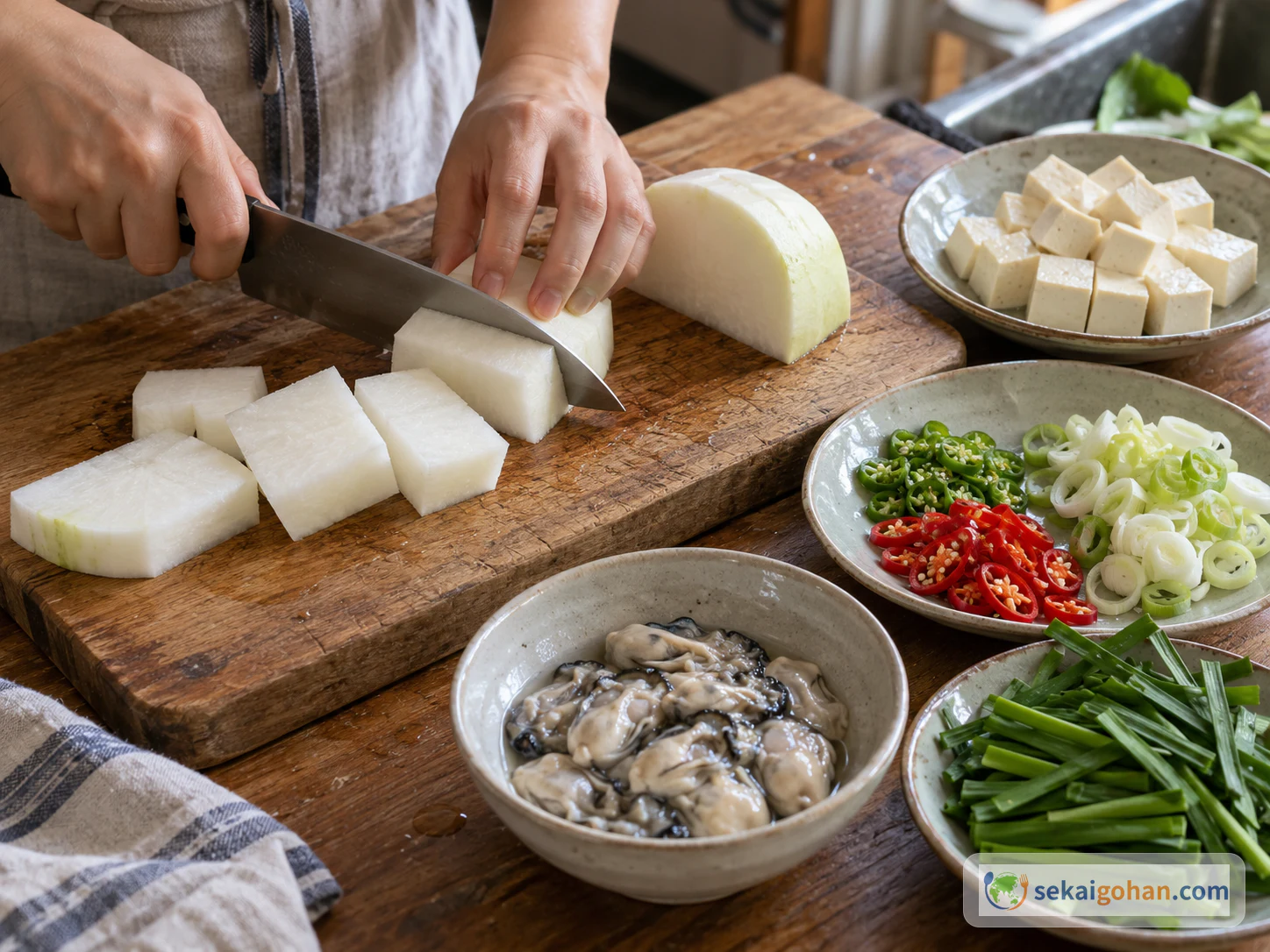
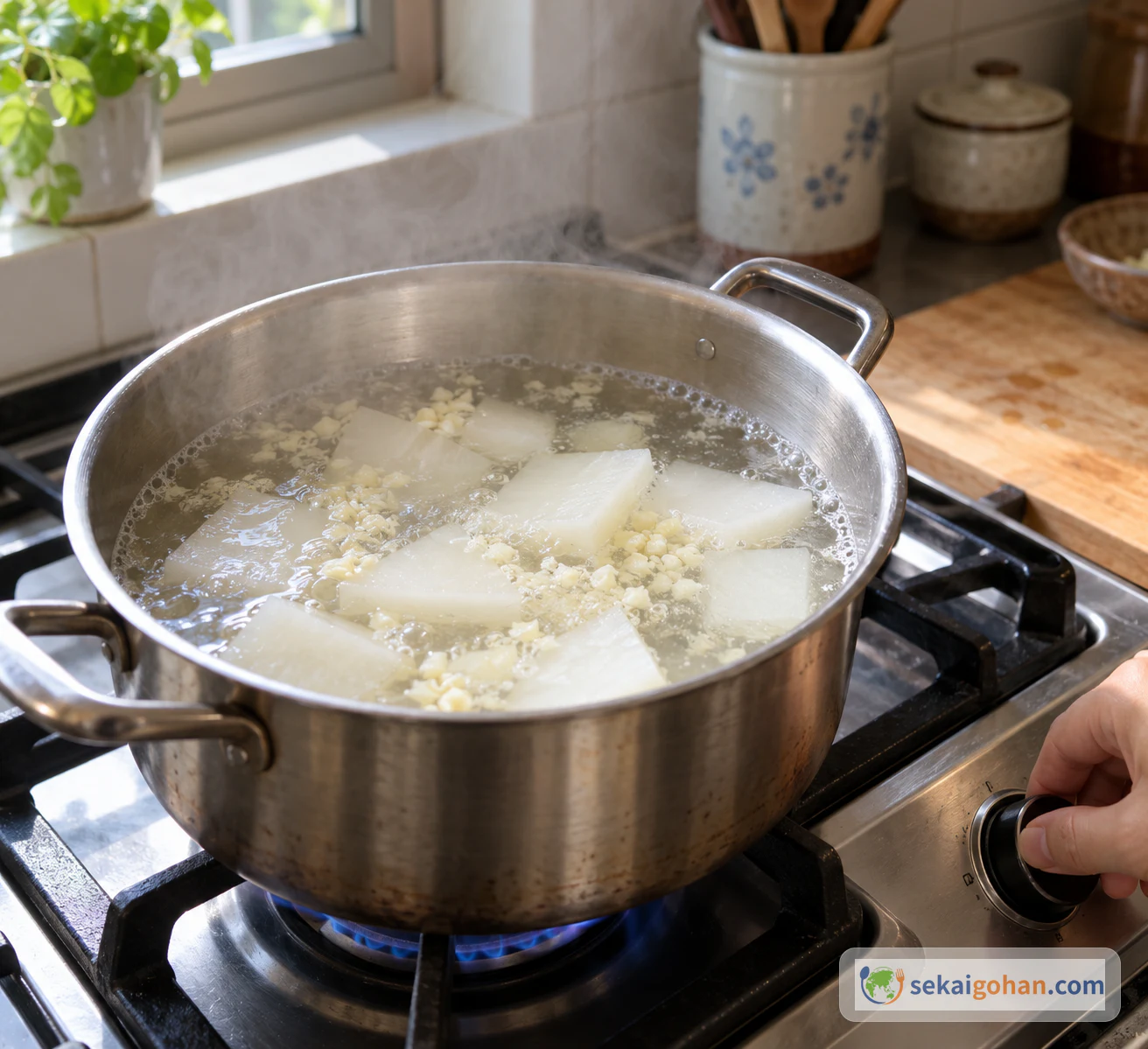
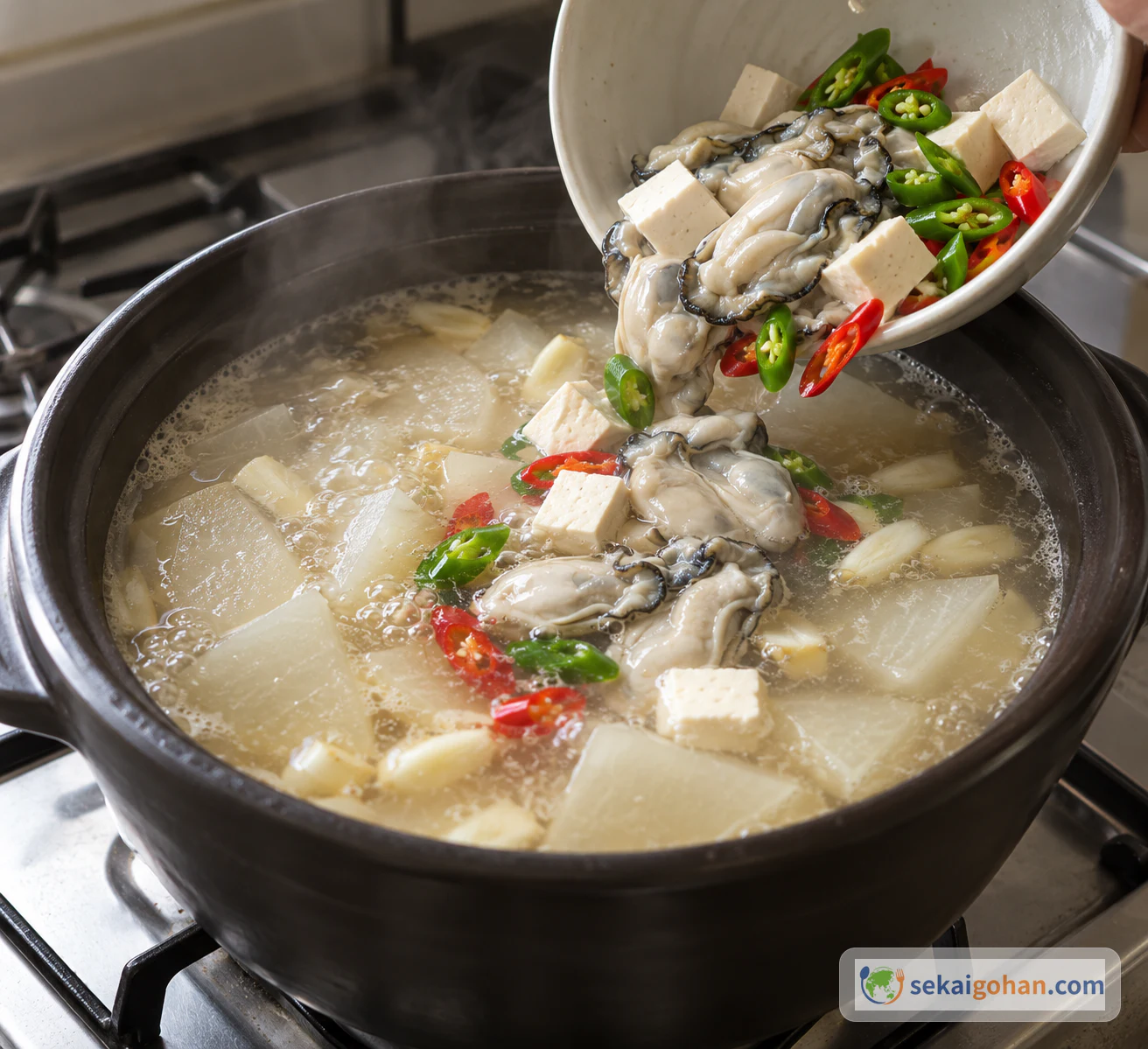
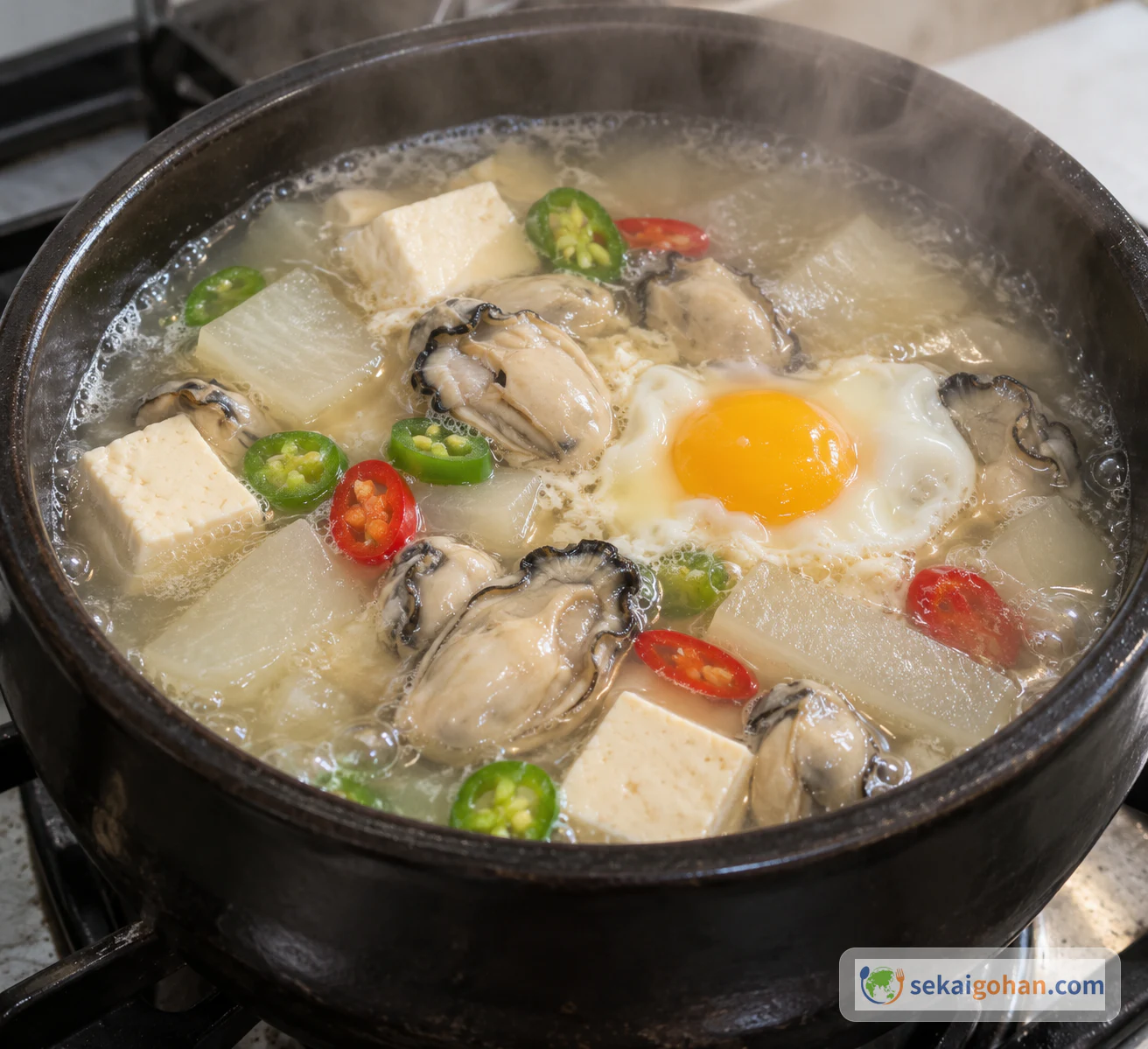
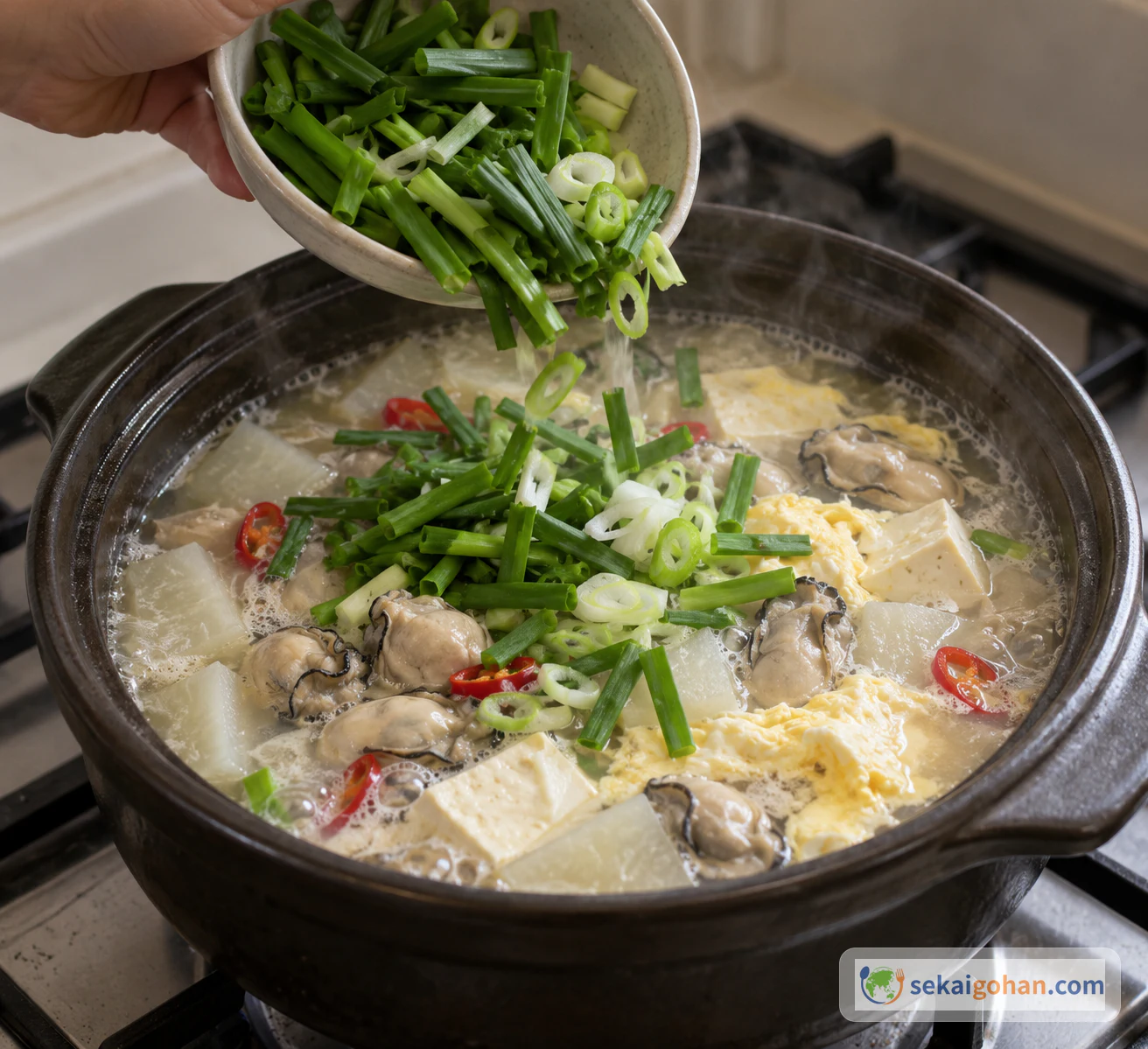
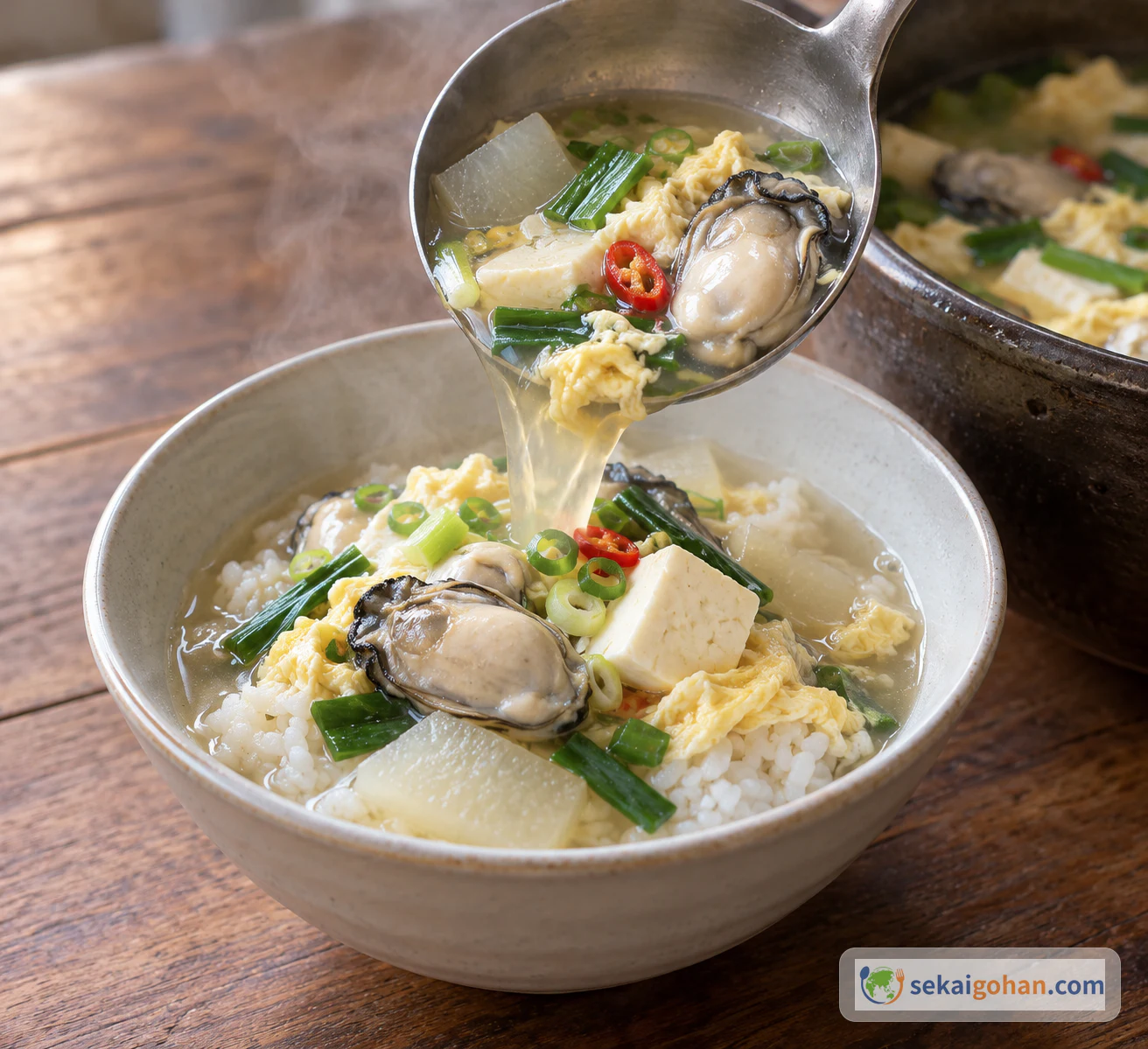
Thick pieces of Korean radish simmer with minced garlic until the pot smells sweet and sharp. Oysters, tofu and sliced green and red chilies go in next, then one egg, and last a handful of garlic chives and scallion. The hot soup is poured over cooked rice. This is gul-gukbap (굴국밥), a Korean winter dish of oysters and rice that many people also count on as a hangover soup. This version makes 2 servings, suits beginners and is ready within 30 minutes.
What Gul-gukbap Is
Gul-gukbap is a winter soup built around oysters and rice. It belongs to the wider "gukbap" family, where soup and rice come together in one bowl. Dwaeji-gukbap follows the same pattern but uses pork and pork bones and no oysters, so the two are quite different dishes. For more dishes from the same country, see South Korea.
This recipe seasons the broth with salt and Beef Dashida Gold, a beef stock seasoning, rather than an anchovy-and-kelp stock. That makes it quicker and simpler than many winter versions you will come across.
Gul-gukbap is written 굴국밥 in Korean, and you will also see it as Gulgukbap. In English it is often called oyster rice soup or oyster and rice soup.
Ingredients for 2 Servings
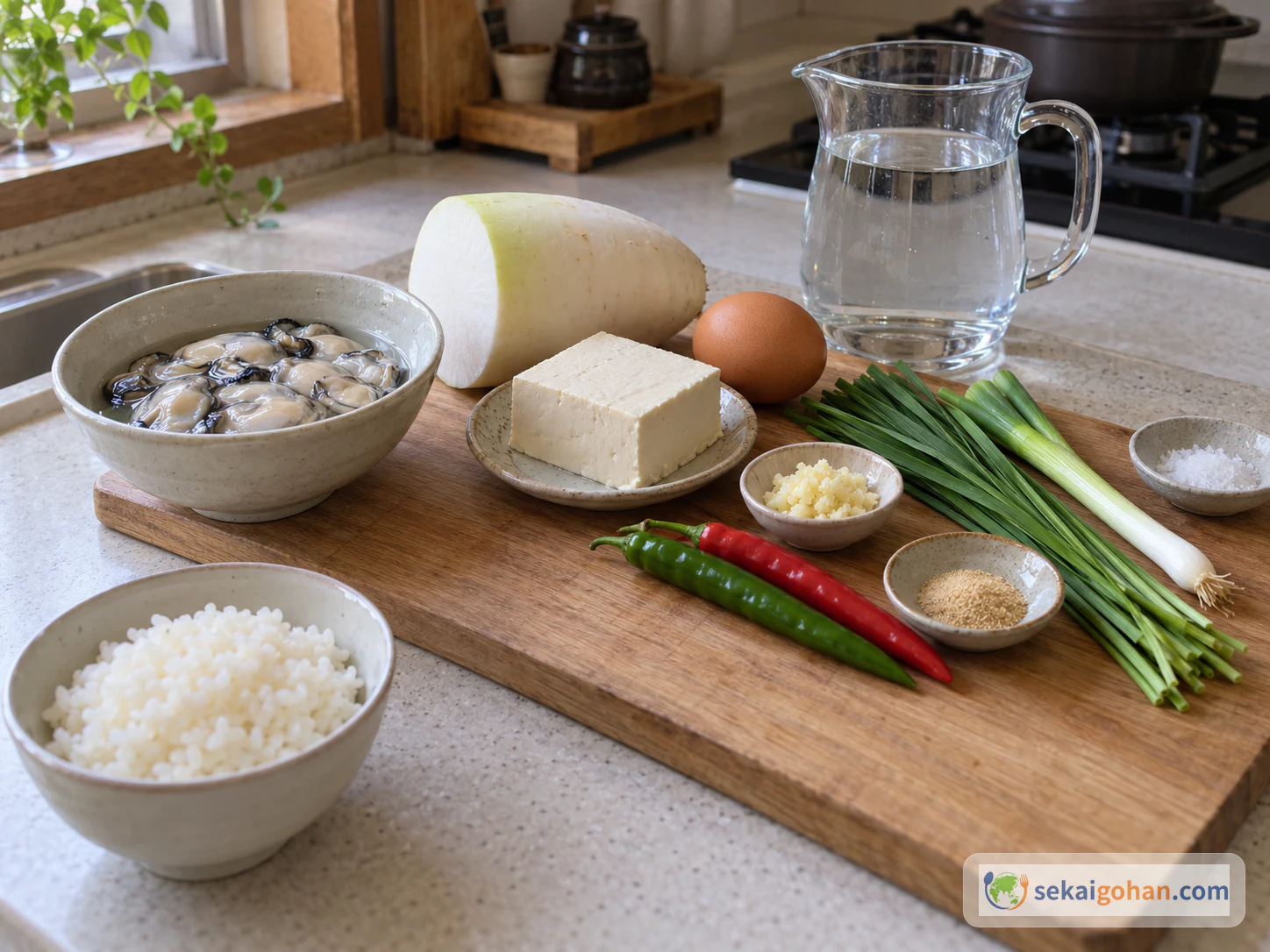
Season the soup with salt to taste, and serve with cooked rice as needed.
Choosing Ingredients for Gul-gukbap
The beef stock seasoning is Beef Dashida Gold (쇠고기다시다골드), and it carries most of the broth's flavor. For heat, look for Cheongyang green chili, a hot Korean variety. Keep to the ingredients listed here. Anchovy, kelp, onion and mushrooms belong to a different style of the soup, described further down.
This soup contains shellfish (oysters), egg and soy (tofu). Check the label on the stock seasoning for other allergens.
Equipment
- Knife and cutting board
- Medium pot
- Ladle
- Serving bowls
Cooking the Oysters Through
The oysters are the one thing to watch closely. Make sure they are fully cooked before you serve the soup.
- Cook shucked oysters until the flesh turns opaque or milky white and firm.
- For oysters labeled 가열조리용 ("for cooking") or 익혀 먹는 ("eat cooked"), heat them to a core temperature of at least 185°F (85°C) for at least 1 minute. The brief boil in this recipe is not enough for that.
- If you are pregnant, avoid raw or undercooked shellfish.
- When handling raw seafood, keep it cold, keep it apart from ready-to-eat foods, and wash hands and utensils after handling it.
Photos cannot show internal temperature, so follow the safety notes above rather than the photos.
| What you notice | What to do |
|---|---|
| The shucked oysters still look translucent or soft | Keep cooking until they are opaque or milky white and firm |
| Your oysters are labeled 가열조리용 or 익혀 먹는 | Heat to a core temperature of at least 185°F (85°C) for at least 1 minute. The brief boil in step 4 is not a substitute |
Serving Gul-gukbap and Other Versions
Ladle the soup over rice straight from the pot. The recipe suggests ready-made 햇반 (Hetbahn) rice, which makes this an easy weeknight bowl.
A common winter version of gul-gukbap uses oysters, radish, bean curd, onion, anchovy, mushrooms and rice, sometimes with seaweed and garlic chives. It builds its flavor in a different way, so if you want to try it, treat it as its own dish rather than adding those ingredients to this one.
Frequently Asked Questions
Why is the water 500 ml when the recipe says 2.5 cups?
1 cup is 200 ml, so 2.5 cups comes to 500 ml. That is smaller than a US cup, so measure in milliliters if your cups are a different size.
How much salt and rice should I use?
Use salt to taste, added in step 3. Rice has no set amount: use as much as you like.
Does the egg have to stay whole?
Add one egg and bring the soup briefly to a boil. In the photos it goes in whole.
Can I use raw oysters or undercooked oysters for serving?
No. This is a cooked soup, and the oysters need to be cooked through as described in the table above. If you are pregnant, avoid raw or undercooked shellfish.