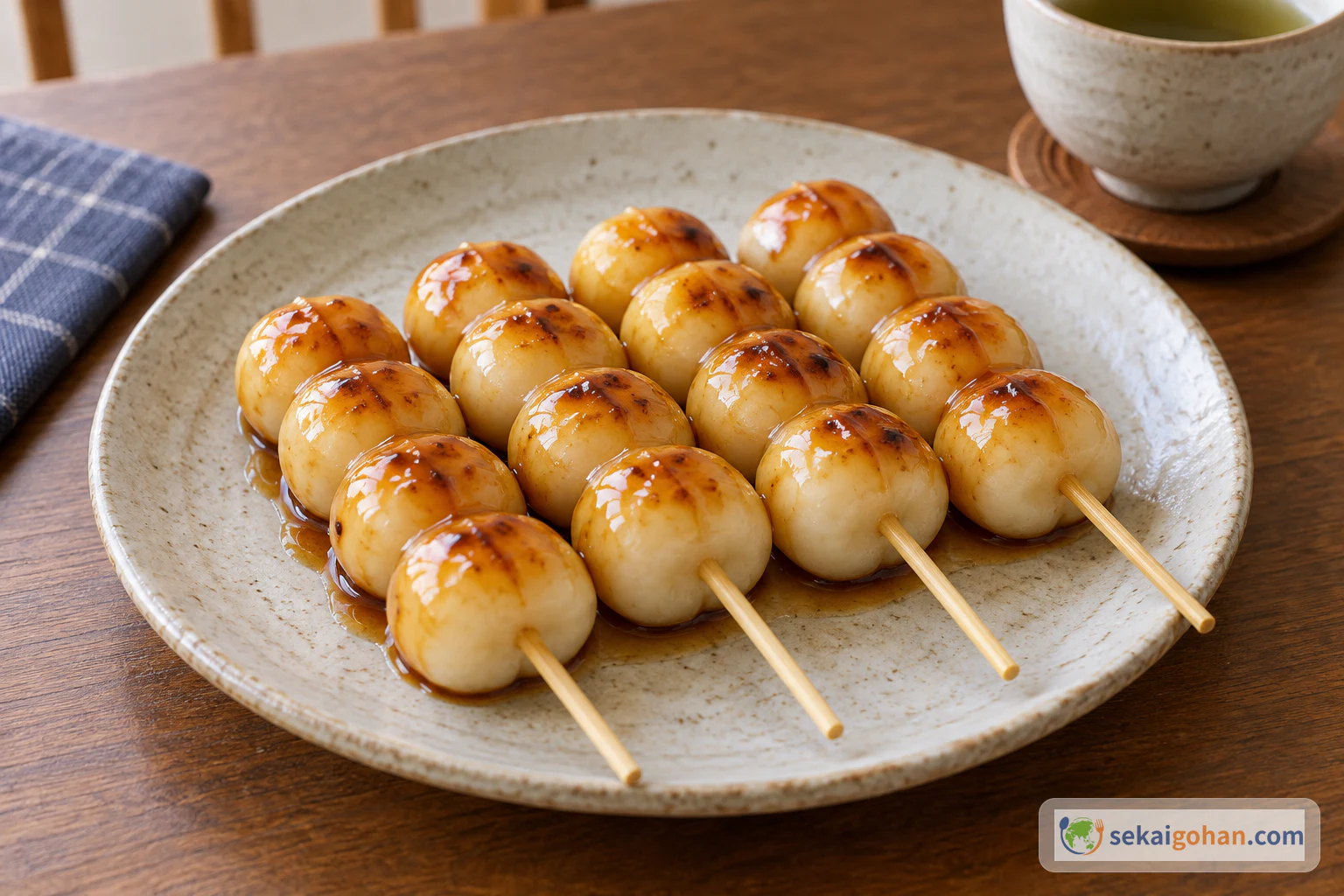
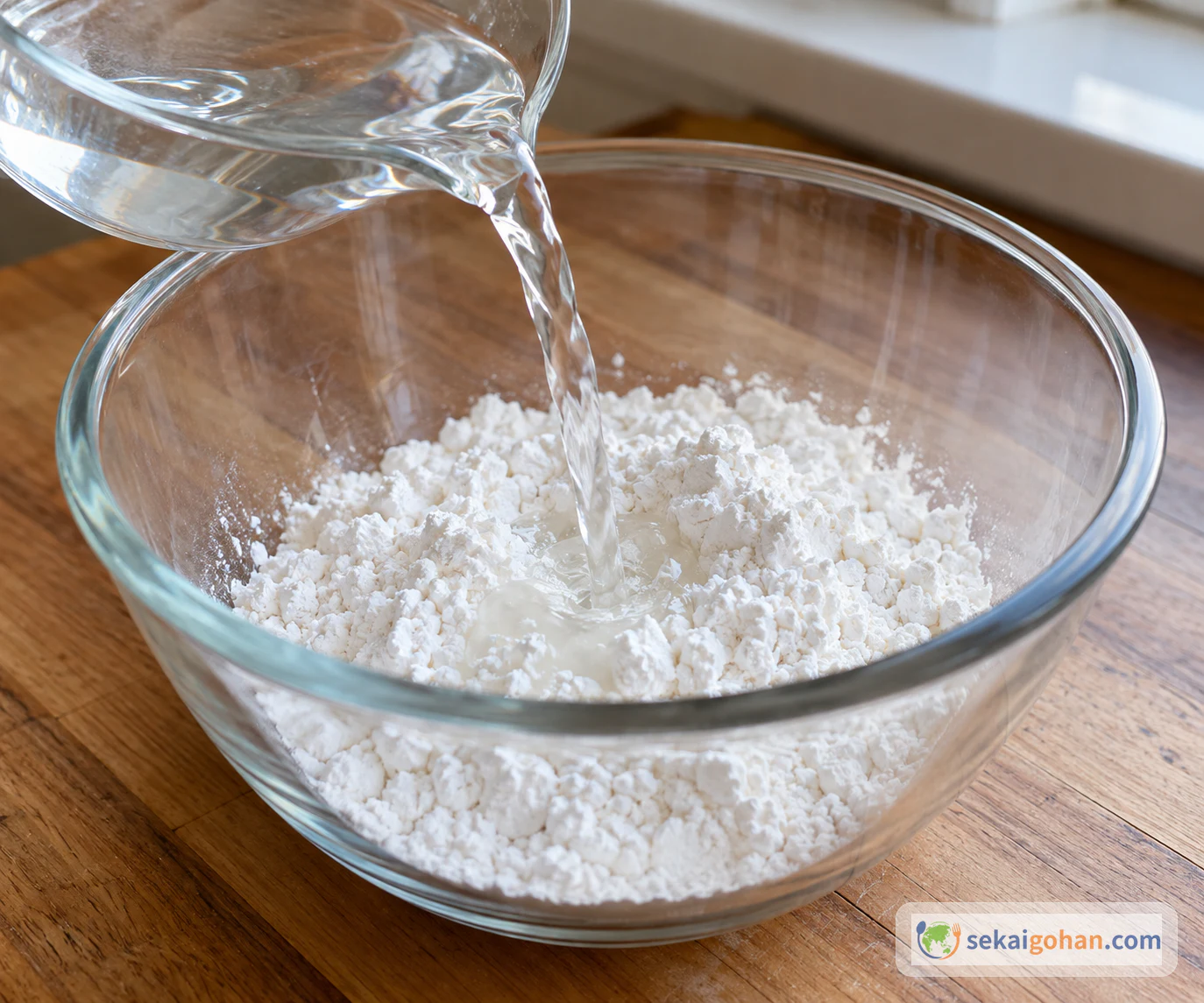
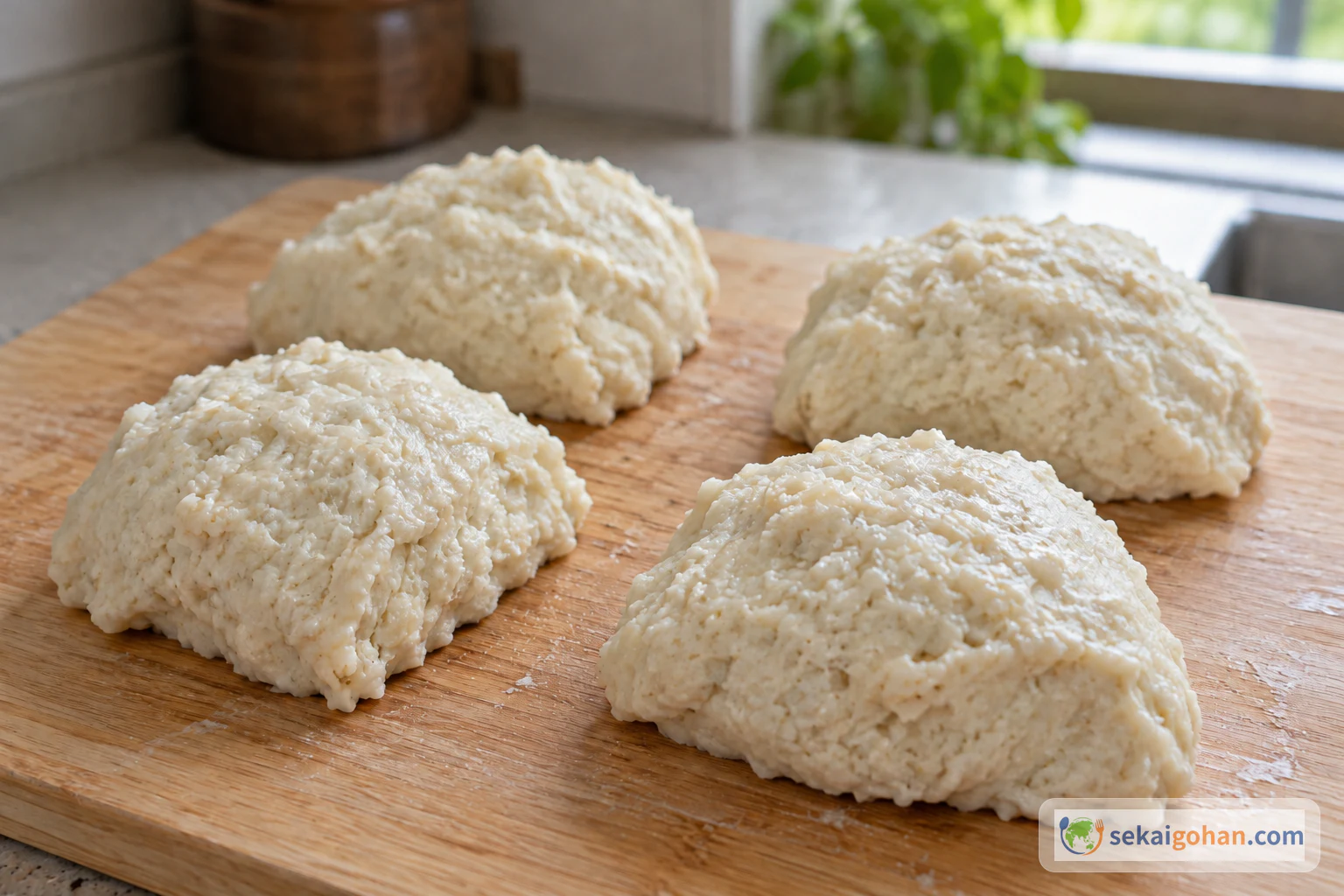
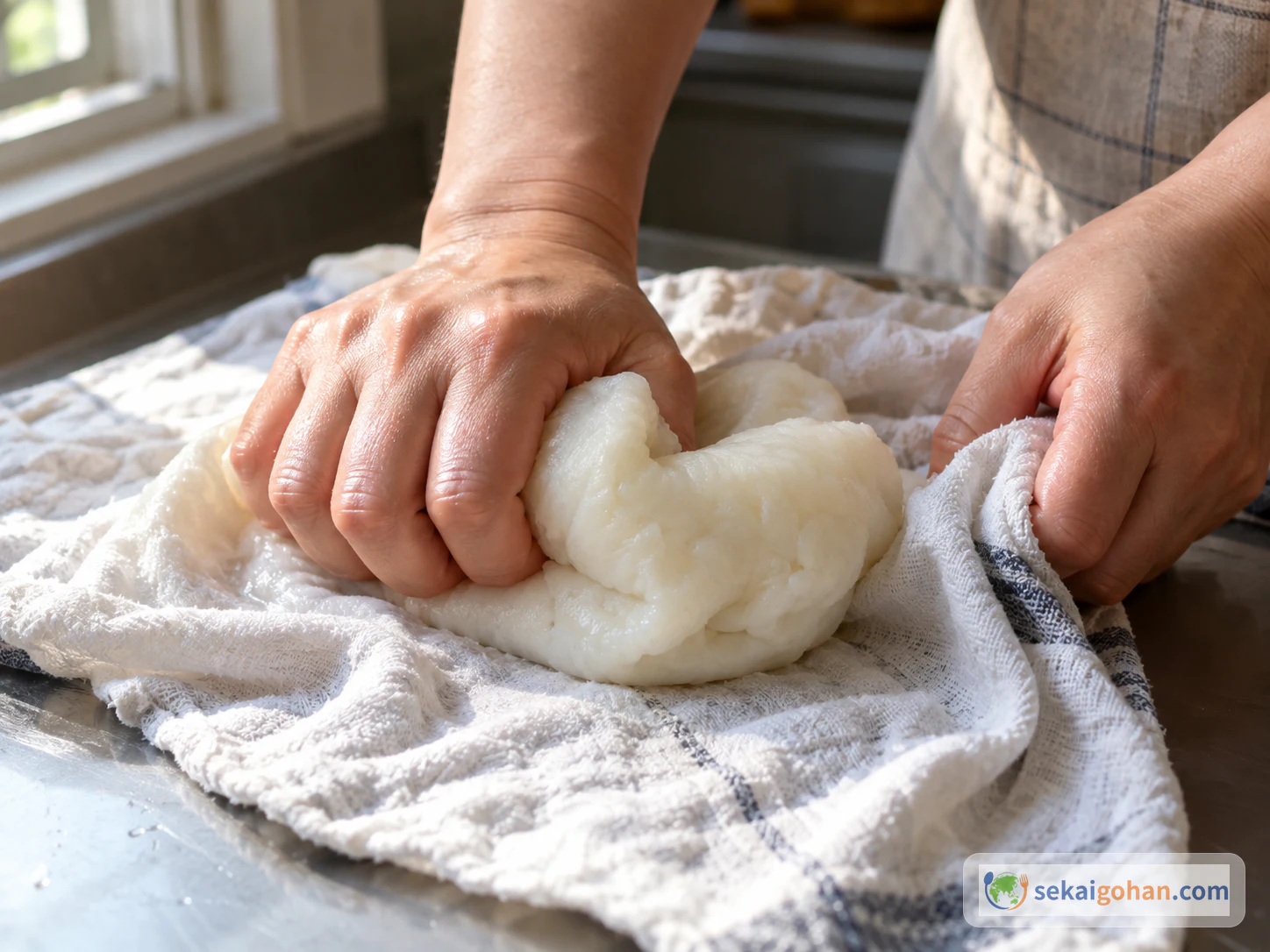
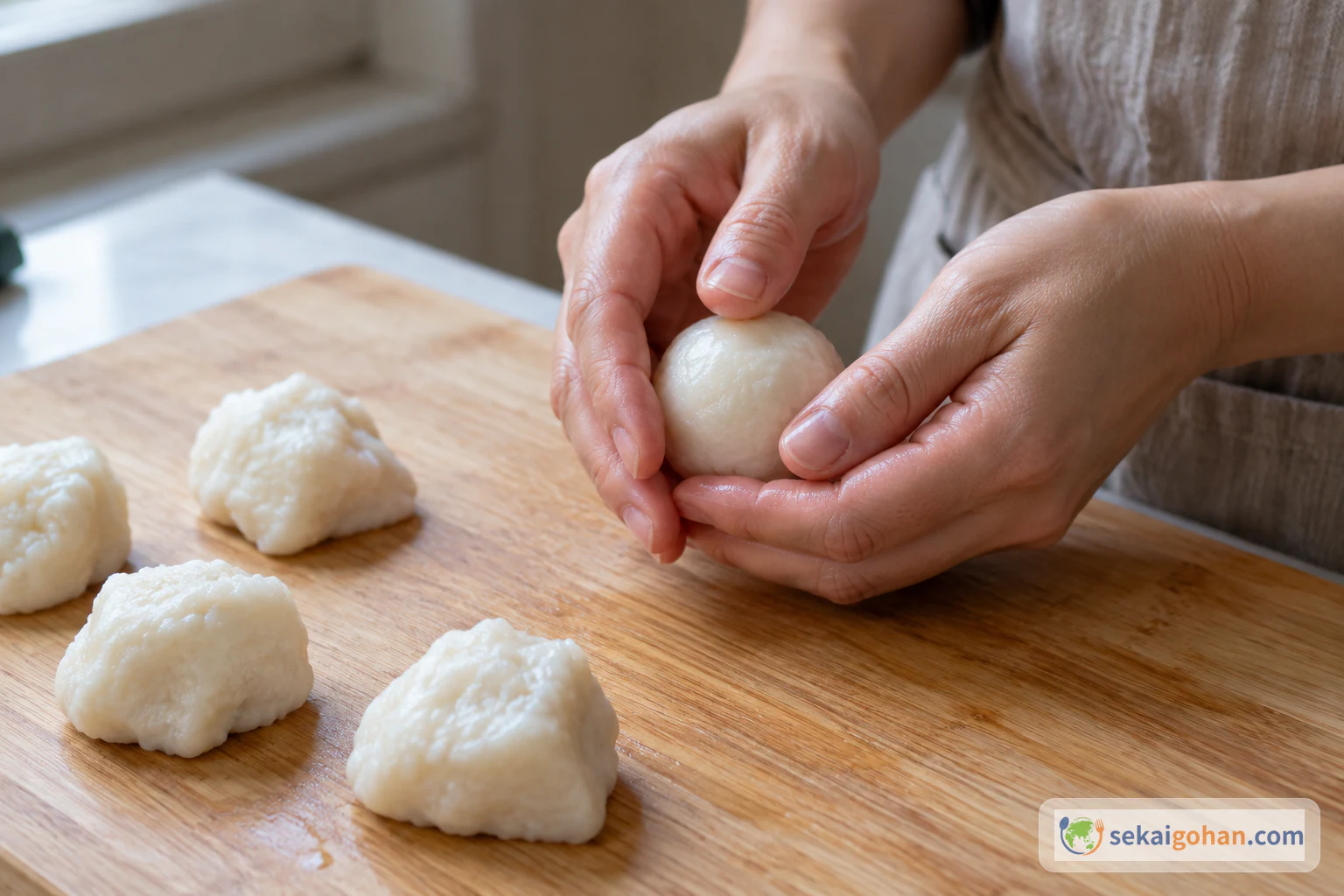
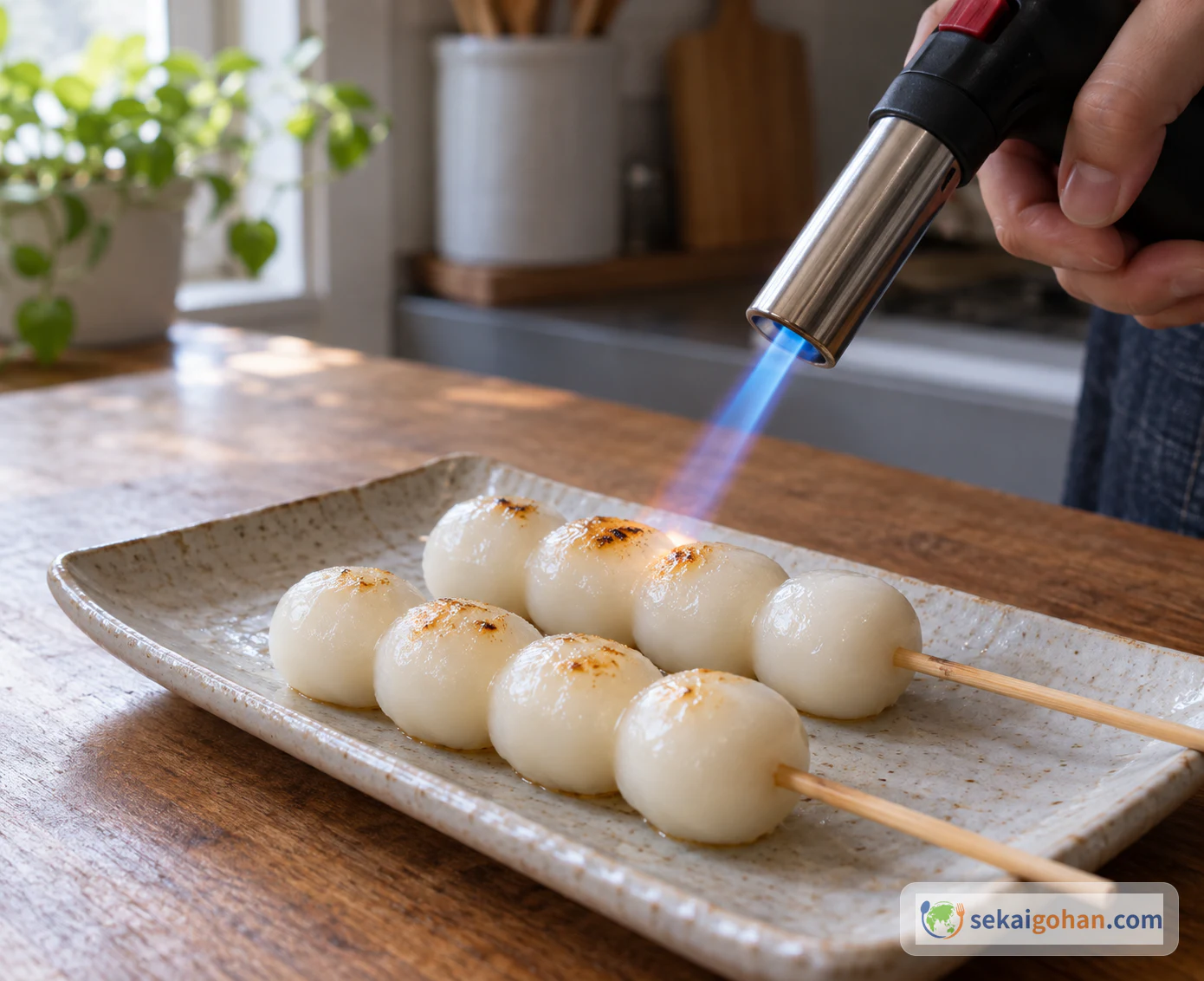
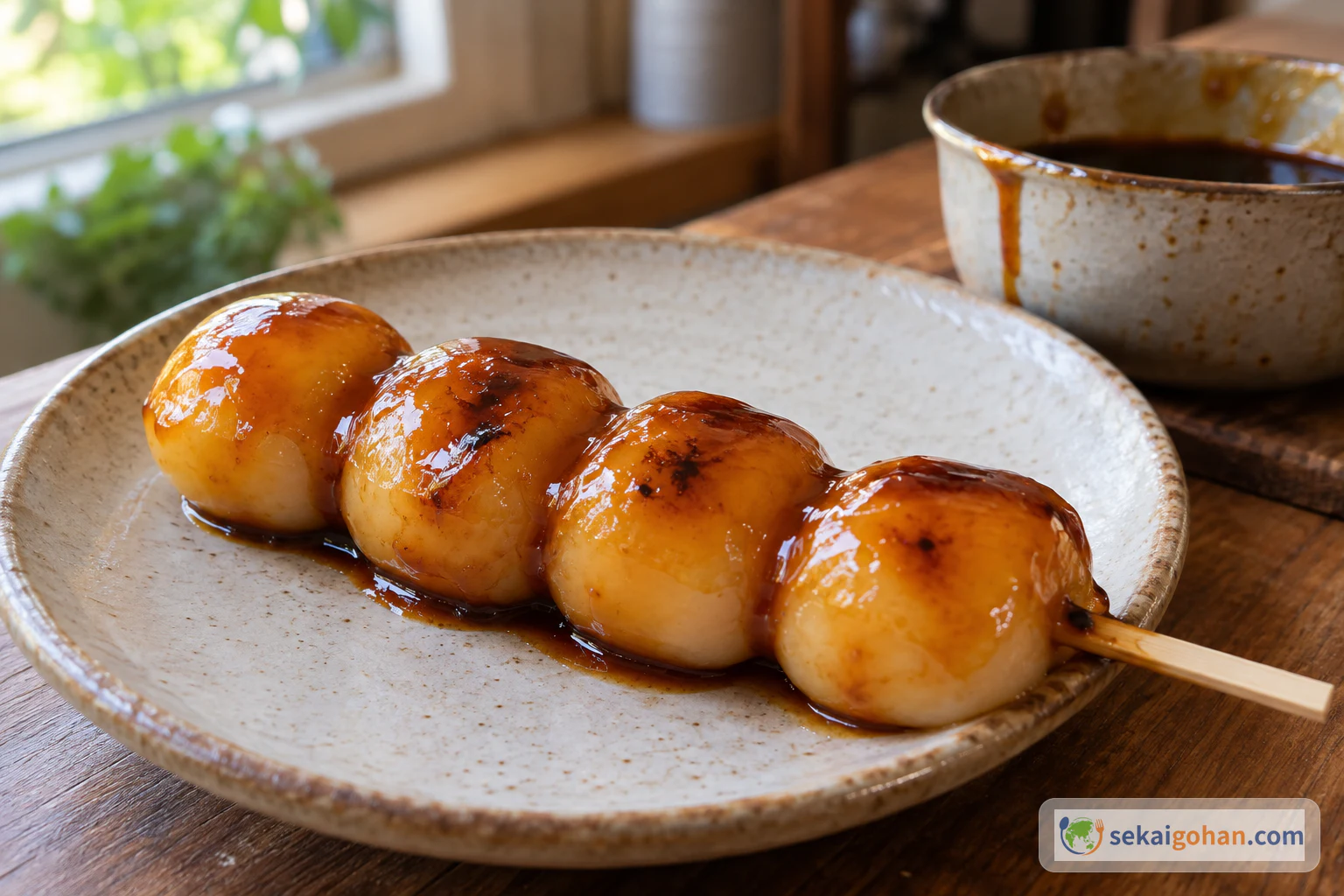
Picture two bowls on the counter. In one, shiratamako takes on water a little at a time and is kneaded into a soft dough; in the other, joshinko is stirred together with boiling water. The two are pressed into one dough, boiled in rough lumps until they float, then kneaded again on a damp cloth and rolled into sixteen small balls for four bamboo skewers. That is kushi dango, one of Tokyo's local dishes: chewy rice dumplings, lightly kissed with a kitchen torch and finished with a glossy sauce of soy sauce, sugar, water and potato starch. You can find more dishes from the same country on the Japan page.
About Kushi Dango
Each of Japan's prefectures has dishes regarded as its local cuisine, and kushi dango is one of Tokyo's. More than one story is told about how many dumplings belong on a skewer. One version says four, another says five, and both have been handed down side by side without either being settled as the true origin. This recipe puts four on each skewer.
Dango with sweet soy sauce comes in many versions across Japan, mitarashi dango among them. Some cooks round small raw balls first and boil those. Others add sugar to the dough, steam it instead of boiling, use mirin in the sauce or finish the dumplings in a frying pan with oil. The Tokyo method here is different: large portions are boiled first, kneaded again and only then shaped. Each version is a complete recipe in its own right, so if you want one of those touches, follow that recipe from start to finish rather than swapping parts into this one.
Ikinari dango is a different sweet made with sweet potato, not another name for kushi dango.
Ingredients: Two Flours, Three Separate Waters
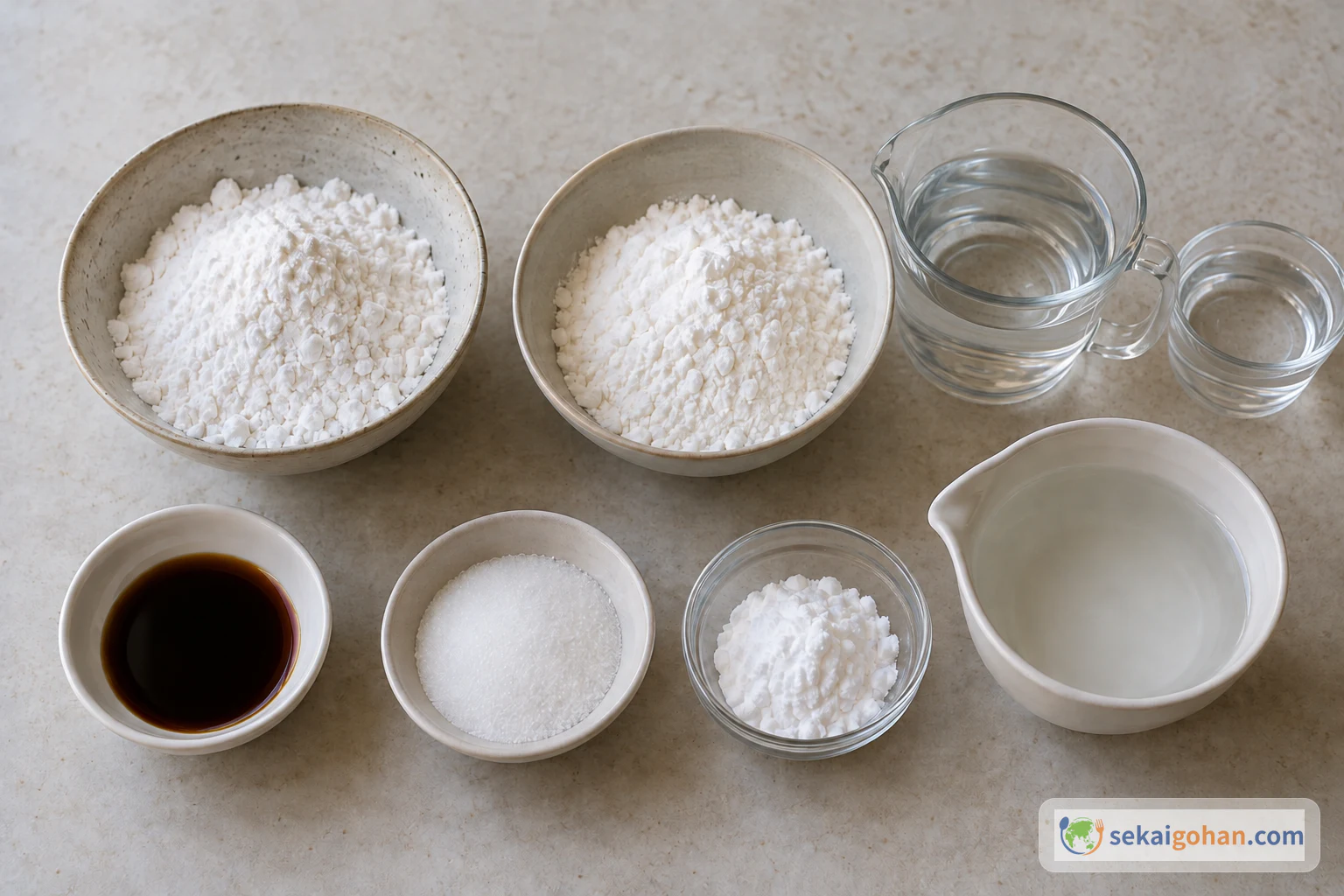
These amounts make 4 skewers of 4 dumplings each.
Choosing Flours, Starch and Soy Sauce for Kushi Dango
Shiratamako and joshinko are both Japanese rice flours, and this recipe needs both. Each is mixed its own way, and together they give the dumplings their texture. The sauce is thickened with potato starch (katakuriko), so stick with that rather than cornstarch, and use the flours and soy sauce as listed.
Equipment
- 2 bowls, one for each dough
- A pot for boiling the dough
- A clean kitchen cloth, dampened
- A board and a kitchen knife
- 4 bamboo skewers
- A culinary kitchen torch
- A small saucepan and a spoon or spatula for the sauce
Method: Mix, Boil, Knead Again, Then Shape
The dough is boiled until it floats. The torched surface should only be lightly marked. The sauce ingredients all go into the pan together before heating.
Common Mistakes with Kushi Dango
Most slips come from mixing up the stages, not from technique. Go by signs rather than the clock: the dough is done when it floats, and the torching should only be light.
| Point | What to keep straight |
|---|---|
| The three waters | 3.5 tbsp (50ml) water is for the shiratamako, ¼ cup (70ml) boiling water is for the joshinko, and 5 tbsp water is for the sauce. The pot water for boiling is a fourth, separate amount |
| Separate doughs first | Knead the shiratamako and mix the joshinko in separate bowls, then combine them |
| 4 portions vs 16 dumplings | The 4 rough portions are only for boiling. The 16 dumplings are cut and rounded after the second kneading |
| Boil before rounding | Shape the dumplings only after boiling and kneading again |
| Torching | Light toasting with a kitchen torch only; no frying pan or oil |
| Starch in the sauce | The potato starch goes into the pan with the soy sauce, sugar and water from the start, not later as a separate slurry |
Frequently Asked Questions
Can I make it with only shiratamako or only joshinko?
This recipe relies on both flours, each mixed its own way. A single-flour version is a different recipe.
Do I round the dumplings before boiling them?
No. The dough is boiled in large portions, lifted onto a damp cloth, kneaded again, and only then cut into 16 and rounded.
How long should the dough boil?
Watch rather than time it. Once the pieces float, they are ready to lift out.