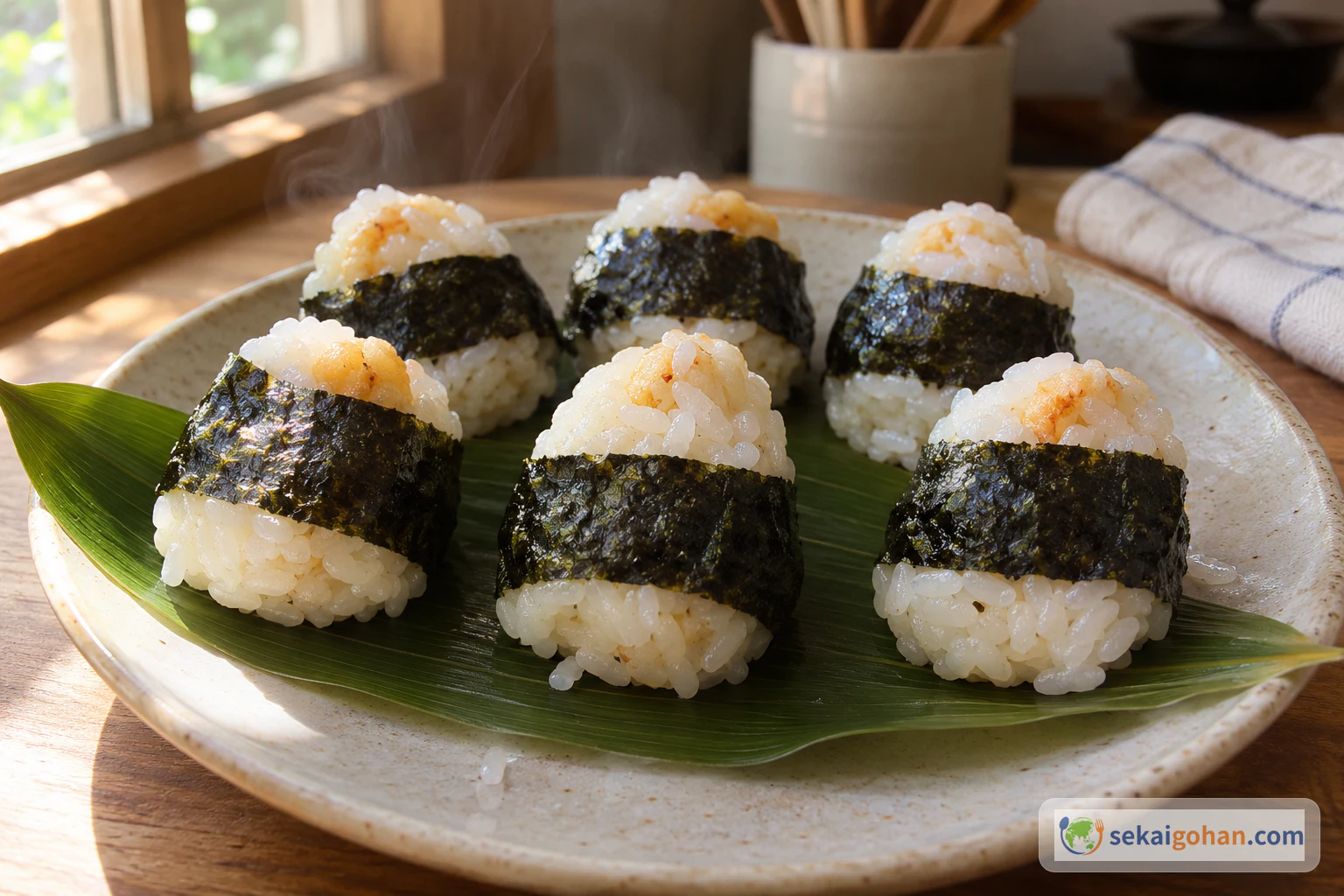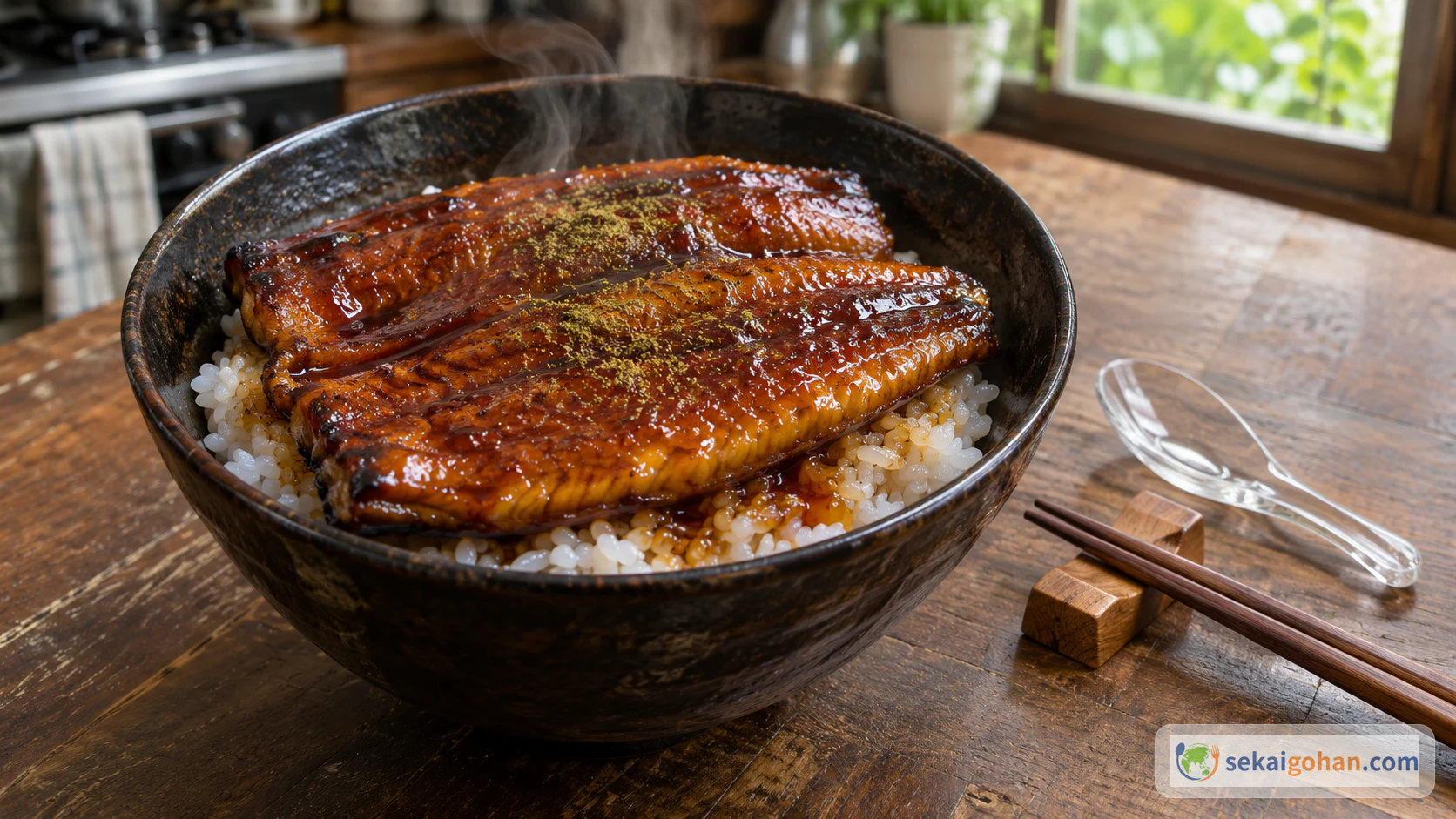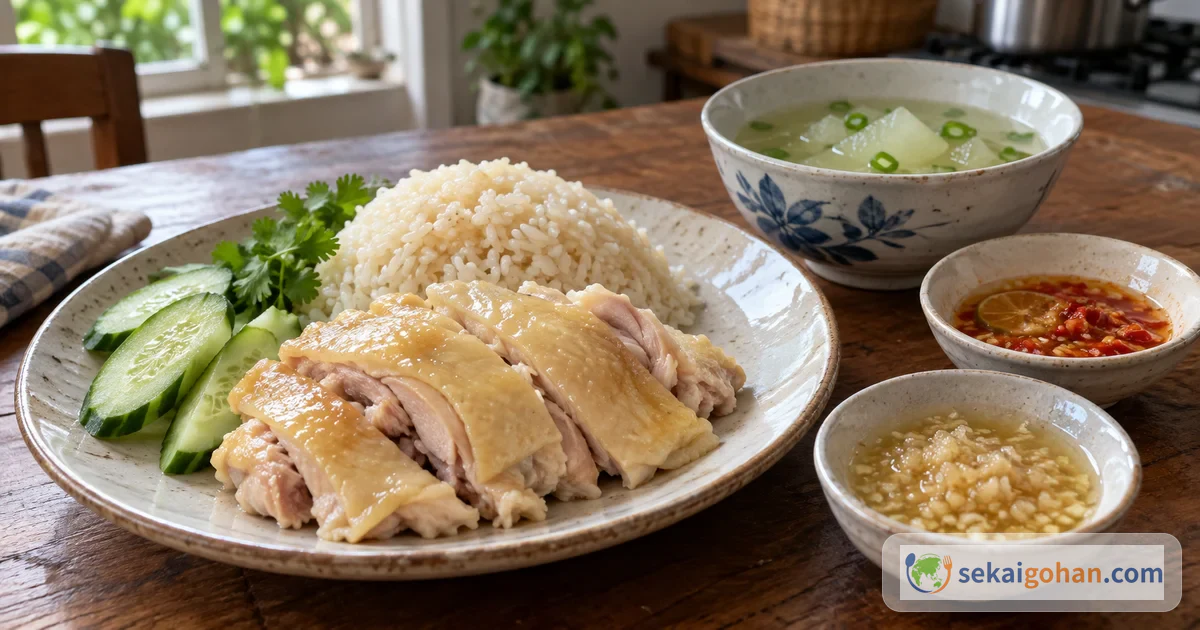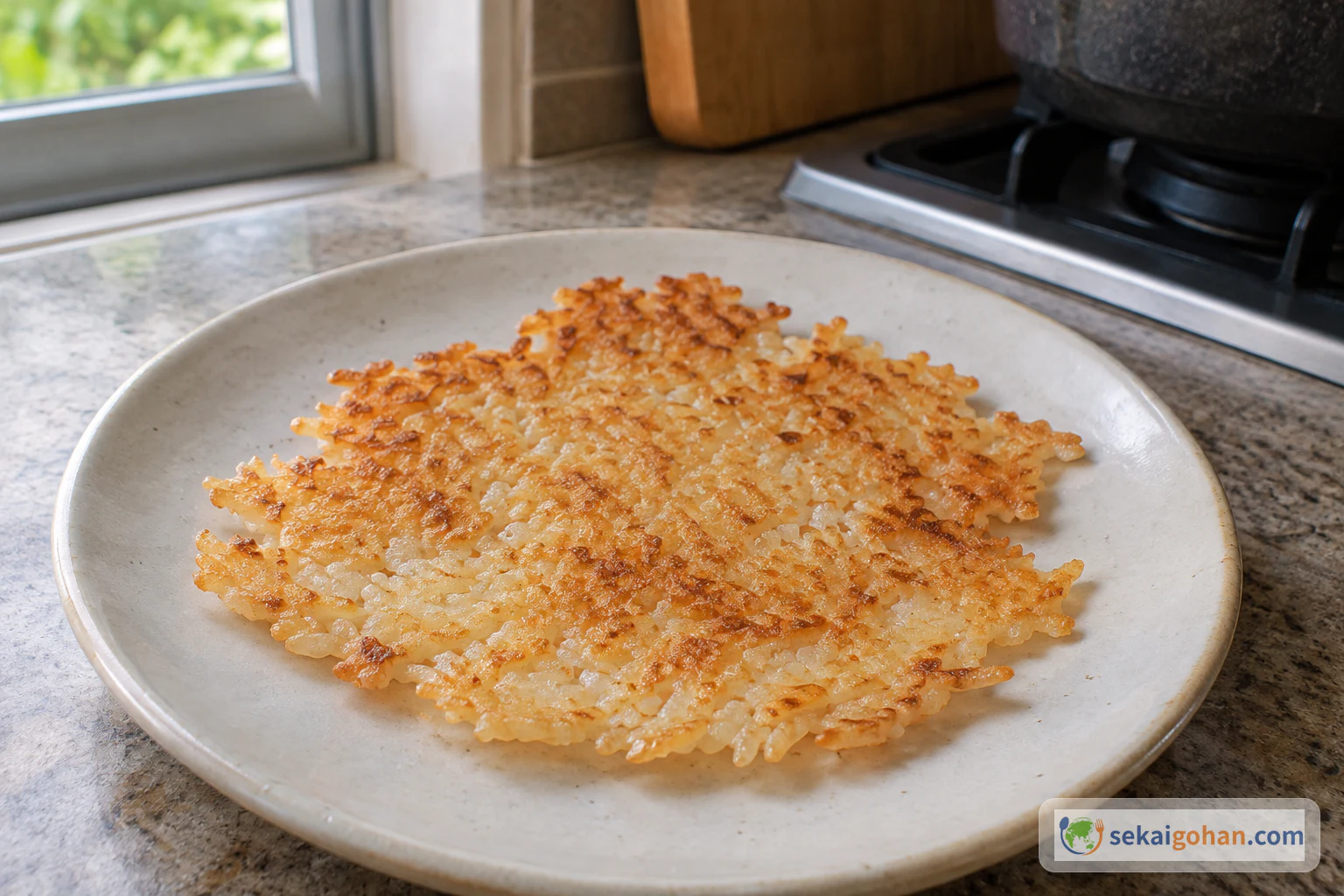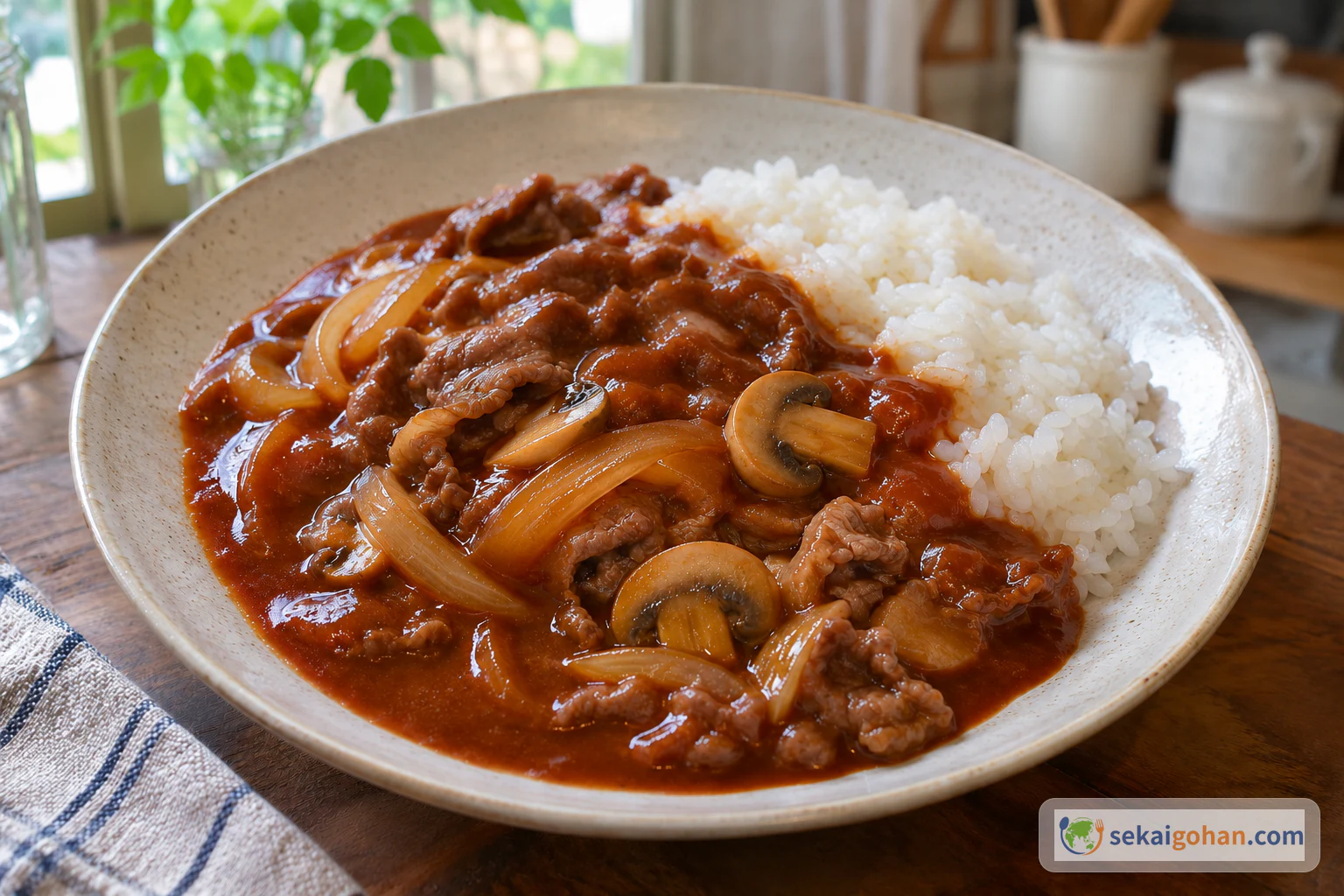
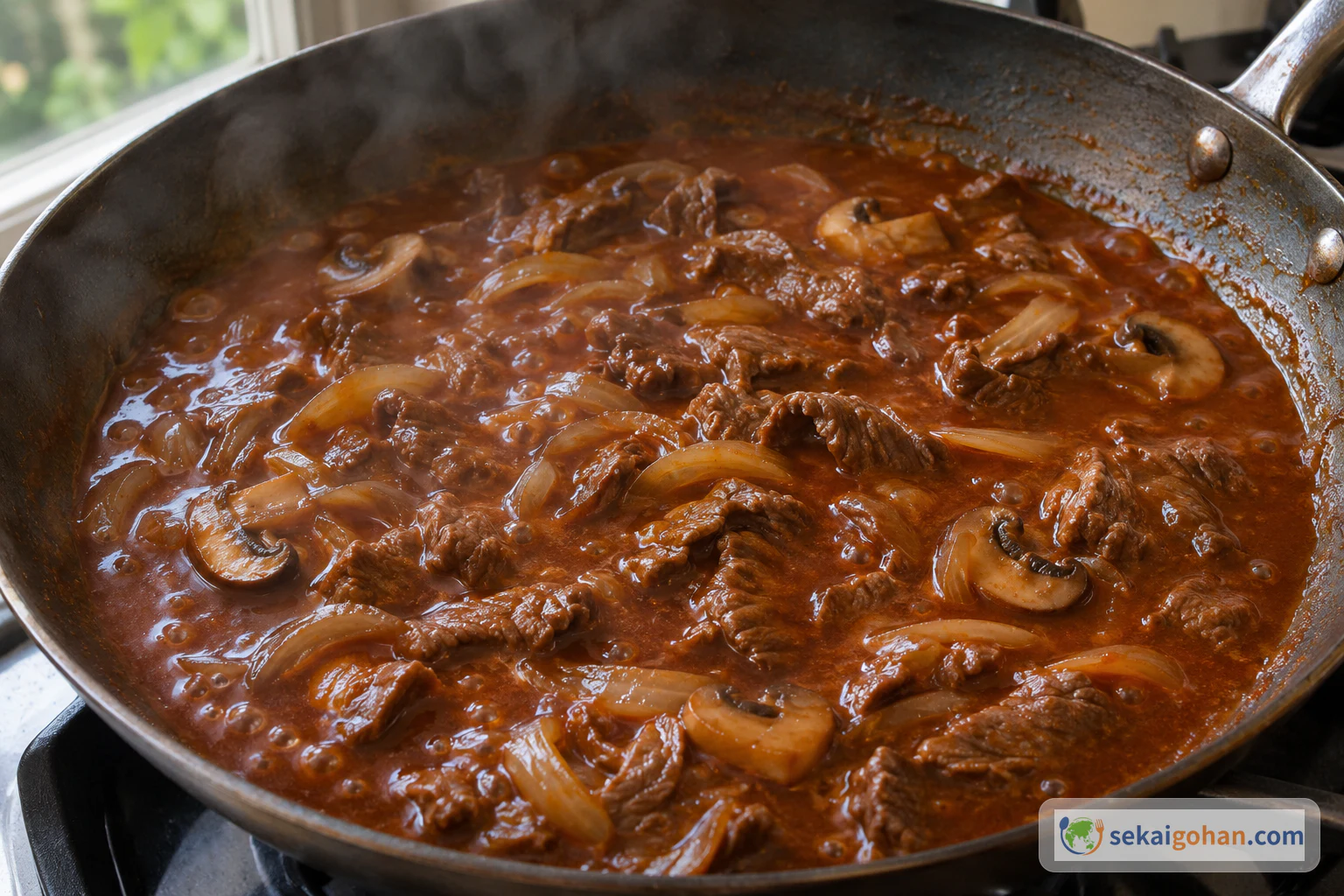
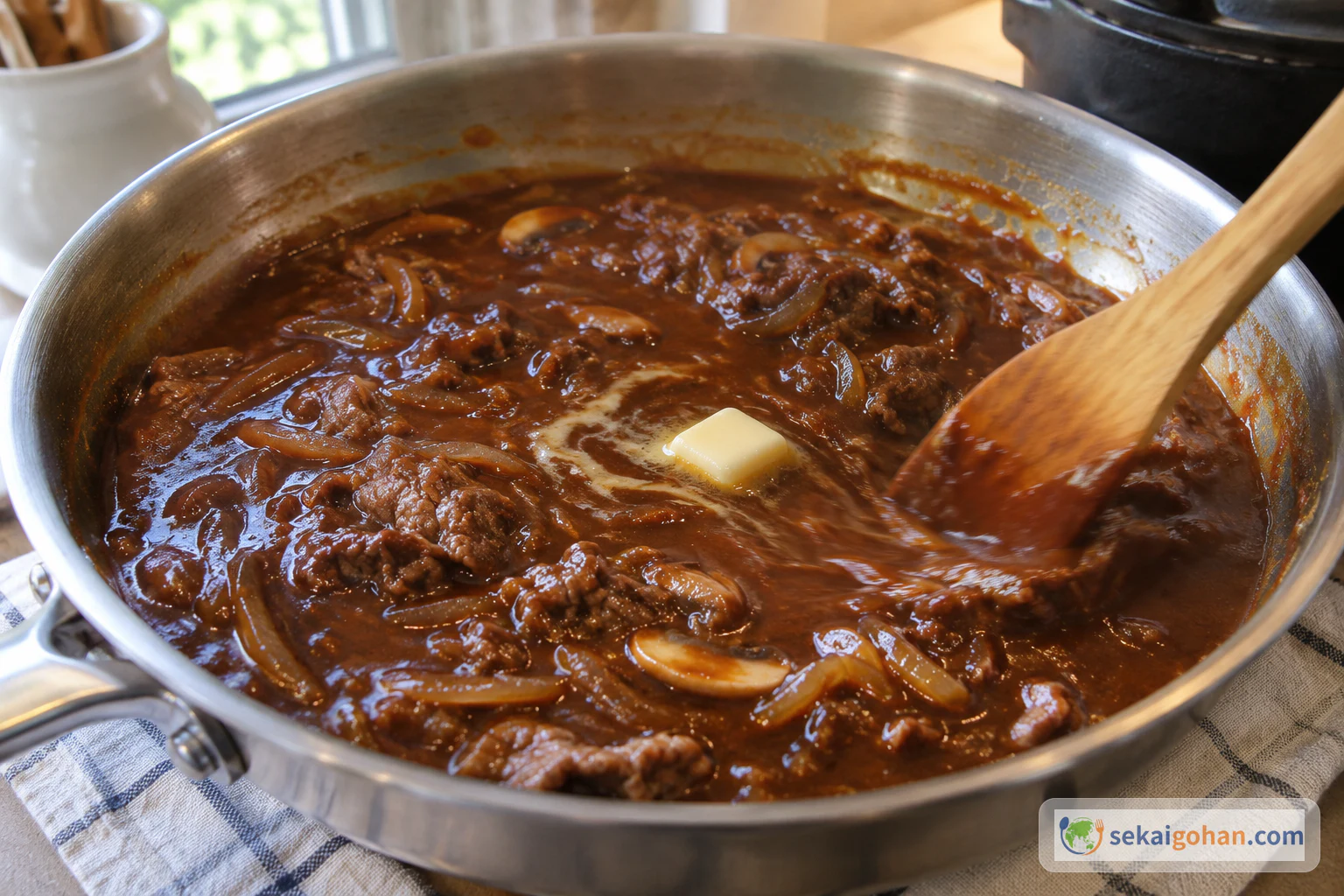
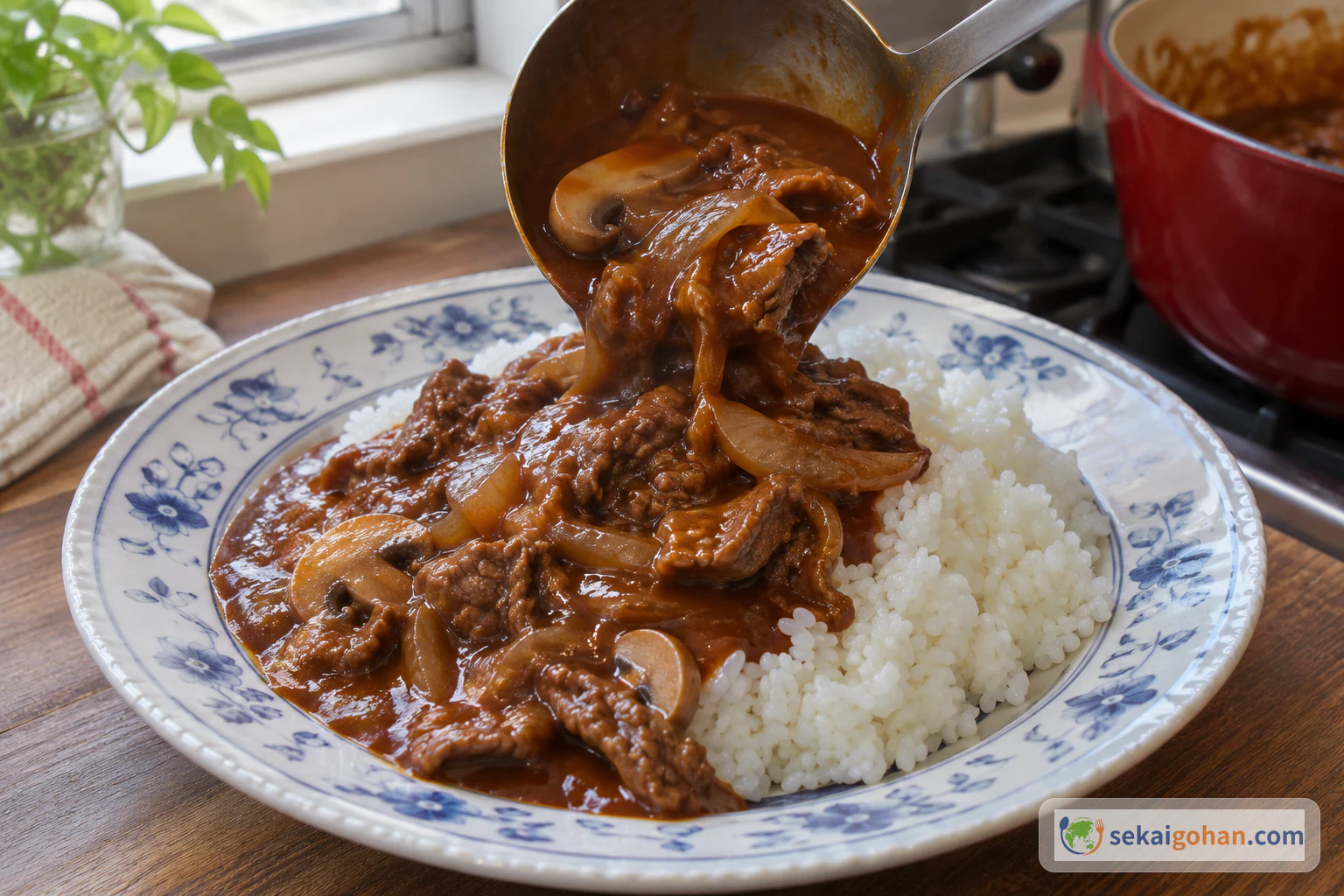
White rice on one side of the plate, and spooned beside it a glossy, reddish-brown sauce full of thin folds of beef, soft onion and sliced mushrooms. Hayashi rice (ハヤシライス) gets its flavor from sweet, slow-cooked onion, beef, the aroma of red wine and the richness of demi-glace rather than from spice. A can of demi-glace sauce does much of the work, so this is a dinner for four you can make on an ordinary evening, in about 30 minutes of cooking plus the time for the rice. For more of the country's home cooking, see dishes from Japan.
What Hayashi Rice Is
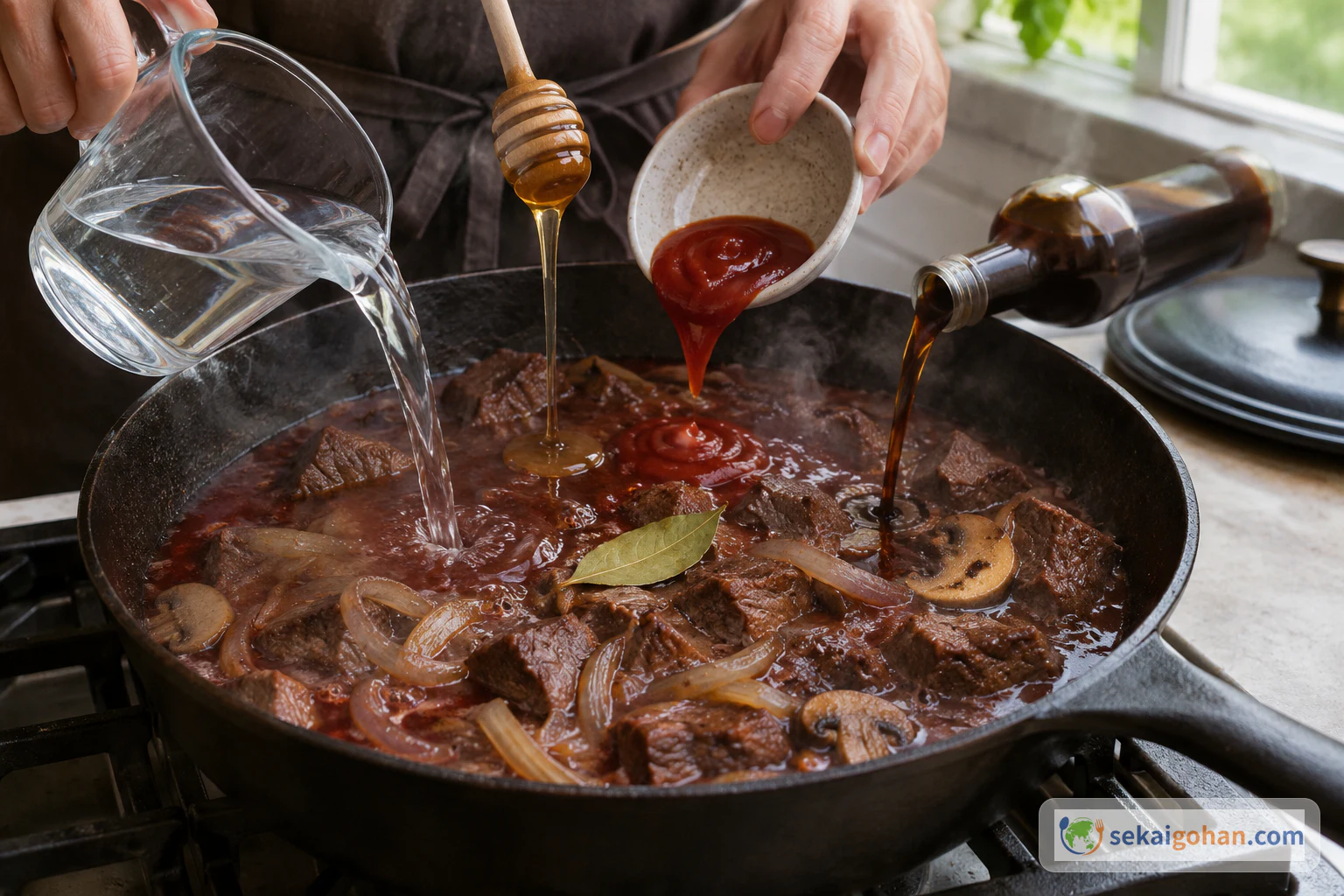
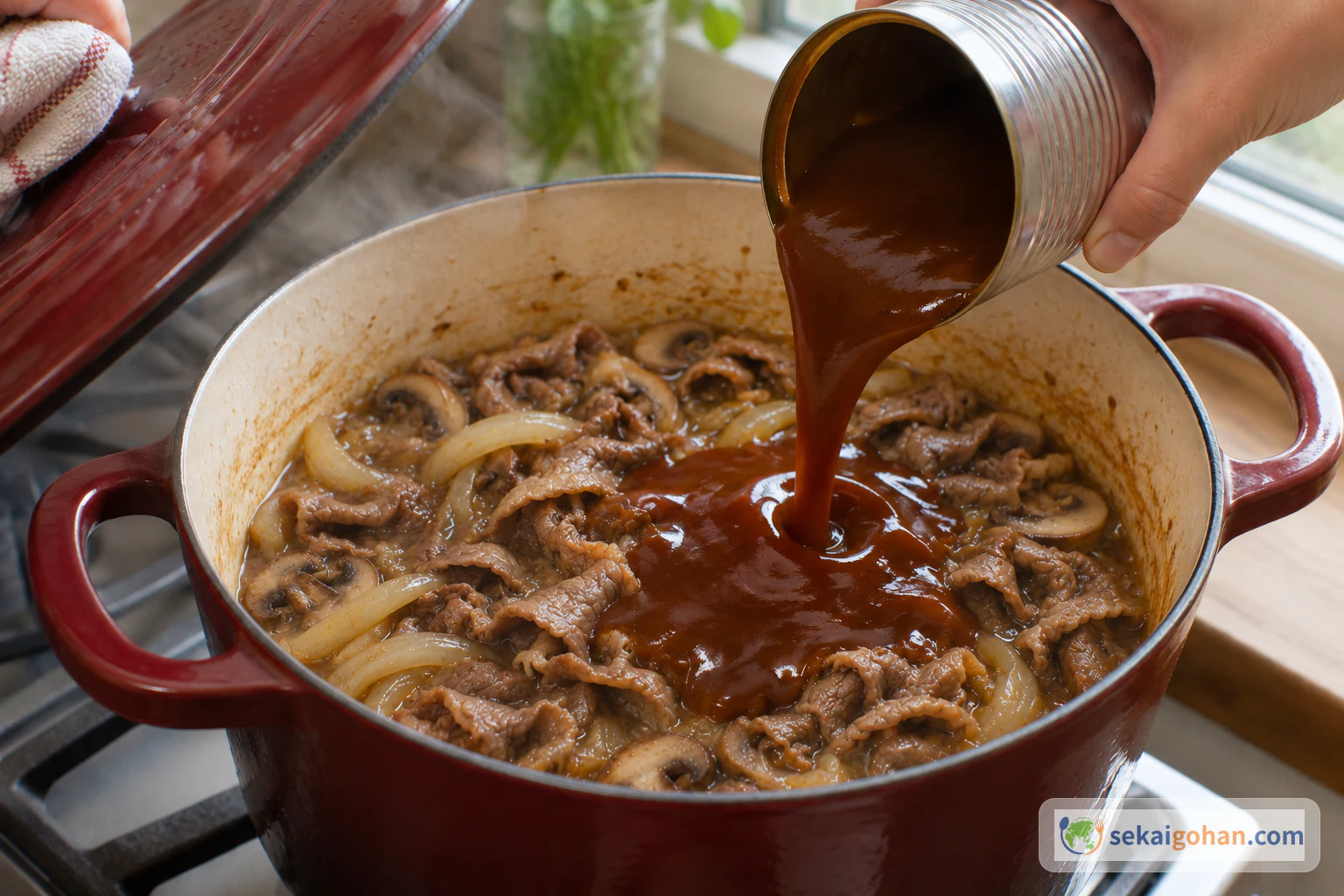
Hayashi rice is one of Japan's yōshoku dishes, the Western-style home cooking that Japanese families eat with rice. It's served the same way as curry rice, with rice and sauce together on a single plate, but curry powder isn't its backbone. The taste is built in layers instead: onion sautéed in butter, beef and mushrooms, red wine boiled down for a few minutes, a little honey, ketchup and Worcestershire sauce, and finally the demi-glace, which gives the sauce its depth and thickness.
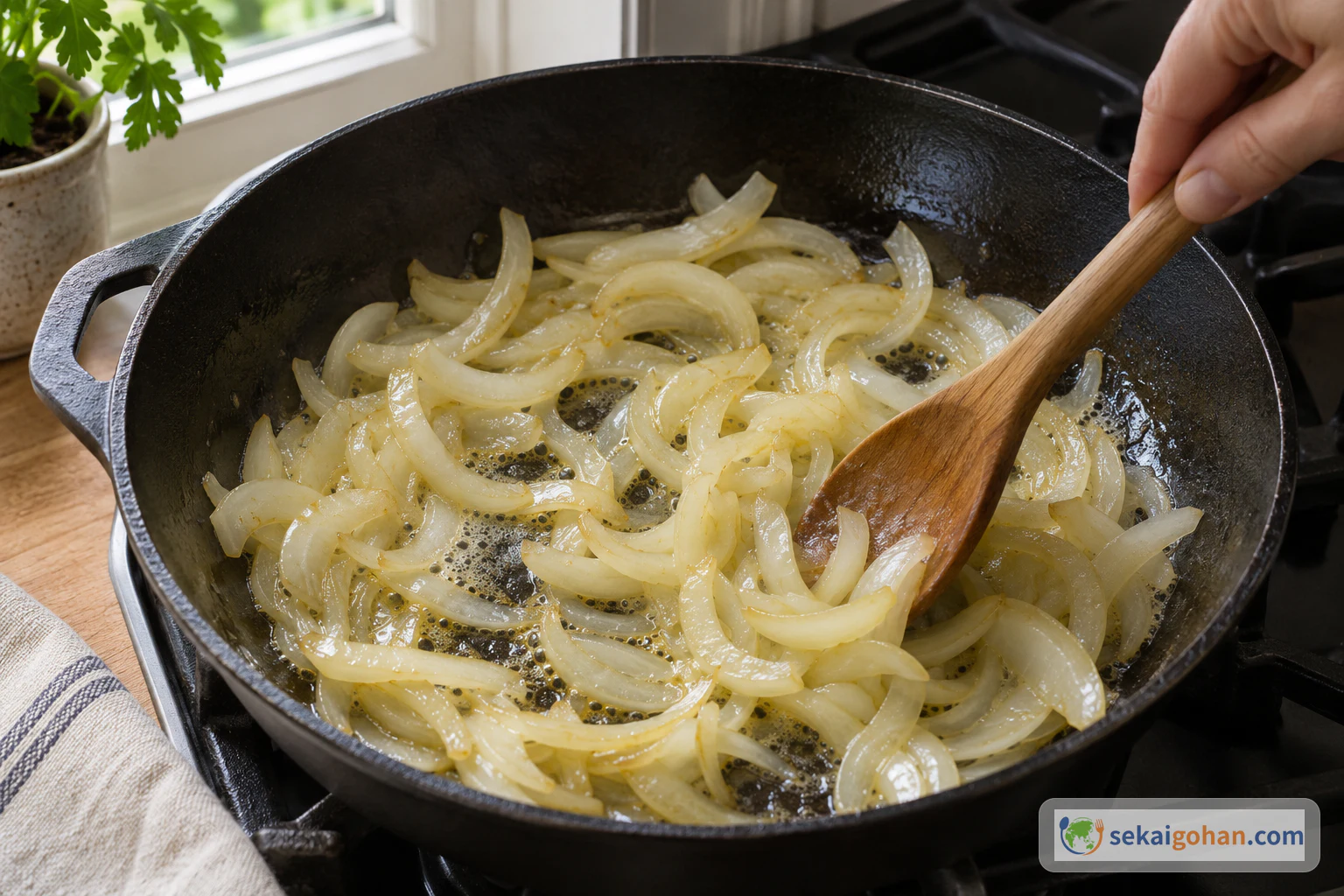
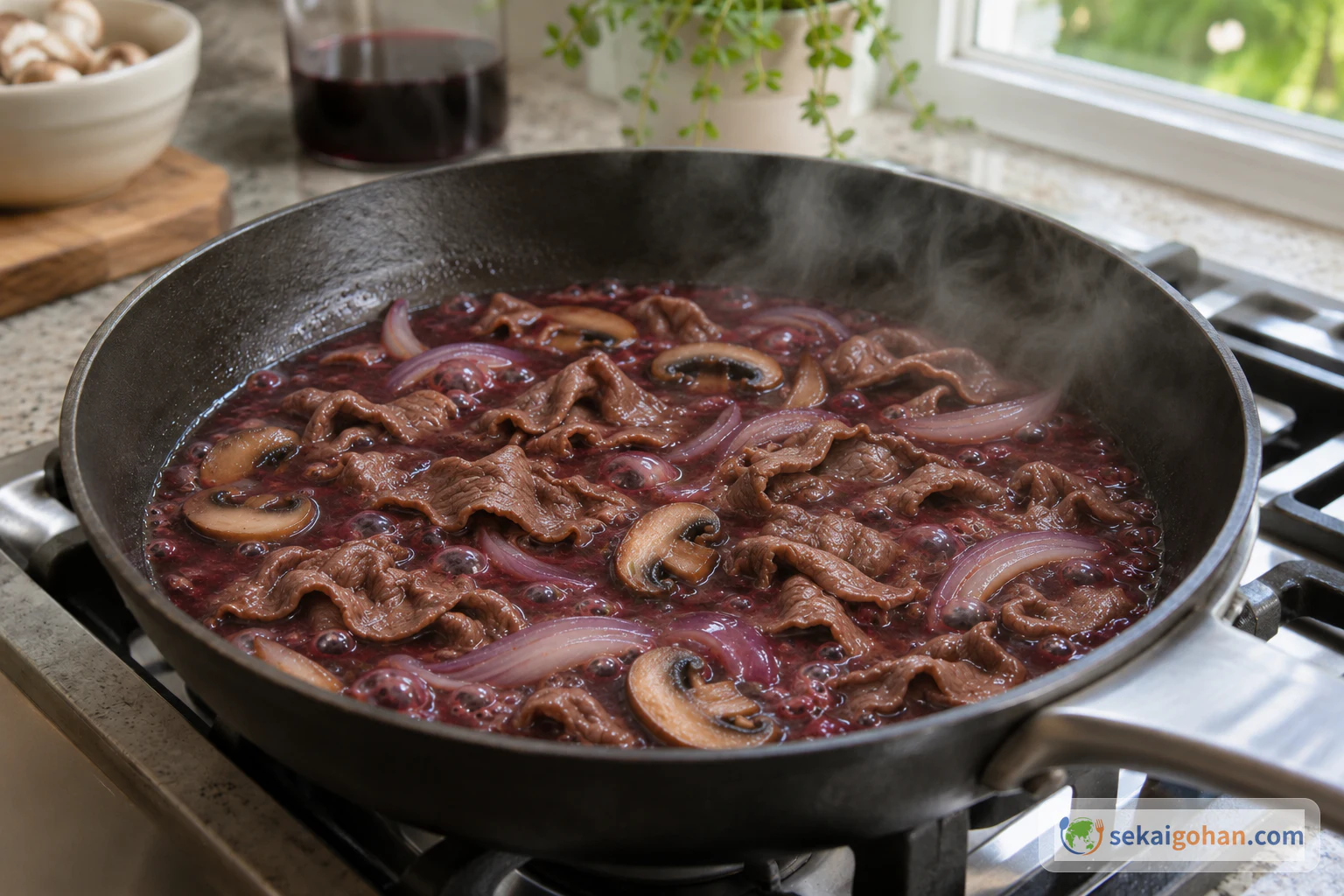
The onion gets a step to itself, cooked soft and sweet before the beef goes in, because that is what gives the finished sauce its deeper flavor. The wine then bubbles on its own for a while before the demi-glace goes in and simmers until the sauce has body.
Where the name "hayashi" comes from is unclear. One theory points to someone with the surname Hayashi, another to Hayashi Yuteki (早矢仕有的), and a third says it's a corruption of "hashed beef." The Hayashi Yuteki version is the one most often retold, with an anecdote about meat and vegetables that happened to be on hand being served with rice. It makes a good story, but it isn't proof.
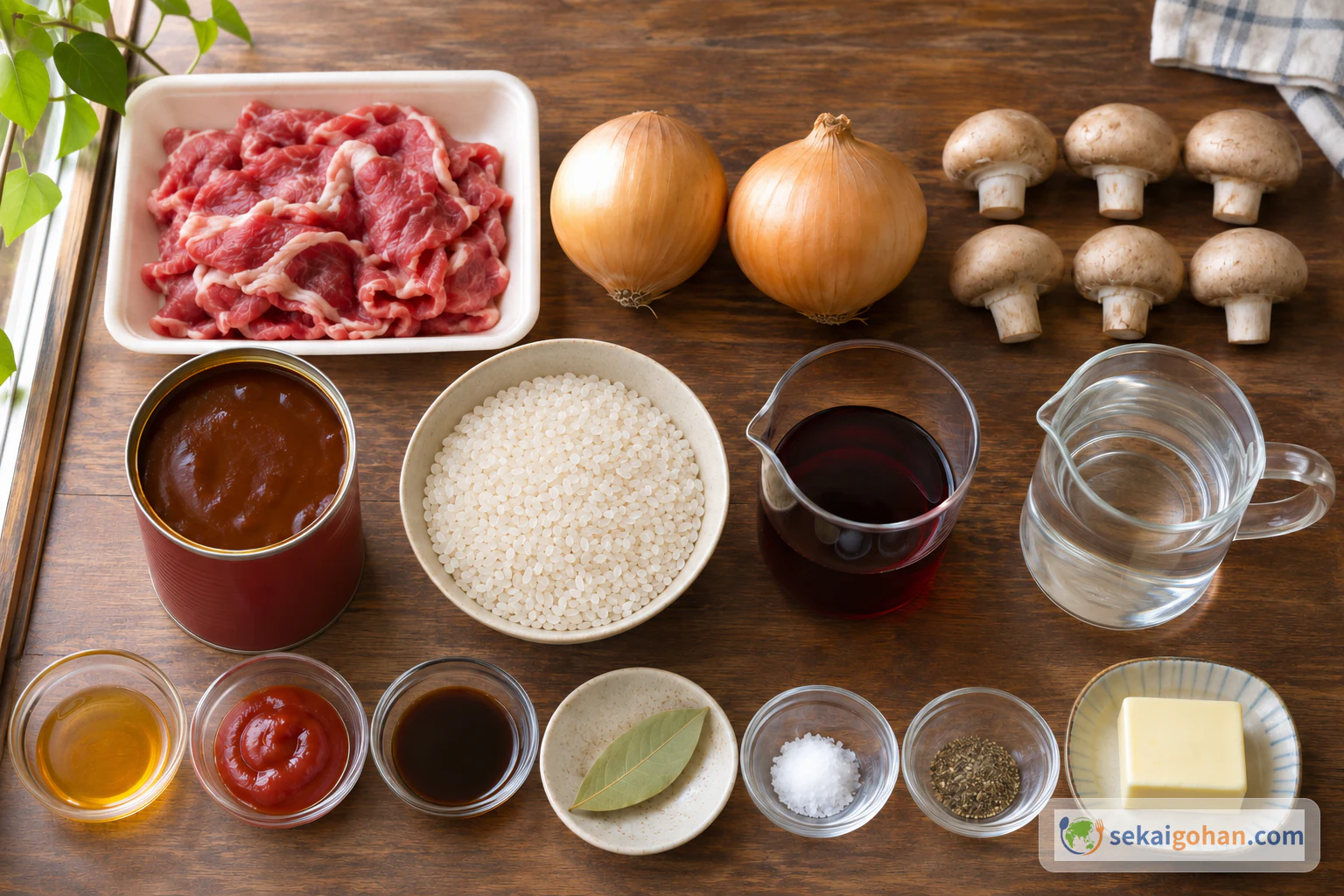
Ingredients: 4 Servings with Canned Demi-Glace
Equipment
- Knife and cutting board
- Measuring spoons
- Frying pan with a lid (a heavy-bottomed one is easier to keep from scorching)
- Wooden spatula
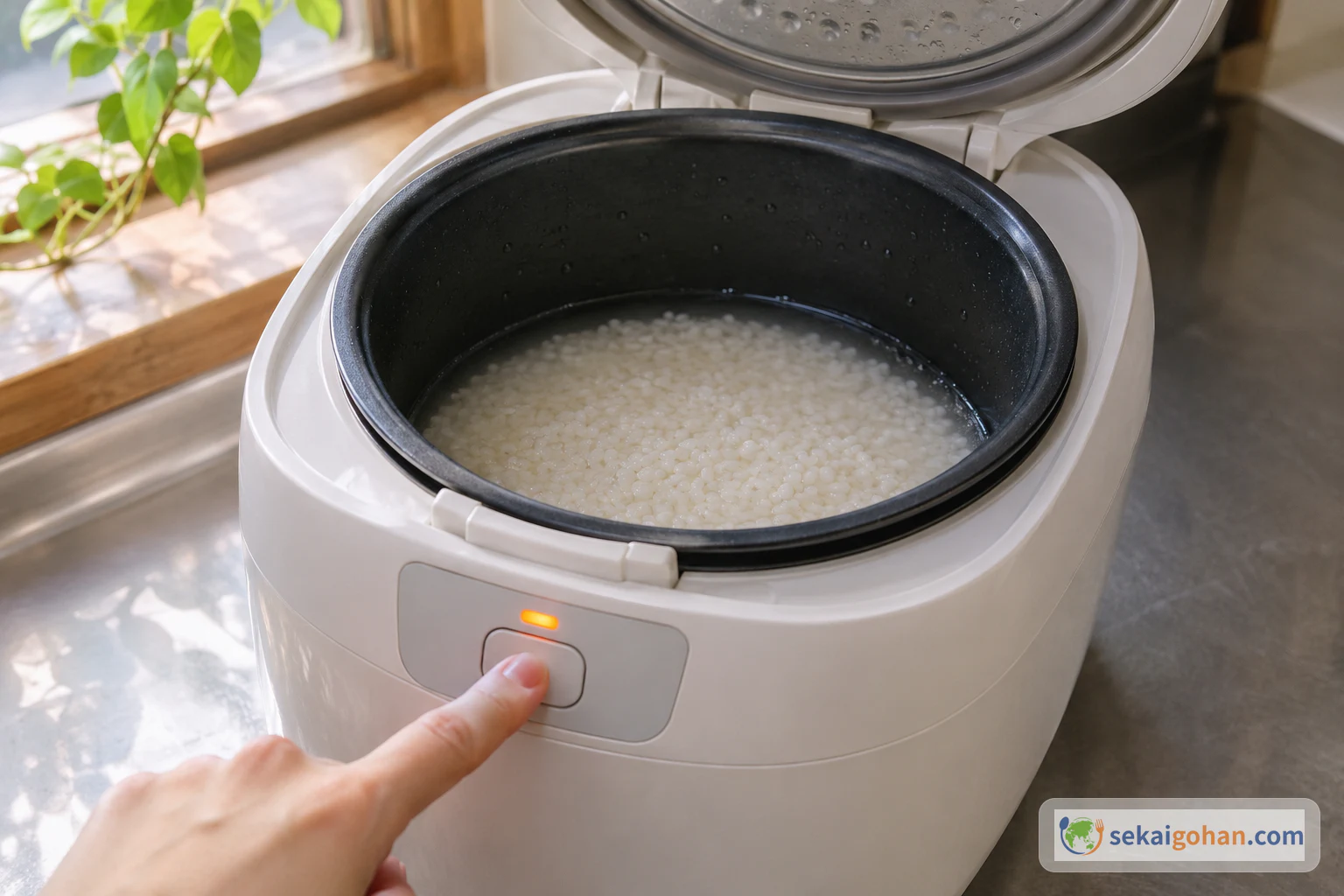
- Rice cooker (any ordinary household rice cooker)
Choosing Ingredients for Hayashi Rice
Demi-glace. Look for canned demi-glace sauce in the Japanese or international aisle. Saltiness and thickness differ between brands, so hold off on extra salt and taste before serving.
Beef. Thinly sliced beef is the base. Beef offcuts (kiri-otoshi) work as a swap, though the pieces are less even and the fat renders differently.
Honey. Sugar can stand in for honey, but its sweetness is different, so add a little at a time, taste and adjust.
Red wine. Without the wine, the sauce loses aroma and acidity, and the same volume of water won't bring them back.
Bay leaf. You can leave it out; the aroma will just be weaker.
This sauce contains honey. Do not give it to babies under 1 year old, even after it has been cooked: ordinary heating and cooking do not kill the botulinum bacteria that honey can carry.
The dish contains milk (butter), beef and honey. Canned demi-glace sauces differ in their allergen labels, and many list wheat, milk or other allergens, so check the label of the can you buy.
Boiling the red wine does not guarantee that all the alcohol has cooked off. Cook the beef until no red, raw surfaces remain.
Method: Onion First, Then Wine, Then Demi-Glace
Pans and burners differ, so judge by the onion, the beef and the sauce, and move on when each looks right.
Start the rice first so it is ready when the sauce is. Slice everything before you light the burner; once the onion is in the pan, the steps follow one another quickly.
Fixing Common Hayashi Rice Problems
| What happens | Likely cause | What to do |
|---|---|---|
| The onion turns dark and bitter-smelling | Heat too high in step 4 | Lower the heat and keep stirring; aim for soft and sweet, not deeply browned |
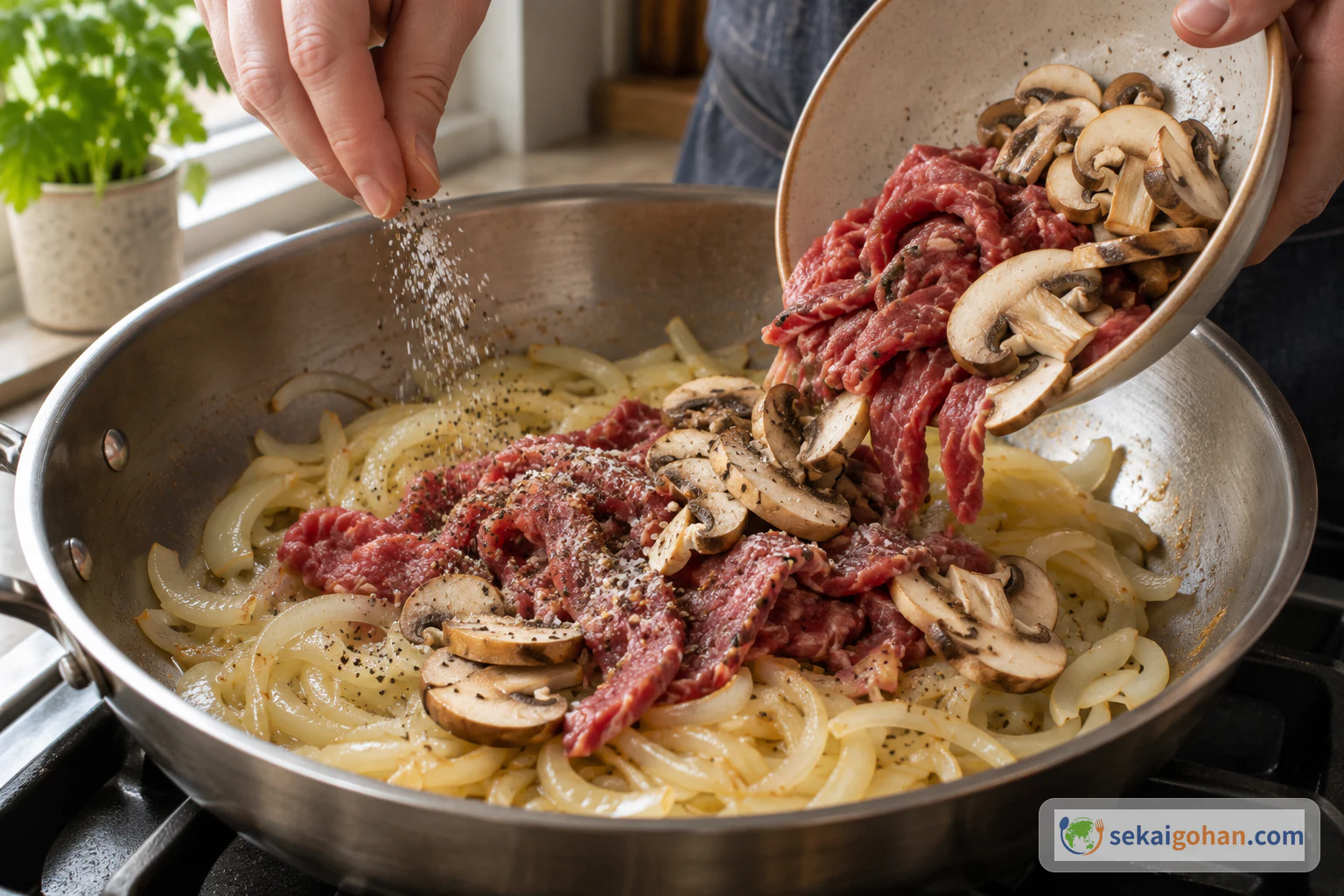
| Beef slices stick together in a lump | Added all at once without separating | Loosen them with the spatula as they go in, so each slice touches the pan |
| The sauce sticks to the bottom after the demi-glace goes in | Boiling too hard, not stirred | Turn the heat down to a gentle boil and scrape the bottom as you stir |
| The sauce is still thin after about 10 minutes | Pan size, burner strength or the can's thickness | Keep simmering a little longer, watching closely, until it has body |
| The sauce thickens well before 10 minutes | A thick can or a strong burner | Shorten the simmer; stop once it has thickened and the beef is fully cooked |
| The sauce tastes salty | Canned demi-glace varies in salt | Next time choose a different can and taste before serving |
Hayashi Rice Variations
Small changes shift the character of the plate, so it helps to know what each one does.
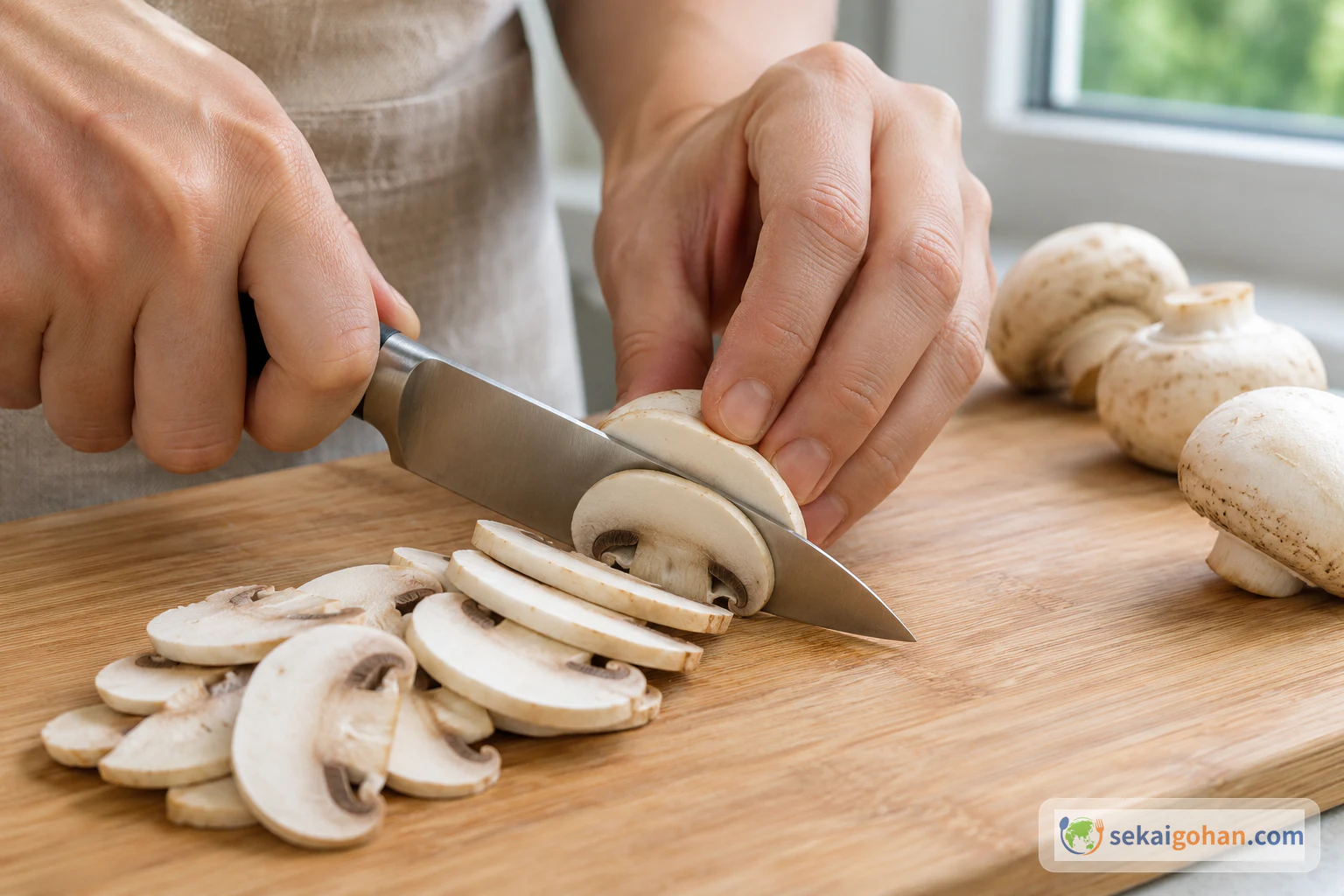
- Without mushrooms: you lose their earthy aroma and soft bite, and the sauce leans more on beef and onion.
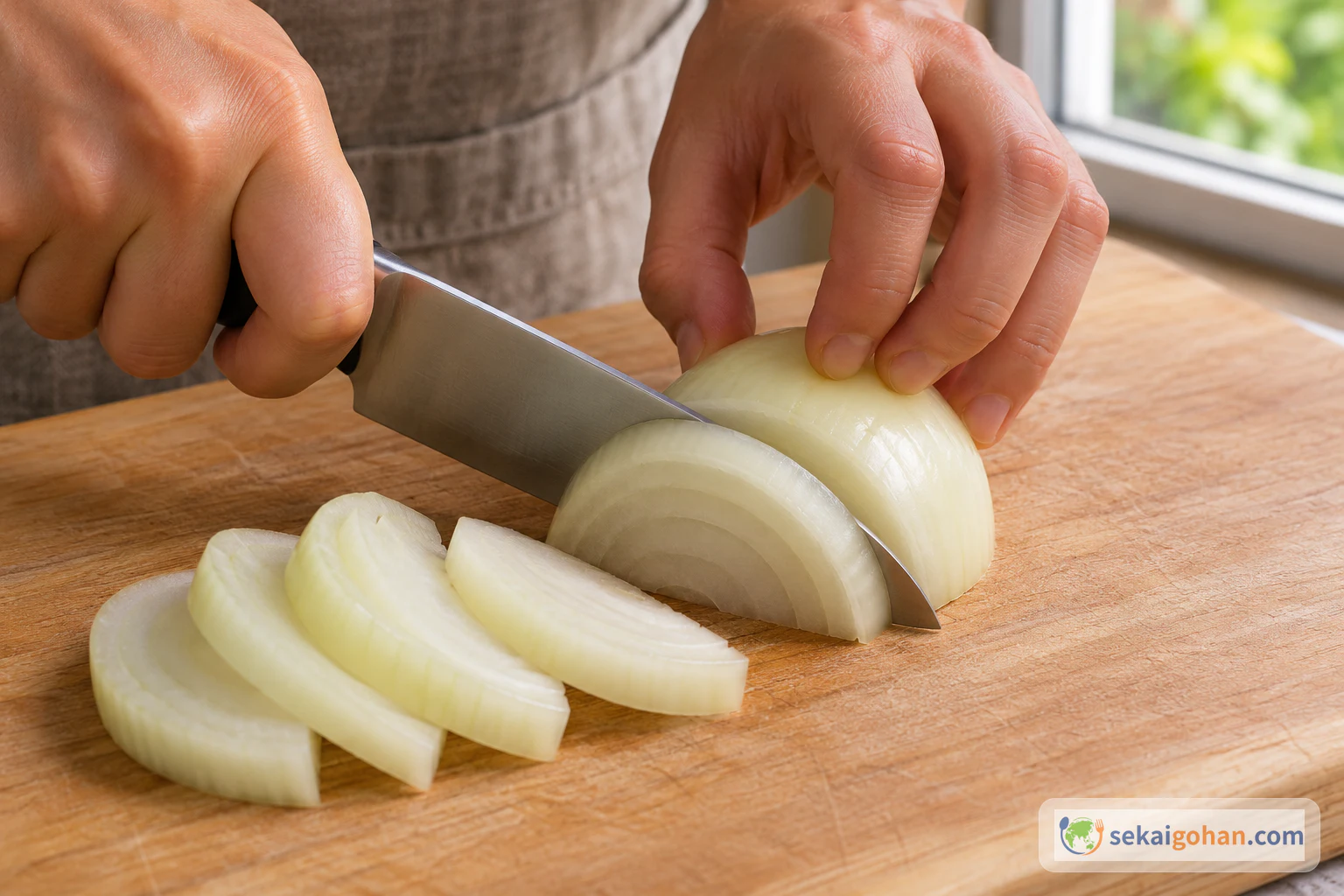
- Thinner or thicker onion slices: they cook and feel different in the mouth; about 0.5 inches (1 cm) is the reference width.
- A thicker demi-glace: shorten the final simmer rather than adding water by guesswork.
- A richer version: another style uses beef fillet or sliced beef belly, with port and red wine reduced to a quarter, plus ketchup and demi-glace. Simmer the red meat thoroughly.
Frequently Asked Questions
Is hayashi rice the same as hashed beef?
The names are used loosely, and restaurants make them in different ways. One theory links the word "hayashi" to "hashed beef," but that's about the name, not proof that the two dishes are identical.
Can I make it without a roux?
Yes. This recipe uses no hayashi roux block at all; the canned demi-glace provides the depth and thickness.
Do I need the red wine?
You can leave it out, but the sauce loses aroma and acidity. Keep in mind that boiling the wine does not cook off all of the alcohol.
Can a baby eat this?
Not under 1 year old. This sauce contains honey, and honey or honey-containing foods should never be given to infants under one, even when cooked, because ordinary heating does not kill botulinum bacteria.