Bungeoppang: Korean Fish-Shaped Pastry with Sweet Red Bean Filling (붕어빵)

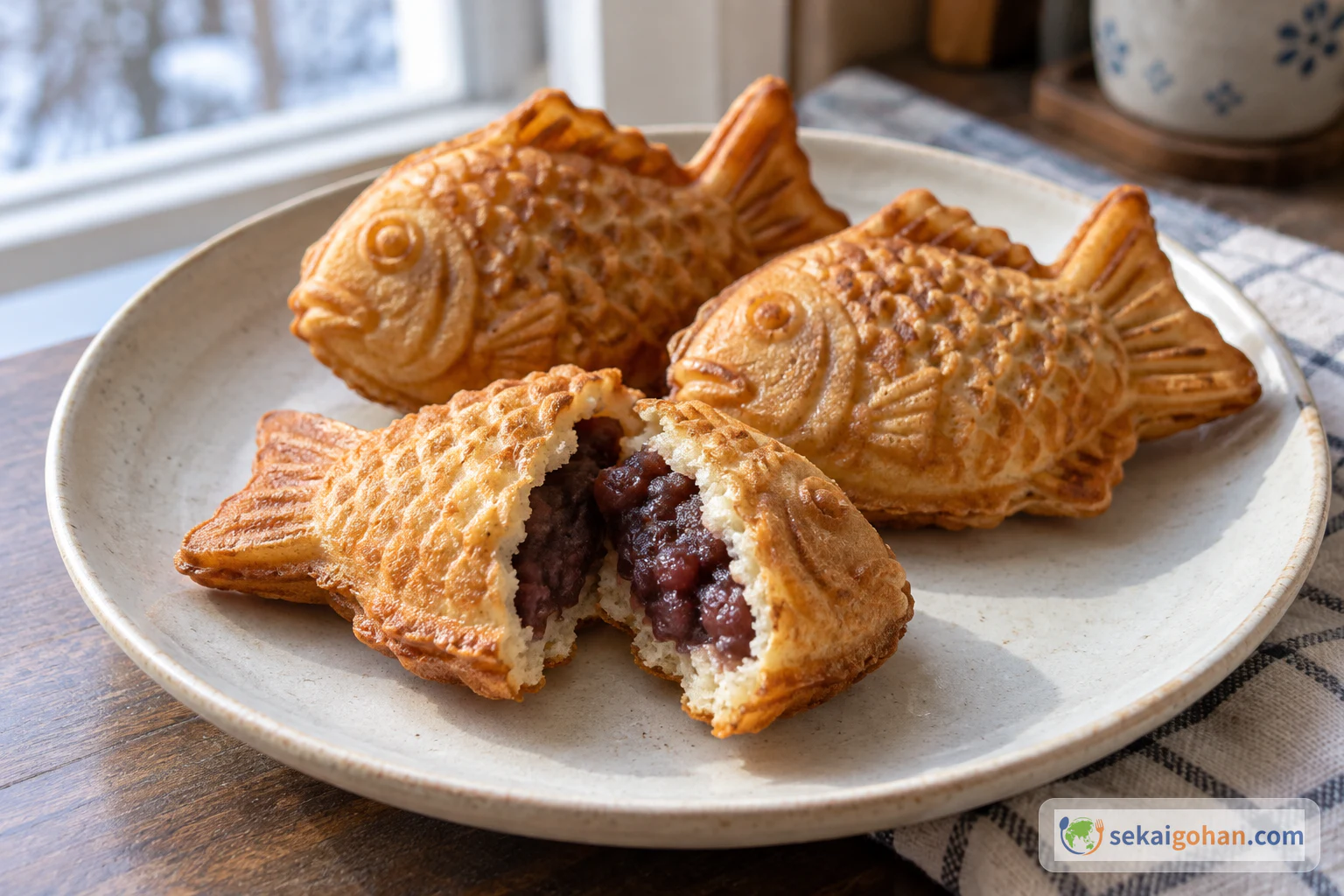
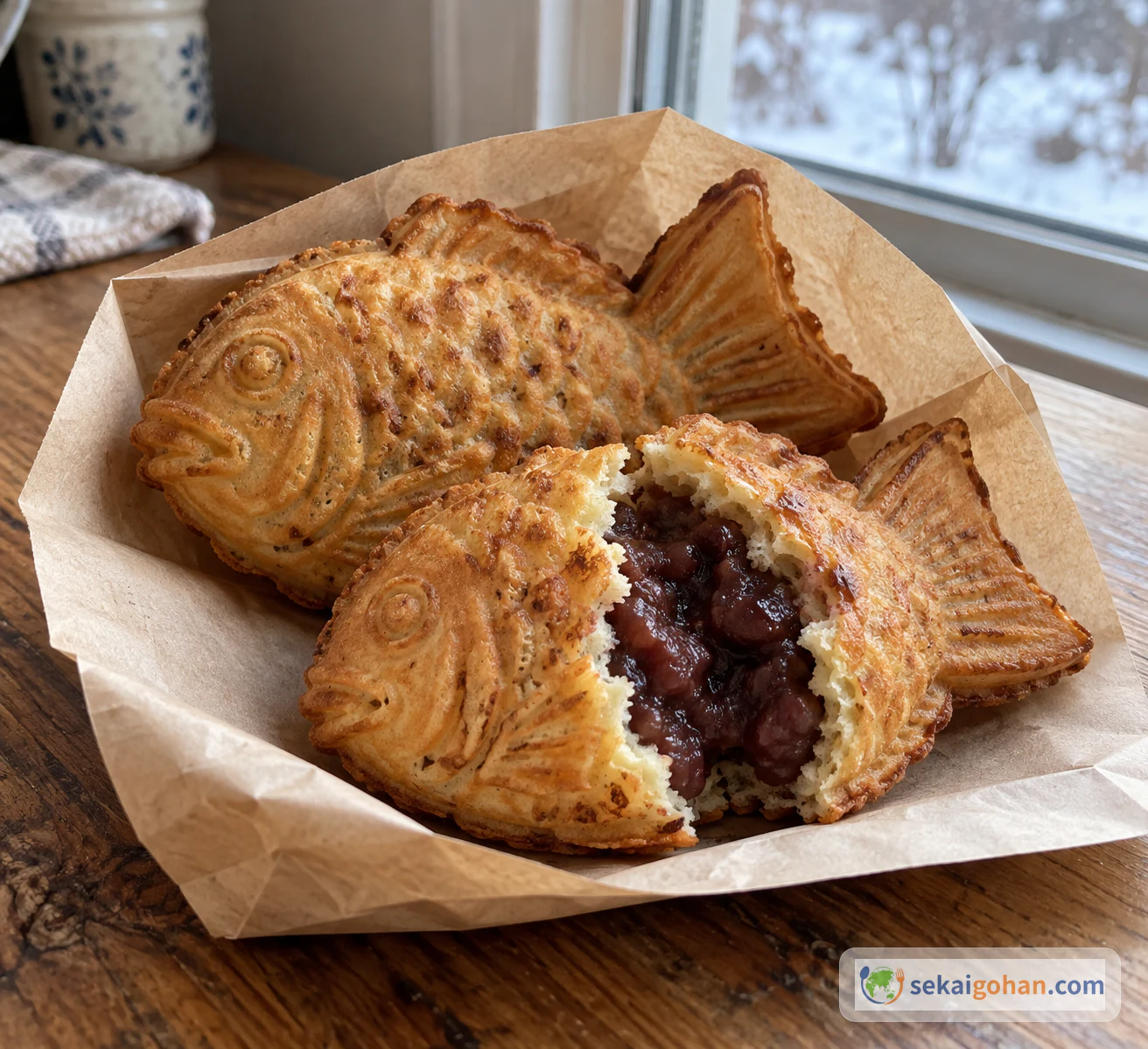
Golden-brown bungeoppang baked in a fish-shaped mold, one broken open on a plate to show the sweet red bean filling
Serves
6 pieces
Level
Beginner
Cuisine
Korean

How to make bungeoppang (붕어빵), the Korean fish-shaped pastry filled with sweet red beans, using a six-piece batter of flour, water, sugar, salt and baking soda. Covers straining the batter, greasing the mold, placing the filling, turning the pan over low heat, troubleshooting, newer fillings, and how it compares with Japanese taiyaki.

Cooking flow

Cooking steps

STEP11 / 8

Mix the dry ingredients

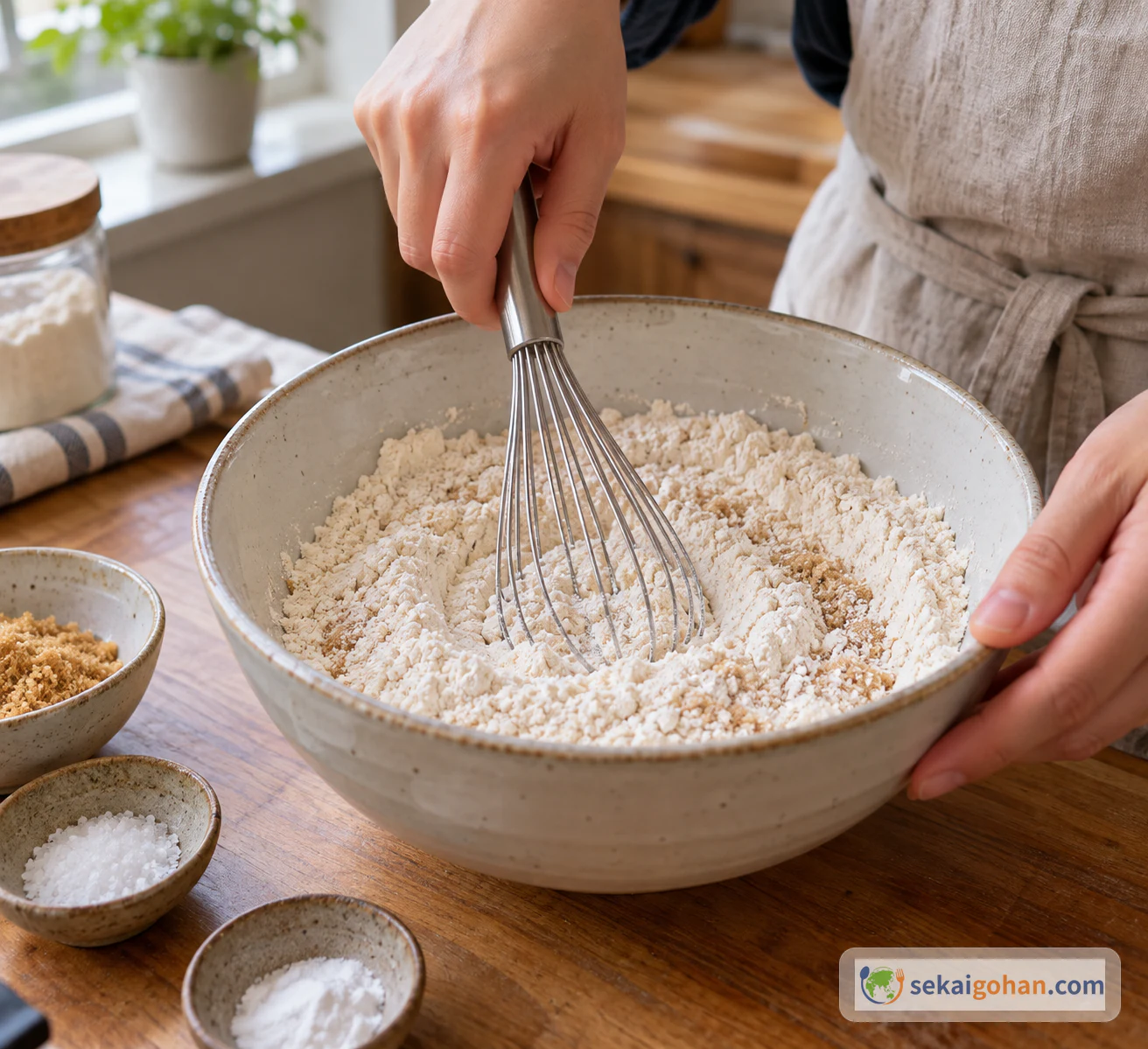
Whisking flour, salt, baking soda and sugar together in a bowl
Combine only the four dry ingredients first

In a mixing bowl, whisk together 1 cup all-purpose flour, 1/2 tsp kosher salt, 1/2 tsp baking soda and 1 tbsp brown or white sugar until evenly combined. At this stage everything is still dry; no water, oil or filling goes in yet.

STEP22 / 8

Add the water and strain the batter

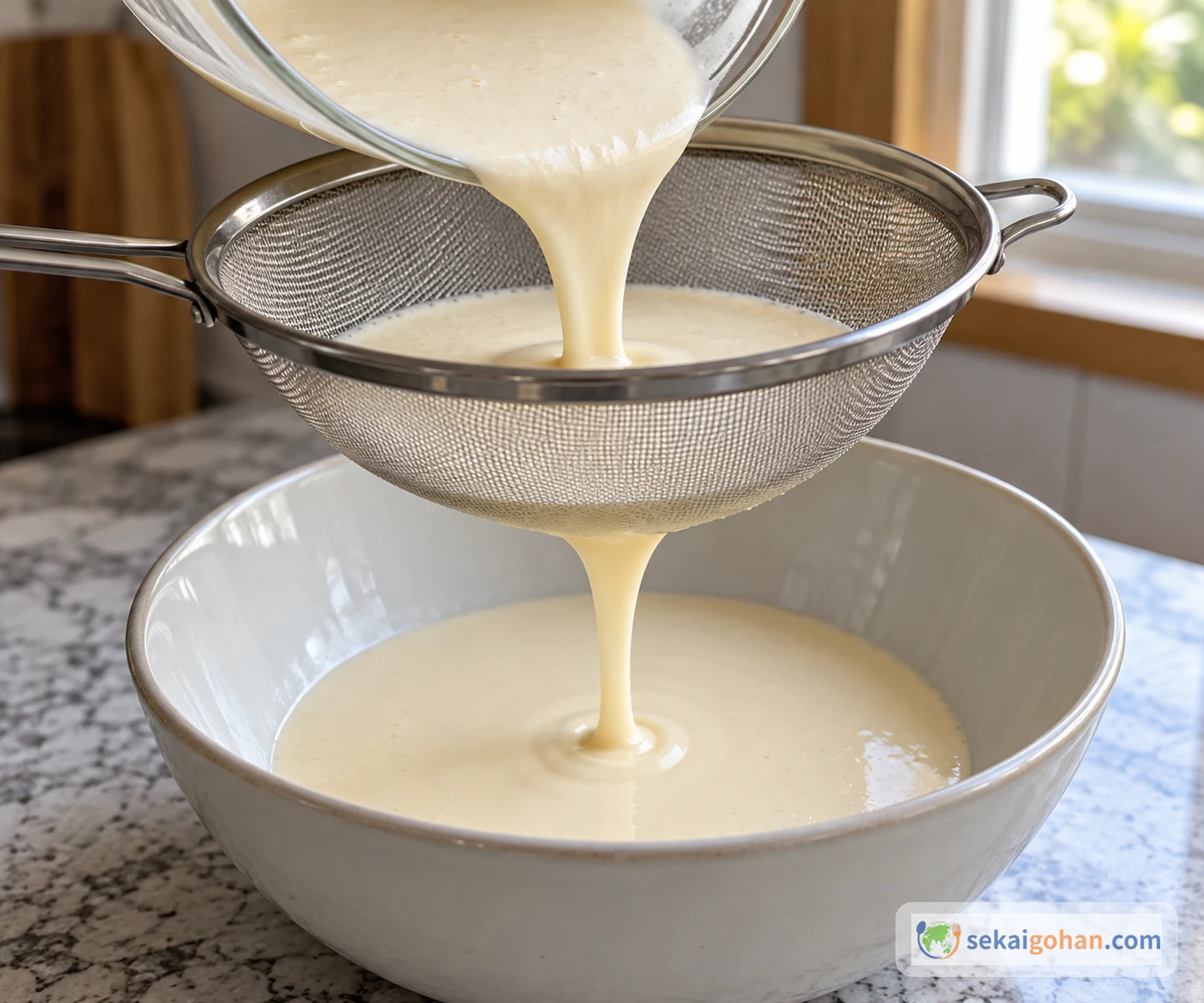
Pouring the thin batter of flour and water through a strainer
Straining gives a silky, thin batter with no lumps

Pour in 1 cup + 2 tbsp water and mix until no dry flour remains. Then pass the batter through a fine-mesh strainer into a clean bowl so it is silky and smooth, with no lumps. The batter is thin and pourable. Don't add oil to it.

STEP33 / 8

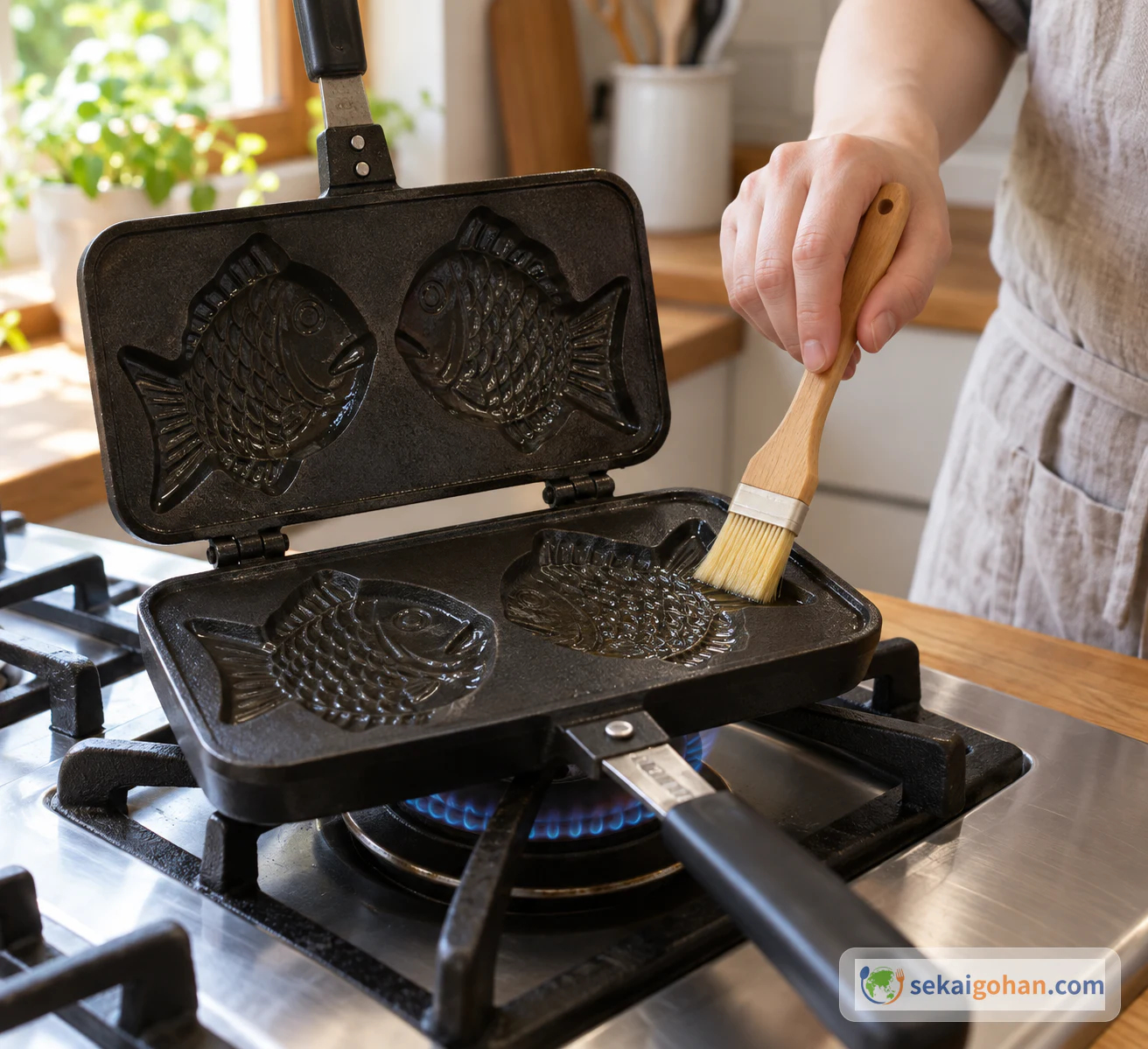
Heat the pan, lower the heat, and oil both halves

Brushing a thin film of vegetable oil onto both halves of a fish-shaped mold over low heat
A light film of oil on both the upper and lower molds, with the heat already lowered

Heat the bungeoppang pan, then turn the heat down to low. Lightly grease both the upper and lower fish molds with vegetable oil, just a thin film. The pan is hot from here on: hold it by the handles and keep your hands away from the cooking surfaces when you open and close it.

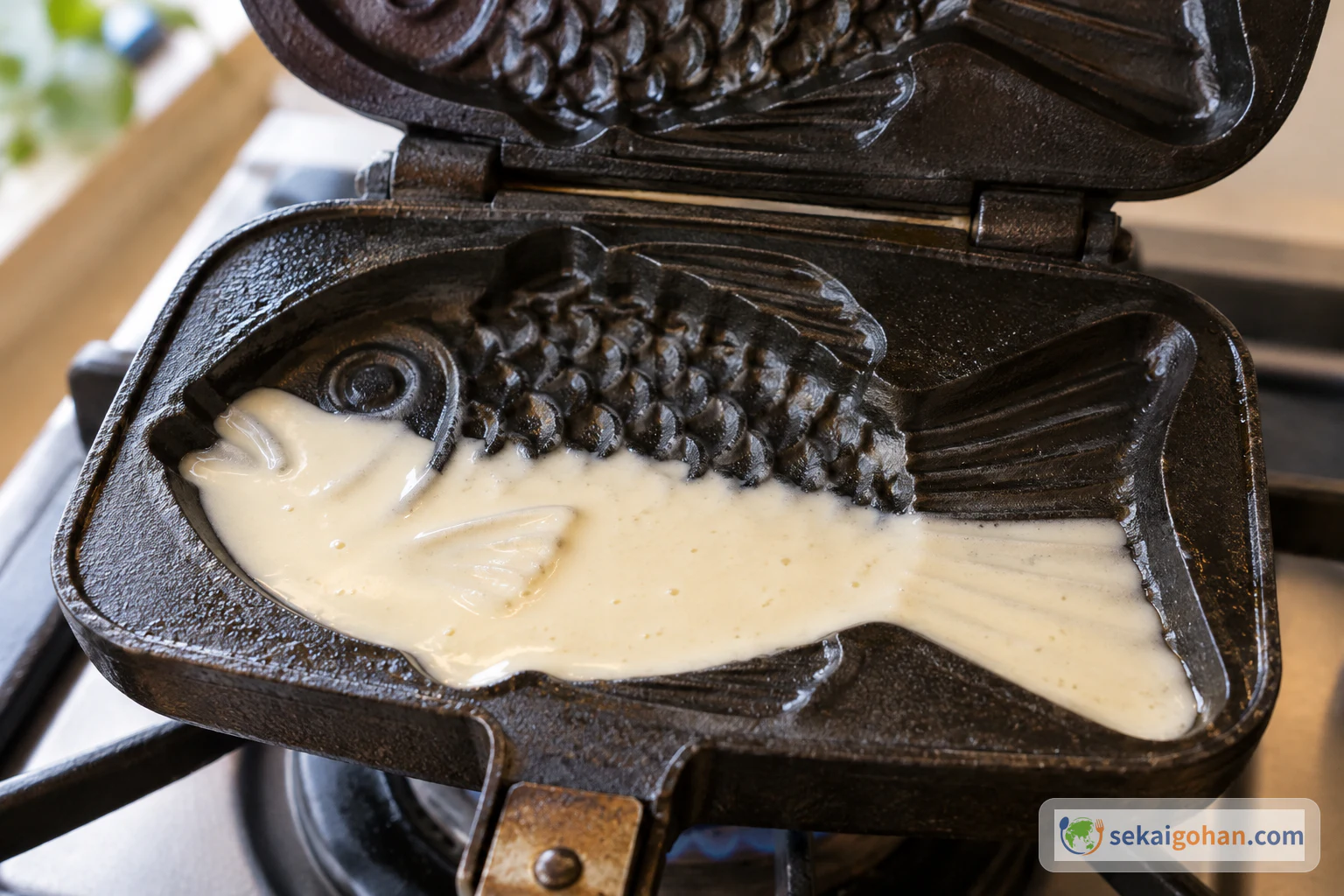
STEP44 / 8

Fill one side about one third full

Pouring batter into one side of the fish-shaped mold until it is about one third full
A shallow layer reaching from head to tail, before any filling goes in

Pour batter into one side of the mold until it is about one third full. Let it run into the head, tail and fin details of the fish.

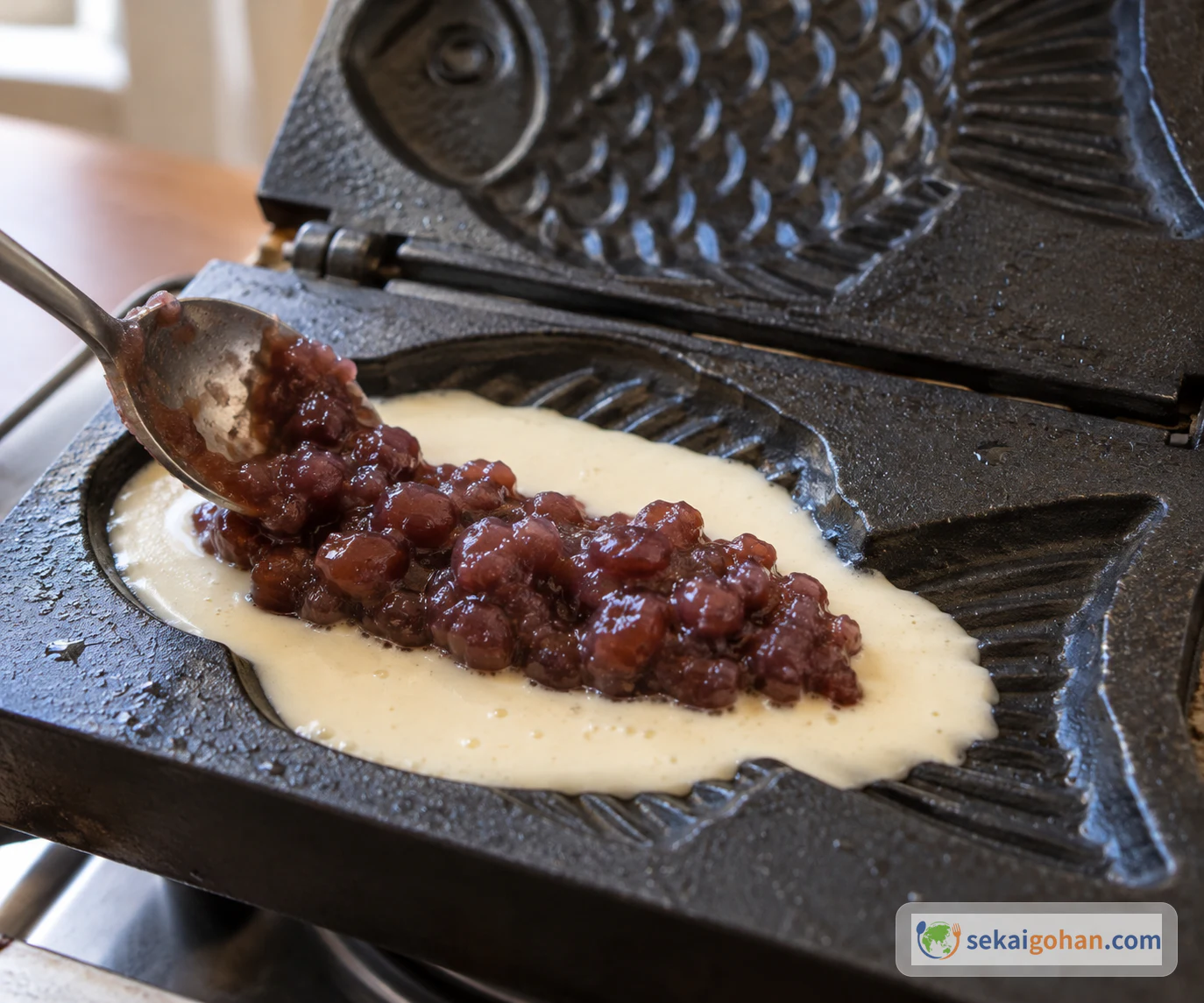
STEP55 / 8

Place 1 tbsp of red beans in the center

Placing 1 tbsp of sweet red bean filling in the center of the batter
The red beans sit in the middle, with batter showing all around

Spoon 1 tbsp sweet red beans into the center of the batter. Keeping the filling in the middle, with batter visible around it, makes it easier to cover completely in the next step.

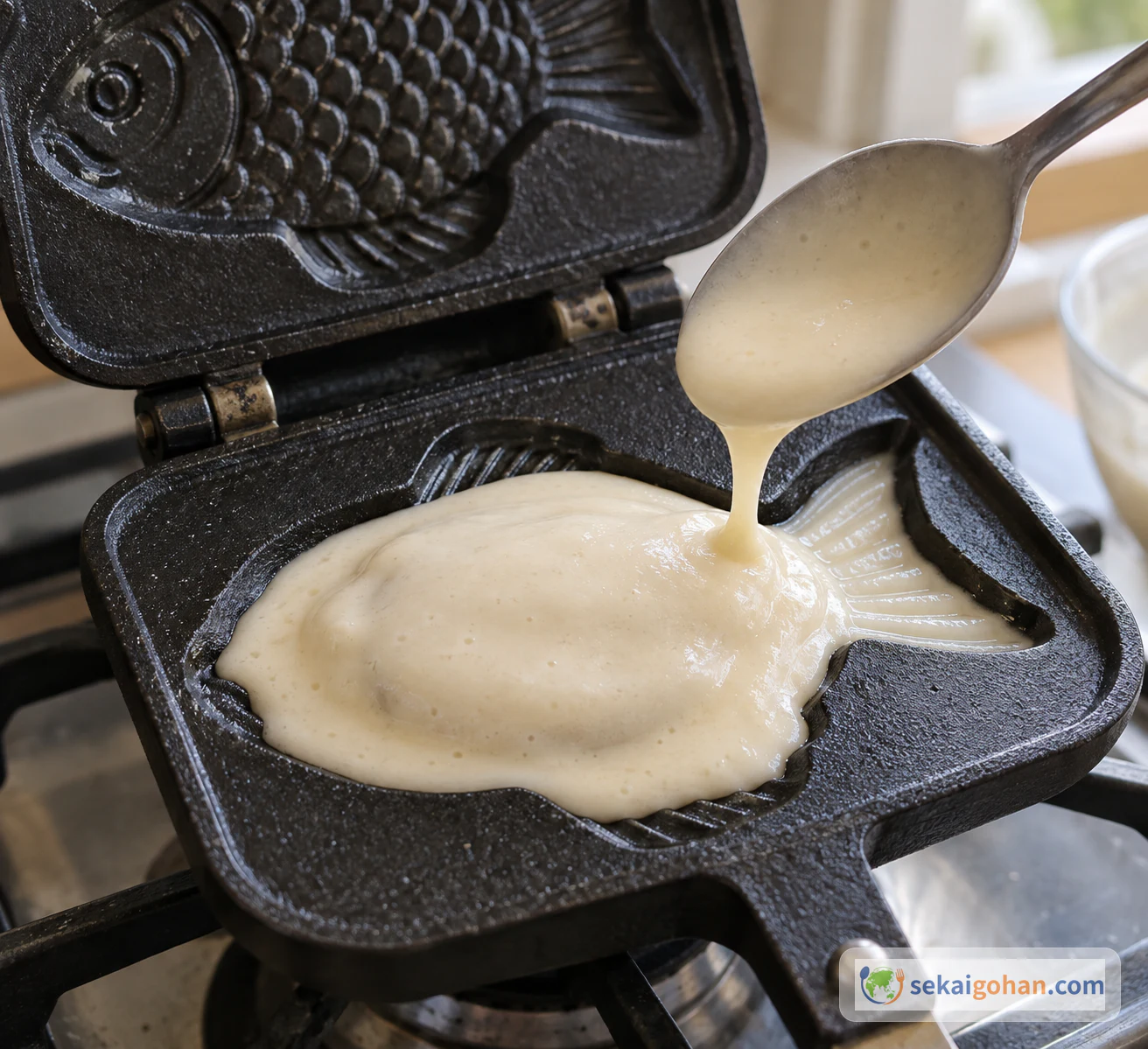
STEP66 / 8

Cover the filling with batter

The red bean filling fully covered with thin batter, just before closing the mold
No red beans should show on the surface before you close the pan

Fill the rest of the mold with batter so the red beans are covered completely. Keep the batter inside the mold rather than spilling over the edges.

STEP77 / 8

Close, bake about 3 minutes, turn, and bake again

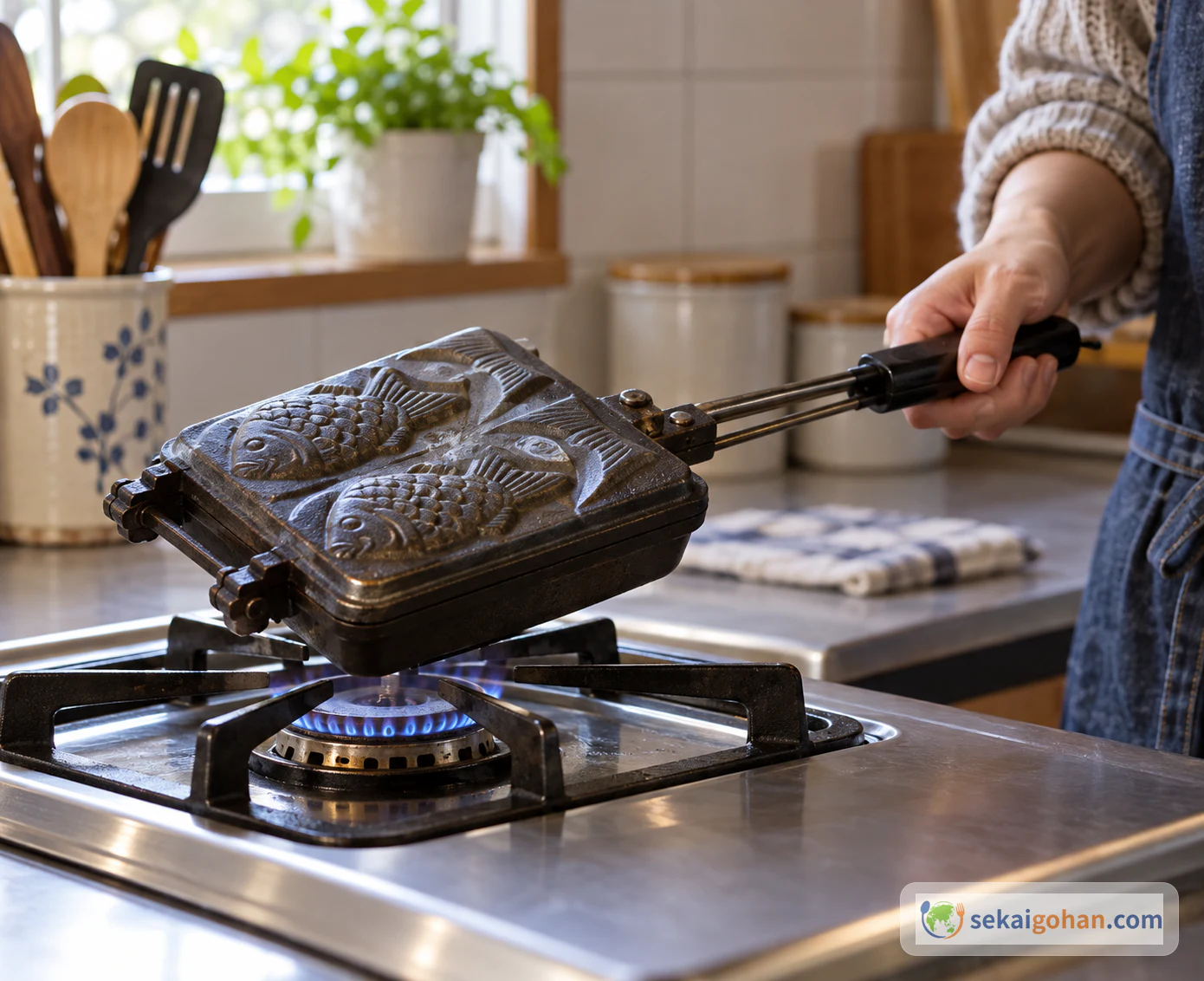
Turning a closed fish-shaped mold over by its handles to bake both sides over low heat
Keep the pan closed while you turn it over

Close the pan and cook over low heat for about 3 minutes. Turn the closed pan over by its handles and cook for about 3 minutes more. Then open the pan, turn it again and give it about another 30 seconds so the outside crisps a little. Pans and burners vary, so use these times as a guide and look for an even golden color.

STEP88 / 8

Serve right away

Freshly baked bungeoppang in a paper sleeve, one broken open to show the red bean filling
Serve straight from the pan, and give the hot filling a moment before biting in

Take the bungeoppang out of the mold and serve immediately, while the shell is crisp. The filling is very hot, so let it rest a moment before the first bite.

0 / 0
Ingredients

Ingredients

1 / 1

Ingredients

Ingredient Amount Role
All-purpose flour 1 cup The body of the batter
Kosher salt 1/2 tsp Seasons the batter
Baking soda 1/2 tsp Leavening for a soft, fluffy inside. Baking soda, not baking powder
Brown or white sugar 1 tbsp A little sweetness in the batter. Either works
Water 1 cup + 2 tbsp The only liquid in the batter. Not milk
Vegetable oil 1 tbsp For lightly greasing the upper and lower molds only. It does not go into the batter
Sweet red beans 1 tbsp per piece The filling, placed in the center of each fish
0 / 0

A warm little fish, crisp at the edges and soft inside, with sweet red beans in the middle: that is bungeoppang (붕어빵), one of Korea's favorite winter street snacks. The shell bakes up thin and lightly crisp, and the inside stays soft and fluffy, never spongy. It is simple to make at home with a fish-shaped mold and a plain water-based batter. For more Korean dishes, see our South Korea page.

About Bungeoppang

The name tells you what to expect. Bungeo (붕어) is the crucian carp, a freshwater fish, and ppang (빵) means bread. There is no fish in it, though; the fish is only the shape of the mold.

Bungeoppang is a winter street snack in Korea, one of several warm treats people reach for in the cold months. It began in the early 1930s and became widely popular after the Korean War.

It is often compared with Japanese taiyaki. Both are baked in a fish-shaped mold, but the fish differs: bungeoppang is named for the crucian carp. Each has its own cultural background, so think of them as similar sweets rather than two names for the same thing.

Ingredients for 6 Pieces
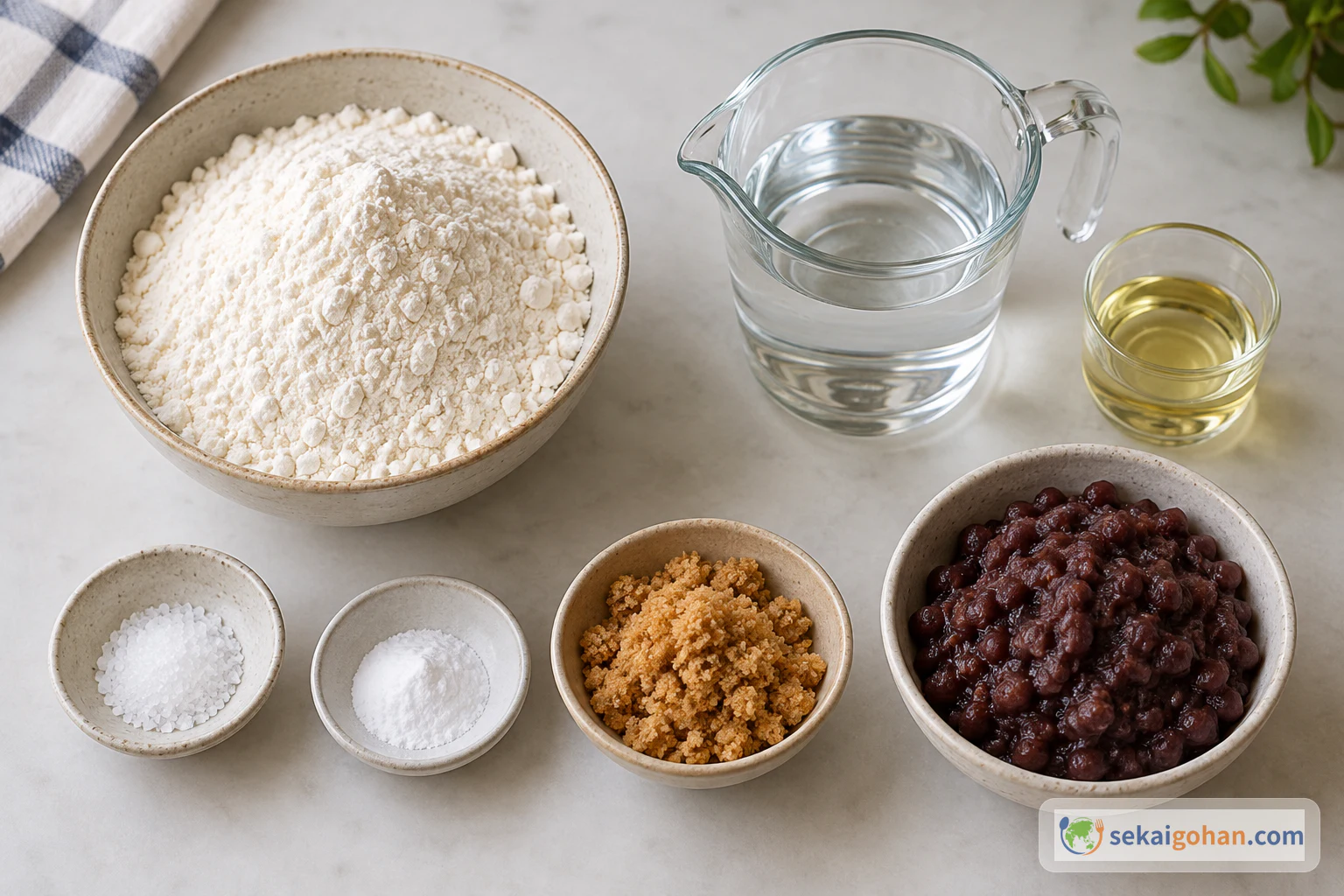
The ingredients for six bungeoppang laid out: flour, water, sugar, baking soda, salt, vegetable oil and sweetened red beans
Seven ingredients, with the oil kept apart because it is only for greasing the mold

Choosing Ingredients for Bungeoppang

The batter is only flour, water, a little sugar, salt and baking soda. Leave out eggs, milk, cornstarch and cornflour; they change the texture.

  • Flour: Use all-purpose flour.
  • Salt: Kosher salt grains differ in size from table salt and other salts, so the same volume won't give the same saltiness. If you use another salt, taste the batter before baking.
  • Baking soda: Use baking soda, not baking powder.
  • Sugar: Brown or white sugar both work.
  • Sweet red beans: Canned or homemade both work, as does a ready-made sweetened red bean paste, chunky or smooth. The sugar in the batter is separate from the sweetness of the filling.
  • Oil: The vegetable oil is for the mold, not the batter. Use just a light film on both halves for each round.

Equipment

  • A fish-shaped bungeoppang pan (a hinged mold with an upper and lower half)
  • Measuring cups and measuring spoons
  • A mixing bowl and a second bowl to strain into
  • A whisk
  • A fine-mesh strainer
  • A pastry brush or similar, for spreading a thin film of oil in the mold
  • A spoon for the batter and the filling

A Japanese taiyaki pan is also fish-shaped, but its size and shape can differ, so expect different baking times. Pans also hold different numbers of pieces, so follow your pan's instructions for safe use and heating.

Method: Strain the Batter, Wrap the Beans, Turn Over Low Heat

Low heat throughout

Once the pan is hot, lower the heat and keep it low through baking. The times below are guides; judge by the golden color on your own pan.

This makes 6 pieces. Work in rounds, filling as many fish as your pan holds at a time.

Bungeoppang Troubleshooting

Hot pan, hot filling

The metal mold stays very hot throughout. Handle it only by its handles and follow your pan's instructions. The red bean filling is very hot straight from the pan; give it a moment before eating.

What you see Likely reason What to try
Lumps in the batter Flour not fully mixed in Strain the batter through a fine-mesh strainer before baking
The pastry sticks to the mold Too little oil on one of the halves Lightly grease both the upper and lower molds before each round
Red beans showing or leaking at the seam Filling placed near the edge, or not fully covered Keep the filling in the center and cover it completely with batter before closing
The outside isn't crisp The final short bake was skipped After the second 3 minutes, open, turn again and give it about 30 seconds more
Too dark, or too pale, at the given times Pans and heat sources differ Keep the heat low and adjust the time by the color you see on your pan
The texture is heavy or spongy A different batter Keep to the water-based batter as listed; it should be soft and fluffy with some crispness

Serving and Fillings

Bungeoppang is best eaten right away, while the shell is still crisp and the beans are warm. Sweet red beans are the classic filling, but street stalls in Korea also sell newer versions with custard cream, cheese, pizza, kimchi and sweet potato mousse.

Frequently Asked Questions

Is there fish in bungeoppang?

No. The name means "crucian carp bread" because of the shape of the mold. The pastry itself is flour batter and sweet red beans.

Can I use a taiyaki pan?

A taiyaki pan is also fish-shaped, but its size and shape can differ from a bungeoppang pan, so the 3 minutes, 3 minutes and 30 seconds can differ too. Keep the heat low and judge by color.

Can I make them ahead?

Serve bungeoppang right away, while the shell is crisp.
Sources

  • Maangchi, "Fish-shaped bread with sweet red bean filling (Bungeoppang)." The six-piece recipe and its cup/tablespoon/teaspoon amounts; mixing the dry ingredients, adding water and straining; heating the pan, lowering the heat and greasing both molds; filling one third, adding 1 tbsp red beans and covering; baking about 3 minutes, turning for about 3 minutes and a final 30 seconds; serving immediately and the warning that the filling is very hot; the meaning of bungeo and ppang and the intended texture. https://www.maangchi.com/recipe/bungeoppang
  • Ministry of Culture, Sports and Tourism of the Republic of Korea / Korea Here & Now, "Bungeo-ppang: The warm heart of Korean winter." Bungeo-ppang as a Korean winter street snack with red bean filling; custard, cheese, pizza and kimchi as newer fillings; the article's own account of a history beginning in the early 1930s, which is not independently confirmed. https://mcst.go.kr/english/policy/kocis/newsView.jsp?pSeq=303
  • Korea.net, Ministry of Culture, Sports and Tourism, "5 Korea.net staff pick their favorite winter snacks in Korea." Bungeoppang as a fish-shaped winter street snack of flour batter and red bean paste; custard cream, sweet potato mousse and pizza as example fillings; its place among popular Korean winter snacks. https://www.korea.net/NewsFocus/Society/view?articleId=207784