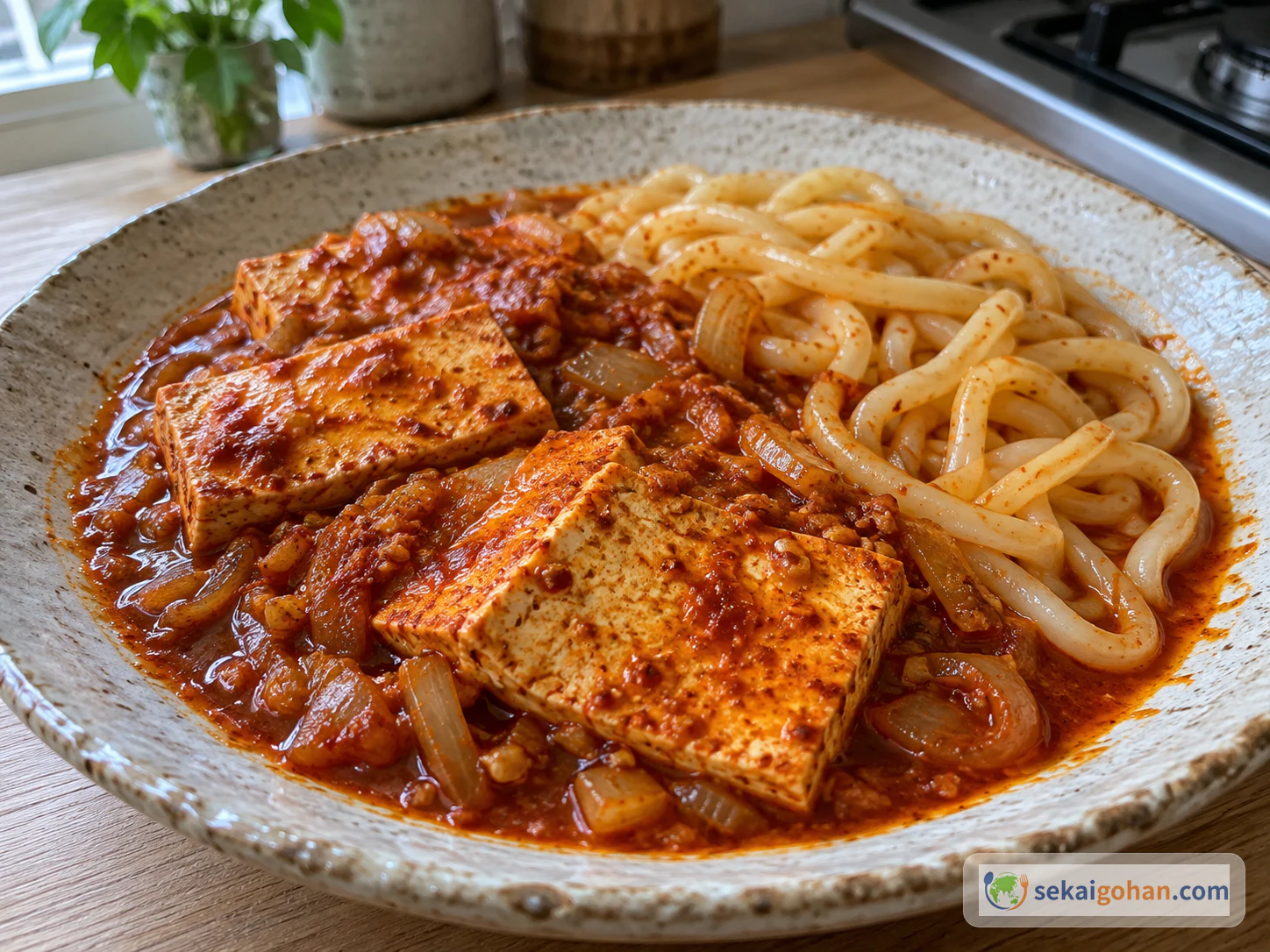
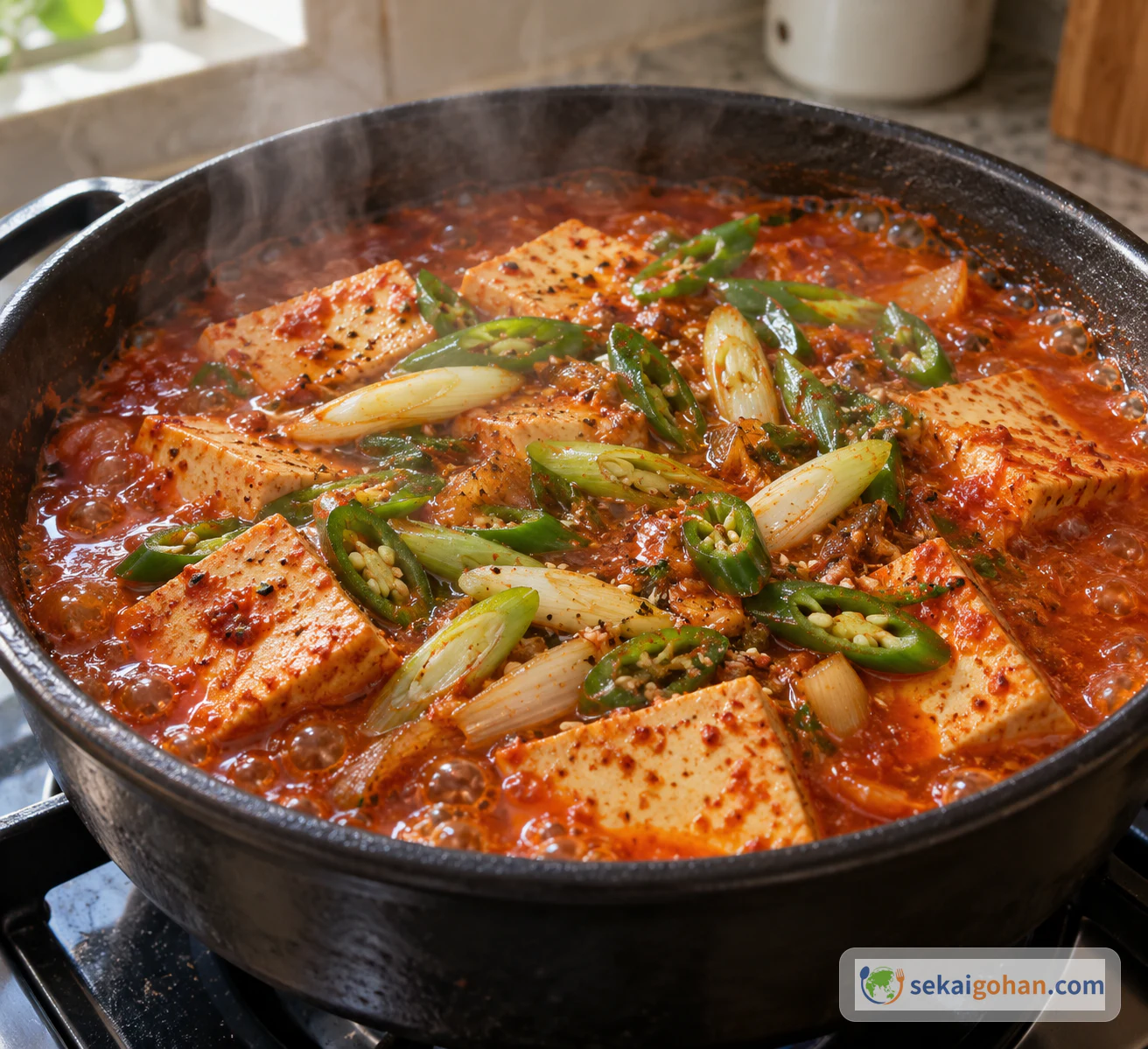
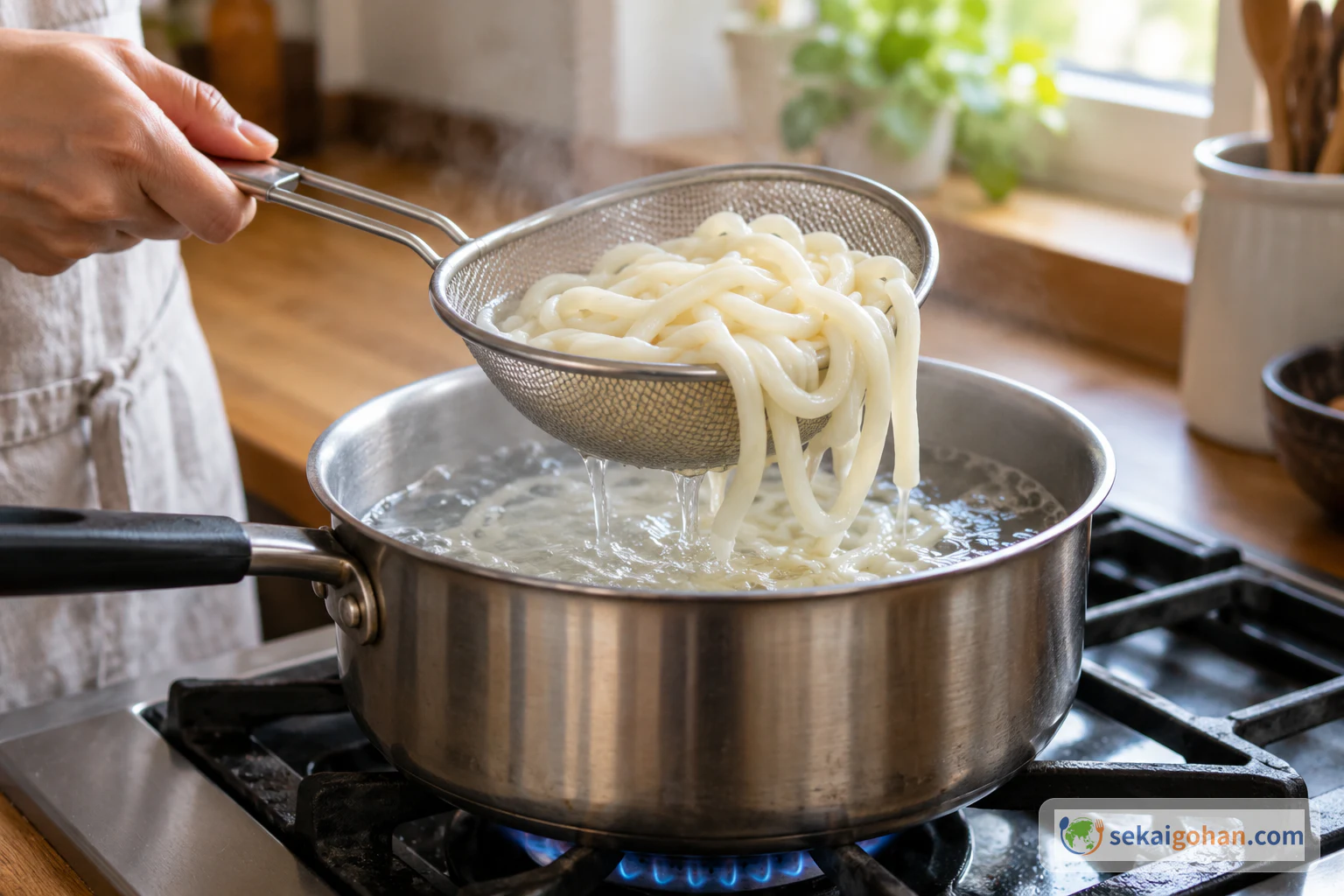
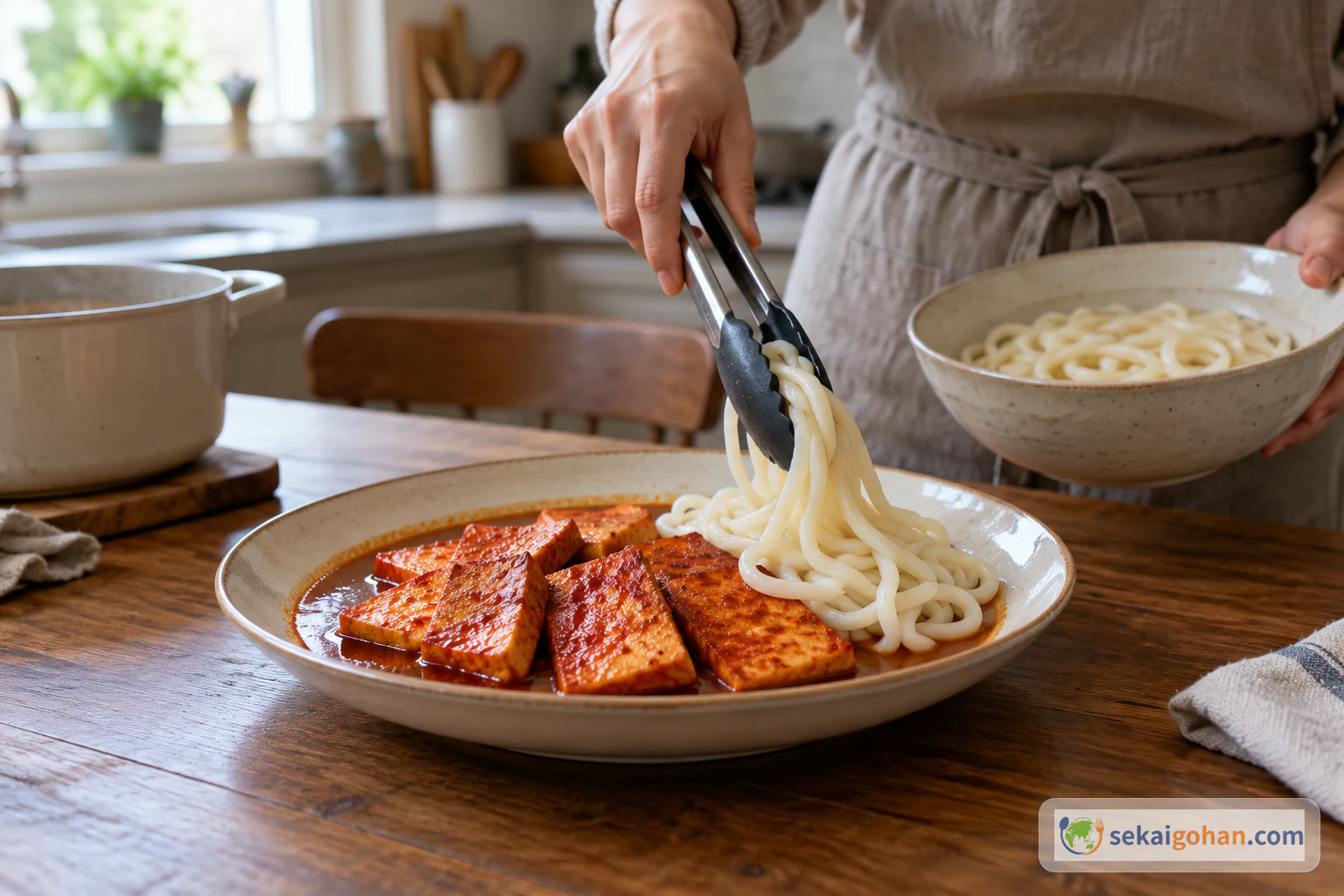
Steam lifts off a wide pan of tofu stained deep red, and the whole table reaches in at once. That's how dubu-duruchigi (두부두루치기) is served at a restaurant in Seonhwa-dong, Daejeon, with boiled pork, suyuk, on the side. When the tofu is gone, kalguksu noodles go straight into the spicy broth left behind. Broad slices of tofu simmer in a fiery gochugaru seasoning until they turn red through, and nobody stirs the pan.
Dubu-duruchigi in Daejeon
Dubu-duruchigi puts tofu at the center of a spicy red seasoning. It shouldn't be confused with pork duruchigi; there's no pork in this pan at all. In April 2026 it was named one of the "Three Tastes of Daejeon," chosen after a survey of residents' preferences and a review by a committee developing the city's representative dishes. You'll find it on restaurant menus across the city.
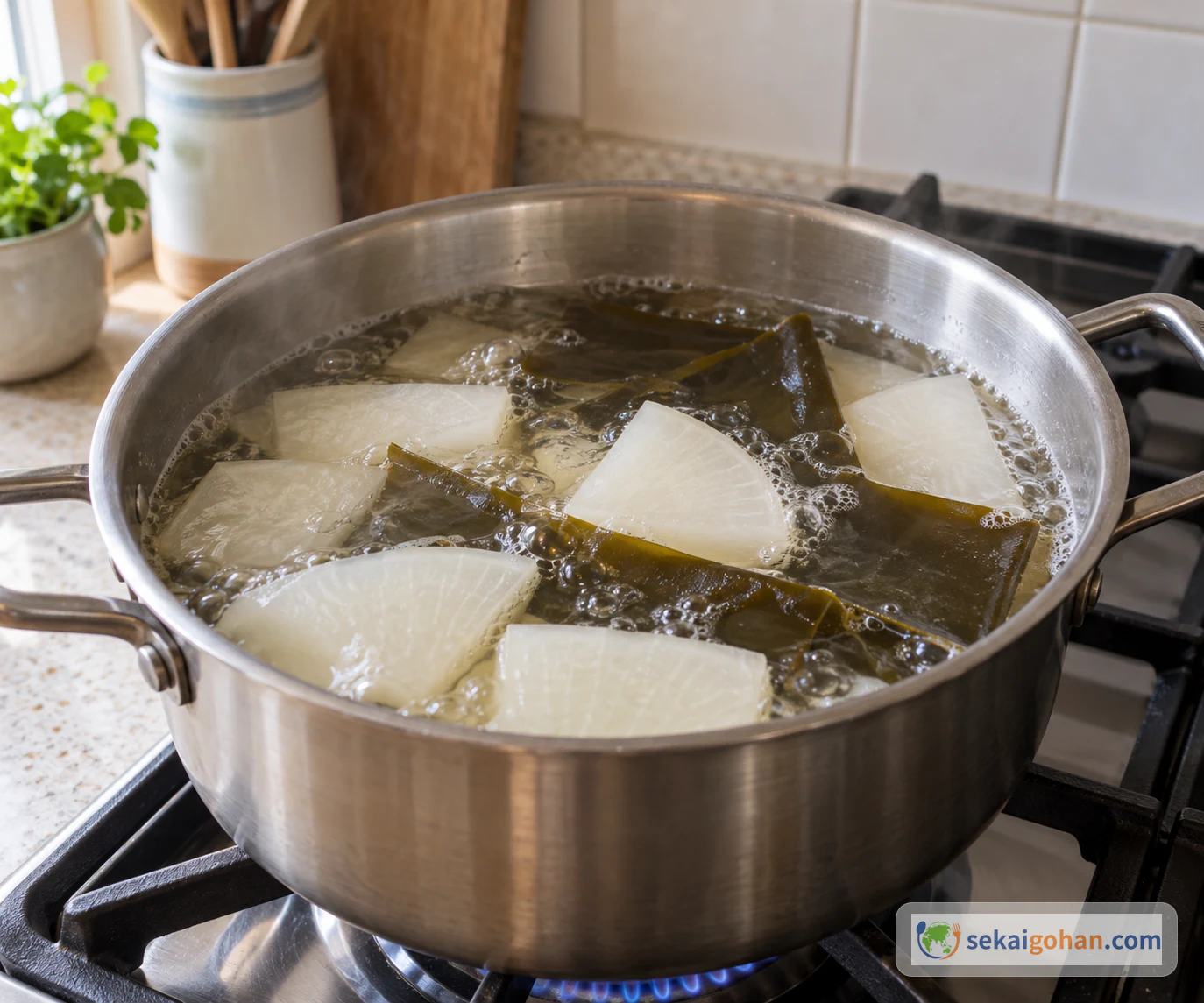
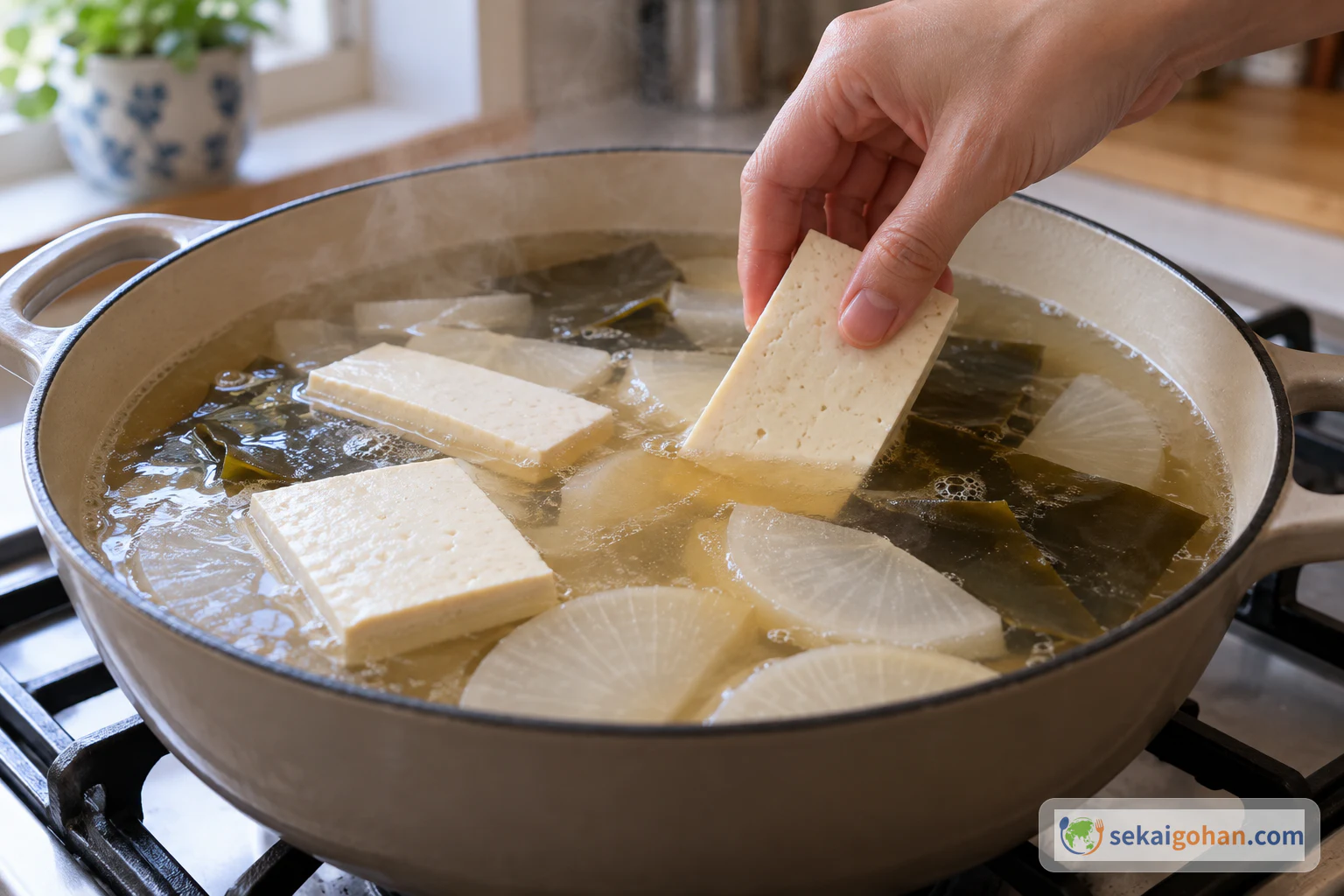
The dish is often described as cubed tofu cooked with gochugaru, garlic, soy sauce and sesame oil. This 2-serving home version works a little differently. The tofu is cut into broad pieces and simmered in stock, and where the Seonhwa-dong restaurant builds its broth on anchovy stock (멸치육수), this one uses a simple stock of radish and kelp seasoned with matganjang. For more dishes from the same country, see our South Korean recipes.
Ingredients for 2 Servings
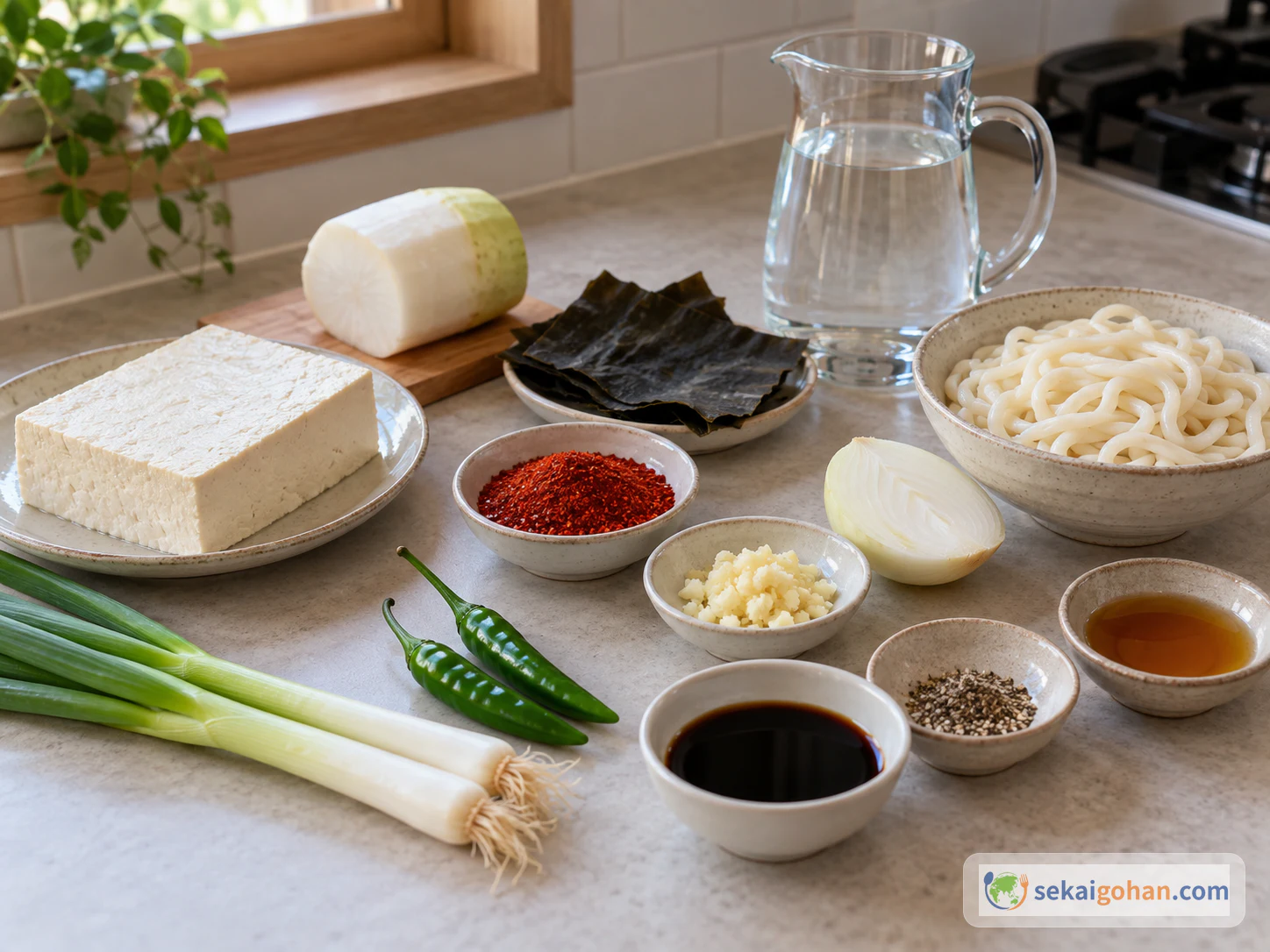
All 13 ingredients, in order.
Equipment
- A pan for the stock, tofu and seasoning (used throughout steps 1–4)
- A pot of water for boiling the udon
- A wide serving plate
- A knife and cutting board
Dubu-duruchigi Ingredients: Gochugaru, Matganjang and Chilies
Gochugaru (고춧가루). Korean red pepper powder supplies most of the heat and the red color. It isn't the same product as Japanese ichimi chili powder, so shop for it under its Korean name.
Matganjang (맛간장). This seasoned soy sauce is its own product, distinct from ordinary soy sauce and Japanese dark soy sauce. Look for "맛간장" or "matganjang" at a Korean grocery or import food shop, where stock varies.
Cheongyang chilies (청양고추). If you can't find them, any other green chili is a departure from the recipe.
Jjokpa (쪽파). This is a slender Korean green onion. Daepa (대파), the thicker leek-like green onion, is a different ingredient and won't stand in for it.
Tofu. Firm tofu is a sensible choice, since it has to hold its shape through the simmer.
Tofu, matganjang and udon are processed products whose exact ingredients vary. Check the labels of the products you buy for allergens and shared-facility statements. Do not assume this dish is allergen-free, vegetarian or free of seafood without checking.
Method: Five Steps, and No Stirring
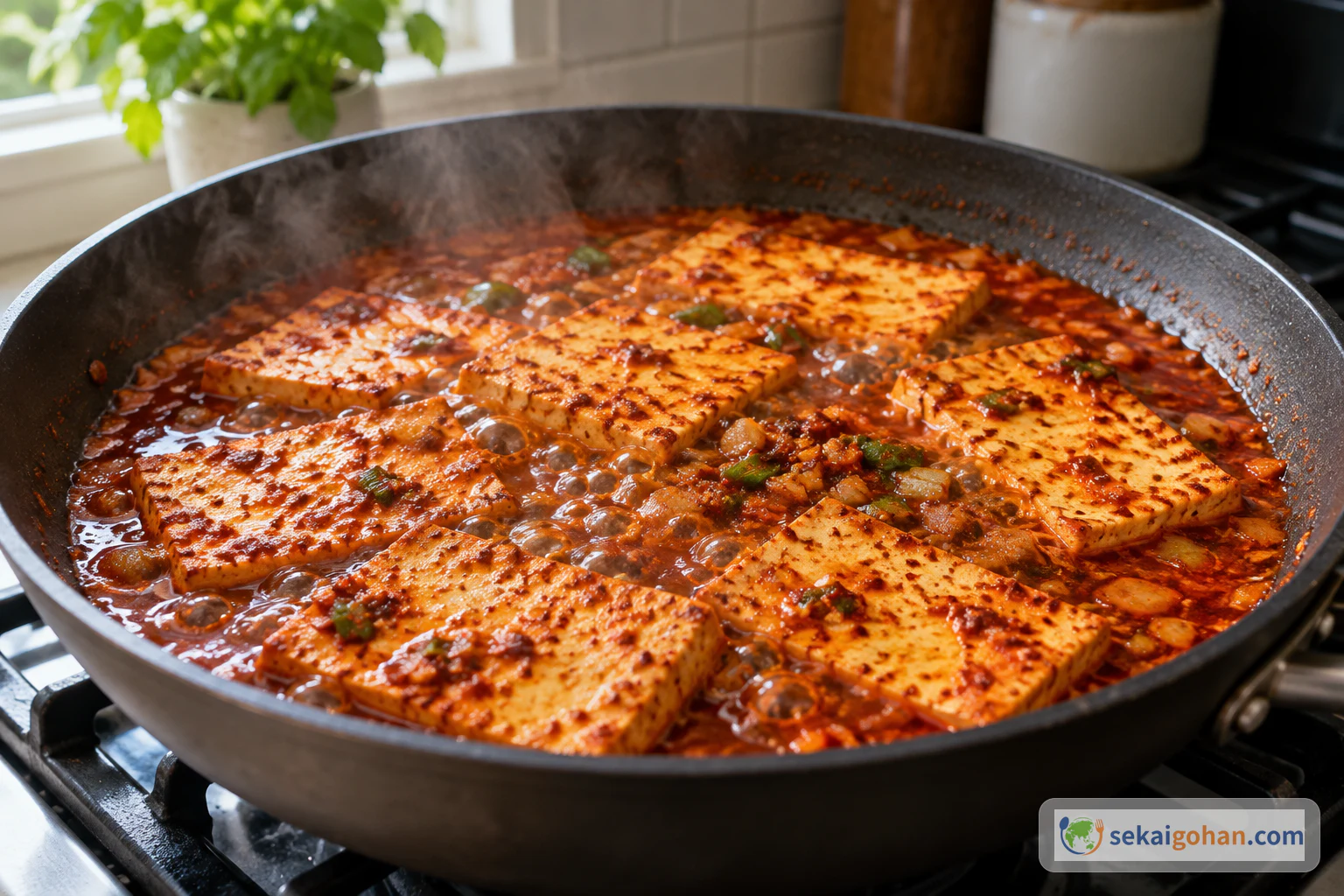
While the seasoning simmers down, leave the tofu alone. Stirring breaks the tofu. The seasoning dissolves and soaks in by itself.
Keeping the Dubu-duruchigi Tofu Whole
Broad slices of tofu that stay whole and take on a red color. Don't stir while it simmers down; the seasoning dissolves and soaks in on its own.
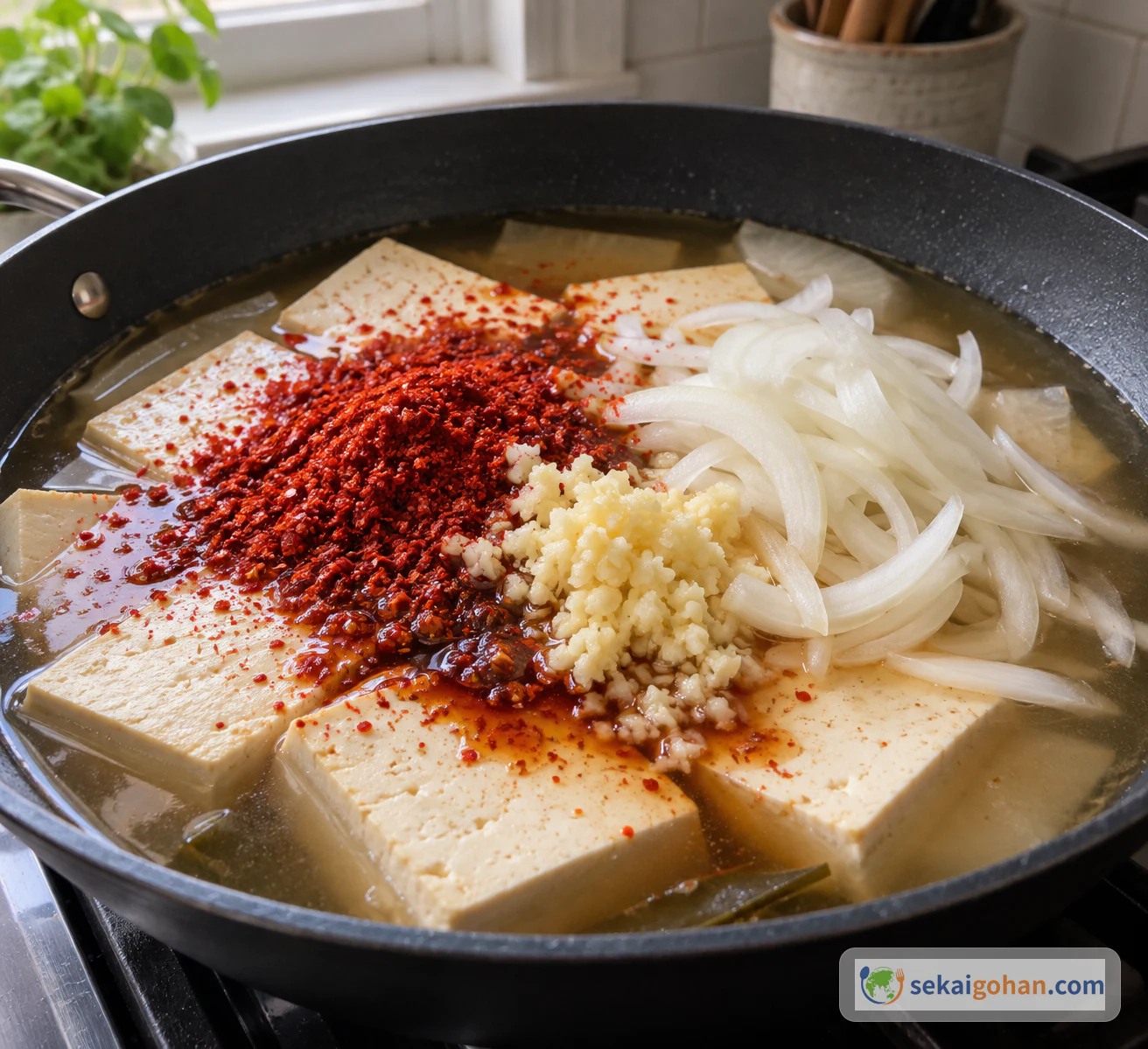
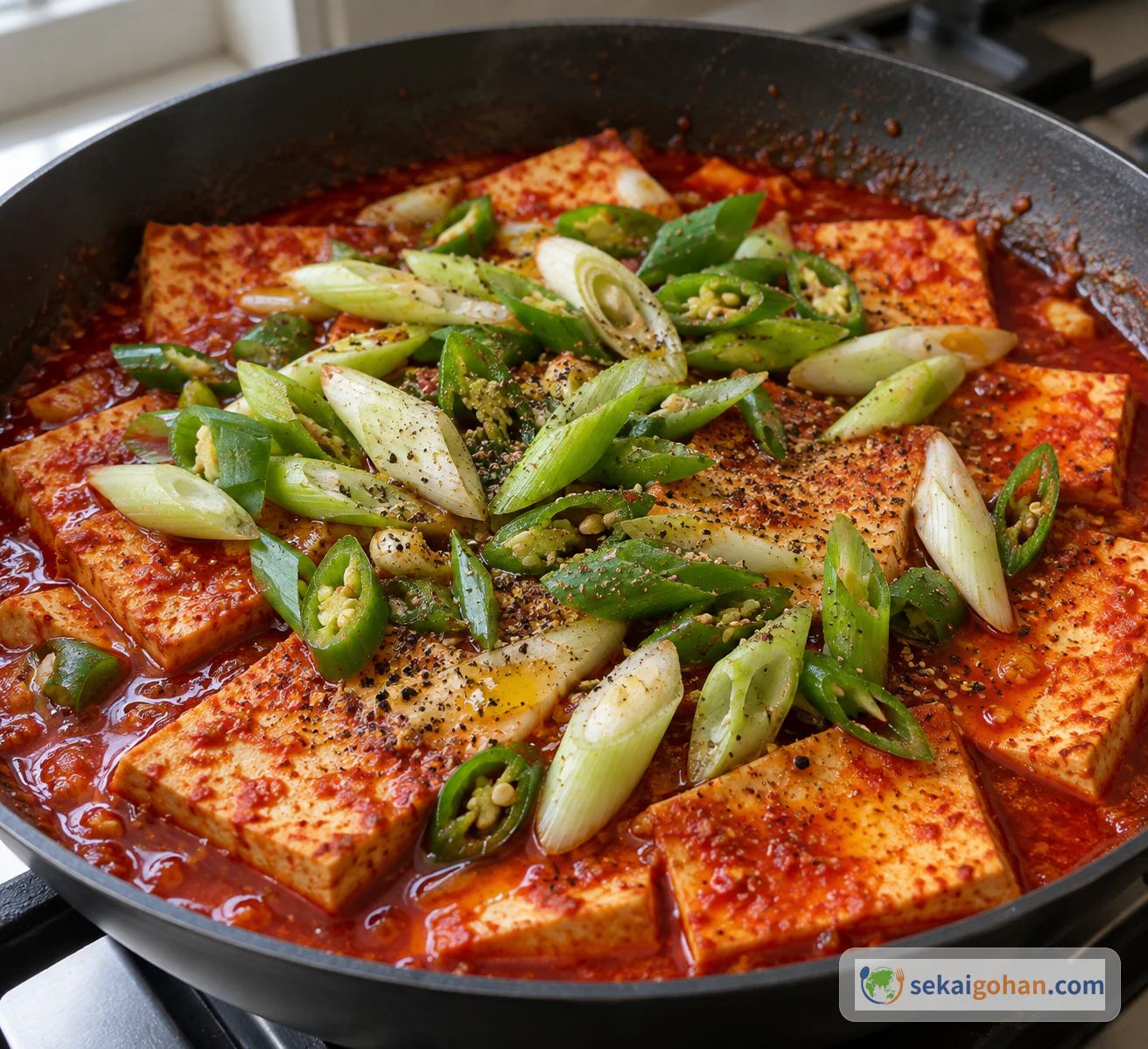
The one firm rule is to leave the pan alone. A spatula breaks the tofu, so from the simmer-down in step 3 onward, let the seasoning dissolve and soak in while some liquid remains. Watch for two cues: a modest amount of liquid after the tofu simmers in the stock, and tofu that has turned red before the finishing aromatics go in.
| Situation | What to keep in mind |
|---|---|
| The tofu breaks | Stirring breaks it; keep spatulas and spoons out of the pan from step 3 on |
| You want less heat | The 8 tbsp gochugaru sets the heat and color; using less changes the dish |
| You can't find matganjang | Search for it by its Korean name at a Korean grocery |
| You only have anchovy stock | That's the restaurant's base; this version uses radish and kelp |
| You're unsure how much udon to cook | Cook what suits your meal |
Other Ways to Make Dubu-duruchigi
Dubu-duruchigi is cooked in many ways, and the versions differ widely. Treat these as separate recipes rather than tweaks to the one above.
- Gochujang version (3 servings): uses gochujang, tuna extract (참치액), soup soy sauce (국간장) and cooking wine (맛술), with a stock of kelp, anchovies and dipori (디포리, a dried fish). The sauce is made first, then onion, tofu, sauce, stock and green chilies are layered in the pan, simmered and reduced, with Korean leek-like green onion (대파) added last.
- "Daejeon-style" version (4 servings): adds shimeji mushrooms and makes a strong stock of dried anchovies, kelp and dried shiitake, strained through a fine sieve. The tofu simmers in the stock. About two-thirds of a sauce (gochugaru, gochujang, soy sauce, fish sauce, plum extract, oligosaccharide syrup, sugar and garlic) goes in with the vegetables, and the rest adjusts the seasoning before sesame oil finishes it. The leftover broth becomes kalguksu, with squid added.
The home version here is the plainest of the lot: no gochujang, fish sauce, sugar or mushrooms, and a stock made only from radish and kelp.
Frequently Asked Questions
Can I use less gochugaru to make it milder?
The 8 tbsp for 2 servings is what gives the dish its heat and red color. Using less changes the dish.
Do I strain the stock or remove the radish and kelp?
Simmer the radish and kelp for about 20 minutes, then add the tofu to the same pan.
Can I use regular soy sauce instead of matganjang?
Matganjang is its own seasoning, distinct from ordinary soy sauce and Japanese dark soy sauce, so it's worth tracking down.
Can I add pork or kimchi?
Neither belongs in this version. Pork duruchigi is a different dish; here, tofu is the star.
How do I store and reheat leftovers?
Cool leftovers and refrigerate them promptly, then reheat until piping hot all the way through.