Hujiao Bing: Taiwan's Night Market Pepper Pork Buns with Sesame

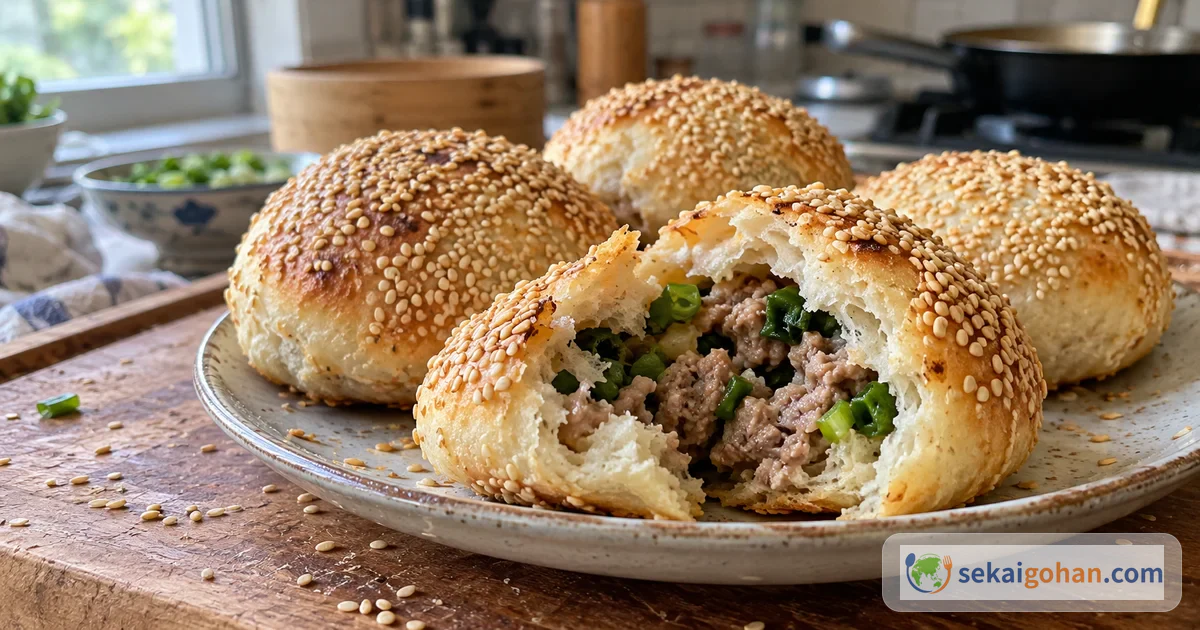
A hujiao bing covered in white sesame seeds and browned, broken open to show steam rising from the pork and scallion filling
Prep
1 hr 15 min
Cook
20 min
Total
13 hr 35 min
Serves
6 buns
Level
Intermediate
Cuisine
Taiwanese

A recipe for hujiao bing, the pepper pork buns that draw lines at Taiwan's night markets: pork seasoned with black pepper, white pepper, and Sichuan pepper, lots of scallions, and a sesame-crusted dough. Origins in Fuzhou, the wall-baked oven, home oven temperatures, and sealing in the juices.

Cooking flow

Cooking steps

STEP11 / 7

Mix the meat and rest it overnight

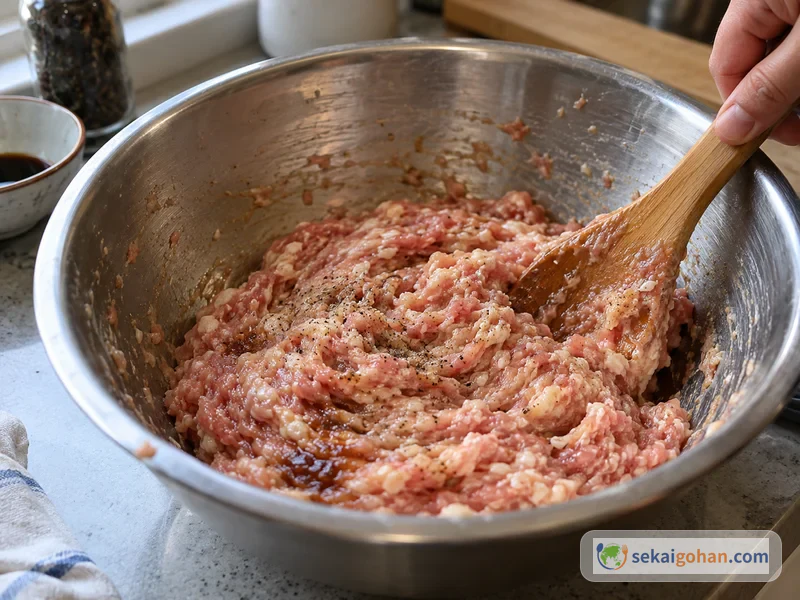
Mixing ground pork with pepper and soy sauce in one direction in a bowl until sticky
Stir in one direction for 2–3 minutes until pasty, then refrigerate overnight

In a large bowl, put all the meat filling ingredients except the scallions. With chopsticks or a spatula, keep stirring in one direction for 2–3 minutes until the meat is broken down, sticky, and holds together as a paste. Stirring in one direction links the meat fibers so the juices are less likely to escape after wrapping. Flatten the mixture in the bowl. Cover with plastic wrap and rest in the refrigerator for 8–12 hours.

STEP22 / 7

Knead the dough and let it rise

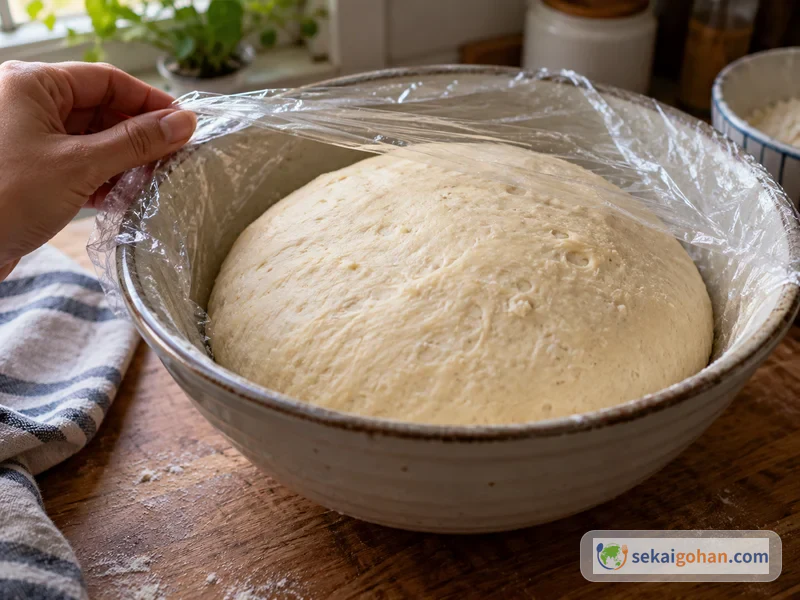
Smoothly kneaded dough risen to about double in a bowl
Knead 10 minutes until smooth. It doubles in 30–45 minutes

In a bowl, mix the bread flour, dry yeast, sugar, and salt, then add the lard. Add the lukewarm water a little at a time while mixing, and when it comes together, turn it onto the counter and knead by hand for about 10 minutes. It is kneaded enough when the surface is smooth and no longer sticks to your hands. Return it to the bowl, cover with plastic wrap, and let it rise in a warm place for 30–45 minutes until about double in size.

STEP33 / 7

Chop the scallions and warm the oven

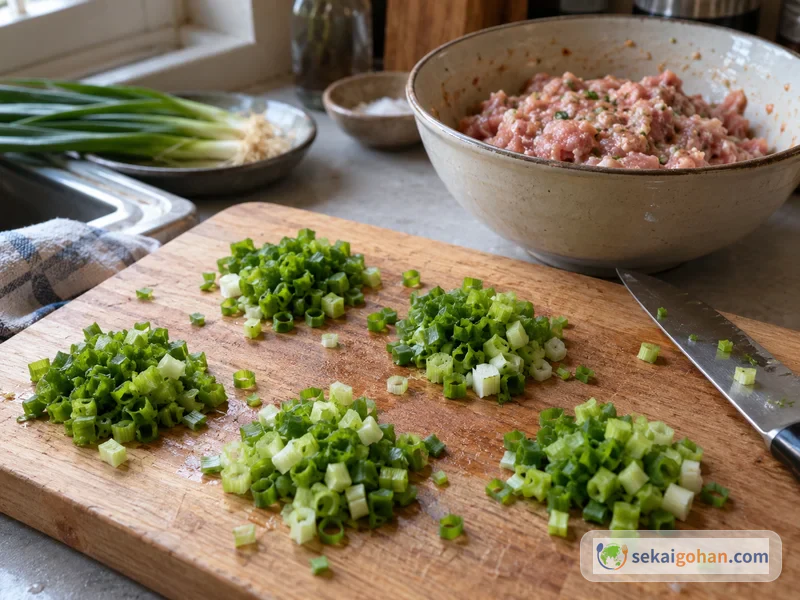
Scallions sliced and set out in 6 portions separate from the meat mixture
Slice 3–5 mm wide and wipe off the water well

While the dough rises, slice 4 oz (120 g) scallions into 3–5 mm rounds. Leftover water makes the dough likely to tear, so after washing, pat them dry with paper towels before chopping. If you mix them into the filling for the home version, add them here to the meat mixture taken from the refrigerator and mix evenly. If placing them separately in the traditional way, divide them into 6 portions. Start preheating the oven to 400°F (200 °C).

STEP44 / 7

Divide the dough and roll it round

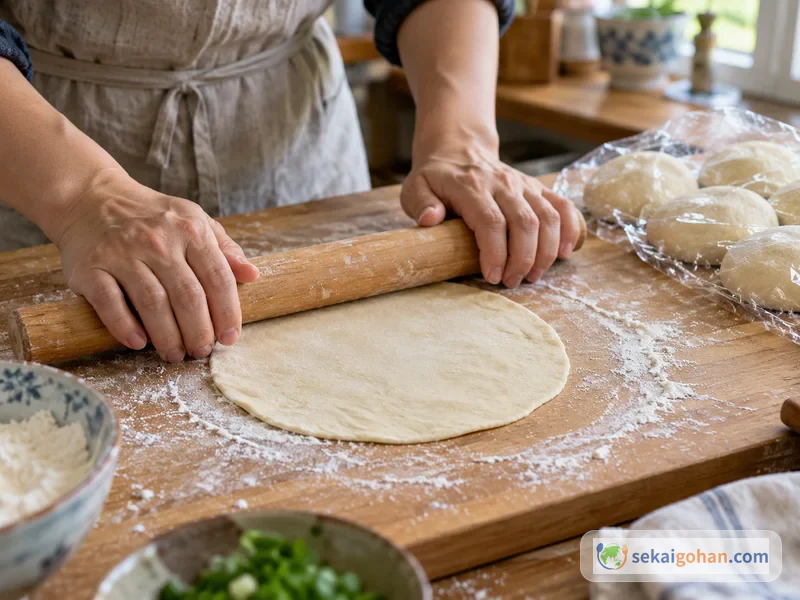
Rolling bread dough into a circle 15 to 18 cm in diameter with a rolling pin
15–18 cm across, slightly thicker in the center and thinner at the edge

Press the risen dough lightly to release the gas and divide it into 6 pieces (about 2.75 oz (75 g) each). Cover the dough you are not using with plastic wrap so it does not dry out. Flatten each piece by hand, then roll it with a rolling pin into a circle 15–18 cm in diameter, keeping the surface smooth. Rolling slightly thicker in the center and thinner at the edge keeps the seam from becoming thick when wrapped and makes the bottom less likely to tear. Allow about 1 minute per piece.

STEP55 / 7

Add the filling and wrap

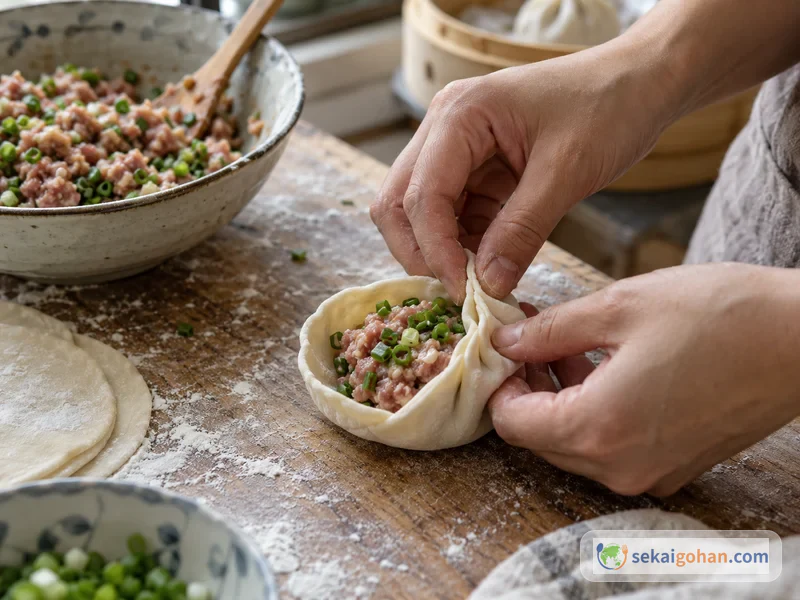
Placing meat mixture and scallions in the center of the dough and pleating the edge closed
Pinch the edge into pleats, close firmly in the center, and set seam side down

Put one of the 6 portions of meat mixture in the center of a rolled-out circle. If keeping the scallions separate, mound 1/6 of them on the meat. Pinch the edge of the dough little by little, pleating as you lift, and finally pinch firmly in the center, pressing with your fingers until the seam sets and will not open. The traditional wrap with scallions on top is bulky and hard to close, so take 1–2 minutes per bun, holding the scallions lightly with your hand. Place them seam side down on a baking sheet lined with parchment paper, spaced apart.

STEP66 / 7

Brush with honey water and coat with sesame

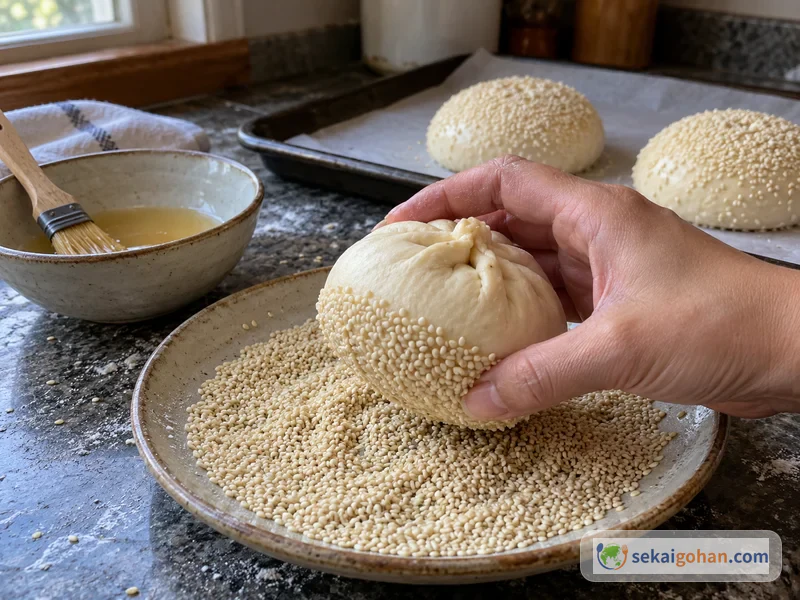
Pressing the honey-brushed top of the dough into white sesame seeds spread on a plate
Coat densely with white sesame until the top cannot be seen

Dissolve 1 tsp honey in 1 tsp water and brush it thinly on the top of each wrapped bun. Spread white sesame seeds on a flat plate, press the top of the dough into them to coat densely, and return it to the baking sheet. Too few sesame seeds lack toasty flavor, so the guide is to coat until you can no longer see the surface. The work for 6 buns takes about 5 minutes.

STEP77 / 7

Bake in a 400°F (200 °C) oven

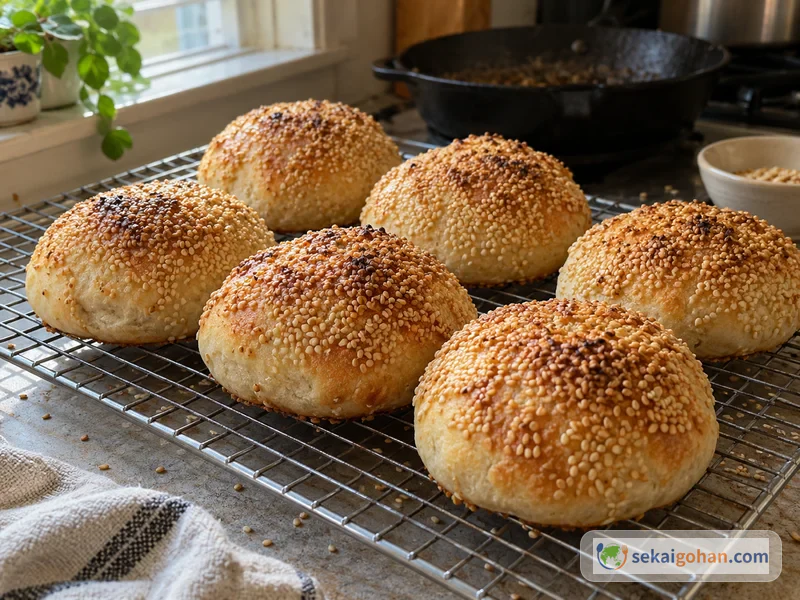
Golden brown hujiao bing baked and set on a rack to cool
200 °C for 20 minutes, until the sesame and dough are golden

Place on the third rack from the top (upper side) of the preheated 400°F (200 °C) oven and bake 20 minutes. They are done when the sesame and dough on the surface are a toasty golden brown. Break one open and insert a thermometer in the center of the filling to check that it has reached 167°F (75 °C) or more and that no red meat remains. Set on a rack to cool slightly and eat while warm.

0 / 0
Ingredients

Ingredients

1 / 3

Meat filling

Ingredient Amount Substitutes & notes
Ground pork 9 oz (250g) With a moderate amount of fat
Black pepper (ground) 1 tsp Coarse-ground is fine
White pepper (ground) 1/2 tsp —
Sichuan pepper (ground) 1/4 tsp Grinding whole peppercorns gives a stronger aroma
Salt 1/2 tsp —
Soy sauce 2 tbsp —
Sugar 1 tsp —
Sesame oil 1 tsp —
Cornstarch 1 tsp Potato starch also works
Scallions 4 oz (120g) (about 7) Spring onions or the green part of long onions. Sliced thin
2 / 3

Dough

Ingredient Amount Substitutes & notes
Bread flour 9.5 oz (270g) —
Instant dry yeast 1 tsp —
Salt 1/2 tsp —
Sugar 1 tbsp —
Lard 15g Vegetable oil or soft coconut oil also work
Lukewarm water ¾ cup (170ml) 35–40 °C
3 / 3

To finish

Ingredient Amount Substitutes & notes
Honey 1 tsp Dissolve in the same amount of water
Water 1 tsp —
White sesame seeds ¼ cup (80ml), about 1.75 oz (50g) Raw or toasted sesame is fine
0 / 0

In a corner of a night market, a crowd gathers around a tall cylindrical oven. The vendor picks up a round of dough coated in white sesame, reaches into the mouth of the oven, and slaps it against the inner wall, where charcoal glows red below and a toasty smell soon drifts down the street. Once the buns are done, the vendor scrapes them off with a flat spatula, catches them in a strainer, and bags them. Bite into one and you get black pepper and hot juices all at once. This is hujiao bing (pepper buns), a Taiwanese night market classic: pork and scallions with plenty of pepper inside a crisp, sesame-crusted bun.

Hujiao bing, from Fuzhou to Taiwan
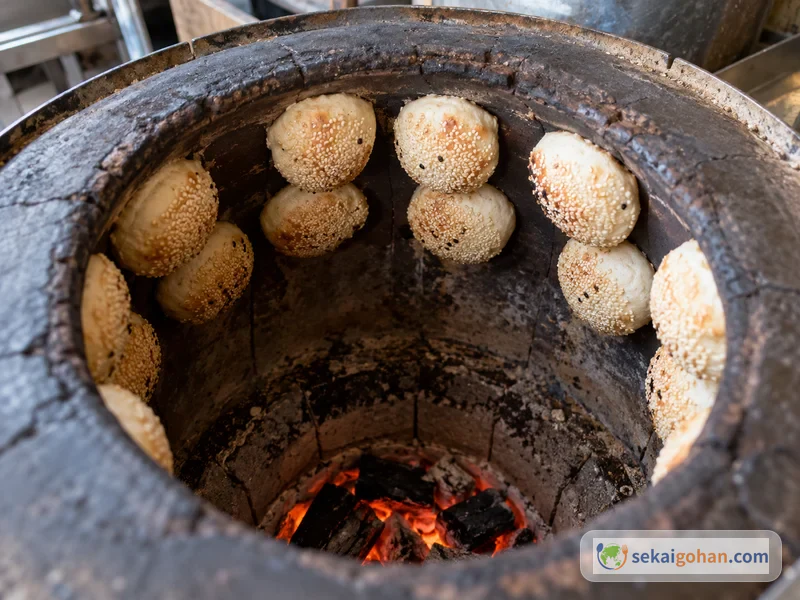
A night market stall in Taiwan baking hujiao bing stuck to the inner wall of a cylindrical charcoal oven

Hujiao bing comes from Fuzhou, capital of China's Fujian province, though nobody knows who invented it. Migrants from Fuzhou brought it to Taiwan, which is why stalls there still hang "Fuzhou hujiao bing" signs, and many longtime sellers have Fuzhou roots. The filling is wrapped in sesame-coated dough and stuck to the inner wall of an oven to bake. That method gives the buns a crisp outside and a fluffy inside.

Today you'll find hujiao bing at night markets and small street-corner stalls all over the island. Overseas travel shows have made it popular with visitors, and a wait of 30 minutes or more at busy hours is not unusual. Many customers buy in bulk, and at many stalls when they sell out, the stall closes for the day.

Did you know?

Fuzhou Lin Ji Hujiao Bing in Ruifang, New Taipei City, opened in 1988 as the first hujiao bing stall in town. It bakes on the wall of a 350-degree charcoal oven, and its dough, made with laomian (a fermented dough starter), is crisp outside and chewy inside. It is now counted among Ruifang's local specialties.

Stalls differ on the pork. Some use ground pork and others thin slices, though ground pork gives more juice. The seasoning starts with pepper, soy sauce, sugar, and wine. The other star is the scallion, which traditionally isn't mixed into the meat but laid on top of it during wrapping, so its fresh aroma stays distinct.


Ingredients (makes 6)
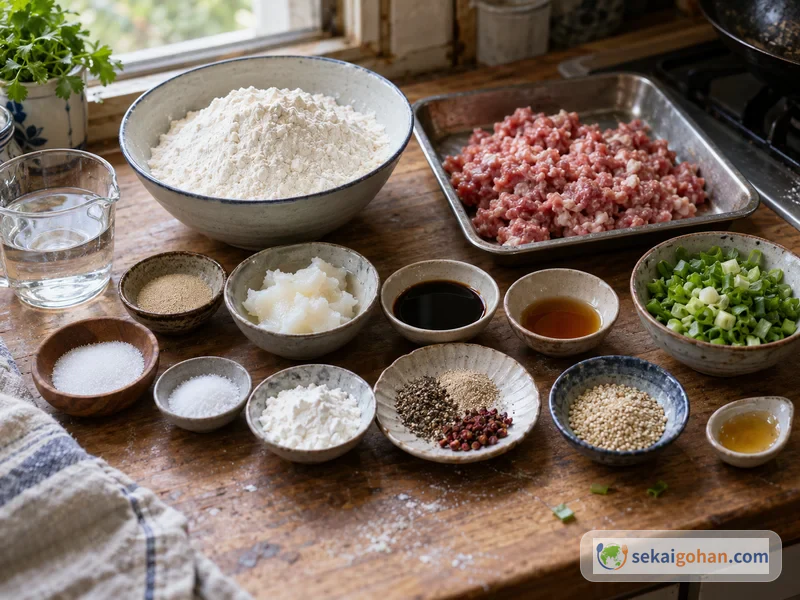
Ingredients for hujiao bing: bread flour, dry yeast, lard, ground pork, peppers, Sichuan pepper, soy sauce, scallions, white sesame, and honey

This recipe makes six large buns.

Caution

This dish contains wheat, soy (soy sauce), and sesame. Do not give the honey used for finishing to infants under 1 year old. If an infant may eat them, brush with water alone instead of honey; it will still hold the sesame seeds.

Choosing ingredients for hujiao bing
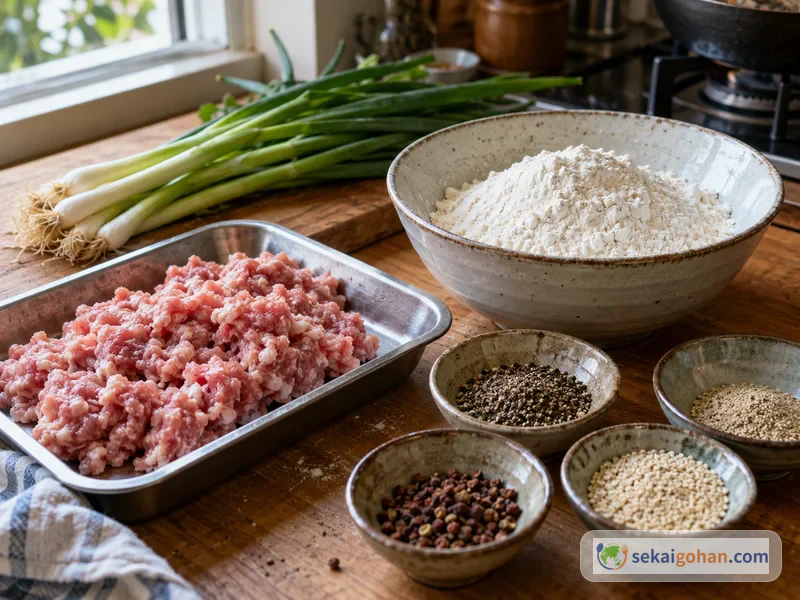
Ground pork, scallions, black pepper, white pepper, Sichuan pepper, white sesame, and bread flour

Three kinds of pepper go in. Black pepper carries the aroma and heat, white pepper gives the sharp fragrance of Taiwanese stalls, and a little Sichuan pepper leaves a faint tingle on the tongue. Ground versions are fine for all three, but freshly grinding the black pepper and Sichuan pepper brings out more aroma.

The dough is made with lard, which adds the aroma of pork fat and a flaky texture. If you can't get it, vegetable oil, shortening, or soft coconut oil at room temperature also works. For the scallions, thin spring onions or the green part of long onions are both fine; use a generous 4 oz (120 g).


How to make hujiao bing

If the meat mixture is prepared the day before, the work on the day takes about 1 hour 30 minutes from making the dough to baking. In total, allow about 13 and a half hours including the time the meat mixture rests.

Caution

The juices inside a freshly baked hujiao bing are very hot. When biting in, first break open an end a little to let the steam out. Cook ground pork thoroughly through the center, heating it to 167°F (75 °C) at the center for at least 1 minute.

Tip

If time passes between wrapping and baking, the dough slackens and the seams tend to open. Start preheating the oven early and plan so you can bake right after wrapping all 6.

Baking hujiao bing in a home oven

A stall oven is a special baking oven whose walls are heated by charcoal, and the buns that cling to it come out with slightly rounded, puffed bottoms. A home oven can't do that, so this recipe uses a sheet pan. The bottoms come out flat, but they take on a toasty color too, and you still get plenty of toasty sesame and a filling that holds in the juices.

Tip

Preparing the meat mixture the day before is recommended. Resting the pepper- and soy-seasoned meat in the refrigerator for 8–12 hours lets the flavors blend and makes it hold together better when wrapping. The next day you only have to make the dough, wrap, and bake.

Serving and varying hujiao bing
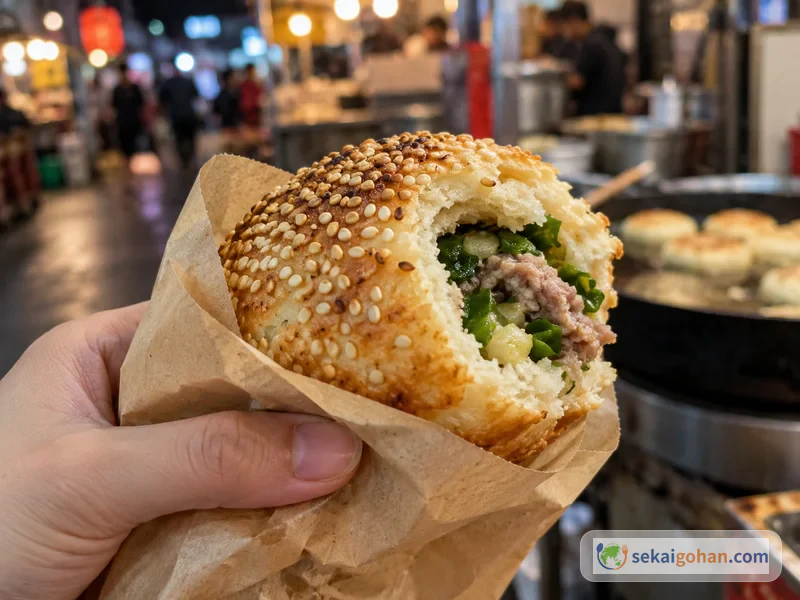
Biting into a hujiao bing taken from a paper bag, showing a cross section with juices and scallions
Put it in a paper bag and bite in from the end while hot

At night markets, you take it in a paper bag fresh from the oven and bite into it right there, standing up. First comes the toasty sesame, then the heat of black pepper, and finally the juices and the sweetness of the scallions. At home, wrapping one in a paper towel and holding it in your hand gets you closer to the piping-hot feel of a street stall than a plate ever will.

Unsweetened Taiwanese oolong tea or warm soy milk goes well alongside. For a spread of street-stall flavors, add night-market fried chicken yan su ji, sweet-savory pork over rice lu rou fan, or the breakfast egg crepe danbing.
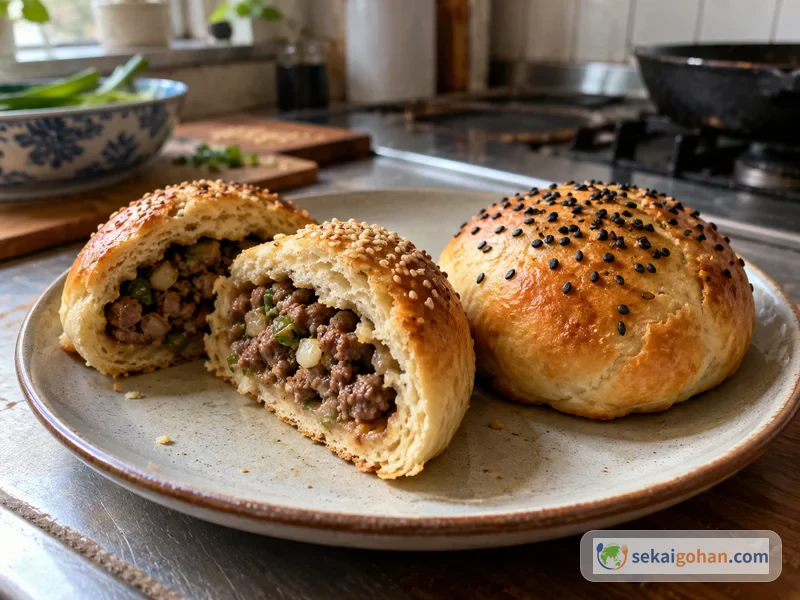
A plate with hujiao bing made with ground beef and hujiao bing coated in black sesame

Ground beef or chicken with some fat can stand in for the pork; lean ground turkey makes the filling watery. Some shops in Taiwan serve beef hujiao bing, and the pepper's heat suits the richness of the beef.

Some Taiwanese stalls also add five-spice powder or curry powder. About 1/4 tsp five-spice powder brings out the sweet fragrance of star anise and cinnamon, while 1/2 tsp curry powder pushes the spice forward. Halving the pepper makes the buns milder and easier for children to eat.

Frequently asked questions
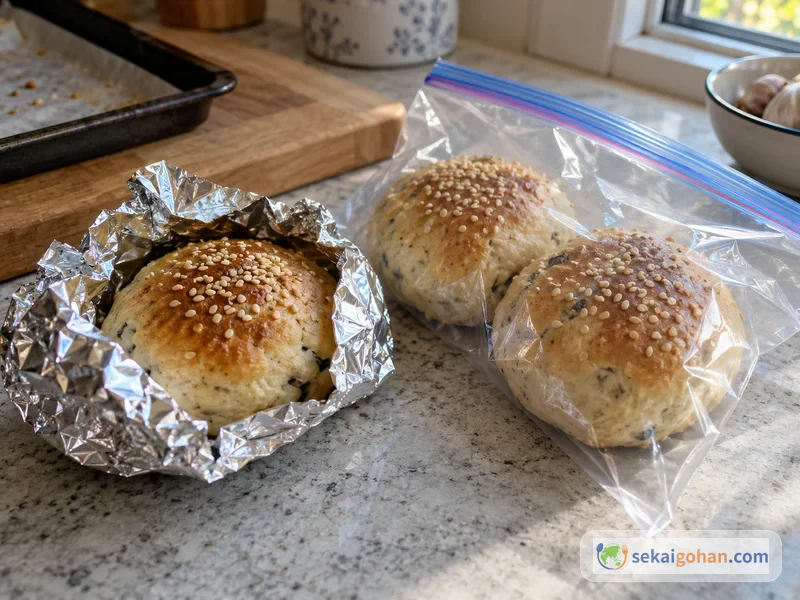
Baked hujiao bing wrapped in aluminum foil and stored in a freezer bag

Can I make them ahead?

Baked hujiao bing can be frozen. Arrange them on a tray lined with parchment paper, freeze about 1 hour, and once firm, move them to a freezer bag. They keep up to 3 months, but they're best eaten sooner.

How do I reheat frozen ones?

Wrap them still frozen in aluminum foil and heat in an oven or toaster oven preheated to about 350°F (180 °C) for 10–15 minutes. The center can stay cold, so break one open to check it is hot through, and add a few minutes at a time if needed. If you thaw them in the refrigerator first, the time drops to about 8–10 minutes.

What if I do not have Sichuan pepper?

Leave it out. It only adds a faint tingle, so the buns still taste recognizably like hujiao bing; just increase the black pepper slightly.
Sources