Gua Bao: Taiwanese Folded Steamed Buns with Braised Pork Belly (刈包)

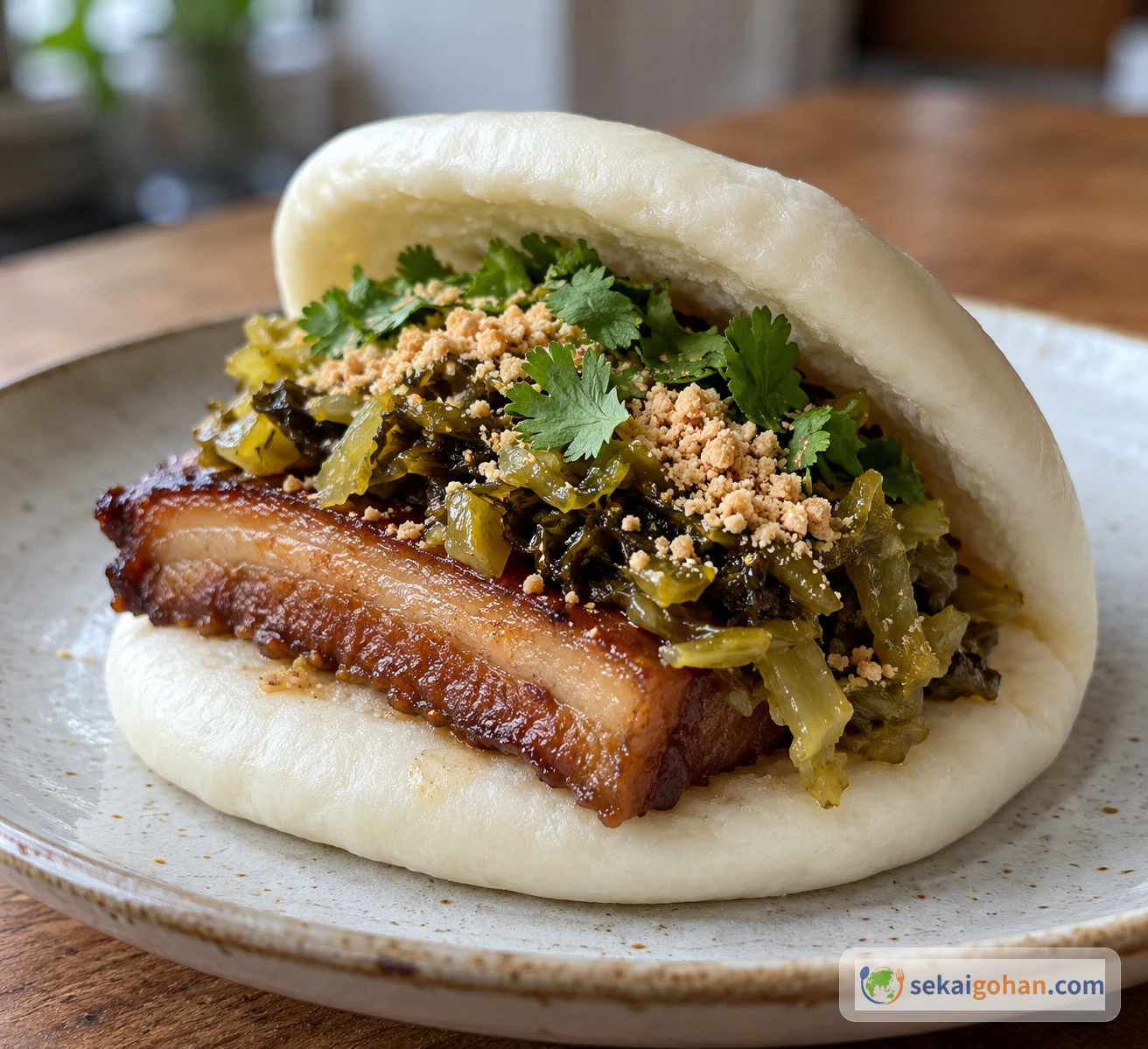
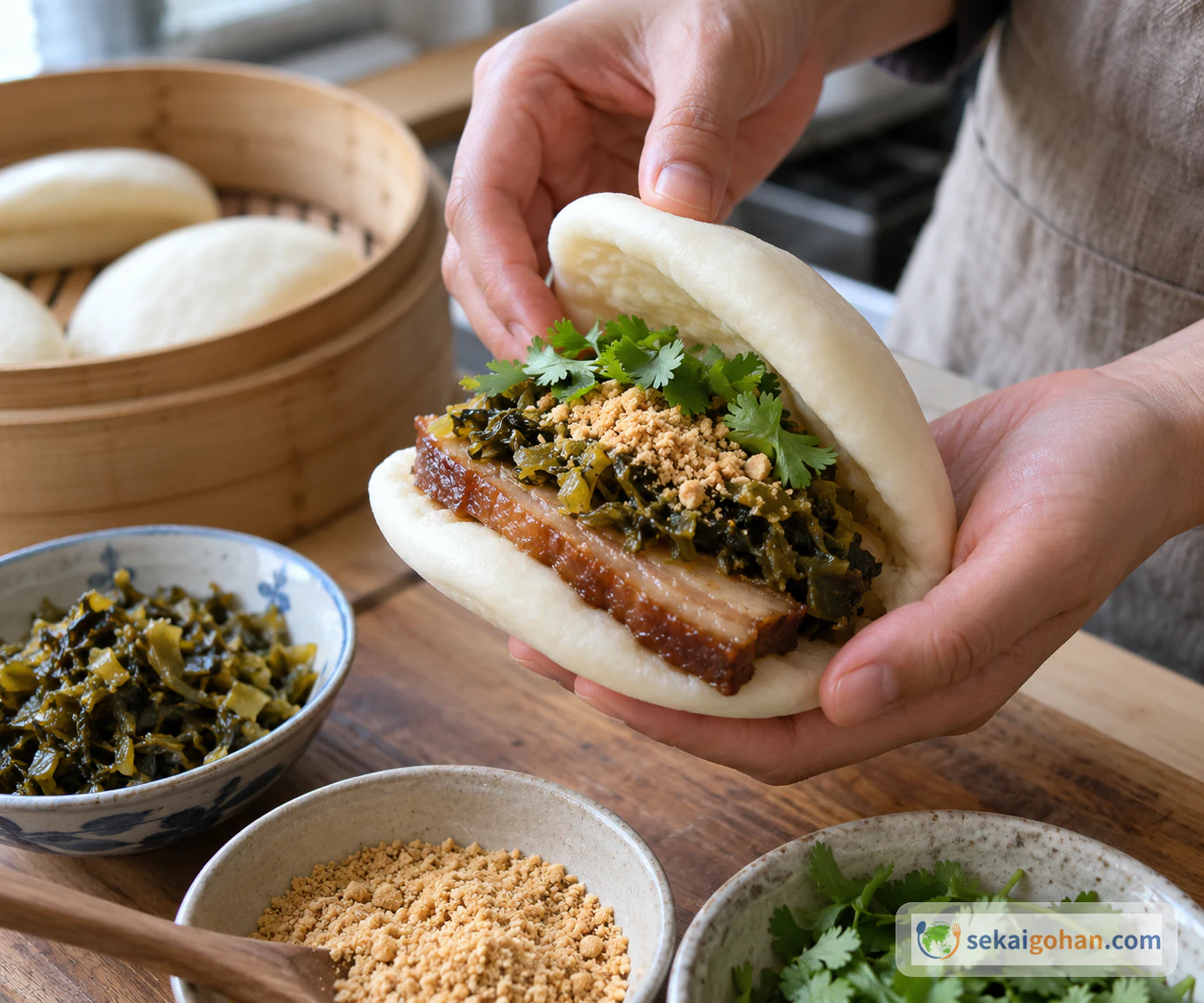
Gua bao: an open white steamed bun holding braised pork belly, pickled mustard greens, sweet ground peanut and cilantro
Serves
8 buns
Level
Intermediate
Cuisine
Taiwanese

How to make gua bao (刈包, kuah-pau), the Taiwanese folded steamed bun filled with soy-braised pork belly, stir-fried pickled mustard greens, sweet ground peanut and cilantro. It follows one complete 8-bun recipe from Taiwanese cooking teacher Ivy Chen, from yeast dough and folding through braising and assembly. It also covers how gua bao differs from closed baozi and Western-style pork buns, its story from year-end feasts to street snack, and how to choose ingredients outside Taiwan.

Cooking flow

Cooking steps

STEP11 / 11

Dissolve the yeast in tepid water

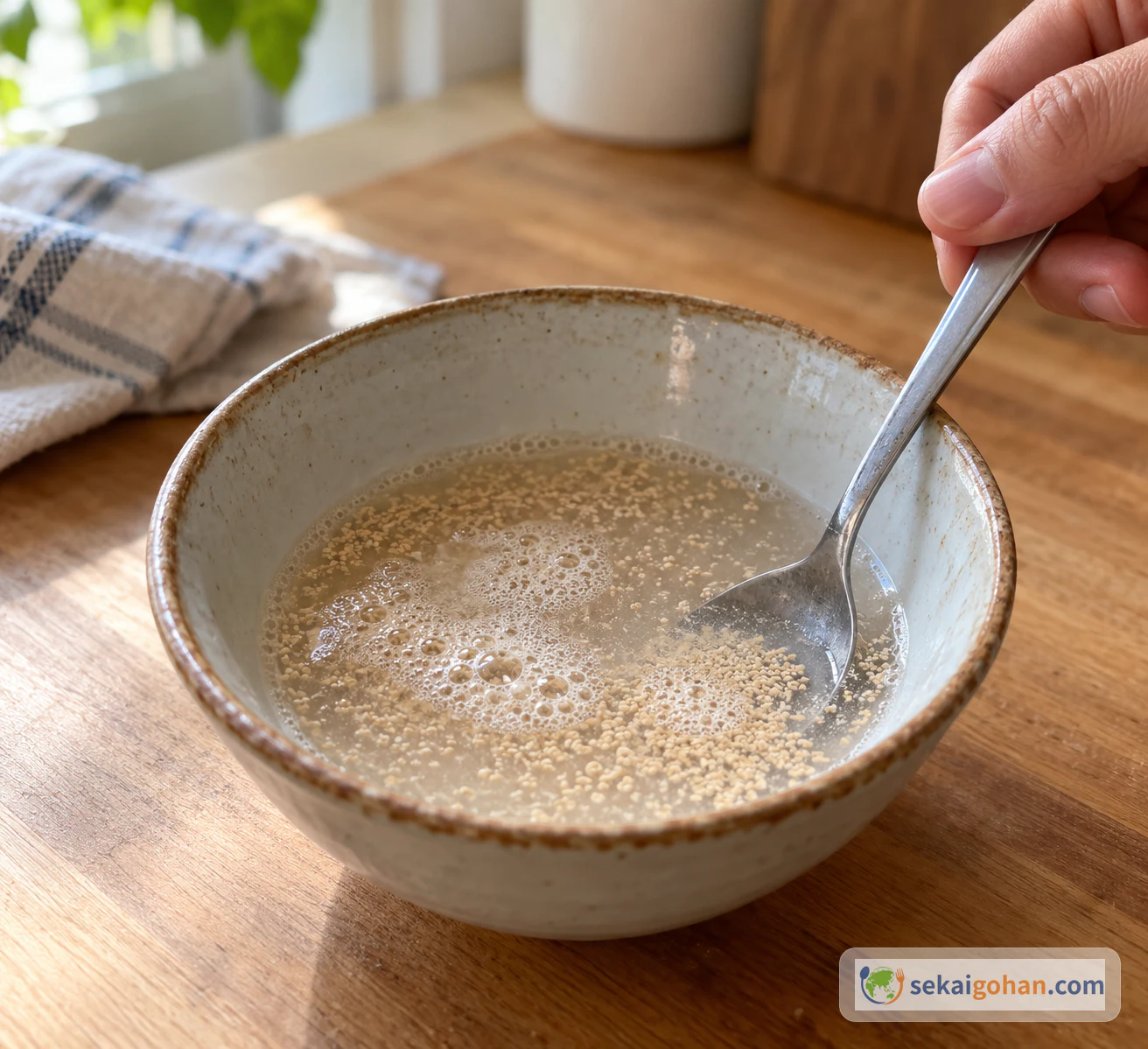
Active dry yeast dissolving in tepid water for 3–4 minutes
Let the yeast sit in tepid water before it meets the flour

Put 1/2 tablespoon active dry yeast into ½ cup (150 ml) tepid water and leave it for 3–4 minutes to dissolve.

STEP22 / 11

Mix and knead the dough

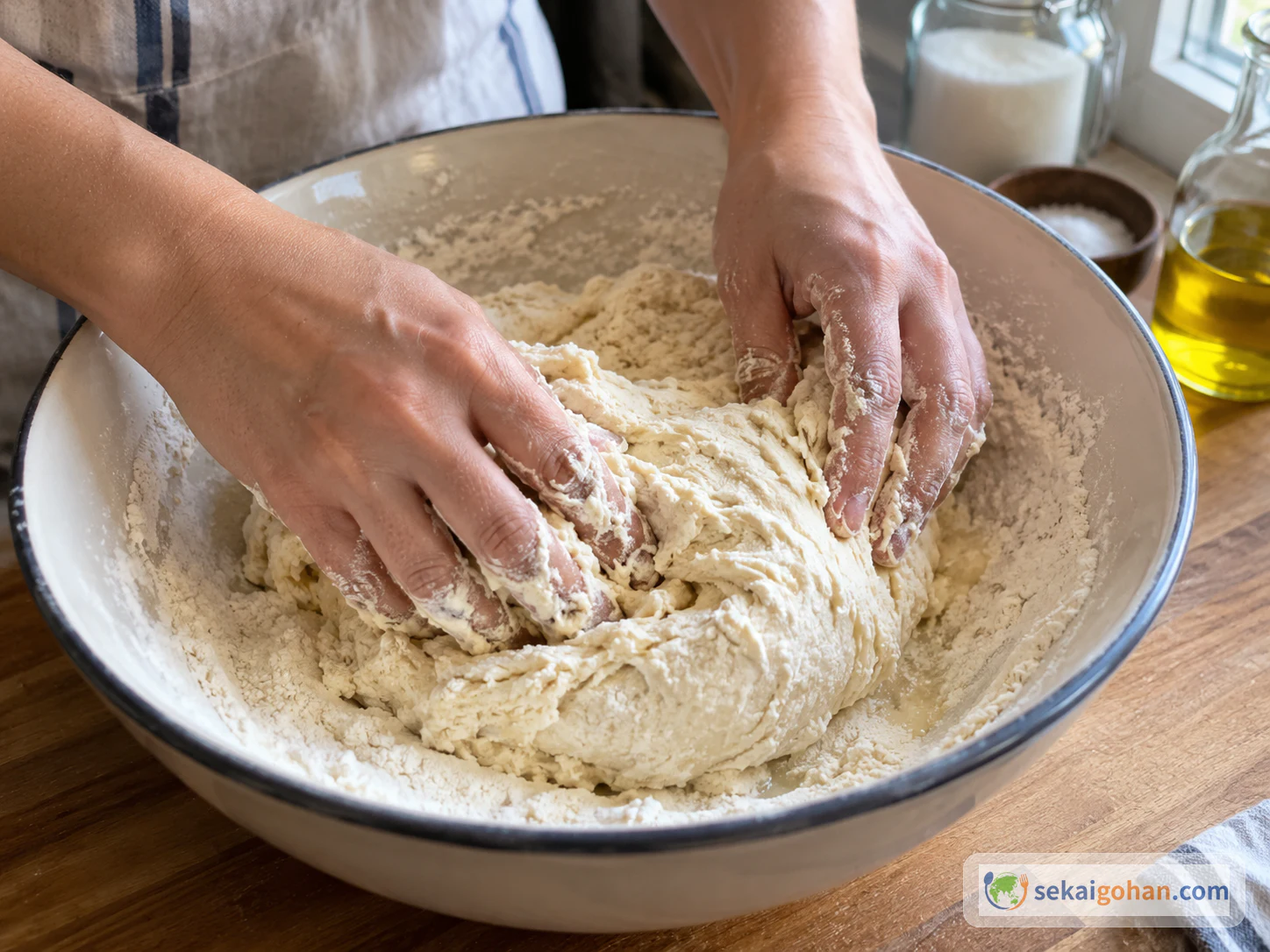
Yeast water added to plain flour, sugar, salt and oil, and kneaded into a dough
Pour the yeast water into the well and knead until the dough is one piece

In a separate large bowl, mix 10.5 oz (300 g) sifted plain flour, 1 tablespoon sugar, a pinch of salt and 1 tablespoon vegetable oil. Make a well in the center, pour in the yeast water, and knead until everything comes together into one dough. Keep the brushing oil aside for later.

STEP33 / 11

Let the dough rise until doubled

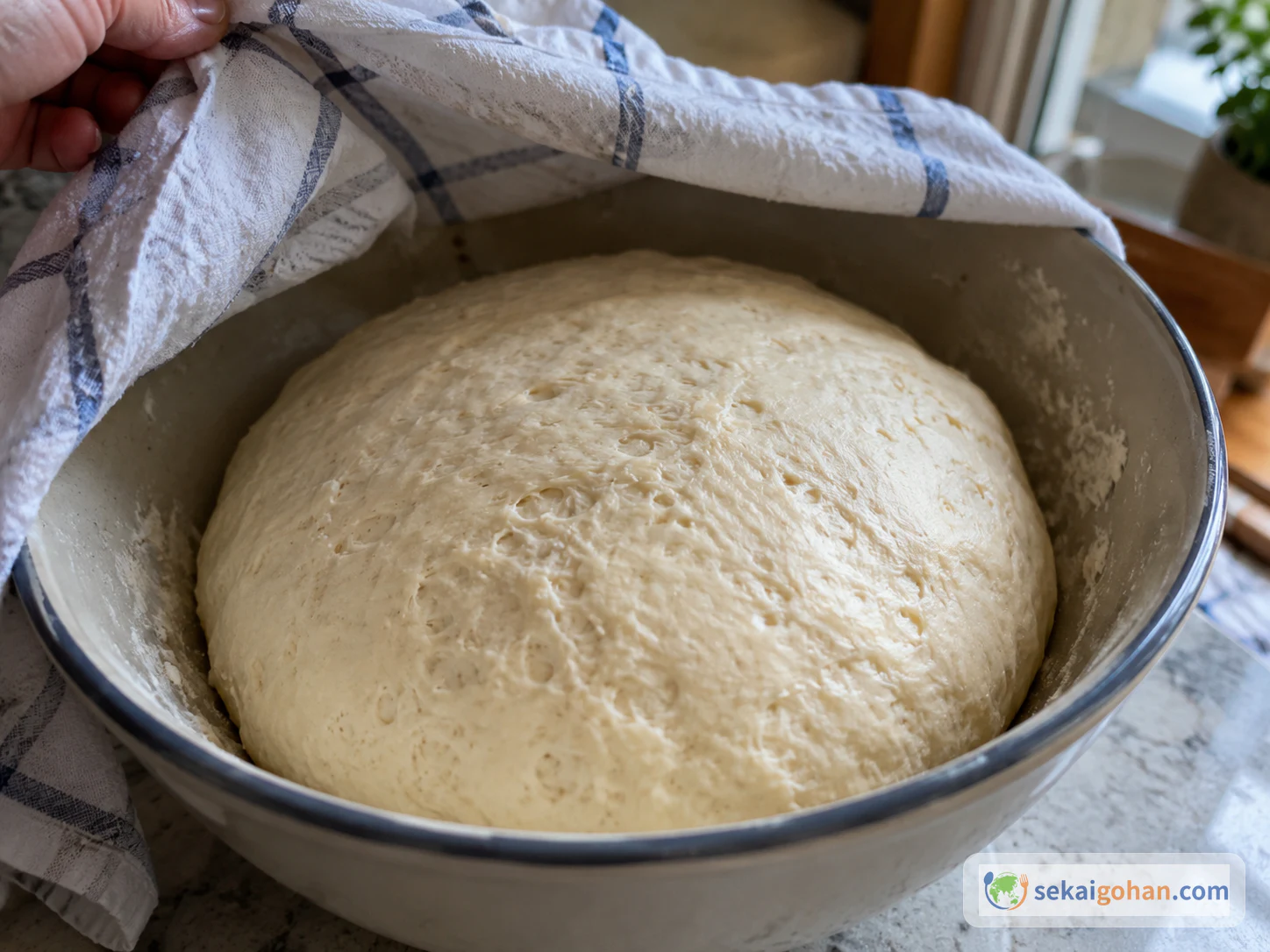
Gua bao dough doubled in size under a damp cloth
Move on when the dough has doubled, not just when the time is up

Cover the bowl with a damp cloth and leave it for about 40–60 minutes, depending on room temperature, until the dough has doubled in size.

STEP44 / 11

Divide into 8 and shape into ovals

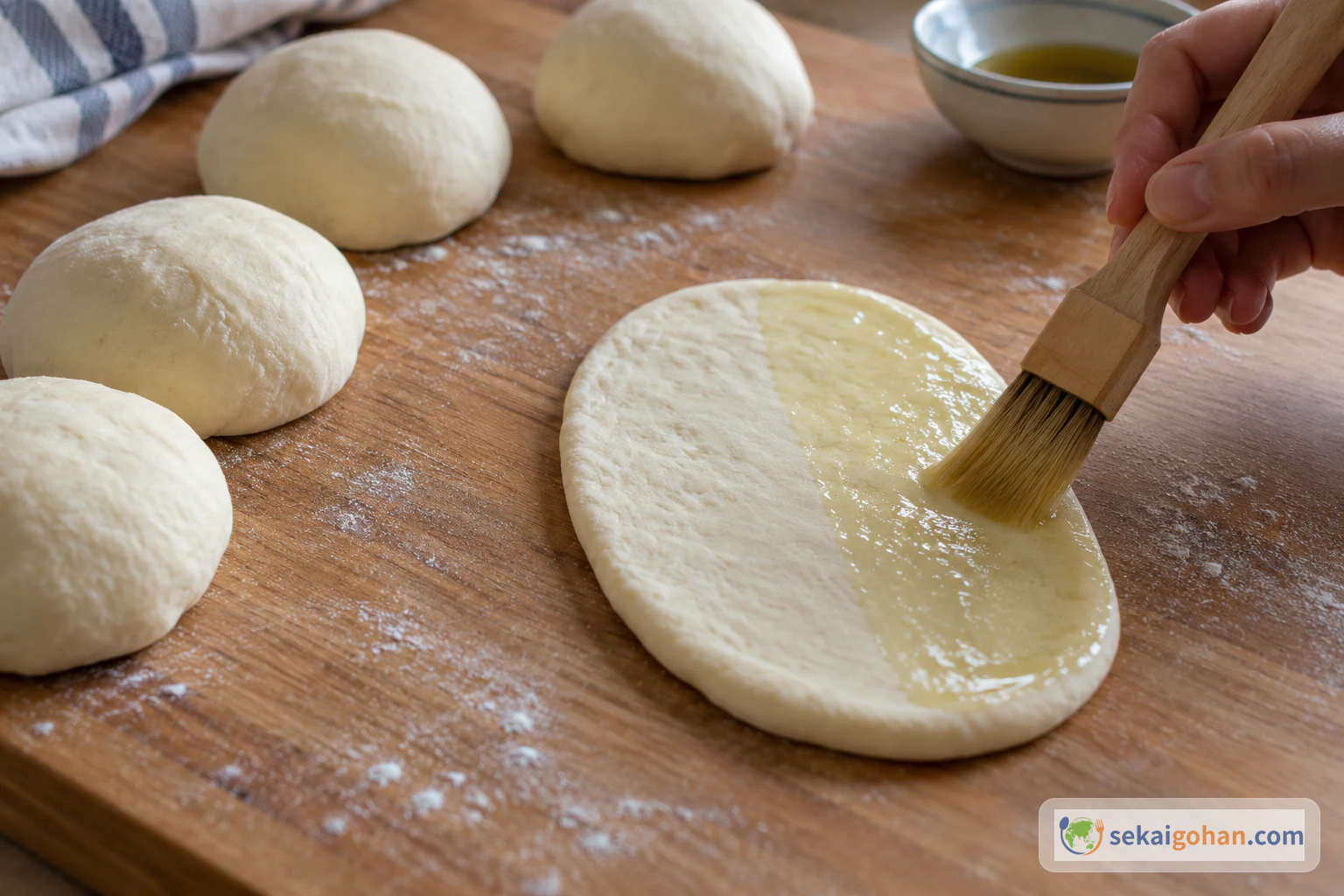
Brushing oil on one half of a dough oval about 7–8 mm thick
Oil only one half, so the fold opens after steaming

Divide the dough into 8 equal pieces and roll each into a ball. Flatten each ball into a neat oval 7–8 mm thick. Lightly brush one half of each oval with oil.

STEP55 / 11

Fold and let rise again

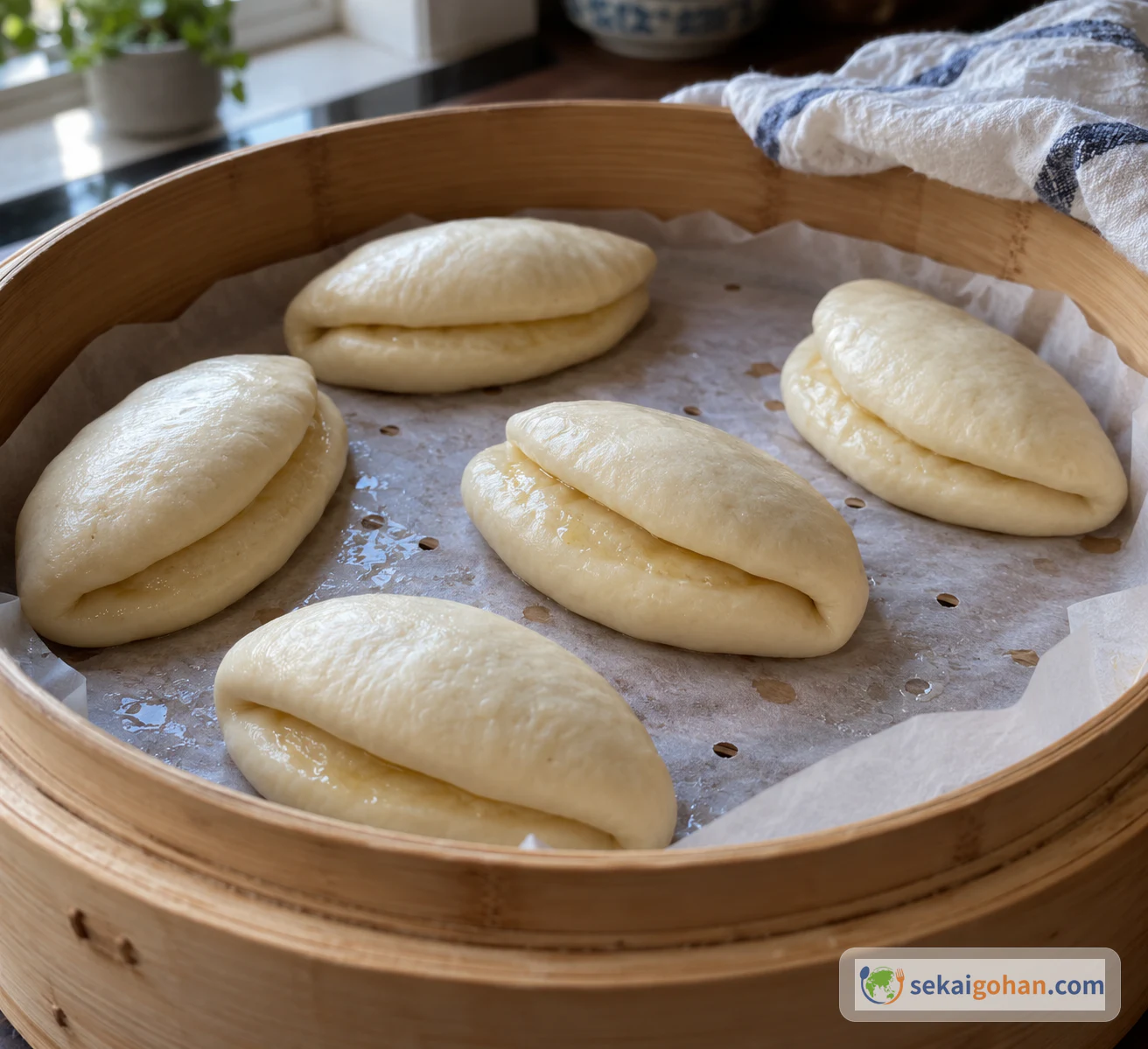
Buns folded with the oiled side inside, arranged in a steamer basket
Keep the fold as a hinge; the buns should not be sealed

Fold each oval in half with the oiled side inside. Line the bottom of the steamer basket with wax paper or lightly greased baking paper and set the buns on it. Leave them in a warm place for up to 30 minutes, until they have grown by about 50 percent.

STEP66 / 11

Steam the buns

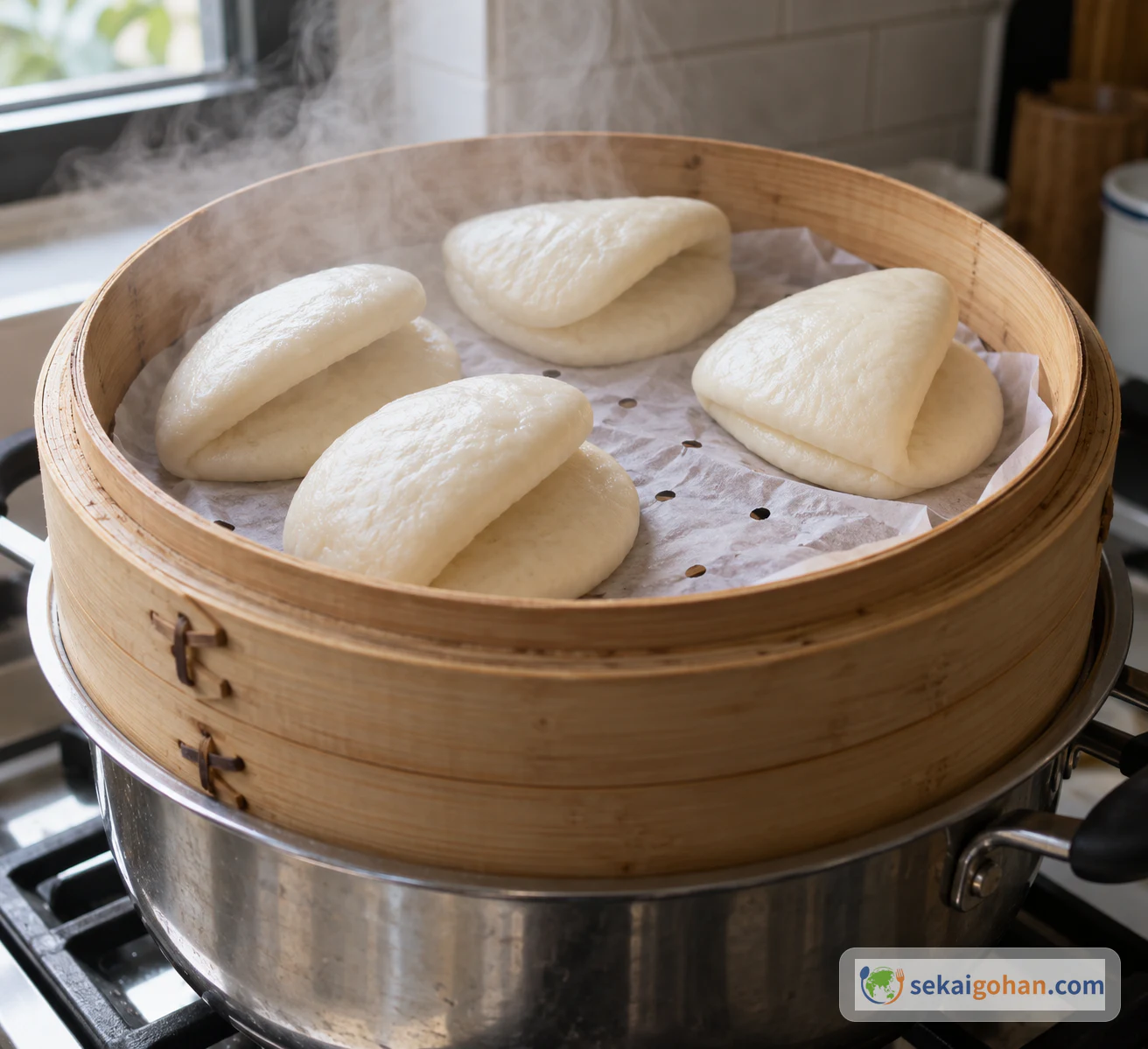
Folded buns steaming in a steamer basket over rising steam
Start timing once steam is visible, then rest the basket on the pot

Fill a pot or frying pan with 3–4 inches (8–10 cm) of water, set the steamer on top and bring the water to a boil until you can see steam. Steam the buns for 12–13 minutes. Leave the basket on the pot for another 2–3 minutes, then remove it.

STEP77 / 11

Blanch the pork belly

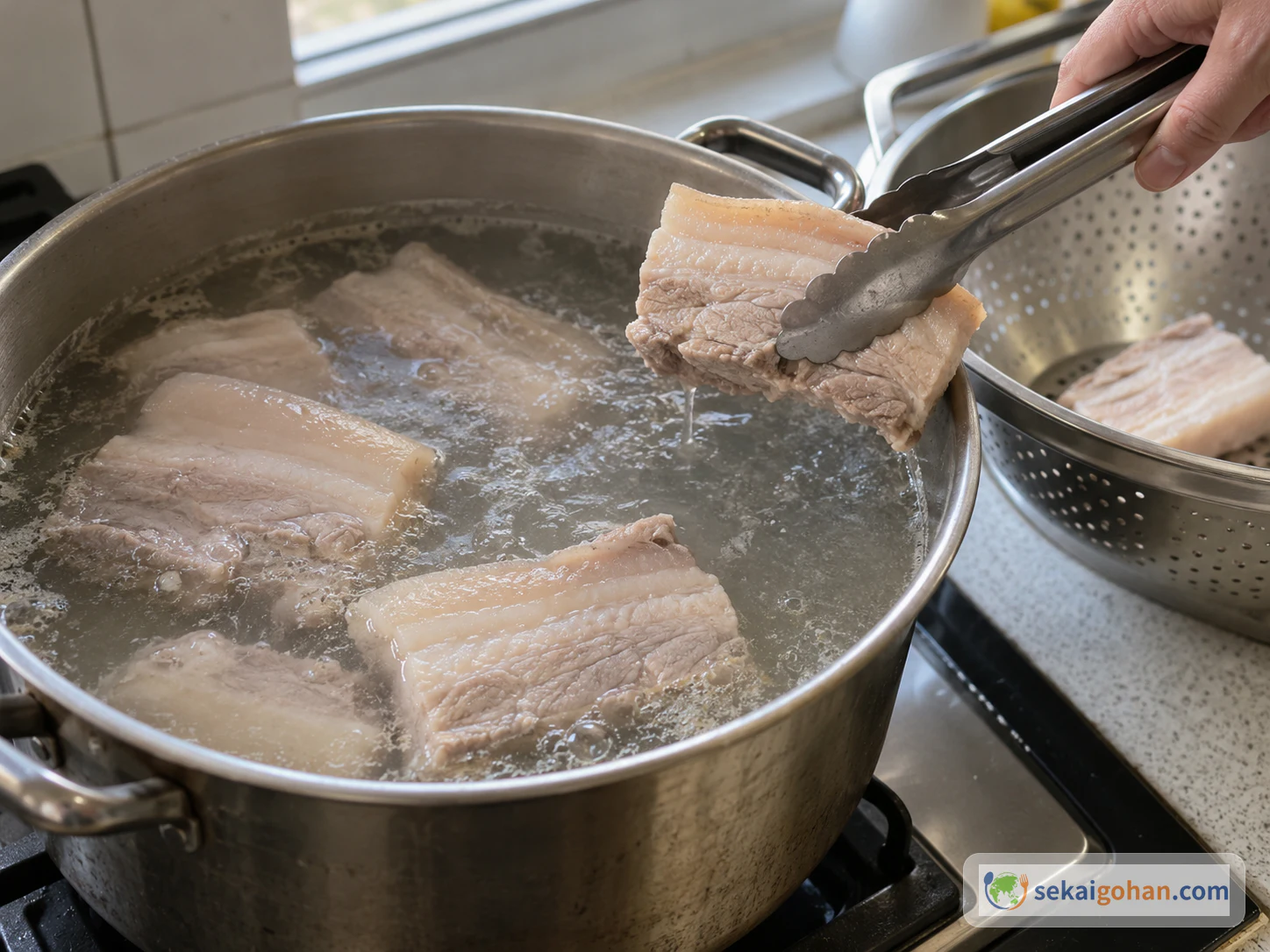
Pork belly blanched in water, then lifted out to rinse
A plain-water boil and rinse before the pork goes into the braise

Boil 1.25 lb (600 g) pork belly, cut 0.5 inches (1.5 cm) thick and 3 inches (8 cm) wide, in water for 5 minutes. Take it out and rinse it. Wash your hands and any tools that touched raw pork before handling the steamed buns or other cooked food.

STEP88 / 11

Braise the pork until tender

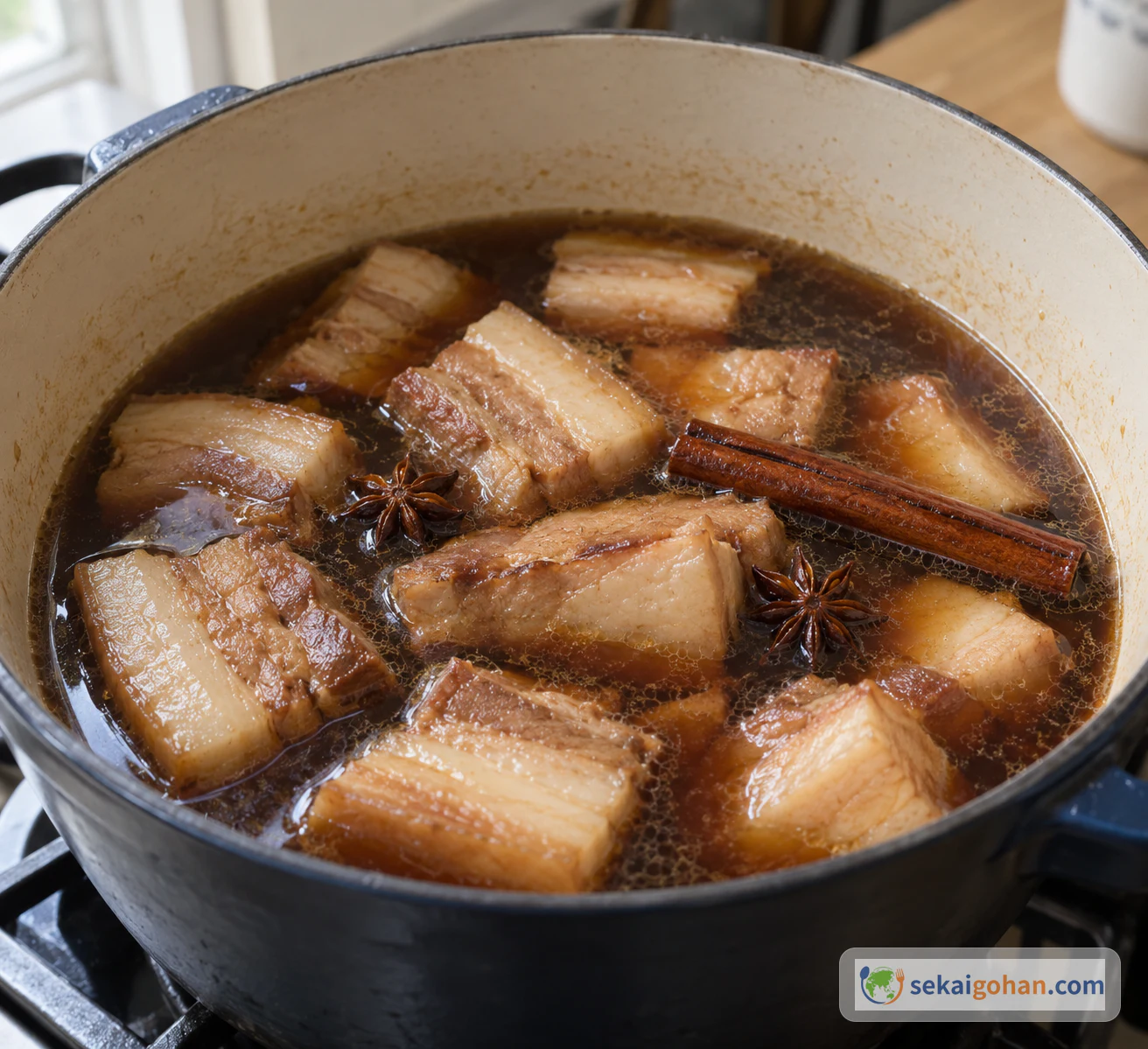
Pork belly simmering until tender in a soy sauce braise with star anise
Braise until tender, then check the center temperature

Put the blanched pork in a pot with 1/3 cup soy sauce, 2 tablespoons rice wine, 1 1/2 tablespoons sugar, 3 cups water, 2 pieces star anise or dried mandarin skin, and 1 cinnamon stick if using. Simmer for 40 minutes, until the meat is tender. Check that the center of the meat reaches 75°C and stays there for at least 1 minute with a thermometer.

STEP99 / 11

Start the garlic and pickled greens

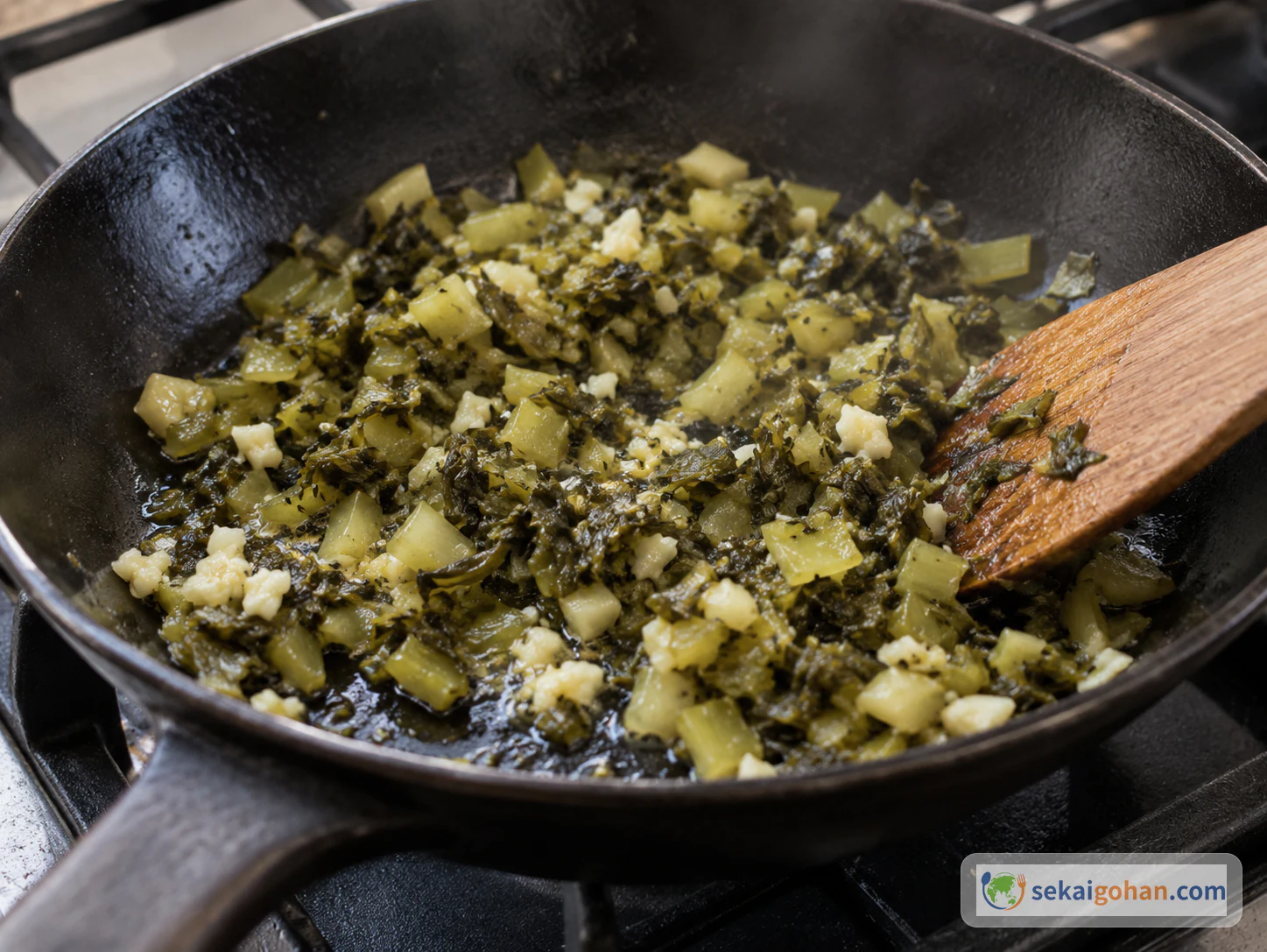
Chopped garlic and pickled mustard greens starting to fry in hot oil
Garlic first, then the chopped pickled greens, over low heat

Heat 2 tablespoons oil, fry the chopped garlic, then add 1 stalk finely chopped pickled mustard green. Stir-fry over low heat for 1 minute.

STEP1010 / 11

Season and finish the greens

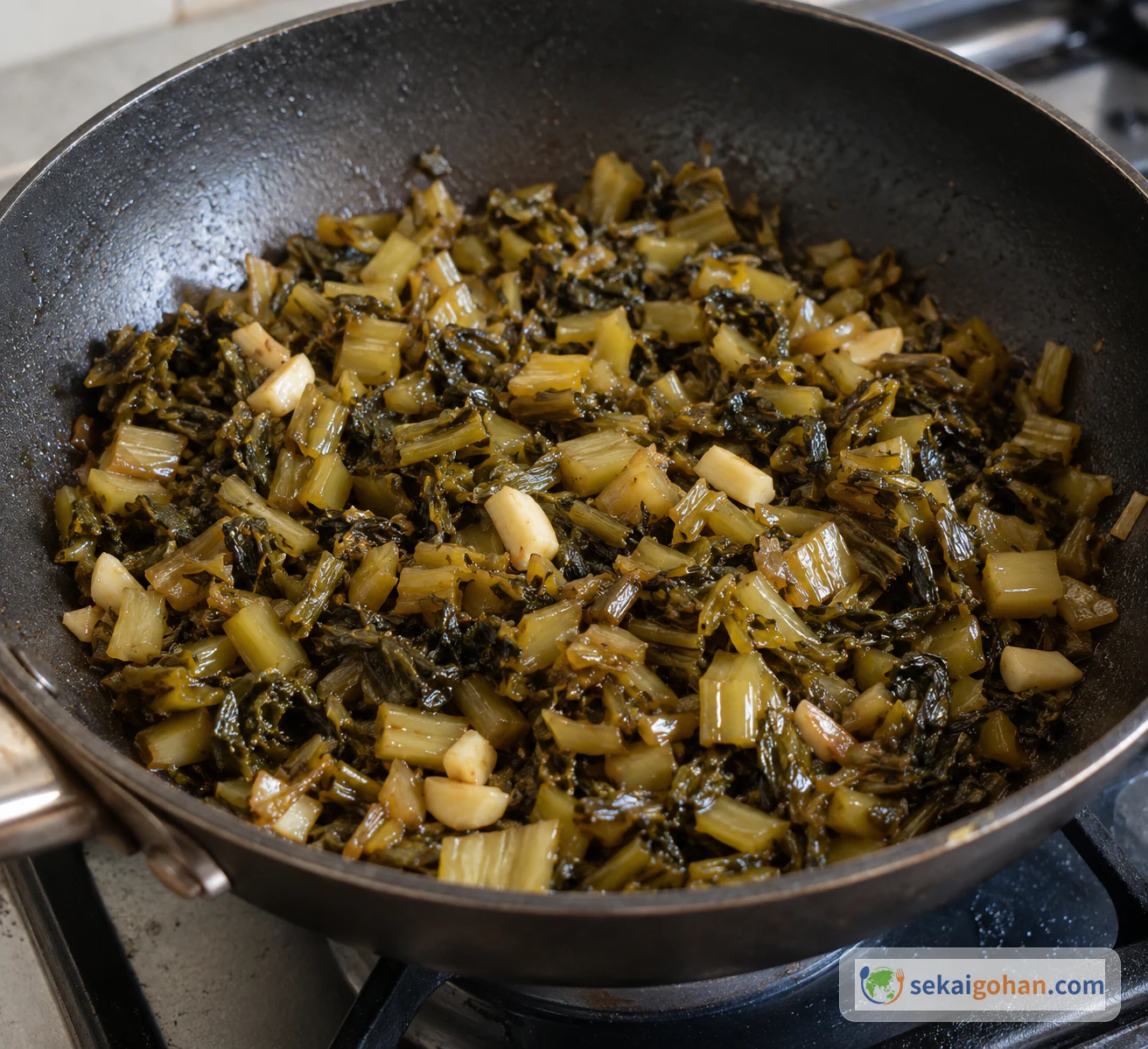
Pickled mustard greens stir-fried with soy sauce and sugar over low to medium heat
Keep the greens moist, not charred and not swimming in liquid

Add 2 tablespoons soy sauce and 1 tablespoon sugar, plus a little water only if needed, and stir-fry over low to medium heat for 8–10 minutes.

STEP1111 / 11

Fill the buns and serve

Gua bao layered with braised pork, pickled greens, sweet ground peanut and cilantro
Pork first, then greens, peanut and cilantro on top

Open the fold of each bun and put in the braised pork. Top with the pickled greens, sugared ground peanut and chopped cilantro.

0 / 0
Ingredients

Ingredients

1 / 1

Ingredients

Ingredient Amount Role
Plain flour, sifted 300 g Steamed bun dough: The body of the bun
Active dry yeast 1/2 tablespoon Steamed bun dough: Leavens the dough
Water, tepid 150 ml Steamed bun dough: Dissolves the yeast and binds the dough
Sugar 1 tablespoon Steamed bun dough: For the dough only
Salt a pinch Steamed bun dough: Seasons the dough
Vegetable oil 1 tablespoon Steamed bun dough: Mixed into the dough
Oil for brushing as needed Steamed bun dough: Brushed lightly on half of each oval before folding
Pork belly, cut 1.5 cm thick and 8 cm wide 600 g Braised pork belly: The main filling
Water for blanching as needed Braised pork belly: For the first 5-minute boil
Soy sauce 1/3 cup Braised pork belly: Braising liquid
Rice wine 2 tablespoons Braised pork belly: Braising liquid
Sugar 1 1/2 tablespoons Braised pork belly: Sweetens the braise
Water 3 cups Braised pork belly: Braising liquid
Star anise or dried mandarin skin 2 pieces Braised pork belly: Aroma for the braise
Cinnamon 1 stick, optional Braised pork belly: Extra warm aroma
Pickled mustard green, finely chopped 1 stalk Stir-fried pickled mustard greens: Sour, savory layer
Garlic, chopped 1 Stir-fried pickled mustard greens: Aromatic base for the greens
Oil, heated 2 tablespoons Stir-fried pickled mustard greens: For frying the garlic and greens
Soy sauce 2 tablespoons Stir-fried pickled mustard greens: Seasons the greens
Sugar 1 tablespoon Stir-fried pickled mustard greens: Seasons the greens
Water as needed Stir-fried pickled mustard greens: Only if the greens need it while frying
Sugared ground peanut 1/2 cup To finish: Sweet, nutty topping
Cilantro (coriander), chopped 2 stalks To finish: Fresh, green finish
0 / 0

You open the fold of a soft white bun, lay in a glossy slice of braised pork belly, and pile chopped pickled mustard greens, a spoonful of sugared ground peanut and a little cilantro on top. This is gua bao (刈包) in its Taiwanese form. Each bite is tender, soy-rich pork against sour-savory greens, with sweet peanut and fresh herbs. The bun is folded wheat dough left open on one side, and it's one of the island's best-loved snacks. For more dishes from the same island, see Taiwan.

What Is Gua Bao?
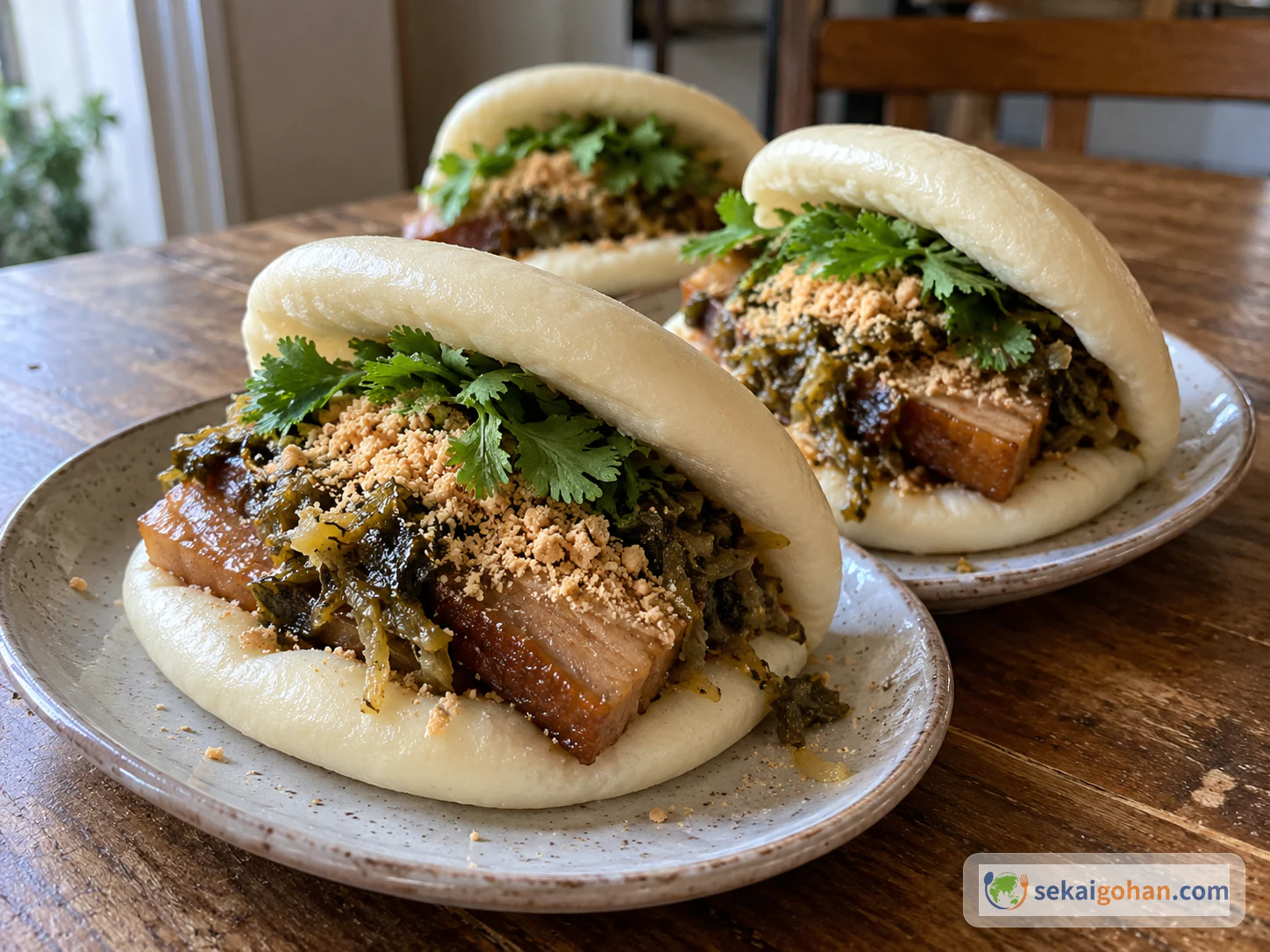
Gua bao on plates with the folds open to show the filling
Served open, gua bao shows off its layers of pork, greens, peanut and cilantro

Gua bao is an open, folded bun that holds its filling rather than hiding it. The dough is flattened into an oval, one half is oiled, and the oval is folded over, so the two halves separate cleanly once steamed. A baozi works the other way: the dough is wrapped around the filling and sealed before steaming. With gua bao, the bun is steamed empty and filled afterward, with everything in plain view.

The "bao bun" you see in Western restaurants is a relative, not a twin. It borrows the Taiwanese shape but fills it with roast pork, quick-pickled cucumber, scallion and hoisin. The Taiwanese bun sticks to braised pork, pickled mustard greens, peanut powder and cilantro.

Origin and History of Gua Bao

The Mandarin name gua bao comes from the Taiwanese pronunciation kuah-pau. The bun also has a playful nickname, "tiger bites pig," for the way its open mouth clamps around the pork.

Nobody has settled where it comes from. It is traced to Fujian, with both Fuzhou and Quanzhou put forward, and research into old newspapers and records has found gua bao in a diary from 1927. Back then it went with merchants' year-end banquets and offerings to the Earth God (Tudigong), not with everyday eating.

From the 1970s onward, gua bao became everyday street food. Today it is part of Taiwan's wider snack culture, and night markets and traditional markets are the places to taste it. Stalls differ in the fat-to-lean ratio of the pork, the softness of the bun, how the pickled greens are cooked and how the peanut powder is seasoned. There is no single authentic gua bao.

Ingredients for 8 Buns: Dough, Pork Belly, Pickled Greens and Topping
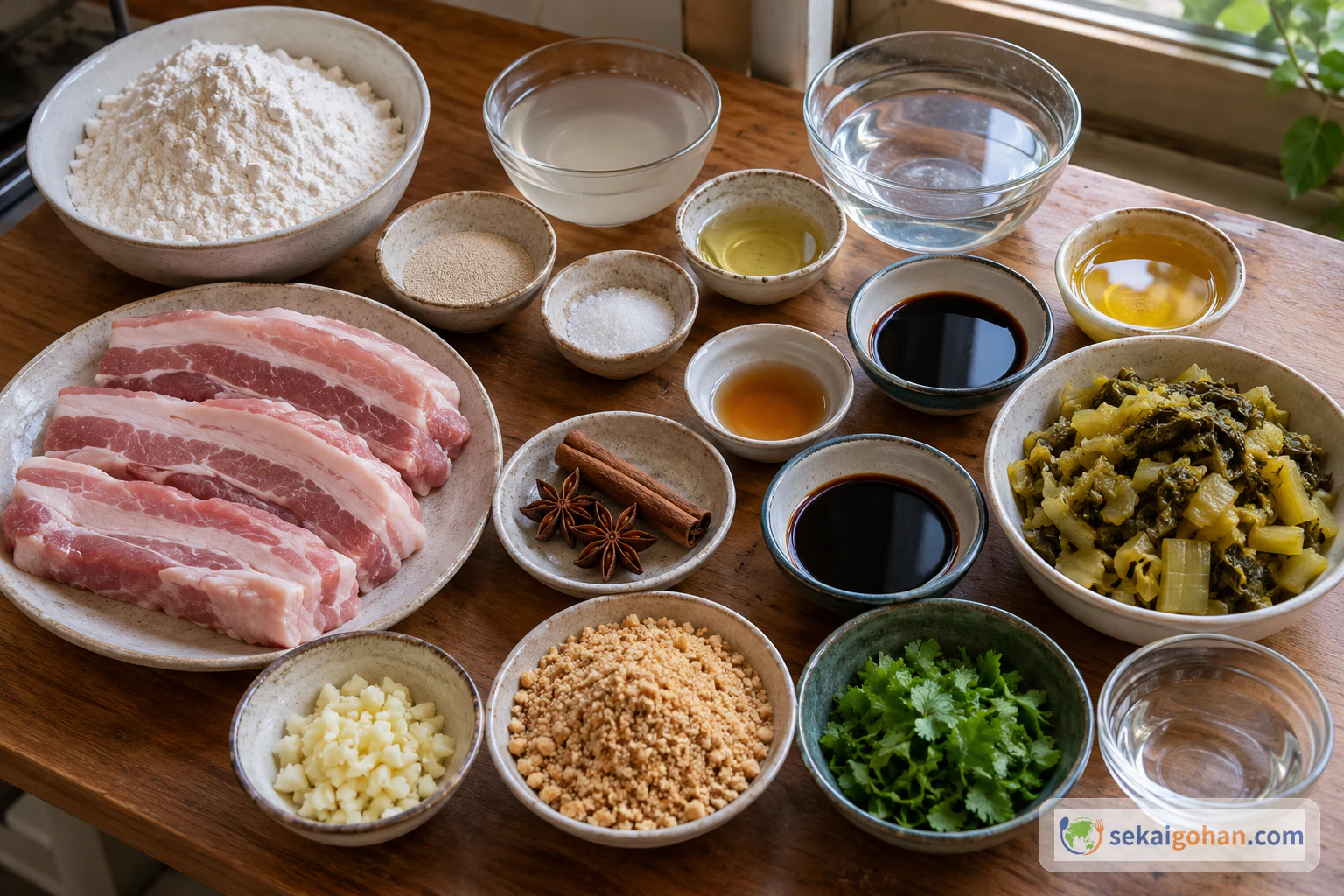
All the ingredients for gua bao: flour, pork belly, pickled mustard greens, ground peanut, cilantro and more
Dough, braise, greens and topping each have their own sugar, oil and liquid

The recipe makes 8 buns. Sugar, oil, soy sauce and water each appear in more than one group; measure them separately for each use.

Equipment

  • Small bowl and large mixing bowl
  • Damp kitchen cloth
  • Rolling pin or your palms, and a work surface
  • Pastry brush
  • Steamer basket
  • Pot or frying pan that the steamer sits on, deep enough for 3–4 inches (8–10 cm) of water
  • Wax paper or baking paper to line the steamer
  • Pot for blanching and braising the pork
  • Tongs or a slotted spoon
  • Skillet for the greens
  • Food thermometer, for checking the center of the pork

Choosing Ingredients for Gua Bao

Pickled mustard green means mustard green that has already been pickled, not fresh leaves. Look for Taiwanese or Chinese pickled mustard greens at an Asian grocer. Other pickled vegetables with similar names vary a lot in salt and sourness, so expect a different result if you swap one in.

Sugared ground peanut is a ready-sweetened peanut powder (花生粉, huasheng fen), sold at Asian grocers and used as one prepared ingredient. Plain flour means ordinary all-purpose wheat flour. Skip self-raising flour, because the yeast does the leavening.

For the braise, use a bottle labeled "soy sauce" and a plain rice cooking wine. Other styles will change the color and saltiness. Star anise and dried mandarin skin are interchangeable here. Mandarin skin gives a citrus note instead of anise, and the cinnamon stick is optional. As for the pork, pieces 0.5 inches (1.5 cm) thick and 3 inches (8 cm) wide fit the bun and suit the 40-minute braise. A much thicker piece or a different cut will behave differently.

Allergens and labels

The buns contain wheat, and the topping contains peanut. Soy sauce, pickled greens, rice wine and ready-made peanut powder are processed products: check each label for wheat, soy, peanut and other allergens, along with any shared-facility statements.

How to Make Gua Bao: Fold the Dough, Braise the Pork, Fry the Greens

The order of work

The buns are made and steamed first, then the pork is blanched and braised, then the greens are stir-fried, and everything is assembled at the end.

Rising times depend on the warmth of your kitchen, so judge the dough by how much it has grown, not only by the clock. Likewise, judge the pork by tenderness and by its center temperature.

Common Problems with Gua Bao

Situation What to check What to do
Dough has not doubled after 60 minutes Kitchen is cool Rising depends on room temperature; wait for it to double instead of going by the clock
Folded buns still look flat Second rise Let them grow by about 50 percent in a warm place, within the 30-minute limit
Buns stick shut after steaming Oiling in step 4 Brush one half of each oval with oil before folding; the oil is what lets the fold open
Buns lose their open shape Folding Fold each oval in half without pinching the edges so it opens like a clamshell
Pork is still firm at 40 minutes Tenderness Tender meat is the finish point; keep simmering and check again
Unsure whether the pork is safe Center temperature Simmering time is not a safety check; confirm 167°F (75°C) at the center for at least 1 minute
Greens start to catch in the pan Moisture Add a little water as needed and keep the heat at low to medium

Variations and Storage

Stalls vary the fat in the pork, how the pickled greens are cooked and how the peanut powder is seasoned, so feel free to adjust to taste. Some people like unsweetened peanut powder, though the sweetened kind is considered more authentic. Others add more fillings: Olympia, a shop in Taipei, adds braised egg and thin slices of taro.

Don't leave the cooked pork, greens or buns at room temperature for long. Use clean utensils to divide leftovers into shallow containers so they cool quickly, then refrigerate them. Reheat thoroughly, to about 167°F (75°C) or higher at the center.

Frequently Asked Questions

Is gua bao the same as a meat bun or baozi?

No. A baozi wraps the filling in dough and seals it before steaming. Gua bao dough is oiled on one half, folded and steamed empty, then opened and filled.

Do I cut the dough?

No. Brush half of each oval with oil and fold it over. That fold is what opens after steaming.

Can I use peanut powder without sugar?

Yes. The recipe has no separate sugar to add, so unsweetened powder just makes the topping less sweet.

Sources

  • Taiwan Scene, "Getting a Handle on the Taiwanese 'Hamburger' (Guabao)," with "Recipe for Guabao (courtesy of Ivy Chen)"; originally published in Taiwan Business TOPICS. The recipe used in this article: all ingredients, amounts, the 8-bun yield, order of work and stated times and conditions. Also the distinction between Taiwanese gua bao, closed baozi and the Momofuku-style pork bun, the note on sweetened versus unsweetened peanut powder, and the Olympia shop example. https://taiwan-scene.com/2018/08/13/getting-a-handle-on-the-taiwanese-hamburger-guabao/
  • Cathy Teng (text), Lin Min-hsuan (photos), Phil Newell (translation), "A Street Food Goes International: Taiwan's Gua Bao," Taiwan Panorama, hosted on the Ministry of Foreign Affairs NGO bilingual site. The open bun and its traditional toppings, the name kuah-pau and the nickname "tiger bites pig," the unsettled Fuzhou/Quanzhou origin, historian Chen Yu-jen's account of a 1927 diary record, year-end banquets and offerings to the Earth God, the spread as street food from the 1970s, and differences between stalls. https://www.taiwanngo.tw/Post/82064
  • MICHELIN Guide Taiwan, "What Is Taiwanese Gua Bao?" Gua bao as a Taiwanese street snack, its traditional components, the range of traditional and modern versions, and its cautious description as a dish said to have Fujianese roots. https://guide.michelin.com/tw/en/article/features/gua-bao-michelin-guide-taiwan
  • Tourism Administration, Republic of China (Taiwan), Taiwan – The Heart of Asia (Taiwan Tourist Manual). General context on night markets and traditional markets as places to taste local snacks; not a source for gua bao itself. https://eng.taiwan.net.tw/att/files/Taiwan%20-%20The%20Heart%20of%20Asia%20%28Taiwan%20Tourist%20Manual%29.pdf
  • Ministry of Health, Labour and Welfare (Japan), "家庭での食中毒予防" (Preventing food poisoning at home). General home food safety: cooking meat to 75°C at the center for at least 1 minute, not leaving food at room temperature for long, cooling leftovers quickly in shallow containers, and reheating thoroughly. https://www.mhlw.go.jp/stf/seisakunitsuite/bunya/kenkou_iryou/shokuhin/syokuchu/01_00008.html