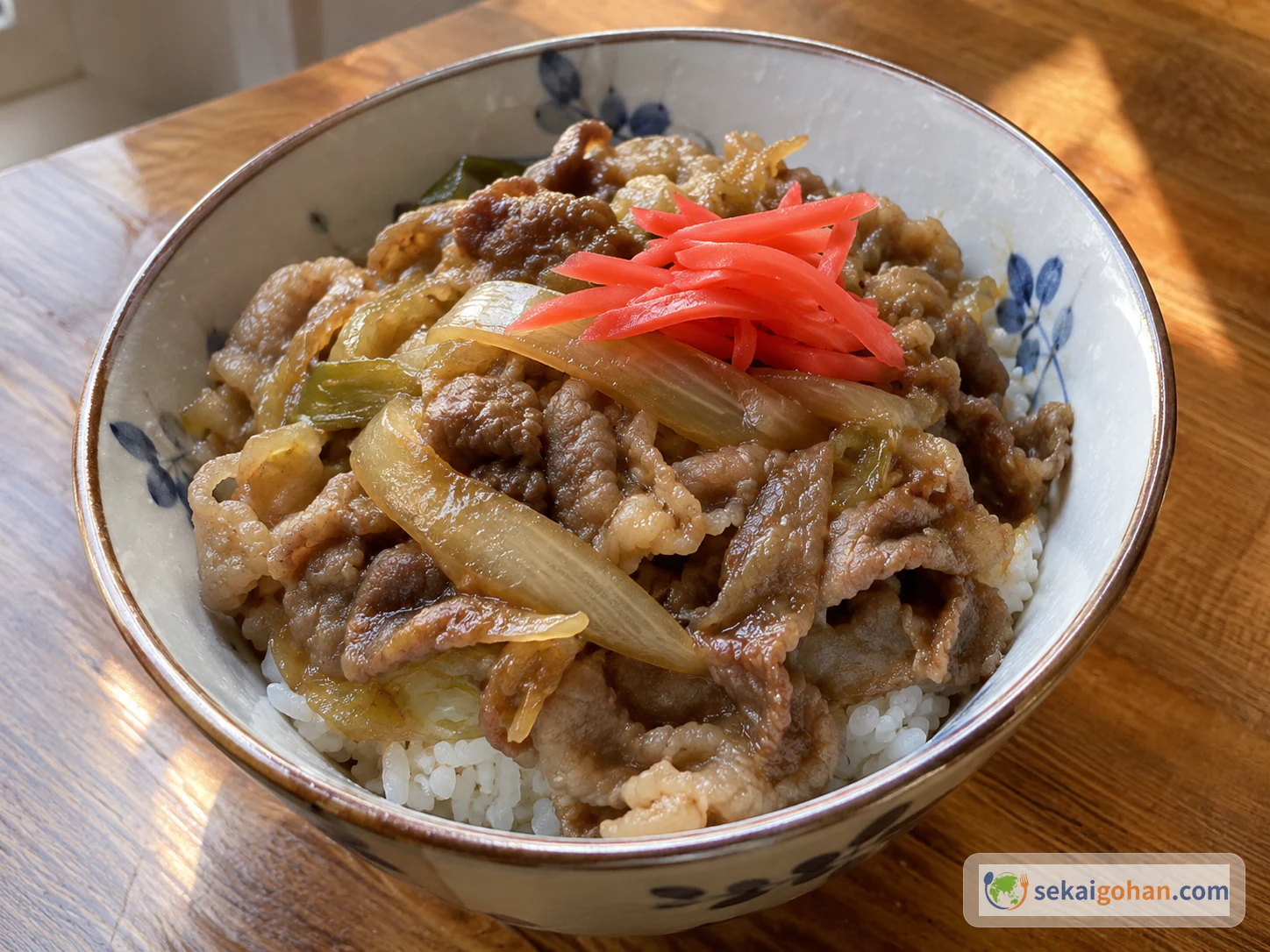
The smell reaches you before you even look in the pot. Nudge the lid ajar and thin steam carries pork fat, soy sauce, Shaoxing wine and star anise into the kitchen, slowly changing the air. The white rice waits as a supporting player until a stream of braising liquid falls and sinks between the grains, and the brown bowl begins.

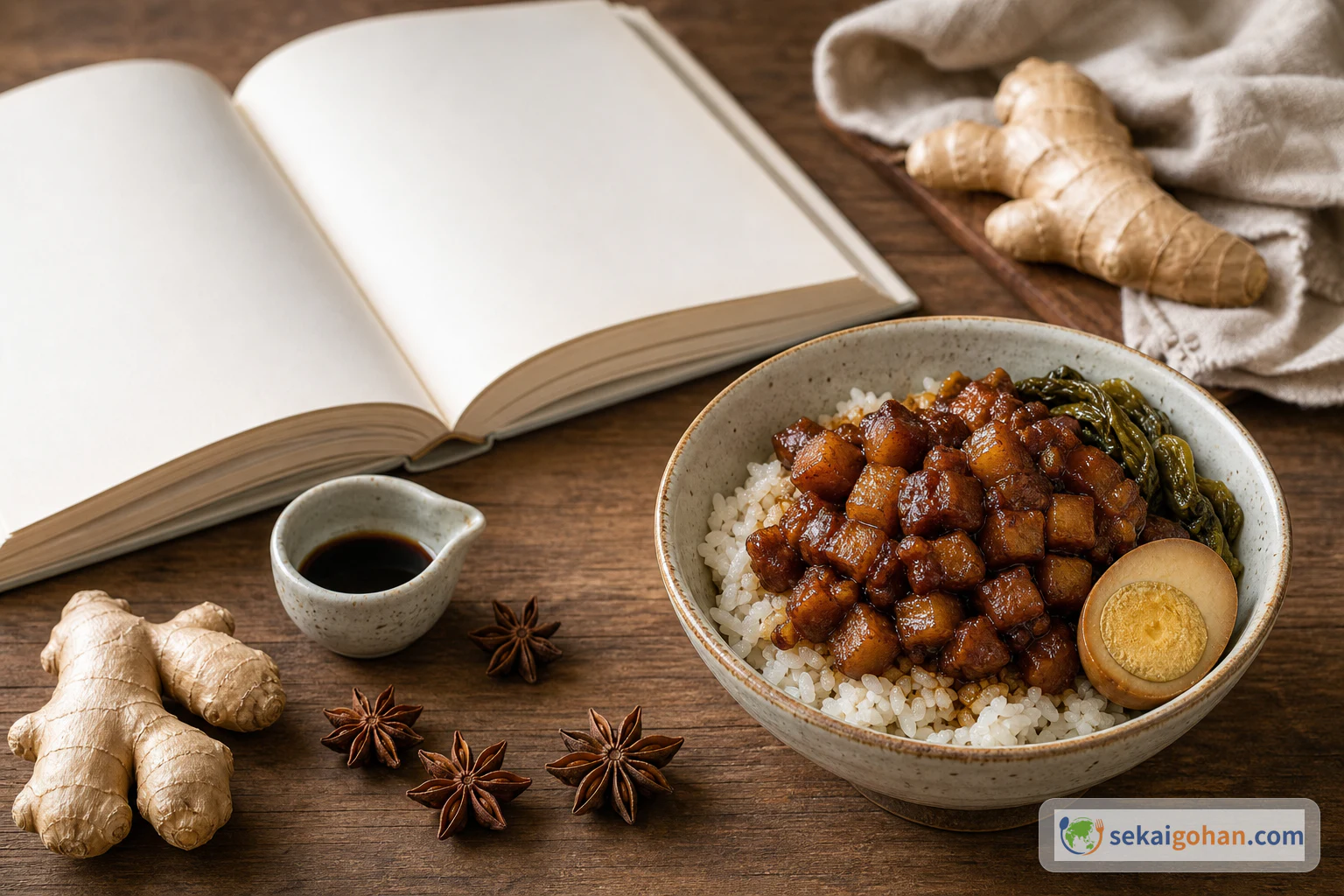
Lu rou fan is Taiwan's much-loved braised pork over rice. Pork, soy sauce, chopped red shallots and five-spice go into the pot, and the fragrant meat and its liquid are spooned over white rice. It's sweet, savory and rich with melted fat. The bowl is as much about how much braising liquid sits on the rice as about the flavor of the pork.
Lu rou fan and rou zao fan across Taiwan

Order lu rou fan at a Taiwanese eatery and the pork looks different from shop to shop. Some bowls have fine crumbles flowing into the gaps between the grains, and others have cubes with the fat left on that sit on the spoon. What the north calls lu rou fan is more often called rou zao fan in the south, and in the central region some places top the rice with larger blocks of pork belly instead of mince. Every shop also sweetens it differently, so it's no surprise that each one tastes its own way.
How the cut changes the bowl
The cut changes how the liquid spreads and how heavy the bowl feels. With a finely cut rou zao, the liquid blends into the rice quickly and you scoop up meat and grains together, with a light mouthfeel closer to mince. With cubes or chunks you break with chopsticks, you hunt for the meat with your spoon, and it stays in the fat-melted liquid. Both styles are common in Taiwanese homes and eateries, and because the ingredient lists look alike, English-language recipes for the two are easy to confuse.
This recipe evens the pork belly into 0.5 inches (1.5 cm) cubes. The fat melts into the roundness of the liquid, while the lean stays as pieces that pull apart with chopsticks. If you'd rather lean toward southern rou zao fan, cut finer and let the liquid spread evenly over the rice. Decide first whether you want the meat to stand out or soak into the rice. In the kitchen, it's more useful to know that the way the pork is cut changes how the bowl is eaten than to remember the names.
Where the dish comes from
The dish is tied to the food culture of people who moved to Taiwan after the war, and to braising affordable cuts such as pork neck and ears with soy sauce, red shallots and five-spice, back when meat was precious. Its name points to no high-end cut; it reflects the habit of using up readily available meat, down to the last of the liquid. Accounts that credit one shop or one inventor differ, so it's best thought of as an everyday food that has long evolved in Taiwan.
Ingredients (serves 4)

For the pork belly, choose a piece with visible layers of fat, not a lean-only block. If you avoid fat here, then however long you braise, only the liquid gets lighter before the meat pulls apart. If you can find skin-on pork, keep the skin. Skinless pork, the common kind, is enough to build the dish.
Dark soy sauce isn't for adding saltiness. It's for brown color and for rounding the edges of the braising liquid. With only light soy sauce, the flavor is there but the bowl stays pale, and adding more to darken it tends to make it too salty. If you often cook Taiwanese braises, it's a bottle you'll use up.
When you buy, check the ingredient list and size, not just the name. This recipe uses only 1 tbsp (15 ml), so if you make lu rou fan just once, the regular soy sauce you already have will do. It's worth buying a bottle if you'll also use it in bok choy braises or sauces for Hainanese chicken rice, and want to adjust color separately.
Star anise isn't the star of the aroma; it places a sweet shadow behind the pork fat. A single whole one can come out partway through the braise, but if you add five-spice powder by the teaspoon, you can't take the aroma back. Check that it's whole star anise, and check the quantity. If you don't plan to make other Chinese-style braises, or dislike licorice-like aromas, skip buying it, leave out the five-spice powder too, and increase the ginger a little.
Some soy sauces contain soy and wheat. Shaoxing wine, five-spice powder, pickles and processed meats also differ in ingredients by product, so if you have a food allergy, check each package. You can skip cilantro and eggs, but don't skip checking the labels of the seasonings.
Ingredients and substitutes for lu rou fan

Pork shoulder in place of pork belly
If you want less fat, replace 10.5 oz (300 g) of the 1.5 lb (700 g) pork belly with pork shoulder. The liquid loses some body, but the fat doesn't firm up as readily when cold, which suits a packed lunch. Only shoulder tightens the lean in a 1-hour braise, so go up to half at first. Keep the 0.5 inches (1.5 cm) cubes and heat low enough that the liquid never boils hard, and the meat will still break apart with chopsticks. If it feels lean, leaving a little more pork belly in the pot works better than adding extra liquid at the end.
Sake in place of Shaoxing wine
To replace the dry aroma of Shaoxing wine with sake, use the same ¼ cup (60 ml) and cut the sugar by 5 g. If the cooking sake contains salt, start with 2.5 tbsp (40 ml) soy sauce and taste at the end before adding more. Mirin alone pushes the sweetness forward, so if you use it, split it as 3 tbsp (45 ml) sake and 1 tbsp (15 ml) mirin.
Without star anise
A single star anise, taken out at the end, is plenty; there's no need to compete with lots of five-spice powder. If you dislike the aroma, use half a star anise you can fish out, or leave it out altogether: increase the ginger to 15 g and drop the five-spice powder too. Pork and soy sauce come to the front, and you still get a sweet-savory braise over white rice, an easy version for a family trying it for the first time.
Ground pork for a rou zao fan style
To move toward southern rou zao fan, use 1.5 lb (700 g) ground pork belly and skip the blanching. Stir-fry for 8 minutes over medium heat, breaking up the meat, and add the aromatics and seasonings once the fat turns clear. The liquid thickens faster than with cubes, so shorten the braise to 35–40 minutes and the final reduction to 2–3 minutes; a full 60 minutes breaks the fine meat down too much. Mince clings to rice beautifully, though you lose the satisfaction of biting into chunks of meat.
Method: turn the pork fat into braising liquid
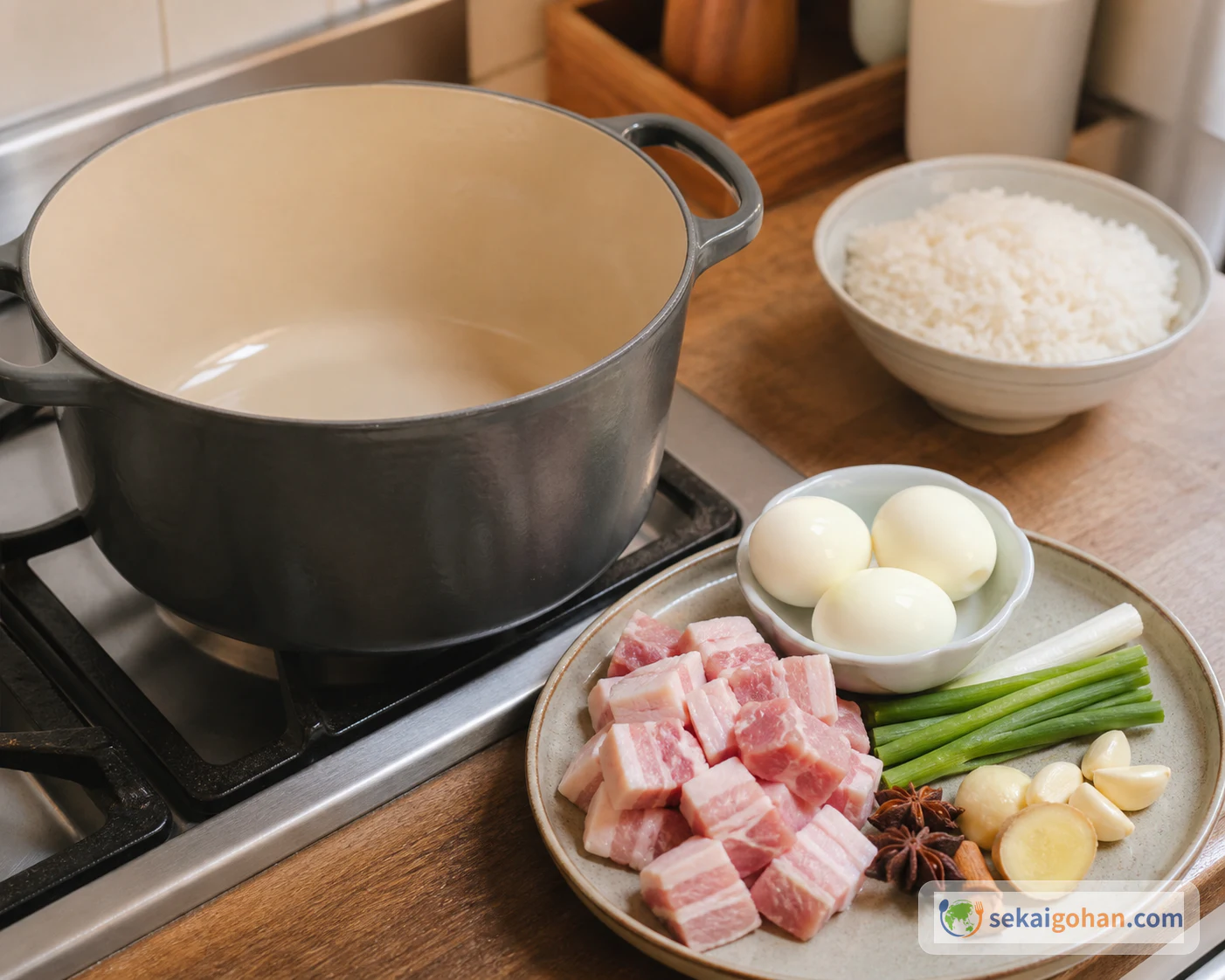
Use a deep pot 20–22 cm in diameter. In a pot that is too wide the 2 cups (450 ml) of liquid reduces quickly, and in one that is too narrow the pork piles up and doesn't brown. Boil the eggs in a separate pot ahead of time and peel them before they go into the braise.
Getting the braising liquid right

Lu rou fan goes wrong less often because the meat is tough than because the liquid's thickness in the pot and on the rice aren't judged separately. Rice absorbs liquid, so a pot that tastes right turns one notch lighter in the bowl. Reduce it too far, on the other hand, and the first bite is bold but salt builds up at the bottom.
Three checks help. Drag a line through the thin film on the back of a wooden spoon: if it vanishes right away there's too much water, and if it holds for about 2 seconds it's ready. Next, lift the pork and look for a thin brown film of liquid on the surface, not just a shine of oil. Finally, taste it with rice; what seems a bit weak on its own is often just right with white rice.
Turn off the heat, add water 1 tbsp at a time, and warm over low heat for 30 seconds. Thinning with more soy sauce adds salt too, so bring it back with water first. Even if the fat is still separated, it's fine as long as no puddle forms when you spoon a little over white rice.
Serving, storing and adjusting lu rou fan

Serve greens and pickles in small dishes alongside, as Taiwanese shops do, rather than piling them on from the start. The moisture of the greens and the sourness of the pickles keep the sweet liquid from feeling heavy all the way to the end, and each person can set their own ratio of meat to rice, which helps anyone who wants less fat.
To make it less sweet, use 15 g sugar and taste before finishing the liquid. For heat, add 1/2 sliced chili partway through the braise, or just a few drops of chili oil after plating. Piling on star anise, five-spice powder and chili all at once hides the aroma of the pork fat, so change one thing at a time.
Once the steam has gone, portion the braised pork into shallow containers and refrigerate. Plan to finish it within about 2 days, or freeze it in single servings for longer. Store the rice separately and warm it just before eating; warming cold rice with the liquid already on top concentrates the surface before the rice can absorb it. Reheat the pork to 167°F (75°C) or higher at the center for at least 1 minute. Food left out at room temperature for a long time isn't made safe by boiling it again, and if you're unsure about smell, appearance or storage, don't eat it.
Separate the cutting board used for raw meat from the utensils for plating, or wash them after use. Cook the pork through to the center, and when storing the braise, cool it quickly in shallow containers. Aim for reheating to 167°F (75°C) at the center for at least 1 minute, and don't force yourself to eat food left at room temperature.
Frequently asked questions

If I don't have dark soy sauce, is regular soy sauce alone okay?
Yes. Use 3 tbsp (45 ml) regular soy sauce as the base and resist adding more just because the color looks pale. Another 5 g sugar adds gloss and deepens the color a little, though it won't match the color and roundness of lao chou. If you care more about saltiness than authenticity, make it once with the soy sauce you have and judge from there.
What if the star anise comes out too strong?
Take the star anise out right away, add 2 tbsp water and simmer on low heat for 3 minutes. If the flavor turns thin, taste the liquid on rice before reaching for more soy sauce. The aroma is hard to remove completely, so start with half the amount next time.
What can I use leftover braised pork for?
Spoon a little at a time over warmed tofu, boiled noodles or steamed greens. If there's plenty of liquid left, drop in boiled eggs to soak up the flavor for the next day. Start with 1 tbsp over other ingredients and check the saltiness, just as with rice.
Sources
- Taiwan Tourism Administration, Braised Pork Rice (Taiwan Tourism Administration, background and names of the dish; accessed 22 July 2026)
- Taiwan National Development Council, Taiwan Food Special: Minced Pork Rice (Stewed Pork Rice) (introduction to how the pork is cut and braised; accessed 22 July 2026)
- MICHELIN Guide, Know Your Taiwanese Minced Pork Rice (regional differences in Taiwan; accessed 22 July 2026)
- The Woks of Life, Lu Rou Fan (blanching, low-heat braising, finish of the liquid; accessed 22 July 2026)
- Ministry of Health, Labour and Welfare (Japan), "Preventing food poisoning at home" (cooling, reheating, hygiene of utensils; accessed 22 July 2026)
Making it while checking the aroma of each ingredient one at a time, the pork in the pot changes from a plain sweet-savory simmer into a braise for white rice. Whether to buy star anise, whether to leave the cubes or move toward mince: once you decide on the scene you want to leave in the bowl, how to make lu rou fan gets harder to get lost in, even in a home kitchen.