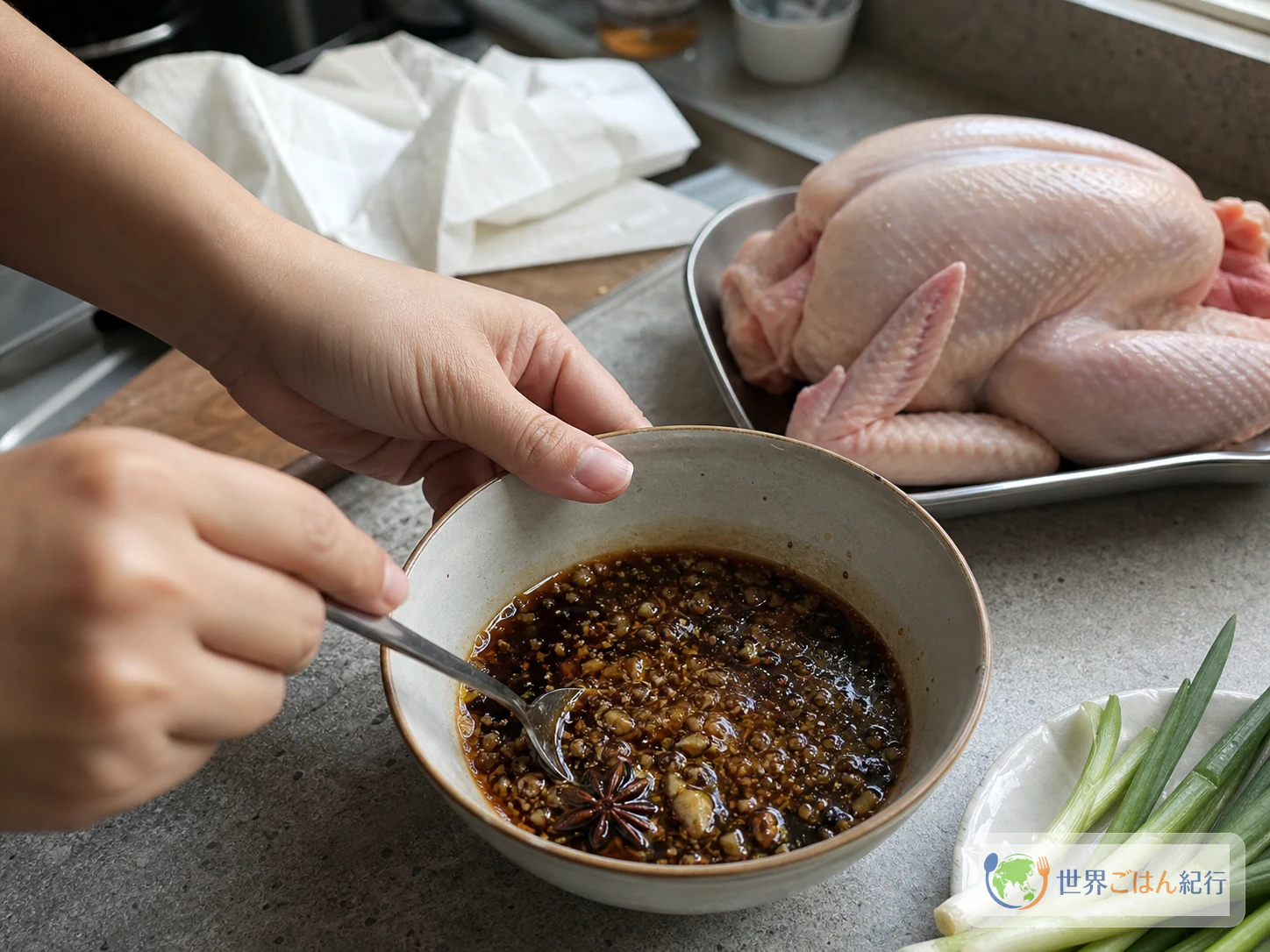
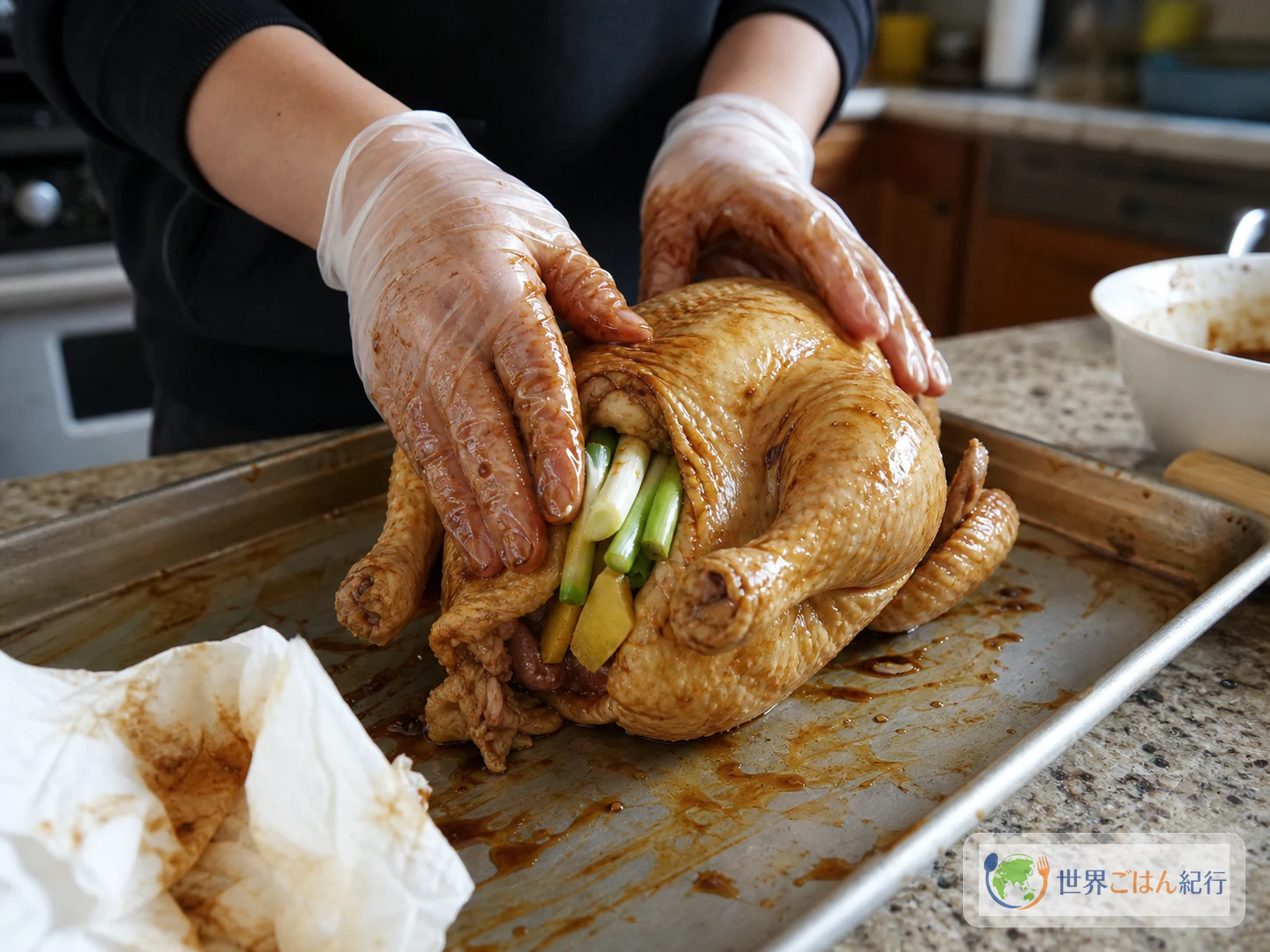
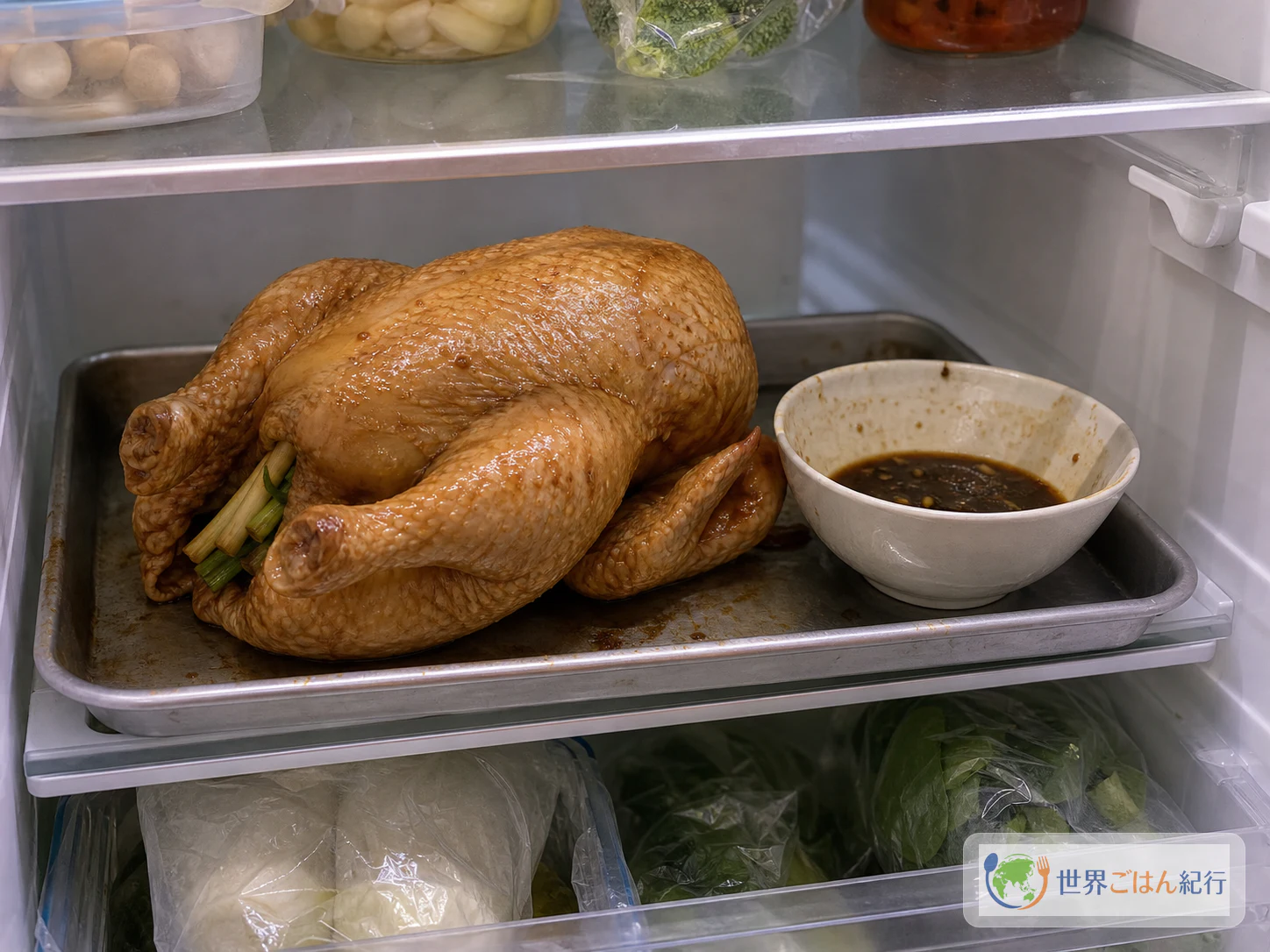
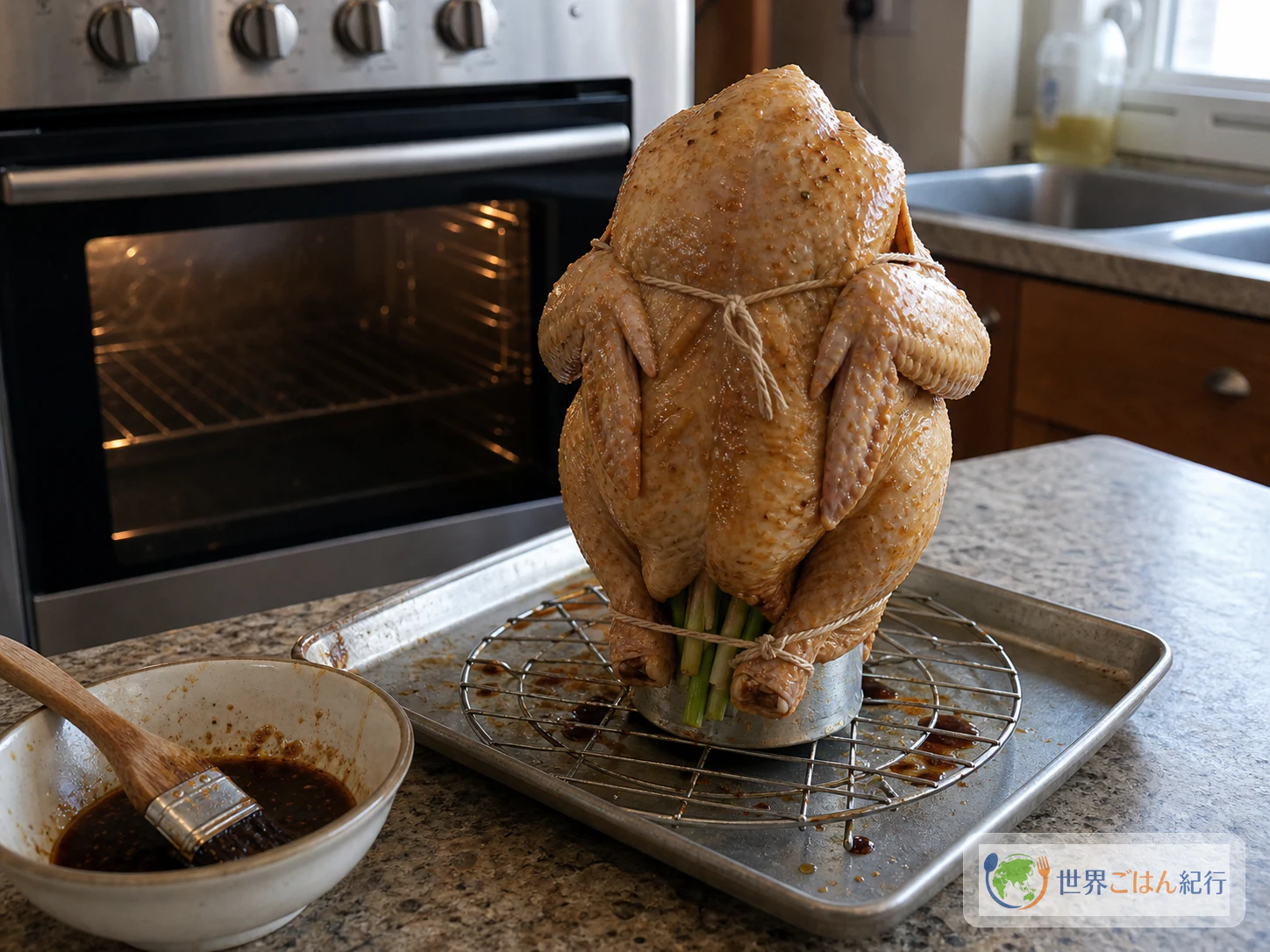
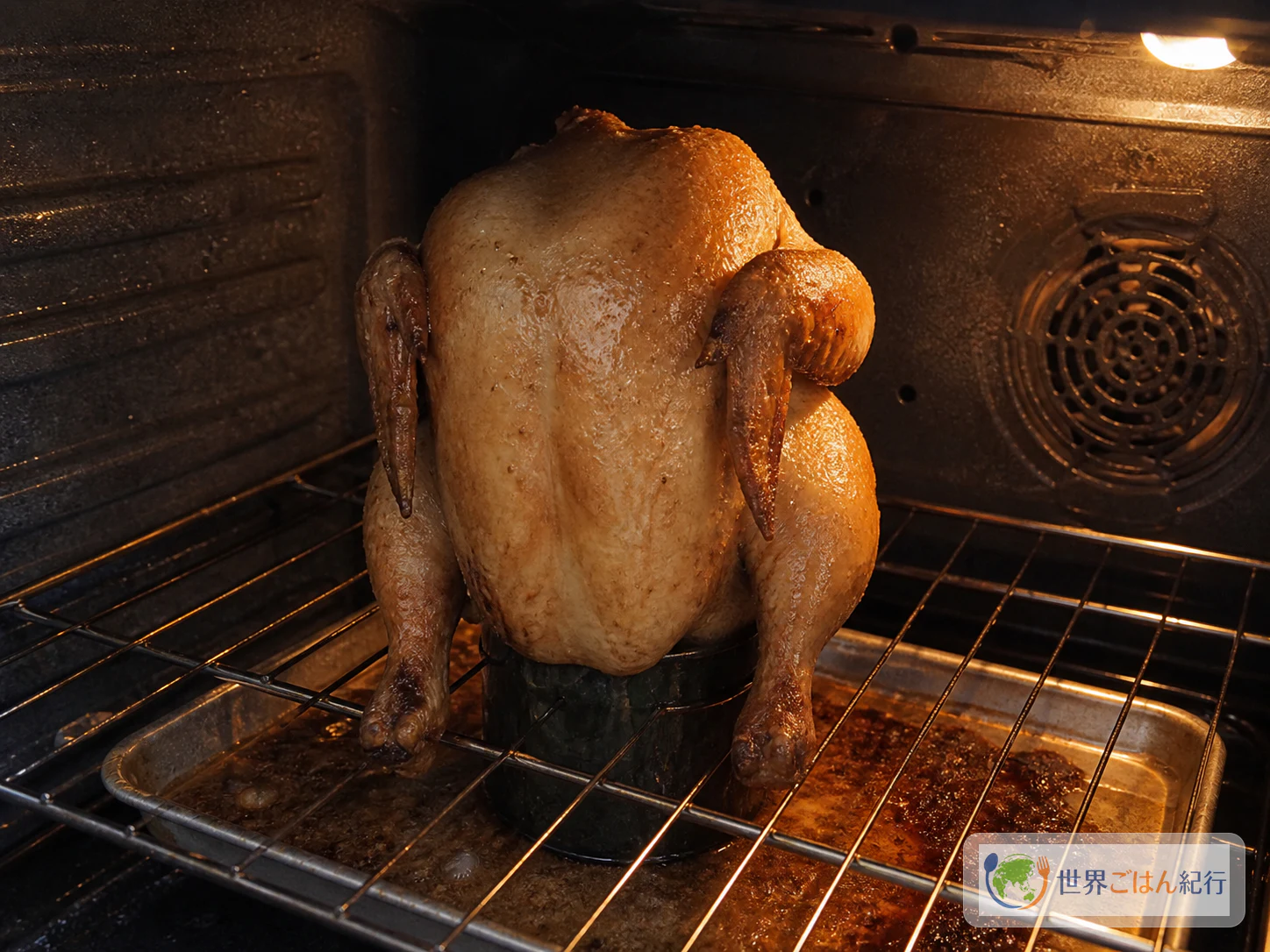
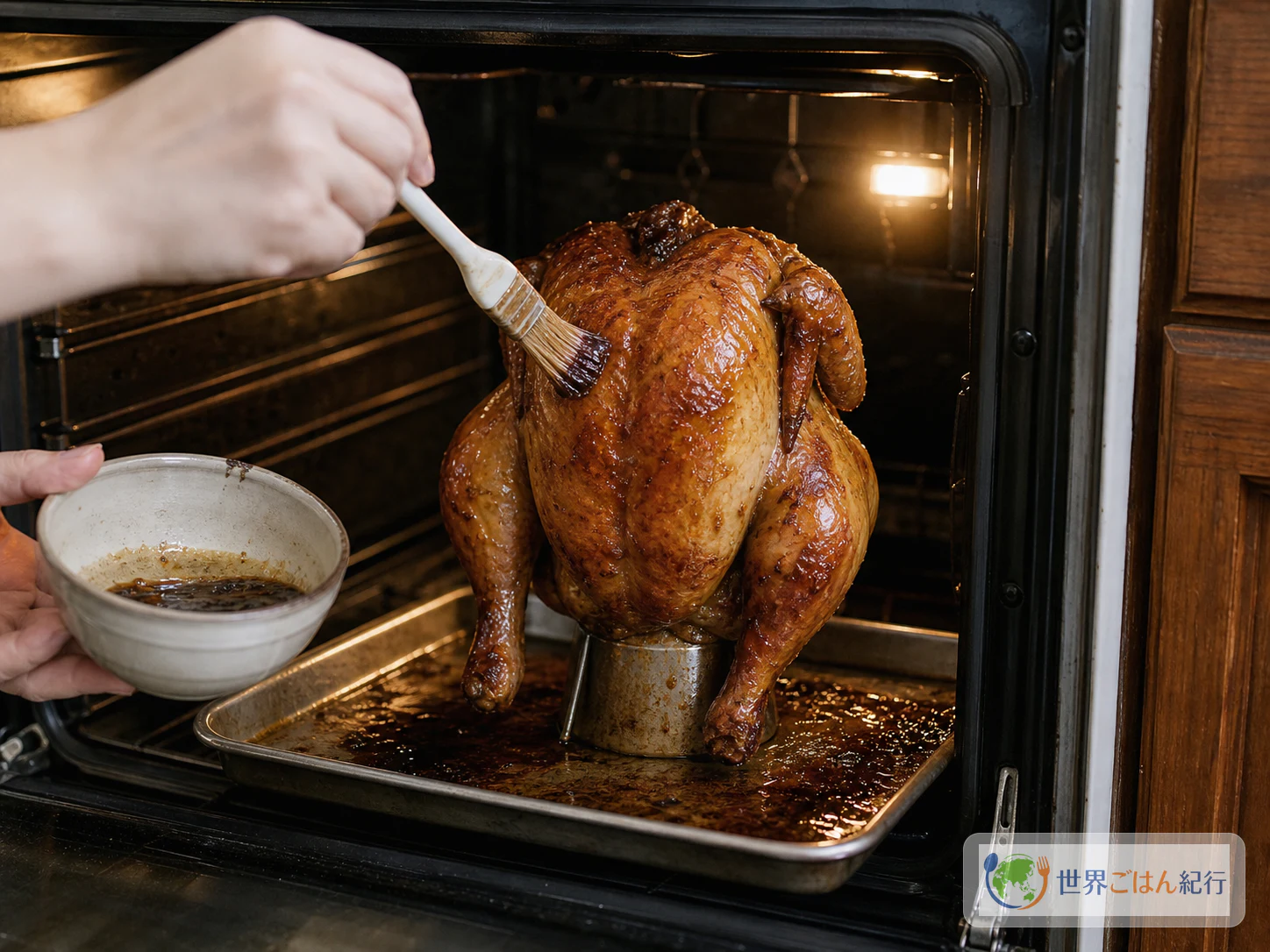
The air in a kitchen changes a little on the day you roast a whole chicken. You grate ginger, sink star anise into dark soy sauce and brush the sauce onto the skin, and before the bird is anywhere near the heat, the table already feels closer to a night-market stall. Taiwan's 甕仔雞 (wengzai chicken, also called 桶仔雞 or 甕缸雞, "barrel chicken") is a whole bird that locks in exactly those aromas with the heat of a big clay jar or drum. You tear it apart by hand and eat it with the rendered chicken fat it gives up.
What barrel chicken is
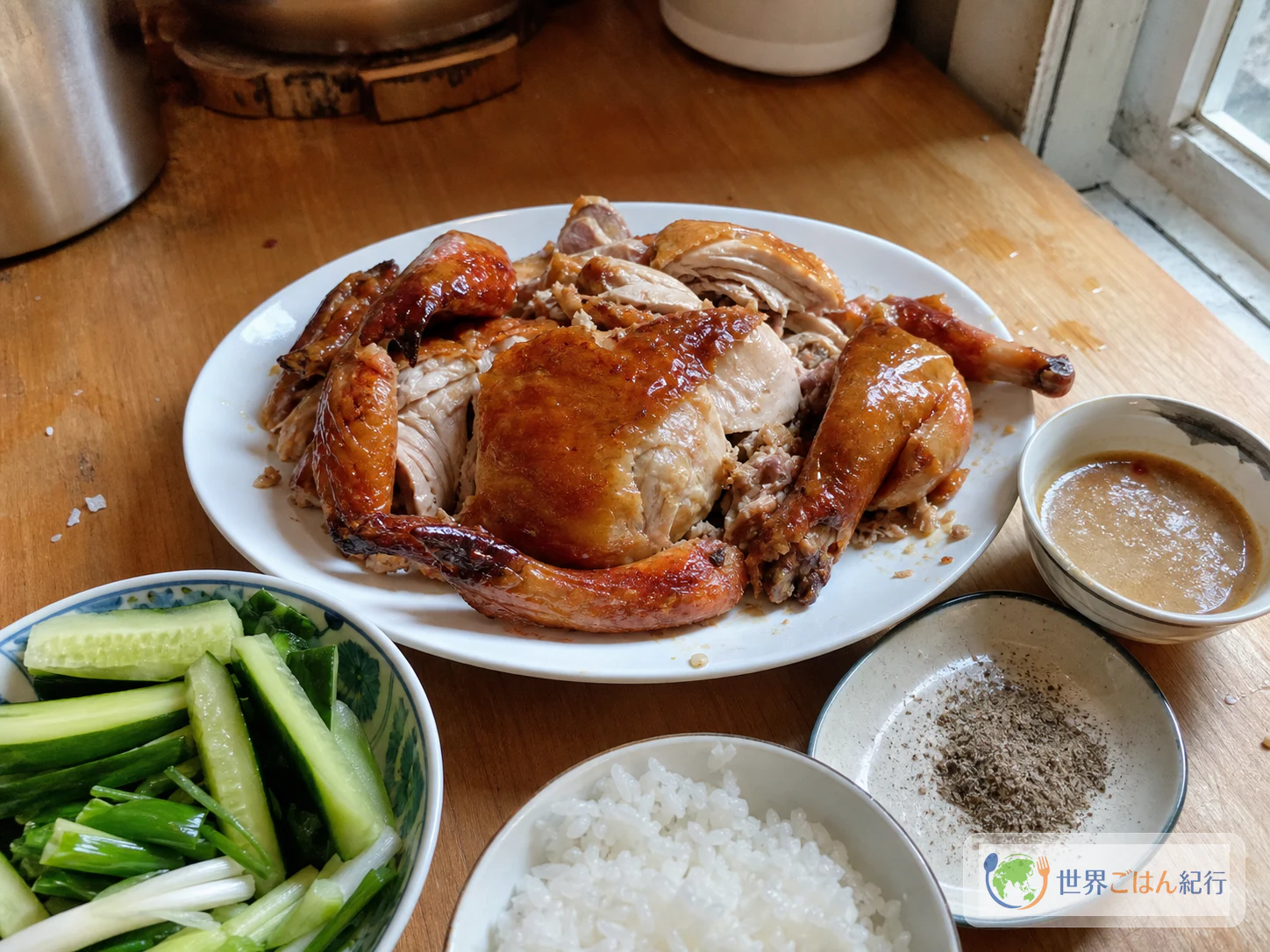
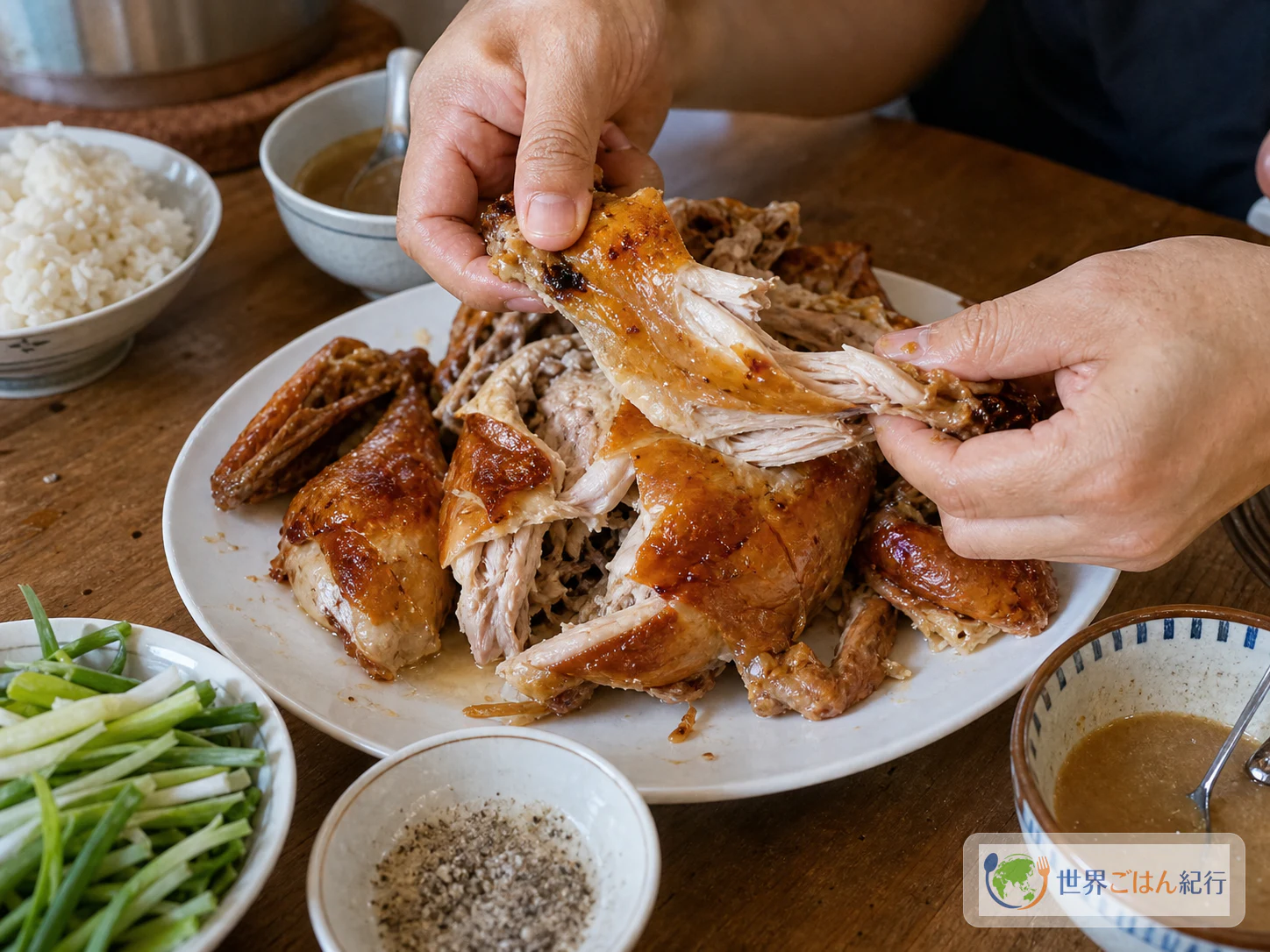
Barrel chicken is a roasted whole chicken loved in Taiwan. Restaurants hang or stand the bird inside a large ceramic jar, a metal drum or a kiln-like oven and cook it with intense radiant heat. The skin turns a deep amber, the meat stays moist, and chicken fat gathers on the plate. It isn't sliced neatly with a knife: you put on gloves, tear it into large pieces and eat it with the chicken fat, pepper salt, scallions and cucumber.
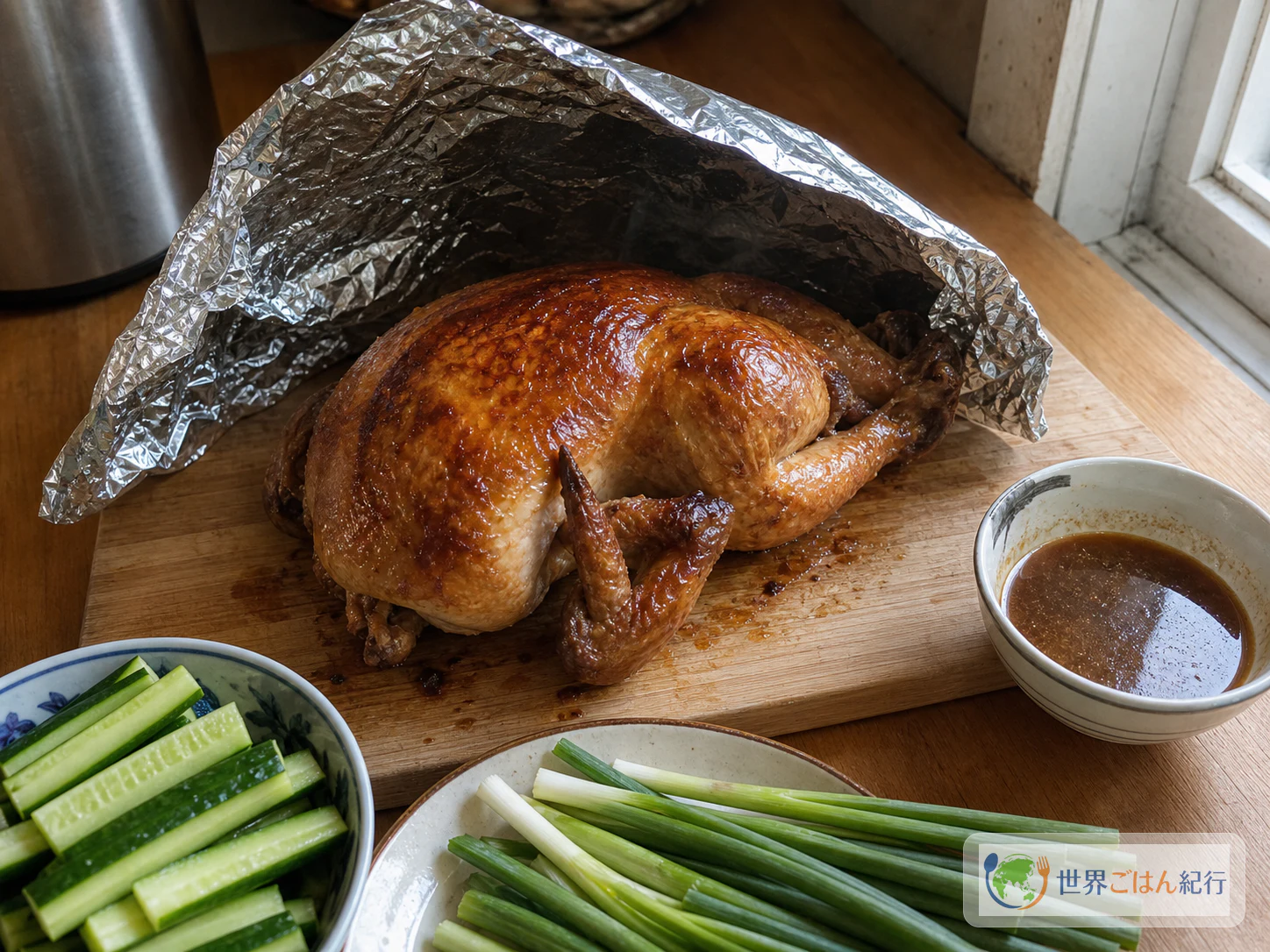
The dish comes down to three things: dry, intense heat; dark soy sauce and aromatics; and eating the bird with its own fat. A home oven can do all three. Inside the jar, dry heat circulates around the chicken, excess moisture drops away and the falling fat turns fragrant. At home, set the chicken on a rack above the pan and brush a little of the rendered fat back on partway through.
| Local element | What to keep at home | Substitute idea |
|---|---|---|
| Intense heat of a jar or drum | Preheat the oven and lift the chicken on a rack | A heavy sheet pan and rack. Avoid an upright position that is not stable |
| Hanging or standing roast | Drive off moisture from the skin | Dry the surface in the refrigerator and pat it dry before roasting |
| Catching the chicken fat | Use the fat collected in the pan to finish | Use only the clear part, never burnt fat |
| Pepper salt and tearing by hand | Keep the pieces large | Tear it into large pieces and eat skin and juices together |
Other chicken dishes share some of its spirit: beggar's chicken, wrapped in lotus leaves and a salt crust; Hainanese chicken rice, eaten with rice; and chicken inasal, seared with strong aromatics. Barrel chicken puts the pleasure of roasting the bird whole, tearing it apart and catching the fat up front.
Ingredients: a smaller bird, aromatics not too strong
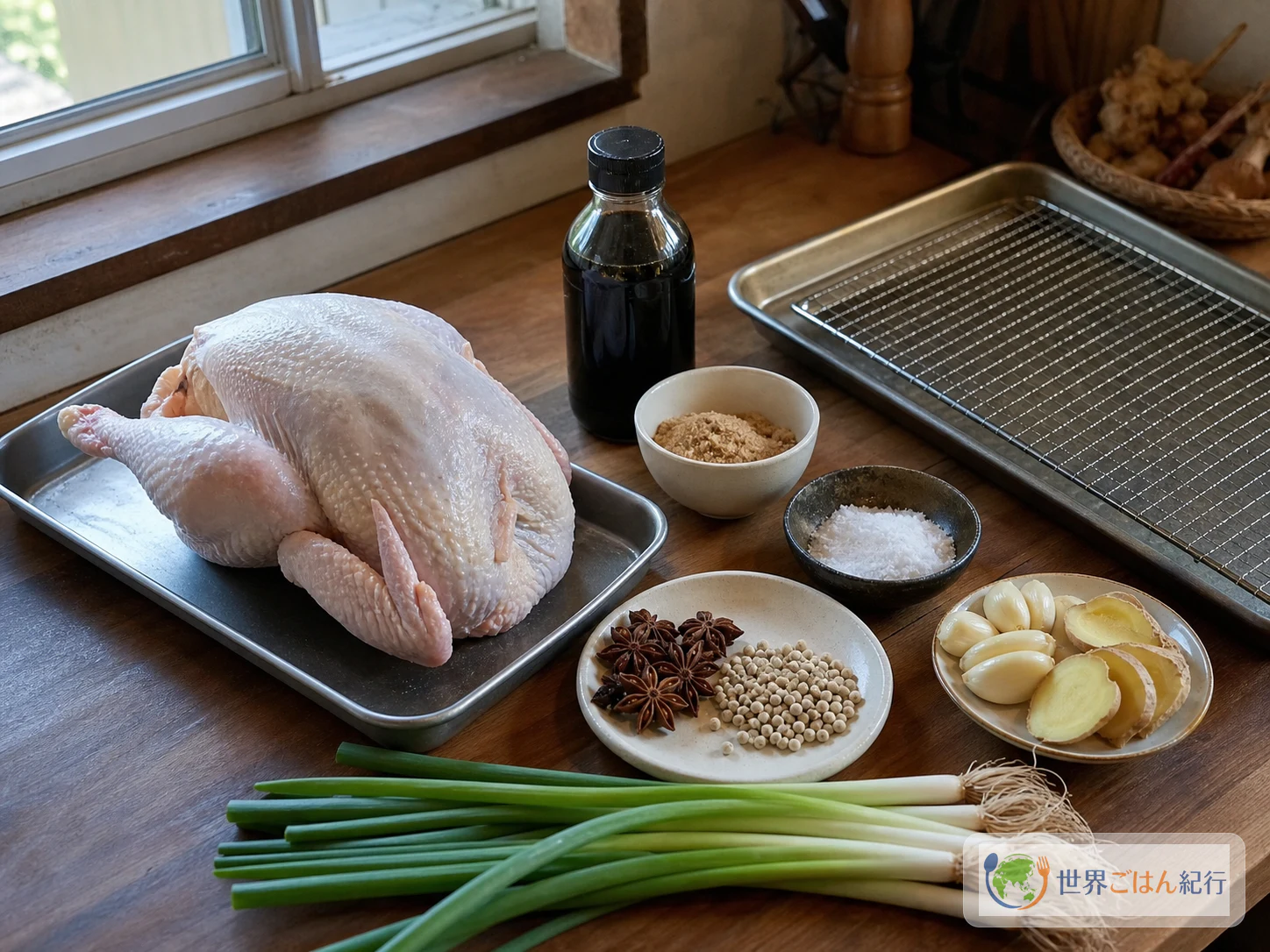
This is for 4 servings, using a 1.1–1.3 kg (2 1/2–2 3/4 lb) whole chicken with the giblets removed. Skip a 2 kg (4 1/2 lb) bird for your first attempt: it looks impressive, but the skin darkens before the center cooks. If you can't get a whole chicken, use 4 bone-in chicken thighs with the same sauce. Then shorten the cooking time and check the internal temperature from step 5 onward.
This dish contains chicken, soy, wheat and sesame. Check labels: soy sauce, dark soy and Shaoxing wine contain wheat in some products. Cook the chicken all the way through, and wash your hands, gloves, cutting board and knife after touching the raw chicken before they touch raw vegetables or the scallion for the table.
Ingredients and substitutes for barrel chicken
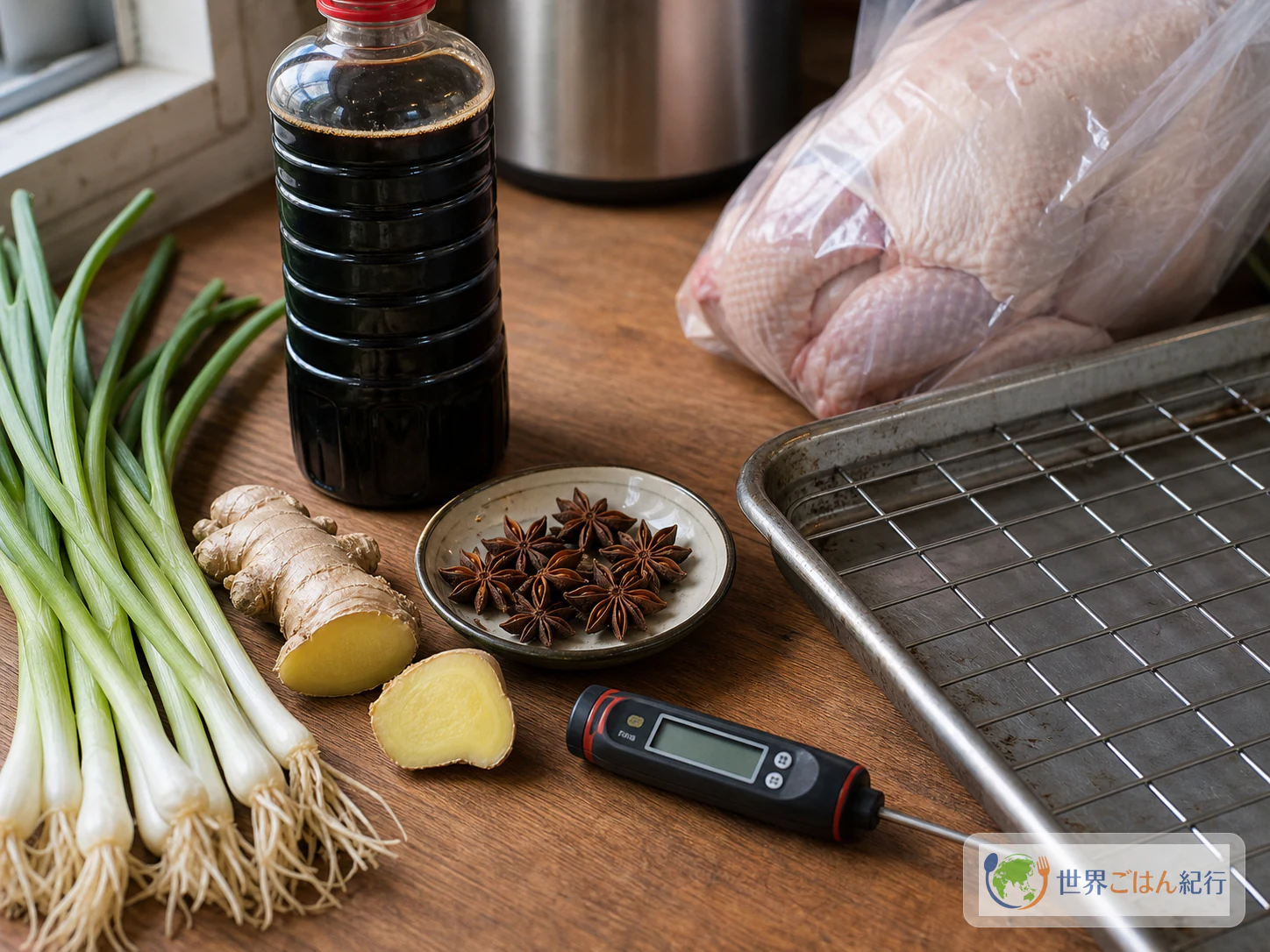
Dark soy, star anise and a thermometer
The whole chicken, scallions, ginger, garlic and cucumber can all come from a nearby store. Save your attention for three things: dark soy, which gives barrel chicken its color; star anise, which pulls the aroma toward Taiwan in small amounts; and a thermometer for checking how cooked a whole chicken is.
Dark soy sauce is a thick soy sauce used for color. A little goes on to push the skin toward a deep brown, not to add salt. Leftovers go into chow mein and Hainanese chicken rice.
Star anise is the sweet scent behind five-spice powder, but powdered five-spice alone can make the aroma too uniform. With a whole chicken, one crushed star anise passes its fragrance to the chicken fat more easily. Leftover star anise also works in bak kut teh and bo kho.
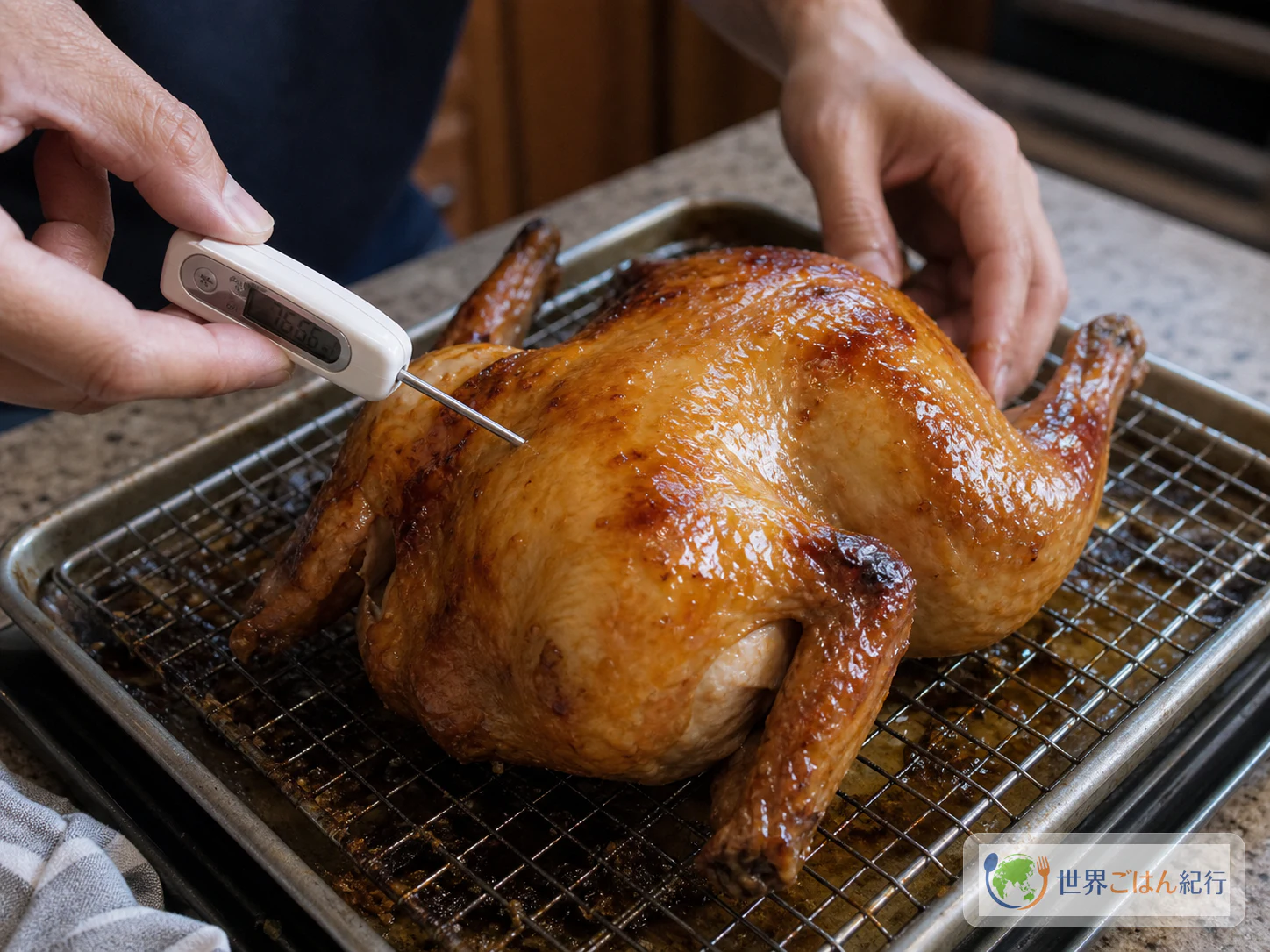
Color alone won't tell you when a whole chicken is done, so judge doneness by internal temperature. A thermometer makes your first attempt much less stressful. Check the thickest part of the thigh and the thickest part of the breast, keeping the probe off the bone.
Substitutes in a home kitchen
Home versions usually stall on the equipment: no clay jar, a bird that's too big, an upright position that wobbles, skin that scorches. Decide in advance what to keep, and the dish still leaves its impression.
| The sticking point | What to keep | A realistic home fix | What to avoid |
|---|---|---|---|
| No clay jar | Dry, intense heat | A preheated oven, a rack and a pan to catch the fat | Indoor charcoal, or a forced version with lots of smoke |
| No whole chicken | Enjoying skin and chicken fat | 4 bone-in chicken thighs roasted on a rack | Making it with breast only, with no fat rendered |
| No dark soy | Color and aroma of the skin | Regular soy sauce with a little dark brown sugar | Brushing the sauce on too thick and burning it |
| Can't stand it upright | Circulating heat around the bird | Roast on its side on the rack, turning partway | Propping it unsteadily with a can or dish |
| Five-spice is too strong | A light sweet Chinese aroma | 1 star anise and white pepper | Too much five-spice, which smells like candy |
For bone-in chicken thighs, use 1 tsp of salt and the same amount of sauce, and refrigerate for 2 hours to overnight. Roast about 25 minutes at 180°C and 8 minutes at 220°C, and rest them once the thick part reaches 75°C (167°F) or higher. You lose the look of a whole bird, but the aroma of the fat and skin is still very enjoyable.
Method: dry first, roast, then tighten the skin at the end
Season with salt and sauce the day before or the morning of cooking. Keep it refrigerated until just before roasting so the surface dries and the skin stays less sticky. Don't leave it out long. Thirty minutes at room temperature before roasting takes the chill off the surface.
Common barrel chicken problems and fixes
| Symptom | Cause | Fix |
|---|---|---|
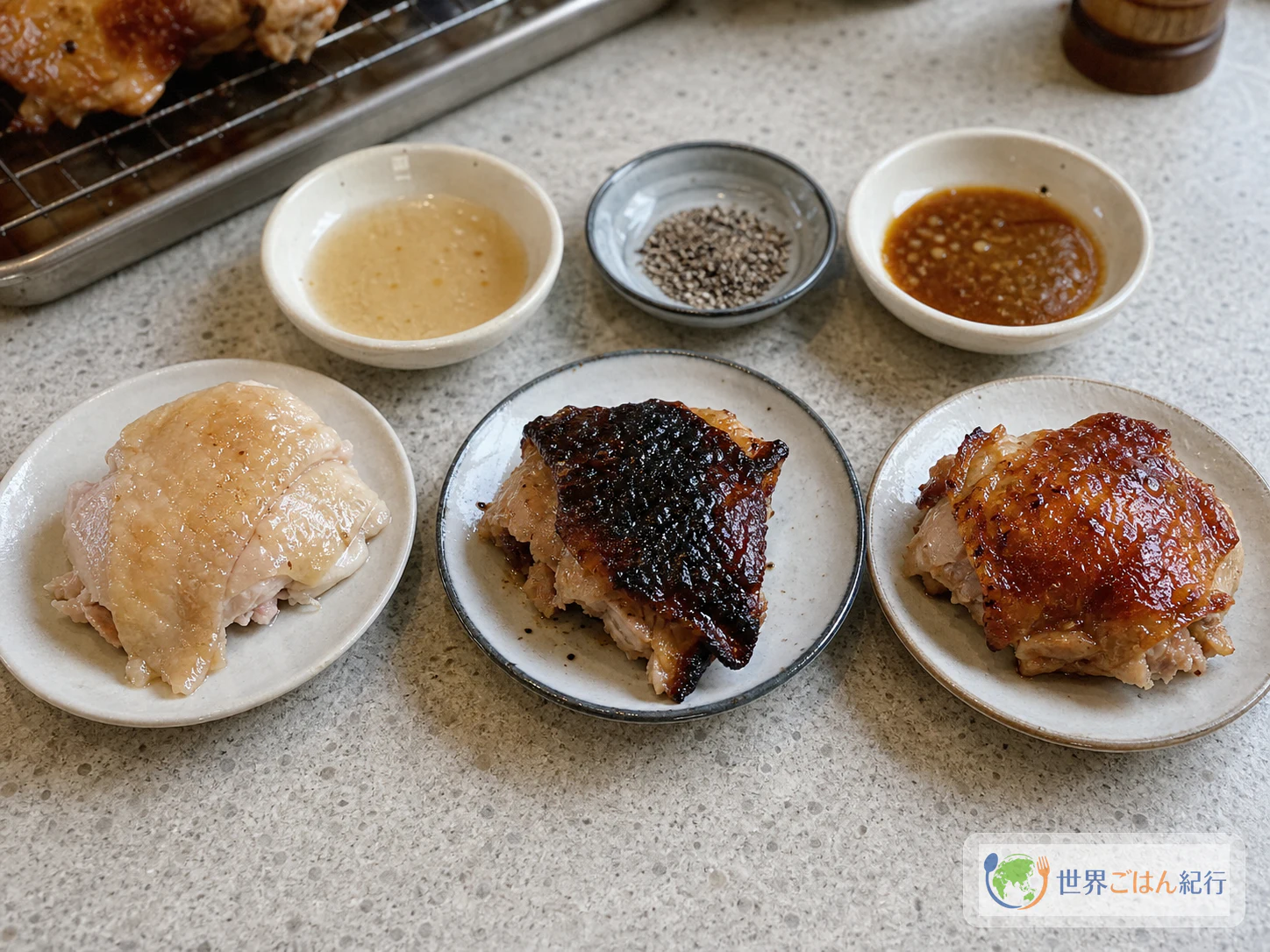
| The skin is damp | Not dried in the refrigerator, sauce brushed on thick | Pat dry before roasting and brush the sauce on thin. Keep the final high-heat stage short |
| Only the surface burns black | Too much dark soy or sugar, too long at 425°F (220°C) | Dilute the finishing sauce with chicken fat. Cover dark areas with aluminum foil |
| The meat is dry | Roasted too long at 350°F (180°C), not enough rest | Stop by internal temperature and rest 10 minutes. Spoon a little chicken fat over the breast |
| The aroma is flat | Weak star anise or ginger, chicken fat not used | Grate a tiny bit of star anise into the pepper salt. Serve the chicken fat in a small bowl |
| Worried about the center | The bird is large, heat was uneven when stood upright | Choose around 2.75 lb (1.2 kg) and check the thick part of the thigh and breast with a thermometer |
Burnt chicken fat tastes bitter, not fragrant. When you use the fat from the pan, leave behind the part mixed with black burnt specks and move only the clear top layer to a small bowl. Serve the salt and pepper separately; it's easier to eat that way.
Serving and storing barrel chicken
Sour, watery side dishes keep you eating to the end better than a pile of strongly flavored stir-fries. A cucumber salad with black vinegar, a cold tomato dish, garlic stir-fried greens and a thin egg soup all suit it.
If you're spooning chicken fat over rice, skip a dish with strong red oil like mapo tofu. A dish that catches the fat with vegetables and dried goods, such as a Buddha's delight-style luohan zhai, keeps the aroma of the whole chicken from getting buried.
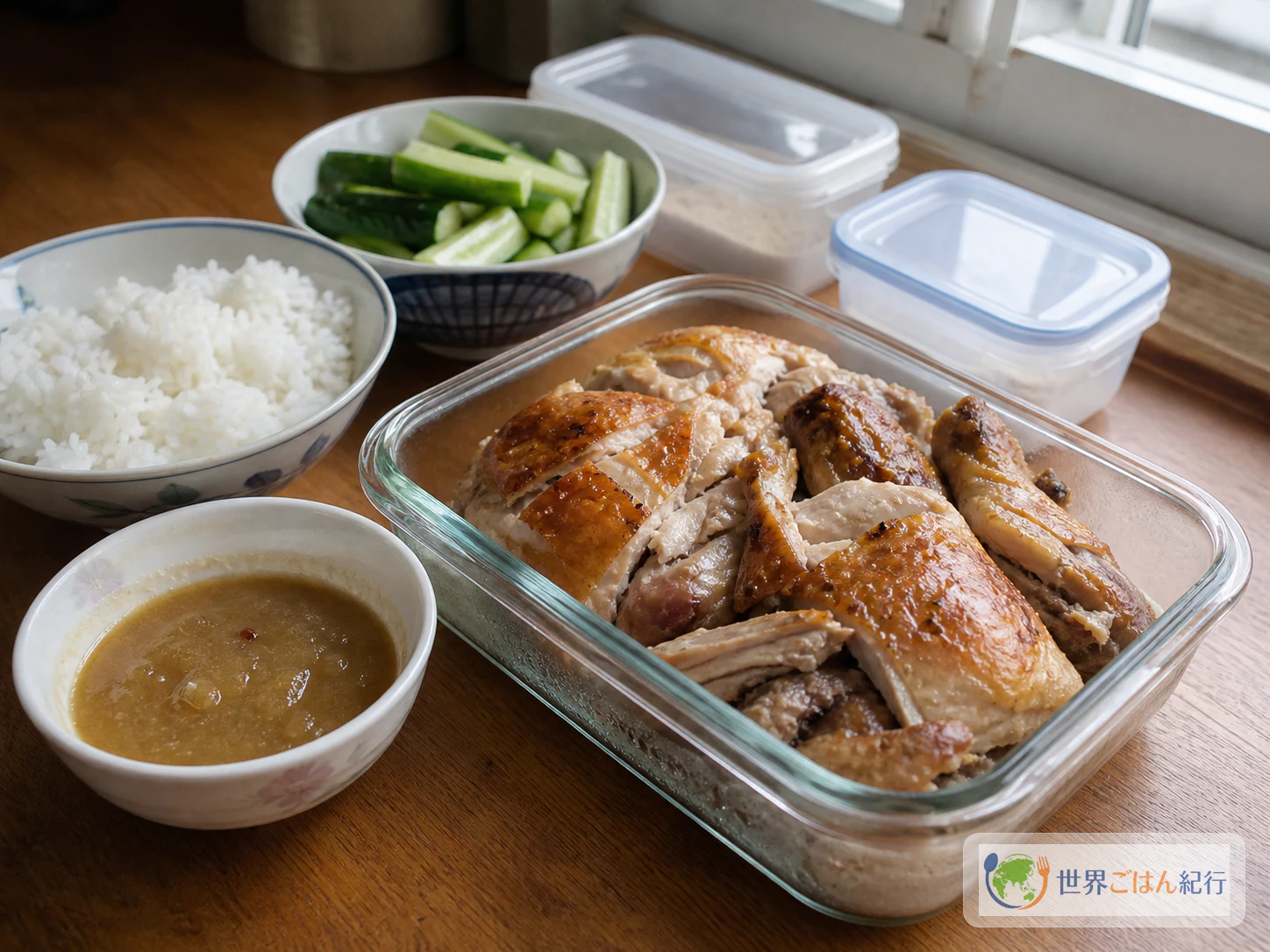
Refrigerate leftovers within 2 hours after cooking, storing the meat and the chicken fat separately, and finish them within about 2 days. A microwave alone softens the skin, so warm the meat in a 600 W microwave for about 1 minute 30 seconds, then toast only the skin-heavy parts in a toaster oven for 2–3 minutes to bring them back. Reheat until steam rises from the center.
The simplest next-day meal is over rice, with 1 tsp of chicken fat spooned over and scallion, cucumber and black pepper added. For noodles, toss boiled Chinese noodles with chicken fat, a little soy sauce and 1 tsp of black vinegar, then top with torn chicken and scallion. Toss them while warm rather than stir-frying hard like char kway teow; that keeps the chicken aroma.
FAQ
Is five-spice powder required?
No. Star anise, white pepper and ginger alone give a Taiwanese roast chicken aroma. If you use five-spice powder, keep it to 1/3 tsp. Any more and a sweet, candy-like scent comes forward and hides the toasty chicken fat.
I want the skin crisper
Dry it longer in the refrigerator, and wipe the sauce off the surface before roasting. Keep the final 425°F (220°C) stage short and watch the color at 8–12 minutes; if you chase crackling by roasting longer, the breast dries out first. Taiwanese barrel chicken is about skin that is toasty and tight, not a hard coating like fried chicken.
Should I pour on all of the chicken fat?
All of it at once makes the dish heavy. Put it in a small bowl and spoon it over the meat a little at a time as you eat. Whatever is left keeps in the refrigerator for the next day's rice or tossed noodles, so nothing goes to waste.
Seen only by the name of the equipment, barrel chicken feels far from a home kitchen. But think of it as drying a whole chicken that has been given its aromatics, roasting it in dry heat, and tearing it apart to eat with the chicken fat, and it becomes a dish within reach. For the first time, keep to three things: a smaller bird, a thin layer of sauce and a temperature check. Do that, and you can bring the drive of a Taiwanese eatery much closer to your own table.