Katsu Sando: Japanese Pork Cutlet Sandwich with Oven-Baked Panko (カツサンド)

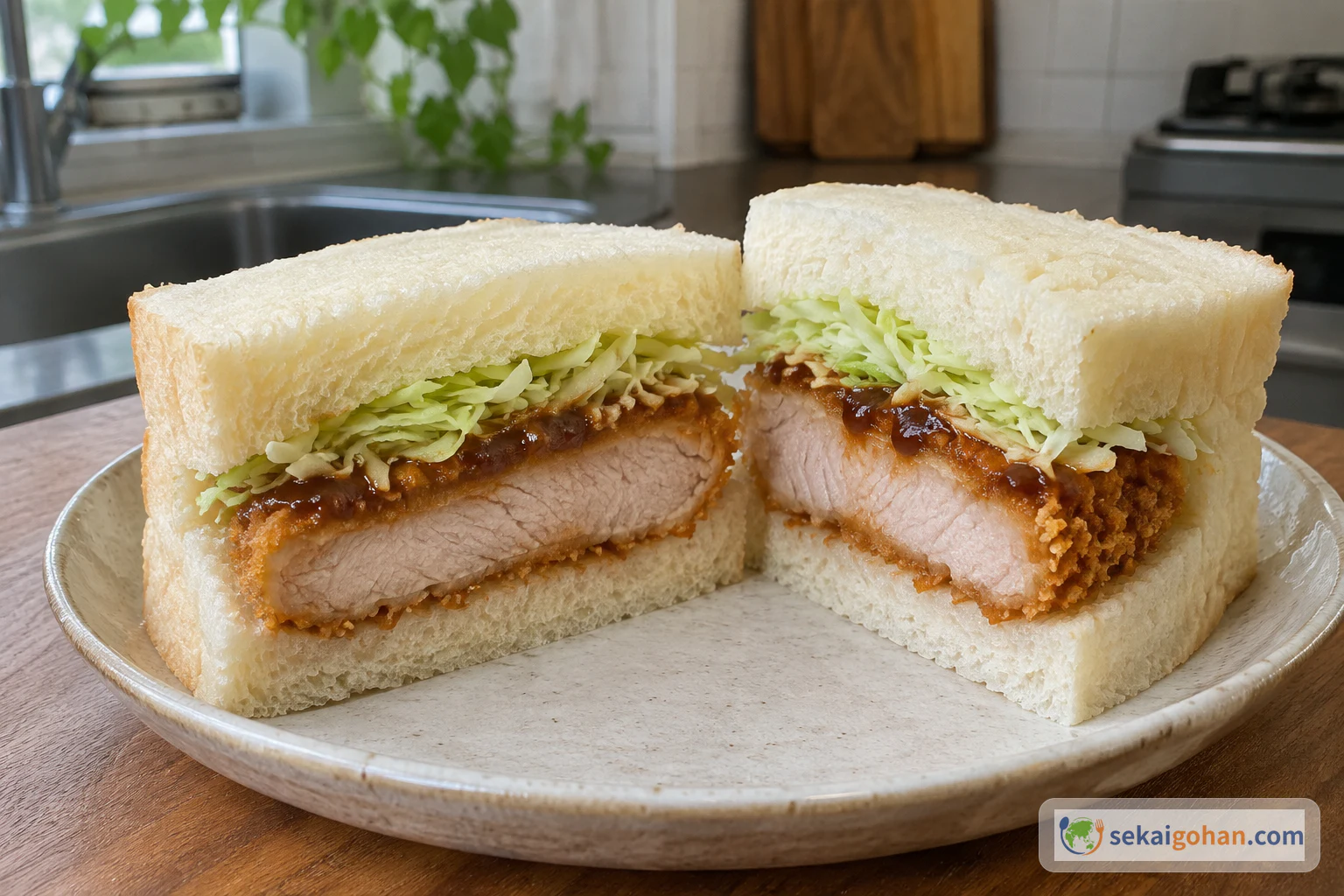
A katsu sando showing a golden-browned pork cutlet, soft white bread, a thin layer of shredded cabbage and sauce
Serves
2 servings (2 sandwiches)
Cuisine
Japanese

How to make katsu sando at home: a pork loin cutlet coated in pre-toasted panko and baked on a rack, layered with shredded cabbage, butter, Dijon and tonkatsu sauce between soft shokupan. Covers amounts, coating order, how to keep the bread from getting soggy, and checking the pork's center temperature.

Cooking flow

Cooking steps

STEP11 / 8

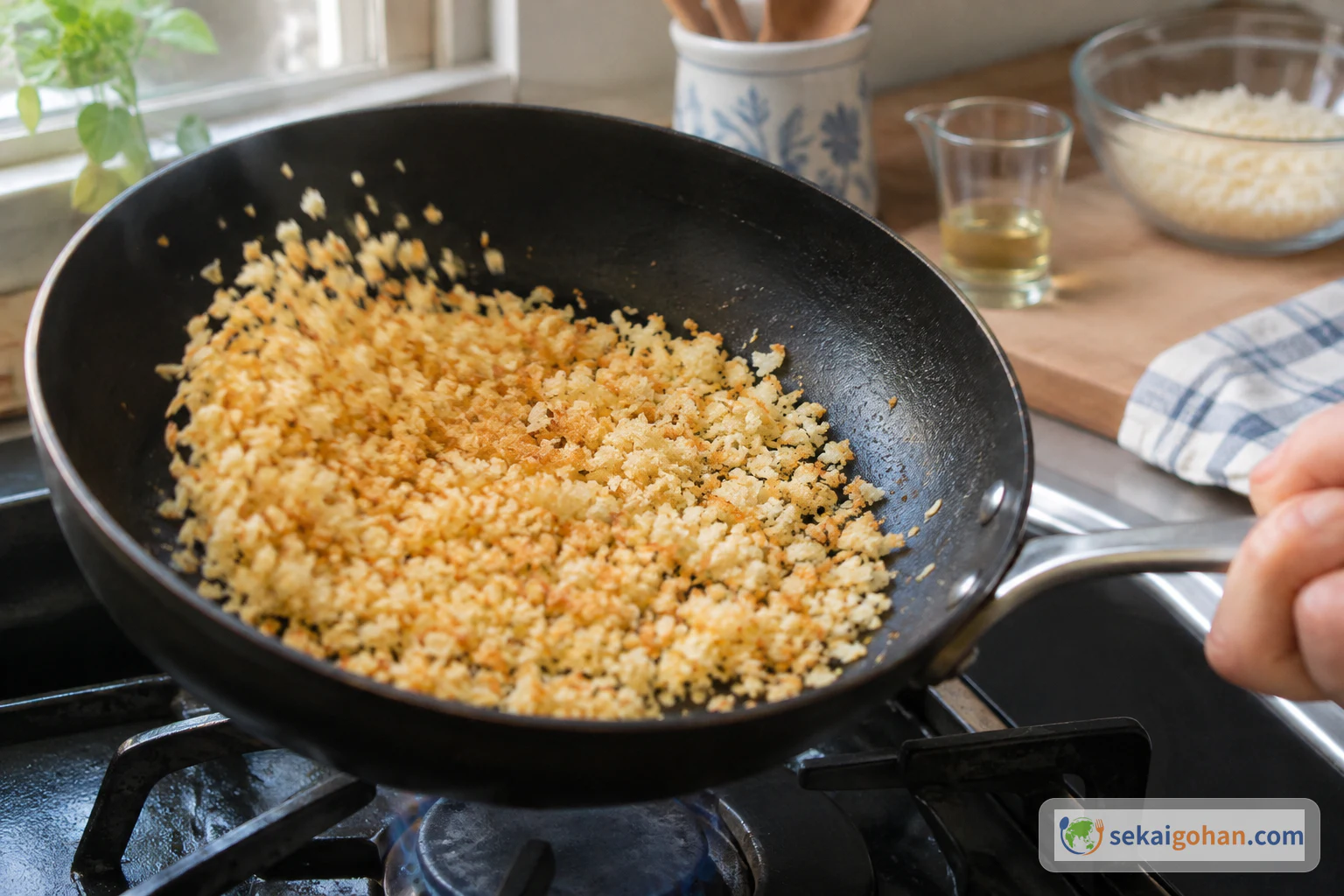
Toast the panko in oil

Panko and neutral oil being toasted in a skillet until evenly golden
Toast the panko before it touches the pork, so the baked cutlet comes out golden

Put 1 cup panko and 1½ Tbsp neutral oil in a skillet. Toast over medium to medium-high heat, shaking the pan and stirring so the crumbs color evenly. When all of it is golden brown, move it to a plate right away. Take it off the heat before it starts to look scorched.

STEP22 / 8

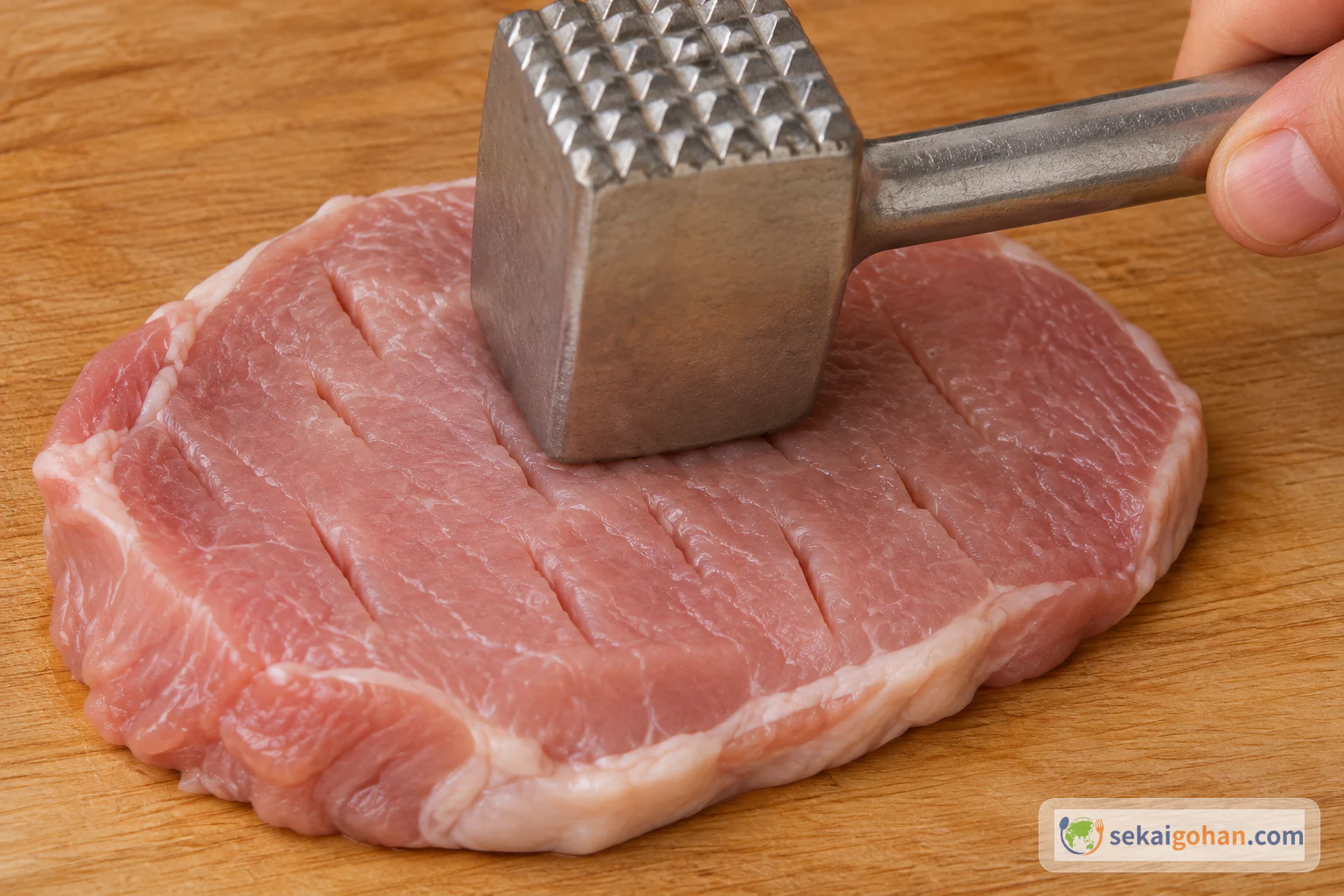
Prepare and season the pork

Pounding a pork loin chop, already slit through its connective tissue, with a meat mallet
Slit the connective tissue first, then pound the chop to an even shape

Preheat the oven to 400°F (200°C). If you use a fan (convection) setting, lower it by 25°F (15°C), and check your oven's manual. Preheating time varies by oven.

Wash your hands before and after touching the raw pork, and do not rinse the meat. On the raw-meat board, trim any excess fat. Make a few slits through the connective tissue where the fat meets the lean meat; this helps keep the chops from curling. Pound the chops with a meat mallet to loosen the fibers and even out their shape. Season both sides with ½ tsp salt and pepper to taste.

Keep the cabbage and bread on a separate clean board, away from the raw pork.

STEP33 / 8

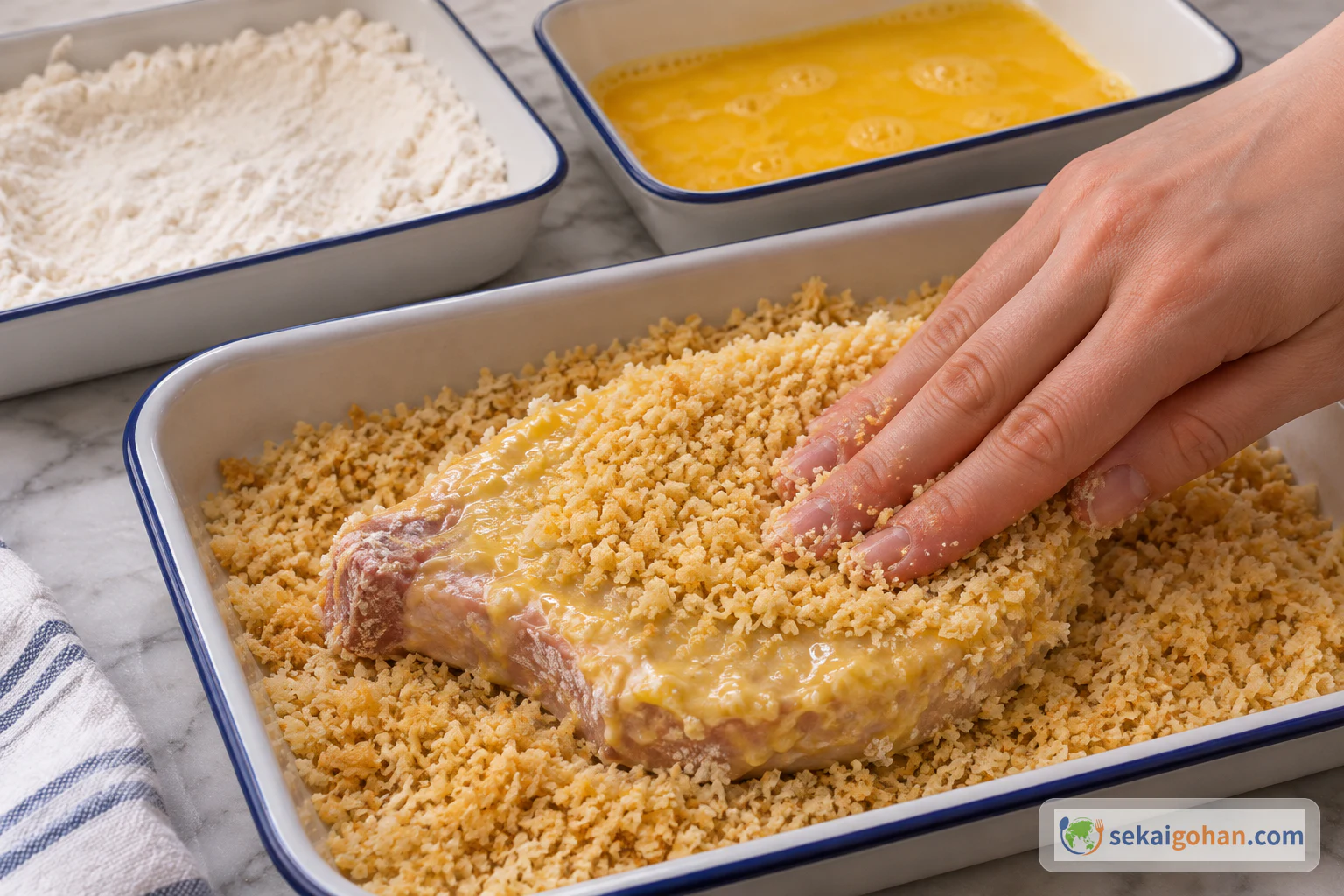
Coat in flour, egg and toasted panko

Pressing toasted panko onto a pork chop already coated in flour and egg
Shake off excess flour, then press the panko on lightly

Set out three shallow dishes in a row: 2 Tbsp flour; the egg beaten with ½ Tbsp neutral oil; and the toasted panko. Dredge each chop in flour and shake off the excess. Dip it in the egg mixture, then lay it in the panko and press the crumbs on lightly so they stick.

Keep the tools that touch raw pork apart from the ones you will use for the cooked cutlets and for serving.

STEP44 / 8

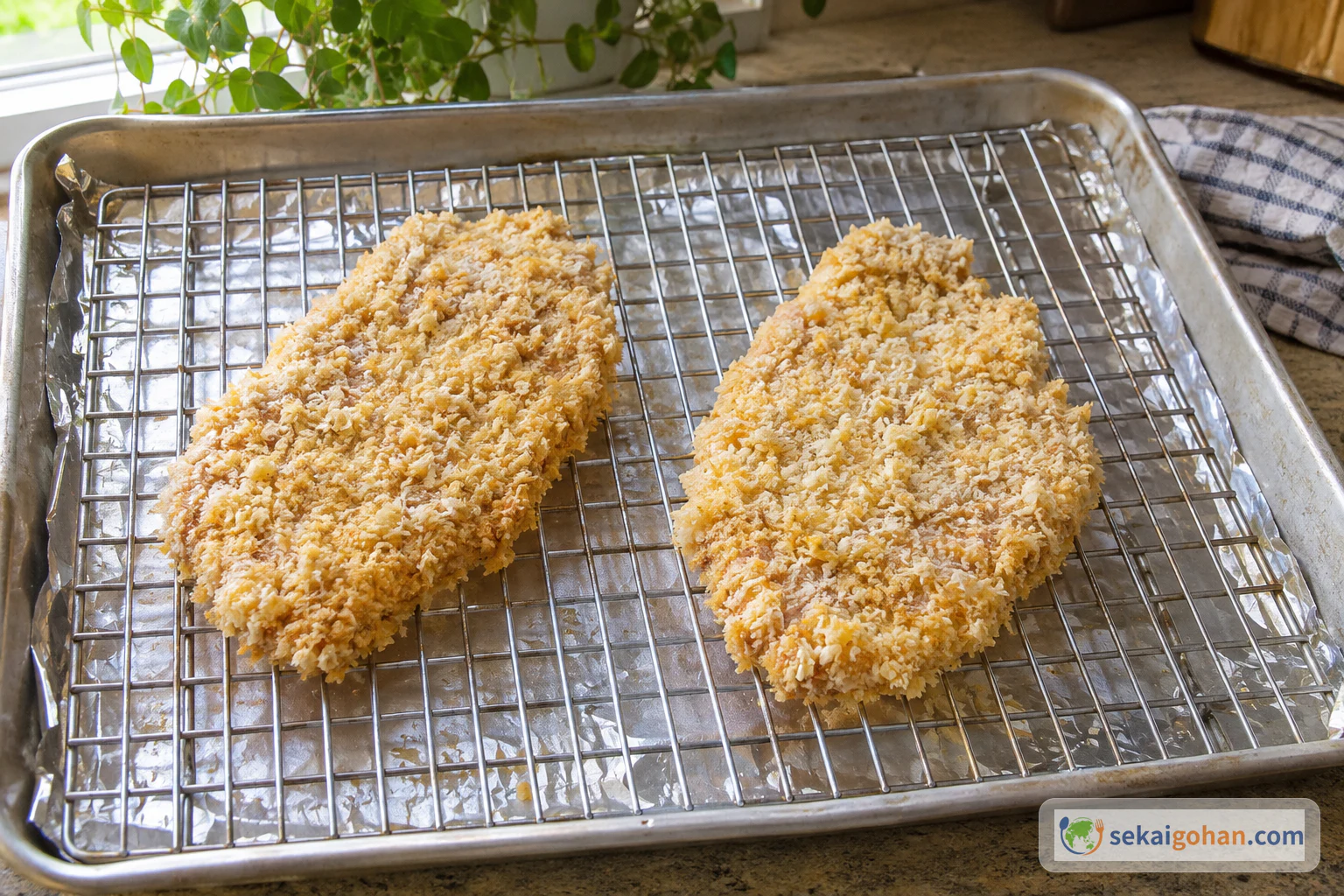
Set the cutlets on a rack

Two panko-coated pork cutlets spaced apart on a wire rack over a sheet pan
Leave space between the cutlets so air can move around them

Place the coated cutlets on a wire rack set over a sheet pan, with space between them. The rack lets air reach the underside of the cutlets.

STEP55 / 8

Bake and check the center temperature

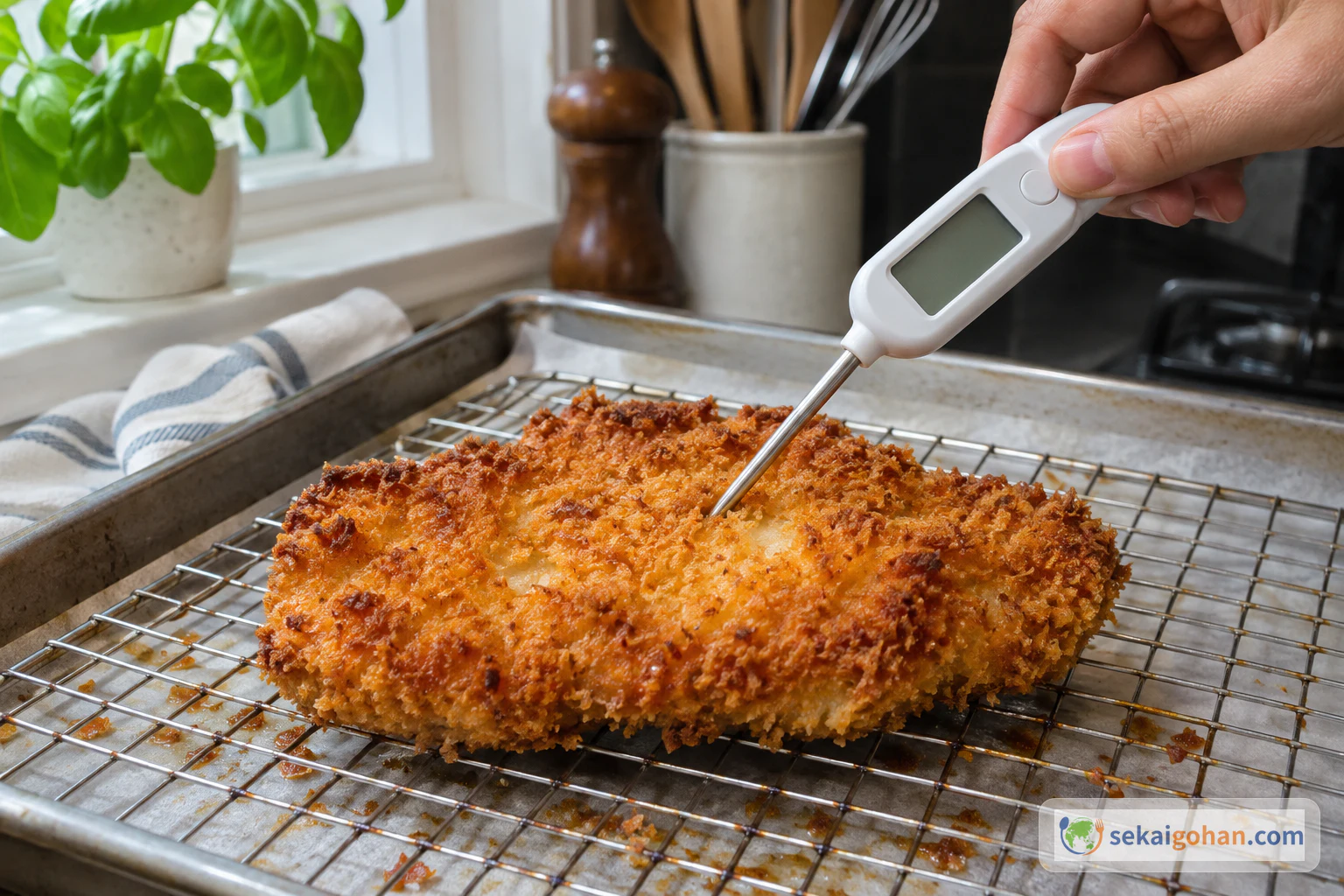
Checking the center temperature of a baked cutlet with a food thermometer
Measure at the thickest part; the clock is only a starting point

Bake at the preheated setting: 400°F (200°C), reduced by 25°F (15°C) for convection, starting with about 20 minutes. Insert a thermometer into the center of the thickest part. The pork is done when the center has reached 75°C or above and stayed there for at least 1 minute. If it hasn't, keep baking and check again. Don't judge doneness by time or the color of the juices alone.

STEP66 / 8

Spread the bread and stack the filling

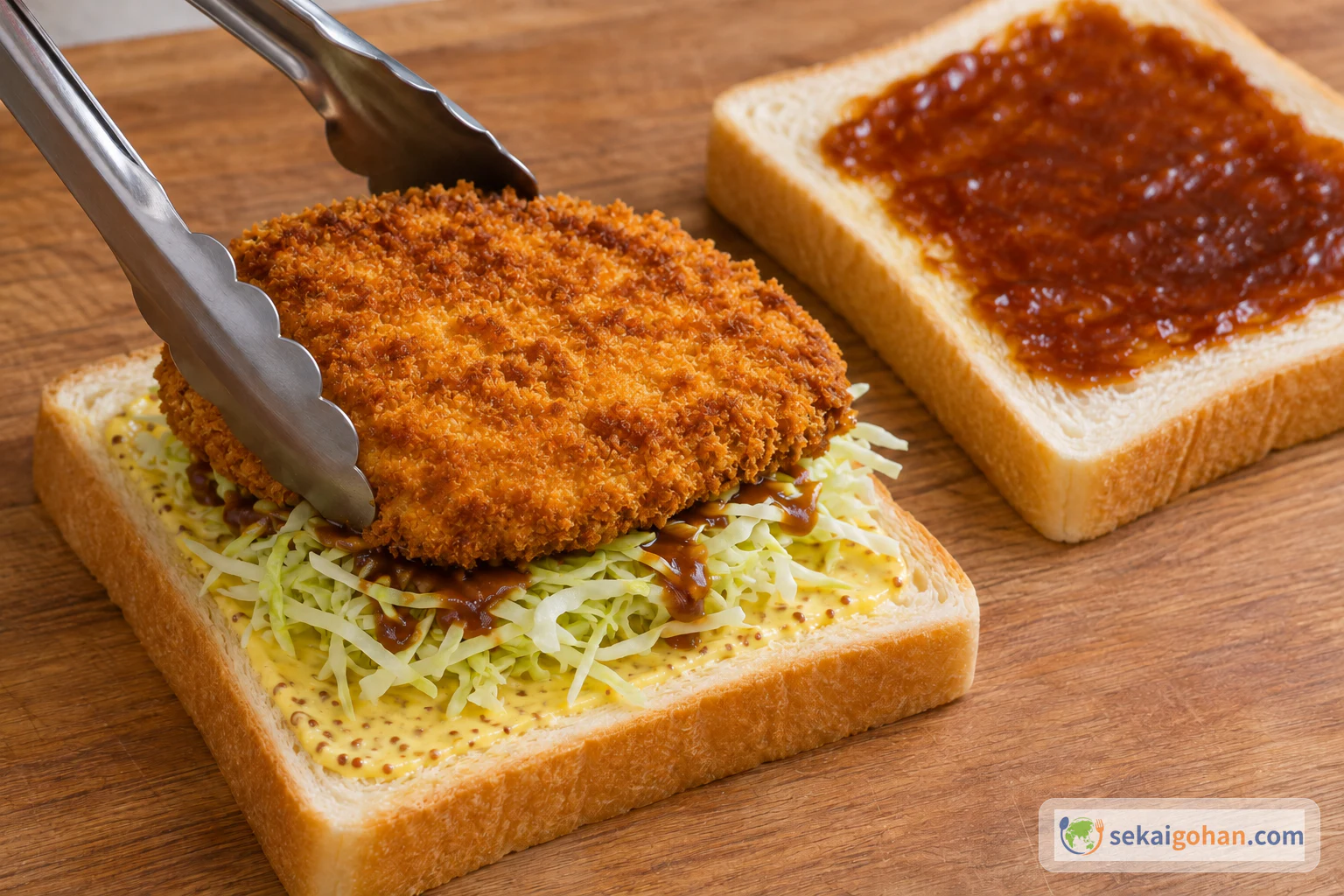
Placing a cooked cutlet on cabbage over the buttered, mustard-spread bread
Butter and Dijon on one slice, sauce on the other, then cabbage, sauce and the whole cutlet

While the pork bakes, shred the cabbage leaf finely on the clean board.

For each sandwich, spread 1 tsp butter on the inside of one slice, then spread 1 tsp Dijon mustard over the butter. Spread some of the tonkatsu sauce on the inside of the other slice. On the buttered slice, lay half the cabbage, add some sauce, then place one whole cooked cutlet on top with clean tongs. Repeat for the second sandwich, using up the remaining sauce between them.

STEP77 / 8

Close and press for 5 minutes

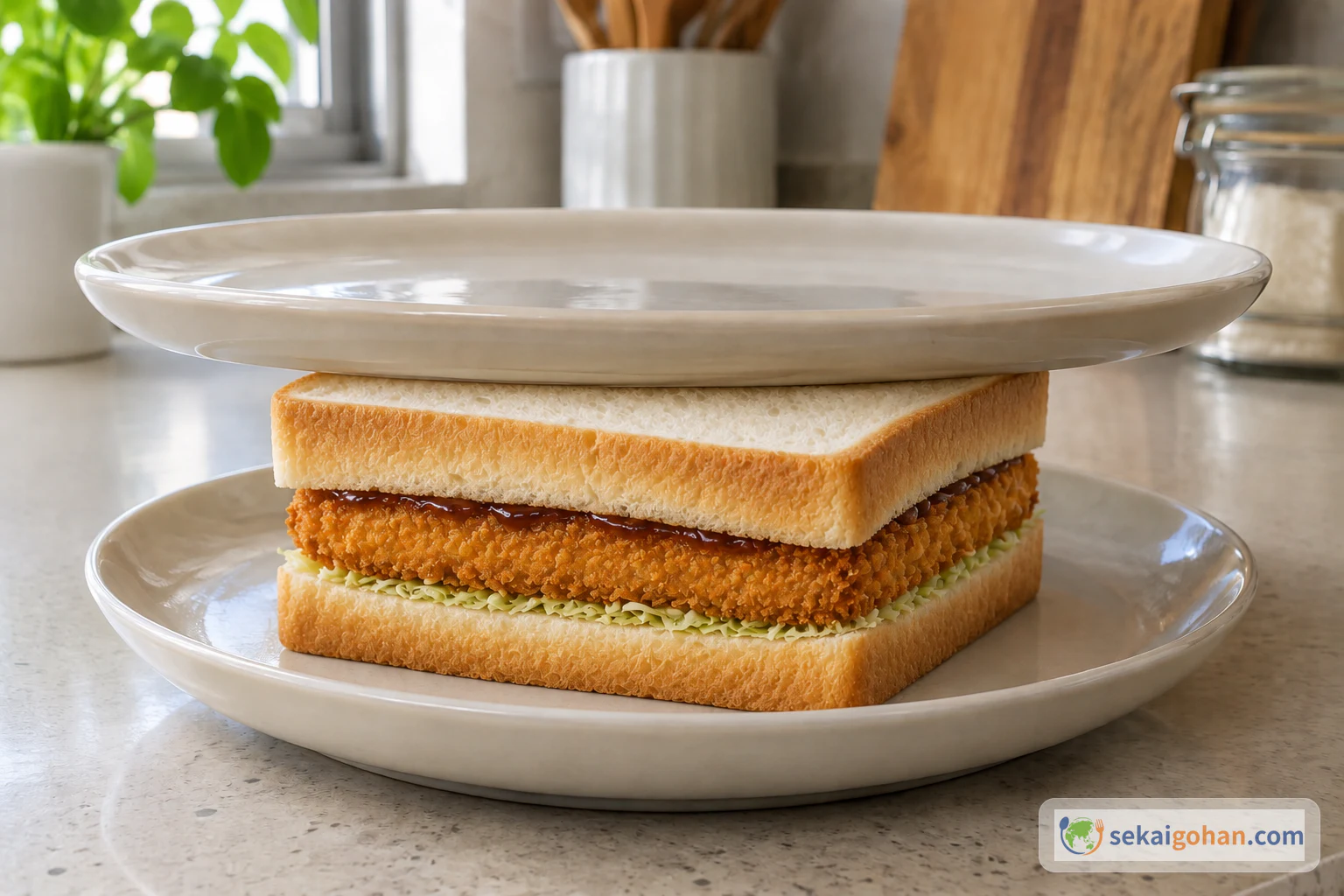
A whole, uncut sandwich with its crusts still on, lightly pressed between two plates
Press the whole sandwich before trimming so the layers settle together

Close each sandwich with its sauce-spread slice. Set the sandwiches between two plates and leave them lightly pressed for 5 minutes.

STEP88 / 8

Trim the crusts and cut in half

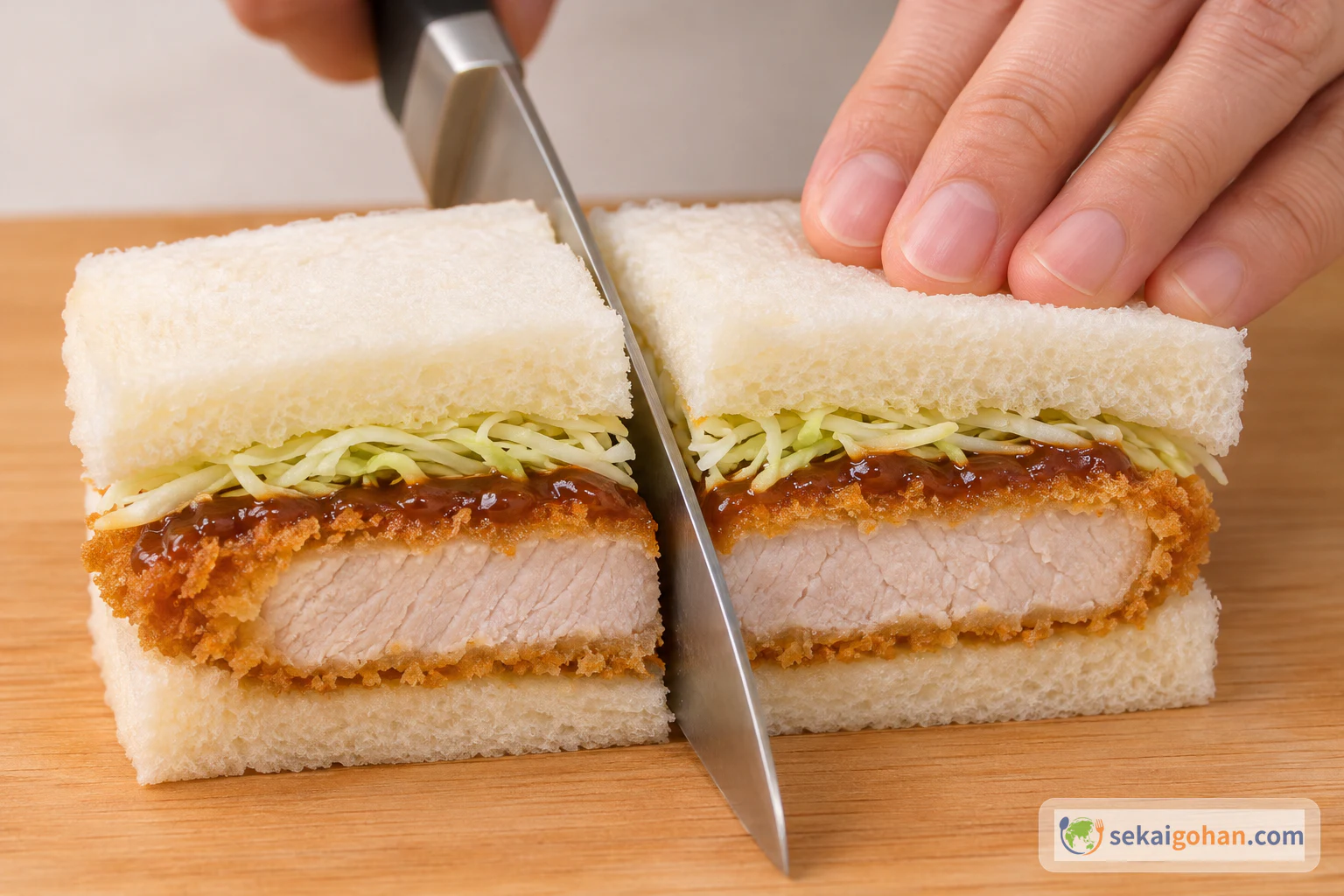
Cutting a crust-trimmed katsu sando in half
Trim the crusts first, then halve the sandwich with one cut

Trim off the crusts, then cut each sandwich in half. Serve right away, one sandwich per person.

0 / 0
Ingredients

Ingredients

1 / 1

Ingredients

Ingredient Amount Role
Panko (パン粉, Japanese breadcrumbs) 1 cup The coating. Toasted golden before it goes on the pork
Neutral oil, for the panko 1½ Tbsp Toasts the panko in the skillet. This is not frying oil
Boneless pork loin chops 2 chops, ½ inch thick, ½ lb (227 g) each The cutlets
Diamond Crystal kosher salt ½ tsp Seasons the pork. If using table salt, use half the amount or the same weight
Black pepper, freshly ground to taste Seasons the pork
All-purpose flour 2 Tbsp The first coating layer
Large egg 1 (50 g without shell) Holds the panko on
Neutral oil, for the egg ½ Tbsp Beaten into the egg
Green cabbage 1 leaf (40 g) Finely shredded and used raw
Shokupan (食パン, Japanese milk bread) 4 slices Two slices per sandwich
Unsalted butter 2 tsp 1 tsp per sandwich, spread thinly on the inside of one slice to help keep moisture out
Dijon mustard 2 tsp 1 tsp per sandwich, spread over the butter
Tonkatsu sauce (とんかつソース) 4 Tbsp Divided between the inside of the opposite slice and the cabbage
0 / 0

A good katsu sando has three things going at once: a golden, crisp coating on the pork, bread that stays soft, and just enough cabbage and sauce to tie them together without wetting the bread. In one bite, the crunch of the panko meets the yielding bread and the sweet, tangy tonkatsu sauce. This Japanese sandwich tucks a breaded pork cutlet between soft slices, usually with shredded cabbage. Getting all three textures to coexist depends less on any one ingredient than on the order you stack things and where the moisture is allowed to go.

About the Katsu Sando

The usual bread is shokupan, the fluffy Japanese milk bread, paired with a pork cutlet, tonkatsu sauce and cabbage. Beyond that, the fillings aren't fixed. Cabbage, sauce and mustard turn up in different combinations, and shops and households vary them further. For more dishes from the same country, see our Japan page.

Many katsu sando use a deep-fried tonkatsu. This version skips the fryer: the panko is toasted in a skillet first, and the coated pork loin cutlets are then baked in the oven. The toasting step is what lets the cutlet come out golden.

Assembly matters just as much. A thin layer of butter on the inside of one slice keeps the bread from getting soggy, and the Dijon goes over it. The sauce goes on the opposite slice and on the cabbage, so it's spread out rather than pooling in one place.

Ingredients for Two Sandwiches
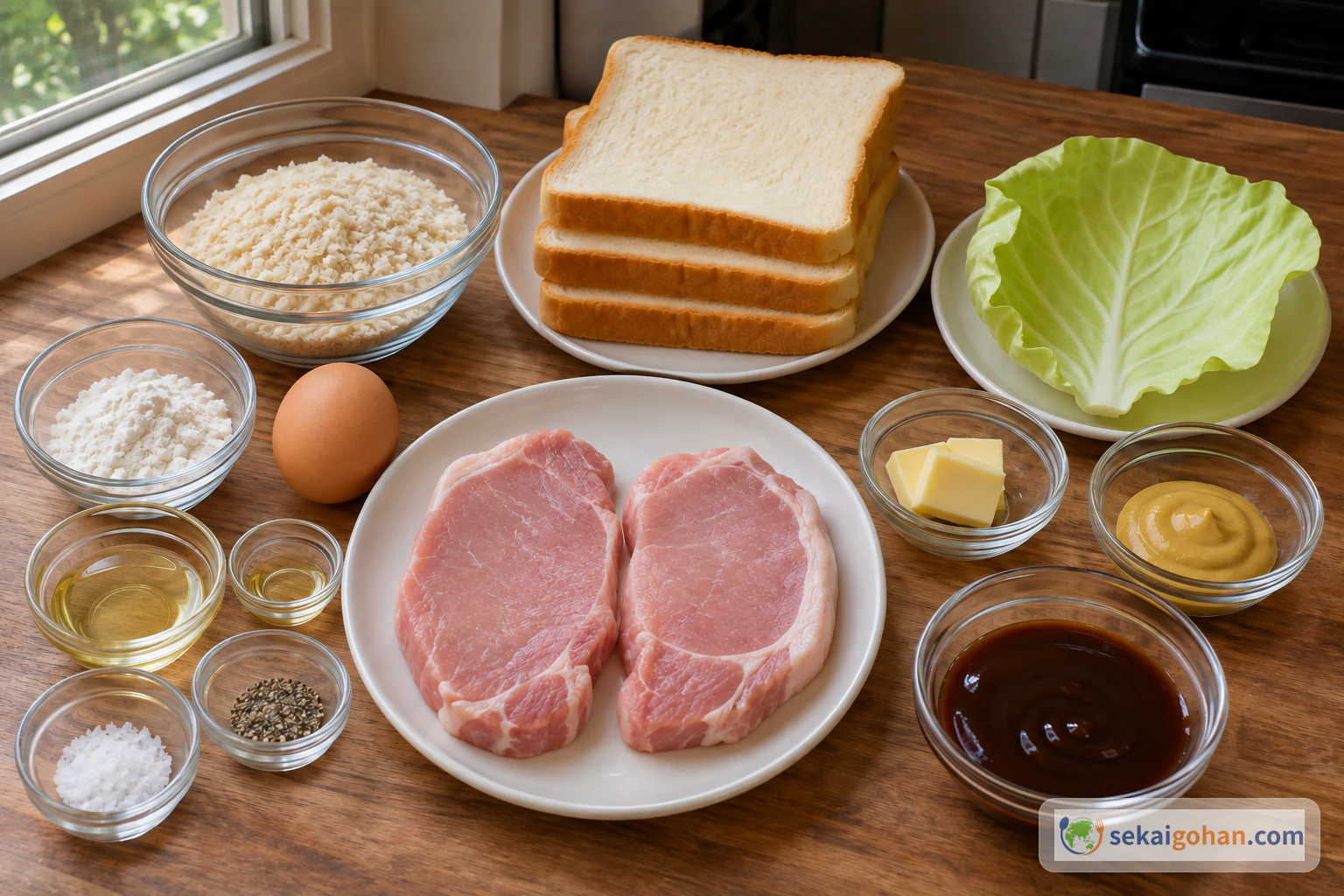
Overhead view of the ingredients for this recipe, laid out separately by stage
Keep the two portions of oil separate: one for the panko, one for the egg

These amounts make 2 servings: two sandwiches from four slices of bread and two pork chops.

Choosing Ingredients for Katsu Sando

The two oil amounts do different jobs: 1½ Tbsp goes into the skillet with the panko, and ½ Tbsp is beaten into the egg. Keep them in separate small bowls so they don't get mixed up.

Salt. The ½ tsp is for Diamond Crystal kosher salt, which has large, light flakes. With table salt, use half the volume or the same weight.

Bread. Shokupan is the bread this recipe is built on, sliced roughly as thick as a square loaf cut into eight. Soft white sandwich bread works if you can't find it, though the flavor and thickness won't be the same.

Pork. Stick with pork loin. Chicken or beef makes a different sandwich, and the times here are for pork loin chops of the thickness above. Panko, bread and tonkatsu sauce vary by brand, so read the labels.

Allergens

This sandwich contains pork, egg, wheat (bread, flour and panko), milk (butter) and mustard. Check the labels on store-bought panko, bread and tonkatsu sauce, including any notes on shared production lines, which depend on the product.

Equipment

  • Skillet, for toasting the panko
  • Cutting board and knife reserved for raw meat
  • A separate clean cutting board and knife for the cabbage and bread
  • Meat mallet
  • Three shallow dishes, for flour, egg and panko
  • Oven-safe wire rack set over a sheet pan, so air can reach the underside of the cutlets
  • Food thermometer, to check the center of the pork
  • Tongs
  • Two plates, for pressing the sandwiches
  • Serving knife and board

Method: Toasting, Baking and Stacking in Order

Raw pork hygiene and doneness

Do not rinse raw meat, since it can spread bacteria. Keep raw-meat tools separate from those used for other foods. Heat the meat until the center reaches 167°F (75°C) or above for at least 1 minute. Keep raw-meat juices away from ready-to-eat foods, and wash hands and tools. Baking time depends on thickness and your oven, so start checking at about 20 minutes and use a thermometer rather than the clock.

Katsu Sando Troubleshooting

Problem Likely cause What to do
The coating slips off Too much loose flour, or panko not pressed on Shake off excess flour before the egg, and press the panko on lightly after dipping
The panko is too dark Skillet too hot, or left in the pan Keep shaking the pan and move the panko to a plate as soon as it is evenly golden
The cutlet curls in the oven Connective tissue not slit Slit where the fat meets the lean meat in a few places before pounding
The center hasn't reached 167°F (75°C) Thicker chop or a different oven Keep baking and recheck at the thickest part until it reaches 167°F (75°C) or above for at least 1 minute
The bread is getting soggy Sauce concentrated in one place, or the sandwich left sitting Keep the thin butter layer under the Dijon, divide the sauce between the opposite slice and the cabbage, and eat soon after assembling

Serving, Storage and Variations

Katsu sando is best eaten freshly made, since the bread softens the longer it sits after assembly. Pickled cucumber is an optional side in some versions. Cool any leftovers quickly, refrigerate them, and reheat them thoroughly rather than leaving cooked food at room temperature for long. Throw away anything that has been kept too long.

Keep variations separate

Each of these is its own approach. Use one at a time rather than mixing its amounts into the recipe above.

  • Salted cabbage and mustard butter. One version uses a ready-made tonkatsu, shredded cabbage lightly salted and rubbed to soften it, and mustard mixed into softened butter, all on ordinary sliced sandwich bread. It has its own amounts.
  • A deep-fried cutlet. This is a different cooking method, so don't carry over the toasted-panko step or the baking time.
  • Pork fillet. Some versions use fillet (hire) instead of loin, which gives a different thickness and texture. The amounts and times here are for loin.
  • Mustard and sauce to taste. Use more or less as you like.

Frequently Asked Questions

Is about 20 minutes in the oven always enough?

Not always. Start checking at about 20 minutes, since chop thickness and ovens vary. Use a thermometer to confirm that the center of the thickest part reaches 167°F (75°C) or above for at least 1 minute.

Do I need to salt the cabbage?

Not for this recipe. Shred the cabbage finely and use it raw.

Should I rinse the pork before cooking?

No. Rinsing raw meat can spread bacteria. Keep raw-meat tools separate from those for the cabbage, bread and cooked cutlets, and wash your hands after handling raw pork.
Sources

  • Namiko Hirasawa Chen, "Katsu Sando カツサンド," Just One Cookbook. The recipe followed in this article: ingredients and amounts, toasting the panko, preparing and coating the pork, the oven temperature and approximate baking time, how the bread is spread and the sandwich stacked, pressing time, trimming and halving; also the description of shokupan as the usual bread and the distinction between the baked method and deep-fried styles. https://www.justonecookbook.com/katsu-sando/
  • Kikkoman Corporation, "Katsu Sandwich (Pork Cutlet Sandwich)_Washoku Lesson." A separate recipe used for comparison: ready-made tonkatsu, ordinary sandwich bread, salted and rubbed cabbage, mustard butter and optional pickled cucumber. Its amounts are not merged into the recipe above. https://www.kikkoman.com/en/cookbook/recipe/00058704.html
  • Ministry of Health, Labour and Welfare, Japan, "家庭での食中毒予防" (Preventing food poisoning at home). General household guidance on heating meat until the center reaches 75°C or above for at least 1 minute, keeping raw-meat juices away from ready-to-eat foods, washing hands and tools, not leaving cooked food at room temperature for long, and refrigerating and thoroughly reheating leftovers. https://www.mhlw.go.jp/stf/seisakunitsuite/bunya/kenkou_iryou/shokuhin/syokuchu/01_00008.html
  • Ministry of Agriculture, Forestry and Fisheries, Kinki Regional Agricultural Administration Office, "料理前に気を付けたいポイント" (Points to watch before cooking). Household hygiene guidance on not rinsing raw meat and keeping raw-meat tools separate from those for other foods. https://www.maff.go.jp/kinki/syouhi/mn/foodpoisoning/ryourimae.html