Tempura: Tokyo-Style Seafood and Vegetables, Fried and Eaten Hot (Tenpura)

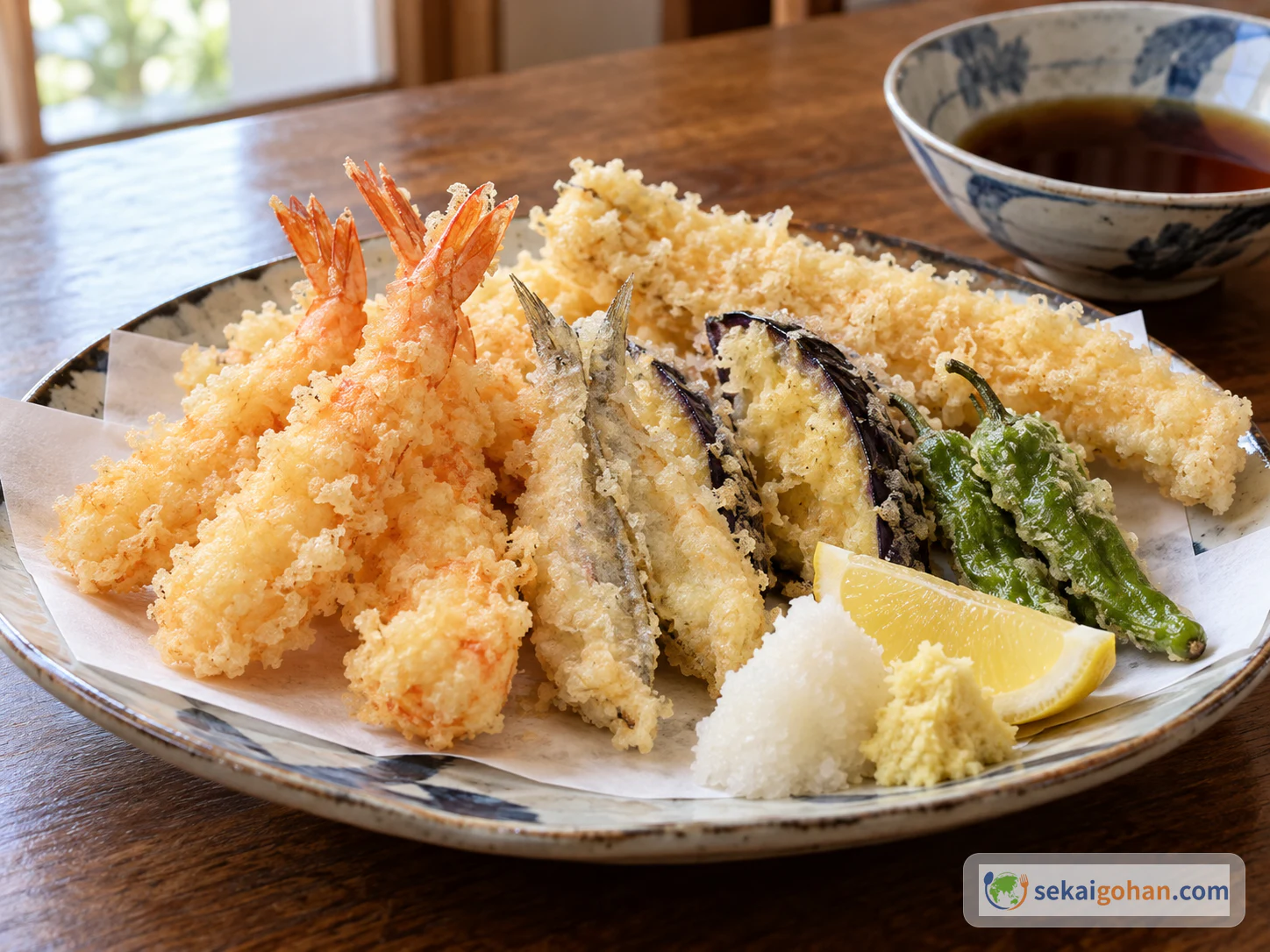
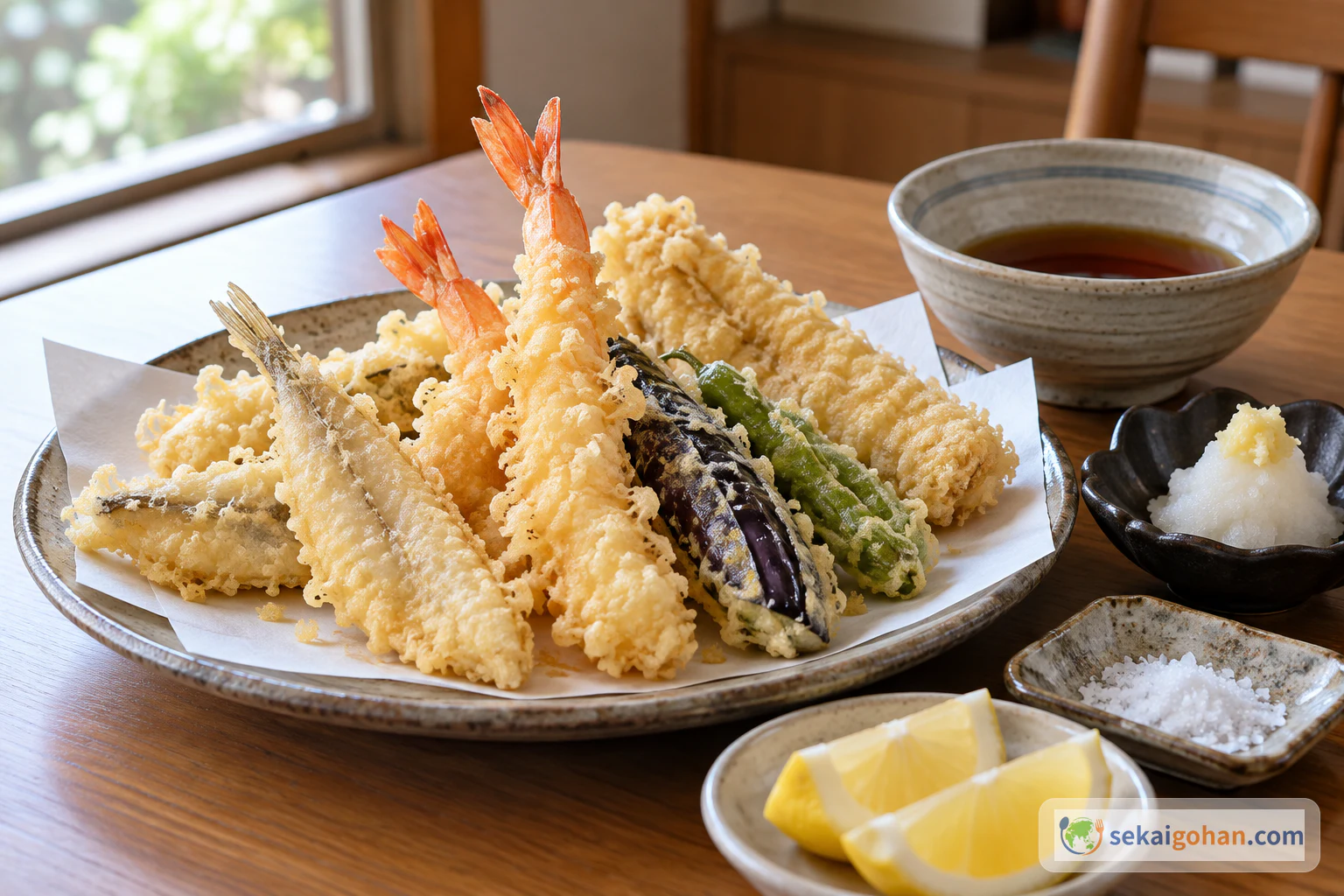
A finished plate of Tokyo-style seafood and vegetable tempura, showing the texture of freshly fried batter
Serves
4 servings
Cuisine
Japanese

How to make Tokyo-style tempura (tenpura) for four with small tiger shrimp, sillago, conger eel, eggplant and shishito peppers, following the regional recipe published by Japan's Ministry of Agriculture, Forestry and Fisheries. Covers a lightly mixed batter of egg yolk, cold water and cake flour, the 180°C oil cue, frying seafood before vegetables, tentsuyu dipping sauce with grated daikon, and the history from Edo food stalls to today's homes and restaurants.

Cooking flow

Cooking steps

STEP11 / 12

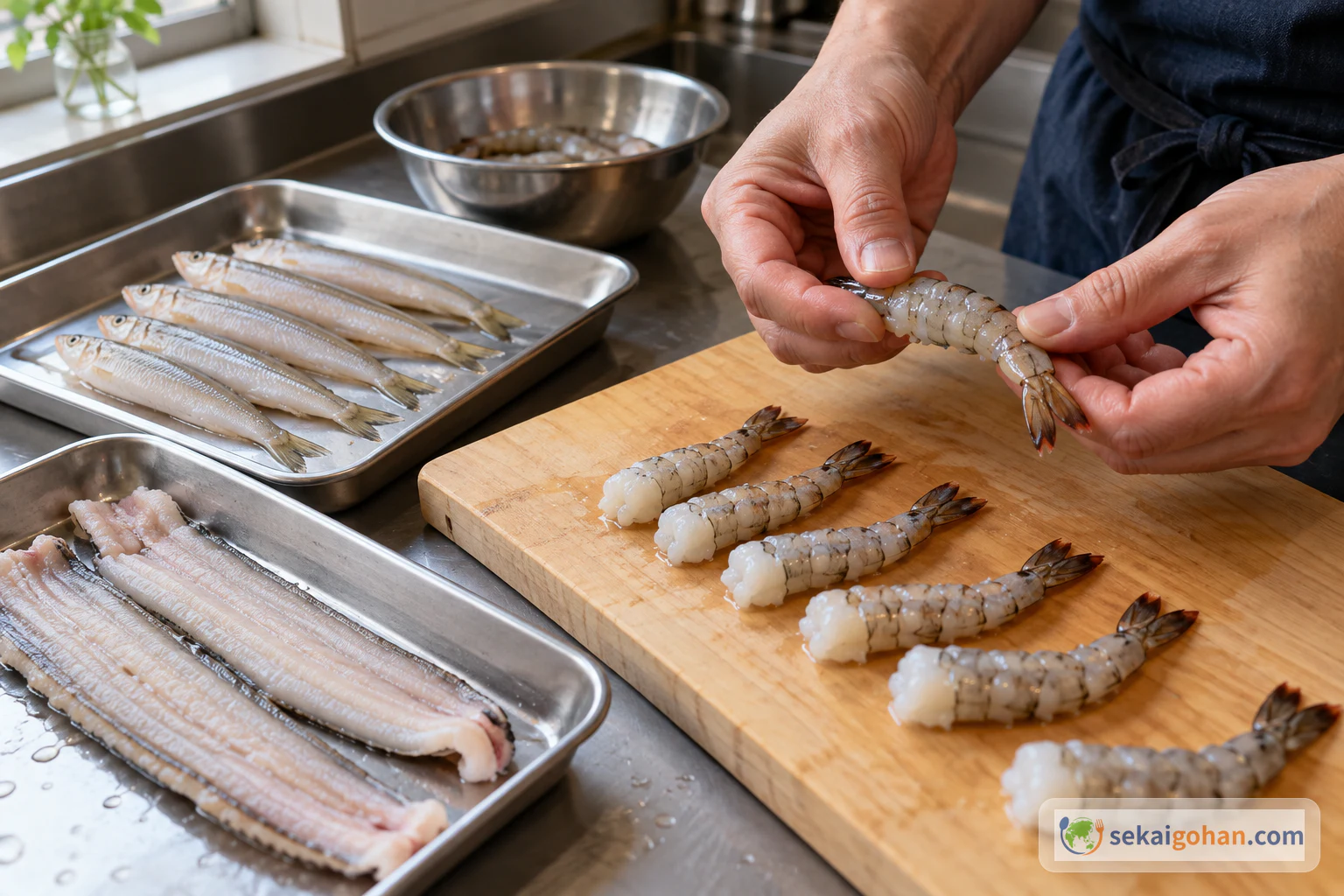
Prepare the shrimp

Cutting the shrimp tail tips and holding each shrimp belly up to bend and straighten the back side
Peel the shrimp leaving the tail, trim the tail tip, and straighten them by hand

Remove the heads and the dark vein along the back. Peel off the shell, leaving the last segment with the tail. Cut the tip of the tail at an angle; this reduces spattering in the oil. Hold each shrimp belly side up and bend the back gently in about 3 places to straighten it, so it is less likely to curl when fried. Do this by hand, and make no cuts in the belly.

STEP22 / 12

Prepare the sillago and conger eel

STEP 2

Remove the scales, head and innards of the sillago and wash it. Open it along the back and take out the backbone and belly bones. The conger eel is used already opened along the back. Wipe excess moisture from all the seafood. If you bought already-cleaned sillago, you can skip the cleaning here; check that it is dry.

STEP33 / 12

Cut the eggplant and shishito peppers

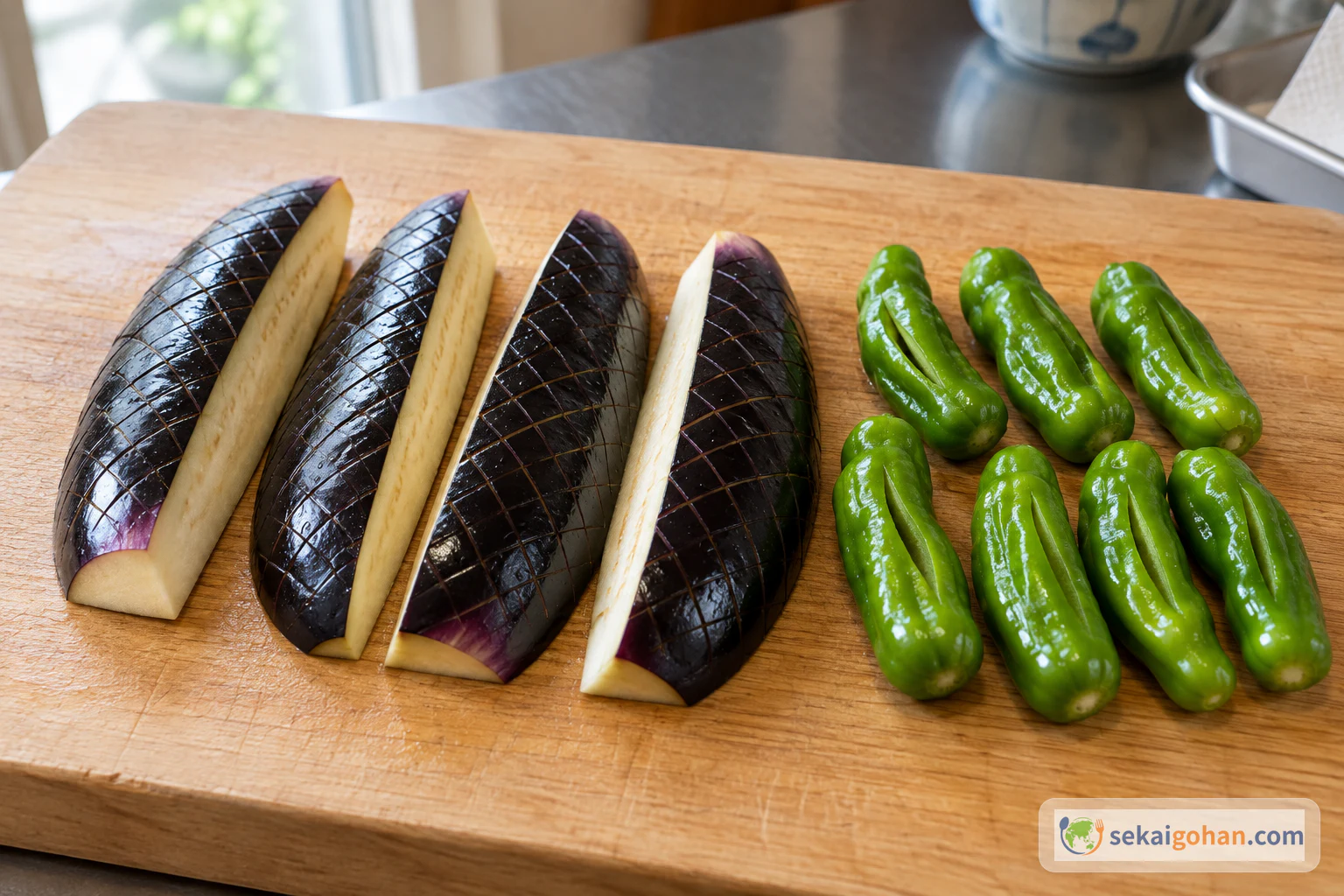
An eggplant cut lengthwise into four with finely scored skin, and shishito peppers with trimmed stems
Score the eggplant skin finely; trim, dry and slit the shishito peppers

Cut the eggplant lengthwise into 4 pieces and make fine, shallow cuts in the skin. Trim the stems of the shishito peppers. Wipe the peppers dry and make one small lengthwise slit in each to keep them from bursting.

STEP44 / 12

Make the tentsuyu

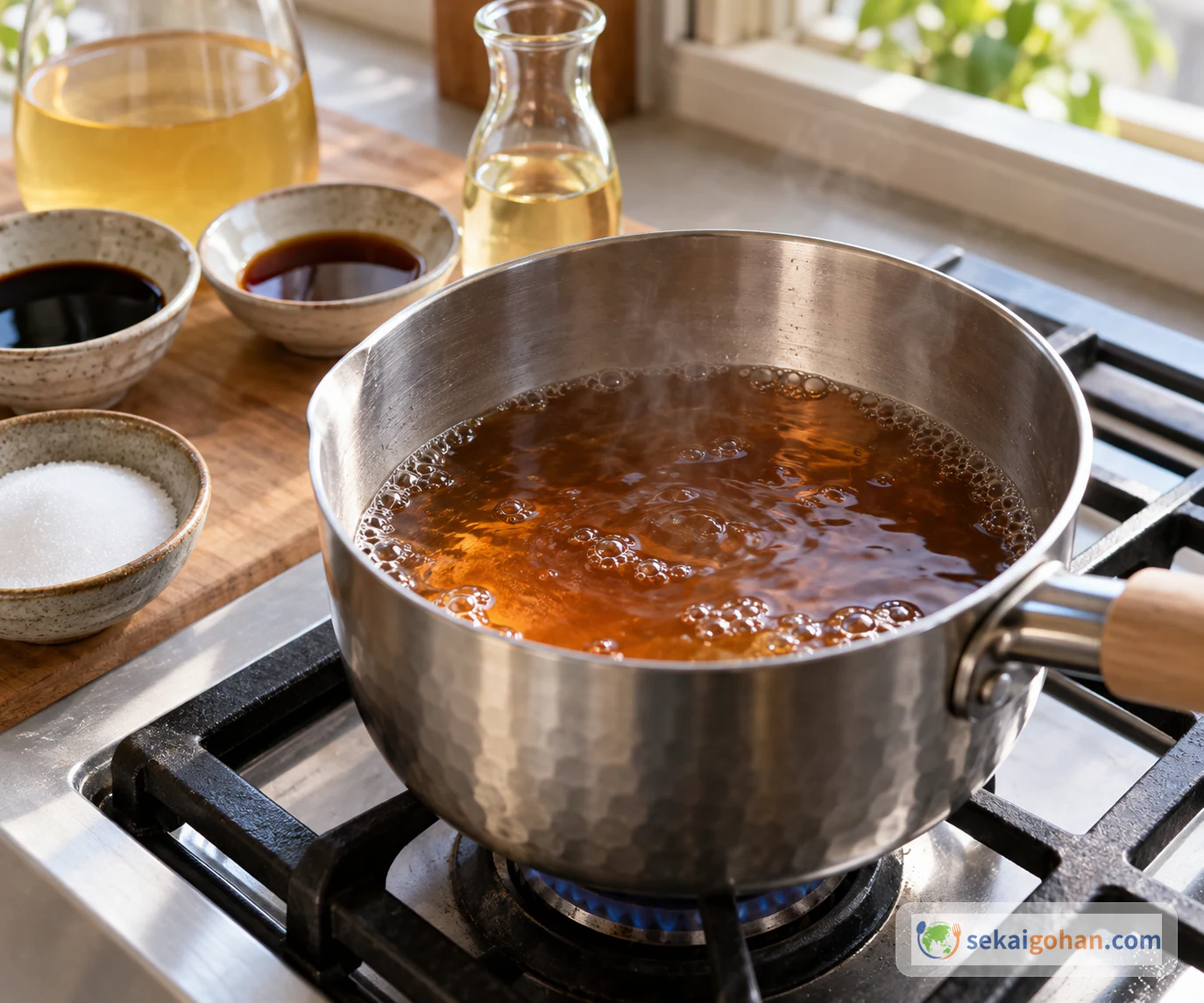
Dashi, two soy sauces, mirin and sugar brought to a boil in a small saucepan, then left to cool
Bring the tentsuyu to a boil once, then set it aside to cool

Put the dashi, both soy sauces, mirin and sugar in a small saucepan and bring it just to a boil once. Take it off the heat and let it cool.

STEP55 / 12

Heat the oil to 350°F (180°C)

STEP 5

Mix the vegetable oil and sesame oil at 7:3 in a deep, stable pot, keeping well below the rim, and heat to 350°F (180°C). Without a thermometer, drop in a little batter: it should sink partway and then rise right away. Once the oil is heating, do not leave the stove; have the other preparation done before this point.

STEP66 / 12

Mix the batter lightly

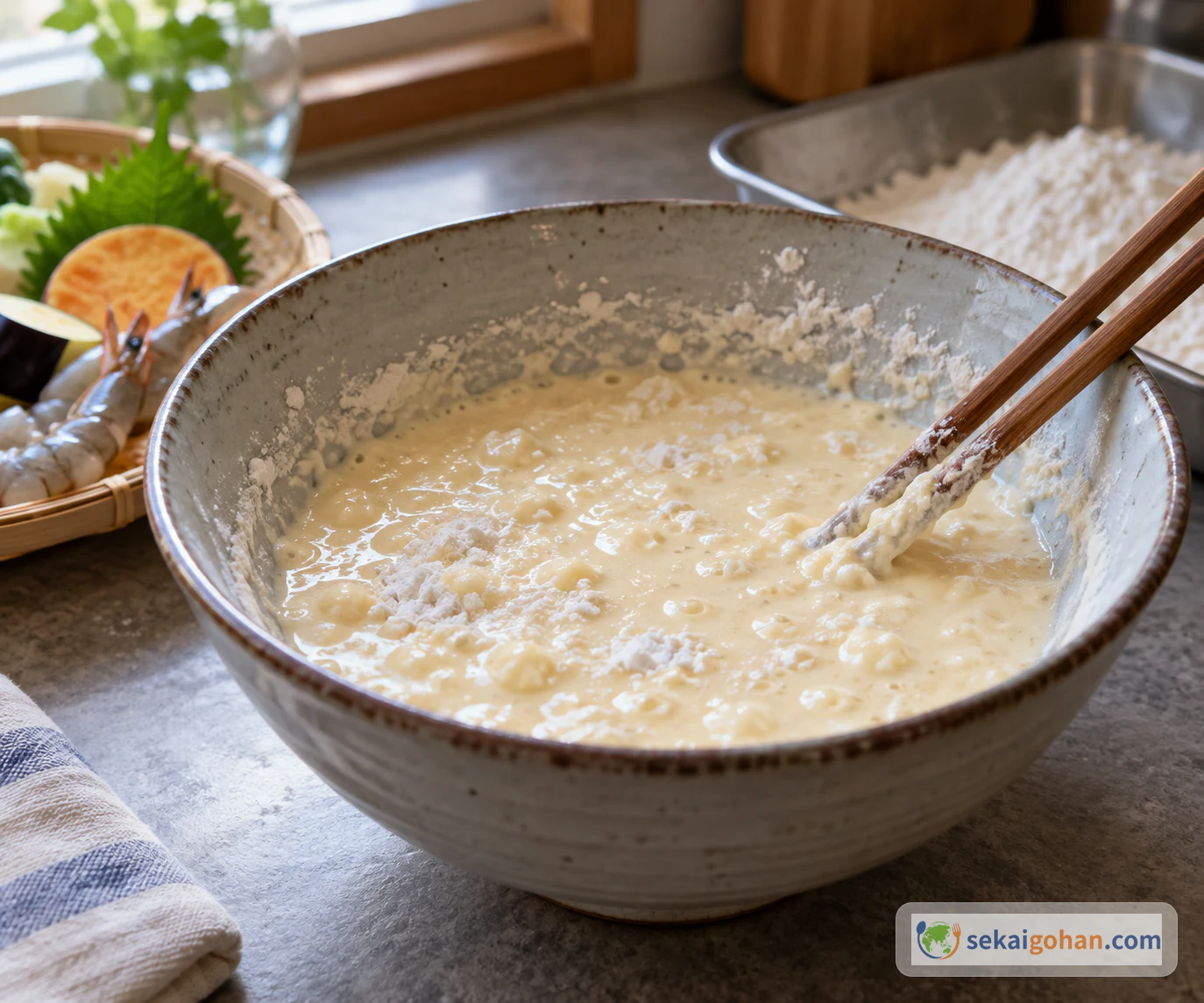
Egg yolk and cold water combined with cake flour and mixed lightly, with some dry flour remaining
Stop mixing while small flecks of flour still remain

Start the batter only after the oil has begun to heat. Beat the egg yolk, add the cold water, then add the sifted flour. Mix briefly with thick chopsticks, stopping while a little dry flour still shows. Do not knead or beat it. Cold water and minimal mixing help keep the batter from turning heavy.

STEP77 / 12

Fry the shrimp

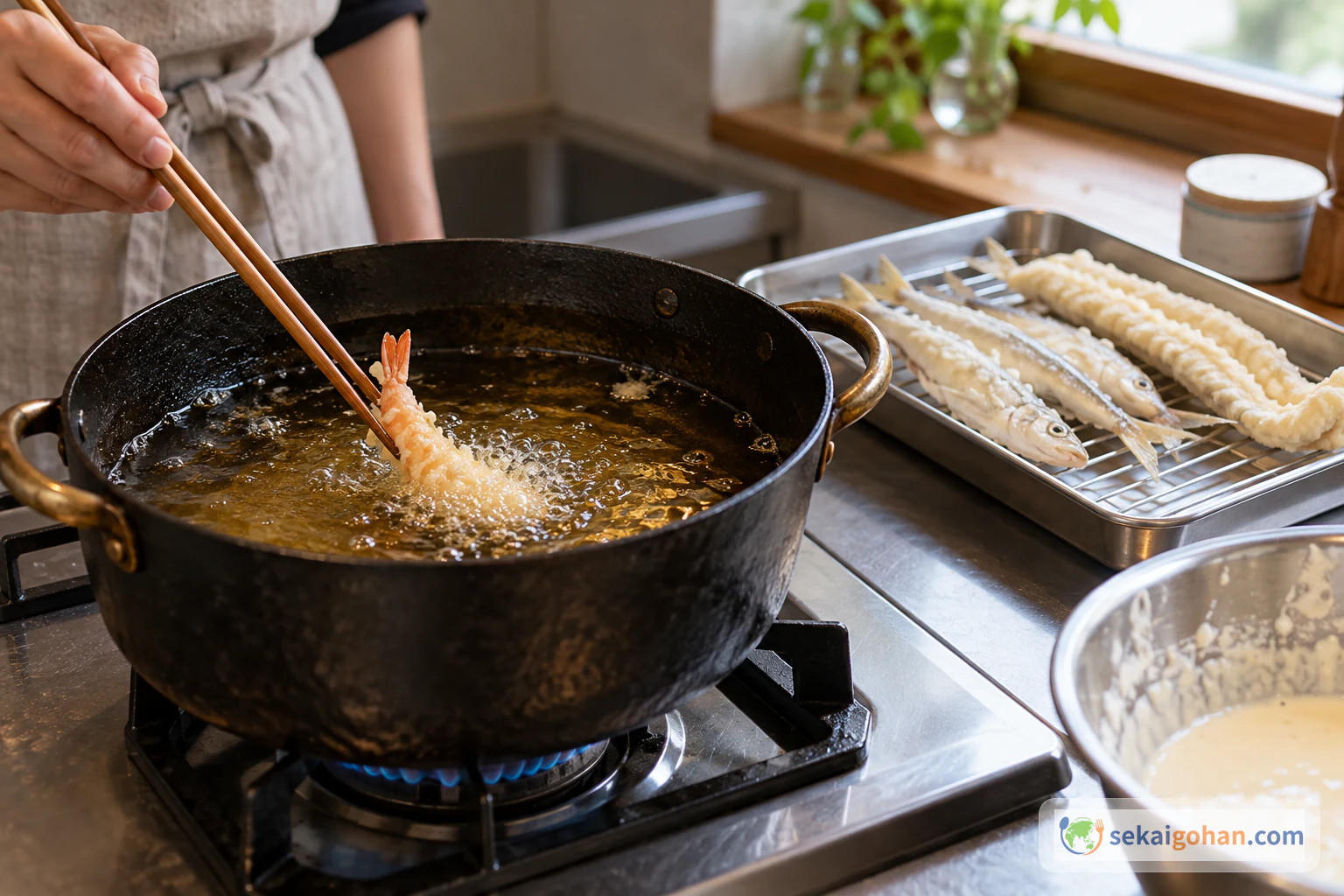
Battered shrimp frying in 180°C oil in a deep pot, with sillago and conger eel ready to follow
Fry the seafood in order: shrimp, then sillago, then conger eel

Hold each shrimp by the tail, coat it thinly but fully with batter, and fry. Do not crowd the pot, so the oil temperature does not drop. Lift the pieces onto a wire rack to drain.

STEP88 / 12

Fry the sillago

STEP 8

Coat the sillago with batter, skin side up, and fry. Drain on the rack.

STEP99 / 12

Fry the conger eel

STEP 9

Coat and fry the conger eel a little longer than the others, until the batter is crisp. The color of the batter alone does not prove the seafood is cooked through, so judge carefully.

STEP1010 / 12

Lower the oil slightly and fry the vegetables

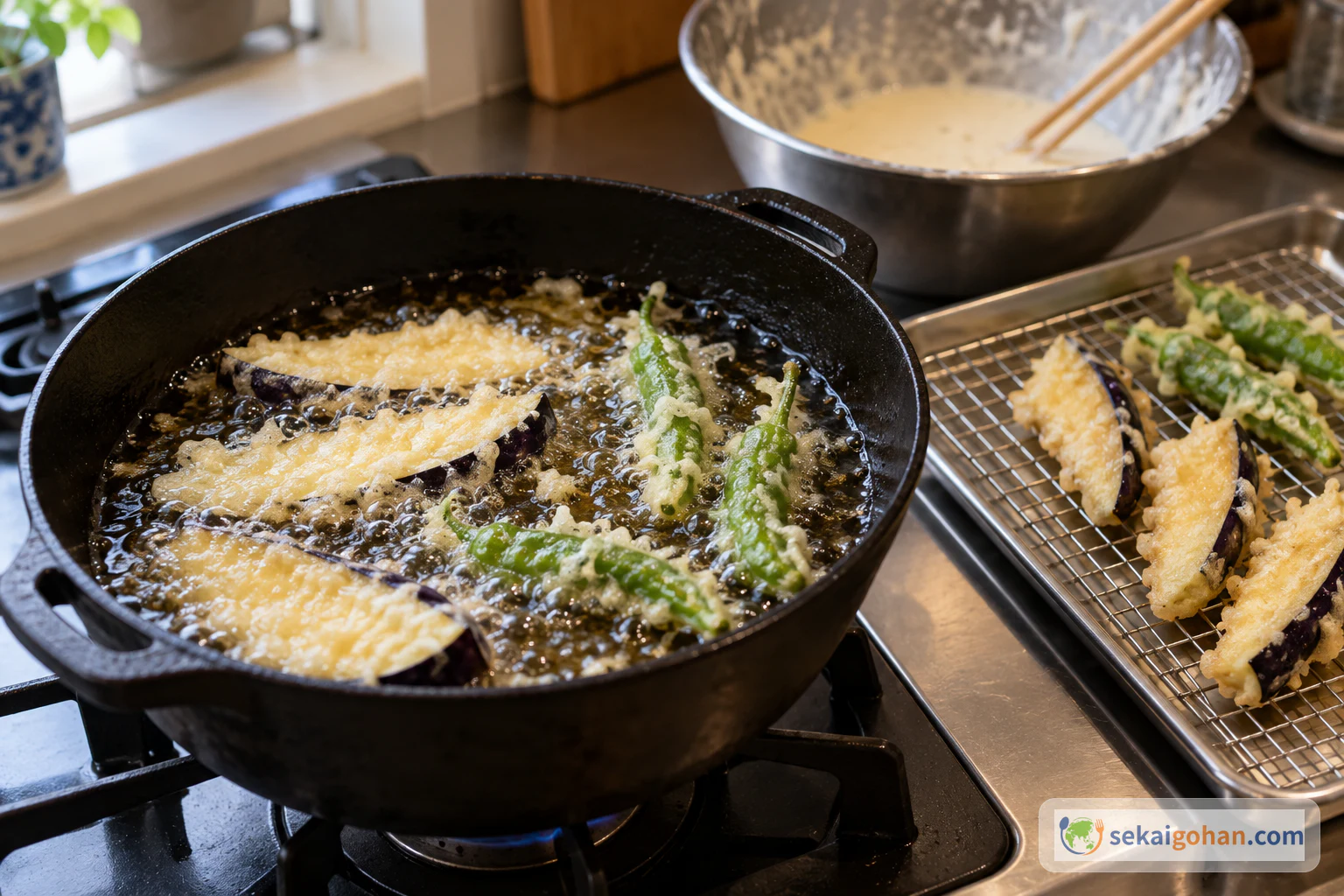
Battered eggplant and shishito peppers frying in small batches in slightly cooler oil
Fry the vegetables a few at a time and keep adjusting the heat

Let the oil temperature come down a little. Pass the eggplant and shishito peppers through the batter and fry them in small batches. Use the remaining batter a little at a time, and adjust the oil temperature often as you go.

STEP1111 / 12

Cut the eel and plate

STEP 11

Cut each conger eel in half with chopsticks and arrange it on plates with the shrimp, sillago, eggplant and shishito peppers.

STEP1212 / 12

Serve right away

Tentsuyu, grated daikon, grated ginger, lemon and salt set out on the table to eat with the tempura
Choose tentsuyu with grated daikon and ginger, or lemon and salt

Grate the daikon and ginger. Serve the tempura with the tentsuyu and the grated daikon and ginger, or with lemon and salt.

0 / 0
Ingredients

Ingredients

1 / 1

Ingredients

Ingredient Amount Role
Small Japanese tiger shrimp (kuruma ebi, komaki size) 12 Seafood. Peeled with the tail left on
Sillago (kisu), small 4 Seafood. Cleaned and opened along the back
Conger eel (anago), opened along the back 4 Seafood. Buying it already opened saves preparation
Eggplant (nasu) 1 Vegetable. Cut lengthwise into quarters, skin finely scored
Shishito peppers 8 Vegetable. Stems trimmed
Egg yolk 1 Batter. The white is not used
Cold water 1½ cups Batter
Cake flour (hakurikiko) 2 cups Batter. Sifted
Vegetable oil (sarada abura) As needed, 7 parts to 3 parts sesame oil Frying oil
Sesame oil (goma abura) As needed, 3 parts to 7 parts vegetable oil Frying oil, for aroma
Dashi 1 cup Tentsuyu
Soy sauce (koikuchi shoyu) ½ tbsp Tentsuyu
Light soy sauce (usukuchi shoyu) 2½ tbsp Tentsuyu
Mirin 1½ tbsp Tentsuyu
Sugar 1½ tsp Tentsuyu
Daikon 250g Grated, to serve with the tentsuyu
Ginger A little Grated, to serve with the tentsuyu
Lemon ½ To serve, with salt
Salt To taste (optional) To serve, with lemon
0 / 0

Each piece of Tokyo tempura is meant to be eaten soon after it leaves the oil, still hot, followed by the next. The batter is thin, light and crisp, mixed only briefly so the shrimp, fish and vegetables inside still taste like themselves. Here that means small Japanese tiger shrimp, sillago, conger eel, eggplant and shishito peppers. Dip them in tentsuyu with grated daikon and ginger, or keep things simple with lemon and salt.

The History of Edo Tempura

The word means different things in different parts of Japan. In Kamigata (around Osaka and Kyoto), "tempura" has referred to fried fish paste. In Edo (old Tokyo), it meant seafood fried in batter, and that is the kind you are making here. For more dishes from the same country, see Japan.

Tempura is traced back to a fritter-like Portuguese dish introduced in the mid-16th century. Frying in large amounts of oil stayed rare for a long time, and tempura only spread once rapeseed oil production grew during the Edo period. In Edo it became street-stall food, and from the Meiji era onward it was served in restaurants as well.
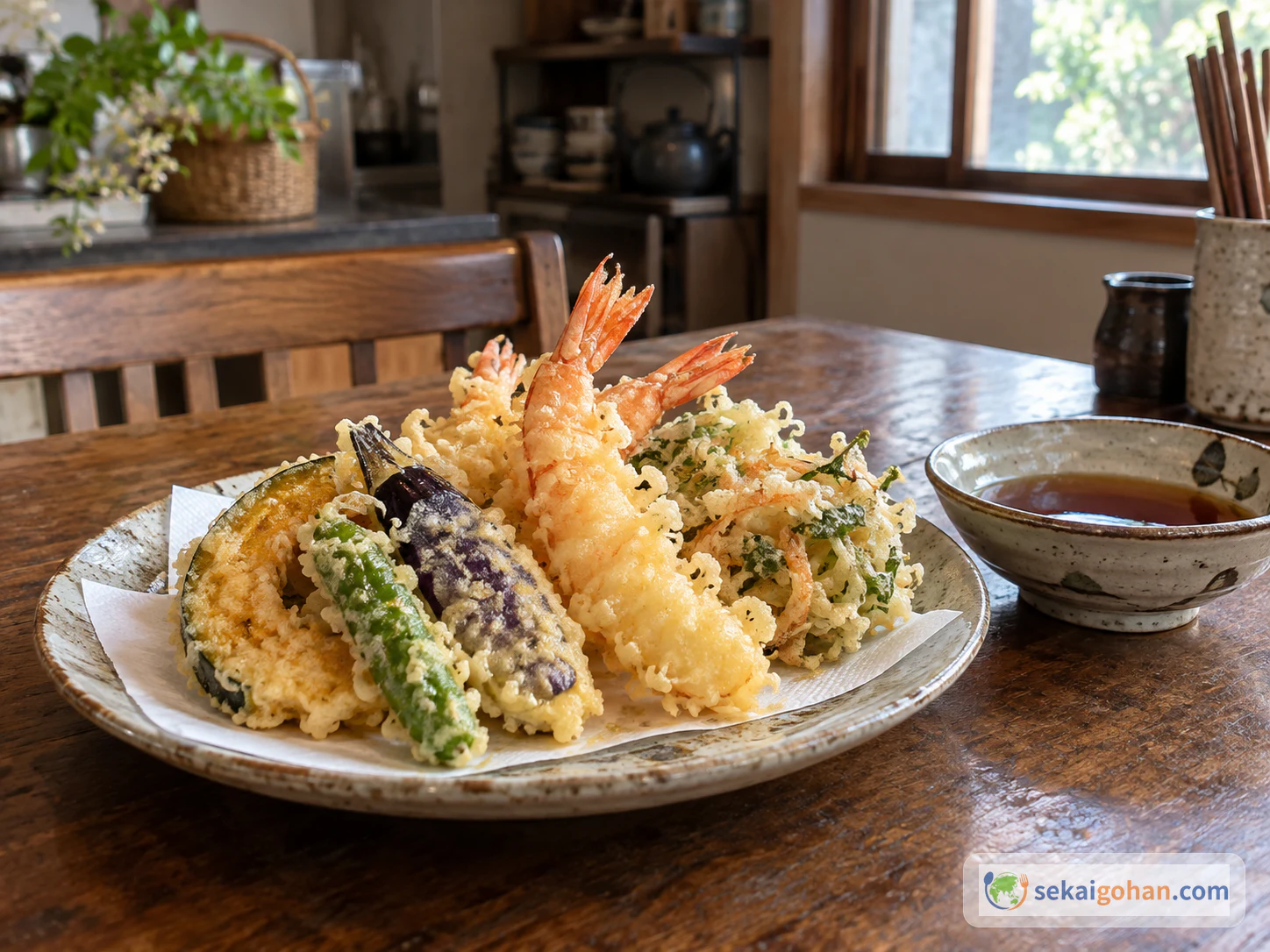
A modern home table with seafood and vegetable tempura, standing for a dish that spread from Edo food stalls to homes and specialist restaurants
Tempura spread from Edo street stalls to restaurants and everyday home tables

Today tempura is part of home cooking and ready-made side dishes, too. For a dish that looks so simple, it covers a lot of ground: it's everyday food at home and also the work of skilled restaurant chefs, and it sits comfortably at both ends.

Ingredients for 4: Tiger Shrimp, Sillago, Conger Eel and Two Vegetables
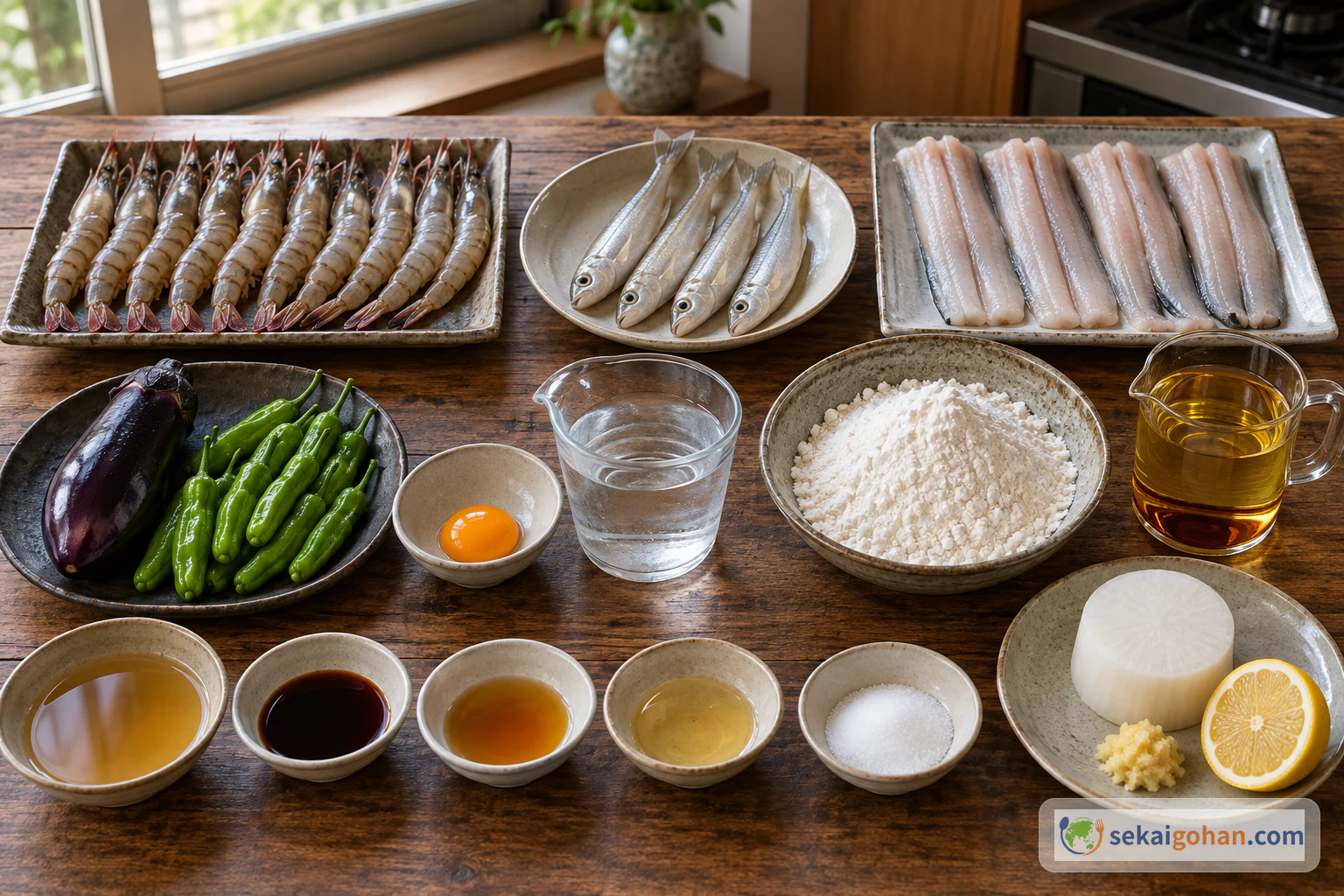
An overhead view of all the ingredients laid out separately: tiger shrimp, sillago, conger eel, eggplant, shishito peppers, and everything for the batter and tentsuyu
Seafood and vegetables, batter, and tentsuyu: three groups to get ready

Use a 200ml measuring cup. 1½ cups of cold water is 300ml, 1 cup of dashi is 200ml, and 2 cups of flour is 400ml. Measure the flour by volume, not 400g.

Mix the two oils by volume at 7:3, and use enough to suit your pot, but never fill it to the brim. Use only the egg yolk; the leftover white is not needed. Do not add a whole egg instead.

Allergens

This recipe contains shrimp, fish (sillago and conger eel), egg and wheat. The tentsuyu contains soy from the soy sauce, and the frying oil contains sesame. Check the labels of the dashi, soy sauces, flour and oils you use.

Equipment

  • A deep, stable pot for frying
  • A cooking thermometer
  • A wire draining rack
  • Thick cooking chopsticks
  • A sieve for sifting the flour
  • A mixing bowl for the batter
  • A small saucepan for the tentsuyu
  • A grater for the daikon and ginger
  • Kitchen paper for wiping the ingredients dry

Choosing Ingredients for Tempura

Flour. Use hakurikiko (cake flour) rather than all-purpose flour.

Soy sauce. The tentsuyu uses two soy sauces in different amounts. Light soy sauce (usukuchi) and regular dark soy sauce (koikuchi) differ in color and saltiness, so swapping one for the other changes the sauce.

Oil. The 3 parts of sesame oil in the 7:3 blend carry the aroma the recipe intends, so keep the ratio.

Shrimp and fish. A different kind of shrimp will change the size, the sweetness and how it cooks through. If sillago is hard to find, another white fish can stand in, though it will taste different. Buying already-opened conger eel or already-cleaned sillago saves preparation; either way, wipe off any excess moisture.

Method: Prepare Everything, Then Fry Seafood Before Vegetables

The order matters

All the cutting and the sauce come first. Start heating the oil, then mix the batter, then fry the seafood at 350°F (180°C) and the vegetables at a slightly lower temperature. Do not judge doneness by the batter's color alone.

Common Tempura Problems

Condition Likely cause What to do
The batter is thick and heavy Mixed too long, or water not cold Next batch, mix only until some dry flour remains and use cold water. Make the batter after the oil starts heating
The pieces come out soft and oily Too many pieces at once, so the oil cooled Fry fewer pieces at a time and let the oil return to temperature between batches. Drain on a wire rack
The batter sinks and stays down Oil not hot enough Wait for the batter test to sink partway and rise right away, or for the thermometer to read 350°F (180°C)
The shrimp curled Back not straightened Next time, bend the back gently in about 3 places with the belly up before coating
The conger eel batter is not crisp Taken out too early Fry it a little longer than the other seafood, until the batter is crisp
The oil spatters Moisture on the ingredients, or shrimp tail tips not trimmed Wipe all ingredients dry and cut the tail tips at an angle

Serving Tempura and Variations

Tentsuyu with grated daikon and ginger is the classic dip. Lemon and salt is the other way, and it keeps the taste of the shrimp and fish in front. Tempura is at its best freshly fried, so fry only what you will eat.

Once you have the basics down, there are a few directions to take it:

  • A smaller, shrimp-centered plate. For fewer ingredients, fry mainly shrimp. Work out new amounts rather than simply scaling down the main recipe.
  • Seasonal vegetables. Choose what's in season. Amounts and frying conditions depend on each vegetable.
  • Tendon. Simmer the tempura briefly in a sweet-salty sauce and set it on a bowl of rice. That sauce is a different one from this tentsuyu.
  • Tempura soba or udon. Set the tempura on noodles. As the broth soaks in, the batter softens and changes texture.

Frequently Asked Questions

What happens if I mix the batter too much?

The batter turns sticky and is less likely to fry up light. Stop while a little dry flour still remains.

What size is a "cup" in this recipe?

This recipe uses a 200ml measuring cup. The 1½ cups of cold water is 300ml and the 1 cup of dashi is 200ml. The 2 cups of cake flour is a 400ml volume, not a weight.
Sources