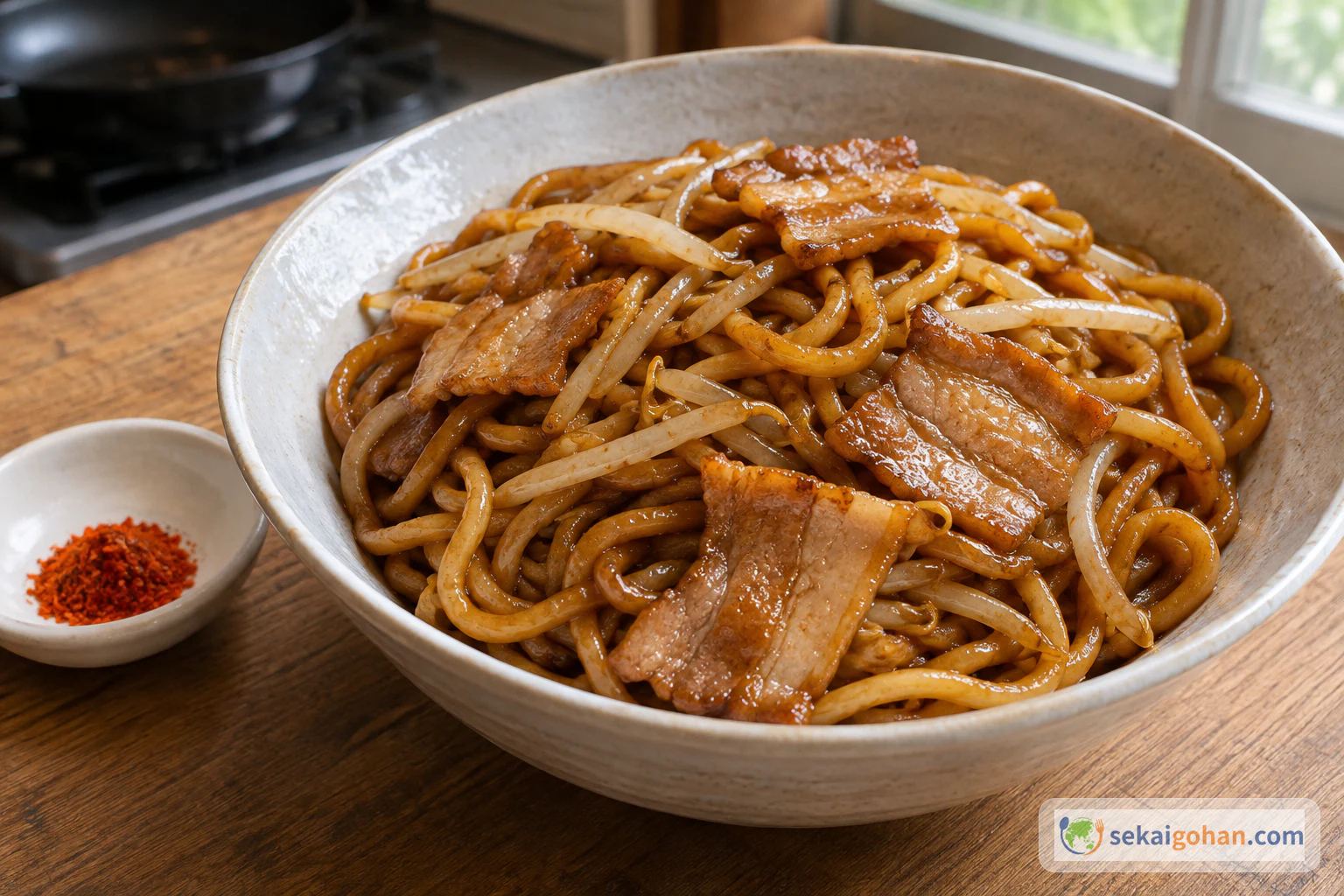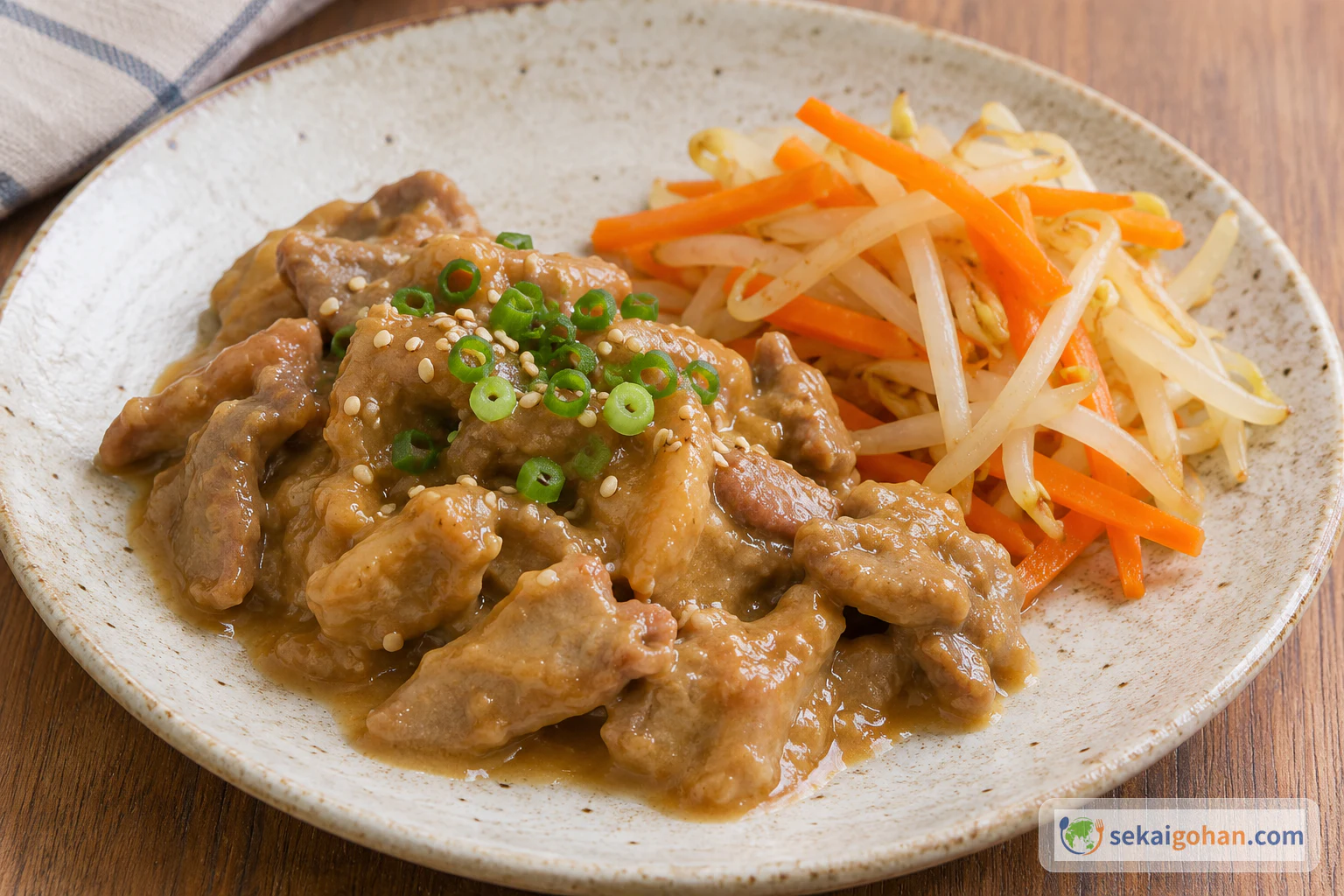
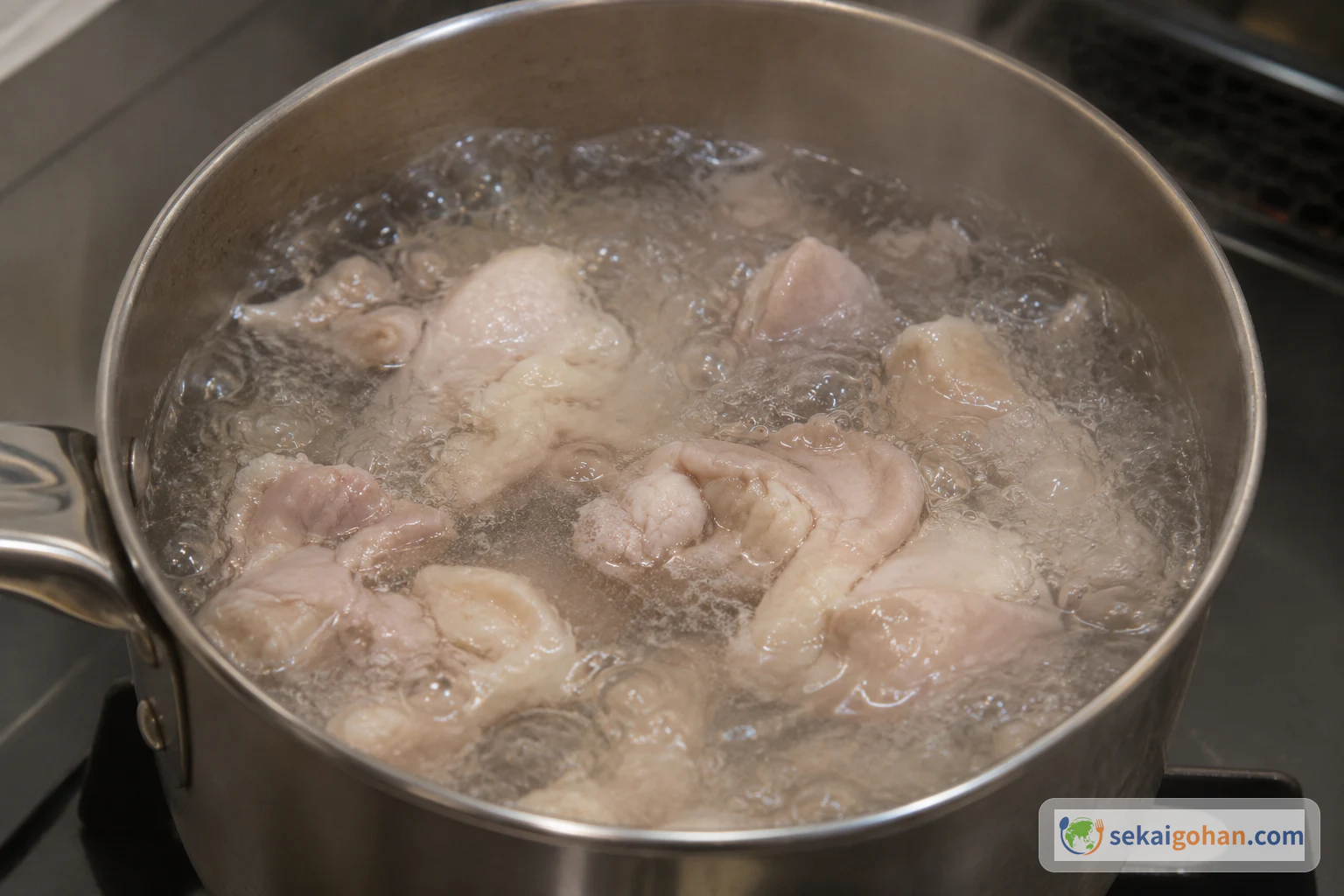
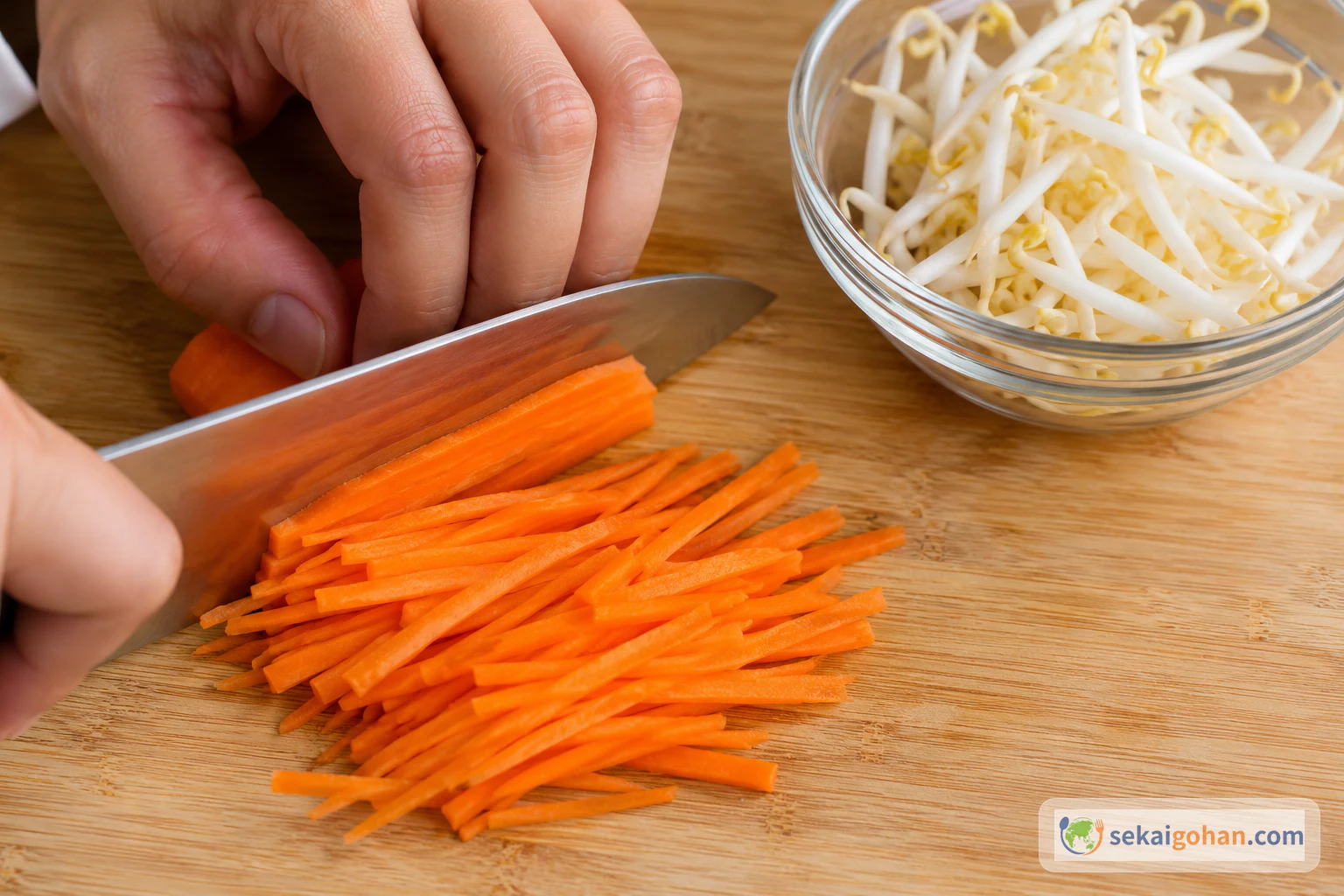
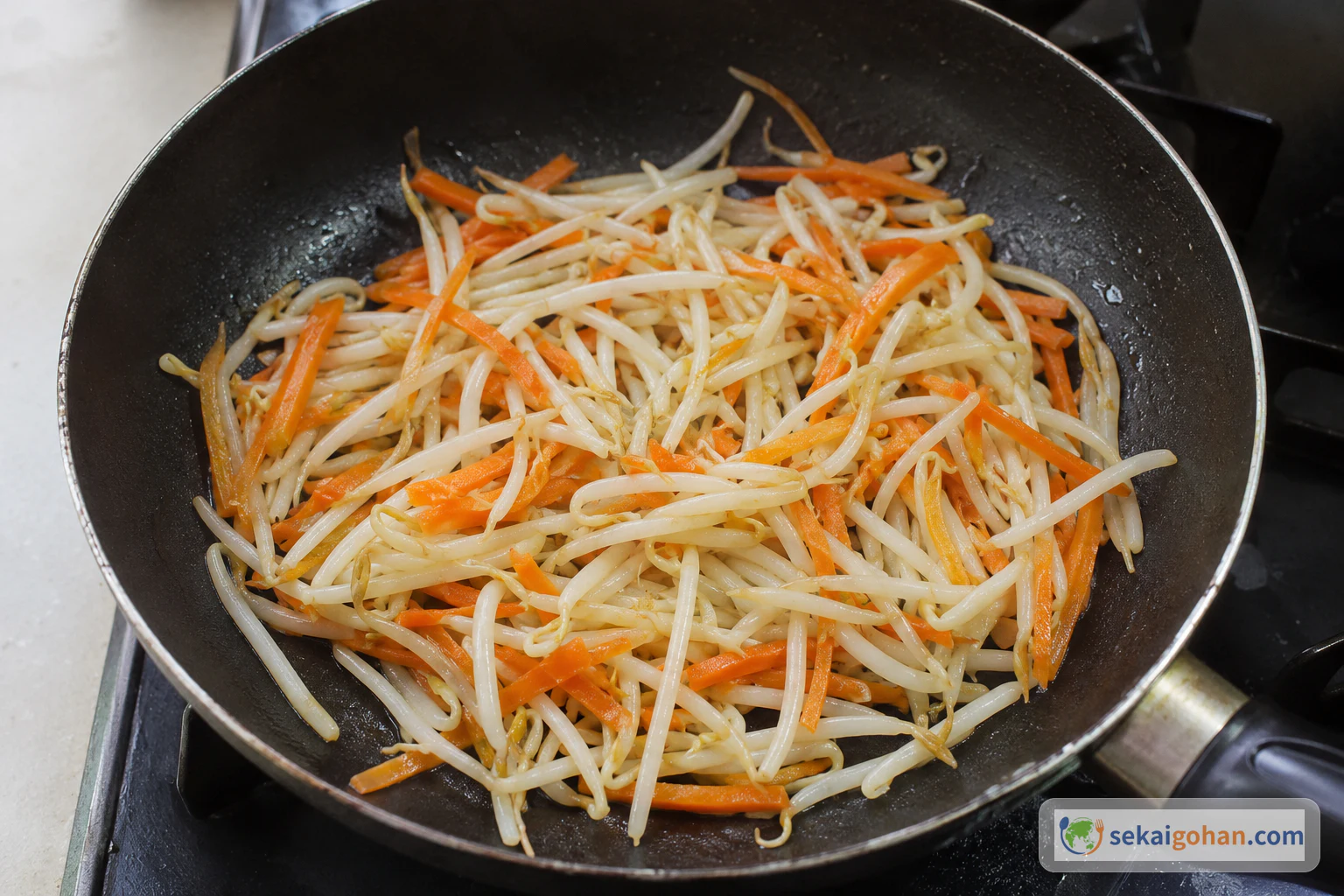
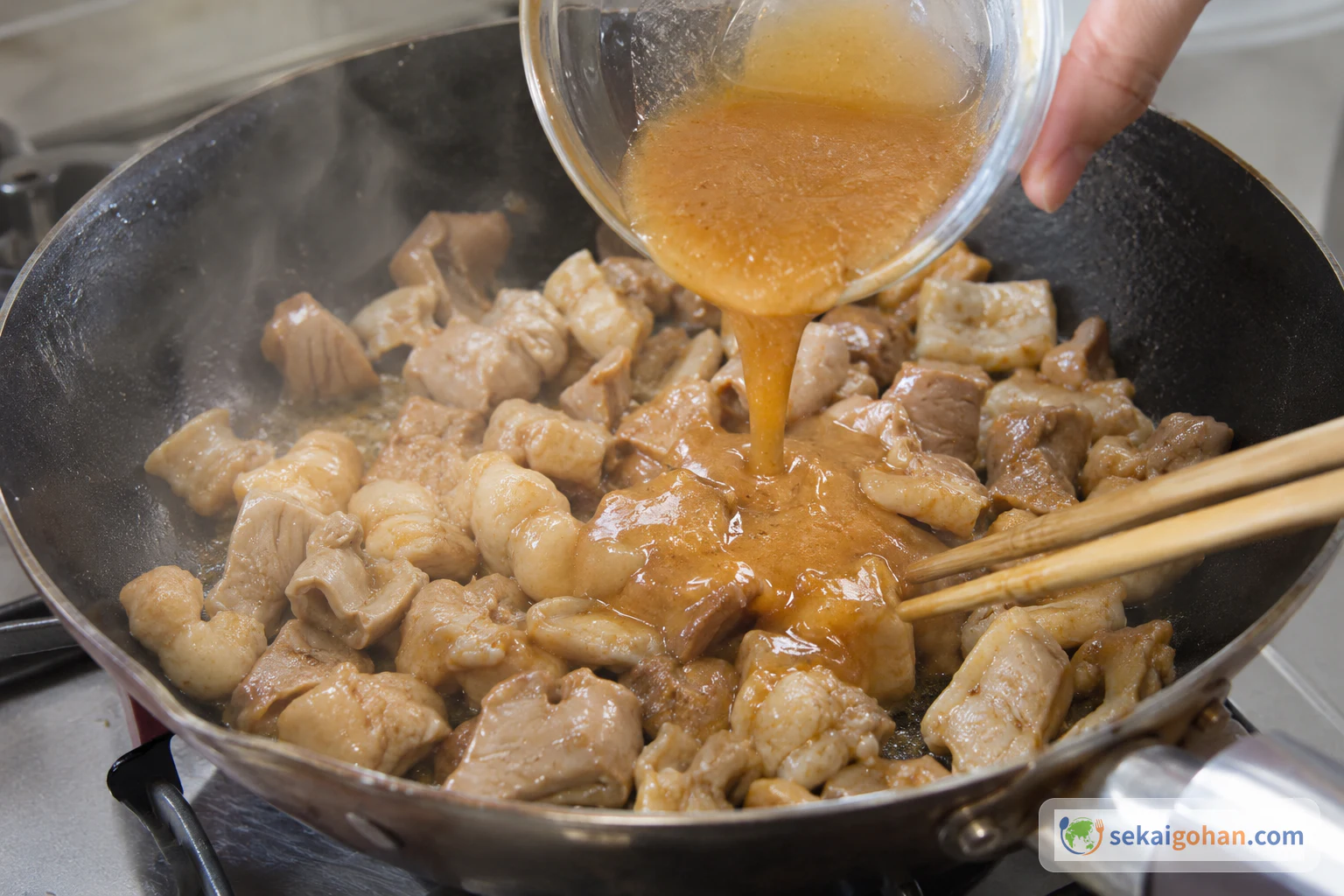
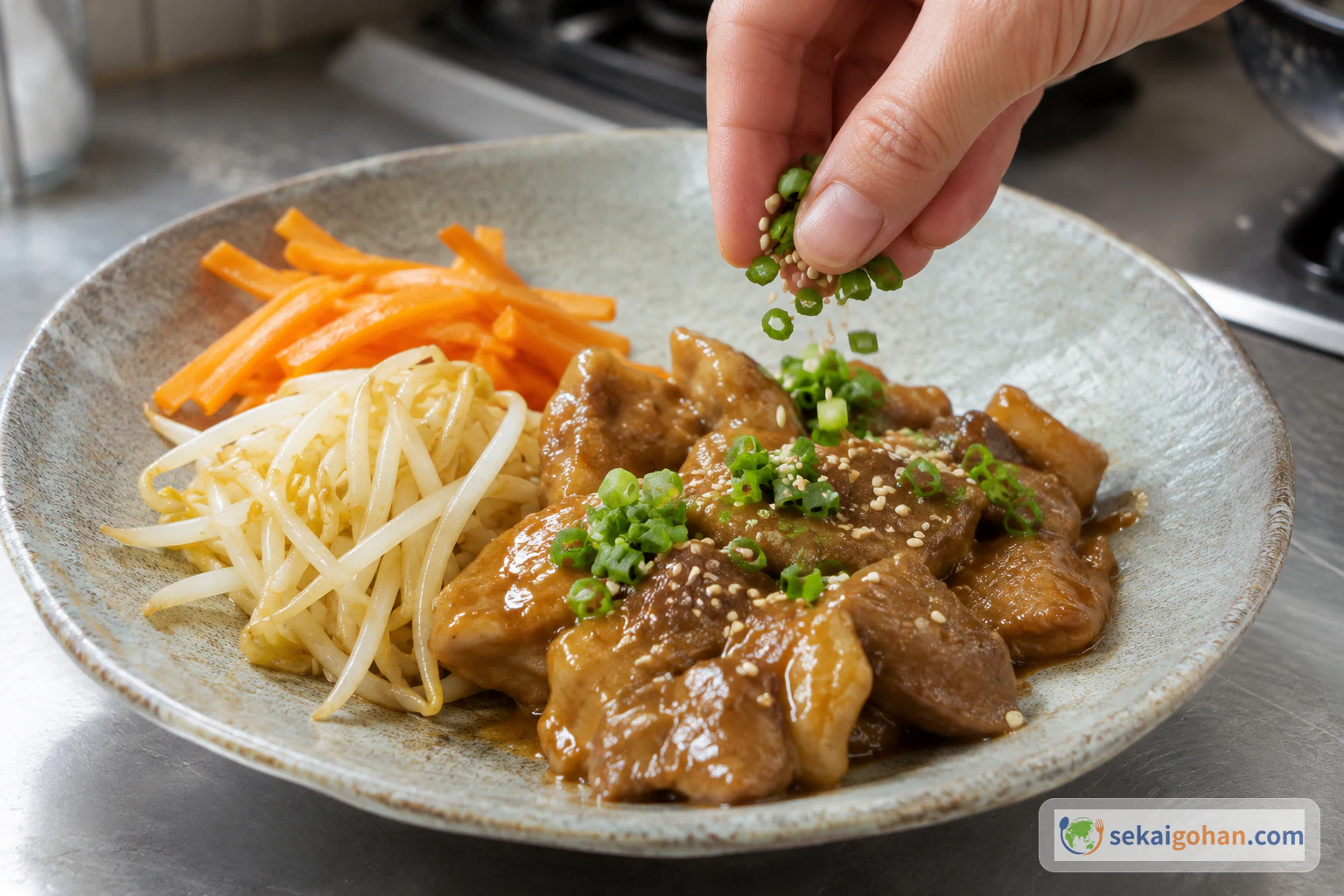
Carrot strips and bean sprouts go into a pan of sesame oil first, then onto the plate. In that same pan, over high heat, parboiled pieces of beef offal are stir-fried and coated in a miso seasoning until it clings to them, and a little scallion and white sesame finish the plate. This is Miso Horumonyaki (味噌ホルモン焼き), a Japanese grilled-offal dish made here with beef offal and a pork-bone miso soup base.
About Horumonyaki
In Japanese, dishes made with the offal of cattle, pigs, chickens and other animals are called horumon ryōri (offal dishes). Horumonyaki, also called motsuyaki, is the grilled branch of that family: various parts of the offal, seasoned with salt or a sauce. The name doesn't fix the animal, the cut or the seasoning, so one restaurant's horumonyaki can look quite different from another's. Part of the appeal is that the cut you choose changes the dish. For more dishes from the country, see Japan.
Atsugi in Kanagawa Prefecture is a well-known regional example. Atsugi's horumon is pork offal cut into chunks with the fat left on and eaten with a rich miso sauce. It is tied to local pig farming and a pork processing plant, and horumonyaki shops have operated in the area since the postwar years.
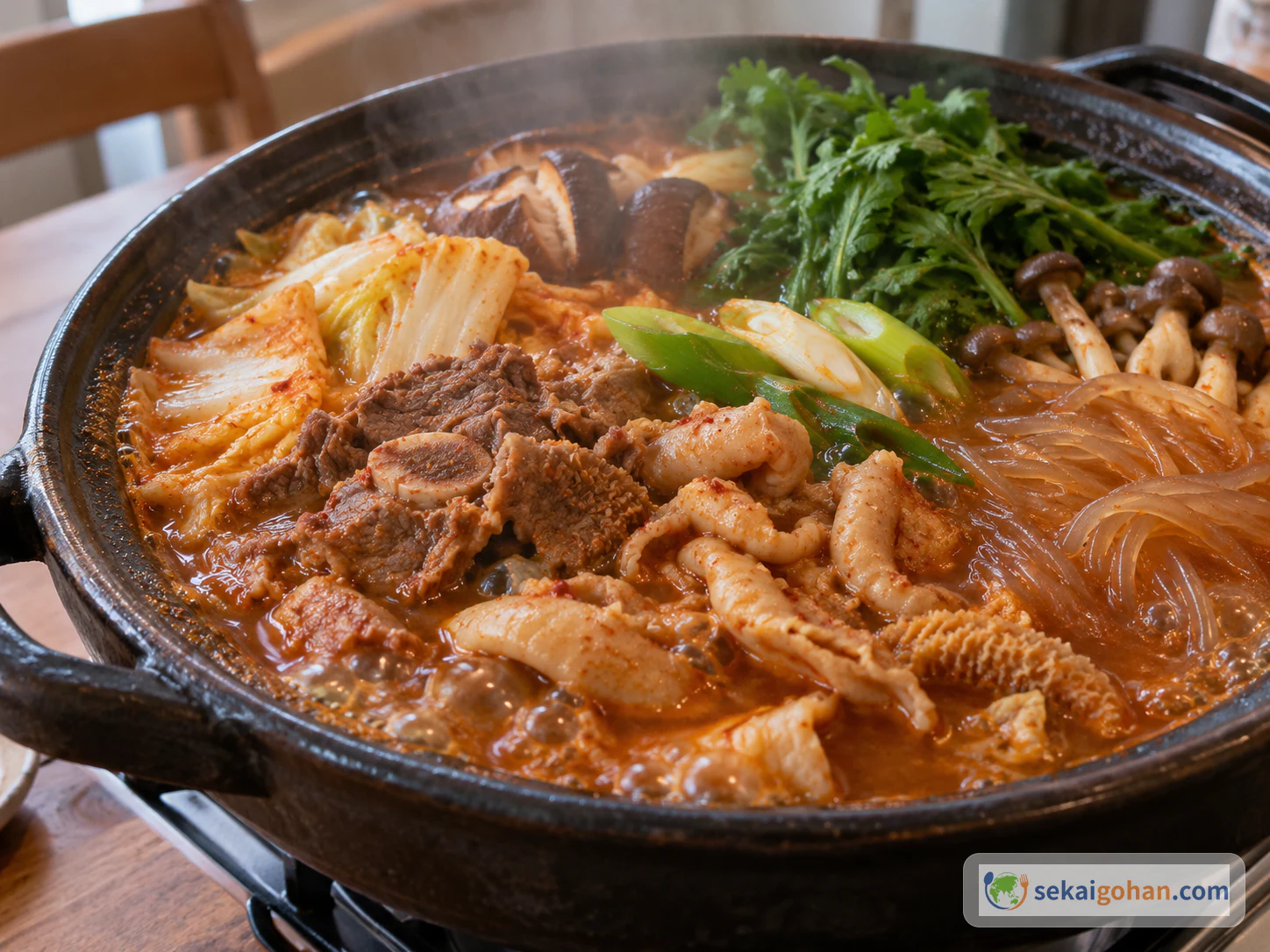
Horumonyaki udon is a separate dish again, with its own name: offal cooked together with udon noodles and vegetables.
Cooking Offal Safely
Raw or undercooked meat and offal carry a risk of food poisoning regardless of how fresh they are. Parboiling is a preparation step, and it doesn't make the offal safe on its own. Cook the offal until it is thoroughly done to the center, follow any cooking and handling instructions on the pack, and use separate chopsticks and utensils for raw meat and for food that is already cooked.
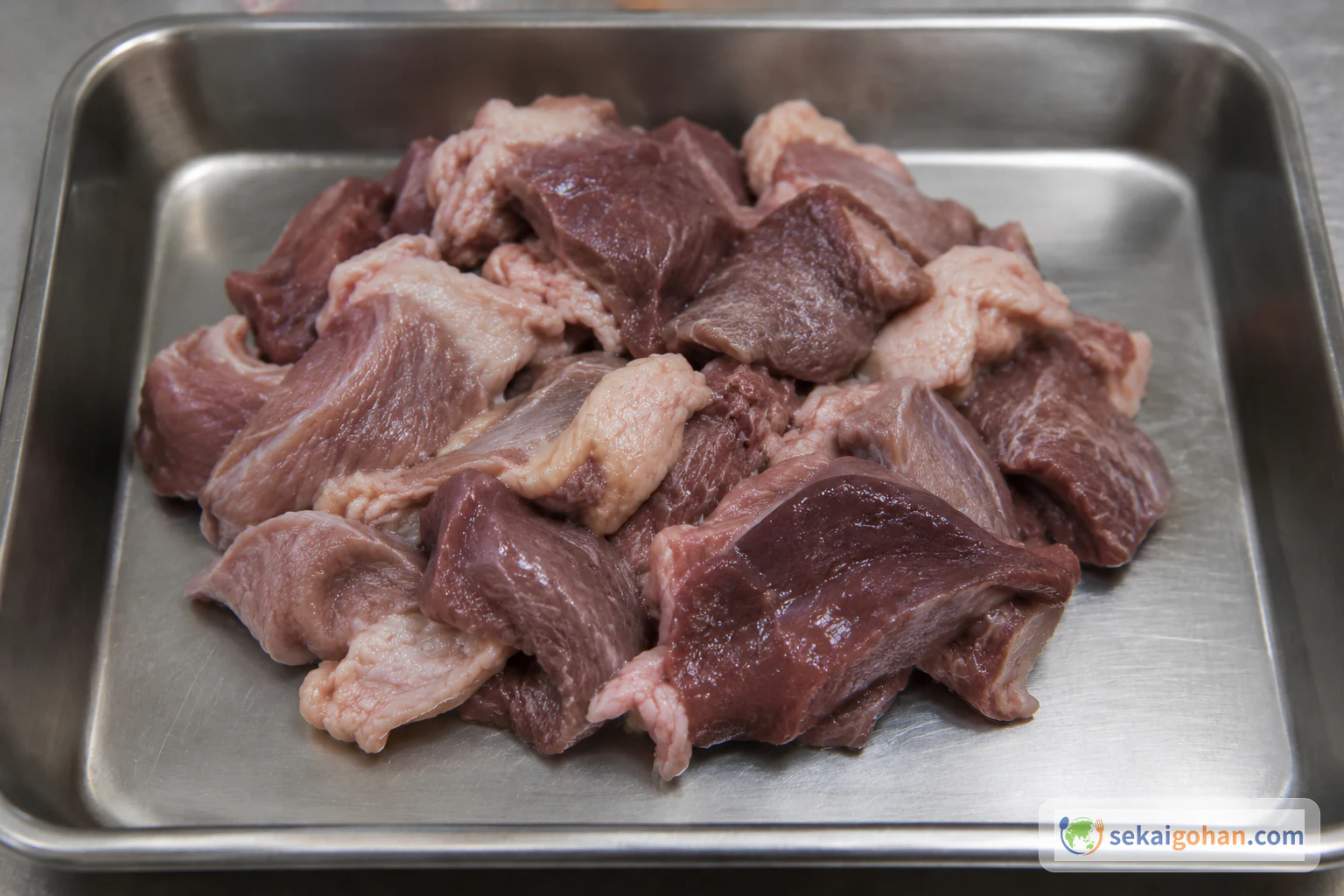
Ingredients: Raw Beef Offal, Carrot, Bean Sprouts and Pork-Bone Miso
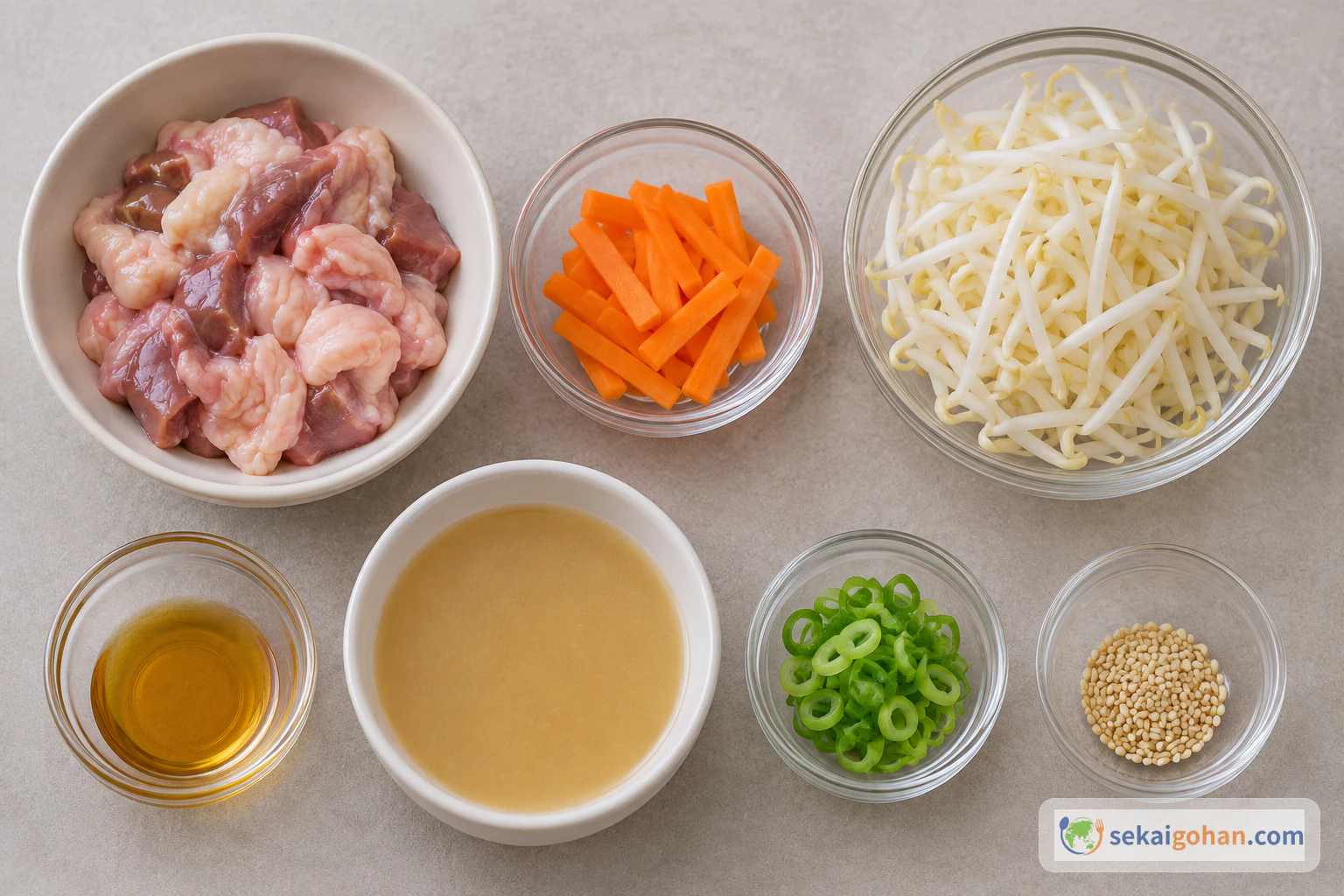
Amounts for one batch.
The 1 oz (31.5g) of soup base is 15% of the offal's weight after parboiling. 10.5 oz (300g) of raw offal comes to roughly 70% after parboiling, about 7.5 oz (210g). Your weight may differ a little.
Choosing Beef Offal and the Soup Base
- Animal: beef, not pork or chicken
- Cut: what the label names, if anything
- State: raw and labeled for cooking, not already boiled
- Seasoning: unseasoned, not pre-marinated or sauced
- Handling: any cooking or handling instructions on the label
The recipe calls for beef offal (牛もつ, gyū motsu) without naming a cut. Check the label to see which part you're buying, and if it doesn't say, ask the seller.
Buy it raw, because the amounts depend on it. Raw beef offal comes to roughly 70% of its weight after parboiling, and the soup base is 15% of that prepared weight: 10.5 oz (300g) raw gives about 7.5 oz (210g), which is where the 1 oz (31.5g) of soup base comes from. Boiled or pre-seasoned offal starts from a different weight and state, so the ratio no longer works. The amounts make one batch.
The soup base combines a white broth of pork bone and chicken bone with rice and soybean miso, plus garlic sautéed in sesame oil and chicken fat. It comes in a 1,100g size and is sold nationwide in Japan; check stores for stock and price. There's no direct substitute, since another miso sauce would make a different dish with its own amounts.
Equipment
- Saucepan, for parboiling the offal
- Colander or sieve, for draining
- Frying pan
- Knife and cutting board for the carrot
- Cutting board, tray and chopsticks or tongs used only for raw offal
- Clean chopsticks or tongs for the cooked offal
- Serving plate
Method: Parboil the Offal, Plate the Vegetables, Then Glaze the Offal
Use one set of boards, trays and utensils for the raw offal and a clean set for anything cooked. Cook the offal until it is thoroughly done to the center.
Horumonyaki Troubleshooting
| Situation | What to do |
|---|---|
| The only beef offal you can find is already boiled | It doesn't fit the ratio. Use raw offal, or look for a recipe written for pre-cooked offal |
| The offal is pre-seasoned or comes in a sauce | Choose unseasoned raw offal instead |
| The pack does not say which part it is | Ask the seller which cut it is, then follow their guidance |
| You can't find the specified soup base | There is no worked-out substitute; another sauce means a different dish with its own amounts |
| Your parboiled offal does not weigh about 7.5 oz (210g) | The 70% yield is approximate. Keep to 1 oz (31.5g) of soup base for 10.5 oz (300g) of raw offal |
| You want a cooking time or temperature | None is set. Cook until thoroughly done to the center and follow the pack's instructions |
Horumonyaki Variations
For a better finish, add a little green part of a long onion, ginger peel and shochu to the parboiling water. They're there for flavor, not safety.
Beyond that, horumonyaki is wide open: the offal can come from cattle, pigs, chickens and other animals, the parts vary, and the seasoning can be salt or a sauce. Just know that once you change any of these, the amounts above no longer carry over.
Frequently Asked Questions
Is horumonyaki always made with beef?
No. Horumonyaki can use the offal of cattle, pigs, chickens and other animals, seasoned with salt or a sauce. This version uses beef offal.
Can I use pre-boiled beef offal in the same amounts?
No. The soup base amount assumes raw offal that keeps roughly 70% of its weight after parboiling. Pre-boiled offal starts from a different weight and state.
How many minutes should I cook the offal?
No cooking time or center temperature is set for this dish. Freshness alone doesn't remove the risk, so cook the offal until it is thoroughly done to the center and follow the pack's instructions.
Can I use a different miso sauce?
Not as a direct swap. The recipe is built around one named soup base, and a different sauce would change both the dish and its amounts.