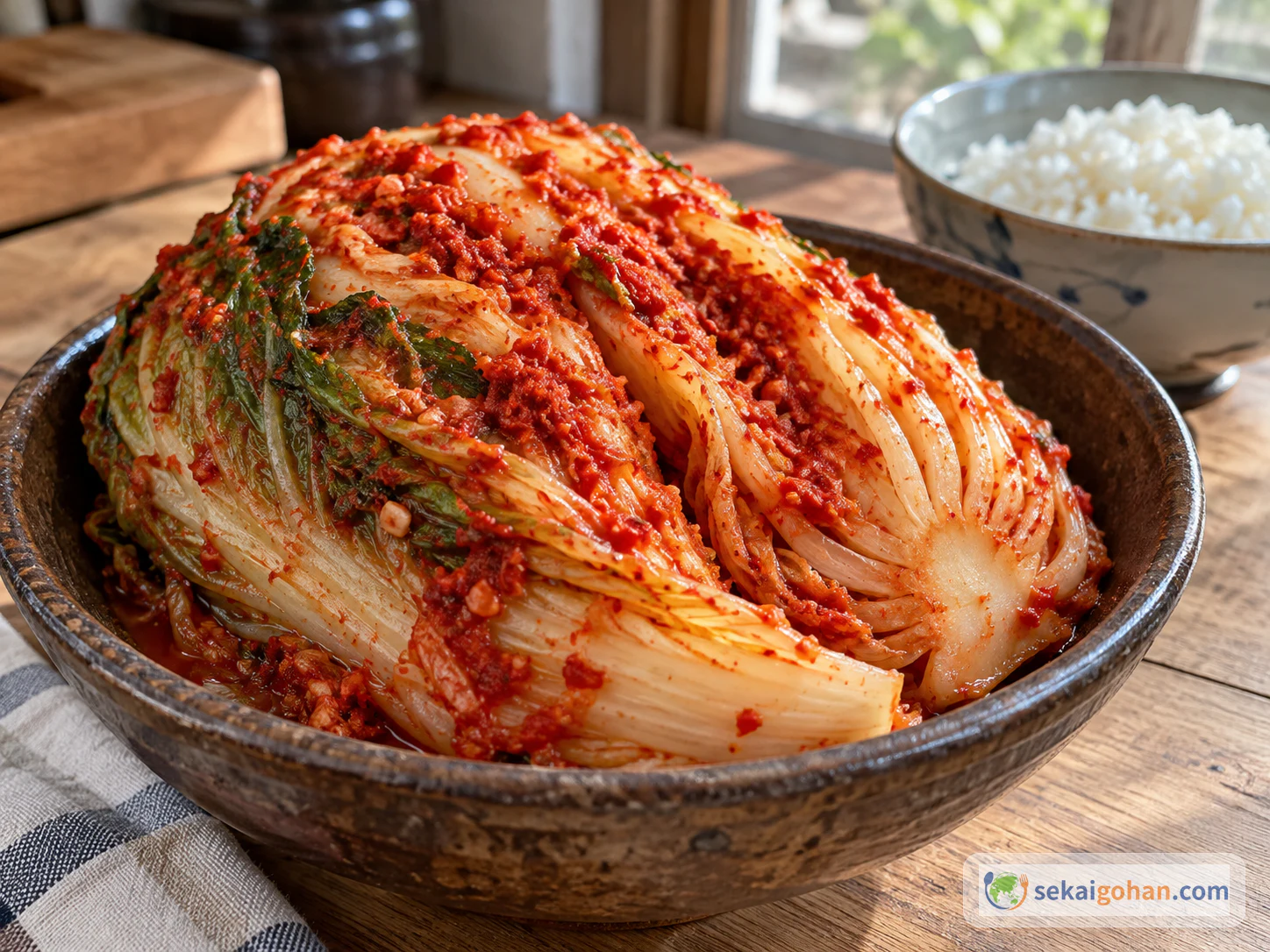
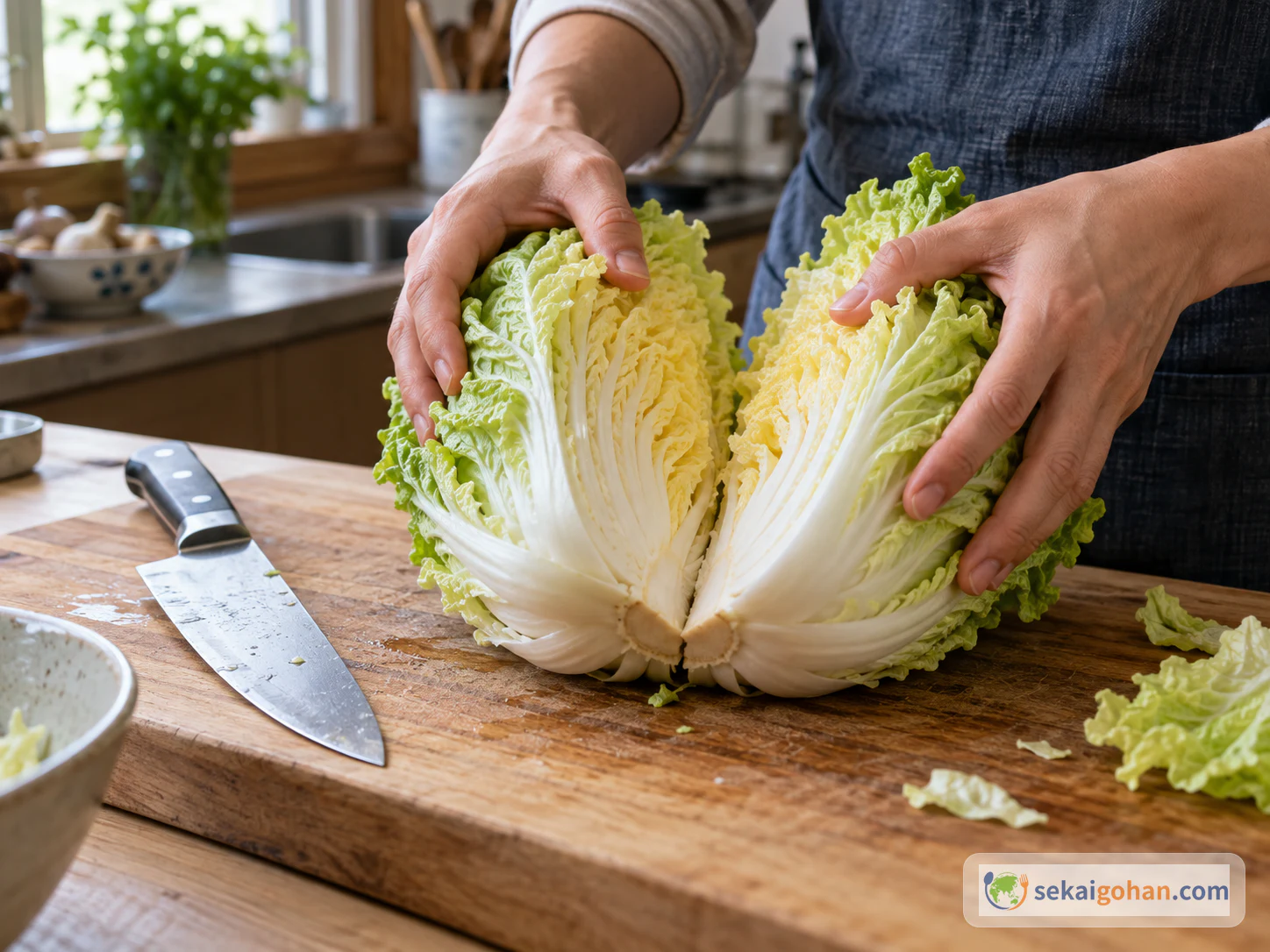
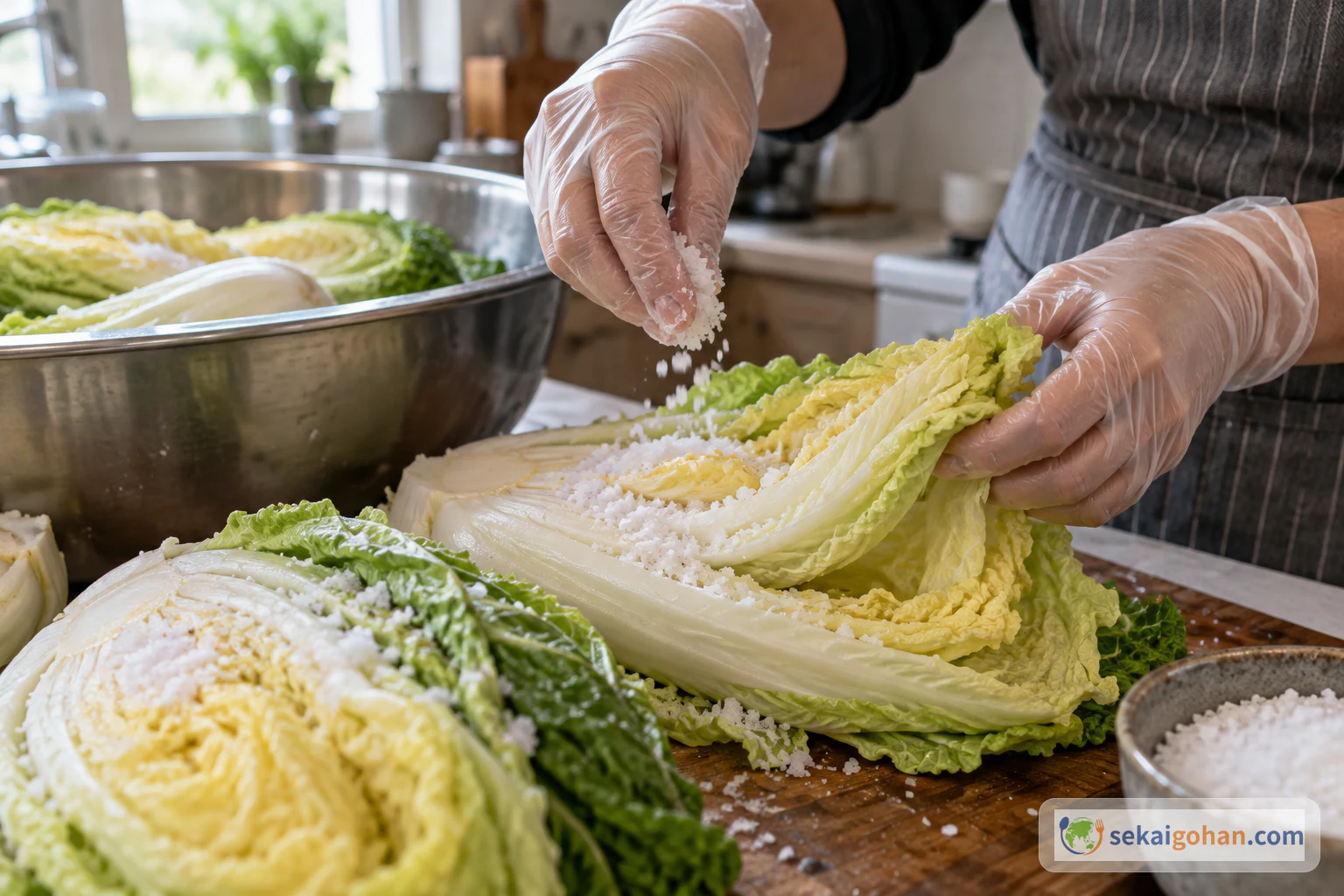
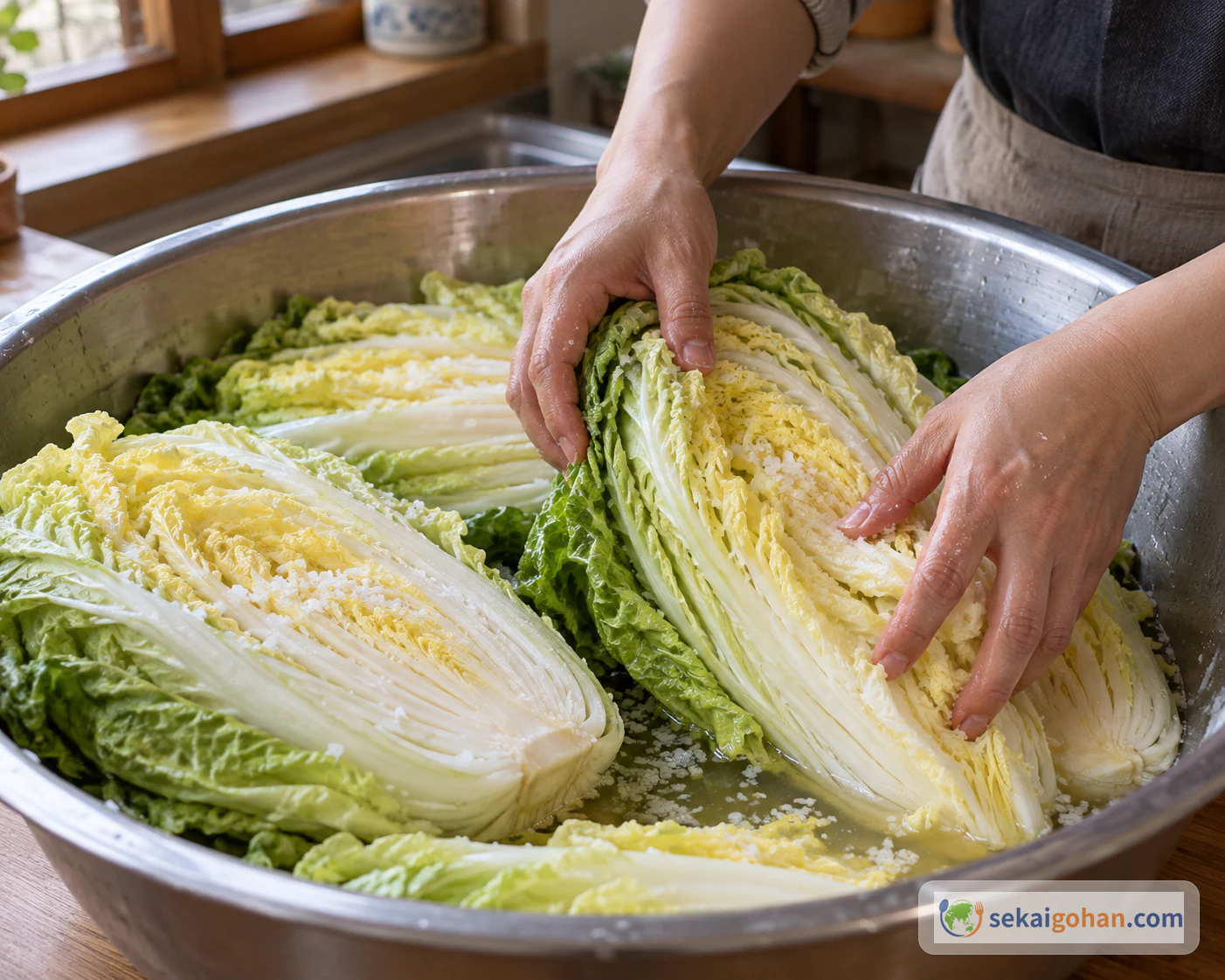
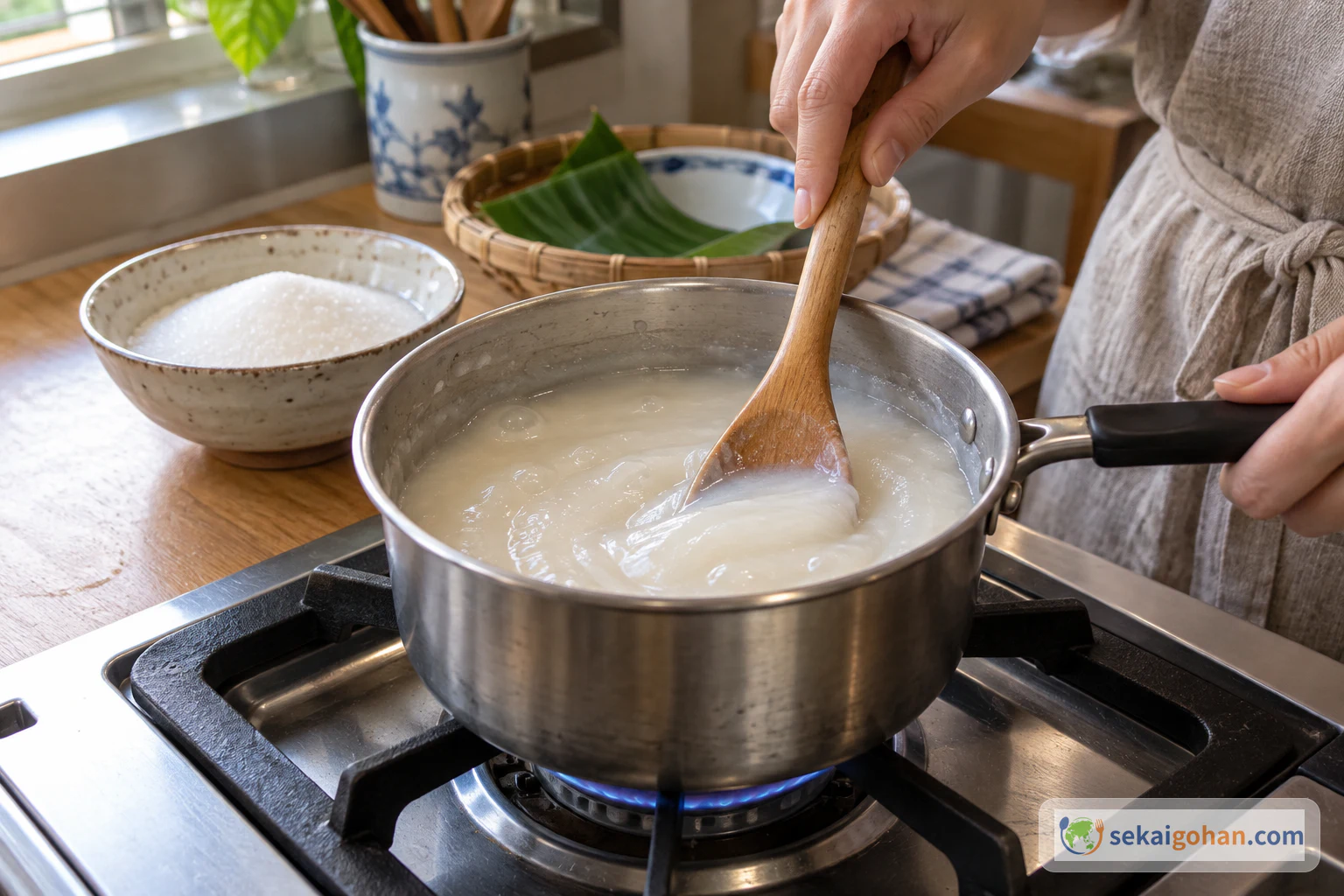
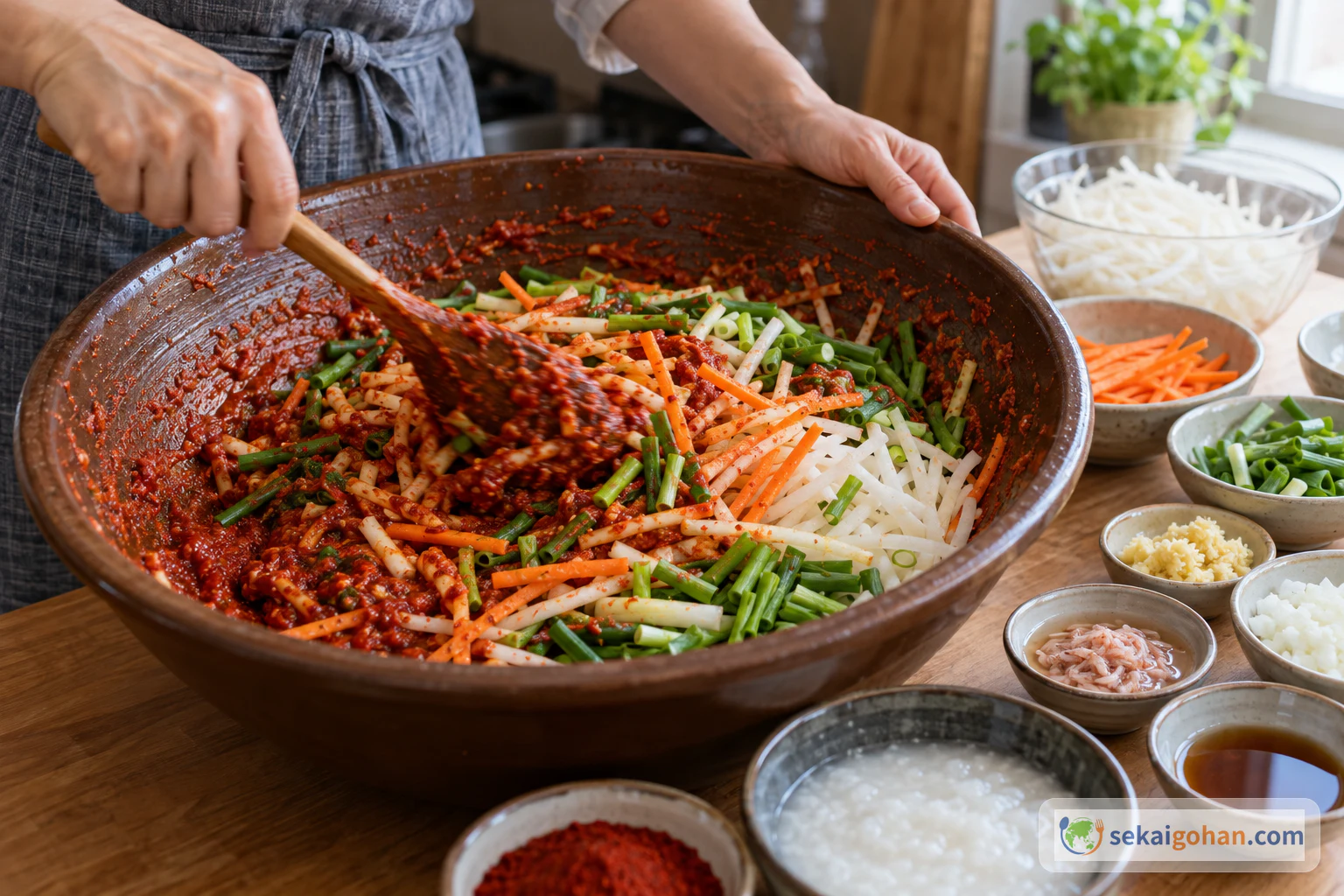
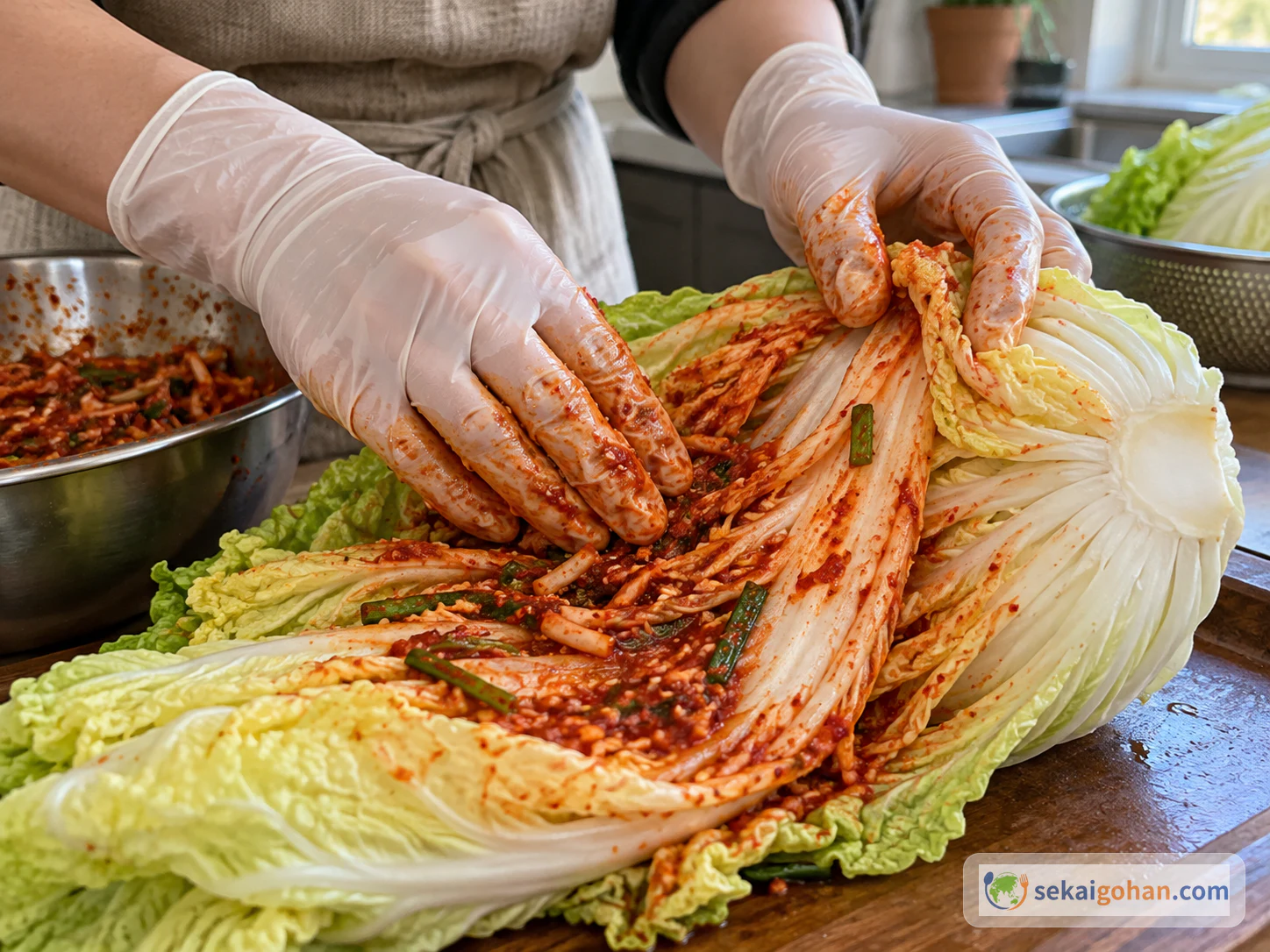
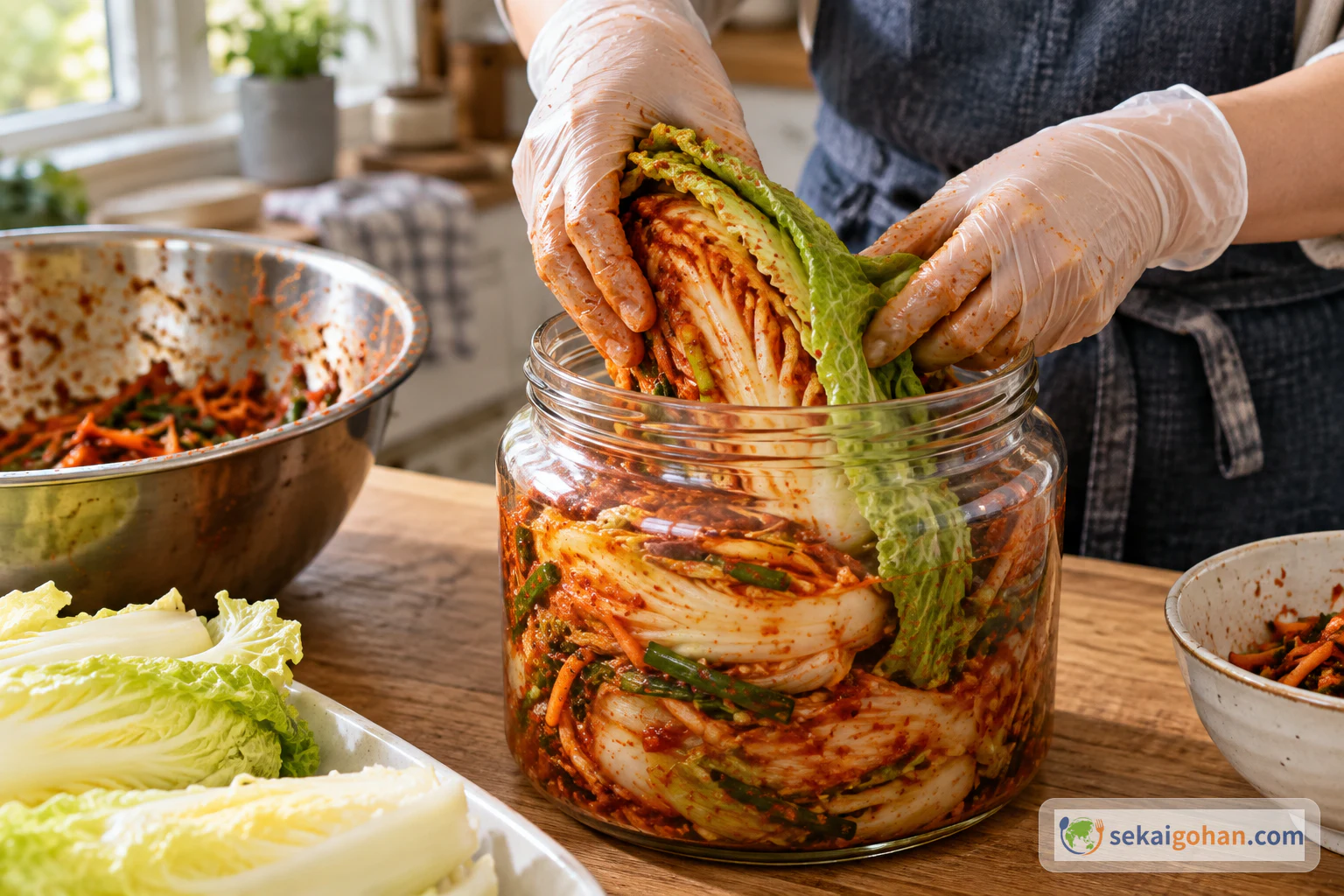
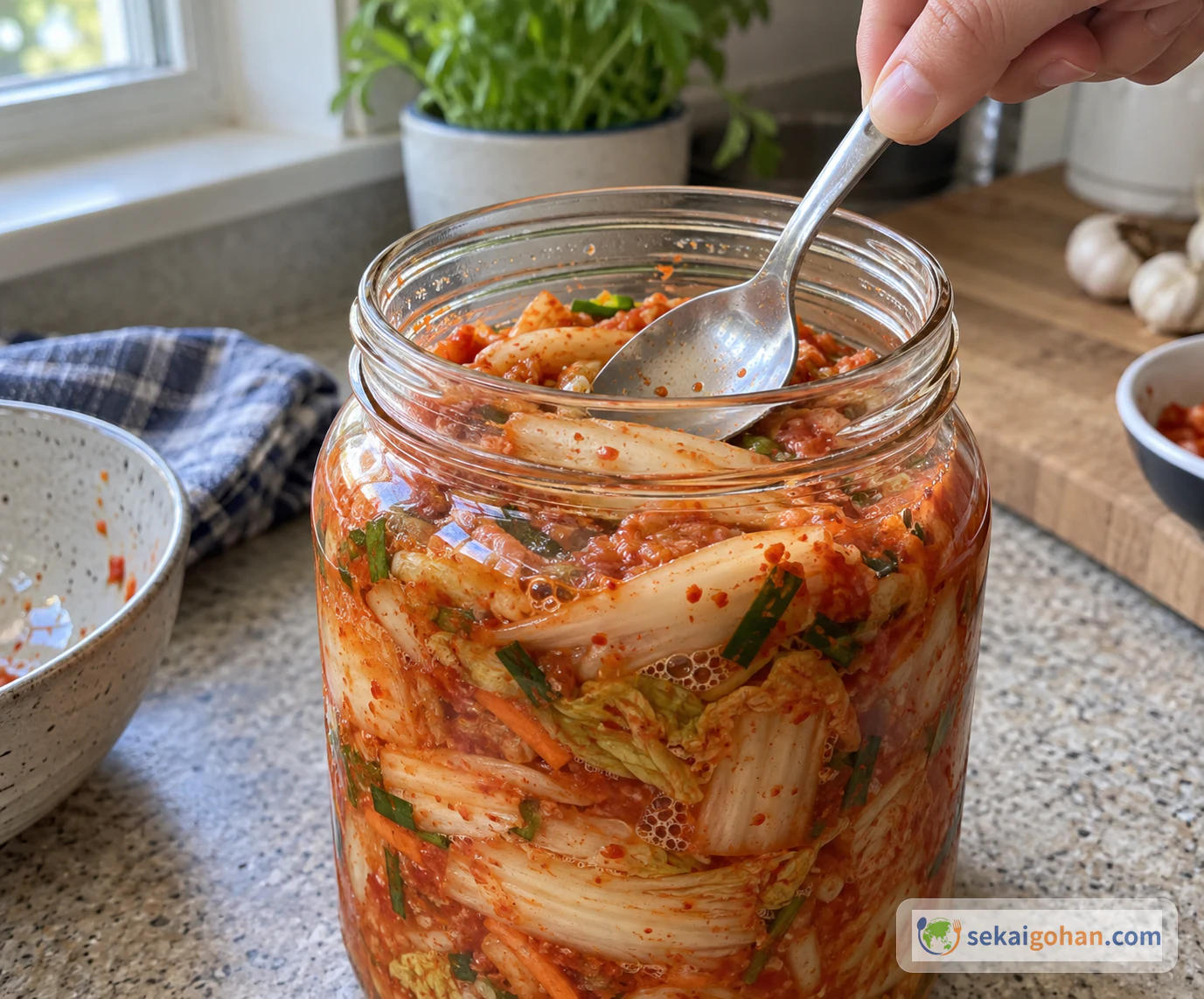
The whole cabbage is split from the root by hand, so the leaves stay joined at the base. Salt goes between the layers, heaviest on the thick white stems. Later, a red paste of gochugaru, garlic, fish sauce and salted shrimp, loosened with a cooled sweet rice flour porridge, is spread thinly over each leaf in turn, and every quarter is folded up in its own outer leaf. This is tongbaechu-kimchi (통배추김치), the whole-cabbage napa kimchi from Korea that most people simply call "kimchi." You build it leaf by leaf in your own kitchen, starting from 6 lb (about 2.7kg) of napa cabbage and ending with about 8 lb (3.6kg) of kimchi.
About Tongbaechu-kimchi
Tongbaechu-kimchi is napa cabbage kimchi made with the cabbage left in large, leaf-attached quarters. It also goes by baechu-kimchi (배추김치) or pogi-kimchi (포기김치). Napa cabbage kimchi is the type most often meant by the word "kimchi," and it appears on the Korean table at every meal. Once it has turned well sour, it carries on into other dishes such as kimchi jjigae. It also sits beside rice dishes like bibimbap and gimbap.
Kimchi comes in many forms, and this is only one of them. Mak-kimchi uses the same kind of seasoning, but the cabbage is cut into pieces before it is seasoned, which changes both the process and the finished result. Kkakdugi is made with cubed radish, and baek-kimchi is a white kimchi made without chili.
Kimjang (김장) is the practice of making a large amount of kimchi to prepare for winter, and sharing it. The custom brings families together before the cold season, and friends help each other make big batches of cabbage kimchi to take home. That is why this recipe makes so much. Some kimjang versions go much bigger still: one uses 44 lb (20kg) of napa cabbage, with radish, water dropwort, mustard greens, green onions, fish sauce, chestnuts, oysters and glutinous rice porridge, among other ingredients.
Ingredients: One Recipe for About 8 lb (3.6kg) of Kimchi
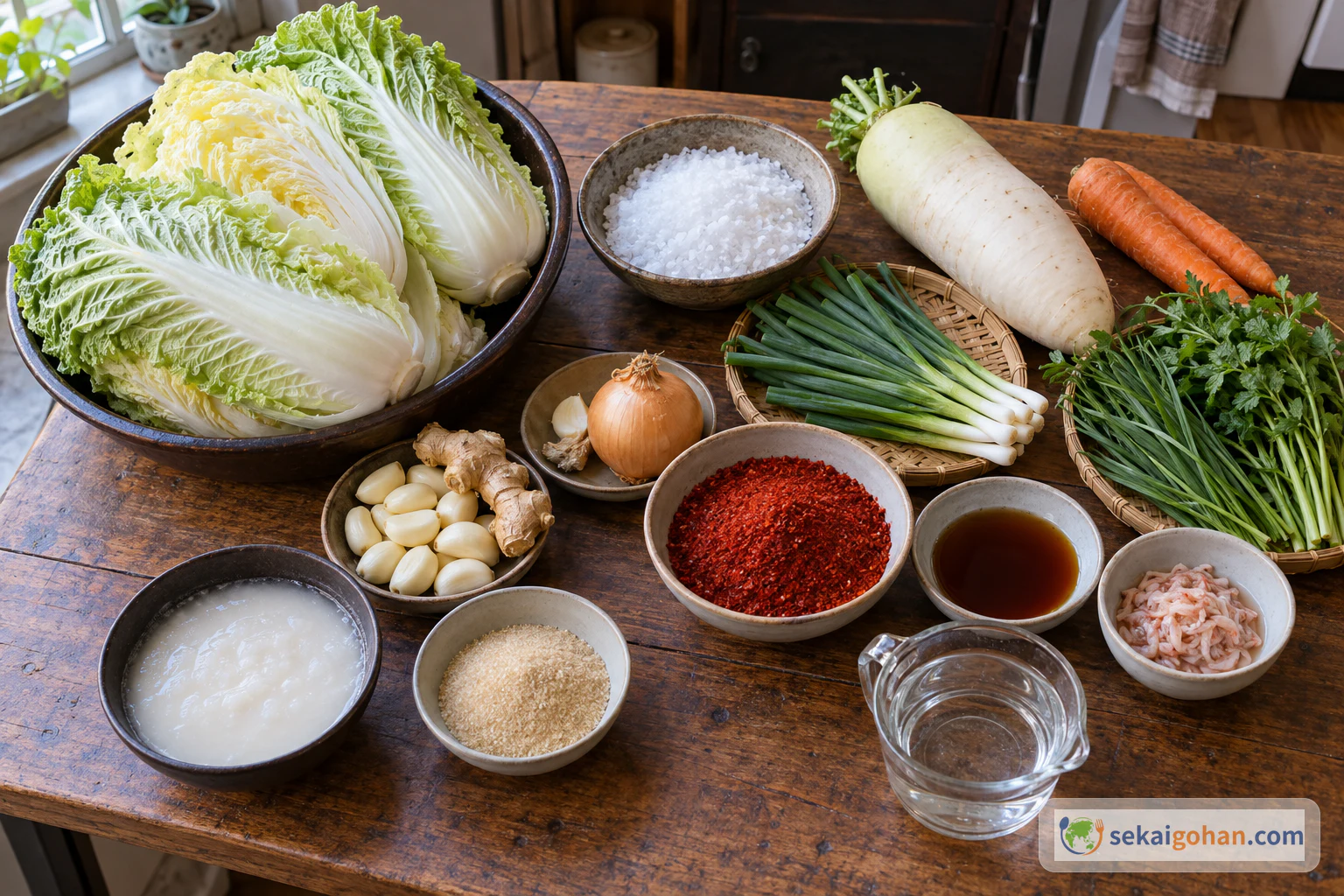
This recipe contains fish sauce (fish) and saeujeot (salted shrimp, a crustacean shellfish). Check the ingredient labels of both, as well as the gochugaru and sweet rice flour, for allergens. Sweet rice flour is made from rice. Leaving out the fish sauce or saeujeot, or replacing them, makes a different recipe rather than an allergy-safe version of this one. Work with clean hands, clean tools and clean containers, and wear food-safe gloves when you handle the paste.
Choosing Ingredients for Napa Cabbage Kimchi
Three ingredients are worth seeking out at a Korean grocer or online: gochugaru, saeujeot and sweet rice flour. Search by their general names, and compare package sizes and ingredient lists rather than grabbing the first product you see.
Gochugaru gives the paste its red color and its heat. Its grind and heat level vary from product to product, so changing the amount or type means a new trial. Japanese ichimi togarashi or another chili powder isn't a one-for-one swap; the texture and the heat are both different.
Saeujeot is small shrimp fermented in salt. Chop it with its brine before measuring. It brings saltiness and savory depth at once, so leaving it out or swapping it changes how the kimchi tastes.
Sweet rice flour is made from glutinous rice. Regular (non-glutinous) rice flour and potato starch are different things and won't behave the same way.
The rest is more forgiving. Fish sauces in other styles, such as Thai nam pla, will work but taste different. Regular daikon can stand in for Korean radish, with a little difference in moisture and sharpness. Brown or white sugar works in place of turbinado. The Asian chives and minari are optional: the kimchi still comes together without them, just with a simpler aroma, and 3 green onions can take the place of the chives.
Equipment
- A cutting board and a chef's knife
- A large, wide basin for salting the cabbage
- A colander or draining basket
- A small saucepan and a wooden spoon
- A large mixing bowl for the paste
- Food-safe gloves
- Clean, wide-mouth containers for fermenting (about 8 lb / 3.6kg of kimchi may need more than one)
Method: From Whole Cabbage to Packed Container
The cabbage salts for 2 hours. Cook the porridge during that time so it has a chance to cool completely before you mix the paste.
At room temperature, expect a sour smell, a sour taste and bubbles when you press on the top after 1 to 2 days. Once it is fermenting, keep the kimchi refrigerated. If anything about the kimchi seems wrong, don't eat it. Don't taste it to find out.
The work comes in stages: salting, cooking and cooling the porridge, rinsing and draining, mixing the paste, coating and packing. How long it all takes depends on how fast the porridge cools, how long the cabbage drains and how warm your kitchen is, so plan around the stages rather than the clock.
Common Problems With Napa Cabbage Kimchi
| What happened | Likely cause | What to do |
|---|---|---|
| The leaves came apart and are hard to coat | Too much of the core was cut off, or the cabbage was cut through with a knife | Make only a shallow cut at the root and split the cabbage by hand. Make the second cut near the core so the quarters stay joined |
| The kimchi is too salty | The cabbage wasn't rinsed well enough after salting | Rinse several times in cold water before draining. Don't add salt to the paste |
| The paste is watery and thin | The cabbage wasn't drained well | Let the quarters drain properly in a colander before you start coating |
| The porridge scorched | The bottom wasn't stirred during cooking | Stir along the bottom of the pan over medium heat throughout the roughly 10 minutes |
| The paste went into warm porridge | The porridge wasn't cooled | Let the porridge cool completely before you add the seasonings |
| Some leaves are bare, the root end is thick with paste | The paste was concentrated in one place | Lift every leaf, including the inner ones near the core, and spread the paste thinly |
| The container hissed or swelled when opened | Gas from fermentation built up under a sealed lid | Open fermenting containers slowly and carefully |
Serving Kimchi Fresh or Sour
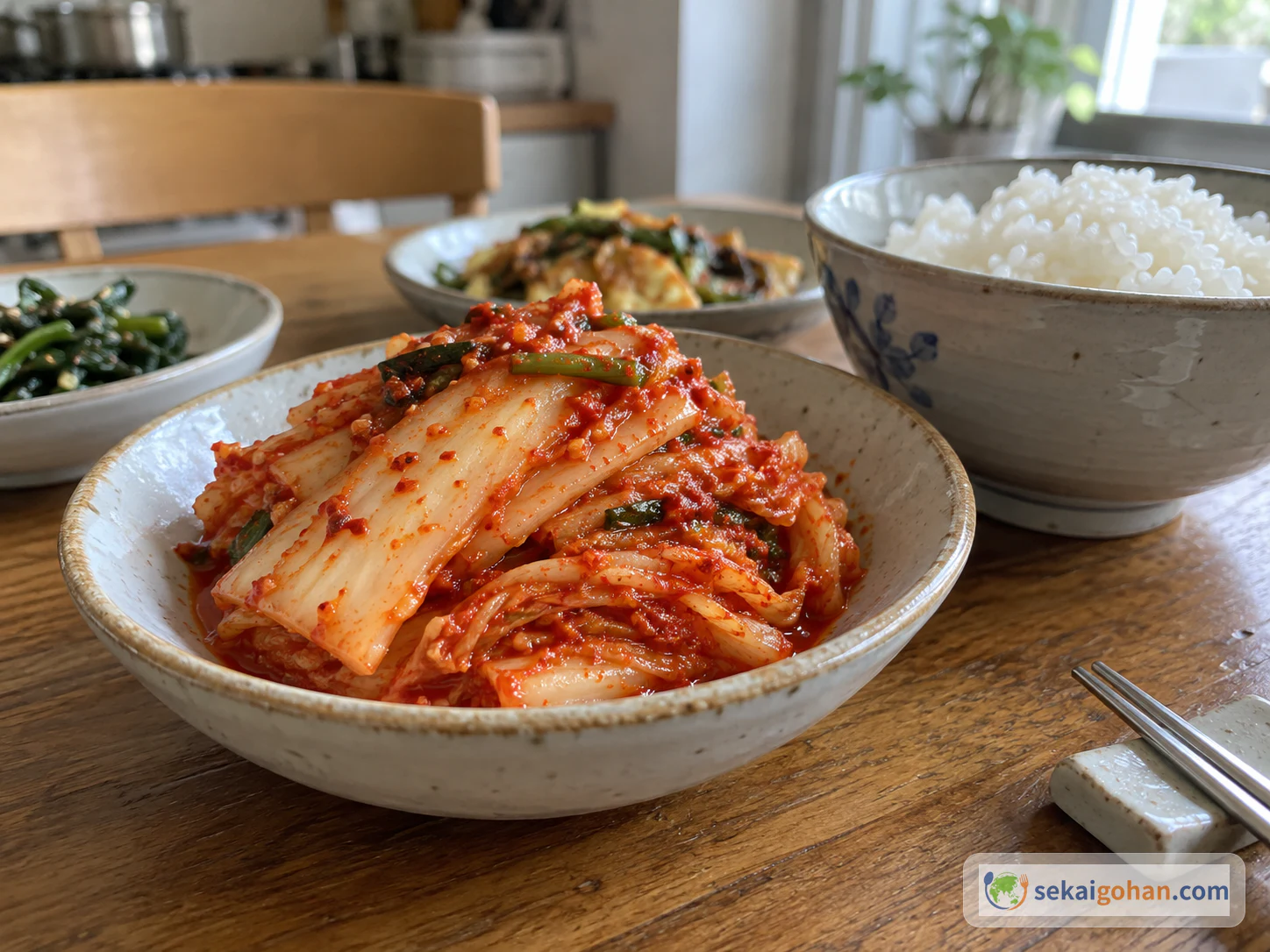
Fresh kimchi and fermented kimchi are almost two different things. Right after packing, the cabbage and the paste still taste separate. As fermentation goes on, the flavor turns sour, and even in the refrigerator the sourness keeps building slowly, so picking the stage you like best is part of the pleasure.
To serve, lay a quarter on a board, slice it into pieces, and set them in a small dish beside a bowl of white rice. Kimchi that has turned well sour is better cooked, in kimchi jjigae or sundubu-jjigae.
Frequently Asked Questions
Can I eat it right after making it?
Yes. Eat it right away while it tastes fresh, or let it ferment.
How many days does it take to ferment?
That depends on the room temperature. At room temperature, expect about 1 to 2 days. Look for a sour smell and taste, and bubbles when you press on the top, then move the kimchi to the refrigerator.
Can I make it without seafood?
Not with this recipe. The seasoning balance depends on fish sauce and saeujeot, and leaving them out turns it into a different kimchi. For a vegan or seafood-free version, use a recipe written to be plant-based from the start.