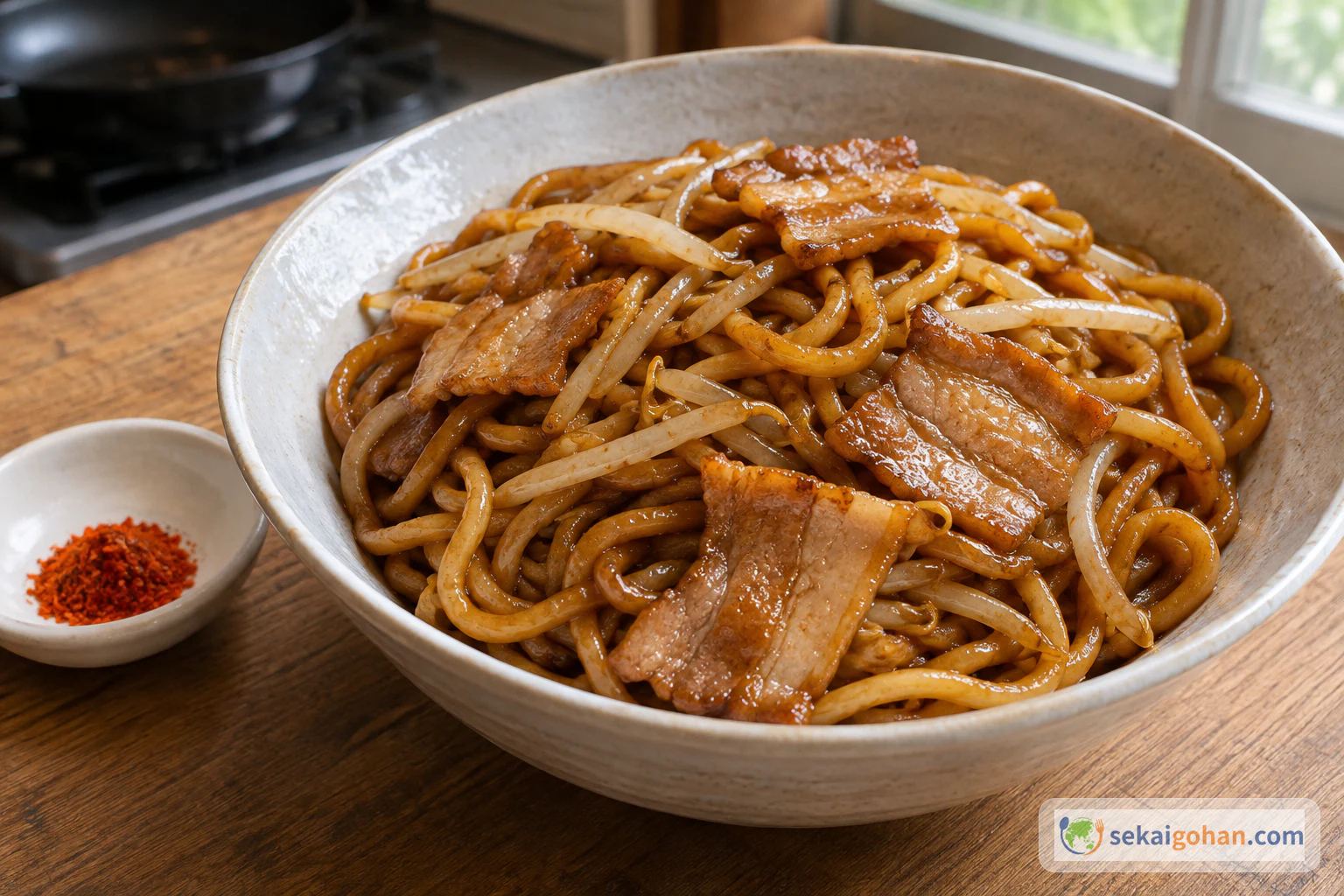
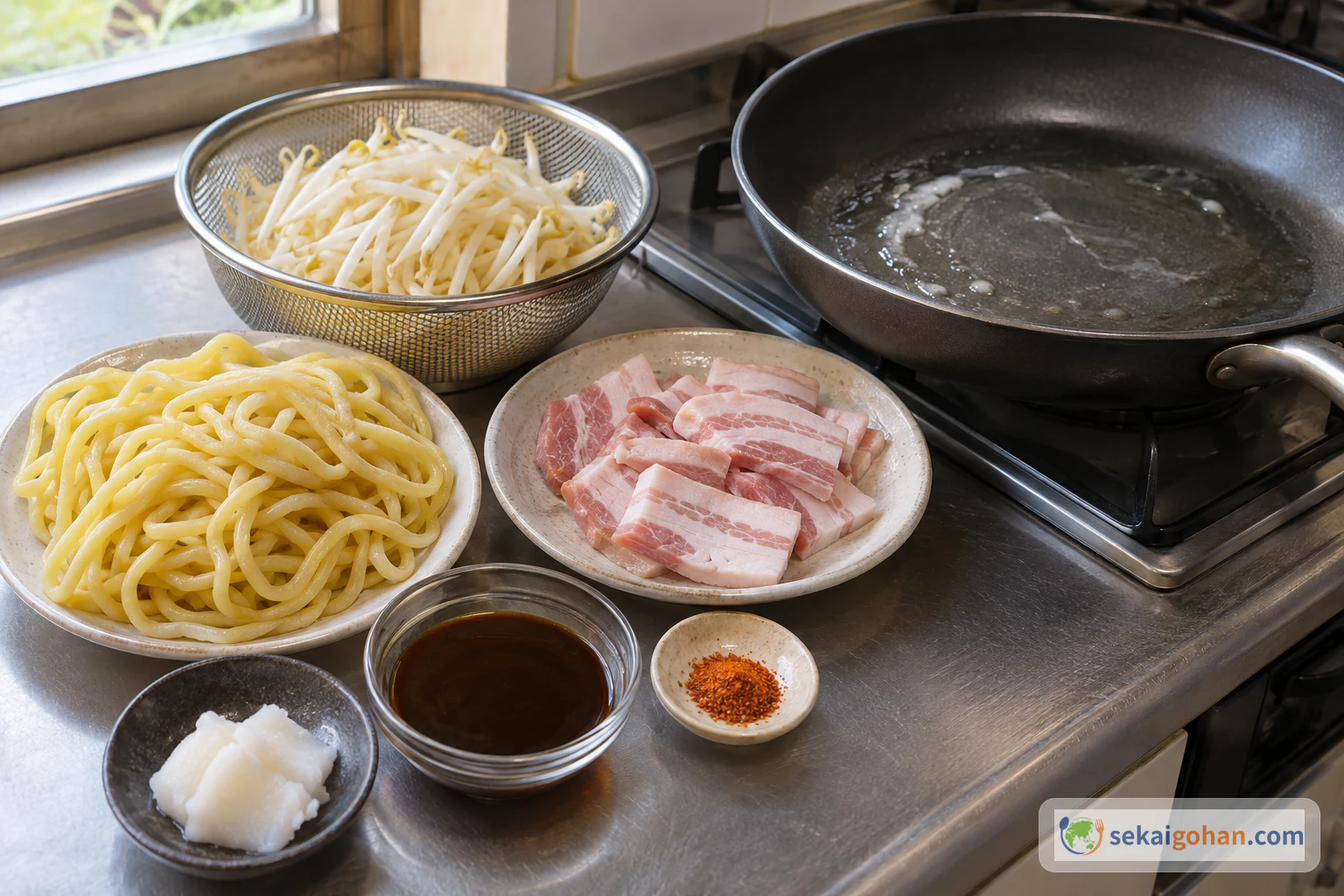
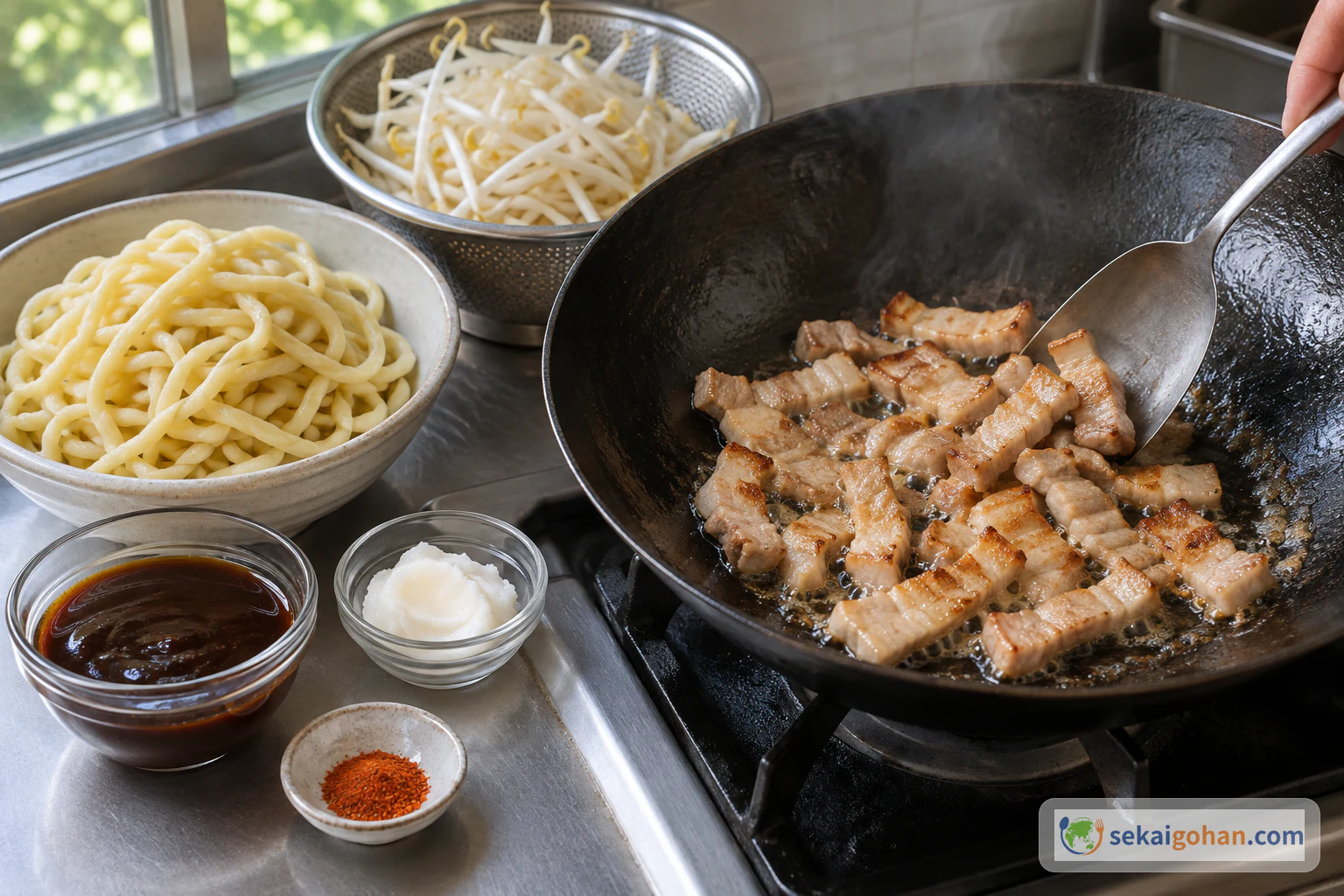
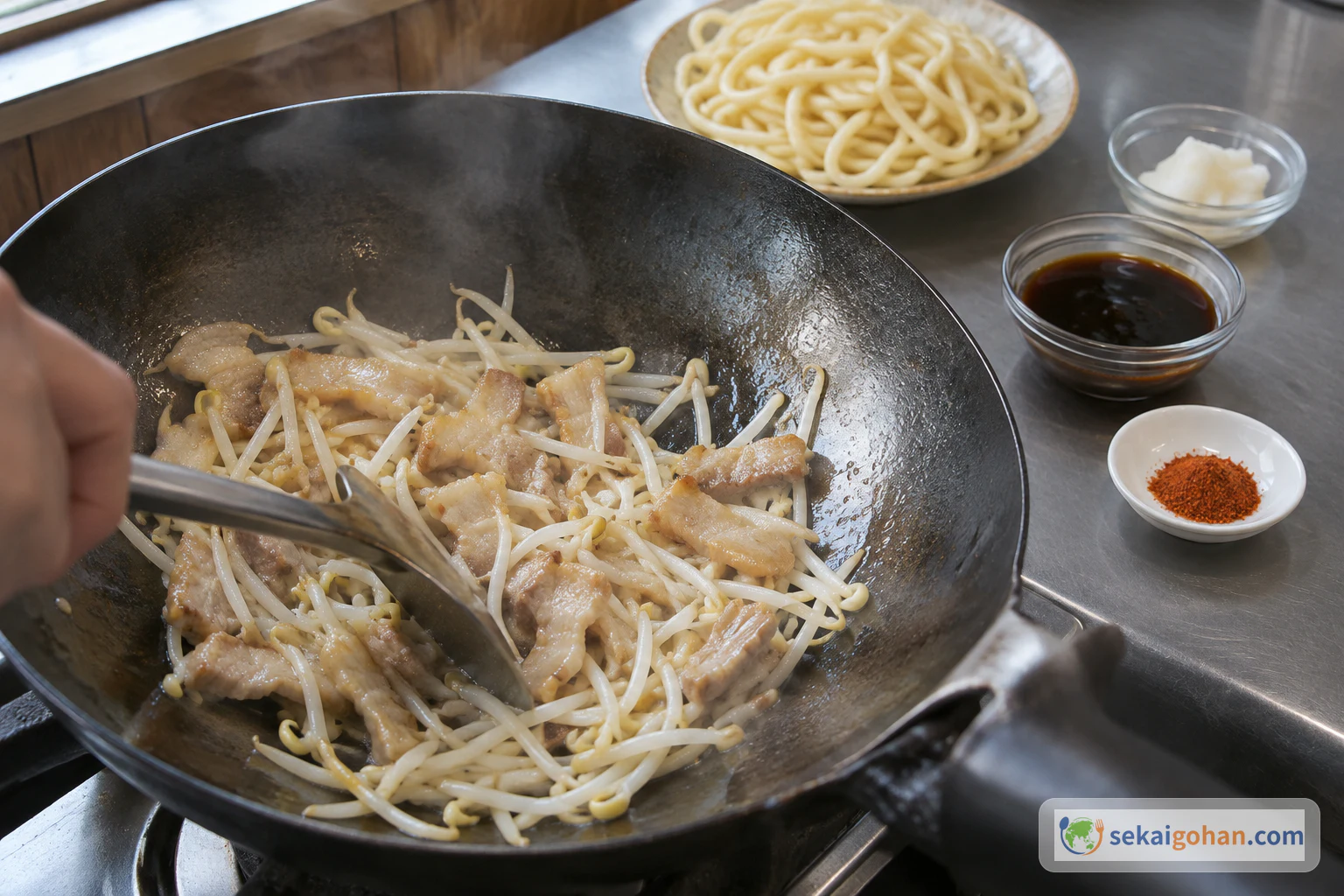
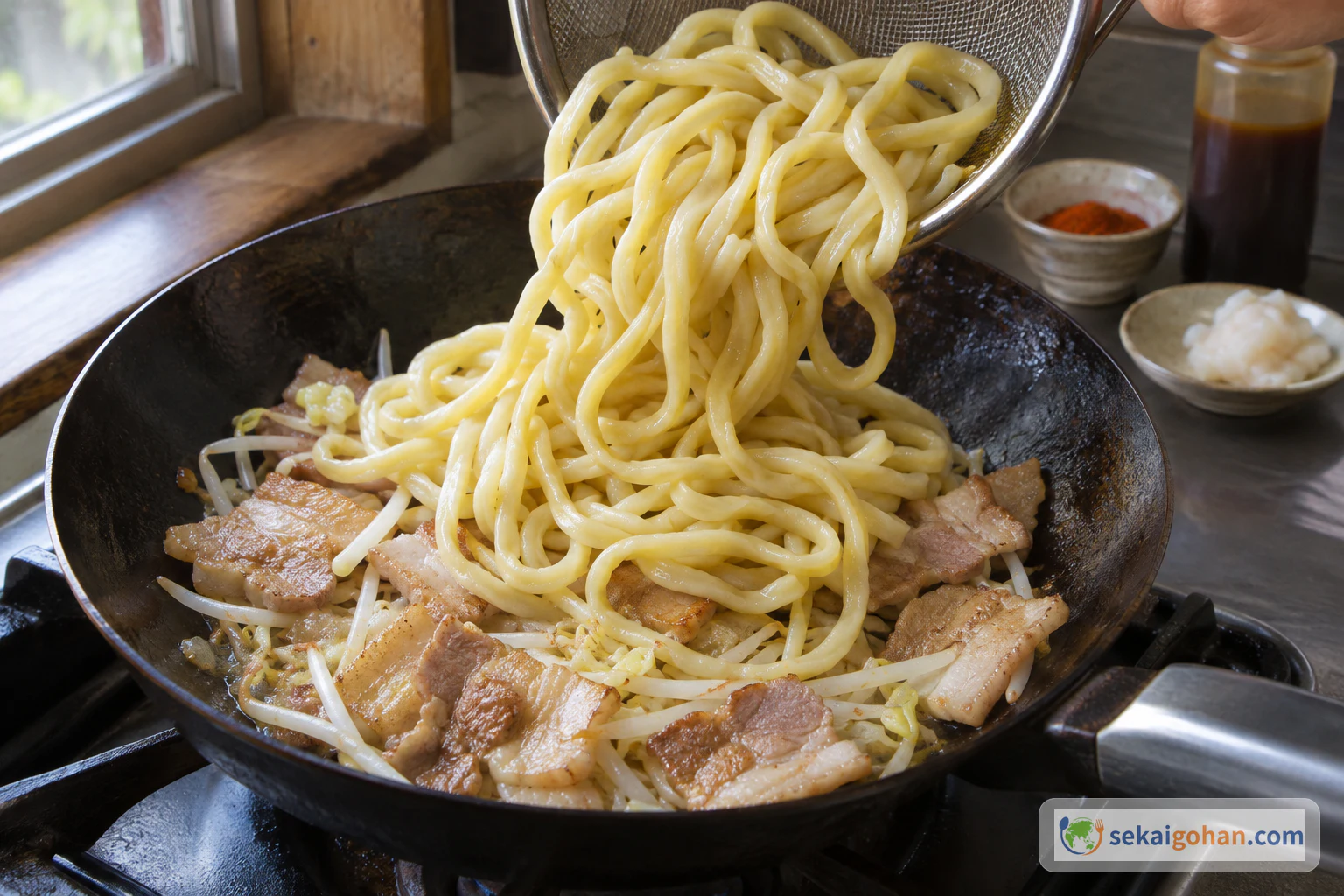
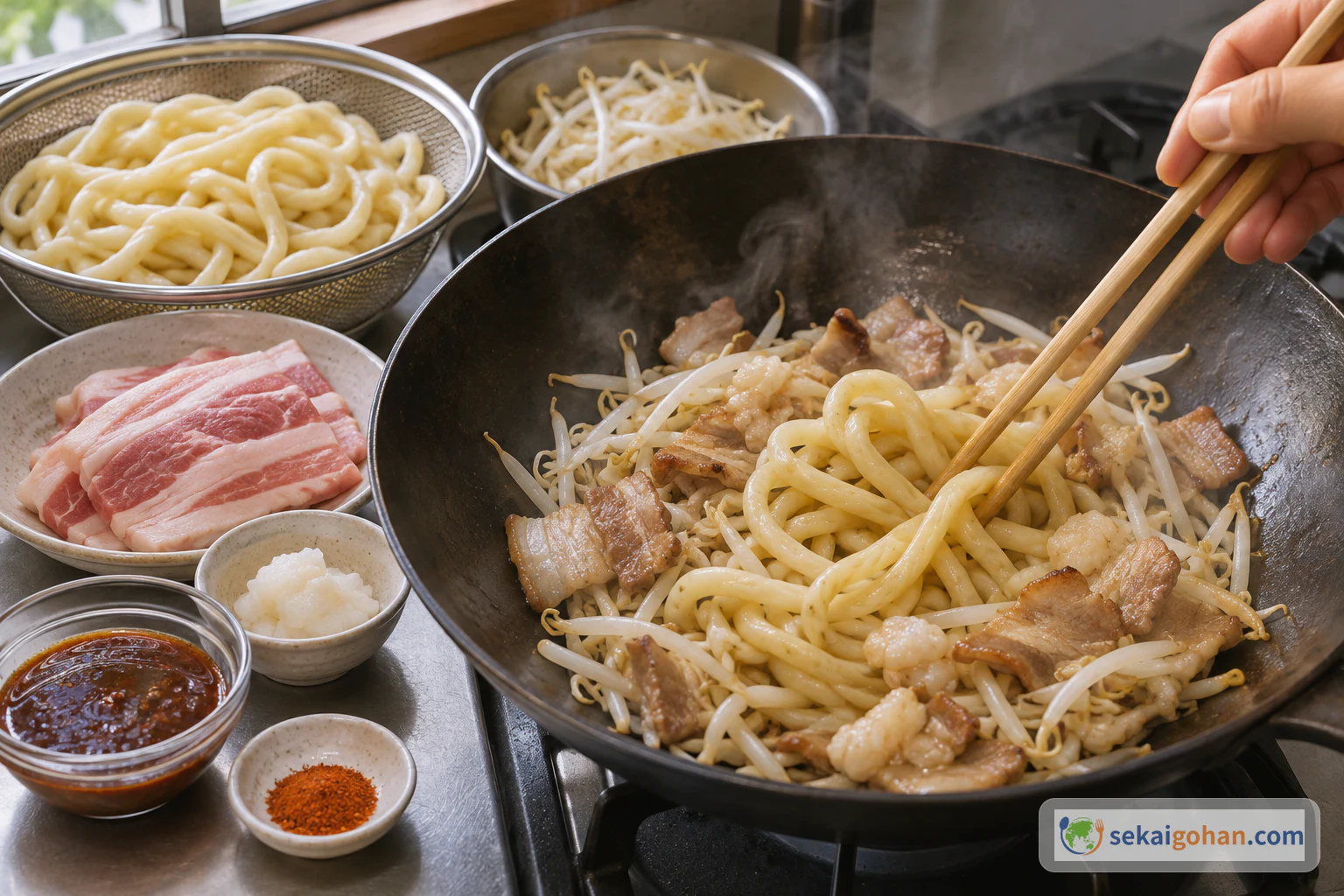
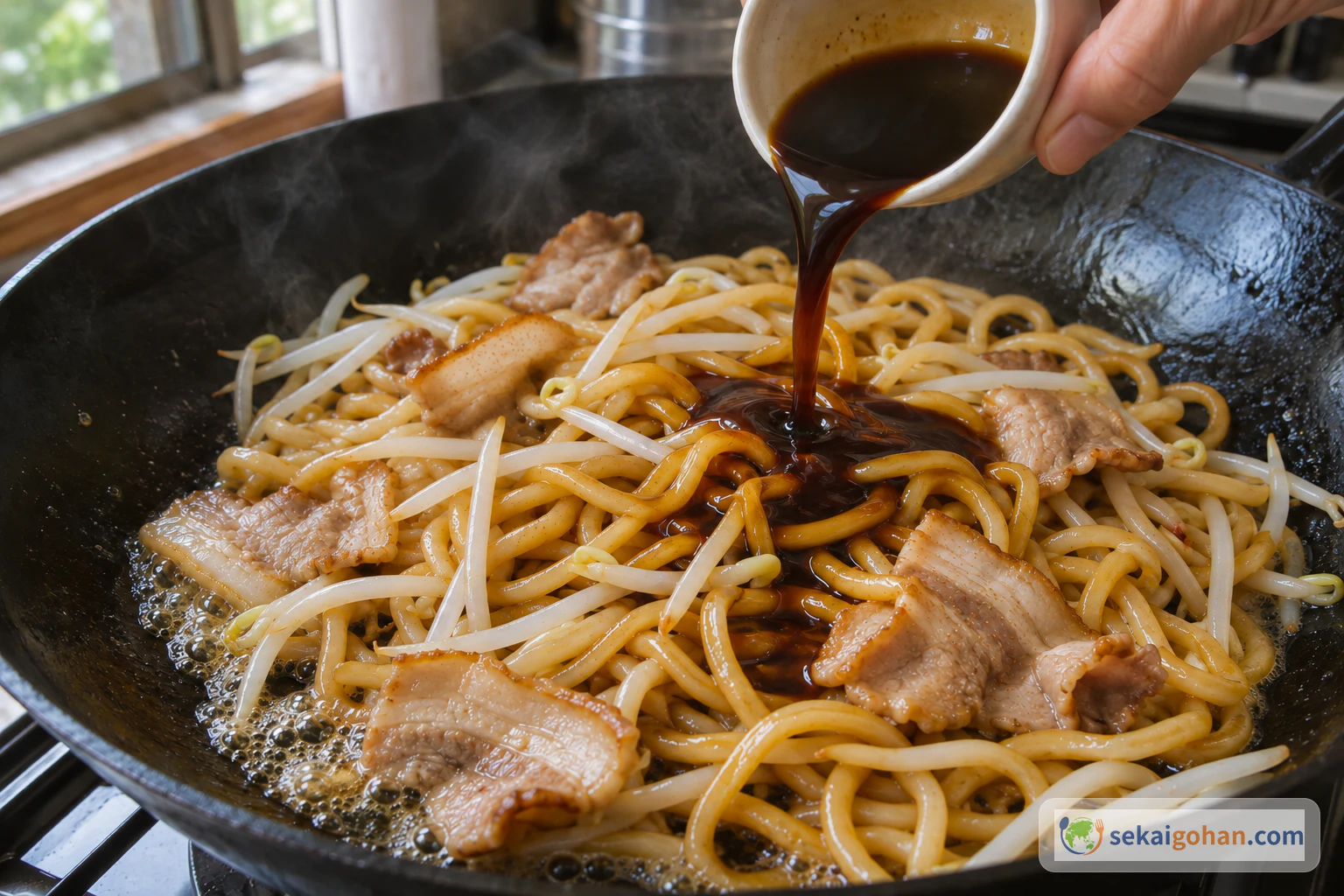
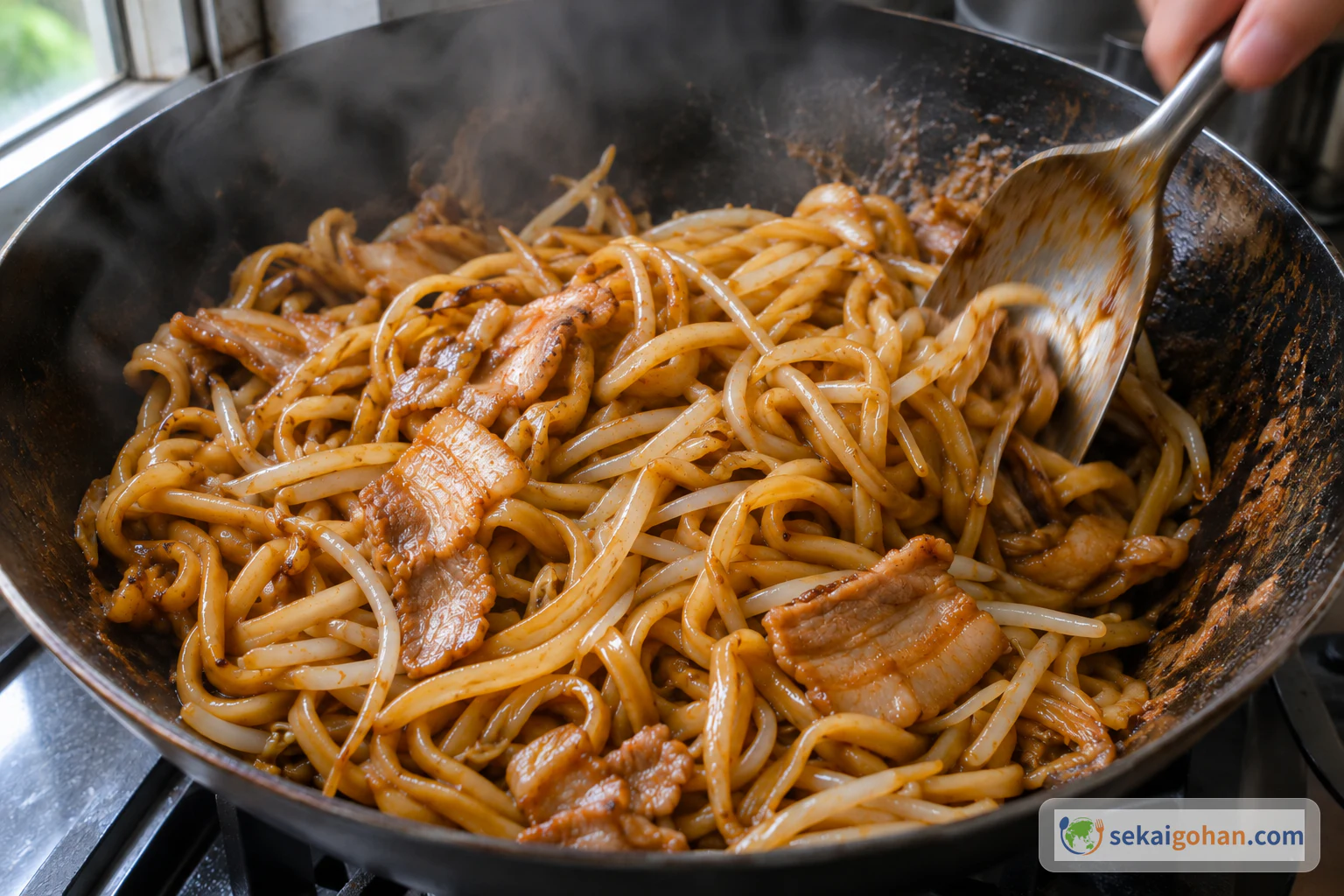
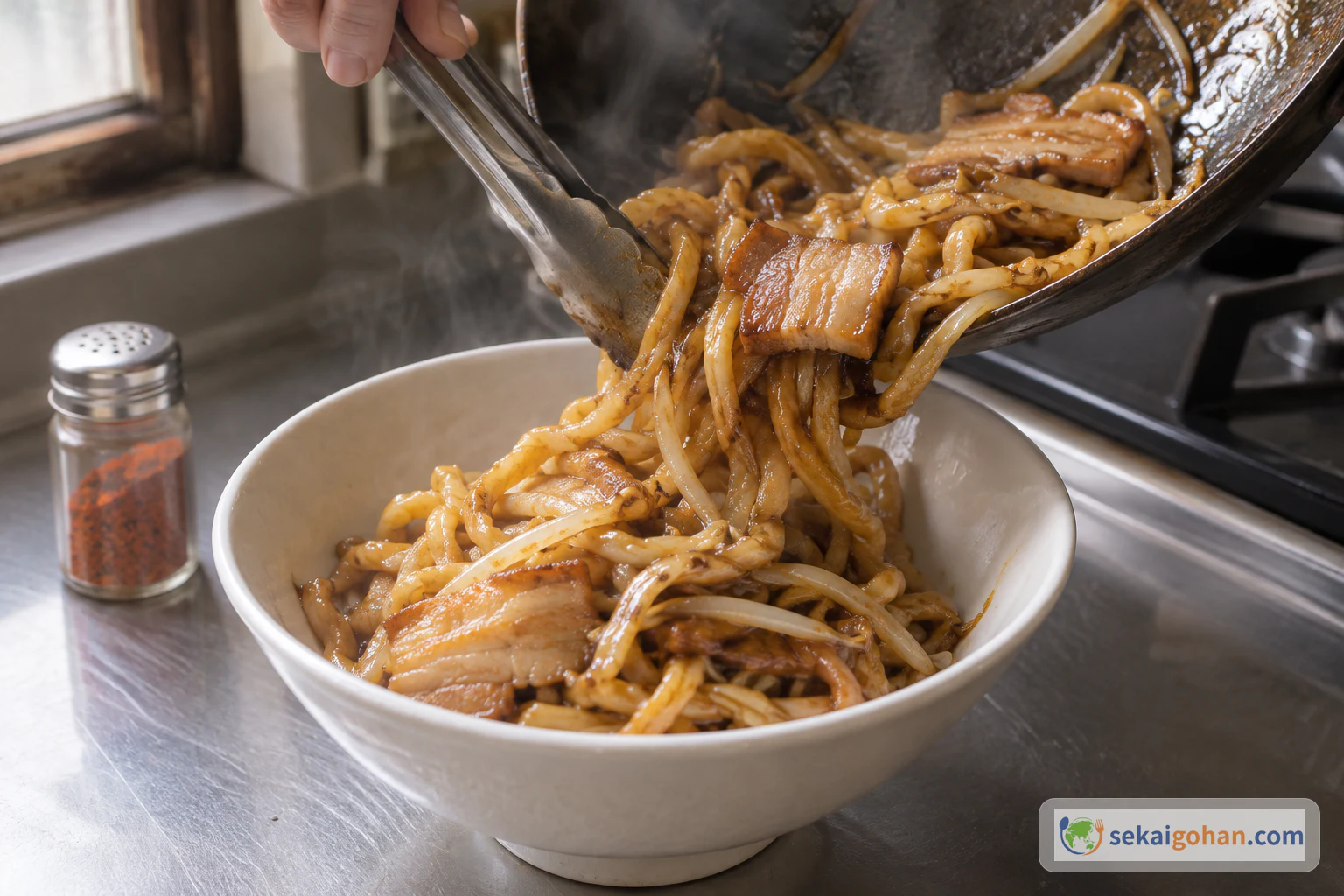
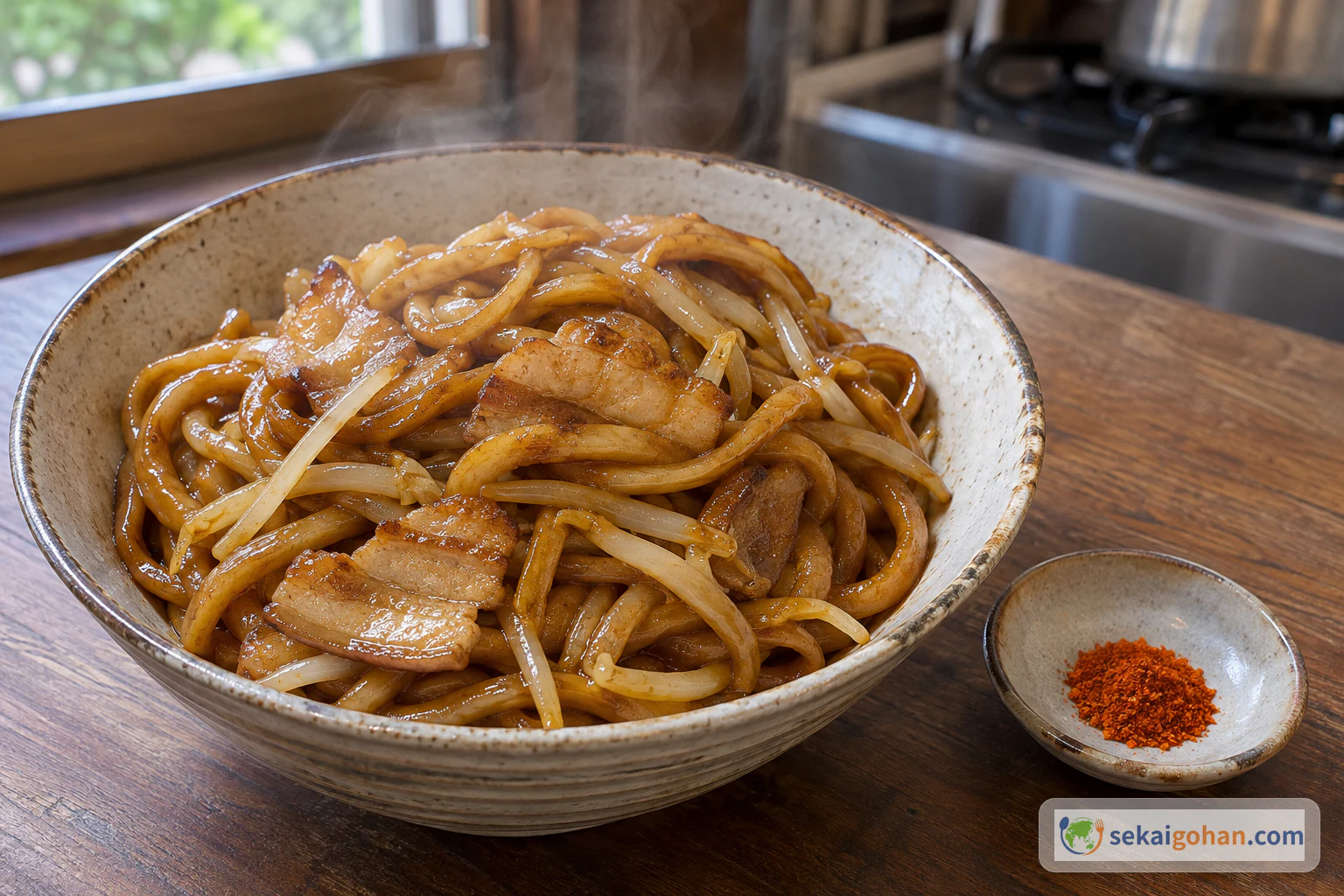
Lard melts in the pan, pork belly browns, a handful of bean sprouts goes in, and then come the noodles: extra-thick. Dark sauce is poured over, and everything is stirred until the pan bottom is dry and the sauce clings to every noodle. That is Namie yakisoba (なみえ焼そば), the local dish of Namie Town in Futaba District, Fukushima Prefecture. Compared with ordinary Japanese sauce yakisoba, it is simple: extra-thick Chinese-style noodles, just pork and bean sprouts, and a rich sauce flavor. For more dishes from the same country, see our Japan page.
Namie Yakisoba and the Town of Namie
Namie yakisoba was devised about 50 years ago as an inexpensive, filling meal for local workers. It was made thick and hearty so it would satisfy and keep them going. The town calls it soul food, and it has been loved locally for half a century.
After the 2011 evacuation, a local group formed in 2008 around the chamber of commerce's youth division cooked it for townspeople who had moved to Nihonmatsu City, bringing them the taste of home. For the town, the dish is part of how the community held together.
There is no single house style. Shops in Namie each have their own noodle thickness and sauce, so the plate you get depends on where you sit down.
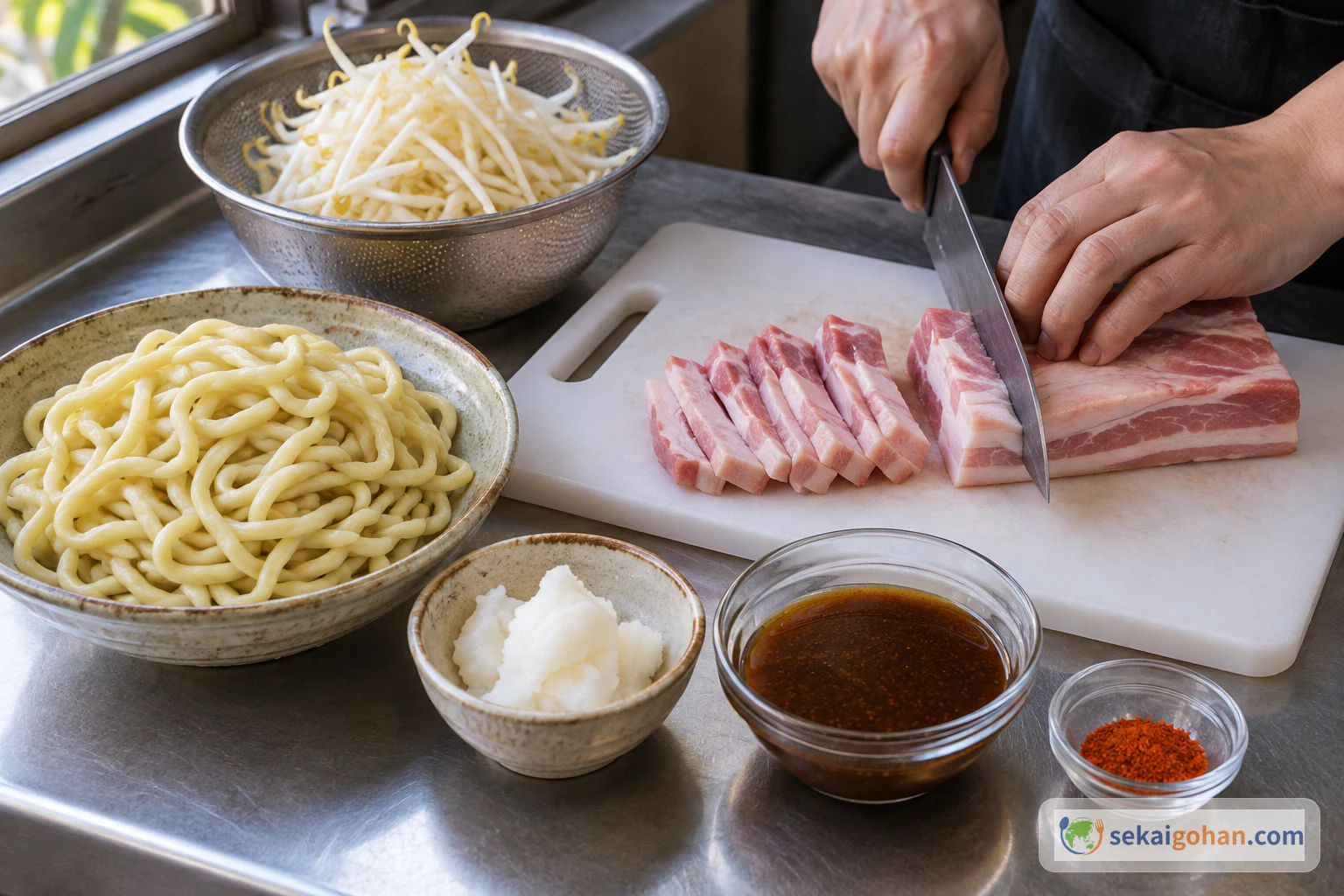
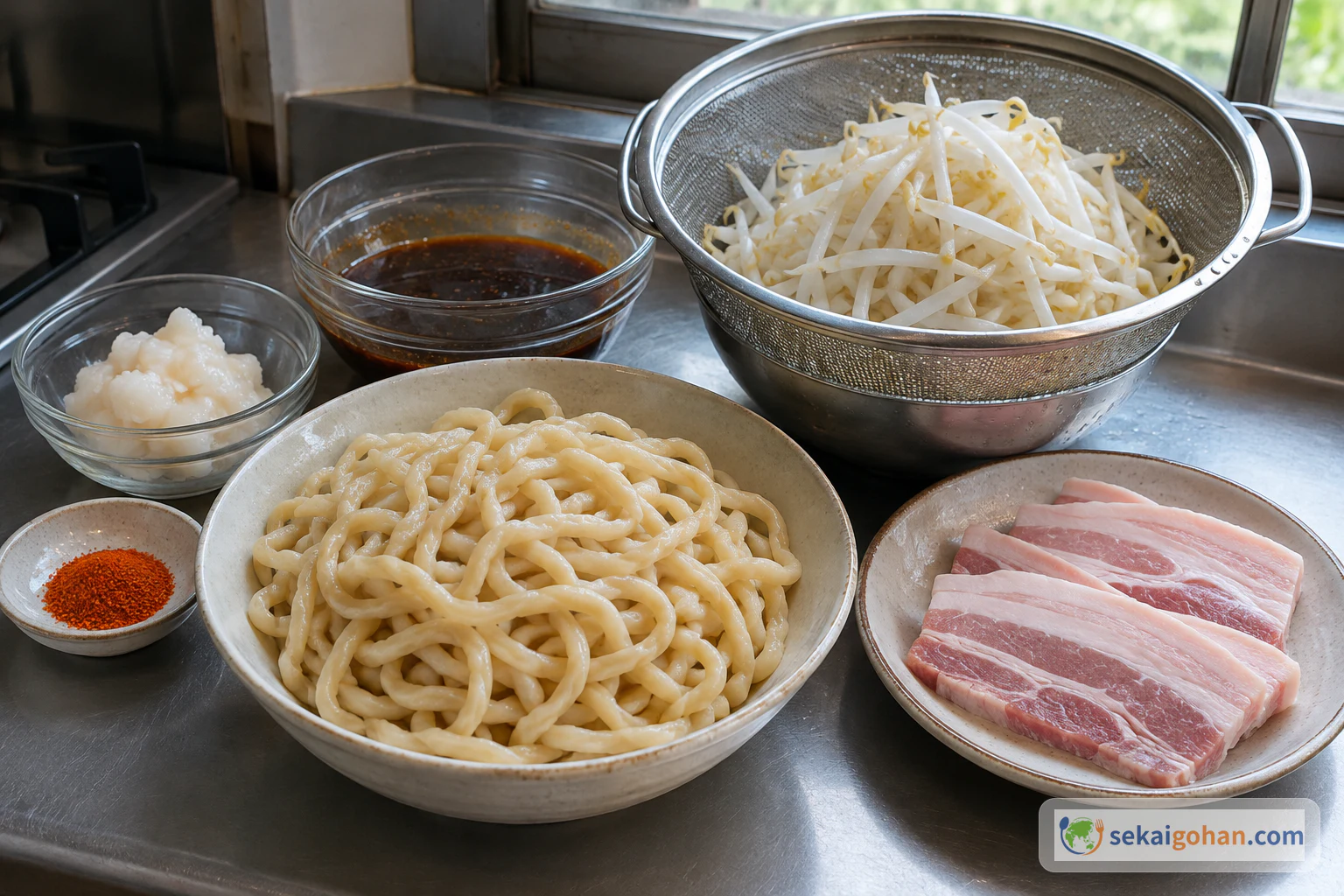
Ingredients for One Bundle of Noodles
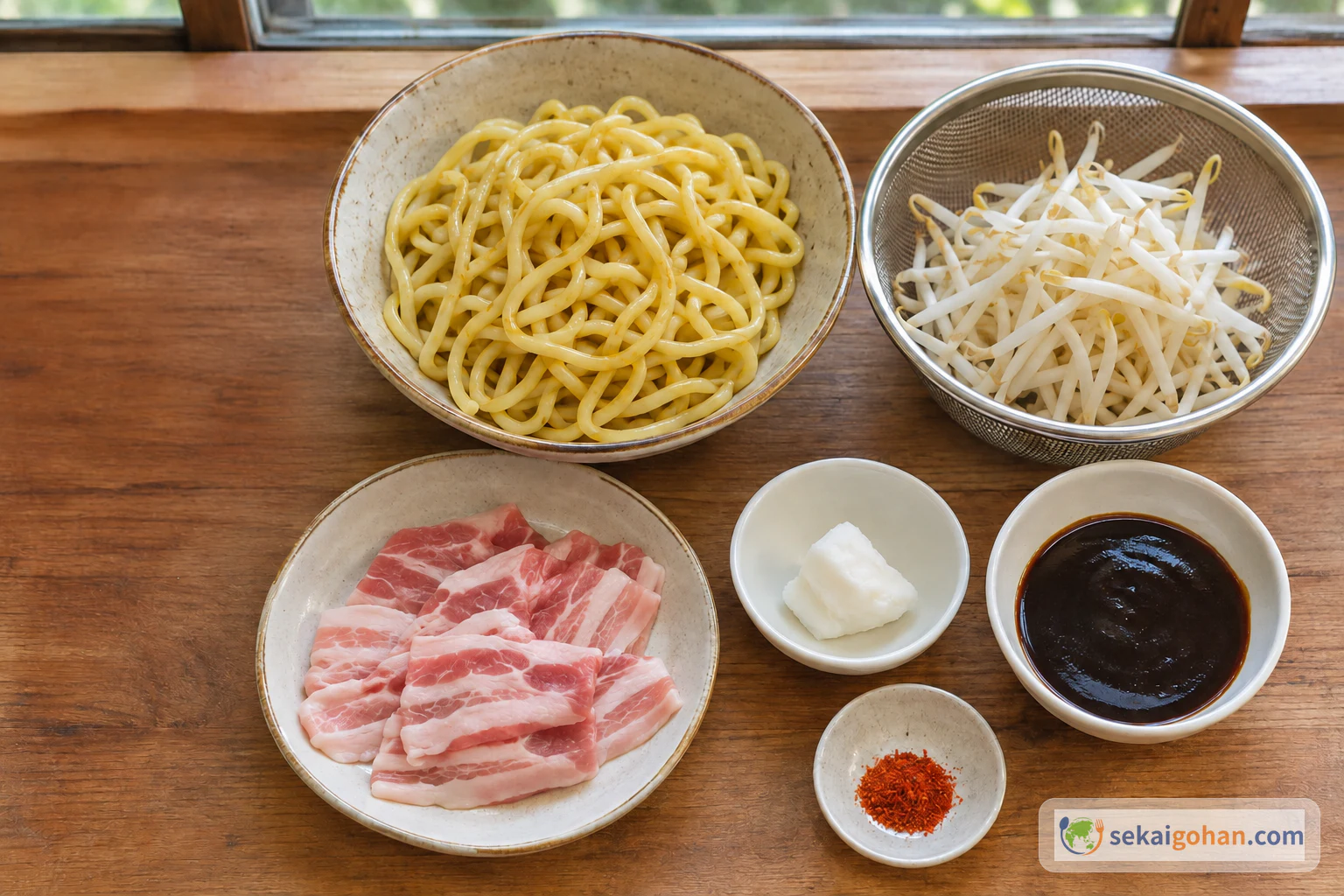
Nothing else goes into this plate: no cabbage, onion, egg, pickled ginger or aonori.
Choosing Noodles, Sauce and Lard for Namie Yakisoba
Noodles. Use dedicated Namie yakisoba noodles if you can get them, cooked and ready for stir-frying. Check the pack for thickness, whether the noodles are boiled or steamed, and any instructions on water, oil or loosening. Follow those instructions. If you can't find dedicated noodles, thick Chinese-style noodles are a reasonable stand-in, although the texture will differ. Thin noodles won't give you the same dish.
The bean sprouts weigh the same as the noodles. Bundle sizes vary by product, though. A shelf-stable Namie yakisoba pack, for example, lists 4.5 oz (130g) of boiled Chinese noodles per serving, with one sachet each of sauce, lard and ichimi. That is a different standard from this recipe's amounts, so don't mix the two.
Sauce. If your noodles come as a set with sauce and lard sachets, use the sachets meant for one portion. A general yakisoba sauce can stand in, but its sweetness and thickness differ from Namie yakisoba sauce. Adjust the amount by how well it coats the noodles.
Allergens. Check the labels on the noodles and sauce you buy for allergens such as wheat, egg and soy.
Equipment
- Knife
- Cutting board used only for raw meat
- Colander
- Large frying pan (lets you spread the noodles and stir-fry the sprouts without piling them up)
- One cooking utensil for stir-frying, such as a spatula
- Chopsticks
- Serving bowl
- Small dish for the ichimi
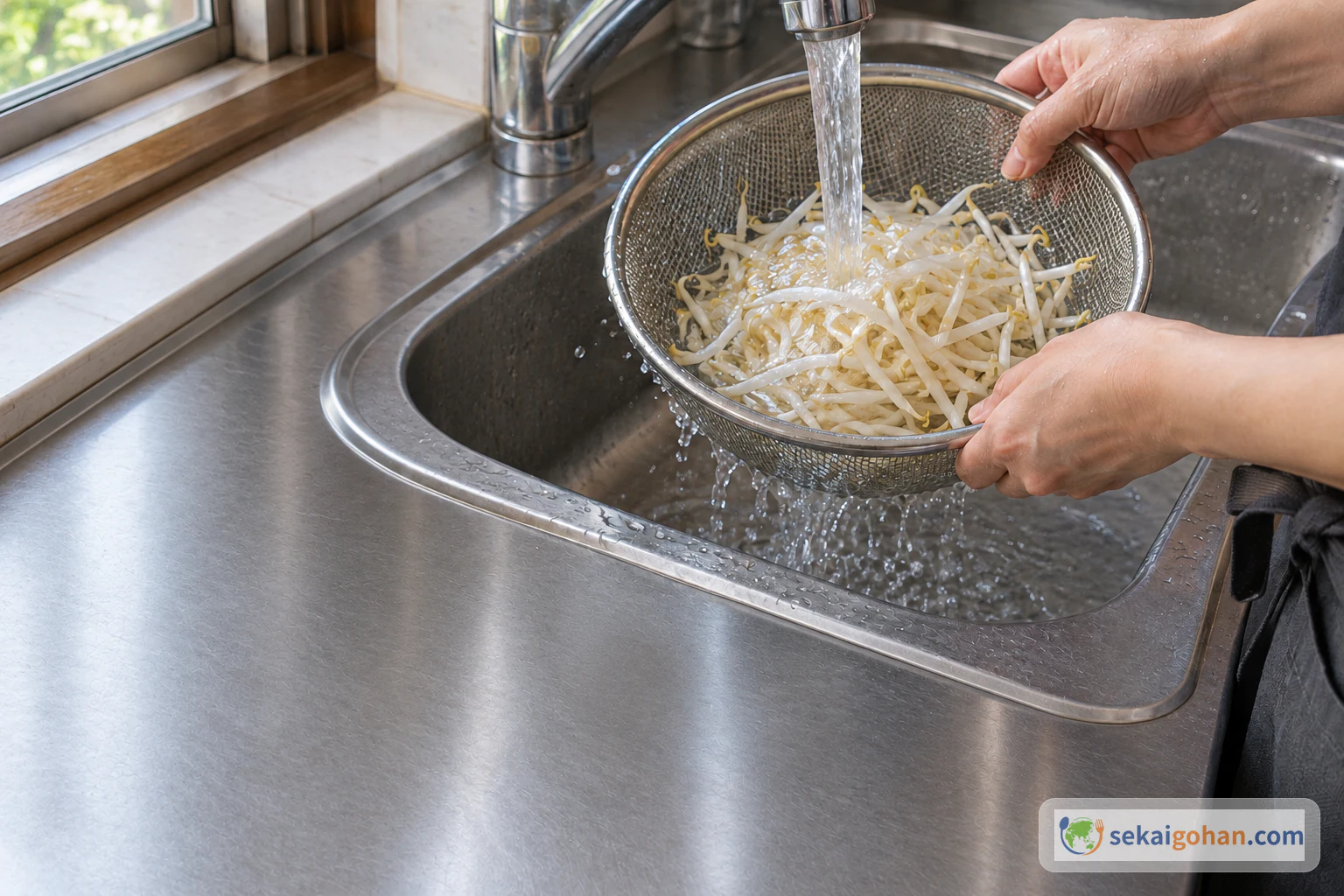
Cook the pork through to the center: 167°F (75°C) at the center for at least 1 minute. Browning on the surface does not show that the center is cooked. Keep raw pork on its own board, away from the sprouts and cooked food. Rinse the sprouts under running water, and keep cooking them through the noodle and sauce stages so they are thoroughly heated when served. Do not serve half-raw or raw bean sprouts.
Fixing Common Namie Yakisoba Problems
Most problems come from a crowded pan or stopping too soon. In a home kitchen, cook one portion at a time so the noodles have room to spread.
| Condition | What to do |
|---|---|
| Sauce liquid is still pooling in the pan | Keep stir-frying until it cooks off and the sauce coats the noodles |
| The pan is too small to spread the noodles | Cook one portion at a time so the noodles and sprouts are not piled up |
| The noodles break or stay in clumps | Loosen them gently, following any instructions on the pack |
| The sprouts still seem raw at the end | Keep cooking until they are thoroughly heated before serving |
Serving Namie Yakisoba and Variations
Make the baseline plate first: dedicated thick noodles, pork, bean sprouts and sauce, with nothing added. Ichimi chili goes on the side, so each person can set their own heat.
Swapping in thick Chinese-style noodles gives you a Namie-style home version with a different texture. Cabbage, egg or pickled ginger also push the dish toward home-style yakisoba and away from the regional plate. And since Namie shops differ in noodle thickness and sauce, it's worth appreciating that range rather than blending different shops' formulas into one plate.
Frequently Asked Questions
How is Namie yakisoba different from ordinary yakisoba?
It uses extra-thick Chinese-style noodles, with pork and bean sprouts as the basic fillings and a rich sauce flavor. The sauce is stir-fried until no liquid remains, so it clings to the thick noodles.
How far should I cook the pork?
Cook it through to the center: 167°F (75°C) at the center for at least 1 minute. Browning on the surface is not proof.
Why cook the bean sprouts so thoroughly if the step says "lightly stir-fry"?
The light stir-fry is a midway stage, and the sprouts keep cooking through the noodle and sauce steps. Bean sprouts are generally eaten cooked, and insufficient heating and other improper handling can lead to food poisoning. Rinse vegetables under running water, and keep raw-meat tools apart from ready-to-eat food.