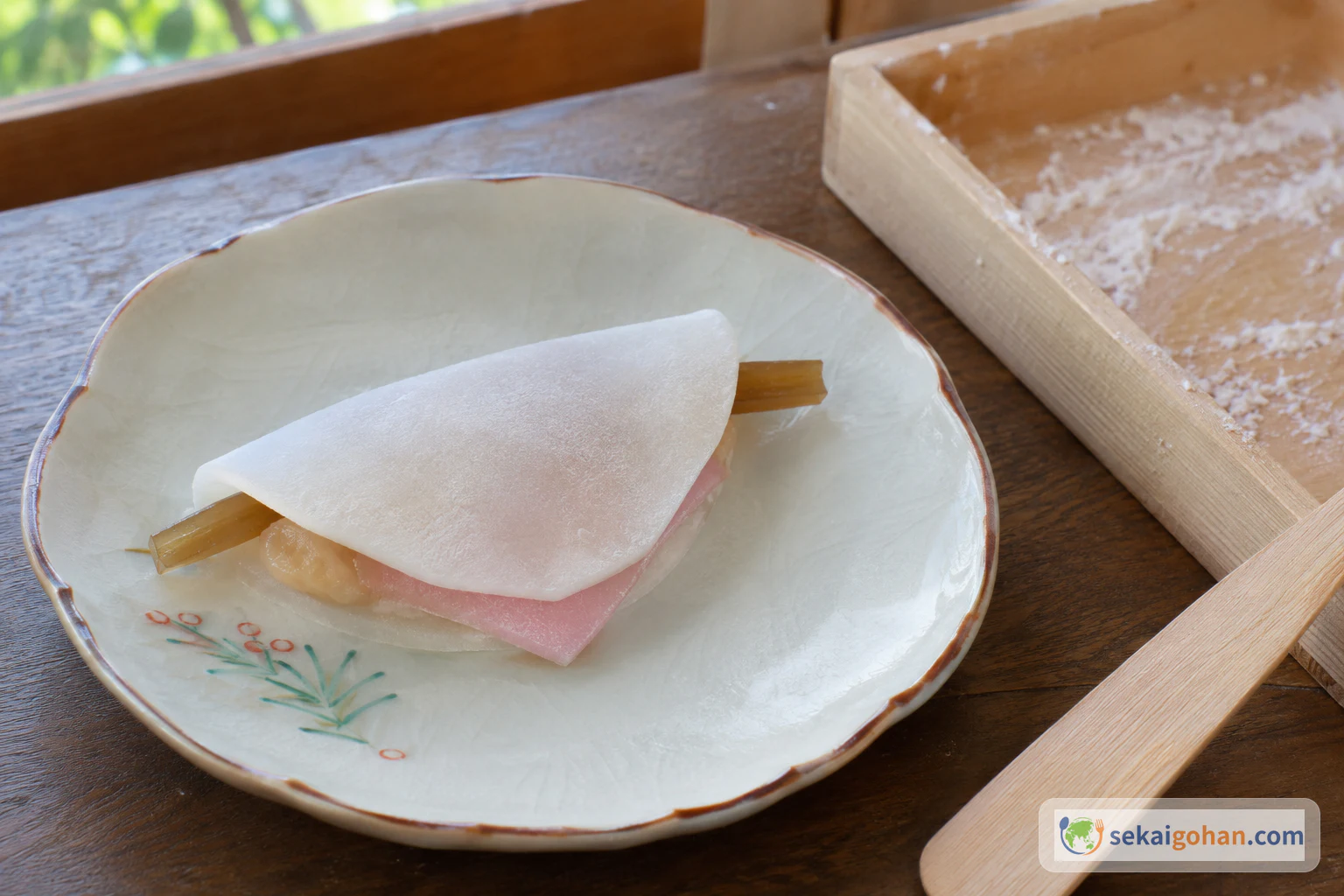
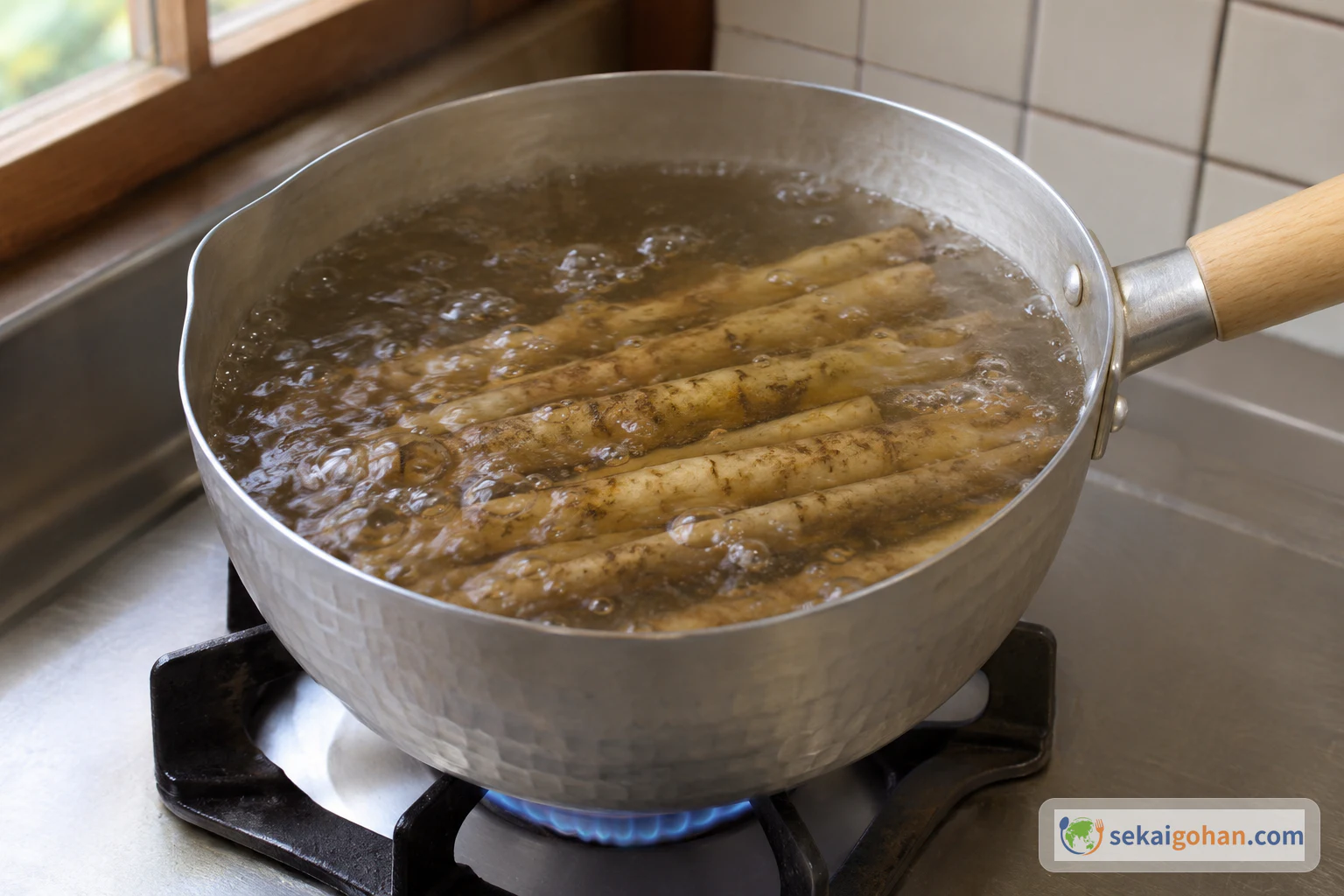
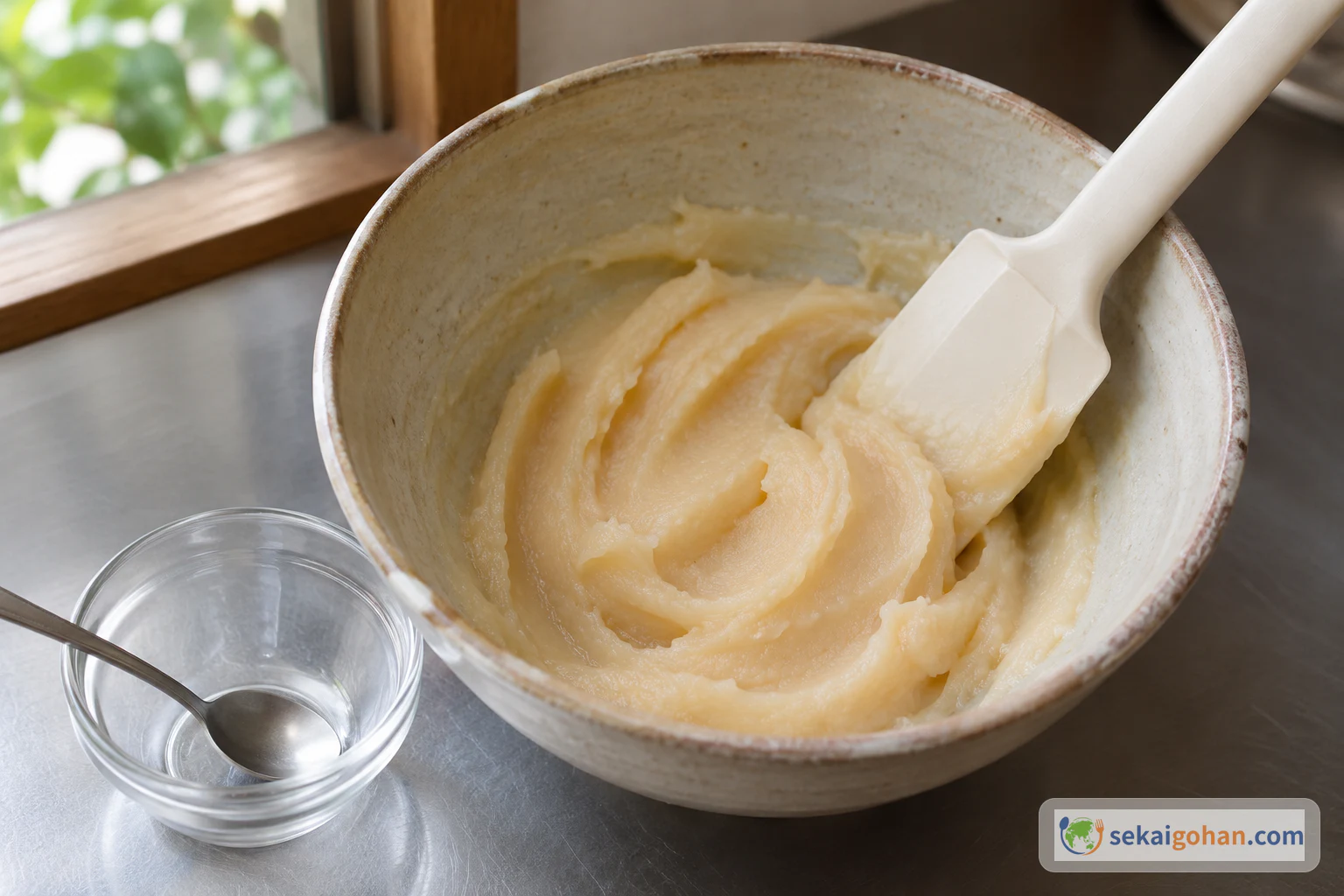
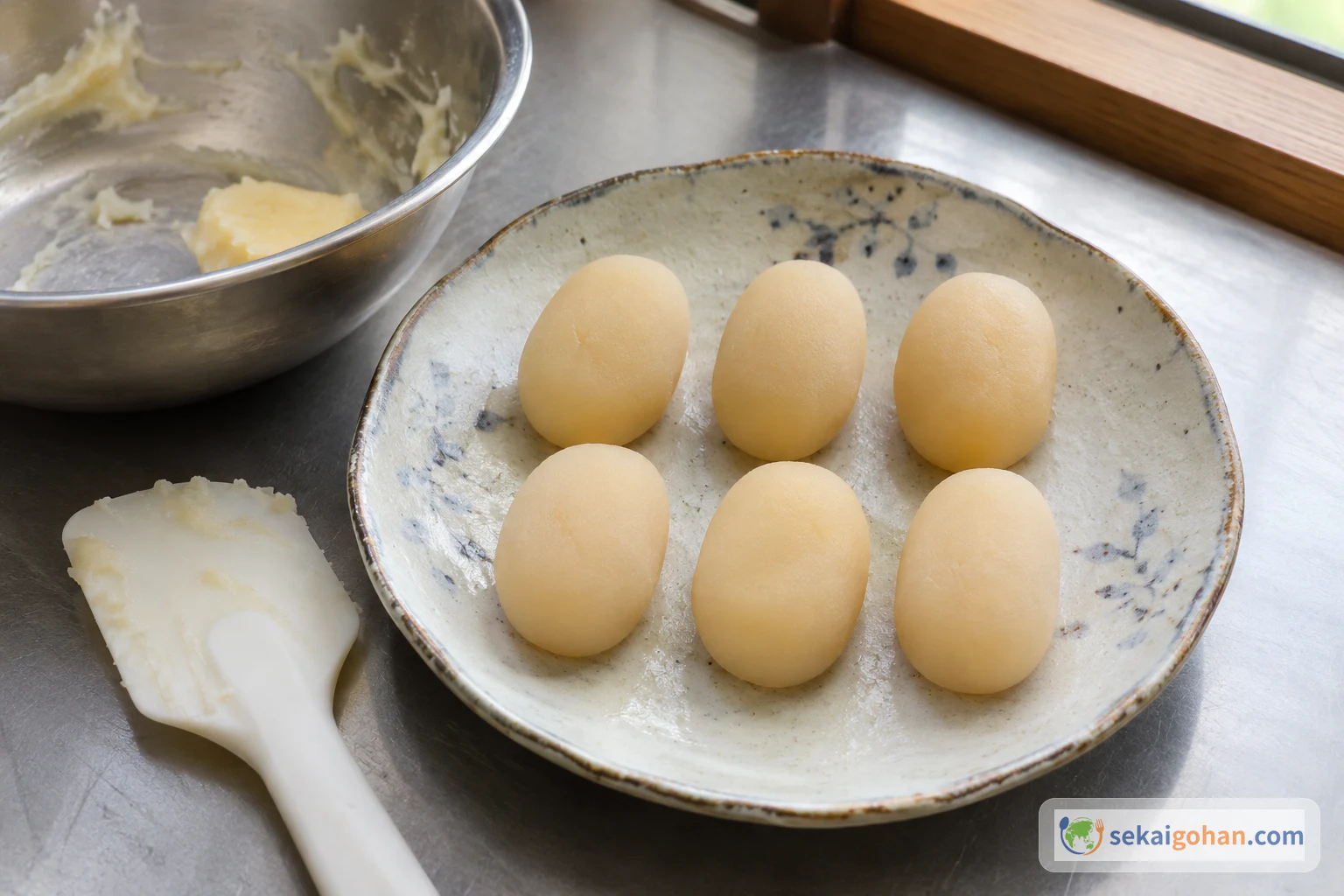
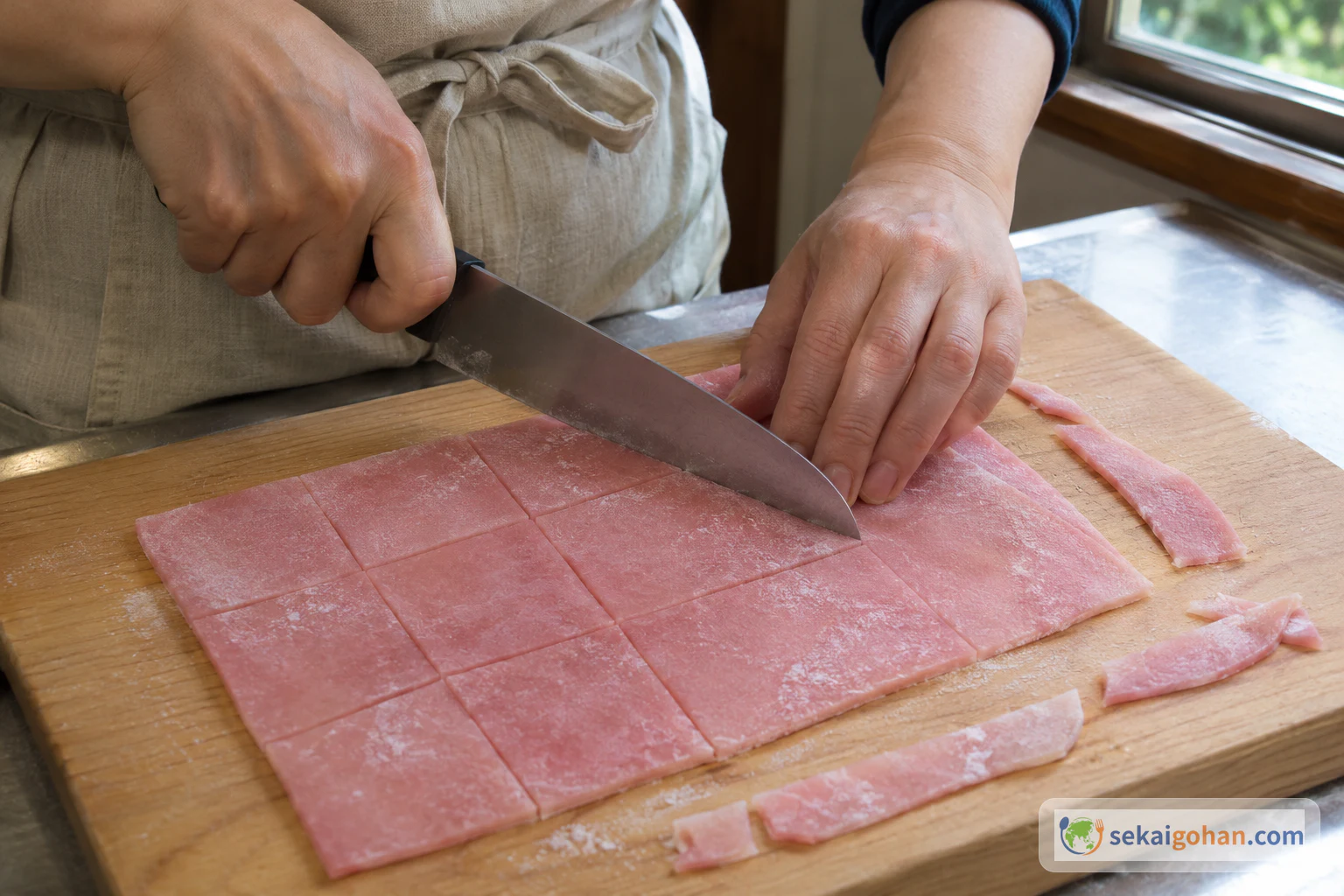
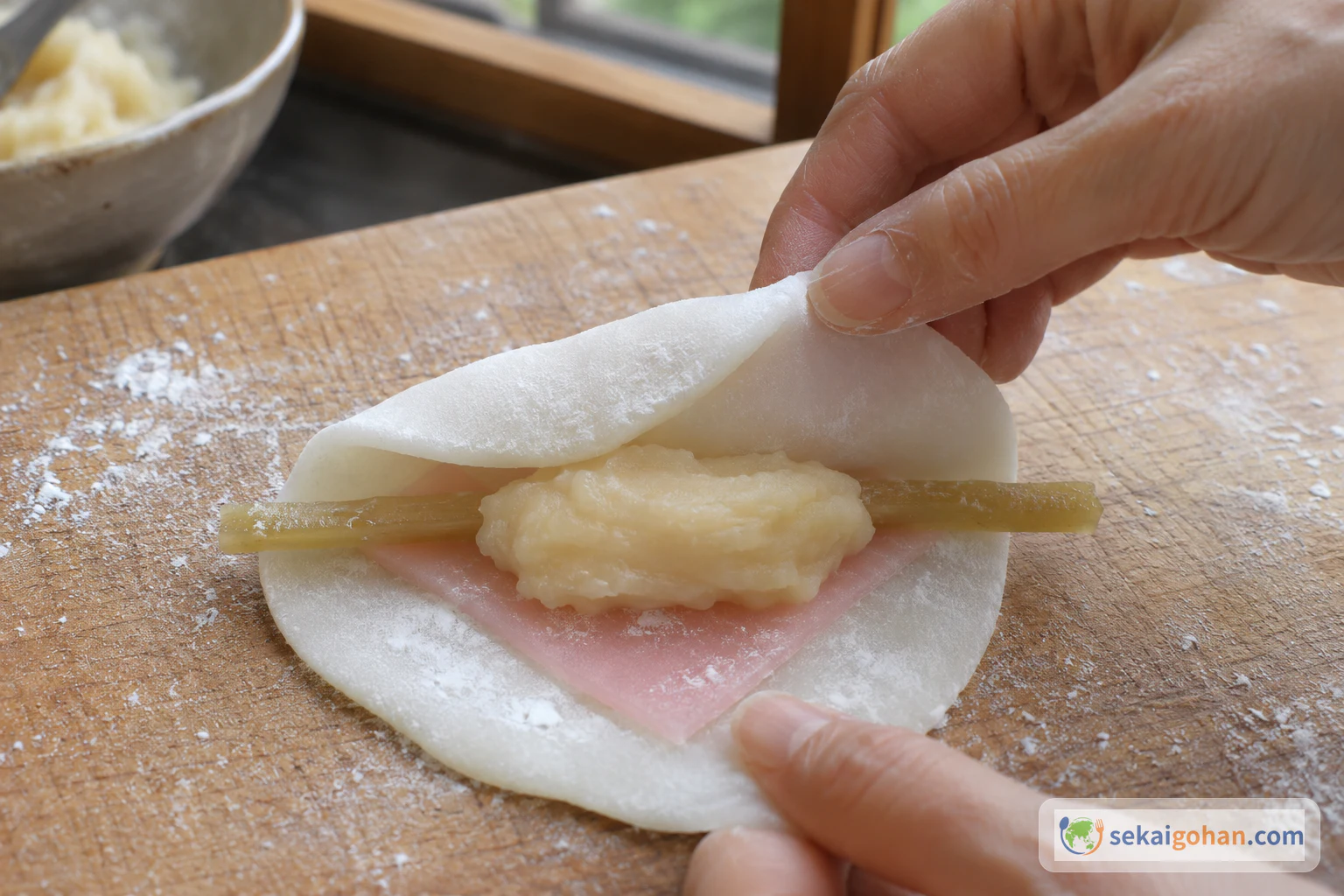
Where the fold of a hanabiramochi closes, a pale pink square shows faintly through the soft white dough like a diamond, and the ends of a slender strip of candied burdock peek out on either side. Bite in and you find a mound of bean paste blended with white miso: sweet, with a gentle saltiness underneath. Hanabiramochi (花びら餅, "petal mochi") is a Japanese sweet made for January, and this home version makes six pieces of gyuhi-style dough cooked in a 500W microwave.
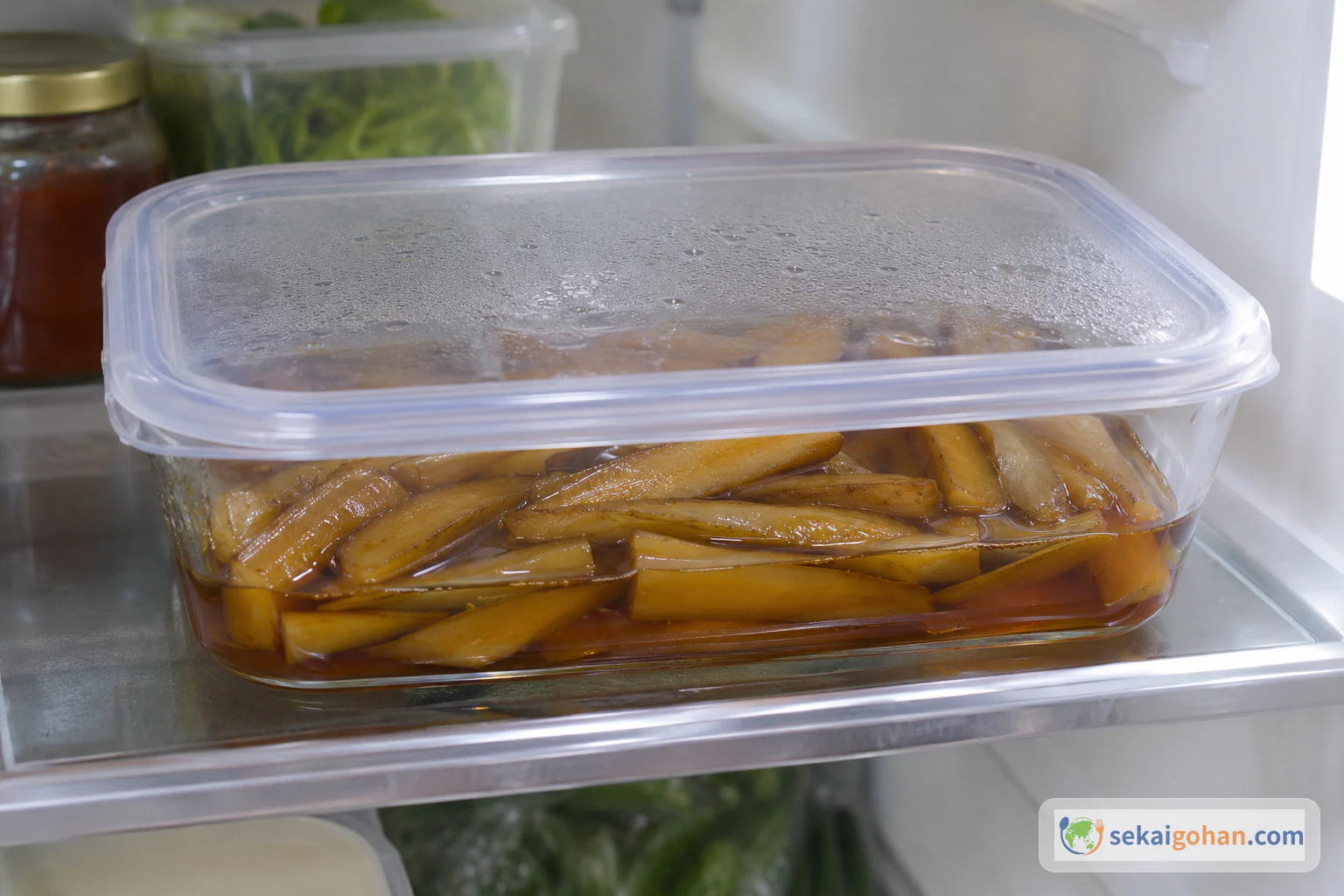
Plan for two days. The burdock goes into its syrup the day before and steeps overnight; the filling, dough and assembly happen on the day you serve.
Hanabiramochi at New Year and the First Tea of the Year
Hanabiramochi takes its form from food served at New Year ceremonies of the imperial court, and it is modeled on the court's hishihanabira (菱葩). Its parts are a round sheet of mochi, an azuki-colored diamond of mochi, burdock cooked in syrup, and miso bean paste. Tea ceremony practitioners serve it at hatsugama (初釜), the first tea gathering of the year, and after the Second World War it spread more widely as a New Year sweet.
The dough changes by region. In the Kanto and Chubu regions, hanabiramochi is made with mochi; in the Kinki region, with gyuhi, a softer cooked rice-flour dough. The microwave gyuhi here is closer to the Kinki style, and in place of the azuki-colored diamond it uses a pale pink square.
For more dishes from the same country, see Japan.
Ingredients for 6 Pieces
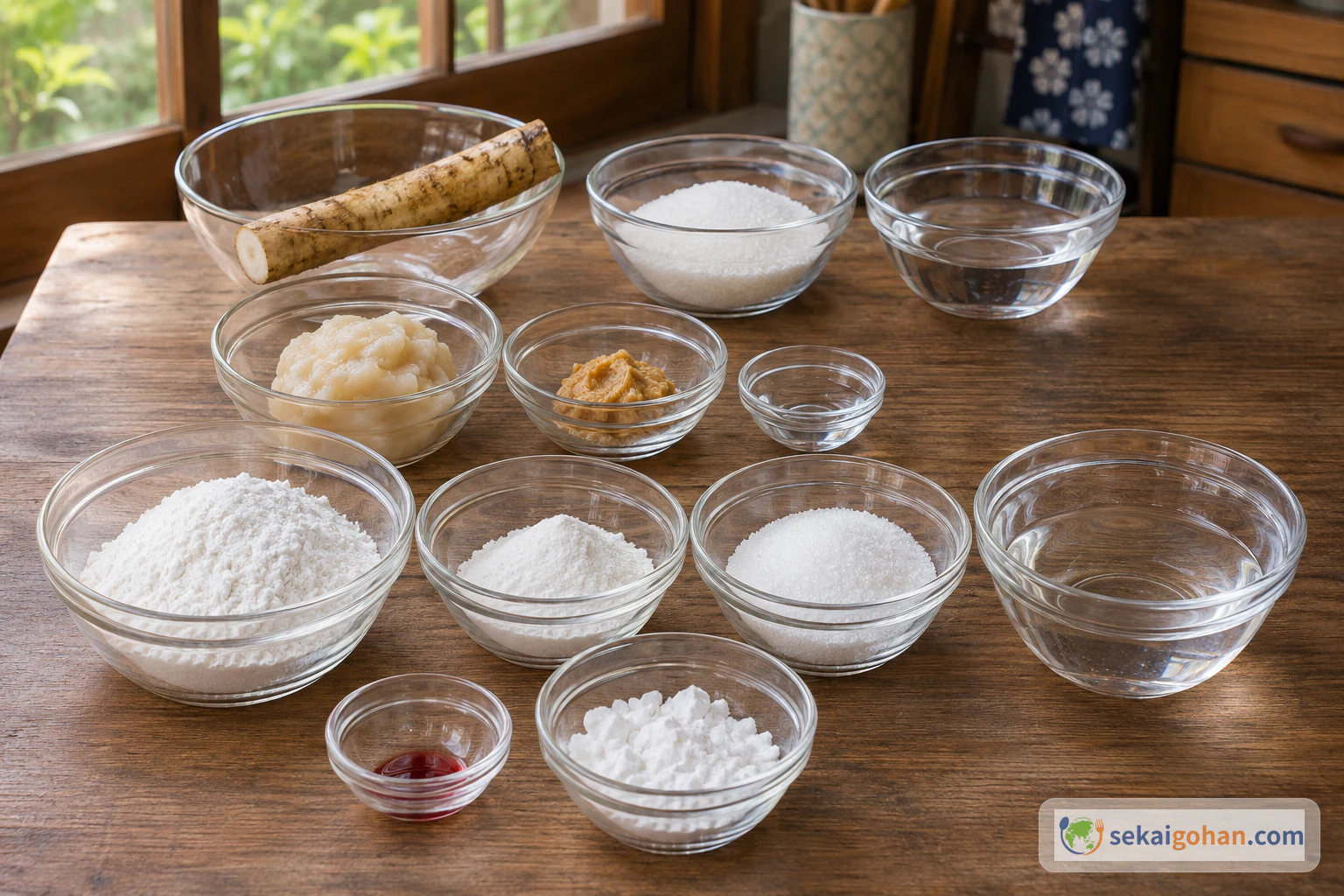
The ingredients fall into three parts: the candied burdock, the white miso filling and the gyuhi dough.
Equipment
- Microwave with a 500W setting
- Heat-safe bowls
- Rubber spatula or wooden spatula
- Small saucepan for boiling the burdock and making the syrup
- Clean, shallow container with a lid, or plastic wrap
- Small strainer
- Cutting board and knife
- Rolling pin
- Pastry brush
- Small dish for dissolving the coloring
Choosing Ingredients for Hanabiramochi
Hiyoku mochiko is a type of glutinous rice flour. Products differ in name and grain size, and shiratamako won't swap in at equal weight. If you cannot find hiyoku mochiko, general glutinous rice flour (mochiko) is the closest option; its grain size and water absorption differ, so check the dough's texture as you go.
Joshinko is non-glutinous rice flour, and white bean paste is a smooth paste made from white beans. White miso should be sweet and pale; Saikyo-style white miso is close. Potato starch is for dusting only and gets brushed off before shaping. For the pink, use a red coloring sold for food and follow its label.
The recipe makes six pieces. Measure the two 2 oz (60g) portions of sugar separately: one is for the burdock syrup and one is for the dough.
Method: Candied Burdock the Day Before, Filling and Dough on the Day
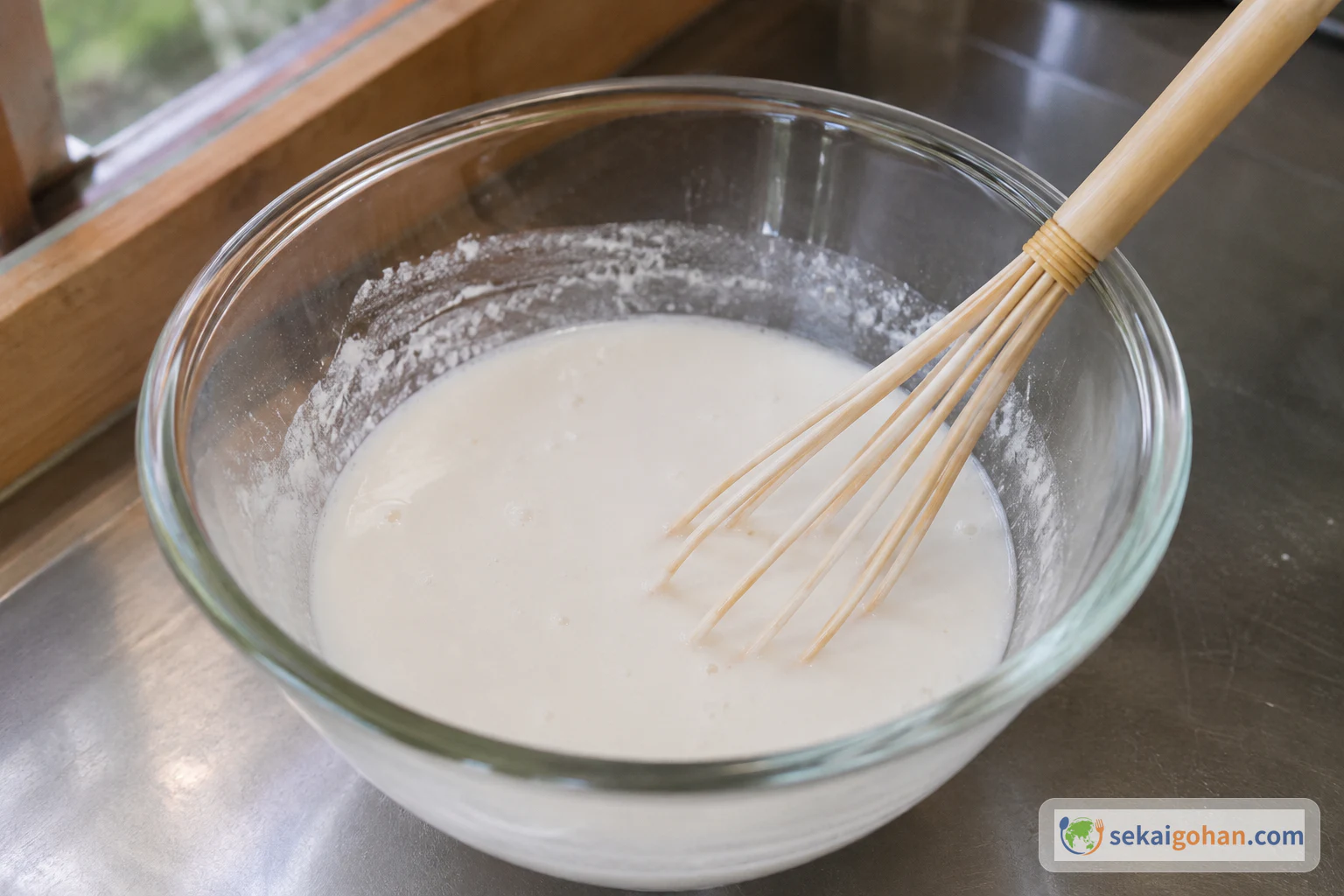
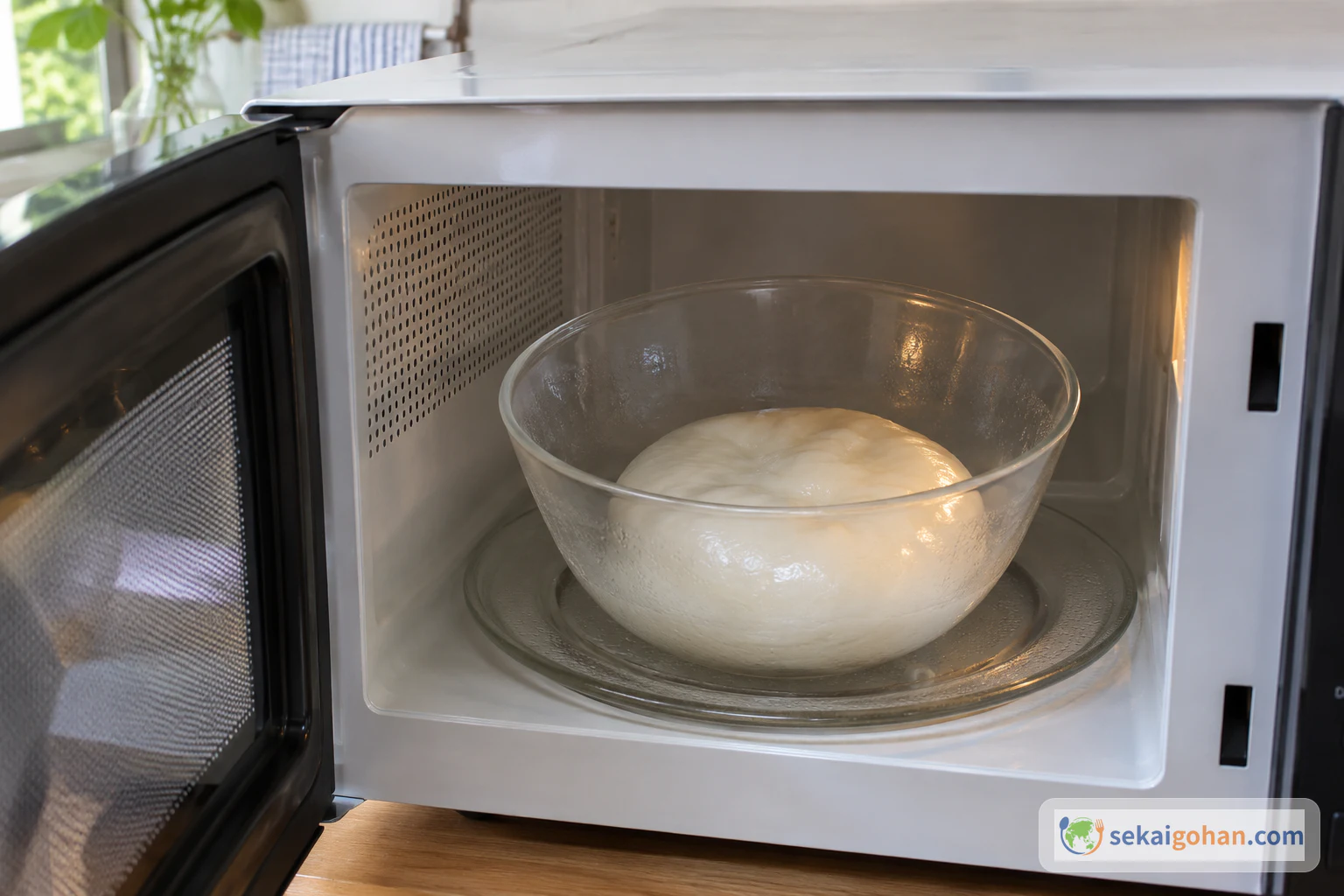
Times below are for 500W. Microwaves vary, so judge the filling by being heated all the way through and still soft, and the dough by being glossy and cooked throughout.
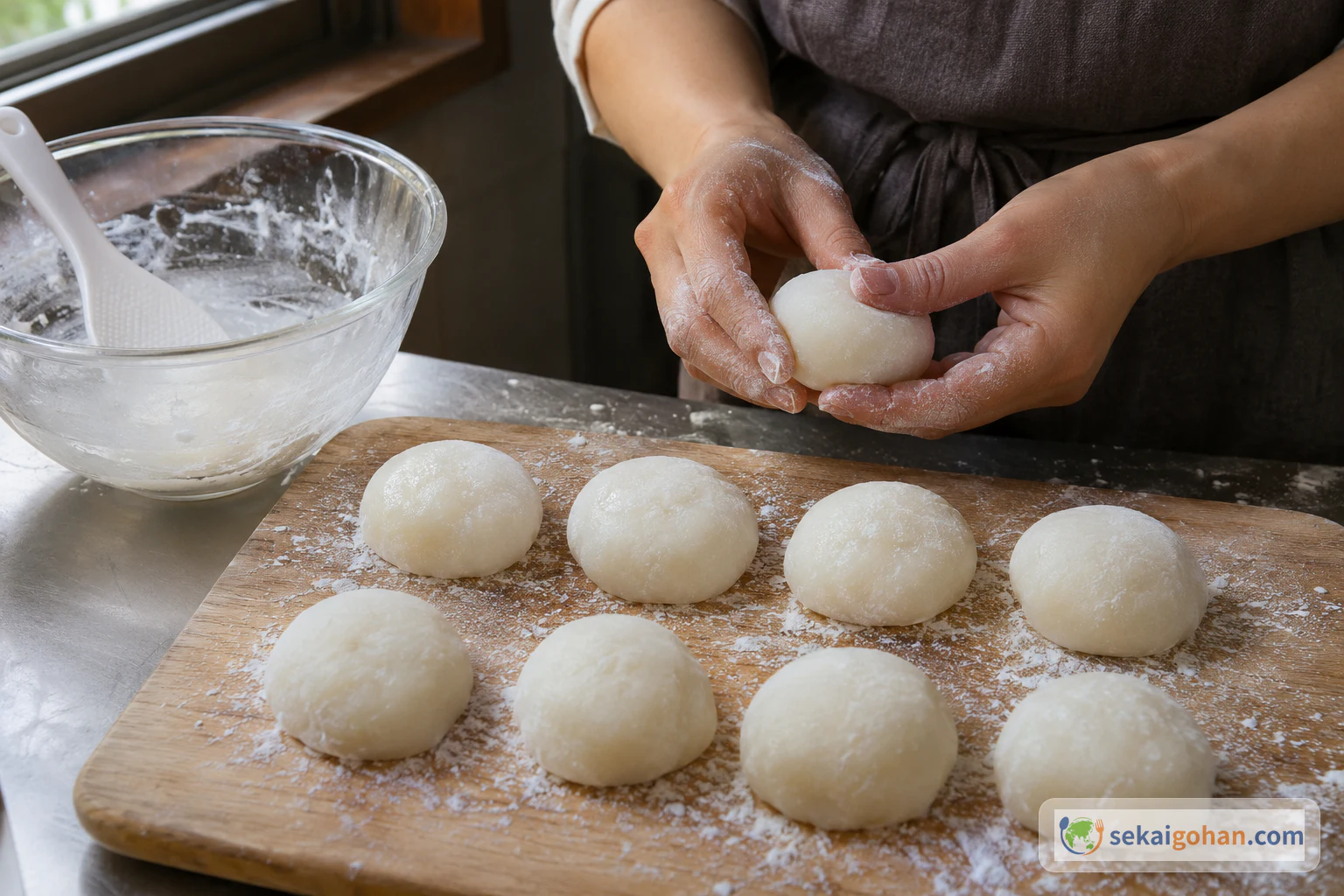
Steps 1–5 are done the day before. Steps 6 onward are done on the day you serve. Shape the dough while it is still warm, because it becomes harder to stretch as it cools.
Dough straight from the microwave is hot and very sticky. Handle it on a well-dusted board, and take care when you lift it out of the bowl.
Hanabiramochi Problems and Fixes
| What you see | What to check | What to do |
|---|---|---|
| The filling is stiff once cool | It firms up as it cools | Next time, stop heating while it is still on the soft side |
| The dough is dull or uneven | Not cooked through yet | Heat 1 minute more at 500W and stir well; repeat until glossy throughout |
| Your microwave is not 500W | The times here are for 500W | Go by the look of the filling and dough |
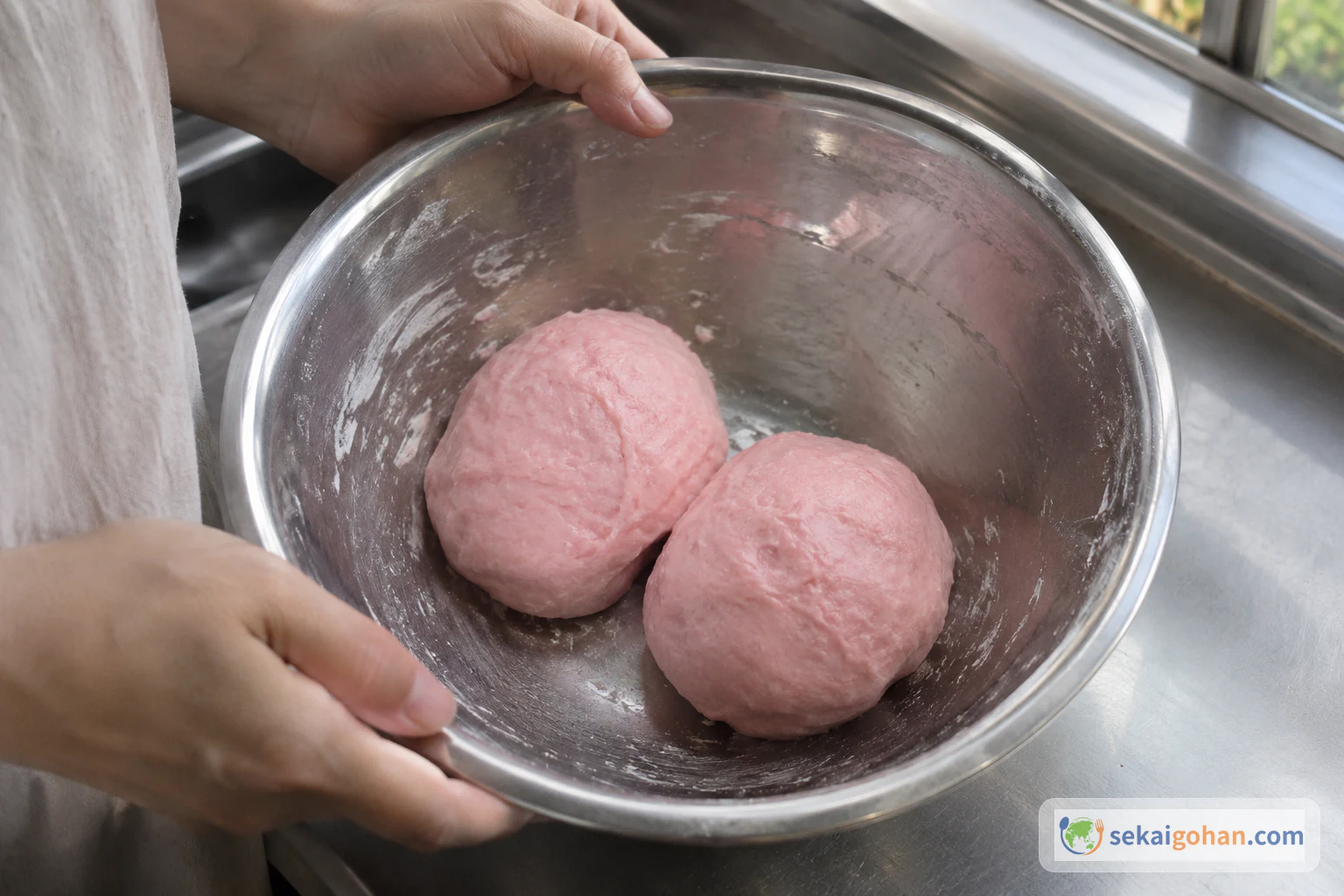
| The pink is too strong | Too much coloring at once | Add coloring a little at a time and keep it pale |
| Starch shows on the sweet | Dusting was not brushed off | Brush the white ovals and pink squares before assembling |
| Syrup wets the dough | Burdock not drained enough | Drain the strips well in a strainer before placing them |
Storing and Varying Hanabiramochi
Storing the candied burdock
The burdock steeps overnight, so keep it in the refrigerator rather than at room temperature. Once it has lost its initial heat, cover it in a sealed container or with plastic wrap and refrigerate it promptly. Dividing it into shallow containers helps it cool faster.
Other kitchens, other formulas
Ordinary miso works too, at a smaller amount: 1/2 tbsp (8g) for 3.5 oz (100g) white bean paste, compared with about 20g of white miso. Use one or the other, never both.
Some makers use a different dough and filling altogether. A 30-piece version uses an uiro dough made from jōyōko (上用粉) rice flour, sugar, ukiko starch and water, with a filling of white bean paste recooked with water, colored pink and mixed with white miso. That one is its own formula, with its own amounts.
Frequently Asked Questions
How much white miso goes in the filling?
Use 20g of white miso with 3.5 oz (100g) white bean paste and 1 tsp water. Do not add 8g of ordinary miso on top of it.
How much filling goes in each piece?
Divide all the cooked filling into six equal portions. In the basic 8g miso version, each piece has about 15g of filling.
Do I use all the burdock?
The 8-inch (20cm) burdock gives 8 strips, so one strip per piece uses six and leaves two spare.