Gopchang Jeongol: Korean Spicy Beef Offal Hot Pot (곱창전골)

Gopchang jeongol: parboiled beef tripe, beef shank, napa cabbage, mushrooms, chrysanthemum greens and glass noodles simmered in spicy beef bone soup
Serves
4 servings
Cuisine
Korean

How to make gopchang jeongol (곱창전골), a Korean hot pot of parboiled beef tripe or offal, soaked beef shank, vegetables and glass noodles in spiced beef bone soup. Covers choosing the offal, the order of the layers, how it differs from grilled gopchang-gui, and the rice or udon options for the leftover broth.

Cooking flow

Cooking steps

STEP11 / 7

Soak the beef shank

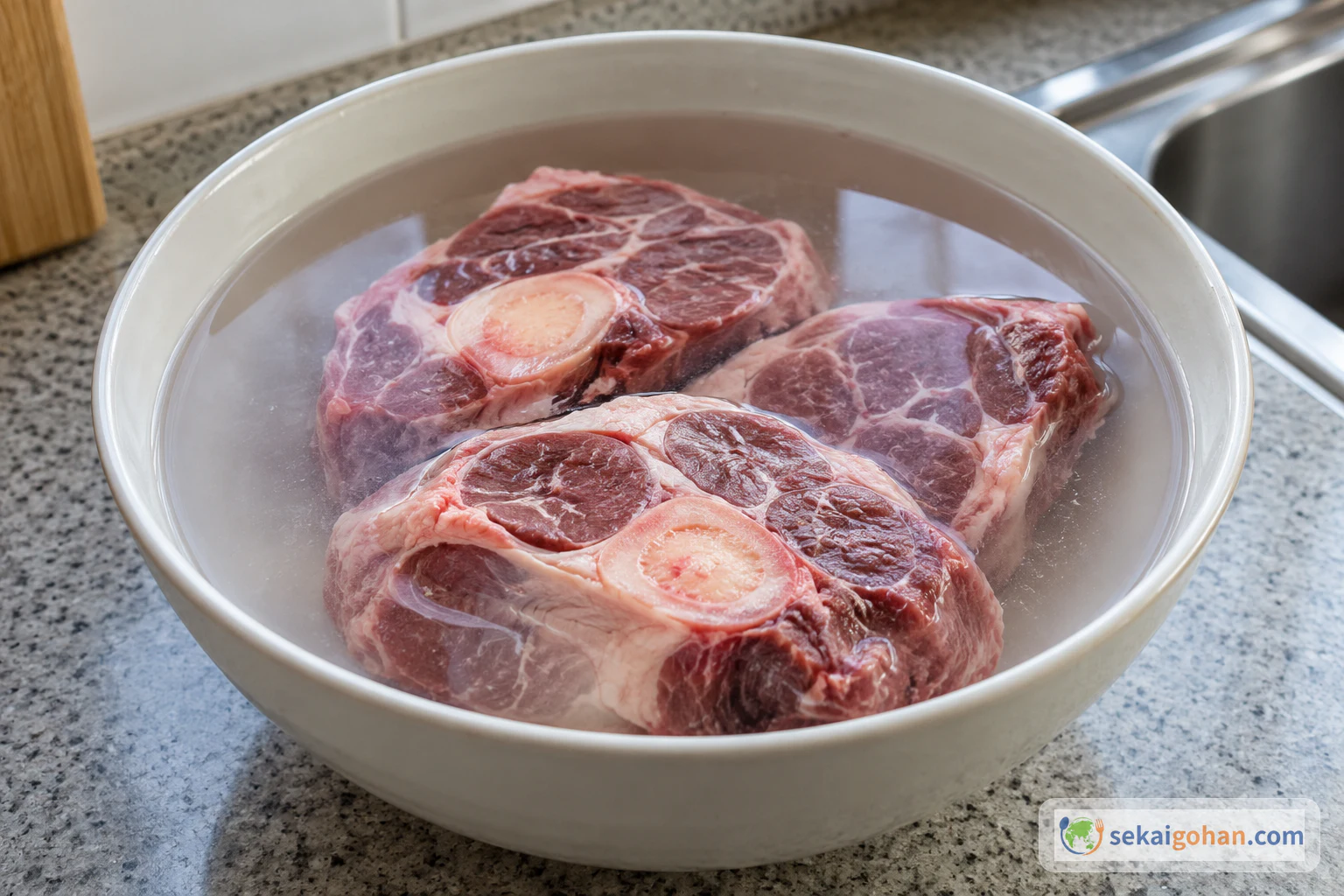
Beef shank in a bowl of water, covered and soaking to draw out the blood
Only the raw beef shank goes into the water

Wash the 4 oz (110 g) beef shank and put it in a bowl with enough water to cover. Soak for 1 hour to draw out the blood, then cut it into bite-size pieces. Keep the parboiled tripe or offal out of this soak. Keep the board, knife and bowl used for the raw shank separate from those for the vegetables, or wash them before using them on vegetables.

STEP22 / 7

Wash and cut the vegetables and mushrooms

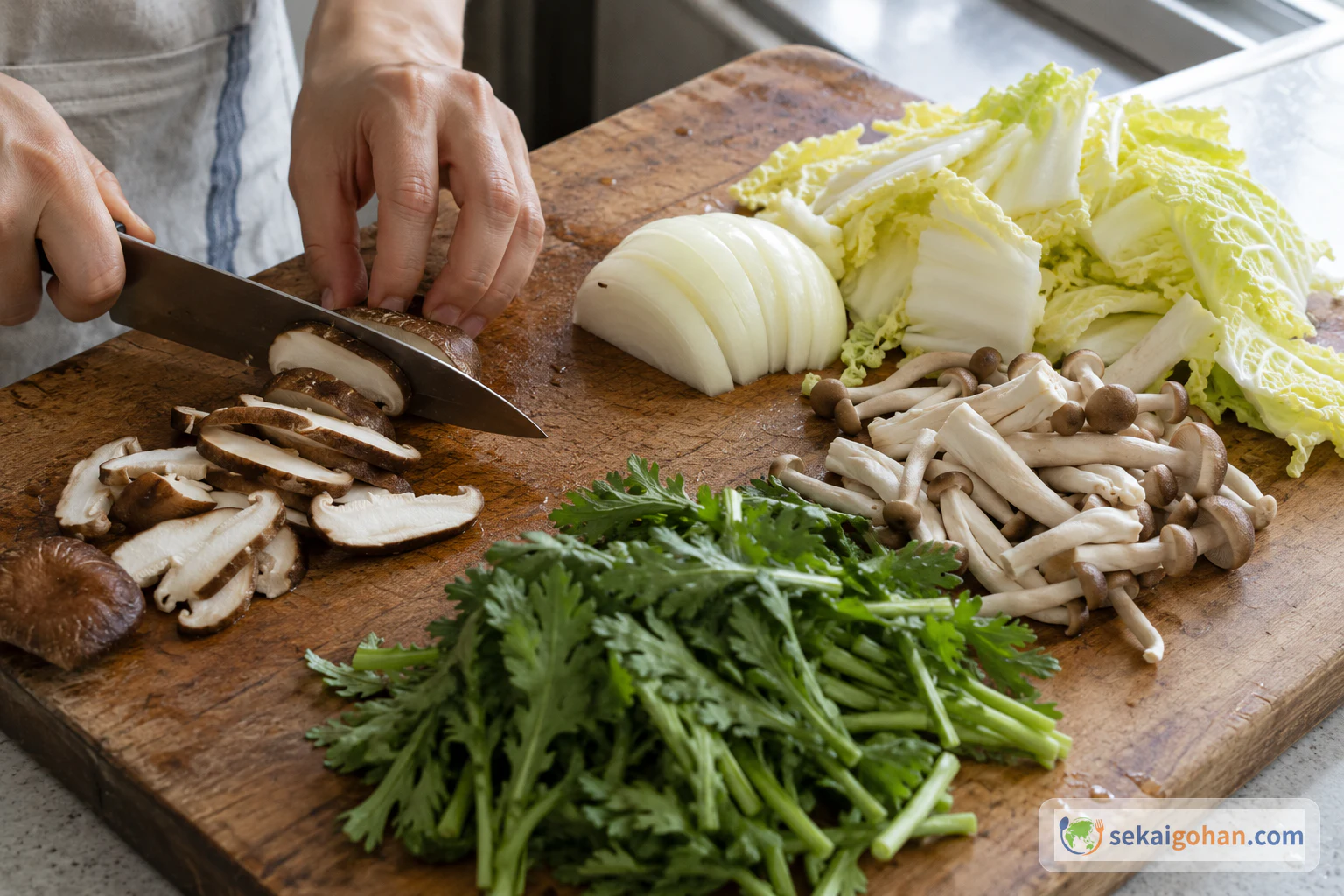
Sliced shiitake, onion and napa cabbage, separated shimeji, and chrysanthemum greens cut to 5 cm
Slice the bottom-layer vegetables thinly and keep the chrysanthemum greens for the end

Wash the vegetables, mushrooms, green onion and chrysanthemum greens well under running water before cutting. Thinly slice the shiitake, onion and napa cabbage. Separate the shimeji from its base. Cut the chrysanthemum greens to about 2 inches (5 cm), and thinly slice the green onion. Set the greens and green onion aside for step 6.

STEP33 / 7

Mix the meat with the seasoning

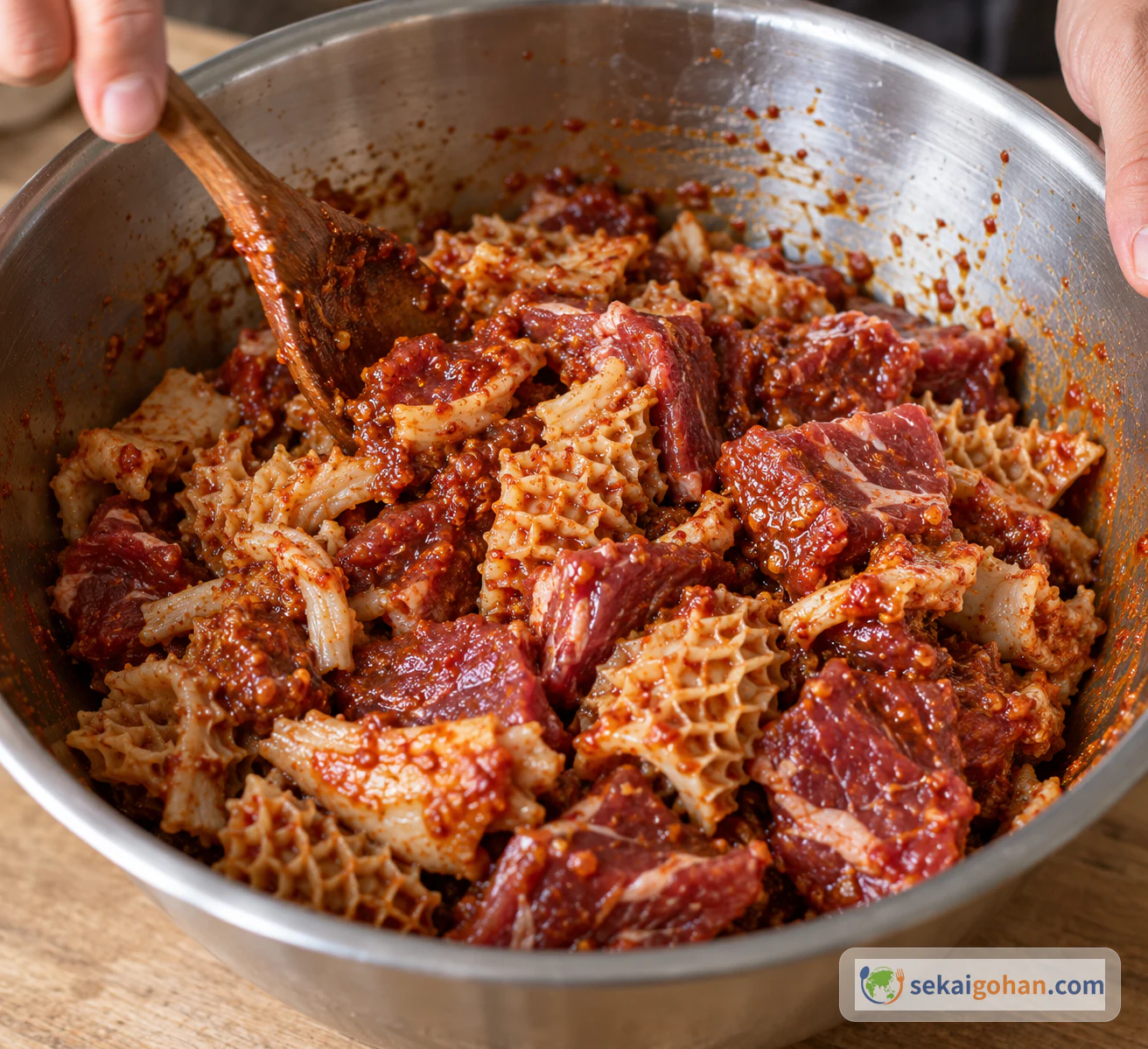
Parboiled beef tripe and soaked, cut beef shank being mixed with seasoning
All of the seasoning goes in with the meat at this stage

In a bowl, combine the parboiled tripe or offal, the soaked and cut beef shank, and all of the seasoning: chili pepper powder, gochujang, doenjang or red miso, soy sauce, grated garlic, mirim or mirin, and pepper. Mix until everything is coated. Do not taste this mix, because the shank is still raw.

STEP44 / 7

Layer the pot and add the soup

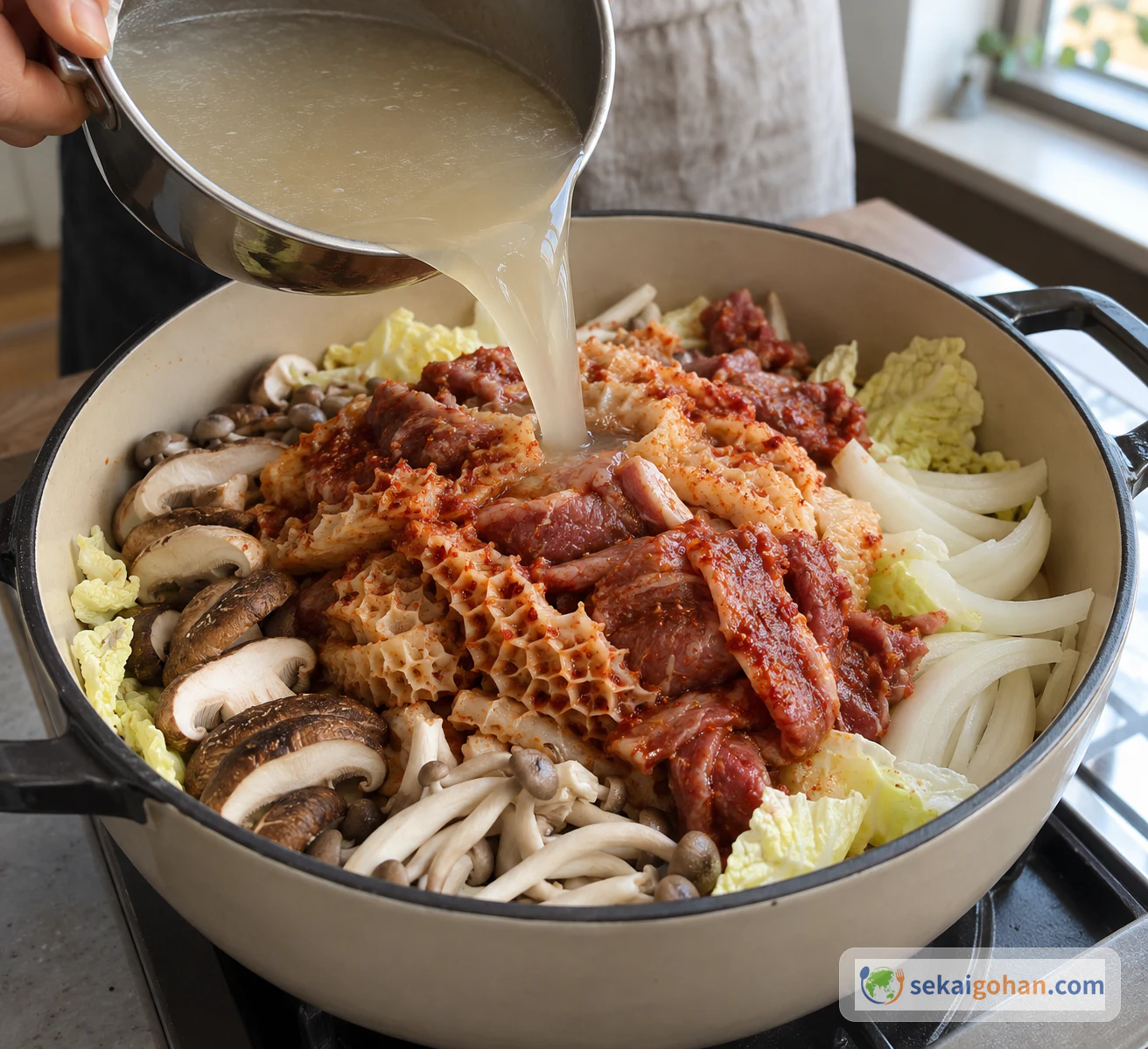
Napa cabbage, mushrooms and onion in the pot, topped with seasoned beef tripe and beef shank as beef bone soup is poured in
Vegetables go on the bottom and seasoned meat on top, with no browning first

Put the shiitake, shimeji, onion and napa cabbage in the bottom of the pot, and place the seasoned meat on top. Pour in the 3¼ cups (800 ml) beef bone soup and set the pot over high heat.

STEP55 / 7

Simmer over medium heat

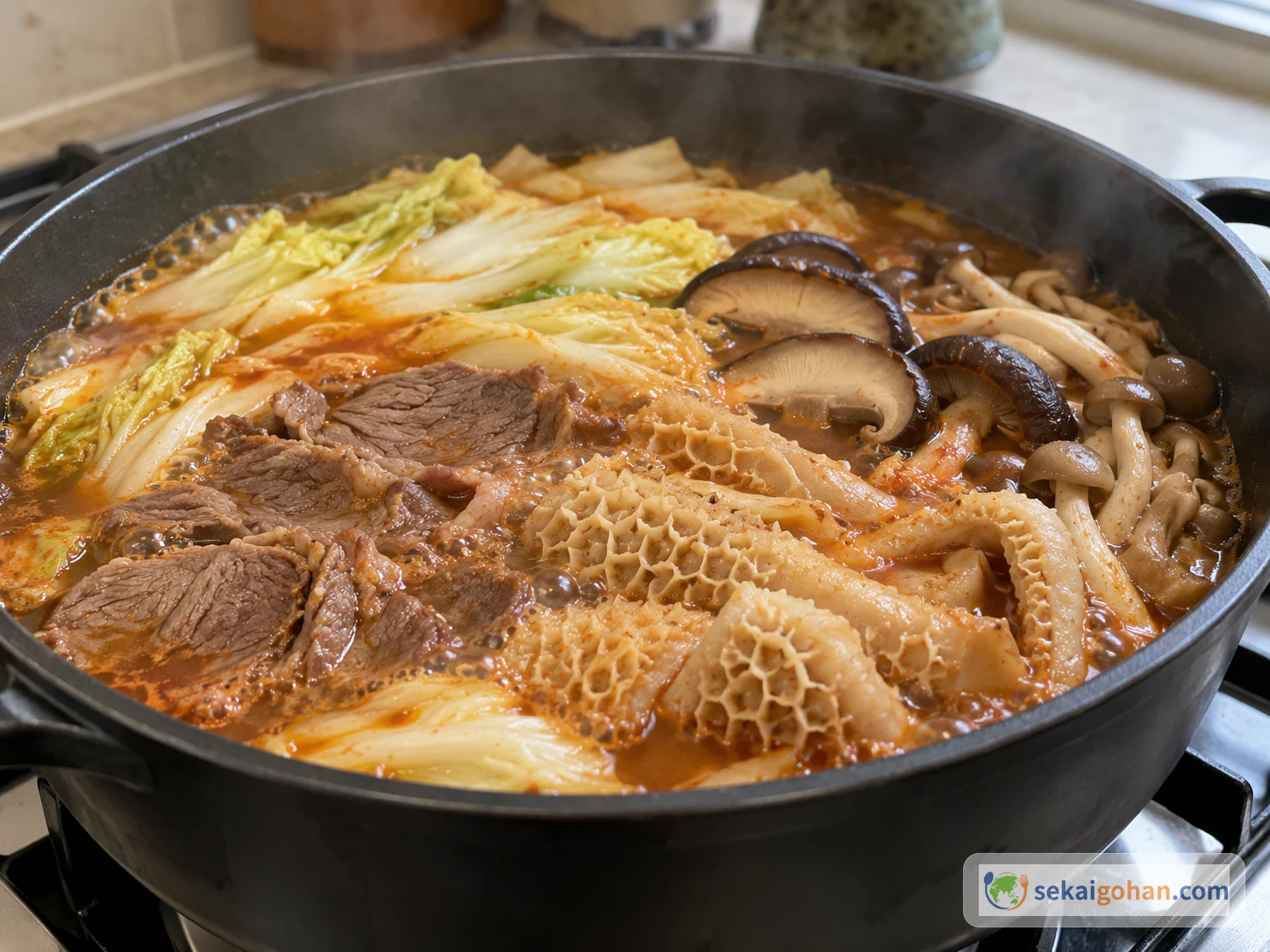
The pot of parboiled beef tripe and vegetables simmering over medium heat after the boil
After the boil, the pot simmers over medium heat for about 15 minutes

When the soup comes to a boil, lower the heat to medium and simmer for about 15 minutes.

STEP66 / 7

Add the greens and dry noodles

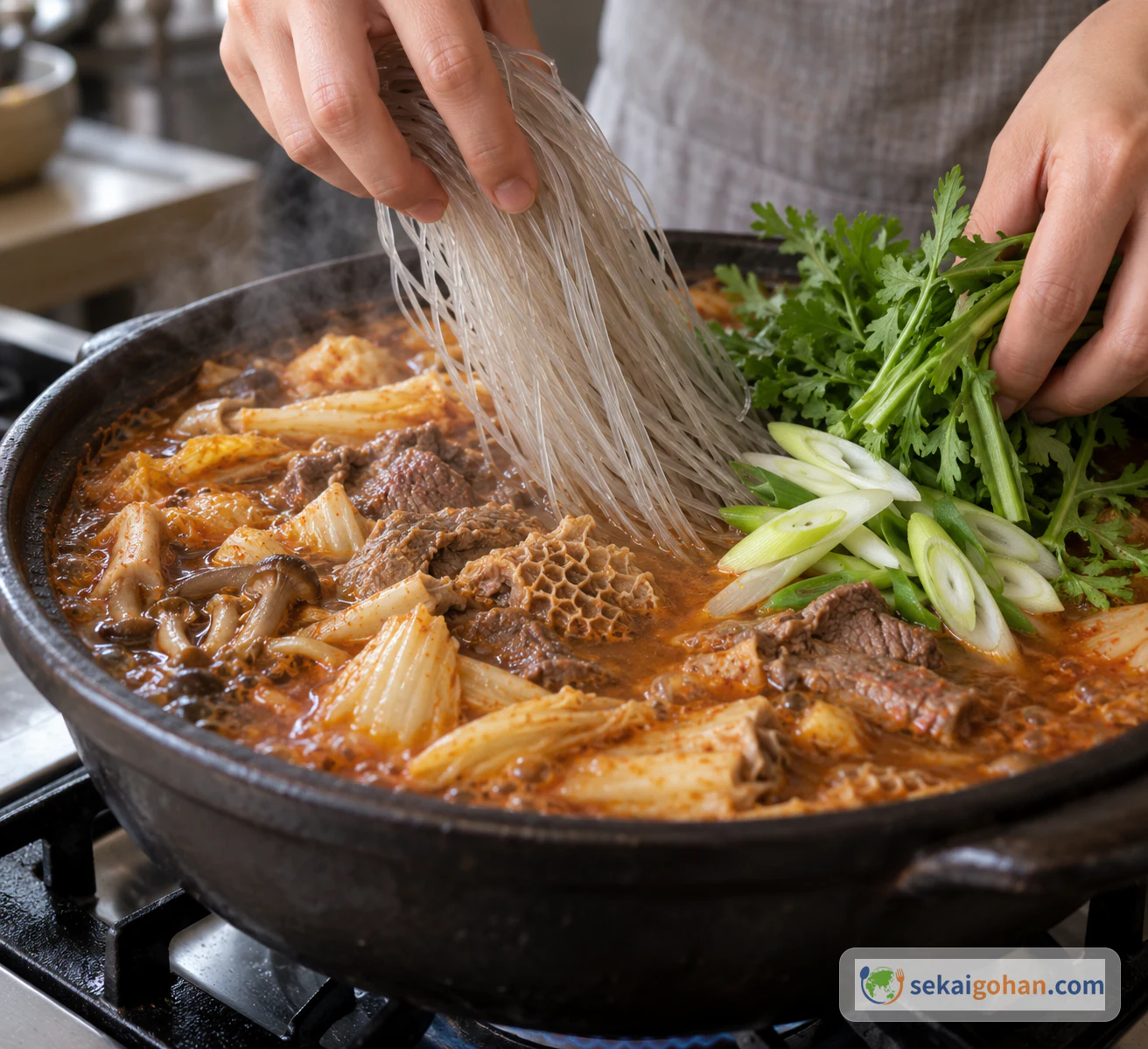
Green onion, chrysanthemum greens and dried glass noodles being added to the simmered pot
The noodles go in dry and cook in the broth until soft

Add the green onion, chrysanthemum greens and dried glass noodles. Keep simmering until the noodles are soft.

STEP77 / 7

Serve hot

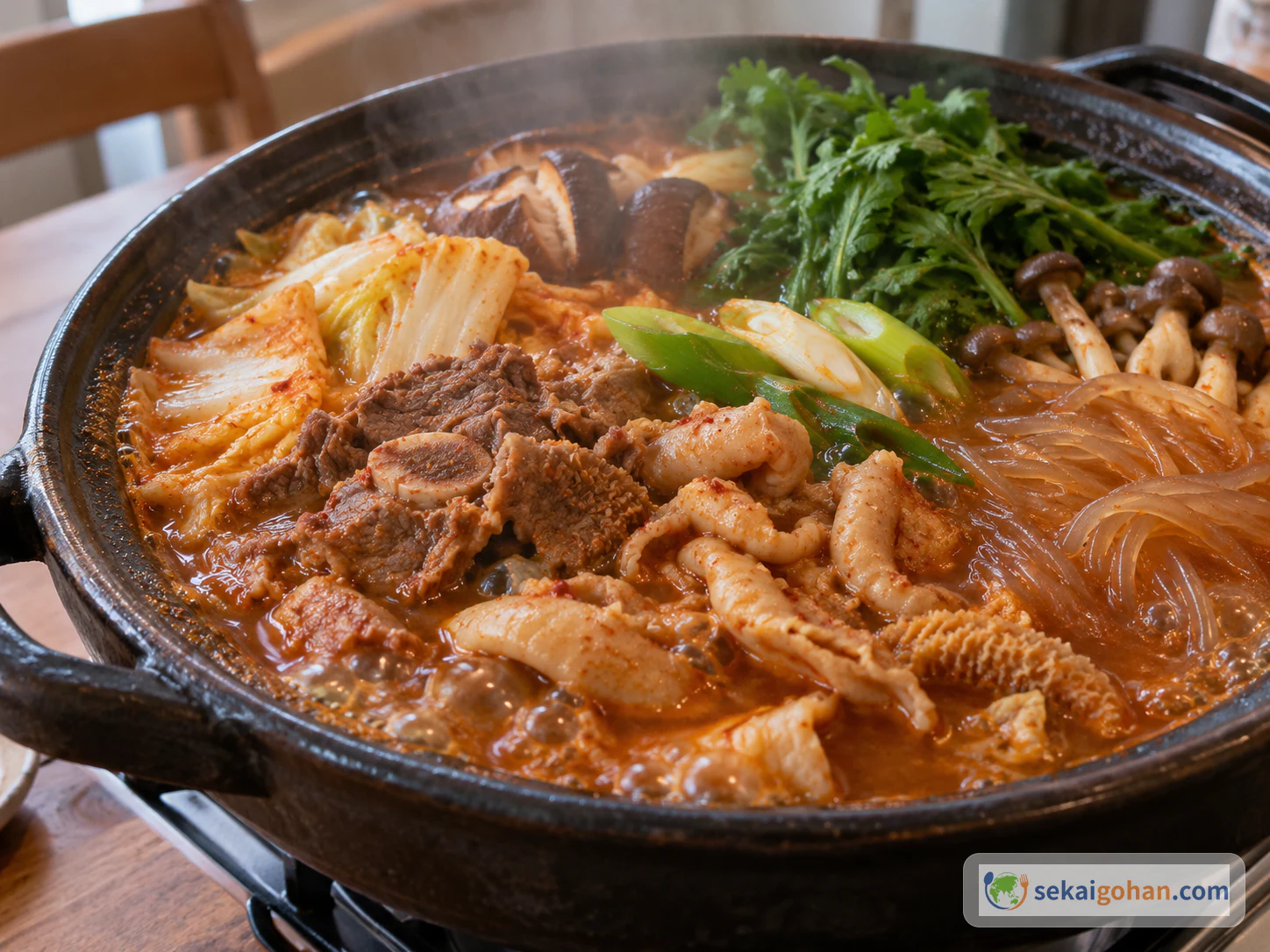
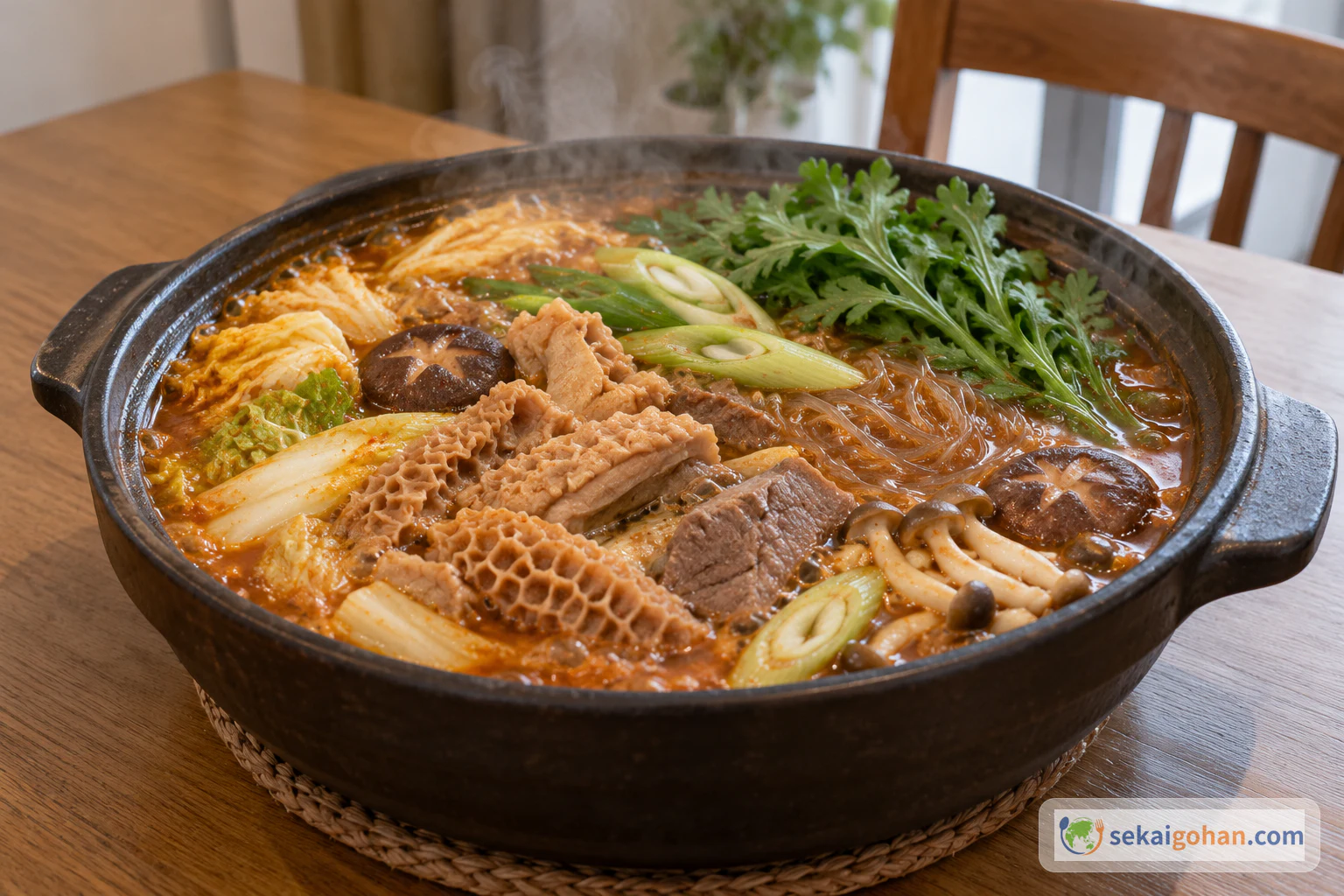
Hot gopchang jeongol with parboiled beef tripe, beef shank, napa cabbage, mushrooms, chrysanthemum greens and glass noodles
The finished pot, served hot at the table

Bring the pot to the table and eat it hot.

0 / 0
Ingredients

Ingredients

1 / 1

Ingredients

Ingredient Amount Role
Parboiled beef tripe or beef offal 12.5 oz (350 g) The center of the pot. Already parboiled, so it skips the soak
Beef shank 4 oz (110 g) Raw meat. Soak, then cut into bite-size pieces
Fresh shiitake 3 Thinly sliced, for the bottom layer
Shimeji 1 handful, about 1 oz (30 g) Separated from the base, for the bottom layer
Onion 1/2 Thinly sliced, for the bottom layer
Napa cabbage 3 leaves Thinly sliced, for the bottom layer
Chrysanthemum greens A few stems, about 1 oz (30 g) Cut about 2 inches (5 cm) long. Added near the end
Large green onion 1 Thinly sliced. Added near the end
Dried glass or cellophane noodles 1.75 oz (50 g) Added dry near the end and simmered until soft
Prepared beef bone soup 3¼ cups (800 ml) The liquid for the pot
Chili pepper powder 1 tbsp Seasoning mix
Gochujang paste 1 1/2 tbsp Seasoning mix
Doenjang soybean paste or red miso paste 1/2 tbsp Seasoning mix
Soy sauce 1 1/2 tbsp Seasoning mix
Grated garlic 1 tbsp Seasoning mix
Mirim or mirin 1 tbsp Seasoning mix
Pepper A little Seasoning mix
0 / 0

Steam rises from a red-brown broth. Beneath the surface, beef tripe and shank rest on napa cabbage, shiitake and shimeji, and at the last moment chrysanthemum greens, green onion and glass noodles go in and soften in the bubbling soup. Gopchang jeongol (곱창전골) is a Korean hot pot of prepared offal and beef simmered in a spicy sauce and broth with vegetables. This home-style version builds everything in one pot, layer by layer, and lets the broth do the work.

Gopchang Jeongol in Korean Cooking

Jeongol (전골) here means a pot simmered in broth. Gopchang-gui (곱창구이) is a different dish, where small intestine is grilled on a grate or griddle, and its method doesn't carry over to this pot. If you came looking for charred, grilled intestine, this isn't that recipe.

Versions of gopchang jeongol vary a lot, which matters when you shop. Some are made with tripe, small intestine and brisket, with vegetables such as perilla leaves and mushrooms and udon after the meal. One traditional record uses 7 oz (200 g) cow intestines and 1.75 oz (50 g) brisket in 1¾ cups (400 ml) water, with thick noodles and intestines rinsed with salt and flour. That record lists Gyeonggi-do as its area, though one record alone doesn't settle where the dish began.

For other Korean pots and soups, try the fermented flavors of kimchi jjigae, the spicy sundubu jjigae, or the meat-and-soup bowl dwaeji gukbap. You can also browse more dishes from Korea.

Ingredients for 4 Servings
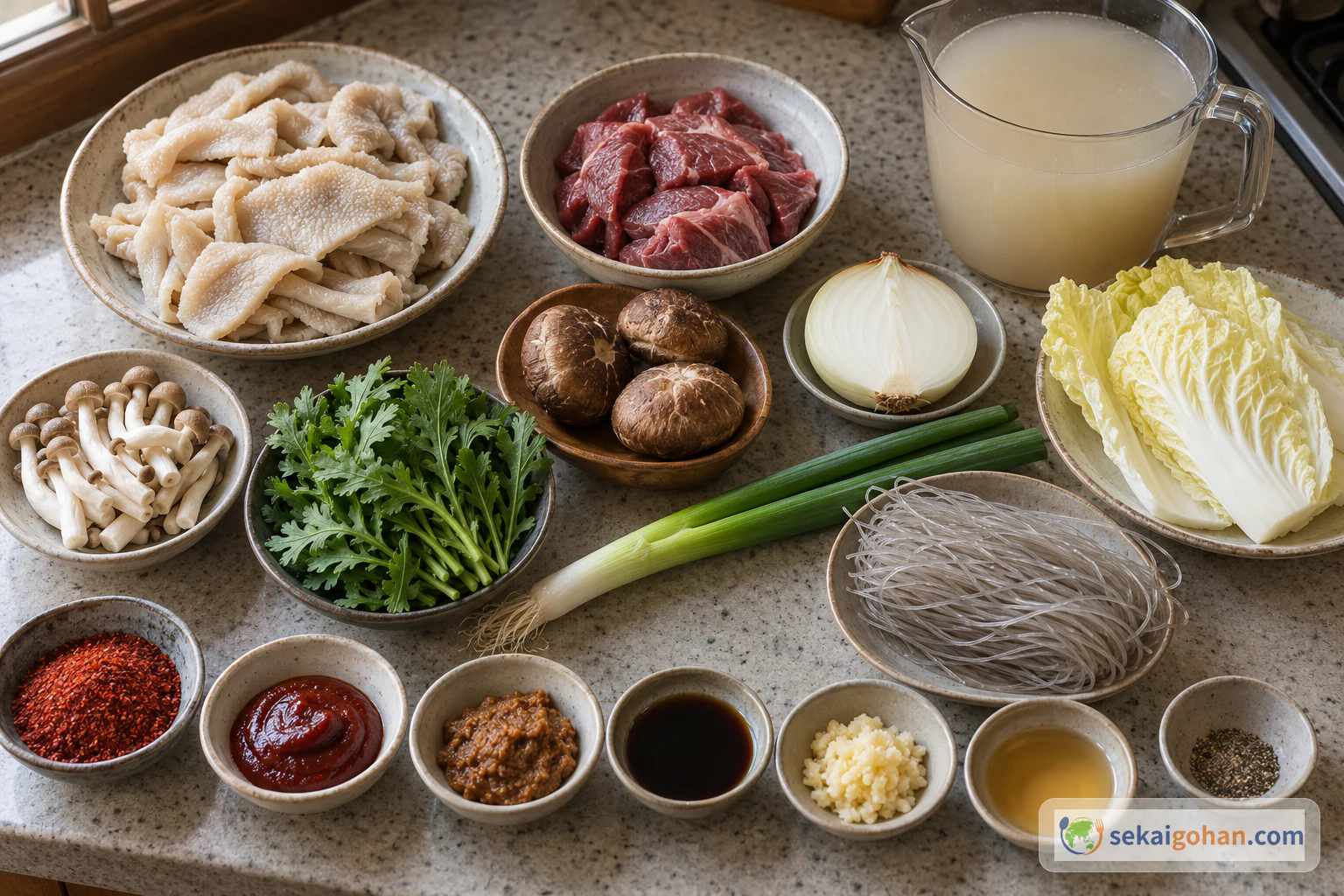
Parboiled beef tripe, beef shank, napa cabbage, mushrooms, chrysanthemum greens, glass noodles, beef bone soup and Korean seasonings laid out
Keep the parboiled offal and the raw beef shank separate until they are mixed with the seasoning

Nothing else goes into the main pot: no salt, extra water or oil. Rice, sesame oil and udon are only for the leftover broth, so they are not part of this list.

Equipment

  • A pot large enough for the layers and 3¼ cups (800 ml) of soup
  • A bowl for soaking the shank
  • A mixing bowl
  • Two cutting boards and knives, or one set washed between the raw shank and the vegetables

Choosing the Offal, Broth and Pastes

Offal. Look for a pack labeled as parboiled, and check which part it contains. The recipe asks only for beef tripe or beef offal, so go by your label rather than calling it small intestine. Honeycomb tripe, with its textured surface, is one type of beef tripe.

Beef bone soup. Make it separately and measure out what the pot needs, or use a purchased prepared beef bone broth to save time.

A few swaps fit this version:

Choice Options What to keep in mind
Offal Parboiled beef tripe or parboiled beef offal Both must be parboiled
Paste Doenjang or red miso Red miso changes the aroma and saltiness
Sweet seasoning Mirim or mirin Same amount
Soup Homemade beef bone soup or purchased prepared broth Purchased broth saves time

Method: Soak, Mix, Layer, Simmer

Read through the order before you start. The shank needs its hour in the water first, and the noodles go in dry at the end.

Food safety

Raw or undercooked meat and organ meats can cause foodborne illness, so cook them thoroughly. For meat, cook to 167°F (75°C) at the center for at least 1 minute. Simmering for about 15 minutes does not confirm that the center has reached that temperature. Keep meat juices away from other foods in the refrigerator.

Getting Gopchang Jeongol Right

The order of the pot

The offal goes in already parboiled, while the beef shank starts raw and is soaked first. After that, it all comes down to layering: vegetables on the bottom, seasoned meat on top, then greens and dry noodles at the very end.

Situation What to do
The noodles are still firm after they go in Keep simmering until they are soft. Softness is the signal, not a set number of minutes
You are tempted to soak the noodles first Add them dry at step 6; they soften in the broth
You are tempted to brown the meat or vegetables Skip it. Nothing is fried or grilled here, so the meat goes straight onto the vegetables

Rice or Udon in the Leftover Broth

Once the glass noodles are gone, the broth still has one more round in it. Stir in rice and a little sesame oil, or add udon to what's left in the pot after the meal.

Frequently Asked Questions

Can I use raw beef small intestine?

Not as a direct swap. This method has no step for pre-cooking raw offal, so stick with a pack labeled as parboiled.

What kind of chili powder should I use?

The recipe calls simply for chili pepper powder, without naming a type, grind or heat level. Korean chili powder is a good choice to look for.

How should I store leftovers?

Refrigerate them, and keep meat juices away from other foods in the refrigerator.
Sources