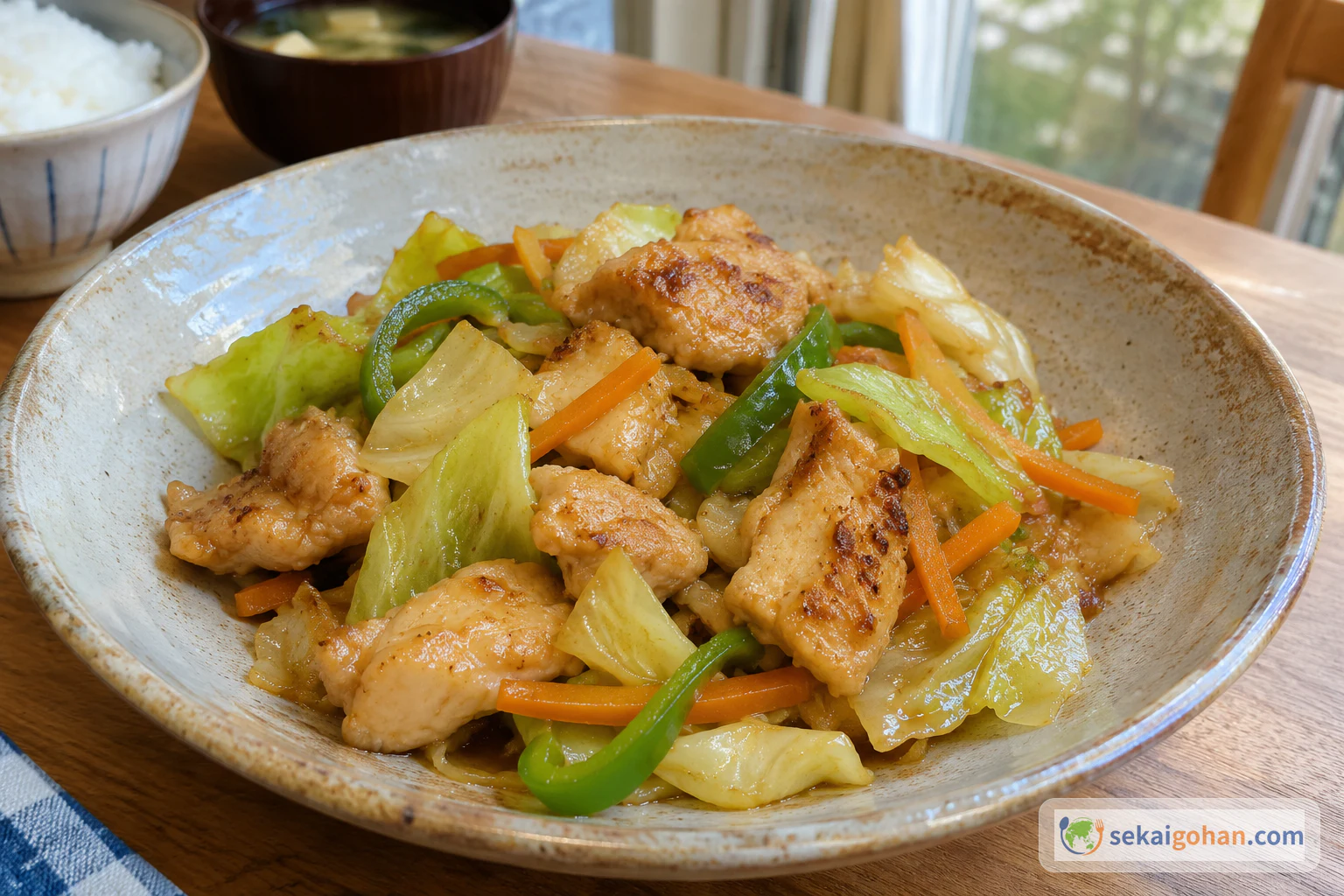
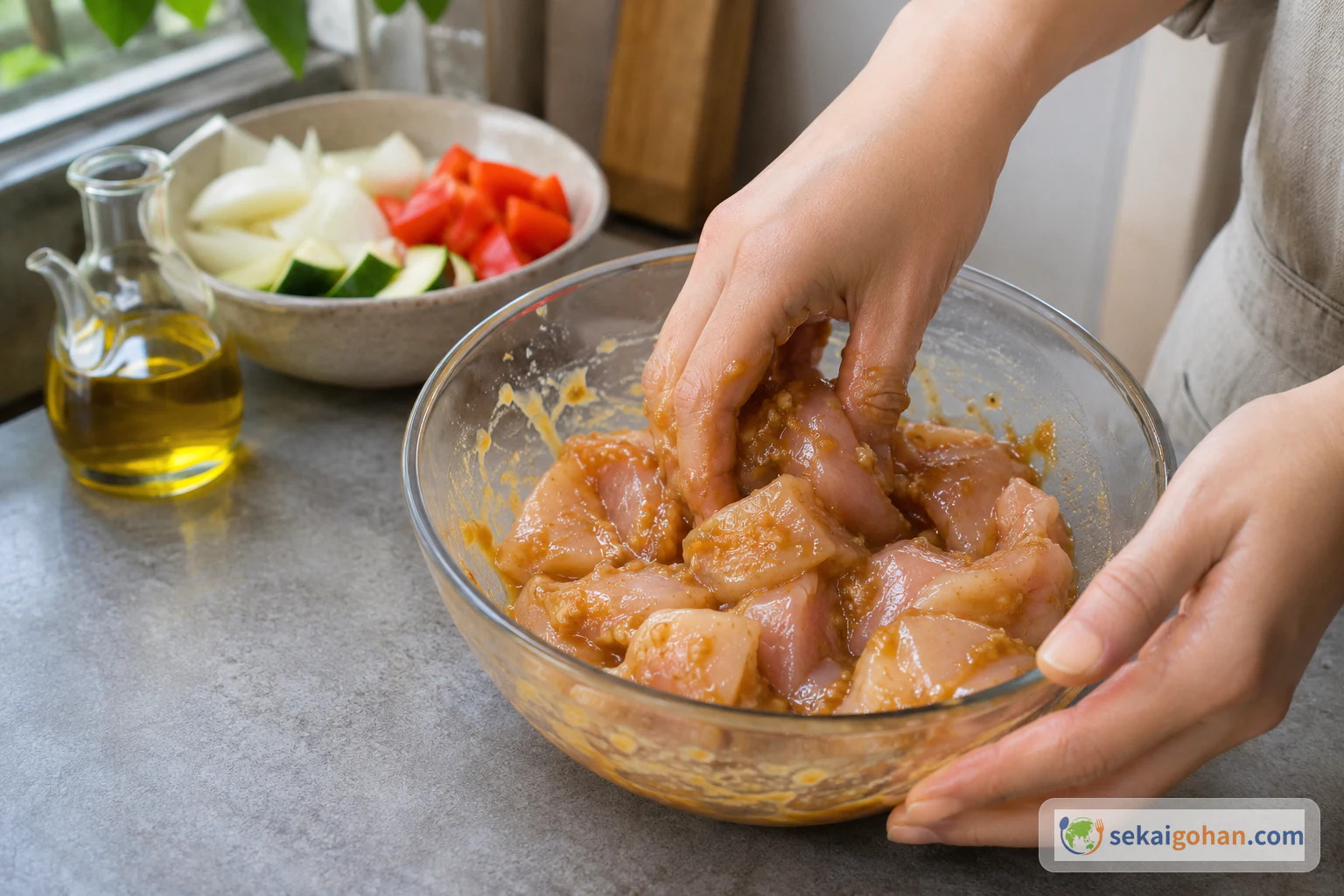
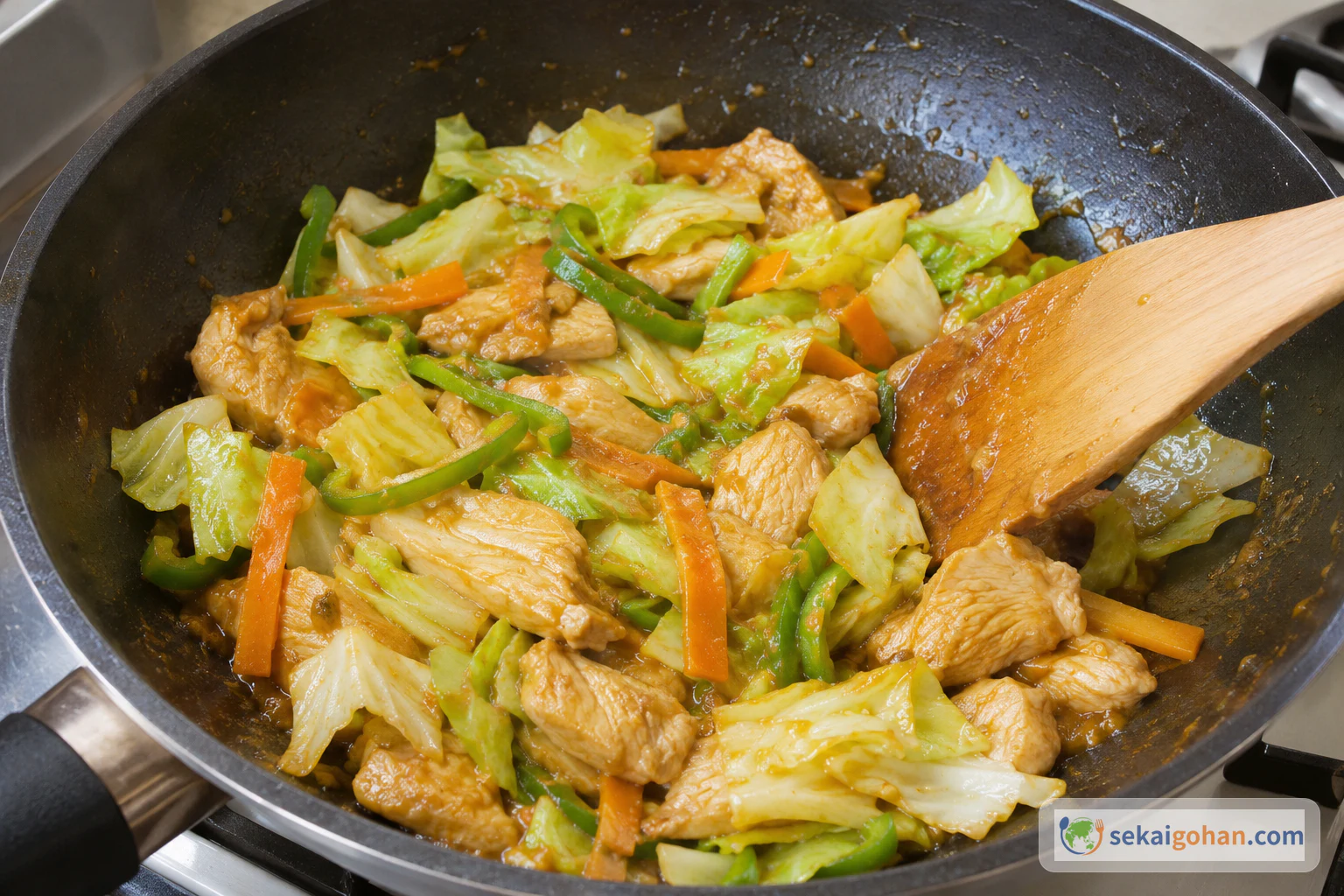
Picture a griddle crowded with chicken and cabbage, the miso sauce starting to catch at the edges while everyone at the table picks from it as it cooks. That is how keichan (鶏ちゃん) is usually eaten in the mountains of Gifu Prefecture, chiefly around Gujo City, Gero City and the southern part of Takayama City. Chicken and vegetables are coated in a seasoned sauce and stir-fried, and every shop and home has its own mix of miso, soy sauce, salt and more. This version is a home-style one: chicken breast rubbed with mixed miso, sake, usukuchi soy sauce and garlic, then cooked in a frying pan with cabbage, carrot and green pepper.
Keichan in Gifu: Origin and Regional Styles
Keichan began around 1950 in imitation of jingisukan. Butcher shops and izakaya in each area then developed their own flavors, and several theories explain the name. It is still cooked on an iron griddle or a jingisukan pan and eaten as it grills.
The form is what stays the same: chicken and vegetables coated in a special sauce and stir-fried. Within it, miso, soy sauce and salt styles, and the way of cooking, change with the area, the household and the shop. In Gero and Gujo, keichan is made with chicken and vegetables such as cabbage, grilled in a sauce of miso, soy sauce, garlic and more. One home version uses chicken thigh or breast, a miso sauce, several vegetables and a hot plate.
The recipe here keeps things simple and everyday: one seasoning rubbed into the chicken, three vegetables and a little oil. For more dishes from the same kitchen tradition, see Japanese cooking on Sekai Gohan.
Ingredients: Serves 4
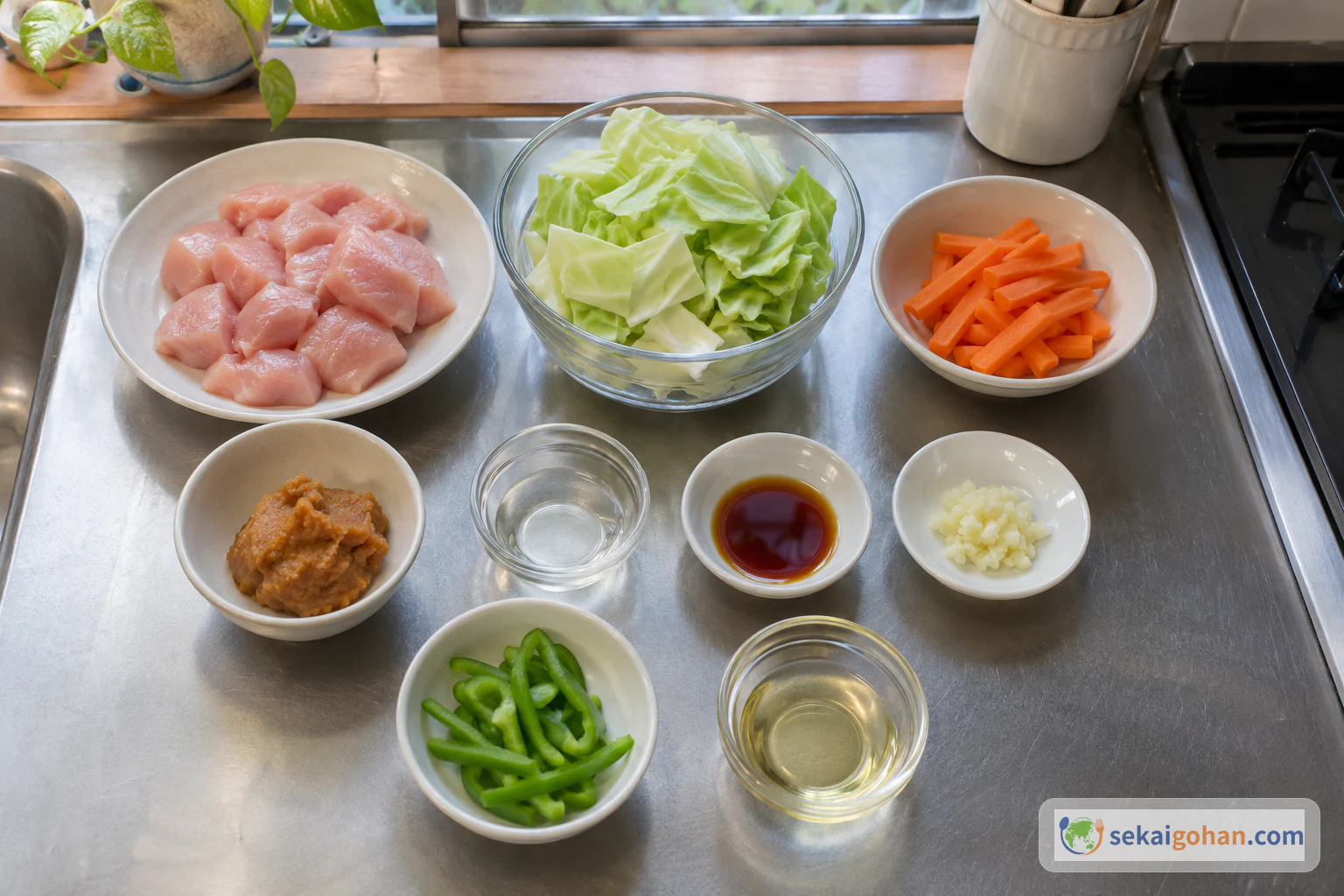
Use all 6 g of garlic, grated. Add no extra salt, water, sugar, mirin, onion or bean sprouts.
Equipment
- Frying pan
- Grater for the garlic
- Knife
- Two cutting boards: one for raw chicken, one for vegetables
- Bowls for the seasoning, the chicken and the cut vegetables
- Spatula
- Food thermometer (optional)
- Serving dish
Choosing the Miso, Soy Sauce and Chicken for Keichan
Mixed miso. In Japan, store-bought awase miso (blended miso) is a practical choice. Mixed miso varies from product to product, so the one you pick will shape how the dish tastes.
Usukuchi soy sauce. Use usukuchi, the light-colored Japanese soy sauce. Regular dark (koikuchi) soy sauce changes both the color and the saltiness.
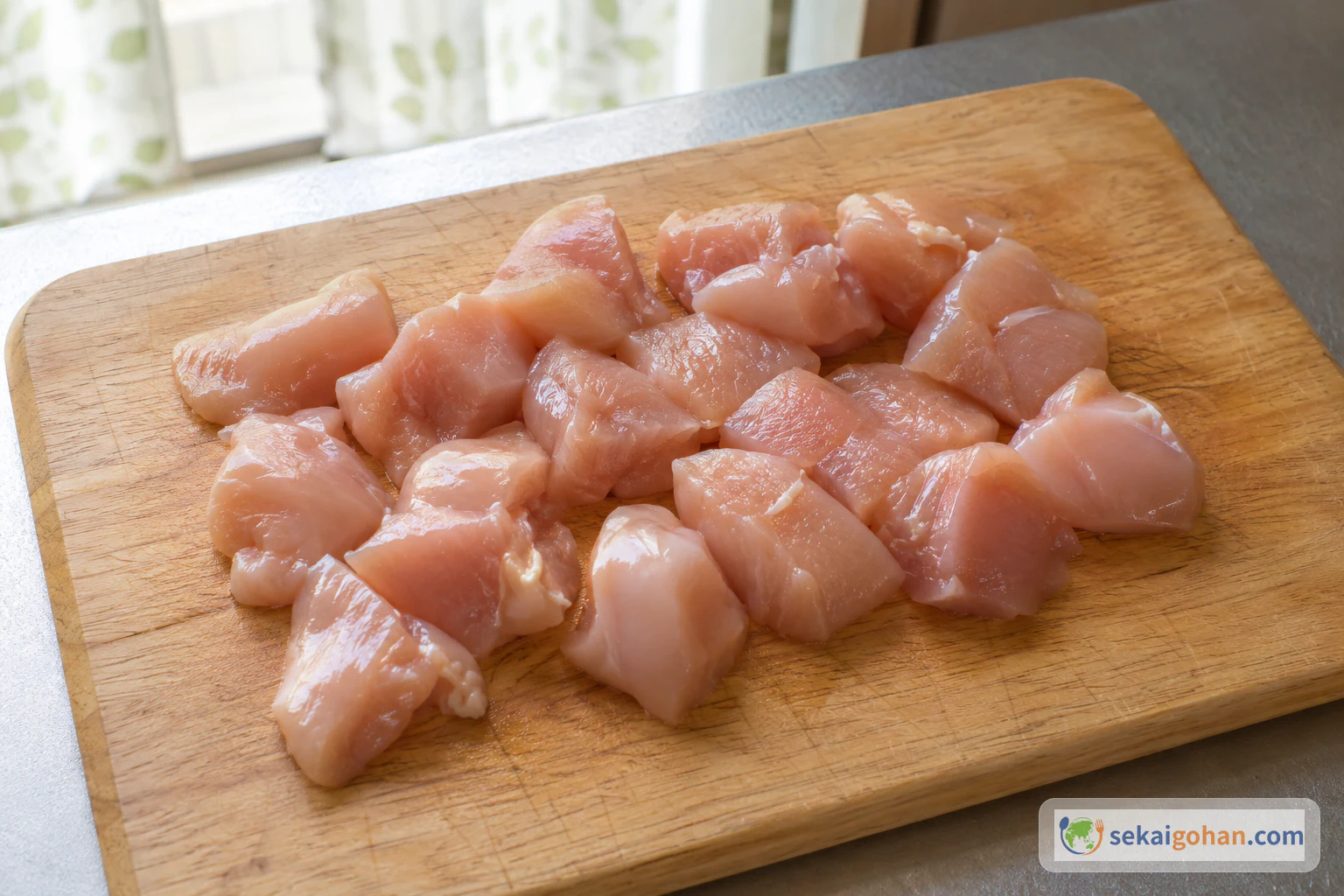
Chicken breast. Keep to breast. Thigh gives a different texture and more fat, so it makes a different dish.
Garlic. Grate fresh garlic. Tube garlic differs in moisture, salt and aroma.
Sake. Japanese cooking sake (ryorishu) works too. Products differ, for example in salt, so keep the weight the same.
Green pepper and oil. Piman is the green pepper sold in Japanese supermarkets. Any neutral vegetable oil will do.
Method: Chicken First, Then the Vegetables
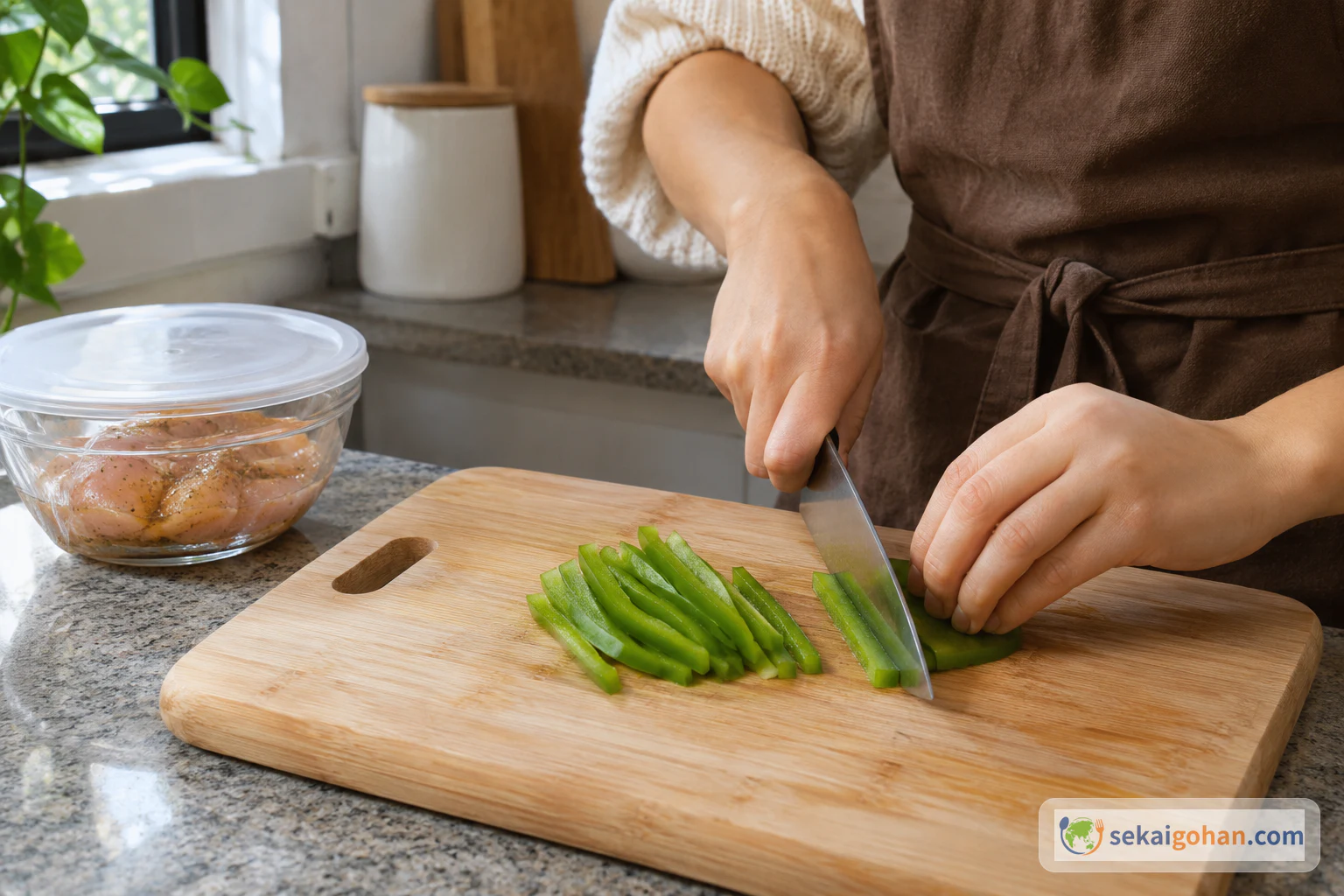
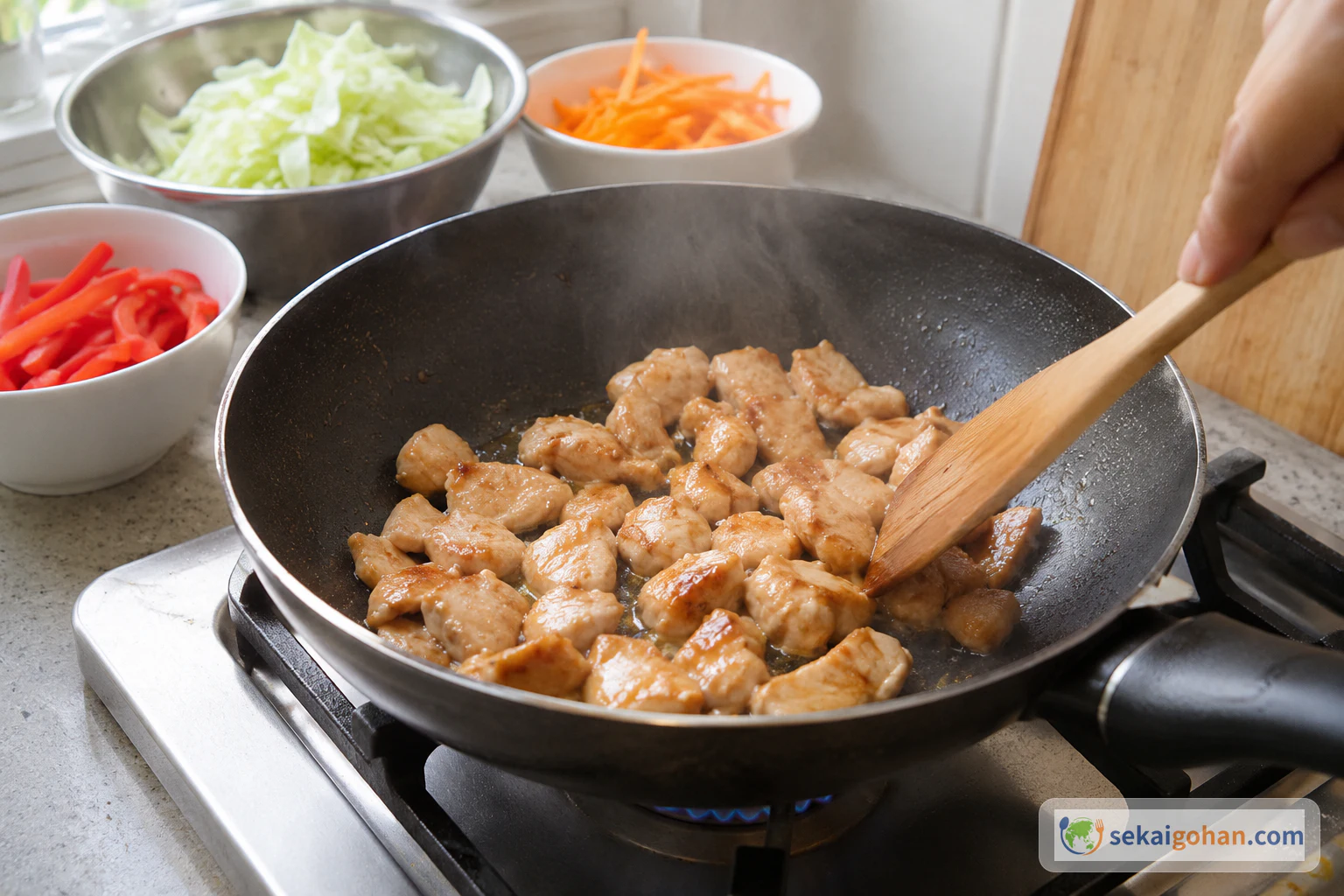
Prepare the garlic and season the chicken, cut the vegetables, then heat the oil. Cook the chicken until it is done to the center, and only then add all the vegetables together.
Steps 1 to 3 are preparation; the pan only goes on the heat at step 4. Keep raw chicken and its board, knife and bowl away from the vegetables throughout.
Keichan Troubleshooting
Heat chicken until the center reaches 167°F (75°C) or higher and is held there for at least 1 minute. Do not wash raw chicken, and keep raw meat away from other foods.
| Situation | What to do |
|---|---|
| You're not sure the chicken is done | Keep cooking. Check the center of the thickest piece with a thermometer if you have one, aiming for 167°F (75°C) or higher for at least 1 minute. Don't rely on color or the clock alone |
| The vegetables went in before the chicken was cooked | Keep cooking until the chicken is done to the center. Next time, cook the chicken alone first and add the vegetables after |
| You feel like rinsing the raw chicken | Don't. Go straight from the package to the raw-meat board |
| Raw chicken touched the vegetable board or knife | Wash the board, knife and your hands before cutting any vegetables |
| The flavor isn't what you expected | The miso you choose shapes the dish. If you change the amounts, treat it as your own version |
Serving Keichan
Keichan goes well as a dish alongside rice. For the full local experience, cook it at the table on an iron griddle, a jingisukan pan or a hot plate and eat it as it grills.
Frequently Asked Questions
Can I use chicken thigh?
Other home recipes use thigh as well as breast, each with their own amounts. Thigh changes the texture and fat, so treat a thigh keichan as its own recipe rather than a swap.
How do I know the chicken is safe to eat?
Cook chicken until the center reaches 167°F (75°C) or higher and stays there for at least 1 minute. A food thermometer makes checking easier but is optional; color, cooking time or a photo alone does not confirm the chicken is done. Don't wash raw chicken, and keep raw meat away from other foods.