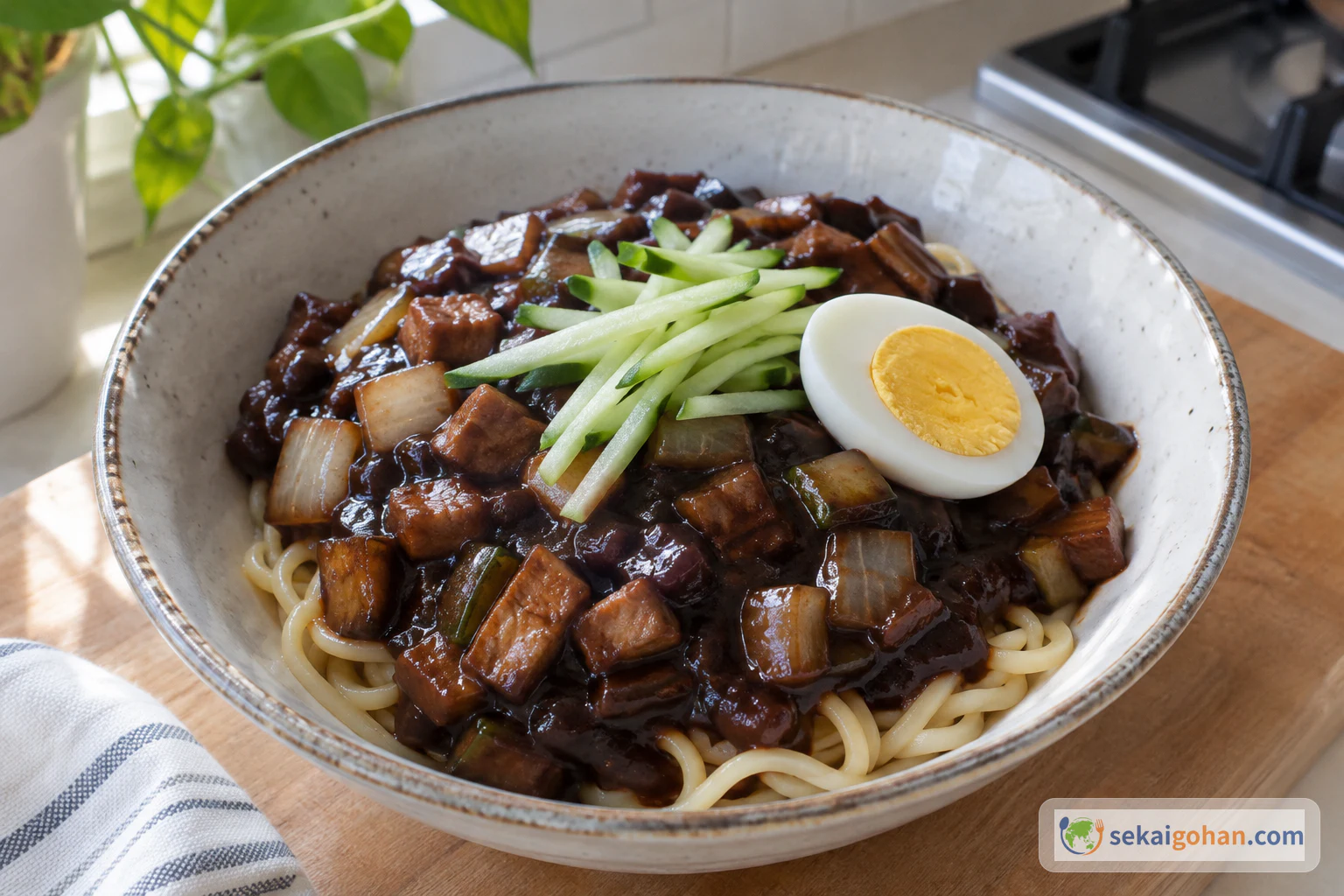
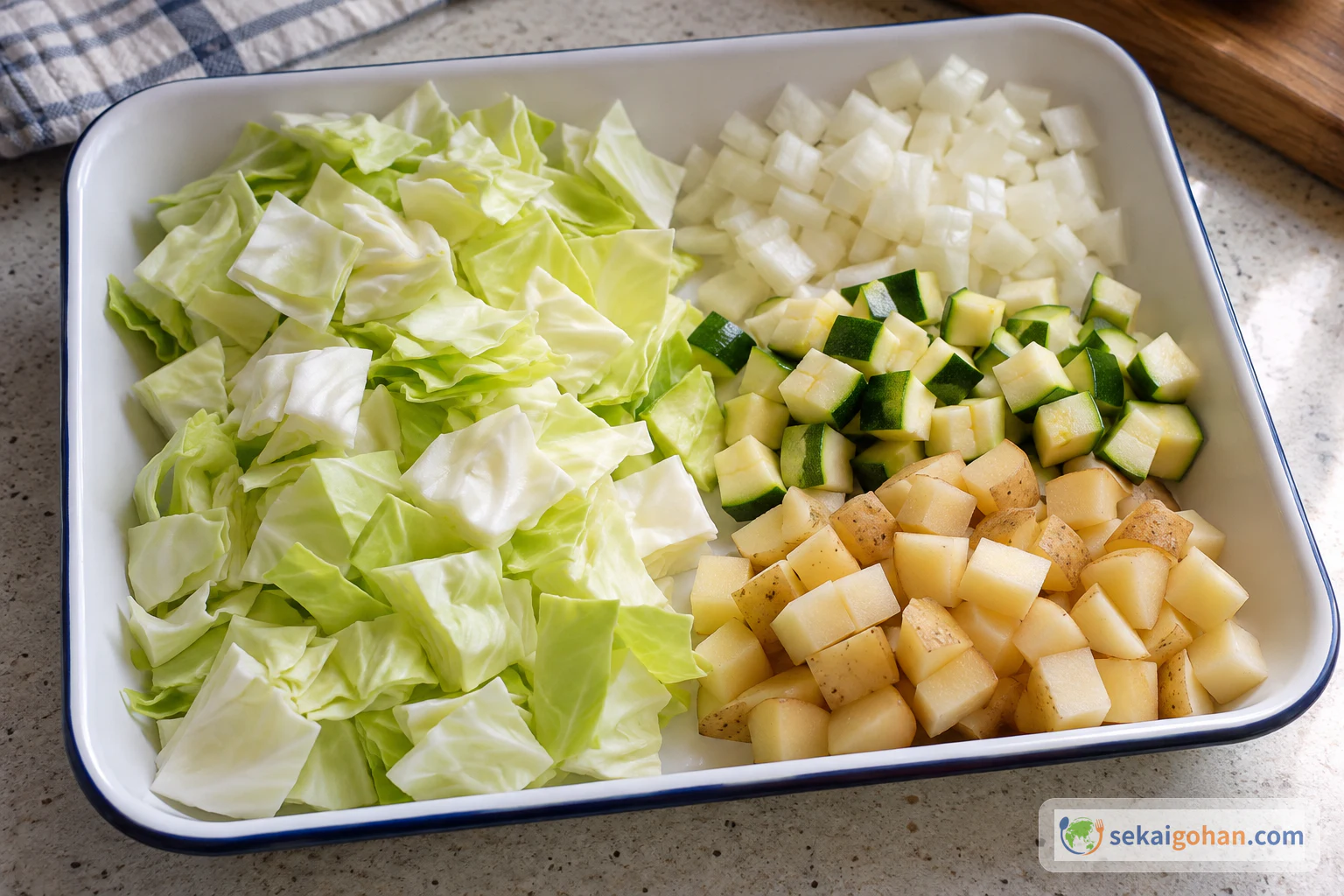
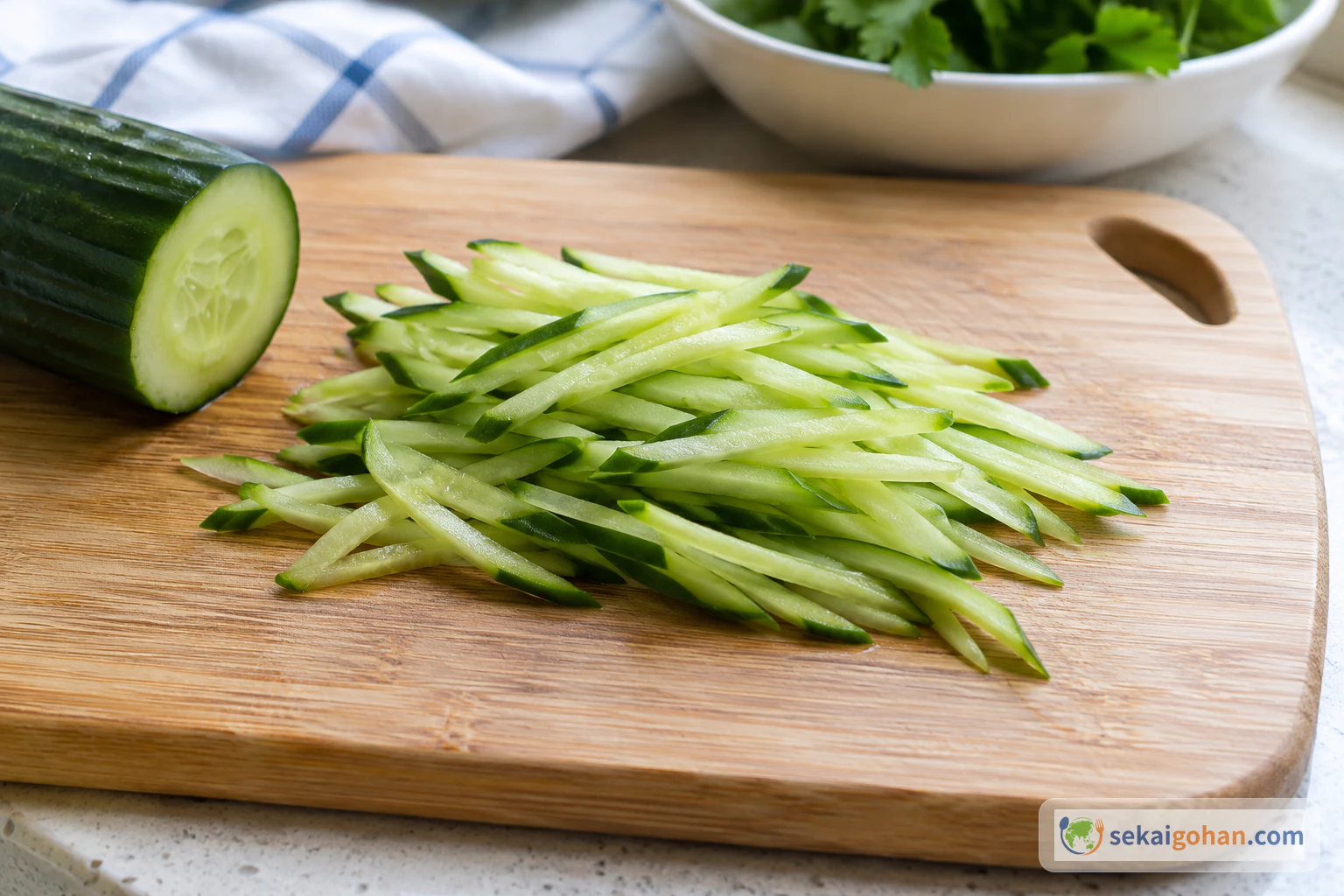
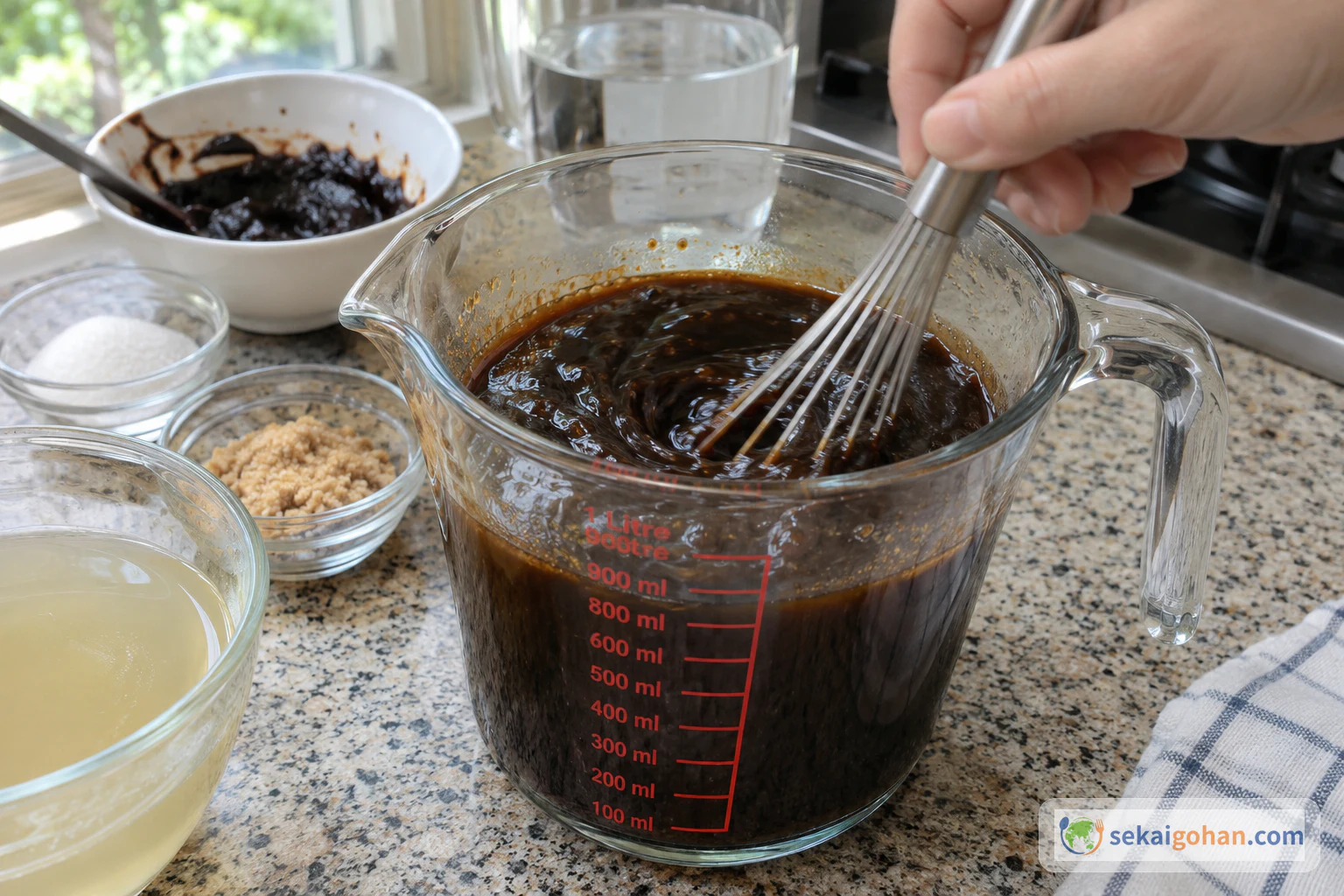
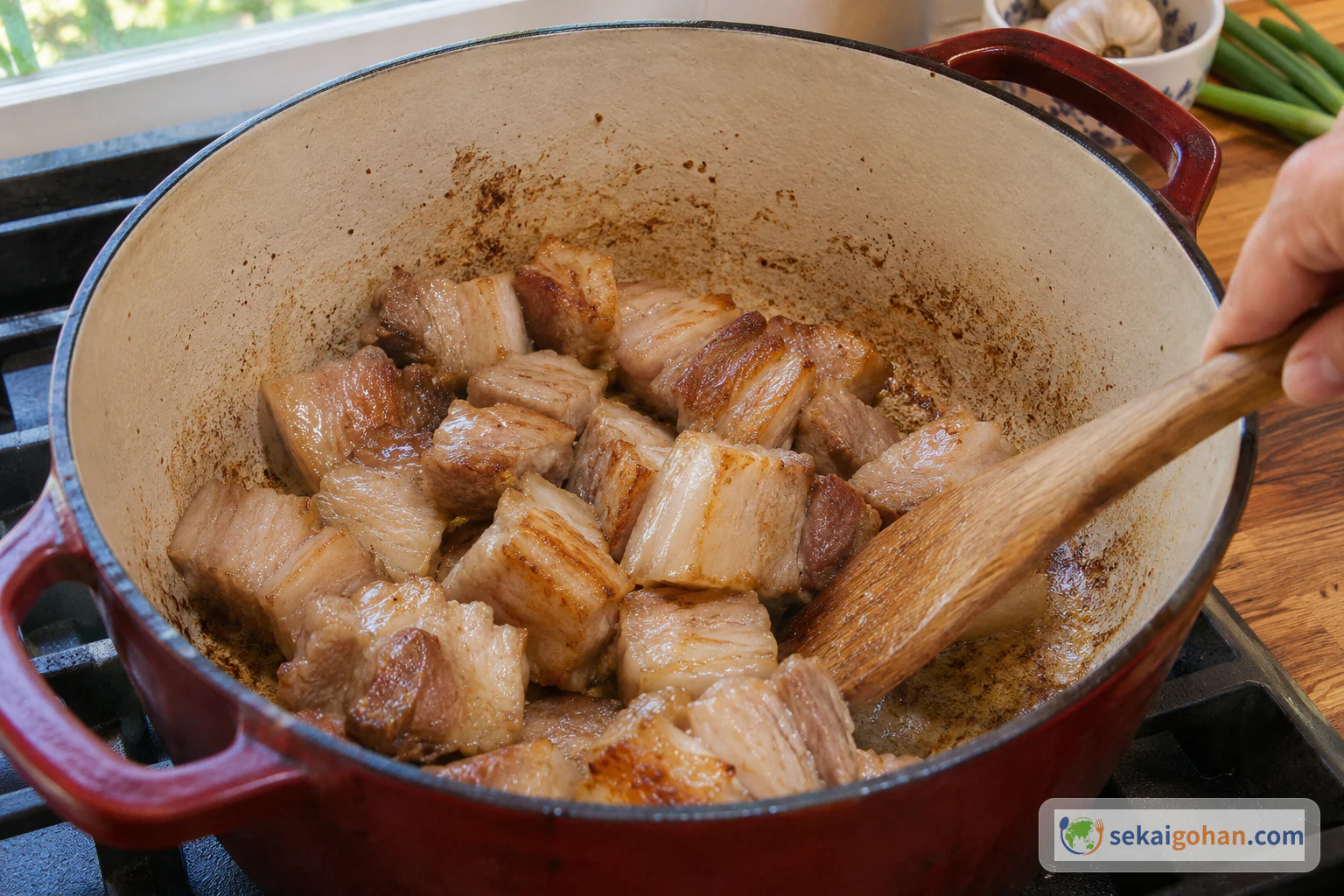
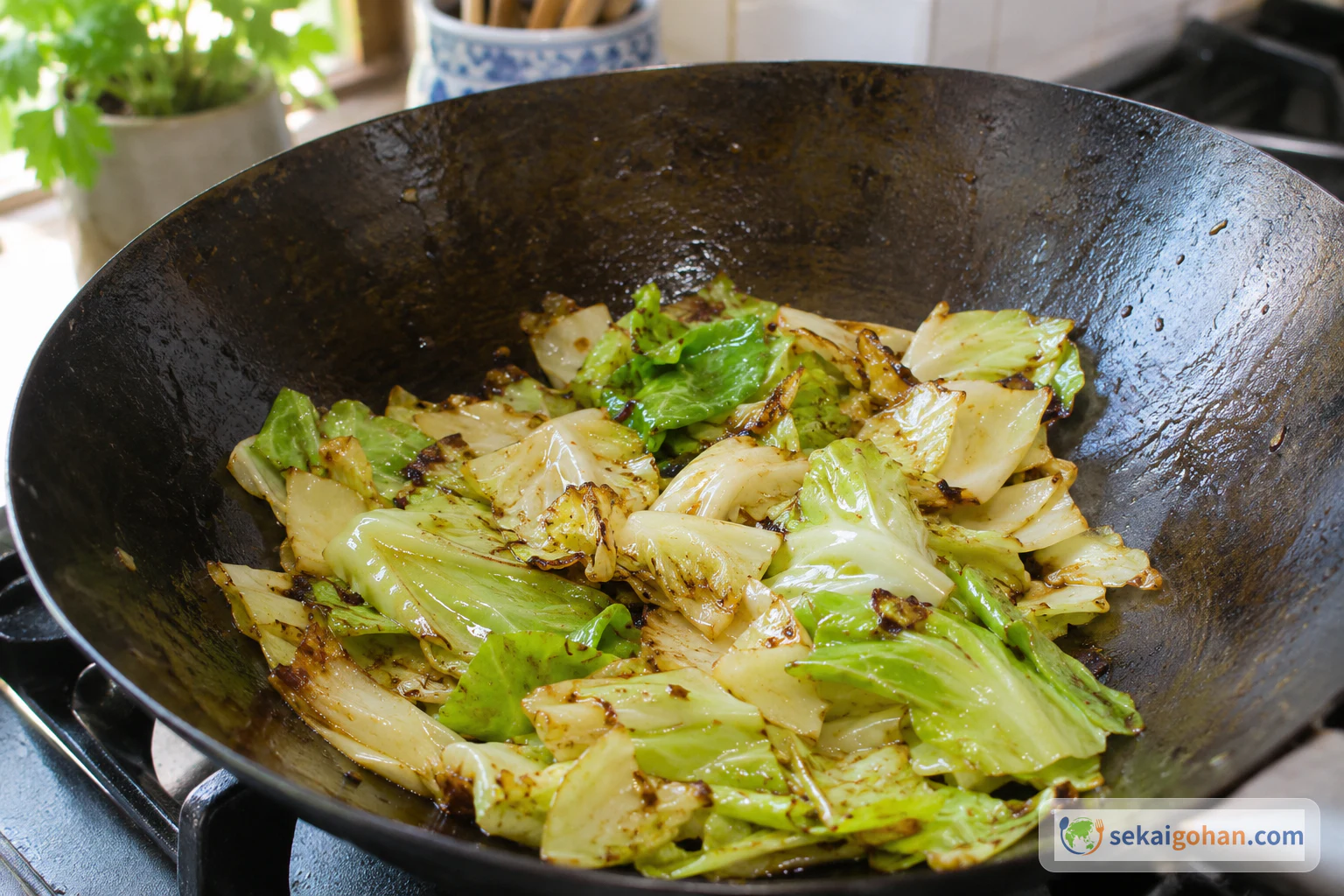
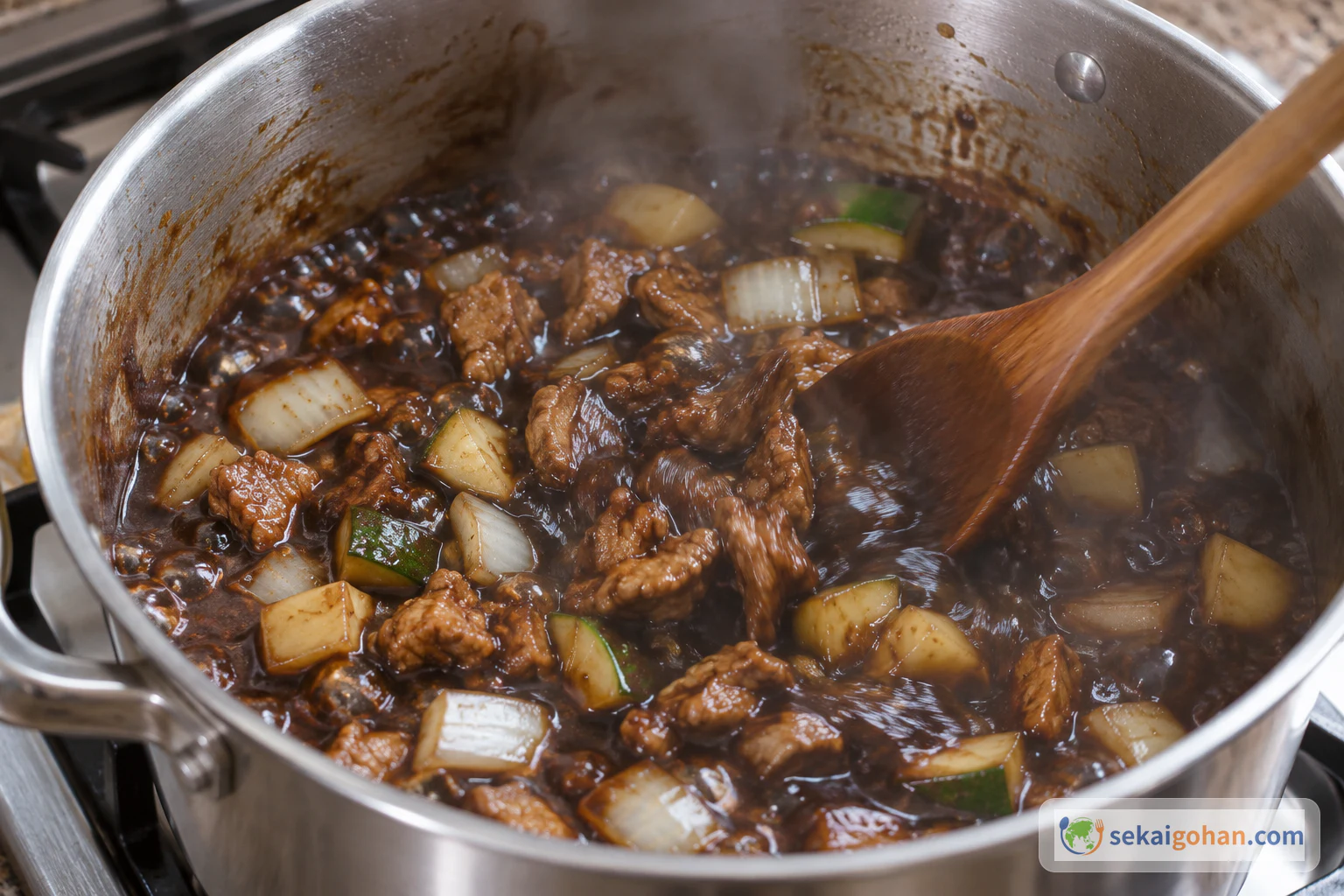
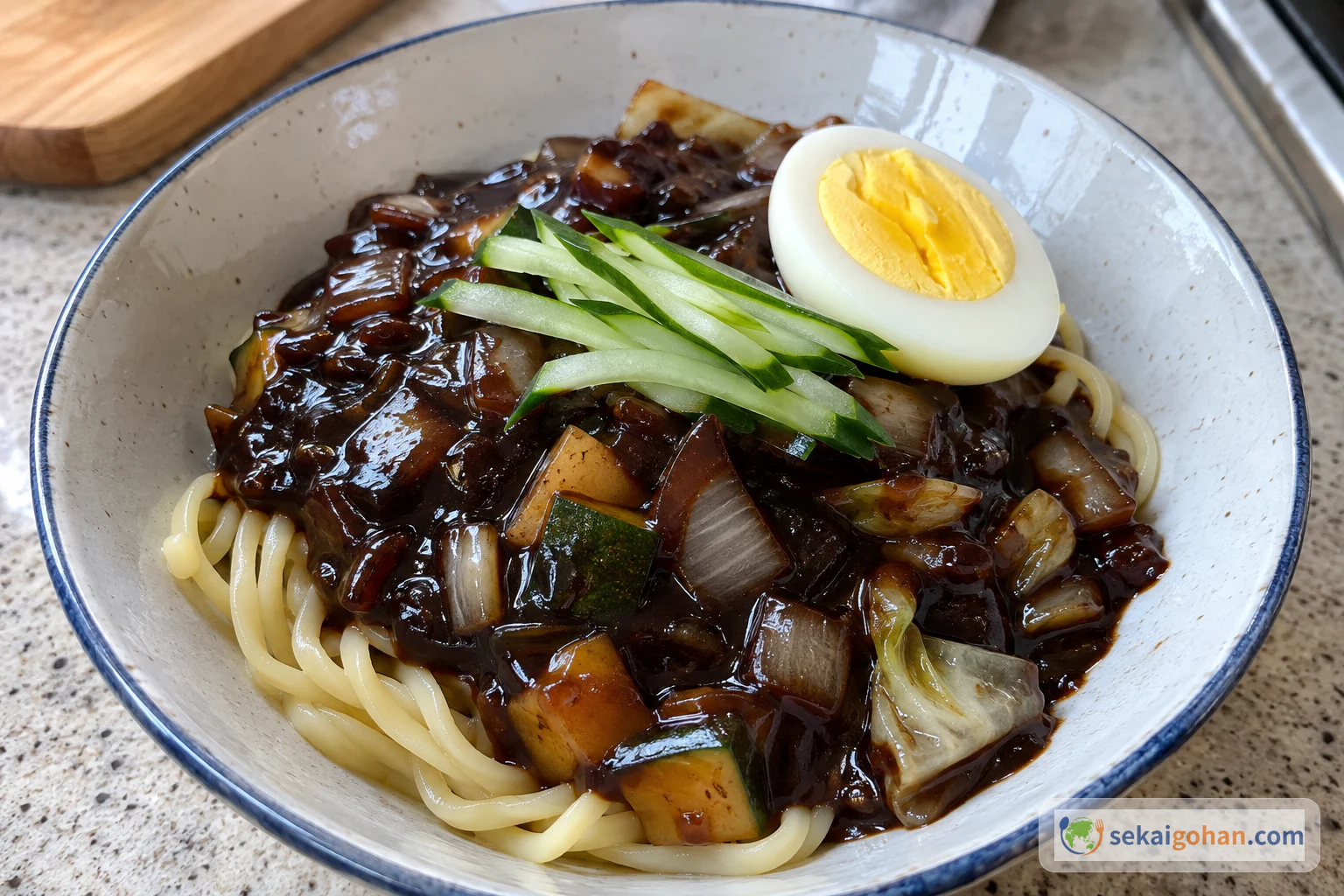
Some bowls announce themselves before you take a bite. Here it's a glossy, near-black sauce clinging to every strand of thick noodle, with small cubes of pork and vegetables that still hold their shape. Jajangmyeon (짜장면) is one of the best-loved dishes of Korean-Chinese cooking: chewy wheat noodles under a sauce built on chunjang, the Korean black paste, cooked with pork belly and diced vegetables. The color is what you notice first, but the flavor is what brings people back. Chunjang's salty, savory depth meets the sweetness of pork, onion, zucchini and potato.
Jajangmyeon and Korean-Chinese Cooking
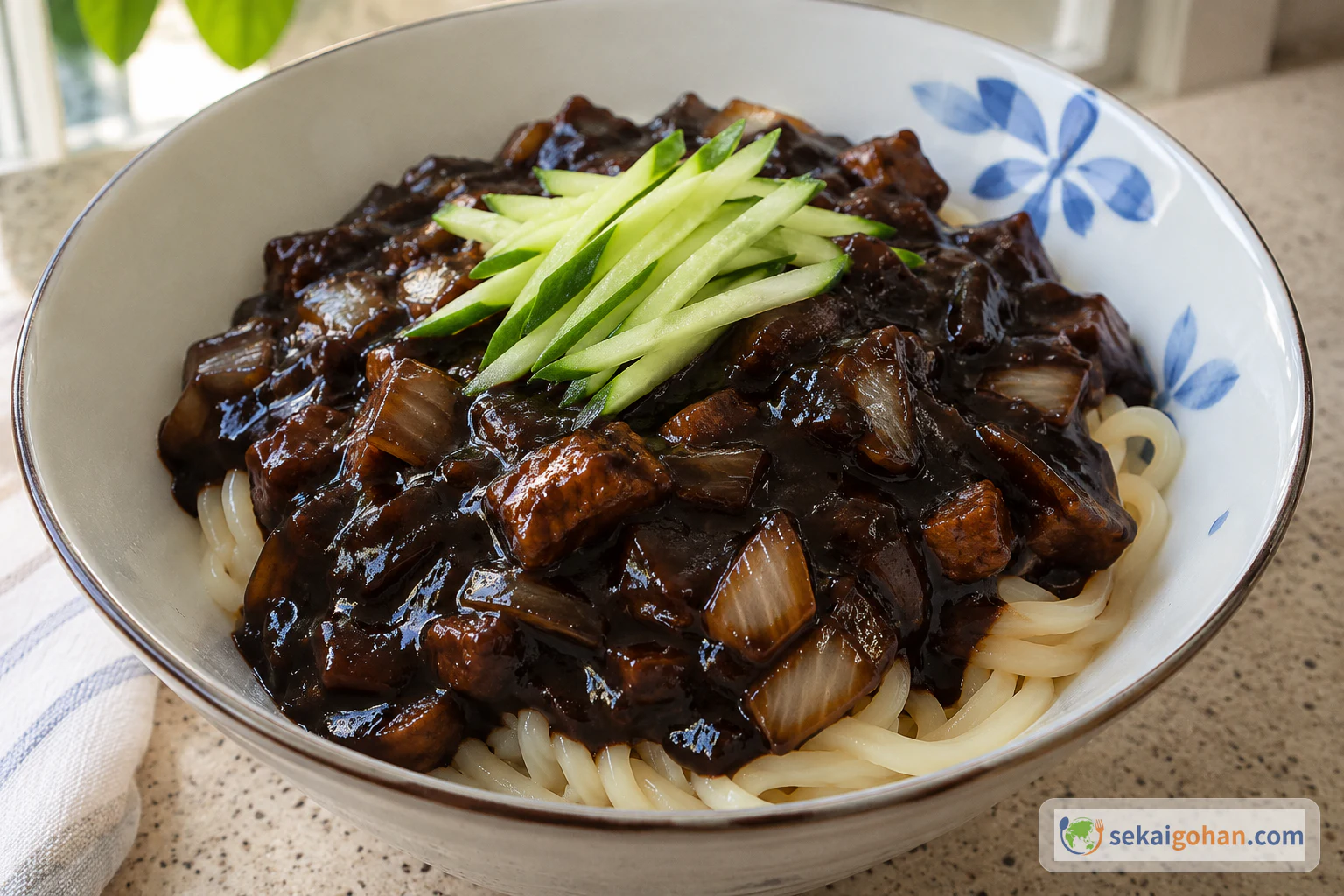
Jajangmyeon is a Korean-Chinese favorite for all ages, a noodle dish of Chinese origin that changed to suit Korean tastes. It took shape after the port of Incheon opened in 1883, made by Chinese immigrants in the area around the Qing concession. The early sauce was a brown sauce of fermented wheat and beans. The black chunjang sauce, colored with caramel, became widespread in the 1950s. You can read more about the country's food on our Korea page.
The dish is related to China's zhajiangmian, but the two are different recipes. The Beijing-style dish uses other pastes, ground pork and its own set of vegetable toppings. The Korean version relies on chunjang, diced pork and vegetables, and a sauce thickened with cornstarch until it turns glossy and coats the noodles instead of pooling underneath them.
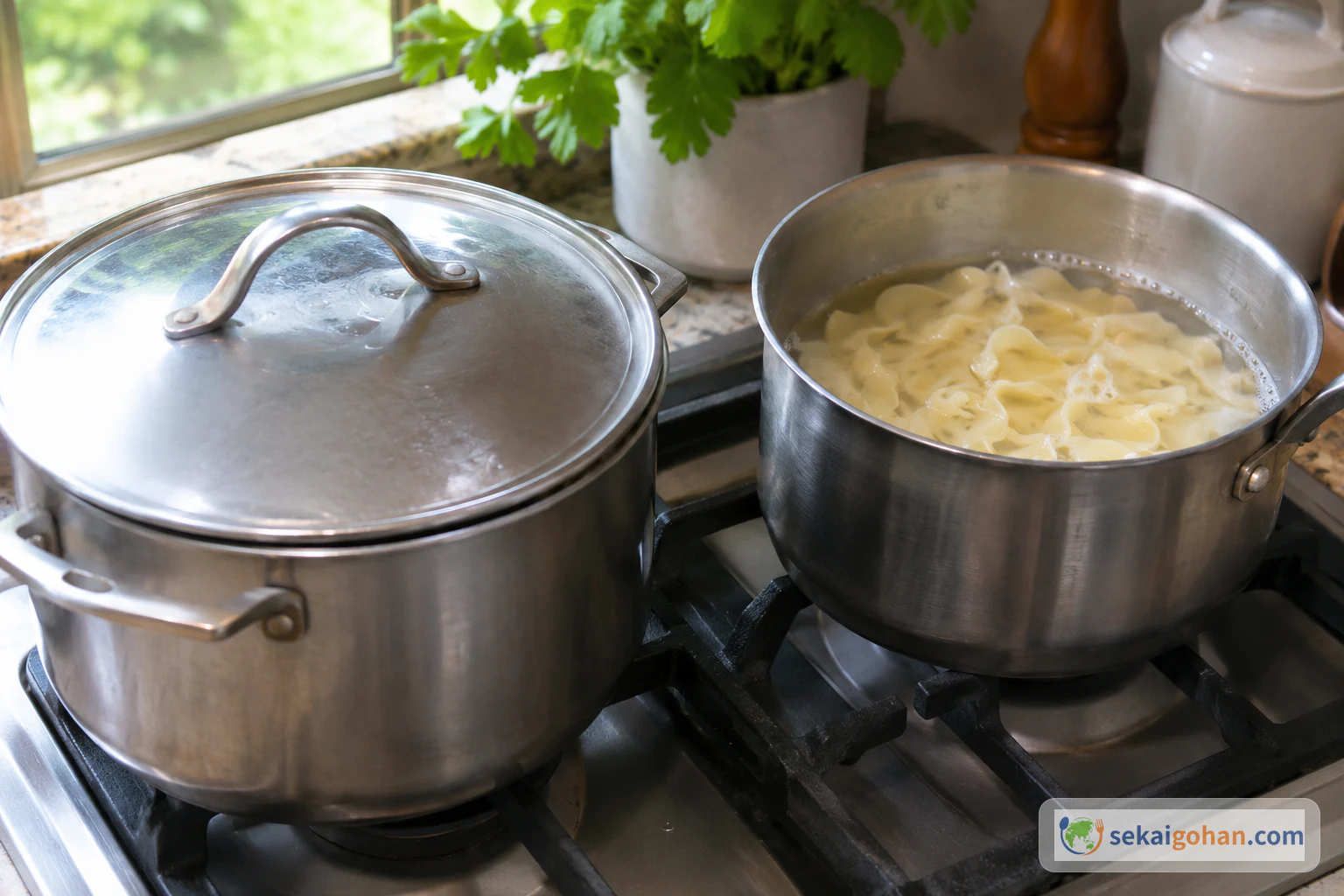
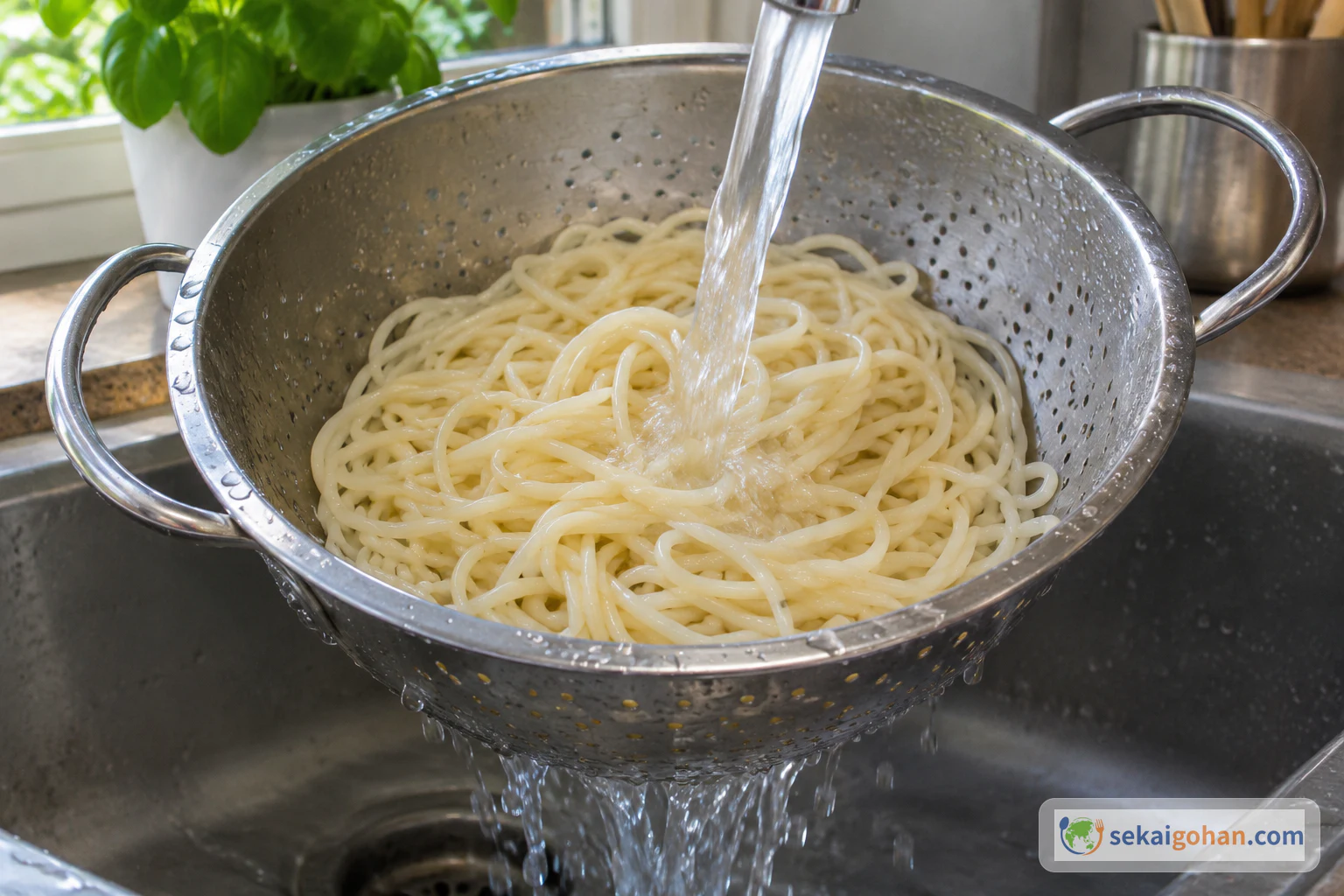
Making it at home is more about timing than technique. The sauce and the noodles cook separately, in two pots. The pork and the cabbage each leave the pan once and return at set moments, and the noodles are rinsed and drained before the finished sauce goes over them. Once you see how those pieces fit together, the dish is very approachable.
Ingredients (4–6 servings)
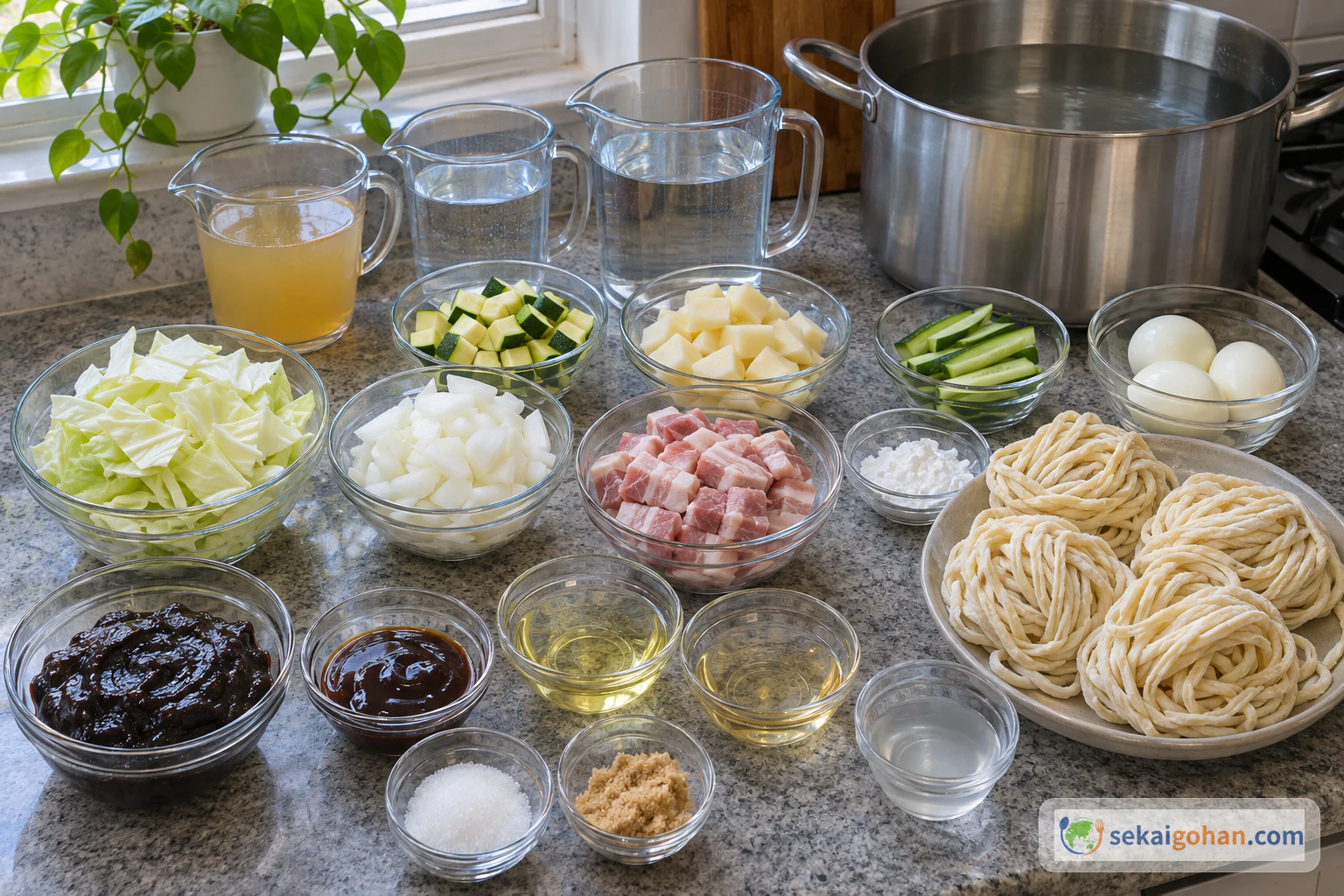
The eggs go on as half an egg per bowl.
This dish can contain soy (chunjang), wheat (noodles, and some chunjang products), shellfish or other seafood (oyster sauce), chicken (broth) and egg. Check the labels on each product, including any shared-facility or cross-contact statements. Keep raw pork away from ready-to-eat foods: use a separate board and knife for the pork, cut the cucumber on a clean board, and wash your hands after handling raw meat.
Equipment
- Heavy pot for the sauce
- Large pot for boiling the noodles
- Large measuring cup or jug, and a whisk
- Small bowl for the cornstarch slurry
- Slotted spoon
- Wooden spoon
- Tongs or long chopsticks
- Colander
- Two plates for holding the pork and the cabbage separately
- A cutting board for raw meat and a separate clean board for the cucumber
- Serving bowls (4–6)
Choosing Chunjang, Noodles and Other Ingredients
Chunjang is the one ingredient that has no stand-in. It's a store-bought Korean seasoning paste, and you'll find it at Korean or Asian grocers under 춘장, chunjang, or "Korean black paste for jajang." Chinese tianmianjiang (sweet bean sauce), doubanjiang, Chinese yellow soybean paste and Japanese miso, including dark miso such as hatcho miso, all change the saltiness, sweetness, fermented aroma and color enough to make a different dish.
For the noodles, look for fresh, thick Korean-style wheat noodles sold for jjajang. Cooking times vary by product, so read the pack.
Unsalted chicken stock works well. If your broth is salted, skip any extra seasoning in the sauce, since chunjang and oyster sauce already bring plenty of salt. Oyster sauce brands differ in ingredients and concentration, so check the label, especially for allergens.
Russet potatoes are floury; any other floury potato works if you can't find them. Floury potatoes break down easily, so keep the simmer gentle and the cubes will hold their shape. An ordinary green zucchini is fine. English cucumbers are larger than many other types, which means a quarter of a smaller cucumber isn't the same amount, so go by weight.
Use cornstarch for the slurry. Potato starch and Japanese katakuriko thicken differently.
Method: Two Pots, and a Set Order for Removing and Returning
Prepare everything first: cut the pork, vegetables and cucumber, halve the eggs, whisk the sauce, and get the noodle water heating. While the sauce simmers and rests covered, the noodles cook in their own pot. The sauce comes back to a boil and is thickened just before serving.
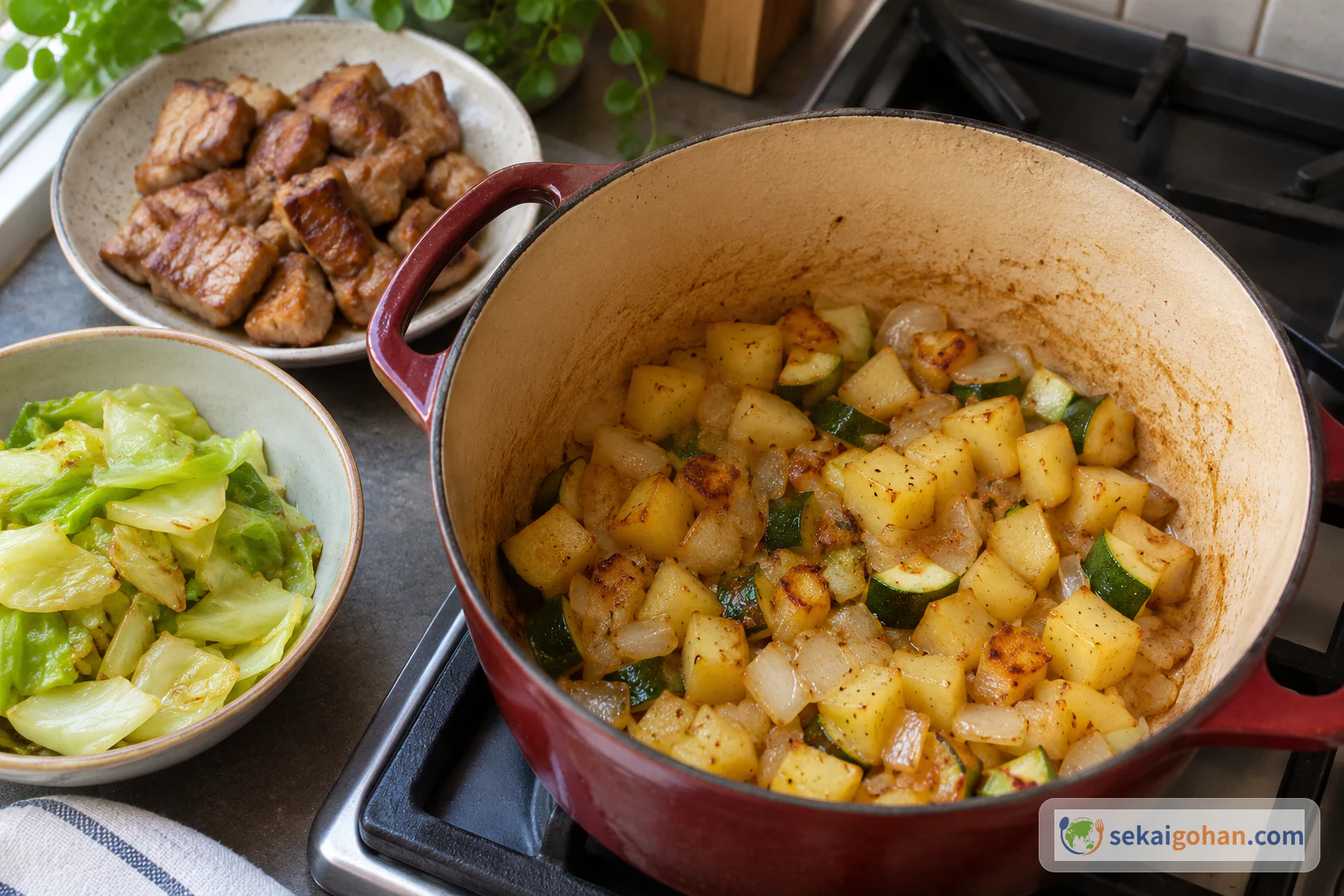
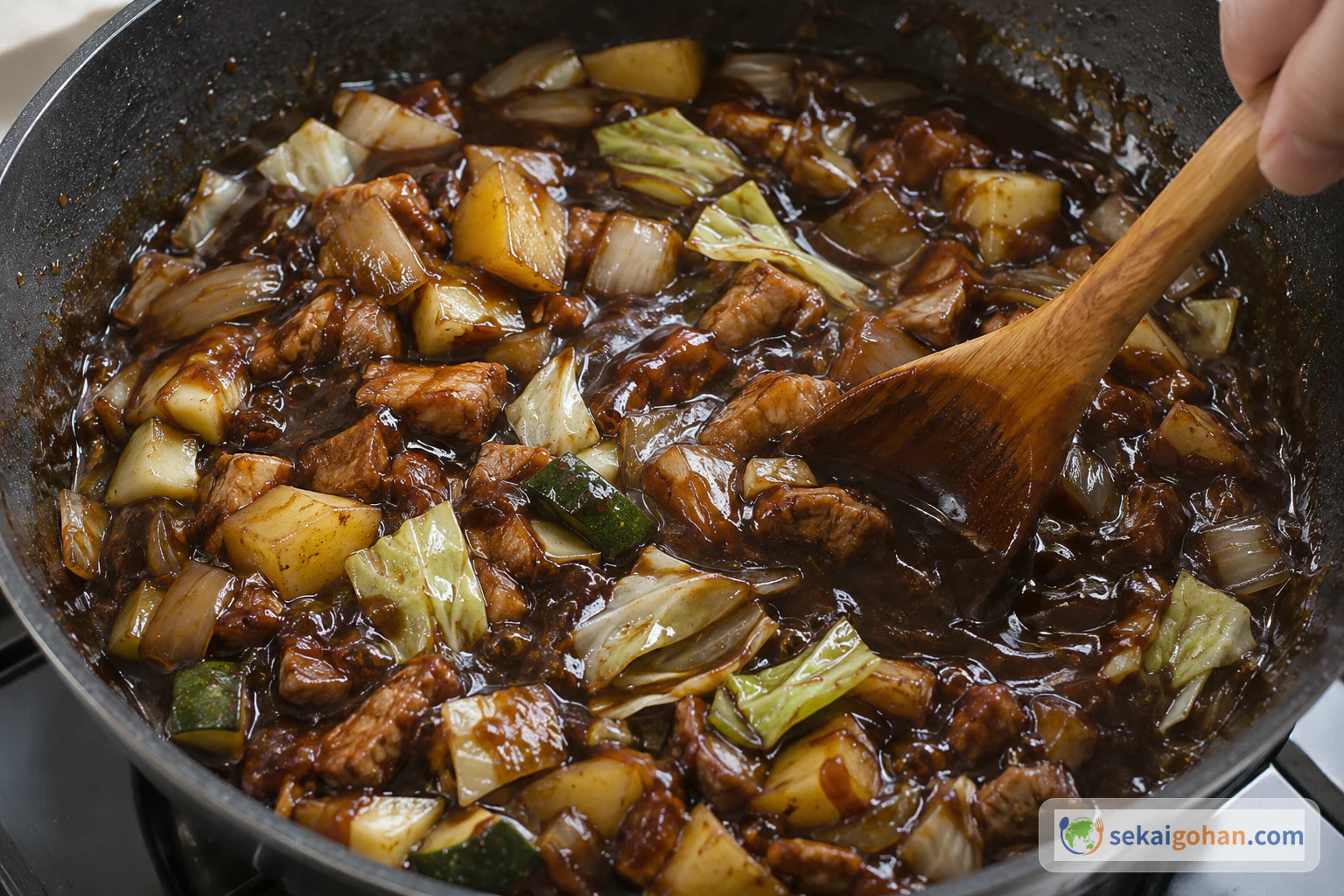
The pork and cabbage each come out of the pot once. The pork goes back in after the other vegetables have browned. The cabbage waits until the very end, after the noodles are cooked, and goes back into the reboiled sauce right before thickening. Keep the two plates separate so you return each at the right moment.
Jajangmyeon Troubleshooting
| Problem | Likely cause | What to do |
|---|---|---|
| The sauce scorches on the bottom | Not stirred often enough during the simmer | Stir often from the moment it boils. The chunjang goes in with the liquid sauce after the vegetables, with no step where the paste is fried in oil first; don't add one. |
| The vegetables are still firm after 5 minutes | Heat too low, or cubes cut larger than 1/2 inch | Keep simmering and stirring until a potato cube is tender. Cut evenly next time. |
| The potato cubes fall apart | A very floury potato, or a hard boil for too long | Simmer rather than boil hard once the vegetables are tender, and stir gently. |
| The sauce stays thin | Slurry not fully dissolved, or the sauce not boiling when it went in | Dissolve the cornstarch fully in its water and bring the sauce back to a boil. Don't add dry cornstarch directly, and don't increase the amount. |
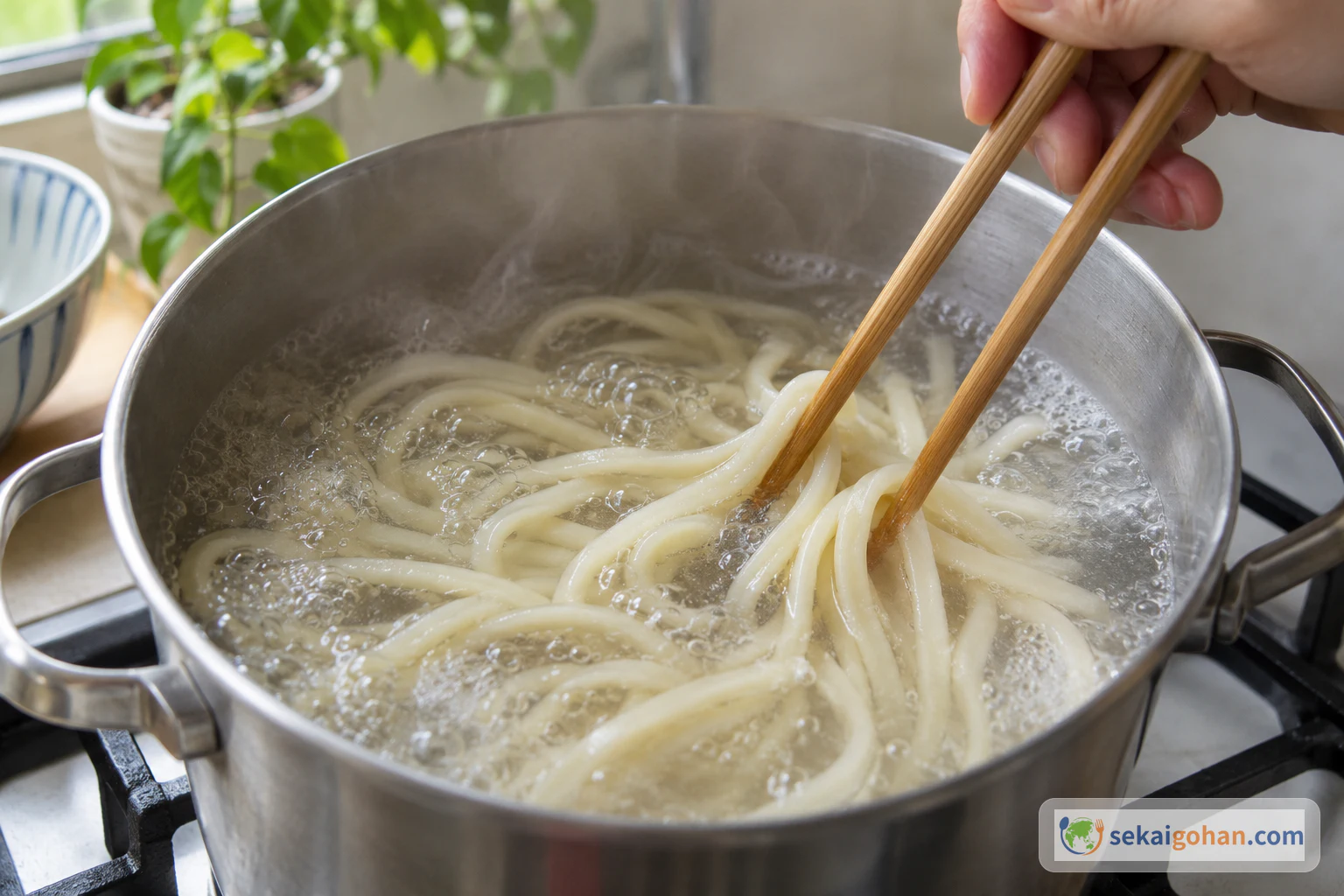
| The noodles are gummy or sticky | Not separated while boiling, or not rinsed | Separate them with tongs or chopsticks as they cook, rinse until they're no longer slippery, and drain well. |
| The sauce looks watery in the bowl | Noodles not drained well | Let the noodles drain thoroughly, and put the sauce on just before serving. |
| The pork looks done but you're unsure | Browned color is not a doneness test | Make sure the pork is thoroughly cooked before serving; surface color alone does not establish doneness. |
Serving, Leftovers and Variations
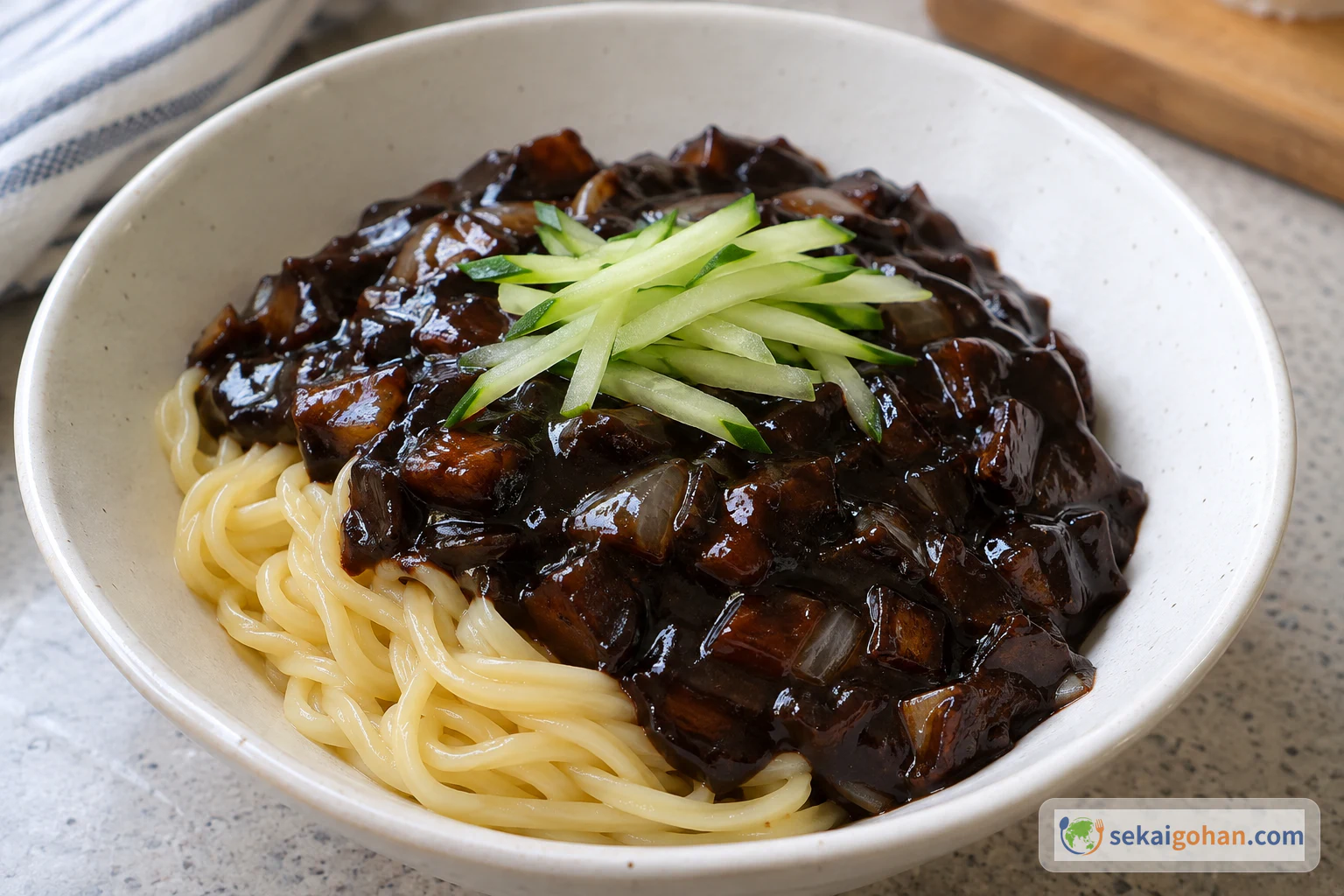
Serve jajangmyeon right away, while the sauce is hot and the noodles are still springy, and mix the sauce through the noodles at the table. Don't leave the cooked dish out at room temperature. Refrigerate leftovers right away and eat them soon.
In Korea's Chinese restaurants, jajang comes in several forms:
- Ganjjajang: the sauce is stir-fried to order, which keeps the texture of the ingredients, and served separately from the noodles.
- Yuni-jjajang: the meat and vegetables are finely minced.
- Yuseul-jjajang: the meat and vegetables are cut into thin strips.
- Samseon-jjajang: a version with seafood.
- White and golden versions: lighter-colored variations distinct from the black sauce.
There's also jjajangbap, where the sauce is served over rice instead of noodles. Each of these has its own ingredients and method; the recipe here is the everyday black chunjang style.
Frequently Asked Questions
Is it spicy?
No. This version has no added heat.
Why do the pork and cabbage come out of the pot?
The pork comes out after browning and goes back in once the other vegetables have browned, so it finishes cooking in the sauce. The cabbage is cooked briefly and waits until the sauce is reboiled at the end, so it isn't simmered with the rest from the start.
Why rinse the noodles in cold water?
Rinsing removes the slippery surface starch. Draining them well afterward keeps extra water from thinning the sauce in the bowl.