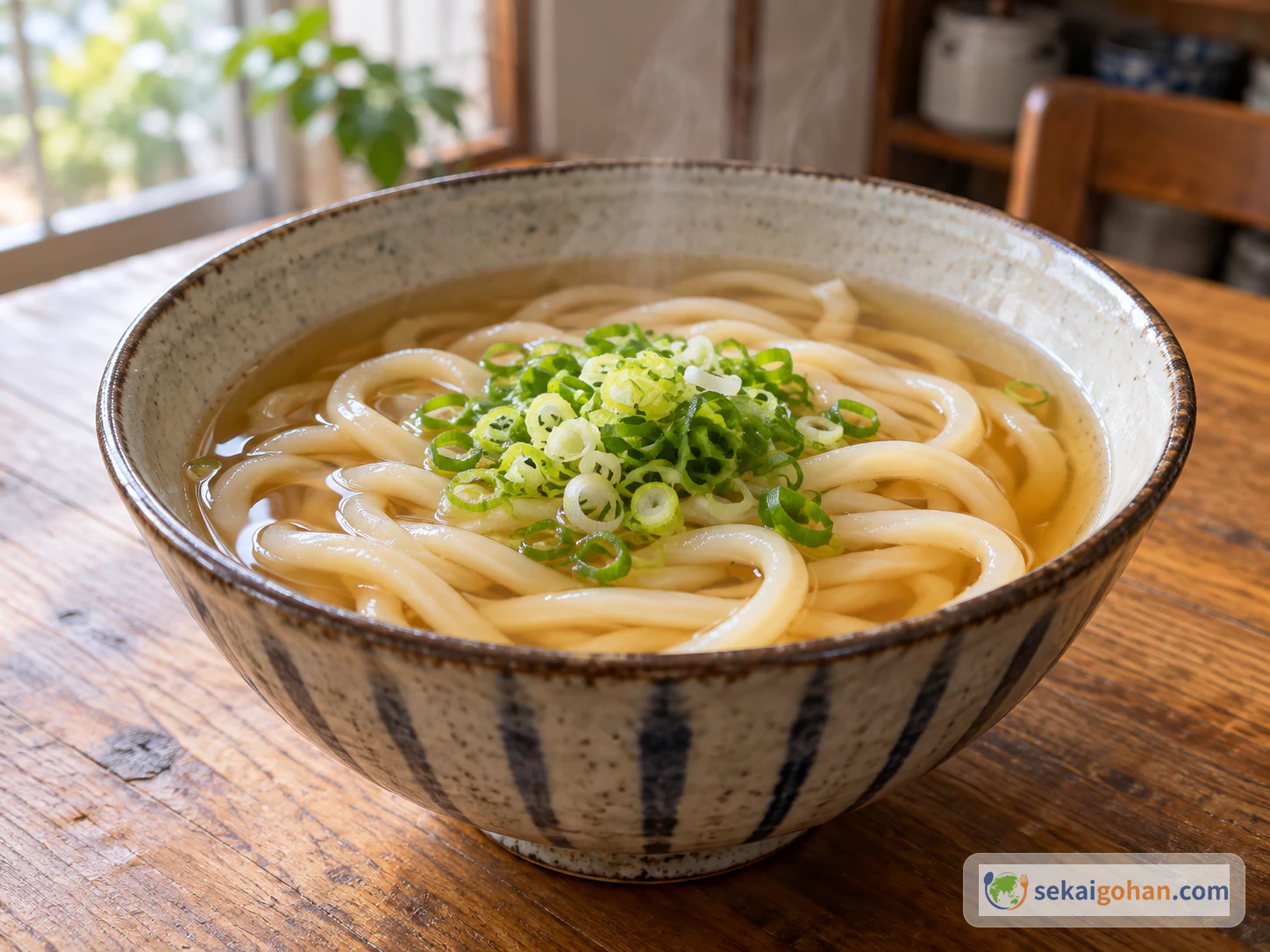
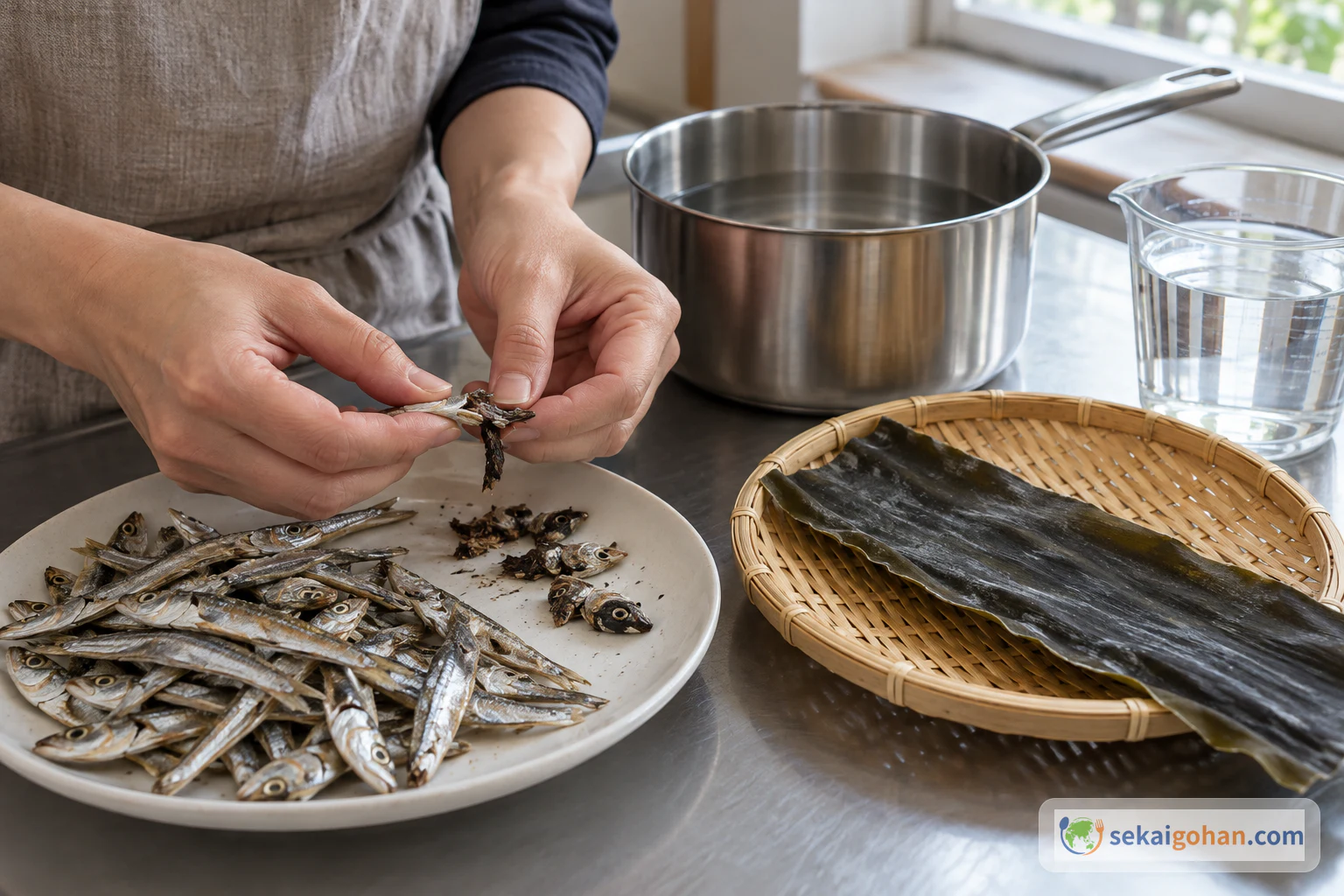
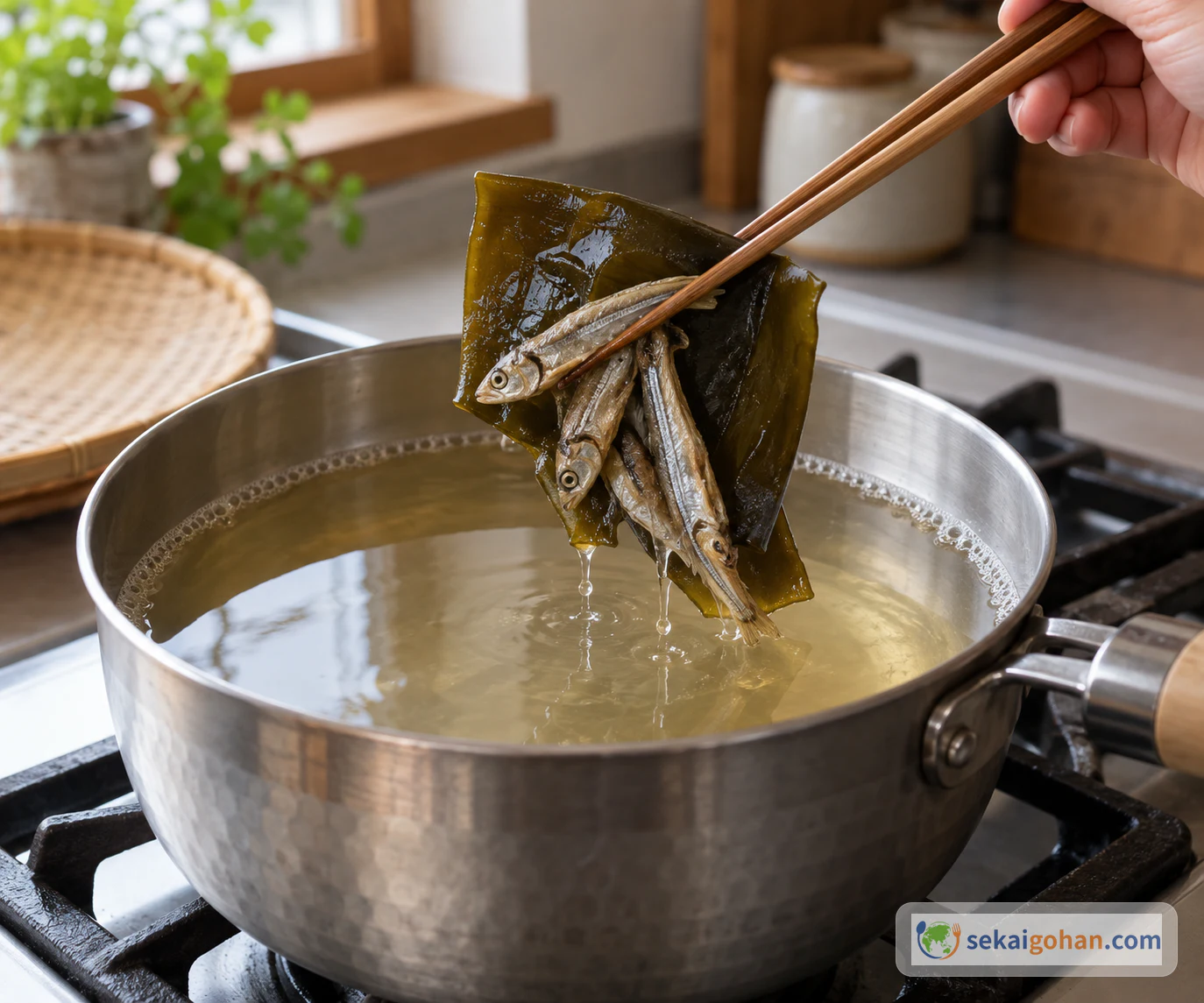
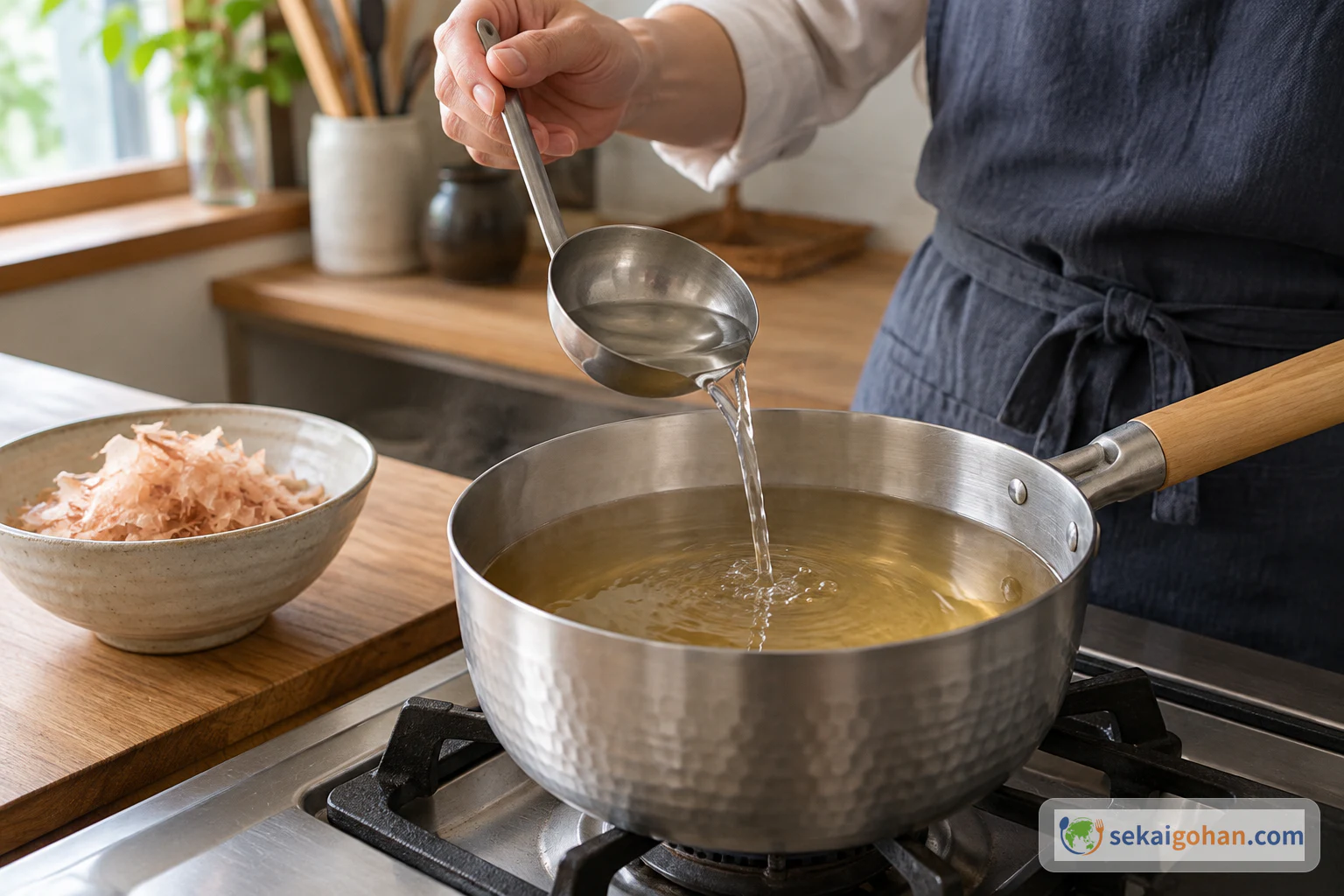
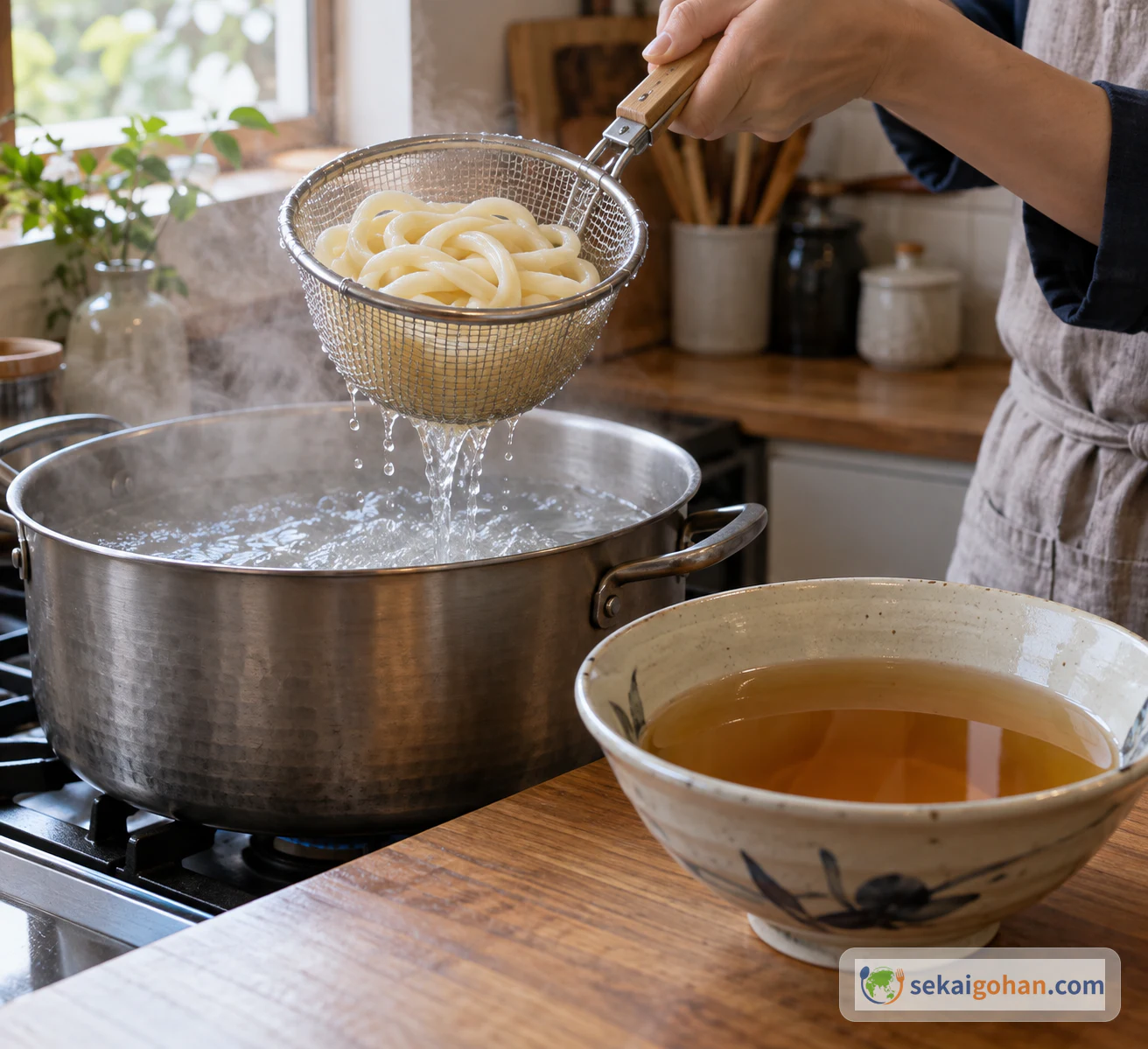
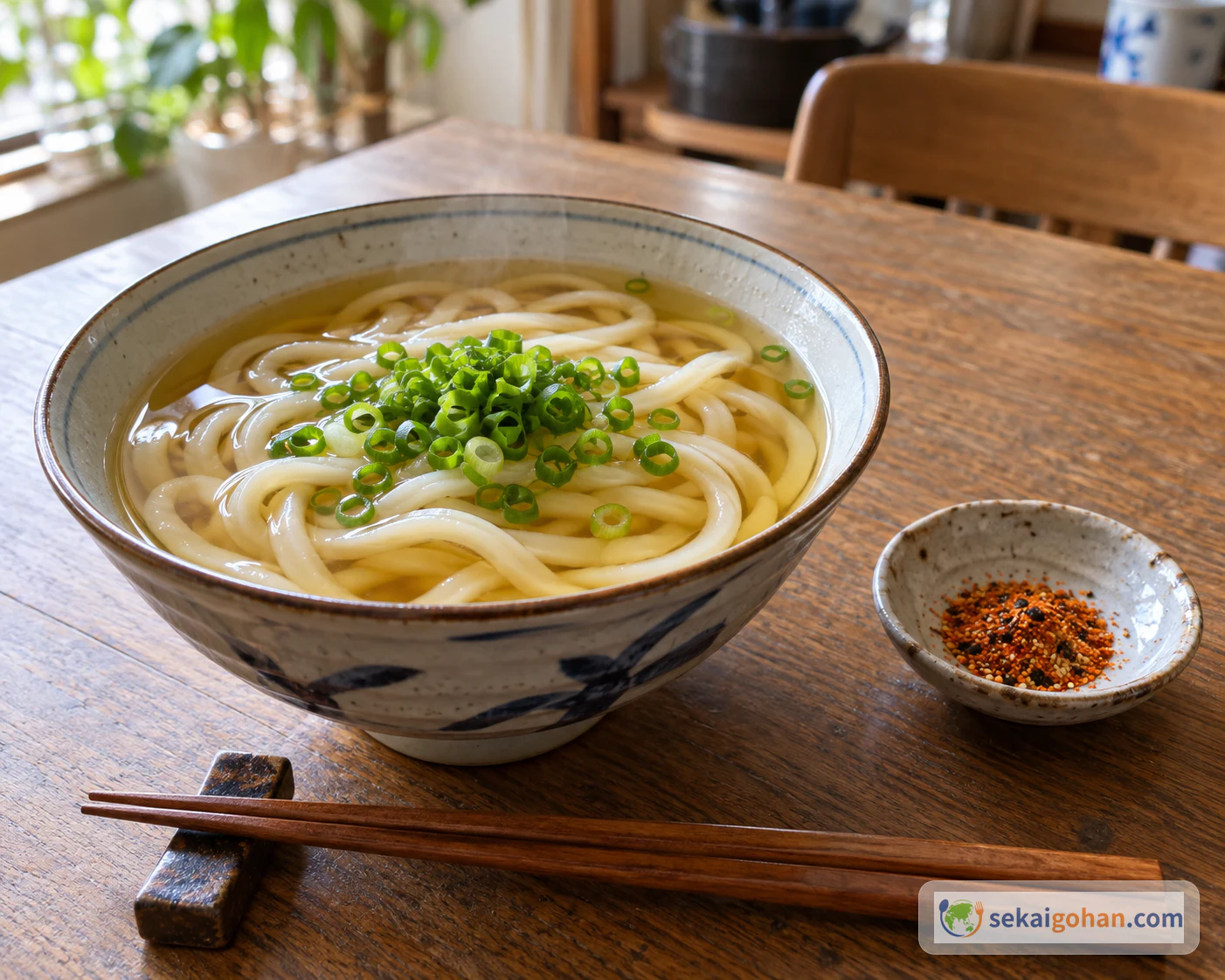
On a cold day, a saucepan of water sits on the stove with a sheet of kombu and a handful of cleaned dried sardines. The heat is low, and for a while nothing happens; then tiny bubbles begin to gather around the rim of the pot, and that is the moment to lift everything out. Kake udon is the simplest way to eat udon hot: thick wheat noodles in a seasoned broth, with green onions on top. With almost nothing else in the bowl, the difference between a flat bowl and a fragrant one comes down to how gently you handle the heat of the dashi and how you finish the noodles just before serving. This home version, for 5 servings, builds its broth on niboshi (dried sardines), kombu and katsuobushi (dried bonito flakes), seasoned with mirin and Japanese koikuchi (dark) soy sauce.
Udon Across Japan
Udon is the name for a family of Japanese wheat noodles, made by adding salt water to wheat flour and kneading it into a dough. The origins of udon and soba are unknown, but a culture of eating these noodles took shape in the Edo period. In Fukuoka, a local legend says a monk of Jotenji temple brought noodle-making techniques from Song-dynasty China.
The thickness, the springiness, the broth and the way people eat it all change from place to place. In Kanto, the broth tends to use bonito dashi with koikuchi soy sauce; in Kansai, kombu dashi with usukuchi (light-colored) soy sauce. Many noodle styles take their names from places, among them Sanuki, Inaniwa, Goto, Mizusawa, Himi and kishimen, and each has its own noodle shape and broth.
In Kagawa Prefecture, home of Sanuki udon, local wheat, iriko (dried sardines), salt and soy sauce from Shodoshima island supported the udon culture. Sanuki udon is known for the firmness and chew that come from a foot-kneading step, and for the many ways it is eaten, from self-service udon shops to kake, kijoyu (noodles with a splash of soy sauce) and yudame (noodles served in hot water).
Hakata udon in Fukuoka goes the other way, with softer noodles than other regions and a clear broth. Its dashi is made from flying fish, dried sardines, bonito and kombu, seasoned with usukuchi soy sauce. If you want to keep exploring, browse more dishes from Japan.
Ingredients for Kake Udon (5 Servings)
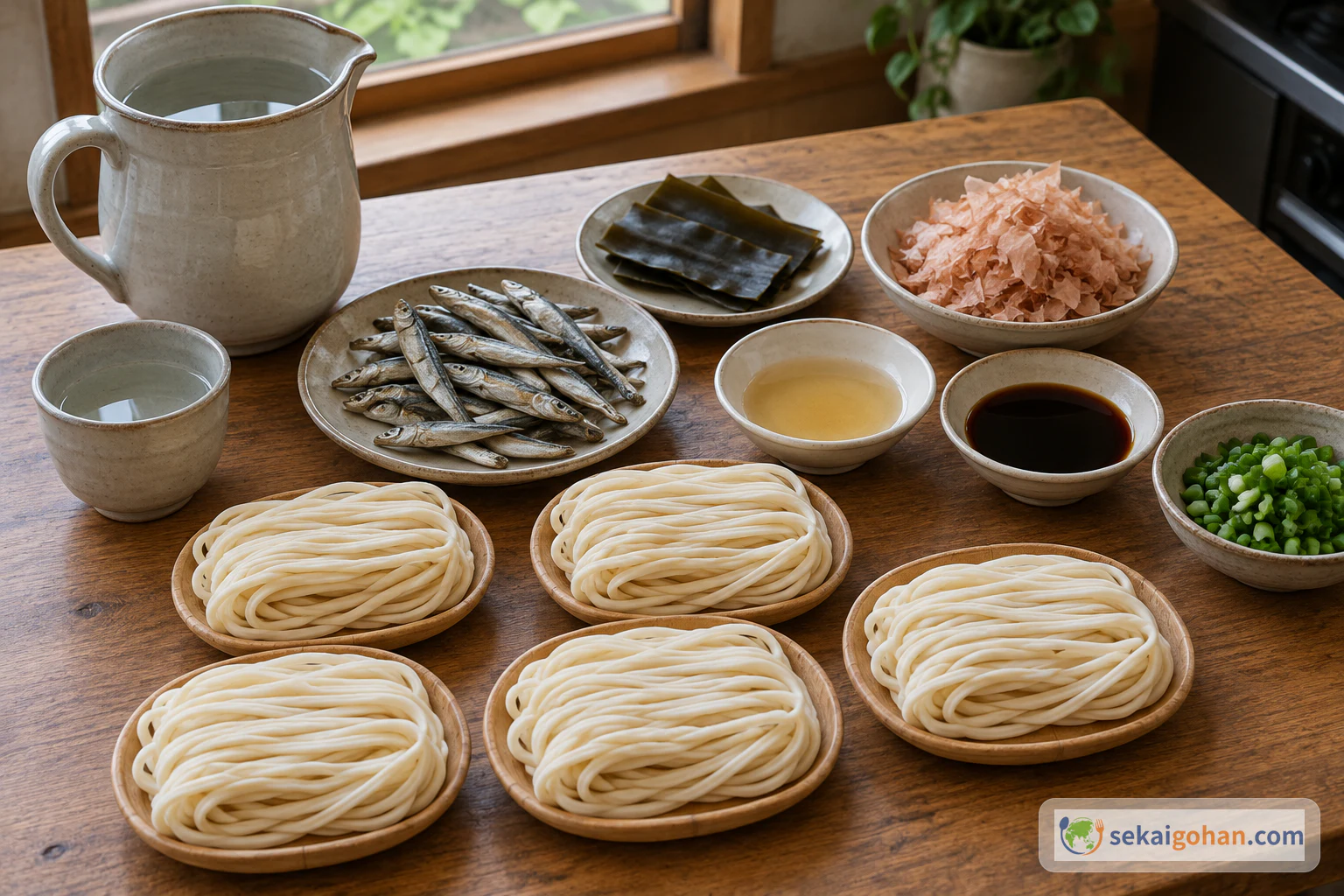
These amounts are for 5 servings. Use 5 portions of noodles, following the serving count on your package. Use a 1 tbsp (15 mL) measuring tablespoon; do not convert the spoon measures to weights.
Equipment
- A saucepan for the dashi and broth
- A large pot for boiling the noodles
- A fine-mesh sieve
- A cloth or kitchen paper for lining the sieve
- A heatproof bowl to catch the strained dashi
- A colander for rinsing the noodles
- A ladle
- Oven mitts for handling hot liquids
- 5 serving bowls
Choosing Ingredients for Kake Udon
Dried ingredients for the dashi. Niboshi (also sold as iriko), dashi kombu and thinly shaved katsuobushi carry the aroma of this bowl. Check your local supermarket and dried-goods shops; if they don't carry them, searching online by these general names is a practical route.
Water. Soft water is suggested, but treat it as advice rather than a rule.
Soy sauce. Use Japanese koikuchi soy sauce. Chinese light or dark soy sauce won't give the same result, and Japanese usukuchi soy sauce is no equal-amount substitute here: its lighter color does not mean the same saltiness.
Noodles. Udon is sold raw, boiled, frozen and dried. The method below uses dried udon, and fresh (raw) noodles follow the same cook-and-rinse approach, with the time on the package.
Method: Making the Dashi, Seasoning the Broth, and Finishing the Noodles
Finish the broth first and cook the noodles last. The dashi should never boil while the kombu is in, the soy sauce should never boil at all, and the noodles go into the bowl only after the broth is already there.
Several steps move hot dashi and boiling water between pots and bowls. Use oven mitts and keep children away from the stove while you work.
Fixing the Broth and the Noodles
| Problem | Likely cause | What to do |
|---|---|---|
| The broth tastes weak | The dashi itself lacks depth | Add extra soy sauce only a little at a time; salt does not replace the savoriness of dashi, and too much leaves the broth thin and salty at once. Next time, give the dashi its full soak and slow warming |
| The dashi is cloudy or slimy | The kombu was kept at a boil | Lift out the kombu and niboshi as soon as small bubbles appear at the rim (step 2) |
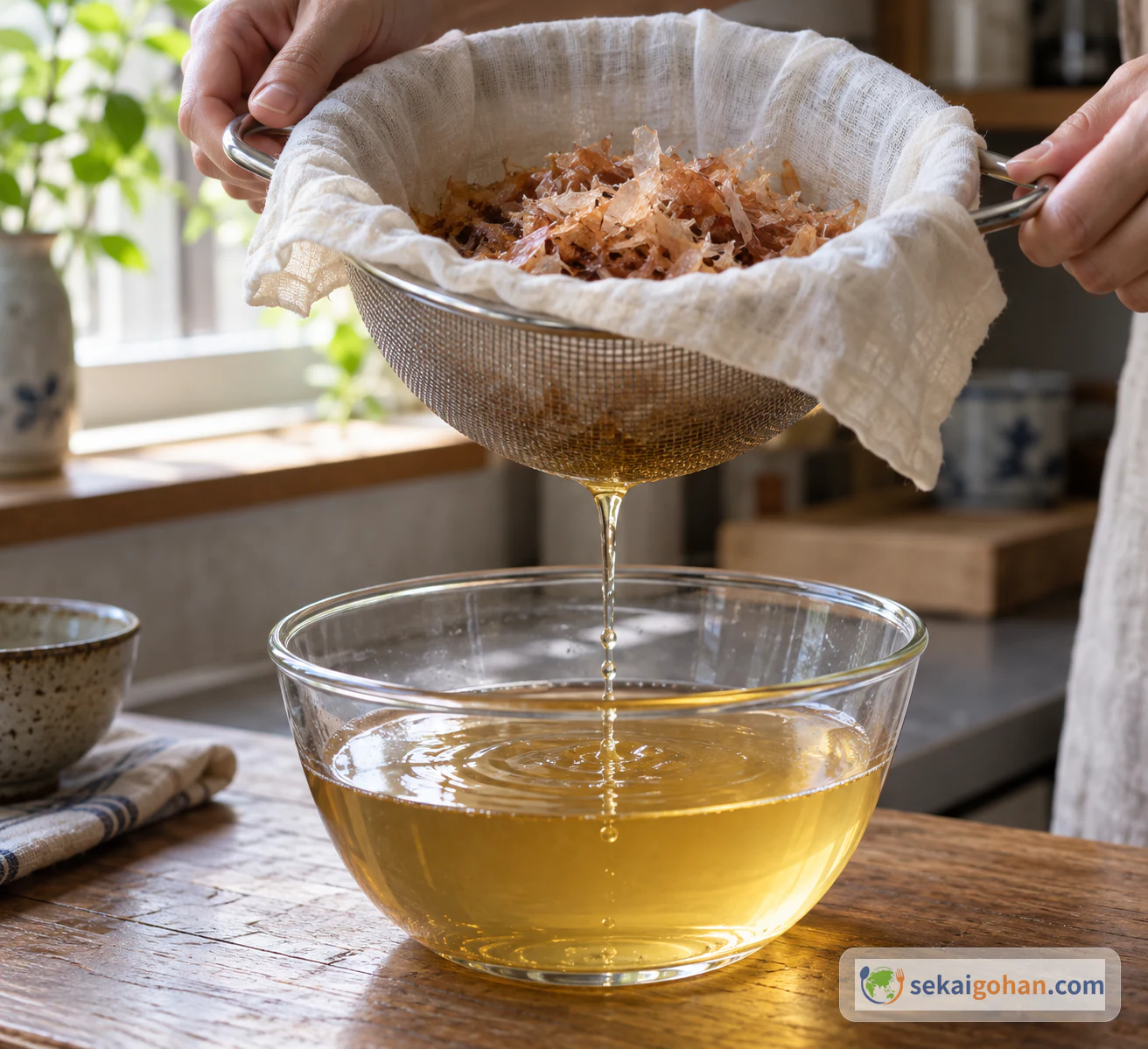
| The dashi tastes harsh | The bonito flakes were pressed or squeezed | Let the dashi drip through on its own (step 3) |
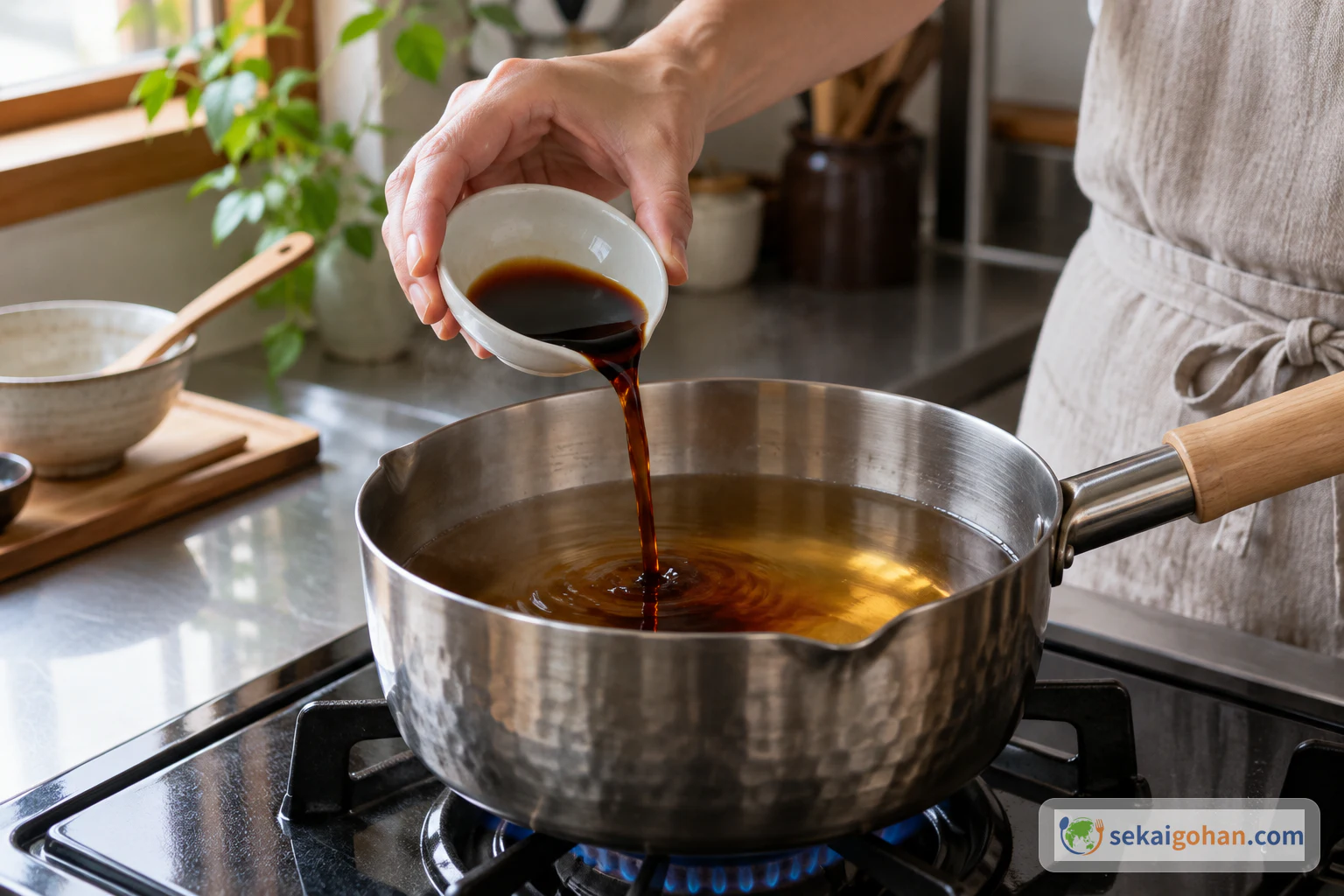
| The soy sauce smells sharp or "cooked" | The soy sauce was boiled hard | Heat the mirin first, add the soy sauce once the liquid is lukewarm, and keep it below a boil (step 4) |
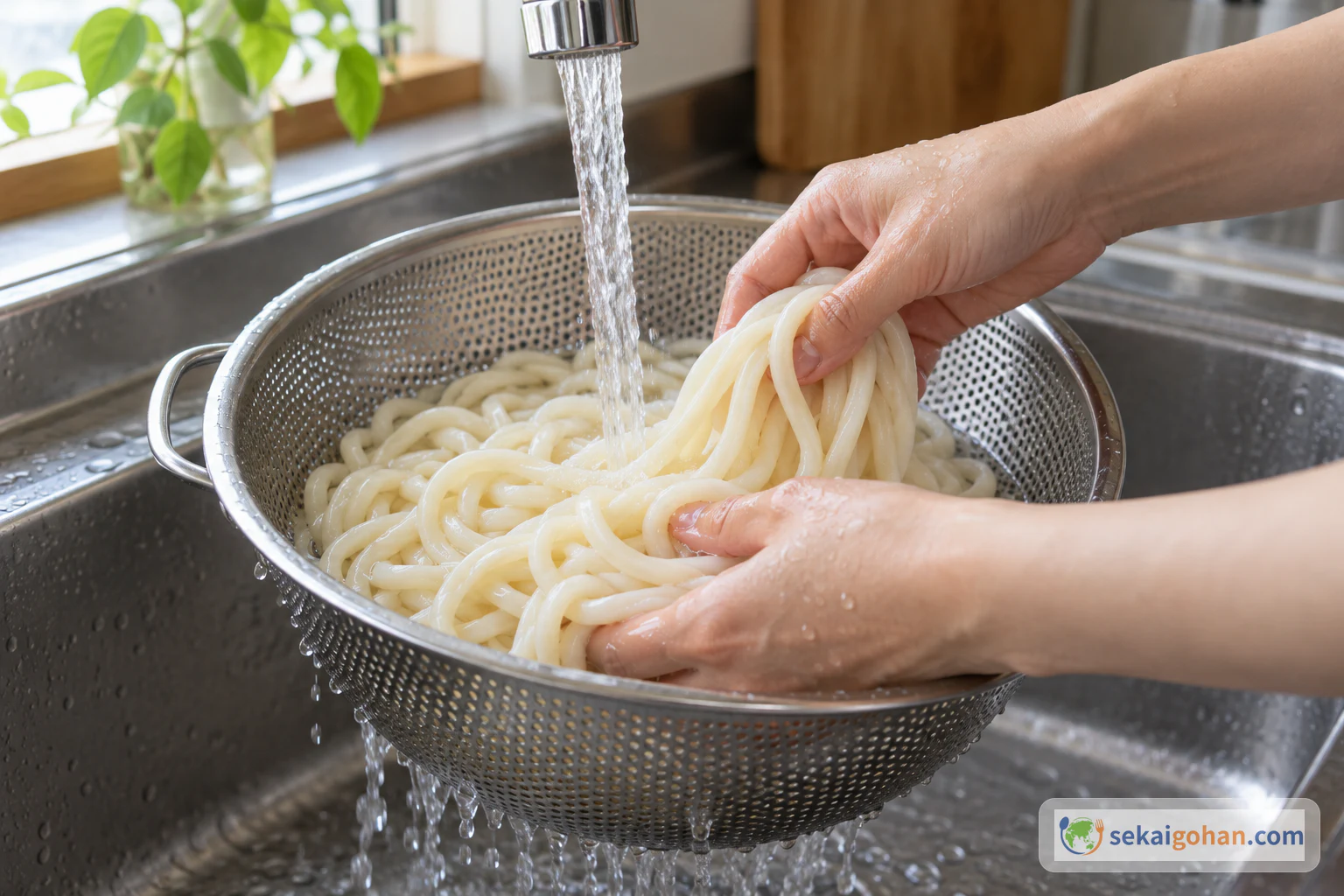
| The noodles feel starchy or sticky | Dried or fresh noodles were not rinsed | Rinse under running water and chill after boiling (step 5) |
| The noodles lost their spring | They were cooked before the broth was ready and sat waiting | Finish the broth first, cook the noodles last, and reheat them only briefly before serving |
Serving and Varying Kake Udon
At the table, green onions and shichimi are the base, and ginger is another condiment you can add on the side.
A clearer, Kansai-leaning broth. Shift toward kombu dashi and usukuchi soy sauce, as is typical in Kansai. Because usukuchi soy sauce can be saltier than its pale color suggests, add it a little at a time and taste as you go.
Leaning toward Sanuki or Hakata. The dashi here already builds on niboshi, the iriko of Kagawa, so going Sanuki is really about the noodle and its strong chew. For soft Hakata-style noodles, follow your package for the cooking time and judge the softness by eye and bite.
Chilled udon. Udon can also be eaten cold, with noodles chilled in cold water and dipped into a sauce. That is a different dish, with its own sauce amounts, so don't reuse the hot kake broth measurements.
Frequently Asked Questions
What if I don't have time to make dashi?
Instant dashi granules work as a separate shortcut; follow the manufacturer's directions. There is no direct conversion from the dried niboshi, kombu and katsuobushi in this recipe, so treat it as a different version.
Can I use frozen udon?
Yes. Cook it according to the package and use it without rinsing, skipping the rinsing, chilling and reheating in step 5.