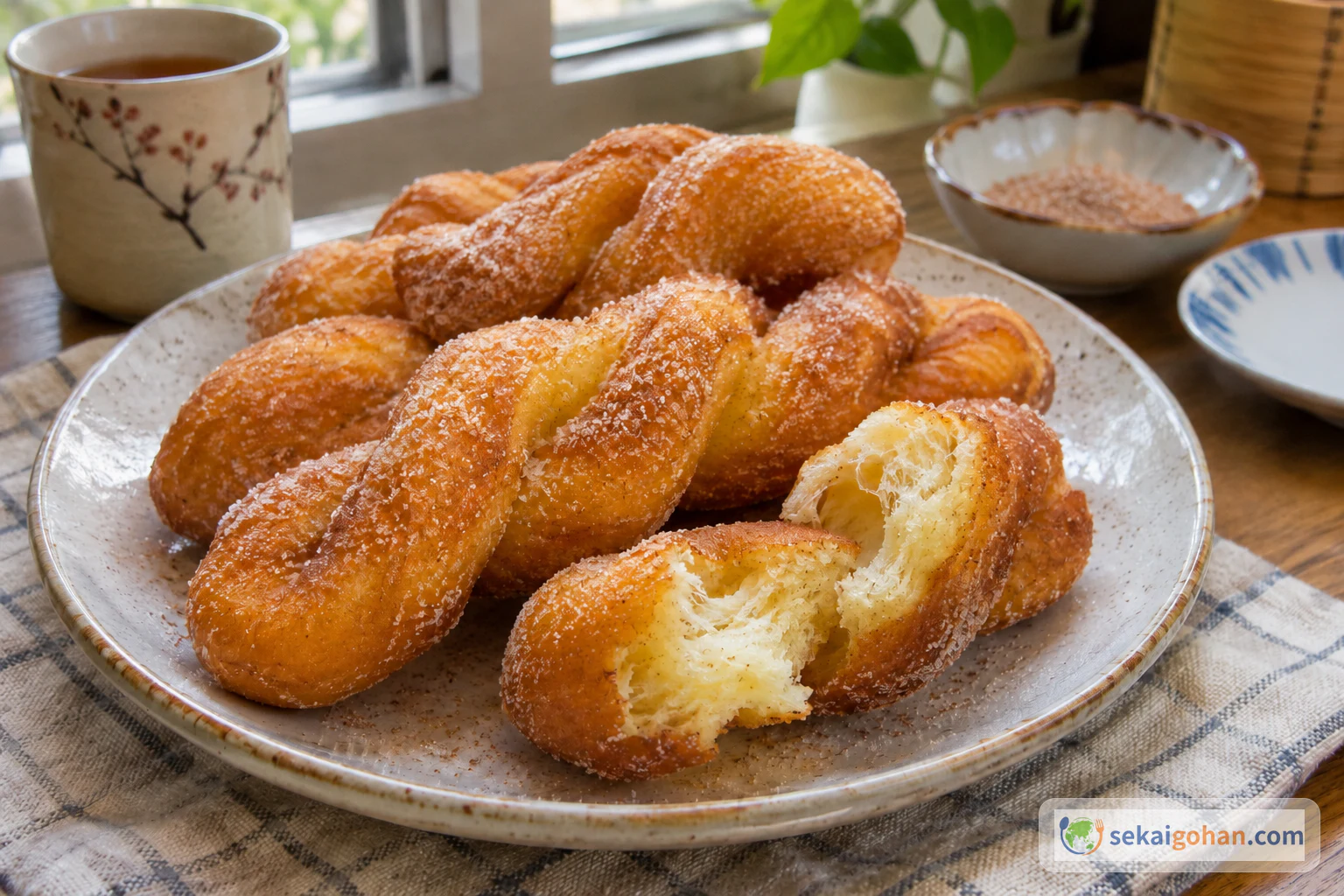
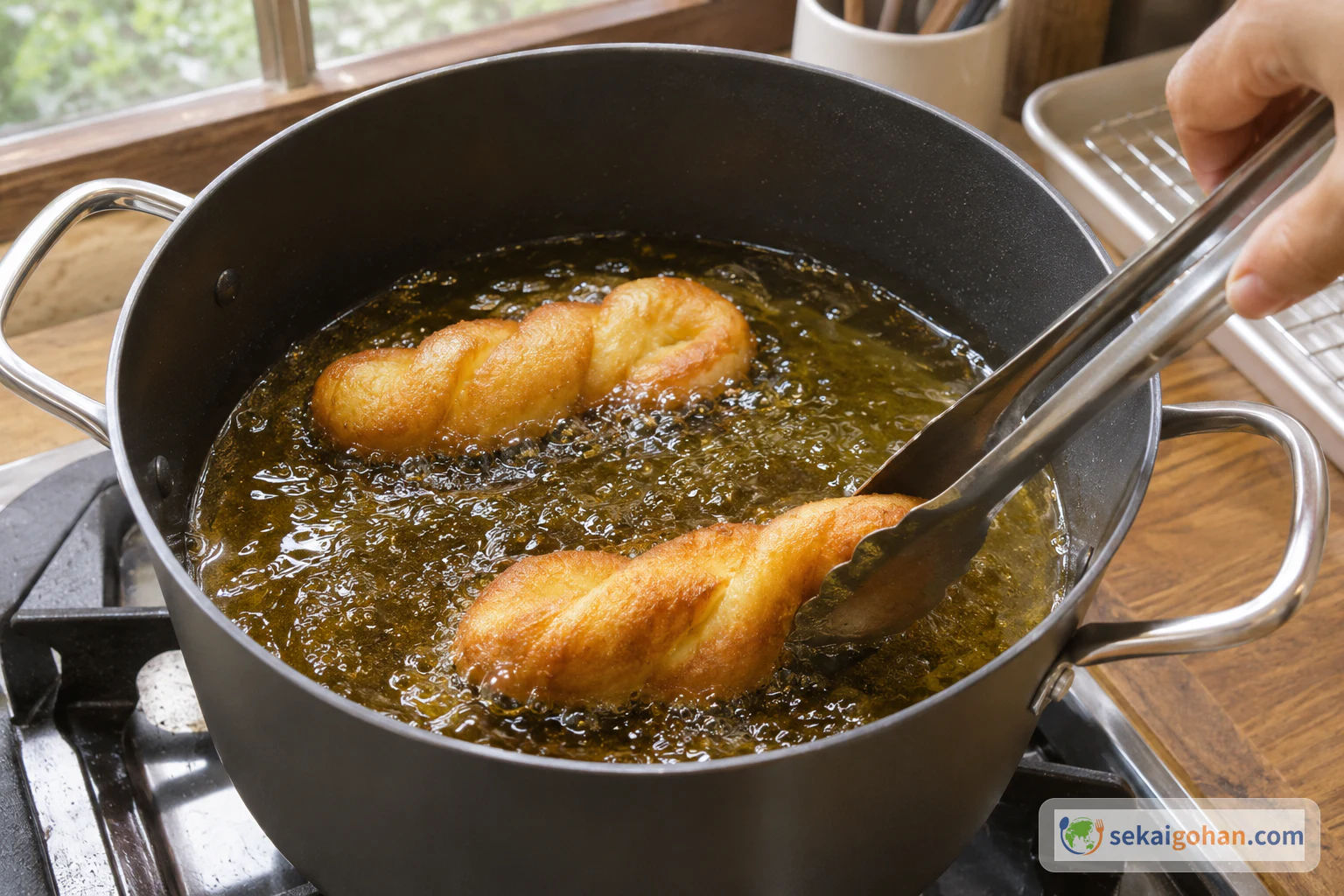
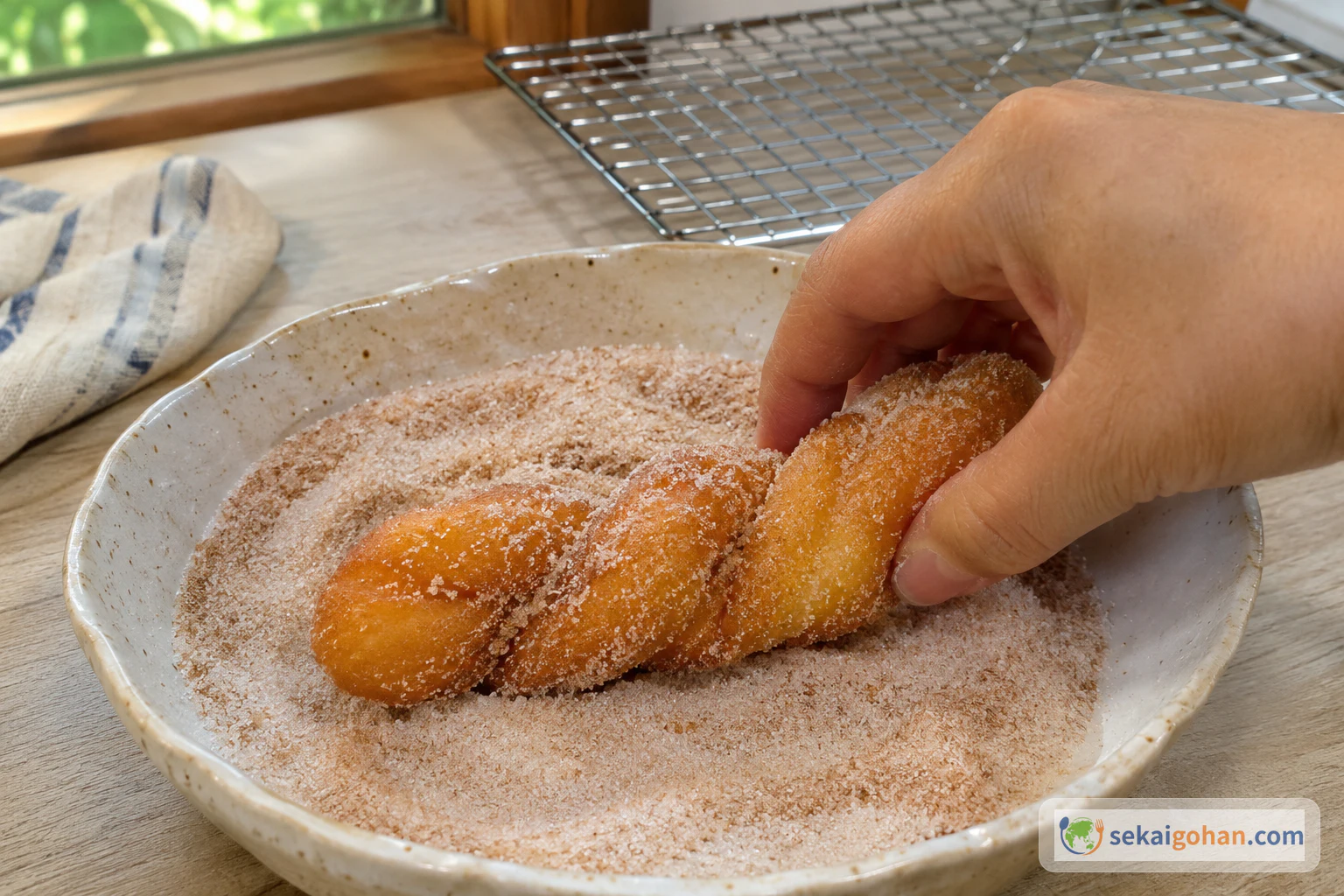
At Nammun Rodeo Market in Suwon, kkwabaegi (꽈배기) is one of the popular, cheap snacks you'll find among the other street food. It's a rope of yeasted dough folded and twisted back on itself, fried golden and rolled in cinnamon sugar while it's still warm. Many Koreans remember it fondly. This version adds glutinous rice flour to a bread-flour dough, and you can make it at home.
About Kkwabaegi
Every kkwabaegi has the same basic shape: a yeasted dough, twisted, fried in oil and finished with sugar. Korean kids buy it as an after-school treat at bakeries and street stalls. The Suwon market is one place you can still buy it today. For more dishes from the same table, see our Korea page.
The flour is what changes from one recipe to the next. Here, bread flour is mixed with glutinous rice flour. Other recipes use only all-purpose flour, and their amounts, rope lengths and frying details are different too. Pick one formula and stick with it. Mixing quantities from two recipes won't work.
Ingredients (15 pieces)
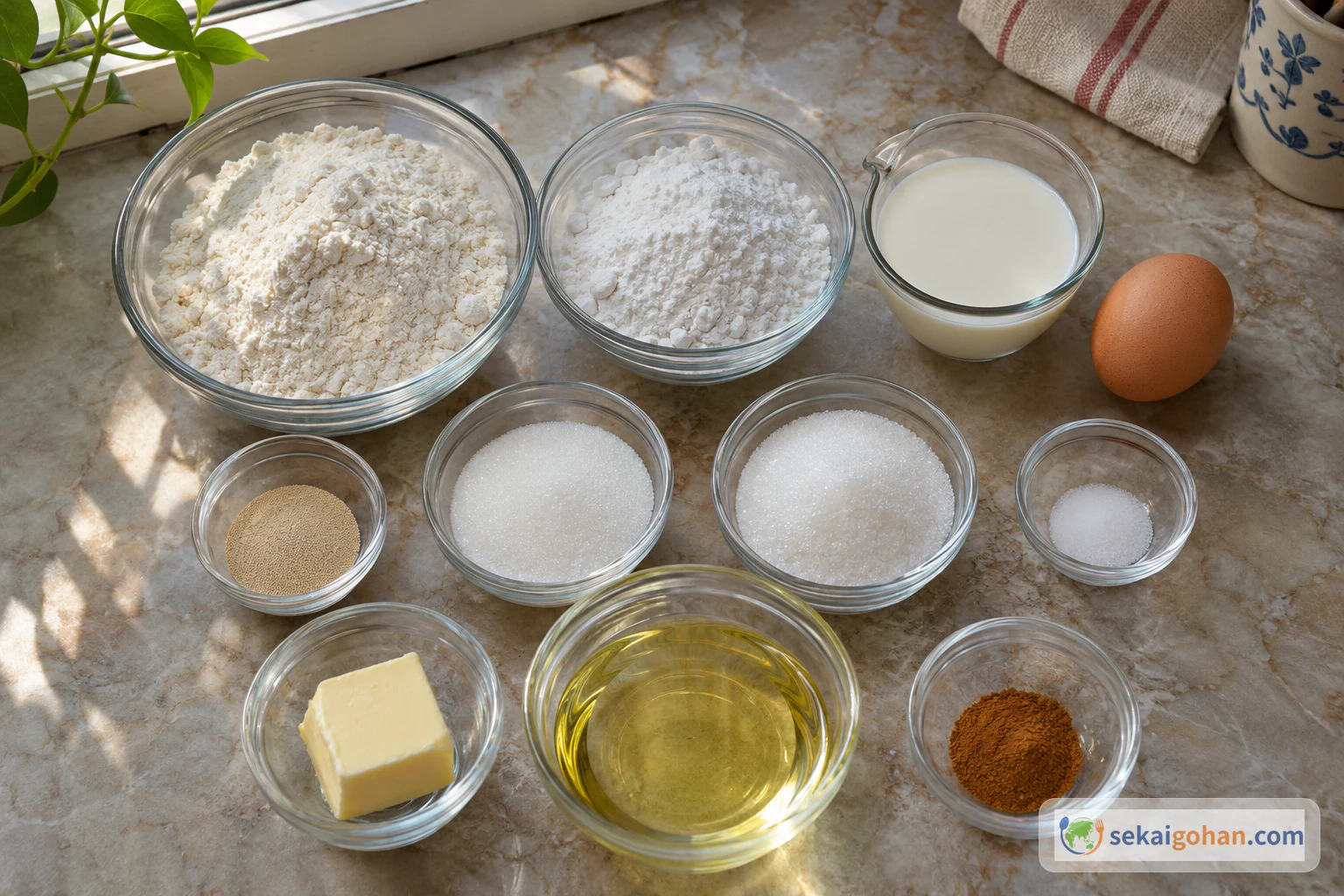
Bring the milk, egg and butter to room temperature before you begin.
The dough contains wheat, milk and egg. The coating is sugar and cinnamon only. You may not use all of the coating sugar; it is the amount to set out on the plate.
Choosing the Flour and Other Ingredients for Kkwabaegi
Glutinous rice flour is made from glutinous rice, and this recipe needs it. Regular rice flour comes from non-glutinous rice and behaves differently, so it can't stand in. Japanese shiratamako is also made from glutinous rice, but it's ground differently, so don't swap it in at the same weight. Look for "glutinous rice flour" on the label.
Bread flour gives the dough its structure, so use bread flour, not cake or pastry flour. Instant dried yeast goes straight into the milk, so make sure the package says instant. For frying, any ordinary vegetable oil suited to deep-frying is fine.
Equipment
- Large mixing bowl
- Clean work surface or board for kneading and rolling
- Clean damp cloth or plastic wrap for covering the dough
- Tray lined with baking paper
- Heavy, deep, stable pot with plenty of headroom above the oil
- Thermometer for checking the oil temperature
- Long tongs or a slotted spoon
- Wire rack for draining
- Wide, shallow plate for the cinnamon sugar
Method: From a Smooth Dough to a Warm, Sugared Twist
Do not taste the raw dough: it contains uncooked flour and egg. Keep flour, egg and dough away from foods that are ready to eat, and wash your hands, tools and work surfaces after handling them. When frying, keep the pot stable, do not overfill it with oil, keep water and wet utensils away from the oil, and never leave hot oil unattended.
Kkwabaegi Troubleshooting
The problems are listed in the order of the method.
| What you see | What to check | What to do |
|---|---|---|
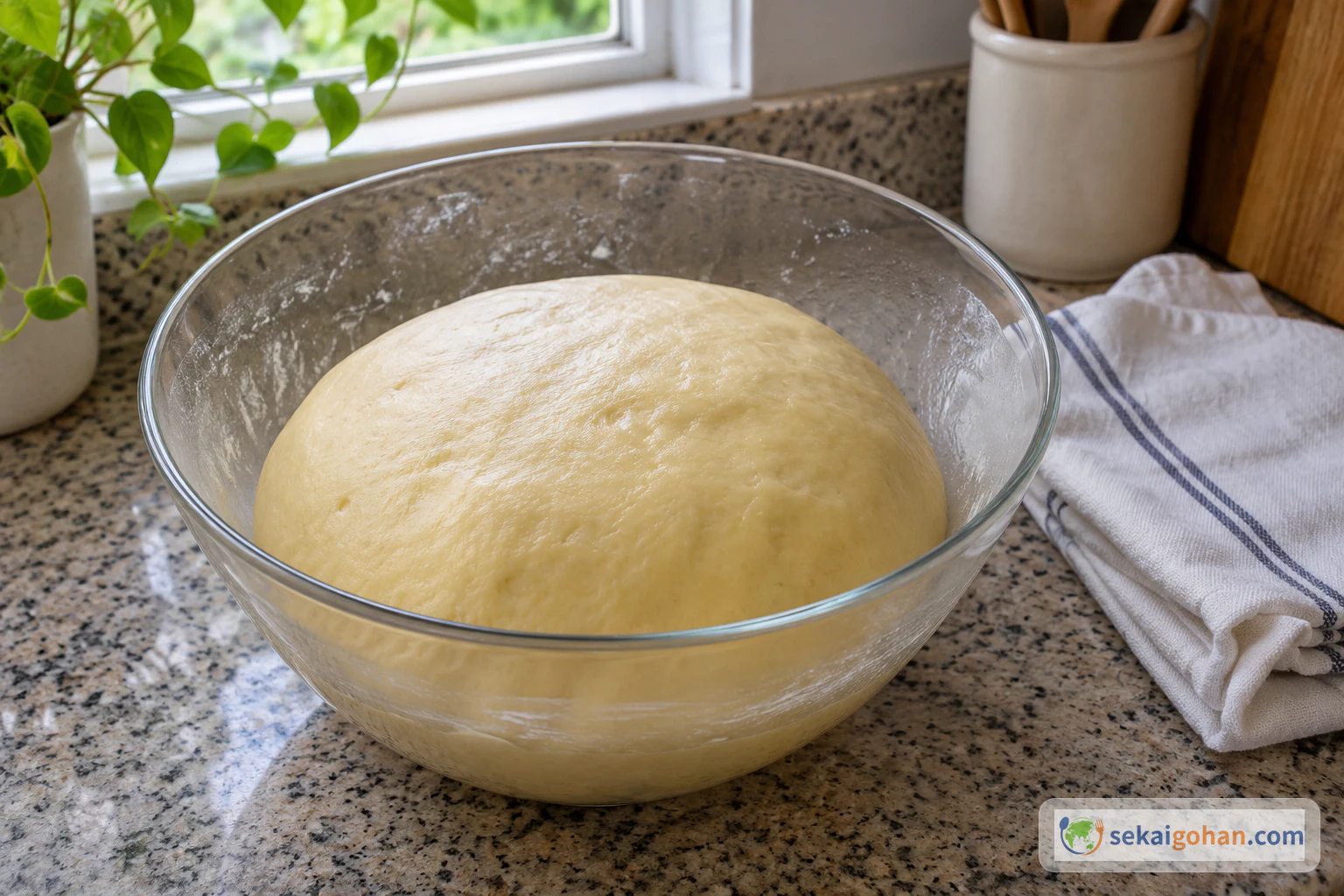
| The dough hasn't risen much at the 1-hour mark | Whether it has roughly doubled | Give it more time somewhere warm; go by the volume, not just the clock |
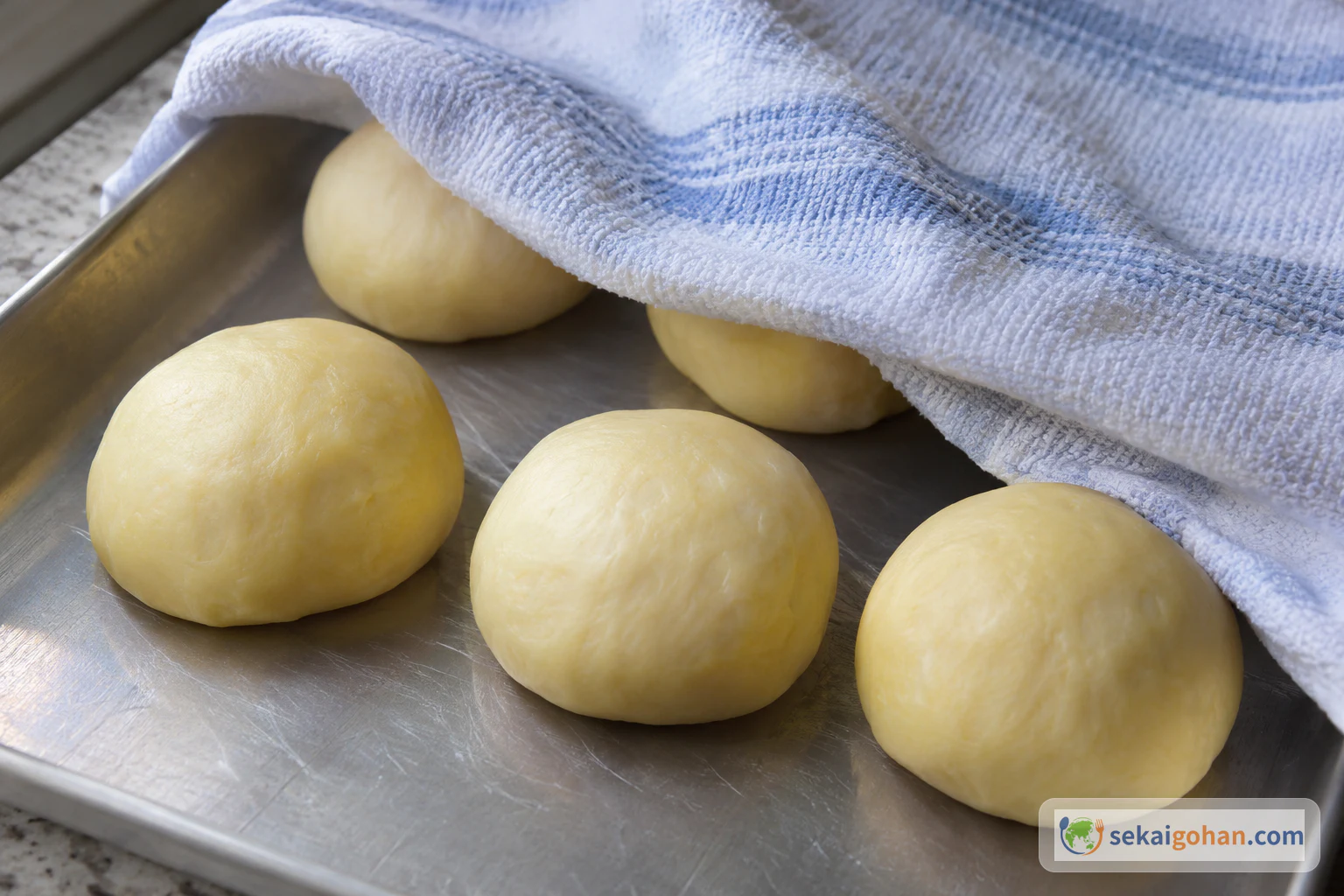
| The surface of the dough balls dries out | Whether they were covered during the rest | Cover the dough with a clean damp cloth or plastic wrap at every resting stage |
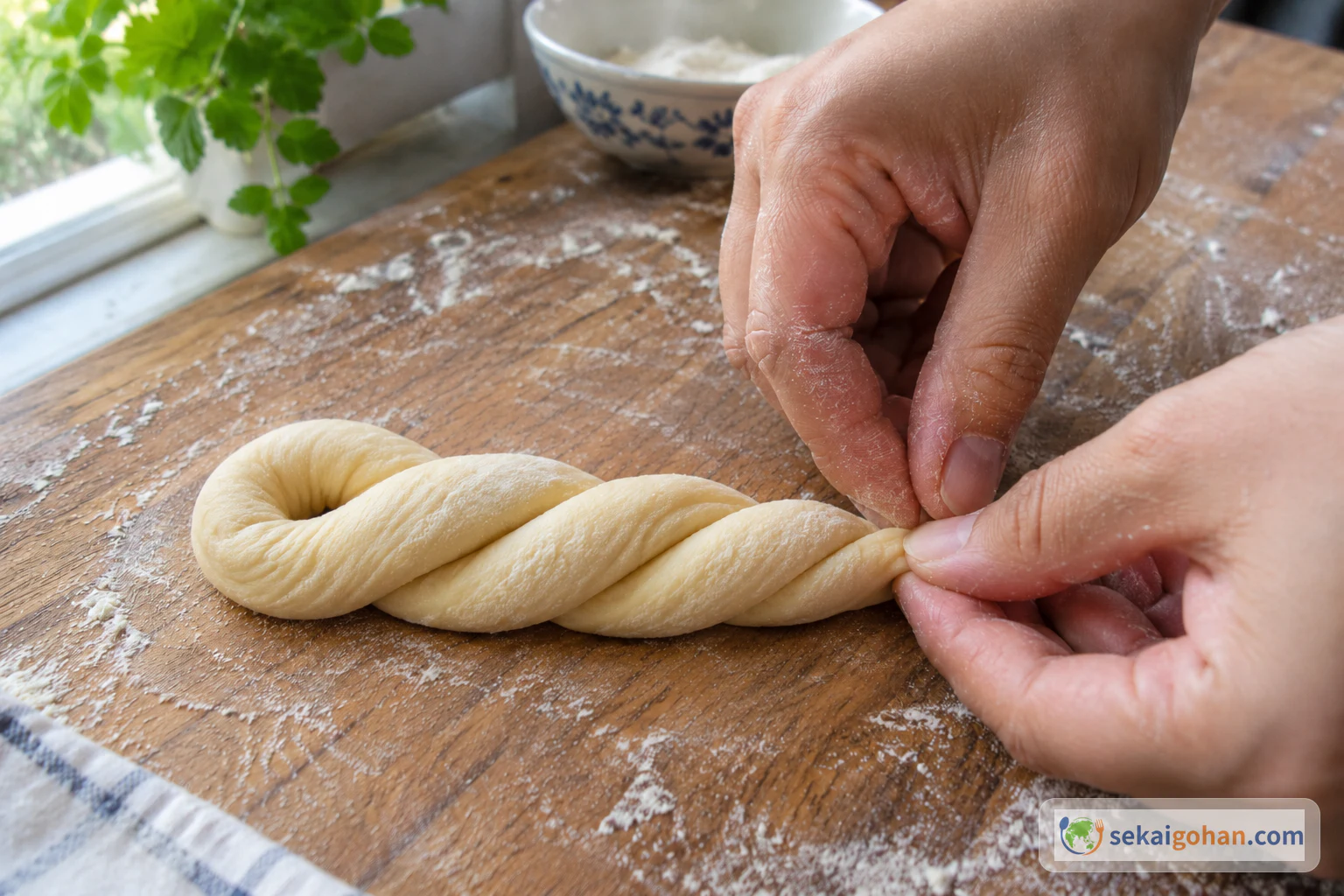
| The twists unwind | Whether the ends were sealed and the rope twisted enough | Add 1–2 more twists when shaping, and pinch the ends firmly closed |
| The twists touch or stick together in the pot | How many went in at once | Fry fewer per batch so each one floats freely |
| The colour changes from batch to batch | The oil temperature | Check the thermometer and bring the oil back to 350°F (170–175°C) before each batch |
| The coating won't stick | How long the twists cooled | Drain them briefly, then coat them while they're still warm |
Serving and Coating Variations
Serve kkwabaegi with a glass of milk. The base recipe uses cinnamon, but you can leave it out for a plain sugar coating. You'll set out 4 oz (110 g) of coating on the plate. Use as much or as little of it as you like.
Frequently Asked Questions
What temperature should the oil be?
Fry at 350°F (170–175°C), in oil 4 inches (5–10 cm) deep. A thermometer helps you keep the oil in that range from batch to batch.
How long does the whole recipe take?
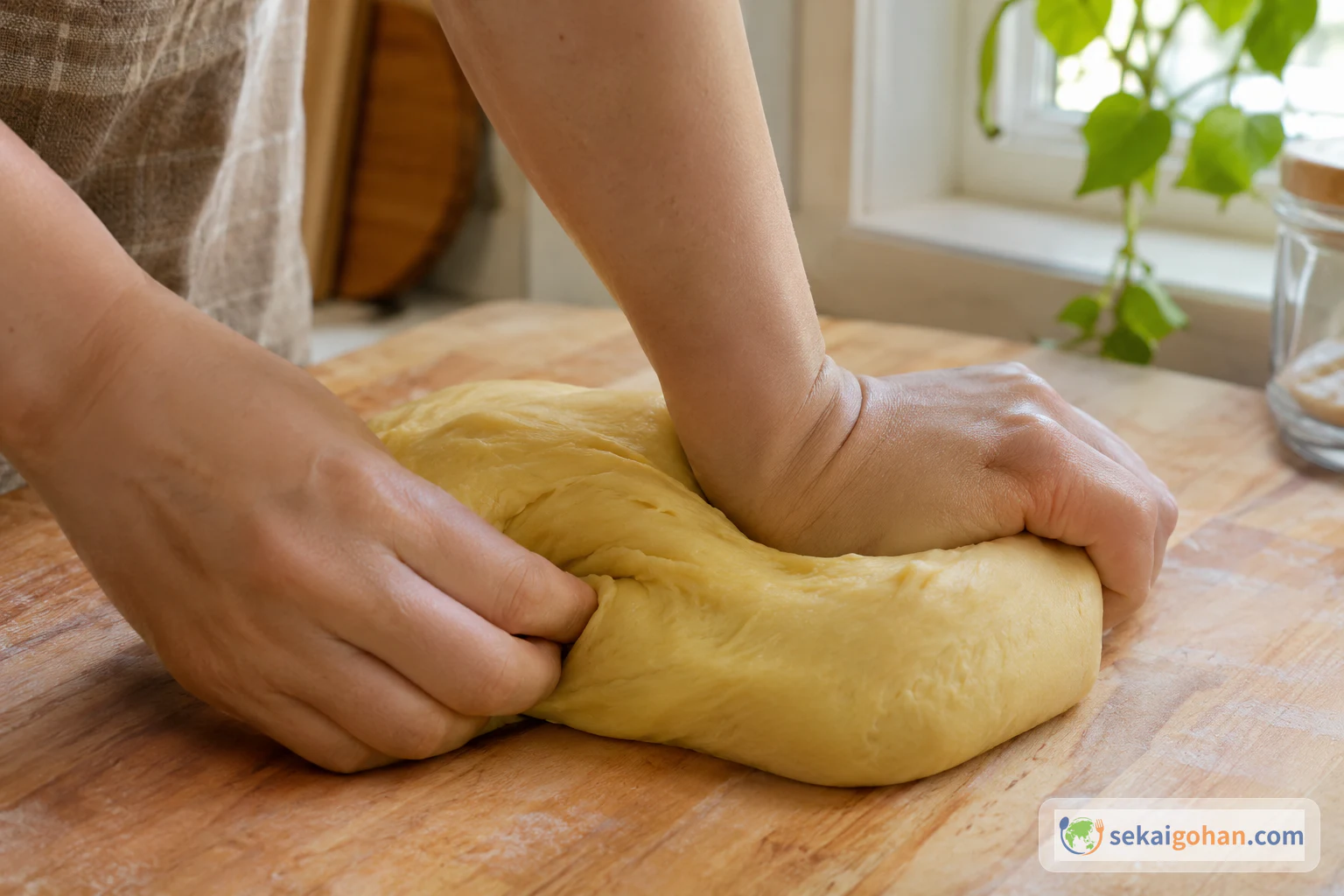
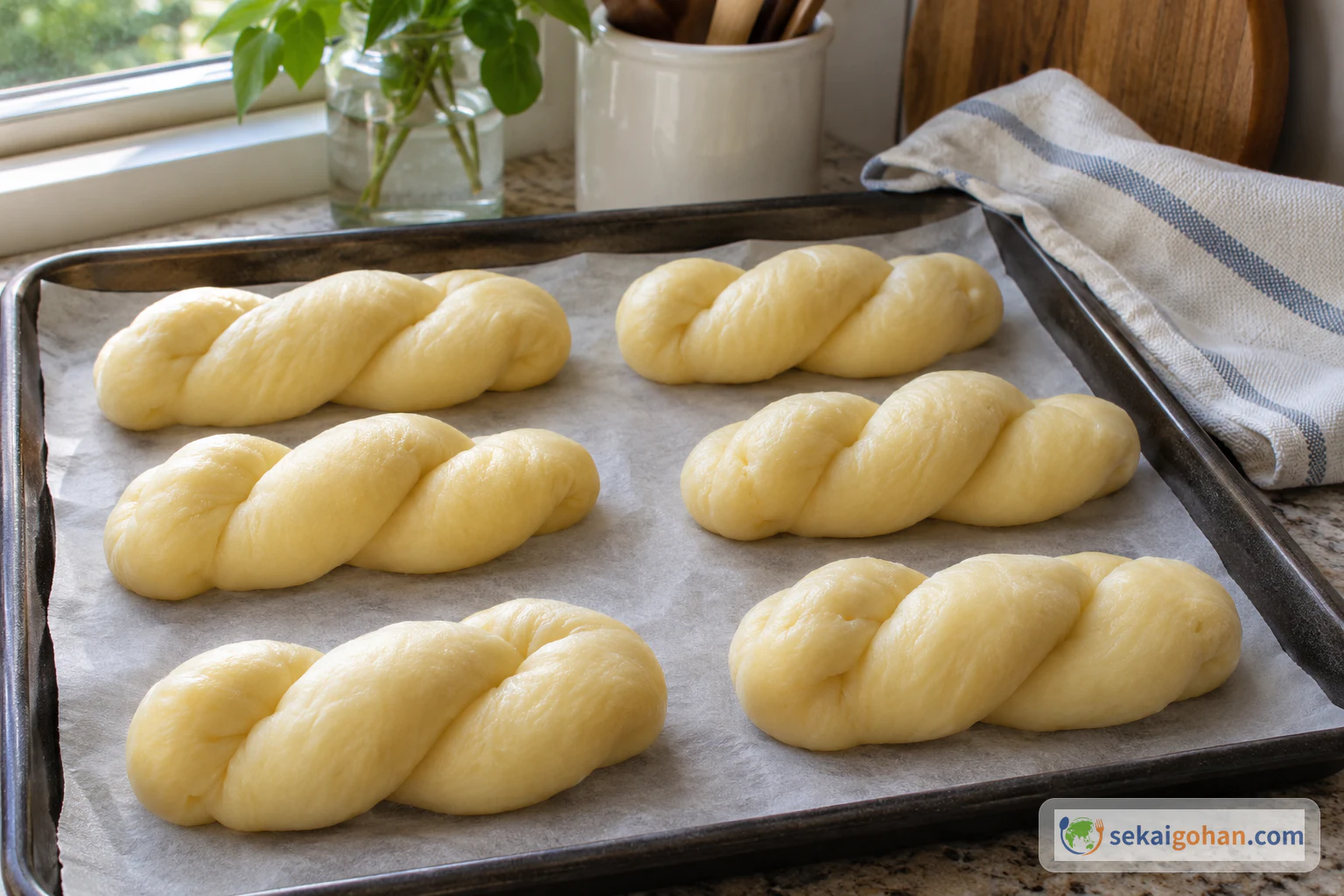
Knead for about 10–15 minutes, then let the dough rise for about 1 hour, until roughly doubled. After dividing, rest it for 15–20 minutes. The shaped twists get a final proof of about 40 minutes, again until roughly doubled. Frying time depends on how many batches you need.
Can I make kkwabaegi ahead or store leftovers?
They're best eaten fresh, so coat them while warm and serve right away. Leftovers can be frozen.
Is a golden colour enough to tell they're done?
Colour is your cue, but make sure each twist fries fully on both sides and keep the oil at 350°F (170–175°C). Never taste the raw dough.