Hong Kong Egg Tarts (蛋撻) with Flaky Rough-Puff Pastry

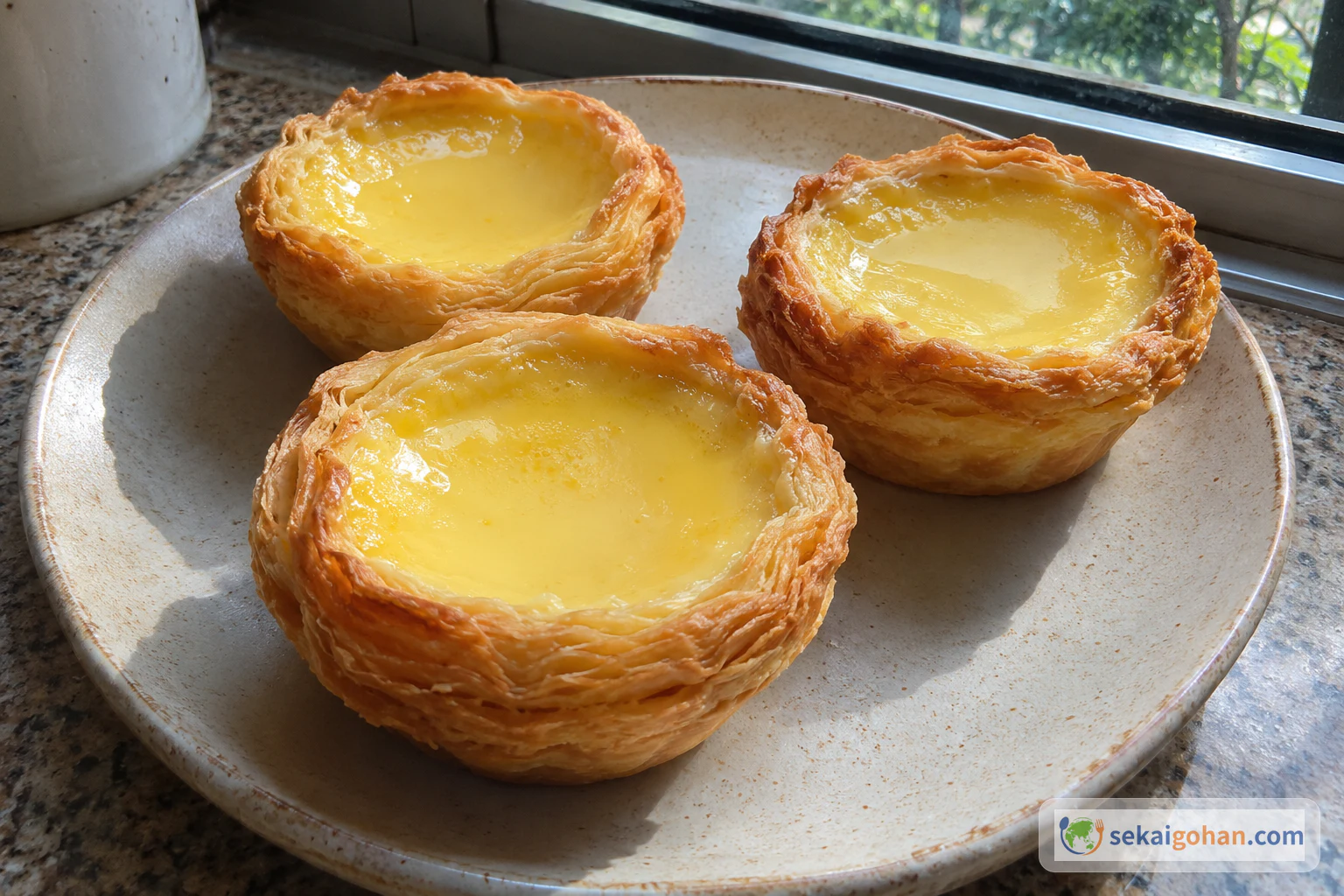
Finished Hong Kong egg tarts on a plate, with pale, smooth custard and layered pastry and no scorched spots
Serves
15 tarts
Cuisine
Hong Kong

How to make Hong Kong egg tarts (蛋撻) with a buttery rough-puff crust and a smooth, pale evaporated-milk custard. This home version makes 15 tarts in 3-inch molds and walks through every fold, the rested custard, the two-temperature bake on a baking steel or stone, and serving warm. It also covers fixes and how this flaky style differs from other Hong Kong crusts and from Portuguese custard tarts.

Cooking flow

Cooking steps

STEP11 / 12

Press the butter into the flour

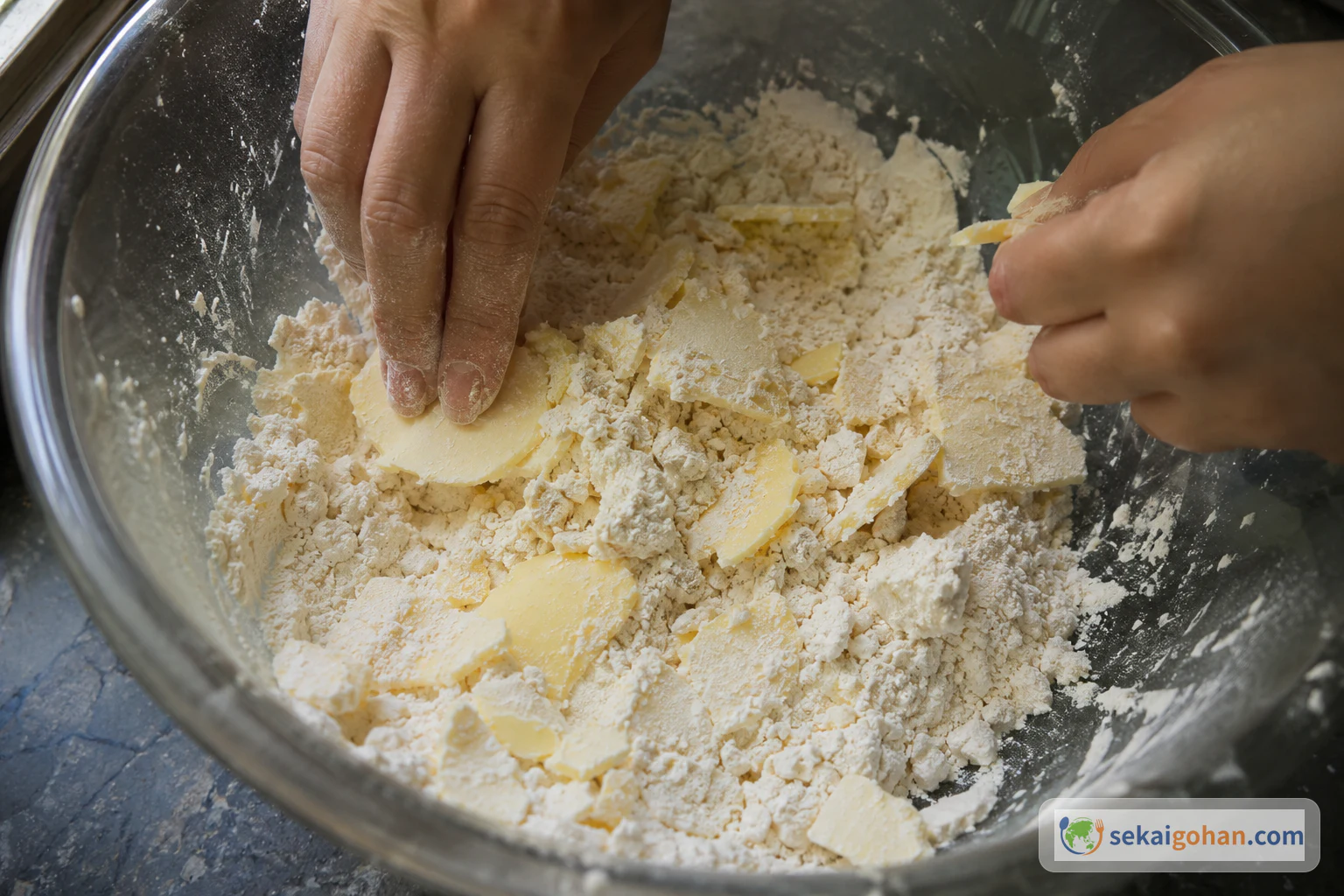
Fingers pressing cold butter cubes into flat flakes coated in flour
Flatten the cold butter into flakes and coat them in flour

In a large bowl, whisk together 2 cups (240 g) all-purpose flour and 1/2 teaspoon table salt. Add the 12 tablespoons (6 oz / 170 g) cold butter cubes. Press each cube flat between your fingers into a broad flake, tossing the flakes so they are coated in flour.

STEP22 / 12

Bring the dough together

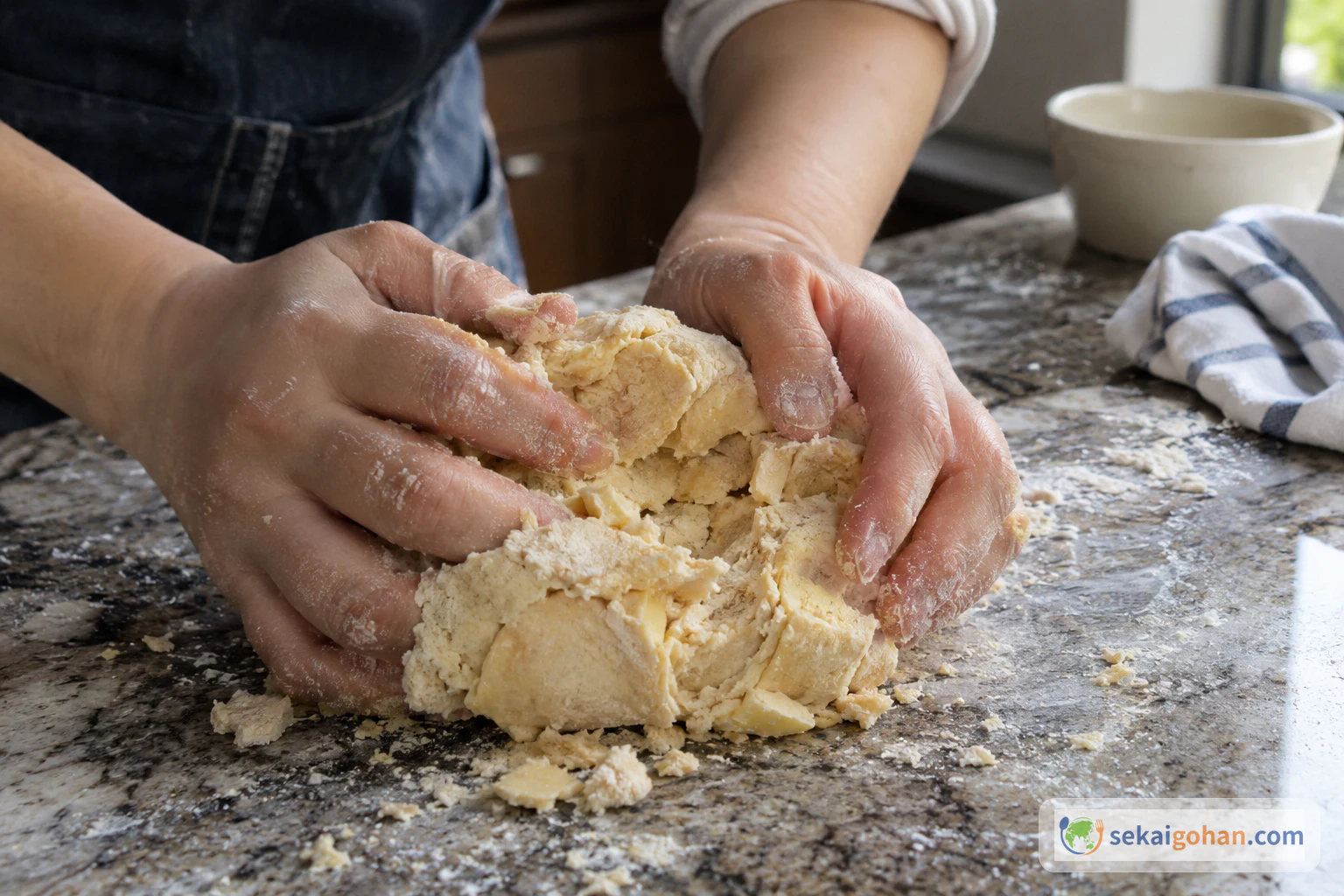
Hands gently gathering and pressing a coarse pastry dough on a work surface
Knead only until the dough holds; add water by the 1/2 teaspoon only if dry flour remains

In a separate container, stir together 1/4 cup (57 g) cold heavy cream and 1/4 cup plus 2 tablespoons (85 g) cold water. Pour about half over the flour and butter and toss; the mixture will still be partly dry. Add the rest and toss again until the dough looks shaggy. Knead gently, just until it comes together, adding water 1/2 teaspoon at a time only if dry flour remains. Butter pieces should still be visible.

STEP33 / 12

Roll, fold and turn five times

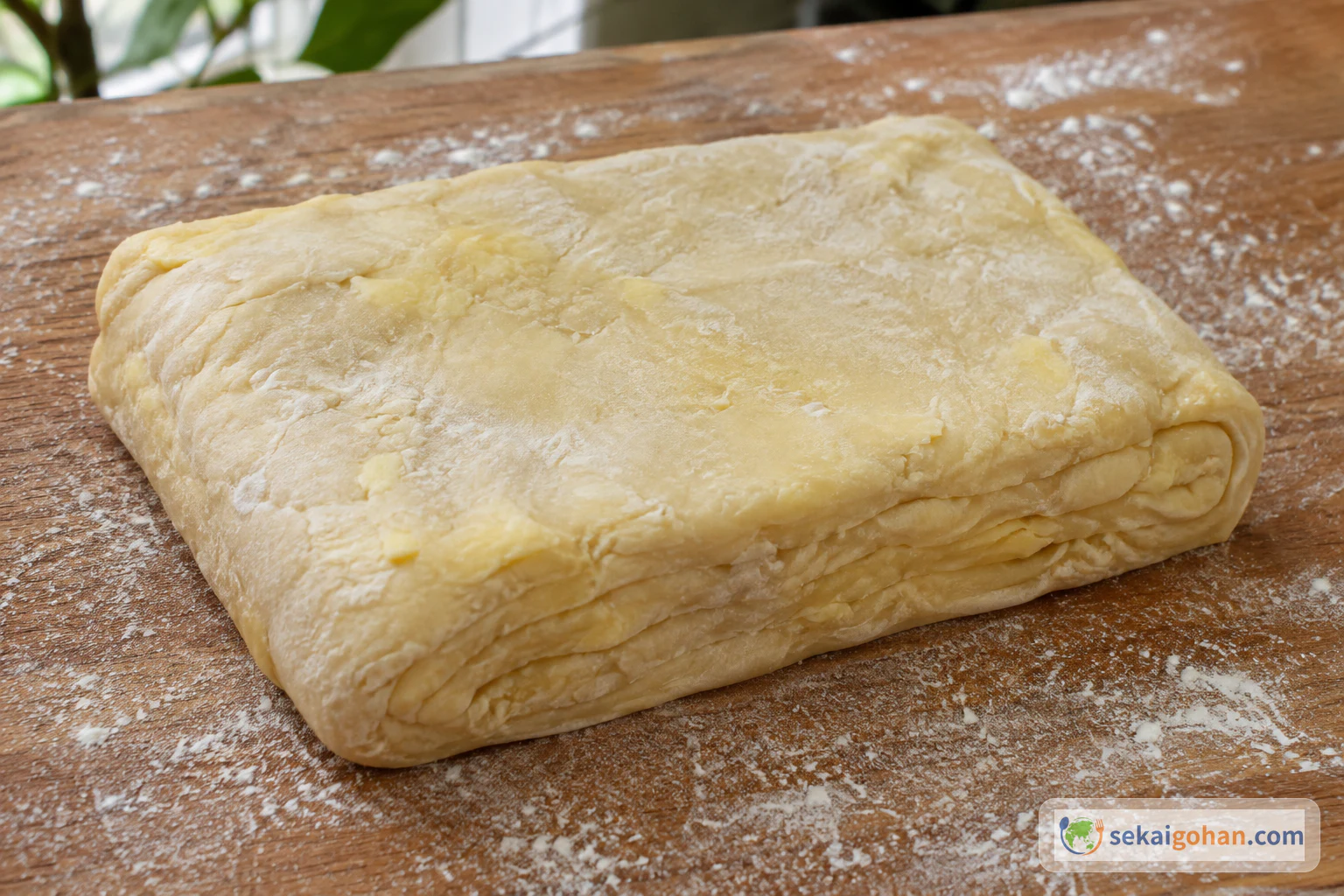
A finished rectangular block of rough-puff pastry with folded layers at its edge
The dough after all five roll-fold-turn rounds

Lightly flour the work surface. Gather the dough into a rough rectangle and roll it to 8 by 13 inches, about 1/2 inch thick. Fold it in thirds like a business letter, one short end toward the middle and then the other end over it, and give it a quarter turn. Roll, fold and turn again until you have done it five times in all, dusting with flour as needed so the dough doesn't stick. The finished block shows folded layers at its edge.

STEP44 / 12

Divide and chill the pastry

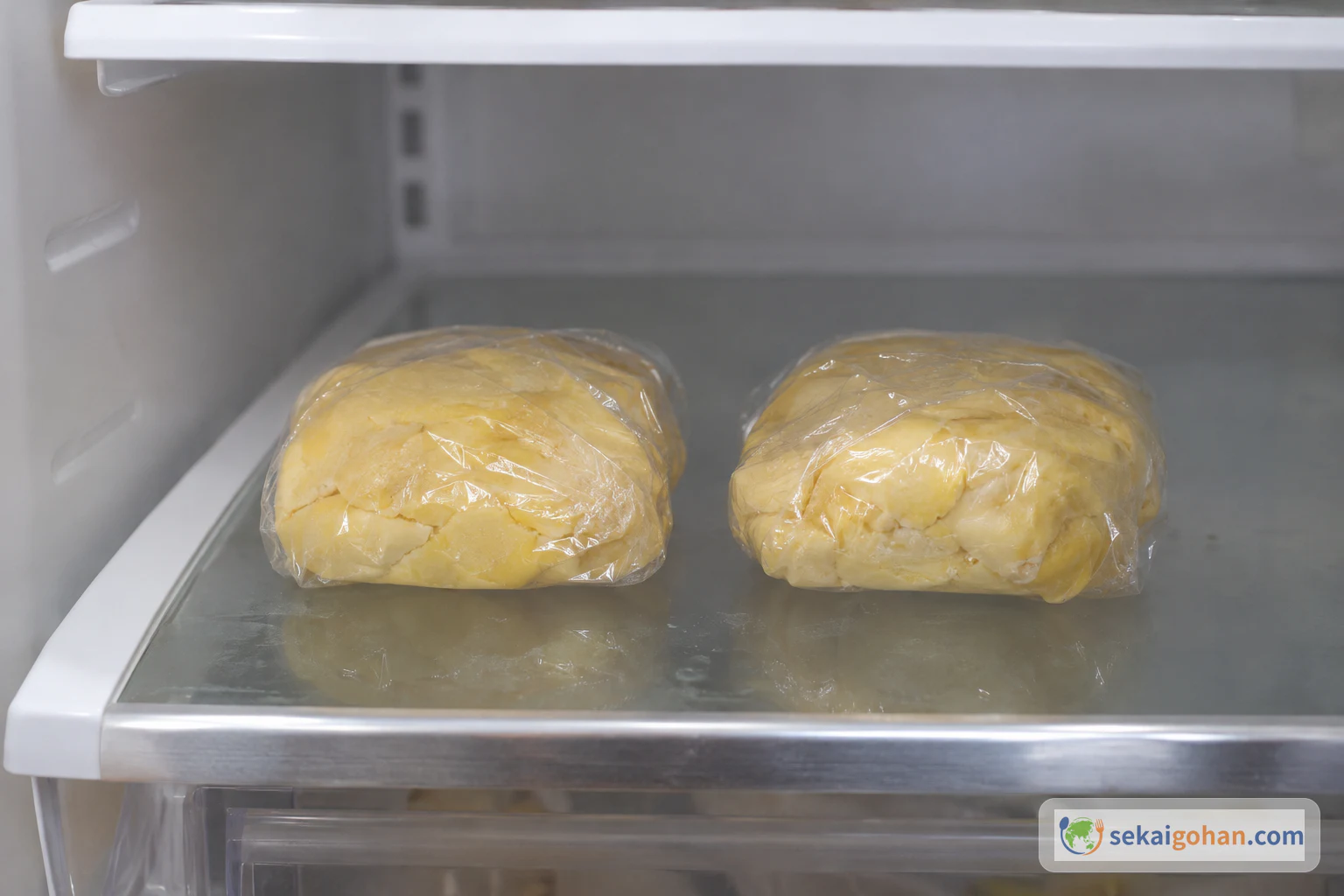
Two wrapped pieces of pastry resting on a refrigerator shelf
Chill the wrapped dough for at least 1 hour and up to 24 hours

Cut the dough in half and wrap each piece in plastic wrap. Refrigerate the wrapped dough for at least 1 hour and up to 24 hours.

STEP55 / 12

Make the custard base

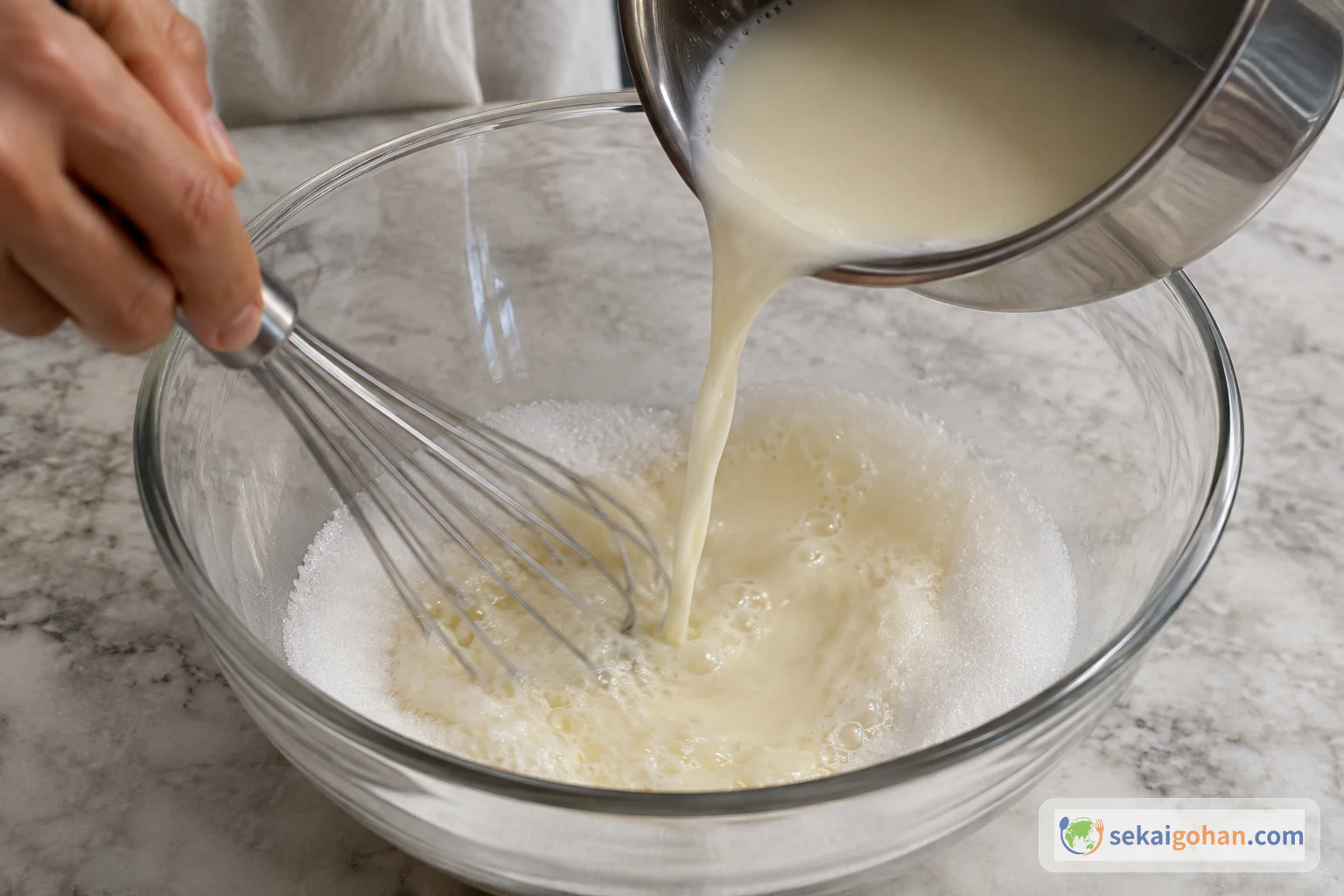
Warm milk being poured from a saucepan into a bowl of sugar and salt while whisking
Whisk the warm milk into the sugar and salt

In a bowl, whisk together 1/3 cup (66 g) granulated sugar and 1/4 teaspoon table salt. In a small saucepan, warm 3/4 cup (170 g) evaporated milk and 1/2 cup (113 g) water to about 90°F (about 32°C). This just takes the chill off so the liquid mixes easily, so do not heat it further. Pour the warm milk mixture into the sugar and salt and whisk to combine.

STEP66 / 12

Add the eggs, strain and rest the custard

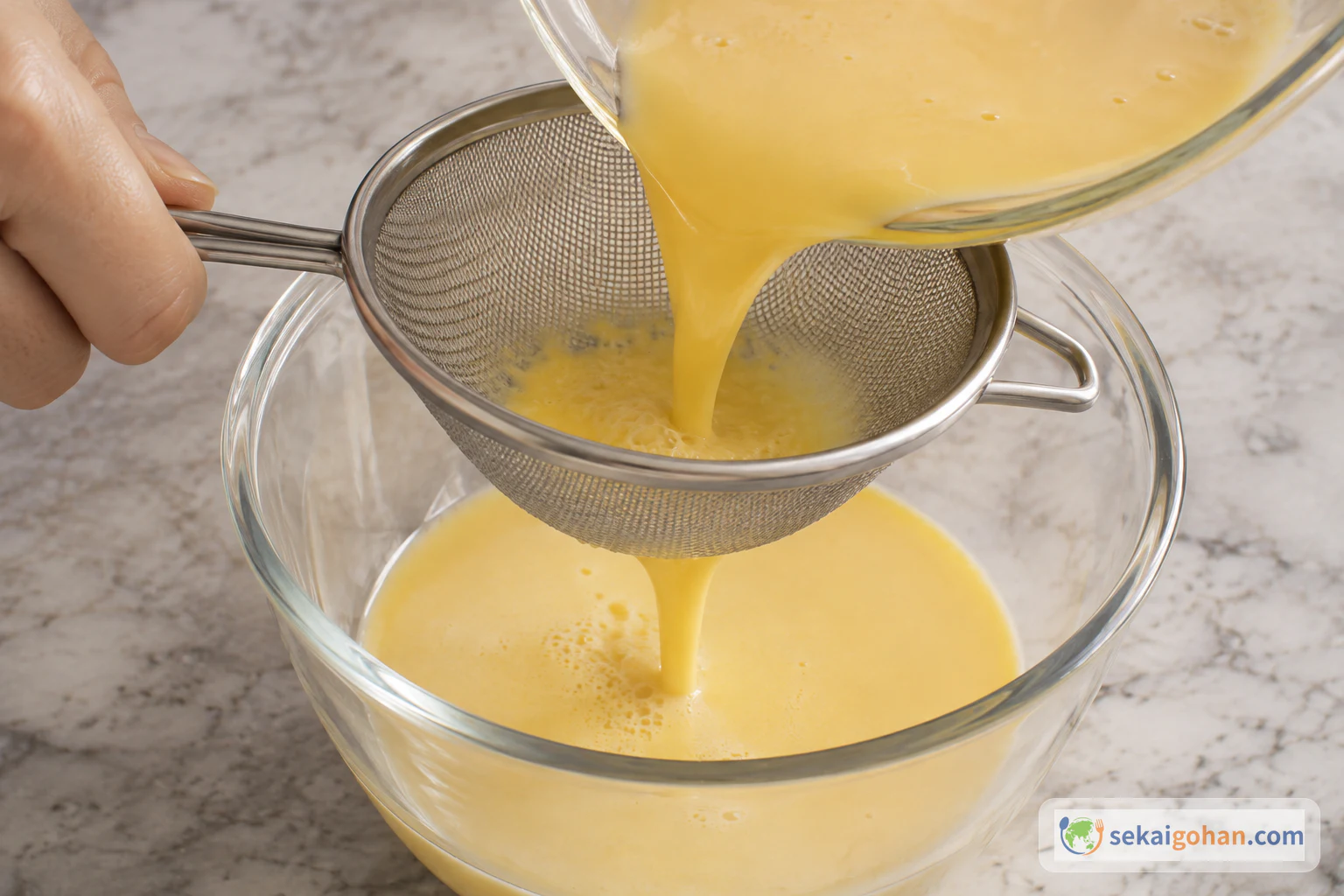
Yellow custard being poured through a fine-mesh strainer into a bowl
Strain the custard for a smooth filling

Add 3 large eggs and 1 large egg yolk and whisk until blended into the milk mixture. Pour the custard through a fine-mesh strainer into a clean bowl. Cover the bowl and let the custard rest for 30 minutes to 2 hours.

STEP77 / 12

Roll and cut the pastry

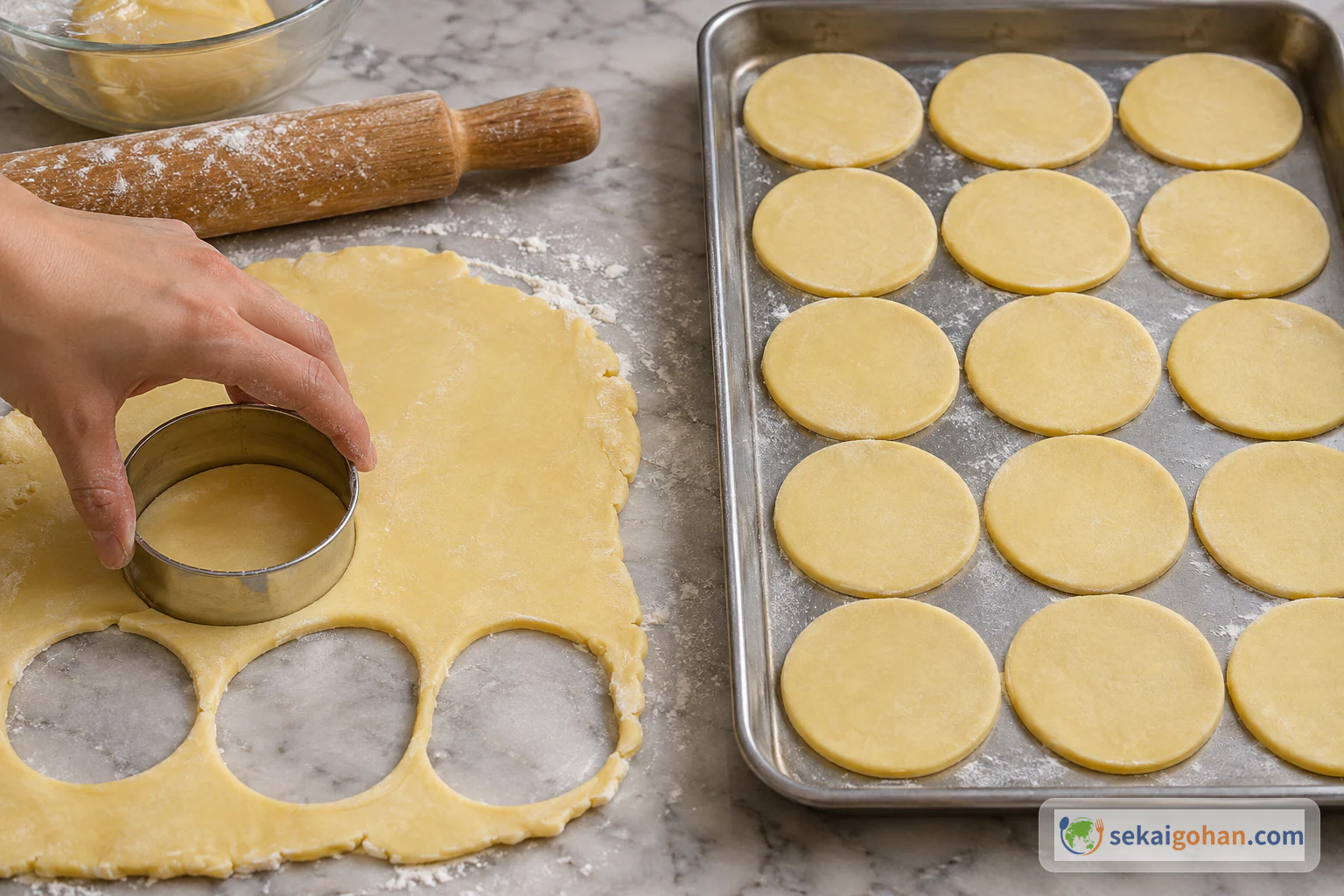
A metal round cutter pressing into thin pastry, with cut circles on a tray
Cut 15 circles with a 3 3/4-inch cutter

Unwrap the chilled dough. On a lightly floured surface, roll it 1/8 to 1/16 inch thick and about 12 by 12 inches. Use a 3 3/4-inch round cutter to cut 15 circles in total. If you want to bake the scraps (see the optional section below), set them aside.

STEP88 / 12

Line the molds

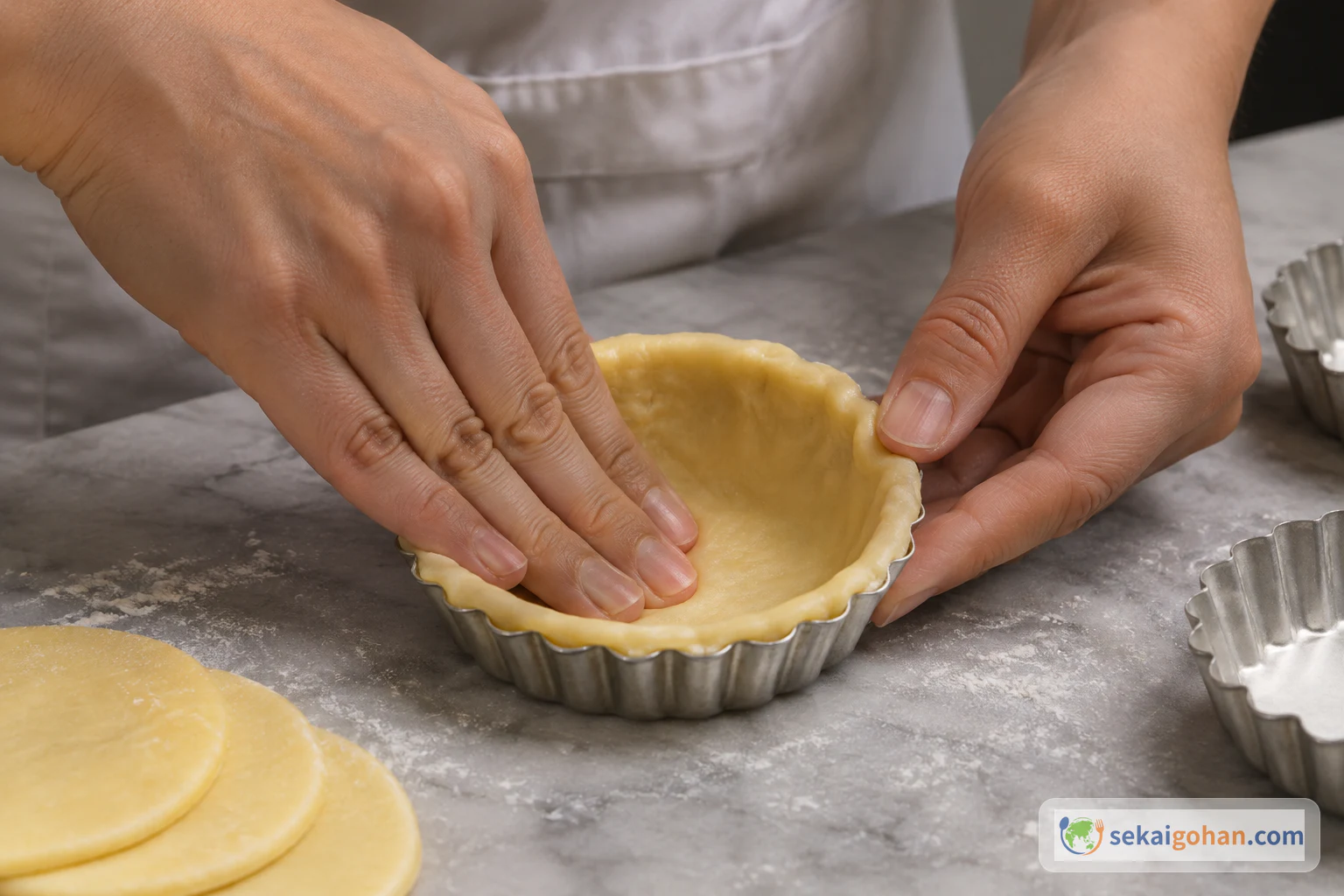
Fingertips pressing a pastry circle into the bottom and fluted sides of a tart mold
Fit the pastry into the mold and press out air pockets

Coat 3-inch tart molds with nonstick spray. Press a pastry circle into each mold, fitting it into the bottom and up the sides, and push out any air pockets. Prick the bottom of each shell a few times with a fork, then refrigerate the lined molds for 15 minutes.

STEP99 / 12

Preheat the oven and freeze the shells

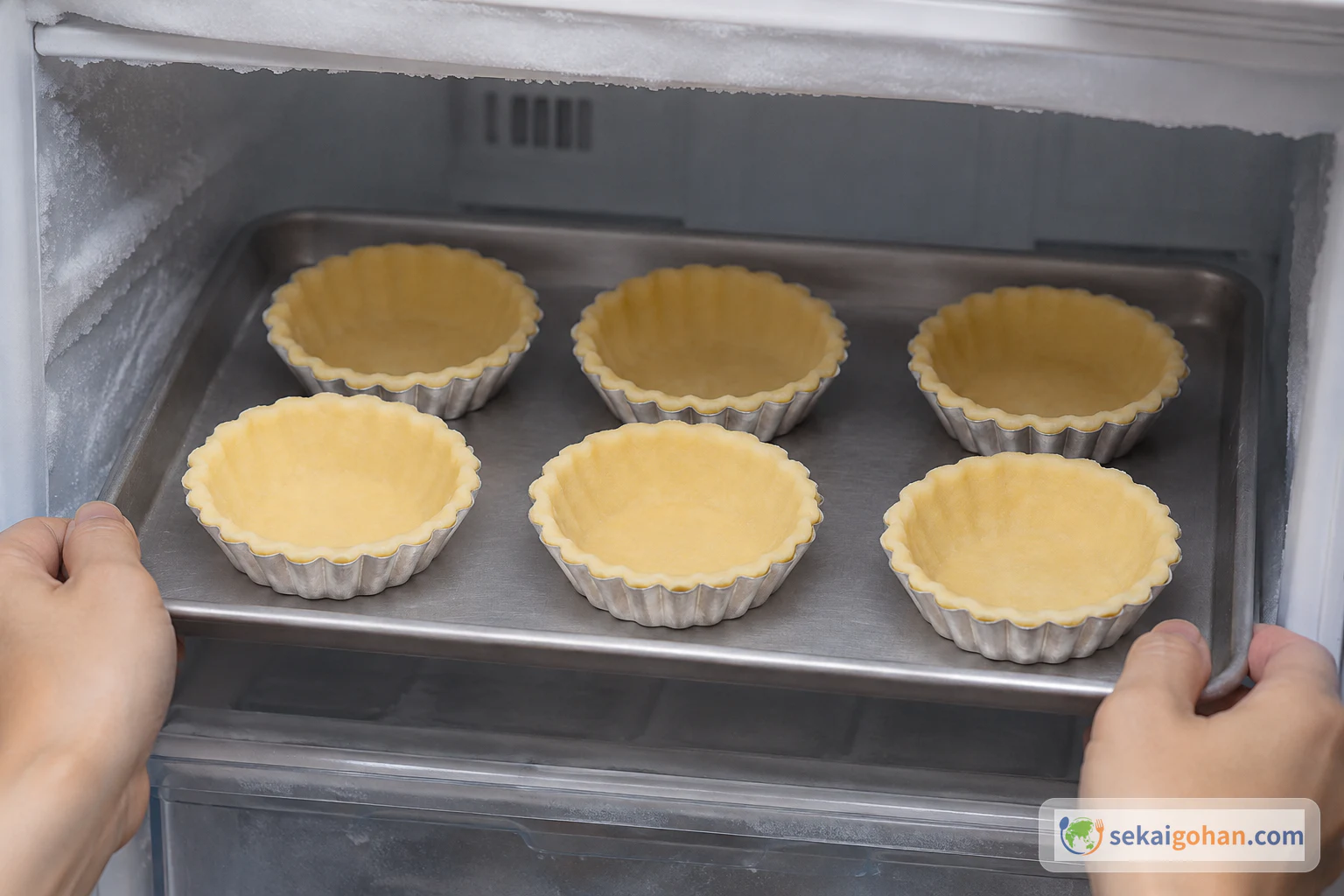
A tray of unfilled pastry shells in fluted molds going into a freezer
Freeze the trimmed shells for 15 minutes

Place a baking steel or baking stone on the lowest oven rack and preheat the oven to 400°F (about 204°C). Trim off any pastry hanging over the rims of the molds. Freeze the trimmed shells for 15 minutes.

STEP1010 / 12

Fill the shells

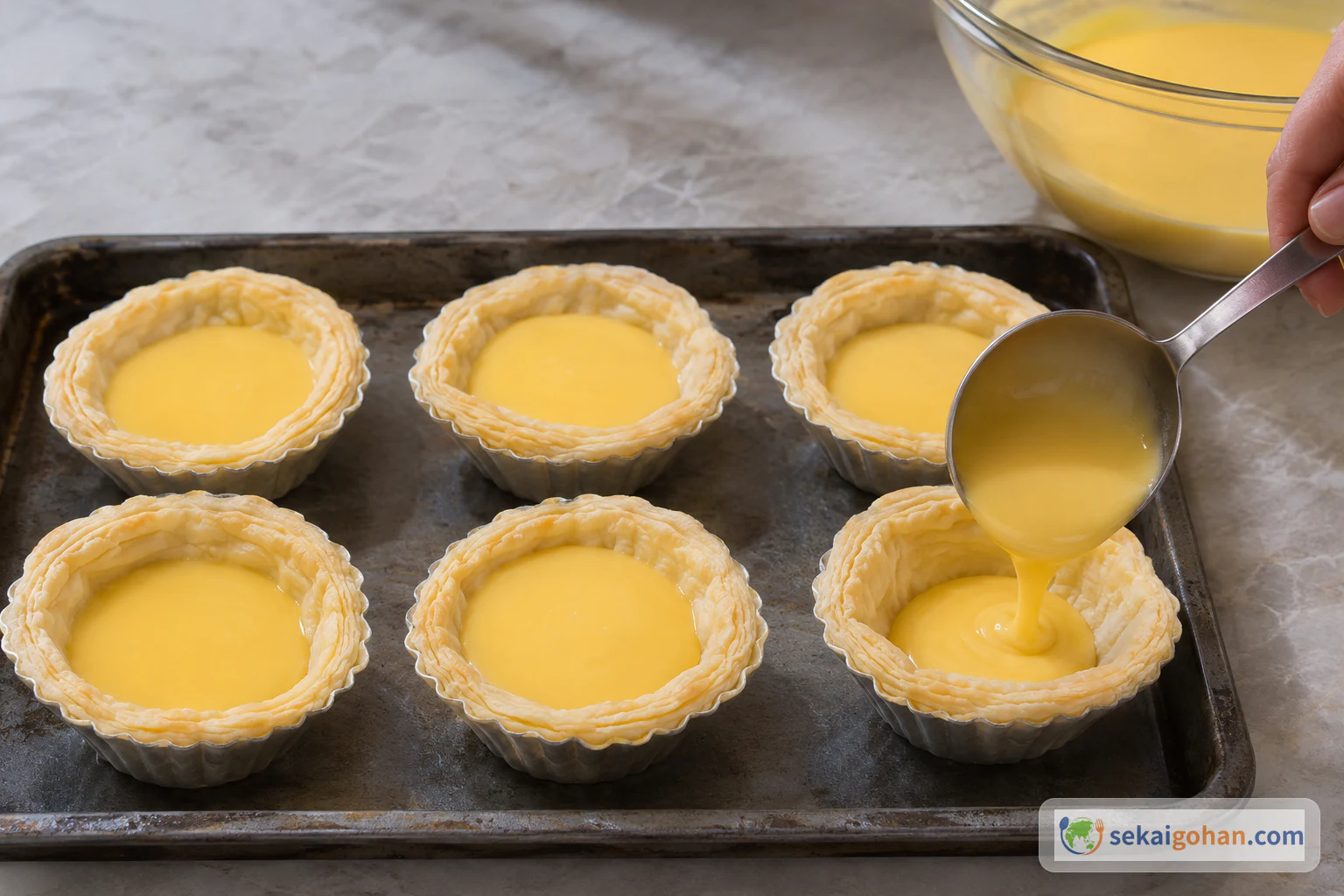
Pale custard being ladled into unbaked pastry shells on a baking sheet
Fill each shell with 2 tablespoons of custard

Look at the rested custard, and if any lumps have formed, strain it again. Set the molds on a baking sheet and pour 2 tablespoons of custard into each shell.

STEP1111 / 12

Bake until the custard just sets

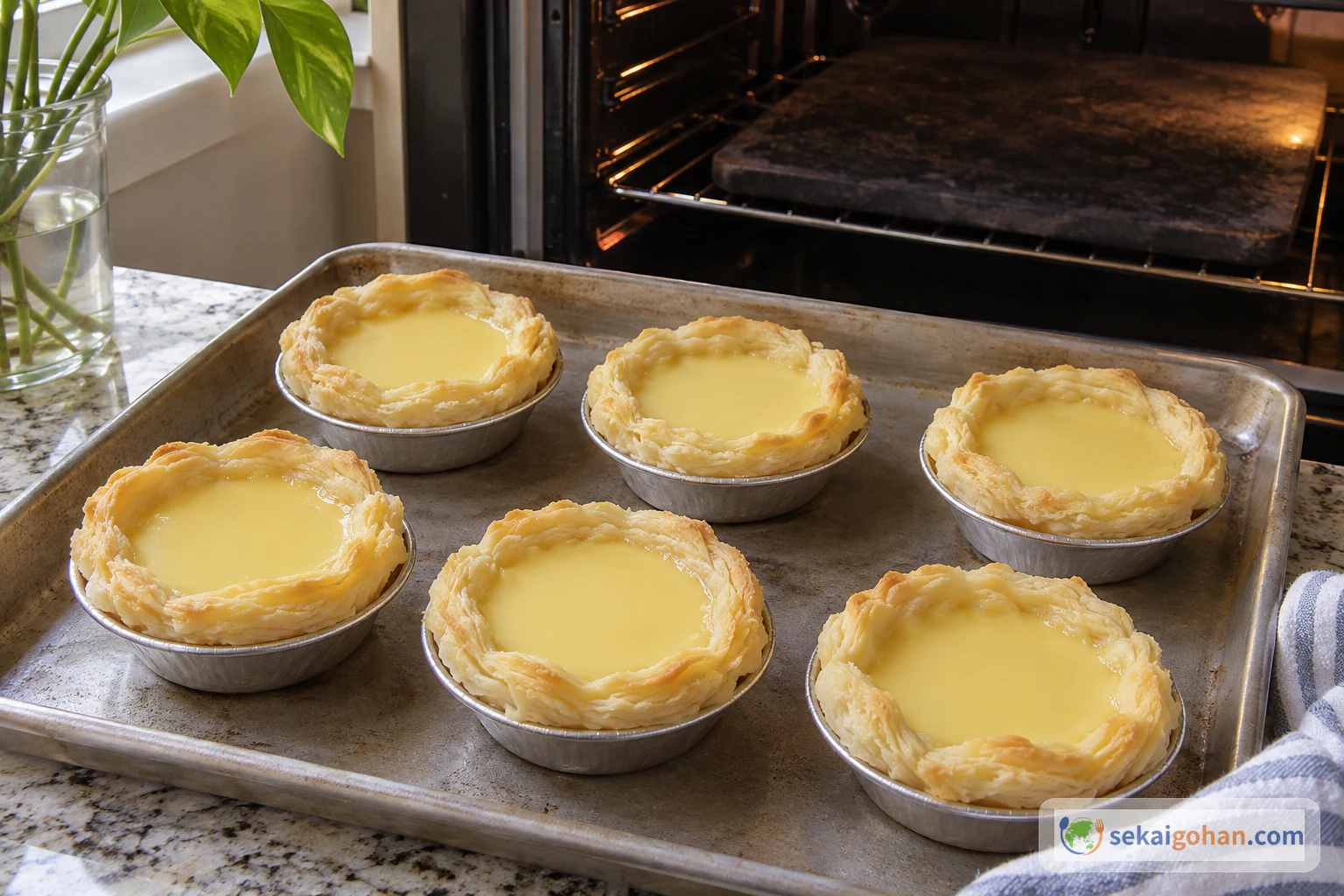
Baked egg tarts in their molds with smooth, set pale custard and lightly golden rims
Done: custard just set, edges beginning to color

Place the baking sheet on the baking steel or stone and bake at 400°F (about 204°C) for 10 minutes. Reduce the oven to 350°F (about 177°C) and bake for 10 minutes more. The tarts are done when the custard has just set and the pastry edges are beginning to color. Total baking time is 20 to 25 minutes; if the custard has not set at 20 minutes, keep baking at 350°F within that range and check again.

STEP1212 / 12

Cool, unmold and serve

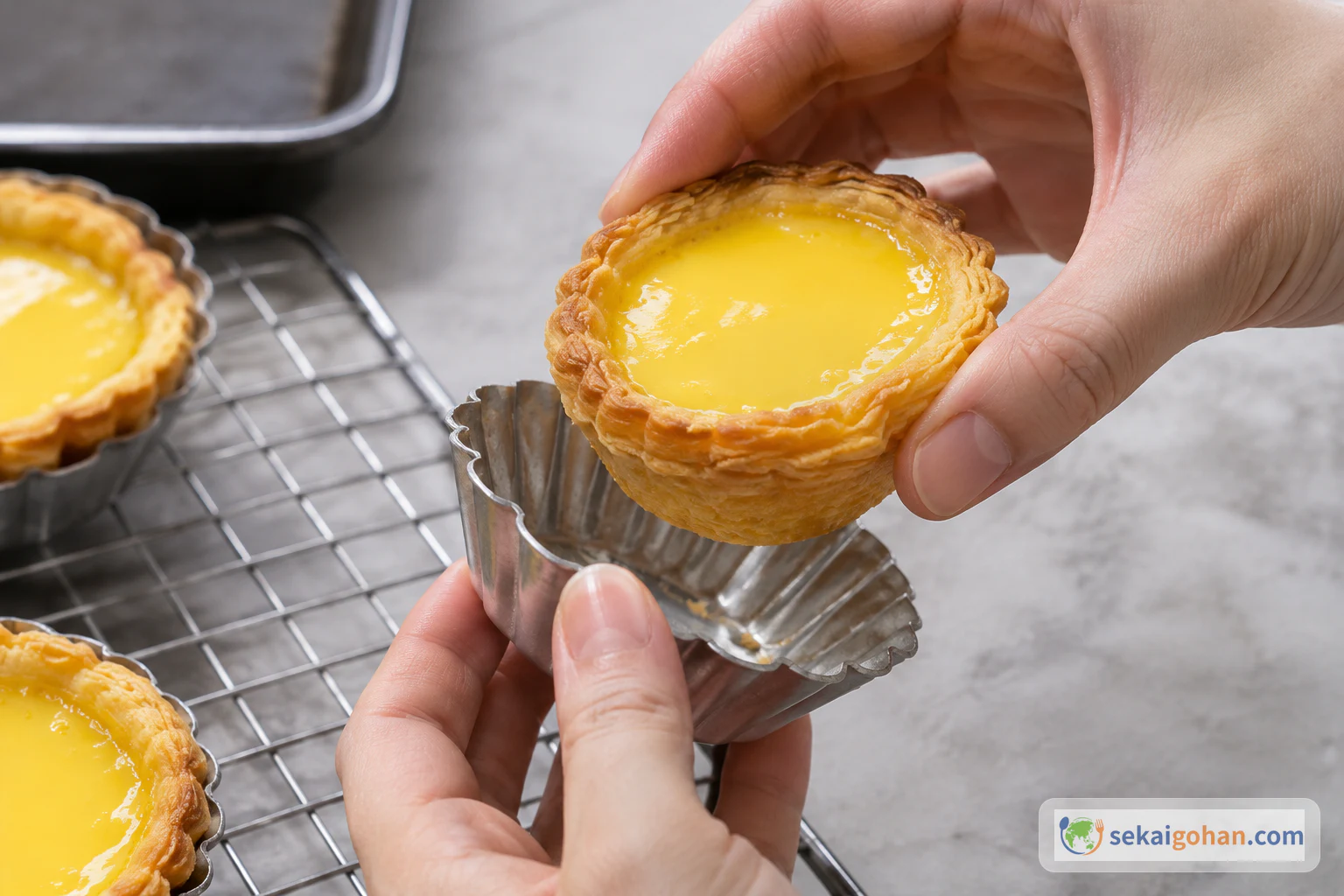
Hands gently lifting an egg tart out of its fluted mold
Lift the tarts out gently after the 5-minute cool

Let the tarts cool in their molds for 5 minutes. Gently lift each tart out of its mold, easing out any that stick with a small offset spatula or a chopstick. Serve the tarts warm.

0 / 0
Ingredients

Ingredients

1 / 1

Ingredients

Ingredient Amount Role
All-purpose flour 2 cups (240 g) Pastry: the base of the rough-puff dough
Table salt (for the pastry) 1/2 teaspoon Pastry: seasons the dough
Unsalted butter, cold, cut into 1/2-inch cubes 12 tablespoons (170 g) Pastry: pressed into flakes that become the layers
Heavy cream, cold 1/4 cup (57 g) Pastry: part of the cold liquid that binds the dough
Water, cold (for the pastry) 1/4 cup plus 2 tablespoons (85 g) Pastry: the rest of the cold liquid
Granulated sugar 1/3 cup (66 g) Custard: sweetness
Table salt (for the custard) 1/4 teaspoon Custard: seasons the filling
Evaporated milk 3/4 cup (170 g) Custard: the milky base
Water (for the custard) 1/2 cup (113 g) Custard: thins the evaporated milk
Large eggs 3 Custard: sets the filling
Large egg yolk 1 Custard: adds richness and color

Keep the butter, cream and pastry water cold until you use them. Have a little extra water ready for kneading, and a little flour for dusting the work surface.

0 / 0

Hong Kong egg tarts come out of the oven with a flaky, layered shell and a pale yellow custard that is smooth and only just set. They're a local favorite in the city's bakeries and in its cha chaan tengs, the casual cafés where people stop for something sweet any day of the week. This version uses a butter rough-puff pastry folded five times to build its layers, and a custard of evaporated milk, whole eggs and an extra yolk, rested before baking. It makes 15 tarts in 3-inch molds.

Hong Kong Egg Tarts and Their Crusts

In Hong Kong, the egg tart is an everyday treat rather than a special-occasion dessert, and it's one of the traditional sweets visitors are told to try. There's more than one kind. Some have a crumbly, cookie-like crust; others have a flaky crust built from many thin layers.

This is a flaky-crust Hong Kong egg tart made with butter rough puff. Classic flaky crusts layer a water dough and an oil dough, and lard has a place in that method. This version gets its layers by a home-friendly route instead: cold butter is pressed into flakes, then the dough is rolled, folded in thirds, and folded again.

Don't confuse it with the Portuguese pastel de nata, also familiar from Macau, which is known for a custard top with dark caramelized spots. A Hong Kong tart aims for the opposite. It comes out of the oven while the custard is still pale and smooth, just as it sets.

Ingredients: 15 Tarts, Pastry and Custard
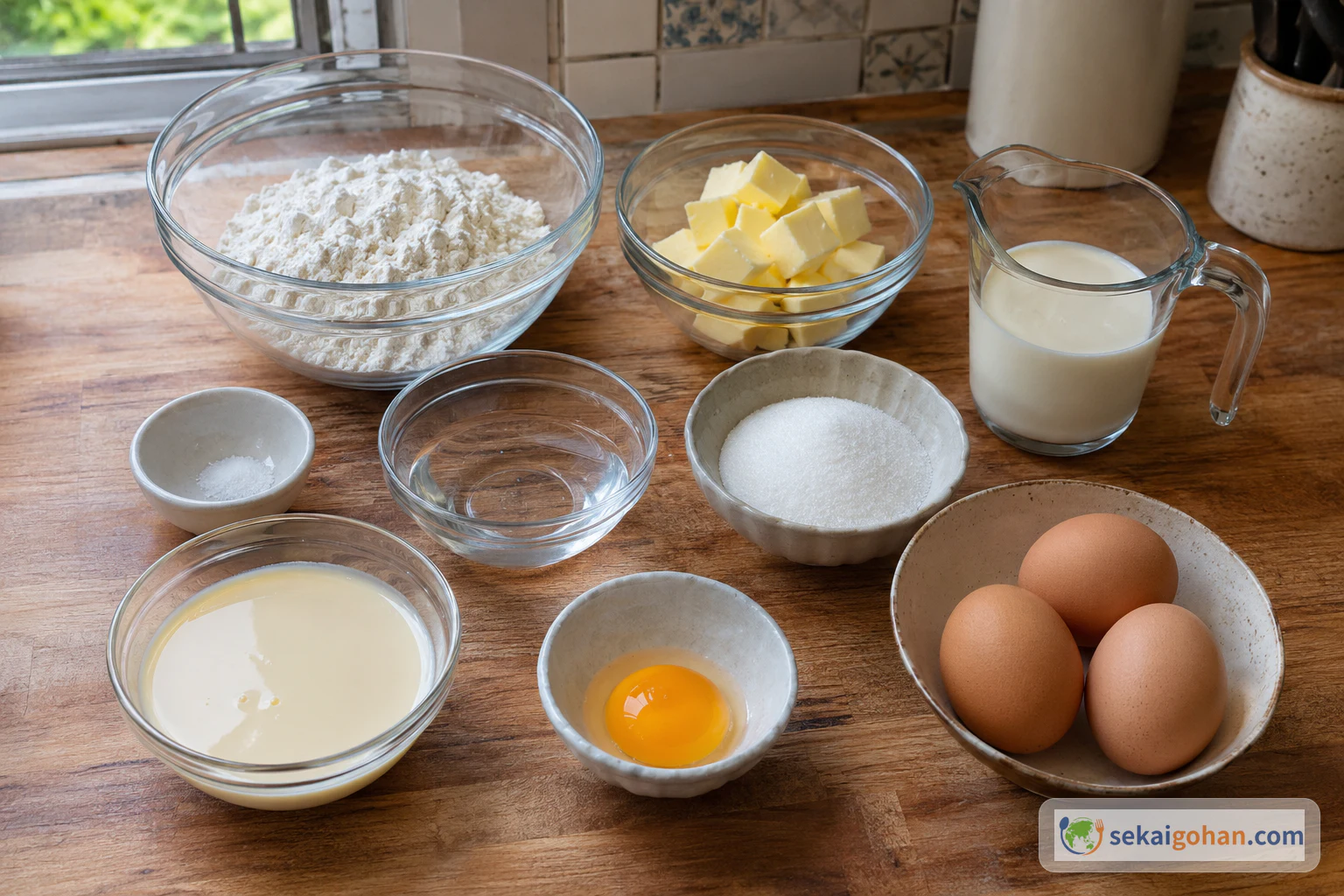
Ingredients for Hong Kong egg tarts: all-purpose flour, table salt, cold unsalted butter, heavy cream, water, granulated sugar, evaporated milk, three whole eggs and one egg yolk
Pastry and custard each have their own salt and water, so keep them apart

Makes 15 tarts in 3-inch molds.

Choosing Flour, Milk and Butter for Egg Tarts

Use all-purpose flour and evaporated milk. Swapping in regular milk or sweetened condensed milk, or a different flour, changes the formula and gives you a different custard. Use unsalted butter and measure the pastry salt separately.

The pastry depends on cold fat and cold liquid. Cut the butter into 1/2-inch cubes before you start, and keep it cold until it goes into the bowl.

Equipment

  • Large mixing bowl and a whisk
  • Separate small container for the cream and water
  • Rolling pin
  • Knife or bench scraper for dividing the dough
  • Plastic wrap
  • Small saucepan and a thermometer for warming the milk
  • Fine-mesh strainer
  • Bowl and a cover for resting the custard
  • 3 3/4-inch round cutter
  • 3-inch tart molds, enough for 15 tarts
  • Fork
  • Small knife for trimming
  • Baking sheet
  • Baking steel or baking stone
  • Small offset spatula or a chopstick, if needed, for releasing tarts
  • For the optional reheat: a wire rack and a rimmed baking sheet

Method: Fold the Pastry, Rest the Custard, Bake in Two Stages

Raw flour and raw egg

Don't taste the raw pastry dough or the raw custard. Warming the evaporated milk to about 90°F only takes the chill off before the eggs go in; it does not cook the custard or make raw egg safe. The tarts are done when the custard has just set in the oven.

The pastry needs at least an hour in the refrigerator, so start with it and make the custard while it chills. The custard then rests while you roll, line and chill the shells.

Egg Tart Problems and Fixes

What you see What to do
Dry flour remains after kneading Add water 1/2 teaspoon at a time, just until the dough holds together
Lumps in the custard after resting Strain it again before filling the shells
Air pockets under the pastry in the molds Press them out when lining the molds, and dock the bases with a fork
Custard still liquid after 20 minutes Keep baking at 350°F and check again; total baking time is 20 to 25 minutes
A tart sticks in its mold After the 5-minute cool, ease it out with a small offset spatula or a chopstick
Custard with dark, caramelized spots That's the look of a Portuguese-style tart. Aim for a pale custard that has just set, with edges only beginning to color

Serving, Reheating and Pastry Scraps

Egg tarts are best warm, soon after unmolding. If you have leftovers, reheat them the next day: set the unmolded tarts on a wire rack over a rimmed baking sheet and warm them at 300°F for 8 to 10 minutes.
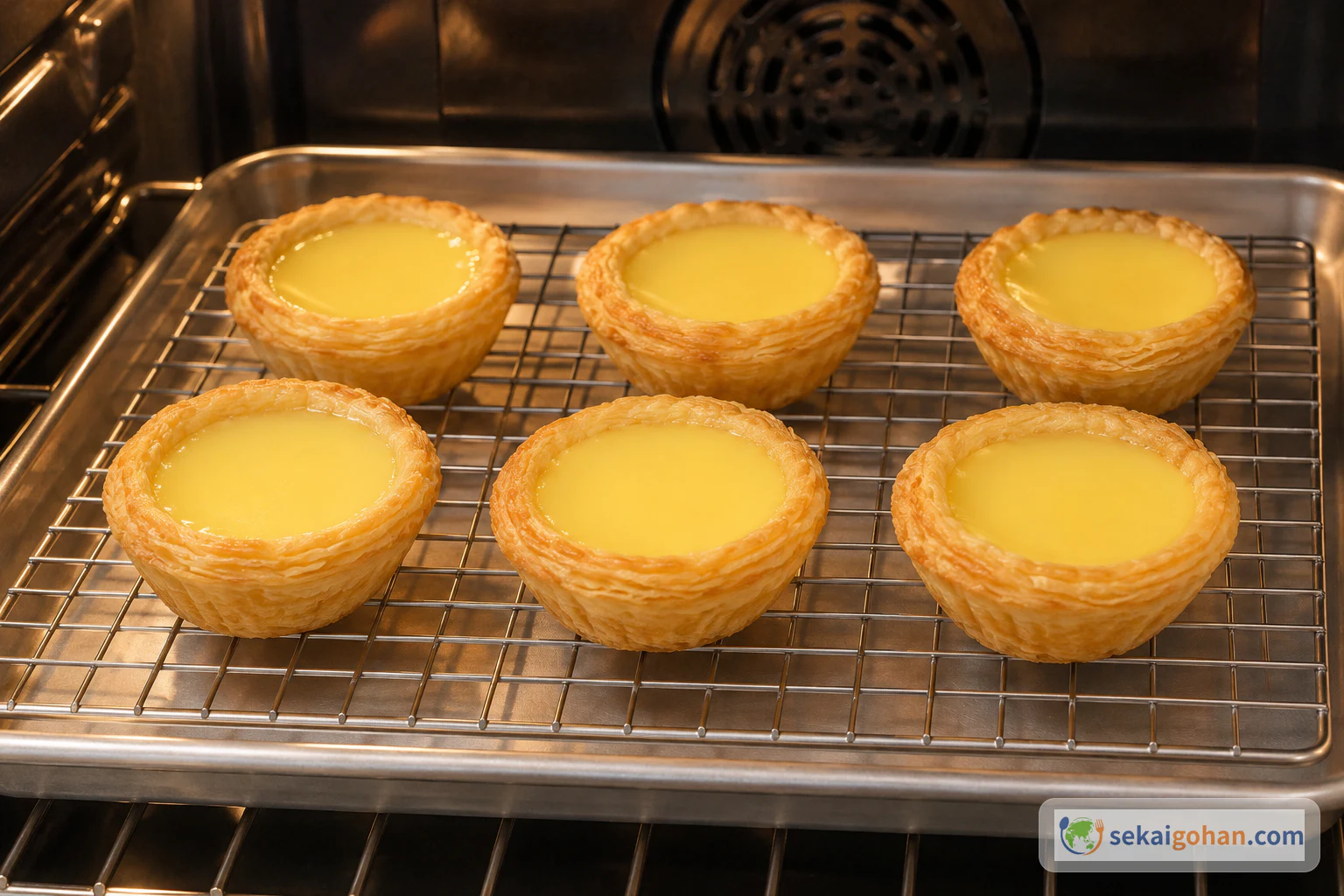
Unmolded egg tarts on a wire rack set over a rimmed baking sheet inside an oven
Optional next-day reheat: tarts out of their molds, on a rack over a rimmed sheet

Don't throw out the pastry scraps. Brush them with beaten egg or evaporated milk, sprinkle with a little cinnamon sugar, and bake until golden and crisp.
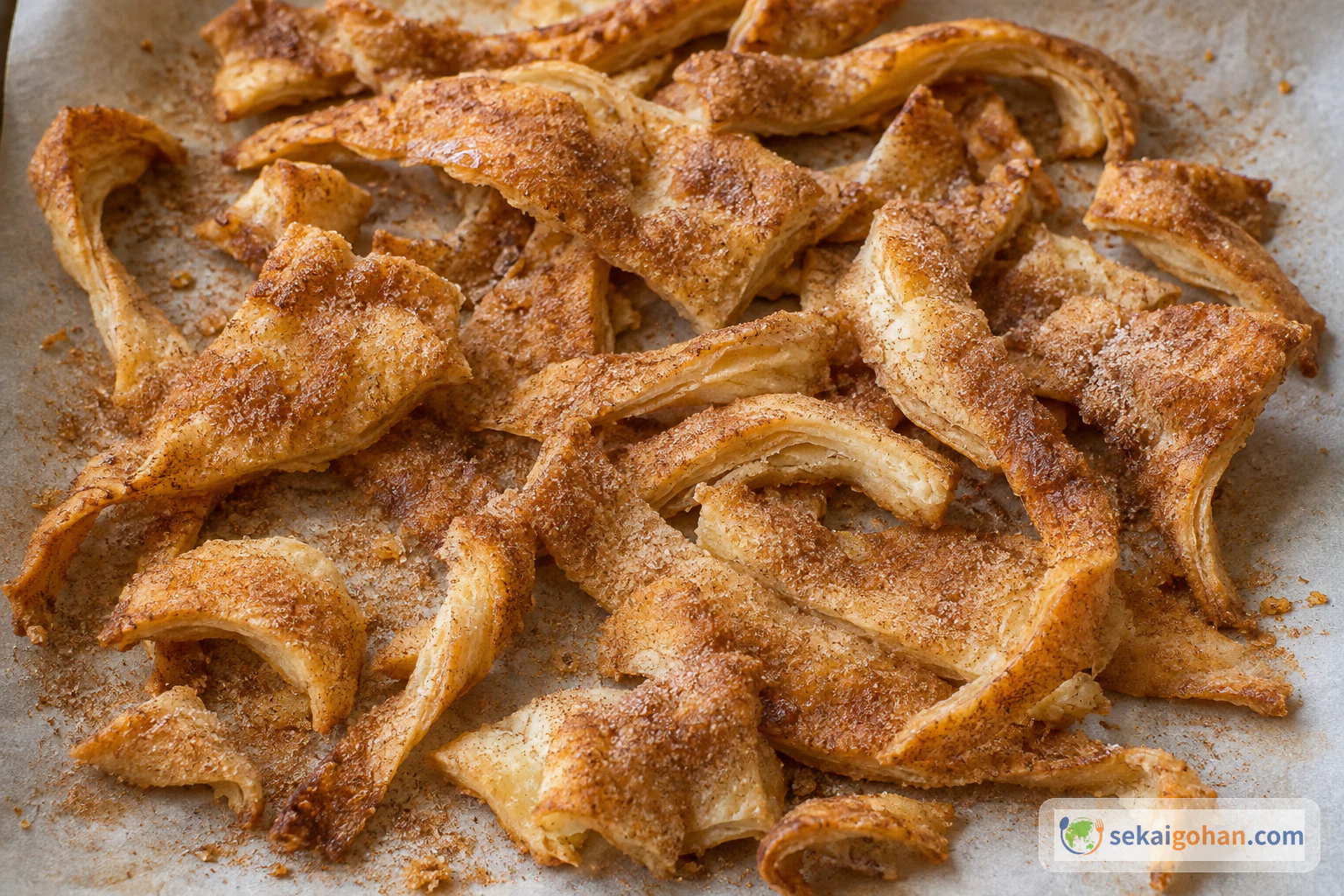
Golden, crisp pastry scraps with cinnamon sugar on parchment
Optional: leftover pastry scraps baked with cinnamon sugar

Frequently Asked Questions

Does warming the milk to 90°F make the custard safe to taste?

No. Warming the milk and water to about 90°F (about 32°C) only takes the chill off before the eggs go in. Don't taste the raw custard or the raw dough. The custard cooks in the oven, and the tarts are done when it has just set.

Can I make parts ahead?

Yes. The wrapped pastry can chill for at least 1 hour and up to 24 hours, and the covered custard can rest for 30 minutes to 2 hours.

Why do the folds matter so much?

Each round of rolling, folding in thirds and turning stacks more thin layers of butter and dough. This version does it five times in all, counting the first. Follow the count of five, not the photos.
Sources