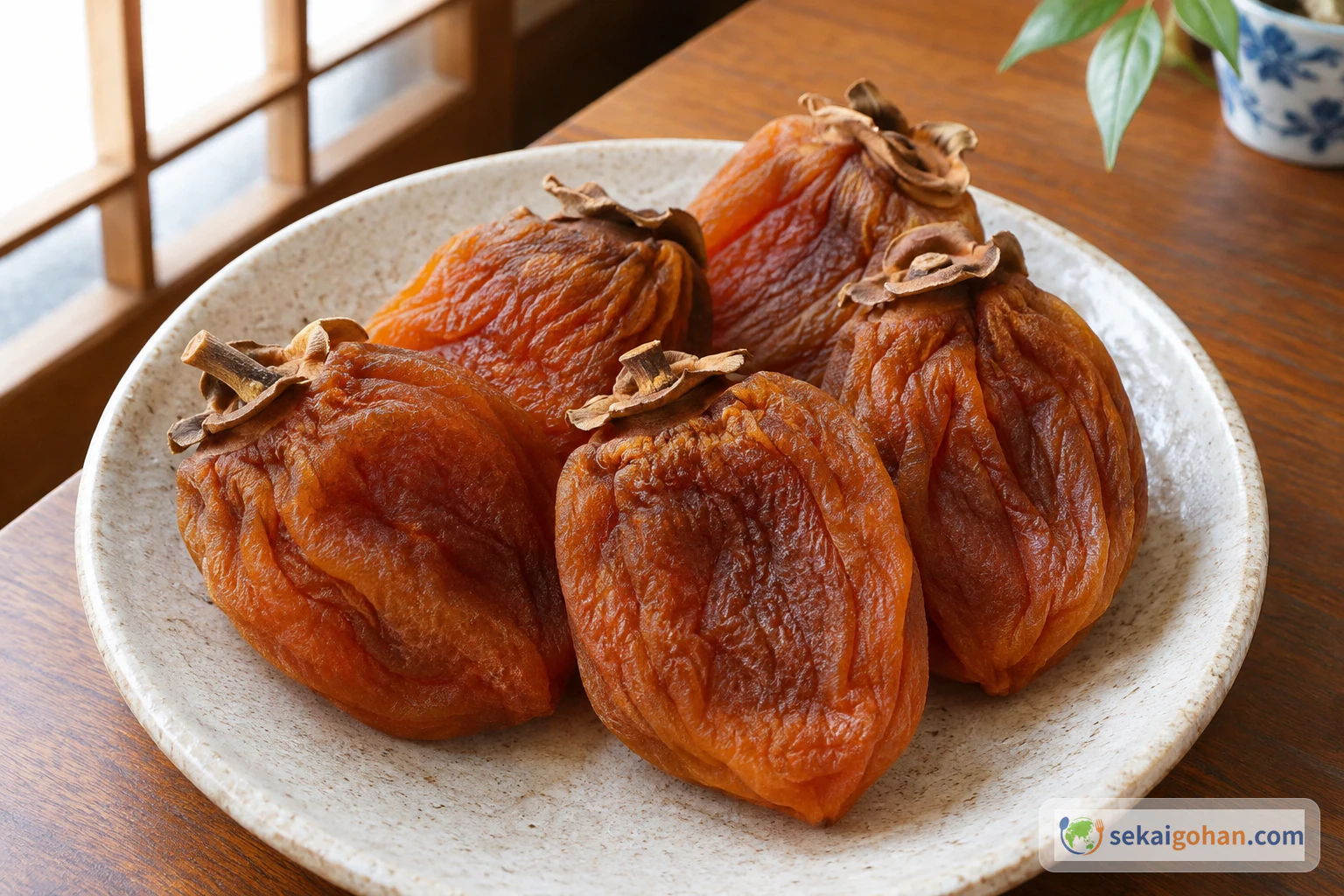
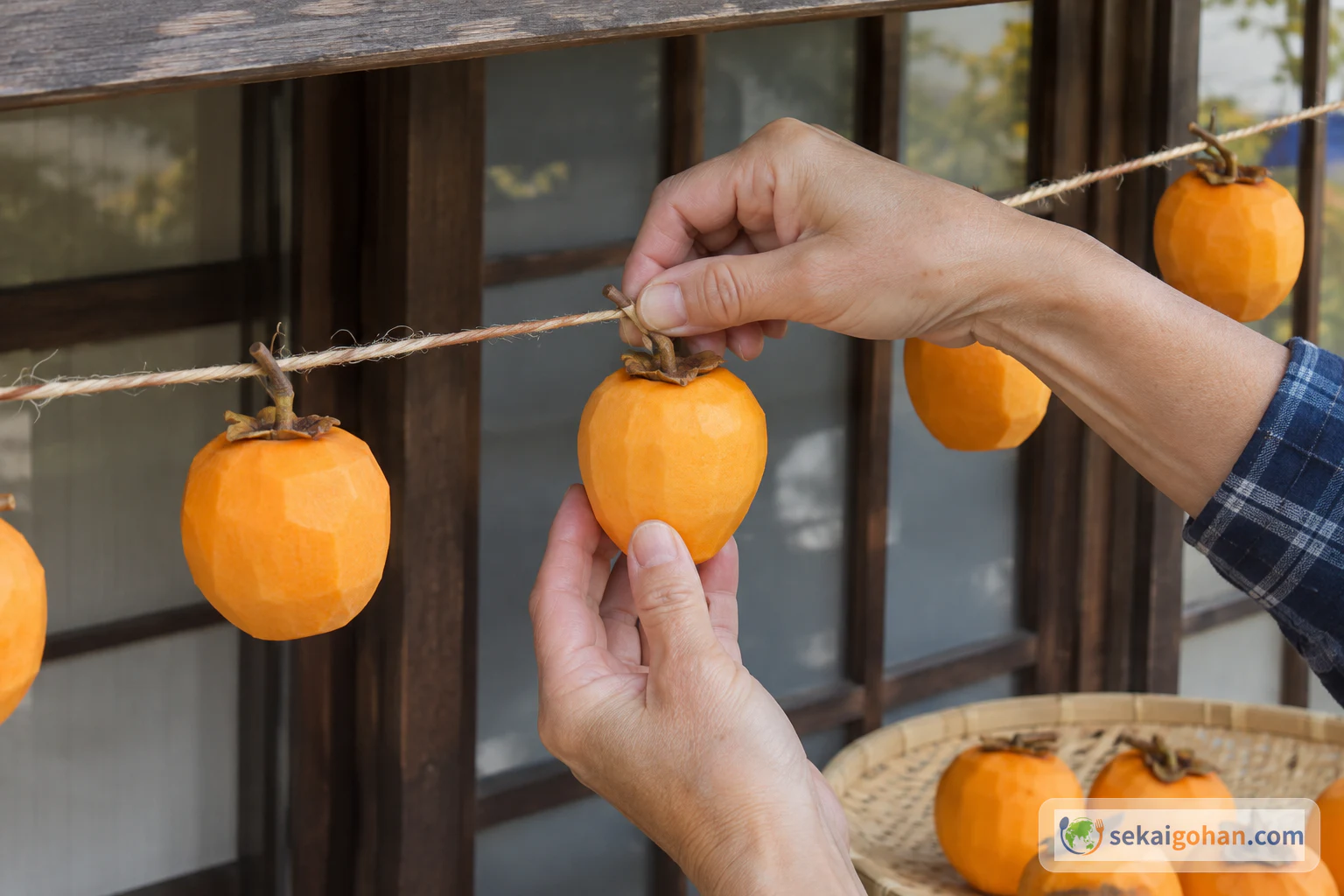
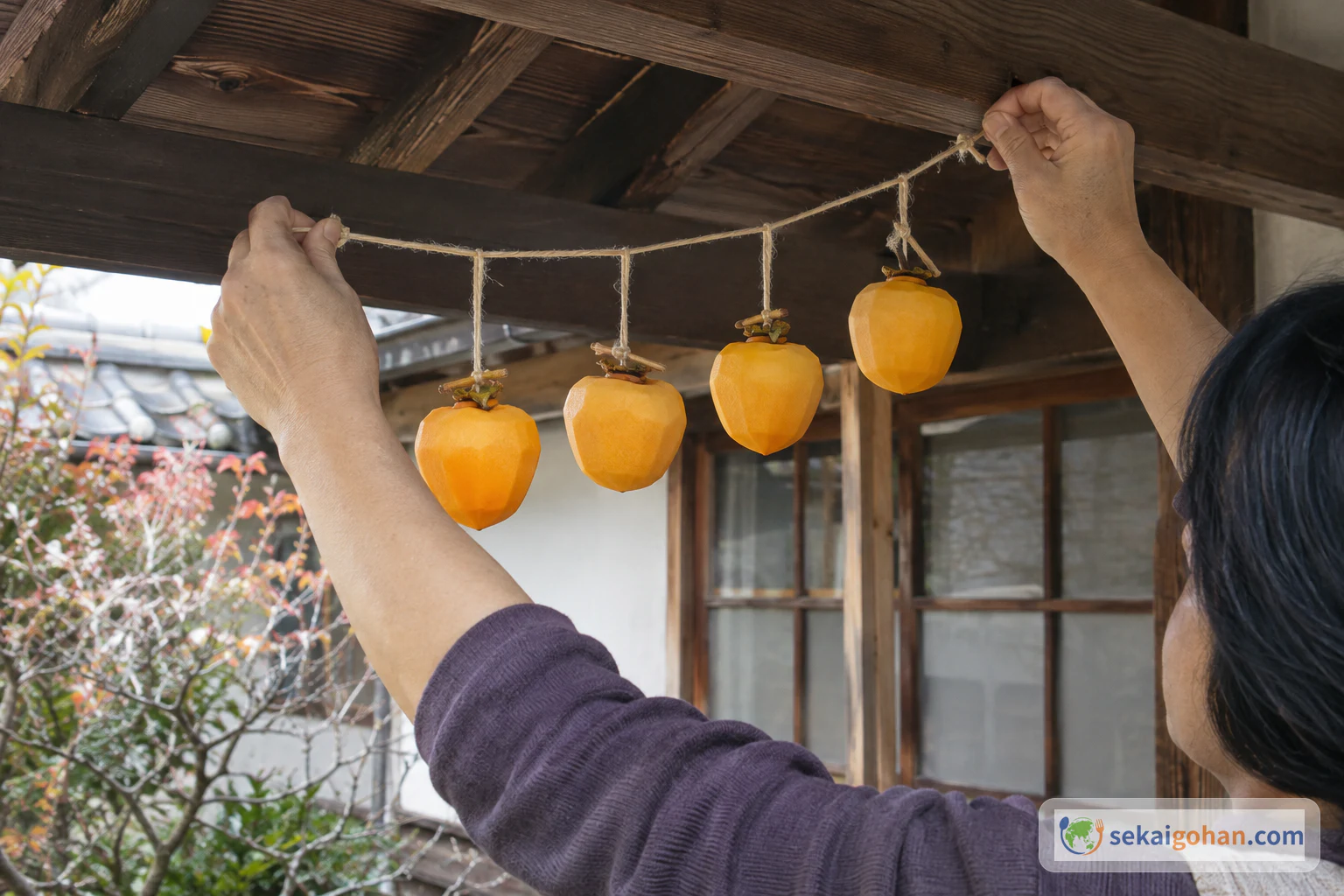
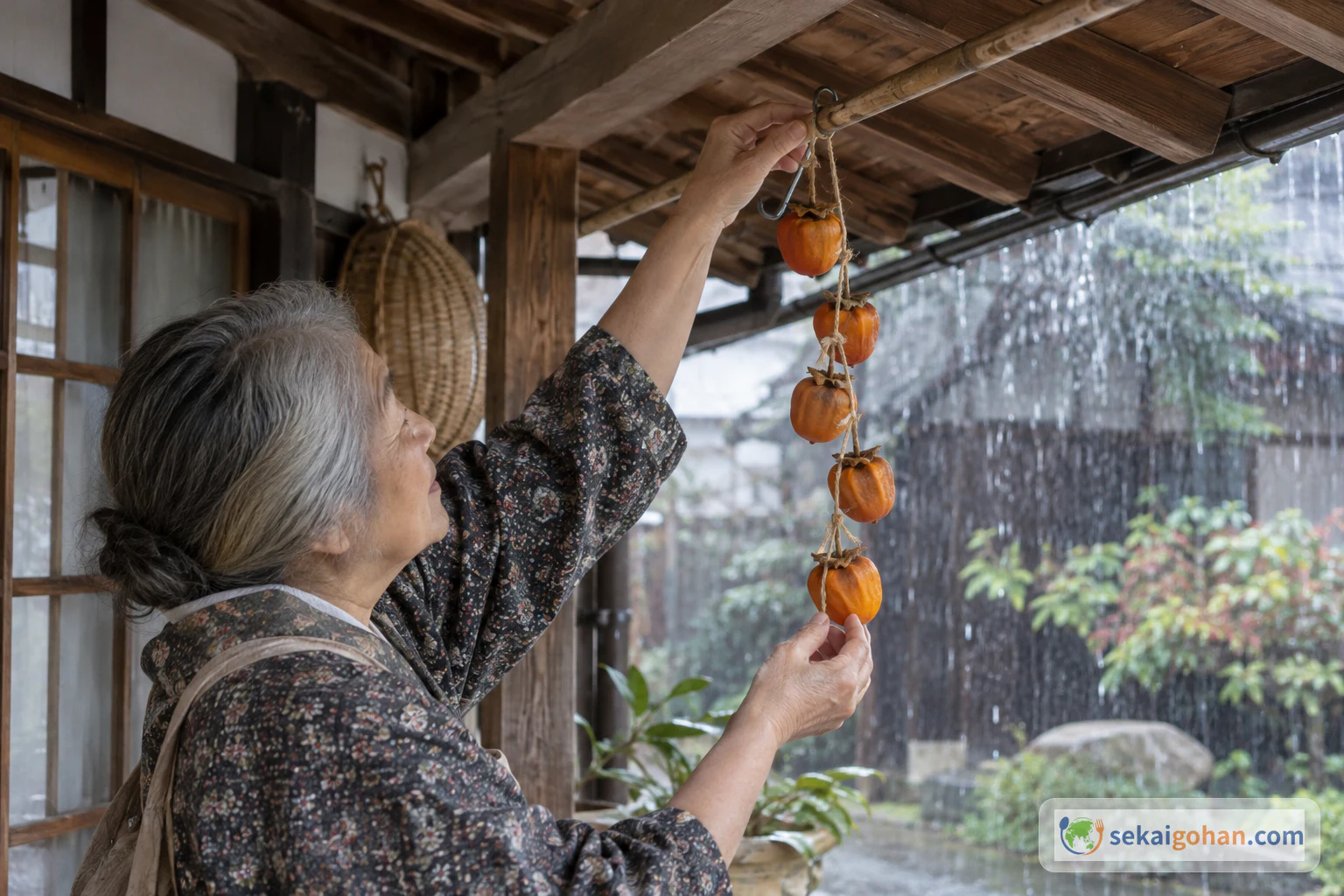
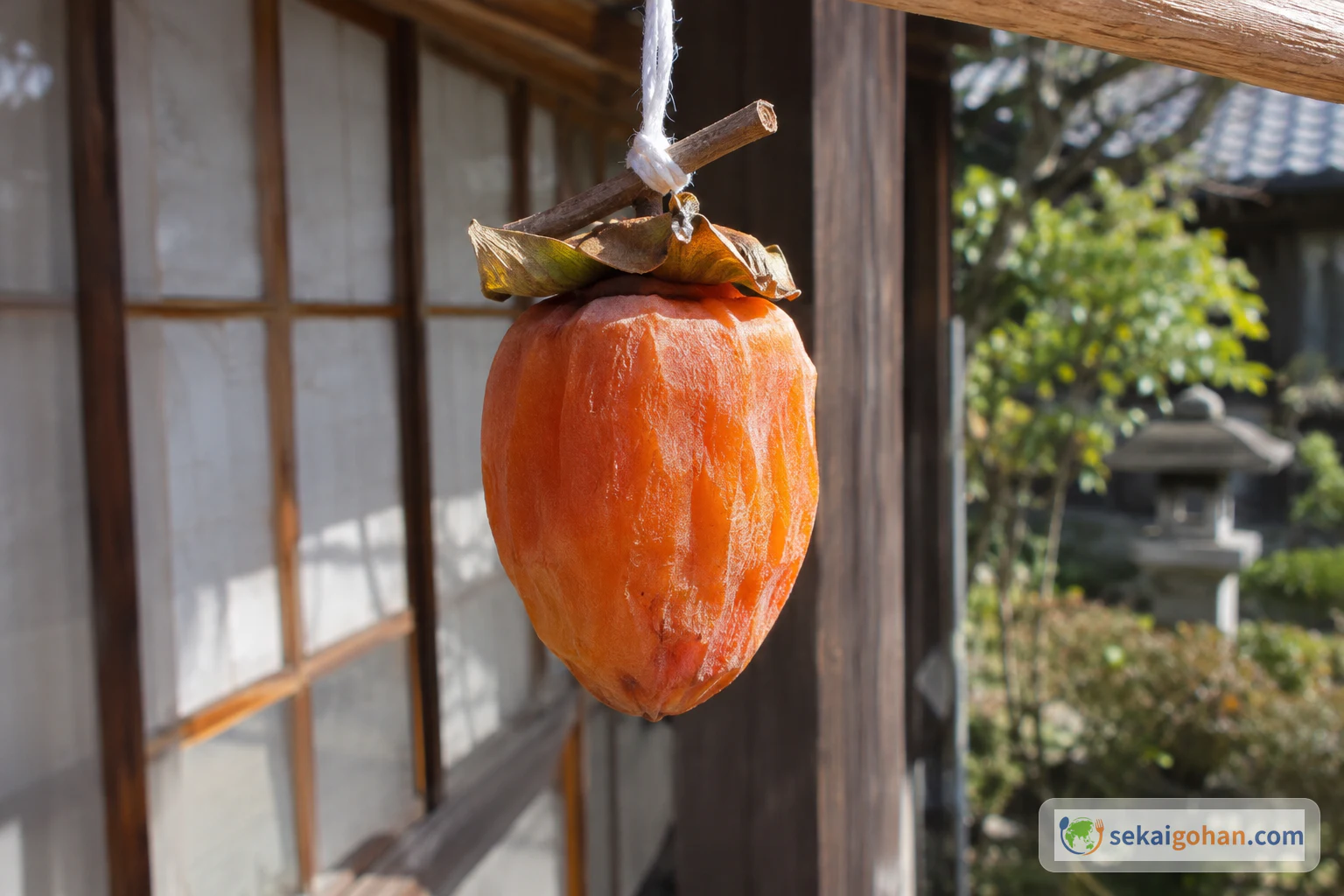
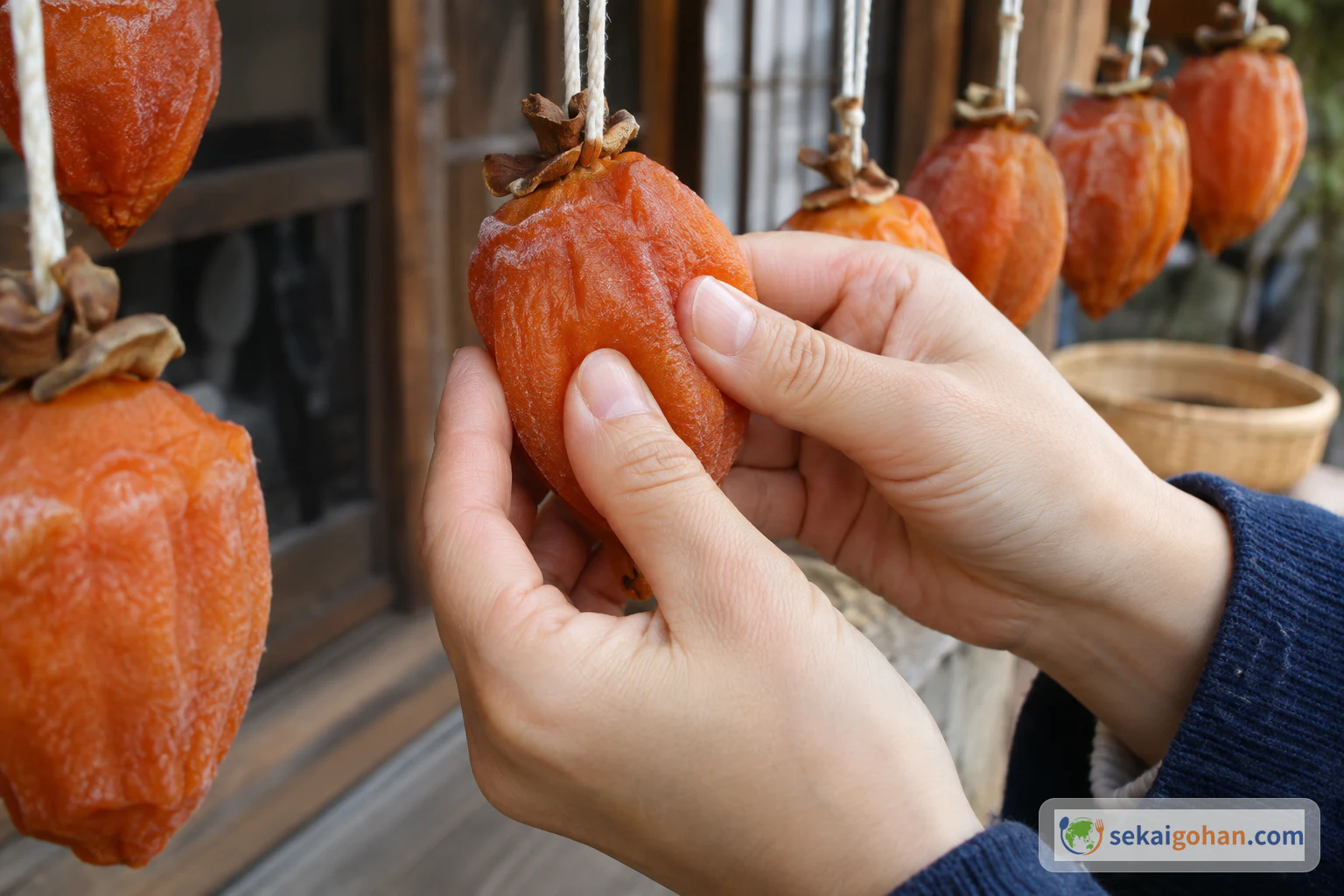
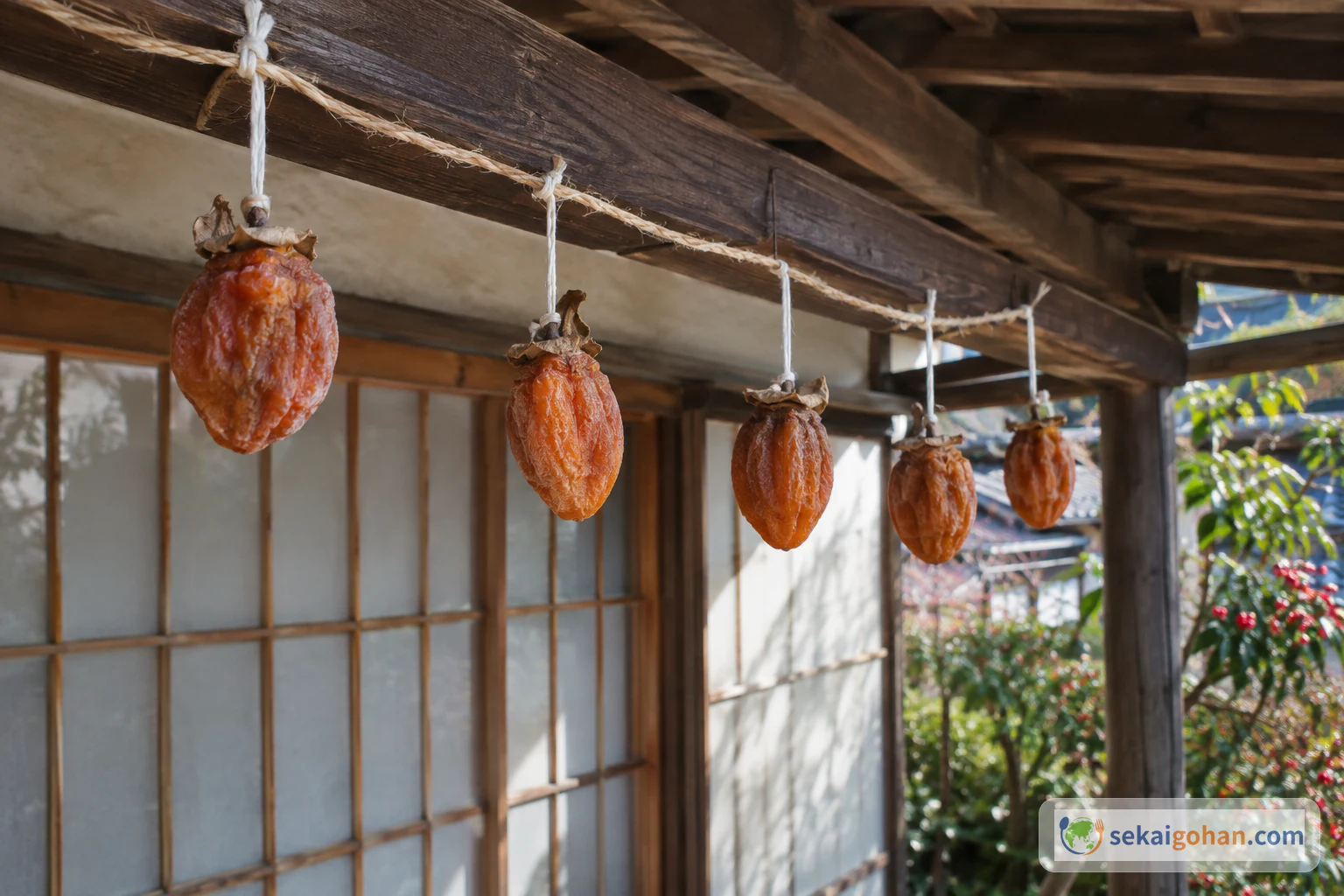
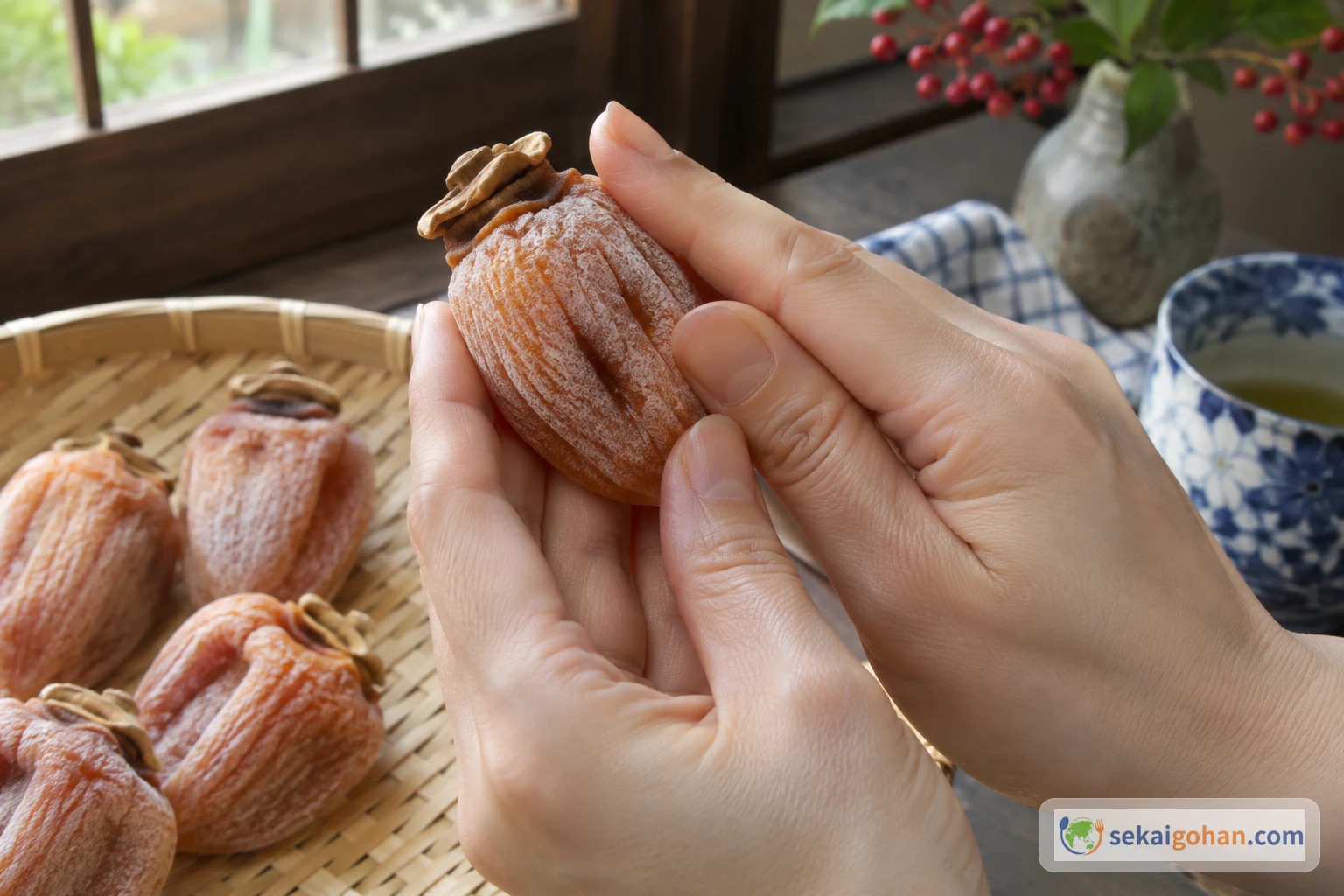
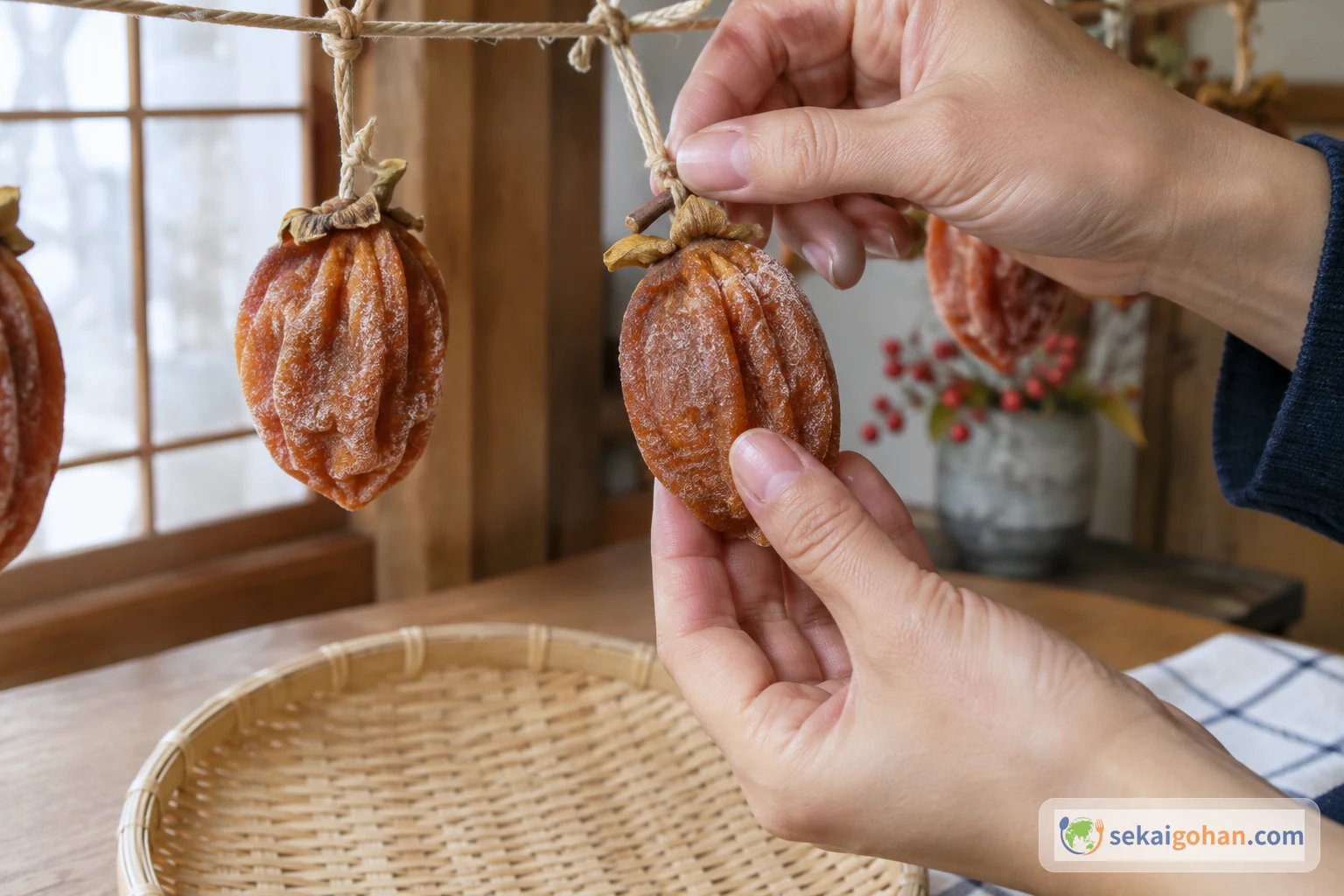
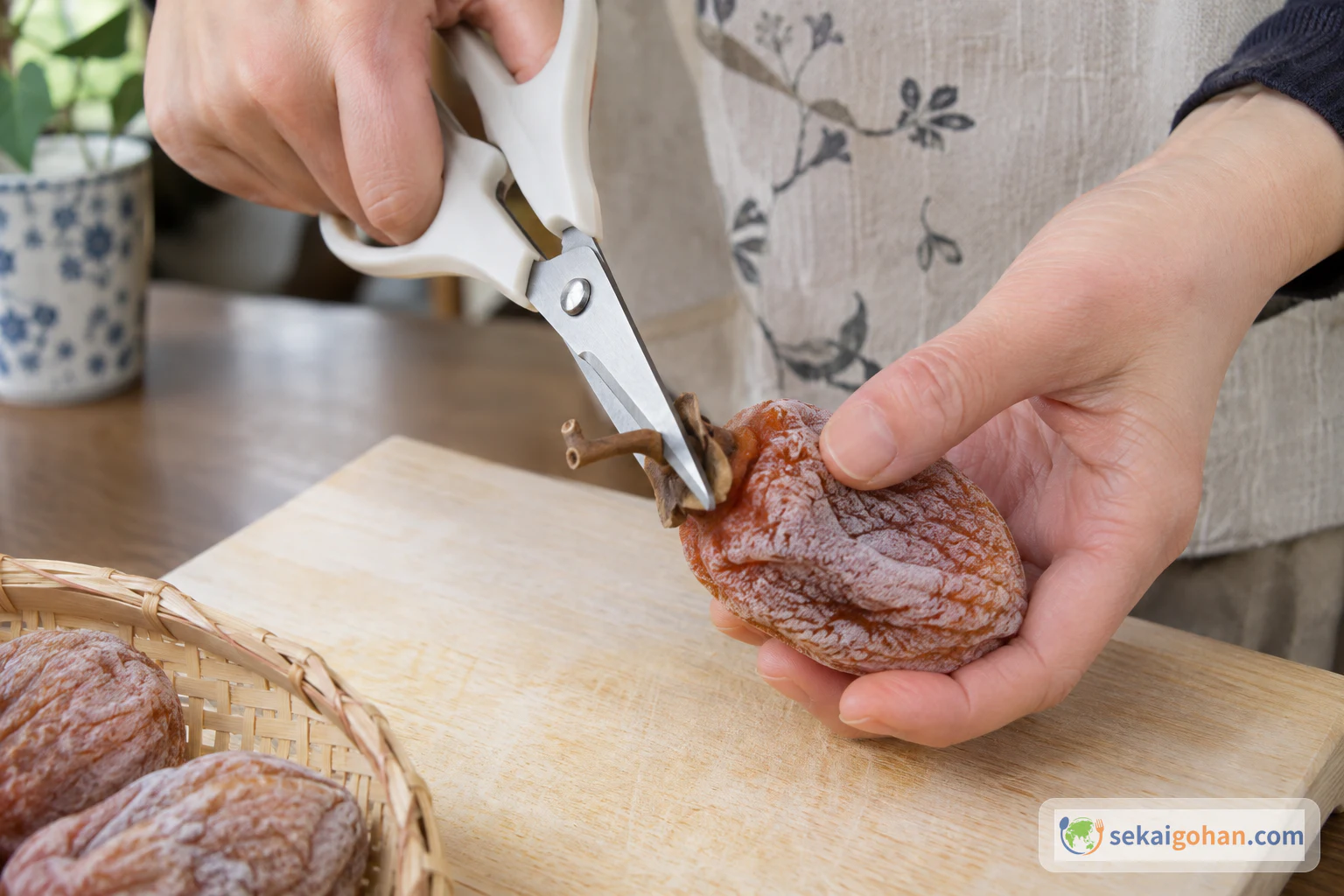
Strung on twine under a sheltered eave, peeled persimmons hang spaced so they don't touch, slowly drying in the moving air. After about a week, you start massaging them gently with clean fingers. Hoshigaki (干し柿) is how Japan turns astringent persimmons into something sweet and chewy. At home it takes little more than fruit, twine, air and attention.
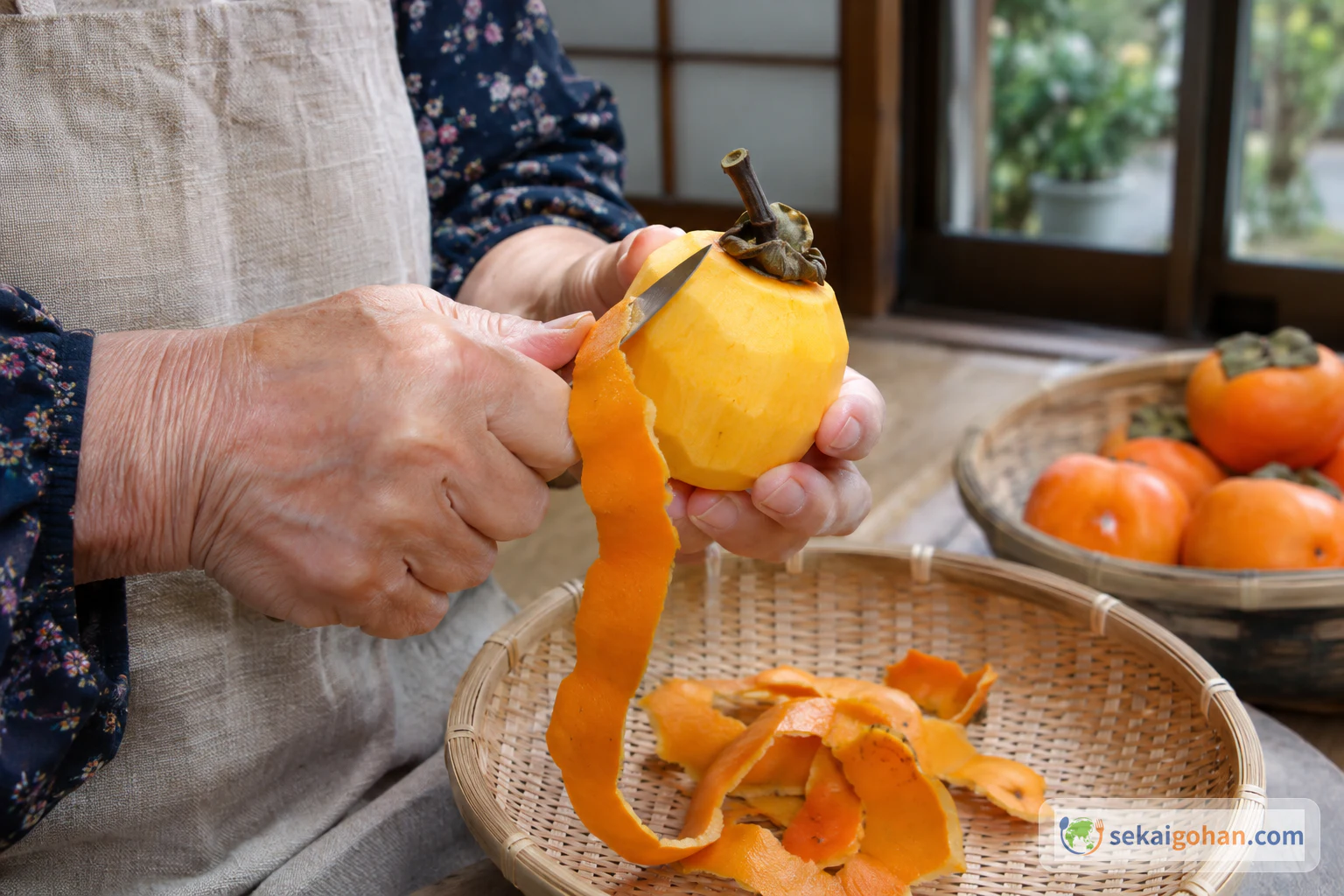
Peel the fruit completely, keep it dry and airy, and massage it gently without breaking the surface. If anything looks doubtful, throw that fruit away.
What Is Hoshigaki?
Hoshigaki (干し柿) are Japanese dried persimmons: astringent persimmons are peeled, strung up and hung to dry, then gently massaged as they dry. The fruit must be kept out of the rain. The recipe below follows one household method; the FAQ explains humidity, white powder and when to discard fruit.
Hoshigaki at Home and in Matsue
Japan makes hoshigaki at very different scales. A household batch needs only twine and a good place to hang the fruit. Nothing specialized is involved. For more dishes from the same kitchen, see the Japan country page.
Saijo persimmon hoshigaki from Matsue is a very different thing. It is tied to a local method and to seasonal food culture, and it dries for about a month in dedicated persimmon huts. That method also uses heaters, seed removal, straw and cool-room storage, so it doesn't carry over directly to a home kitchen or a household eave.
Some principles are the same at both scales. You hang the fruit apart and massage it once the surface has dried. Settled weather, protection from rain, peeling off every bit of skin and tending the fruit in stages all matter too.
Make hoshigaki only during a period of settled weather, and only if you have an airy place that gets as much sun as possible and stays out of the rain, such as under an eave. You also need a way to keep the fruit dry on rainy days. If your home or the season can't offer this, don't make it. Choose commercially made hoshigaki sold as food instead.
Ingredients: Astringent Persimmons, Nothing Added
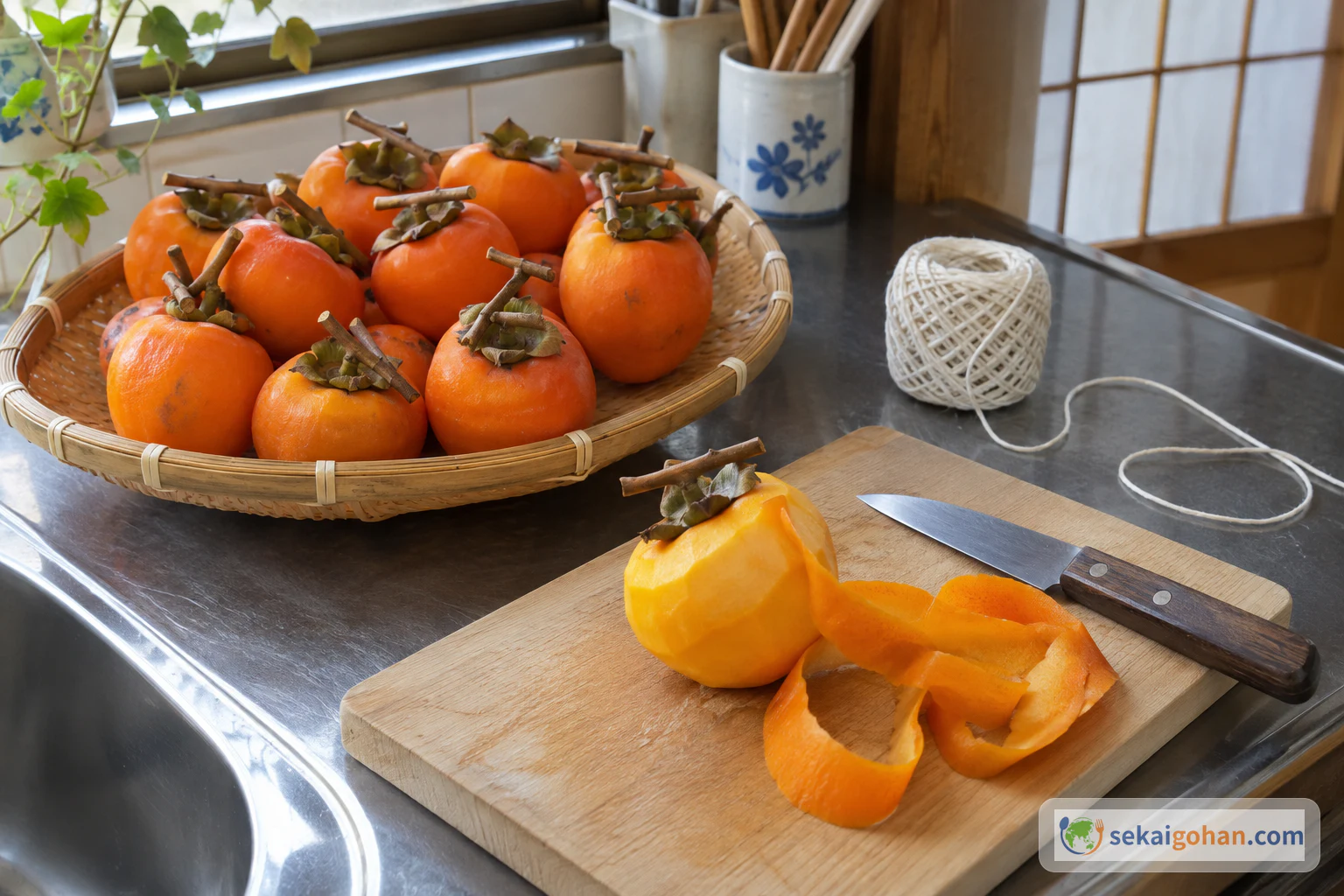
Use as many persimmons as your twine and drying space can hold, with gaps between them. Hang about 6 to 7 fruit per string. Do not add sugar, salt, alcohol or sulfur.
Equipment
- Sturdy twine suitable for food work, 23.5 inches (60 cm) to 27.5 inches (70 cm) per string
- Peeling knife or peeler
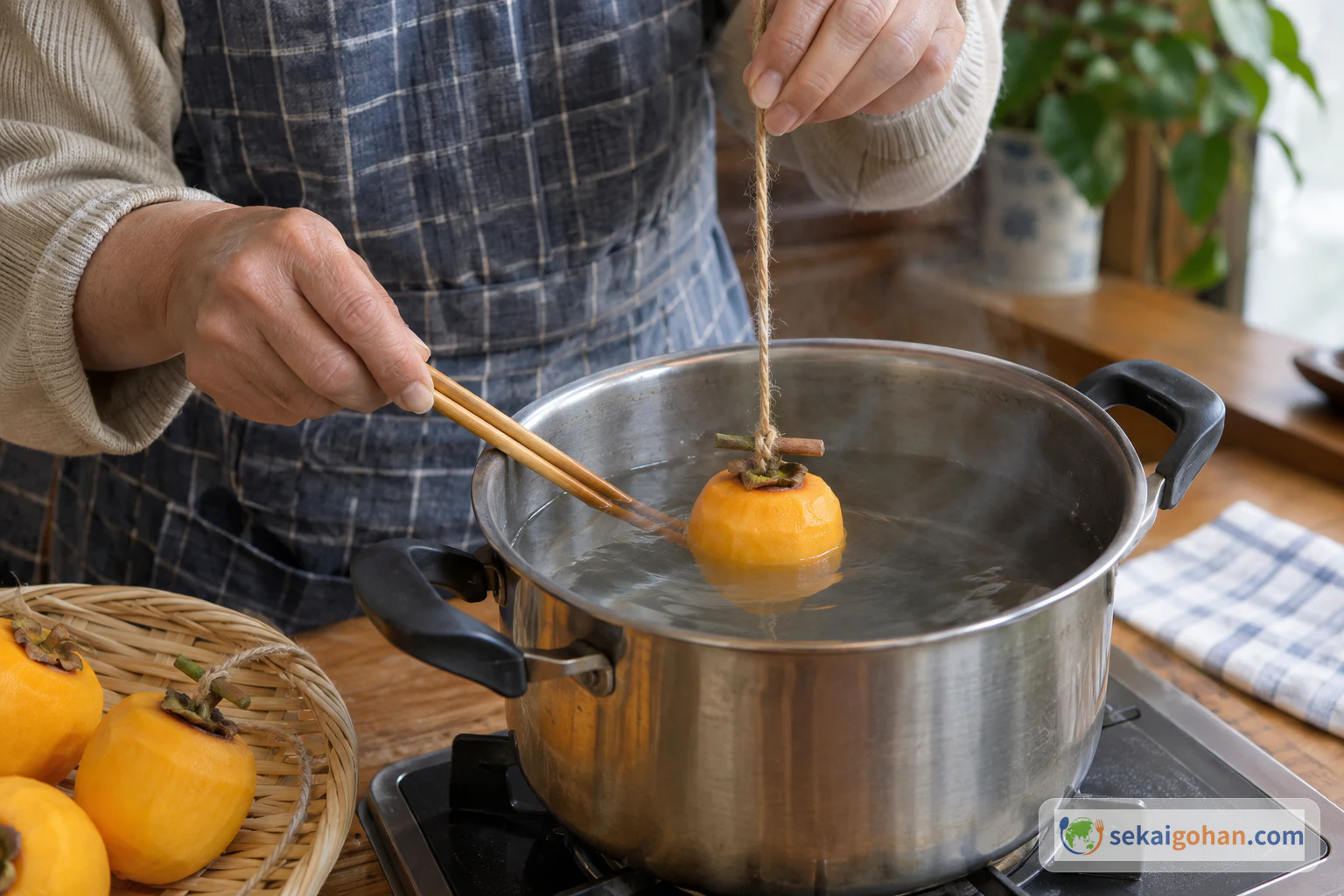
- Pot of boiling water and heat-safe utensils, for the dip in step 3
- Kitchen scissors and a clean board
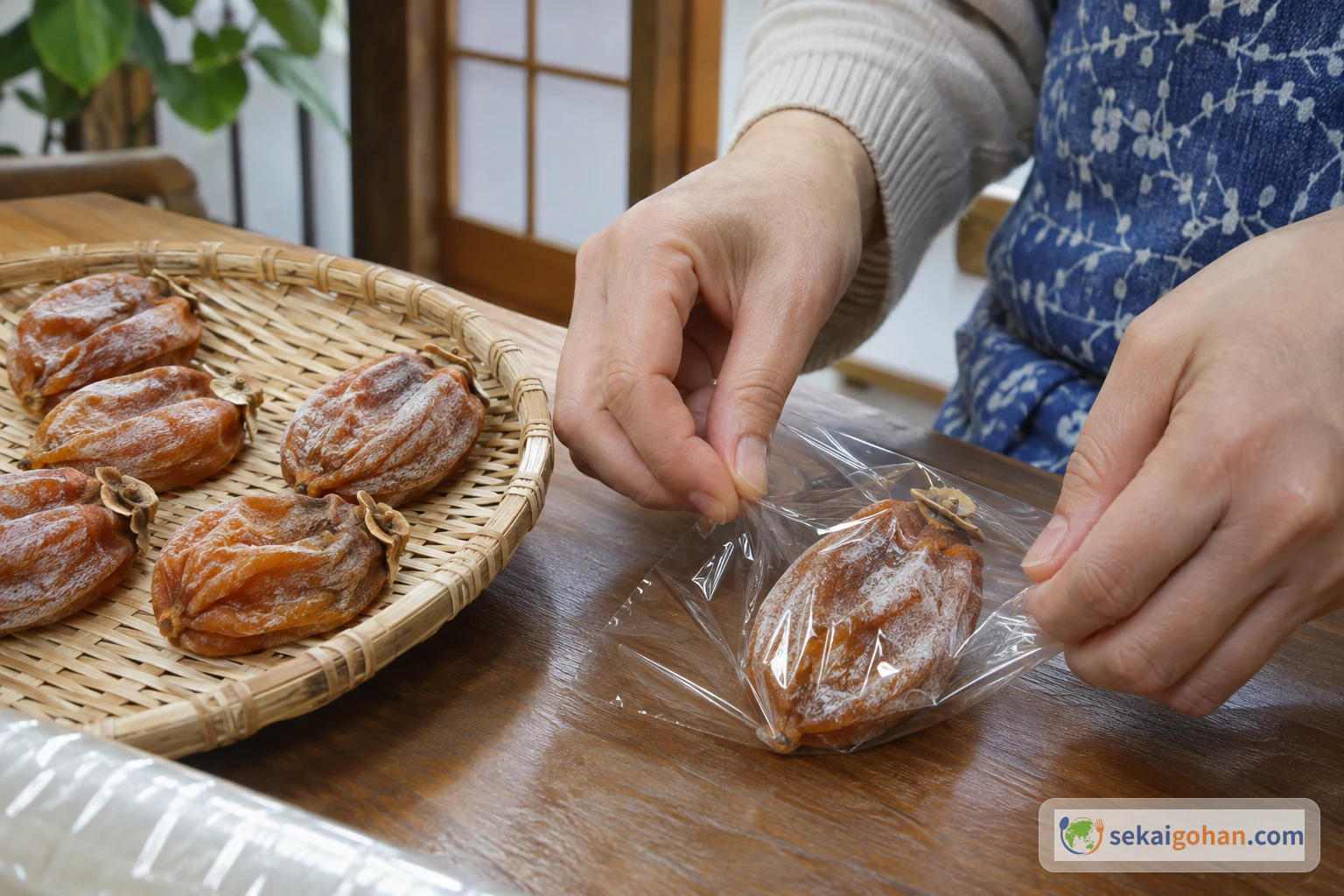
- Food wrap
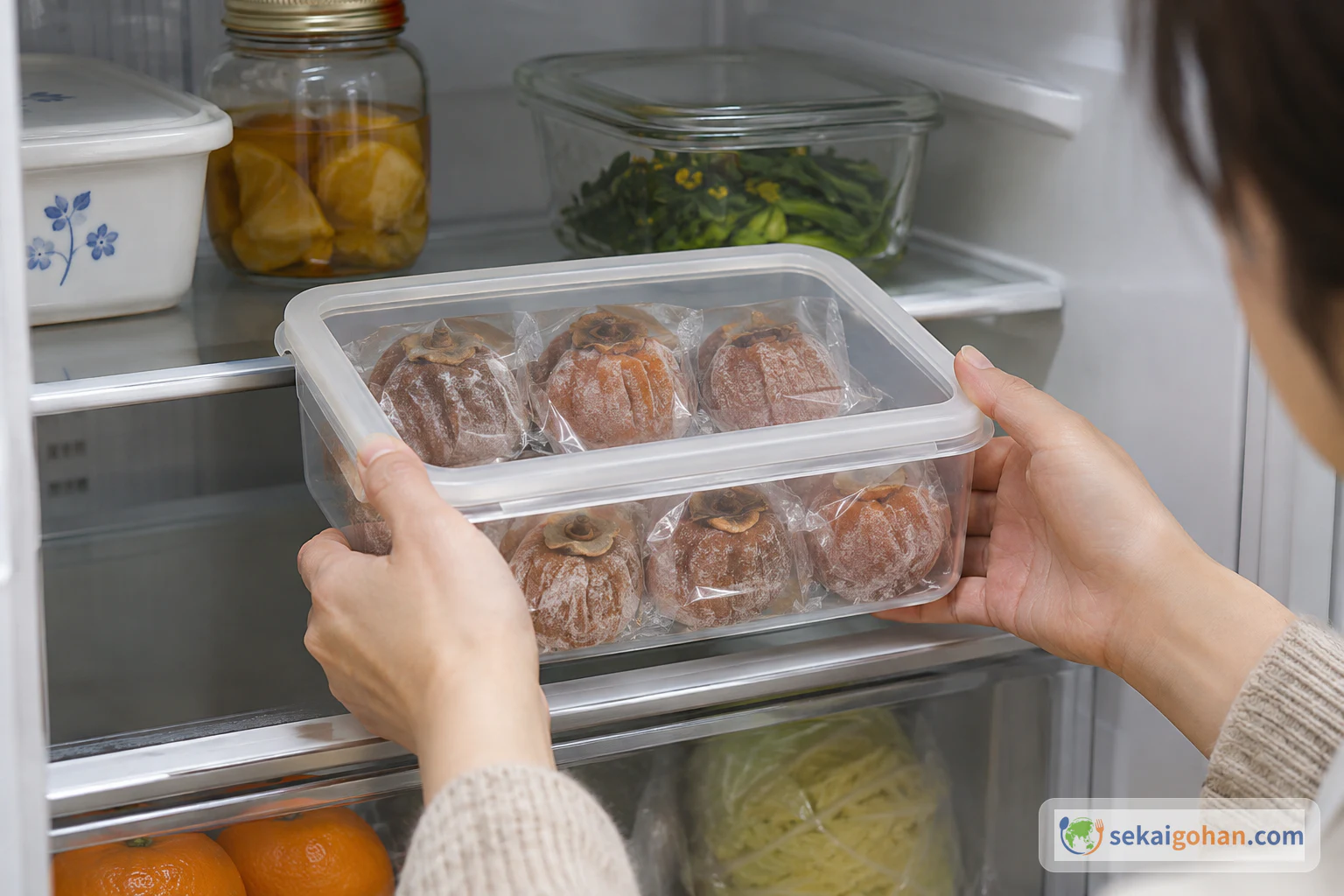
- Clean covered container, if you want one for the refrigerator
Choosing Persimmons for Hoshigaki
Buy fruit labeled as astringent, and make sure each one has a stem long enough to hook onto the twine. Without a usable stem, a persimmon won't work for hanging.
Nothing can stand in for astringent persimmons. If you can't get suitable fruit, or you have nowhere suitable to dry it, buy commercially made hoshigaki sold as food.
Method: Peel, Hang, Keep Dry and Massage
Wash your hands and use clean tools throughout. The order matters: the optional dip comes after peeling and stringing, before the fruit goes out to dry.
Hoshigaki Drying Problems and Fixes
When drying goes wrong, the fix is to change the conditions. Fruit you suspect has spoiled can't be saved.
Do not eat the fruit, and do not taste it to find out. Do not scrape it, trim it, wash it, wipe it with alcohol or heat it to rescue it. If you are unsure, throw it away.
| What you notice | What to do |
|---|---|
| Rain is on the way | Cover the fruit or move it before it gets wet |
| Fruit got wet or is drying poorly | Move it somewhere airy and dry, and discard anything you suspect has spoiled. If you can't provide those conditions, stop and buy commercially made hoshigaki |
| Persimmons are touching | Re-space them on the twine so that air can pass between them |
| The surface tore during massage | Use lighter pressure on the rest of the batch. Keep watching the torn fruit, and discard it if spoilage is suspected |
| Fruit still feels moist after the suggested days | Go by the fruit, not the calendar. Keep it sheltered and airy, and discard it if anything looks doubtful |
| An unidentified white or other patch appears | Discard the fruit unless you know it is safe. Don't lick or taste it to decide |
Serving, Storing and Varying Hoshigaki
Serve finished hoshigaki just as it is. Only a few things about the recipe can change, and the basic care stays the same whichever way you go.
| Choice | What changes | What stays the same |
|---|---|---|
| Skip the boiling-water dip | Leaving it out removes step 3 | Complete peeling, rain protection, massaging and discarding suspect fruit |
| Refrigerator or freezer | The wrapped fruit goes in either one | Each fruit is wrapped individually |
| Buy instead of making | No home drying, which suits homes or seasons without the right conditions | Choose products sold as food |
Frequently Asked Questions
What humidity and temperature do I need?
Go by the conditions instead: settled weather, moving air, as much sun as possible and no rain on the fruit. If you can't provide those, buy commercially made hoshigaki.
Is the white powder sugar or mold?
It can be sugar (fructose). In one case, a white substance on hoshigaki was confirmed as sugar under a microscope. That still doesn't prove an unknown white patch on your fruit is safe, and you shouldn't keep food with unidentified mold. If you can't tell, discard the fruit.
Can I cut away a moldy spot and eat the rest?
No. Don't trim, wash, wipe with alcohol or heat fruit you suspect has spoiled. Discard it.
How long will hoshigaki keep?
Wrap each fruit individually and keep it in the refrigerator or freezer. You can also freeze it in small portions.
Does the boiling-water dip make the fruit safe?
No. The optional dip treats the surface but doesn't sterilize the fruit. You still need clean hands and tools and protection from rain, and you still have to discard doubtful fruit.
Can I dry the fruit faster with a heater?
This recipe dries the fruit in open air only. Heaters belong to a different method, so don't combine them with these drying days and cues.
How many will this make?
There is no fixed yield. Prepare as many persimmons as you like, hanging about 6 to 7 on each string.
How do you make hoshigaki?
Peel astringent persimmons, string them, hang them where they stay dry and out of the rain, and massage them gently as they dry. The numbered steps above give the full method.
What else can I make from Japanese sweets?
For more Japanese sweets on this site, try higashi, ichigo daifuku or amanatto.