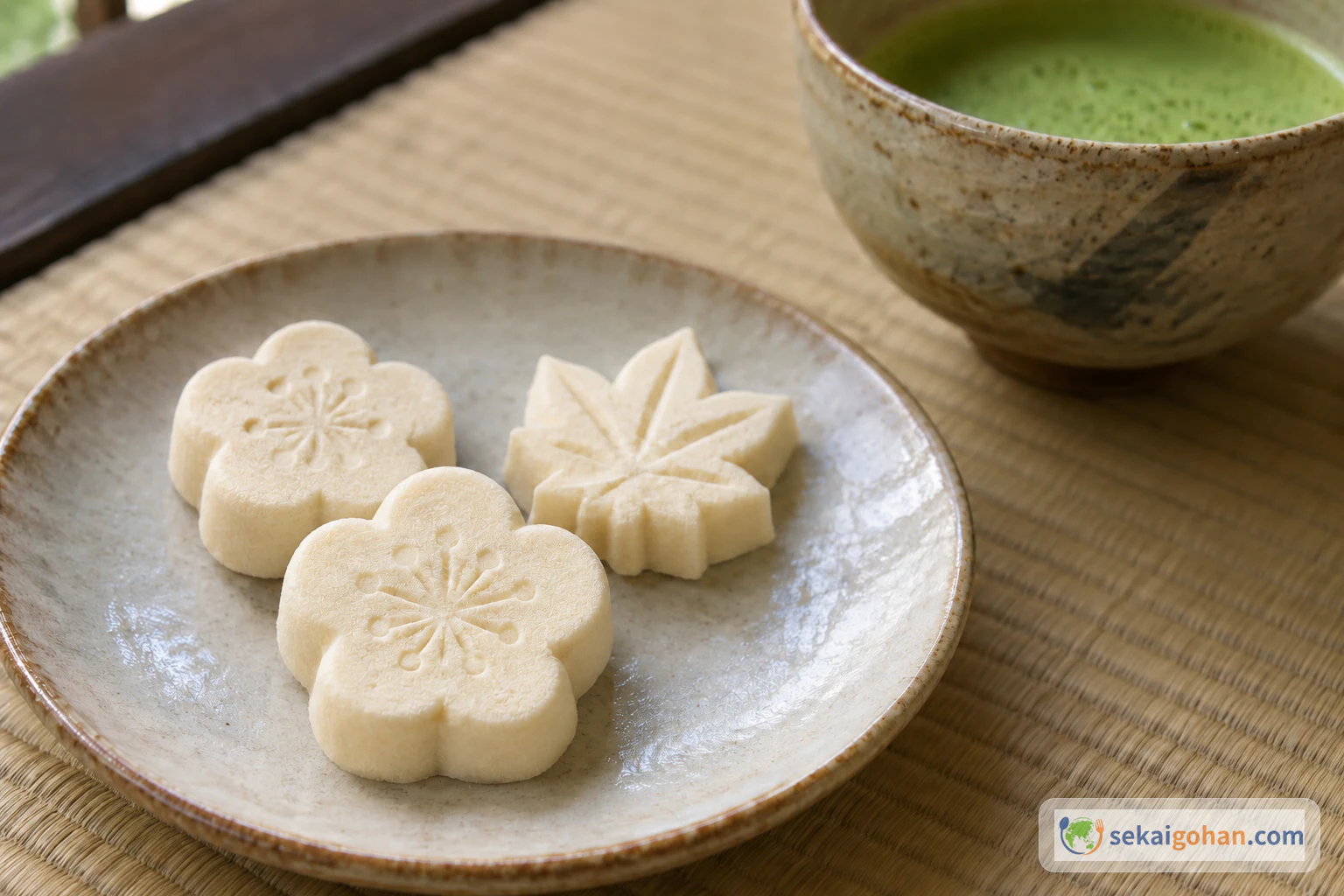
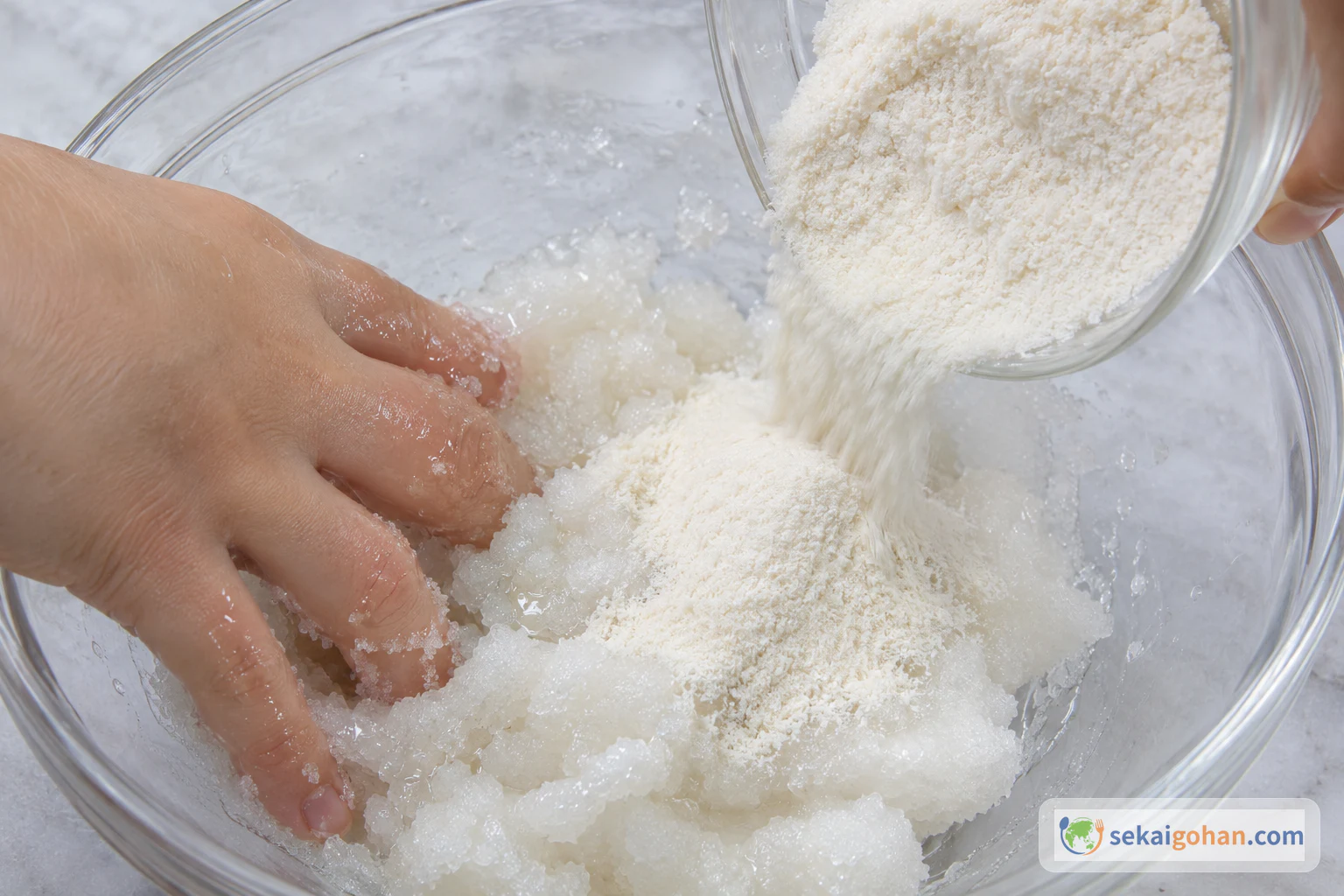
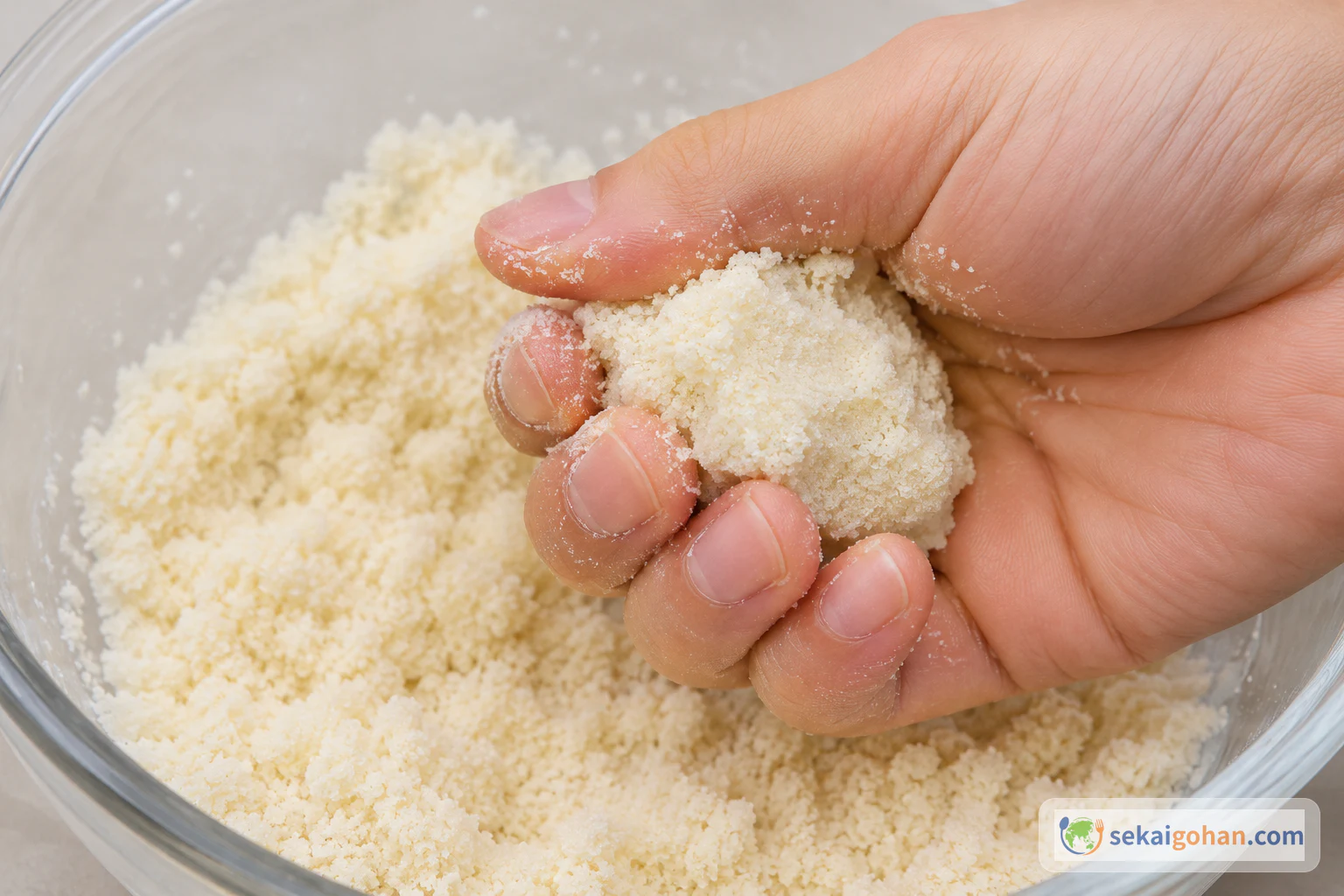
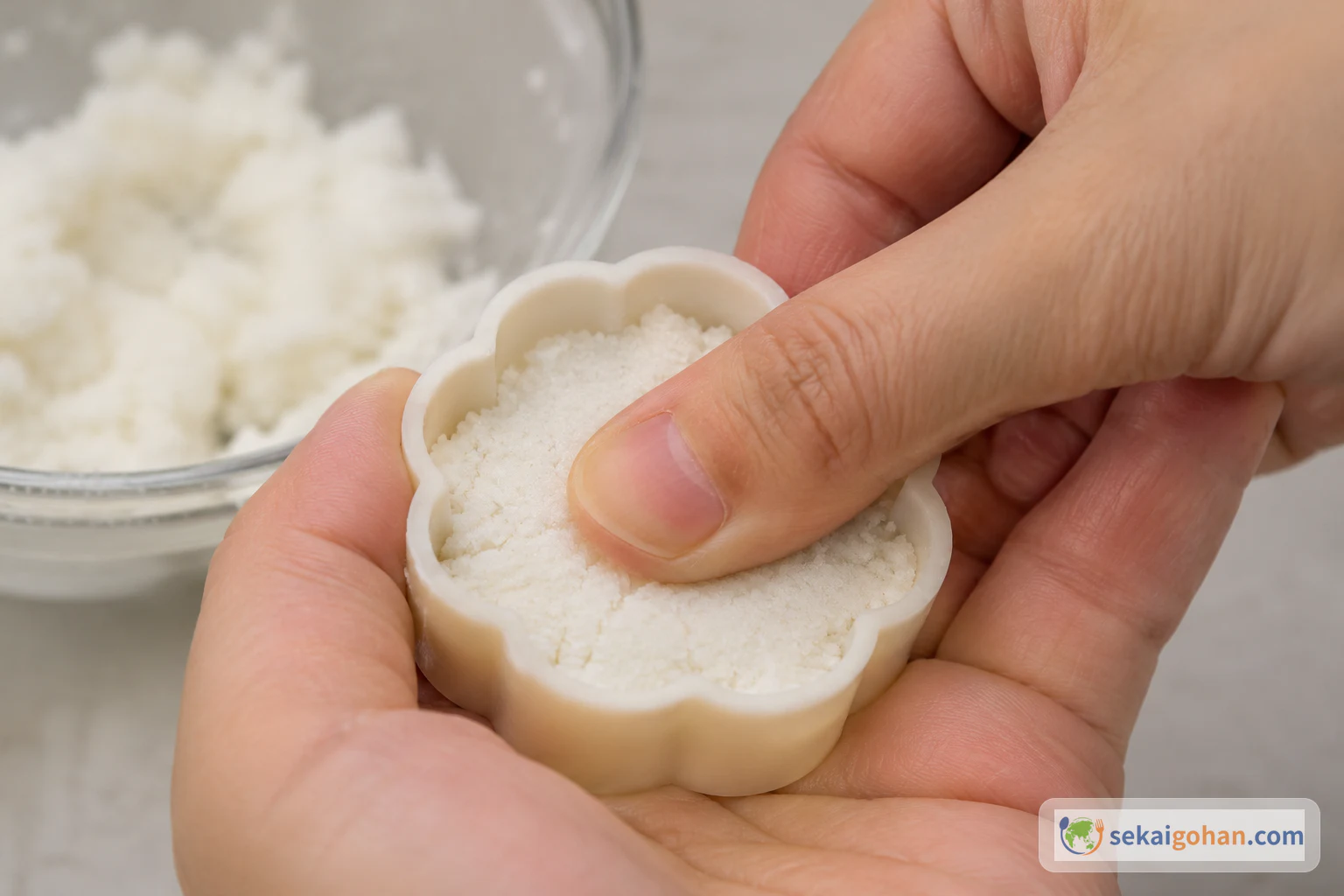
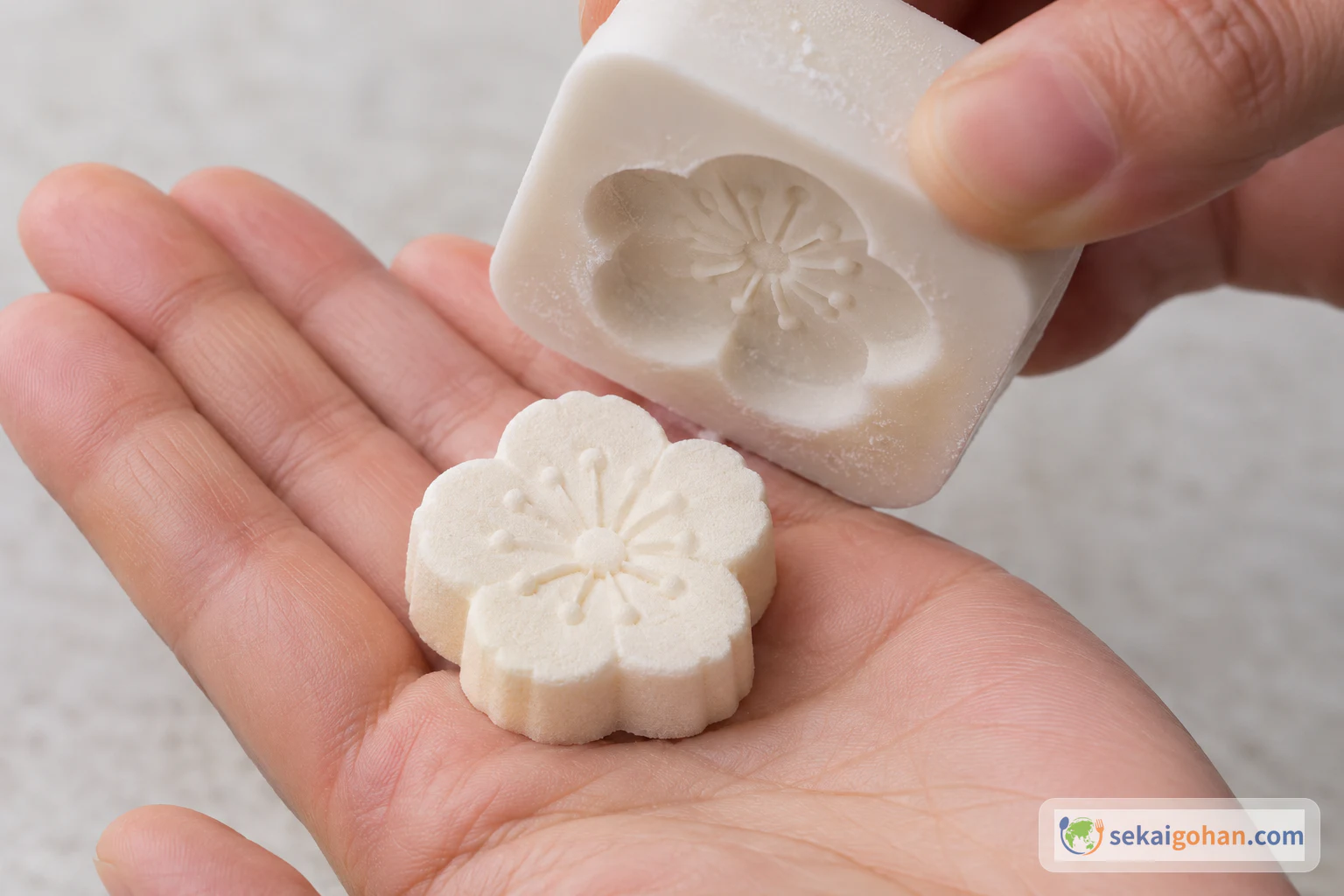
A few pale molded sweets on a small plate, a bowl of thin matcha beside them: that is one familiar picture of higashi (干菓子, pronounced "hi-gashi"). The word means confectionery with little moisture, and it covers a whole family of Japanese sweets, from rakugan to konpeito to senbei. This recipe makes one of them, rakugan (落雁), by pressing a moist mixture of sugar and fine glutinous-rice powder into a mold. It needs only three ingredients: sugar, water and mijinko (みじん粉).
Higashi and Rakugan
Higashi is a category, and its members are made in very different ways. A sugar crystal sweet like konpeito and a rice cracker like senbei share almost nothing with a pressed, molded sweet. Molded sweets such as rakugan and wasanbon are the most representative forms of the family.
Rakugan itself varies from maker to maker. In general, it is grain or bean powder and sweetener pressed into a mold and then dried, and several kinds of powder can be used. For other dishes from the same country, see our Japan page.
Ingredients
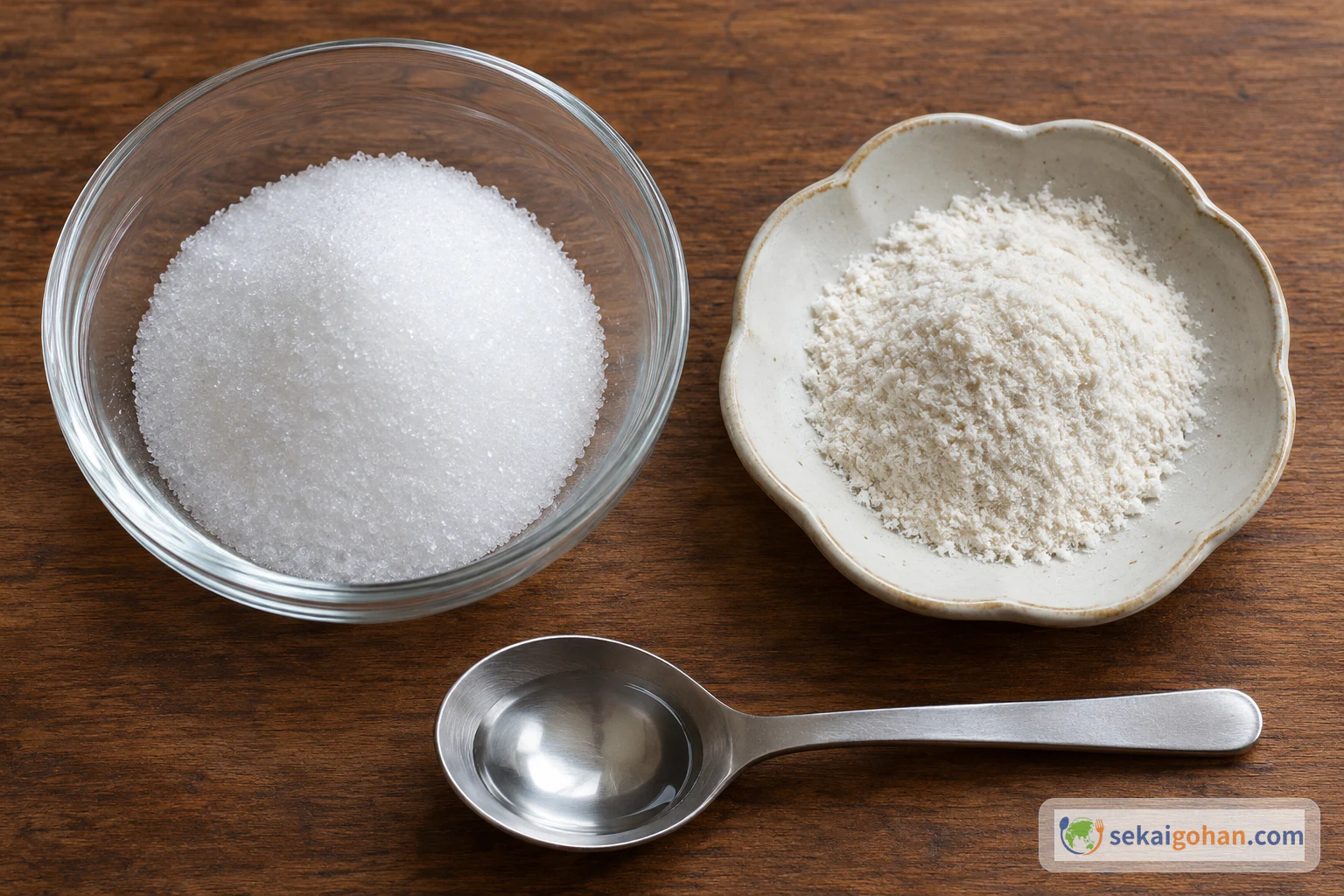
Makes 4 servings.
Equipment
- Mixing bowl
- Kitchen scale
- Measuring teaspoon
- Small confectionery mold
Choosing Mijinko for Rakugan
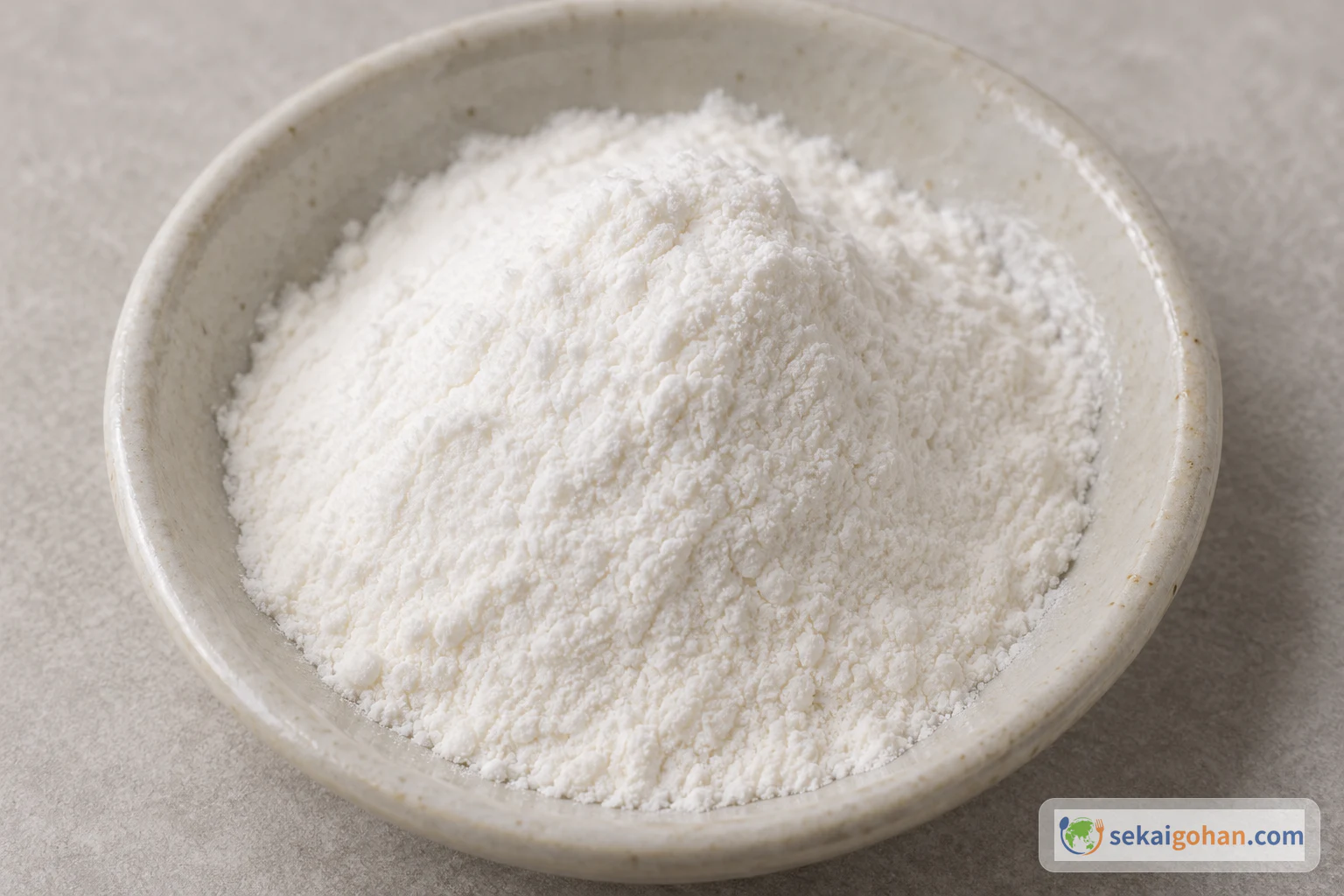
Mijinko: Mijinko is a powder made from glutinous rice, and a fine grind works best. Joshinko (上新粉), shiratamako (白玉粉), katakuriko and ordinary rice flour are different products, and none is a confirmed substitute in this recipe. If you can't find mijinko, there is no tested alternative.
Rakugan Checkpoints and Fixes
Step 3 says to pack "1" into the mold, which literally points back to step 1, before any powder has gone in. Given the dish and the order of the steps, it means the finished mixture from step 2, after the mijinko is added.
Because the recipe is so short, nearly everything comes down to the feel of the mixture in your hands.
| What you notice | What to keep in mind |
|---|---|
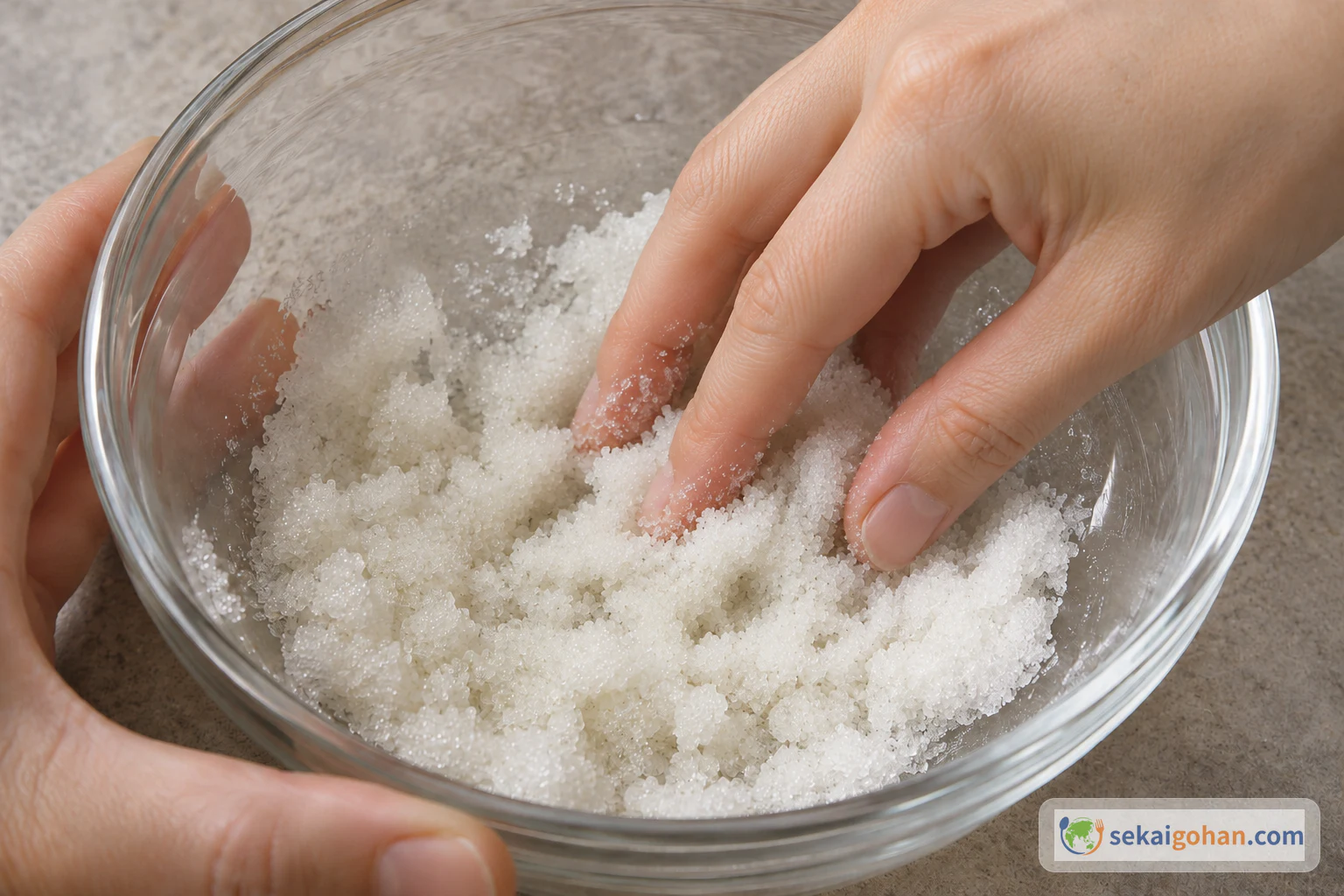
| Some sugar is still dry after you add the water | Keep mixing by hand until all the sugar feels moist, then add the mijinko |
| The mixture falls apart when squeezed | Keep mixing until it gathers in your hand. The recipe has no extra water or powder to add |
| The mixture is turning into a wet paste or a stretchy dough | Aim instead for a mixture that only just holds together when squeezed |
Serving Rakugan with Tea and Other Versions
Thin tea (usucha) can be served simply with dry sweets, and higashi has long been tied to tea and ceremonial use. Wasanbon, rakugan, kizato, aruhe, oshi-mono and tama-mono all appear alongside tea, as do molded uchimono, senbei and aruheito.
Other rakugan recipes take a longer route. One uses kanbaiko-type rice flour, katakuriko and a syrup made from water and mizuame, then adds pressing, scraping and unmolding steps and a one-day drying period. Expect to adjust that kind of recipe for your equipment, and keep it separate from the three-step version here rather than mixing ingredients or steps between them.
Frequently Asked Questions
Is all higashi rakugan?
No. Higashi is the category name for dry sweets, and rakugan is one molded type among many, alongside konpeito and senbei.
How long should I dry the rakugan after molding?
This method has no drying step. Some rakugan recipes include drying, but this one goes straight from mold to plate.
Does it need to be cooked or heated?
No. There is no heating, temperature or cooling step: the mixture is worked by hand, packed into a mold and turned out.
How many pieces does it make?
The recipe makes 4 servings. The number of pieces depends on the size of your mold.