
Galbitang: Korean Beef Short Rib Soup with Radish (갈비탕)

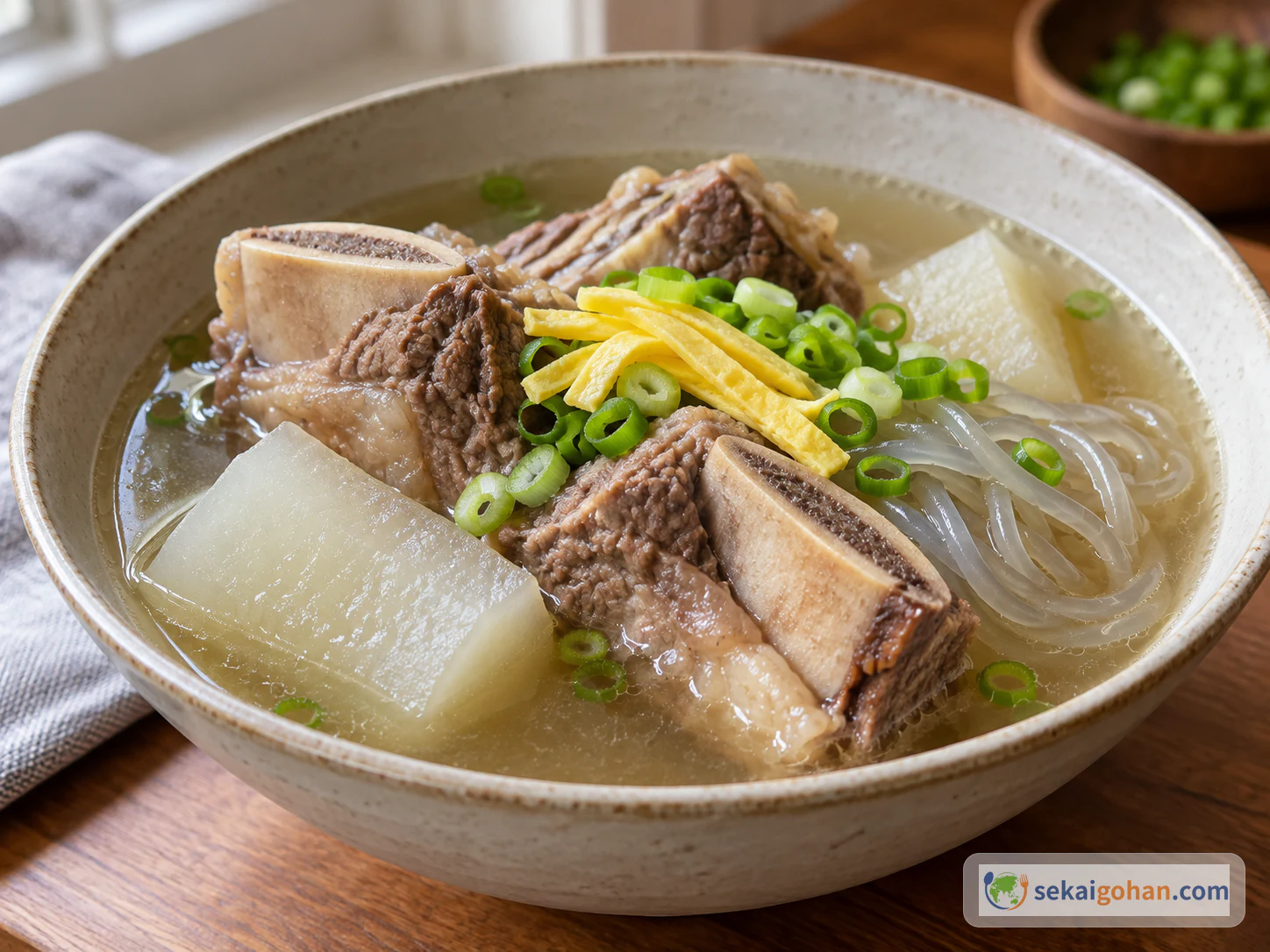
Galbitang: bone-in beef short ribs, radish and starch noodles in clear broth, topped with thin egg-yolk strips and green onion
Serves
2 servings
Level
Intermediate
Cuisine
Korean

How to make galbitang (갈비탕), the Korean soup of bone-in beef short ribs boiled with radish and onion. Based on Maangchi's written recipe for 2 servings, it covers soaking and a 10-minute blanch, two one-hour boils, straining and skimming the broth, and building the bowls, with optional starch noodles, egg-yolk strips and a spicy finish.

Cooking flow

Cooking steps

STEP11 / 12

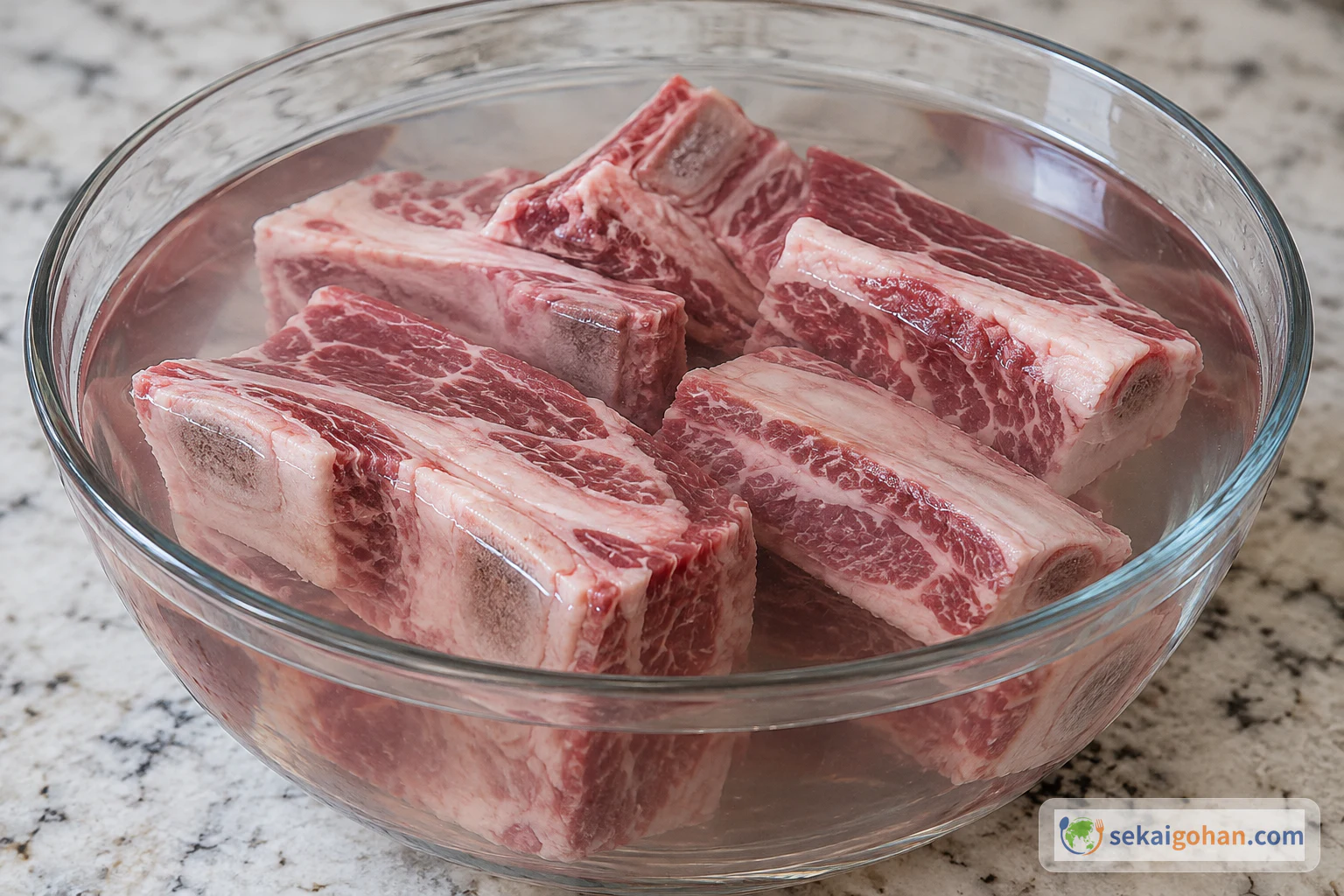
Rinse and soak the ribs

Beef short ribs soaking in a bowl of cold water
The ribs stay whole and submerged in cold water

Rinse the ribs in cold water several times, removing any blood and bone fragments and keeping splashing to a minimum. Put them in a bowl of fresh cold water to soak. Afterward, wash the sink, tools and your hands. Keep a separate cutting board and utensils for raw meat, away from vegetables and finished food.

STEP22 / 12

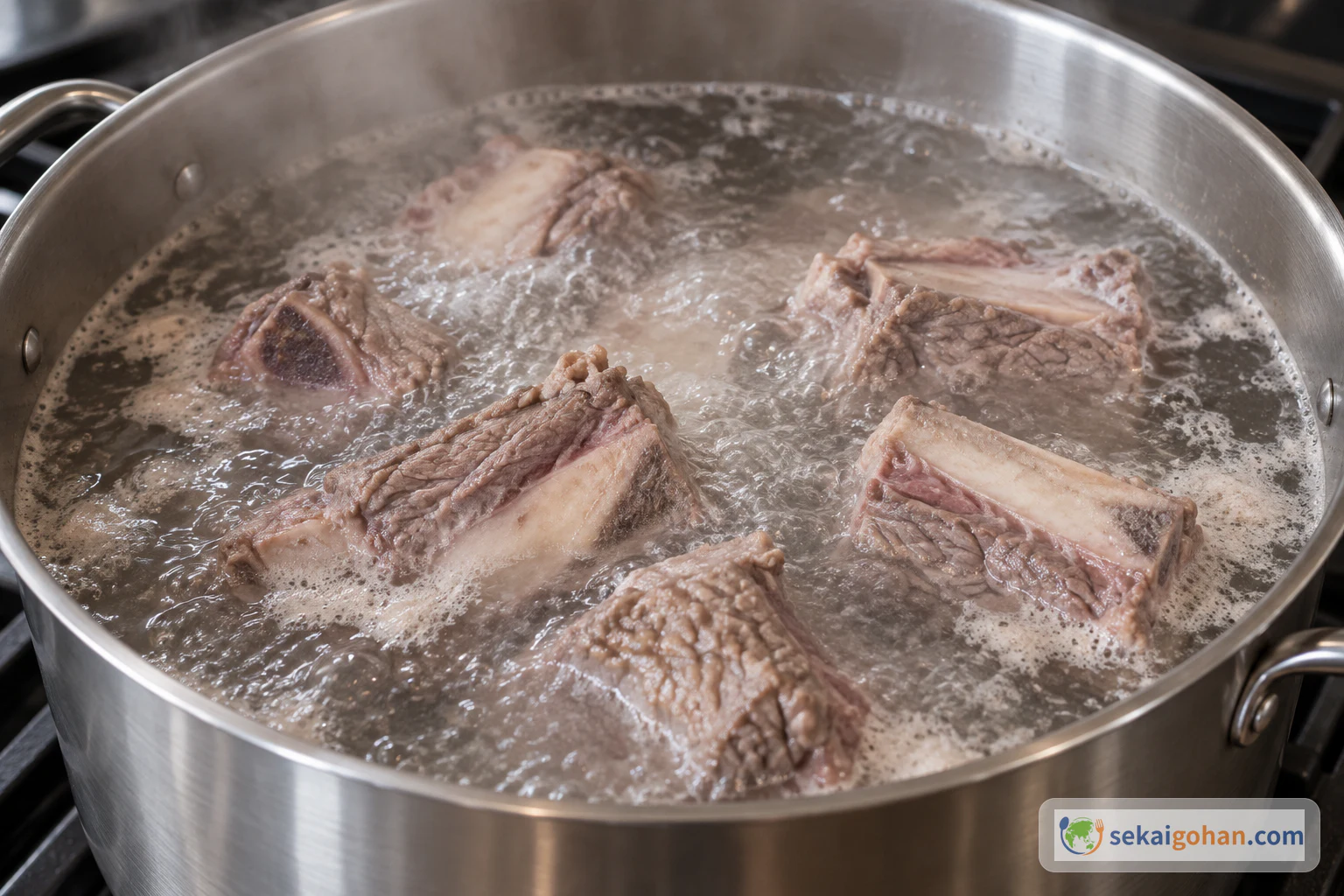
Blanch for 10 minutes

Drained bone-in short ribs blanching in a pot of boiling water
This first pot of water is only for blanching

Drain the ribs. Bring a large pot of water to a boil, add the ribs and blanch for 10 minutes.

STEP33 / 12

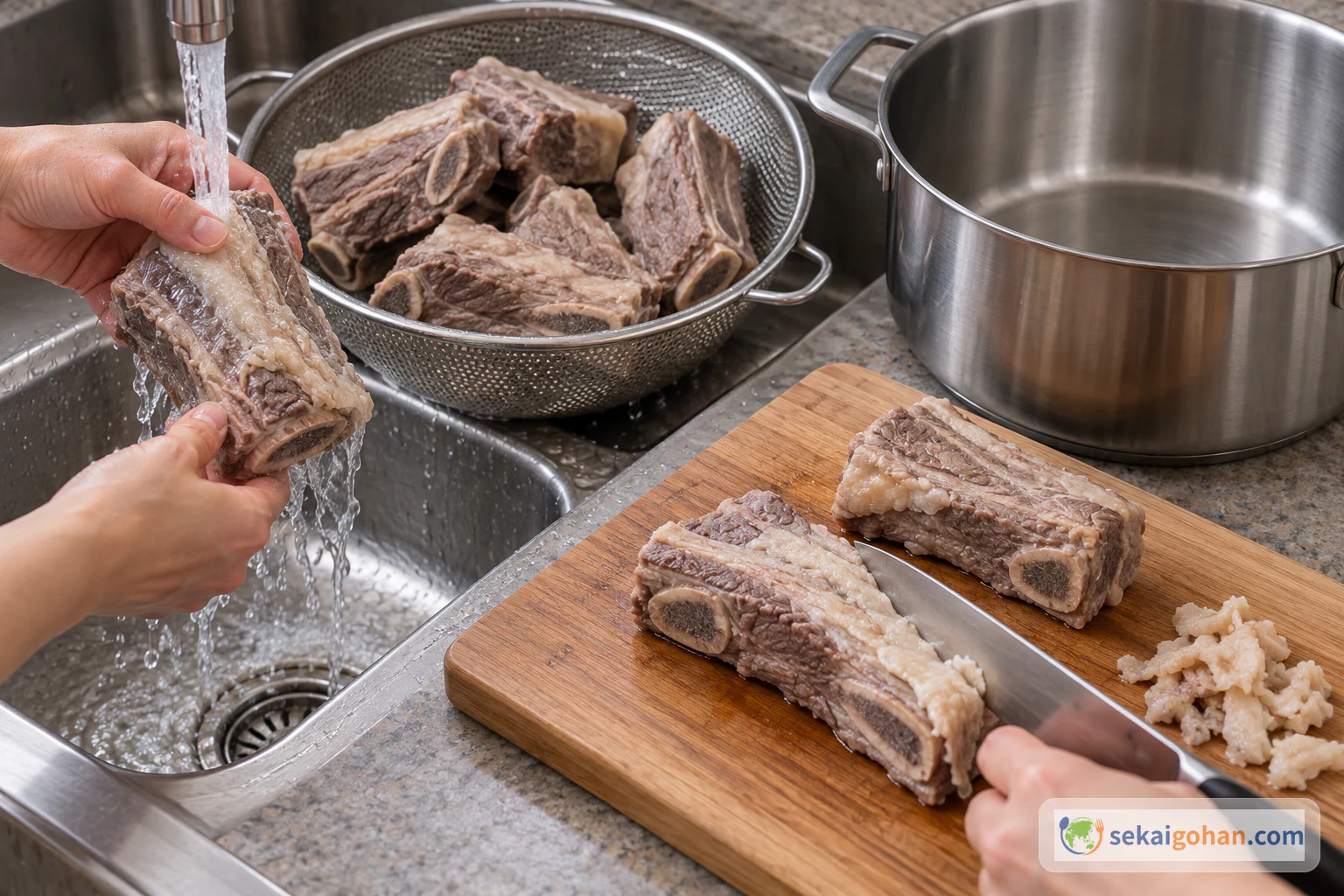
Wash the ribs and the pot

Blanched ribs being washed one by one and trimmed of visible fat, with a clean pot ready nearby
Each rib is washed and trimmed before going back into the clean pot

Strain the ribs and wash each one thoroughly. Remove any visible fat. Wash the pot as well.

STEP44 / 12

Start the broth

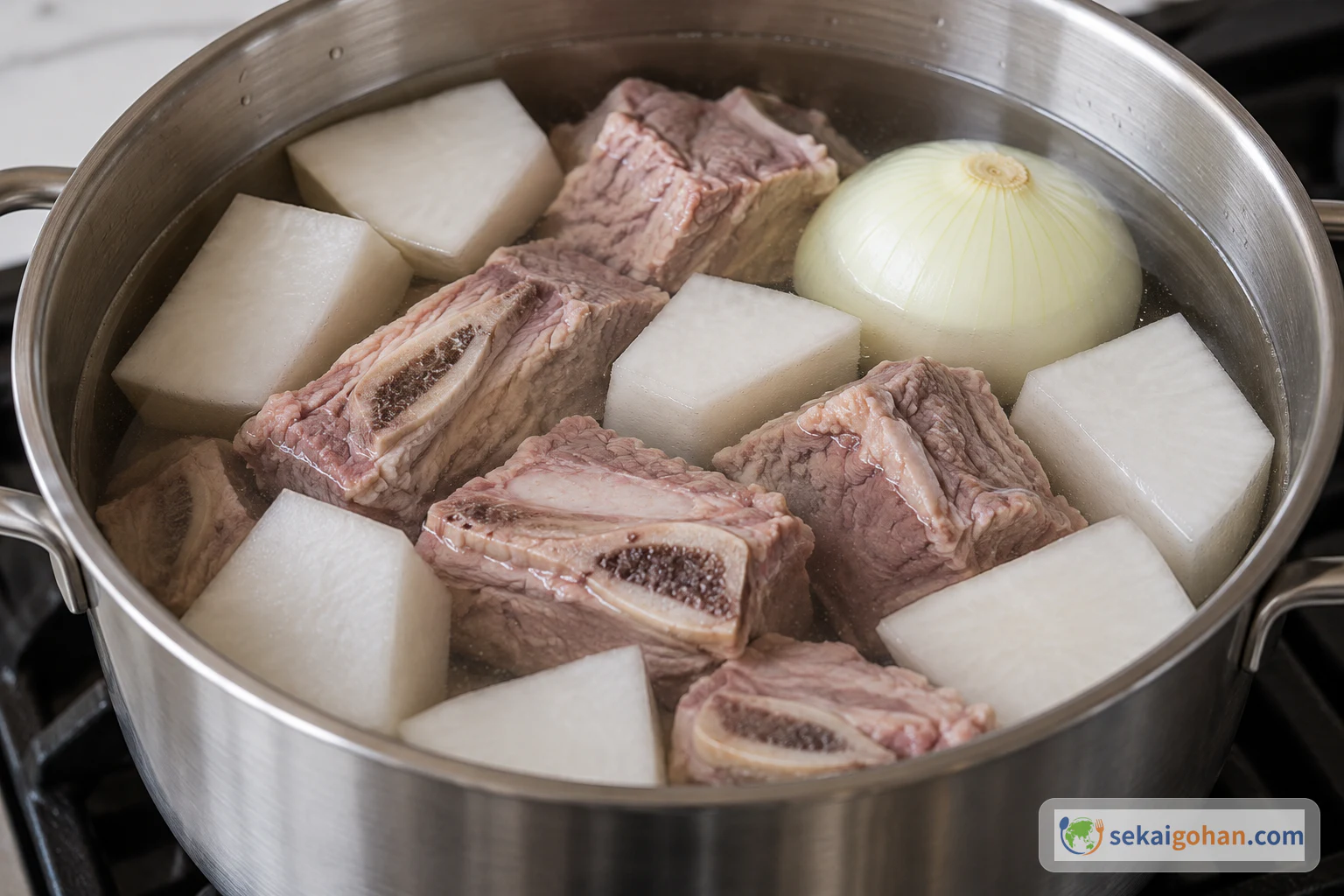
Ribs, radish, onion and water in a clean pot, ready to cook
Garlic and green onion stay out of the pot at this stage

Return the clean ribs to the clean pot. Add the radish, onion and 12 cups water.

STEP55 / 12

Boil over medium-high heat for 1 hour

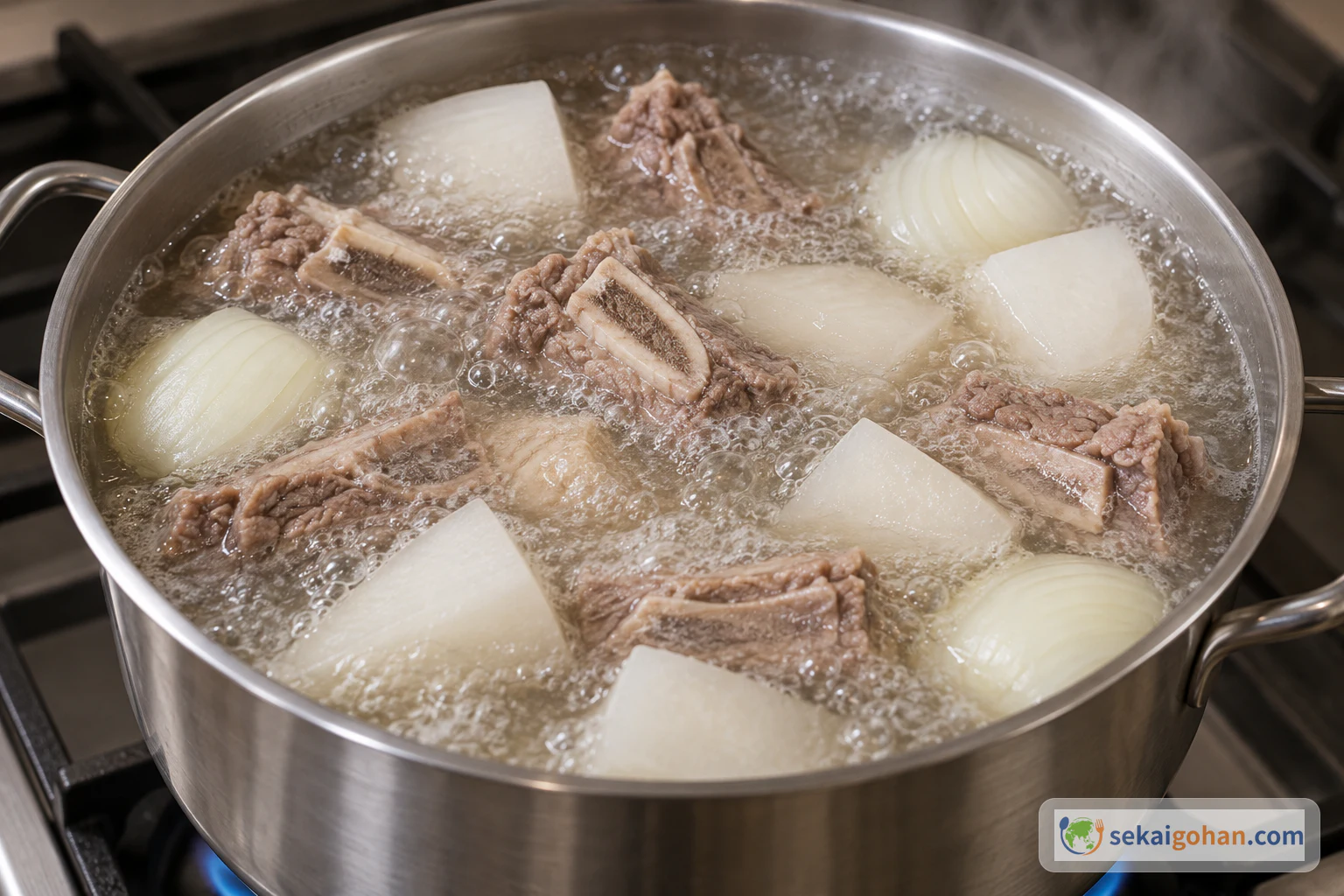
Ribs, radish and onion boiling over medium-high heat
The first hour, at medium-high heat

Set the pot over medium-high heat and boil for 1 hour.

STEP66 / 12

Lower to medium and boil for 1 more hour

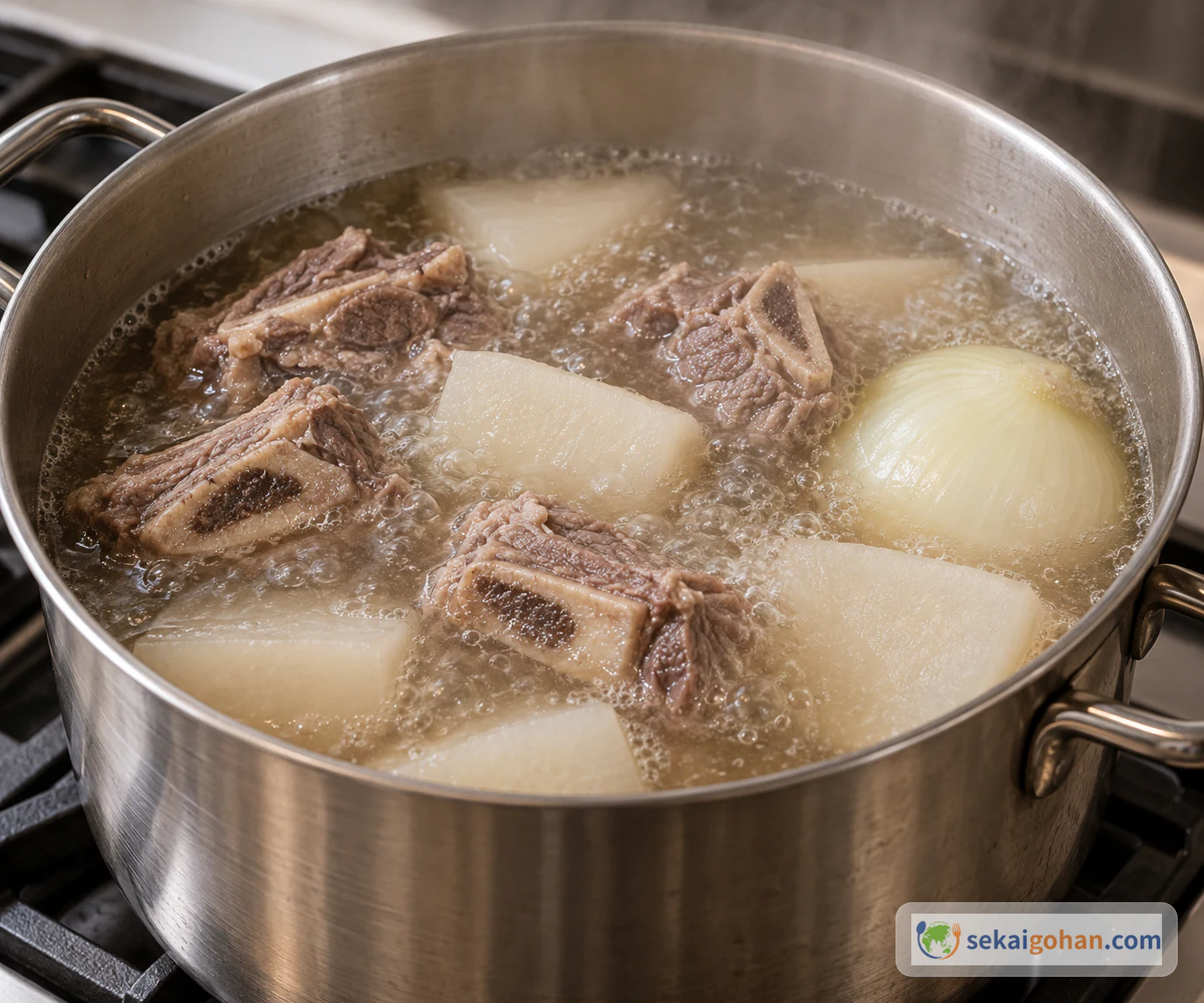
Ribs and radish cooking on over heat lowered to medium
The second hour, at medium heat

Turn the heat down to medium and boil for 1 more hour.

STEP77 / 12

Remove the onion, ribs and radish

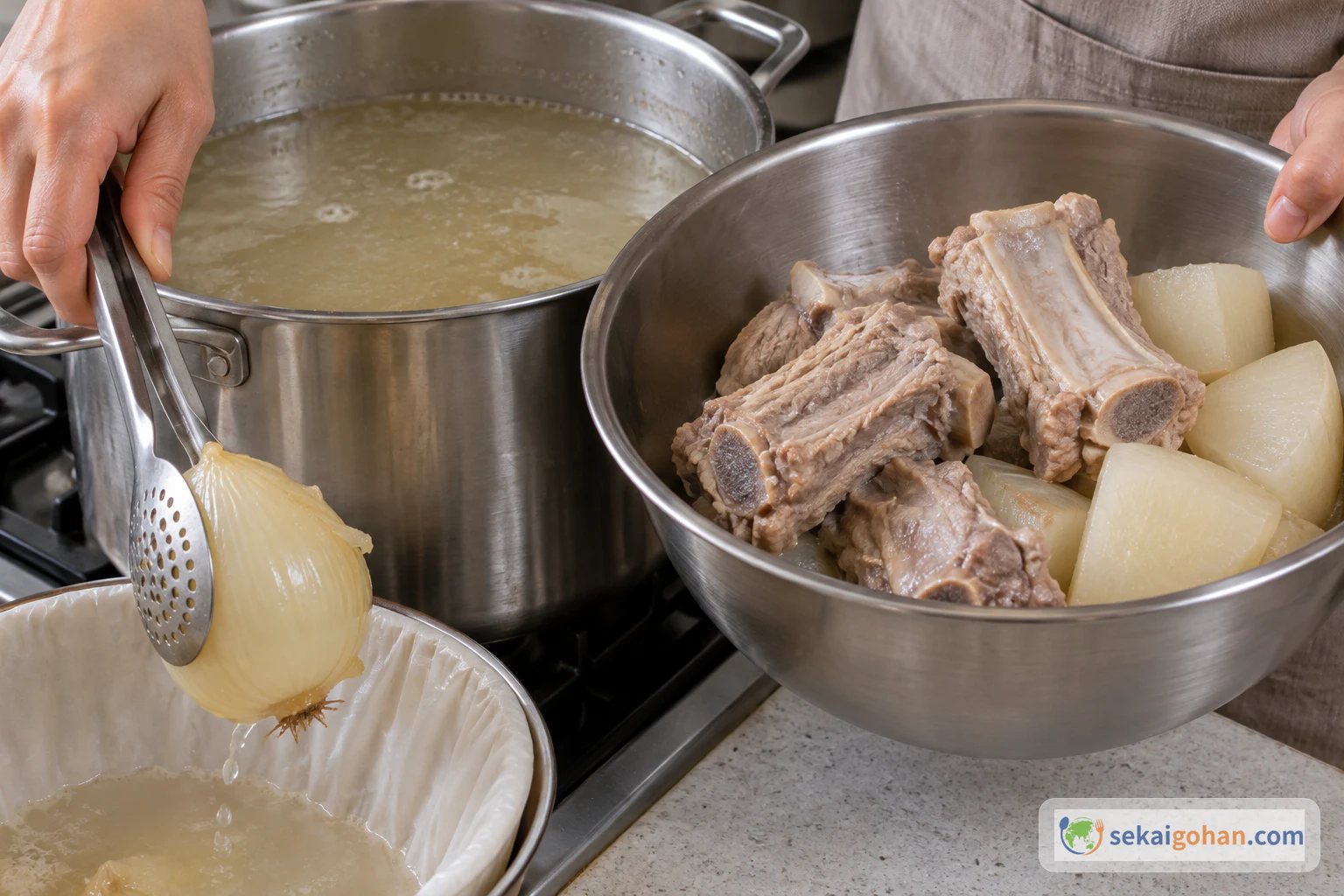
The onion being removed after cooking while ribs and radish go into a stainless-steel bowl
The ribs and radish wait in their own bowl while the broth is finished

Take the pot off the heat. Discard the onion. Transfer the ribs and radish to a stainless-steel bowl and keep the broth in the pot.

STEP88 / 12

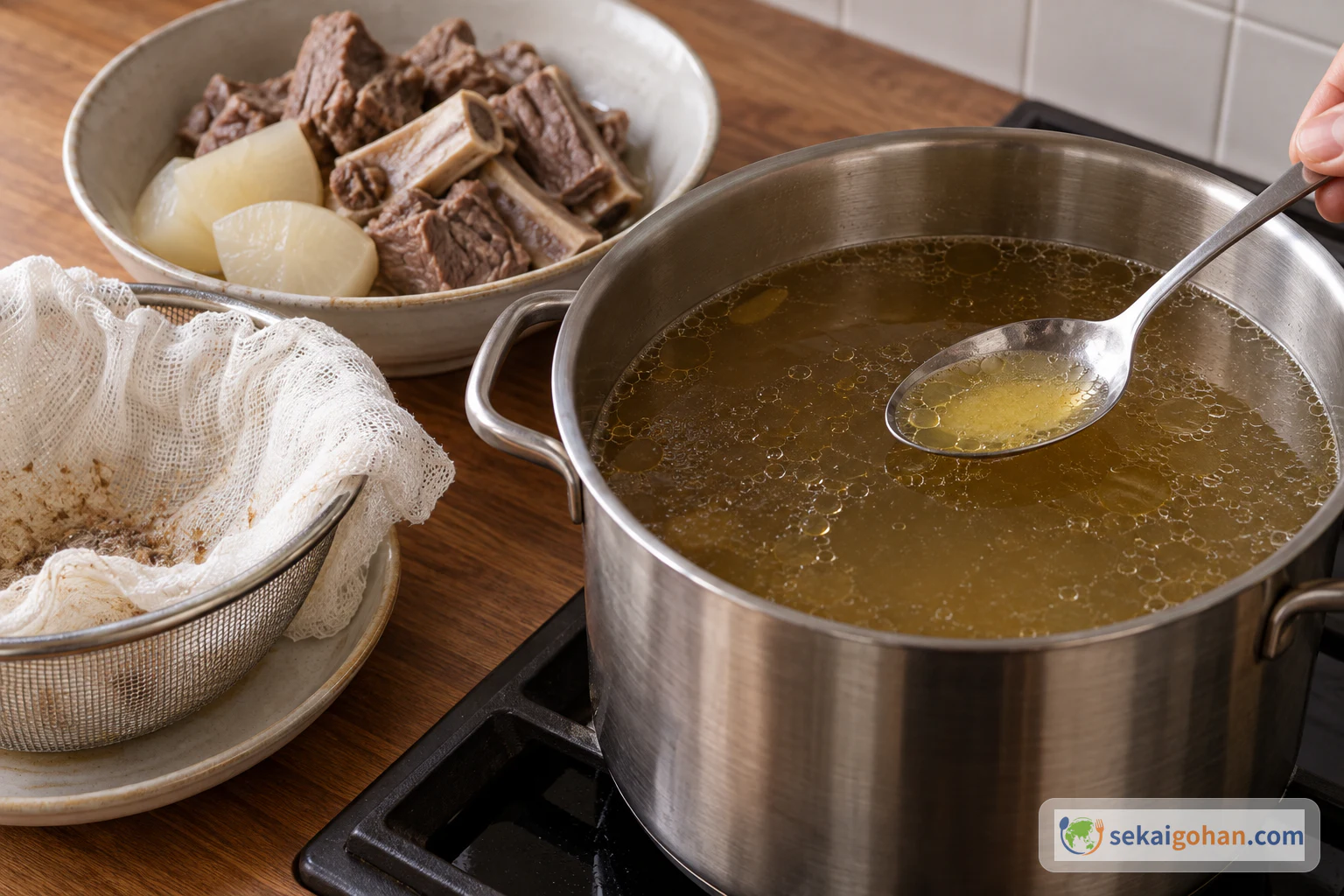
Strain the broth and skim the fat

Strained broth back in the pot, with a spoon skimming the floating fat
Skim the fat once the strained broth is back in the pot

Line a strainer with cheesecloth and strain the broth. Return the clear broth to the pot and spoon off the fat floating on top.

STEP99 / 12

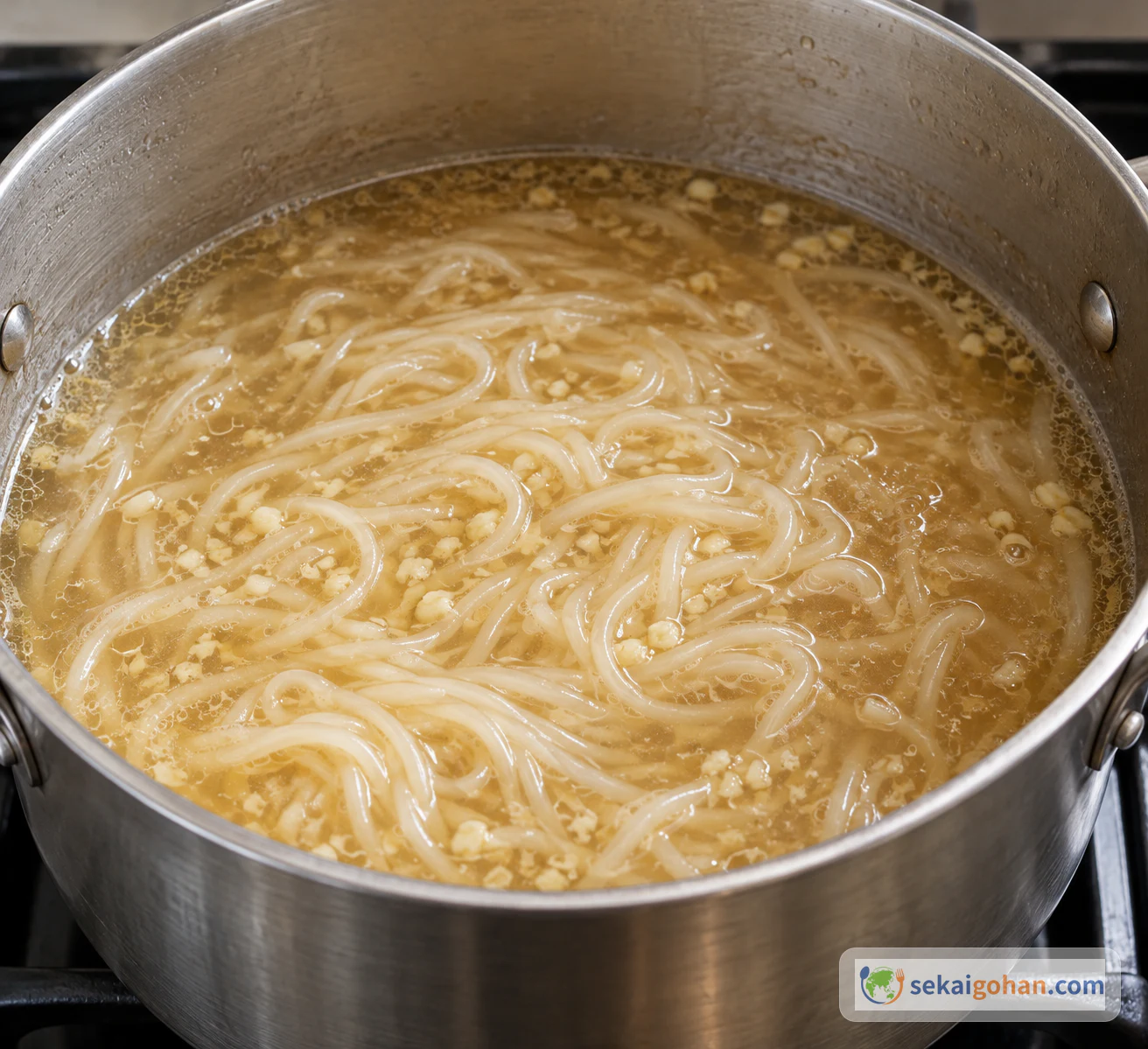
Cook the noodles and garlic

Starch noodles and minced garlic cooking in the strained broth
Cook until the noodles have no hard center

Add about 1 cup starch noodles and the minced garlic to the broth. Boil for a few minutes, until the noodles are soft yet firm with no hard center. Turn off the heat.

STEP1010 / 12

Make the egg-yolk garnish (optional)

A very thin sheet of egg yolk cooking in a nonstick pan for the galbitang garnish
A thin yolk sheet, to be sliced into strips once firm throughout

Skip this step if you are leaving out the garnish. Separate 2 eggs and remove the white strands from the yolks, then mix the yolks with a pinch of kosher salt. Heat a nonstick pan, spread 1 tsp cooking oil over it, wipe off the excess and turn the heat to low.

Pour in a thin layer of yolk. Turn off the heat and leave it on the hot pan for about 1 minute, then flip it and leave it for about 1 minute more. The yolk must be firm throughout. If it isn't, return the pan to low heat and keep cooking until it is. Slice into thin strips.

STEP1111 / 12

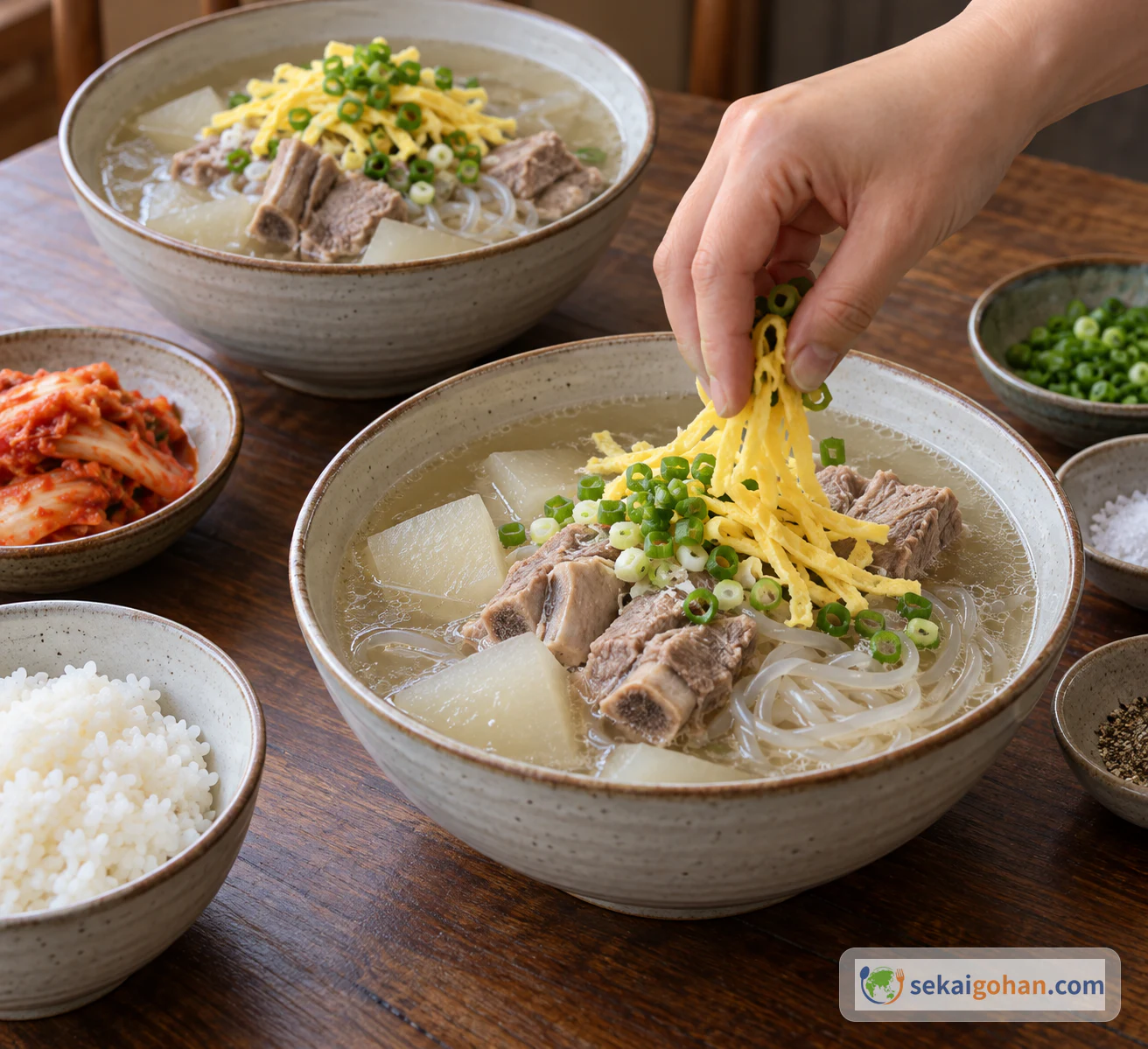
Build the bowls

Bowls of bite-size radish, bone-in ribs, broth and noodles being topped with egg strips and green onion
The nonspicy finish, with egg strips and green onion on top

Cut the radish into bite-size pieces and divide it between 2 large shallow bowls. Add 2 or 3 ribs to each bowl, leaving them whole on the bone. Reheat the broth and noodles.

For the nonspicy bowl, pour the hot broth and noodles over the ribs and radish, then top with the egg strips and chopped green onion.

For the spicy bowl, put 2 tsp gochugaru, 1 tbsp chopped green onion, 2 tsp soy sauce and 1 tsp toasted sesame oil in each bowl and mix. Then add the hot broth and noodles.

STEP1212 / 12

Bring it to the table

STEP 12

Set out salt, chopped green onion and ground black pepper so everyone can season their own bowl. Serve with rice and kimchi. Other side dishes are optional.

0 / 0
Ingredients

Ingredients

1 / 1

Ingredients

Ingredient Amount Role
Beef short ribs 1 kg (about 3 pounds) The meat and body of the soup
Cold water as needed For rinsing and soaking the ribs
Water as needed For blanching the ribs
Small Korean radish or daikon about 2 cups Boiled in the broth, then served in the bowl
Medium onion 1 Flavors the broth, then is discarded
Water 12 cups The broth
Starch noodles about 1 cup Optional; cooked in the strained broth
Garlic, minced 4 cloves Added with the noodles
Green onions, washed under running water and chopped 4 to 6 For topping and for the table
Ground black pepper to taste For the table
Salt to taste For the table
Rice as needed Served alongside
Kimchi as needed Served alongside
Egg yolks (optional garnish) 2 Thin yellow strips for the nonspicy bowl
Kosher salt (optional garnish) a pinch Seasons the yolks
Cooking oil (optional garnish) 1 tsp Coats the pan
Gochugaru (spicy finish) 2 tsp per bowl Heat and color
Chopped green onion (spicy finish) 1 tbsp per bowl Freshness in the seasoning
Soy sauce (spicy finish) 2 tsp per bowl Salt and savor
Toasted sesame oil (spicy finish) 1 tsp per bowl Aroma
0 / 0

Steam rises from a wide, shallow bowl: bone-in short ribs and pieces of radish under clear broth and a tangle of starch noodles, with thin strips of egg yolk and chopped green onion on top. Galbitang (갈비탕) is a Korean soup made by boiling beef short ribs for a long time. The broth is clean and beefy, the radish goes soft and sweet, and the ribs come straight off the bone. You can serve it mild or give each bowl a spicy finish.

Galbitang: Korean Short Rib Soup

Galbitang is a soup cooked with cut beef ribs, and you may also see it called garitang or gal-itang. It appears on royal banquet menus from the 1890s. Some claim ribs were eaten this way as early as the late Goryeo period, but that is unconfirmed, so the dish has no firm origin date. A 1936 version seasons the cooked ribs separately before returning them to the broth.

The name causes some confusion. Galbitang is a different dish from galbi-jjim, which is braised short ribs, and from galbi, which is grilled ribs. Dak-galbi is a chicken dish and unrelated. For other dishes from the same table, see our Korean recipes.

It's a hearty soup, and it often turns up early in the day. One cook remembers eating spicy galbitang for breakfast at a friend's home in Mokpo during college, with seafood side dishes on the table. Kimchi goes well with a soup this rich.

Ingredients for 2 Servings
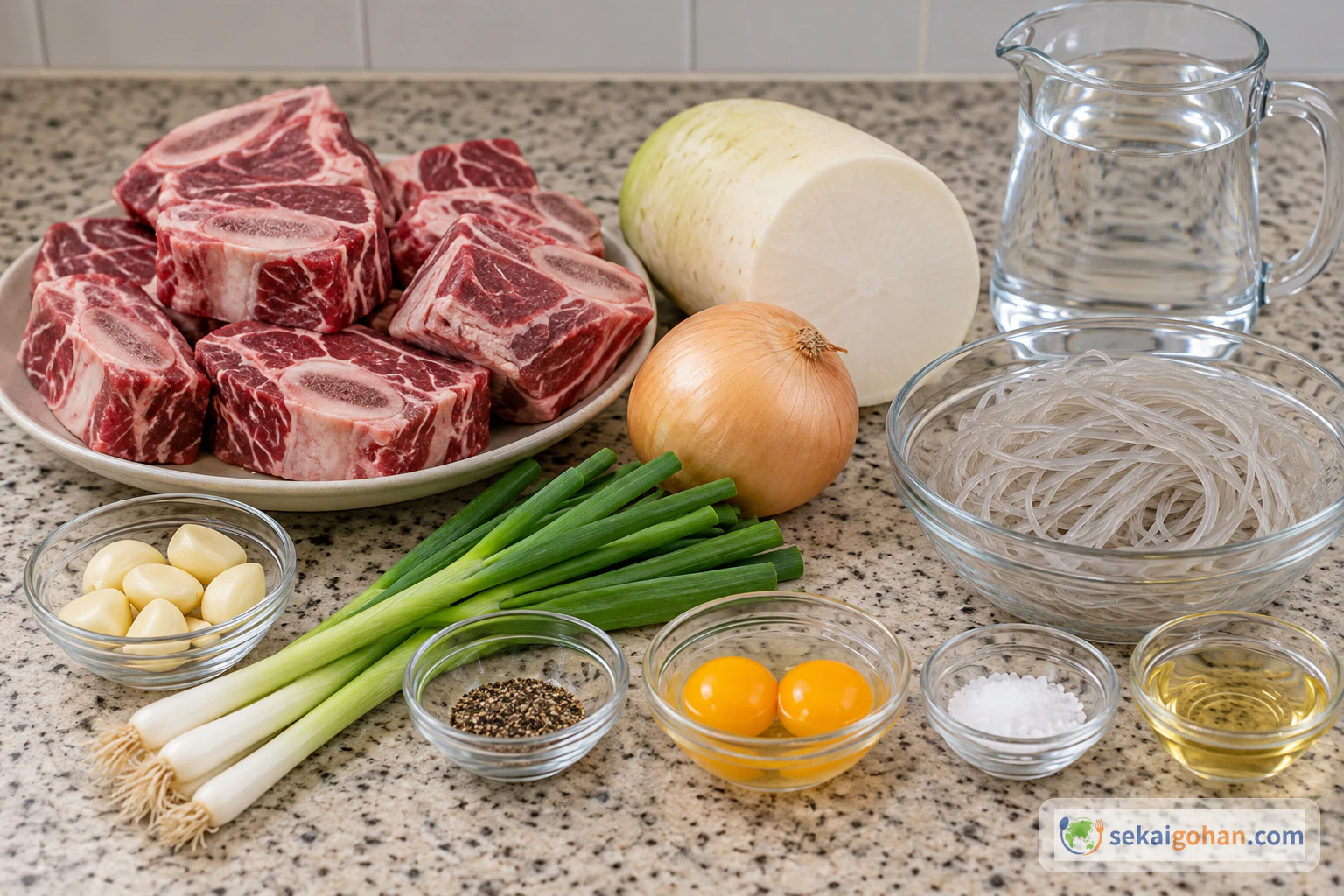
Bone-in beef short ribs, radish, onion, water, starch noodles, garlic, green onions and black pepper laid out together
The nonspicy ingredients, with the egg garnish items set apart

Equipment

  • Large pot
  • Strainer
  • Cheesecloth
  • Stainless-steel bowl
  • Spoon for skimming
  • Knife, with a cutting board for the cooked radish
  • Separate cutting board and utensils for raw meat
  • Nonstick pan, for the optional egg garnish
  • 2 large shallow bowls

Choosing Ribs, Radish and Noodles for Galbitang

  • Ribs: Look for bone-in beef short ribs.
  • Radish: Use Korean radish or daikon.
  • Noodles: Choose starch noodles and judge them by texture. They should be soft yet firm, with no hard center.
Handling raw ribs and the egg garnish

Rinsing raw meat can splash germs onto nearby food, the sink and the counter, so keep splashing to a minimum and keep raw meat and its tools away from other food. For the egg garnish, cook the yolk until it is firm throughout, as step 10 requires. The garnish is optional and can be left out.

Galbitang Troubleshooting

What you notice What to do
The noodles still have a hard center Keep boiling until they are soft yet firm all the way through
Fat is still floating on the broth Keep spooning it off before adding the noodles
The yolk sheet isn't firm after resting on the hot pan Return it to low heat and keep cooking until firm throughout, or leave out the garnish
The broth has cooled by the time the bowls are ready Reheat the broth and noodles in the pot before pouring
The bowl tastes too mild Add salt, chopped green onion and pepper at the table

Serving Galbitang and Variations

Build the bowls at the very end. The ribs stay whole on the bone with radish beneath them, and the strained, skimmed broth and noodles are poured over last. Serve rice and kimchi alongside.

The spicy seasoning is mixed into each bowl, so the pot of broth stays the same either way. That means you can make one bowl of each. The yolk strips belong to the nonspicy bowl and are optional, and without them the bowl is still finished with green onion.

At the table, eat the ribs first, then mix rice into the remaining soup. Glass noodles can go in as well.

Frequently Asked Questions

Are the noodles required?

The starch noodles are optional, but the method adds about 1 cup and serves the soup with them.

Is rinsing the raw ribs safe?

Yes, with care. Limit splashing, wash the sink, tools and your hands afterward, and keep separate boards and utensils for raw meat. The ribs then go through the 10-minute blanch and the two one-hour boils.

How do I know the egg garnish is cooked?

Go by firmness rather than time. Cook the egg until both yolk and white are firm, and if the yolk isn't firm throughout after resting on the hot pan, return it to low heat. You can also leave the garnish out.

Can I make it ahead or keep leftovers?

For a large batch, refrigerate the broth overnight so the fat solidifies, then lift it off. Reheat the soup before serving.

How long does galbitang take?

Plan around the 10-minute blanch, the two one-hour boils, a few minutes for the noodles and about 1 minute per side for the egg garnish, plus the time for soaking the ribs.
Sources