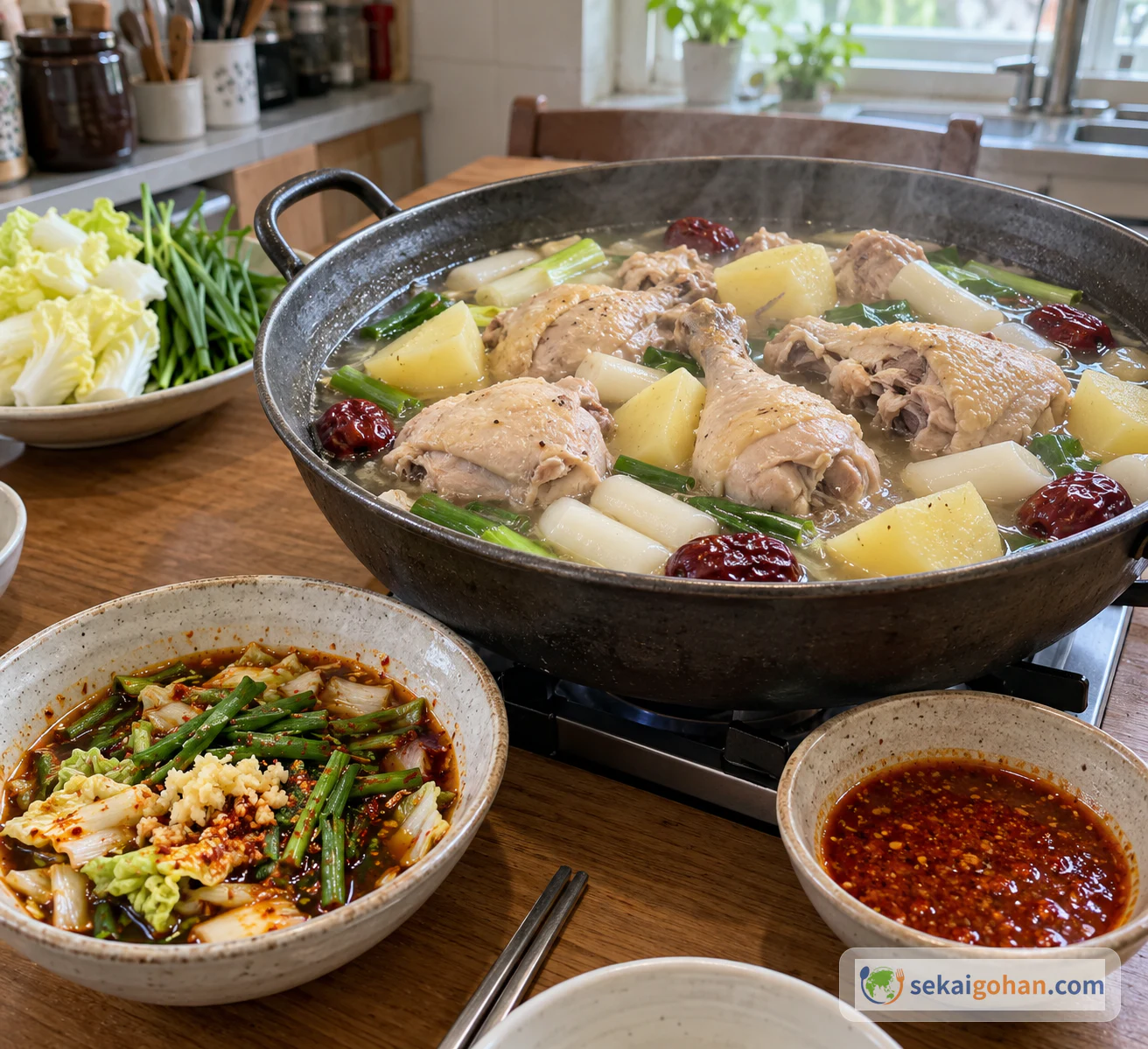
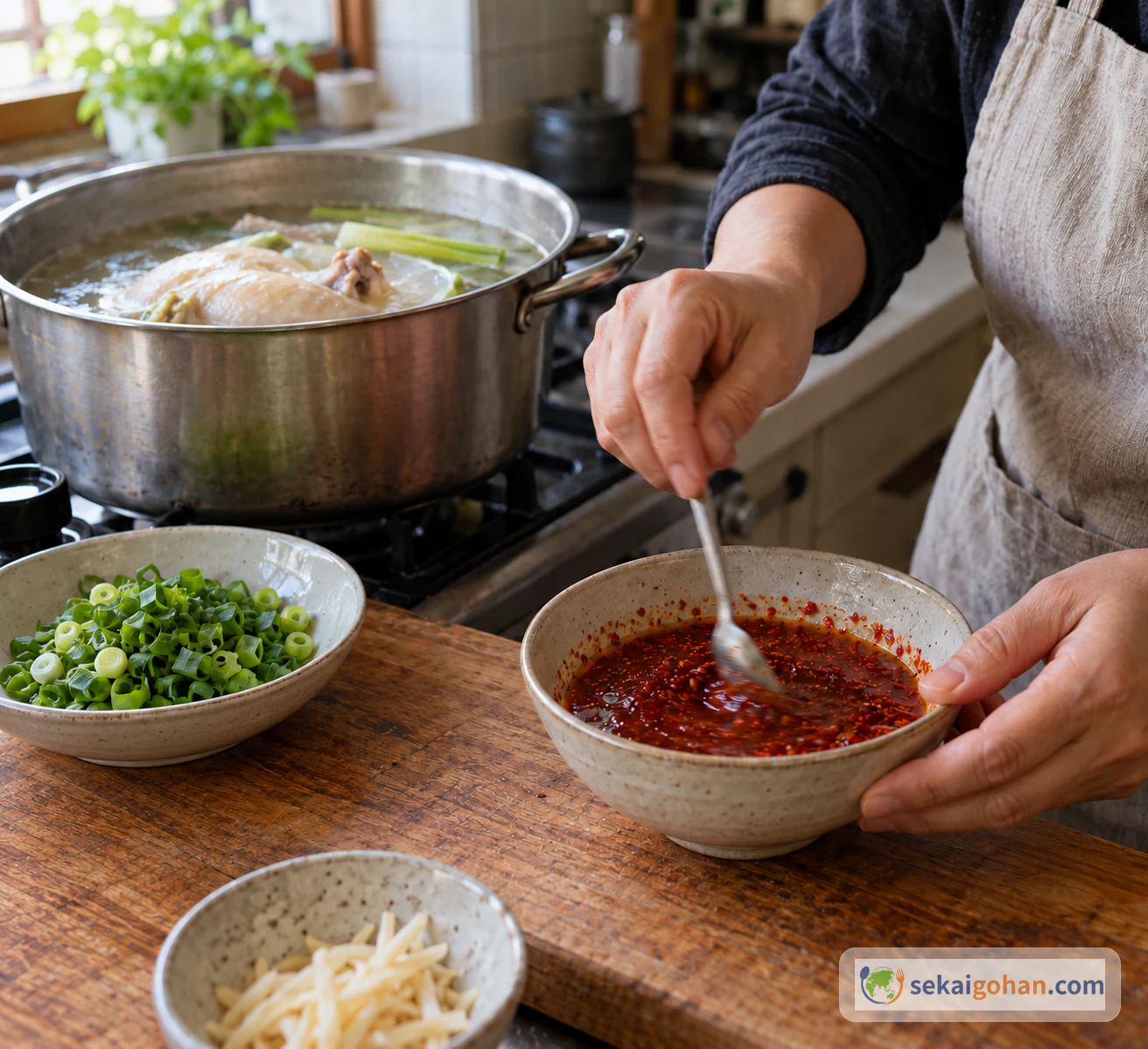
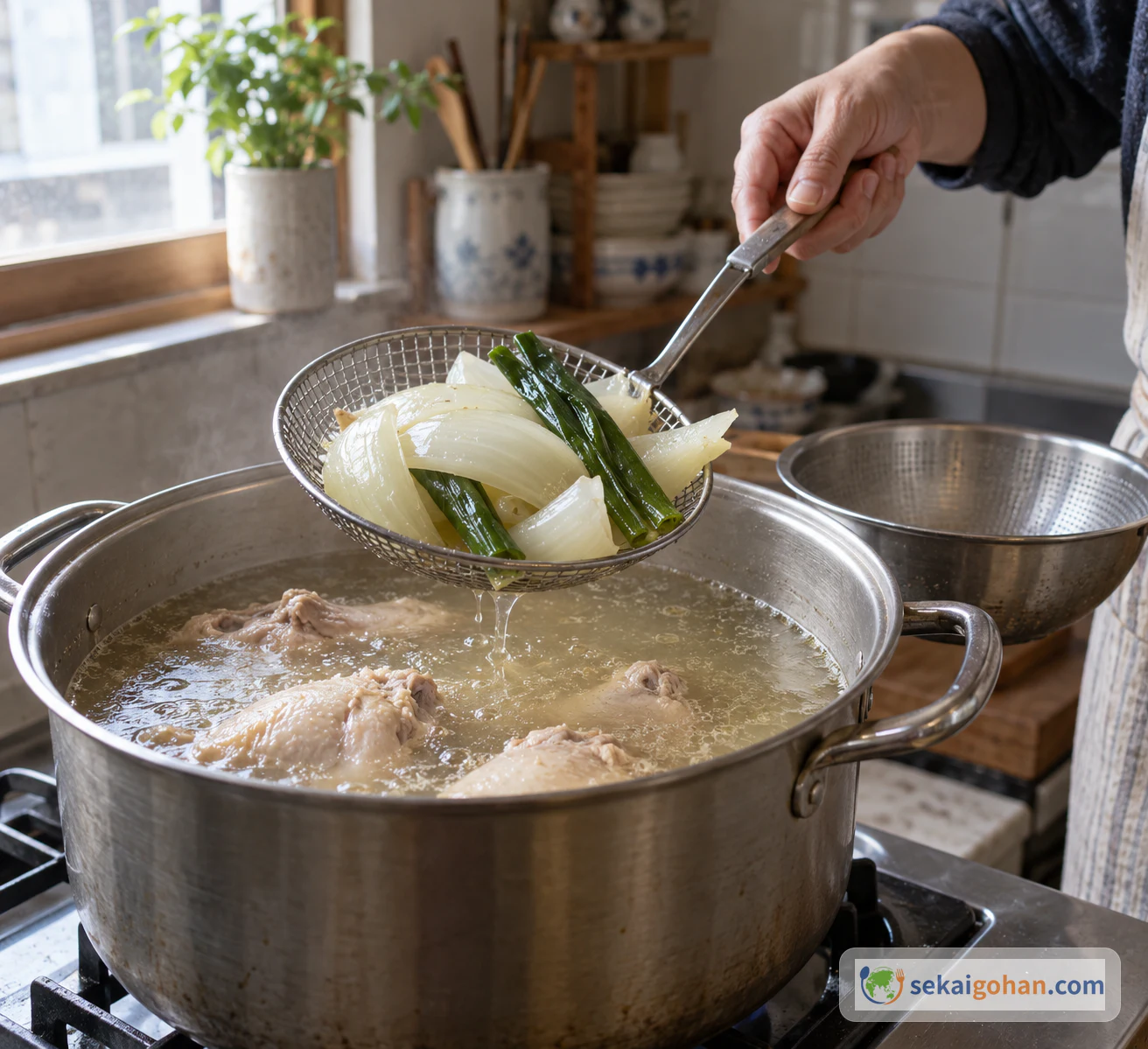
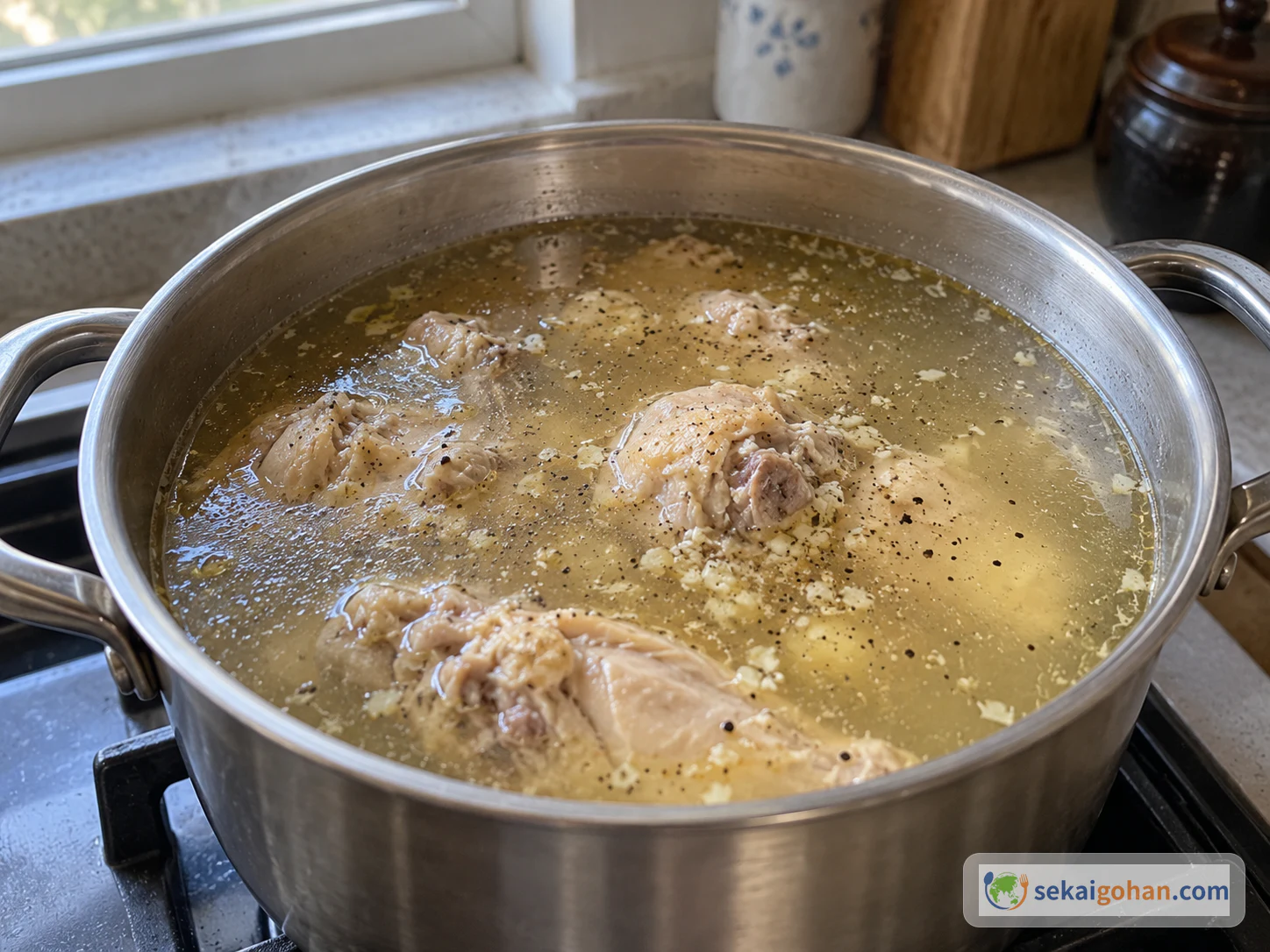
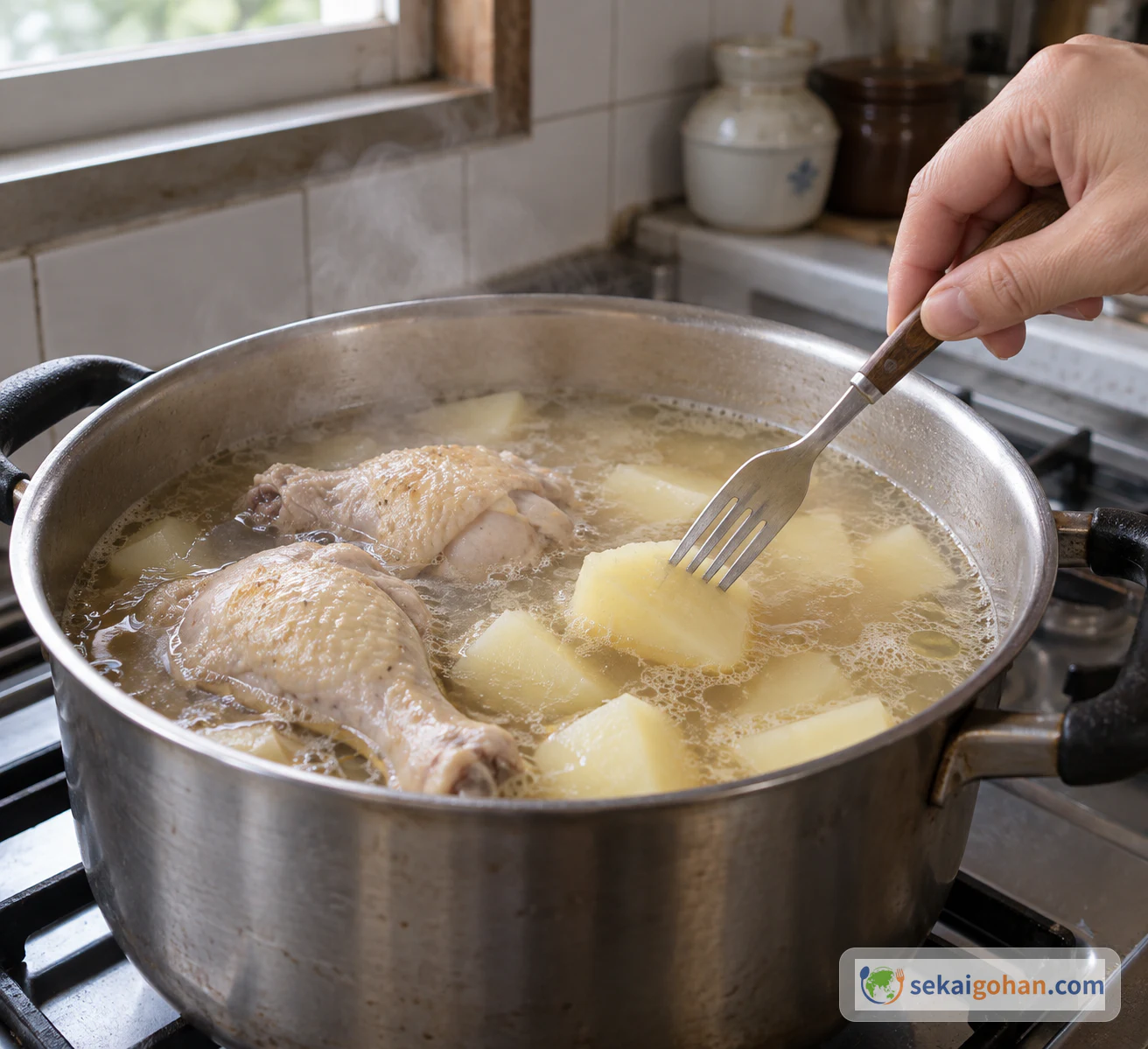
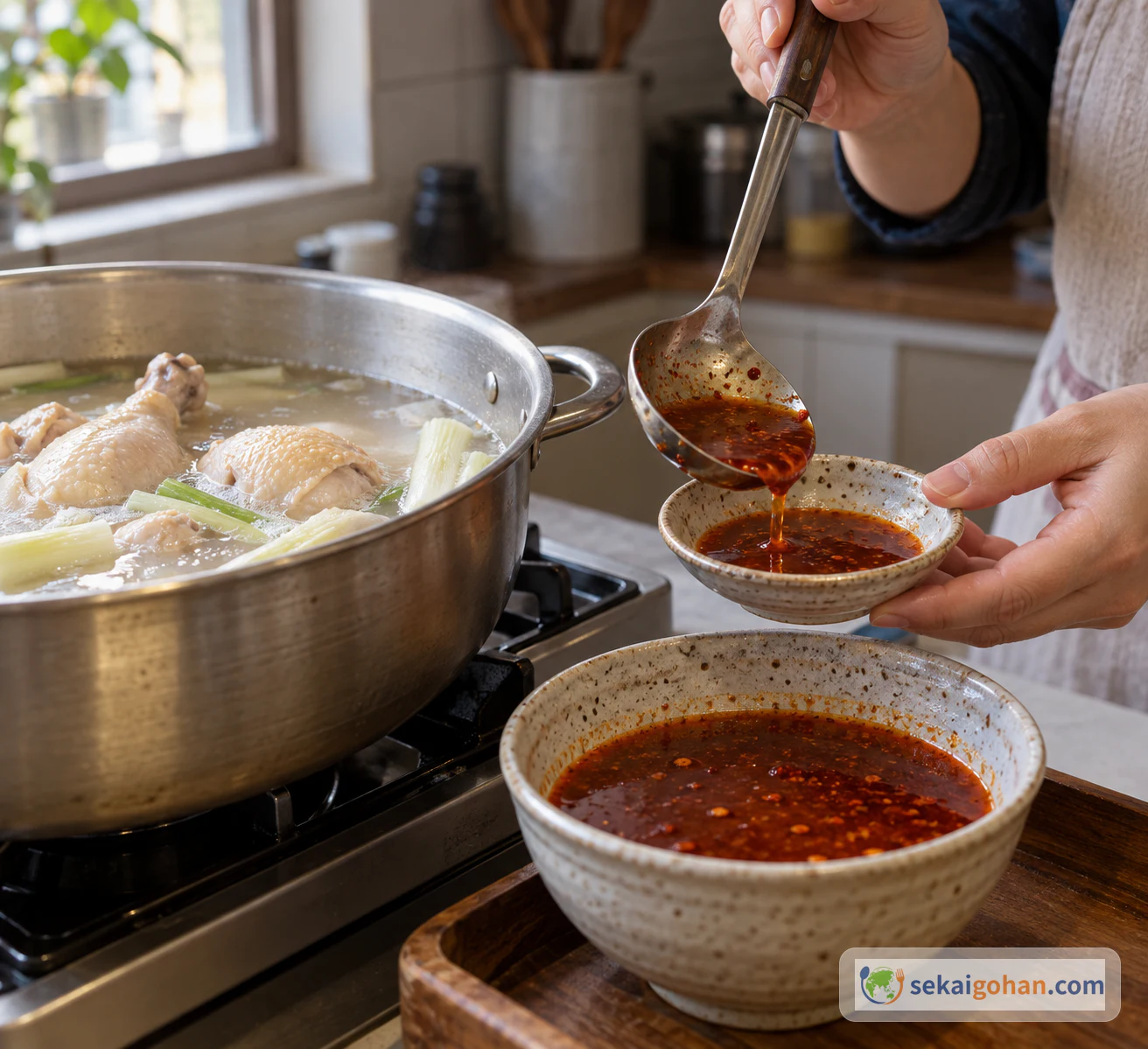
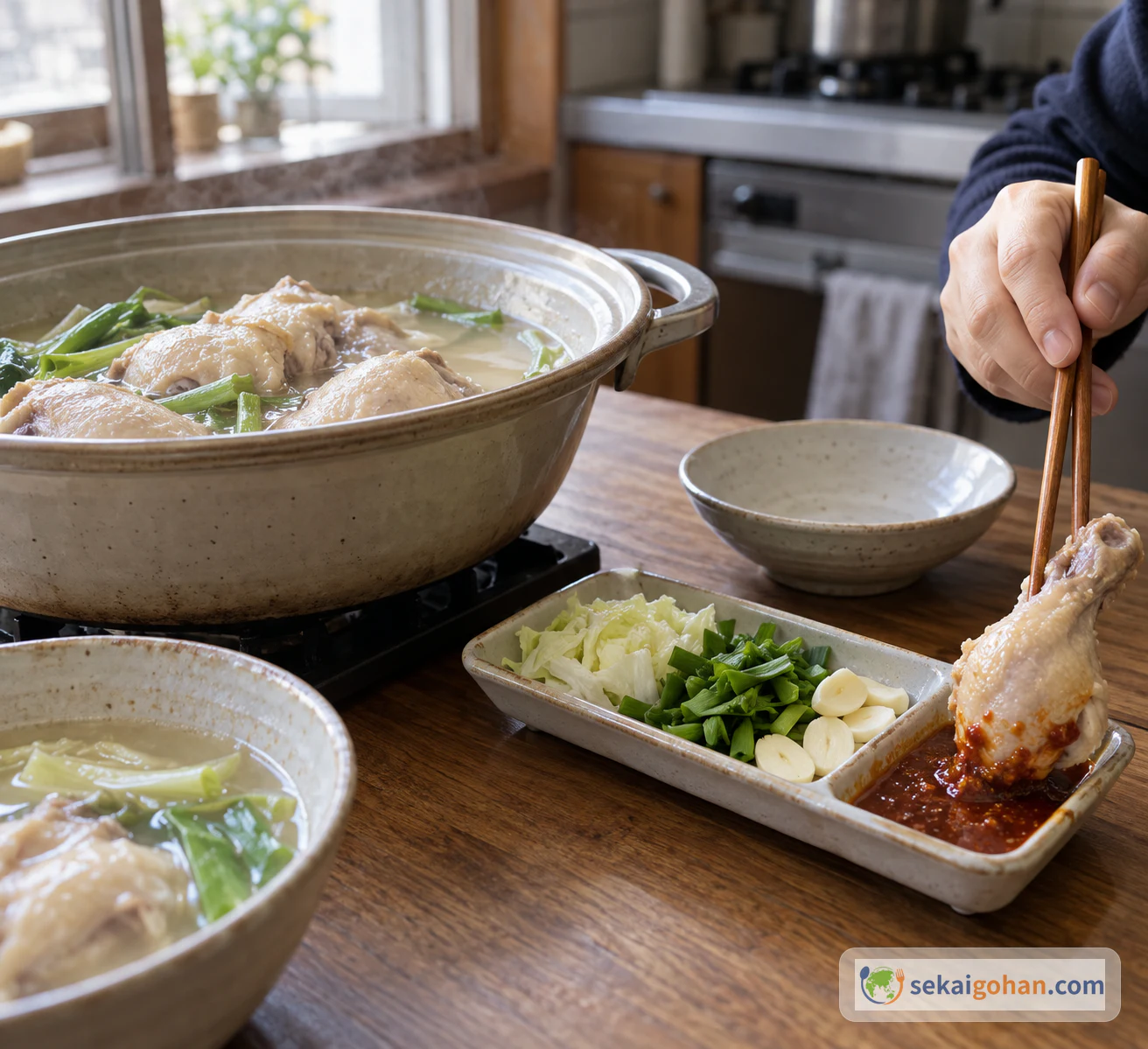
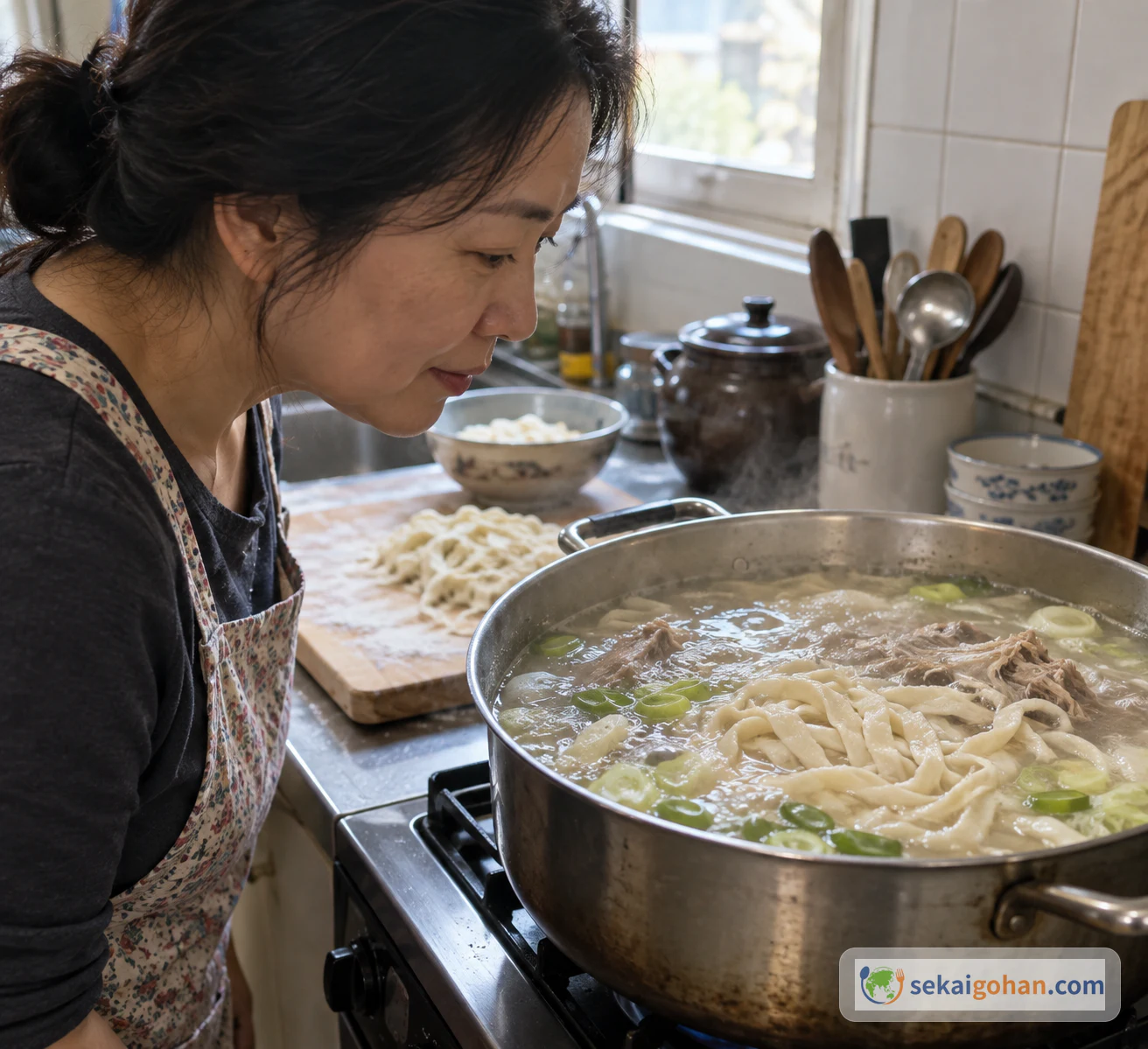
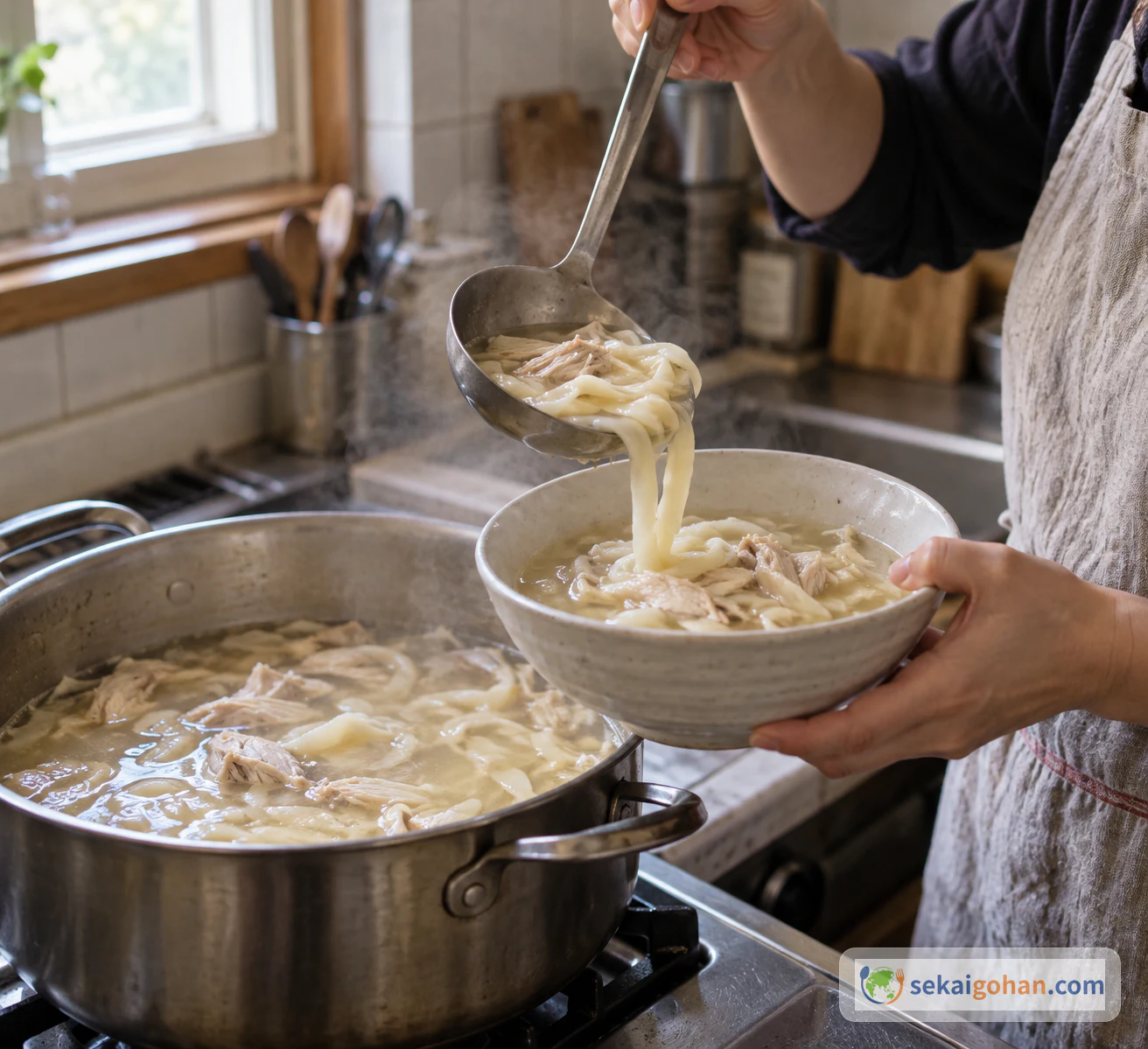
A pot of clear chicken broth sits in the middle of the table, potatoes and rice cakes simmering among the pieces of chicken. Everyone reaches in, lifts out a piece and dips it into their own small tray of sauce and raw vegetables. When the chicken is gone, noodles go into whatever broth remains. Dak-hanmari is a Seoul dish built around that shared pot. The broth stays mild, and each person sets their own heat with two sauces made on the side: a soy-vinegar base and a gochugaru sauce loosened with broth from the pot. This version makes enough for two hungry people.
About Dak-hanmari
In Korean the dish is written 닭한마리. You'll see it romanized as Dakhanmari, Dak Hanmari or Dak-hanmari, all for the same dish, and in English it also goes by "Whole Chicken Stew." It is a shared pot of chicken with add-ins such as potatoes and rice cakes, a dipping sauce each person adjusts, and noodles at the end.
Dak-hanmari in Seoul
The dish is tied to Seoul and is believed to date back to the 1960s, though its founding date, birthplace and inventor remain unconfirmed. Jinokhwa Halmae Wonjo Dakhanmari, a restaurant in Dongdaemun Market, has been serving it since 1978: whole-chicken soup with optional additions such as rice cakes, scallions, potatoes and noodles.
The meal follows a clear order. Chicken comes out of the shared pot, a dipping sauce waits at each place, potatoes and rice cakes cook in the broth, and noodles finish what is left. This recipe keeps that order. For more dishes from the same table, see Korean recipes.
How It Differs from Samgyetang and Other Chicken Dishes
Samgyetang is a young chicken stuffed with glutinous rice, garlic, jujube and ginseng, then simmered, so each bird is a sealed parcel. Dak-hanmari uses chicken pieces in an open shared pot, with dipping sauces and an optional noodle course, and nothing is stuffed. Dakgalbi is chicken and vegetables stir-fried in a spicy sauce rather than a broth dish, and Andong jjimdak is chicken and vegetables braised in a soy-based sauce. They all start with chicken; the method is what sets each one apart.
Ingredients for the Broth, Pot, Two Sauces and Noodles
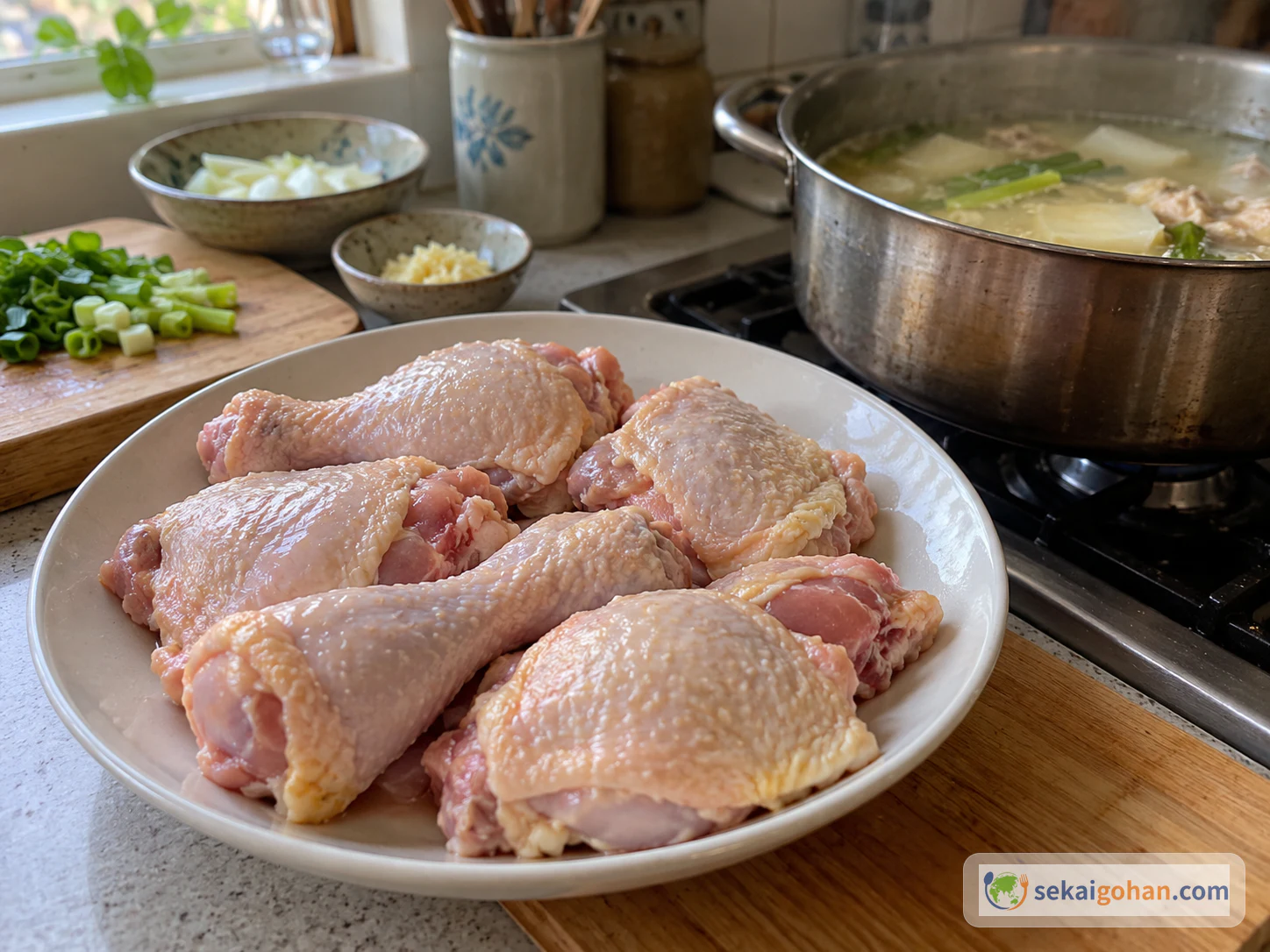
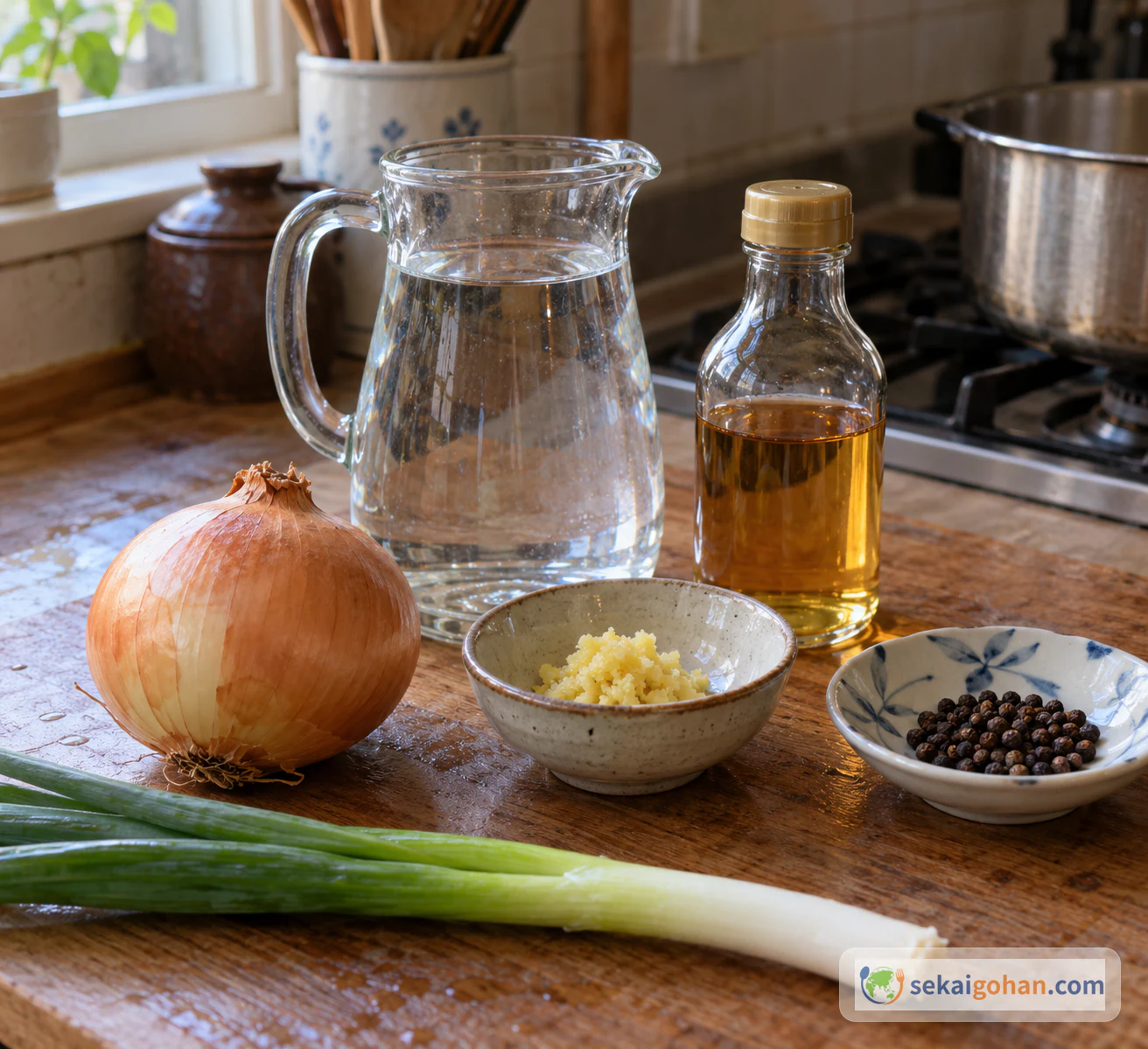
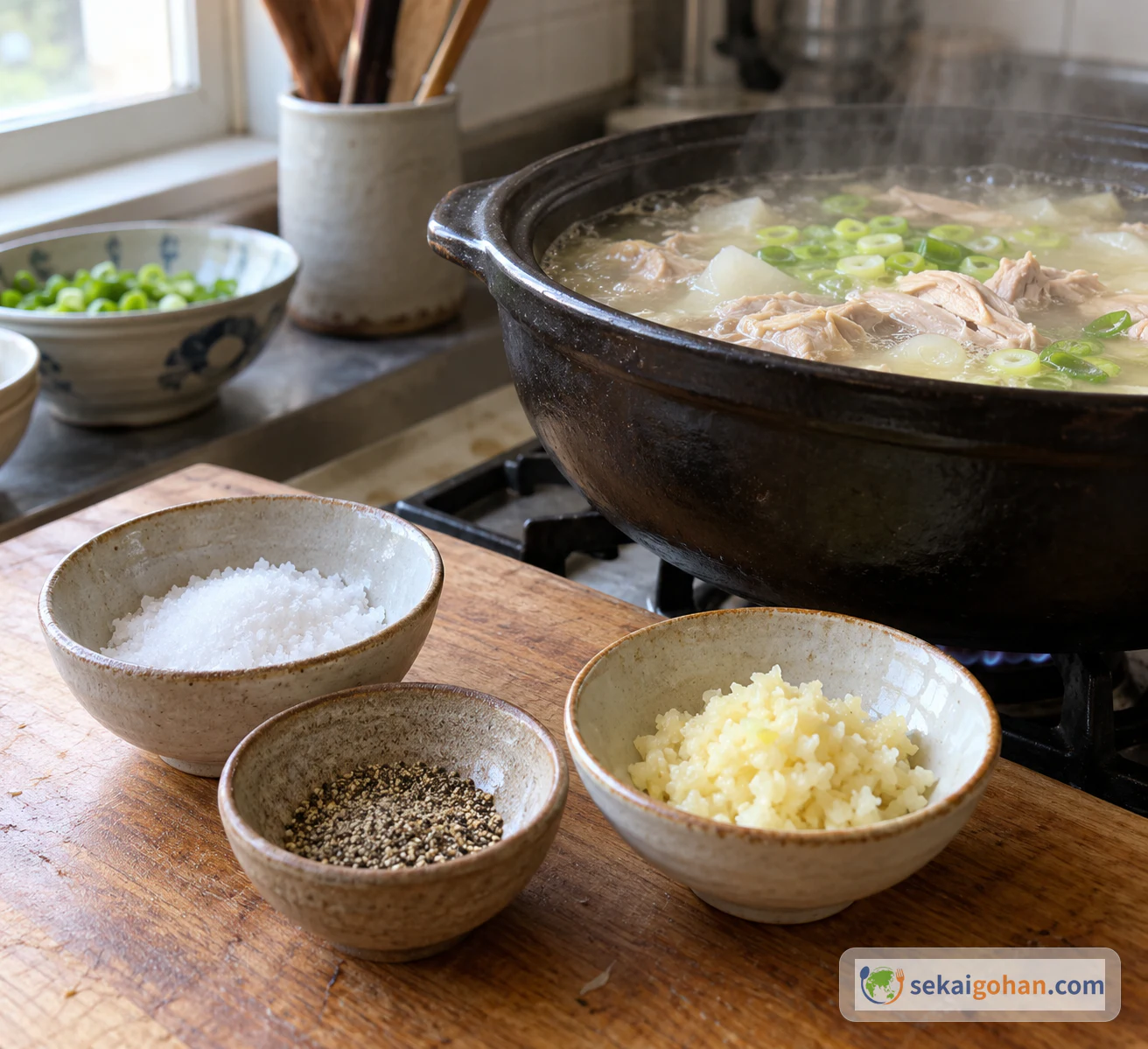
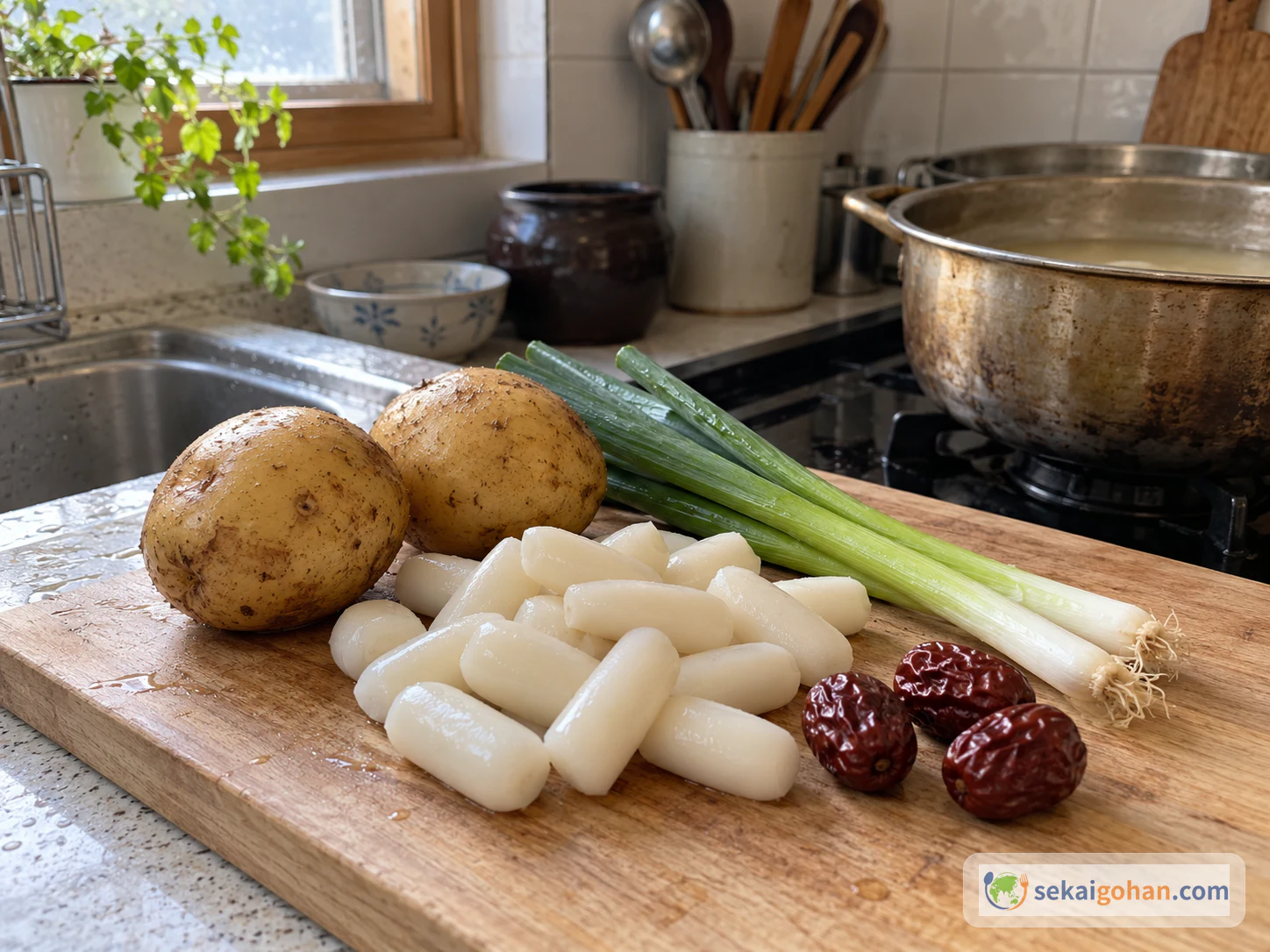
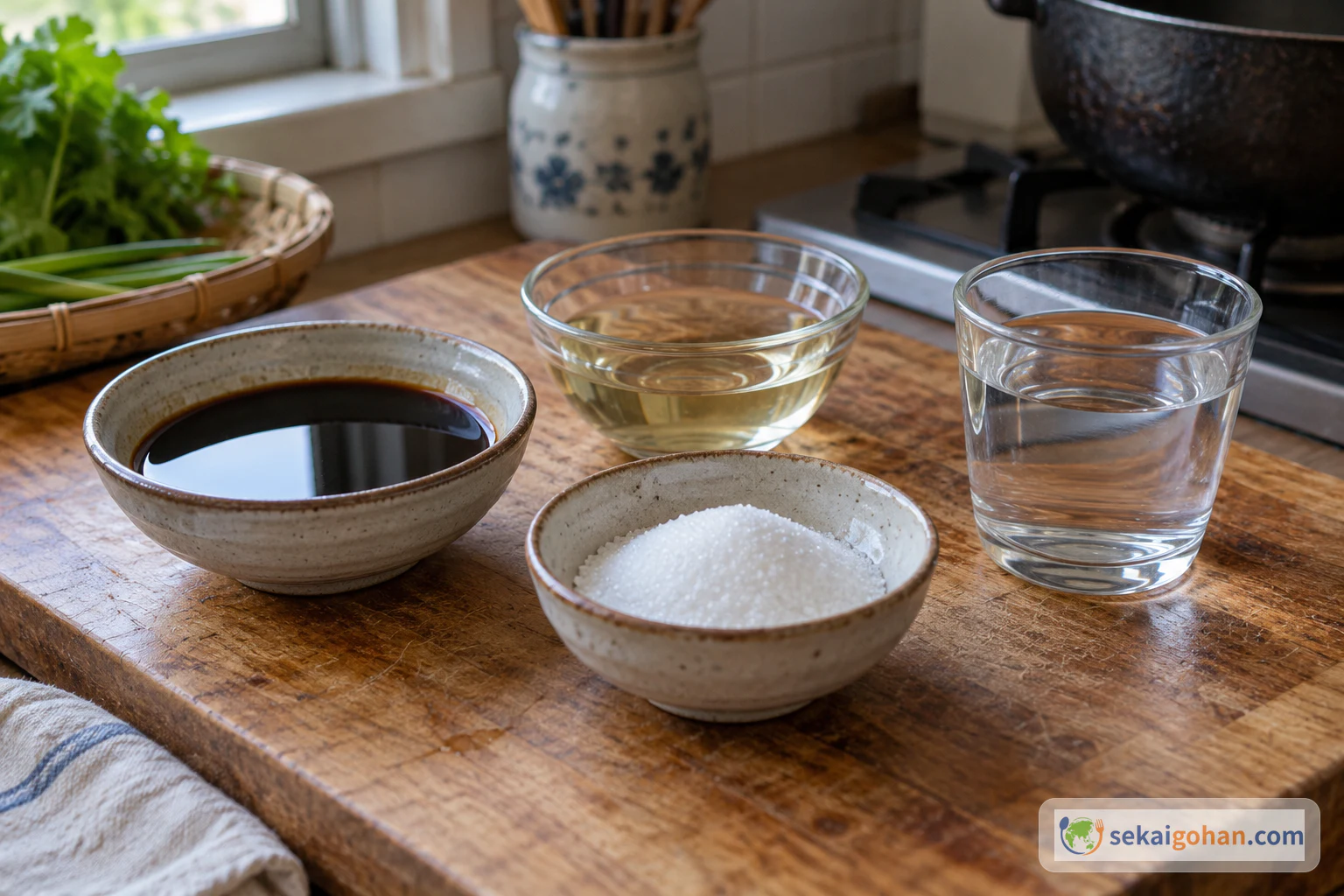
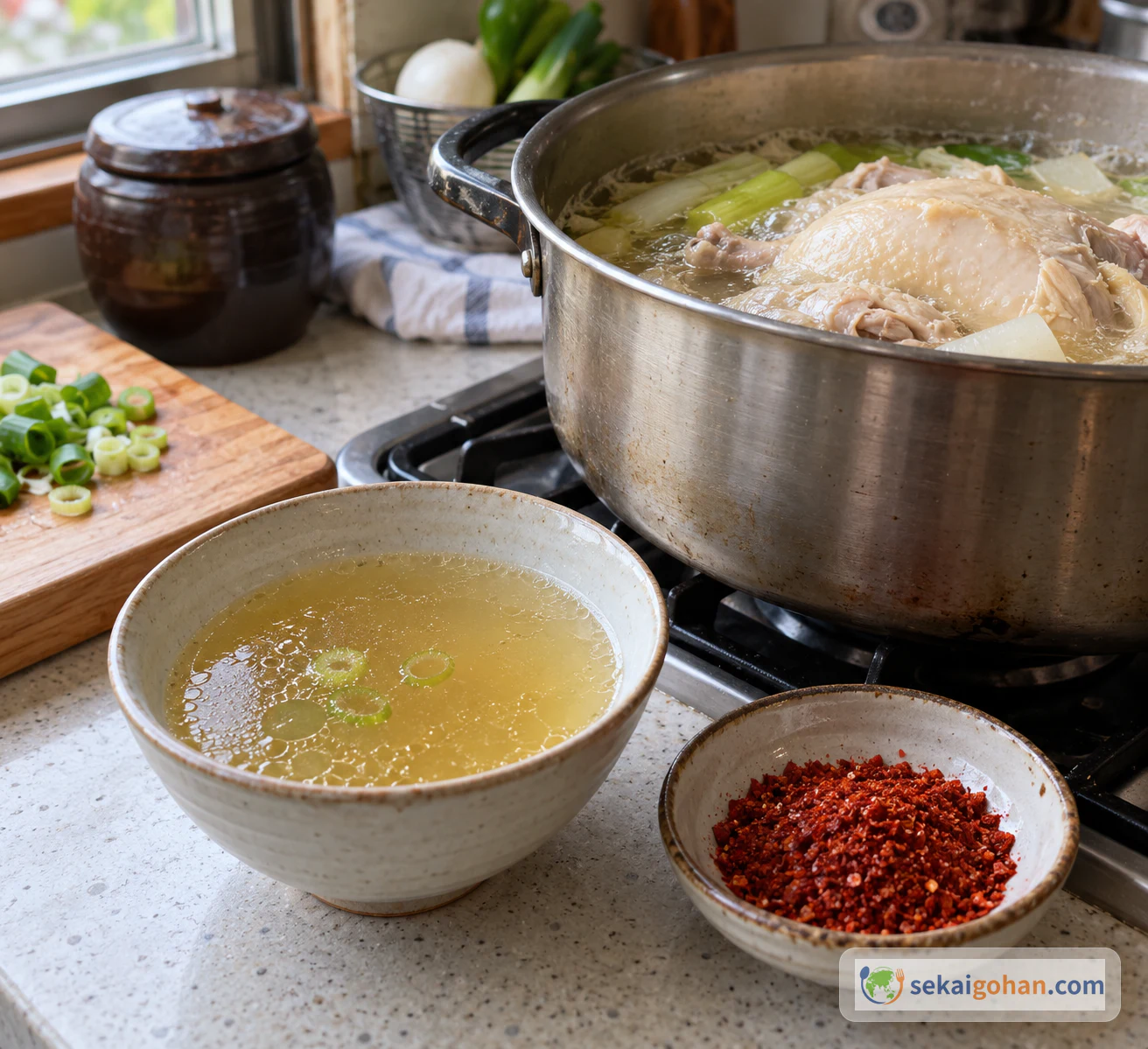
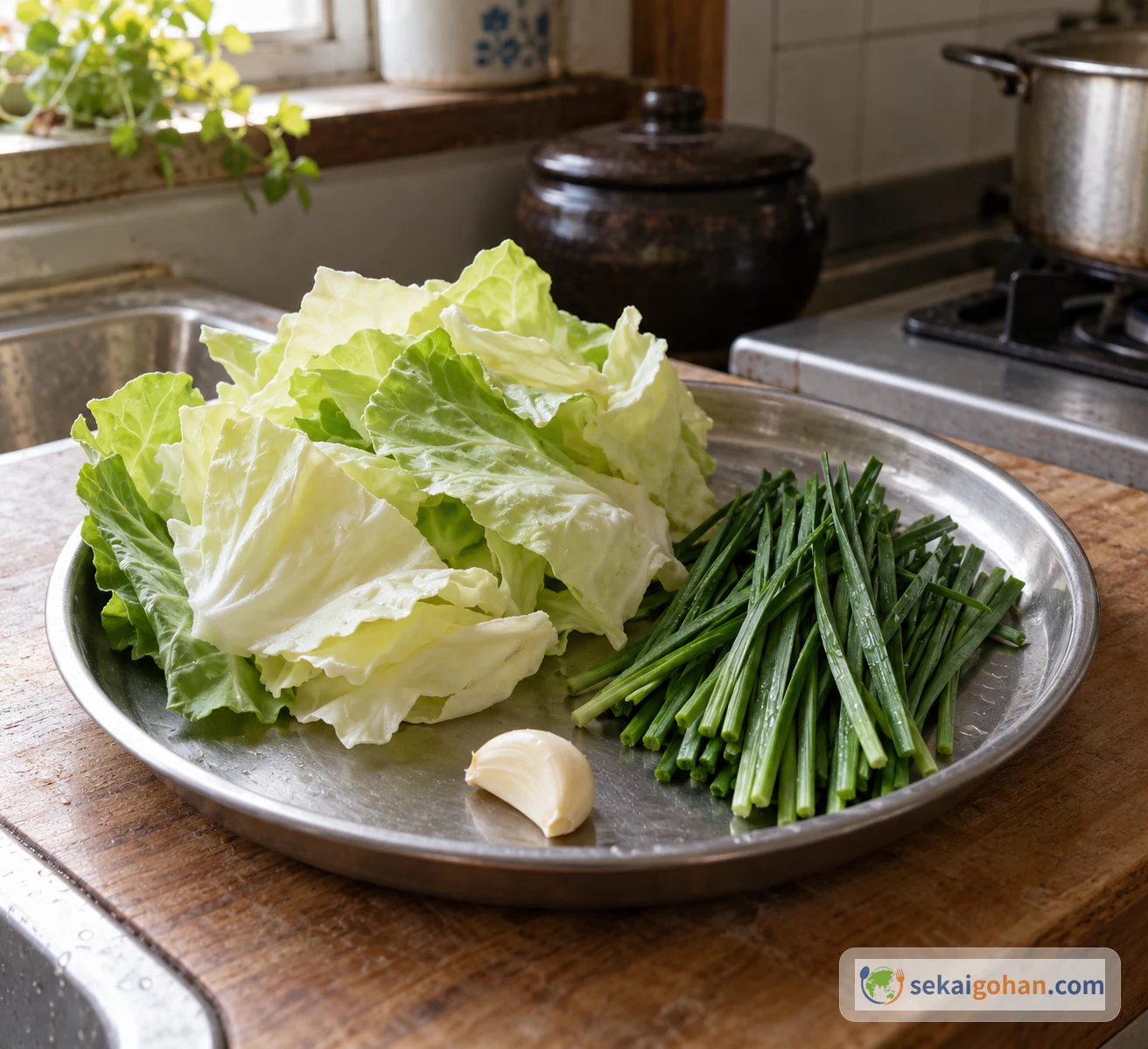
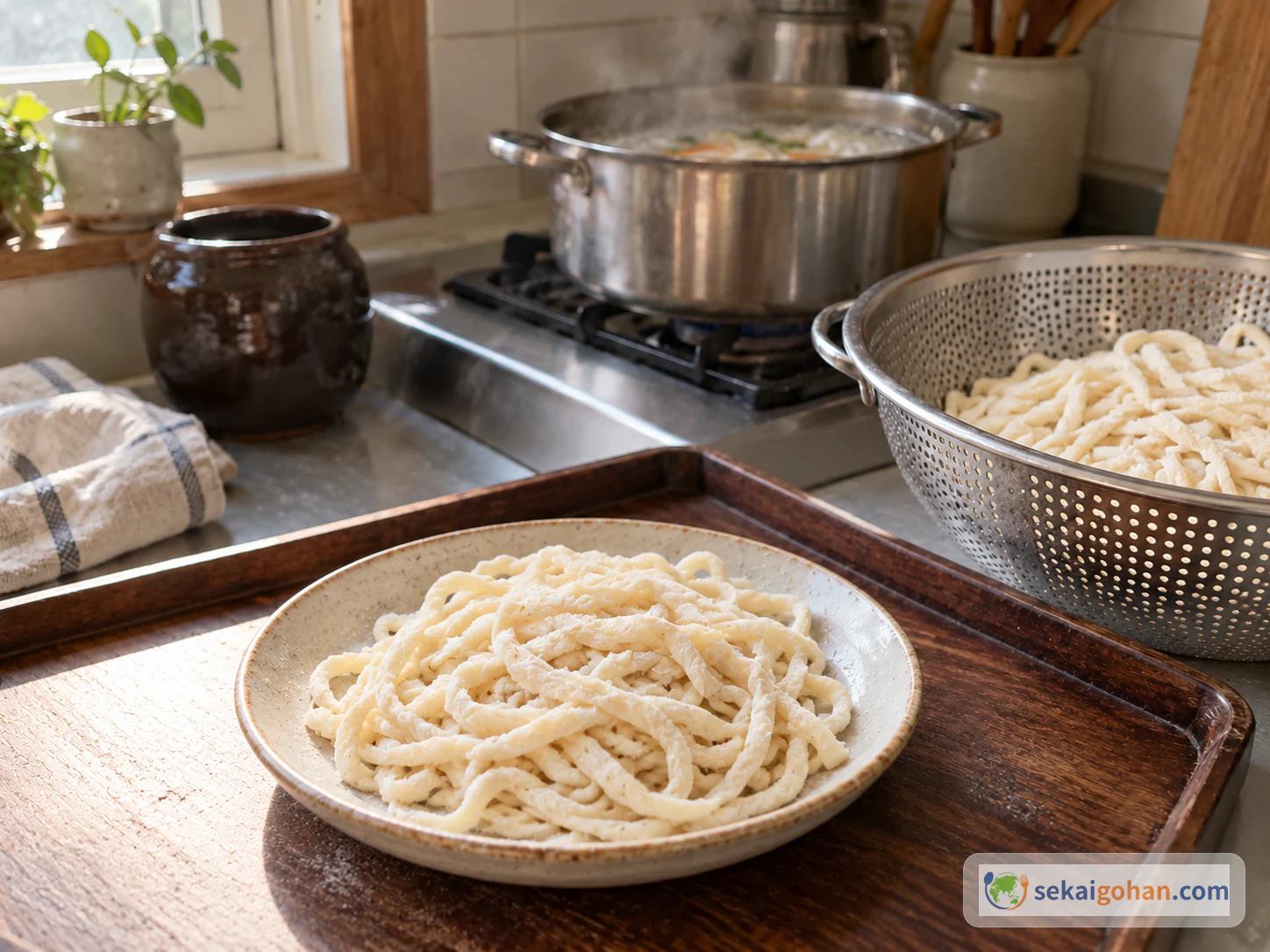
The 1/2 cup of water in the soy base and the 1/2 cup of broth in the spicy sauce are two different things; keep them apart. The crushed garlic clove for the dipping tray is separate from the tablespoon of minced garlic in the soup.
Choosing Ingredients for Dak-hanmari
Skin-on drumsticks and thighs work in whatever mix you have; just trim off the excess fat. The broth takes whole peppercorns, and 7 is a good number. The ground black pepper used later is a separate ingredient.
Three ingredients are worth a trip to a Korean or Asian grocer:
| Ingredient | What it does here | If you can't find it |
|---|---|---|
| Korean chili powder (gochugaru) | The only ingredient in the spicy sauce besides broth | Use the soy base on its own; there is no replacement chili |
| Korean rice cakes (tteok) | A pot add-in, cooked alongside the potatoes | Use 1 handful, in any shape |
| Fresh kalguksu noodles | The optional finish in leftover broth | Skip the noodle finish |
Several parts are optional and can be left out without changing anything else: the ginger in the broth, the jujubes in the pot, and the Asian chives in the dipping tray (cabbage alone is fine). The noodle finish is optional too, and if you skip it there is no broth to save at the end.
The soy sauce, rice cakes and noodles are packaged products. If you are cooking for someone with allergies, such as to wheat or soy, read the labels on the specific products you buy.
Equipment
- Large pot with a lid, for the first broth
- Ladle
- Deep serving pot, wok or high-sided pan, for the shared pot
- Knife and cutting board
- Small bowls for the soy base and the spicy sauce
- Individual dipping trays or bowls
- Colander, for rinsing the noodles
Method: Broth First, Sauces While It Simmers, Noodles Last
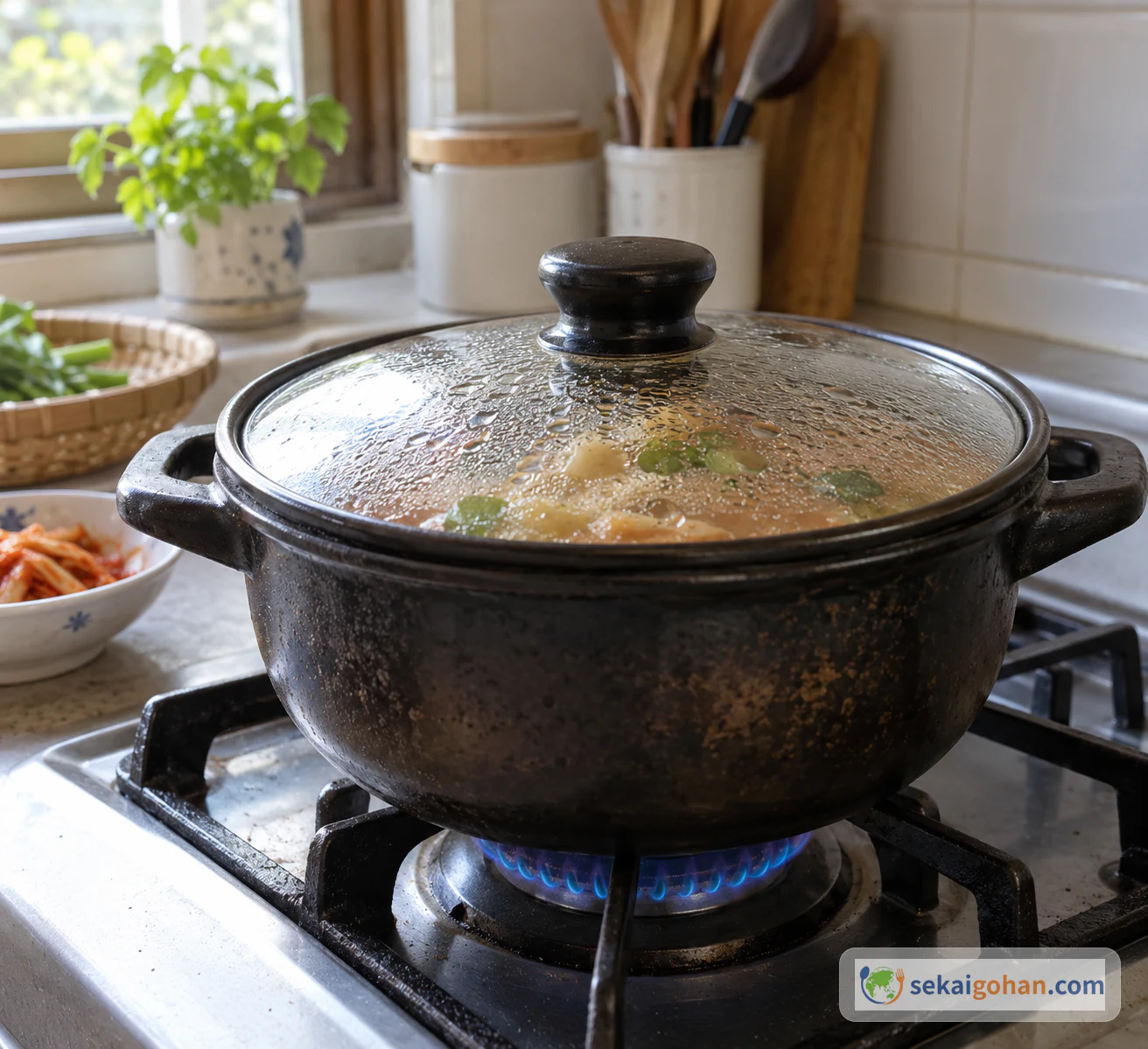
Only the first simmer has a fixed time: 20 minutes. Use those 20 minutes to slice the cabbage, chop the chives and make both sauces. After that, the potatoes tell you when the pot is ready.
Dak-hanmari Troubleshooting
| Problem | What to do |
|---|---|
| The broth boils violently during the first simmer | Lower the heat from medium-high to medium |
| The potatoes are still firm when the pot is boiling | Keep boiling until they are soft; there is no fixed time |
| The shared pot has turned red | Keep the spicy sauce in its own bowl and add it tray by tray |
| The tray is too spicy | Add more soy base and fewer spoonfuls of the gochugaru sauce |
| Not much broth left for the noodles | Add some water to the pot, only when the broth is low |
| Noodle broth tastes flat | Add salt and black pepper a pinch at a time and taste |
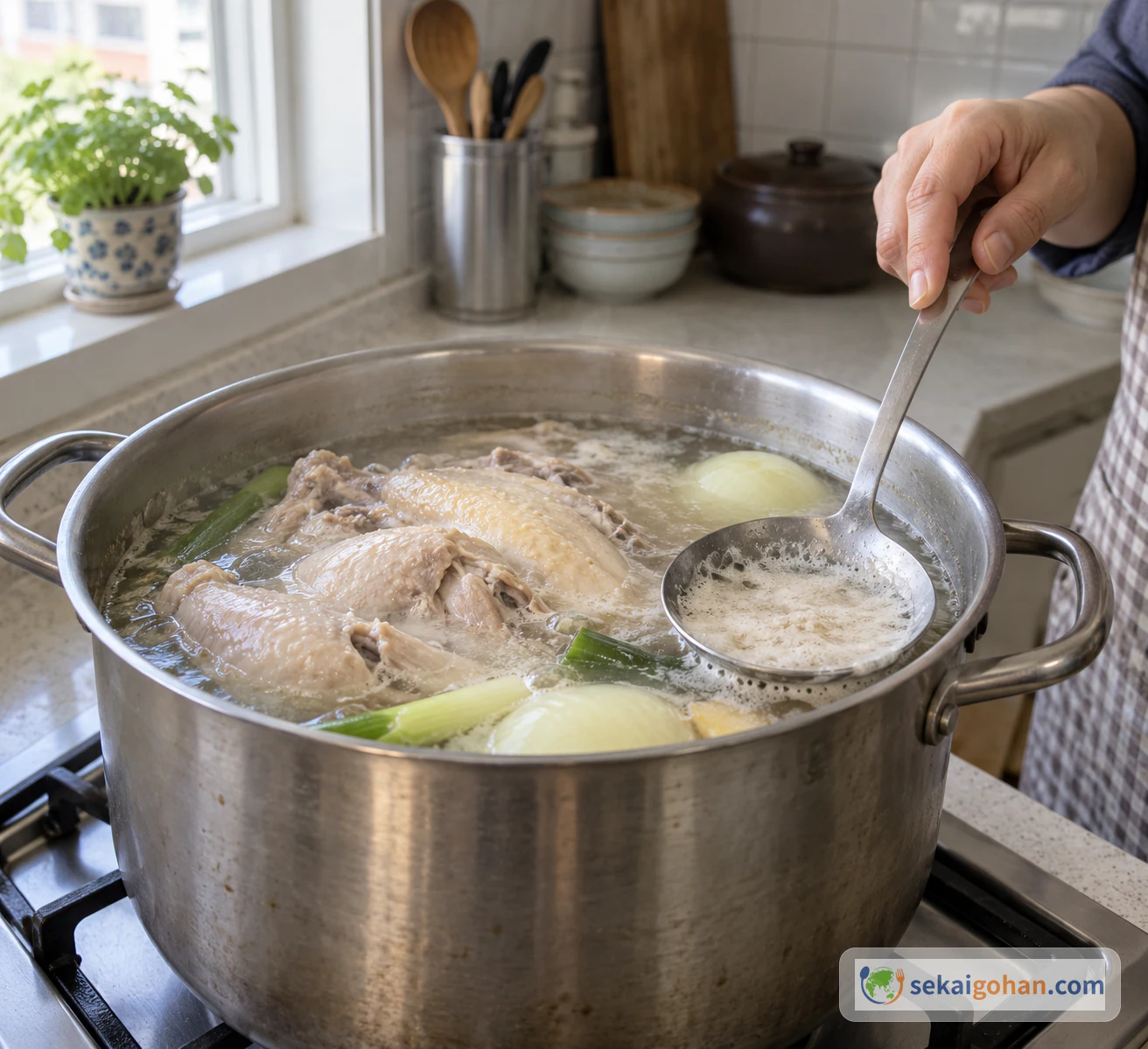
| The broth seems cloudy or has foam on top | Skim the scum with a ladle after the first boil, before covering |
Serving Dak-hanmari with the Dipping Tray
The two sauces only meet in each person's tray. The soy base is soy sauce, sugar, vinegar and water; the gochugaru sauce is chili powder stirred into broth from the pot. Raw cabbage, chives and crushed garlic sit in the tray with both, and each piece of chicken gets dipped there.
Keeping the heat out of the shared pot means the broth stays clear and mild for everyone, and the noodles at the end cook in that same clean broth. Want more heat? Add another spoonful of gochugaru sauce to your own tray. Someone who wants none can stick with the soy base.
Frequently Asked Questions
Should I use 6.5 cups or 1500 ml of water?
Use 6.5 cups, as listed in the ingredients. At 250 ml per cup that comes to 1625 ml, a little more than the 1500 ml in the method. Measure with a 250 ml cup rather than a smaller one, such as a 200 ml Japanese cup.
Is this made with a whole chicken?
The name is often explained as "one whole chicken," but this recipe uses 2.25 lb (1 kg) of skin-on drumsticks and thighs instead. It doesn't specify how many of each or whether the thighs have bones.
How long does it take, and how do I know the chicken is done?
The only fixed time is the first 20-minute covered simmer after the broth boils. After that, go by the pot rather than the clock: it's ready when it is boiling and the potatoes are soft. Make sure the chicken is cooked through before you eat it.