Amanattō: Japanese Sweet Beans Made from Dainagon Azuki (甘納豆)

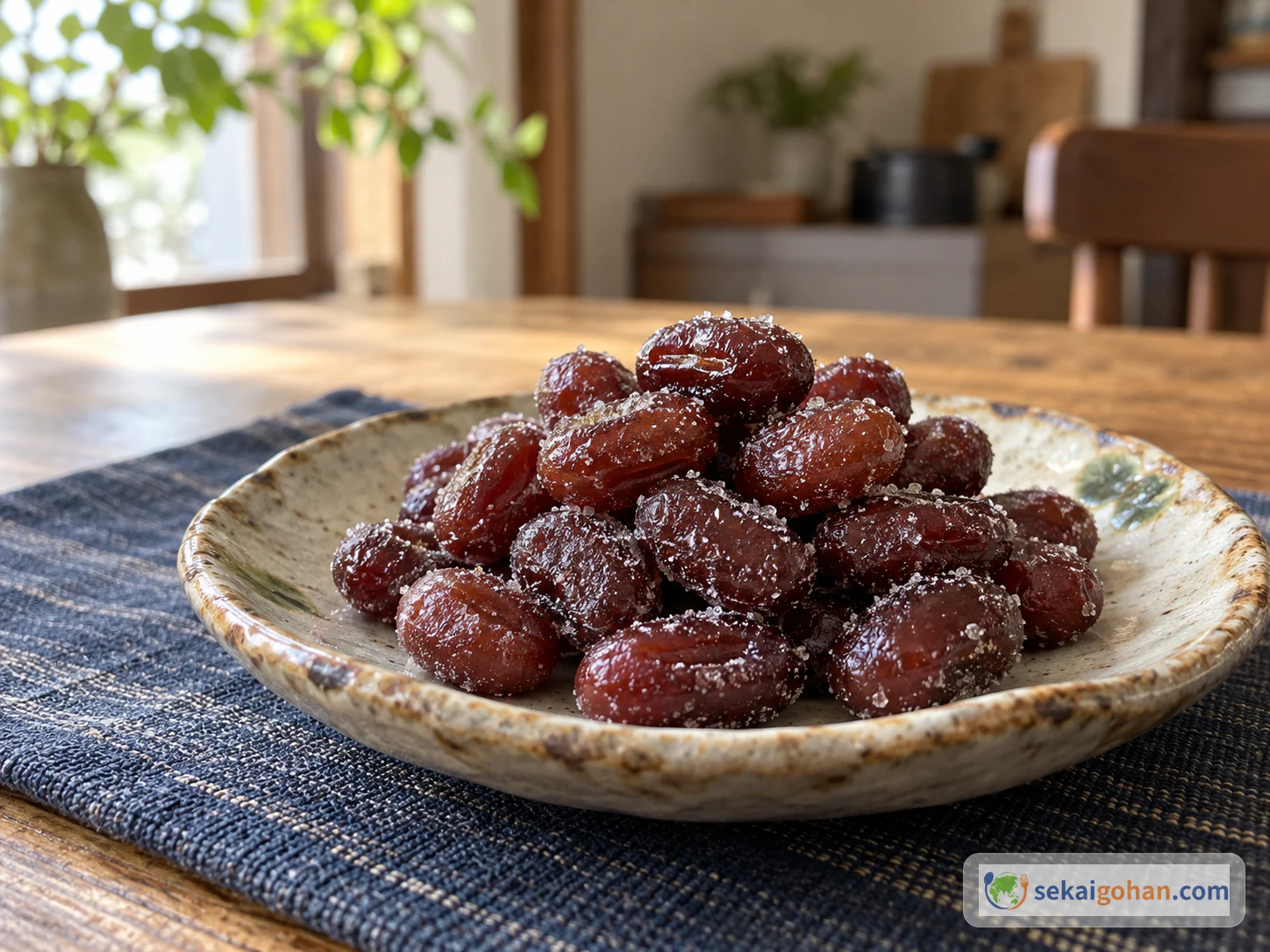
Red-brown Dainagon azuki amanattō with a thin sugar coating on a white plate, each bean still whole, served as a home tea snack
Cuisine
Japanese

How to make amanattō (甘納豆), the Japanese tea-time sweet of whole beans steeped in syrup, using large Dainagon azuki beans. Covers sorting and parboiling the beans, gentle simmering, two overnight syrup soaks, drying, and the optional sugar coating, plus the dish's history as Eitaro tells it and how it differs from fermented natto.

Cooking flow

Cooking steps

STEP11 / 9

Sort and rinse the beans

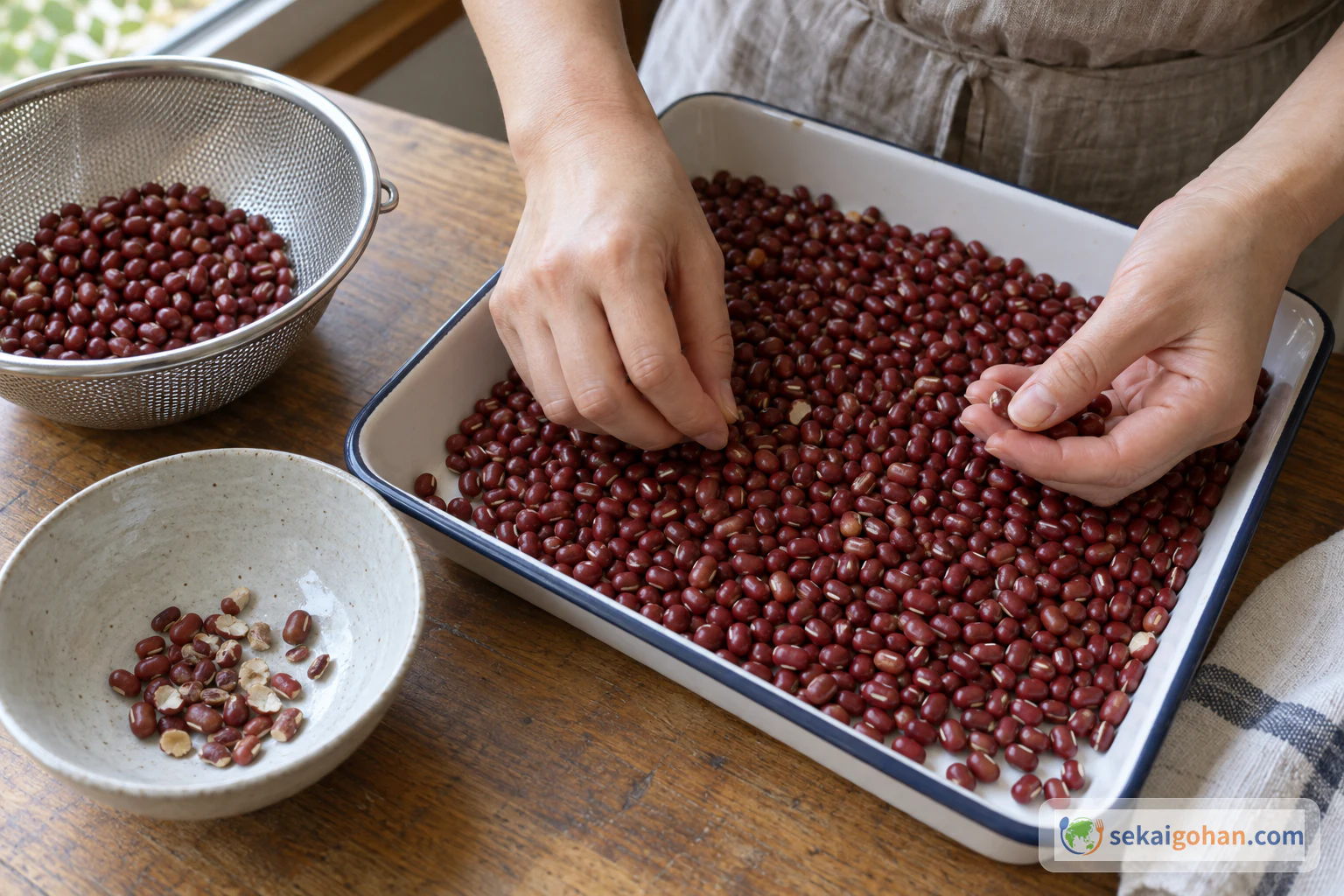
Sorting dried Dainagon azuki beans and removing split ones before rinsing
Pick out split and damaged beans before rinsing

Spread out the dried Dainagon azuki and pick out any split or insect-damaged beans. Rinse the rest and drain well.

STEP22 / 9

Bring to a boil and cook briefly

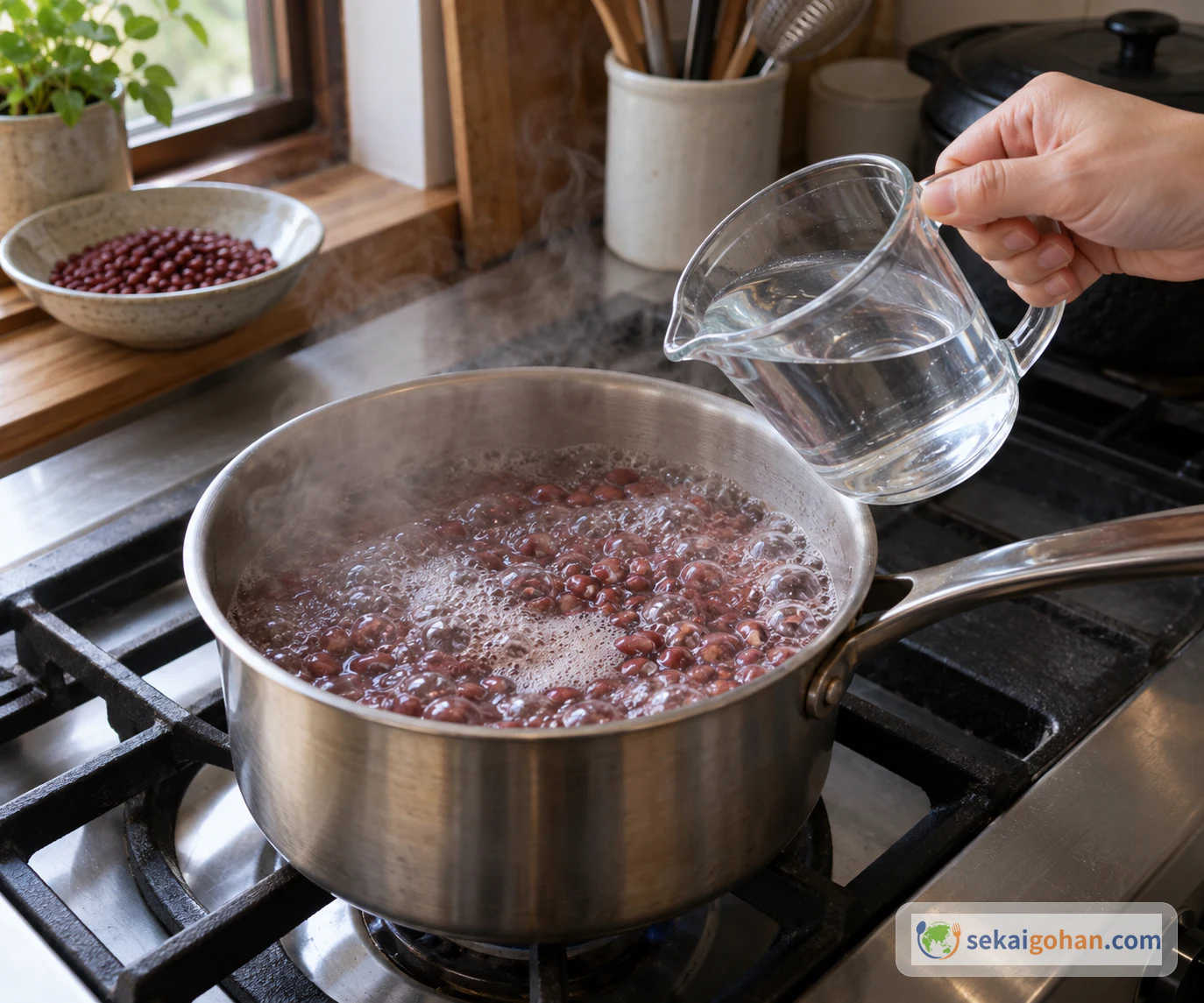
Dainagon azuki beans boiling in a pot, with measured water ready to add
The first short boil; no sugar goes in at this stage

Put the beans and 2 cups (500ml) water in a pot. Leave the lid off and bring it to a boil over medium-high heat, then let it boil for about 5 minutes.

STEP33 / 9

Add water, pour off, and boil until the wrinkles smooth out

STEP 3

Add 1¾ cups (400ml) water to lower the temperature. When it returns to a boil, pour away about half the water and add another 1¾ cups (400ml) water. Keep it at a boil for 10–15 minutes, until the beans swell and their wrinkles smooth out. When the water has turned a deep, cloudy red, pour it away.

STEP44 / 9

Rinse, then simmer very gently

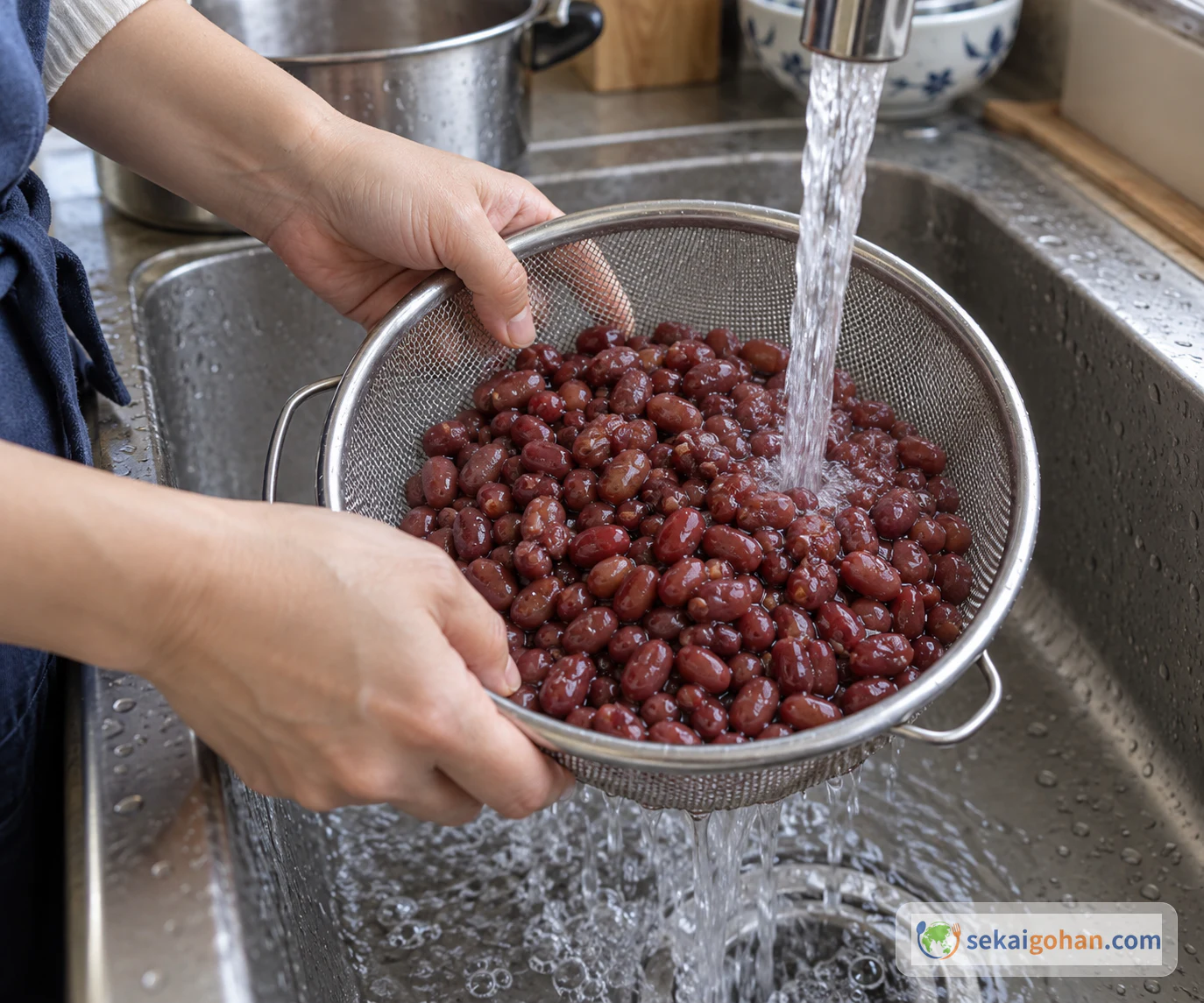
Swollen azuki beans rinsed under running water after the red cooking water is poured away
Pour away the red, cloudy water and give the beans a quick rinse

Rinse the beans quickly under running water. Return them to the pot with 2 cups (500ml) water and heat again. Once it boils, turn the heat to very low. Simmer uncovered for 40–50 minutes, so quietly that the beans barely move. Skim off any scum. If the beans start to poke above the surface, add lukewarm water.

STEP55 / 9

Check tenderness, cover and rest

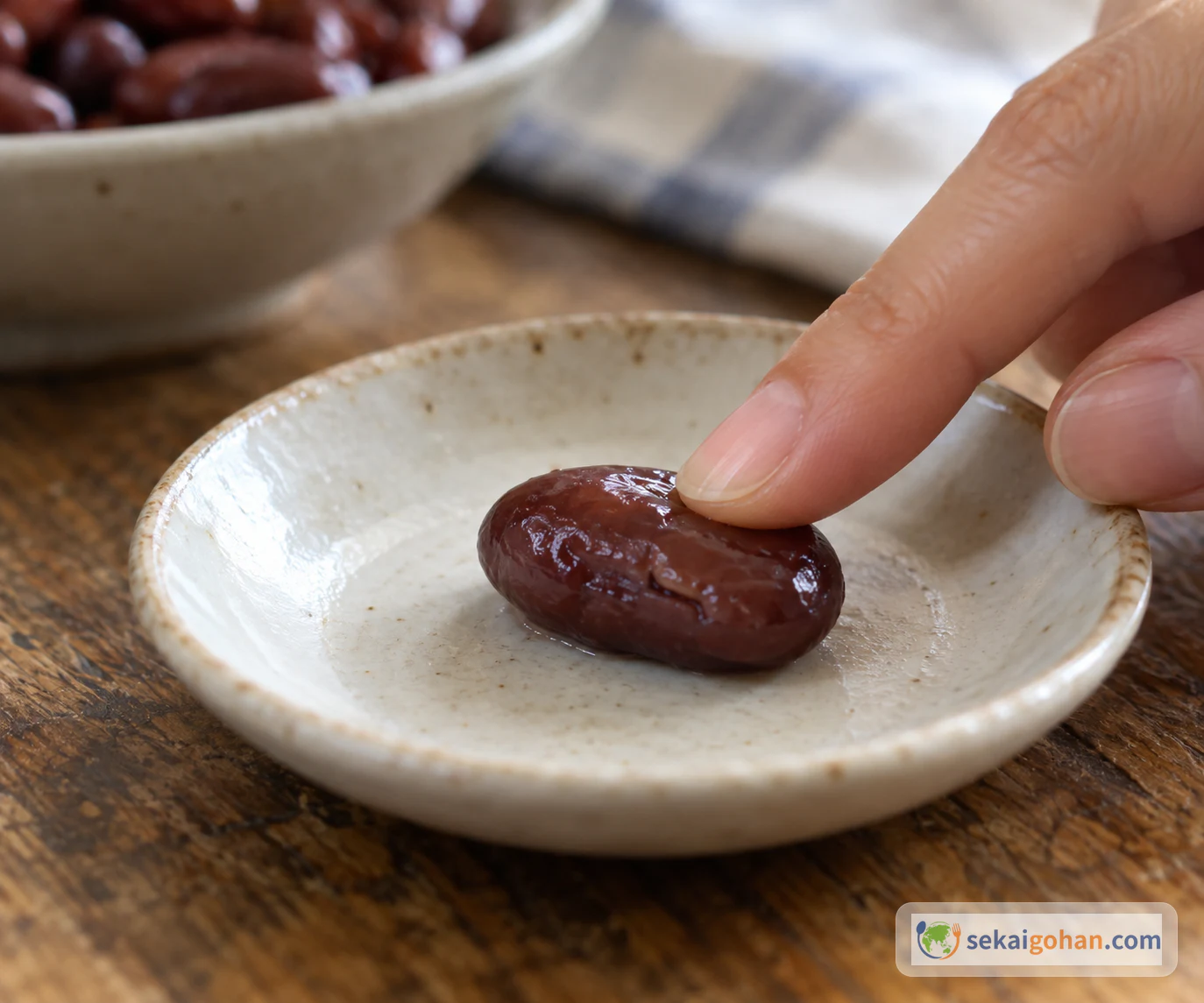
Pressing a single cooled azuki bean on a small plate to check its tenderness
Let one bean cool fully before pressing it; never test with fingers in the hot pot

The beans are ready when you can crush one between your fingers. To check, lift a single bean out and let it cool completely on a small plate before pressing it. Don't pinch beans straight from the hot pot. When they are tender, turn off the heat, cover the pot and leave the beans to rest for about 30 minutes, then drain them in a colander. The aim is beans that are soft without having broken apart, plumped up by the resting time.

STEP66 / 9

Make the first syrup and soak overnight

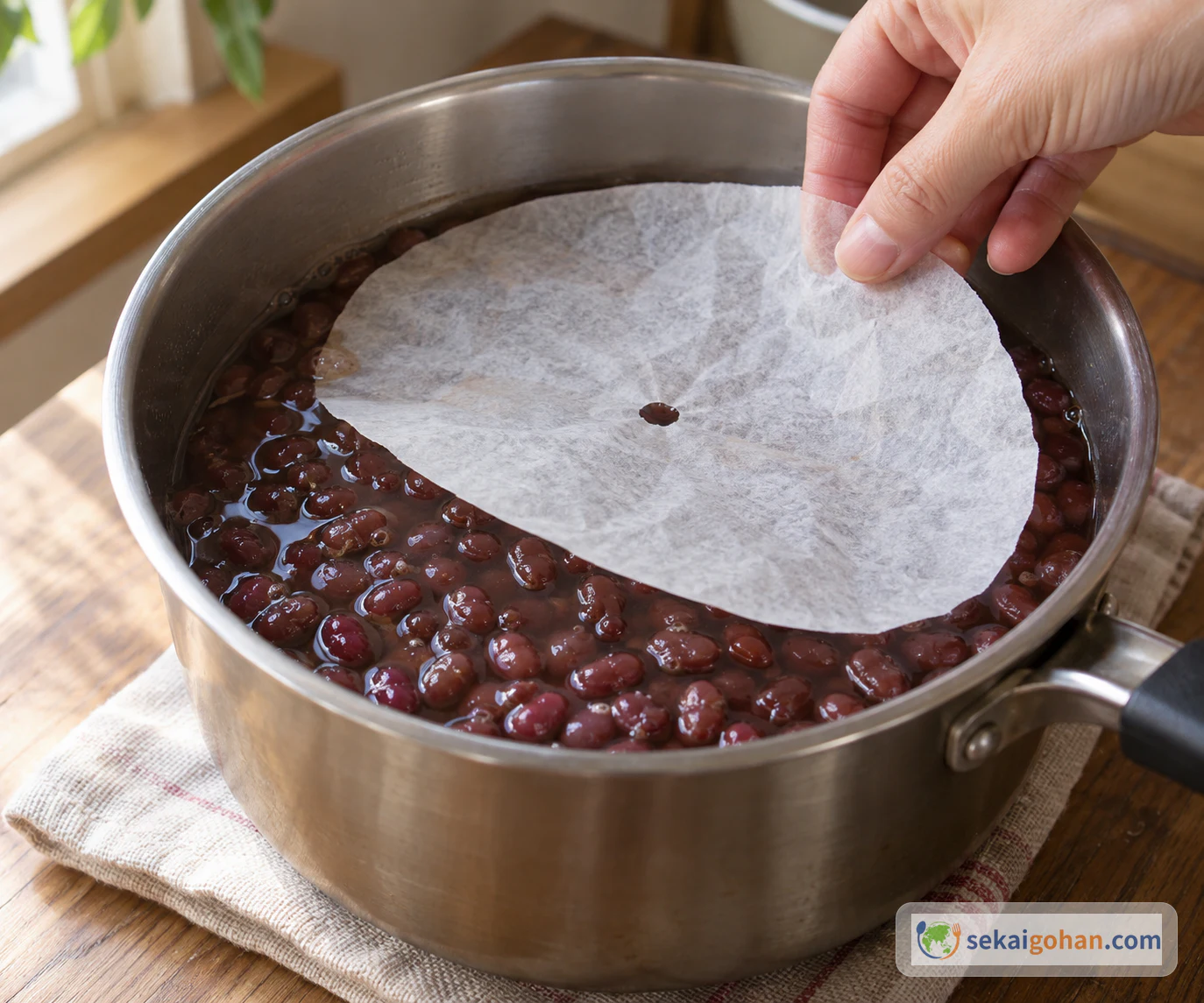
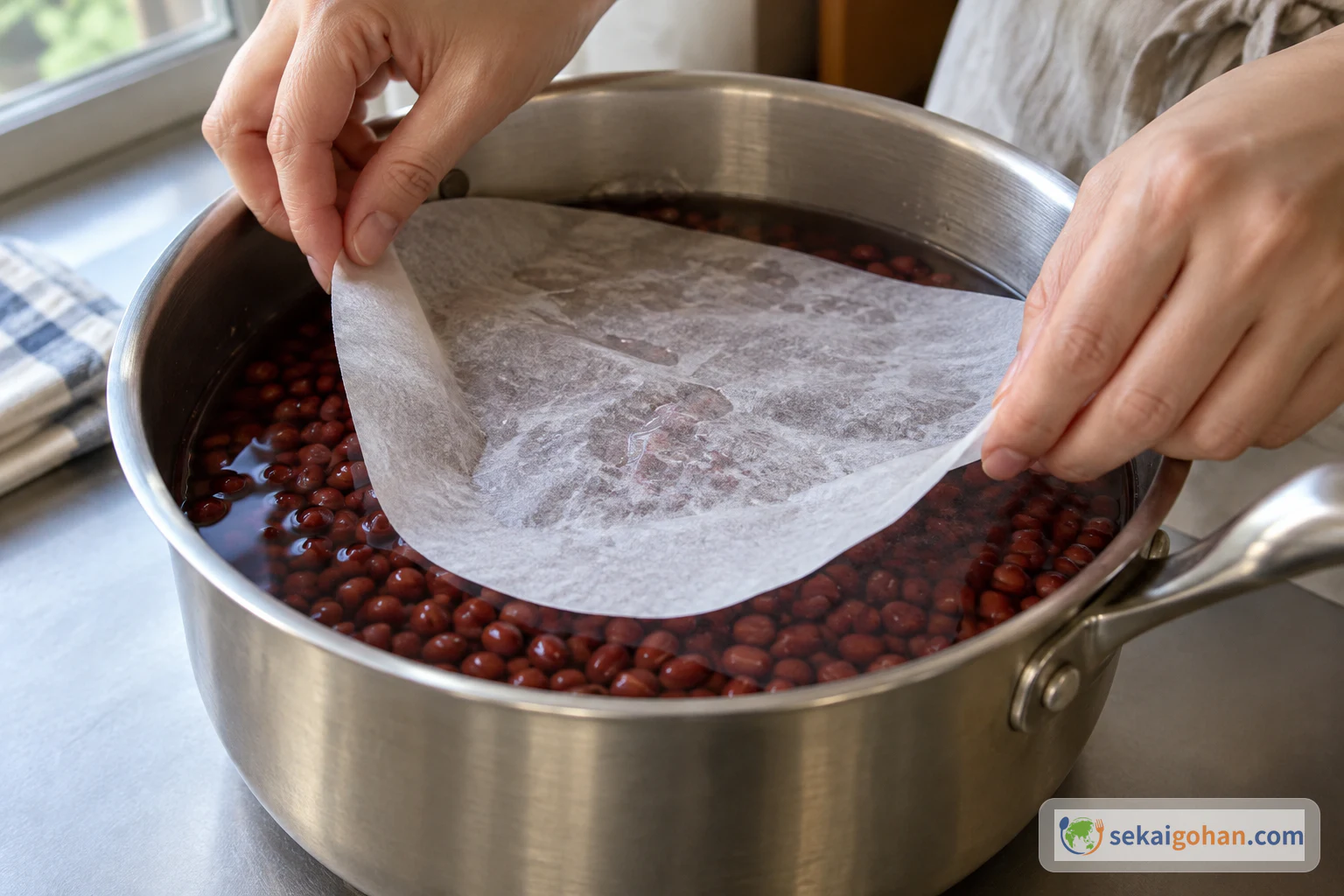
Azuki beans in the first syrup with a round oven-paper drop lid being lowered over them
A paper drop lid keeps the beans under the syrup

In a separate pot, combine the 5.5 oz (150g) first-syrup sugar and ¾ cup (200ml) water over medium heat. Stir to dissolve the sugar, and turn off the heat once it boils. Gently add the beans and cover them with a drop lid of oven paper resting on the surface. Leave at room temperature overnight, for 8 hours or more.

STEP77 / 9

Strengthen the syrup and soak a second night

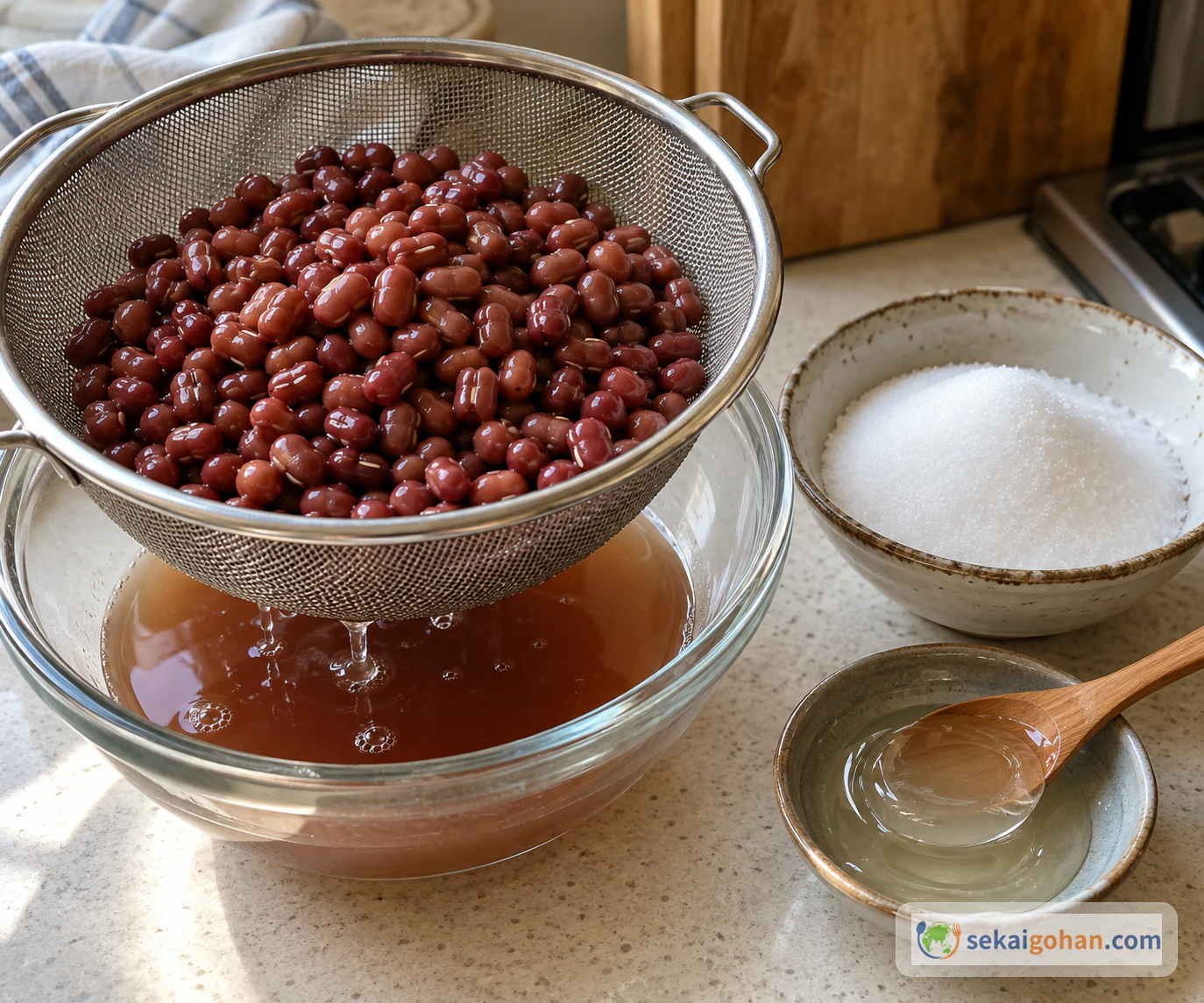
Soaked beans draining in a colander over the first syrup, with sugar and mizuame set aside
Separate the beans from the syrup, with the second-syrup sugar and mizuame ready

The next day, bring the pot to a boil over medium-high heat. Separate the beans from the syrup with a colander. Return the syrup to the pot and, over medium-high heat, dissolve the 3.5 oz (100g) second-syrup sugar and 25g mizuame in it, then take it off the heat. Return the beans, cover with the drop lid, and leave at room temperature for another night of 8 hours or more.

Keep this as a separate stage. Moving from the lighter syrup to the heavier one is the core of the method, so don't skip either soak or combine them into one.

Azuki beans back in the thicker second syrup, covered with a paper drop lid
Back into the stronger syrup and under the drop lid for the second night
STEP88 / 9

Bring to a boil and simmer about 20 minutes

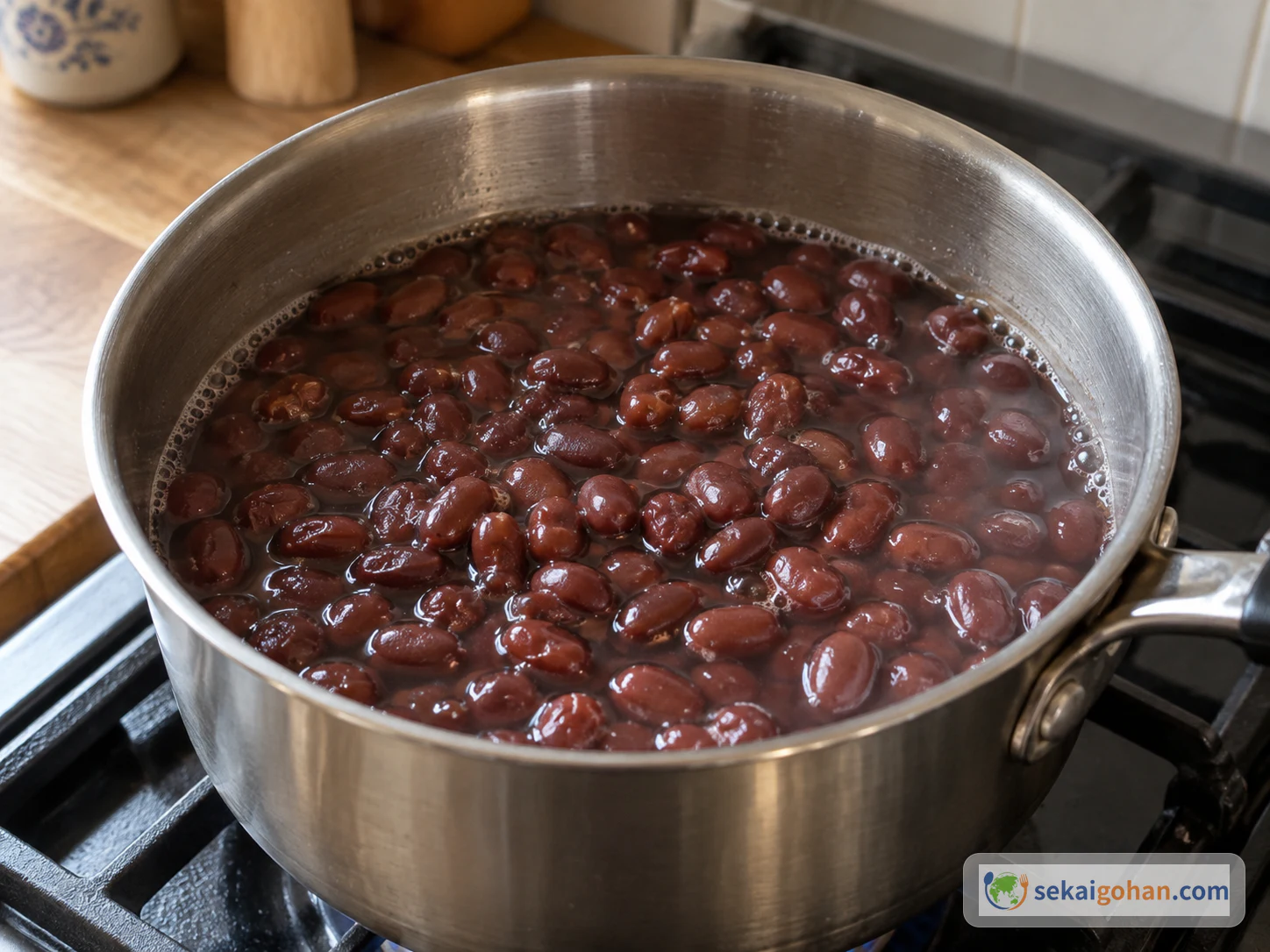
Azuki beans simmering very gently in syrup with small bubbles at the edge of the pan
A quiet simmer for about 20 minutes, not a rolling boil

The following day, bring the pot to a boil over medium-high heat. Then turn the heat to very low and simmer for about 20 minutes.

STEP99 / 9

Drain, dry, and finish with sugar if you like

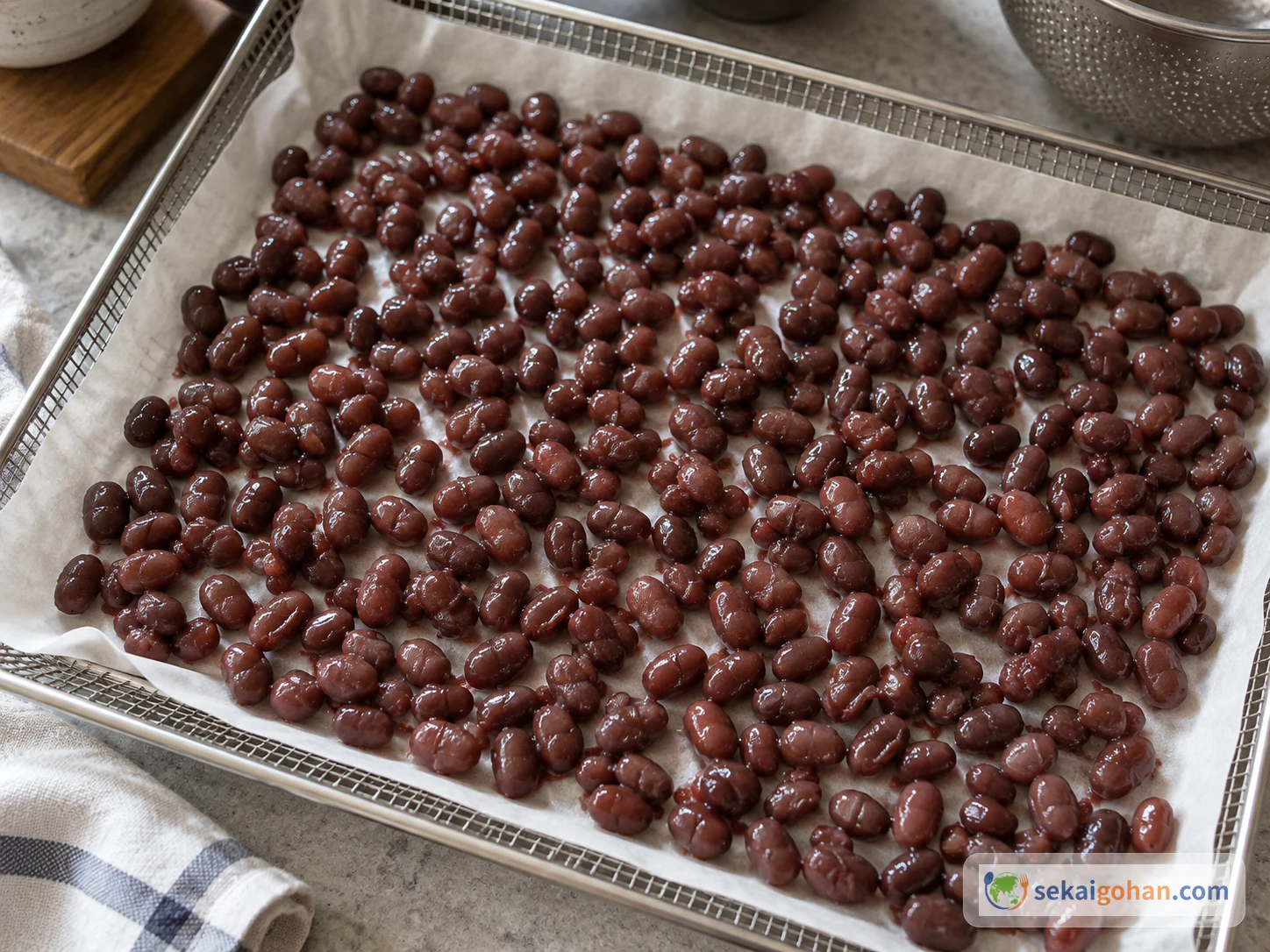
Drained azuki beans spread in a single layer on a parchment-lined flat sieve to cool and dry
Spread the beans out so they don't overlap; no sugar yet

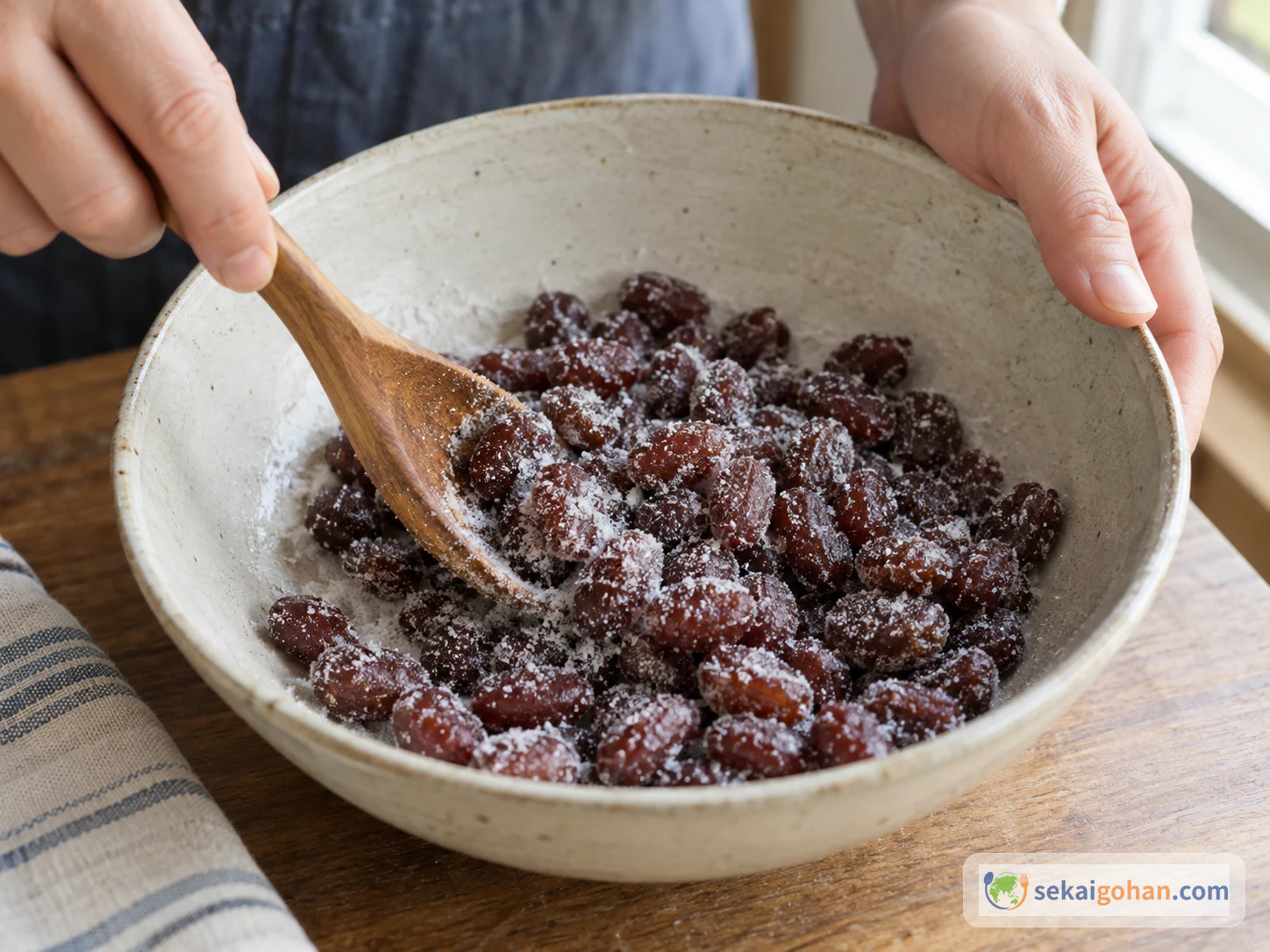
Drain off the syrup in a colander. Spread the beans on a flat sieve or on oven paper so they don't overlap. Let them cool and dry for 4–5 hours. Once they are completely cool and dry, toss them in finishing sugar if you like.

Cooled, dried Dainagon azuki amanattō being tossed with finishing sugar, ready for tea time
Add the finishing sugar only after the beans are fully cool and dry
0 / 0
Ingredients

Ingredients

1 / 1

Ingredients

Ingredient Amount Role
Dainagon azuki beans, dried (大納言小豆) 7 oz (200g) The bean of this recipe: large and less prone to breaking apart. Sort and rinse before cooking
Granulated sugar, first syrup (グラニュー糖) 5.5 oz (150g) Dissolved in the syrup water for the first overnight soak
Water, first syrup ¾ cup (200ml) Syrup water; it stays with the beans. Keep it separate from the cooking water
Granulated sugar, second syrup (グラニュー糖) 3.5 oz (100g) Added to the first syrup for the second overnight soak
Mizuame, starch syrup (水あめ) 25g Added with the 3.5 oz (100g) sugar to the second syrup
Granulated sugar, finishing (グラニュー糖) As desired Optional. Tossed over the beans once they are completely cool and dry; separate from the syrup sugar
Water, for cooking the beans 2 cups (500ml) → 1¾ cups (400ml) → 1¾ cups (400ml) → 2 cups (500ml), plus extra for rinsing and topping up as needed Used in stages for boiling, cooling the pot and re-cooking; most of it is poured away and none of it is the syrup water
0 / 0

A small plate of amanattō (甘納豆) beside a cup of tea doesn't look like much: whole beans, glossy red-brown, sometimes dusted with sugar. The work is hidden inside each one. The beans are cooked until tender without breaking, then moved from a lighter syrup into a heavier one, so the sweetness works its way in while the bean keeps its shape. This version uses Dainagon azuki, a large azuki bean, and most of the effort isn't at the stove at all. It's in the waiting: two nights of soaking in syrup and several hours of drying.

Amanattō and Its Origins

Despite the name, amanattō has no connection to fermented natto. It's a semi-moist confection: the beans are cooked, soaked in sugar solutions that move from low to high concentration, drained of their syrup, then dried and coated with sugar. At home it's a sweet to set out with tea, a few beans on a small plate, eaten slowly. For more dishes from the same country, see our Japan page.

The origin of amanattō is linked to Eitaro, the confectionery house in Nihonbashi, Tokyo, and to Hosoda Yasubei, with dates ranging from the late Edo period to the early Meiji years. Eitaro created amananattō (甘名納糖) in the Bunkyū era, which is a separate event from the opening of its Nihonbashi shop in the fourth year of Ansei. The name is a play on Hamana nattō. The amananattō the company sells today is made with sasage (大角豆, a type of cowpea), so it differs from the Dainagon azuki version here.

Ingredients: One Batch of Dainagon Azuki Amanattō
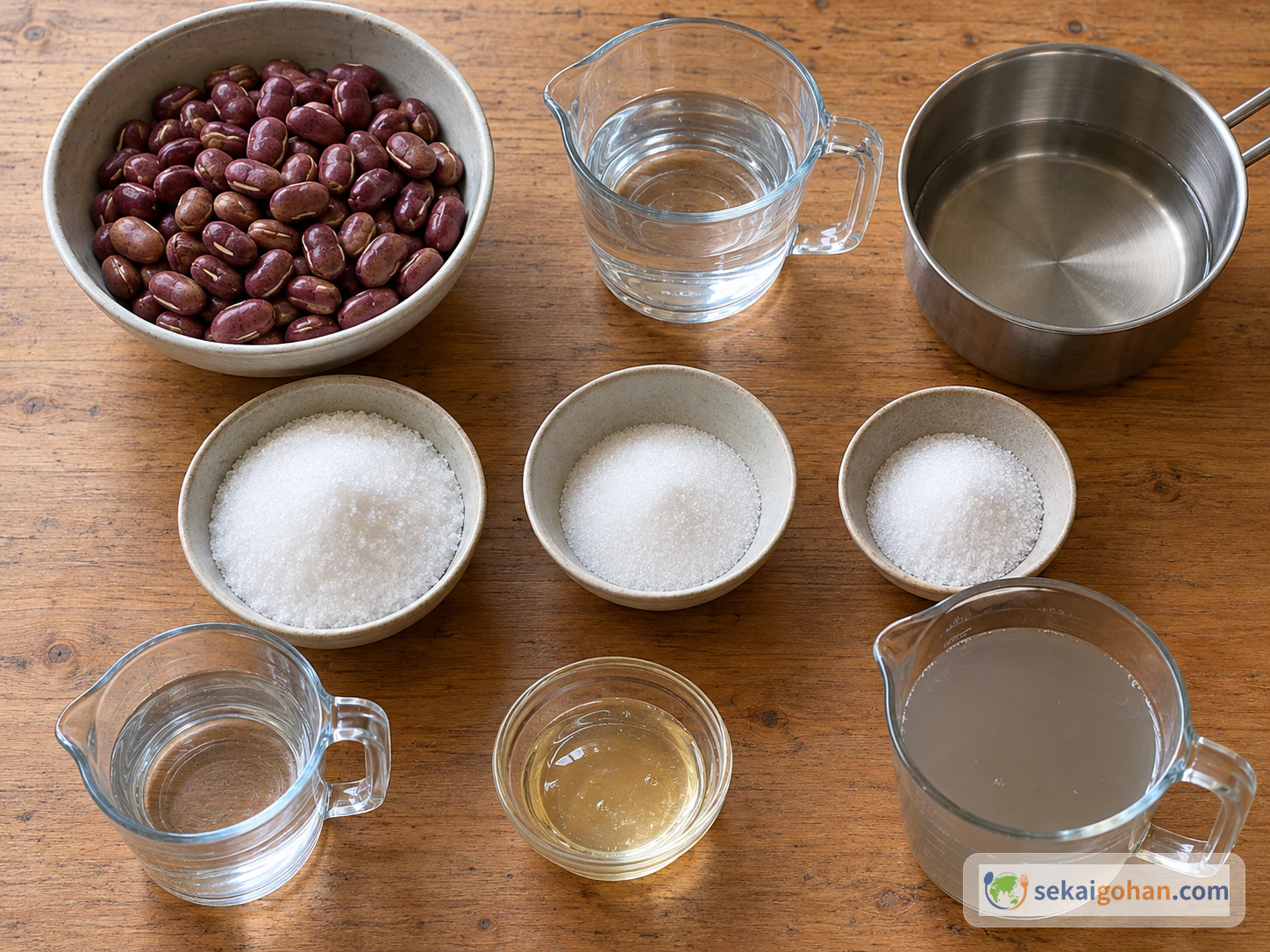
Dried Dainagon azuki beans, granulated sugar, mizuame and water laid out separately for amanattō
Sugar goes in at three separate points, and the syrup water is kept apart from the cooking water you pour away

The finished amount is about 1 lb (480g).

Sugar appears three times, and each portion has its own job: 5.5 oz (150g) for the first syrup, 3.5 oz (100g) added for the second syrup, and an optional amount for finishing. Water also has two jobs. The ¾ cup (200ml) in the syrup stays with the beans; the cooking water is used in stages and poured away.

Equipment

  • A heavy saucepan with room to spare, which makes a gentle simmer easier to hold
  • A second pot for making the syrup
  • A colander or sieve
  • Oven paper (parchment), for the drop lid and for drying
  • A flat sieve or tray for drying
  • A heatproof rubber spatula
  • A kitchen scale
  • A measuring cup

Choosing Beans and Sugar for Amanattō

Beans. Dried Dainagon azuki are used here because these large beans hold their shape. The 7 oz (200g) is the weight of the dried beans, not of cooked ones. Amanattō is also made with kintoki beans, tebō beans and others, but each is soaked and cooked differently; a kintoki version starts from the same 7 oz (200g) of dried beans yet rehydrates them another way. If you want a different bean, follow a recipe written for it.

Sugar. The type of sugar changes the sweetness and flavor, so this recipe keeps to granulated sugar throughout.

Mizuame. Mizuame is a Japanese starch syrup, distinct from corn syrup, and this recipe offers no substitute for it.

Batch size. Make the full amounts as written. Scaling down would mean recalculating every amount and rethinking the process.

Method: Three Days, Mostly Waiting

How the days fall

The cooking time is 150 minutes. That figure does not include resting the beans, soaking them in syrup or drying them. A typical schedule spans three calendar days. Steps 1–6 happen on the first day, step 7 on the next day, and steps 8–9 on the day after that, with two overnight soaks of 8 hours or more and 4–5 hours of drying.

About the overnight soaks at room temperature

The beans soak at room temperature overnight, twice. In hot summer conditions, keep the room cool during both soaks.

Common Amanattō Problems and Fixes

What these beans should keep

Cook the beans until you can crush them between your fingers but they have not fallen apart. Then let them take in syrup in two stages, and dry them before any sugar goes on the outside.

What you notice What the recipe asks for
Beans tumbling in the pot during the long simmer Keep the heat very low so the beans barely move, and simmer uncovered
Beans poking above the water Add lukewarm water so they stay covered
Unsure whether the beans are done Lift one out, cool it fully, and press it: it should crush between your fingers while the beans in the pot stay whole
Tempted to make one strong syrup to save a day Keep both stages: the 5.5 oz (150g) syrup first, then the added 3.5 oz (100g) sugar and 25g mizuame, each with its own overnight soak of 8 hours or more
Mixing up the water amounts The 2 cups (500ml), 1¾ cups (400ml), 1¾ cups (400ml) and 2 cups (500ml) are cooking water you pour away; the syrup water is the ¾ cup (200ml) in the first syrup
Beans still wet or warm when you want to add sugar Wait until they are completely cool and dry after 4–5 hours spread out in a single layer, then add sugar

Serving, Storage and Variations

Keep finished amanattō in a storage container for about one week: at room temperature in winter, and in the refrigerator in summer.

The finishing sugar is to taste, so a light dusting is fine, or you can skip it. Keep the sugar in the two syrups as written, though. Without a coating the beans resemble nure ("moist") amanattō, which is its own, different finish.

Frequently Asked Questions

Is amanattō fermented like natto?

No. Amanattō is made by steeping cooked beans in sugar syrup, with no fermentation involved. The similar name comes from a play on Hamana nattō.

Can I finish it in one day?

Not with this recipe. The 150 minutes covers only the cooking. The two overnight soaks and the 4–5 hours of drying come on top of that, spreading the work across three calendar days.

Sources