Chapssaltteok: Korean Sweet Rice Cakes with Red Bean Paste (찹쌀떡)

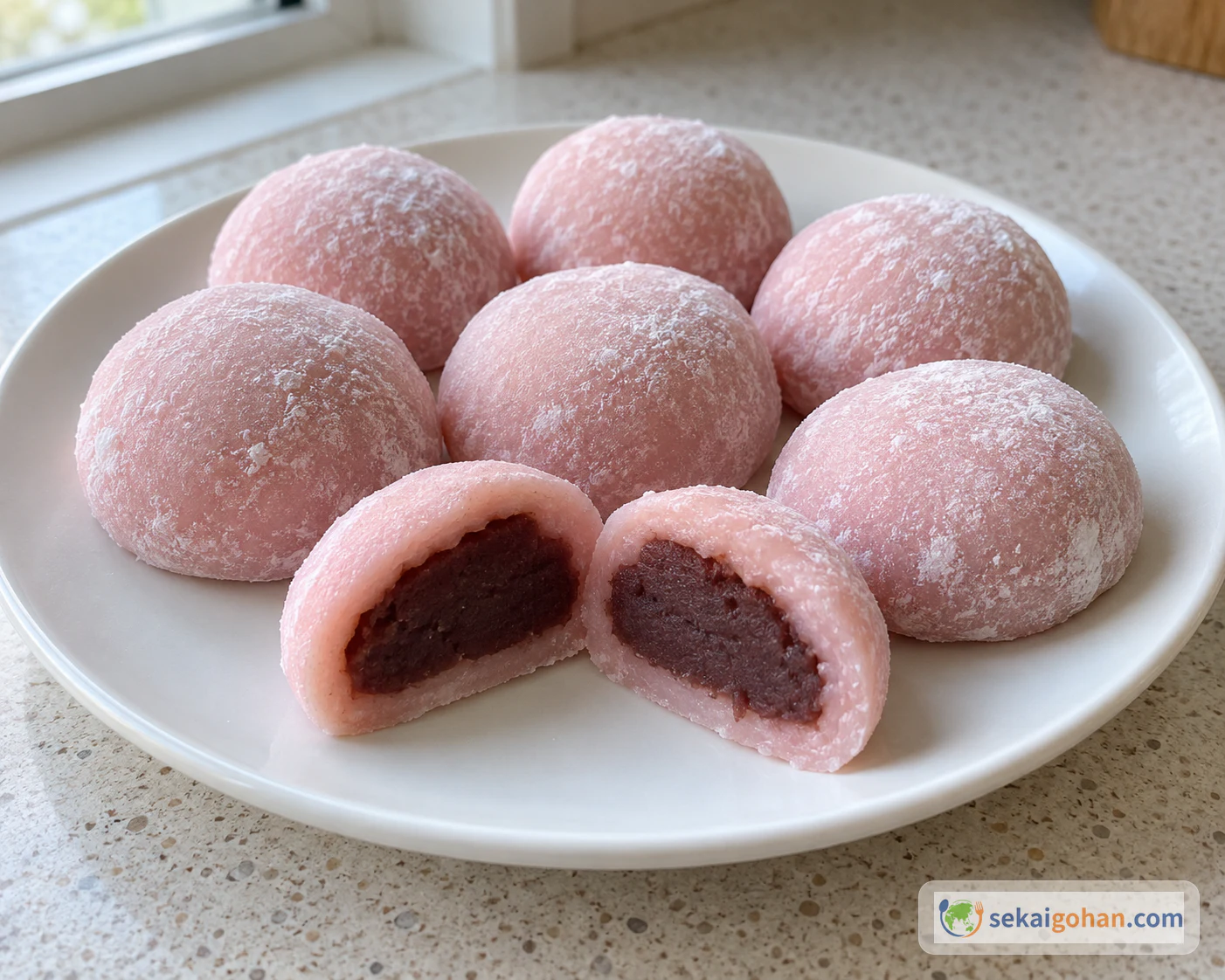
A serving of pink chapssaltteok filled with red azuki bean paste
Serves
8 rice cakes
Cuisine
Korean

How to make chapssaltteok (찹쌀떡), soft pale-pink Korean rice cakes made from dry sweet rice flour and wrapped around homemade azuki bean paste. Covers choosing glutinous rice flour, cooking the beans into a sweet paste, the microwave sequence for the dough, shaping eight cakes, and how this dish differs from daifuku and other Korean rice cakes.

Cooking flow

Cooking steps

STEP11 / 9

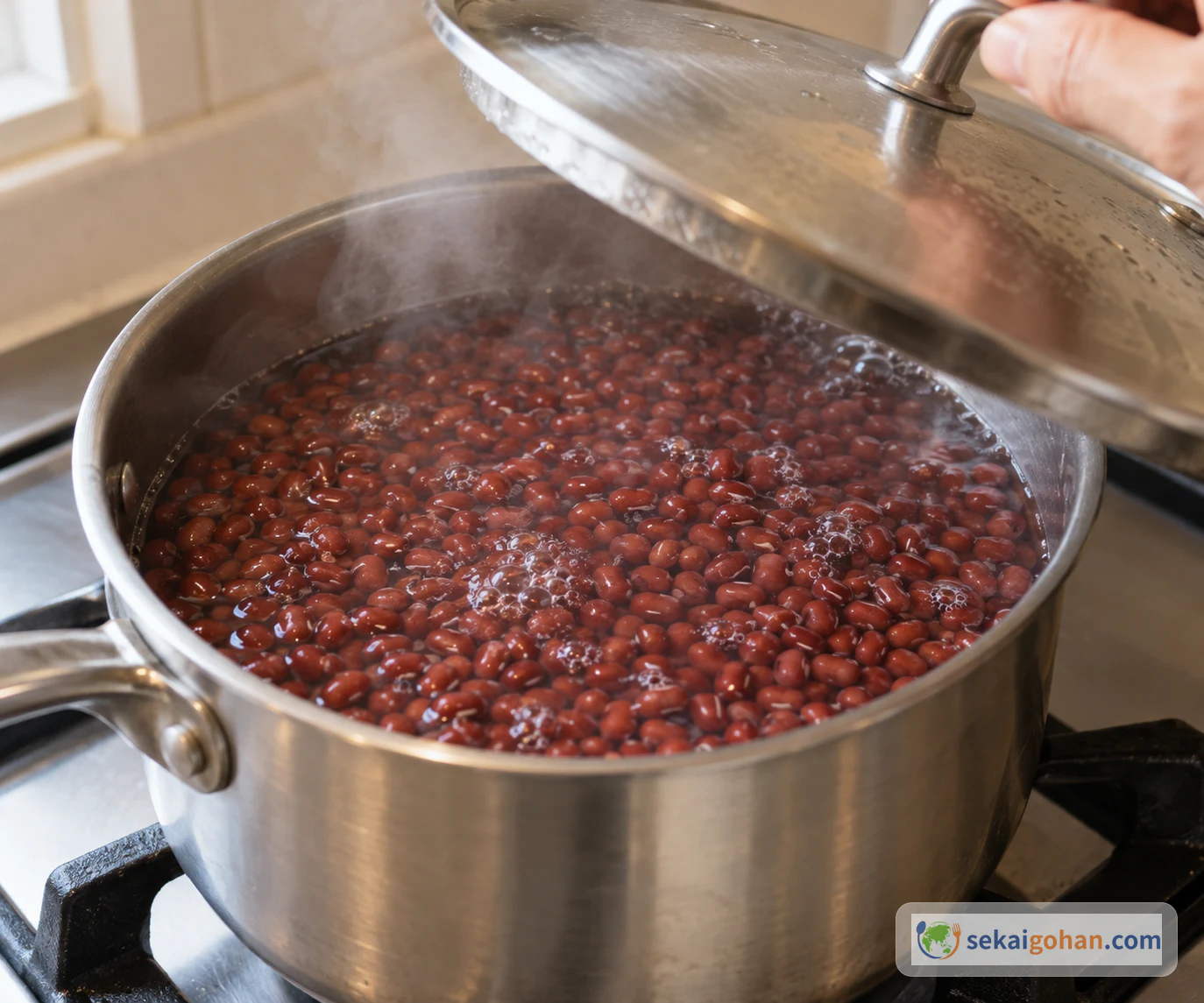
Cook the azuki beans

Dried azuki beans cooking with water in a heavy pot
The beans cook in plain water first; no sugar goes in yet

Wash and drain 1 cup dried azuki beans and put them in a heavy-bottomed pot. Add 3 cups water, cover, and bring to a boil over medium-high heat. Boil for 10 minutes. Reduce the heat and simmer for about 1½ hours. If the beans are still not soft enough to mash, add more water and keep cooking over low heat until they mash easily.

STEP22 / 9

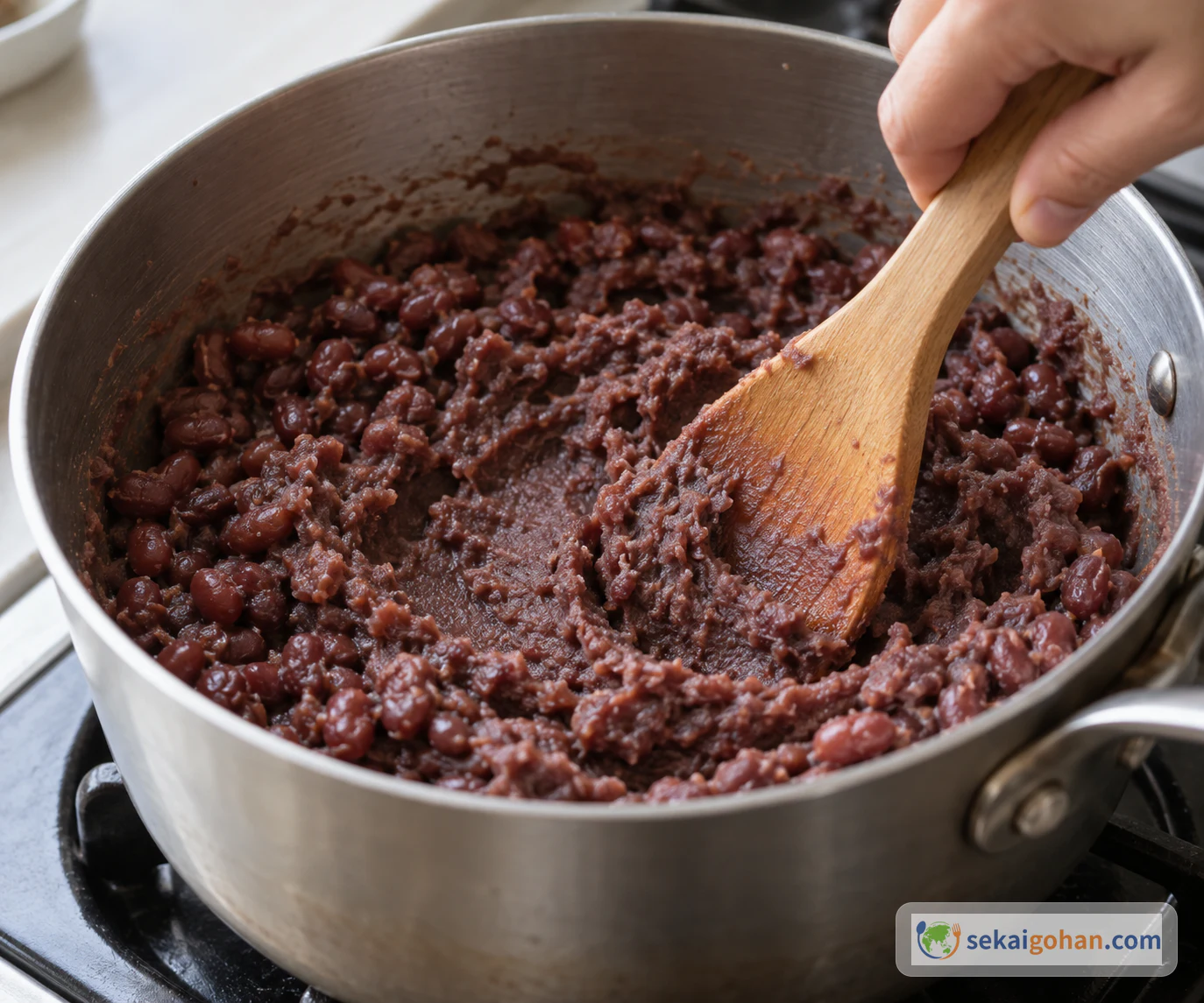
Mash the beans smooth

Soft-cooked azuki beans being mashed smooth with a wooden spoon
Crush the beans into a thick, smooth paste

Mash the soft beans until smooth with a wooden spoon, or use a food processor.

STEP33 / 9

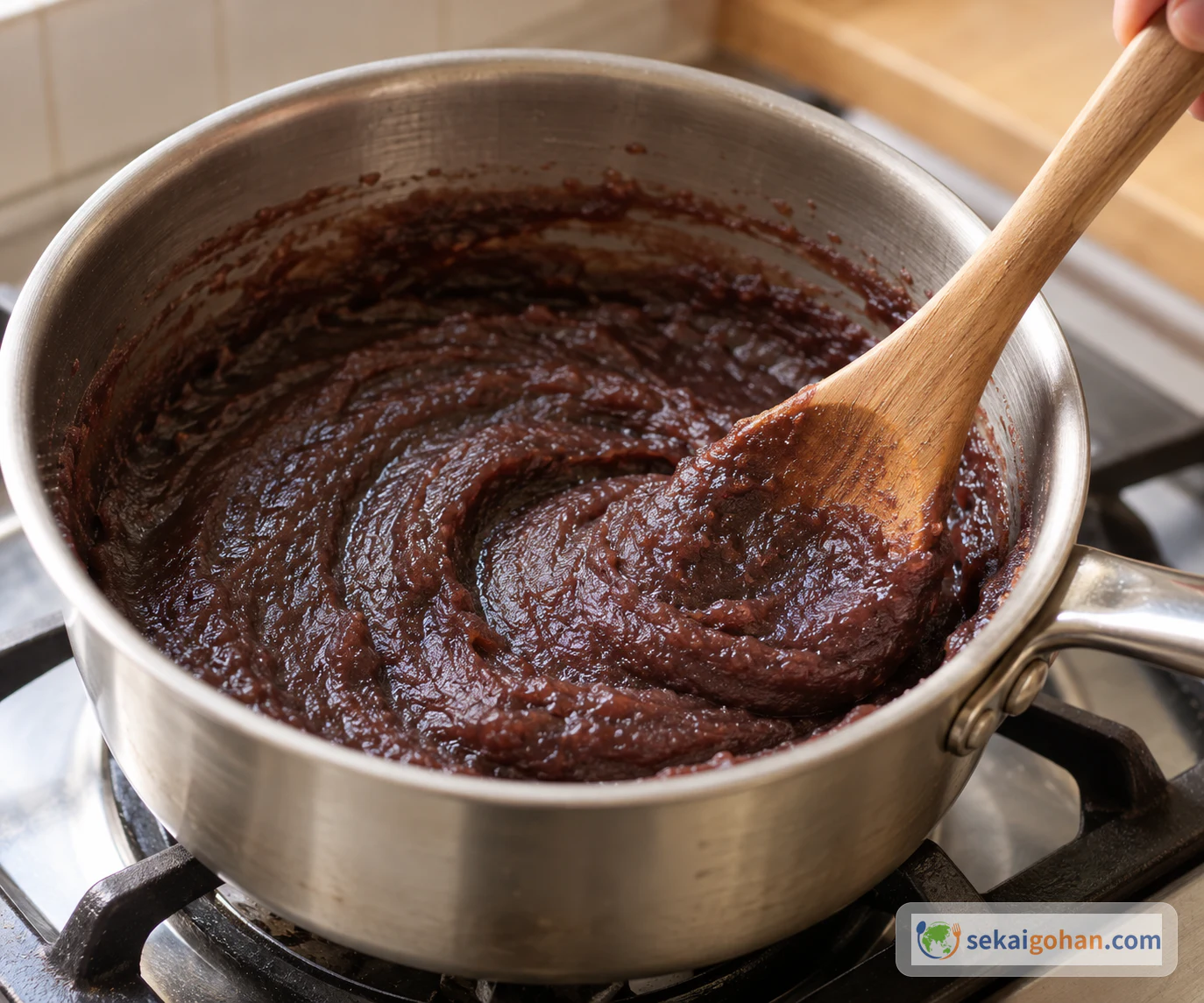
Season the paste over low heat

Brown sugar, salt, vanilla and rice syrup stirred into mashed azuki over low heat
Stir until the sugar dissolves and the paste turns slightly glossy

With the mashed beans in the pot, add ¾ cup brown sugar, ¼ tsp kosher salt, 1 tsp vanilla extract and 2–3 tbsp rice syrup. Stir with a wooden spoon over low heat until the sugar dissolves and the paste looks a little shiny.

STEP44 / 9

Divide the paste and roll 8 balls

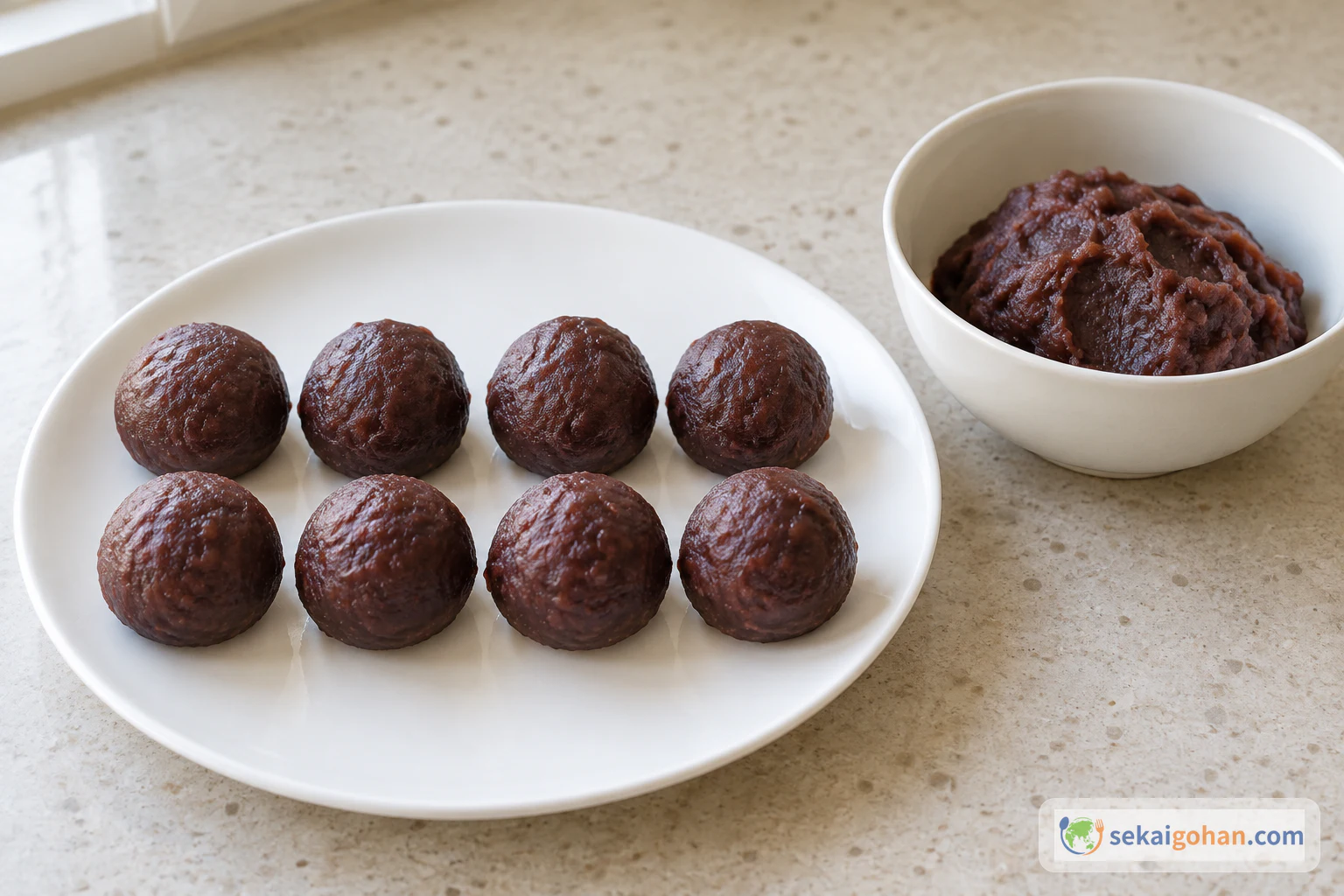
Azuki paste divided in half, with the half being used rolled into eight balls
Eight filling balls for this batch; the other half of the paste is extra

Divide the paste into two equal halves. Set one half aside and keep it in the refrigerator or freezer. Divide the other half into 8 portions and roll each into a ball.

STEP55 / 9

Mix the dough

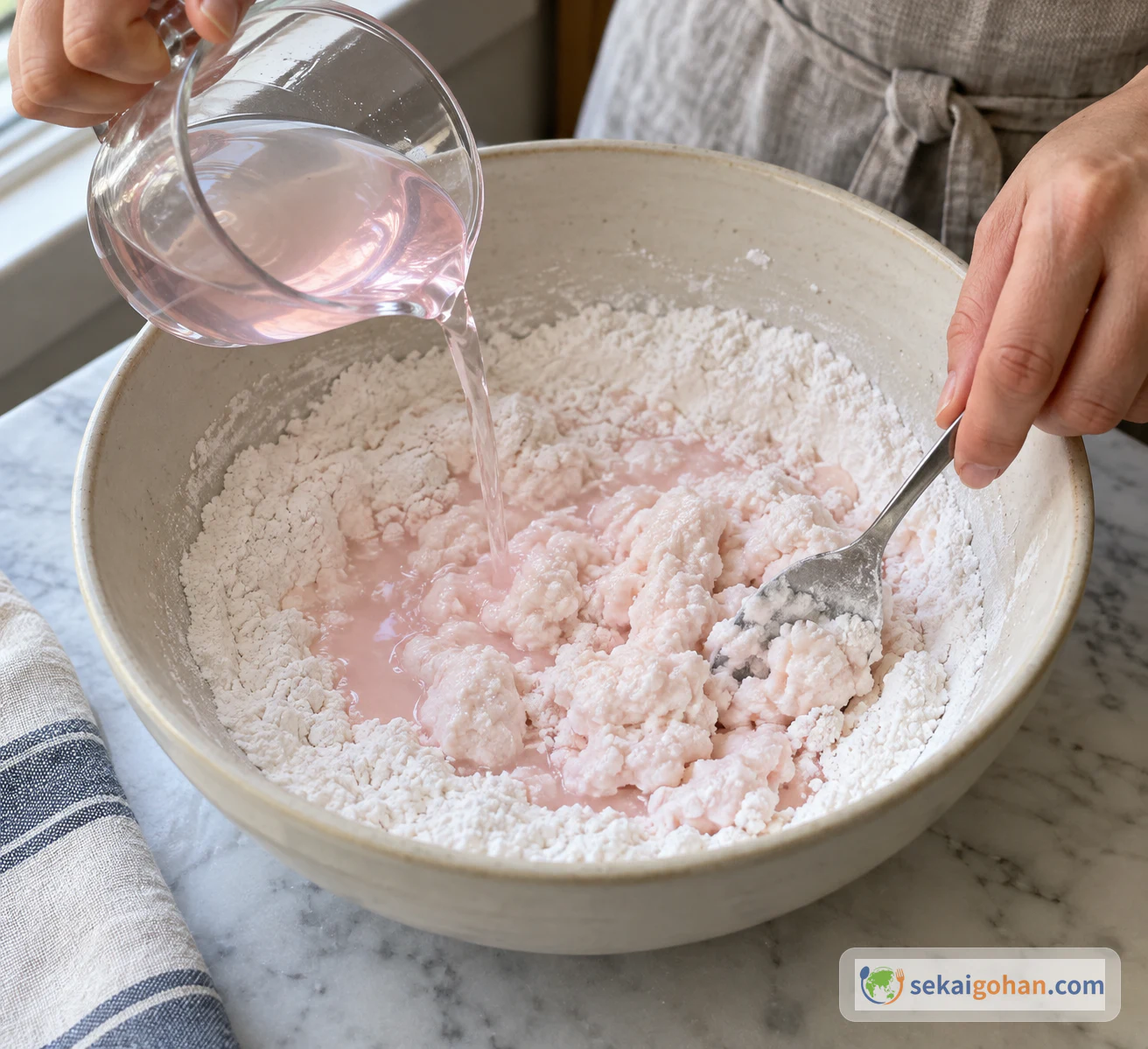
Pink-tinted water being mixed into sweet rice flour, sugar and salt
A single small drop of coloring gives a pale pink dough

In a microwave-safe bowl, combine 1 cup sweet rice flour, ¼ tsp kosher salt and 1 tbsp sugar. Add 1 small drop red food coloring to ¾ cup water, pour the pink water into the flour, and mix well with a spoon. Push the dough to the center of the bowl.

STEP66 / 9

Microwave for 3 minutes and stir

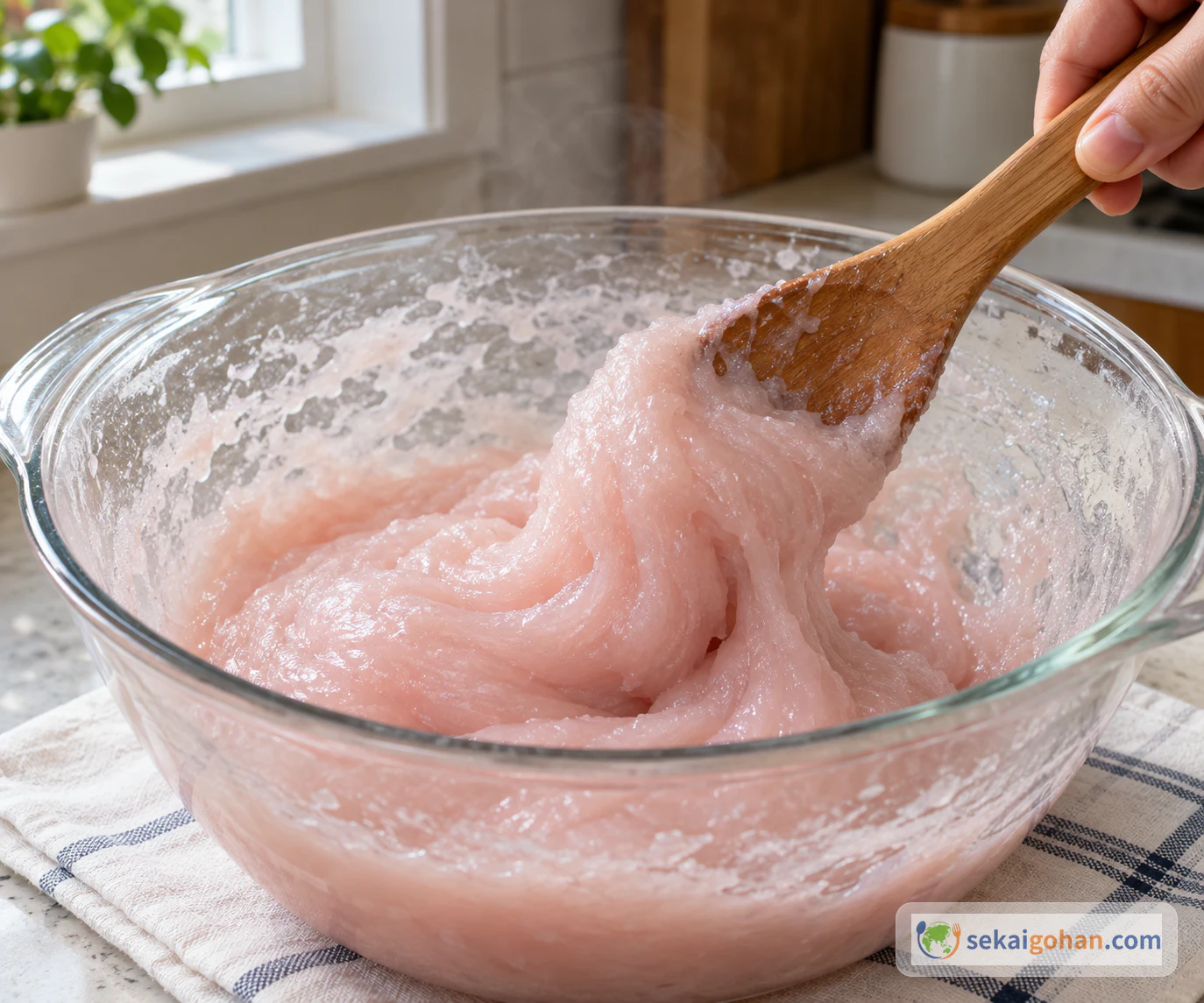
Rice dough heated for 3 minutes in the microwave being stirred with a wooden spoon for about 20 seconds
After the first heating, stir briefly with a wooden spoon

Cover the bowl with plastic wrap and microwave on high for 3 minutes. Take it out and stir with a wooden spoon for about 20 seconds.

STEP77 / 9

Microwave 1 more minute and knead with a spoon

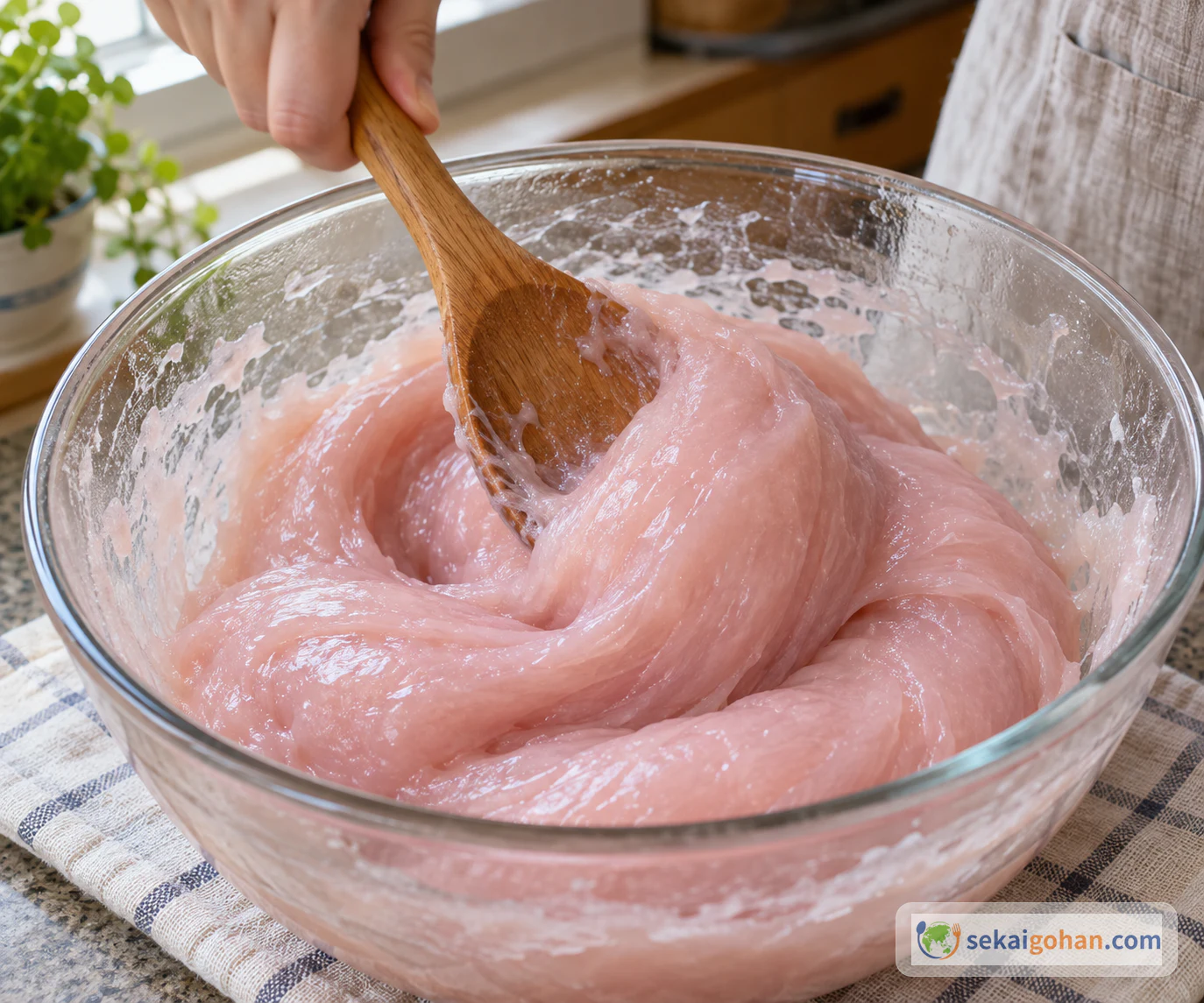
Reheated rice dough worked in circles with a wooden spoon about 100 times
Work the hot dough in circles with the spoon

Cover the bowl again and microwave for 1 more minute. While the rice cake is hot, knead it vigorously with a wooden spoon in a circular motion, about 100 times.

STEP88 / 9

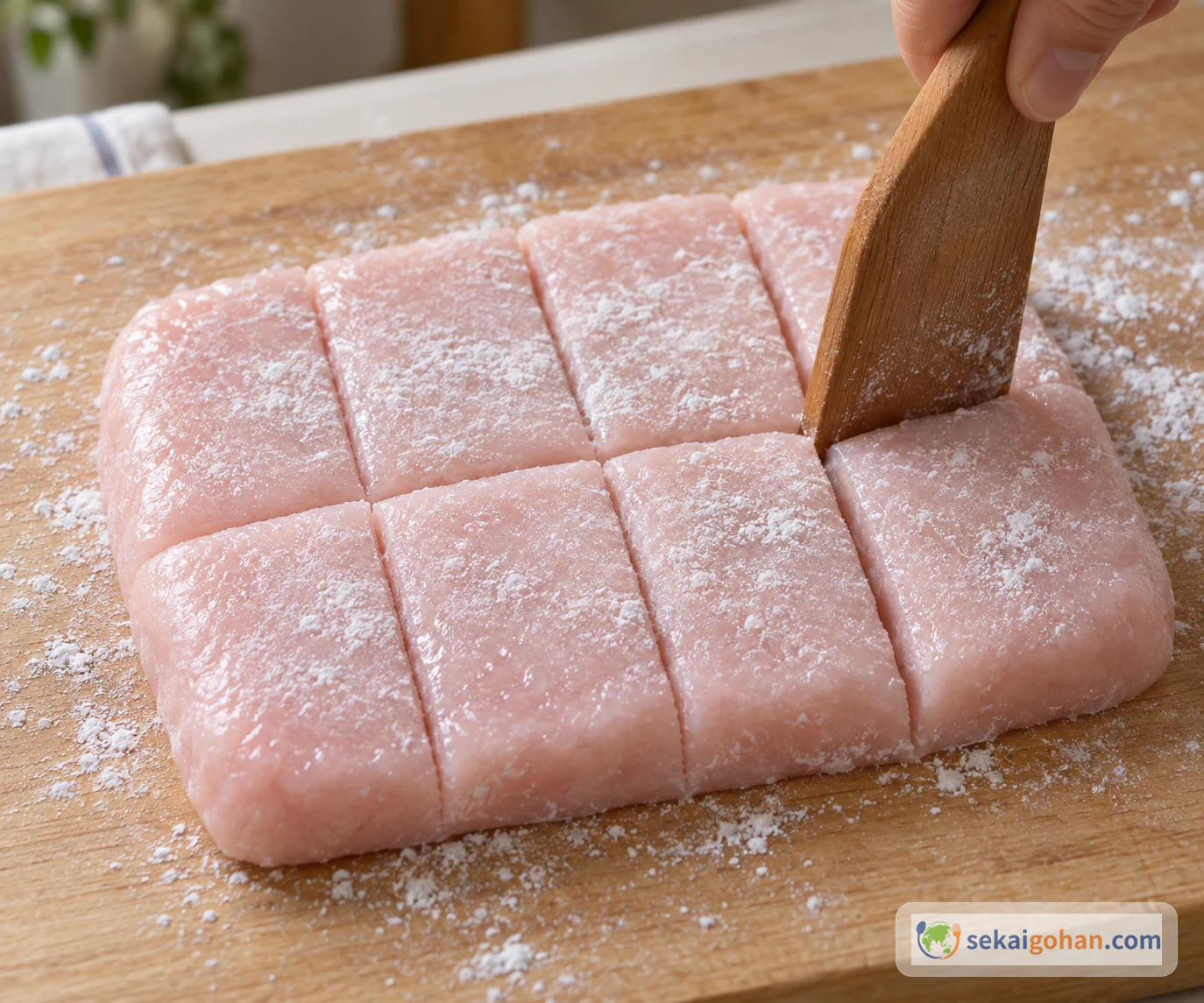
Shape and cut into 8 pieces

Dough shaped into a rectangle on a starch-dusted board and cut into eight pieces
A rectangle of about 4×5 inches, cut into eight equal pieces

Spread ¼ cup starch powder on the board and transfer the dough onto it. With wet hands, shape it into a rectangle about 4×5 inches, then turn it over. Cut it into 8 equal pieces with a wooden knife or spatula. Cover the pieces with plastic wrap so they don't dry out while you shape them.

STEP99 / 9

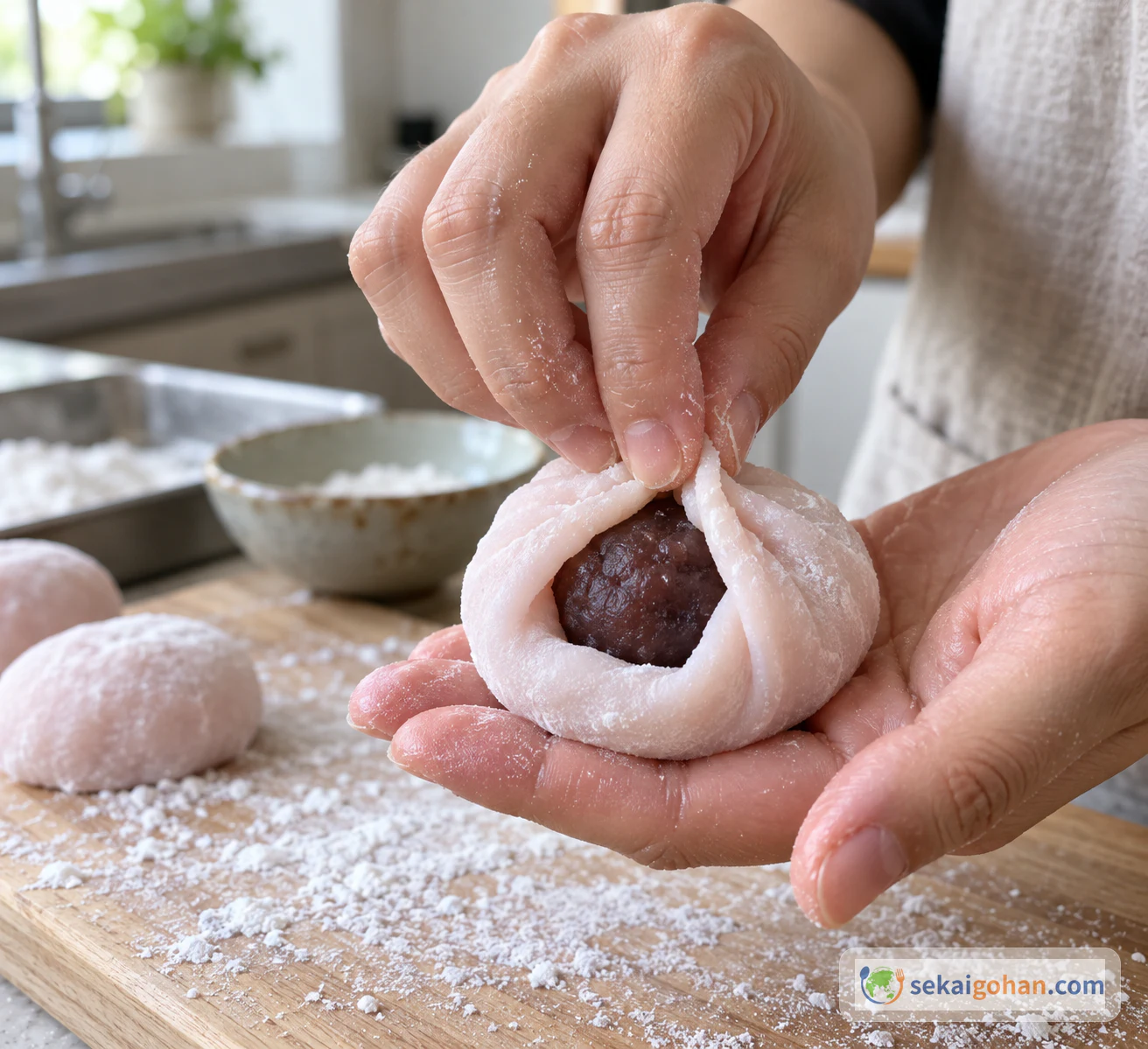
Fill and pinch closed

Azuki paste placed on a flattened round of dough with the edges gathered to close
Gather the edges over the filling and pinch the seam shut

Flatten one piece of dough into a round about 2½ inches across. Place a bean paste ball in the center, gather the edges of the dough over it, and pinch them closed. Repeat with the remaining pieces to make 8 rice cakes.

0 / 0
Ingredients

Ingredients

1 / 1

Ingredients

Ingredient Amount Role
Dried azuki beans 1 cup The base of the sweet bean paste
Water (for the beans) 3 cups, plus more as needed For cooking the beans until soft
Brown sugar ¾ cup Sweetens the bean paste
Kosher salt (for the paste) ¼ tsp Seasons the bean paste
Vanilla extract 1 tsp Flavors the bean paste
Rice syrup 2–3 tbsp Sweetens the bean paste
Sweet rice flour (Mochiko; chapssalgaru) 1 cup The chewy rice dough
Kosher salt (for the dough) ¼ tsp Seasons the dough
Sugar (for the dough) 1 tbsp Lightly sweetens the dough
Water (for the dough) ¾ cup Binds the flour
Red food coloring 1 small drop Tints the dough pale pink
Starch powder (potato starch) ¼ cup Dusting the board while shaping

The bean paste makes enough for 16 balls. Use half for these 8 rice cakes and keep the other half in the refrigerator or freezer for later.

0 / 0

Dried azuki beans simmer slowly in a heavy pot until they're soft enough to crush, then get mashed and stirred with brown sugar, a little salt, vanilla and rice syrup until the paste turns faintly glossy. In a separate bowl, sweet rice flour mixed with pale pink water goes into the microwave and comes out to be worked in circles with a wooden spoon. The dough is cut into eight pieces, and each one is wrapped around a ball of dark bean paste.

That's chapssaltteok (찹쌀떡): Korean rice cakes with a tender, pale-pink glutinous rice wrapper around a smooth, sweet red bean filling. This version makes the filling from scratch with dried beans rather than from a can or tub. If you're exploring more of the country's cooking, see our South Korea page.

About Chapssaltteok

Chapssaltteok is a Korean-style rice cake, a sweet rice flour dough wrapped around sweet red bean paste. You'll also see it spelled chapssal-tteok, and the flour it's made from is called chapssalgaru, sweet rice flour made from glutinous rice. The microwave method used here is a home-kitchen approach, and if you're making them for someone, packing the finished cakes in a small box makes a lovely gift.

It's often called "Korean-style mochi," and it does look a lot like Japanese daifuku. Both wrap a filling in glutinous rice dough, but chapssaltteok is its own Korean dish with its own name. A few other Korean dishes are easy to mix up with it:

  • Youngyang chaltteok. Wet, frozen sweet rice flour is used in several Korean rice cakes, including red bean chapssaltteok. Youngyang chaltteok also uses this flour, but it's a different rice cake: made with beans, nuts and dried fruit, and steamed.
  • Chapssal buggumi. A separately named rice cake from Seoul and Gyeonggi, filled with chestnut and honey and pan-fried.
  • Tteokbokki and hotteok. These share the "rice cake" or dough idea in English but differ in ingredients, shape and cooking method.
Before you start

Measures are US cups and spoons, with no gram conversions.

Ingredients for 8 Rice Cakes
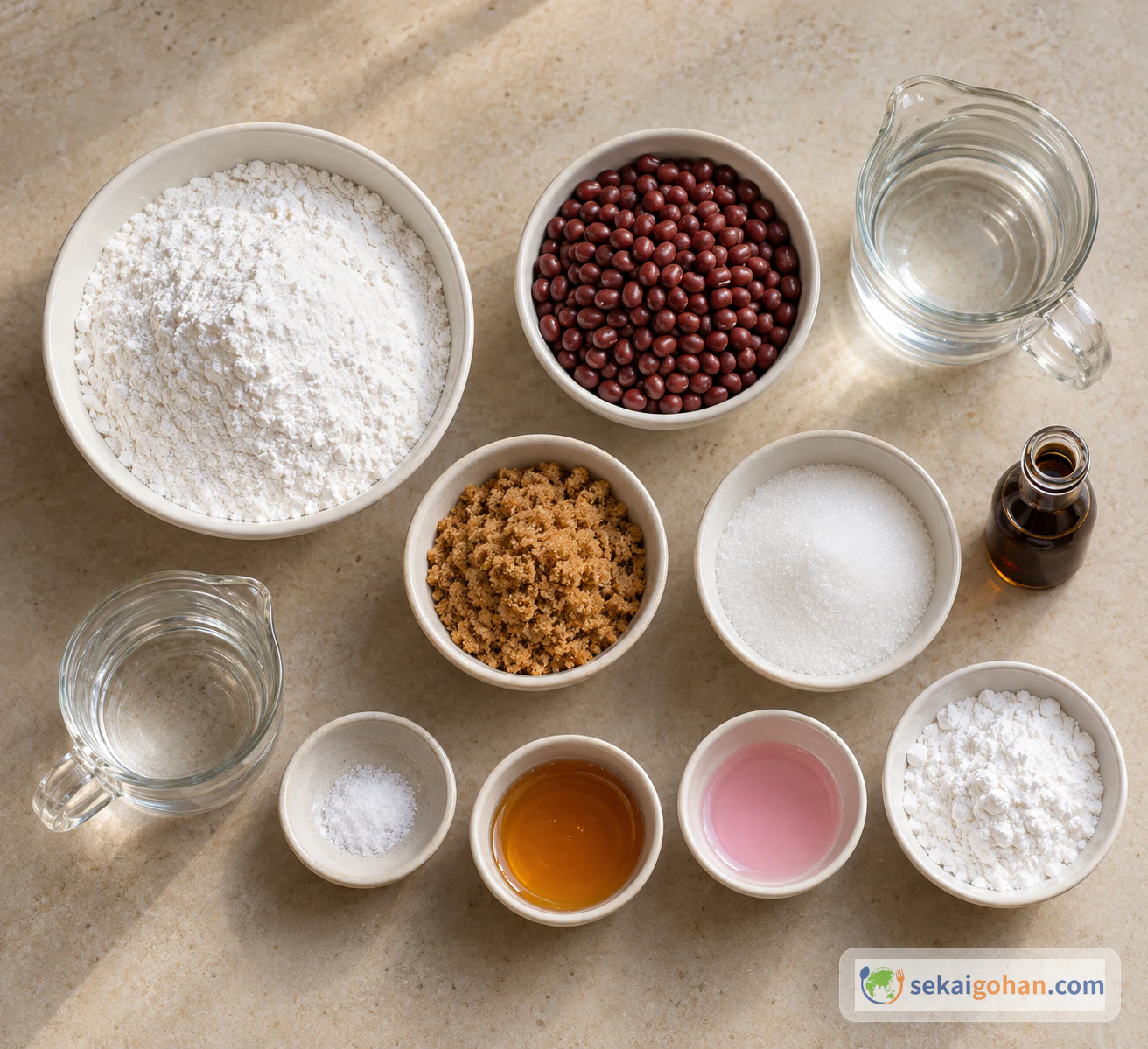
Dried azuki beans, sweet rice flour, sugar, salt, vanilla, rice syrup, water, pink-tinted water and potato starch laid out on a counter
The bean paste and the rice dough each have their own salt and sugar

Equipment

  • Heavy-bottomed pot with a lid
  • Wooden spoon (or a food processor for mashing the beans)
  • Microwave-safe bowl
  • Spoon for mixing
  • Plastic wrap
  • Microwave
  • Board for shaping
  • Wooden knife or spatula for cutting

Choosing Sweet Rice Flour for Chapssaltteok

The flour is the one purchase that really matters. This recipe uses sweet rice flour, also sold as Mochiko, which is the same thing as glutinous rice flour. Look for "sweet rice," "glutinous rice" or "Mochiko" on the label. A bag labeled only "rice flour" is usually ordinary, non-glutinous rice flour, a different product.

Make sure it's dry sweet rice flour. The wet, frozen kind is used for other Korean rice cakes, but it won't work in this dry-flour microwave method, and neither will shiratamako or other flours.

For the rest, the filling uses rice syrup alongside brown sugar, and the board is dusted with potato starch.

Microwave power

The dough is cooked on "high" for 3 minutes, then 1 more minute. Follow the sequence below and watch the dough.

Method: From Dried Beans to Eight Rice Cakes

The two halves of this recipe

Steps 1 to 4 make the bean paste, which takes the longest. Steps 5 to 9 make the dough and shape the rice cakes. Have the filling balls ready before you start the dough.

Chapssaltteok Troubleshooting

Situation What to check What to do
The beans aren't mashable after about 1½ hours Whether the beans crush easily Add more water and keep cooking over low heat until they mash easily
Your microwave's power is very different No wattage is given for "high" Follow the 3-minute, stir, 1-minute sequence and watch the dough
Cut pieces dry out while you work Whether the pieces are covered Keep the waiting pieces under plastic wrap

Frequently Asked Questions

Can I use store-bought red bean paste?

This recipe's amounts and steps are built around paste made from dried azuki beans, so it's best not to mix in store-bought paste. If you'd like the ready-made route, follow a recipe written for it.

Why does the paste make more than I need?

The full paste batch makes 16 balls, but one batch of dough makes 8 rice cakes. That's expected: use 8 balls for these cakes rather than overfilling them, and keep the spare half in the refrigerator or freezer.
Sources