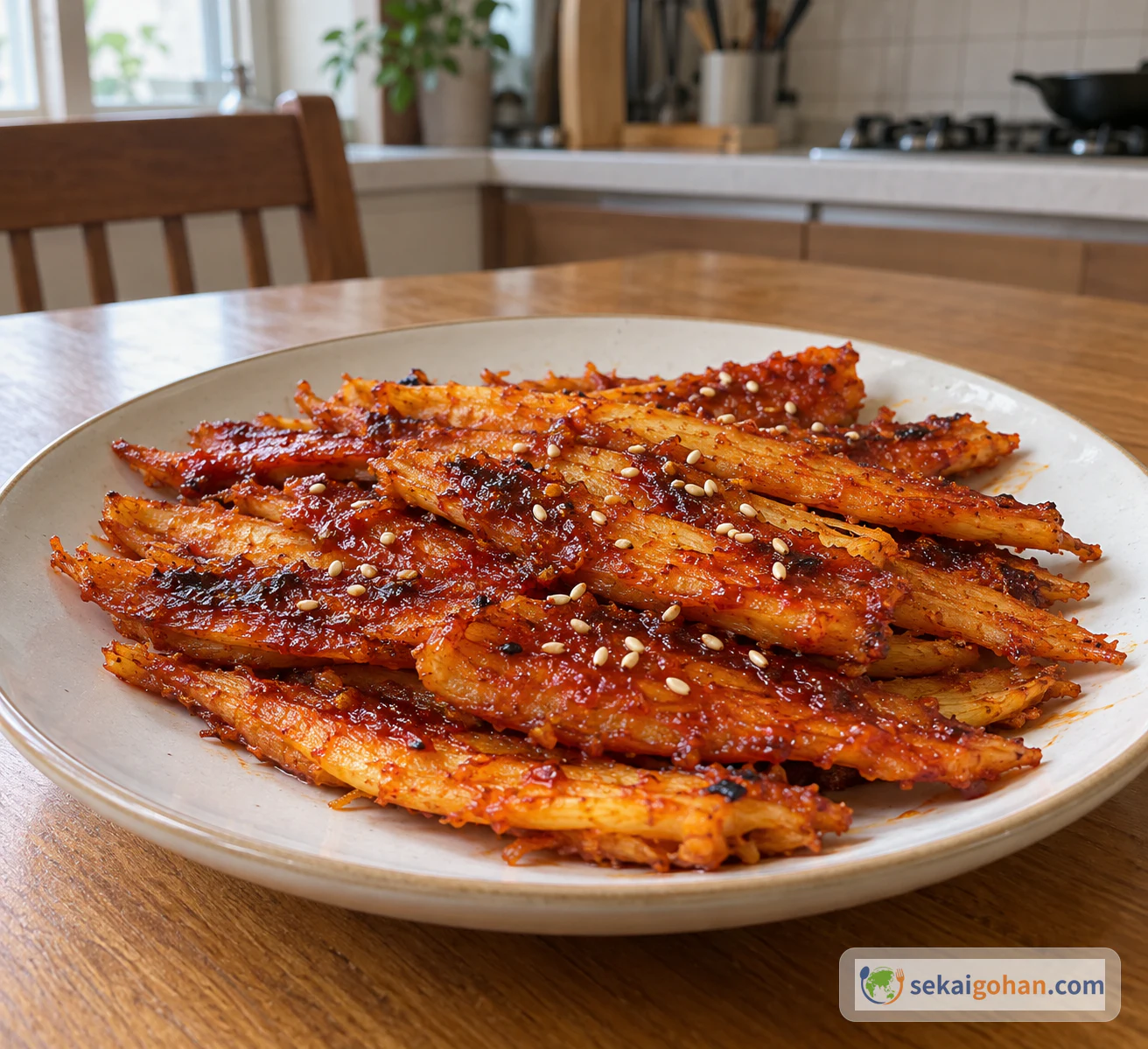
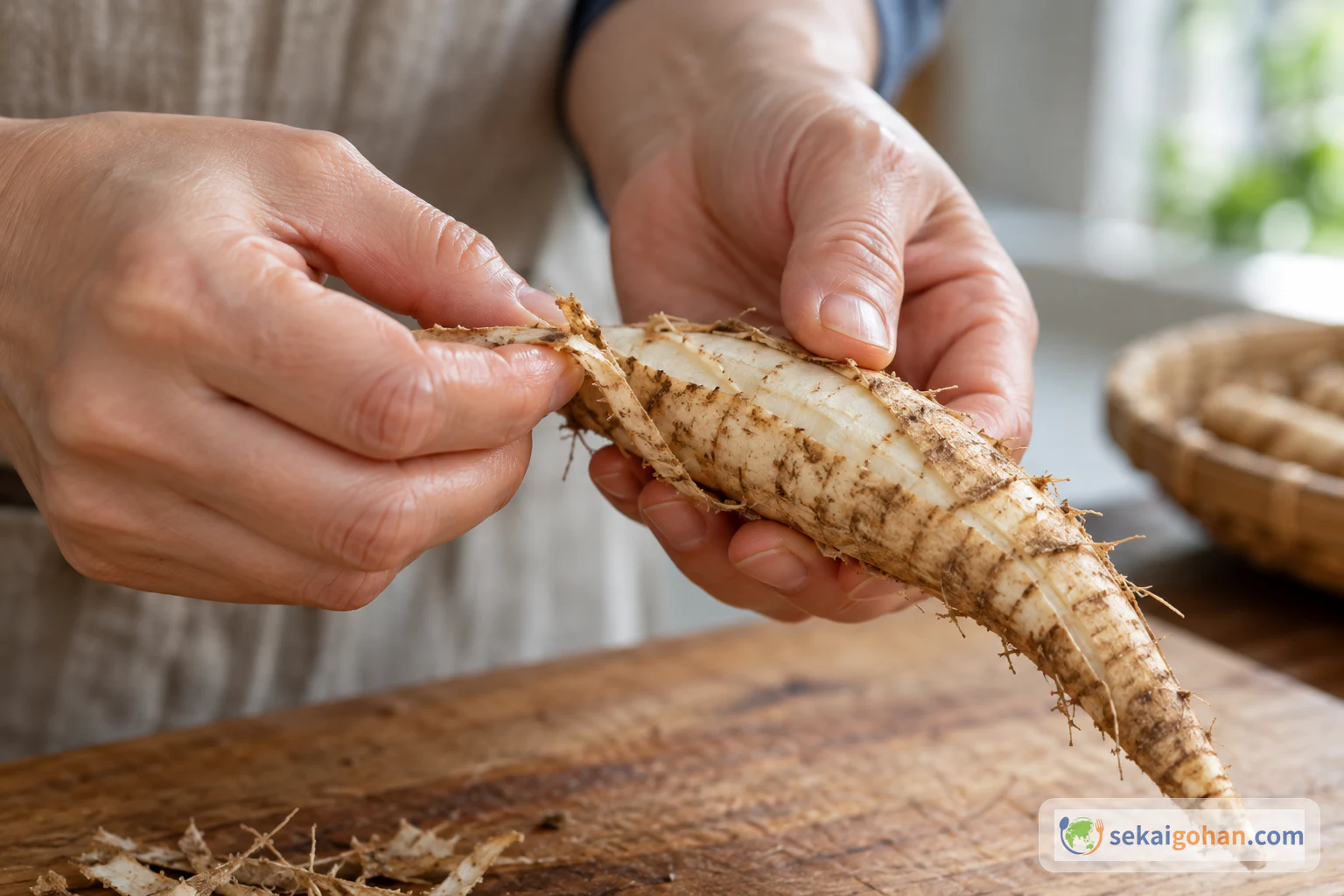
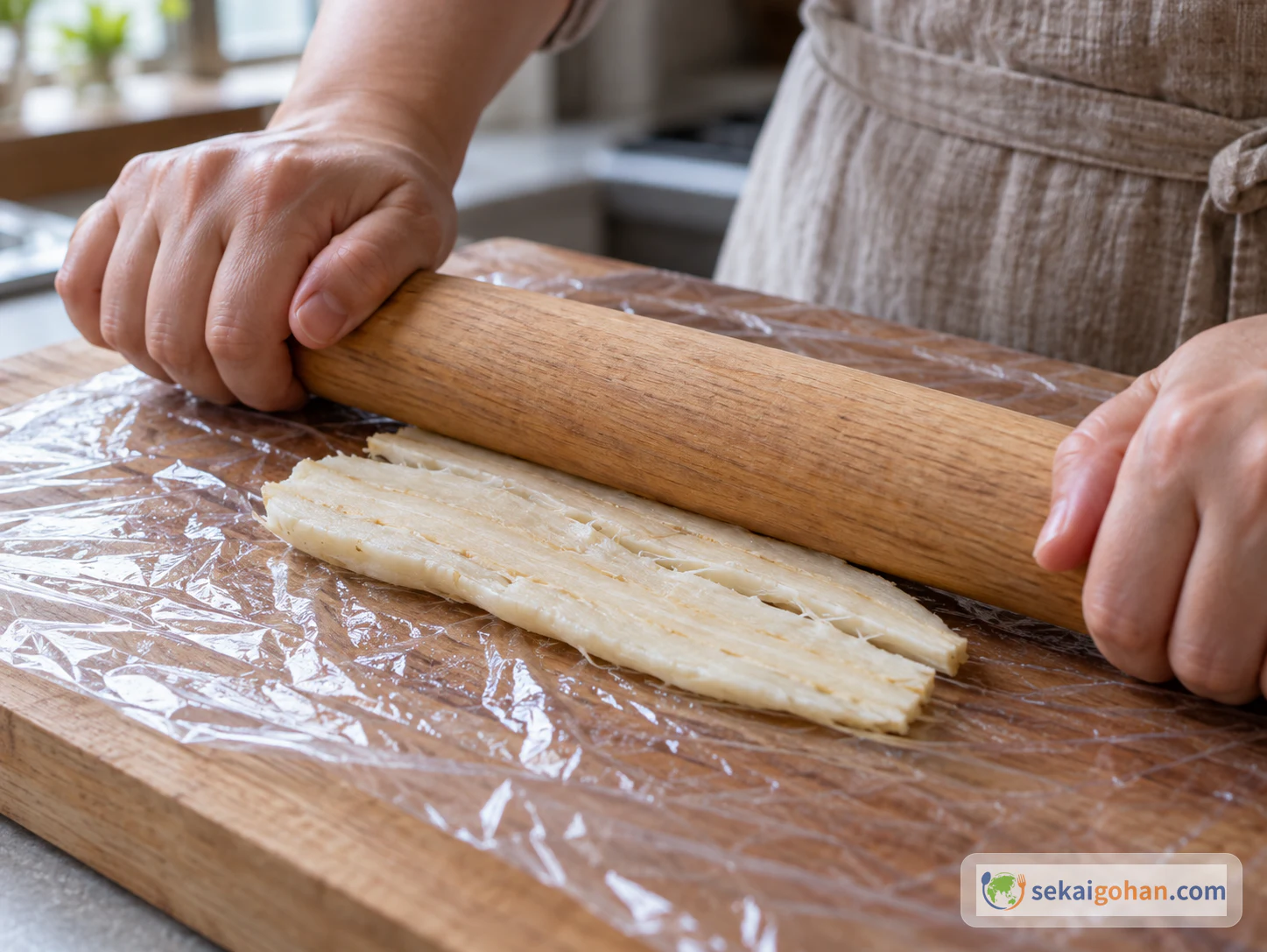
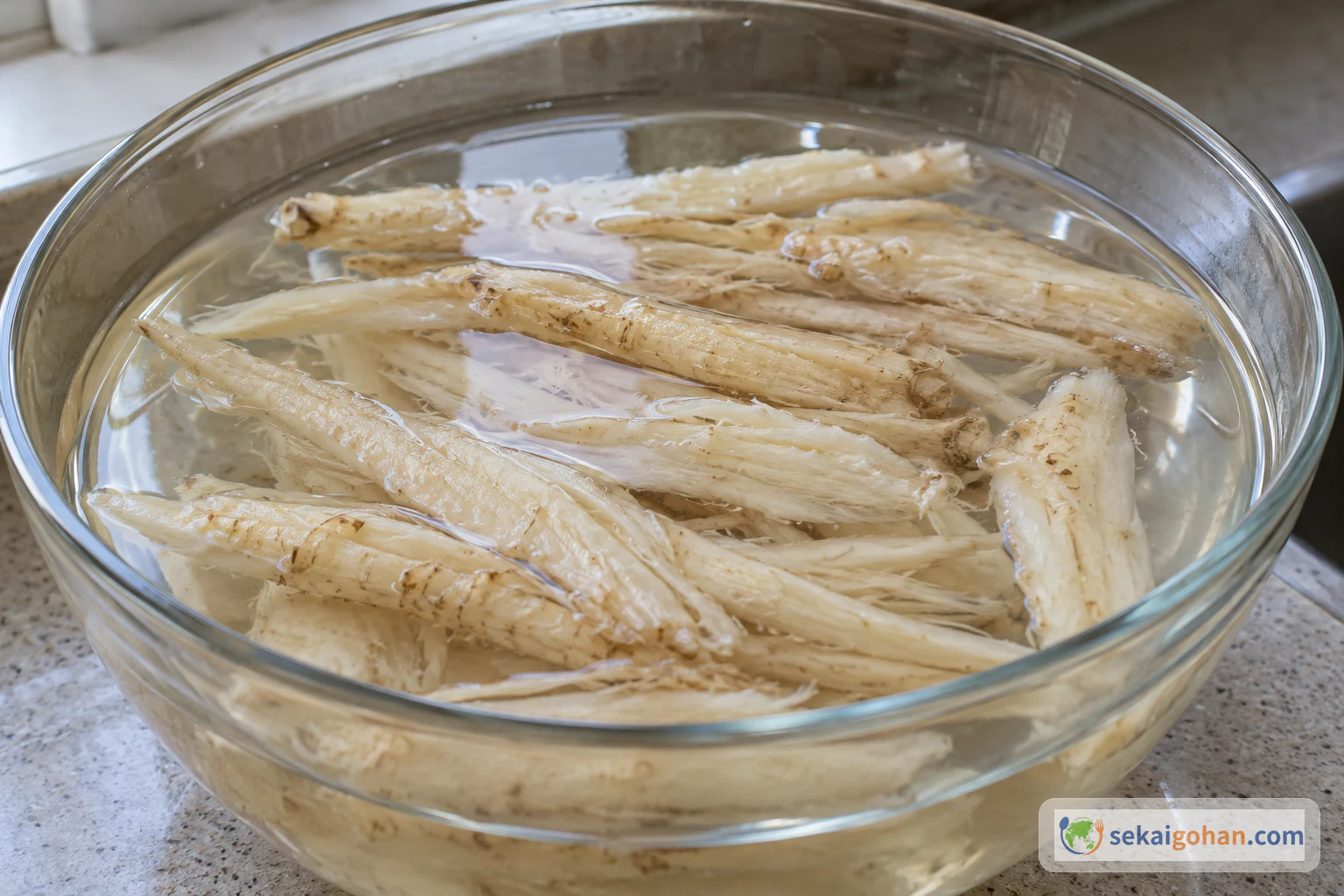
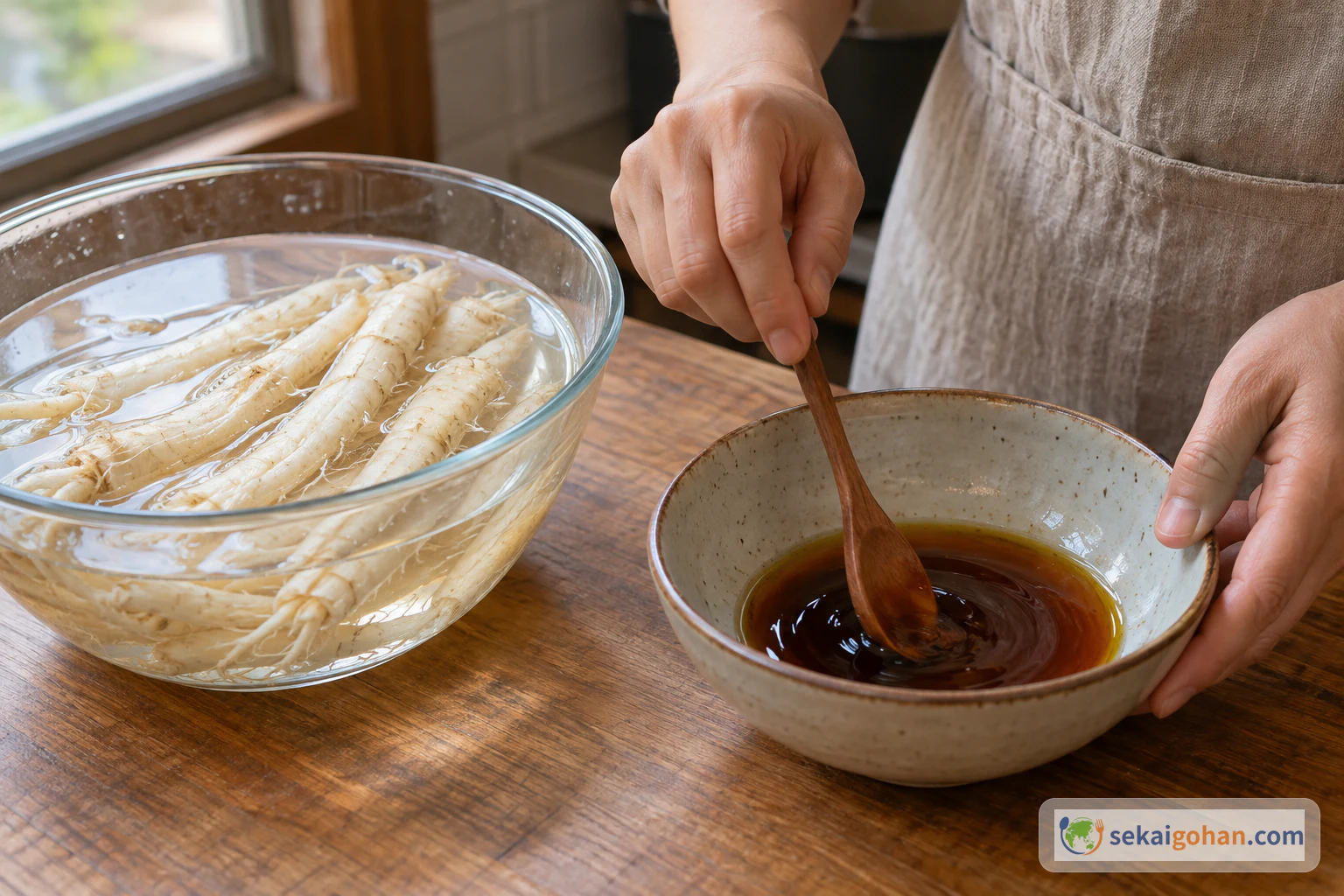
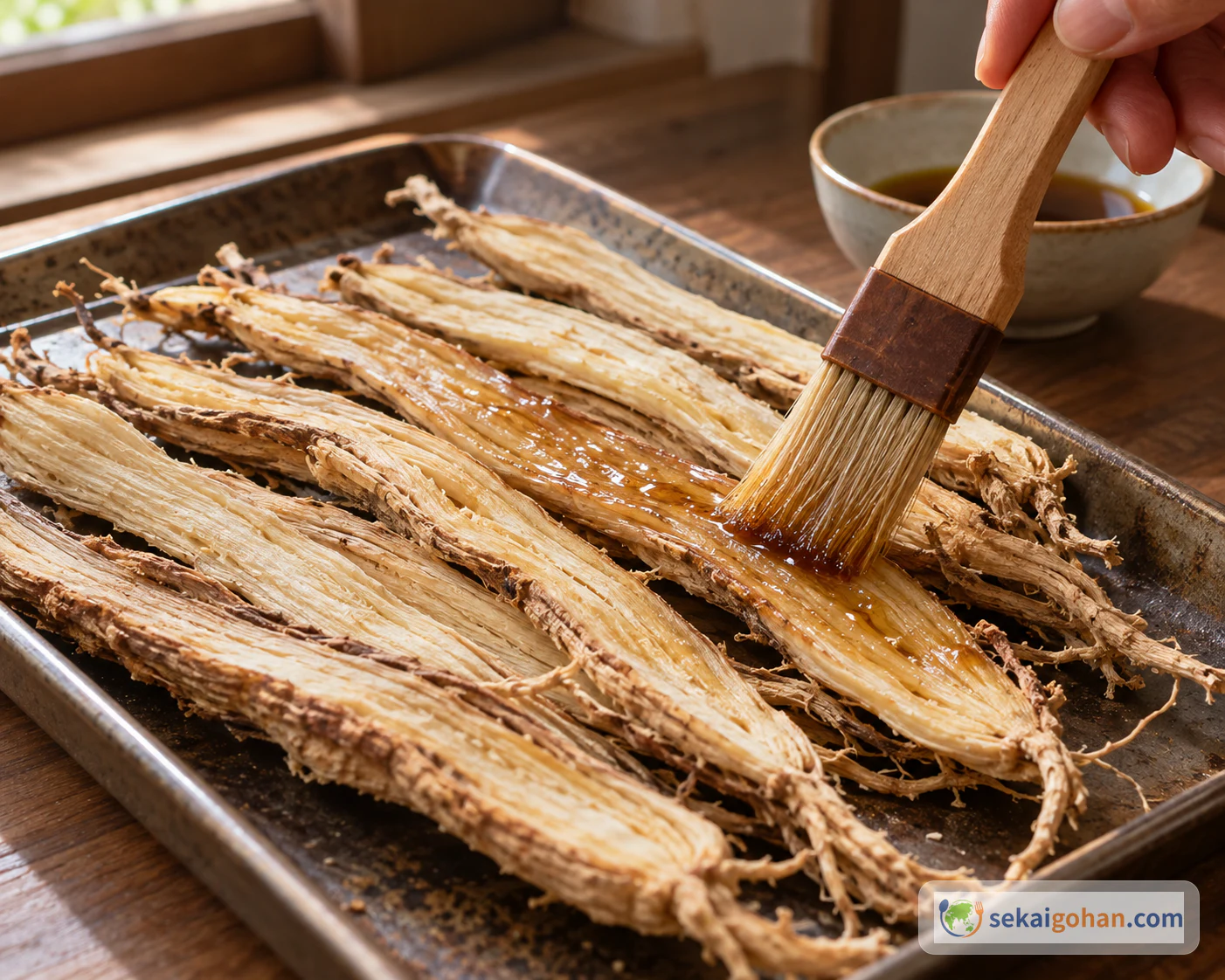
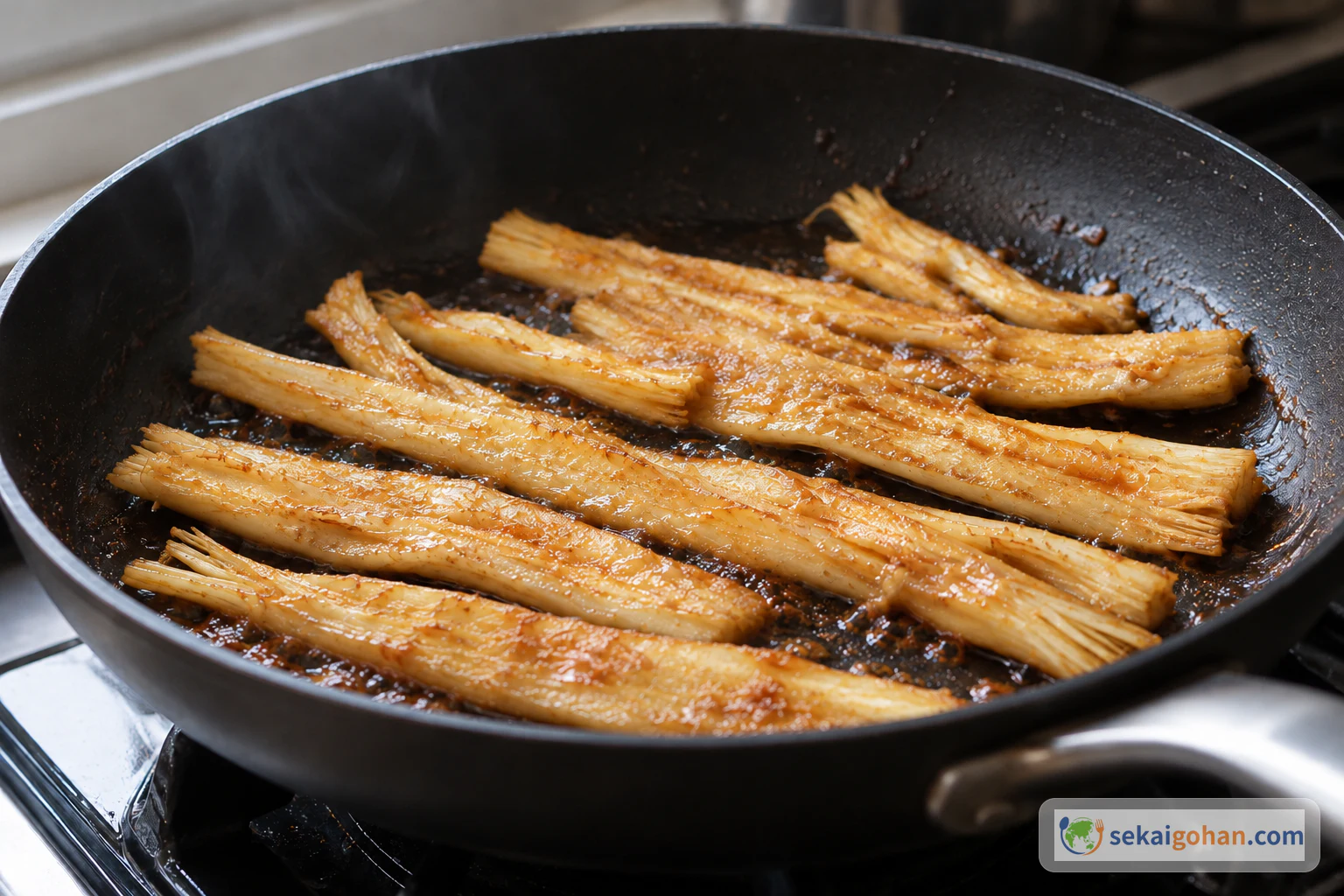
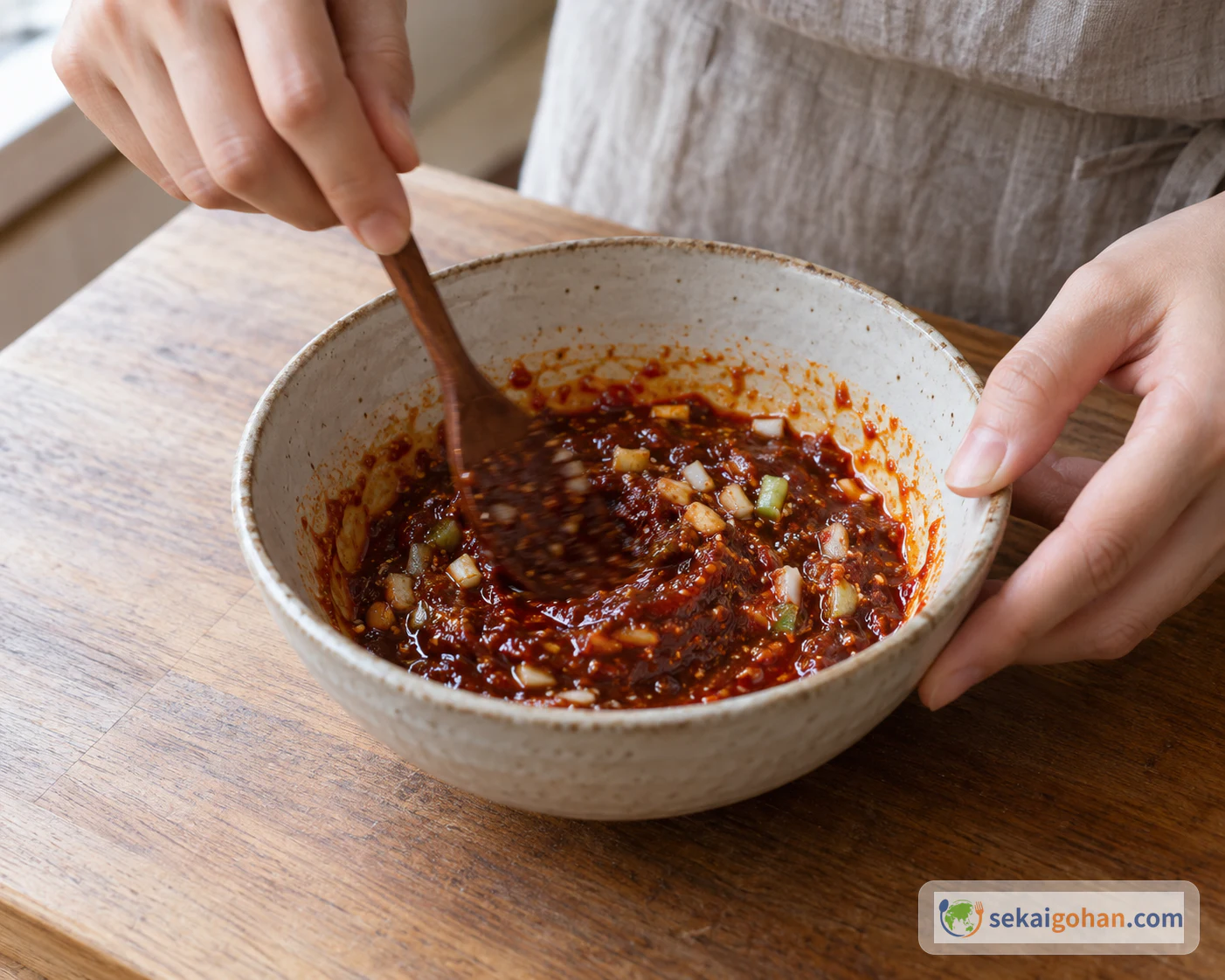
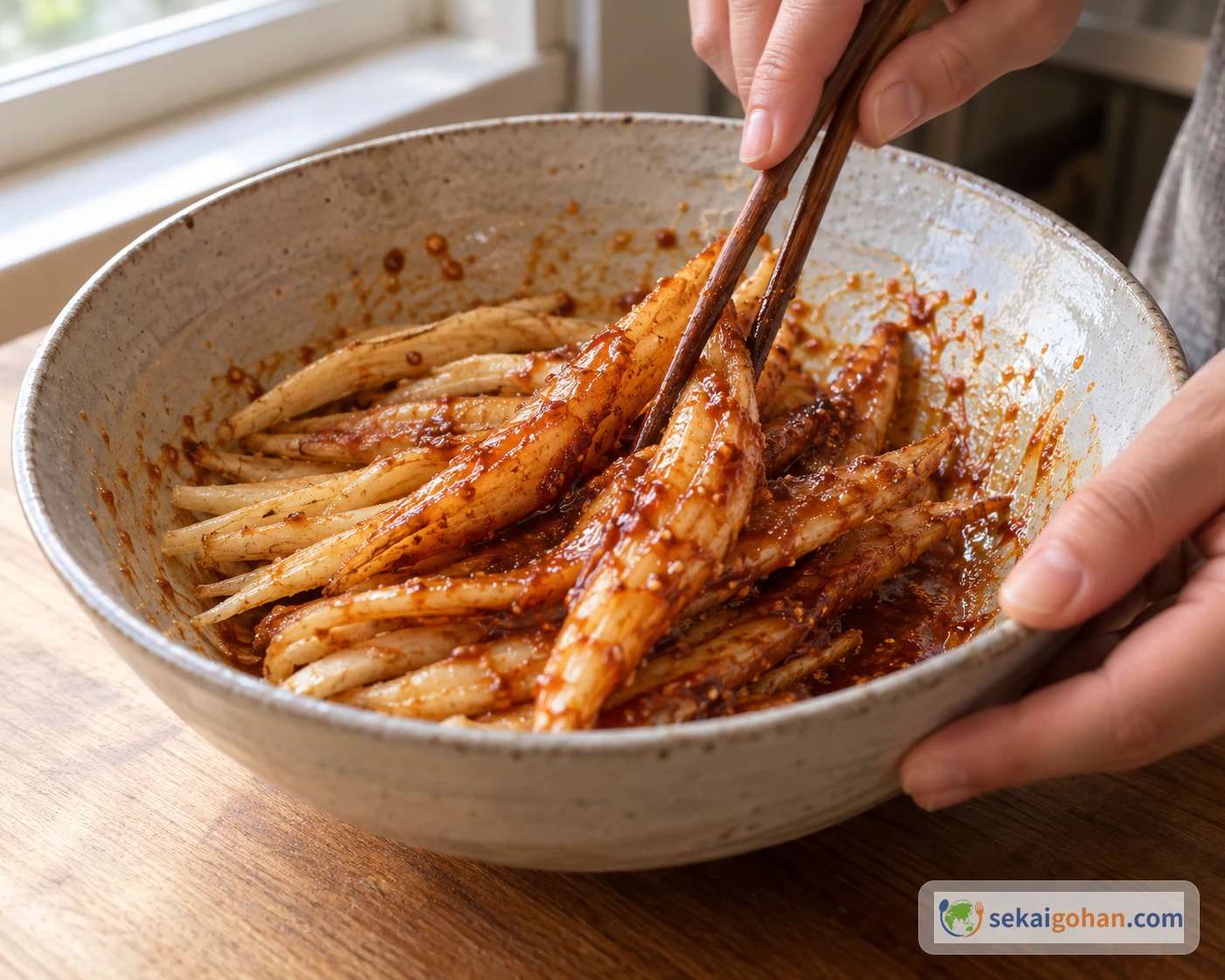
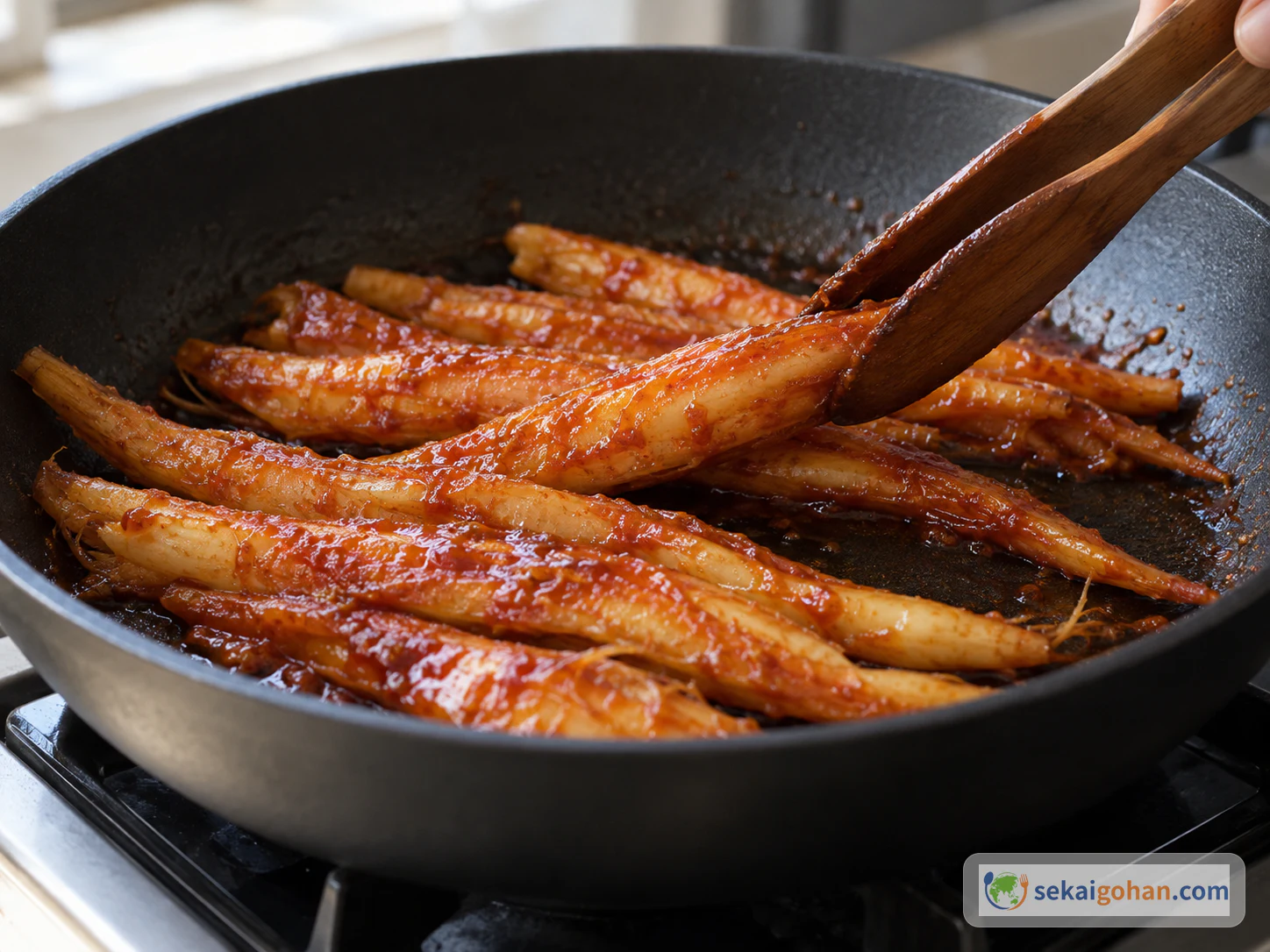
Deodeok gui (더덕구이) smells of sesame oil and of the root itself, and that aroma is a big part of why people love it. The roots are washed, blanched briefly, peeled, pressed flat and soaked in salt water. They go into the pan twice: first with a light yujang of sesame oil, perilla oil and soy sauce, then again after a toss in a red sauce of gochujang and gochugaru, until the sauce clings. A sprinkle of whole sesame finishes the plate, which serves 3 and comes together within 60 minutes.
Deodeok Gui in Korean Cooking
In South Korea, deodeok (더덕) is a root eaten as a cooked dish, and deodeok gui is one way of preparing it: pounded, seasoned with a red-chili-paste sauce and grilled slowly. It goes well with rice or drinks.
Each stage of the dish stays distinct, and that is what makes it work. Salt goes only into the soaking water. The yujang is mixed while the roots soak, and the red sauce is mixed while the first roast is under way, so the plain oil-and-soy roast and the sauced roast never blur together.
Ingredients: 10.5 oz (300 g) Trimmed Deodeok in Four Stages
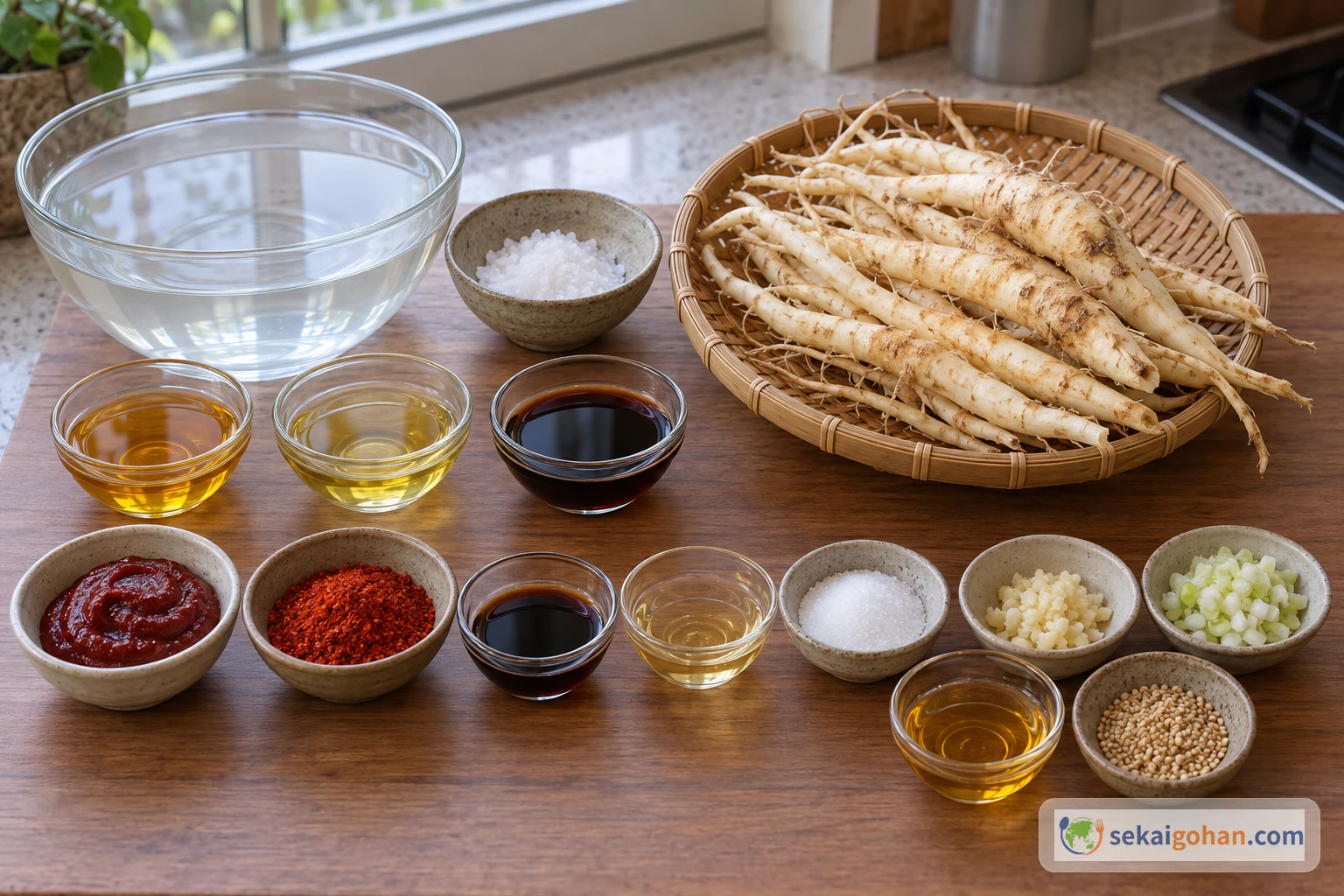
The 10.5 oz (300 g) of deodeok is the weight after trimming. Sesame oil and jin-ganjang each appear twice. One portion goes into the yujang and one goes into the later sauce. Measure them separately. Don't combine them, and don't add extra oil to the pan.
This dish contains soy sauce, sesame oil, perilla oil and sesame seeds. If you are cooking for anyone with allergies, check the labels of the gochujang, jin-ganjang and other packaged ingredients.
Equipment
- A pot for blanching
- A frying pan
- A knife and cutting board
- A plastic sheet to lay over the board
- A rolling pin or other plain rod
- Bowls for the salt soak, the yujang, the sauce and tossing the roots
- A kitchen towel
Finding Ingredients for Deodeok Gui
You may need a trip to a Korean or Asian grocer for deodeok root (더덕), gochujang (고추장), gochugaru (고춧가루), mullyeot (물엿), perilla oil (들기름) and jin-ganjang (진간장). Carry the Korean names with you; they make it much easier to match a shelf or a label.
- Deodeok: Use deodeok itself. Burdock, carrot and ginseng are different roots, and using one of them would make a different dish.
- Jin-ganjang: This is a Korean soy sauce category, distinct from Japanese light soy sauce or Chinese dark soy sauce.
- Mullyeot: Look for Korean starch syrup labeled 물엿, the water/starch-syrup option, rather than rice jocheong.
- Perilla oil and sesame oil: These are two different oils with different roles here, so keep both on hand.
Method: Prepare, Soak, Roast with Yujang, Then Roast in Sauce
Mix the yujang while the roots soak in salt water. Mix the red sauce while the first roast is in the pan. Have all the ingredients measured out before you start so that both overlaps go smoothly.
Common Problems with Deodeok Gui
Most trouble comes from rushing one stage into the next. These checks follow the order of the steps.
| Point in the method | What to check | What to do |
|---|---|---|
| Blanching | The roots are only meant to dip in the boiling water | Take them out after 10–15 seconds and rinse them in cold water right away |
| Pounding | The roots are flattening rather than breaking into pieces | Tap gently to spread the fibers without tearing them |
| After the salt soak | The roots are wet when the yujang goes on | Rinse them lightly, then pat them thoroughly dry with a towel before coating |
| First roast | The 3–4 minutes covers both sides together | Turn the roots partway through and keep the total within that range |
| Second roast | The sauce is still sliding around the pan | Keep turning over medium-low until it sets onto the roots, then stop |
Frequently Asked Questions
Why are sesame oil and jin-ganjang listed twice?
Each goes into two separate mixtures. The yujang uses 1.5 Tbsp sesame oil and 0.5 Tbsp jin-ganjang, together with perilla oil, for the first roast. The red sauce uses another 0.5 Tbsp each of sesame oil and jin-ganjang. Keep the portions apart; mixing everything at the start would undo the order the recipe depends on.
Is the sugar necessary?
The sugar can range from none up to 0.5 Tbsp, and this recipe uses 0.5 Tbsp. Use less or leave it out if you like the sauce less sweet.