Nai Wong Bao: Cantonese Steamed Custard Buns (奶黃包)

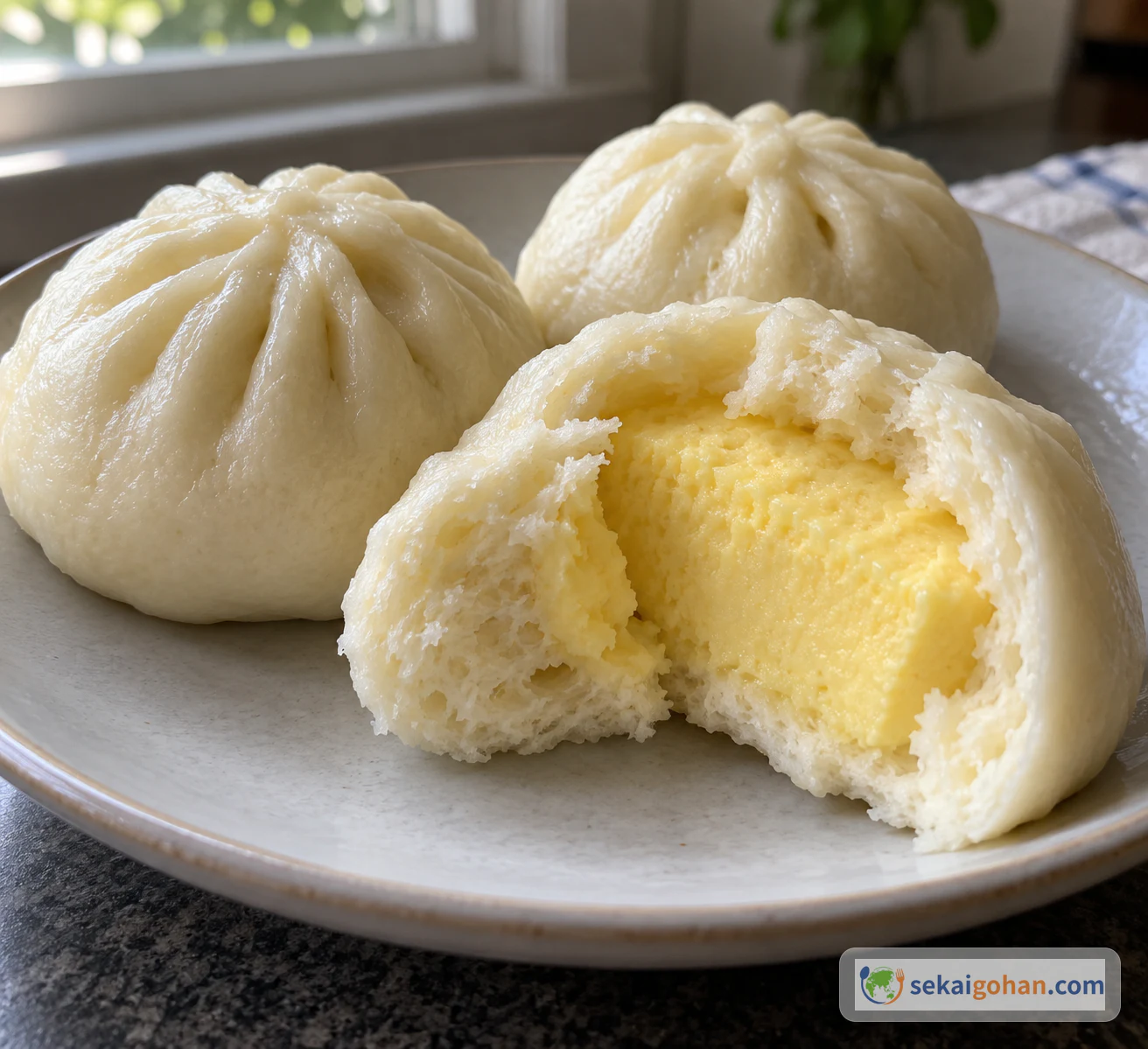
Steamed white nai wong bao on a plate, one broken open to show a thick yellow custard inside
Serves
12 buns
Cuisine
Cantonese

How to make nai wong bao (奶黃包), Cantonese steamed custard buns, following Judy's 12-bun recipe from The Woks of Life. A thick egg-and-dairy custard is cooked over a water bath, cooled, rolled into balls and wrapped in a lightly sweet coconut-milk dough. Filling and dough are measured separately, milk is added to the dough a tablespoon at a time depending on humidity, and the steaming is timed from the moment the heat goes on.

Cooking flow

Cooking steps

STEP11 / 11

Set up the water bath

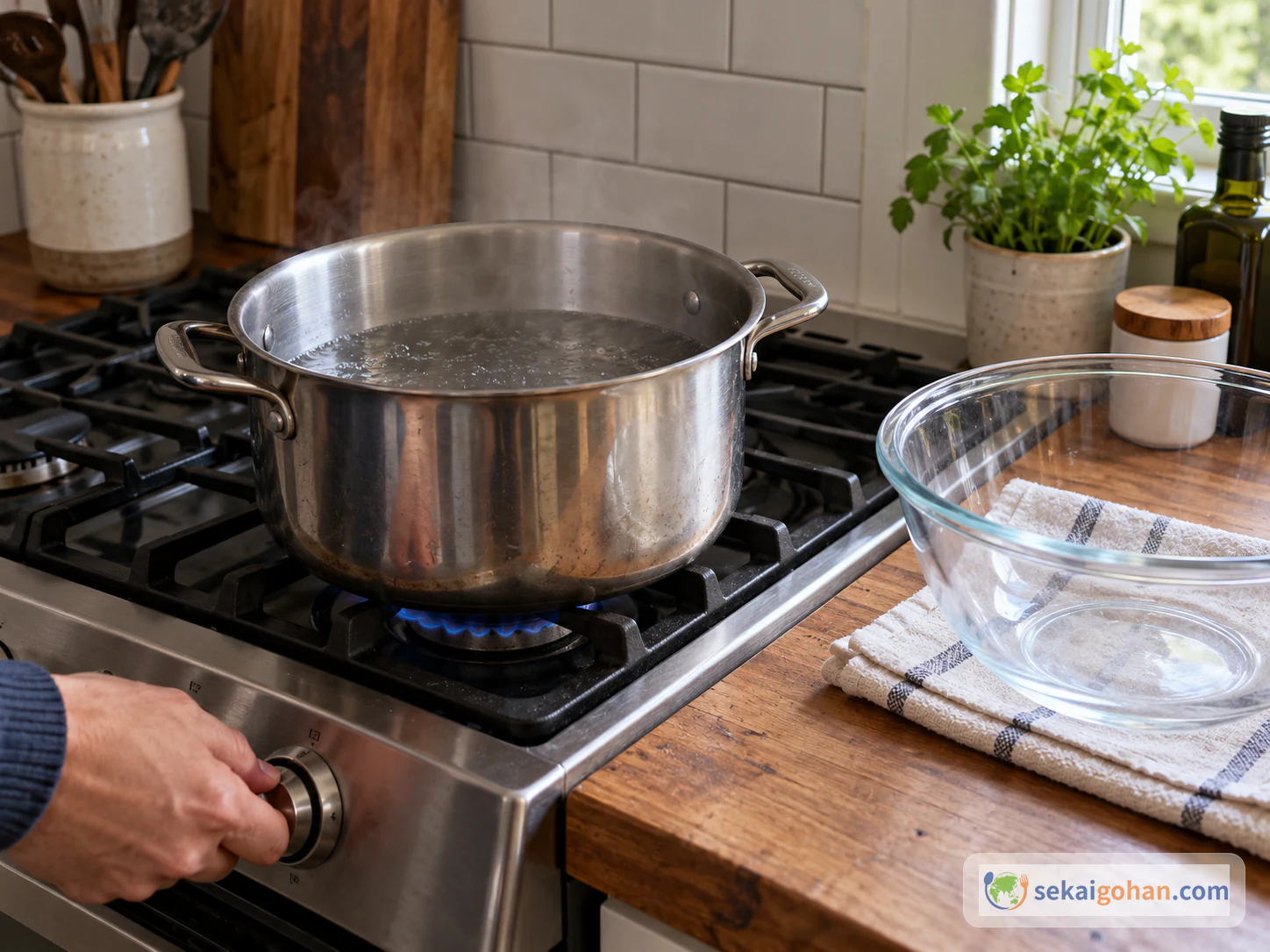
A deep pot of water brought to a boil and lowered to a gentle simmer, with an empty bowl beside it for the water bath
Have the simmering water ready before you start the custard

Pour water about 2 inches deep into a medium-to-large deep pot. Bring it to a boil, then lower the heat to a gentle simmer. Use a pot that your heatproof mixing bowl can sit in. Keep it at a gentle simmer while you mix the custard.

STEP22 / 11

Mix the custard base

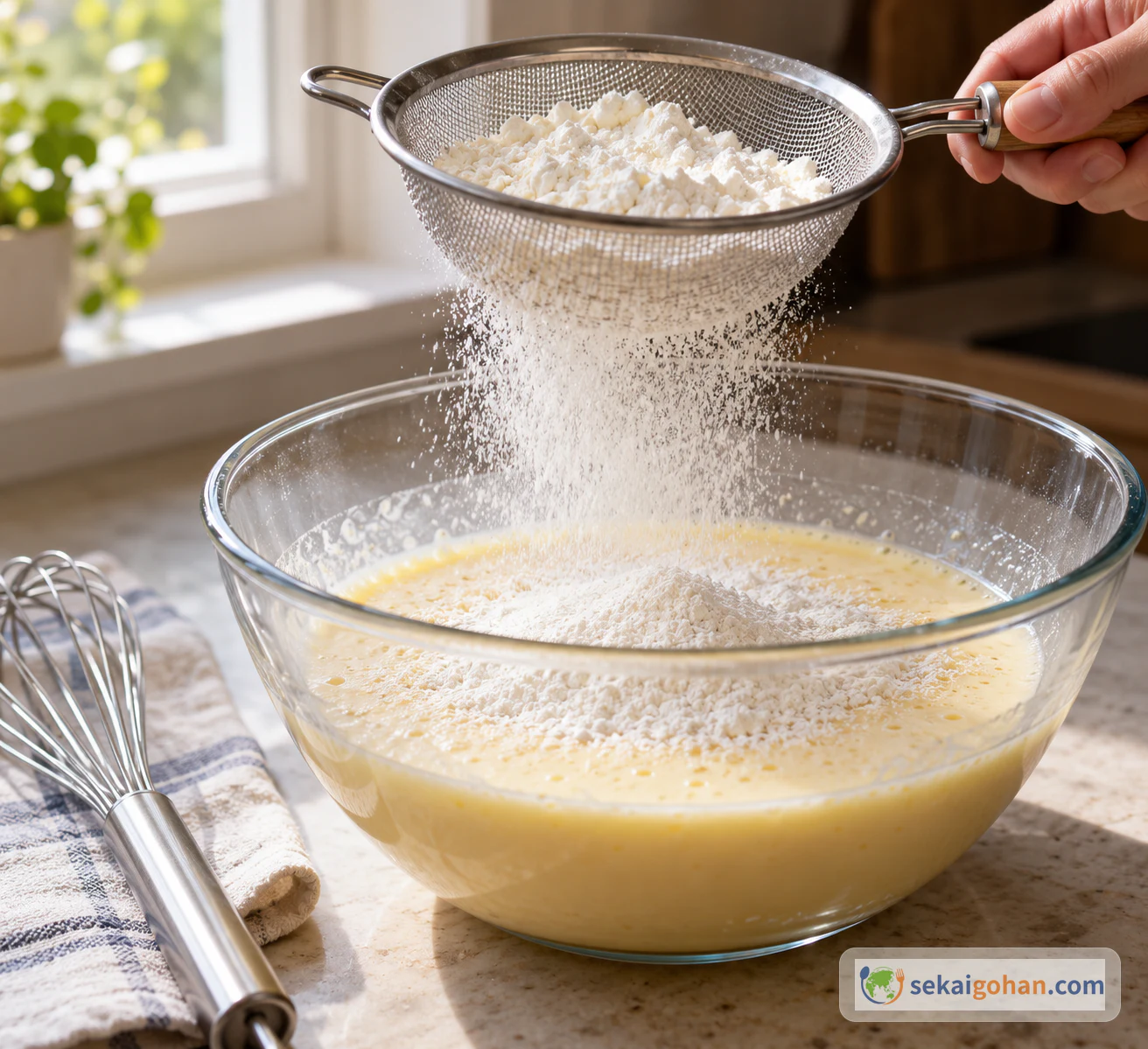
Flour, cornstarch and dry milk powder being sifted into the custard mixture
Sift the powders in, then mix until smooth

In the mixing bowl, beat the 2 eggs with the 2 oz (60 g) of powdered sugar on low speed for about 1 minute. Add the filling's ¼ cup (60 ml) of milk and 3 tbsp (45 ml) of heavy cream, and mix for just a few seconds. Sift in the filling's 25 g of all-purpose flour, 1 oz (30 g) of cornstarch and 1 oz (30 g) of dry milk powder, then mix until no lumps remain. The dough's milk and coconut milk are not used here, and don't add wheat starch as well. Stir in the 1 oz (30 g) of melted butter until the mixture is smooth.

STEP33 / 11

Thicken and cool the custard

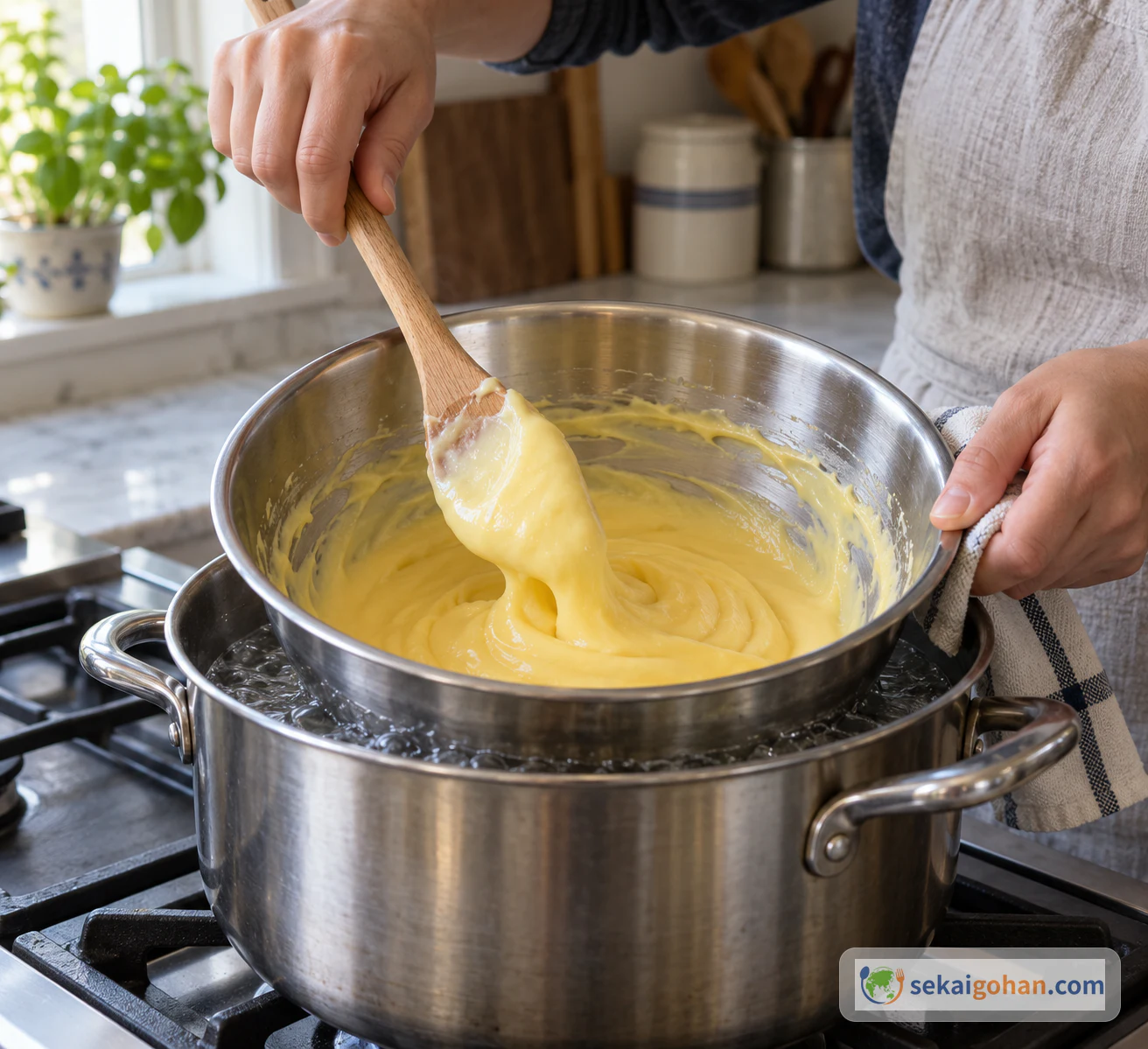
A bowl set in simmering water while the custard is stirred continuously until thick
Keep stirring without stopping until the custard is thick

Set the bowl in the simmering water bath. Stir quickly and continuously until the mixture becomes a thick custard, then take it off the heat. In a stainless steel bowl this takes about 1 minute; a thicker bowl can take longer, so judge by thickness, not the clock. Take the bowl out of the water bath, cover the custard so its surface doesn't dry out, and let it cool completely. It needs to be fully cool before you can portion it and wrap it.

STEP44 / 11

Activate the yeast

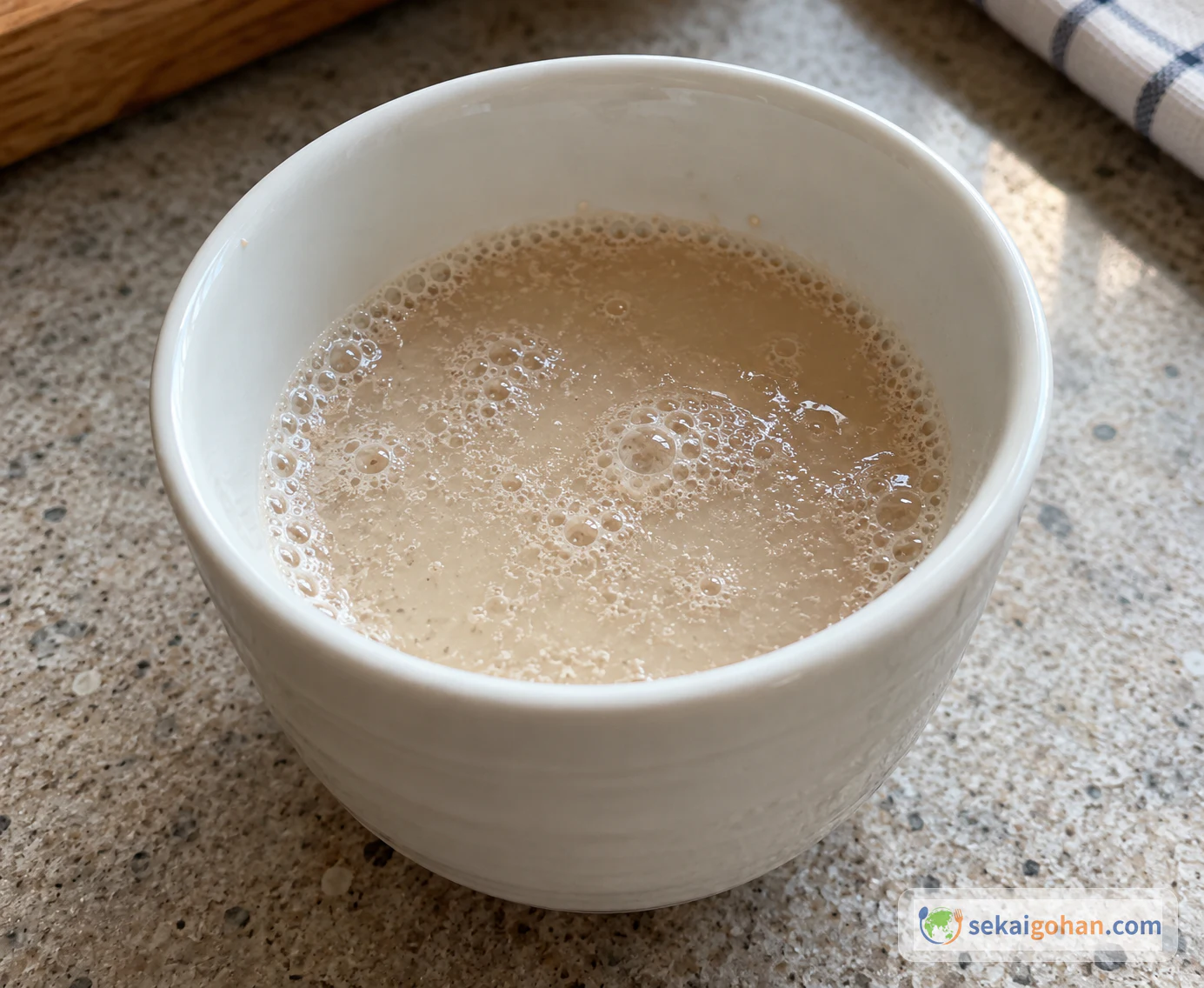
Yeast dissolved in warm water with small bubbles on the surface
Look for bubbles on the surface before moving on

Dissolve the 2 g of yeast in the 1/4 cup of warm water. Leave it for 10–15 minutes, then check that bubbles have formed on the surface.

STEP55 / 11

Mix the dough, adding milk a spoonful at a time

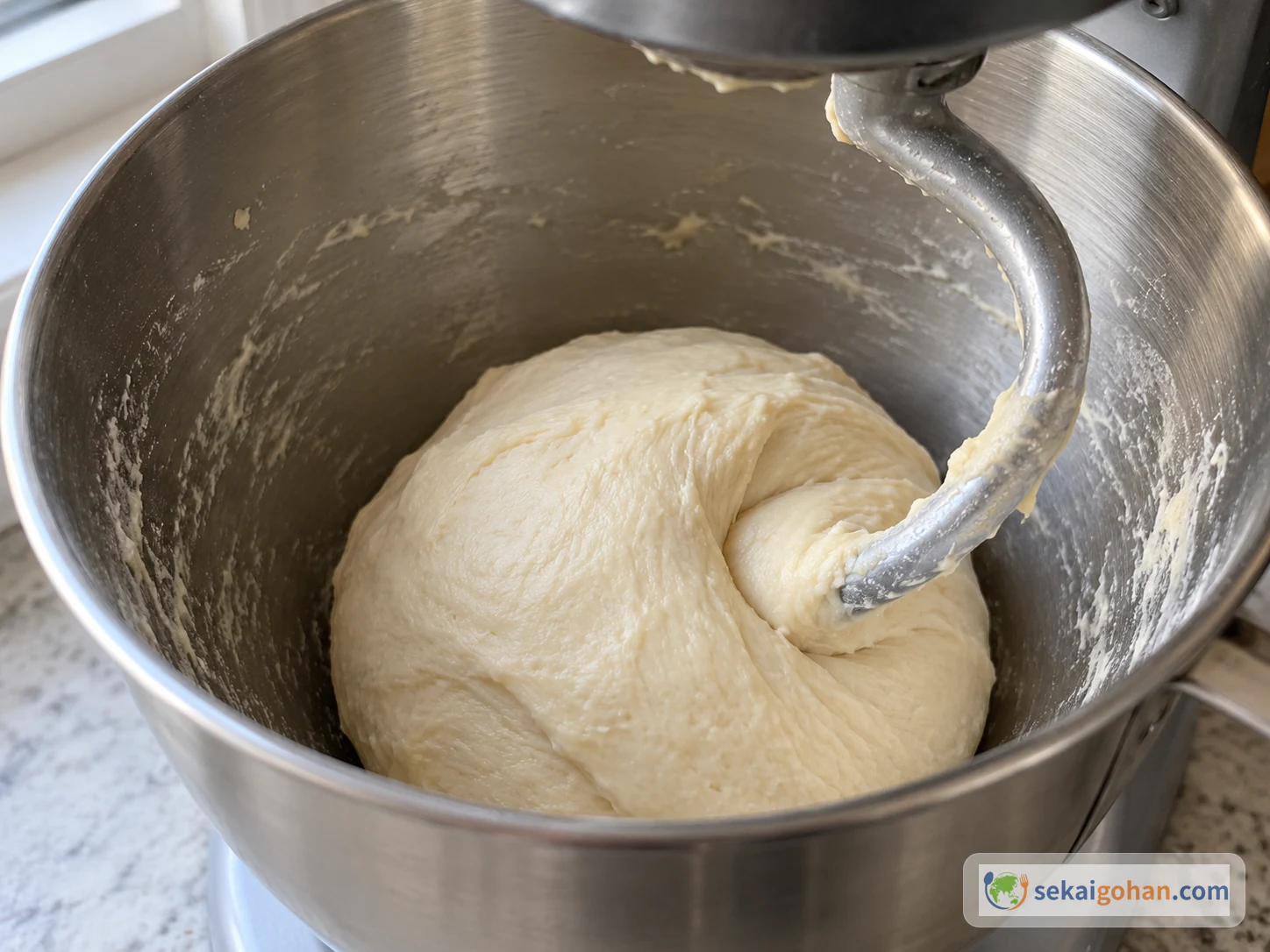
Smooth bun dough in the stand mixer bowl after milk was added a little at a time
Stop adding milk once the dough is smooth and doesn't stick

Put the yeast mixture in the stand mixer with the dough hook running on low. Add the dough's 8.5 oz (235 g) of all-purpose flour, 22 g of powdered sugar, 1/4 tsp of salt and 3 tbsp (45 ml) of coconut milk. Then add the milk 1 tablespoon at a time, using about 3 tbsp (45 ml) as a guide. Stop when the dough is smooth and no longer sticks to your hands or the bowl. Humidity changes how much you need, so stop when the dough is ready, even if milk is left.

STEP66 / 11

Proof the dough for the first time

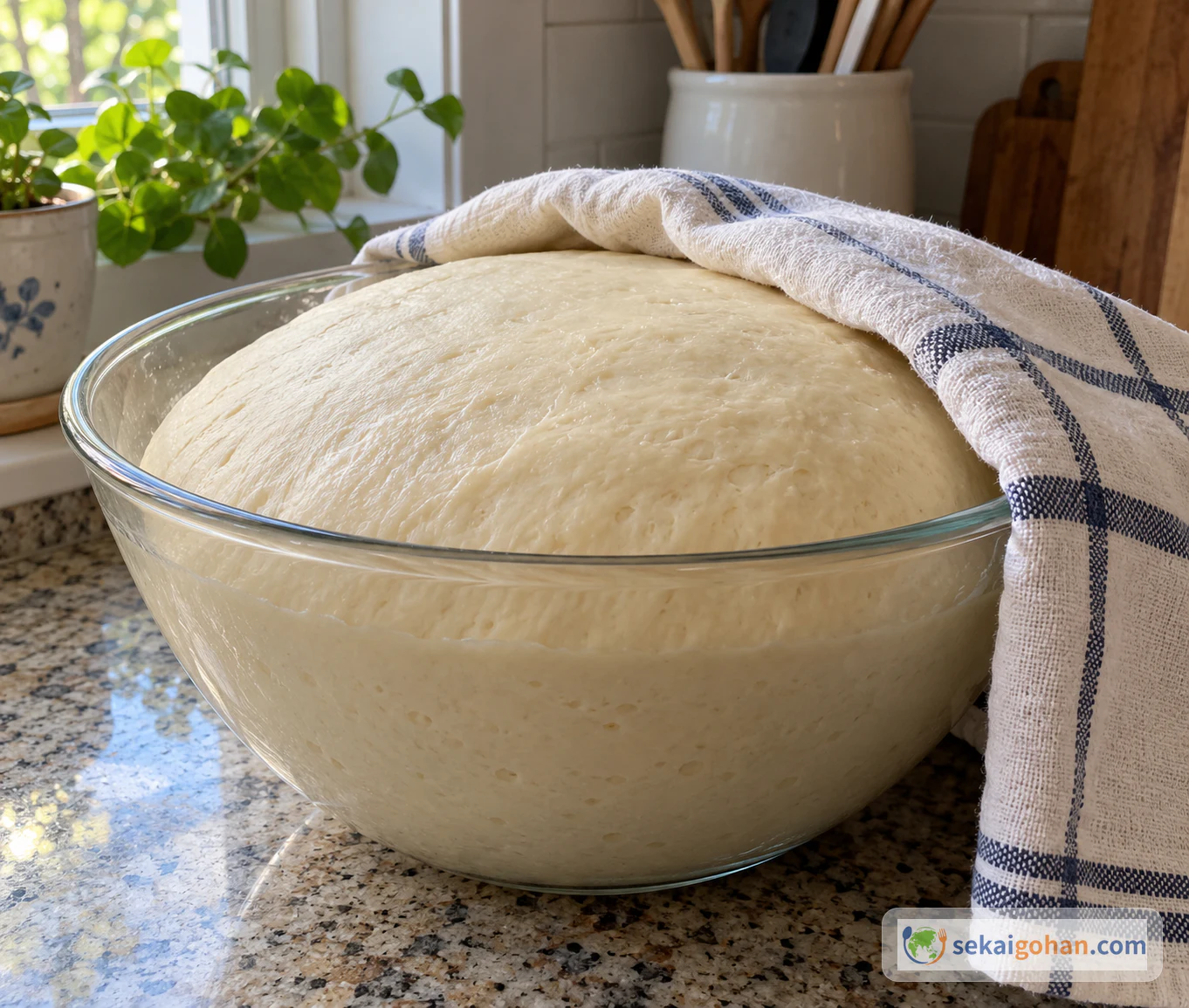
Dough under a dry kitchen towel, risen to about 2.5 to 3 times its original size
The size of the dough tells you the first proof is done

Cover the dough with a dry kitchen towel and let it proof for 1 hour. It is ready when it has grown to about 2.5 to 3 times its original size.

STEP77 / 11

Portion the custard and cut the parchment

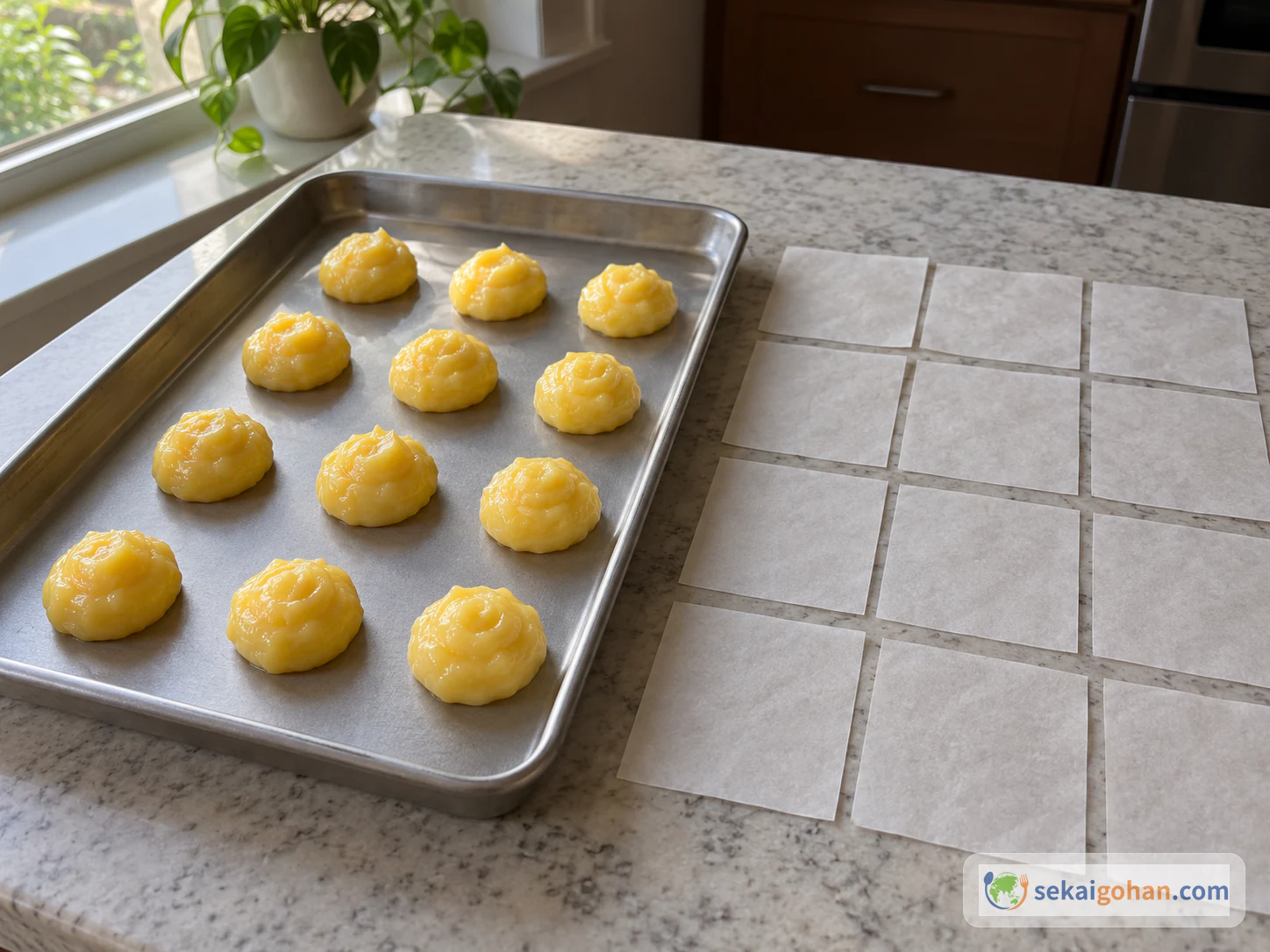
Cooled custard divided into 12 balls, with 4-by-4-inch parchment squares prepared
Twelve custard balls and twelve parchment squares

While the dough proofs, divide the cooled custard into 12 equal portions and roll each into a ball. Cover the balls so they don't dry out. Then cut 12 pieces of parchment paper, each 4 × 4 inches. You should end up with twelve custard balls and twelve parchment squares.

STEP88 / 11

Knock out the air and divide the dough

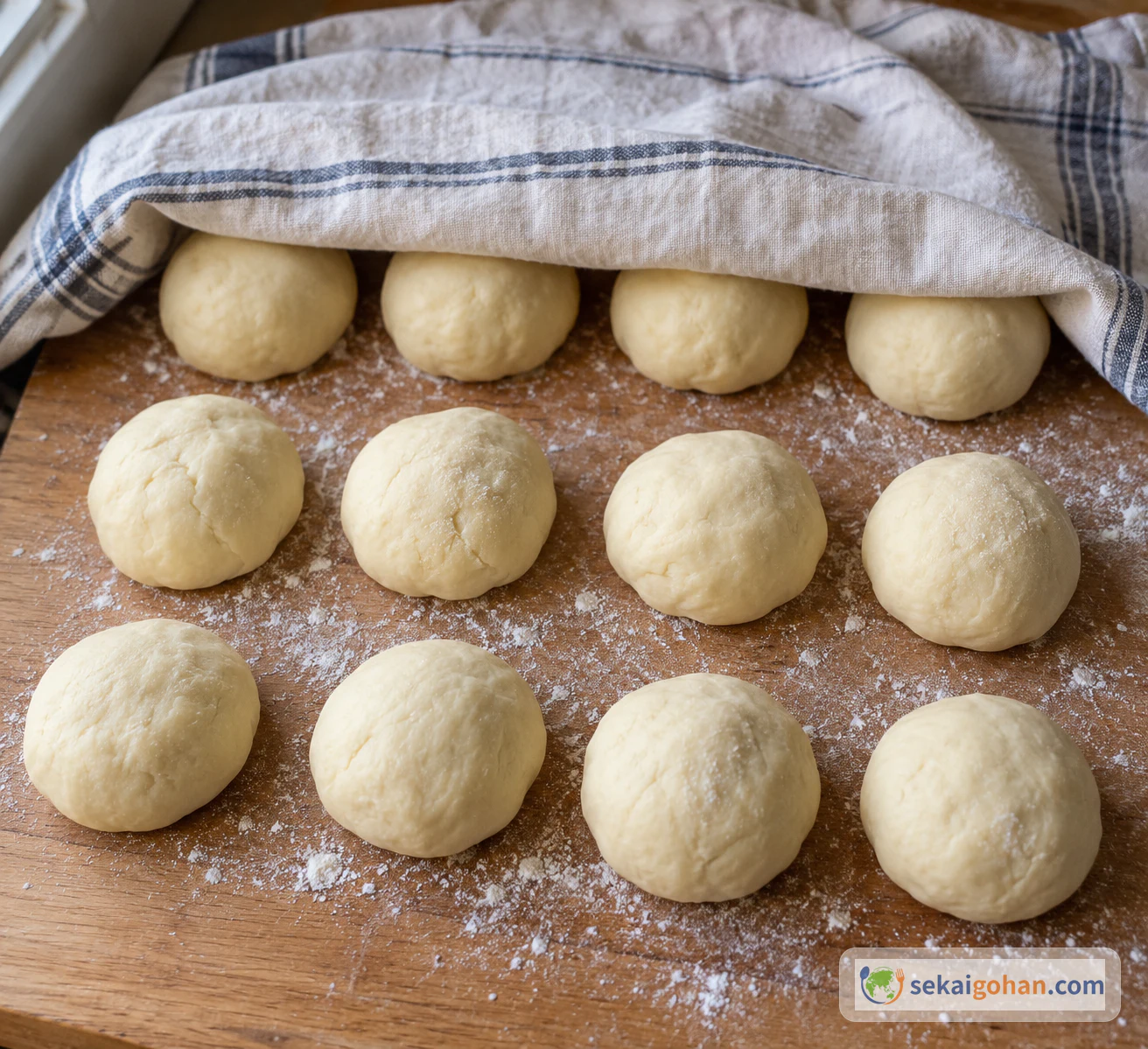
Dough divided into 12 pieces on a lightly floured surface, covered so it doesn't dry
Keep the waiting pieces under the towel

After the proof, return the dough to the mixer and mix for 2–3 minutes to release the air. Turn the dough out onto a clean, lightly floured surface and divide it into 12 equal pieces. Keep the pieces you aren't working on covered with the dry towel so they don't dry out.

STEP99 / 11

Roll, fill and pleat the buns

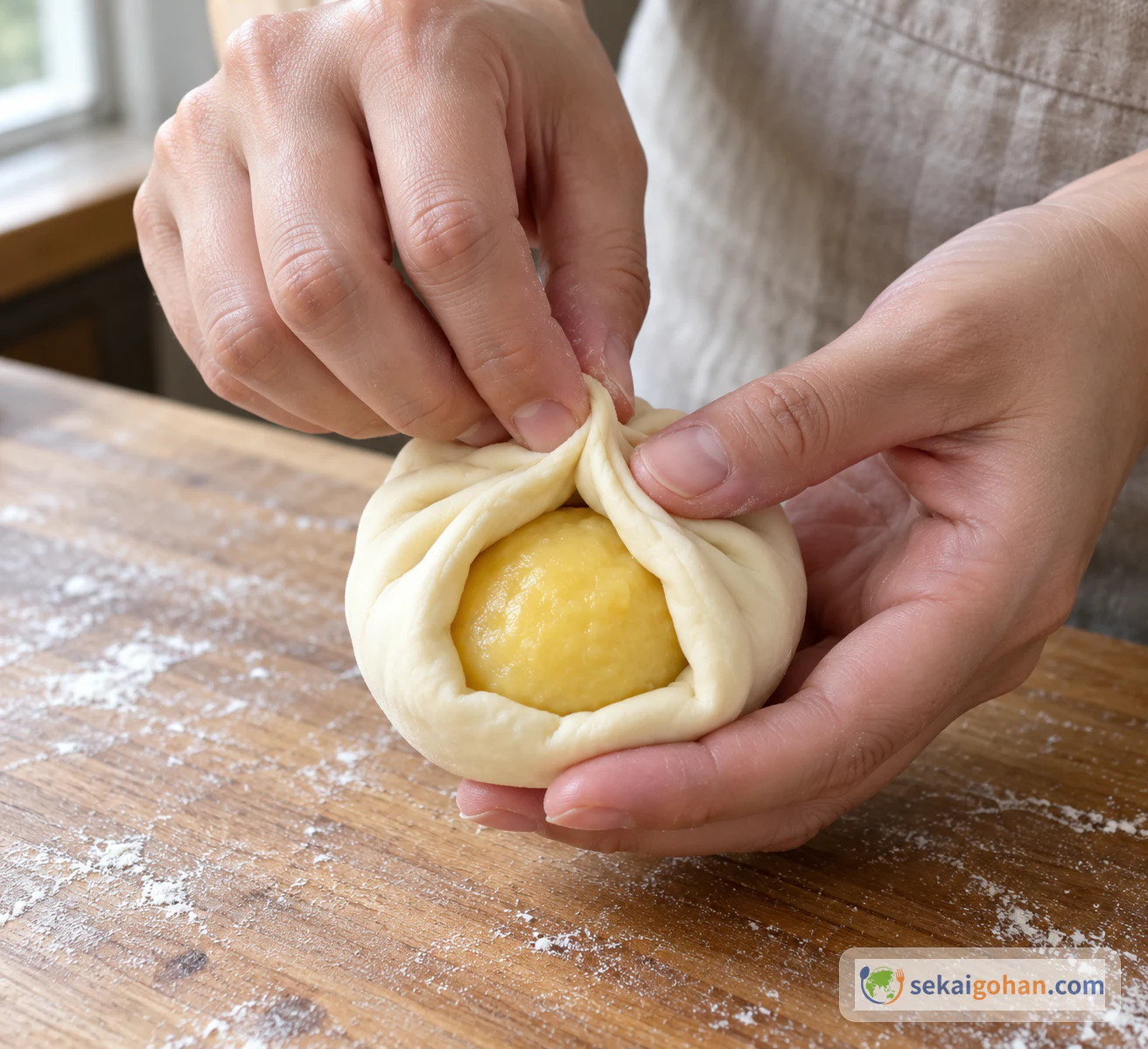
A custard ball wrapped in dough, with pleats gathered and closed at the top
Pleat the edge and close the bun at the top

Roll one piece at a time into a 4-inch disk, making the edges a little thinner than the center. Place a custard ball in the center of the disk. Gather the edge into pleats and pinch the top closed. Repeat with the remaining pieces until you have 12 closed buns.

STEP1010 / 11

Set the buns on parchment and proof them a second time

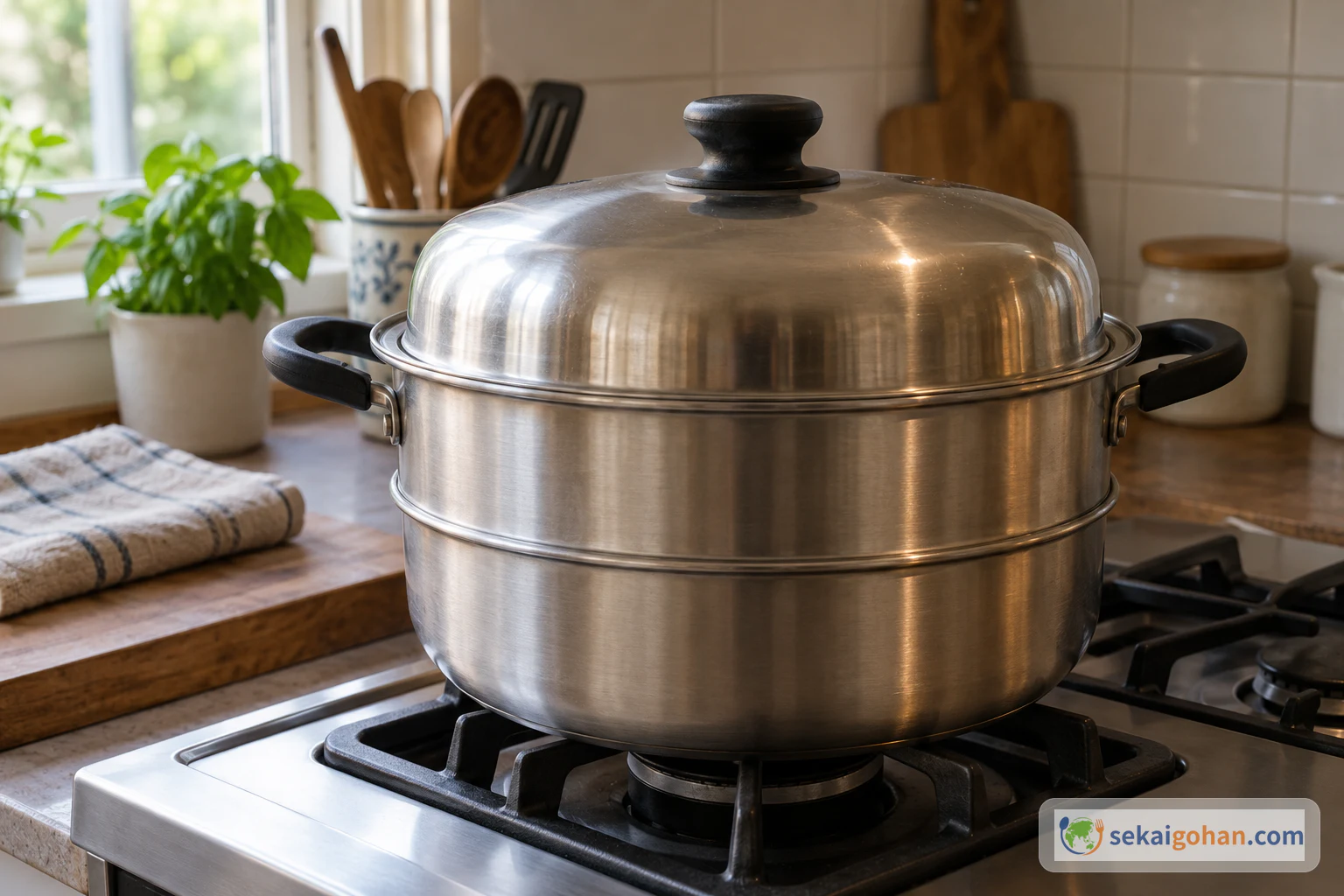
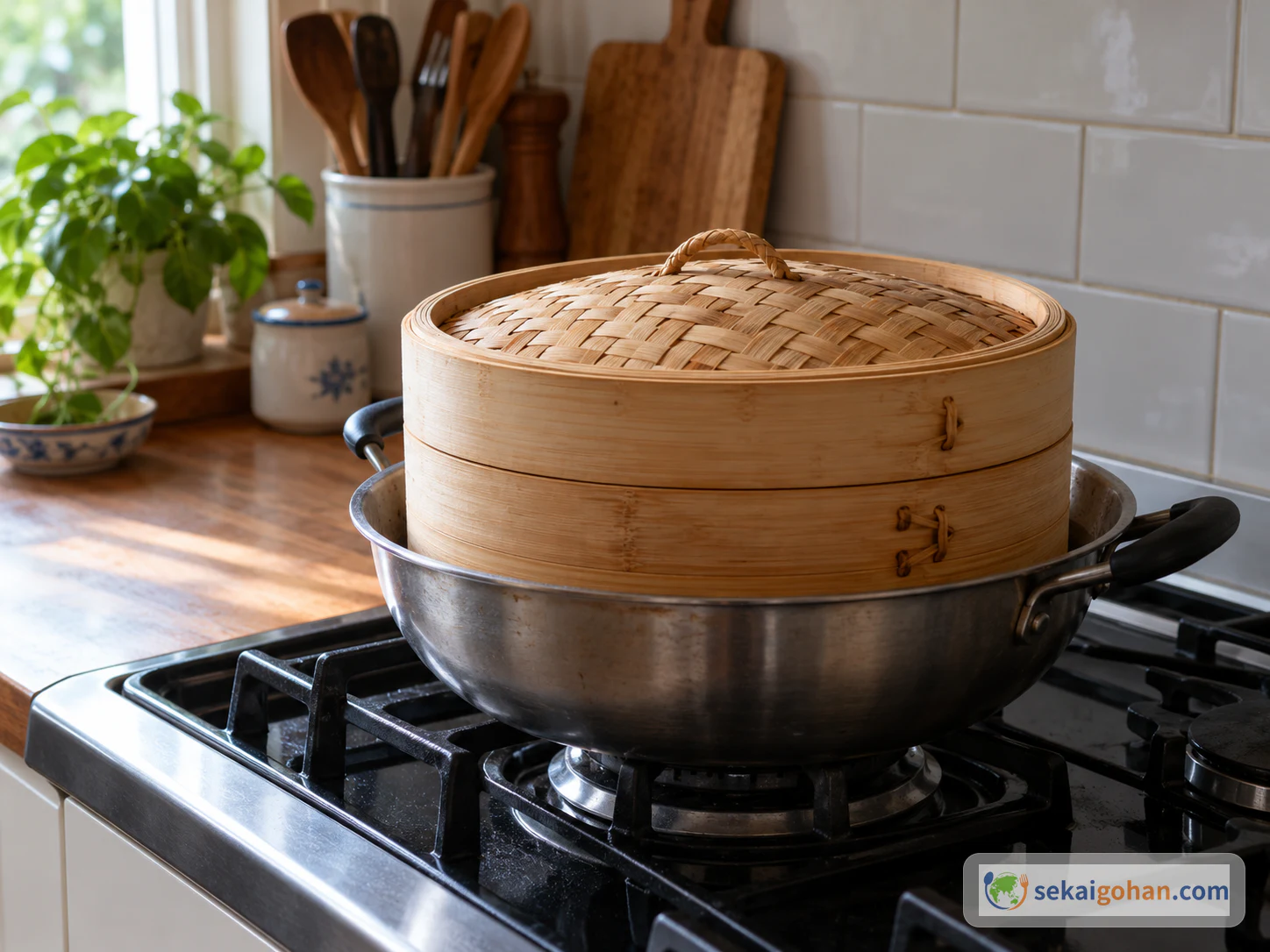
A lidded steamer with warm water on an unlit stove, buns proofing inside for 30 minutes
The heat stays off for the second proof

Place each wrapped bun on its own parchment square and arrange them on the steamer rack. At this point they have not had their second proof and are not cooked. Put warm water in the steamer, set the rack with the buns in place and cover with the lid. With the heat off, let the buns proof for 30 minutes.

STEP1111 / 11

Steam, rest and serve

The covered steamer resting on the stove with the heat off for 5 minutes
Don't lift the lid during the rest

Turn the heat to medium and start timing 12 minutes as soon as the heat goes on. The time it takes the water to heat up is part of those 12 minutes, so don't wait for a boil before starting the timer. Keep the lid on. After 12 minutes, turn off the heat and leave the lid closed for 5 minutes so the buns settle. Then take off the lid and serve the buns warm.

0 / 0
Ingredients

Ingredients

1 / 1

Ingredients

Ingredient Amount Role
Custard filling (for 12 buns)
Eggs 2 Whole eggs, beaten first with the sugar. Don't switch to yolks only
Powdered sugar 60 g Sweetens the filling. Kept separate from the dough's 22 g
Milk 60 ml Filling milk. Kept separate from the dough milk
Heavy cream 45 ml Richness in the custard
All-purpose flour 25 g Helps thicken the custard. Kept separate from the dough's 235 g
Cornstarch 30 g Thickener. Cornstarch only; do not add wheat starch as well
Dry milk powder 30 g Milky flavor and body
Melted butter 30 g Stirred in before cooking
Dough (for 12 buns)
Yeast 2 g (1 tsp) Leavening
Warm water 1/4 cup For dissolving the yeast
All-purpose flour 235 g Body of the dough. Bleached all-purpose flour, for a soft, white bun
Powdered sugar 22 g Light sweetness in the dough
Salt 1/4 tsp Seasoning
Coconut milk 45 ml Liquid and flavor in the dough
Milk About 45 ml (depends on humidity) Add 1 tbsp at a time. Stop when the dough is smooth, even if milk is left
0 / 0

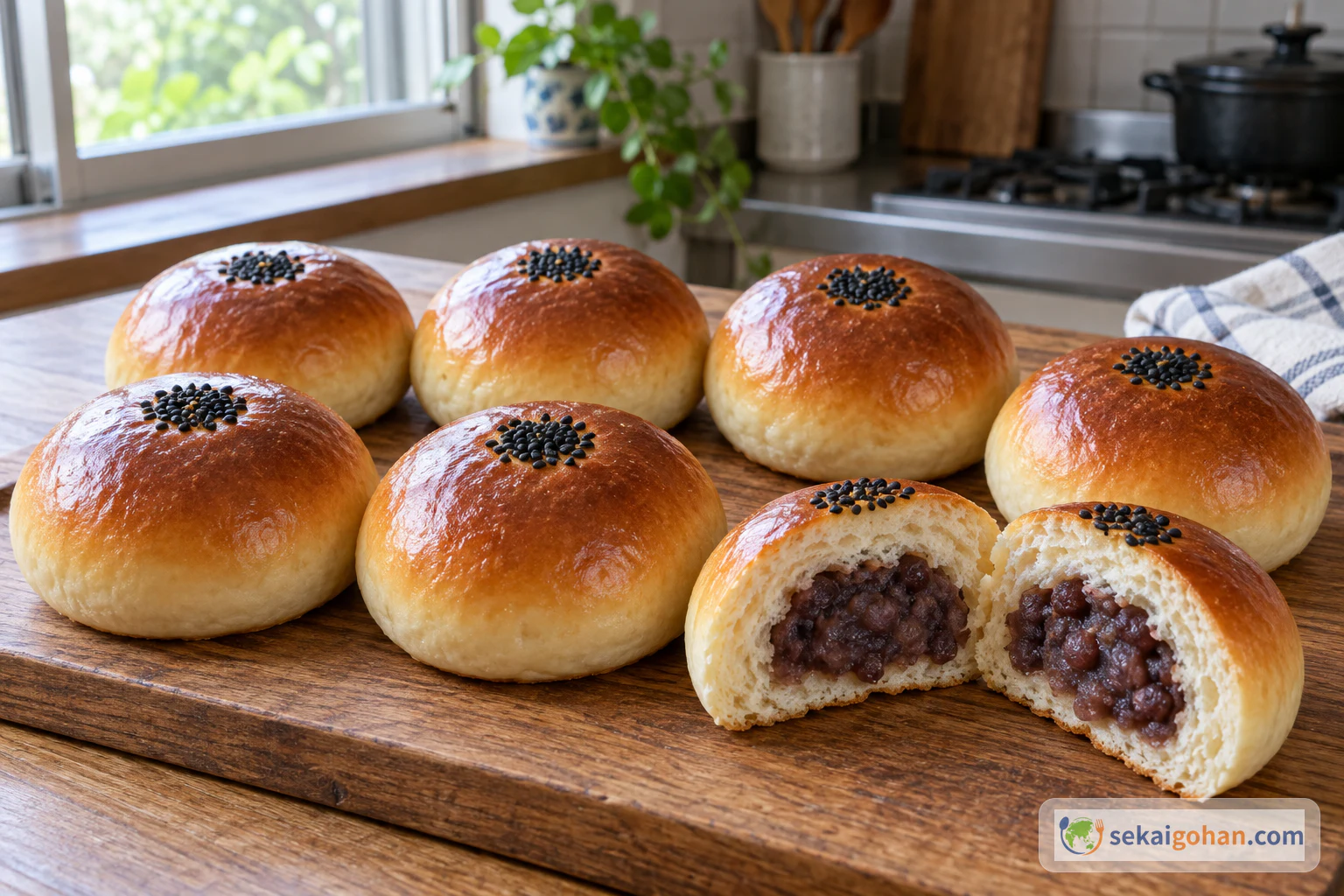
Tear open a warm, white steamed bun and there it is: a pale yellow custard, thick enough to hold its shape. Nai wong bao are Cantonese steamed custard buns, a classic and a favorite from the dim sum cart. The dough is smooth and lightly sweet, and the filling of eggs, milk and cream is cooked until thick, so it sits soft and creamy inside rather than running out.

Nai Wong Bao at the Dim Sum Table

In traditional characters the name is written 奶黃包. The buns come in two parts: a white dough made with a little sugar and coconut milk, and a custard thickened with flour, starch and milk powder. The custard is stirred over a simmering water bath until thick, cooled completely and rolled into 12 balls before it meets the dough. That order is what lets you center a neat ball of filling on each disk and pleat the dough around it.
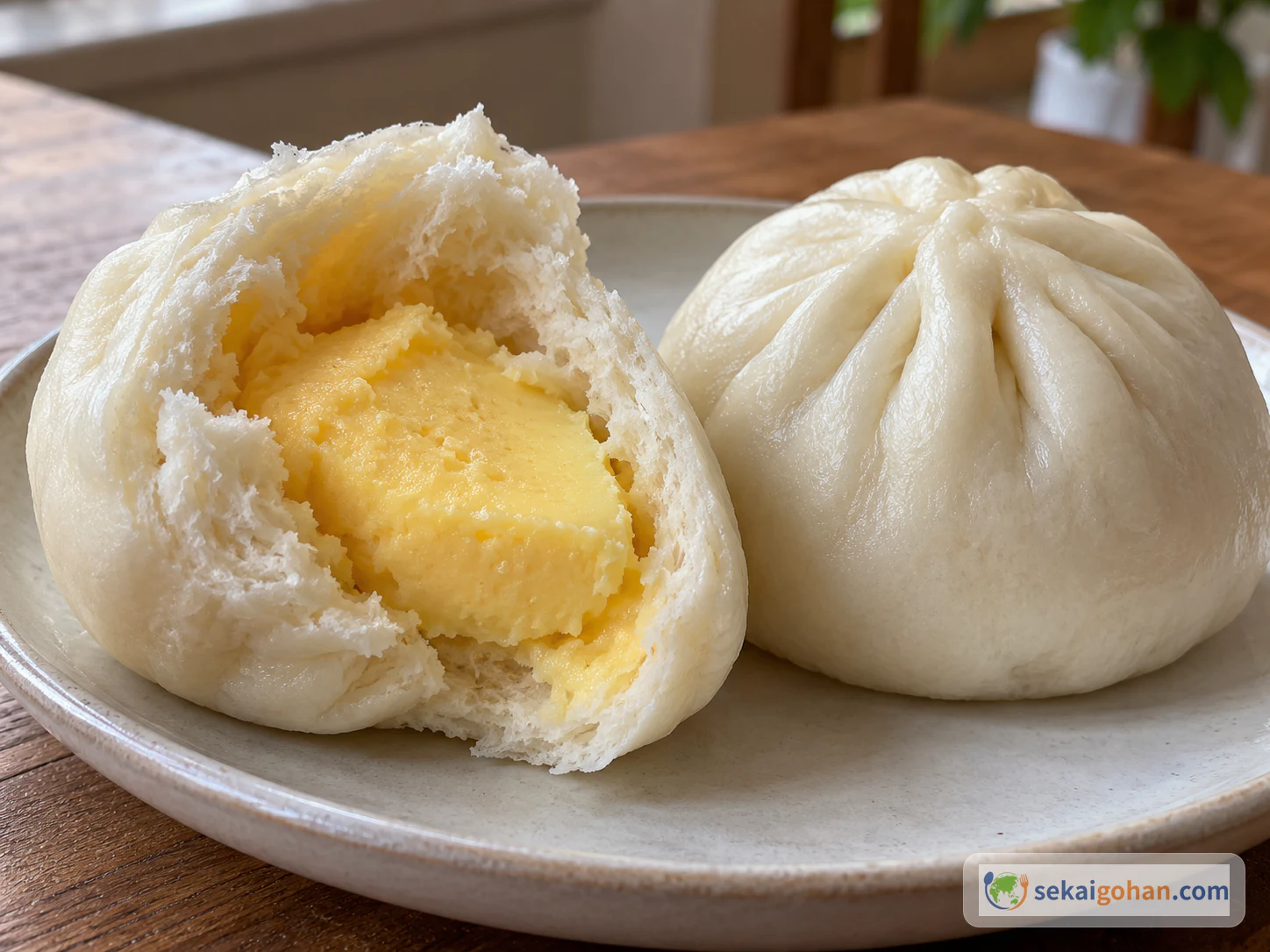
A steamed nai wong bao torn open to show a thick egg custard that holds its shape
This version's custard is cooked thick and rolled into balls before wrapping

These are not the buns with a flowing liu sha center or a salted egg yolk filling, which are a different style. For more dishes from the same country, see China.

Ingredients: Filling and Dough for 12 Buns, Measured Separately
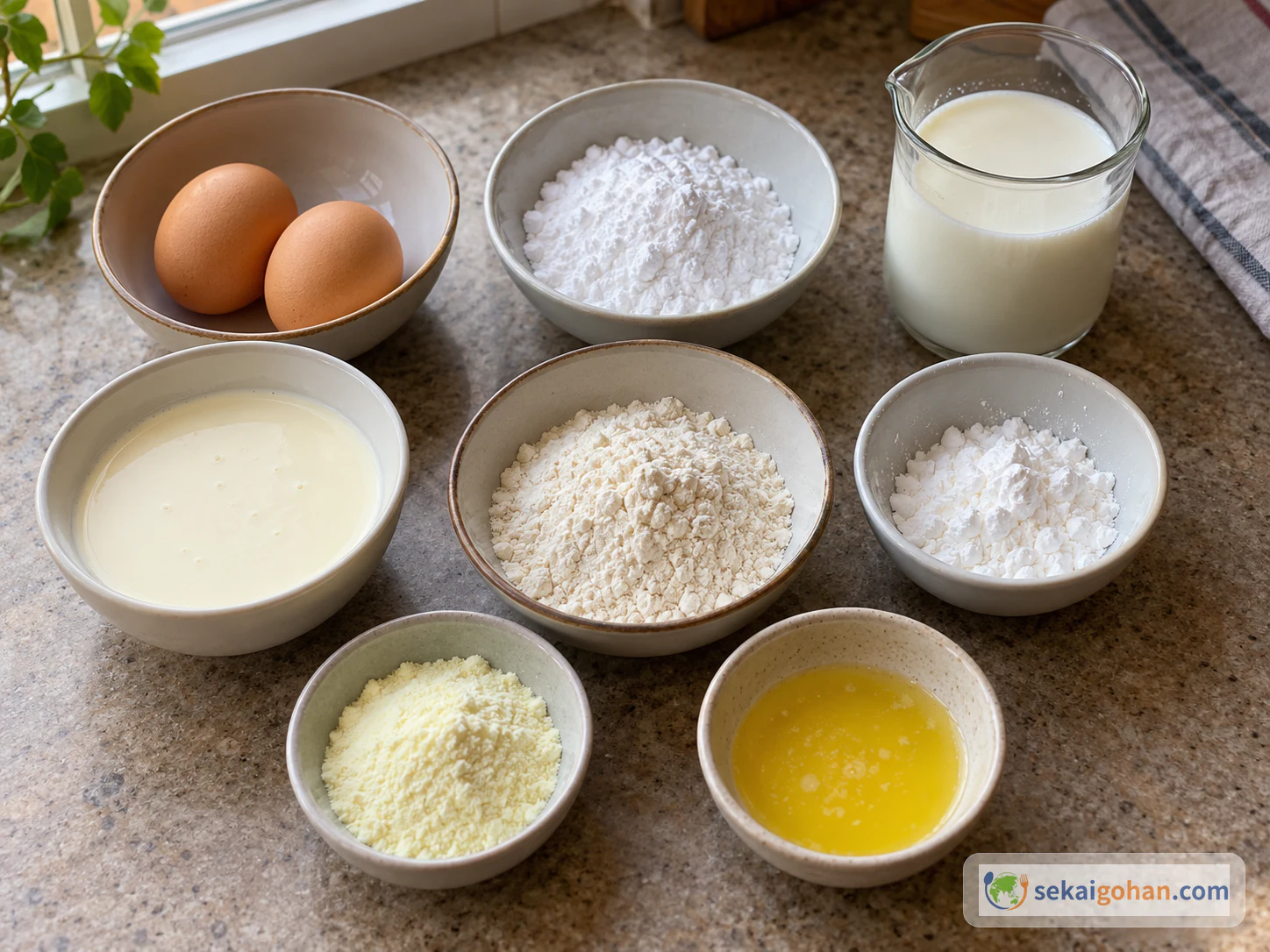
Custard filling ingredients set out in separate bowls: eggs, powdered sugar, milk, heavy cream, flour, cornstarch, dry milk powder and melted butter
The filling ingredients, kept apart from the dough
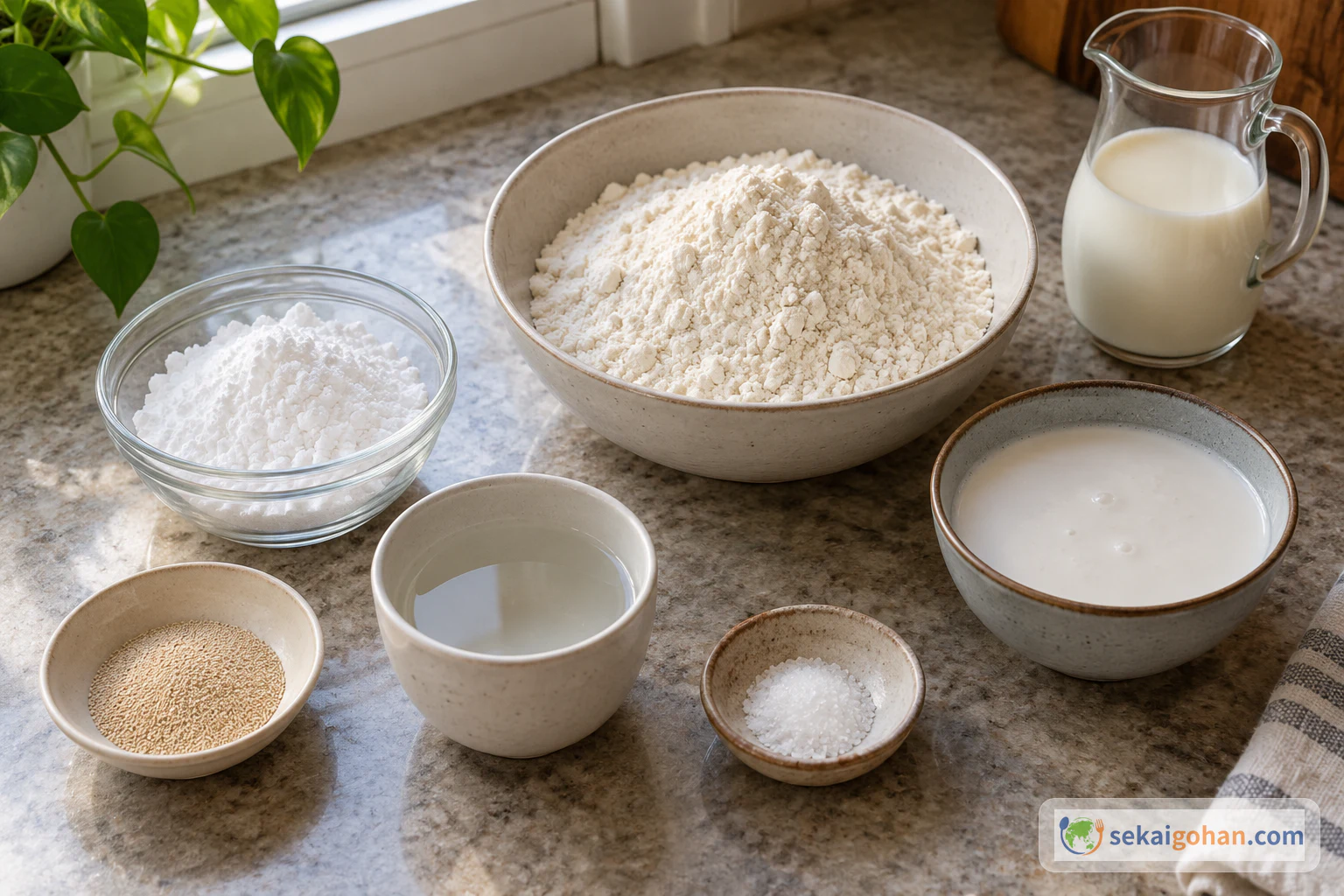
Dough ingredients set out separately: yeast, warm water, all-purpose flour, powdered sugar, salt, coconut milk and milk
The dough ingredients, with the milk set aside to add gradually

Powdered sugar, milk and all-purpose flour each appear in both the filling and the dough, in different amounts. Weigh them out as two separate sets so that the filling's portions don't end up in the dough, or the reverse.

You will also need water for the water bath and for the steamer, plus a little flour to dust the work surface, as needed.

Equipment

  • A medium-to-large deep pot for the water bath
  • A heatproof mixing bowl that fits in the pot (such as a stainless steel bowl)
  • A hand mixer or stand mixer for the custard (or mix it by hand)
  • A sieve for sifting the custard's dry ingredients
  • A stand mixer with a dough hook
  • A dry kitchen towel
  • A rolling pin
  • 12 squares of parchment paper, each 4 × 4 inches
  • A steamer with a lid and a rack

Choosing Flour, Starch and Dairy for Nai Wong Bao

Flour. Bleached all-purpose flour gives the softest, whitest dough, though unbleached all-purpose flour works too. You can also replace up to one third of the flour with whole wheat. An all-whole-wheat dough is too dense.

Starch. The filling takes cornstarch or wheat starch, and this recipe uses 1 oz (30 g) of cornstarch. Pick one and stick with it rather than mixing the two.

Dairy and butter. Ordinary milk, cream, dry milk powder, butter and coconut milk are all you need. Keep the amounts as listed.

Yeast. Dissolve it in 1/4 cup of warm water and wait for bubbles on the surface before moving on.

Liners. Flattened cupcake liners can stand in for the 4 × 4-inch parchment squares. Just prepare 12 of one kind.

Method: Make the Custard First, Cool It, Then Wrap

How the work is ordered

The custard is cooked and cooled first (steps 1–3). The dough is made next and proofs for an hour (steps 4–6). During that hour you portion the cooled custard (step 7). The buns are then shaped, given a second proof in the steamer and steamed (steps 8–11).

Nai Wong Bao Troubleshooting

The custard

In a stainless steel bowl the custard thickens in about a minute, but a thicker bowl can take longer. Go by how it looks, not the clock, and keep stirring until it is properly thick. Let it cool completely before you portion it, or it will be hard to shape.

The dough

The milk goes into the dough one tablespoon at a time, because the amount it needs changes with humidity. Stop when the dough is smooth and no longer sticks to your hands or the bowl. After 1 hour under the towel, it should be about 2.5 to 3 times its original size.

Steaming

Steam on medium heat for 12 minutes, timed from the moment you switch on the heat, warm-up included. Then turn off the heat and leave the lid closed for 5 minutes.

What you notice What to check What to do
The custard is still loose after about a minute Whether your bowl is thicker than a stainless steel bowl Keep stirring quickly and continuously over the simmering water until it is thick
The custard is lumpy before cooking Whether the powders were sifted and mixed in fully In step 2, mix until no lumps remain before adding the butter
No bubbles on the yeast mixture Whether 10–15 minutes have passed Wait for surface bubbles before making the dough
The dough is sticky How much milk has gone in Add milk only 1 tablespoon at a time and stop when the dough is smooth, even if you have not used all 3 tbsp (45 ml)
The dough feels dry and won't come together Whether you stopped adding milk too early Keep adding milk 1 tablespoon at a time; about 3 tbsp (45 ml) is the reference amount
The custard is hard to shape into balls Whether it has cooled completely Portion it only once fully cool, and keep it covered so the surface doesn't dry
Unsure when to start the 12 minutes The timing rule Start timing when you turn the heat on, not when the water boils

Tips for Mixing and Proofing

A hand mixer or stand mixer makes the custard easier, but it can be mixed by hand just as well. The dough is another matter: it is kneaded with the dough hook. If your kitchen is cool, a microwave with a mug of just-boiled water makes a handy optional proofing spot.

Frequently Asked Questions

Does the custard flow out when you break the bun open?

Not if you make it as written. The custard is cooked until thick and rolled into balls before wrapping, so it holds its shape. Buns with a flowing center are a different style.

Do I need all 3 tbsp (45 ml) of milk in the dough?

Only as much as the dough takes. Add it 1 tablespoon at a time and stop when the dough is smooth and doesn't stick to your hands or the bowl. About 3 tbsp (45 ml) is a guide.

Does the steamer start with cold water or warm water?

Warm water, with the heat off and the lid on, for the 30-minute second proof.

Is the steaming time 15 minutes or 12 minutes?

The recipe card lists a cook time of 15 minutes. The steaming itself is 12 minutes on medium heat, timed from when the heat goes on, followed by 5 minutes covered with the heat off.

Sources

  • Judy, "Cantonese Steamed Custard Buns (Nai Wong Bao)," The Woks of Life. Primary recipe: the dish name and the author's description of it as a Cantonese classic and dim-sum-cart favorite; the 12-bun yield; all filling and dough amounts; the starch, flour and liner options; the water-bath custard method and cooling; the dough, proofing, portioning, shaping and steaming method; and the printed recipe-card times. https://thewoksoflife.com/nai-wong-bao-custard-buns/
  • Maggie Zhu, "Chinese Steamed Custard Buns (nai wong bao, 奶黄包)," Omnivore's Cookbook. Comparison only: a separate recipe that presents the buns as a dim sum dish and uses shortening in the dough and egg yolks and vanilla in the custard. None of its amounts or steps are used here. https://omnivorescookbook.com/steamed-custard-buns/
  • Jessica Gavin, "Chinese Steamed Custard Buns." Comparison only: an independent recipe with an egg-yolk and vanilla custard, a shortening dough and a different way of setting the buns. None of its ingredients, amounts, yield or steps are used here. https://www.jessicagavin.com/chinese-steamed-custard-bun-recipe/