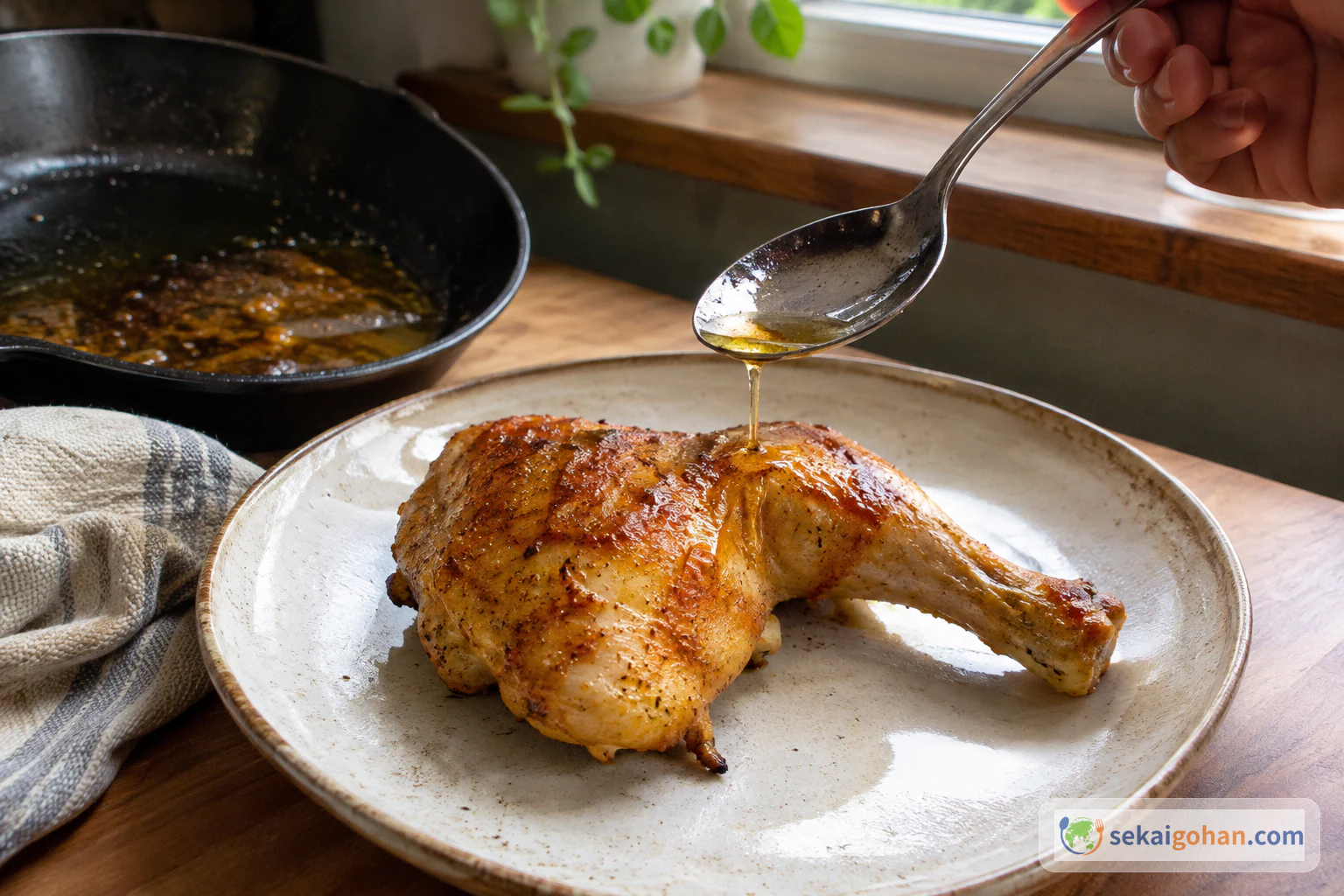
Honetsukidori: Kagawa's Garlic-Peppered Bone-In Chicken Leg (骨付鳥)

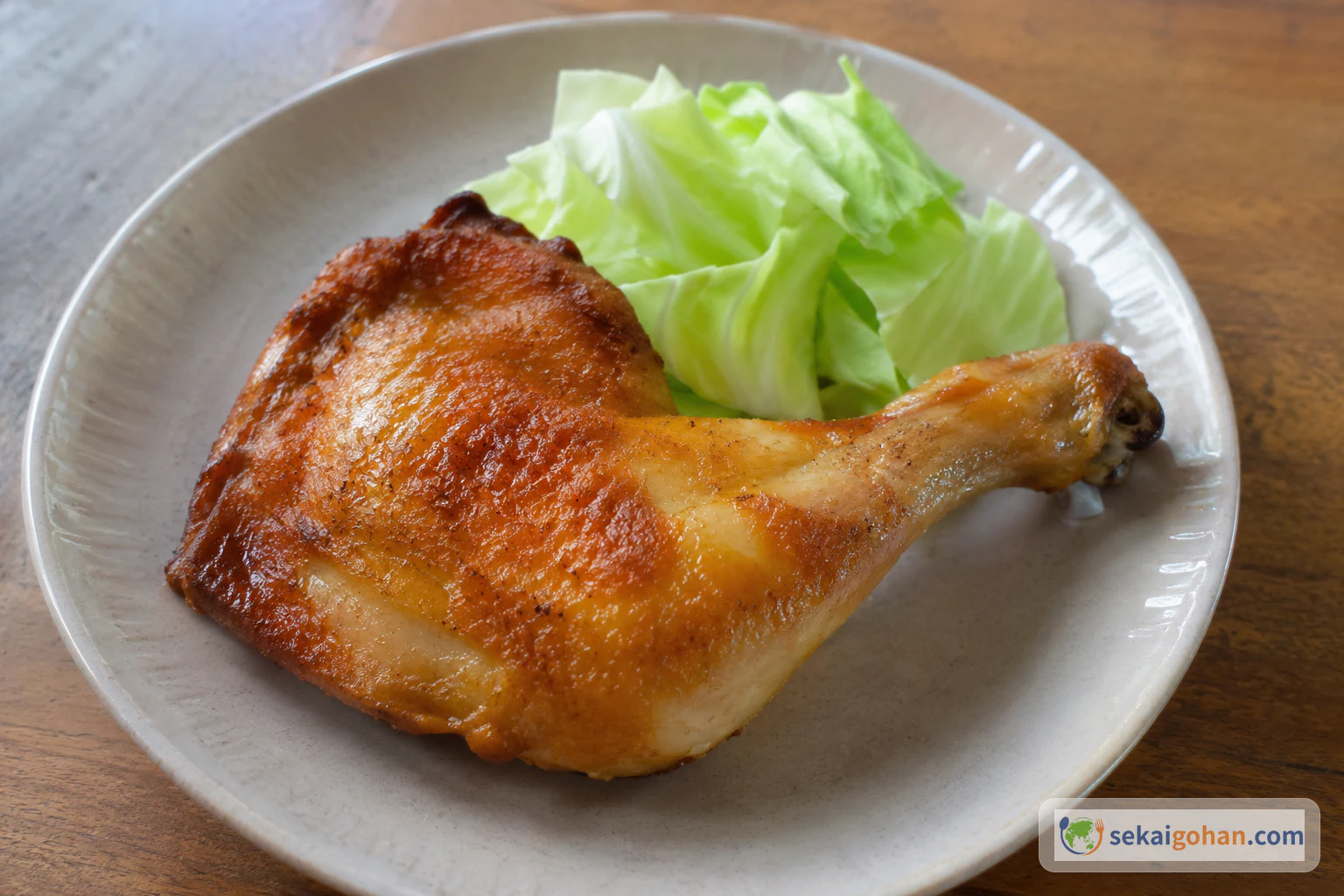
Finished honetsukidori: one young-chicken bone-in leg quarter cooked until fragrant and golden, with roughly cut cabbage beside it and no other side dishes or rice
Serves
1 serving
Cuisine
Japanese

How to make honetsukidori (骨付鳥), the bone-in chicken leg dish of Kagawa Prefecture and Marugame, as a one-leg frying-pan recipe for home cooks. Covers the garlic powder, pepper, salt and soy seasoning, the refrigerated marinade, searing skin-side down, basting the skin crisp, checking the center temperature with a thermometer, and serving with roughly cut cabbage.

Cooking flow

Cooking steps

STEP11 / 8

Open, prick and trim the leg

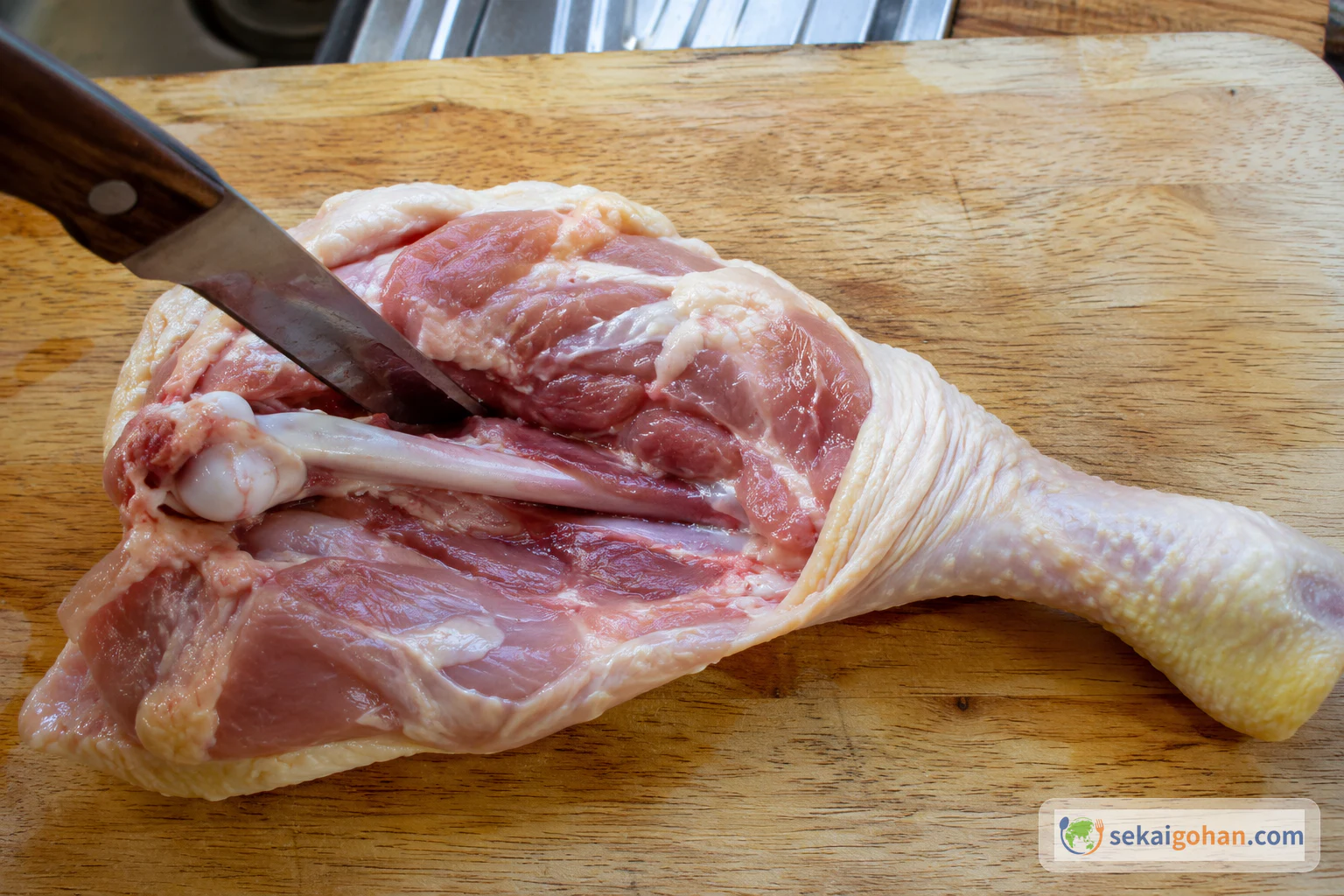
Cutting along the bone to open the bone-in chicken leg flat
Open the leg along the bone so it lies flatter

Cut along the bone on the inner side of the leg and open the meat out so it lies flatter, keeping the thigh and drumstick joined. Prick the whole leg with a fork so the seasoning soaks in more easily. Cut off any excess skin and set the trimmed skin aside on a plate; it goes into the pan when you heat the oil. Make slits at the base of the leg and in the skin so the heat gets through more easily.

STEP22 / 8

Season the chicken

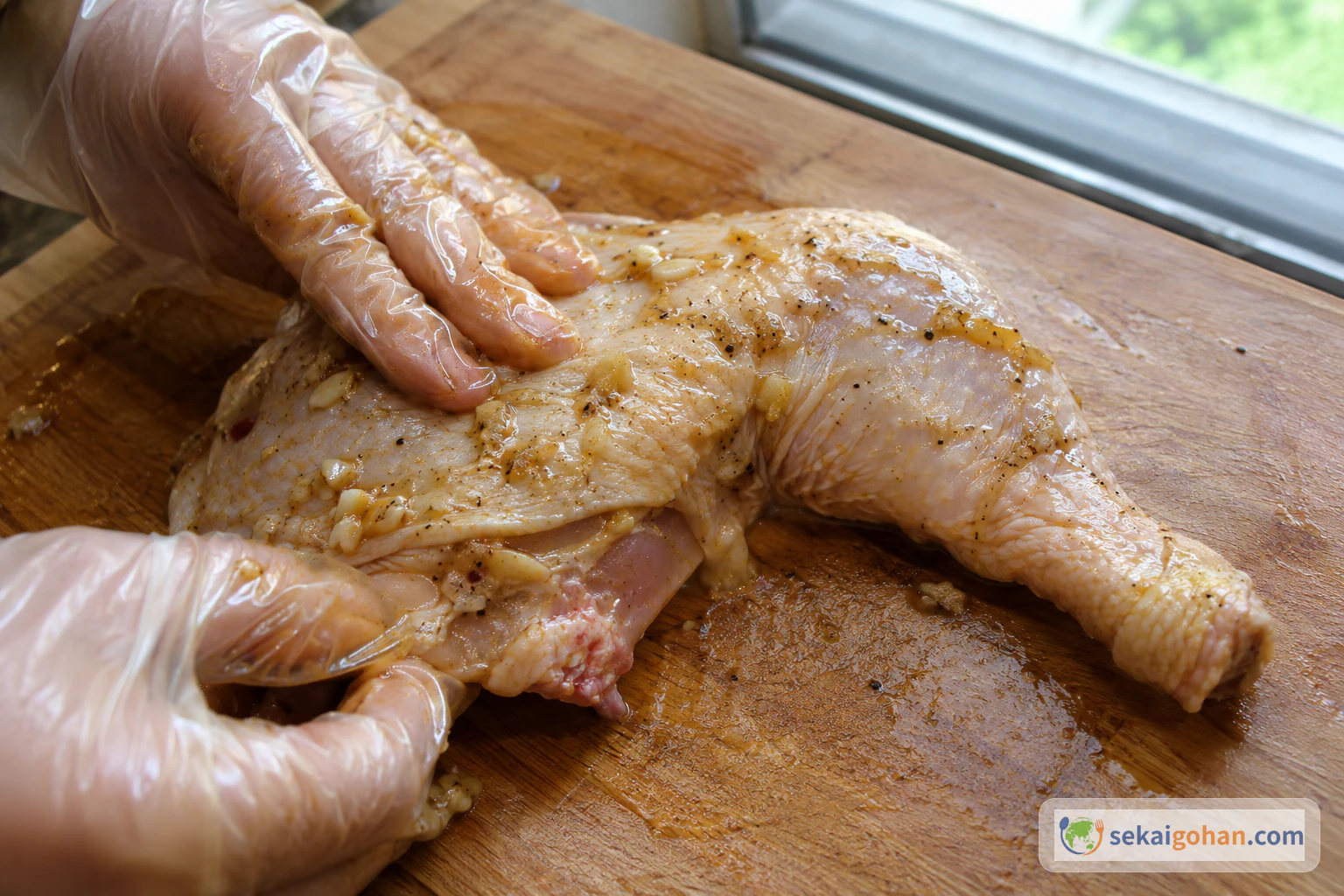
Rubbing the seasoning mixture all over the chicken leg
Work the seasoning over the skin and the opened side

In a small dish, stir together 1 tbsp garlic powder, 1½–2 tsp pepper, ½ tsp salt and 1 tsp soy sauce. Rub the mixture into the whole leg, over the skin and the opened side. Wash your hands after handling the raw chicken. The leg should be evenly coated on both sides.

STEP33 / 8

Marinate in the refrigerator

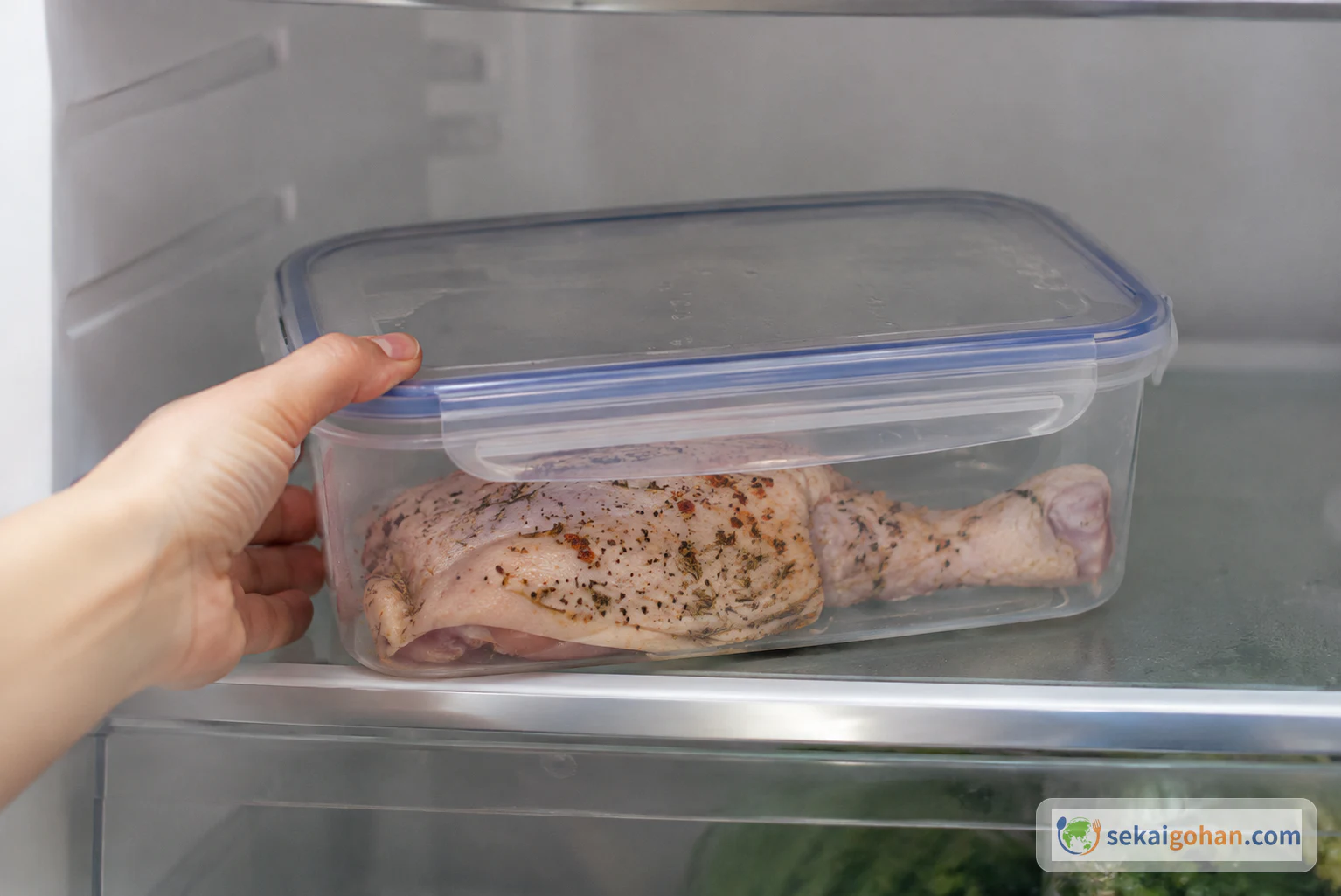
Putting the seasoned chicken in a covered container on a refrigerator shelf to marinate
Marinate covered, in the refrigerator

Put the chicken in a covered container and refrigerate for 2–3 hours or more. Overnight is fine. The chicken is ready when it has rested covered and cold for the full time.

STEP44 / 8

Sear the chicken skin-side down

Searing the chicken leg skin-side down over medium heat until it browns
Skin against the pan, opened side facing up

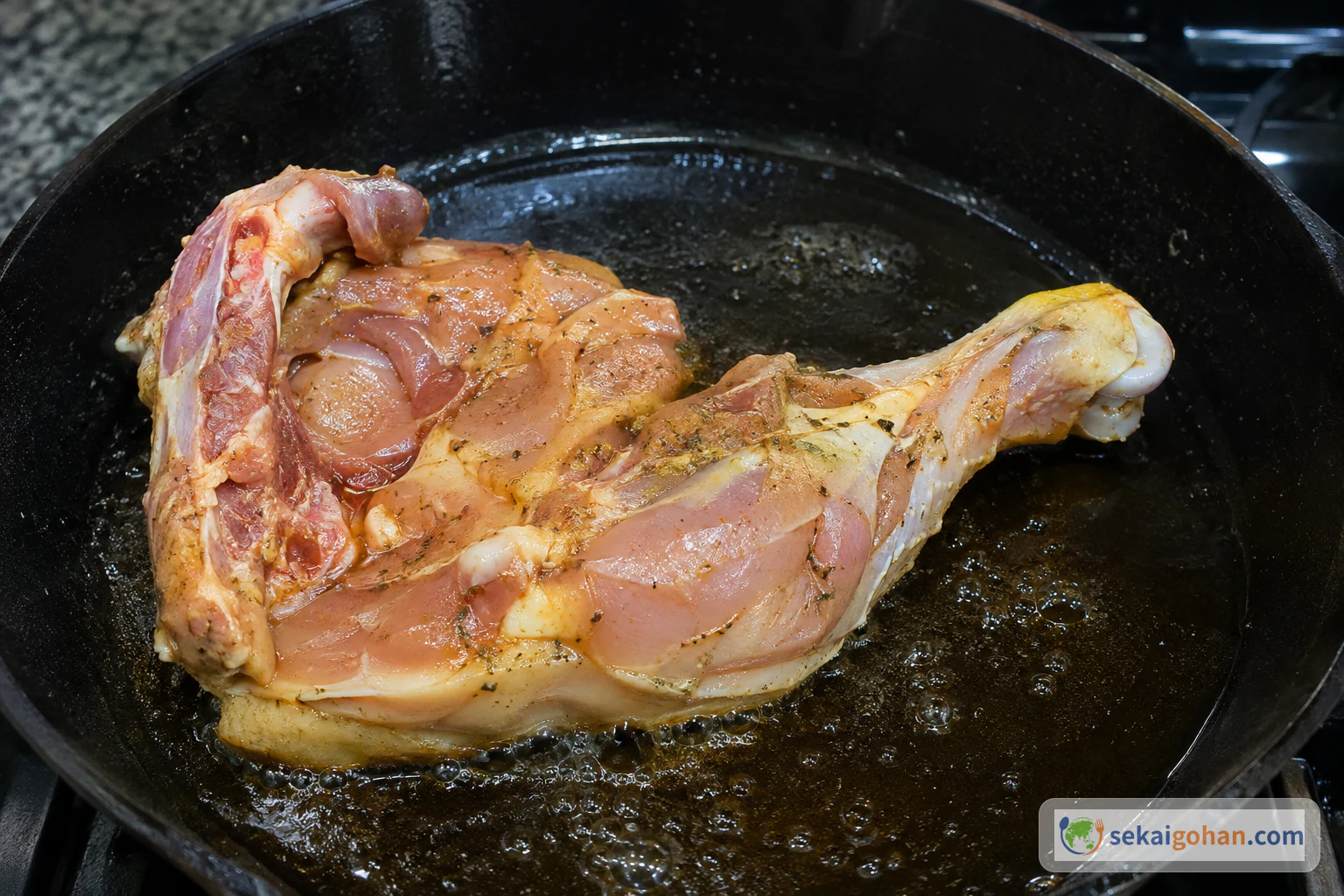
Put the trimmed skin and 2 tbsp salad oil in a frying pan and heat. When the oil is hot, lay the chicken in skin-side down. Cook over medium heat for about 5 minutes, until the skin is nicely browned.

STEP55 / 8

Turn, cover and cook through

Placing a lid over the turned chicken in the frying pan
Cover after turning

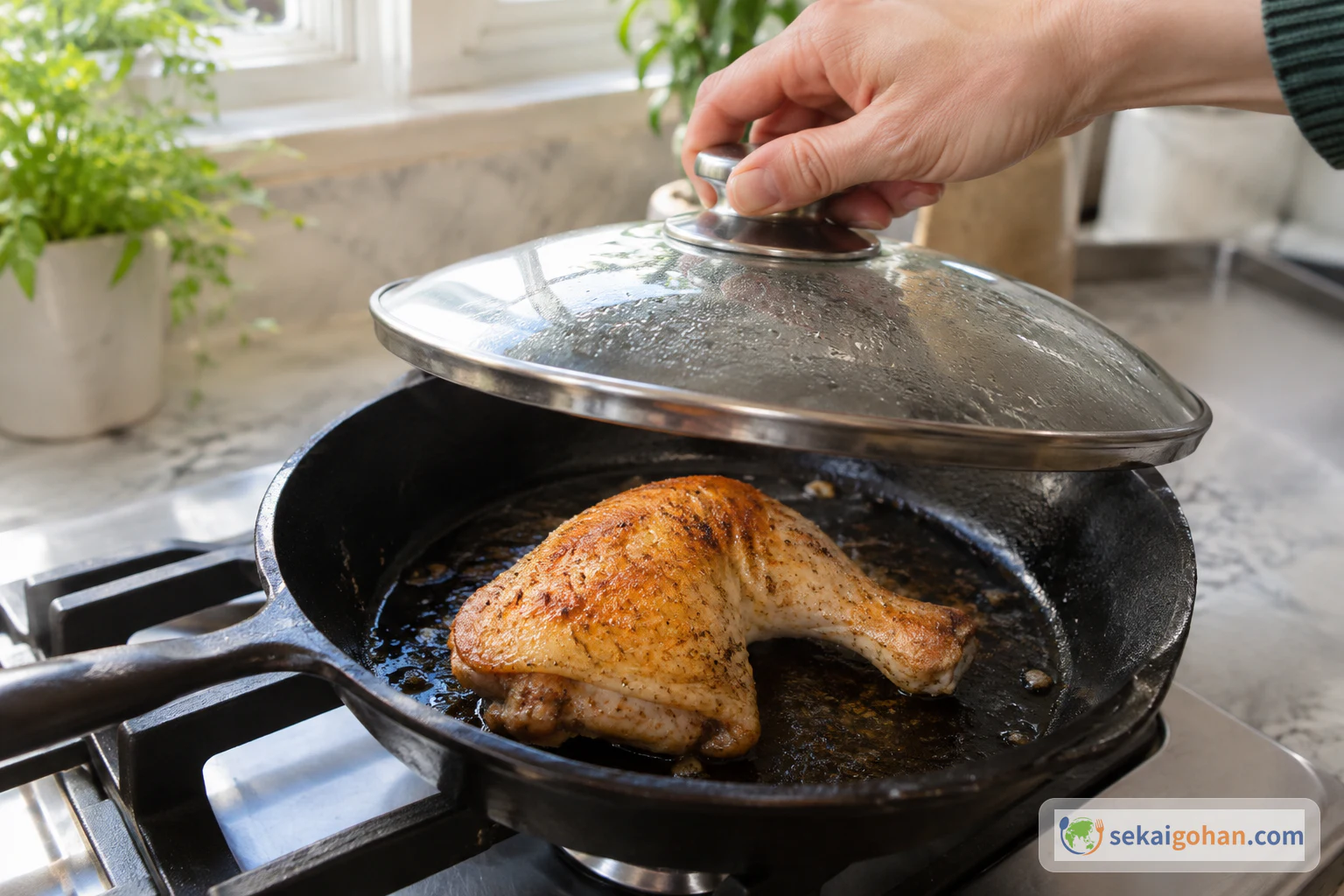
Turn the leg over so the skin faces up. Cover the pan and cook over medium to low heat for about 5 minutes, until the chicken is cooked through.

STEP66 / 8

Baste until the skin is crisp

Spooning hot pan oil over the chicken with the lid off to crisp the skin
Keep spooning oil over the skin until it crisps

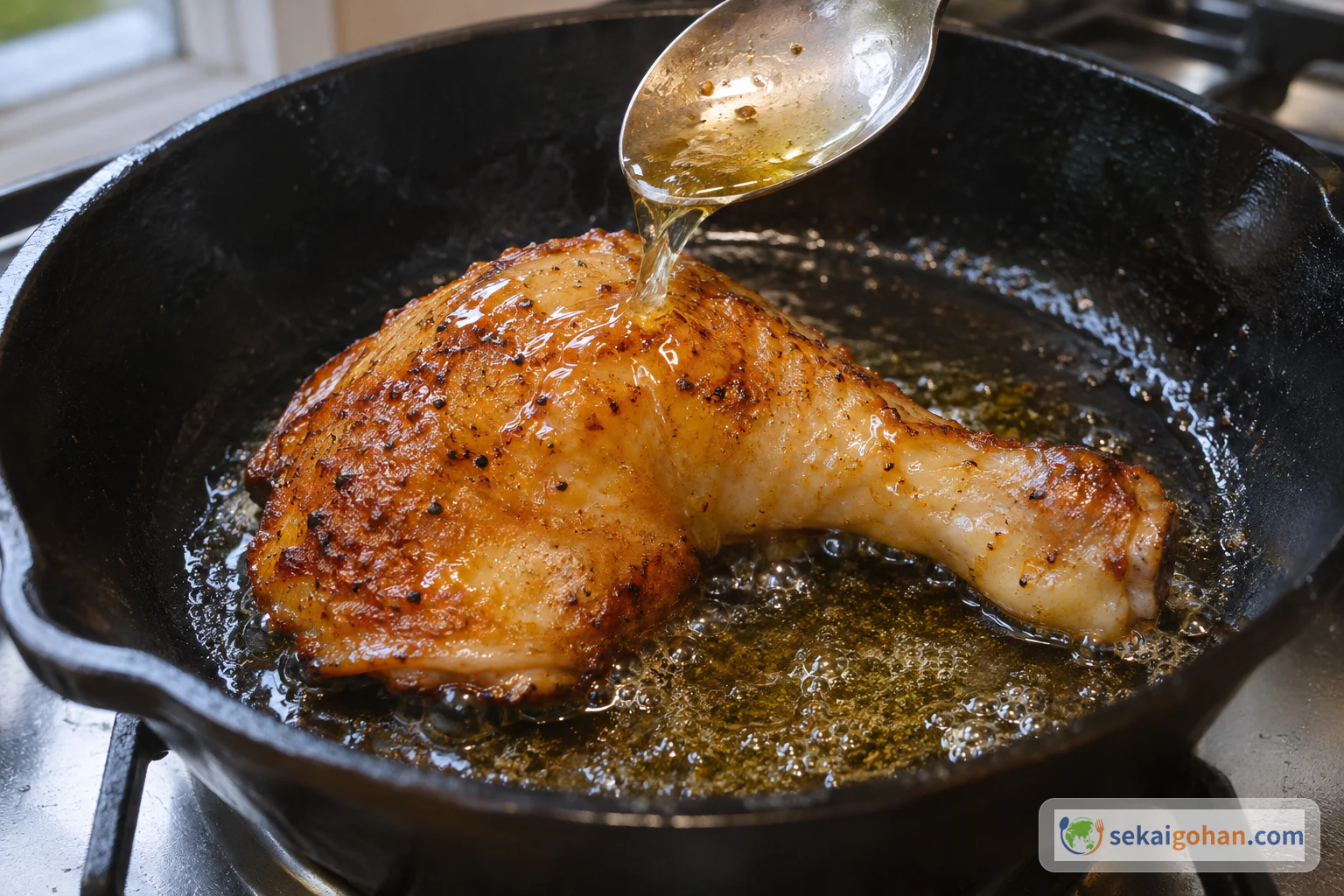
Take the lid off the pan. Spoon the oil in the pan over the chicken as it cooks for 2–3 minutes, until the skin is crisp.

STEP77 / 8

Check the center temperature

Checking the center temperature of the thickest part with a food thermometer
Measure in the thickest part, away from the bone

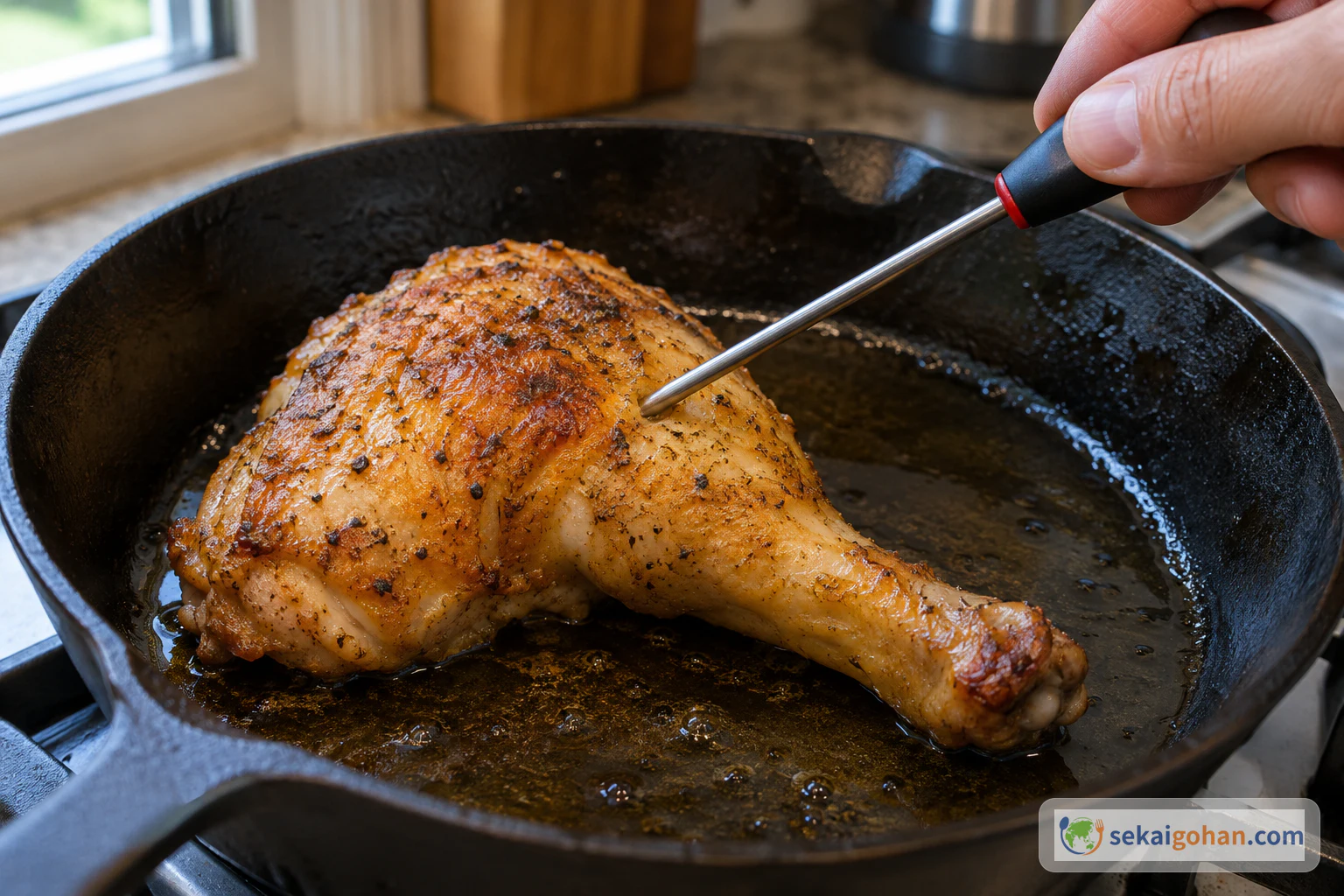
Insert a clean thermometer into the thickest part of the meat, away from the bone. The center needs to reach 167°F (75°C) or higher and stay there for at least 1 minute. If it has not, put the lid back on, keep cooking, and check again. Browned skin and the times above are not enough on their own.

STEP88 / 8

Plate with the pan oil and cabbage

Spooning the oil left in the pan over the plated chicken
The remaining pan oil goes over the chicken

Lift the chicken onto a serving plate with clean utensils, not the ones that touched the raw meat, and spoon the oil left in the frying pan over it. On a clean board kept separate from the raw-chicken tools, cut 1–2 cabbage leaves into rough pieces. Place the cabbage beside the chicken and serve while hot.

0 / 0
Ingredients

Ingredients

1 / 1

Ingredients

Ingredient Amount Role
Bone-in chicken leg, young chicken (骨付き鶏もも肉) 1 The whole dish. Thigh and drumstick joined, bone in
Garlic powder (ガーリックパウダー) 1 tbsp The main garlic flavor of the seasoning
Pepper (こしょう) 1½–2 tsp Sharp heat in the seasoning; any pepper you usually use
Salt ½ tsp Seasoning
Soy sauce (醤油) 1 tsp Seasoning and savoriness
Salad oil 2 tbsp For cooking and for basting the skin
Cabbage 1–2 leaves Cut roughly and served alongside

The excess skin heated in the pan in step 4 is trimmed from this same leg in step 1. There is no need to buy extra skin.

0 / 0

A whole chicken leg, bone and all, comes out of the pan with golden, crackly skin and a seasoning that leans hard on garlic. Honetsukidori (骨付鳥) is a local specialty of Kagawa, and of the city of Marugame in particular. There, the bone-in leg is cooked whole, and the garlic-forward seasoning is the mainstream style. At home it comes together in a frying pan in about 30 minutes, plus 2–3 hours or more of marinating. It's one small corner of Japanese cooking that's well worth knowing.

Honetsukidori in Kagawa: Mature and Young Chicken

Honetsukidori comes in two main kinds of meat. Oyadori (親どり) is mature chicken with a firm, chewy bite. Wakadori (若どり) is young chicken, tender and juicy. Shops across the region season and cook it in their own ways, so there is no single fixed version.

This recipe uses a young-chicken leg because it suits home cooking. The amounts and times are built around wakadori and won't carry over to oyadori, which is a different kind of meat.

Ingredients for One Bone-In Leg
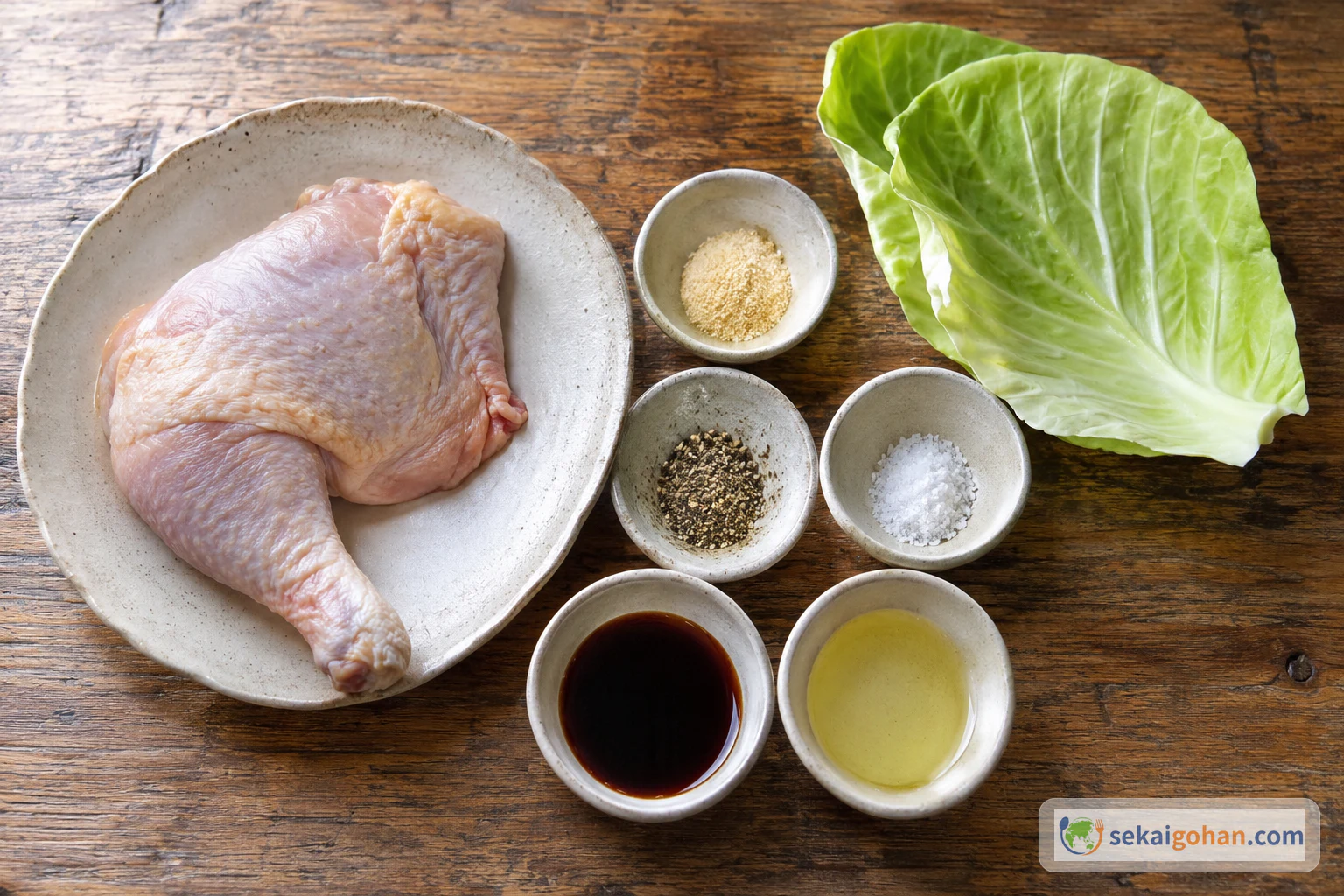
All the ingredients: a bone-in chicken leg, garlic powder, pepper, salt, soy sauce, salad oil and cabbage
Everything for one serving: one bone-in leg, four seasonings, oil and cabbage

Equipment

  • Frying pan with a lid
  • Knife and a cutting board used only for raw chicken
  • Fork
  • Small dish and spoon for mixing the seasoning
  • Covered food container for marinating
  • Tongs
  • Spoon for basting
  • Food thermometer
  • Separate clean knife and cutting board for the cabbage
  • Clean serving utensils and a serving plate

Choosing the Chicken and Seasonings for Honetsukidori

Look for a bone-in chicken leg with the thigh and drumstick still joined. At a butcher or the meat counter, ask for a bone-in chicken leg (honetsuki tori momoniku), and choose young chicken if you can tell. Legs vary in weight and size, so treat the cooking times as a guide and let a thermometer have the final say.

Boneless thigh or wings won't work as a swap. The cut, the thickness and the bone itself all change how the meat cooks, so with a different cut you're really making a different recipe.

The garlic goes in as garlic powder. Any everyday pepper and ordinary soy sauce will do.

Method: Cut, Marinate, Then Fry Skin-Side Down

Plan ahead

The chicken needs to marinate in the refrigerator for 2–3 hours or more before it goes into the pan, and overnight is fine. Keep raw-chicken tools apart from the cabbage and from anything that touches the cooked chicken.

Cooking Honetsukidori Through: Problems and Fixes

Chicken safety

The times in this recipe are guides, and a bone-in leg varies in size and thickness. Japan's Ministry of Health, Labour and Welfare advises heating chicken until the center reaches 167°F (75°C) or higher for at least 1 minute, keeping utensils and containers for raw meat separate from those for cooked food, and washing hands after handling raw meat. Use a thermometer in the thickest part, away from the bone; the color of the meat or a photo of a thermometer does not confirm the temperature. If a thick leg has not reached that point within the times given, cover the pan and keep cooking.

Problem Likely cause What to do
Center has not reached 167°F (75°C) after the covered cooking A thick or large leg Put the lid back on and keep cooking, then check again away from the bone
Skin is not browned after about 5 minutes skin-side down Oil was not hot enough when the chicken went in Keep the skin against the pan until it browns before turning; next time wait for the oil to get hot
Skin is soft after uncovering Not enough time basting Keep spooning pan oil over the skin with the lid off until it crisps
Seasoning tastes thin inside Short marinade or few fork holes Marinate for at least 2–3 hours next time; overnight is fine
Only boneless meat or wings are available Different cut Treat it as a different recipe; the times here are for a bone-in leg

Serving Honetsukidori

Serve it piping hot, with a paper napkin wrapped around the bone end so you can hold it while you eat. The cabbage goes underneath and soaks up the pan oil poured over the chicken. Dip it, and rice balls (onigiri) too if you have them, into the chicken's juices.

If you're cooking for more than one person, cook each leg as its own serving and mix the seasoning separately for each, rather than making one large batch.

Frequently Asked Questions

Should I use young or mature chicken?

Use young chicken (wakadori). It's tender and juicy, and the times in this recipe are a guide for that kind of leg. Mature chicken (oyadori) is chewier and needs different amounts and times.

Can I use fresh garlic instead of garlic powder?

This seasoning is made with garlic powder. Other versions of honetsukidori use different ingredients, but those are separate recipes.

Are the cooking times enough to make the chicken safe?

Not on their own. Bone-in legs vary in size, so heat the center of the thickest part to 167°F (75°C) or higher and hold it there for at least 1 minute. If it hasn't reached that temperature, cover the pan and keep cooking.

Can I make it for several people?

Yes. Cook each leg as its own serving, and mix the seasoning separately for each one rather than scaling it up into one batch.
Sources

  • S&B Foods Inc., "香川のご当地グルメ 骨付鳥" (Kagawa local gourmet honetsukidori). The recipe used here: ingredients and amounts for one leg, preparation, the refrigerated marinade, the full frying-pan method, the cabbage served alongside, the 30-minute cooking time excluding marinating, and mixing seasoning separately per leg. https://www.sbfoods.co.jp/recipe/detail/09613.html
  • Kagawa Prefecture Tourism Association (Udon-ken Tabi Net), "骨付鳥" (Honetsukidori). Honetsukidori as a local dish of Kagawa and Marugame, the whole bone-in leg with garlic-forward seasoning, and the difference between mature chicken and young chicken. https://www.my-kagawa.jp/gourmet/feature/gourmet/honetukidori
  • Ikkaku Co., Ltd., "一鶴の楽しみ方 (How To Enjoy IKKAKU)." Serving hot, wrapping the bone in a paper napkin, and dipping cabbage or onigiri in the chicken's juices. https://www.ikkaku.co.jp/img-shop/pdf/doki.pdf
  • Ministry of Health, Labour and Welfare, Japan, "カンピロバクター食中毒予防について(Q&A)" (Q&A on preventing Campylobacter food poisoning). Heating chicken to 75°C or higher at the center for at least 1 minute, separating raw-meat utensils, and handwashing. https://www.mhlw.go.jp/stf/seisakunitsuite/bunya/kenkou_iryou/shokuhin/syokuchu/campylobacterqa.html